When you purchase through links on our site, we may earn a commission at no extra cost to you. Learn more.
It’s 4:12 a.m. A paw is pressing, very gently, on your eyelid. When that doesn’t work, a pen goes off the nightstand. Then your phone.
Table of Contents
Or maybe it’s the couch. You bought the nice one with the tweedy fabric, and now the left arm looks like it lost a fight with a weed whacker. Maybe it’s the hallway ankle ambush. Or the cat who used the same litter box without complaint for three years and has suddenly decided the bath mat is better.
It’s tempting to file all of this under “cats are weird.” (They are. That’s half the appeal.) But many common cat behavior problems start with something surprisingly simple: a home that doesn’t give your cat’s natural instincts enough room to breathe. Your cat still wants to hunt, climb, scratch, hide, and patrol, even if its whole territory is a two-bedroom apartment with beige carpet.
The good news? Most of these mistakes look perfectly sensible from where we’re standing. Cats just aren’t standing there. And many of the fixes are surprisingly simple, inexpensive, or completely free.
Want our human-written content to rank above AI-generated garbage? Help us out by clicking this button!
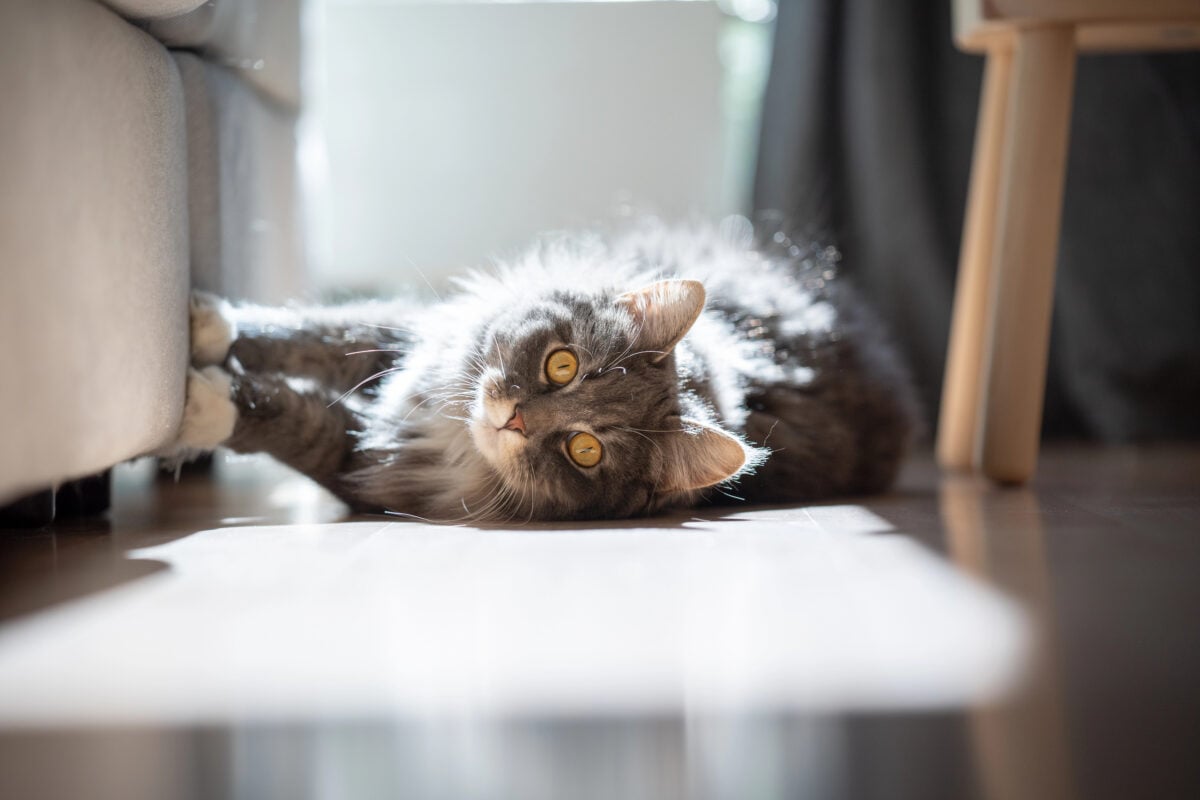
One important exception: Sudden changes in behavior, especially litter box problems, can signal an underlying medical issue. Always rule those out with your vet before assuming your cat is simply acting out.
The Myth Of The Low-Maintenance Indoor Cat
Cats have a reputation for being easy pets. They sleep most of the day, groom themselves, use a litter box, and don’t need to be walked. Give them food, water, and a sunny windowsill, and they’re good to go. Right?
Not quite. Cats may be independent, but that doesn’t mean they’re low-maintenance, don’t need as much care, or that their needs are simple.
In fact, the Feline Veterinary Medical Association emphasizes that indoor cats need much more than food, water, and a clean litter box. A healthy indoor environment also provides safe hiding places, separate resources, opportunities to hunt and play, predictable interactions, and familiar scents. These aren’t luxuries. They’re part of meeting a cat’s everyday needs.
Indoor cats rely entirely on us to provide the stimulation, security, and opportunities to express natural behaviors they would otherwise seek out in their environment. Without those outlets, boredom, frustration, and stress can show up in some pretty unexpected ways.
That’s where another misconception comes in: cats are just unpredictable, dramatic, or downright crazy. But that midnight sprint through the hallway, sudden scratching obsession, or seemingly random swat often has a perfectly reasonable explanation in cat terms. What looks like bad behavior to us may actually be a cat trying to tell us something isn’t working.
The good news is that you don’t need to overhaul your entire home to make things better.

12 Common Indoor Cat Mistakes That Could Explain Their Behavior
Before you blame your cat’s latest antics on a mysterious feline personality disorder, take a look around your home. From poorly placed litter boxes to missed opportunities for play, some surprisingly ordinary things can leave indoor cats bored, stressed, or frustrated.
Here are 12 mistakes you might not realize you’re making, along with simple fixes to get your cat purring instead of plotting your downfall.
When Your Cat Needs More Territory
Your cat may never pay a dime in rent, but that doesn’t mean they don’t have strong opinions about the living arrangements. Where they climb, hide, eat, and do their business matters more than you might think. And some of the most common indoor setups make life surprisingly difficult for our feline roommates.
1. Your home only has one level (as far as your cat can tell)
We see a room as floor space. Cats see it in three dimensions, and the top of the fridge absolutely counts.
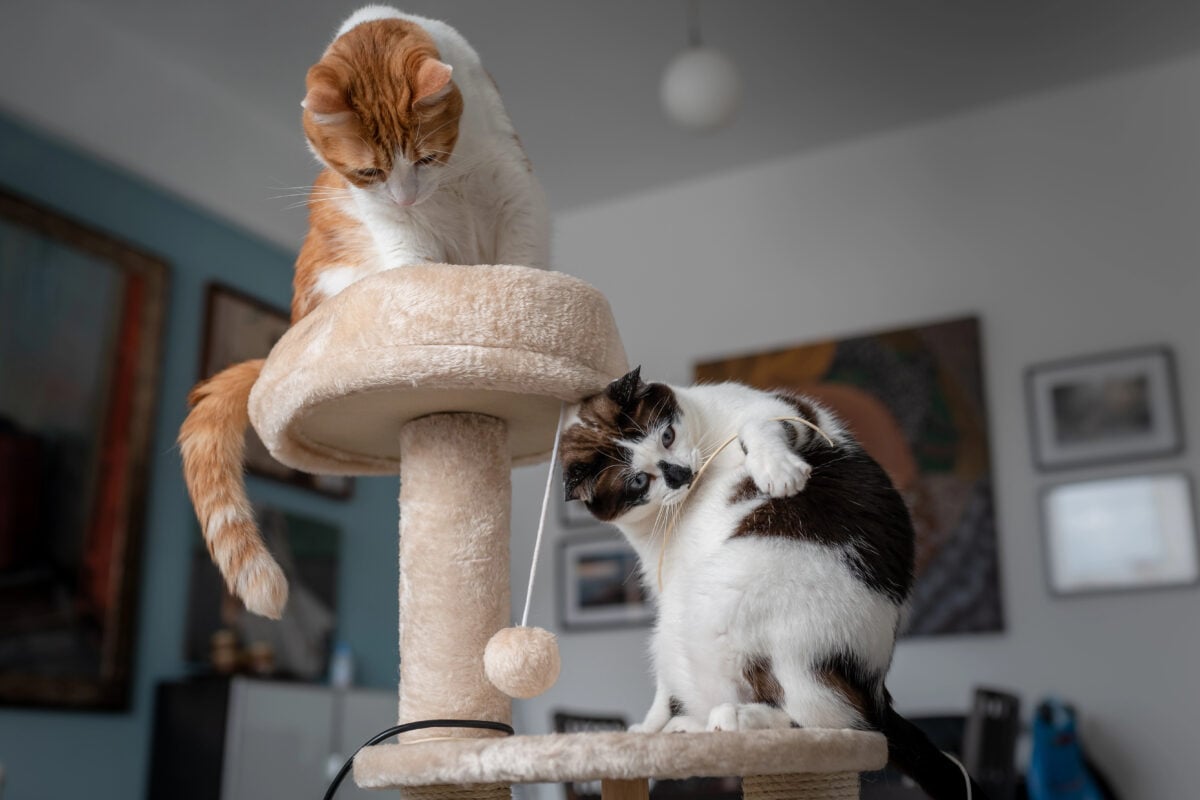
Height gives a cat a lookout, an exit, and a way to avoid a housemate without making a scene. In multi-cat homes, the cat who can’t get up high usually ends up with the worst real estate: under the bed, behind the dryer, or stuck on the floor where the bossier cat can stare at it all afternoon.
You don’t need to turn the place into a cat café. A sturdy cat tree by a window (bird TV is a real thing), a cleared-off bookshelf, two or three wall shelves. The best setups let a cat cross the living room without touching the floor. Once you watch your cat use a route like that, you’ll start eyeing every bare wall in the house.
If your cats keep squabbling in the hallway, try this first. Extra height alone sometimes settles things.
2. There’s nowhere to disappear
The cat who vanishes when the doorbell rings isn’t being rude. Hiding is how cats calm themselves down, and a cat with no hiding place feels cornered. Cornered cats swat.
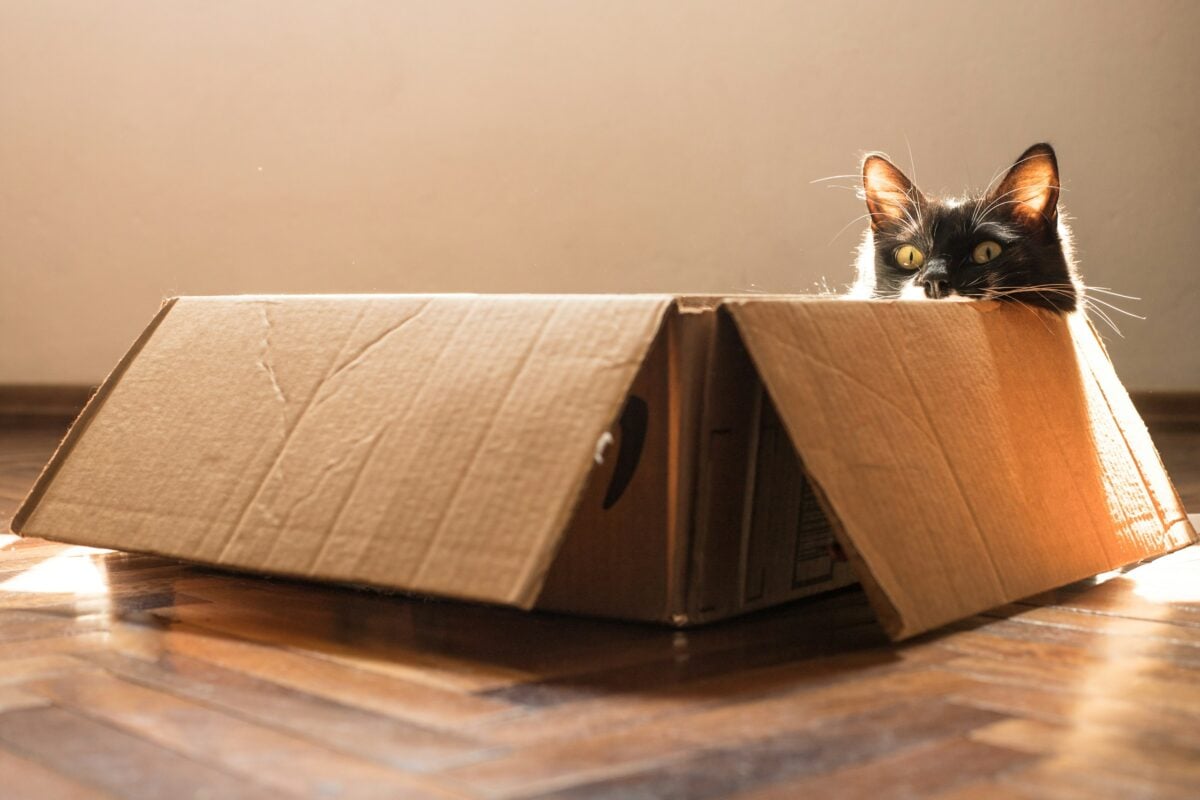
Cardboard boxes work. So do covered beds, a cleared spot on a closet shelf, or a blanket draped over a chair. For parties, holidays, or the week the plumber is tearing up the bathroom, set up a quiet room with a bed, water, and a litter box, and close the door.
One mistake catches a lot of kind-hearted people: pulling a shy cat out from under the bed so it can “get used to” company. It nearly always goes the other way. Cats come out sooner when they know they can leave.
Of course, there’s a difference between a cat who enjoys a little privacy and one who suddenly starts disappearing for hours. If your normally social cat has become a master of hide-and-seek, it helps to understand when cat hiding is normal and when it’s a warning sign.
3. The litter box is in a scary spot
Picture the laundry room from about eight inches off the ground. The box is wedged between the washer and the wall. Halfway through, the spin cycle kicks in, and the whole floor vibrates. You’d find somewhere else to go, too.
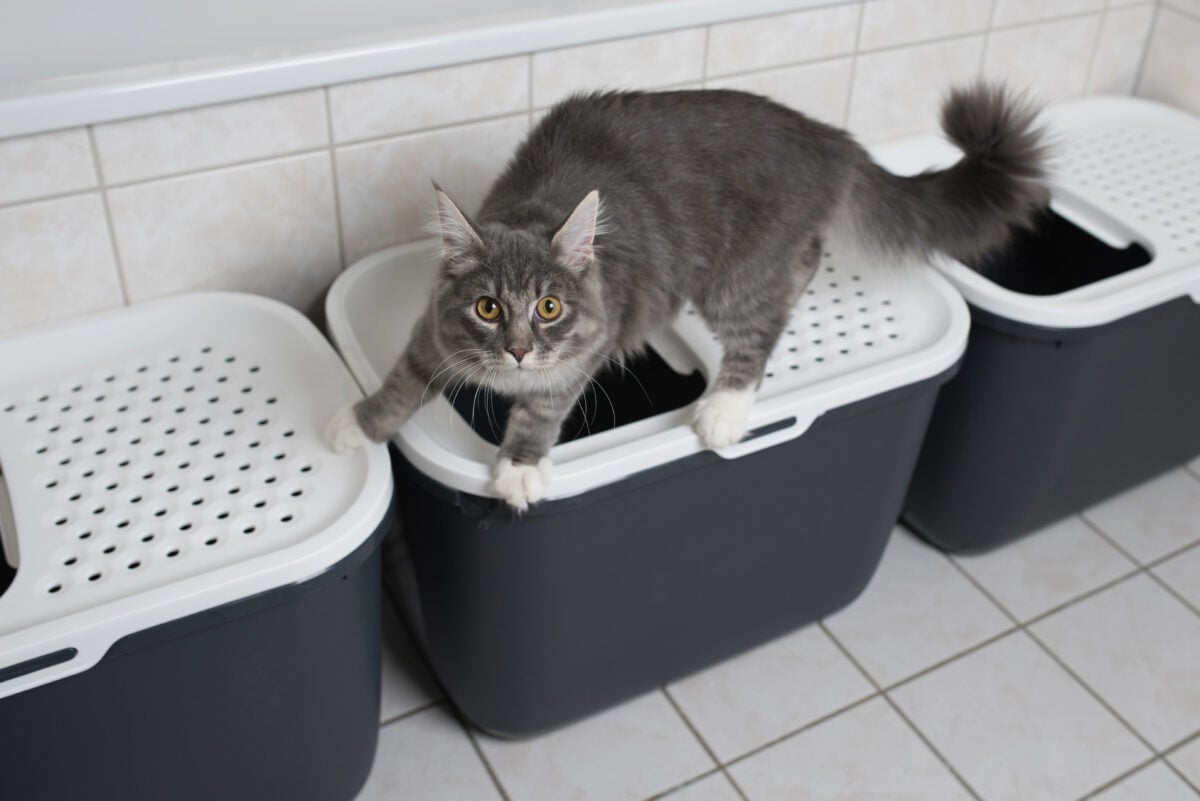
Cats are vulnerable mid-business, so they want a quiet box with a clear view and more than one way out. Common trouble spots include next to loud appliances, at the back of a narrow closet, in a busy hallway, or anywhere a dog or toddler can sneak up on them. Keep boxes well away from food bowls, too. Cats don’t love eating next to the toilet any more than we would.
If the accidents started right after you moved the litter box, its new location could be part of the problem. Try moving it somewhere quieter and easier to access. But don’t assume location is the only explanation. If your cat suddenly starts having accidents, a vet visit is important to rule out urinary problems, digestive issues, or pain.
4. Three cats, two boxes
The standard guideline is one box per cat, plus one. Three cats, four boxes. Most people wince at that math, especially in an apartment, but it exists for a reason. One cat can guard a box, or simply lounge in the hallway that leads to it, and a more timid cat will quietly pick the corner behind the couch instead.
Where the boxes go matters as much as how many there are. Four boxes in a row in the basement read as one big bathroom to your cats. Spread them out, on different floors if you have them.
While you’re at it: scoop daily, skip heavily scented litter (a cat’s nose is far more sensitive than yours), and if someone seems hesitant about a covered box, try taking the lid off.
And if you’re wondering whether your cats really need separate bathrooms, our guide to sharing litter boxes in multi-cat households explains why an arrangement that seems perfectly peaceful to us might not be working for them.
When Your Cat Is Bored Out Of Its Mind
Your cat might spend 16 hours a day perfecting the art of doing absolutely nothing, but don’t let all that lounging fool you. There’s a little predator underneath that fluffy exterior, and when there’s nothing interesting to hunt, chase, or investigate, your ankles and anything not nailed down might become the entertainment.
5. Playtime is a sometimes thing
If your cat launches at your ankles every time you walk past the couch, you’re looking at a hunter with nothing to hunt. Your feet move, they’re at exactly the right height, and you make a very satisfying noise when ambushed.
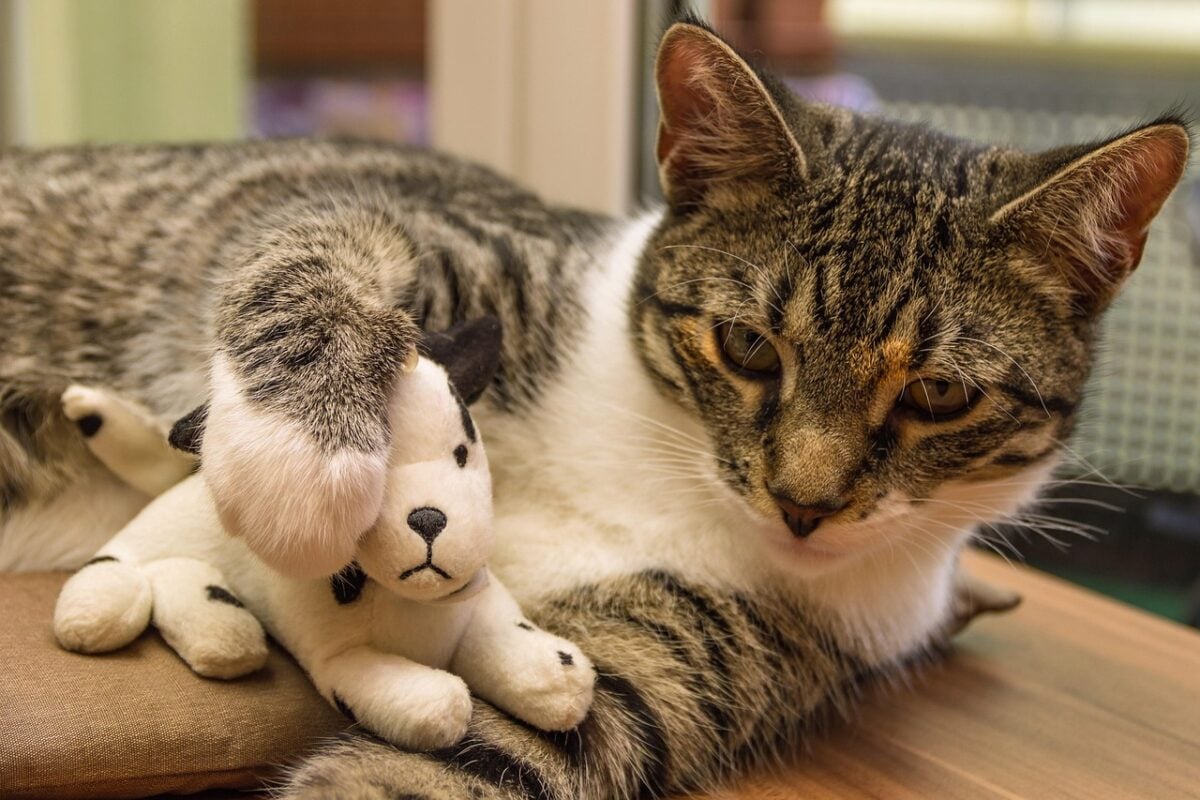
A toy mouse lying on the rug won’t cover it. A wand toy with you on the other end will. Try a few short, interactive play sessions throughout the day, adjusting the length and intensity to your cat’s age, health, and enthusiasm.
Some cats are ready for a full-on living room safari, while others prefer a few minutes of gentle stalking. Make the toy act like something alive: let it skitter behind a chair, freeze, twitch, then dart away. Real prey never flies straight at a cat’s face. And let your cat actually catch it at the end, so every round finishes with a win.
For the 4 a.m. wake-up calls, try a hard play session right before bed followed by a small meal. Hunt, eat, groom, sleep is the natural order of things, and plenty of cats will ride it straight through to morning. (Not all of them. Some cats are just like that.)
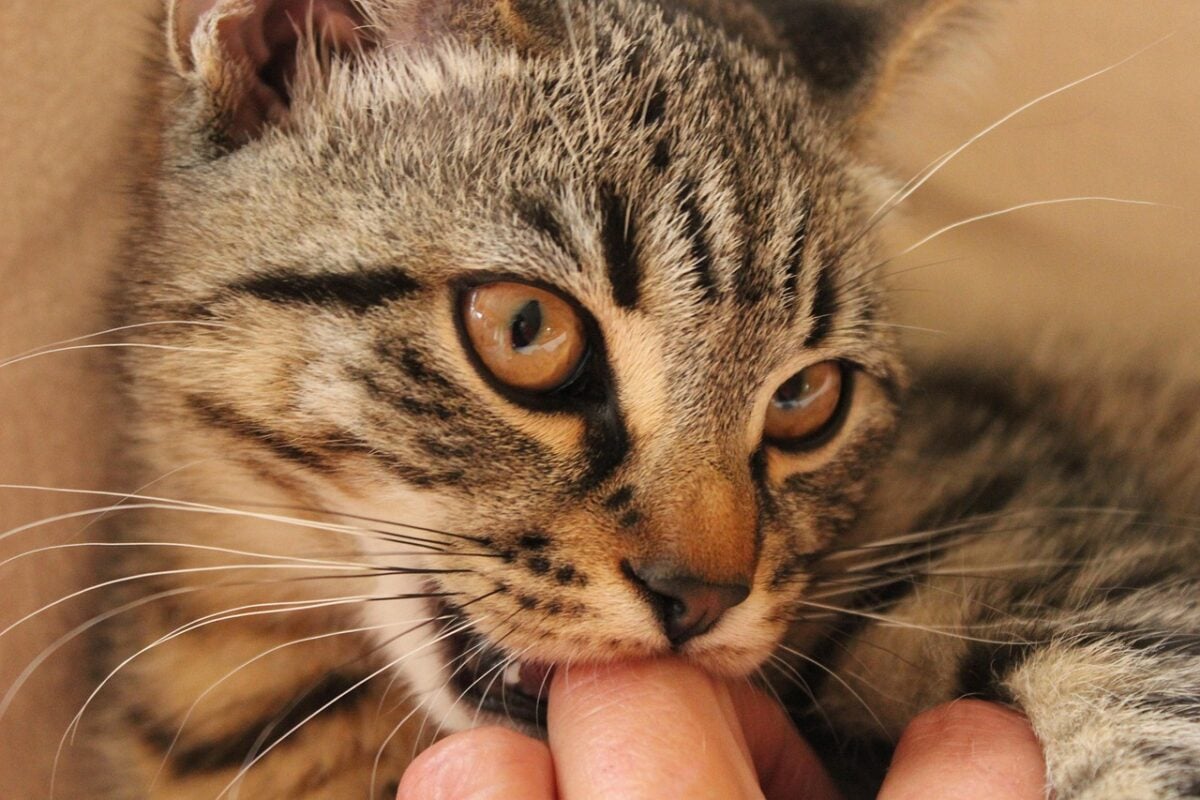
One more thing. If your adult cat treats hands as toys, there’s a decent chance someone wrestled with it barehanded when it was a kitten. Adorable at 12 weeks. Less so at 14 pounds.
Real Cat Owner Experience: A Kitten Habit That Stuck
Love Your Cat writer Tara Maurer knows firsthand how difficult it can be to break a biting habit that starts in kittenhood.
Before my mom got her cat, the previous owner regularly played with her using bare hands. Now, as an adult, she still thinks fingers are fair game, and those playful bites can really hurt! It’s gotten to the point where most of my family avoids playing with her altogether.
Whenever I visit, I work on redirecting her attention to toys and encouraging gentler play. It’s definitely a work in progress. What seems adorable in a tiny kitten isn’t nearly as cute when those teeth are fully grown.
— Tara Maurer, Love Your Cat Writer
6. The toy basket never changes
Forty toys in a basket, and your cat would rather play with a hair tie. Sound familiar?
Toys that sit out all the time stop registering as interesting. Put most of them away and leave a handful out, then swap every week or so. A crinkle ball that’s been in a drawer for a month comes back as a brand-new discovery. You probably don’t need more toys. You need fewer of them on the floor.
Wand toys should go in a closet when playtime’s over. Strings and feathers aren’t safe unsupervised, and keeping them out of sight keeps them special.
Not sure when your cat is in the mood for a little hunting? They don’t always make their intentions obvious, but there are some surprisingly subtle signs your cat wants to play that can help you recognize an invitation before your ankles become the target.
And toys aren’t the only way to keep an indoor cat entertained. A cardboard box in a new spot, a paper bag with the handles removed, a simple cardboard tunnel, or a secure window perch can turn an ordinary afternoon into an adventure. Even rearranging a few safe play items can give a curious cat something new to investigate. You don’t need an endless supply of expensive cat toys. Sometimes the box they came in is the real prize.
This can be especially important for cats coming from homes where they had little opportunity to play, explore, or interact. When those cats move into a new home, they may need extra patience while learning to enjoy toys, climbing spaces, and other activities. Start with simple, low-pressure opportunities and let the cat decide when to participate. The goal isn’t to overwhelm them with entertainment. It’s to help them discover that their new world has a lot more to offer.
7. Dinner takes 30 seconds
A cat on its own would catch a whole series of small meals over the day, and each one takes work. Our housecats usually get a bowl, inhale it, and then do nothing until the next one. A lot of the cats yelling at the pantry door aren’t hungry. They’re bored.
Puzzle feeders help, and you don’t need anything fancy to get started. You can even turn part of your cat’s regular daily food into a little hunting adventure.
- Try a muffin tin. Scatter a few pieces of kibble into the cups and let your cat investigate. For an extra challenge, loosely cover some cups with pieces of sturdy, food-safe cardboard too large to swallow.
- Make a simple puzzle box. Place a few pieces of kibble inside a shallow cardboard box with openings large enough for your cat to reach through comfortably. Avoid staples, tape, or small detachable pieces.
- Turn dinner into a chase. Toss pieces of kibble down a clear hallway one at a time, giving your cat a chance to stalk and pounce.
Start easy and supervise homemade feeding games, especially when introducing something new. If your cat starts chewing or swallowing the materials, take the puzzle away. A cat who can’t crack the puzzle may simply give up or knock it off the counter, which, to be fair, is technically a solution.

Use food from your cat’s normal daily allowance rather than adding extra calories. Even one short puzzle-feeding session can make mealtime more interesting.
When Your Cat Is Following Instinct
Some of the behaviors that drive us up the wall are perfectly normal in the feline world. Cats don’t read house rules, and they certainly don’t understand why the expensive couch is off-limits. Sometimes the problem isn’t what your cat is doing, but how we’re responding to it.
8. Scolding the scratching instead of redirecting it
The spray bottle approach has a problem: scratching isn’t a bad habit you can train away. Cats scratch to pull off the worn outer layer of their claws, to stretch their backs and shoulders, and to leave scent from glands in their paws. The need isn’t going anywhere. All you can change is where it happens. Scolding mostly teaches a cat to scratch the couch while you’re at work, and to be a little warier of you.
If the scratching post you bought sits there untouched, take a hard look at it. Is it so short your cat can’t stretch all the way out? Does it wobble? A post that tips over even once may never get a second chance. Is it covered in the same soft carpet as your floor? Most cats want something they can really sink their claws into, like sisal rope.
Then there’s where you put it. Cats tend to scratch in prominent spots, like the arm of the couch by the front door, because scratching is partly a way to mark territory. A post tucked away in the spare room can’t compete with that. Put it directly in front of the spot your cat already uses. Add another near where your cat sleeps, since many cats scratch right after a nap. And try a flat cardboard scratcher on the floor, because some cats are horizontal scratchers through and through.
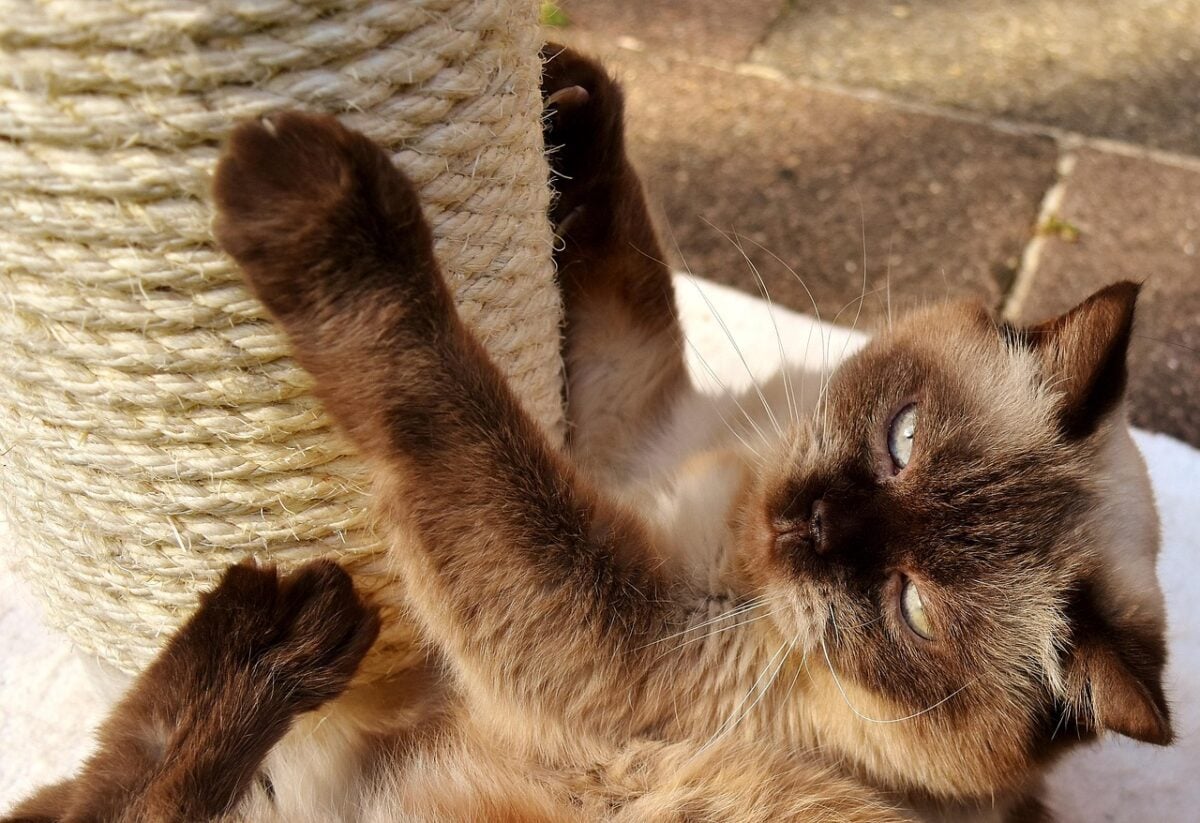
While the new habit sets in, make the couch less fun for a few weeks with double-sided tape or a fitted throw. Then make a fuss every time your cat uses the post: treats, praise, a pinch of catnip. Yes, you’ll be cheering at your cat for scratching something. It’s fine. We’ve all done it.
If your cat has already declared war on the upholstery, we’ve got more ways to stop cats from scratching furniture without turning every interaction into a battle of wills. Because the couch deserves a fighting chance, too.
When Your Cat Is Quietly Stressed
Not every unhappy cat announces it with hissing, yowling, or a dramatic exit. Some keep their frustrations surprisingly quiet, leaving subtle clues that are easy to miss. And by the time we notice something’s wrong, our cats may have been trying to tell us for weeks.
9. Changing Everything At Once
New job, new hours, new food, and while you were at it, you rearranged the living room. Suddenly, your cat is hiding under the bed, avoiding their favorite sunny spot, and looking at you like you’ve personally ruined their life.
Cats are creatures of habit, and even small changes can throw them off. Familiar routines, surroundings, and smells help them feel safe, so changing too many things at once can leave them stressed and unsettled.
When possible, introduce changes gradually. Switch foods slowly, mixing a little more of the new food into the old over a week or longer if needed. Keep meals and playtime at roughly the same times, even when your own schedule gets chaotic.
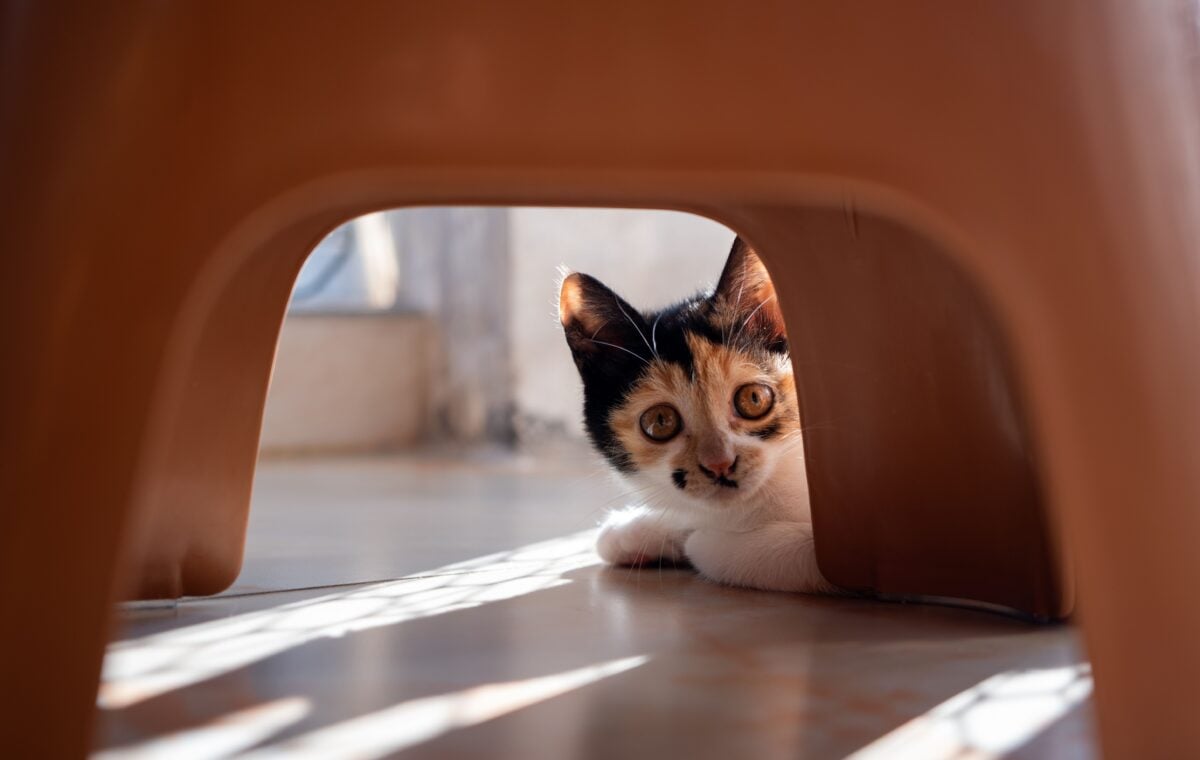
Some cats respond to changes by disappearing, while others suddenly become your furry little shadow. Those extra cuddles, ankle rubs, or constant check-ins may be among the quiet ways your cat asks for reassurance when their world feels a little less predictable.
Moving to a new home can be especially stressful. Start your cat in a quiet room with familiar bedding, toys, food, water, and a litter box, then let them explore the rest of the house gradually. Resist the urge to wash all their blankets and beds before the move. Those familiar smells can provide comfort in an unfamiliar place, so hold off on laundry day until your cat has had time to settle in.
And speaking of smells, your cat’s nose has opinions, too. Strongly scented cleaners, air fresheners, and unfamiliar fragrances can be overwhelming. Choose unscented products when practical, and avoid changing everything about your cat’s environment at once. Your freshly scented living room might smell wonderful to you, but your cat may disagree.
One important note: If your cat starts overgrooming, develops bald patches, or suddenly has litter box accidents, don’t assume stress is the only cause. These changes can also signal an underlying medical issue that needs veterinary attention.
10. Missing the tension between cats
“They don’t fight. They just don’t really hang out.”
Cat conflict is often silent. No hissing, no flying fur. Just one cat parked in the hallway that leads to the litter box, or staring at the other until it gives up the sunny spot on the bed. Over time, the cat on the losing end eats faster, hides more, or starts peeing elsewhere because the box feels off-limits.
Watch for a cat who avoids certain rooms, only comes out when the other one is asleep, or grabs a few bites and leaves. Most fixes come down to spreading things out. Put food, water, litter boxes, beds, and perches in several different places so no single cat can control them all from one doorway. Climbing routes help a lot here. So does playing with each cat on its own, because the shyer one may never get a turn if the other always pounces first.
This one surprises people: two bowls side by side doesn’t mean two cats who enjoy dining together. Plenty of them are just putting up with it. Move the bowls a few feet apart, or into separate rooms, and see if mealtime gets calmer.
If the tension keeps building, talk to your vet or a cat behavior professional before it turns into an actual fight.
11. Missing the small warning signs
“She bit me out of nowhere.”
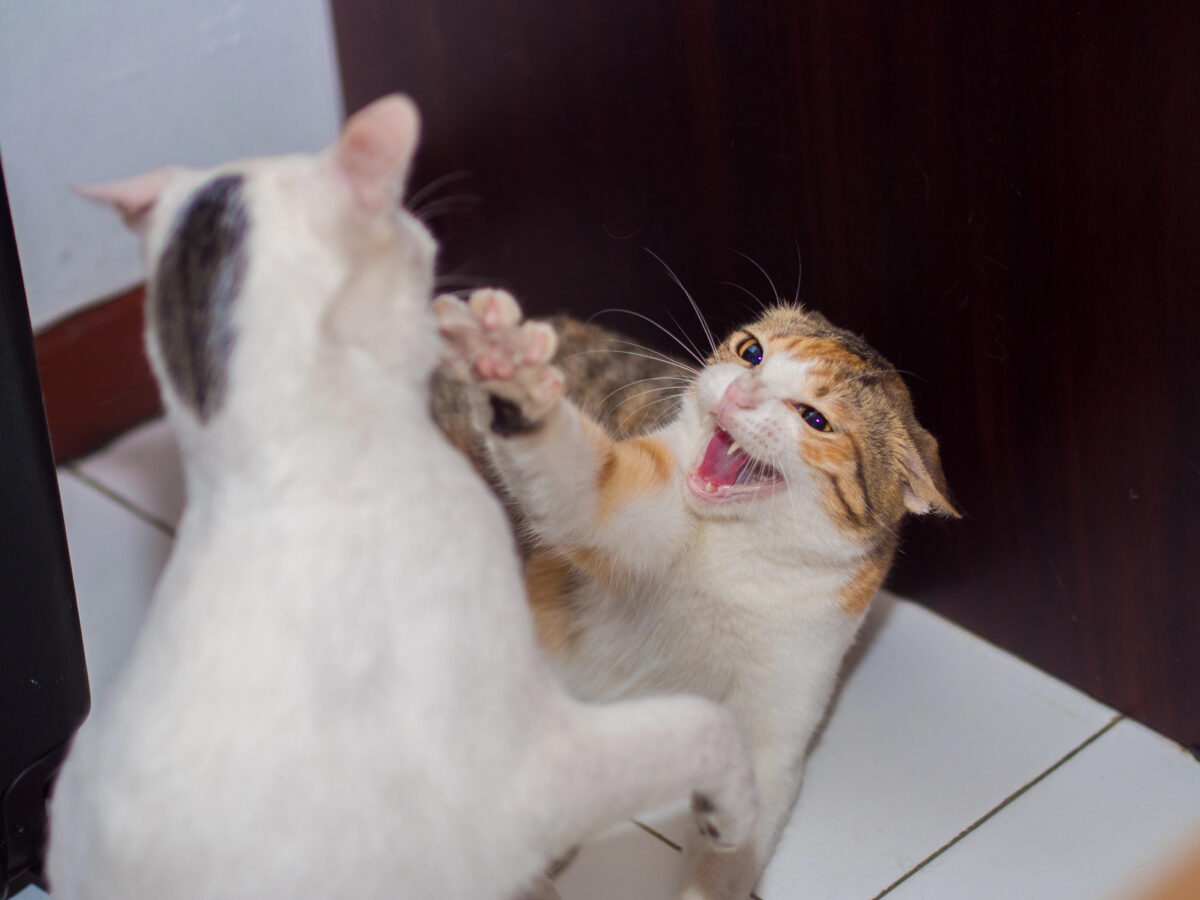
There’s almost always a lead-up. It’s just a quiet one. Watch for the tip of the tail flicking, then thumping. Skin rippling along the back. Ears swiveling sideways. Pupils getting big. A head turning to look at your hand. By the time teeth come into it, your cat may have been saying “okay, that’s enough” for a while.
Longer-term stress shows up differently:
- Overgrooming, especially thin fur on the belly or inner thighs
- Hiding more than usual
- Eating noticeably more or less
- Sleeping in strange new spots
With petting, shorter usually works better. Let your cat come to you, stick to cheeks and chin if that’s the preference, and stop at the first tail twitch. Ask for less each time, and you’ll often end up getting more cuddles overall.
Cats are surprisingly good at communicating, but they don’t always make it obvious. Sometimes the smallest ear twitch, sideways glance, or change in posture tells you more than a dramatic meow. Even those cat behaviors that look like they’re ignoring you can reveal that your feline friend is paying closer attention than you think. The trick is learning to recognize their quieter signals.
Before You Call It A Behavior Problem
Sometimes the problem isn’t boredom, stress, or your furniture arrangement. A sudden change in behavior can be your cat’s way of showing that something physically hurts or doesn’t feel right. And unlike a poorly placed scratching post, this isn’t something you want to troubleshoot on your own.
12. Assuming it’s behavioral when it might be medical
This one comes last because it matters most.
A cat who suddenly stops using the litter box may not have an issue with the box at all. A urinary problem can make peeing hurt, and some cats start blaming the box for the pain. An older cat with stiff hips may simply not be able to step over a high-sided box anymore. A sweet cat who has started snapping could be hurting somewhere, and a sore mouth is a common culprit. Senior cats who yowl through the night are sometimes dealing with an overactive thyroid, high blood pressure, or age-related confusion.
Any sudden behavior change deserves a vet visit before you overhaul the house. It can save you weeks of swapping litters for a cat who really needed medication.
I learned firsthand how quickly a seemingly ordinary household habit can become a medical concern when one of my cats kept sneaking into the dog’s food. Around that time, my cat developed urinary crystals and began passing blood in their urine. It was frightening, and it reinforced how important it is to pay attention to what our cats are eating and never dismiss changes in their bathroom habits. Dog food isn’t formulated to meet a cat’s nutritional needs, and urinary problems can have several causes, so symptoms like these always deserve prompt veterinary attention.
Don’t wait on this one: If your cat is repeatedly straining in the litter box, making frequent attempts to urinate, or producing little or no urine, seek emergency veterinary care immediately. This is especially important for male cats, who are at greater risk of urinary blockages. A blocked urinary tract is a life-threatening emergency, and delaying treatment can have devastating consequences.
More Cats, More Drama: 3 Mistakes Multi-Cat Owners Make
One cat can keep an entire household on its toes. Add a few more, and suddenly you’re managing a tiny apartment complex full of territorial roommates, complicated relationships, and occasional power struggles.
Even cats who seem to get along can experience hidden tension. Here are three mistakes that can make sharing a home harder than it needs to be.
1. Introducing New Cats Too Quickly
Bringing home a new cat and expecting instant friendship is like moving a stranger into your bedroom and telling you to share your favorite pillow.
Cats need time to adjust to unfamiliar roommates. Start with separate spaces, gradually exchange scents, and work toward short, supervised introductions. Some cats adjust in days, while others need weeks or longer. Let them set the pace.
I learned this lesson the hard way when a relative passed away, and I unexpectedly had to bring their cat into my home. It wasn’t a planned adoption, and everything happened much faster than I would have liked. Unfortunately, my resident cat didn’t take kindly to the sudden arrival. She started biting, scratching me in my sleep, and even peeing on the laundry, behaviors I’d never experienced with her before.
Looking back, I wish I’d found a way to make the introductions more gradual, even under the circumstances. It was a difficult reminder that what feels like a necessary change to us can be a major disruption to a cat who’s used to having things just the way they like them.
2. Assuming Every Chase Is Friendly Play
Two cats racing through the hallway might look adorable, but sometimes only one is having fun.
Healthy play is usually mutual, with cats taking turns chasing, wrestling, and initiating games. If one cat is constantly fleeing, hiding, or getting cornered, it may be experiencing bullying rather than play. Redirect the pursuer with a toy and make sure the quieter cat has safe places to escape.

3. Expecting Every Cat To Become Best Friends
Not every feline household ends up with cats cuddling in one giant furry pile. Some cats form close bonds, while others prefer a respectful arrangement with plenty of personal space.
Peaceful coexistence is a perfectly good outcome. Give each cat separate resources, comfortable resting spots, and individual attention. Don’t force interactions or expect them to share everything.
After all, anyone who’s ever lived with roommates knows that getting along doesn’t necessarily mean wanting to share a pillow.
5 Small Changes Your Indoor Cat Will Thank You For
You don’t need a feline home renovation, a shopping spree at the pet store, or an entire wall of climbing shelves to make your indoor cat happier. Sometimes, the smallest changes make the biggest difference. Start with one or two of these easy fixes and see what your cat thinks. Trust me, they’ll have an opinion.
Before you start rearranging your cat’s kingdom, remember that change takes time. Some cats investigate a new perch before you’ve finished setting it up. Others act like you’ve introduced a suspicious alien into their territory. Give your cat time to explore at their own pace, and don’t be surprised if they need a little convincing.
- Move that scratching post. Put it right next to the couch, chair, or other spot your cat keeps scratching. Make sure it’s tall enough for a full-body stretch and sturdy enough not to wobble. Sometimes location is the difference between a well-used scratching post and an expensive piece of cat furniture collecting dust.
- Give old toys a second life. Gather up half your cat’s toys and tuck them away for a week. When you bring them back out, they may suddenly seem much more interesting. Rotate a few toys regularly to keep things fresh without buying anything new.
- Rethink the litter box situation. If you have multiple cats, aim for one box per cat, plus one extra, in separate, easily accessible locations. Even a single-cat household can benefit from an additional box in a quiet spot. Your cat shouldn’t have to navigate a noisy washing machine or a territorial roommate just to use the bathroom.
- Create a room with a view. Clear a safe, sturdy shelf, move a cat tree near a secure window, or create an elevated resting spot. Cats love watching the world from above, and a little extra vertical territory can make a surprisingly big difference, especially in multi-cat homes.
- Schedule a little evening hunting. Spend 10 minutes playing with a wand toy before bedtime, letting your cat stalk, chase, and finally catch its prey. Follow with a small snack from their daily food allowance. This simple play-and-eat routine can help some cats settle down at night, although your feline alarm clock may still have other plans.
You don’t have to tackle everything at once. Pick the change that seems most relevant to your cat and give it some time. After all, cats are creatures of habit, and even improvements can take a little getting used to.

The Bottom Line: A Happier Indoor Cat Starts At Home
Most cats aren’t being difficult. They’re simply being cats in a world designed by and for humans. They still have all the instincts of their wild ancestors, even if their biggest daily adventure is watching a squirrel through the living room window.
The good news is that creating a happier indoor environment doesn’t have to be complicated or expensive. A better scratching spot, a few extra hiding places, more opportunities to play, and a little attention to your cat’s body language can go a long way toward reducing frustration and helping them feel secure.
If you recognized your own household in a few of these mistakes, you’re in good company. I’ve learned over the years that cats have a remarkable talent for letting us know when something isn’t quite right, even if their methods occasionally involve knocking things off expensive furniture. The trick is figuring out what they’re trying to tell us.
Remember, sudden or persistent behavior changes deserve a conversation with your vet before you assume they’re environmental. And if you’ve made adjustments but your cat is still struggling, a veterinary behaviorist or qualified cat behavior consultant may be able to help.

Your Cat’s Behavior Manual (The Missing Chapters)
Just when you think you’ve figured out your cat, they invent an entirely new way to keep you guessing. If you’re still trying to decode your feline roommate, we’ve got a few more mysteries worth investigating.
- Why Your Indoor Cat Is Obsessed With Going Outside – Because apparently, the cozy house, endless snacks, and personal staff aren’t enough. What’s so irresistible about the other side of the door?
- Cat Zoomies Explained – One minute, they’re peacefully napping. The next, they’re breaking land-speed records down the hallway. Here’s what’s behind those sudden bursts of feline chaos.
- 15 Ridiculously Dramatic Things Cats Do – From outrageous reactions to minor inconveniences to full-blown household theatrics, some cats deserve their own reality show.
The more you learn about cat behavior, the easier it becomes to understand their quirks. Of course, that doesn’t mean they’ll stop judging your life choices from the top of the refrigerator.
What Does Your Indoor Cat Wish You’d Change?
Does your cat have a favorite hiding spot, an unusual bedtime routine, or a habit that took you forever to figure out? I’d love to hear about it in the comments! Share your cat’s quirks, the changes that worked for you, or any questions you still have about making your home more cat-friendly.