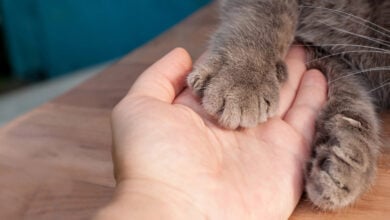
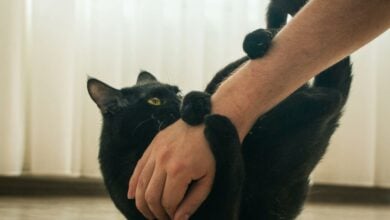
When you purchase through links on our site, we may earn a commission at no extra cost to you. Learn more.
It’s 6:00 AM. I’m forcing my body out of bed, stumbling blind toward the kitchen for coffee, and trying to adjust to the concept of sunlight. Halfway down the hall, I feel it: a soft little pop against the back of my calf.
Table of Contents
No claws, just a velvet hook from between the couch cushions.
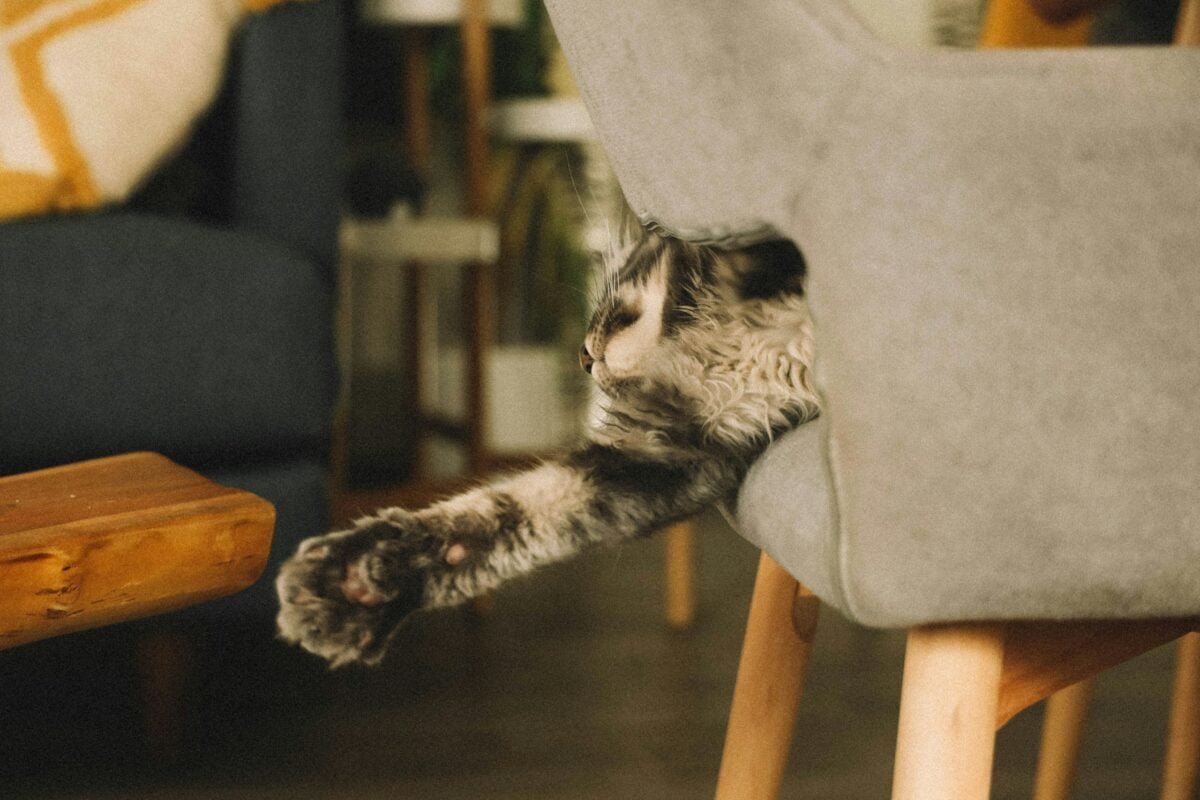
My cat isn’t getting up. He isn’t making a sound. He has simply extended one languid arm from his nest of fleece blankets to snag my pajama pants as I pass by, collecting his morning hallway toll.
If you share your living space with a cat, you know the ambush station well. It might be the edge of the dining chair, the bottom tier of a cat tree, or the space under the bed ruffle where a shadowy limb shoots out like a trapdoor spider. Sometimes it’s a sweet, clawless tap. Other times, it’s a dead-on swipe that ruins a good pair of knit socks or catches a thread on your favorite cardigan.
Want our human-written content to rank above AI-generated garbage? Help us out by clicking this button!
It makes you pause mid-stride and wonder: was that a loving greeting, a demand for food, or did you just get mugged by a twelve-pound furball?
Here is what is actually going on inside that fuzzy little head when they reach out and snag you.
So, What’s With the Drive-By Paw?
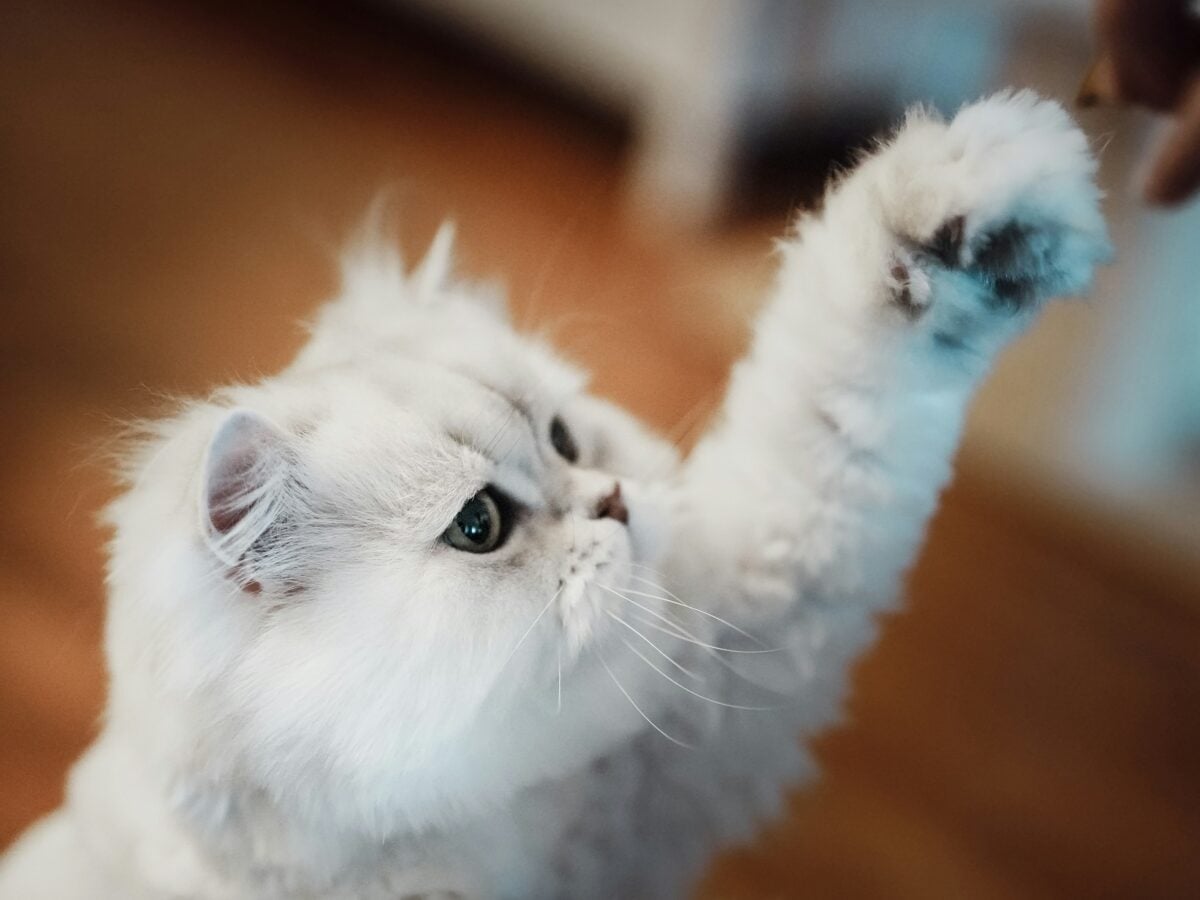
That little drive-by paw? It’s usually your cat’s way of saying “Hey, you!” They may want attention, be inviting you to play, or simply find your moving ankles too tempting not to pounce on. But if the swatting suddenly gets harder, more frequent, or comes with other behavior changes, stress, pain, or discomfort could be behind it.
The Power of the Paw: More Than Just a Swipe
We tend to think of cat communication in vocal terms—the 3 AM yowls, the soft chirps, or the purr machine firing up on your lap. But while dogs rely on tail wags and full-body leans, cats are masters of the precision strike. Their front paws do an astonishing amount of heavy lifting in their social vocabulary.
A cat’s front paws do far more than carry them from room to room; they’re also used to explore, play, hunt, defend themselves, and sometimes get a message across. So when a paw suddenly hooks your pant leg as you pass, the rest of your cat’s body language can tell you a lot about what that little reach actually means.
5 Reasons Your Cat Reaches Out to Grab You When You Walk By
Depending on the time of day, the angle of the claws, and how much they think you owe them, that outstretched limb usually comes down to five distinct motivations.
1. They Want Your Attention (“The Attention Tap”)
Cats are efficiency experts. Jumping down from a warm fleece blanket to chase you across a cold kitchen floor takes effort. Extending a single, languid arm from the couch cushion takes almost none.
They understand basic physics: humans in motion tend to stay in motion until an obstacle intervenes. The moment that velvet paw makes contact with your calf, you freeze. You look down. You inevitably drop your voice three octaves to say something foolish like, “Did you catch me, sweetie?” and bend over to scrub their cheeks.
That little drive-by tap may be your cat’s surprisingly effective way of saying, “Hey, pay attention to me.” Reaching out with a paw is just one of the many things cats do when they want your attention, especially once they’ve learned which moves reliably make their favorite human stop and respond.
They haven’t just tapped you; they’ve discovered a behavioral remote control. It’s low-effort, high-reward communication that halts your day and demands an immediate petting tax.
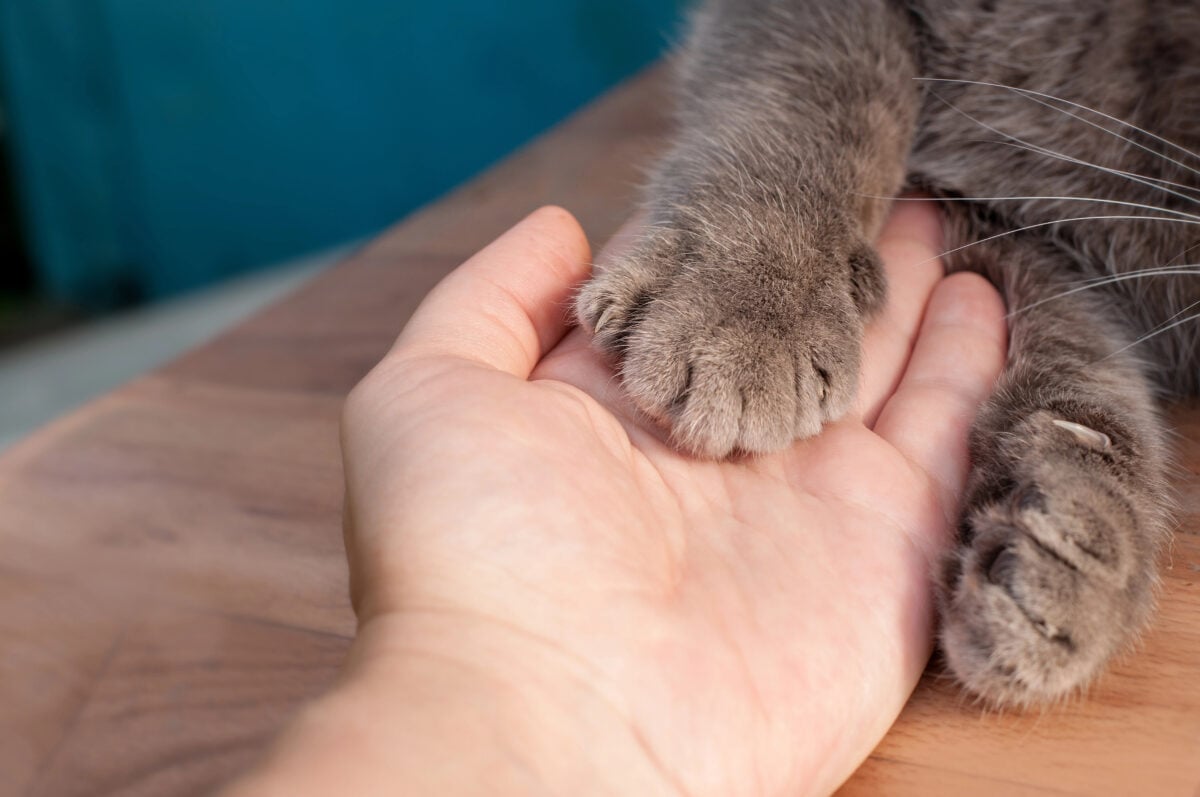
If your cat regularly lounges in the middle of family life, sprawls out in favorite spots, and confidently recruits you for games, those everyday routines can tell you quite a bit about how they feel at home. Look for some of the other cat habits that can mean they’re comfortable in your home to get a bigger picture than one grabby paw can provide.
2. Your Moving Ankles Trigger Play or Hunting Behavior (“The Moving-Target Effect”)
Even a chubby house cat who cowers at the sound of the vacuum cleaner retains ancient predatory wiring. From a low vantage point, under a dining chair, behind the sofa ruffle, or through the railing of a cat tree, your moving feet don’t look like loving guardians. They look like erratic targets.
Loose flannel pajama pants, swishing robe hems, and shuffling slippers mimic the scurrying movements of small rodents or birds
When your foot swings past, all that quick, unpredictable movement can tap into your cat’s natural stalking-and-pouncing instincts—making your ankles look a lot more like a moving target than part of their favorite human.
You can tell this is play-hunting rather than malice by watching for the classic signs your cat wants to play:
- The soft snag: The claws might catch fabric to anchor the target, but they retract before piercing skin.
- The “saucer” eyes: Pupils dilated black, ears swiveled forward, often followed by a rapid sideways scurry or a roll onto their back to invite a wrestling match.
If this happens consistently around dawn or dusk, try giving your little hunter an active toy to stalk, chase, and pounce on. A feather wand is a much better target for that playful energy than your bare ankles.
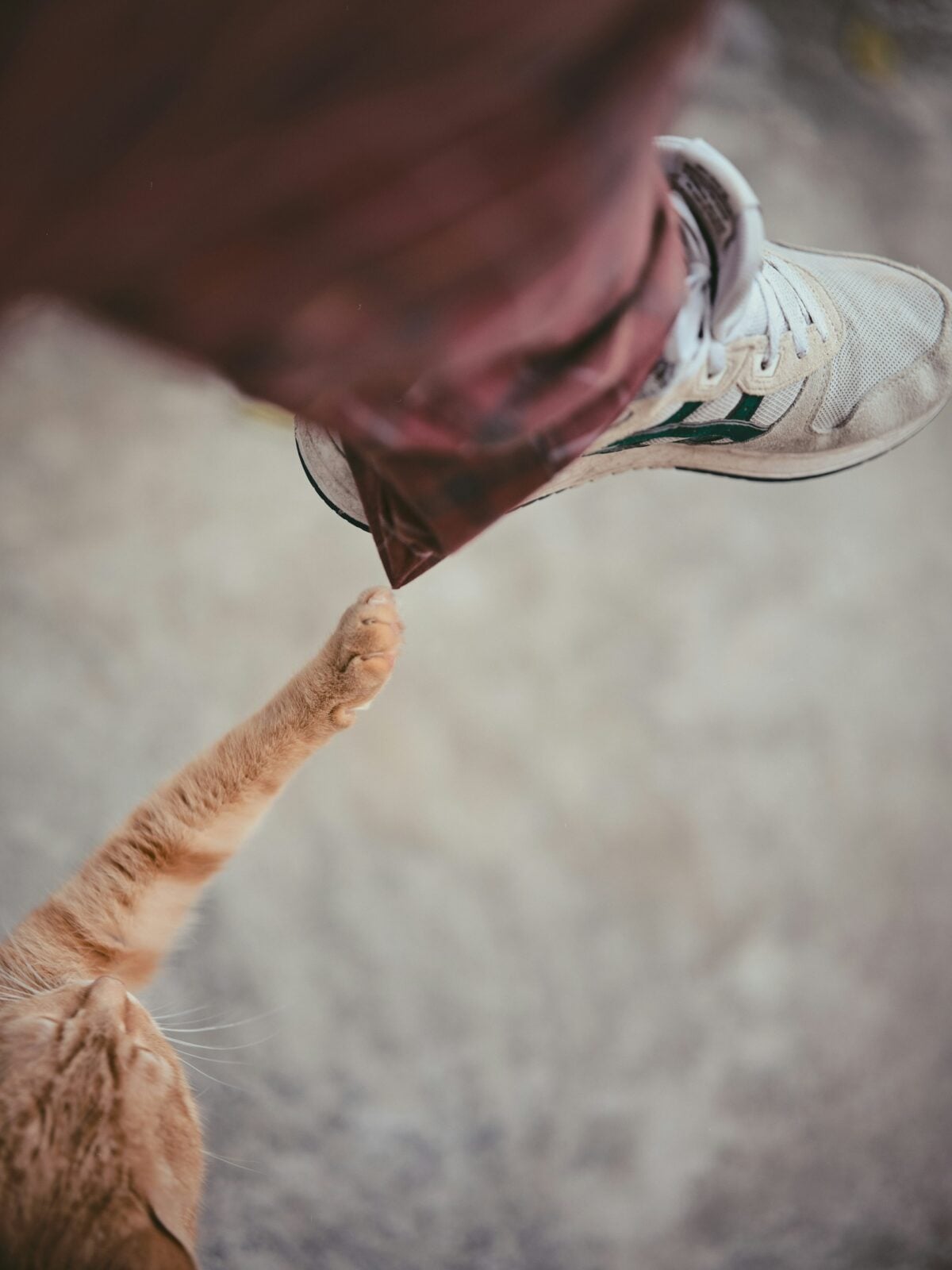
That ankle ambush isn’t unusual cat behavior, either. VCA notes that play-related aggression can include stalking, chasing, pouncing, and attacking moving targets—and recommends interactive play as a healthier outlet for those behaviors.
3. They Associate You With Food or a Routine (“The Clockwork Invoice”)
Cats have an internal rhythm that puts Swiss watches to shame. If the reaching happens at the exact same spot at roughly the same hour every day, you’re not experiencing a random display of affection; you’re receiving an invoice.
This is the transactional paw.
They know that you walking toward the kitchen at 5:30 PM correlates to wet food. They know you heading toward the bathroom at 10:00 PM means bedtime treats are imminent. Sitting along your path and reaching out as you cross the threshold is their way of saying, “Right this way, can opener. Don’t wander off course.”
4. They’re Telling You to Give Them Space (“The Nap Bubble”)
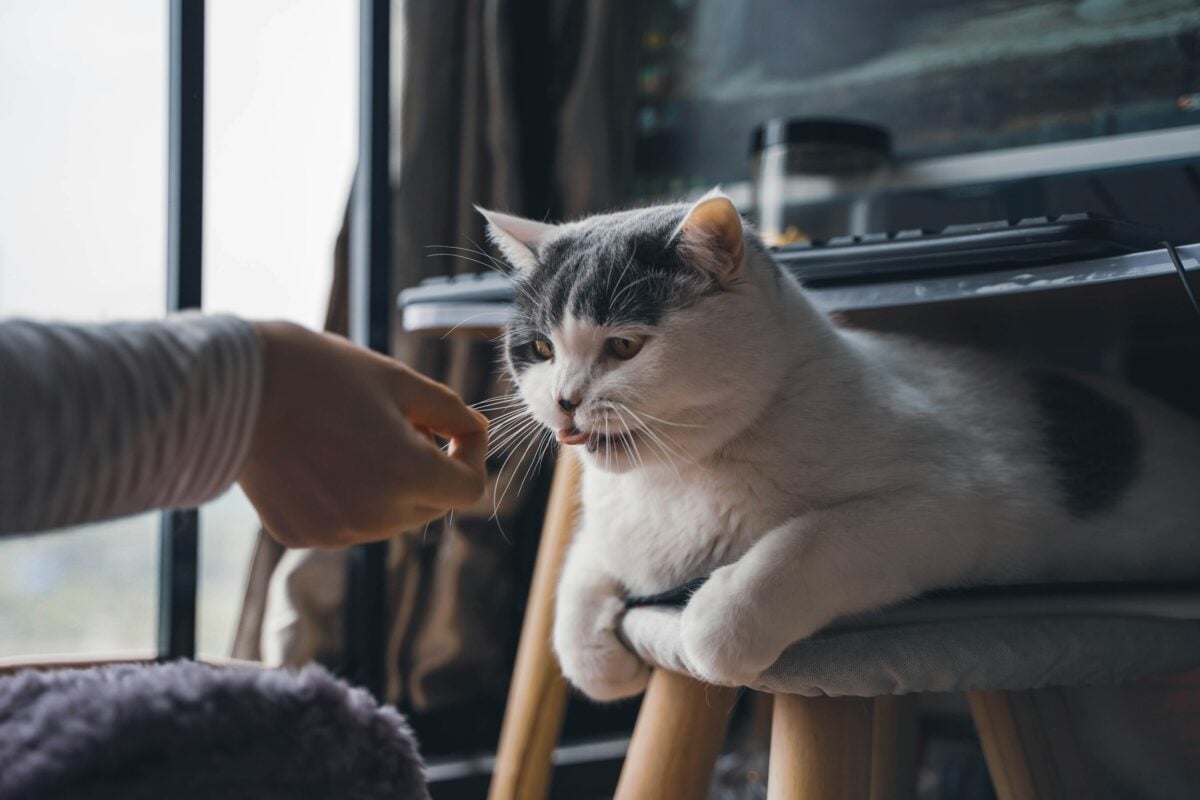
Not every reached paw is an invitation for contact. If you brush too close to a chair where your cat is curled up snoozing, a quick swat can simply mean, “A little space, please.” Think of it as the feline version of putting up a tiny “do not disturb” sign.
This isn’t them asking for a chin rub; it’s a polite warning that translates to, “You breached my two-foot perimeter. Back up.”
Watch the accompanying cues carefully:
- Stiff, flattened ears (“airplane ears”)
- Whiskers pulled back tight against the cheeks
- A hard, twitching tail tip
- A sharp, quick swat with claws partially bared
If you reach down to pet a cat who just gave you a boundary tap, you’re likely to get a real scratch for your troubles. Respect the bubble, give them room, and keep walking.
5. Pain, Stress, or Discomfort May Be Involved (“Something Feels Off”)
While most drive-by reaching is normal domestic theater, a sudden shift in how your cat uses their paws warrants close attention.
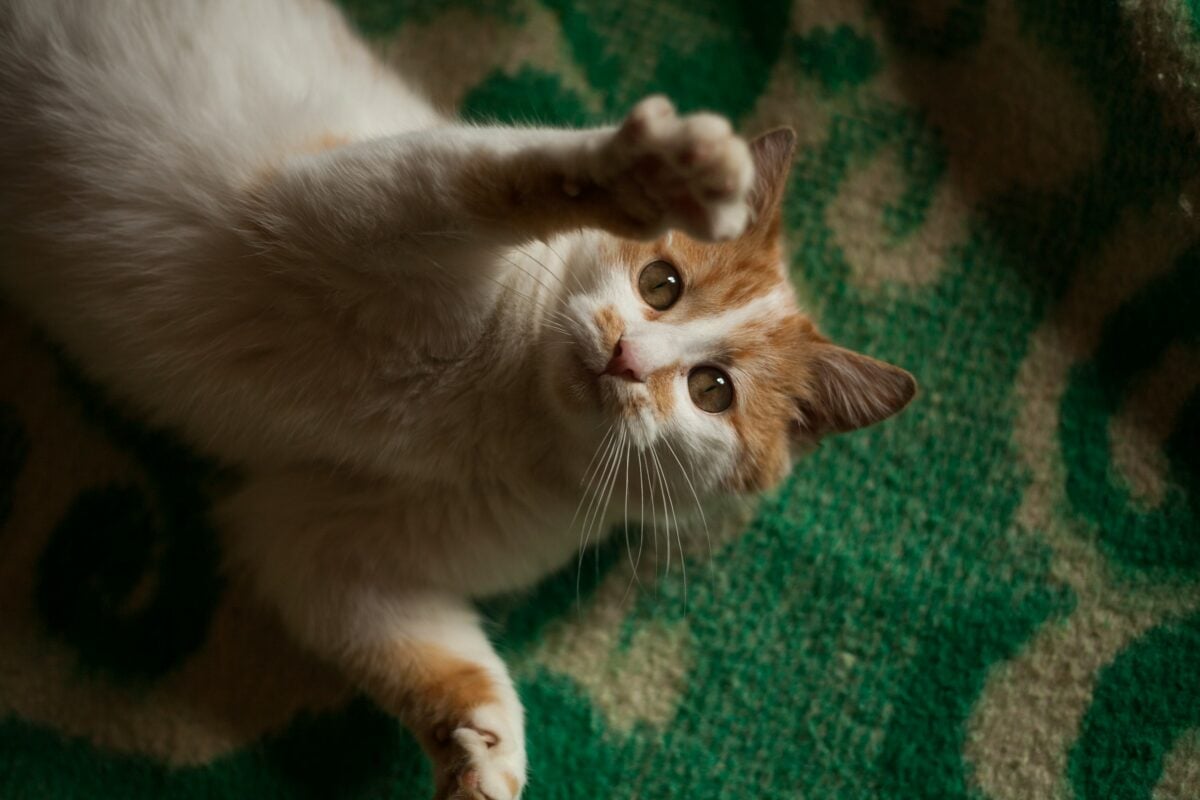
If a cat that has spent years offering soft, clawless love taps suddenly starts aggressively lashing out as you walk past, it’s rarely just bad attitude:
- Arthritis and Joint Pain: Pain can make some cats less tolerant of being approached, touched, or accidentally bumped. If an older cat suddenly starts swatting when you pass their favorite resting spot—especially alongside stiffness, reduced jumping, or other mobility changes—it’s worth mentioning to your vet.
- Unusual Sensitivity or Discomfort: If your cat suddenly seems unusually sensitive to touch or reacts strongly when something passes near them, don’t assume they’re simply being cranky. A noticeable change in sensitivity or behavior deserves a conversation with your veterinarian.
- Redirected Agitation: Maybe your cat has spent the morning intensely watching an unfamiliar cat through the sliding glass door. If they’re still wound up afterward, the next person or pet who wanders past may become the unlucky target of that lingering agitation.
When aggressive grabbing appears out of nowhere—especially if paired with appetite drops, litter box avoidance, or hiding under furniture—it helps to understand why your cat may be suddenly avoiding you or acting defensively. Skip the behavioral guesswork and schedule a vet check to screen for hidden pain.
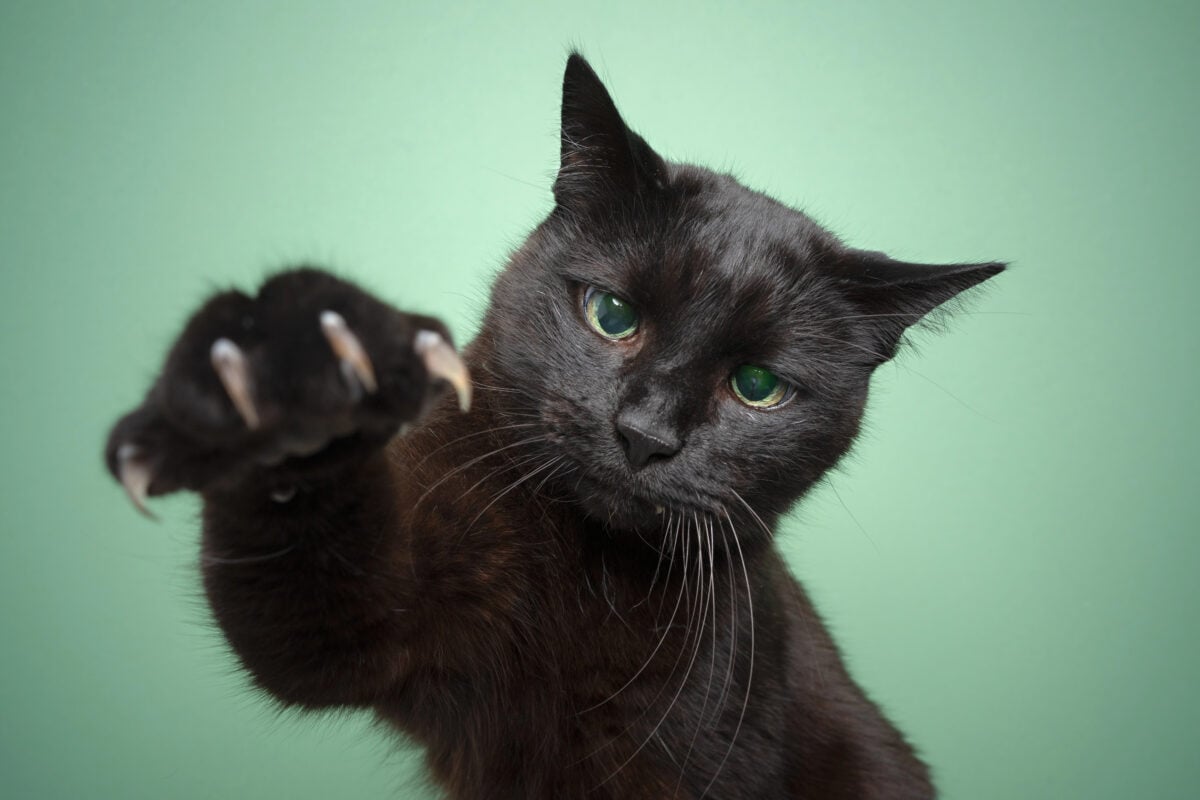
A sudden change in swatting or aggression is worth paying attention to. Cornell’s Feline Health Center notes that pain and medical conditions can contribute to aggressive behavior in cats, which is why an unexplained behavior change deserves a veterinary check.
Is My Cat Playing or Being Aggressive?
A paw flying toward your ankle can look dramatic, but one swat doesn’t tell the whole story. To figure out what your cat means, look at the rest of their body, what happened immediately before the swat, and what they do next.
A playful cat may stalk you from behind furniture, pounce as you pass, give you a quick tap, and then bounce away as if they’ve just won the world’s smallest hunting competition. Their movements may be energetic and exaggerated, and the ambush often happens in the same places or during predictable bursts of activity.
A cat who wants space may give a quick warning swat when you get too close to their bed, brush against them, or interrupt a nap. The message in that situation is less “Chase me!” and more “That’s close enough, thanks.”
More concerning behavior may include repeated or forceful swatting alongside hissing, growling, flattened ears, a tense posture, or an attempt to bite. A sudden change from your cat’s normal behavior deserves extra attention, too.
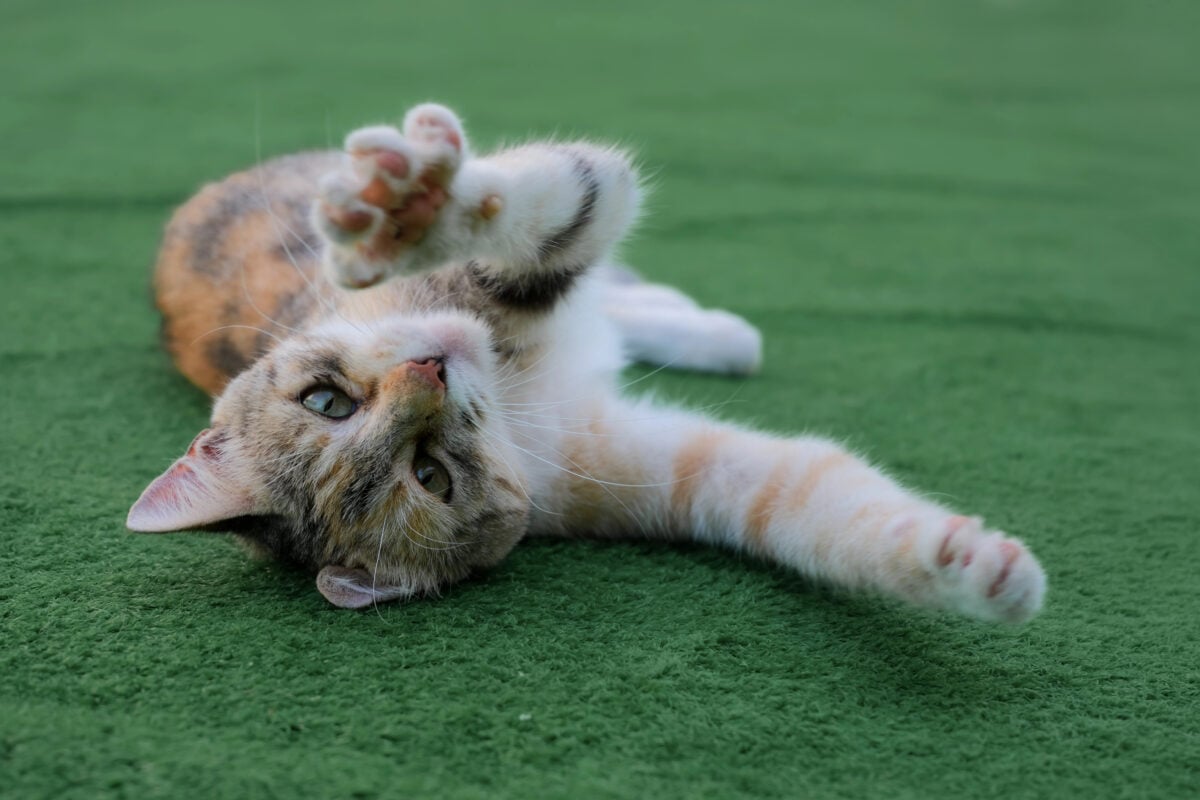
A surprise paw to the ankle can certainly feel like a tiny act of disrespect, but feline intentions don’t always match human interpretations. In fact, plenty of cat behaviors that seem rude usually aren’t once you understand what your cat is actually trying to communicate.
Look at the Whole Cat, Not Just the Paw
One swat doesn’t tell the whole story. The best clues come from what happened right before it, what the rest of your cat’s body is doing, and what happens next.
Here’s how playful pawing tends to differ from behavior that deserves a closer look:
| Look For | More Likely Playful | More Concerning |
|---|---|---|
| The swat | Quick taps, playful grabs, or a pounce-and-retreat | Forceful or repeated swats |
| Claws | Usually tucked away or only lightly used | Repeated scratching or forceful clawing |
| Body language | Loose, bouncy, curious, or ready to chase | Tense, defensive, or highly agitated |
| Ears | Relaxed or facing forward | Flattened or pinned back, especially with other signs of tension |
| Sounds | Usually quiet | Hissing, growling, or distressed vocalizing |
| What happens next | Darts away, hides for another pounce, or looks ready to keep playing | Stays agitated, keeps swatting, or continues pursuing you |
| The pattern | Happens during familiar play or ambush situations | Starts suddenly, seems unpredictable, or is becoming more intense |
A paw swipe is only one piece of the puzzle. Learning to read your cat’s facial expressions—along with their ears, eyes, posture, and other body-language cues—can help you tell a playful ambush from a genuine “back off” moment.
What to Do When Your Cat Grabs or Swats at Your Legs
Once you’ve ruled out an obvious “please give me space” situation, the goal isn’t to punish the paw—it’s to make your legs less interesting and give your cat something better to stalk, chase, or pounce on.
1. Master the “Statue Technique”
The instinctive reaction when a paw catches your sock or pant leg is to jerk away, but sudden movement can make an already exciting game even more exciting.
Instead, freeze. Don’t yank your foot away, race down the hallway, or turn the encounter into an accidental game of chase. Once your cat lets go, become profoundly boring for a moment—no wrestling, scolding, or dramatic reaction.
The message is simple: attacking a walking leg is a pretty lousy way to start a party.
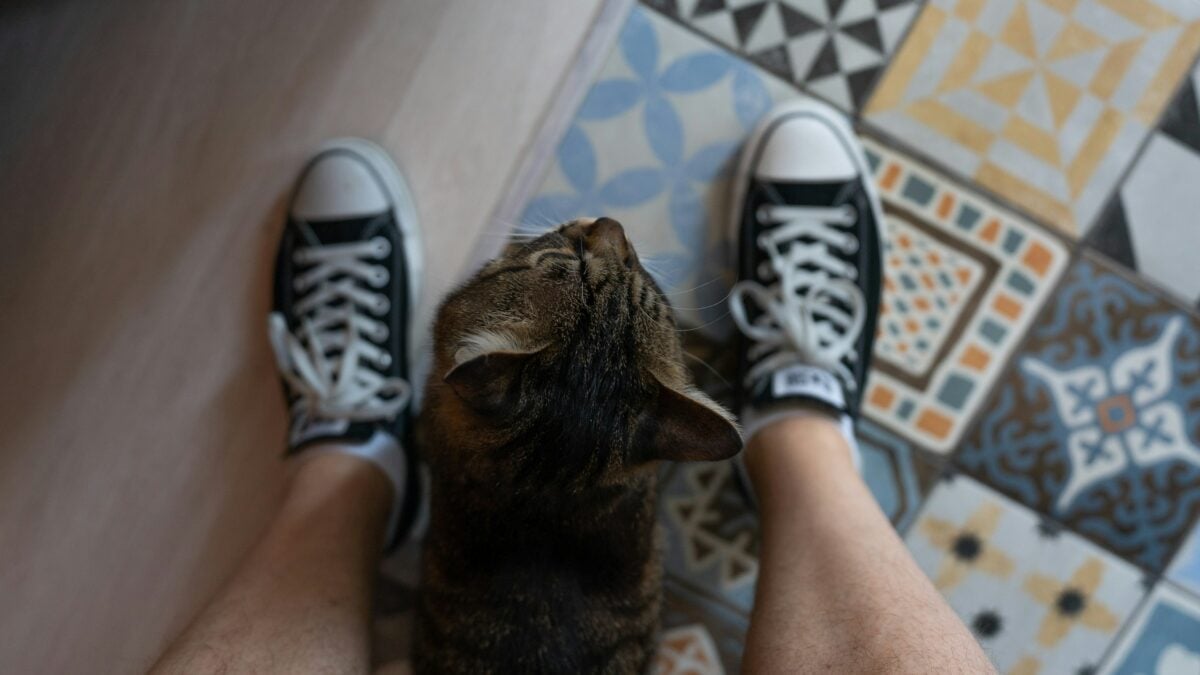
Scolding or yelling can make the situation more stressful without showing your cat what you’d rather they do. Instead, focus on correcting unwanted cat behavior without yelling by redirecting those grabby paws toward an appropriate toy and rewarding the calmer behavior you want to see.
2. Redirect the Ambush Before It Happens
If your cat reliably waits behind the same couch, doorway, cat tree, or bed skirt, congratulations: you’ve discovered the hunting blind.
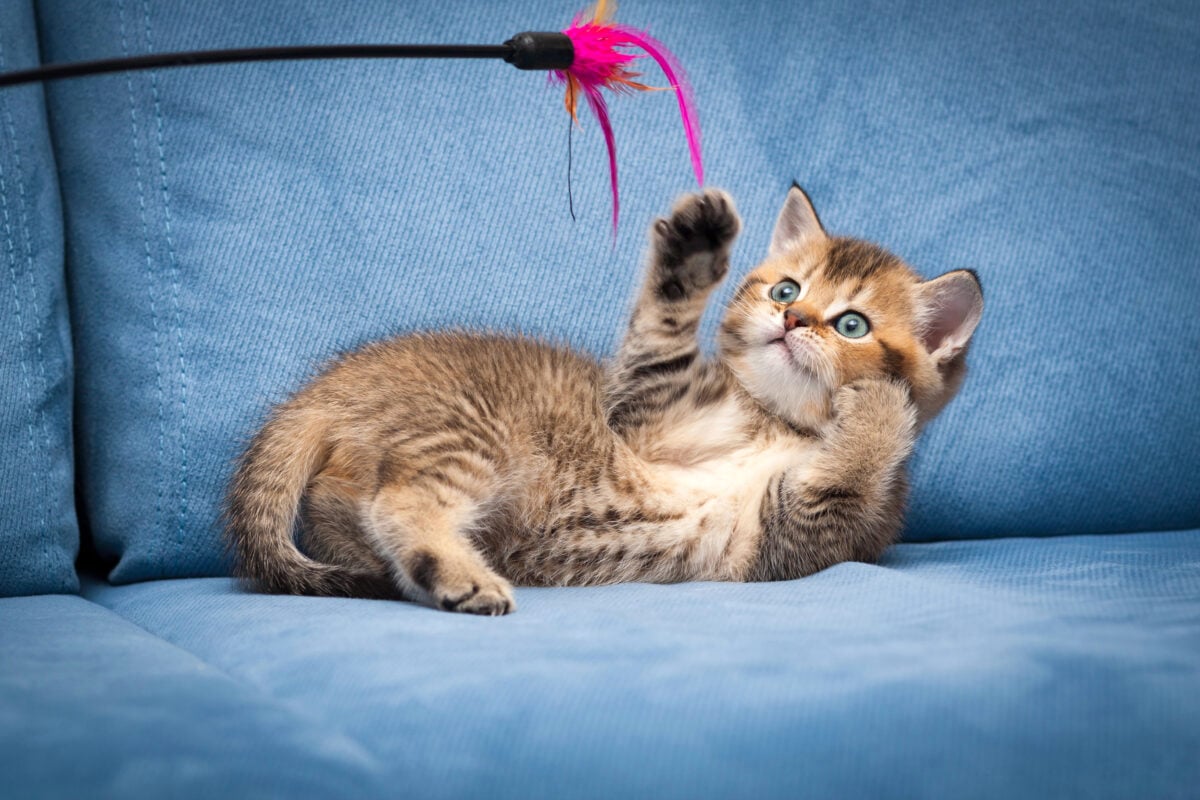
Use that predictability to your advantage. Keep a few appropriate toys near known trouble spots and redirect your cat before your ankles enter the danger zone. Slide a crinkle ball across the floor, toss a toy mouse away from your path, or break out a wand toy for a quick chase.
The goal is to give your little ambush artist something they’re actually allowed to stalk and pounce on before your ankles get the job.
3. Burn That Playful Energy Somewhere Else
If the drive-by swats seem playful, regular interactive play gives all that stalking, chasing, and pouncing energy a much better target than your shins.
Try a short wand-toy session before the times your cat is most likely to stage an ambush. Make the toy dart behind furniture, disappear around corners, and skitter across the floor so your cat gets to stalk, chase, and pounce.
And let them catch it! Ending with a successful grab gives your tiny hunter a satisfying finish—and may help them ease back into loaf mode afterward.
Keep hands and feet out of wrestling games, too. A kitten attacking your fingers may be adorable today; an adult cat enthusiastically applying the same rules is considerably less charming.
If your cat seems to have turned your ankles into their favorite form of entertainment, boredom may be adding fuel to the ambush. Watch for other signs your cat is bored and give them regular opportunities to stalk, chase, pounce, climb, and play.
4. Reward the Behavior You Actually Want
If your cat calmly watches you pass without launching Operation Ankle Capture, that’s the moment worth rewarding.
Attention, play, praise, or an occasional treat can make calmer alternatives more worthwhile. Just avoid immediately producing a snack after a swat, or your clever little economist may discover that smacking a human is an excellent way to operate the treat dispenser.
5. Rethink the Ambush Zone
Sometimes changing the environment is easier than negotiating with the tiny predator living under your bed.
If attacks always come from one particular hiding place, remove or modify it. Tuck up a dangling bed skirt, use under-bed storage to eliminate a favorite ankle-level hideout, or move toys and scratching options into areas where you’d rather your cat spend their time.
You can also make a nearby spot more appealing with a sturdy cat tree, scratching post, or elevated perch where your cat can climb, observe the household, and hang out without turning the walkway into their personal hunting blind.
6. Know When the Paw Means “Not Now”
Not every swat needs a toy.
If your cat consistently swats when you approach a particular sleeping spot, crowd them while they’re resting, or touch a certain area, back off and pay attention to the pattern.
Sometimes the best response to a paw is simply: message received.
And if that reaction is new, unusually intense, or accompanied by other changes in behavior or mobility, that’s different from your usual hallway ambush—and worth a closer look.
How to Handle the Snag (Without Ruining Your Clothes)
If you love the interaction, lean into it: stop, offer the back of your hand for a scent check, deliver a good chin scratch, and proceed on your way. You’ve officially paid the hallway toll.
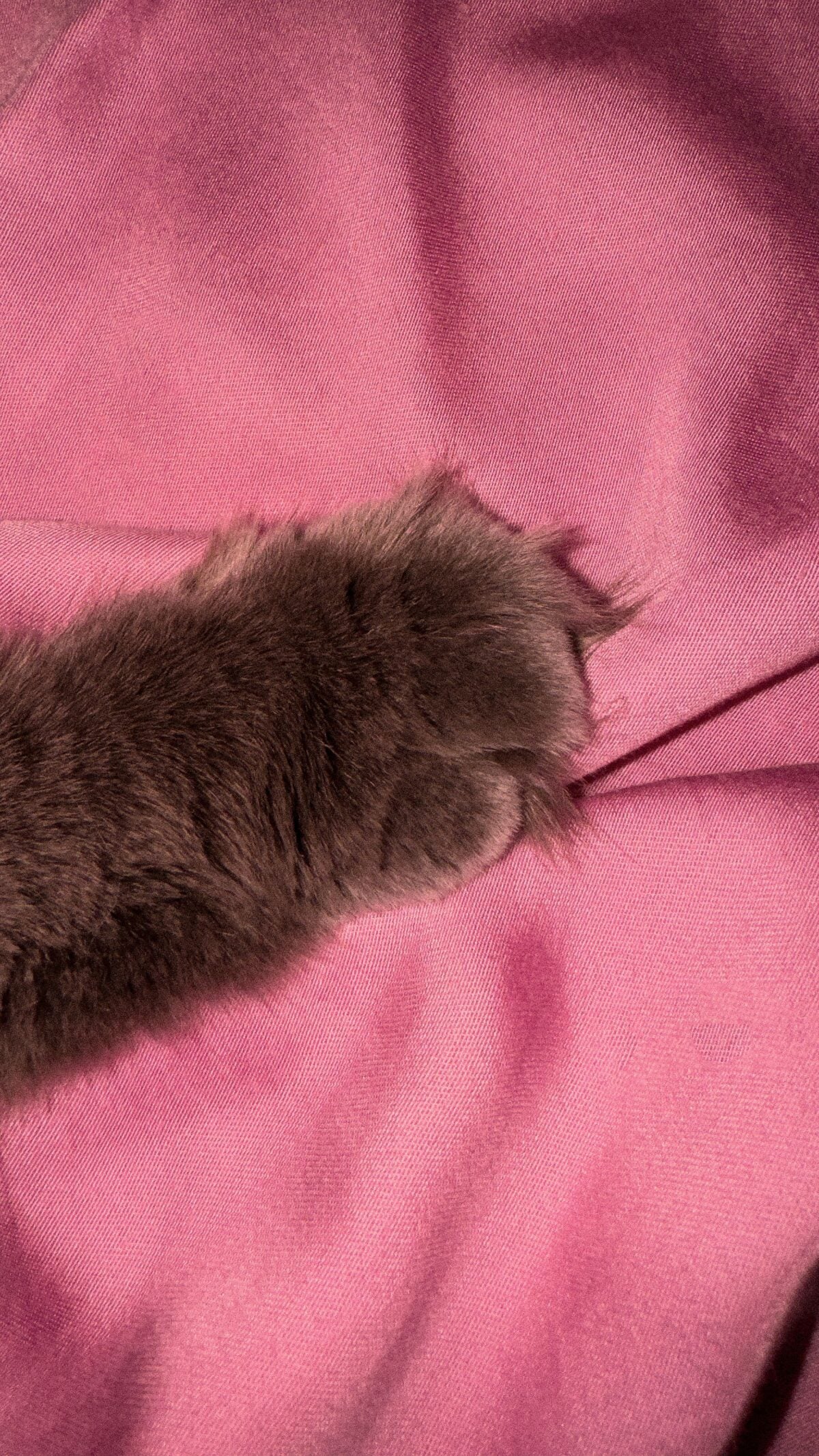
But when sharp claws start catching your favorite sweater, pajama pants, or sofa upholstery, don’t turn the snag into a tug-of-war. Freeze instead of yanking the fabric away, and give your cat a moment to release their paw. Once you’re free, redirect those grabby paws toward a kicker toy or another appropriate target.
Save the Sweater
Already have a pulled thread dangling from the scene of the crime? Resist the urge to snip it off immediately.
- For knits and sweaters: A small snag-repair tool can help pull the loose loop back to the inside of the garment without cutting the thread. Then lightly stretch and smooth the surrounding fabric to help redistribute the tension.
- For woven clothing: Gently work the pulled thread back toward the snag with your fingers or a blunt needle rather than cutting it. Snipping a structural thread can leave you with a hole instead of a harmless pull.
- For delicate fabrics: Skip aggressive tugging, trimming, or DIY heroics. If the snag is prominent on silk, fine knits, or another expensive piece, a tailor or dry cleaner may be the safer bet.
Save the Sofa, Too
Cat claws can leave little pulled loops on upholstered furniture even when your resident decorator wasn’t intentionally scratching it.
For a small upholstery snag, use a blunt needle, snag tool, or tiny crochet hook to carefully tuck the loose fiber back beneath the surrounding weave. Avoid pulling it farther out or cutting it flush unless you know how that particular fabric is constructed.
If the damage is on a seam, keeps unraveling, or has turned into an actual tear, stop before a tiny snag becomes a much bigger repair job. An upholstery professional can often secure the damaged area far more invisibly than an enthusiastic bottle of household glue.
And for repeat offenders? Keep loose-knit throws, dangling tassels, robe ties, and other irresistible fabrics away from favorite ambush stations when you can.
Your cardigan—and your couch—will thank you.
When Should You Worry About Your Cat Swatting You?
A playful hallway ambush from a cat who has always enjoyed attacking pajama pants is very different from a normally relaxed cat who suddenly starts lashing out whenever someone walks nearby.
The change from your cat’s normal behavior is often more important than the swat itself.
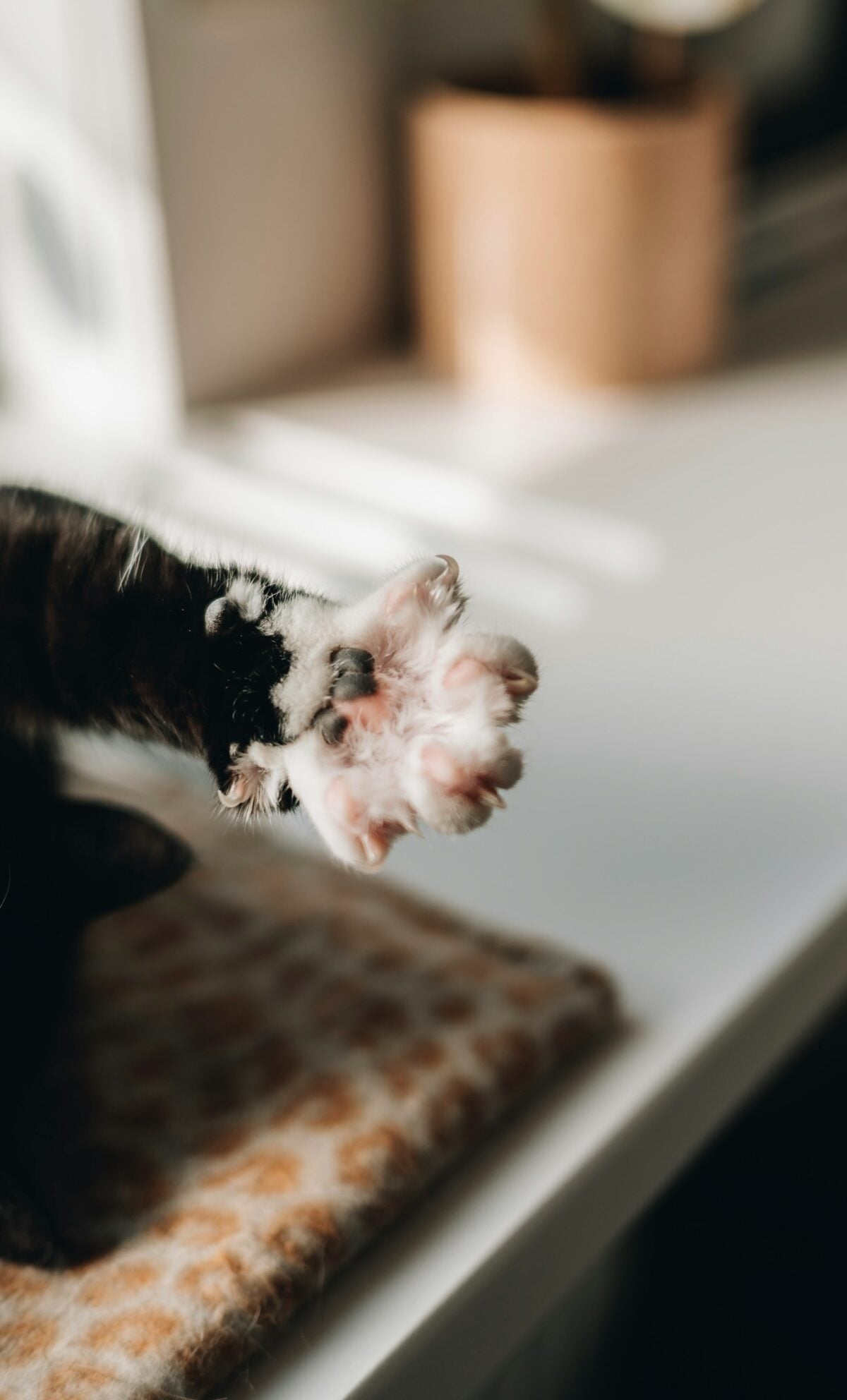
Consider contacting your veterinarian if the swatting is new, suddenly more intense, or accompanied by changes such as:
- sensitivity to being touched
- difficulty jumping or climbing
- stiffness or changes in movement
- hiding more than usual
- changes in appetite or drinking
- changes in litter-box habits
- unusual vocalization
- persistent agitation or aggression
- other noticeable changes in personality or routine
Pain and medical problems can sometimes contribute to changes in aggressive behavior, so don’t automatically assume a sudden personality shift is your cat “being mean.”
This is especially worth considering with older cats. If your longtime cuddlebug suddenly objects to being approached, picked up, or touched in a particular place, a veterinary exam can help rule out discomfort or another medical cause.
And if your cat becomes highly agitated after seeing another animal through a window or experiencing another upsetting event, give them space rather than immediately trying to pick them up or calm them with physical contact.
Pay attention to other changes, too. If your cat has started swatting more often and is also suddenly hiding, avoiding interaction, eating differently, or behaving unlike their usual self, there may be more going on than a simple case of ankle ambush.
The occasional drive-by paw usually isn’t a reason to panic. A new pattern of behavior is the part worth investigating.
Frequently Asked Questions About Cats Reaching Out and Swatting
Cats have a talent for turning one tiny paw into a surprisingly big mystery. If you’re still trying to decode your cat’s drive-by taps, grabs, or ankle ambushes, these common questions may help explain what your little paw-slinger is up to.
Why does my cat swat me when I walk past?
Movement can make feet and ankles tempting targets for playful stalking and pouncing. In other situations, a swat may be your cat asking for more space—especially if you’re passing close to a favorite resting spot. Context and body language help distinguish the two.
Why does my cat grab my leg when I walk by?
Your moving leg can become part of an impromptu hunting game, particularly if your cat likes hiding behind furniture and ambushing you as you pass. If the behavior appears playful, redirect it toward toys your cat can safely stalk, chase, and catch.
Why does my cat reach out to me without using claws?
A soft, clawless paw is often less concerning than a forceful strike, particularly if your cat otherwise looks relaxed. They may simply be trying to get your attention or initiate an interaction. Still, don’t rely on claws alone—look at your cat’s entire body and the situation.
Why does my cat swat me and then run away?
If your cat taps you and immediately darts away, hides, or turns around to see whether you’re following, they may be trying to start a game. Rather than chasing them with your hands or feet, grab an appropriate toy and see whether they’d like a proper play session.
Why does my cat suddenly swat me when they never did before?
A sudden behavioral change deserves more attention than a familiar playful habit. Consider what has changed in your cat’s environment or routine, and watch for other signs of stress or discomfort. If the behavior persists, becomes intense, or appears alongside physical or behavioral changes, talk with your veterinarian.
Should I punish my cat for swatting me?
Punishment isn’t the goal. First figure out what seems to trigger the behavior. If your cat is playing, redirect them toward an appropriate toy. If they’re asking for space, give it to them. And if the swatting is new or unusual, consider whether stress, discomfort, or a medical issue could be contributing.
Why does my cat hide and attack my ankles?
Because, unfortunately for your ankles, you make excellent moving targets. Hiding, stalking, and pouncing can all show up during play. Give your tiny ambush predator appropriate opportunities to perform those behaviors with toys instead of your unsuspecting legs.
Still stumped by your cat’s mysterious paw behavior? Tell us what happened in the comments—including what your cat was doing before and after the swat. Leave your question below, and we may answer it or add it to this FAQ to help other equally puzzled cat parents.
The Hallway Toll Is Just Part of the Contract
At the end of the day, having a cat reach out from a warm spot just to brush their toes against you as you walk past is one of the quirky, wonderful perks of sharing your life with a tiny predator. It’s a reminder that even when they’re resting, they’re keeping tabs on you.
As long as the claws stay tucked and the swipes are delivered in good fun, consider that little leg tap the ultimate compliment: you’ve officially been chosen as their favorite passing target.
Want to Understand More of Your Cat’s Behavior?
A drive-by paw is only one piece of the feline communication puzzle. Cats are constantly sending little signals with their eyes, faces, paws, posture, and daily habits—the trick is learning which ones actually mean something.
If your cat prefers silent surveillance, discover why your cat stares at you and what different kinds of feline gazes can mean. For those gentler moments, we also break down why cats put their paws on you when there’s no ankle ambush involved.
Of course, sometimes the explanation is perfectly ordinary, and the delivery is pure theater. Cats have a remarkable ability to turn a missed snack, closed door, or passing ankle into a full-scale production. If that sounds familiar, you’ll probably recognize a few of these cats being far more dramatic than they need to be.
And eventually, living with cats teaches you that not every feline mystery needs solving. From inexplicable sleeping spots to sudden bursts of chaos, there are plenty of things every cat owner eventually stops questioning. The occasional hallway toll may simply earn a place on that list.
Tell Us About Your Little Ambush Artist
Now it’s your turn: where does your cat set up their toll booth? Are they a gentle sofa tapper or a high-drama ankle assassin from under the bed? Tell us your funniest ambush stories in the comments below!