When you purchase through links on our site, we may earn a commission at no extra cost to you. Learn more.
Your cat has started following you everywhere.
Table of Contents
They sleep against your legs instead of across the room. They appear outside the bathroom door the second it closes. Move one chair, bring home a suitcase, or let a thunderstorm roll in, and suddenly your supposedly independent little predator is shadowing you like security detail.
It may not be food, boredom, or a sudden personality change.
Sometimes, your cat is checking on one simple thing:
Want our human-written content to rank above AI-generated garbage? Help us out by clicking this button!
Are we okay?
Cats can form strong attachment bonds with their people, and when a change makes their normally predictable world feel uncertain, that bond can become especially visible. The signals aren’t always dramatic. A slow blink, a drive-by ankle rub, or simply sitting three feet away may be your cat’s version of asking for reassurance.
Here are eight subtle signs your cat may be looking to you for security, what those behaviors can mean, and how to reassure them without overwhelming them.
Why Cats Ask for Reassurance
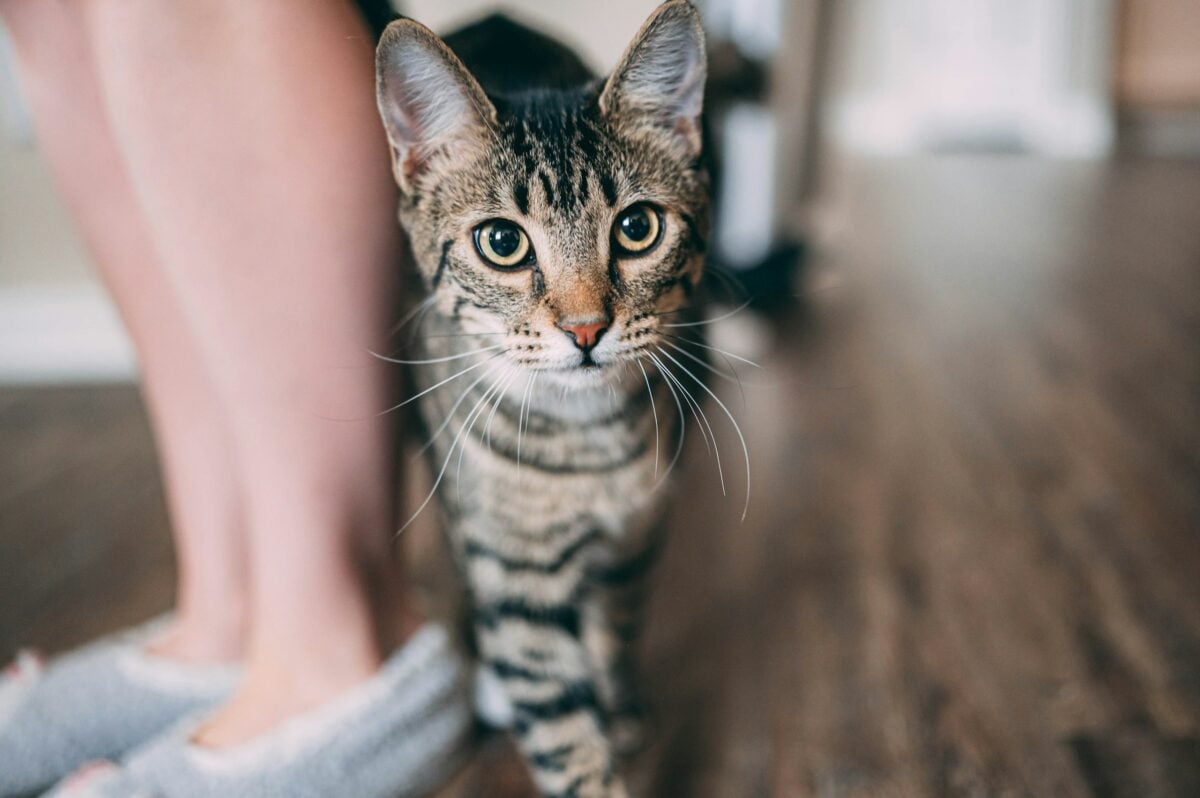
Cats may have a reputation for independence, but independence doesn’t mean they never look for safety cues. Their world depends heavily on routine, familiar smells, predictable sounds, and knowing where everything, and everyone, belongs.
When something changes, even slightly, your cat may start checking in with you more often. A strange noise outside, a visitor in the house, a shifted schedule, or even unfamiliar smells can make their environment feel less predictable.
That’s when reassurance-seeking behaviors tend to become more noticeable.
Some are obvious, like following you from room to room. Others are easy to miss: a slow blink from across the room, a quick rub against your leg, or choosing to sleep a little closer than usual.
What a Feline Check-In Actually Looks Like
Cats check in sideways.
They follow, rub, chirp, hover nearby, or randomly decide your ankles are the only acceptable pillow. None of those behaviors automatically means anxiety. But when they become more noticeable during a change or stressful stretch, they may be your cat’s way of asking:
Are we still good?
Here are eight ways that question can show up.
1. Following You Everywhere (“The Velvet Shadow”)
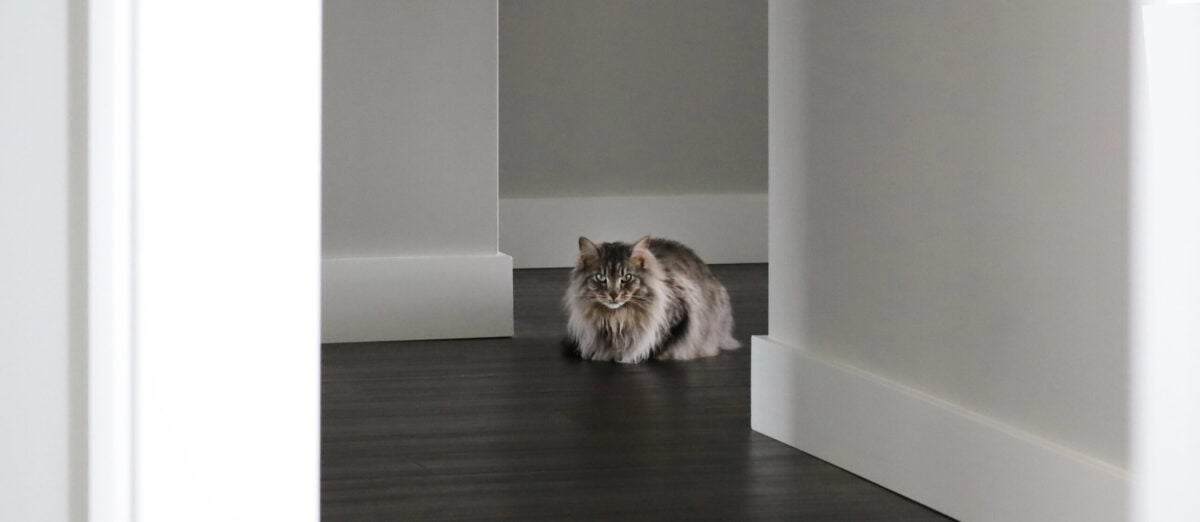
You get up for a glass of water. Tiny paws pad silently behind you. You stop at the fridge, and your cat sits three feet away, paws tucked under, staring at your shins. You head to the bedroom for a sweater. They beat you through the door, wait, then walk you back to the couch.
They don’t want food. Open a can, and they’ll sniff it politely and walk off. They don’t necessarily want to be held, either.
What’s going on: Behaviorists call this using you as a secure base.
Kittens look to their mother for safety while they’re learning the world, and adult cats can form attachment bonds with their human caregivers, too. In a 2019 Oregon State University study, many cats showed what’s known as secure attachment: after a brief separation, they were less stressed when their caregiver returned and comfortable exploring again.
When something feels off, that bond becomes easier to see. Maybe a garbage truck rumbled past. Perhaps your partner or someone in the family is out of town. Maybe you moved an armchair six inches to the left.
Shadowing isn’t necessarily neediness. It can be a safety check: I don’t know what that noise was. You’re big, and you aren’t running. I’m sticking with you until this blows over.
2. Sleeping Closer Than Usual
Most cats rotate their nap spots. The sun puddle at 10 a.m. The back of the sofa at 2 p.m. The top of the cat tree by 6 p.m.
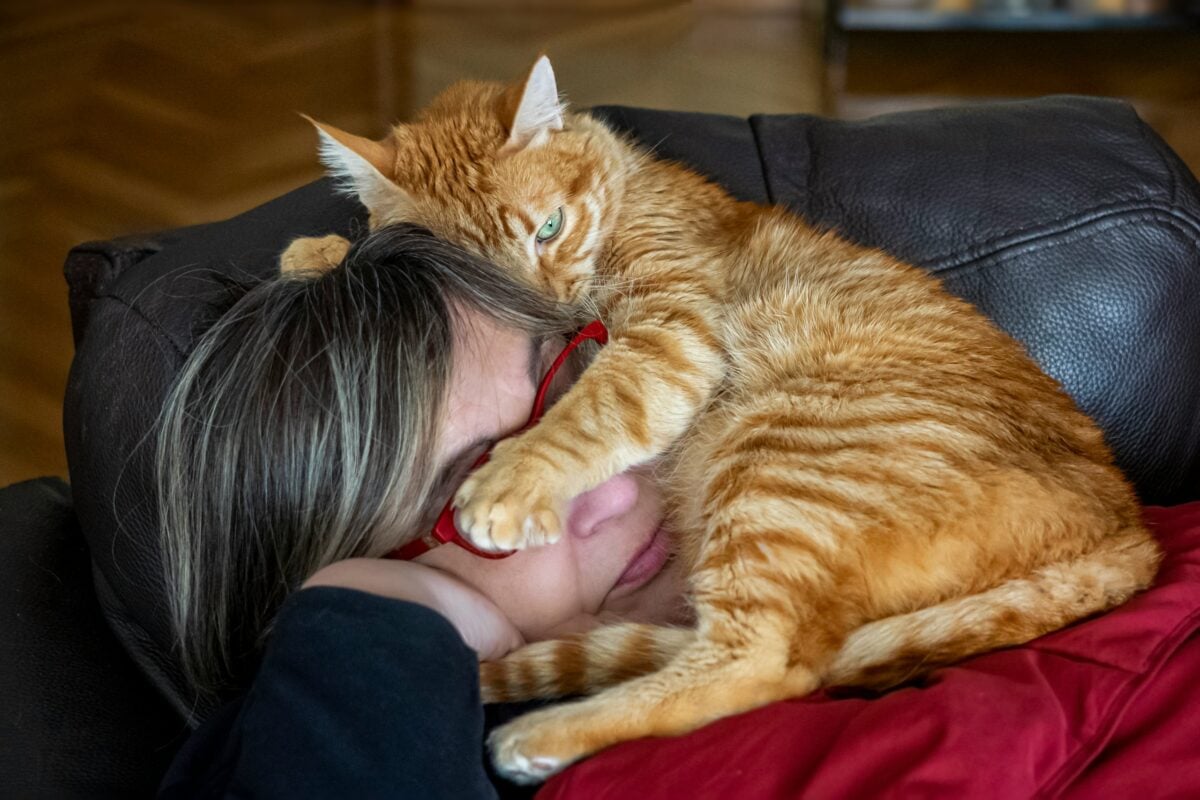
Then one week, your cat ditches every cushion they own. Now they sleep draped over your ankles, or wedged between your knees like a furry bowling ball. Or pressed against your collarbone, whiskers tickling your chin while you try to breathe.
Why it matters:
Sleep puts any animal in a more vulnerable position. So when your cat unexpectedly trades the other end of the couch for your ribcage, the choice can say something simple: I feel safe here.
For an unsettled cat, close contact may also offer an extra layer of security. Your warmth, scent, breathing, and familiar presence are all right there.
In cat terms, it’s about as close as they get to handing you the night watch.
3. Hiding Where They Can Still See You
Real hiding is obvious. Your cat vanishes into the back of the linen closet or behind the water heater, and you’re searching with a flashlight.
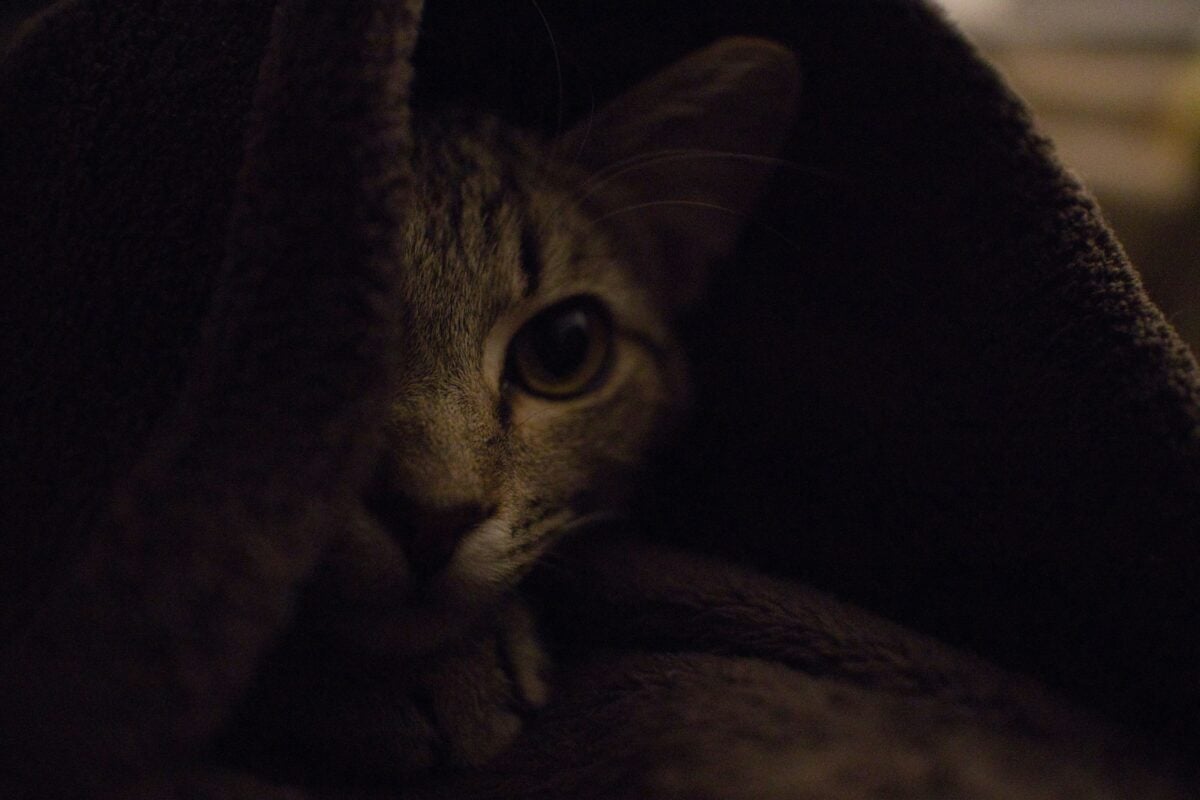
Reassurance hiding looks different.
- Your cat tucks under the sofa skirt or a low coffee table.
- Their chin rests on their paws, facing out.
- Their ears may turn sideways toward the noise. Maybe it’s holiday guests, or roofers hammering overhead.
- Their eyes stay locked on your face.
They want cover, not isolation. And they’re reading you. If you’re on the couch laughing at a show with loose shoulders, that message reaches the rug loud and clear: The big hairless one isn’t fleeing. That thudding upstairs probably isn’t the ceiling caving in.
4. Rubbing Against Your Legs More Often
Cats have scent glands all over: along their lips, between their ears, and around the base of their tail. When your cat rounds a corner and leans their full weight into your calf (nearly tripping you), they’re scent-marking on purpose. This is called allorubbing.
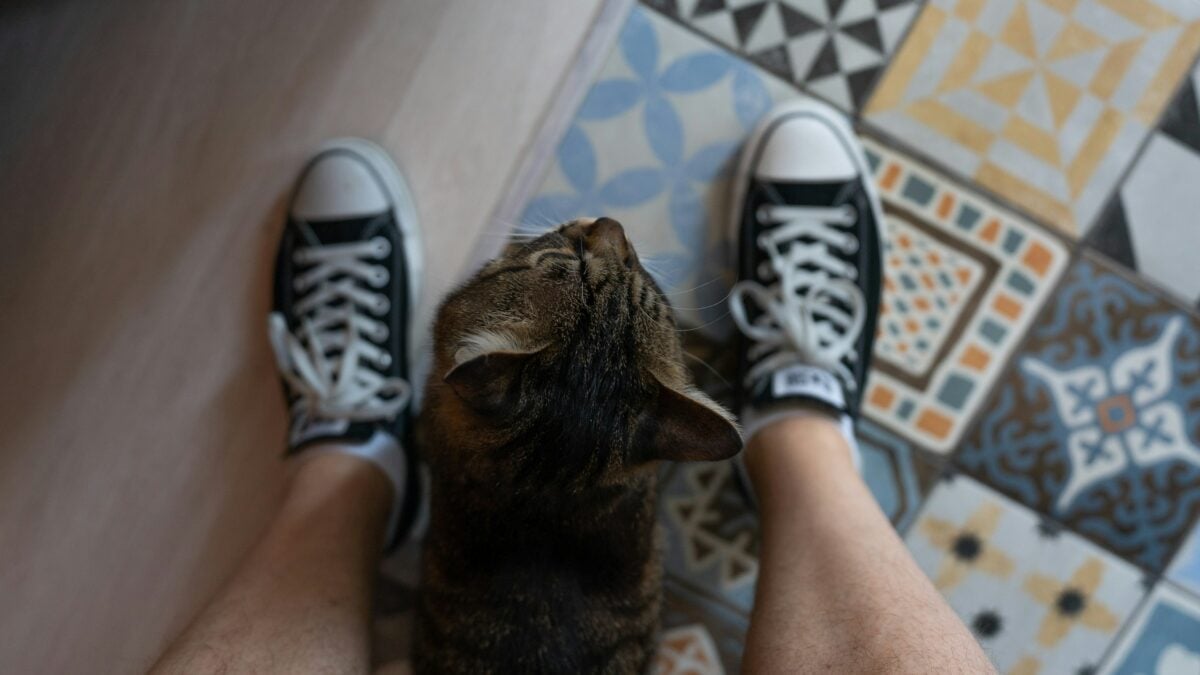
Why they do it more when uneasy: A shared scent means safety.
- New smells make the house feel foreign. Think groceries in plastic wrap, shoes that tracked in the vet’s waiting room, or a new rug that smells like a factory.
- Pressing into your leg and winding their tail around your ankle rebuilds the family scent bubble.
- The message: You smell weird right now. Let’s fix that.
It’s also a clear request for contact. They don’t need a five-minute petting session. They’re leaving some of their scent on you and picking up a little of yours.
5. Asking for Pets, Then Pulling Away
This one gets misread constantly. It’s why so many people call cats moody or two-faced.
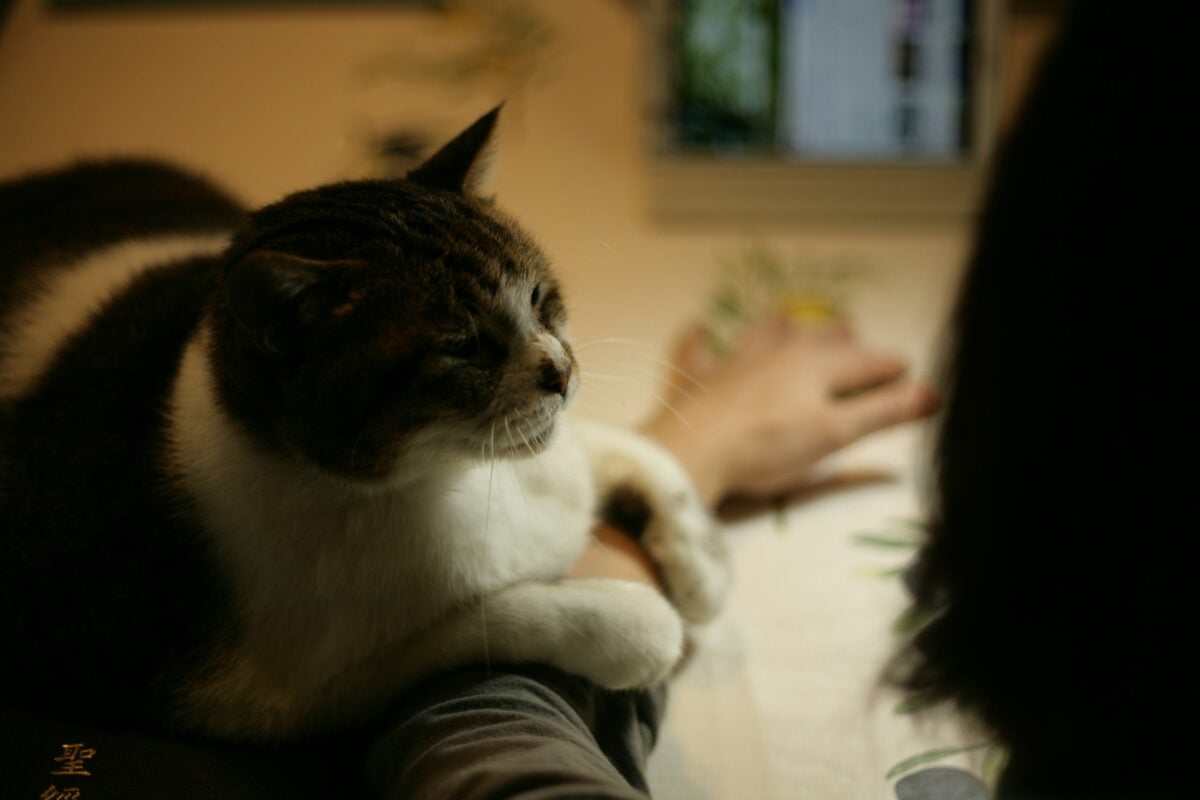
Here’s how it goes:
- Your cat walks up with their tail straight up, tip curled like a question mark. That’s the universal cat signal for friendly intent.
- They headbutt your wrist.
- You stroke their back. After three strokes, the tail twitches, the skin ripples, and they step just out of reach.
- They sit down and stare right back at you.
- Reach for them, and they dodge. Walk away, and they follow.
What’s really happening: It’s a tug-of-war inside your cat. They want comfort and contact, but their nervous system is already a little flooded. Maybe they’re overstimulated. Maybe the tension in the house has them on edge. Touch feels great for two seconds, then it tips into overload.
They still want you close. They just want parallel companionship: same space, less intensity. Talk to them softly, keep your hands in your lap, and watch their body relax.
6. Trilling, Chirping, or Calling for You
Adult cats rely heavily on body language, scent, and other vocalizations when communicating with one another. With humans, though, many cats become surprisingly chatty.
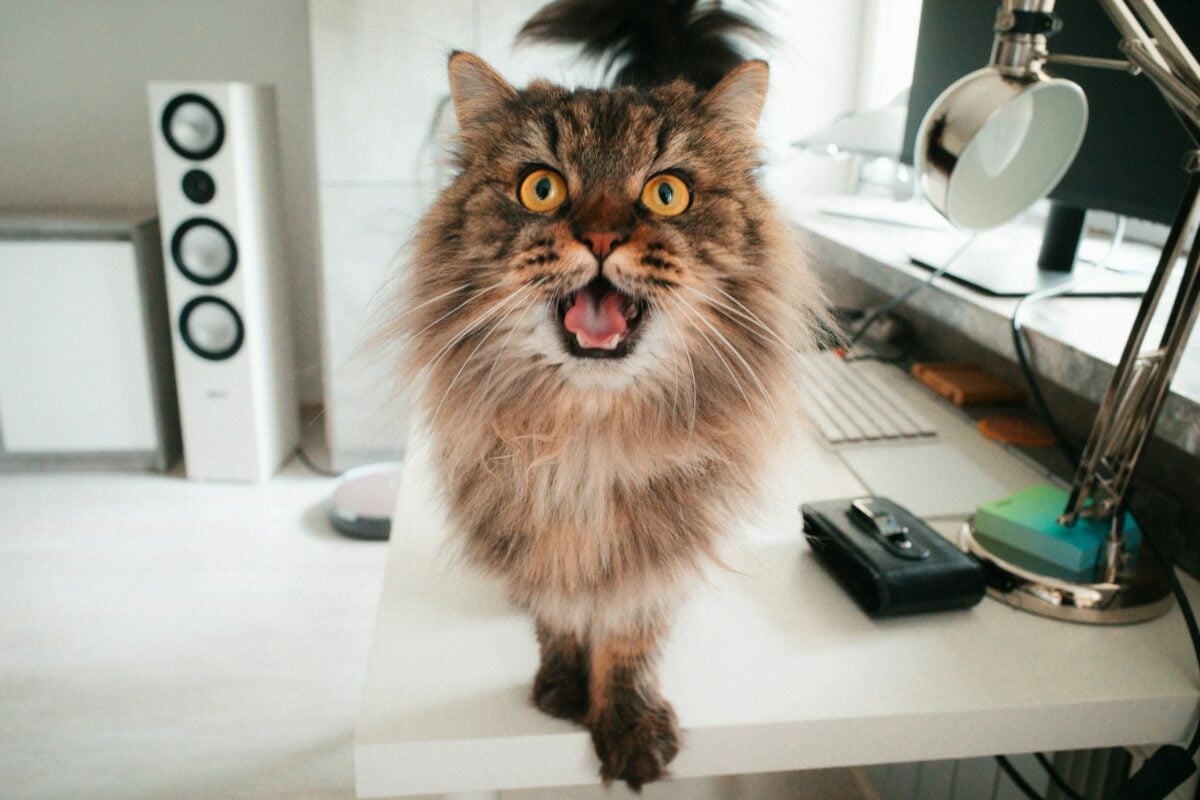
Over time, you may even learn their different “voices”: the dinner demand, the hallway complaint, the tiny greeting chirp, and the soft rising mrr-rrt? That sounds suspiciously like a question.
- You’ll hear it when you walk into a room where your cat was napping alone.
- Or when they trot out from behind a closet door.
- It’s the cat version of tapping on an office door: Got a second?
It’s an invitation to notice them. Answer in the same soft, slightly higher voice. A quiet “Hey buddy, what’s up?” works. Their ears will tip forward, their tail will rise, and their body will soften. They didn’t need anything fixed. They just wanted to know you were still tuned in.
7. Slow Blinking at You
Cat people treat the slow blink like a secret code. That’s because it basically is.
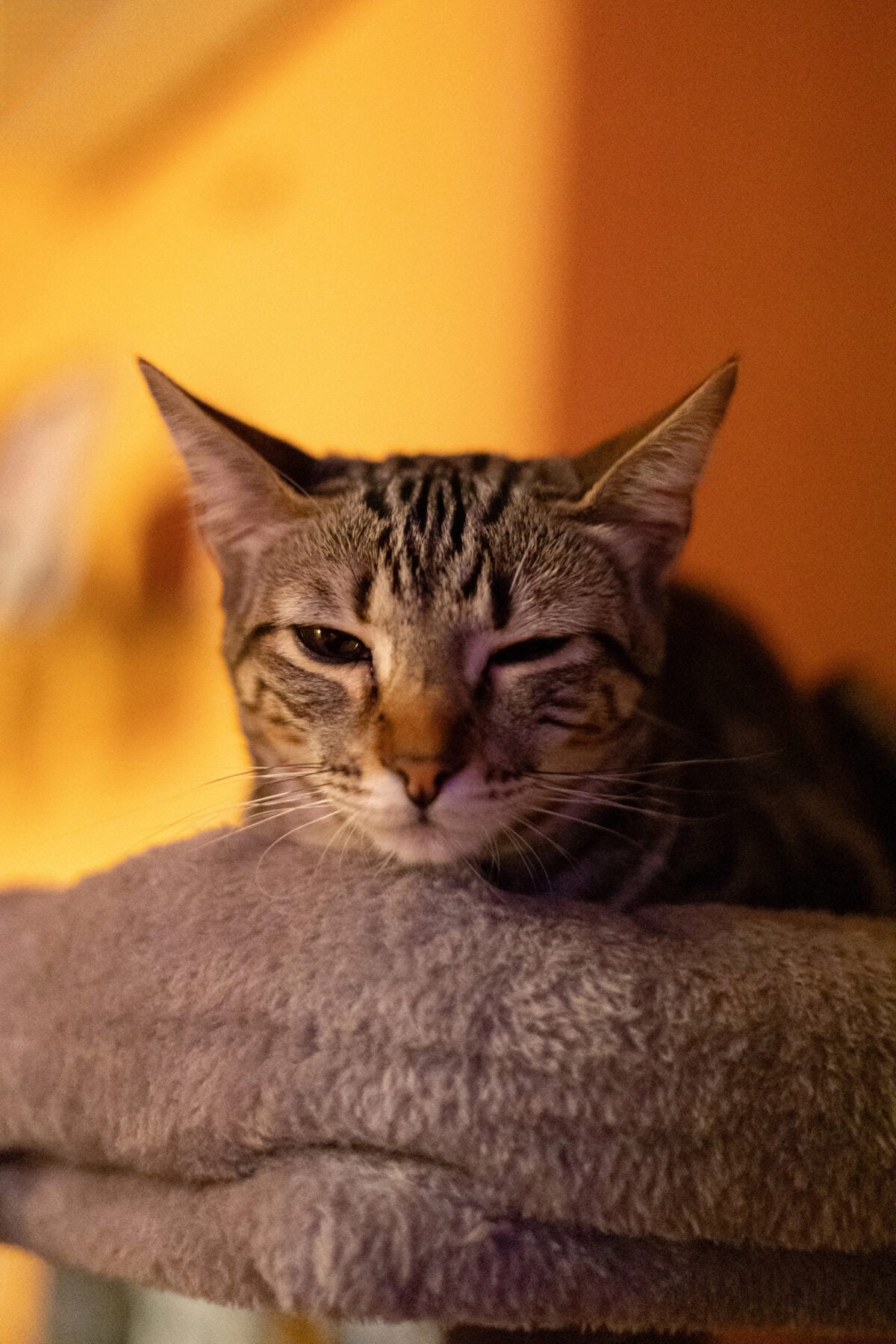
There’s actual research behind this one.
In a 2020 study published in Scientific Reports, cats narrowed their eyes more often when their owners slow-blinked at them. They were also more likely to approach an unfamiliar researcher after that person slow-blinked than after the researcher simply held a neutral expression.
The researchers concluded that slow blinking may function as a form of positive communication between cats and humans.
In other words, the slow blink really does seem to belong on the friendly side of the feline vocabulary.
So when your cat looks at you, lets their eyes narrow until the lids meet, holds them shut for a beat, and slowly opens them, they’re making themselves vulnerable. They’re blinding themselves in front of you on purpose.
They may not be “calming themselves down” in the human sense. But they’re communicating in a way that tends to go with relaxed, positive interaction.
How to answer:
- Soften your forehead.
- Close your eyes for a full two seconds.
- Open them slowly, without staring straight into their pupils.
You may see their eyes soften, their head lower, or the tension ease out of their posture. You just confirmed the deal: Nobody’s panicking. We’re safe.
8. Sitting on Your Clothes, Laptop, or Favorite Spot
You step away from your desk for ninety seconds. You come back to sixteen pounds of tabby sprawled across your keyboard. Or you drop the laundry basket on the bed, and your cat burrows straight into the sweatshirt you wore all afternoon.
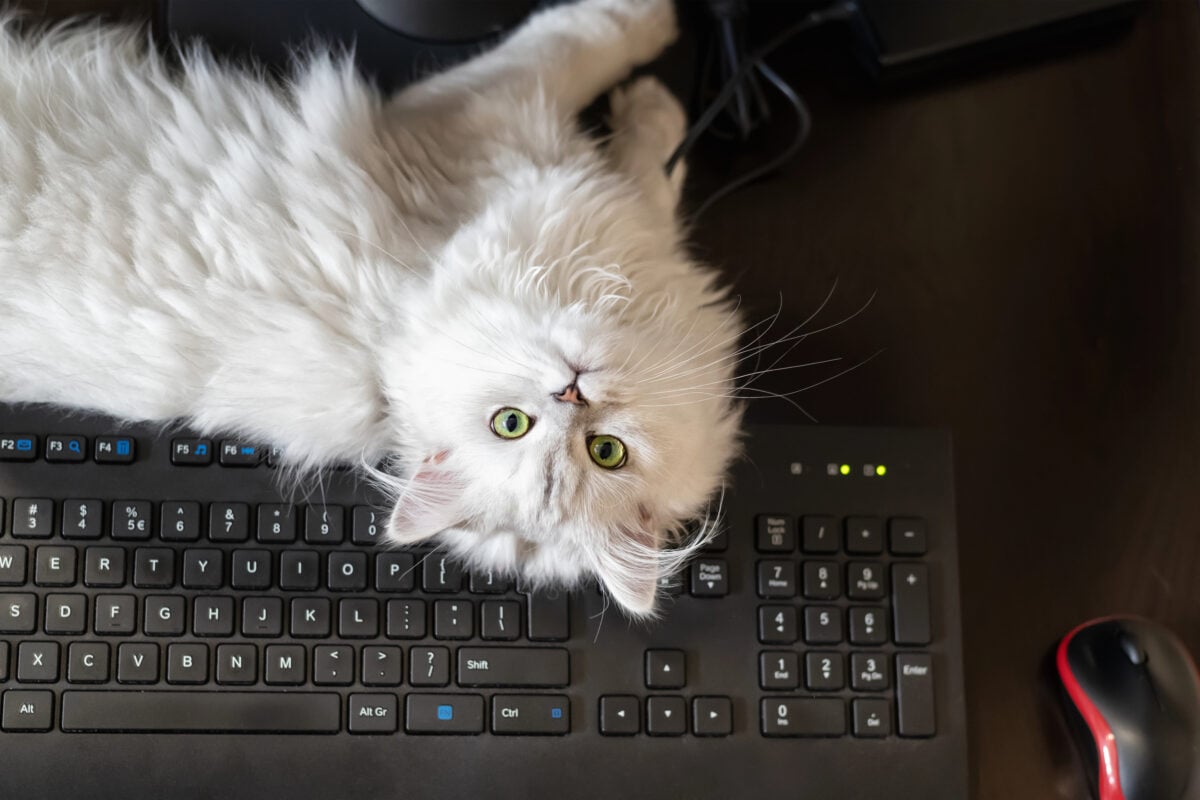
It’s easy to blame warmth and softness. But cats do this even when a heated, plush bed sits three feet away.
Why:
- Your worn things are soaked in your scent.
- A cat’s sense of smell is roughly fourteen times sharper than yours. To them, your old flannel smells like pure safety.
Sitting on your things, or in the warm dent you just left on the couch, surrounds them with one of the most familiar scents in the house: yours.
It’s low-effort comfort. They don’t have to ask for anything or climb into your lap. They can simply settle into something that smells familiar and let the rest of the room feel a little less strange.
Want to see some of these signals in action? This quick cat body-language guide breaks down what ears, eyes, tails, and posture can reveal about how a cat is feeling.
When Cats Need Reassurance Most
Cats run on predictability. They map their world by space, by time, and by sound. When that map tears, reassurance-seeking spikes.
- Environmental disruption. Thunderstorms, fireworks, and wind against the windows are the obvious ones. Subtle sounds count too: a dying fridge humming, a neighbor remodeling through a shared wall, or stray cats marking your porch.
- The suitcase effect. Cats learn by association. The moment a suitcase lands open on the bed, many turn into velcro. They don’t understand a flight to Chicago. They do understand that this folding box means the house goes empty for days.
- Rearranged furniture. Cats navigate by muscle memory and scent trails along baseboards and sofa corners. Move the furniture or paint a room, and you wipe their scent map clean. Suddenly they’re living in a strange rental.
- Emotional weather. Cats read human body language and tone remarkably well. Grief, illness, arguments, or chronic work stress all show up in your body. Your cat doesn’t know what a layoff or a medical bill is. They do notice shallow breathing, jerky movements, and a heavy mood. Often they’ll lean in closer just because the house feels different.
How to Reassure Your Cat (Without Smothering Them)
When someone we love feels insecure, we want to scoop them up and squeeze.
With cats, that usually backfires. Picking up an anxious cat, pinning their legs, and kissing their head takes away their last line of defense: the ability to choose and to leave. A small worry becomes full panic.
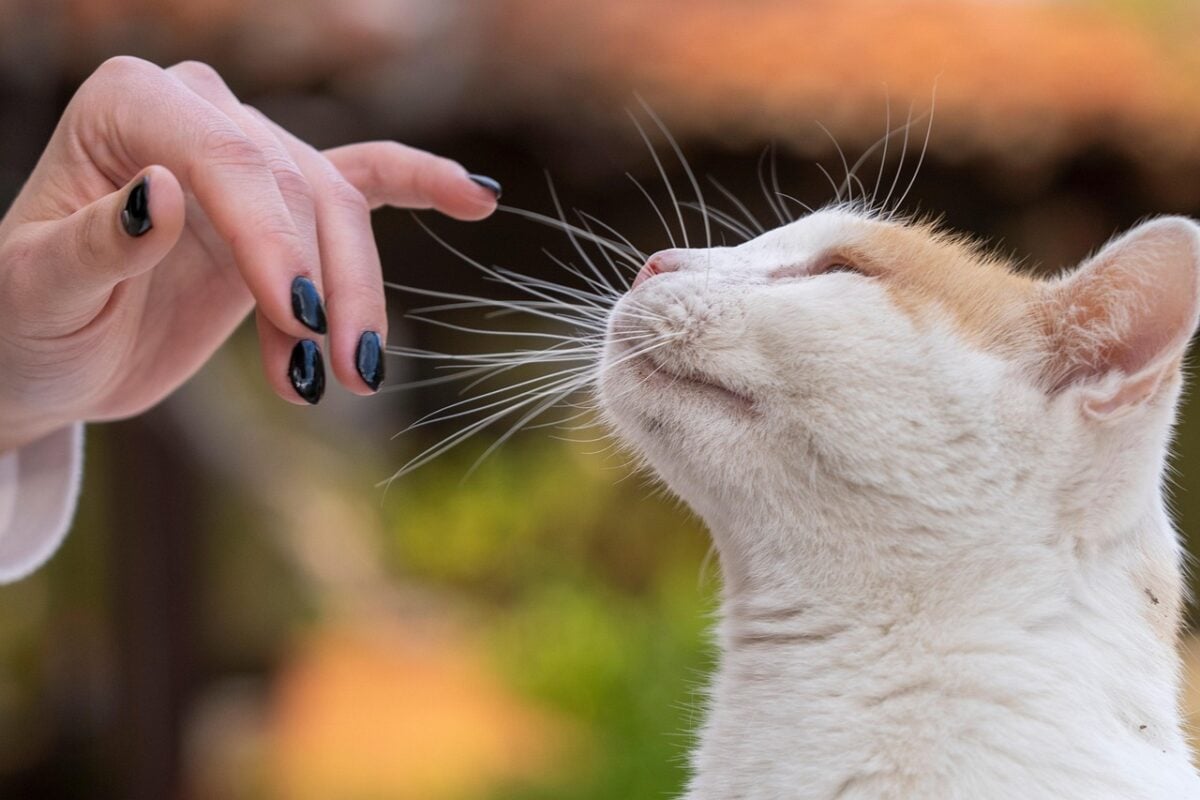
Try these hands-off swaps instead:
- Instead of a tight hug, offer one finger at nose height.
- Why it works: Your cat gets to decide whether to close the gap. A nose touch to your finger is the cat version of a handshake.
- Instead of high-pitched, frantic baby talk, use a low, even, steady voice.
- Why it works: A calm rhythm signals that everything is stable and nothing is threatening.
- Instead of chasing them under the bed with treats, sit on the floor nearby, turned sideways, and read a book.
- Why it works: Showing your profile lowers visual pressure. You fade into the safe background.
- Instead of long petting sessions, give two or three gentle chin or cheek strokes, then pull your hand back.
- Why it works: You acknowledge them without tipping them into overstimulation.
What Not to Do When Your Cat Is Looking for Reassurance
When your cat seems unsettled, the goal is to make the situation feel more predictable—not more intense.
- Don’t force cuddles. Picking up a nervous cat and holding them in place can take away the one thing that helps them feel safer: choice. Let them come to you.
- Don’t drag them out of a hiding spot. If they’ve chosen a safe place under the bed, behind a chair, or inside a covered bed, leave them there unless there’s a genuine safety concern. Sitting nearby is usually more reassuring than reaching in after them.
- Don’t punish vocalizing. Yelling, clapping, spraying water, or scolding may stop the noise in the moment, but it can add another source of stress. If the vocalizing is new or persistent, look for the reason instead.
- Don’t overwhelm them with attention. Repeated petting, hovering, calling their name, or constantly checking on them can turn reassurance into pressure. A nervous cat may prefer quiet company over active comfort.
- Don’t quickly change everything else. If your cat is already unsettled by guests, construction, travel, or another disruption, try to keep meals, playtime, sleeping spots, and other familiar routines as consistent as possible.
- Don’t mistake fear for stubbornness. A cat who won’t come out, eat in front of guests, or walk past a noisy appliance isn’t giving you a hard time. Give them distance and time to reassess the situation.
The best reassurance usually feels boring from the cat’s point of view: familiar smells, familiar routines, an easy escape route, and a human who isn’t making a big deal out of anything.
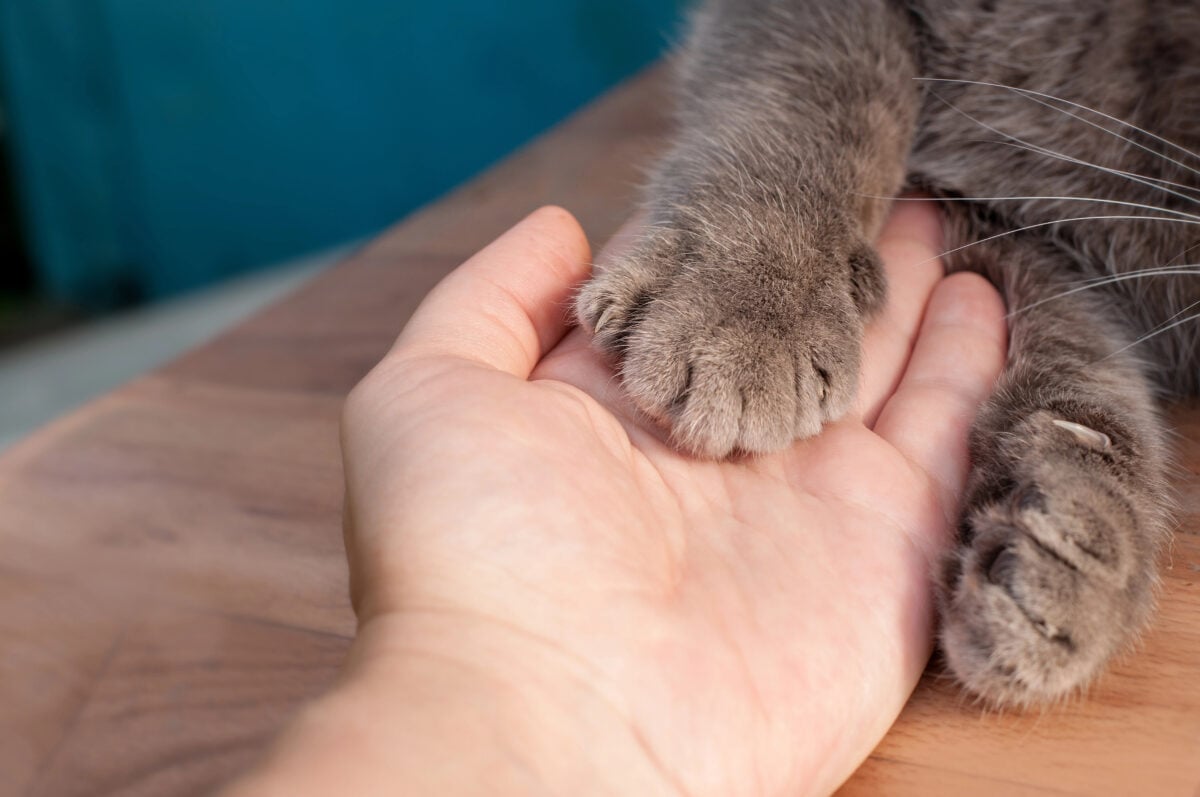
When Reassurance-Seeking Becomes More Than a Check-In
Most reassurance-seeking fades once the trigger passes. If your cat becomes much clingier out of the blue, stays unsettled for days, or the behavior comes with changes in eating, grooming, sleep, litter-box habits, mobility, or vocalizing, it’s worth looking beyond reassurance alone.
The key question isn’t whether your cat is being ‘needy.’ It’s whether their normal baseline has changed. And when it has, it may be time to look beyond reassurance alone.
Call Your Vet If You Notice:
Most clingy or reassurance-seeking behavior is harmless. But when it shows up without warning, intensifies, or comes with other changes, it can be your cat’s way of telling you something more is going on.
- A sudden personality change. Your hands-off cat of seven years starts pacing the hallway, crying at night, or planting themselves on your chest around the clock. Don’t assume they’ve simply become more affectionate. Sudden changes in attachment or behavior can sometimes accompany pain, illness, sensory decline, or cognitive changes. The important clue isn’t clinginess. It’s suddenly different.
- Confusion in an older cat. A senior cat starts wandering into rooms and seeming unsure why they’re there, yowling at night, staring into space, or rushing back to you for reassurance. Changes like these can be associated with cognitive dysfunction, vision or hearing loss, pain, or other medical problems. If your cat abruptly seems lost in a familiar home, it’s worth having them checked.
- Clinginess paired with physical changes. Pay attention when increased attachment comes with other changes, such as eating less, avoiding the litter box, urinating outside it, overgrooming one area, losing weight, moving differently, or becoming unusually restless. That combination deserves a call to your veterinarian rather than a wait-and-see approach.
- Head pressing or other neurological signs. Repeatedly pressing the head firmly against a wall or other surface is different from normal cheek rubbing or head-butting. If it comes with disorientation, stumbling, circling, seizures, or unusual dullness, seek veterinary care promptly.

Frequently Asked Questions About Cats and Reassurance
By now, one thing should be clear: cats rarely have just one reason for doing anything.
The same behavior can mean comfort, curiosity, habit, stress, or simply I like being near you. What matters most is the pattern, the timing, and whether anything else about your cat has changed.
A few questions come up again and again when people notice their cat getting clingier, chattier, or more attached than usual.
Why is my cat suddenly following me everywhere? Are they anxious?
Maybe, but not necessarily. Some cats simply like keeping tabs on their people. Following becomes more meaningful when it’s new, noticeably more intense, or appears around a change such as visitors, travel, unfamiliar sounds, or a disrupted routine.
If it persists or comes with hiding, restlessness, appetite changes, unusual vocalizing, or other behavior shifts, look at the bigger picture rather than the following alone.
Why does my cat ask for attention and then walk away?
Cats often want interaction without wanting prolonged physical contact.
Your cat may rub against you, ask for a few strokes, then move just out of reach while staying nearby. That doesn’t necessarily mean they’ve changed their mind about you. They may simply prefer shorter bursts of touch or quiet companionship in the same space.
Watch their body language. A twitching tail, rippling skin, flattened ears, or sudden tension can be signs that they’ve had enough petting for the moment.
Why is my cat sleeping closer to me than usual?
Sometimes it’s as simple as warmth, comfort, or preference. But cats may also seek more physical closeness when an element in their environment feels unfamiliar or unsettled.
If your cat otherwise seems healthy and relaxed, an occasional extra-snuggly stretch usually isn’t cause for concern. A sudden change paired with restlessness, pain signs, appetite loss, or other unusual behavior deserves more attention.
Do cats know when their owners are stressed?
Cats are very good at noticing changes in routine, movement, voice, and body language. They may not understand why you’re stressed, but they can notice that you sound different, move differently, sleep differently, or behave outside the usual pattern.
Some cats respond by keeping their distance. Others come closer.
Why is my older cat suddenly more clingy?
Senior cats may become more attached as vision, hearing, mobility, pain, or cognitive changes affect confidence. If the clinginess is new or comes with confusion, nighttime vocalizing, restlessness, or appetite changes, call your veterinarian
Still wondering what your cat is trying to tell you? Ask your question in the comments below. The more detail you share about what they’re doing and when it started, the better.
What Is Your Cat Trying to Tell You?
Not every change in closeness means the same thing. A suddenly clingy cat may be reacting to a change in routine, while quieter shifts in grooming, sleep, or affection can be signs of stress.
Some cats cope by disappearing, so it also helps to know when sudden hiding is normal and when it deserves more attention. And sometimes all that following and chirping is less about worry and more about a particularly strong bond with their favorite person.
Being Their Safe Harbor
Earning the trust of an animal wired to suspect everything is a special thing.
A cat asking for reassurance isn’t being a pest or trying to annoy you. They aren’t failing at independence. Thousands of years of instinct tell them they walk alone. Still, they looked around their territory, looked at you, and picked you as their anchor.
So next time soft paws trail you into the kitchen, or a warm forehead bumps your ankle mid-email, take five seconds. Stop. Slow-blink. Offer a finger. Answer the question.
Yes, we’re okay. You’re safe.
How does your cat ask for reassurance? Share their strangest, sweetest, or funniest check-in habit in the comments below.