When you purchase through links on our site, we may earn a commission at no extra cost to you. Learn more.
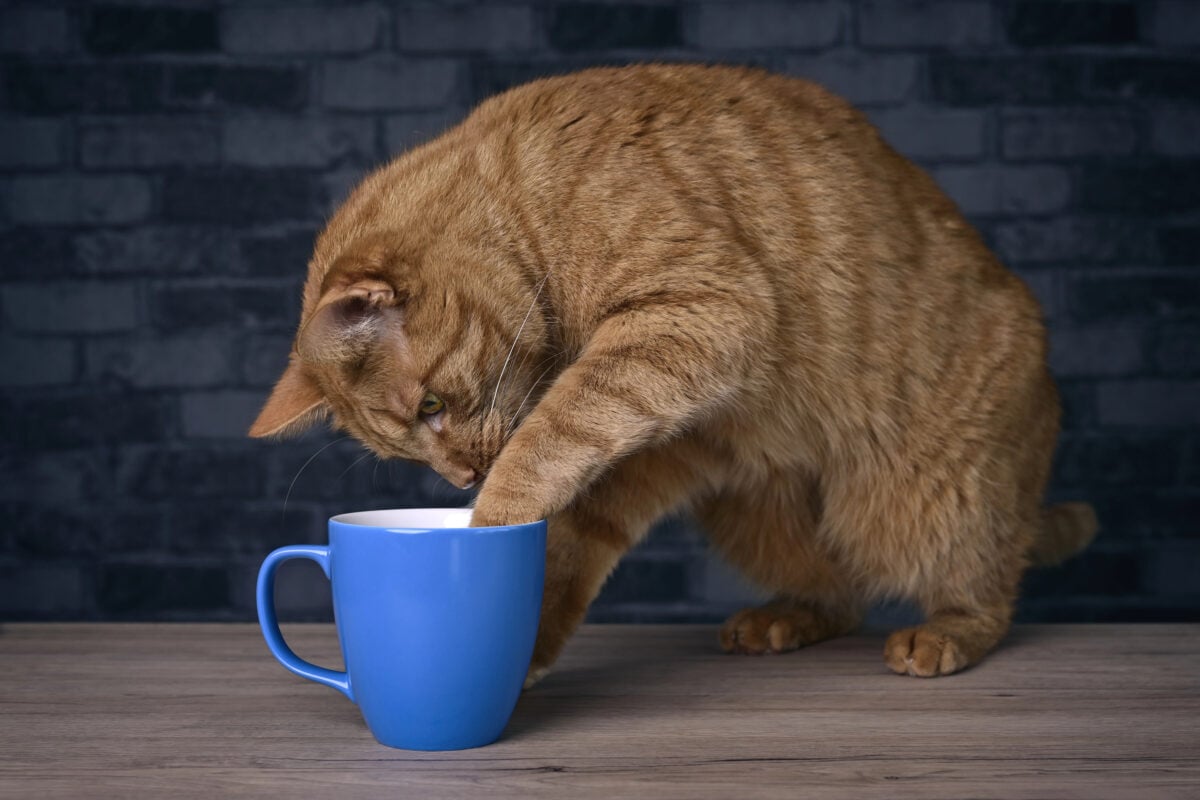
There’s a moment every cat owner knows too well. Your little furry gremlin hops onto the table, spots your drink, and places one paw in it like they’re testing the temperature of a swimming pool. A gentle tap. It wobbles. They pause, considering. Another slower, more deliberate tap. And then… over it goes.
Table of Contents
So, why do cats knock things over? Why do they push things off tables with the calm confidence of someone conducting a science experiment? And why does it always seem to be the one object you actually needed?
As deliberate as it looks, this behavior usually isn’t random or spiteful. And, believe it or not, our felines aren’t naughty by nature. It’s curiosity. It’s instinct. And sometimes it’s a learned pattern: knocking something over reliably gets a reaction. Let’s look at what’s really happening behind that very intentional paw.
Why Are Cats So Curious About Everything?
Before you can understand the inevitable toppling of an item, it’s important to understand the pause before it goes down.
Want our human-written content to rank above AI-generated garbage? Help us out by clicking this button!
Our cats are wired to notice subtle changes in their environment. A new object. A slightly moved object. Something you placed was closer to the edge than it was yesterday. What looks ordinary to you can look like new information to them.
Cats explore the world with their paws — testing texture, stability, and movement. When an object shifts under even light pressure, it becomes interesting. And when it moves more? Even better.

And this isn’t random nosiness. Curiosity in cats is tied directly to survival. For thousands of years, noticing small movements, unfamiliar scents, or subtle environmental shifts helped their species catch prey and avoid danger. Missing tiny clues could be costly. So their brains evolved to investigate.
That first tap isn’t mischief. It’s information gathering. And once the object responds, the curiosity cycle has officially begun.
Why Do Cats Knock Everything Over? The Real Reasons
If you’ve ever wondered why your feline frequently craves a little well-timed destruction, the short answer is that they’re responding to instinct, stimulation, and sometimes the undeniable thrill of watching gravity do its job.
When a cat taps an object and watches it fall, several things happen at once. There’s movement, sound, and a very clear cause-and-effect sequence. Sometimes a human appears instantly and speaks in a dramatically different tone of voice. For a brain wired to notice patterns, that entire chain of events is deeply satisfying.
Here are the real reasons behind the behavior.
1. Hunting Instinct: Your Coffee Mug Is Basically Prey
Even well-fed indoor cats still carry the neurological blueprint of a hunter.
In the wild, small prey doesn’t stay still. It moves unpredictably and reacts when touched. A cautious paw tap is often part of the predatory sequence — testing, assessing, and maintaining control before committing further.
When your cat nudges an object, and it shifts, that movement activates the same circuitry. The object suddenly becomes dynamic. It responds. It “does something.”
The fall itself delivers rich sensory feedback. There’s motion, noise, and impact in rapid succession. To you, it may feel like an avoidable household disaster. To your cat’s brain, it resembles a successful interaction with something that reacted exactly as expected.
International Cat Care notes that interactive play mimics the natural hunting sequence — stalk, chase, pounce — which helps explain why even well-fed indoor cats still feel compelled to test movement whenever they see it. When an object responds to a paw tap, it activates the same wiring.
2. Curiosity & “What’s Inside?” Energy
Cats are deeply motivated by feedback. If something looks closed, contained, or slightly mysterious, it stands out. A cup, a small box, a decorative container, even a half-full glass — all of these suggest there might be more going on than meets the eye.
In the wild, investigating objects wasn’t optional. A hollow space could contain prey. A rustling object might be food. Ignoring subtle cues meant missed opportunities. That instinct hasn’t disappeared just because the “prey” now happens to be your water glass.
When your cat taps an object, they’re often testing for information. Does it move? Is there something inside of it? A closed or semi-enclosed object invites questions, and paws are the fastest way to get answers.
If the object responds by wobbling, sliding, or tipping over dramatically, the investigation escalates. The response confirms that the object is far more interesting than the stationary ones.
To you, it’s a cup. To your cat, it’s a container full of unanswered questions. And some cats simply refuse to leave questions unanswered.
3. Something Changed (And That’s Suspicious)
Cats notice changes you don’t. A coaster moved two inches. You placed a pen closer to the edge than usual. A glass that wasn’t there yesterday. To you, it’s background noise. To your cat, it’s a territory update.
Cats are highly attuned to environmental consistency. In the wild, small changes could signal opportunity or risk. That awareness hasn’t disappeared just because they now live indoors with climate control and curated décor.
When something appears new or slightly out of place, it often gets tested. A quick paw tap answers important questions: Is it stable? Does it move? Does it make noise? If the object reacts in any noticeable way, it earns further investigation.
Sometimes that investigation ends with the objecton the floor. Not because your cat dislikes your interior design choices, but because the data requires confirmation.
4. Boredom: Chaos As A Hobby
Indoor cats need more than food and a comfortable place to nap. They need stimulation that engages both their bodies and their brains. When that stimulation is limited, cats often create their own projects.
Object-pushing checks several boxes at once. It creates movement, produces sound, and noticeably changes the environment. And occasionally, it results in immediate human interaction. For a bored brain, that’s efficient.
The American Association of Feline Practitioners (AAFP) emphasizes in its feline environmental guidelines that enrichment is essential for indoor cats and plays a key role in preventing behavior problems. When opportunities to climb, hunt, explore, and problem-solve are limited, cats will often redirect that energy toward whatever is available.
Sometimes what’s available is your desk.

If knocking things over happens most often while you’re working, scrolling, or otherwise unavailable, boredom may be part of the equation. Your cat isn’t necessarily trying to be disruptive. They’re trying to generate something interesting in an environment that may feel static.
5. Reinforced Behavior: You Reacted. That Was the Goal.
This is where the behavior can shift from instinctive to strategic.
Cats are excellent observers. They learn quickly which actions produce noticeable outcomes. If pushing an object off the counter consistently causes you to look at them, speak to them, or rush into the room, that behavior becomes meaningful.
According to the American Animal Hospital Association (AAHA) behavior management guidelines, behaviors that are rewarded, even unintentionally, are more likely to increase. Attention, whether positive or frustrated, still counts as reinforcement.
From your perspective, you’re responding to a mess. From your cat’s perspective, they’ve discovered a reliable way to change the room’s energy.

Over time, some cats refine the pattern. They may begin placing a paw on an object while watching you. They may choose items that make more noise or are more likely to draw a response. What started as curiosity can evolve into communication.
It doesn’t mean your cat is plotting against you. It means they’ve learned what works. And once a behavior works consistently, there’s very little reason to stop using it.
Which Countertop Criminal Runs Your House?
Be honest. One of these chaos goblins probably lives in your house.
- The Tiny Interior Decorator: Decides your shelf arrangement lacks flow and takes corrective action.
- The Desk-Clearing Consultant: Believes productivity improves when everything is on the floor.
- The Amateur Physicist: Runs ongoing drop tests. Peer review pending.
- The Passive-Aggressive Roommate: Communicates boredom through targeted object relocation.
- The Strategic Communicator: Makes eye contact, places paw, and waits.
- The “I Regret Nothing” Specialist: Pushes, watches, and walks away.
Which one do you most identify with? Or did we miss a category? Tell us in the comments — we’re collecting case studies.
Why Do Cats Push Things Off Tables Specifically?
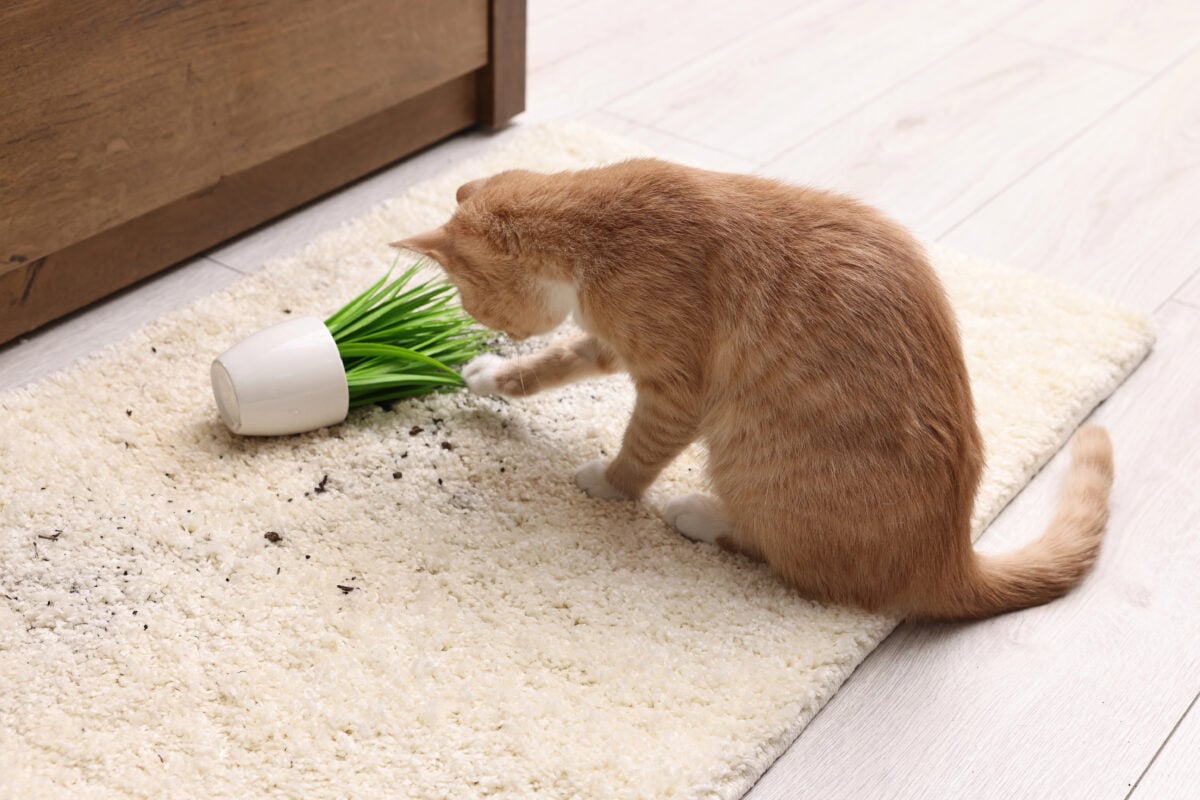
We’ve covered curiosity and instinct. But that still doesn’t explain why your cat waits until an object ison a table, positioned near the edge, and fully capable of causing inconvenience. The answer is simple: height improves the show.
If your cat pushes something across the floor, it slides a few inches and stops. Mildly interesting. If they push that same object off a countertop, it falls, accelerates, rotates midair, and lands with a decisive sound. Elevated surfaces turn a small tap into a full production.
When your cat jumps up, they’re already in survey mode. Everything on that surface becomes part of the inspection process. Anything near the edge looks especially interactive.
Gravity Is The Ultimate Special Effect
A falling object delivers a complete sensory experience. For a brain wired to track motion, that arc is compelling. The object moves farther and faster than it would on the ground. It changes position and produces sound.
Many cats will even lean over the edge afterward to observe the landing zone, as if reviewing the results. From your perspective, something broke. In their mind, the experiment worked. Gravity is predictable, and it works every time.
Edges Invite Experiments
Edges are irresistible because they’re efficient.
When an object sits close to the edge of a surface, very little effort produces a dramatic result. A nudge in the middle of a table shifts something slightly. The same nudge at the edge transforms its entire location. The cause-and-effect relationship becomes immediate.
Edges also create a clear boundary between “secure” and “not secure.” For a species that constantly evaluates stability, that contrast stands out. To you, it’s poor placement. To your cat, it’s an opportunity.
Elevated Territory = Prime Feline Zone
Counters and tables aren’t just convenient platforms. They’re high-value territory. Cats seek elevation for visibility and control. From above, they monitor movement and assess their environment. That sense of security makes exploration more likely.
Is My Cat Being Defiant? (Spoiler: Not Exactly)
Let’s address the moment. Your cat places a paw on your glass or your favorite earrings, looks at you, then back at the desired object, and pushes. It feels intentional because it is. But intentional doesn’t mean spiteful.
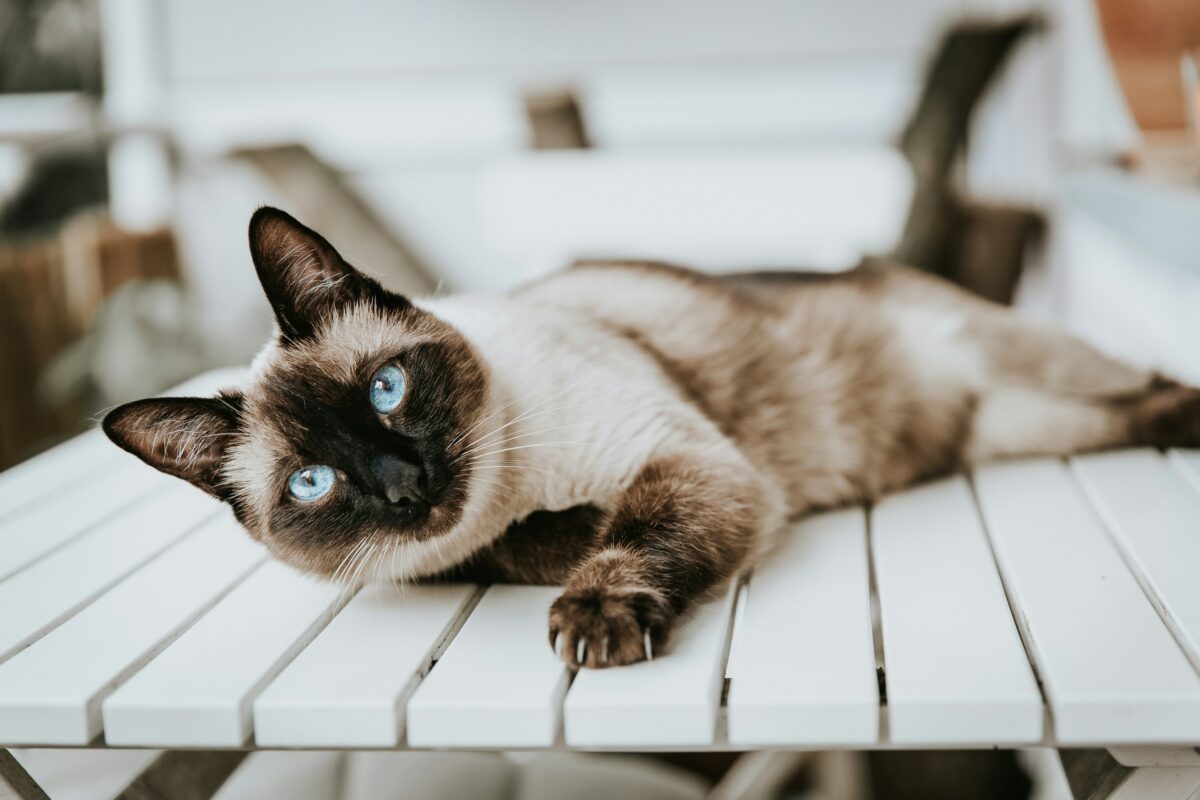
Cats don’t operate from revenge or moral judgment. They aren’t thinking, “You were late with dinner, so the vase must suffer.” That storyline belongs to us. What they’re responding to is the outcome.
Cats are highly attuned to cause and effect. If pushing something creates movement, noise, or attention, that action becomes meaningful. If doing it while you’re watching reliably gets a reaction, it becomes even more useful.
Your cat knows you’re present and that you’ll respond. And yes, some cats absolutely recognize the social leverage in that moment. A paw placed near the edge can be enough to make you look up. Certain objects trigger faster reactions than others, and observant cats learn that quickly.
This doesn’t mean your cat is plotting against you. They’ve figured out what works — and occasionally, they use that knowledge in ways you wish they wouldn’t.
The Usual Household Victims
You know the type. The belongings your kitty has quietly marked for relocation.
- Full water glasses or coffee mugs (never empty)
- Pens near the edge
- Remote controls
- Phones
- Decorative objects you like
- Small indoor plants (especially the ones you just repotted)
- Anything fragile
- The one thing you just moved out of reach
Junk mail survives. Your favorite vase does not.
When Is Knocking Things Over A Red Flag?
In most cases, object-pushing is normal feline behavior, but, as with any behavior, context matters.
If your cat has always occasionally tested gravity, there’s usually nothing to worry about. However, if the behavior suddenly increases, becomes repetitive, or feels frantic rather than playful, it’s worth pausing to look at the bigger picture.
Here’s when it may signal something more than curiosity:
Sudden Behavior Changes
Frequency matters. If your cat moves from occasionally nudging a glass to knocking down multiple objects in rapid succession, or if the behavior feels frantic or difficult to interrupt, that shift deserves attention.
Repetitive behaviors that seem disconnected from curiosity or engagement can sometimes signal underlying discomfort — physical or emotional.
When in doubt, look for accompanying signs:
- Appetite changes
- Sleep disturbances
- Increased hiding
- Unusual clinginess or withdrawal
Cats rarely send just one signal at a time.
Signs Of Stress Or Anxiety
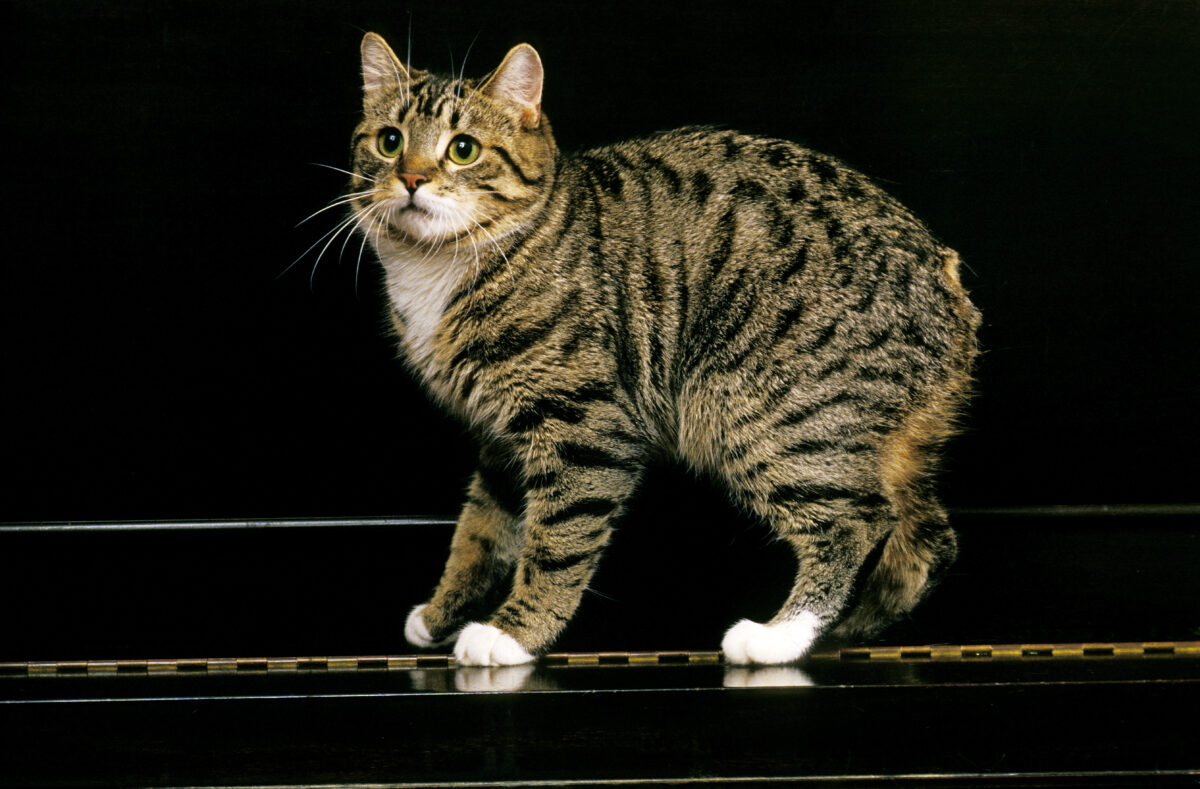
Cats under stress often seek control over their environment. Repetitive pawing, pacing across counters, or knocking objects down one after another can sometimes reflect tension rather than play.
Common stress triggers include:
- Changes in routine
- New pets or people
- Environmental disruption
- Reduced enrichment or interaction
If the behavior appears compulsive or driven, increasing environmental stability and enrichment can help.
International Cat Care explains that stress in cats often appears as behavioral shifts rather than obvious distress. Increased pacing, heightened reactivity, excessive vocalizing, or repetitive actions, including knocking objects over, can sometimes reflect tension rather than play.
Cognitive Changes in Senior Cats
In older cats, new repetitive behaviors can occasionally relate to cognitive decline.
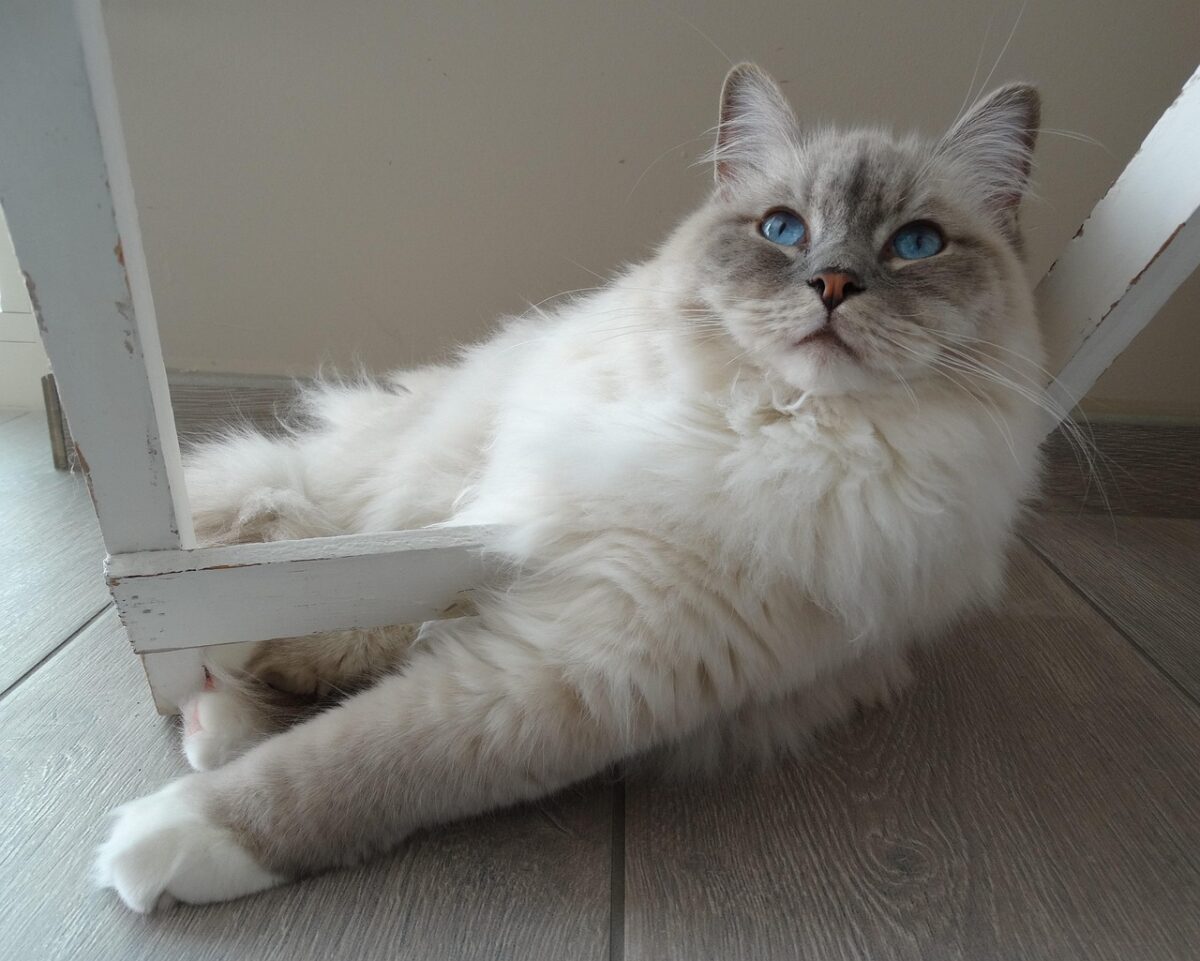
The Cornell Feline Health Center notes that feline cognitive dysfunction may include increased nighttime activity, disorientation, altered interaction patterns, or repetitive behaviors. If a senior cat begins pacing counters, knocking objects over more persistently than before, or seeming confused about familiar spaces, it’s worth a veterinary conversation.
This doesn’t mean every fallen coaster is a medical emergency. It means that sudden, out-of-character behavior in an aging cat shouldn’t be dismissed as personality alone.
Unmet Physical or Mental Needs
Sometimes the “red flag” is environmental. A cat who lacks vertical space, structured playtime, or mental stimulation may escalate object-pushing simply because it’s the most engaging activity available. In those cases, the solution is enrichment, not correction.
How To Stop Your Cat From Knocking Things Over
You probably won’t eliminate the instinct entirely, but you can make it far less rewarding. The key isn’t punishment. It’s redirection, enrichment, and adjusting the environment so your cat has better options — and fewer easy targets. Here’s what actually works.
1. Don’t React
If knocking something over reliably causes you to react, that reaction becomes part of the payoff. When it’s safe to do so, keep your response calm and minimal. Even negative attention can reinforce the behavior.
Avoid:
- Rushing in dramatically
- Repeating their name in escalating tones
- Delivering extended commentary about the event
This doesn’t mean ignoring your cat completely. It means not turning the fall into a performance. If the goal is attention, remove the spotlight.
2. Increase Structured Play (The Right Kind)
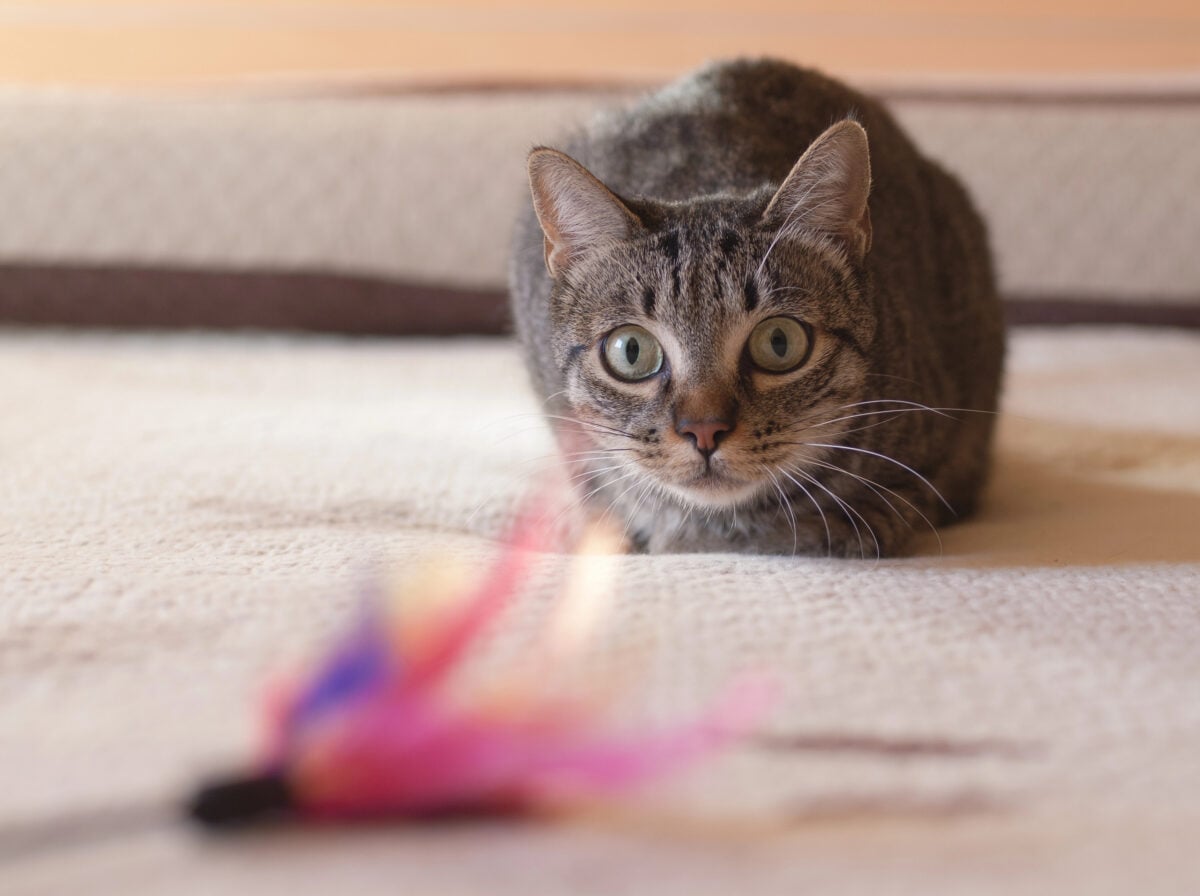
A bored cat with unused hunting energy will find something to do with it. Daily interactive play that mimics prey movement satisfies the same instinct that object-pushing activates.
If your cat tends to start knocking things over at predictable times, try scheduling a short play session beforehand. An evening play session, for example, may help redirect some of that energy before your cat starts clearing the nightstand.
Focus on:
- Wand toys
- Feather teasers
- Small toys that skitter and change direction (my cat’s absolute favorite is this flapping bird)
Aim for short, focused sessions instead of leaving toys scattered around all day. The goal is movement that feels alive, not passive objects that quickly lose your kitty’s interest. When your cat has a real outlet for that energy, your indoor plant becomes less compelling.
3. Enrich Vertical Space
Cats seek height for security and visibility. If counters are the most appealing elevated space available, they’ll keep using them. Provide acceptable high ground:
You’re not removing the instinct to climb. You’re giving it a better address.
4. Rotate Toys To Preserve Novelty
Leaving every toy out all the time reduces its impact. Instead:
- Rotate a smaller selection every few days
- Reintroduce “old” toys as if they’re new
- Store extras out of sight
Novelty competes directly with counter exploration. A “new” toyon the floor can redirect curiosity before it reaches the edge of your table.
5. Use Puzzle Feeders & Food-Based Enrichment
Mental work matters as much as physical play. Food-based enrichment creates structured engagement and mimics the effort of hunting. Try:
A cat who has worked for their food is less likely to treat your desk as a side project.

6. Adjust the Environment (Strategically)
Sometimes the solution is simple management. Reduce easy opportunities:
- Avoid placing lightweight or breakable objects near edges
- Keep frequently targeted surfaces clear
- Use heavier containers for necessary items
- Secure fragile or lightweight decor with museum putty
You don’t have to remove everything from your home. But when the “experiment” stops producing interesting results, it loses appeal.
7. Redirect & Reinforce What You Want
When your cat approaches an object near the edge, calmly intervene before the push happens. Redirect your kitty to:
- A toy
- A brief play session
- An approved perch
When they choose the appropriate option, reinforce it with attention or a treat.
Cats repeat behaviors that work. The goal is to make approved behaviors more rewarding than pushing something off the counter.
Frequently Asked Questions
If your cat has ever made prolonged eye contact before sending something off a table, you probably have questions. Below are some of the most common ones. And if yours isn’t here, drop it in the comments — there’s a very good chance other cat owners are wondering the exact same thing.
Do Cats Knock Things Over On Purpose?
Yes, but not for the reasons we tend to assume. Cats often push objects intentionally to get information, stimulation, or attention. That doesn’t mean they’re being spiteful or trying to “teach you a lesson.”
It means they understand that their action produces a predictable result. Intentional doesn’t equal malicious. It usually equals curious.
Why Does My Cat Make Eye Contact Before Pushing Something?
Cats quickly learn which behaviors get a reaction, and knocking something off the table may reliably make you look over, speak to them or get up.
Your reaction can become part of what makes the behavior interesting. If it’s safe to do so, keep your response low-key and redirect your cat toward a toy or another appropriate activity instead.
Does Knocking Things Over Mean My Cat Is Bored?
It can. Knocking an object creates movement, sound, and instant feedback, making it an easy source of entertainment for a cat who needs more physical or mental stimulation.
Look at when the behavior happens. If your cat starts clearing the counter when they’ve been alone, haven’t played recently or are trying to engage you, boredom may be contributing.
More interactive play, rotating toys and puzzle feeders can help, although plenty of well-enriched cats still knock things over simply because investigating objects is rewarding.
Why Does My Cat Knock Things Over At Night?
Cats are naturally more active around dawn and dusk, and some also get bursts of energy while their humans are winding down or asleep. A quiet house full of unattended objects can give a bored or energetic cat plenty to investigate.
If the nightly destruction happens around the same time, try an interactive play session before bed followed by a small meal or puzzle feeder. Also move fragile or tempting objects out of reach so your cat can’t turn the nightstand into their personal physics lab.
Do Kittens Grow Out Of Knocking Things Over?
Some do, or at least become less enthusiastic about it as they mature. Kittens explore heavily through play, and batting, chasing, and testing objects are normal ways to learn about their environment.
Adult cats can still enjoy knocking things over, especially if the behavior is entertaining or gets a reliable reaction. Giving kittens plenty of appropriate things to chase, bat and investigate can help steer that curiosity away from your breakables.
Can Knocking Things Over Be A Sign Of Anxiety?
Occasionally, yes. If the behavior becomes excessive, repetitive, or paired with other signs of stress, such as hiding, vocal changes, appetite shifts, or restlessness, it’s worth evaluating environmental stressors or speaking with your veterinarian. In most cases, though, occasional object-pushing is normal feline behavior.
Why Does My Cat Only Knock Over My Things?
Cats learn patterns quickly. If your items consistently produce a stronger reaction, whether that’s you rushing in, speaking sharply, or immediately engaging, your cat may associate those objects with a reliable outcome. It’s not personal. It’s predictable.
Decoding More Quirky Feline Behaviors
Understanding why cats knock things over doesn’t mean you’ll never hear another crash. But it does make the behavior feel less mysterious and a little less personal. And if your cat’s habits don’t stop at testing gravity, you’re definitely not alone.
Check out our guides on some other funny feline behavior to understand what’s going on in their adorable little heads.
If your little gremlin has a particularly creative method for testing gravity or a proclivity for certain objects, share it below in our comments. Odds are someone else has lived through the same “slow push… crash… stare” sequence and would appreciate knowing they’re not alone.