When you purchase through links on our site, we may earn a commission at no extra cost to you. Learn more.
Why do cats like boxes?
Table of Contents
I’ve had a lot of cats in my life, and every single one of them has developed an intense, almost spiritual attachment to cardboard. Not the plush bed. Not the carefully arranged blanket in the sunbeam.
The box.
The moment a cardboard box enters my house, it stops being packaging and becomes premium feline real estate.
Want our human-written content to rank above AI-generated garbage? Help us out by clicking this button!
Most recently, I bought an orthopedic memory-foam cat bed, cooling gel, ergonomic support, and glowing reviews from people who call their pets “Sir Whiskington.” I placed it perfectly, fluffed it, and waited.
My cat sniffed it once. Then she stepped into the slightly crushed shipping box it came in, circled twice, and settled down like a dragon guarding a hoard of recycled treasure.
And once again, I found myself asking: why do cats like boxes so much?
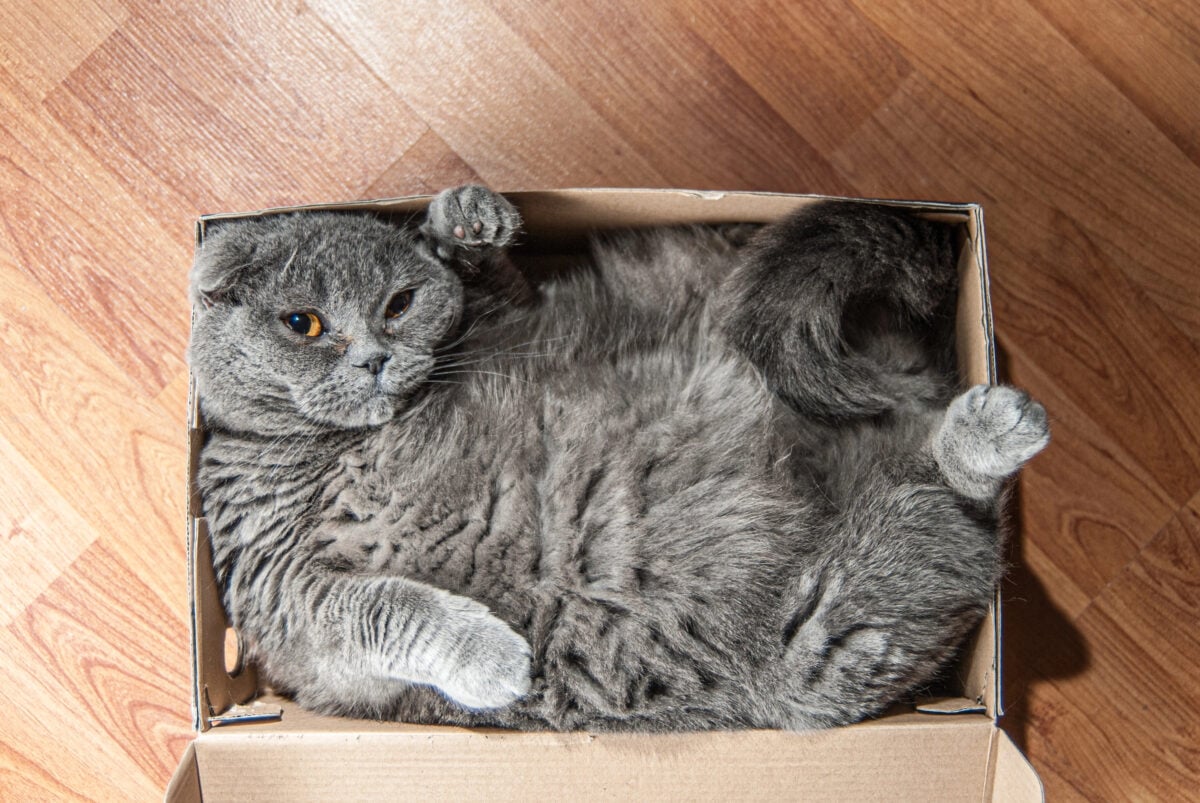
As it turns out, it’s biology, strategic, instinctive, and surprisingly sophisticated. And once you understand what’s happening inside that tiny predator brain, the cardboard obsession makes a lot more sense.
Still mildly insulting. But scientifically sound.
Cardboard Chaos: Caught on Camera
Think your cat is uniquely obsessed? Watch this and tell us cardboard isn’t running the household.
Why Do Cats Like Boxes? 5 Reasons the Cardboard Always Wins
If you’ve ever wondered why cats like to be in boxes, the answer goes far beyond quirky internet humor. The relationship between cats and cardboard boxes is rooted in instinct, security, and centuries of survival wiring.
To understand why the box always wins, you have to accept something slightly humbling:
Your cat is not relaxing in there.
Your cat is conducting operations.
1. Because Boxes Turn Your Cat Into a Tactical Genius
(The “I Can See You, But You Can’t See Me” Principle)
Despite the fact that Mittens considers the Roomba a moving threat that must be monitored from atop the fridge, she is evolutionarily wired as a cryptic predator.
In the wild, cats are middle management on the food chain. They hunt small prey, but they are also hunted by larger predators. Coyotes. Eagles. And, in modern homes, vacuum cleaners.
A box offers concealment. And concealment is power.
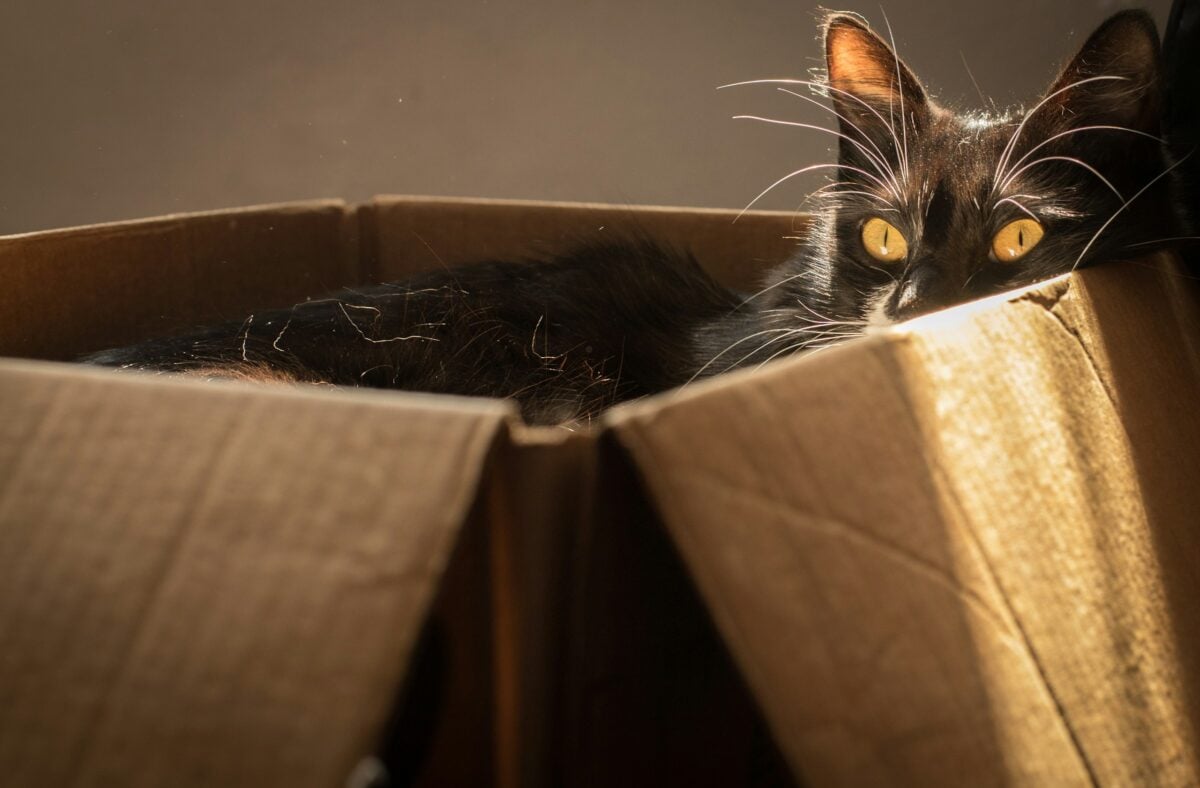
An enclosed space provides:
- Protection on multiple sides
- Limited entry points
- A clear view of approaching “threats”
From inside a box, a cat can observe without being fully observed. It’s a tactical advantage. A controlled viewing window. A single entrance to monitor. Nothing sneaks up from behind.
To you, it’s a container. To your cat, it’s an ambush zone.
When your cat explodes out of the box and attacks your ankles as you walk by, that’s not random chaos. That’s rehearsal. The crouch. The wiggle. The launch. These are complex hunting behaviors hardwired into their nervous system.
The box is their ghillie suit. And you are participating in a live-action training exercise.
2. Because Boxes Are a Built-In Stress-Relief Pod
(Why Hiding Lowers Anxiety and Boosts Confidence)
But boxes aren’t just about offense. They’re about recovery.
If you’ve ever hidden in the bathroom at a crowded party just to scroll your phone in silence, you already understand the Box Effect.
Cats may look aloof, but they are highly sensitive creatures. Their senses are tuned for micro-movements, subtle sounds, and tiny environmental changes. That level of awareness is exhausting.
A box reduces input.
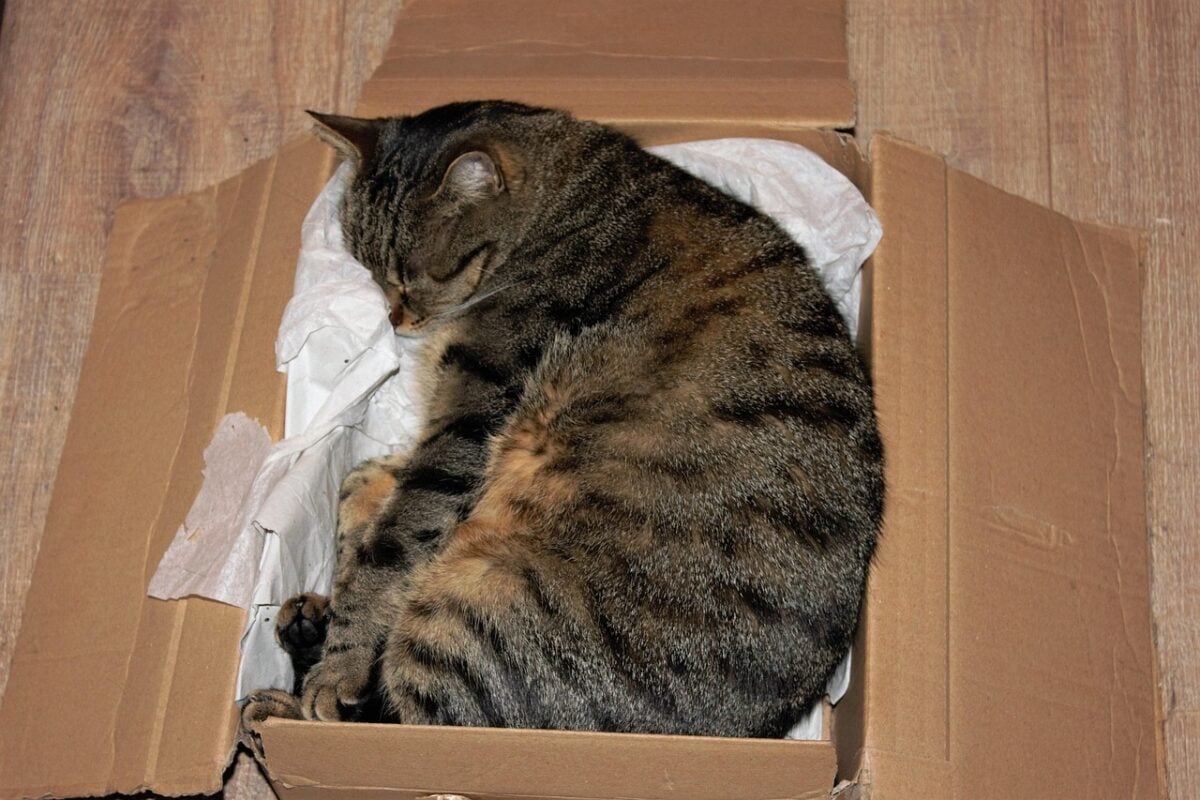
Research Note
There’s research to back this up. A well-known study from the University of Utrecht found that shelter cats given hiding boxes adapted to stressful environments faster than those without them. The physical barrier helped lower stress behaviors and improve adjustment.
From a neurological standpoint, when a cat cannot hide, its sympathetic nervous system (the “fight or flight” response) stays constantly engaged, pumping cortisol into its bloodstream. A cardboard box acts as an immediate off-switch for that anxiety, engaging the parasympathetic nervous system (the “rest and digest” mode). It is quite literally a corrugated prescription for anxiety.
Inside a box, a cat doesn’t have to monitor 360 degrees. They only need to watch the opening. Less vigilance means lower cortisol. Lower cortisol means calm.
While humans spend thousands on therapy and meditation apps to reach inner peace, your cat achieves enlightenment inside a recycled cardboard box.
3. Because Your House Is Basically an Ice Age
(The Cardboard Sauna Effect)
There’s also a much simpler explanation: Your house is cold.
Humans are comfortable around 70°F (21°C). Cats, however, have a thermoneutral zone between roughly 86–97°F (30–36°C). That’s the temperature range where they don’t have to burn extra energy to stay warm.
So while you’re perfectly content in your sweater, your cat is internally filing a complaint.
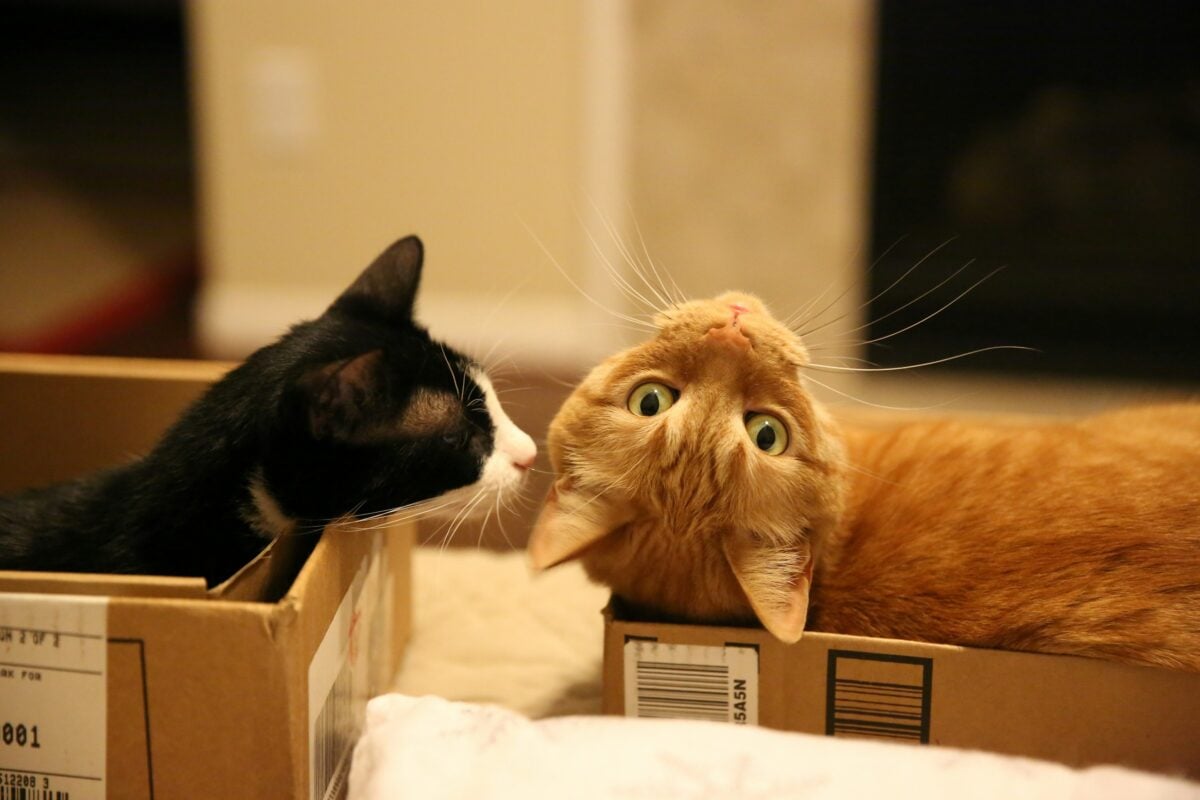
Corrugated cardboard is an excellent insulator. It traps heat and reduces airflow, creating a tiny, self-heating chamber once your cat curls up inside.
You see a discarded box. Your cat sees a high-efficiency thermal retention unit. A cardboard sauna.
4. Because Tight Spaces Feel Like a Weighted Blanket
(The “If I Fits, I Sits” Comfort Physics)
Now we address the great mystery: why choose the box that is clearly too small? Why wedge an entire adult cat into something designed for paperback novels?
Because tight equals safe.
And curl they do; into a tight loaf, conserving energy, maximizing warmth.
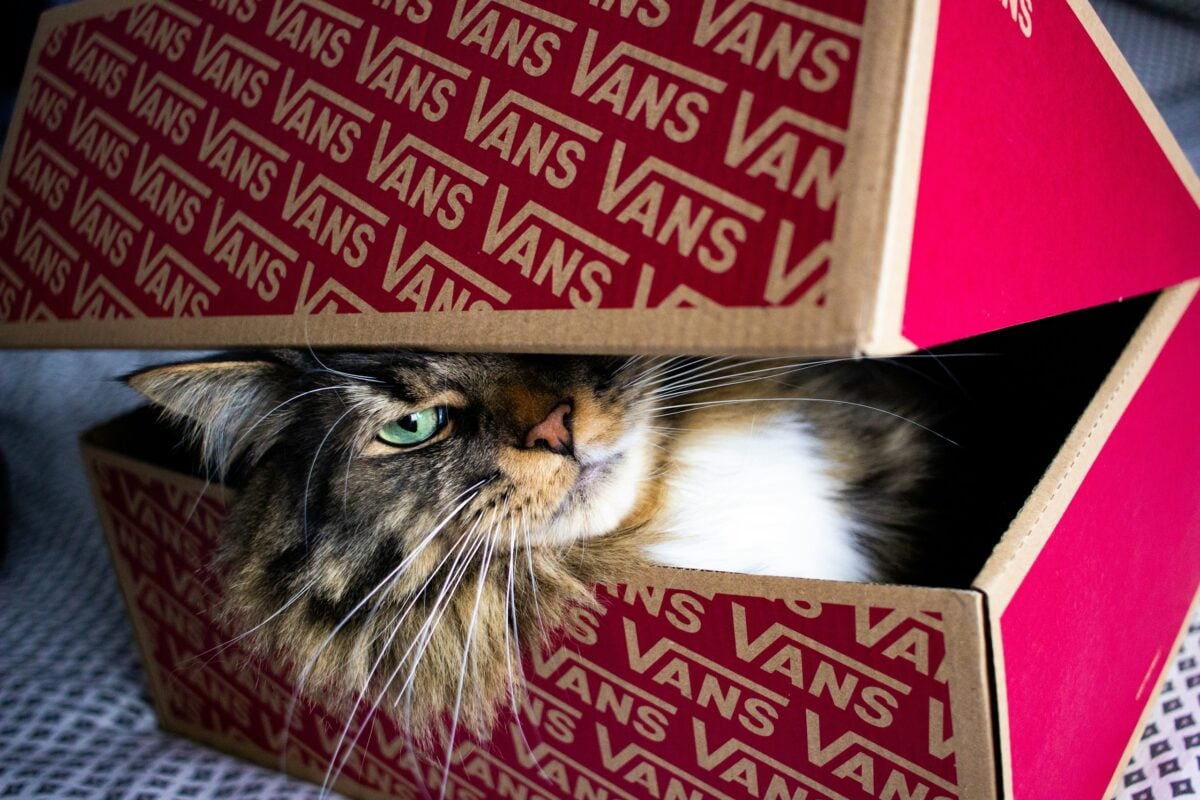
Research Note
There is an actual biological term for why your cat tries to squeeze their liquid body into a tissue box: Thigmotaxis.
- Thigmotaxis is the movement of an organism in response to a tactile stimulus. In simpler terms, it is the deeply ingrained desire to seek physical contact with the perimeter of an environment.
When a cat is pressed against the sides of a small container, the lateral pressure sends soothing signals to their brain. They know instinctively that nothing can sneak up on their flanks or rear. Every blind spot is covered by cardboard armor.
This tactile feedback loop is so powerful that a cat will often choose a box that is visibly too small just to maximize the amount of physical pressure on their body. This pressure can have a calming effect — similar to swaddling an infant or using a weighted blanket. The sides of the box press back. They define the edges. They eliminate uncertainty.
An oversized bed offers space. A small box offers certainty. And certainty, to a cat, is luxury. Also, let’s be honest: it’s objectively hilarious.
5. Because Cardboard Is a Five-Star Scratching Post
(Texture, Territory, and Total Ownership)
Then there’s the sheer tactile joy of cardboard.
It has resistance and shreds beautifully. It makes that deeply satisfying tearing sound when claws sink in. Cardboard is, frankly, the perfect material.
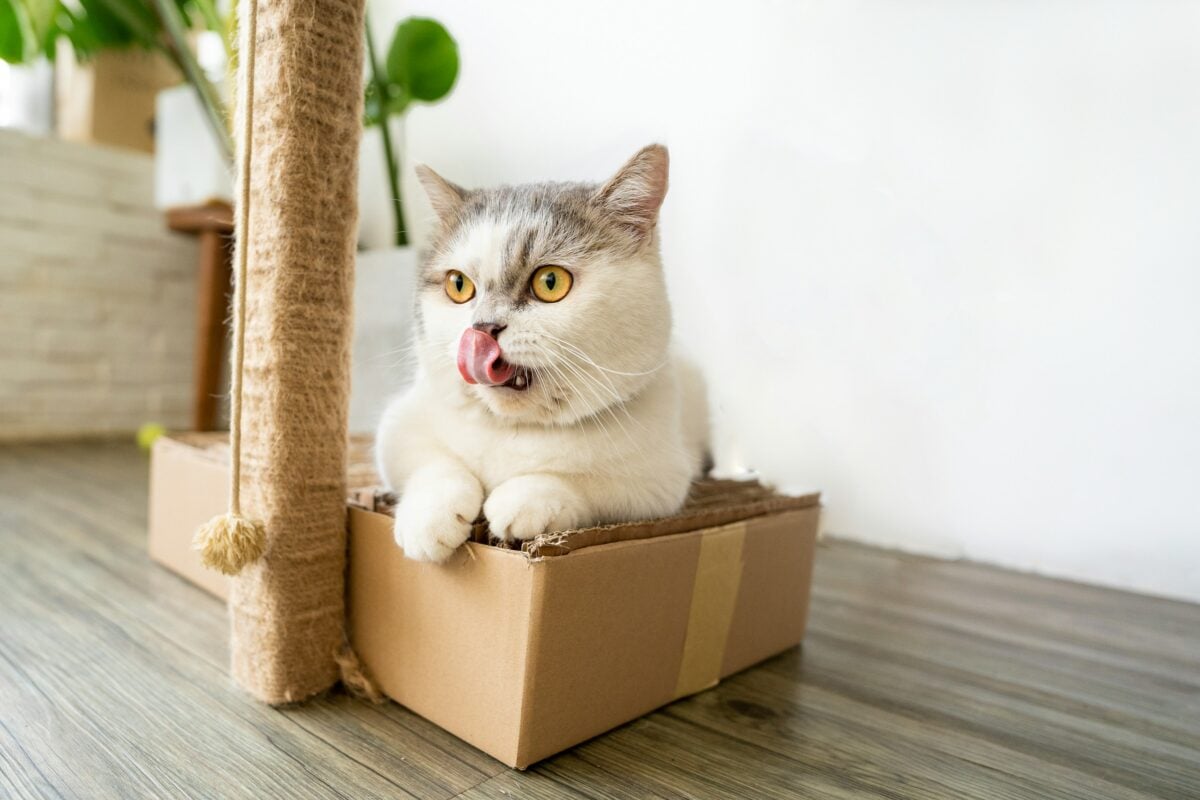
Scratching isn’t destruction for destruction’s sake. It’s communication.
Cats have scent glands in their paws. When they scratch, they leave both a visible mark and a chemical one. They are claiming territory. Signing documents. Updating property records.
When your cat chews on the flaps of a box, they are not ruining it. They are renovating.
Interior design, feline edition.
The Verdict: Boxes are A Masterpiece of Feline Engineering
At this point, it’s clear that cats and cardboard boxes are a legendary pairing. Not because cats have questionable taste, but because cardboard quietly satisfies nearly every survival instinct they have.
You can buy silk cushions or can assemble elaborate multi-tiered cat towers. You can research “orthopedic lumbar support for discerning felines.”
But you cannot out-engineer instinct.
The box is warm. It’s defensible. It reduces stress, allows ambush practice, and doubles as a scratching post. And, it smells like them once they’ve claimed it.
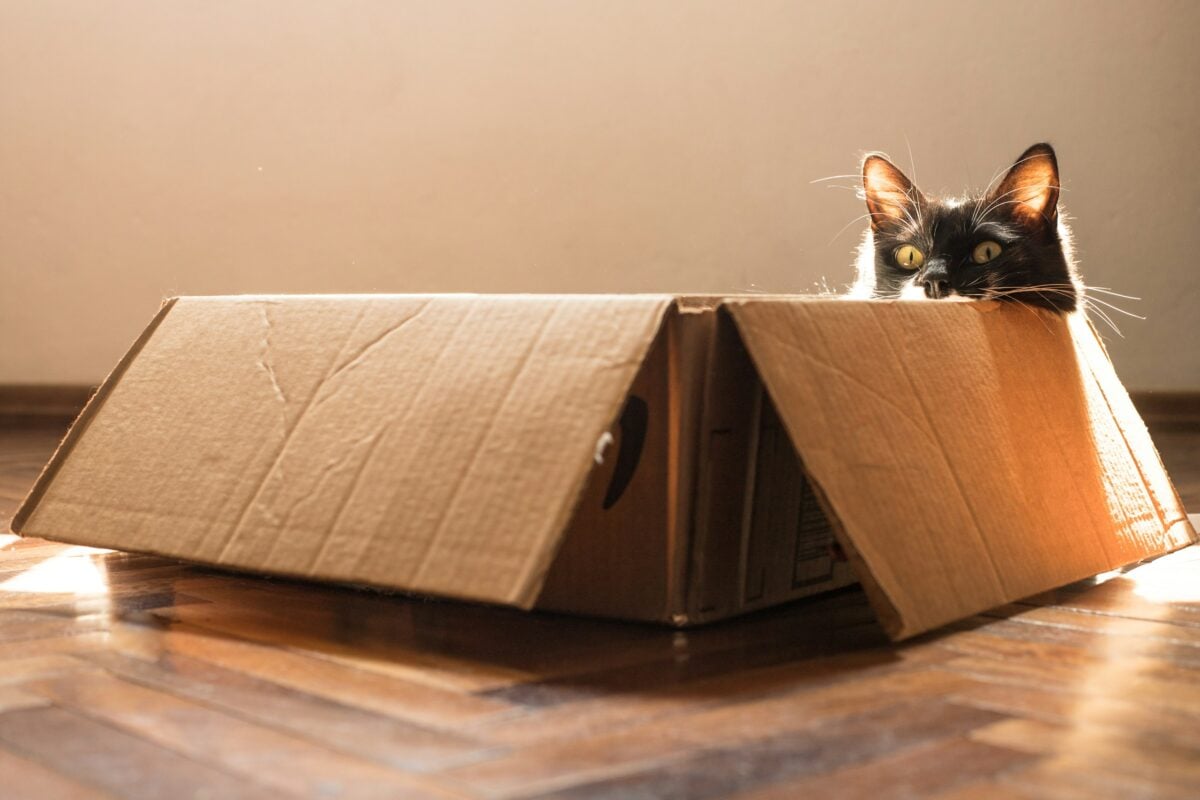
For a cat, a box isn’t just a container; it is the perfect physical metaphor for their entire worldview: framed, focused, and entirely on their terms. Just like a photographer uses a lens to isolate a subject and cut out the noise, a cat uses a box to isolate themselves from the chaos of your living room.
It is a thigmotactic, thermally optimized, stress-reducing fortress that doubles as a scratching post. You simply cannot manufacture a product that hits all of these biological imperatives as perfectly as a piece of folded trash.
So, the next time you order something online, accept your fate. You are actually ordering a highly engineered survival pod for your cat. The item inside is just a bonus gift for you.
Do All Cats Love Boxes?
Short answer: Most do.
Longer answer: It depends on who your cat is.
Cats aren’t clones running identical software. Personality plays a big role in how strongly a cat gravitates toward enclosed spaces.
- Shy or anxious cats tend to love boxes the most. For them, a box isn’t just cozy, it’s a coping tool. It reduces visual exposure and allows them to observe without being observed. If your cat prefers to monitor the household from inside a cardboard bunker, they’re not antisocial. They’re strategic.
- More confident, outgoing cats may still enjoy boxes, but often as ambush stations rather than hiding spots. They’re less interested in retreat and more interested in launching sneak attacks on passing ankles.
Age also matters.
- Kittens treat boxes like theme parks. They dive in, flip them over, chew the corners, and stage dramatic ambush rehearsals. Everything is new. Everything is a game.
- Senior cats, on the other hand, often value boxes for warmth and joint support. The insulation helps aging bodies conserve energy, and the firm walls can feel stabilizing.
That said, context is important.
If a normally social, confident cat suddenly begins hiding in boxes constantly, avoiding interaction, eating less, or acting withdrawn, that can signal stress or illness. Boxes are a normal enrichment. Sudden isolation is not.
As always with cats, behavior changes tell the real story.
Should You Give Your Cat More Boxes?
At this point, the answer should not surprise you.
Yes. Give the cat the box.
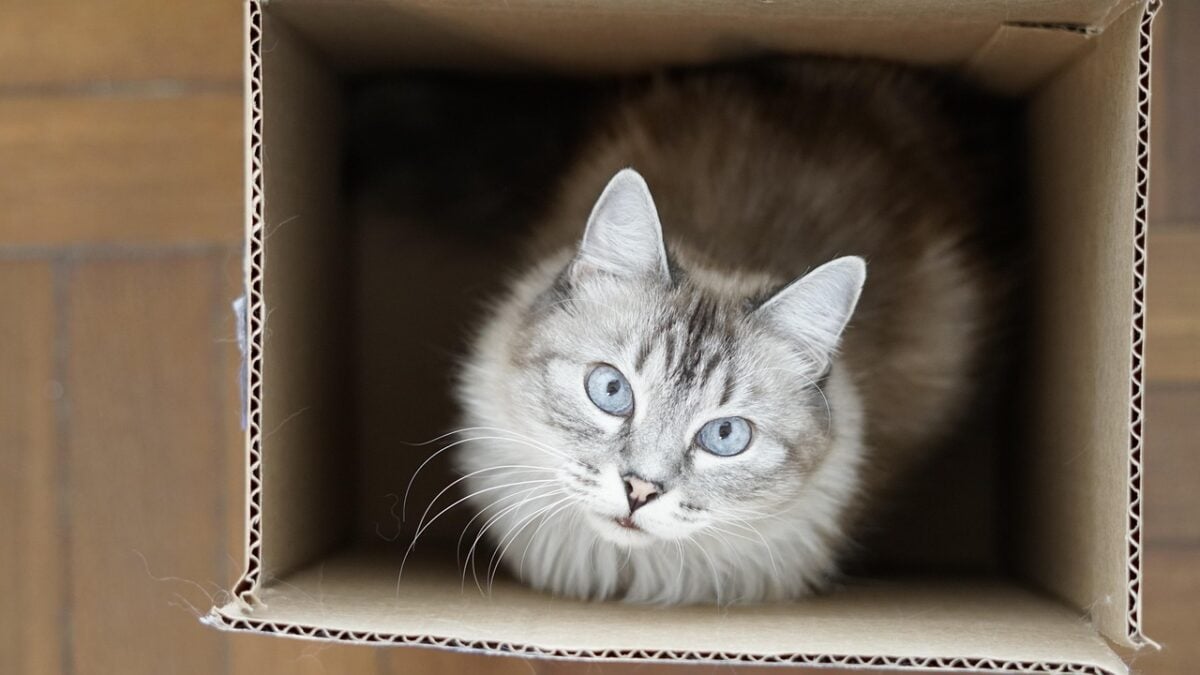
Cardboard boxes are one of the simplest, most effective forms of enrichment you can offer. They support natural instincts, hiding, observing, pouncing, and scratching, without requiring expensive gadgets or elaborate setups. In many cases, a plain shipping box does more for your cat’s mental well-being than a flashy piece of pet furniture ever could.
But if you want to go from “basic box” to “premium feline fortress,” there are a few easy upgrades.
How to Make a Cardboard Box Even Better
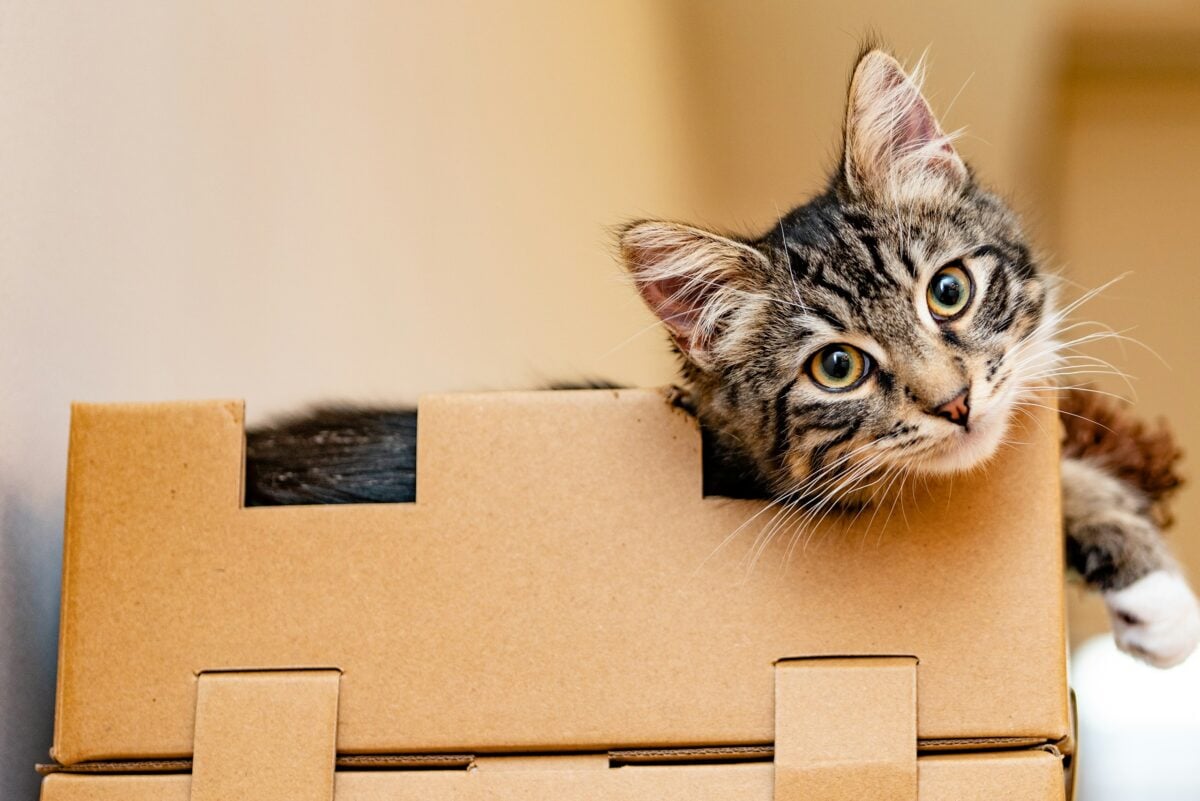
First, consider elevation. Cats naturally seek higher vantage points because height equals security. Placing a box on a sturdy table, shelf, or stable surface transforms it from a ground-level hideout to a surveillance tower. Suddenly, your cat isn’t just hiding… they’re overseeing their domain.
Next, add scent. Drop in an old T-shirt you’ve worn recently. Familiar human scent can be incredibly reassuring to cats, especially in multi-pet homes or busy environments. The box will quickly absorb that scent and feel established rather than “new and suspicious.”
You can also cut a small secondary opening in the back or side. In the wild, a good hideout rarely has only one exit. A second “escape hatch” prevents your cat from feeling cornered and increases their confidence using the space, particularly in homes with children or other pets.
Rotate boxes every few weeks if you can. Novelty matters. Even a slightly different size or shape can reignite interest and trigger fresh investigation.
In other words, you’re not just offering cardboard. You’re designing strategic infrastructure.
A Quick Word on Safety
Before handing over the keys to the new fortress, take a minute to make it safe.
Remove all tape, staples, loose plastic, and labels that could be chewed off and swallowed. Check for sharp edges if you’ve cut openings. If the box becomes heavily shredded, damp, or structurally unstable, recycle it and introduce a fresh one.
Supervise if your cat tends to ingest non-food items. Most cats shred responsibly. A few treat cardboard like a snack.
As with most things in cat ownership, observe first, adjust as needed.
The Bigger Picture: What Boxes Teach Us About Cats
The box obsession reveals something important about how cats experience the world.
- They crave safety more than softness.
- Control more than aesthetics.
- Structure more than extravagance.
We often assume that expensive equals better. But from a cat’s perspective, environmental design matters more than price tags. A cardboard box satisfies multiple biological needs at once: concealment, warmth, territorial marking, and sensory regulation.
That’s why it wins. It’s not about rejecting the fancy bed. It’s about choosing the option that aligns with instinct. Enrichment doesn’t have to be elaborate. It has to be meaningful.
So no, you didn’t waste money on the cat bed. You simply funded the box inspection department. And they take their job very seriously.
Cardboard vs. Wooden Boxes: Does It Actually Matter?
At some point, a well-meaning human thinks: What if I upgrade the box? Enter the wooden crate. Sturdy. Aesthetic. Possibly “rustic” in a way that suggests artisanal craftsmanship. Surely this is superior to a flimsy cardboard box… right?
Not necessarily. Because from a cat’s perspective, “better” isn’t about matching your decor. It’s about warmth, security, and whether the box doubles as a chewable, scratchable life-choice.
Why Cardboard Often Wins
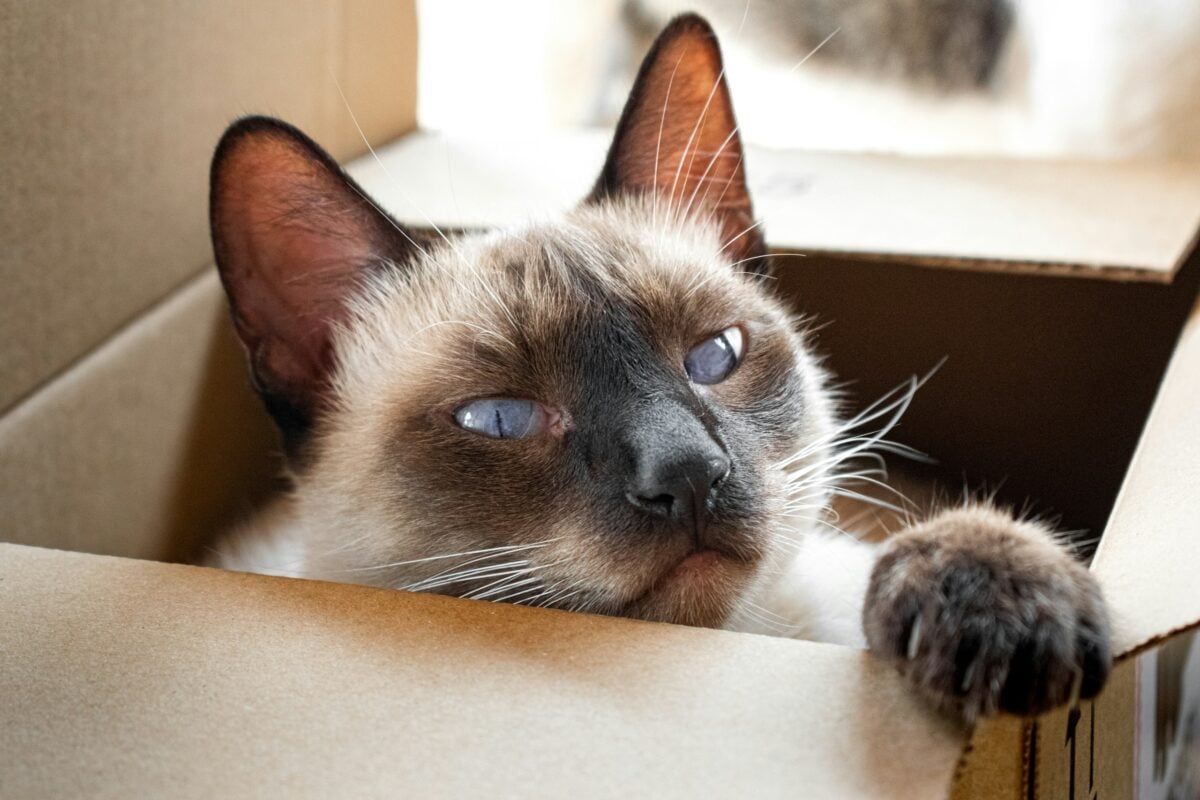
Cardboard has a few unfair advantages. For one, it’s a surprisingly good insulator. Corrugated cardboard traps air between its layers, helping your cat retain body heat and create a cozy little microclimate. (In other words: your house is chilly, and your cat has opinions.)
Cardboard is also interactive. It’s easy to scratch and bite, which makes it perfect for claw maintenance and stress relief. Plus, it absorbs scent quickly. Once your cat rubs their face or paws on it, the box starts smelling like them, and a familiar scent equals comfort. To your cat, that’s not packaging. That’s homeownership.
Where Wooden Boxes Can Be Great
Wooden boxes still have their place, especially if you want something durable (or something you won’t be embarrassed to have in photos). They don’t collapse, they don’t get soggy, and they can look genuinely nice in a room.
But wood typically doesn’t retain heat as well as cardboard; it doesn’t provide that satisfying “shred factor,” and it may not absorb your cat’s scent as quickly. So while a wooden box may feel like an upgrade to you, your cat might experience it as: solid, acceptable, but missing the vibes.
So… Should You Switch?
If your cat already loves cardboard, there’s no biological reason to replace it with wood. If you prefer a longer-lasting option, you can make a wooden box more appealing by adding a soft lining, placing it in a quiet spot, and choosing a design with partial enclosure rather than an open-top “display crate.”
Ultimately, the material matters less than the experience: enclosure, warmth, and control. That said, don’t be shocked if your cat still chooses the delivery box the wooden crate arrived in. Instinct tends to outrank craftsmanship.
Why Do Cats Like Boxes? Your Top Questions Answered
Cats and cardboard seem simple until you start paying attention. Below are some of the most common questions people ask about why cats like boxes. If your cat has a particularly dramatic box habit we didn’t cover, drop it in the comments. There’s a very good chance other cat owners have witnessed the same chaos.
Why do cats sit in small boxes?
Small boxes provide compression and containment. The snug fit reduces exposed surface area and creates a feeling of security. Tight spaces can have a calming effect, similar to how some humans prefer weighted blankets or enclosed spaces when relaxing.
If a cat can physically wedge themselves inside, they often will. The tight contact along their sides increases the sense of safety and reduces the need to monitor their surroundings. It may look uncomfortable to us, but to them, it feels stabilizing.
Why do cats love cardboard specifically?
Cardboard insulates well, trapping body heat and creating a warmer microclimate. It’s also lightweight, easy to modify, and satisfying to scratch. The texture allows cats to mark territory both visually and with scent glands in their paws.
Why is my cat chewing or shredding the cardboard box?
For most cats, shredding cardboard is simply a way to mark their territory and exercise their predatory instincts. The firm-but-yielding texture is incredibly satisfying for them to sink their teeth and claws into. It leaves both a visual marker (a mess of shredded paper on your floor) and a scent marker from their paws.
However, if your cat is actively swallowing the cardboard rather than just spitting it out, it could be a sign of a behavioral condition called Pica (the urge to eat non-food items), and you should consult your vet.
Are shipping boxes safe for my cat to play in?
Generally, yes, but every box needs a quick safety audit before it becomes a feline fortress. Always remove heavy-duty packing tape, plastic shipping sleeves, and especially metal staples. Ingesting stringy tape or snagging a paw on a rogue industrial staple can quickly turn a fun afternoon into an expensive veterinary bill.
Why is my cat peeing or pooping in a cardboard box?
If your cat starts using a cardboard box as a bathroom, it’s usually not about the box — it’s a signal.
Boxes feel enclosed and safe, much like litter boxes. But choosing a regular box over their litter box often means something is wrong. The litter box may be dirty, poorly placed, or associated with stress. In some cases, medical issues like urinary tract infections can cause sudden changes in bathroom habits.
If the behavior is new or frequent, especially with straining or discomfort, contact your veterinarian. Urinary problems can escalate quickly.
A cardboard box should be a fortress, not a restroom. If it becomes one, it’s time to investigate.
Do big cats like lions and tigers love boxes, too?
Yes. Zoos frequently use oversized cardboard boxes as enrichment for large cats. Lions, tigers, and leopards investigate, sit in, and interact with boxes in surprisingly similar ways. The instinct for concealment, control, and environmental exploration runs deep across feline species.
Different size. Same operating system. The video below proves that even the biggest cats can’t resist a good box.
Our Team’s Cats and Their Cardboard Confessions
Turns out, this isn’t just your cat. Our staff is also living with cats who believe cardboard is a superior lifestyle choice.
The Cardboard Overlord
My cat Zaphod loves boxes. And when I say loves, I mean capital-L, rearrange-the-household-for-cardboard Loves.
A new box appears, and he treats it like an event. He checks every corner, steps in with confidence, spins once for good measure, and settles like he’s found exactly what he was waiting for.
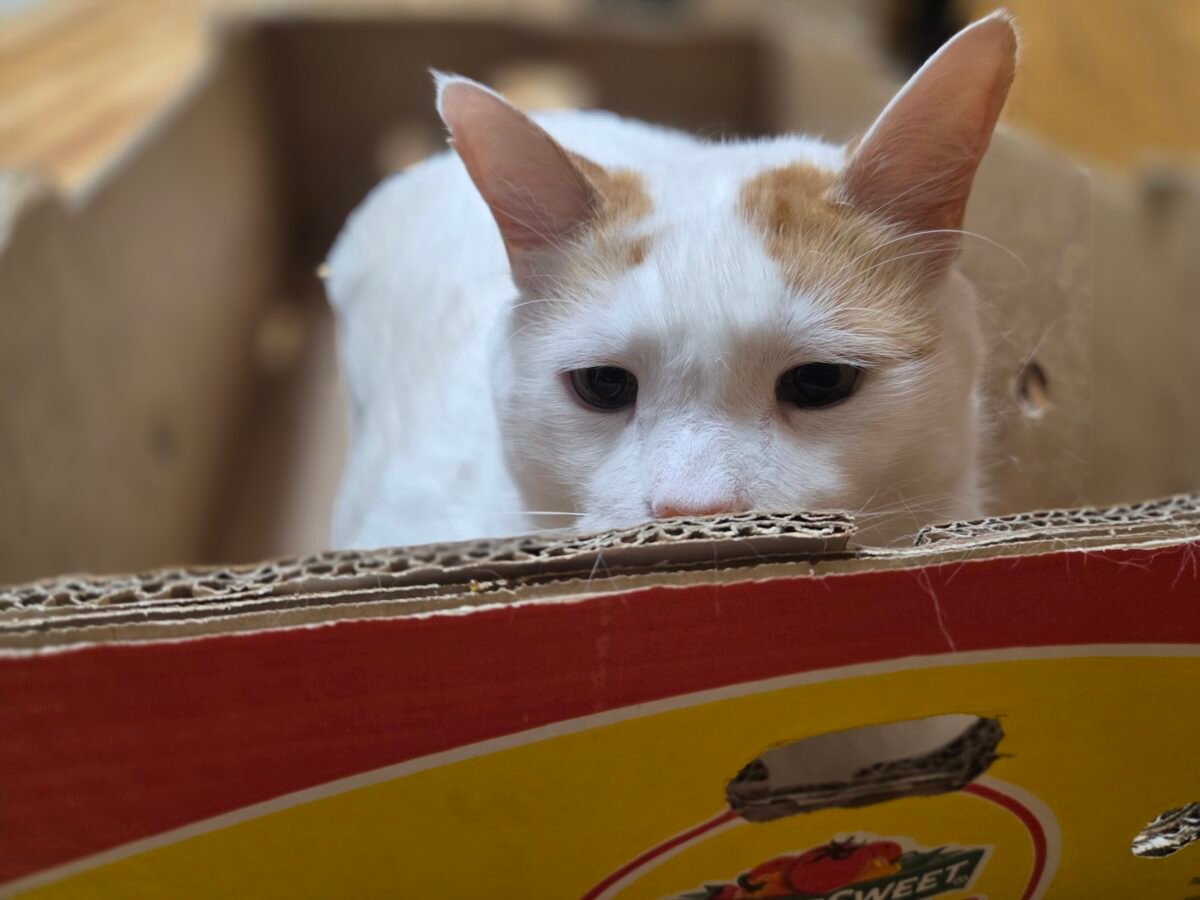
Photo by Danielle DeGroot for Love Your Cat, © Cover Story Media, Inc. 2025.
At some point, I stopped pretending this was temporary.
There was a stretch where I had boxes staged around the living room like minimalist décor. One by the couch. One by the window. One in the hallway for “tactical purposes.” Guests pretended not to notice. I referred to them as “his spaces.” If I moved one even slightly, Zaphod would become personally offended. He’d glare. He’d circle, then re-enter it with exaggerated force, as if to say, We discussed this.
Then I escalated.
I built him a multi-level cardboard condo — windows, tunnels, structural reinforcements. He moved in immediately. The expensive cat furniture I bought? Mostly used as a stepping stool to access the upper box level.
Zaphod doesn’t just enjoy cardboard. He governs it.
And at this point, I’ve accepted that this is simply my life.
The Box Wars: A Domestic Chronicle
I don’t know why I buy cat beds for my three kitties. The real luxury item in my house is a free cardboard box. The second I bring a package in, Bam is on it like she ordered it herself. It doesn’t matter what was inside; the box is the prize. Before I can break it down, she’s crammed into it with total confidence, even if half of her body is clearly not cooperating.
Lola treats every box like a throne. She circles, inspects, and then lowers herself in with dramatic grace, only to flip upside down and start chewing the corners like she’s renovating. And Monk? Monk believes size is a suggestion. If one paw fits, he fits. I’ve seen that cat fold himself into geometry-defying shapes just to claim a box before his sisters. Apparently, in my house, cardboard is prime real estate.
– Sally Jones, Devoted Cat Mom & Love Your Cat Writer
The Bigger Lesson: Cats Aren’t Random
The cardboard obsession proves something important: your cat isn’t being weird… they’re being instinctive.
Once you understand why cats like boxes, other “mysterious” behaviors start making more sense too. Knocking things off counters isn’t pure spite. Following you everywhere isn’t always clinginess. Midnight zoomies aren’t chaos. Even staring at nothing can have a sensory explanation.
Cats are finely tuned survival machines living in very modern homes. The box just happens to be the most obvious clue. And the more you understand their instincts, the less personal and more fascinating their behavior becomes.
Submit Your Cat’s Most Unhinged Box Behavior
The box always wins.
What is the most unhinged box your cat has ever claimed? Was it clearly too small? Structurally unsound? Still half full of packing paper? Drop your most unhinged “cat in a box” story in the comments. We’re building a support group.