When you purchase through links on our site, we may earn a commission at no extra cost to you. Learn more.
Cats are ridiculously good at pretending everything is fine.
Table of Contents
A stressed cat may still look perfectly calm while quietly changing their routine—eating less, hiding more, avoiding a favorite spot, or suddenly becoming clingier or crankier.
And because we know our cats that well, those little shifts matter. The key isn’t whether a behavior is “normal for cats.” It’s whether it’s normal for your cat.
Here are 10 subtle signs your cat may be stressed, even if they’re doing an excellent job of hiding it.
Want our human-written content to rank above AI-generated garbage? Help us out by clicking this button!
Why Cat Stress Is So Easy to Miss
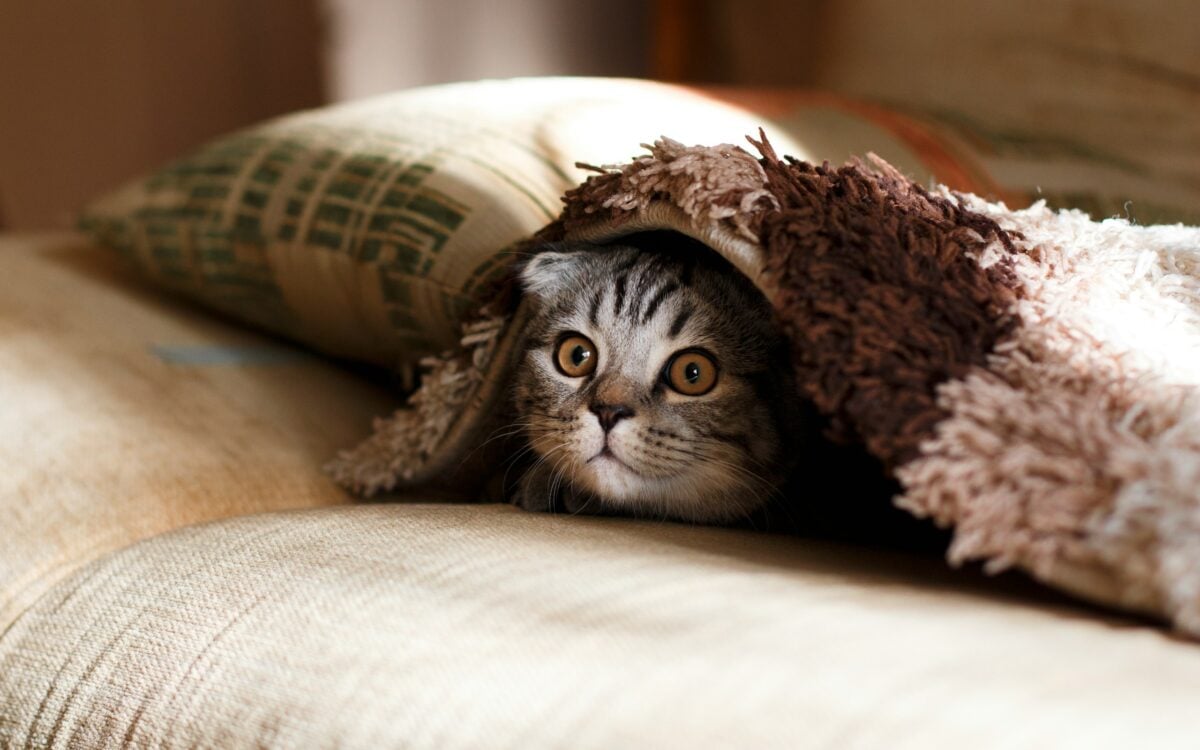
Stress in cats doesn’t always look dramatic.
Some cats get restless or vocal. Others do the opposite: they hide, sleep more, play less, or quietly stop doing things they normally enjoy.
Which is tricky, because that can look a lot like… being a cat.
That’s why change matters more than the behavior itself.
If your cat always vanishes when the doorbell rings, that’s probably just their normal. If your social little shadow suddenly spends every evening behind the sofa and skips the usual kitchen patrol, pay attention.
Stress can also pile up. Houseguests, a schedule change, another cat outside the window, and a noisy repair may each be manageable, licensed via their own.
Together? Sometimes the last straw really is the vacuum.

10 Signs Your Cat May Be Stressed
Cats rarely make stress obvious. More often, it shows up in small changes to eating, sleeping, hiding, play, or affection.
As you read through these signs, focus on what’s new, more frequent, more intense, or happening alongside other changes.
1. Hiding More Than Usual
Most cats consider access to a good hiding spot a basic constitutional right.
Under the bed. Behind the curtains. Inside a closet. In the shipping box from the expensive cat bed they have completely rejected.
Hiding itself isn’t the problem.
A noticeable increase in hiding is what matters.
Maybe your cat normally spends evenings on the sofa but suddenly disappears for hours. Perhaps they wait until everyone is asleep before coming out or bolt under furniture whenever someone walks into the room.
Think about when it started.
Did visitors arrive? Did you adopt another pet? Move furniture? Start renovations? Come home from a trip carrying the fascinating scent profile of airports, hotels, and somebody else’s dog?

A safe place to retreat is an important part of a cat-friendly environment, so don’t drag a frightened cat out because you want to reassure them. Let them choose when to emerge.
Instead, make sure food, water, litter boxes, and comfortable resting spots remain easy to reach.
Then look at body language.
A relaxed cat snoozing in a box often looks loose and soft, with sleepy eyes and neutral ears. A worried cat may crouch tightly, watch the exit, flatten or rotate the ears, and hesitate to emerge even when something tempting appears.
If hiding becomes extreme, persists, or comes with appetite loss, pain, vomiting, litter box changes, or a major personality shift, call your veterinarian. Cats may hide when stressed, but hiding and withdrawal can also accompany pain.
2. Eating Less or Suddenly Becoming Picky
A half-eaten breakfast isn’t automatically alarming.
But if your cat normally materializes before you’ve finished opening the can and suddenly takes two bites, looks around, and walks away, pay attention.
Stress can affect appetite. It can also affect where a cat feels comfortable eating.
This is especially easy to miss in multi-cat homes.
You may see two cats peacefully sharing the kitchen. Meanwhile, one is sitting six feet away, giving the other a stare that apparently translates perfectly into feline as, “Approach that bowl and see what happens.”
Cats can control one another’s access to food, litter boxes, resting places, and other resources without an obvious fight breaking out.

Watch a meal or two.
Does your cat eat better alone? Keep looking over their shoulder? Leave when another pet appears? Has the bowl moved somewhere noisier or busier?
Those details are useful.
But don’t assume appetite loss is simply stress. Reduced eating can be associated with many illnesses, and sustained food avoidance in cats can become medically serious.
If your cat stops eating, eats substantially less than normal, or has vomiting, lethargy, weight loss, or other symptoms, contact your veterinarian promptly.
We know. Cats occasionally reject a perfectly good dinner because the pâté has apparently failed inspection.
A real change in appetite is different.
3. Peeing Outside the Litter Box
Few things activate Cat Parent Emergency Mode faster than stepping onto a suspiciously damp bath mat.
Before anything else: your cat probably isn’t doing this for revenge.
Urinating outside the litter box can have several causes, including litter box setup, tension with another cat, environmental changes, pain, and urinary disease.
Start with the box.
Did you switch litter? Move it? Buy a covered box? Put it somewhere noisy? Is another pet blocking the easiest route?
A litter box can technically be “available” while still feeling unsafe to use.
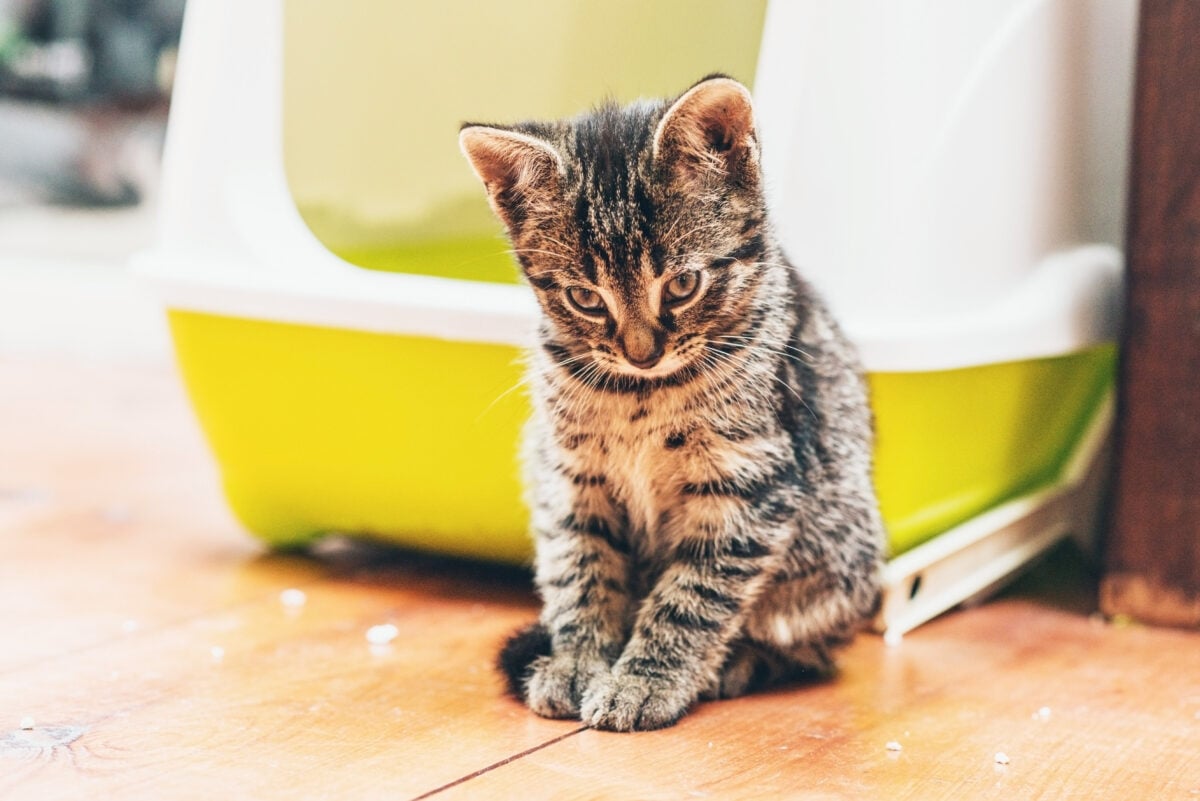
In multi-cat households, guarding is often subtle. Nobody has to hiss or throw paws. One cat sitting in a doorway may be enough to make another choose a different bathroom.
Keep boxes clean, private, and easy to access. Feline veterinary guidance also recommends distributing key resources rather than forcing cats to compete for one location.
And please don’t punish accidents. Yelling doesn’t fix the reason your cat avoided the box; it may simply add another stressful thing to the situation.
Know the urinary emergency signs
A cat that repeatedly tries to urinate but produces little or no urine needs immediate veterinary care. Urethral obstruction is a medical emergency, particularly in male cats.
Get urgent veterinary help if you notice:
- repeated trips to the litter box with little or no urine
- straining or obvious difficulty urinating
- crying or obvious pain while trying to urinate
- worsening distress, weakness, or vomiting alongside urinary trouble
For new or recurring accidents without emergency signs, a veterinary exam is still a sensible first step.
Figure out the “why” before declaring war, licensed via the rug.
4. Grooming Too Much—or Hardly at All
Cats take grooming very seriously. Some appear to operate a full-service spa between naps.
So seeing your cat wash themselves frequently isn’t automatically concerning. The clue is a change in their normal grooming routine.
A stressed cat may repeatedly lick certain areas. Over time, you may notice broken hair, thinning fur, bald patches, or irritated skin.
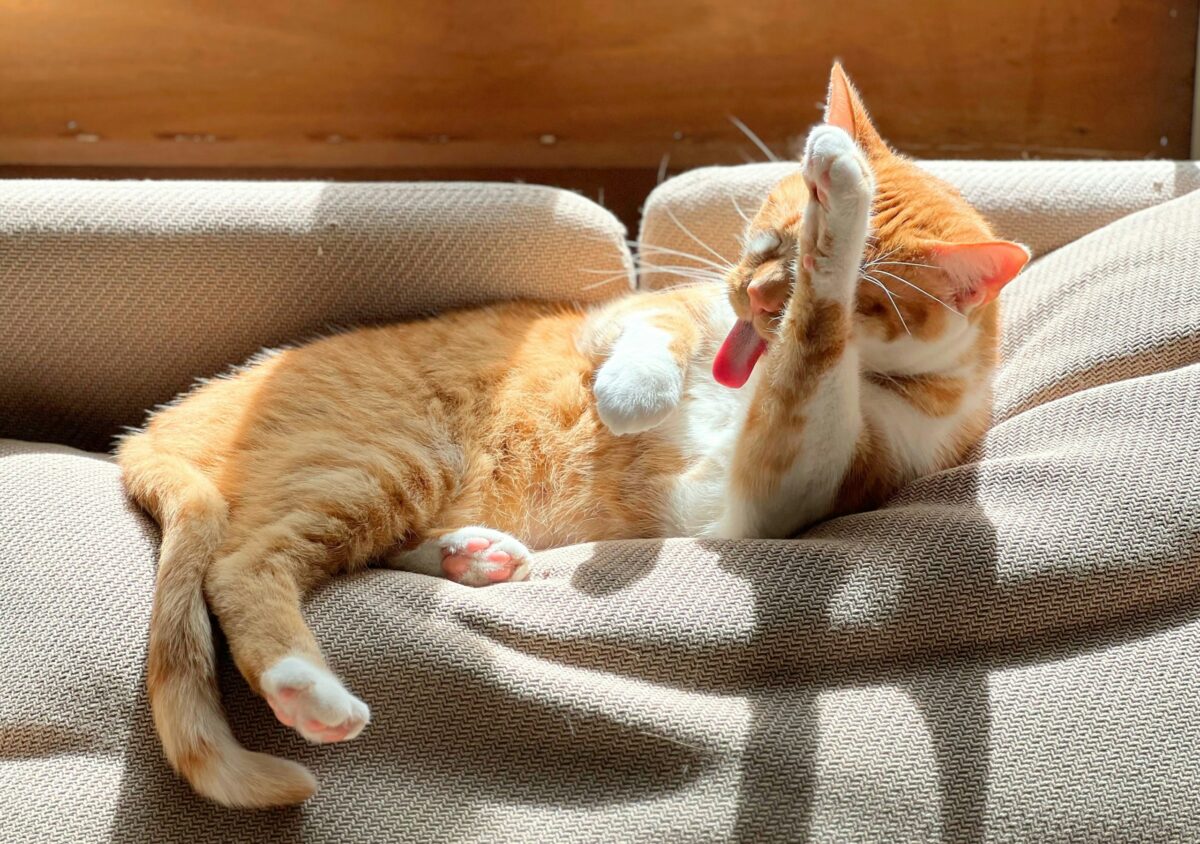
But excessive grooming isn’t a stress diagnosis. Fleas, allergies, skin disease, parasites, pain, and other physical problems can look remarkably similar.
The opposite matters too.
A cat grooming less may start looking greasy, flaky, tangled, or generally a little unkempt.
Stress can contribute, but so can arthritis, dental pain, obesity, weakness, and illness. With older cats, suddenly neglecting the lower back may have less to do with emotional distress and more to do with, “That bend hurts now.”
Check the coat and skin for redness, sores, mats, hair loss, fleas, flea dirt, or sensitive areas.
If the change sticks around, causes skin damage, or is substantial, get your veterinarian involved.
5. Acting Much Clingier Than Normal
Not every stressed cat heads under the bed. Some become Velcro.
A normally independent cat may suddenly follow you everywhere, sleep pressed against you, demand more contact, or become deeply concerned that you have entered the bathroom alone. Which, admittedly, is not the worst development for those of us who consider a cat voluntarily choosing our lap a major life achievement.
Still, new clinginess can mean your cat is looking for security.

Think about what has changed. Did you return to the office after working from home? Travel recently? Bring home another pet? Did someone move out?
If your cat has supervised every shower and cooking attempt since kittenhood, following you around isn’t especially informative.
If your independent little roommate suddenly can’t settle unless you’re nearby, that’s different.
Give them affection when they seek it.
You don’t need to cold-shoulder a worried cat because you’re afraid of “rewarding” anxiety. Instead, keep the household predictable and make sure your cat also has comfortable places to rest, hide, climb, scratch, and observe the action without being in the middle of it.
If sudden clinginess comes with appetite, mobility, litter box, sleep, or other personality changes—especially in an older cat—mention it to your veterinarian.
Sometimes “please hold me” really does mean “something feels wrong.”
6. Avoiding People or Favorite Places
Sometimes the clue isn’t where your cat goes. It’s where they stop going.
That sunny cushion has been occupied every afternoon for three years. Suddenly, it’s empty.
Your cat no longer sits beside you while you work. They stopped using the top of the cat tree. They avoid one hallway or won’t enter a particular room.
Cats can be surprisingly specific about avoidance. Try looking at the area from cat level.
Did a new appliance appear? Is there an unfamiliar sound? Has furniture changed an escape route? Is another household cat hanging around the doorway?
And don’t forget the windows. The neighborhood cat casually strolling through your yard may be cute to you and a full-scale territorial incident to the cat watching from inside.
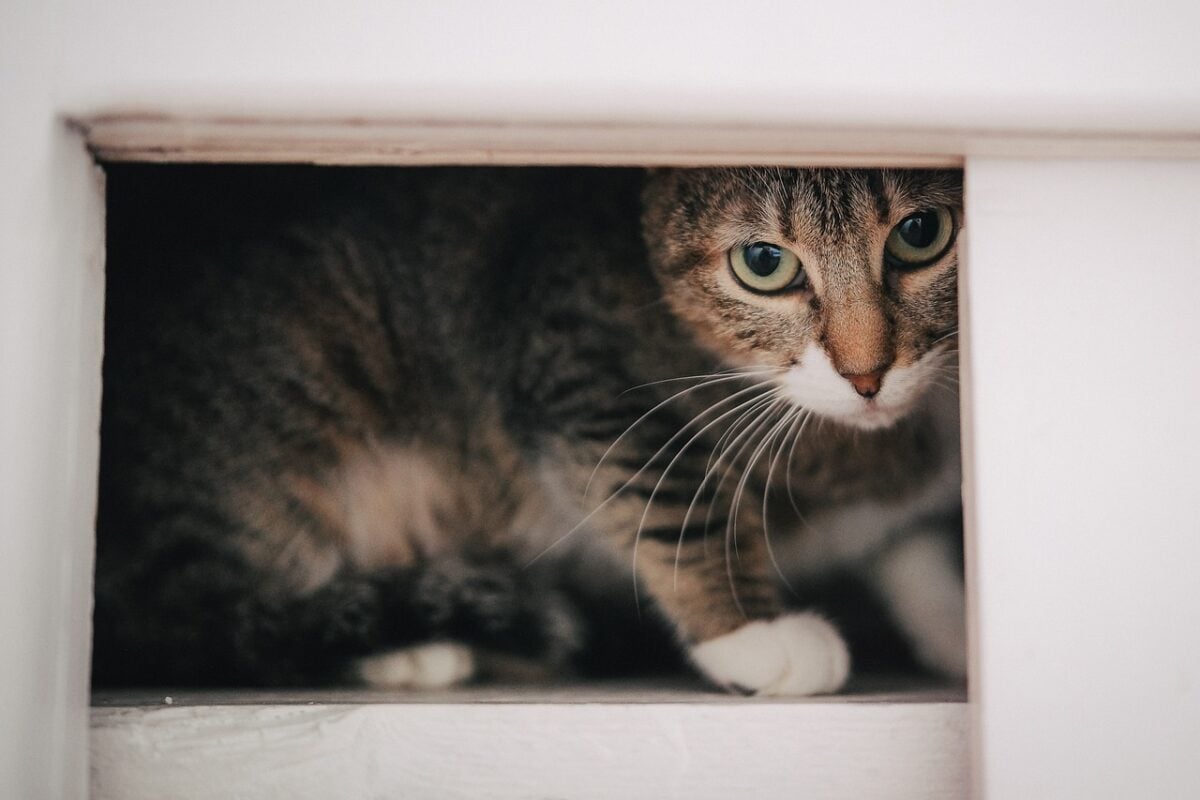
Avoidance can also come from unpleasant associations. Give medication in the same room every night, and your cat may decide that entire zip code has become medically compromised.
Then there’s pain. A cat that stops jumping onto a favorite high perch may not be afraid of the perch at all. Jumping may hurt.
For older cats or cats with mobility issues, simple home adaptations such as lower-entry litter boxes, ramps, or easier access to favorite resting spots can help.
Don’t force your cat back into a place they’re avoiding.
Investigate first.
7. Sleeping More or Seeming Withdrawn
Cats are world-class sleepers. So “my cat slept all afternoon” is not exactly breaking news. Instead, ask what happens when your cat would normally be engaged.
- Do they still appear when the treat bag rustles?
- Watch birds?
- Chase a favorite toy?
- Inspect every grocery bag?
- Sit directly, licensed via the object you are trying to use?
A stressed cat may rest more, play less, hide, or withdraw from normal activity. Sometimes it’s subtle.
Your cat may stay in the same room but stop participating. They seem quieter. Less curious. Less interested.
Cat people often describe this with the deeply scientific phrase:
“They’re just… off.”
And while that isn’t a diagnosis, knowing your cat’s normal behavior counts for a lot.
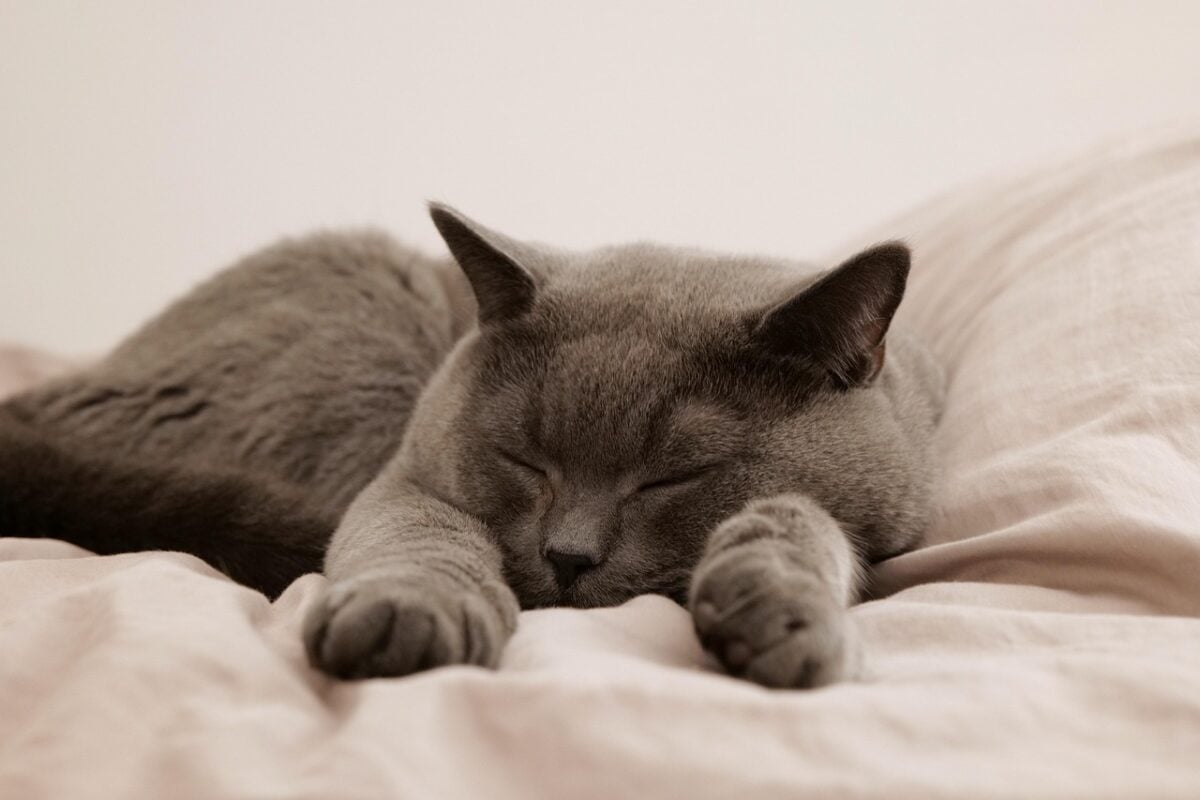
Stress is only one possibility. Pain and illness can also cause withdrawal, appetite changes, and reduced activity.
There’s a big difference between a luxurious four-hour sunbeam nap and a cat that has quietly stopped doing the things they normally enjoy.
If your cat seems weak, unusually lethargic, stops eating, vomits repeatedly, has breathing changes, or is markedly less responsive, contact your veterinarian.
8. Meowing More Than Usual
Some cats provide live commentary on the entire household.
Others have approximately three announcements:
- Breakfast.
- Dinner.
- And, “There is a closed door here, and I object on principle.”
Normal vocalization varies enormously, which is why a change in your cat’s voice or vocal habits matters more than how chatty they are overall.
A normally quiet cat may begin yowling at night. Another may meow repeatedly when left alone or start vocalizing around a particular room, pet, or activity.
Look for the pattern. When does it start? What happens immediately beforehand?
What makes it stop?

Older cats may also vocalize differently as their physical, sensory, or cognitive needs change. Changes in appetite, grooming, play, and vocal behavior can become more common with age, but new changes still deserve attention rather than being dismissed as “just getting old.”
Pain can make cats vocal too. If your cat cries while urinating, defecating, moving, jumping, or being touched, call your veterinarian.
And don’t shout back. You will not win.
If the behavior only happens occasionally, record it, licensed via your phone. A short video can sometimes give your veterinary team much more useful information than trying to recreate your cat’s 2:17 a.m. hallway opera in the exam room.
9. Scratching More Than Usual
Scratching is normal. Necessary, even.
Your sofa may wish to submit a dissenting opinion, but scratching helps cats stretch, maintain their claws, and leave visual and scent marks.
A thoroughly demolished scratching post is usually a success story. What catches our attention is a sudden increase or change in location.
Maybe your cat has used the same sisal post for years but suddenly starts scratching the wall beside the front door. Or the sofa beside the window. Or every prominent object in the room.
Location can be a clue.
Scratching and other marking behaviors are part of feline communication and can become relevant when cats feel uncertain about their territory or relationships with other cats.

Give your cat acceptable places to scratch rather than trying to eliminate the behavior.
Some want a tall, solid vertical post they can really lean into. Others are cardboard-floor-scratcher people. Plenty demand both because choice is apparently essential.
Put scratchers where your cat actually wants to scratch.
The world’s finest scratching post is useless if it’s hidden in the guest room while your cat is conducting renovations on the living-room sofa.
If increased scratching appears alongside hiding, appetite changes, tension with other pets, or irritability, look at what else changed around the same time.
10. Sudden Aggression or Irritability
If your usually easygoing cat suddenly swats, growls, bites, or flinches away from touch, pay attention. They’re communicating something.
Maybe not in the format we’d prefer. But clearly.
Stress and fear can reduce a cat’s tolerance, especially when they feel cornered or unable to retreat. Often there are smaller warnings first: turning away, freezing, tail twitching, ears shifting back, skin rippling, or attempting to leave.
Miss enough polite memos, and eventually you may receive the claws.

Conflict between cats is another possibility. Intercat tension doesn’t always look like a dramatic fight; it can involve blocking, staring, chasing, or competition for preferred spaces and resources.
But new aggression can also signal pain.
A sore hip, painful mouth, injury, or other health problem may make touch suddenly unpleasant. Don’t punish an agitated cat or force an interaction to prove they’re “fine.” Give them space.
Sudden, severe, or recurring aggression deserves veterinary evaluation. If medical problems have been ruled out, a qualified feline behavior professional can help untangle what’s happening.
Your cat hasn’t necessarily “turned mean.” Something changed. That’s the part we want to understand.
What to Do If You Think Your Cat Is Stressed
When you love your cat, the instinct is to fix everything immediately. We get it.
You notice something is wrong, and suddenly you’re prepared to replace every litter box, order six new beds, rearrange the furniture, cancel all visitors, install a climbing wall, and personally negotiate with the neighborhood tabby.
Try not to change everything at once. For an already unsettled cat, a massive “stress-reduction makeover” can become… more change. Start with what you know.
Think back over the last several days or weeks. Did someone move in or out? Has your work schedule changed? Did you travel? Change litter? Move the food? Rearrange a room? Bring home another animal?
Then make your cat’s world easier to predict.
Keep familiar routines where possible. Give them safe places to hide and elevated places to rest. Make food, water, scratching areas, resting spaces, and litter boxes easy to access without confrontation with another cat. Those basic environmental needs are central to current feline-friendly guidance.
Play can help too. Ten focused minutes with a wand toy can be more interesting than the basket of 37 toys, licensed via the floor that nobody has acknowledged since Christmas.
And if you can’t identify the pattern, keep notes. Nothing elaborate. Your phone is fine.
“Didn’t finish breakfast. Hid during contractor visit. Came out at 7. Played normally after dinner.”
A few days of notes can reveal connections your memory misses.
Most of all, know when this has moved beyond home troubleshooting.
- Difficulty urinating, significant breathing trouble, collapse, severe weakness, obvious pain, repeated vomiting, or other acute symptoms warrant prompt or emergency veterinary attention.
- A major reduction in appetite deserves prompt attention too. Cats experiencing sustained food avoidance can develop serious complications, and loss of appetite may signal an underlying illness rather than stress alone.
Because yes, we would do just about anything for these animals. Sometimes the most loving thing we can do is stop guessing and call the vet.
10 Quick Ways to Help a Stressed Cat
Once you’ve spotted the signs, the next question is usually: What can I actually do to help?
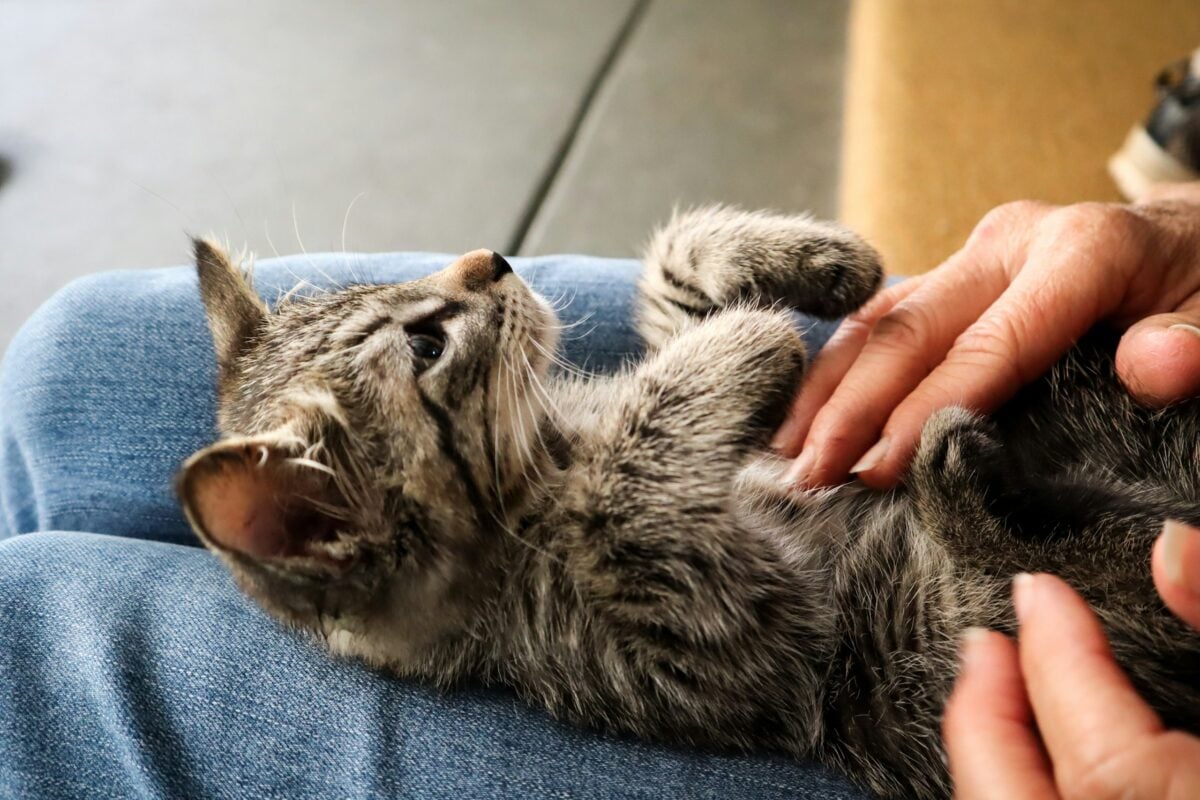
You don’t need to overhaul your entire house. In fact, stressed cats generally benefit from more familiarity, not a sudden flood of new beds, toys, bowls, and well-intentioned changes.
Start small:
- Keep their routine predictable. Try to keep meals, playtime, and your usual daily rhythms reasonably consistent.
- Give them somewhere safe to disappear. Boxes, covered beds, quiet rooms, and other cozy retreats let your cat decide when they’ve had enough of everyone.
- Add vertical space. A cat tree, shelf, or favorite perch gives your cat somewhere to observe the household without being right in the middle of it.
- Spread out important resources. In multi-cat homes, don’t make everyone negotiate over the same food bowl, water station, scratching post, or litter box.
- Make time for play. A few minutes of stalking and pouncing on a wand toy can provide a healthy outlet—and remind your cat that they’re still an extremely accomplished predator.
- Let affection happen on their terms. If your cat wants your lap, wonderful. If they’d rather watch you suspiciously from six feet away, that’s okay too.
- Reduce the stressor when you can. Close the blinds if an outdoor cat is causing chaos, give your cat a quiet room during parties, or move a noisy appliance away from their favorite resting spot.
- Avoid punishment. Yelling at a frightened cat, especially over scratching or litter box accidents, can add stress without fixing the underlying problem.
- Watch for patterns. A few notes about eating, hiding, litter box use, play, and unusual behavior can help you figure out what’s triggering the change.
- Know when to call the vet. If something feels genuinely off—especially appetite loss, urinary trouble, pain, vomiting, breathing changes, severe lethargy, or a sudden personality change—don’t assume it’s “just stress.”
Above all, give your cat choices. A cat who can retreat, climb, explore, eat, rest, and approach you on their own terms has more control over their little world.
And sometimes that’s exactly what they need: a quiet place, a familiar routine, their favorite person nearby, and absolutely no further changes to the location of that chair.
The Big Takeaway: Watch for Change
Cats don’t usually announce that they’re stressed. They change little things: an unfinished meal, more hiding, less play, extra clinginess, or a shorter fuse.
What matters most is what’s different for your cat.
Sometimes the cause is stress. Sometimes it’s pain or illness. You don’t have to decode every tail flick—just notice when your cat stops acting like themselves.
That ridiculous familiarity we build with their routines? It matters.
If your cat’s behavior has changed in ways that don’t quite fit the “stress” picture, these cat behavior changes you shouldn’t ignore can help you spot when something more may be going on.
Frequently Asked Questions About Stress in Cats
Cat stress can be tricky because there’s rarely one behavior that gives you a definite answer. What matters most is knowing your cat’s normal and noticing when something changes.
Below are answers to some of the questions cat parents ask most often. Still wondering about something we haven’t covered? Leave your question in the comments. Chances are, another cat person has wondered the exact same thing.
How can I tell if my cat is stressed or just being weird?
Start with what’s normal for your cat. If yours has always hidden from visitors or yelled at closed doors, that alone isn’t a warning sign.
A new pattern matters more.
Hiding plus appetite changes, overgrooming, litter box issues, or unusual irritability deserve a closer look. If the change is persistent, worsening, or comes with physical symptoms, call your veterinarian.
How long does it take a stressed cat to calm down?
It depends on the cat and the trigger. A vacuum-related betrayal may be forgotten by dinner. A new home, pet, or major routine change can take much longer.
Watch for progress: less hiding, normal eating, more play, and a return to favorite spots.
If your cat is getting worse, not eating, or having litter box problems, call your veterinarian.
Can stress make a cat physically sick?
Yes, stress can affect a cat’s health, but it shouldn’t become the default explanation for every symptom.
Urinating outside the box, vomiting, appetite loss, lethargy, overgrooming, and aggression can all have medical causes too.
Think of stress as one piece of the puzzle, not the diagnosis.
When should I take a stressed cat to the veterinarian?
Call your veterinarian if the behavior change is sudden, severe, persistent, worsening, or paired with physical symptoms.
Get urgent help if your cat cannot urinate or keeps straining with little or no urine. Breathing trouble, collapse, seizures, severe weakness, or obvious pain also need immediate care.
And don’t ignore a major appetite change.
You know your cat. If you keep thinking, “This isn’t normal for you,” trust that instinct.
Sometimes they need space. Sometimes they need the litter box moved back.
And sometimes they need the carrier.
They’ll forgive you.
Probably.
Keep Learning What Your Cat Is Trying to Tell You
The better you know your cat’s normal, the easier it becomes to spot when something feels off. And honestly, figuring them out is half the fun. One minute you’re researching stress signals; the next you’re trying to understand why your cat follows you into the bathroom but acts personally offended when you sit beside them.
If you’re in the mood for a little more feline detective work, keep reading:
- Why Is My Cat So Clingy? — If your formerly independent cat has suddenly become your tiny furry shadow, here’s what could be behind it.
- How Long Can Cats Be Left Alone? — Learn how alone time can affect your cat and when it’s worth arranging a sitter or extra check-ins.
- Warning Signs When Introducing Cats — Bringing another cat into the family? Learn the subtle signs that introductions are moving too quickly.
- Why Cats Get the Zoomies — Because sometimes strange behavior really is just your cat launching themselves down the hallway at Mach 3 for reasons known only to them.
Because the more we understand them, the better we can give them what every cat deserves: a safe home, good care, and at least one cardboard box we weren’t allowed to throw away.
Has Your Cat Ever Suddenly Seemed… Off?
Maybe they stopped eating normally, abandoned a favorite spot, got extra clingy, or started doing something that made your cat-parent radar light up.
Tell us what changed in the comments, and what you eventually figured out. Your weird little cat mystery might help another worried cat person spot the same thing sooner.