When you purchase through links on our site, we may earn a commission at no extra cost to you. Learn more.
It usually starts with a moment of confusion, followed very quickly by frustration.
Table of Contents
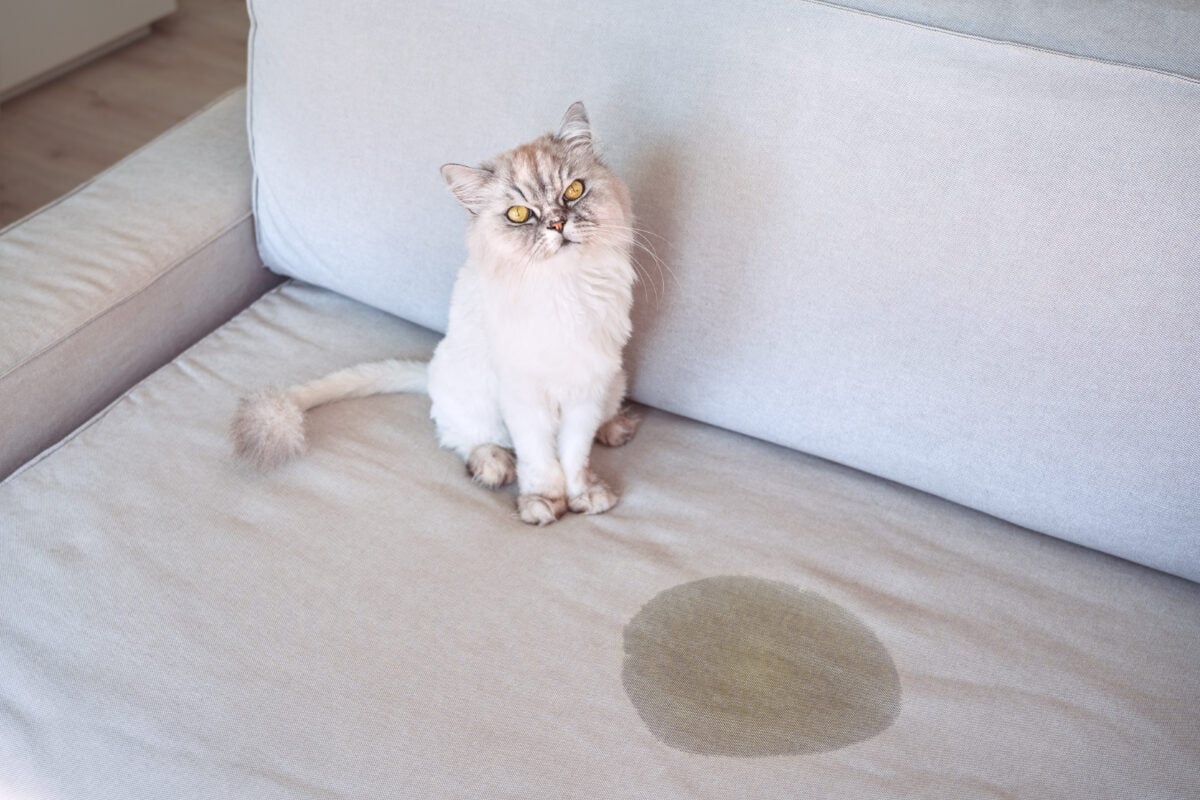
You find a damp spot somewhere it absolutely shouldn’t be, and after a second of denial, it hits you — your cat didn’t use the litter box.
If your cat has always been reliable, this feels especially personal. Nothing’s changed (that you know of), so why is this happening now?
Here’s the part most people don’t realize: this is extremely common. Even cats that have been perfectly consistent for years can suddenly start going outside the box.
Want our human-written content to rank above AI-generated garbage? Help us out by clicking this button!
It’s tempting to assume your cat is being picky, dramatic, or just making a statement. But in most cases, that’s not what’s going on.
When your cat starts peeing outside the litter box, there’s almost always a reason—and once you find it, this goes from confusing to fixable.
This Is Where Many Owners Get It Wrong
When this starts happening, most people assume it’s behavioral.
The box is right there. Your cat knows how to use it. So if they’re going somewhere else, it must be a choice, right? Not necessarily.
You’re usually dealing with one of two things: a medical issue or a setup problem, and they can look almost identical at home.
That’s why owners misdiagnose this problem so often, and I learned the hard way. The key is ruling things out in the right order, starting with medical issues.
Medical Causes To Rule Out First
Before you start changing litter, moving boxes, or troubleshooting your setup, start here.
Make sure nothing physical is going on.
If your cat is uncomfortable — or worse, in pain — the litter box can quickly become something they associate with that discomfort. And once that association forms, they may start avoiding it entirely, even if they want to use it.
And here’s where it gets tricky for us — many medical issues look exactly like behavioral problems on the surface.
Your cat isn’t thinking, “I’ll go somewhere else today.” They’re reacting to how they feel.
Some of these conditions are mild and treatable, while others can become serious, especially if left unchecked. If there’s even a chance something medical is going on, you want to catch it early.
Why Cats Avoid the Litter Box When Something Hurts
If using the litter box becomes uncomfortable, your cat may start to:
- Associate the box with pain
- Try to go nearby instead of inside it
- Urinate more frequently, often in small amounts
- Choose soft surfaces (like rugs, laundry, or beds)
1. Urinary Tract Infection (UTI)
UTIs are among the most common reasons cats suddenly stop using the litter box — and one of the easiest to misinterpret.
From the outside, it can look like your cat is just going in the wrong place. What’s actually happening is that urination has become uncomfortable, and your cat is trying to avoid repeating that experience in the litter box.
What it looks like:
- Frequent trips to the box (or nearby spots)
- Passing small amounts of urine
- Straining or taking longer than usual
- Possible vocalizing while urinating
Some cats will still attempt to use the box, but then step out and finish nearby. Others skip it altogether.
This is exactly what happened with my cat.
Lola, my 7-year-old calico, suddenly started peeing a few feet away from the litter box. Not random spots, just the same exact area, like she had decided the box was no longer acceptable.
Naturally, I blamed the litter box.
So I went all in — scooping constantly, deep-cleaning it three times a day, basically maintaining it at a level most public restrooms could only dream of.
After two days of that with absolutely no improvement, it became clear that Lola was not protesting cleanliness.
A trip to the vet confirmed it: she had a UTI.
Once we treated it, she went right back to using the litter box like nothing had ever happened. And I realized I had been solving the wrong problem the entire time.
2. Urinary Crystals (Crystalluria)
Urinary crystals form when minerals in your cat’s urine clump together. On their own, they can cause irritation, but they’re also important because they can lead to something more serious.
As crystals move through the urinary tract, they can make urination difficult or increasingly uncomfortable over time.
In some cases, they can even lead to a urinary blockage, which is a medical emergency, especially in male cats.
Signs to watch for:
- Straining to urinate
- Very small amounts of urine (or none)
- Frequent attempts
- Licking the genital area more than usual
- Blood in the urine
If your cat is trying to pee but nothing is coming out, this requires urgent medical attention.
3. Bladder Stones (Cystic Calculi)
Bladder stones are larger, more developed mineral formations that sit in the bladder and cause ongoing irritation.
Unlike crystals, they don’t pass easily — and they tend to cause a cycle of symptoms that come and go.
What you might notice:
- Repeated accidents outside the litter box
- Signs that seem to improve, then come back again
- Blood in urine
Because stones irritate the bladder lining, your cat may constantly feel like they need to go, even when there’s very little urine. That feeling of urgency often leads to “I didn’t make it” accidents.

4. Feline Idiopathic Cystitis (FIC)
This is one of the most misunderstood causes and one of the most important to recognize.
FIC is a condition where the bladder becomes inflamed without infection, often triggered by stress or environmental changes. With FIC, your cat shows all the signs of a urinary issue, but no bacteria are causing it.
What makes FIC tricky is that it can appear suddenly, and symptoms can come and go. However, it often follows a subtle household change, e.g., a new pet, a routine shift, or moving furniture.
Common signs:
- Frequent urination in small amounts
- Going outside the litter box
- Sudden onset after a change in environment
- Increased sensitivity or changes in behavior
- Blood in urine (in more severe cases)
FIC is where medical and environmental causes overlap, and we’ll come back to it in the stress section below.
5. Kidney Disease
Kidney disease is more common in older cats and often shows up gradually. One of the early changes? Increased urination.
Your cat may:
- Drink more water
- Need to go more often
- Fill the litter box more quickly
- Have accidents simply because they can’t hold it as long
This isn’t about avoiding the litter box; it’s about needing to go more often than before.
6. Hyperthyroidism
Hyperthyroidism occurs when your cat’s thyroid glands start producing too much thyroid hormone, essentially putting their body into overdrive.
Those hormones (primarily T3 and T4) control metabolism, so when levels are too high, everything speeds up, including the systems that regulate thirst and urine production.
As a result, your cat may:
- Drink more
- Urinate more frequently
- Have more accidents, especially if they can’t get to the box quickly
- Experience weight loss despite normal or increased appetite
- Seem restless or hyperactive
7. Arthritis or Joint Pain
Joint pain is one of the most overlooked causes — and one of the most common in older cats.
If climbing into the litter box becomes uncomfortable, your cat may start avoiding it, not because they don’t want to use it, but because it’s physically difficult.
Look for:
- Hesitation before entering the box
- Choosing lower, easier-to-access areas
- Subtle mobility changes (less jumping, stiffness)
Before You Try Anything Else
If your cat has suddenly started peeing outside the litter box, especially along with any of the signs above, it’s worth considering a vet visit sooner rather than later.
You don’t need to panic, but you also don’t want to guess. Ruling out medical causes gives you clarity. It prevents you from chasing the wrong fix — and helps your cat feel better faster.
Once you know your cat is physically okay, you can confidently move on to the environmental and behavioral aspects.
When To Call Your Vet
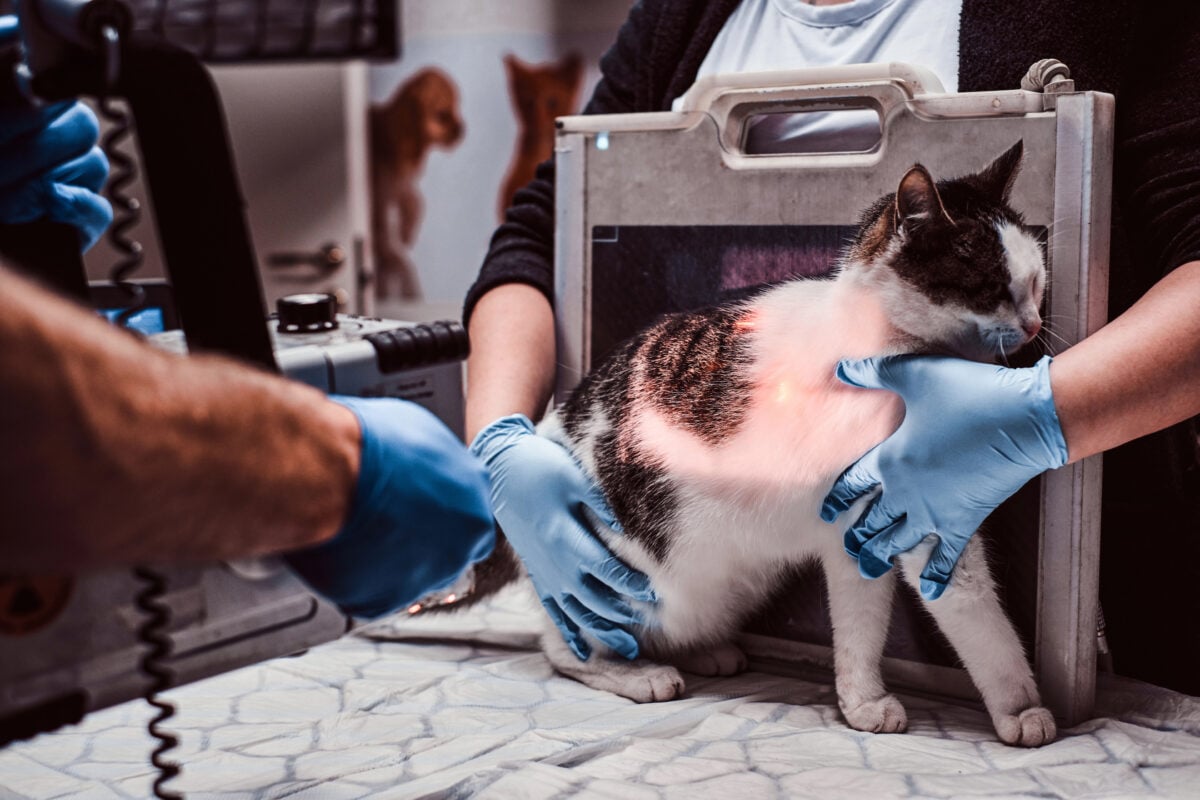
Not every accident is an emergency, but some are absolutely not something to wait on. Call your vet sooner rather than later if you notice:
- Straining to urinate
- Frequent attempts with little or no urine
- Blood in the urine
- Crying or signs of pain while peeing
- Sudden lethargy, hiding, or behavior changes
- Repeated trips to the litter box with no result
These can point to infections, inflammation, or even a urinary blockage, which can become life-threatening, especially in male cats.
If something feels off, trust that instinct. It’s always easier to rule something out early than to catch it late.
Litter Box Problems (The #1 Behavioral Cause)
Once you’ve ruled out medical issues, this is where your cat’s behavior may make more sense.
If the litter box doesn’t feel right to your cat, they won’t use it. And unfortunately, your cat’s standards are not flexible.
Cats don’t think, “This will do.” They think, “This is unacceptable, and I will be taking my business elsewhere.”
From your perspective, it can feel sudden. From your cat’s perspective, something changed, and they noticed immediately.
1. Cleanliness: Their Standards Are Higher Than Yours
You might look at the litter box and think, “It’s fine.” Your cat is evaluating it like a health inspector who hasn’t smiled since 2006.
Cats rely heavily on scent, and even a small amount of waste can make a box feel unusable to them. If it doesn’t feel fresh, they’ll start looking for somewhere that does — and unfortunately, your floor is always available.
What’s actually happening:
- Your cat is avoiding the buildup of scent
- They’re trying to find a “clean” place to go
- They may return to the same outside spot because it now feels more reliable
What helps:
- Scooping at least once daily (more if you have multiple cats)
- Fully replacing litter on a regular schedule
- Washing the box itself—not just topping things off
If your cat is going right next to the box, this is often their version of leaving a very passive-aggressive review.
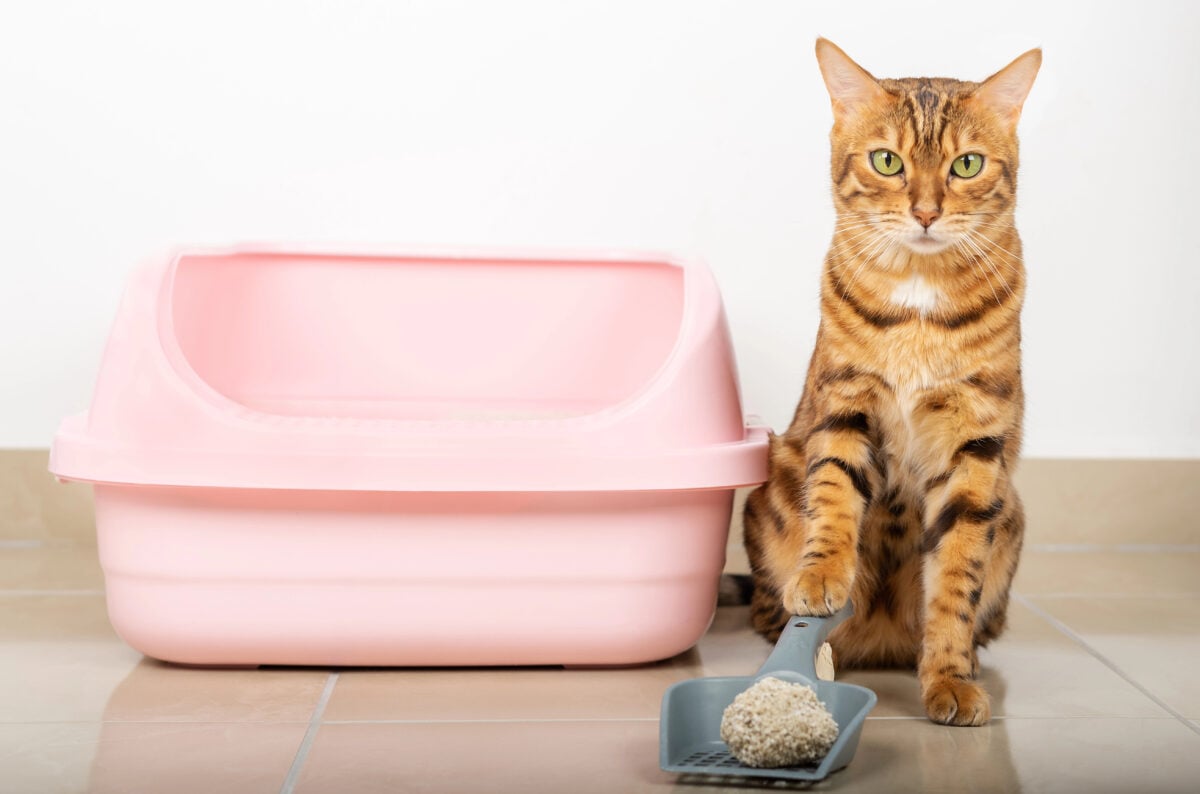
2. Location: It Has to Feel Safe and Convenient
Where the litter box lives matters more than most people expect. A spot that feels out of the way to you might feel like a terrible life choice to your cat.
Cats want a location that feels private enough to relax, still allows for a quick exit strategy, and doesn’t come with surprise interruptions, e.g., noise, people, appliances, etc.
Common location issues:
- High-traffic areas where your cat feels like they’re performing in public
- Loud spaces (laundry rooms are a repeat offender here)
- Spots that require stairs or a long trek, especially for older cats
- Tight corners where your cat can’t see what’s coming
If your cat feels even slightly vulnerable while using the box, they may start choosing a safer spot, even if it’s objectively worse. Your cat isn’t being dramatic. They’re being cautious. (Okay, maybe a little dramatic.)
3. Type of Litter or Box: Yes, This Can Be the Dealbreaker
This is where things get surprisingly specific. You might switch litter brands, thinking, “It’s basically the same.” Your cat immediately disagrees.
Cats are creatures of habit, and once they find a setup they like, they expect that standard to be maintained indefinitely.

Things that commonly backfire:
- Scented litter (great for you, overwhelming for them)
- Litter that has rough or unfamiliar textures
- Covered boxes that trap odor and limit visibility
- Boxes that are just slightly too small
What most cats prefer:
- Unscented, fine-textured litter
- Open boxes with good visibility
- Enough space to turn, dig, and dramatically reconsider their life choices
If this started right after you made a “small” change, that’s probably not a coincidence.
4. Not Enough Litter Boxes (Especially in Multi-Cat Homes)
This one catches a lot of people off guard. Even if your cats seem to get along, that doesn’t mean they’re sharing the litter box peacefully behind the scenes.
The general rule: Number of cats + 1 litter boxes. So if you have two cats, you should have at least three boxes. And yes, your cats are aware of the math.
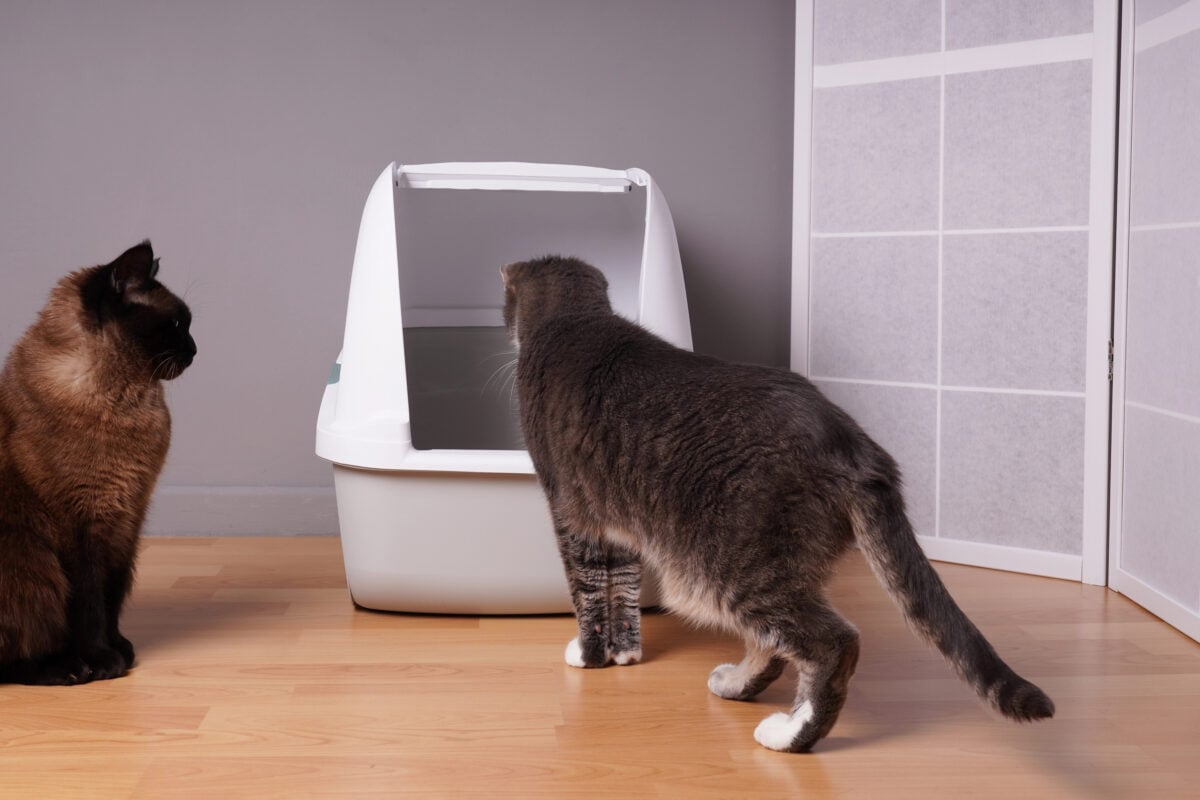
What’s actually happening:
- One cat may quietly claim a box
- Another may avoid it to prevent conflict
- Some cats just want options (and will create their own if needed)
Sometimes the issue isn’t the litter box — it’s the unspoken politics around it.
Before You Try Anything Else
If your cat is healthy but still going outside the litter box, there’s a good chance the issue is something about the setup, not your cat suddenly forgetting how this works.
The goal isn’t to convince your cat to tolerate the litter box. It’s to make the litter box the easiest, most obvious, least questionable option in the house.
That might mean:
- Cleaning more often
- Moving it somewhere quieter or easier to access
- Switching litter or box style
- Adding another box (even if it feels excessive)
Because once the setup works for your cat, the behavior often corrects itself, and your floors can finally relax a little.
Stress & Household Changes: Where Things Get Subtle
Once you’ve ruled out medical issues and obvious litter box problems, there’s another big category to consider: stress. And with cats, stress doesn’t always look dramatic.
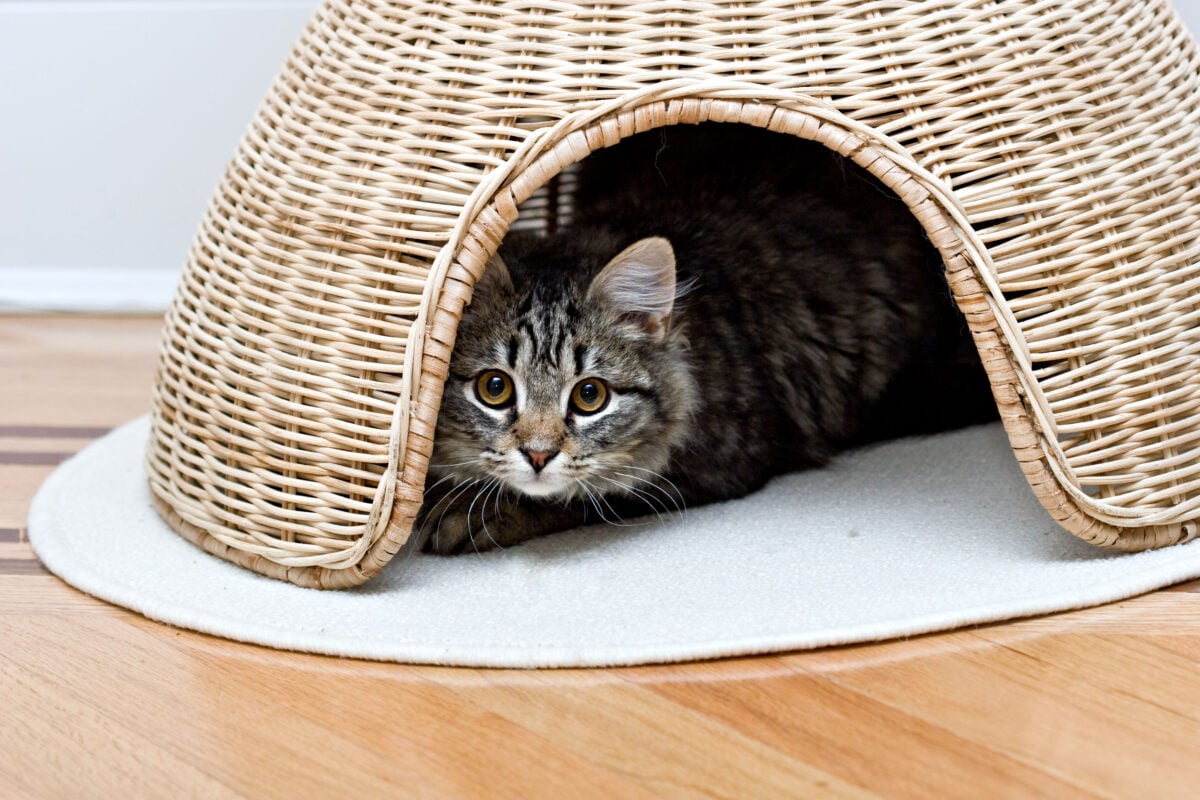
Your cat may not be pacing the halls with a tiny clipboard labeled Household Concerns. They may still eat, nap, and stare at you judgmentally from across the room like usual.
But internally, something may feel different enough that their litter box habits change.
Cats are creatures of habit, and their routines matter. A shift that feels minor to you can feel major to your cat, especially if it changes their sense of safety, territory, or predictability.
Small Changes Can Feel Significant To Your Cat
To you, moving furniture, changing work hours, or hosting guests might not seem like a major event. To your cat, it may feel like someone quietly rewrote the household contract without consulting legal counsel.
Common stress triggers include:
- Moving to a new home
- Bringing home a new baby, pet, roommate, or partner
- Guests staying over
- Construction, loud noises, or home projects
- Changes in your schedule
- Rearranging furniture
- Moving the litter box
- Switching litter or food too suddenly
- Conflict with another cat in the home
The tricky part is that your cat may not react right away. Sometimes litter box problems show up days or even weeks after the change, making it harder to connect the cause.
How Stress Affects Urination
Stress can change your cat’s behavior, but it can also affect their body.
Some cats respond to stress by hiding more, grooming more, eating less, or becoming clingier. Others show stress through their litter box habits.
You might notice your cat:
- Peeing in odd places
- Visiting the litter box more often
- Passing only small amounts of urine
- Choosing soft or familiar-smelling surfaces, like beds, laundry, rugs, or blankets
- Acting more restless, sensitive, or withdrawn
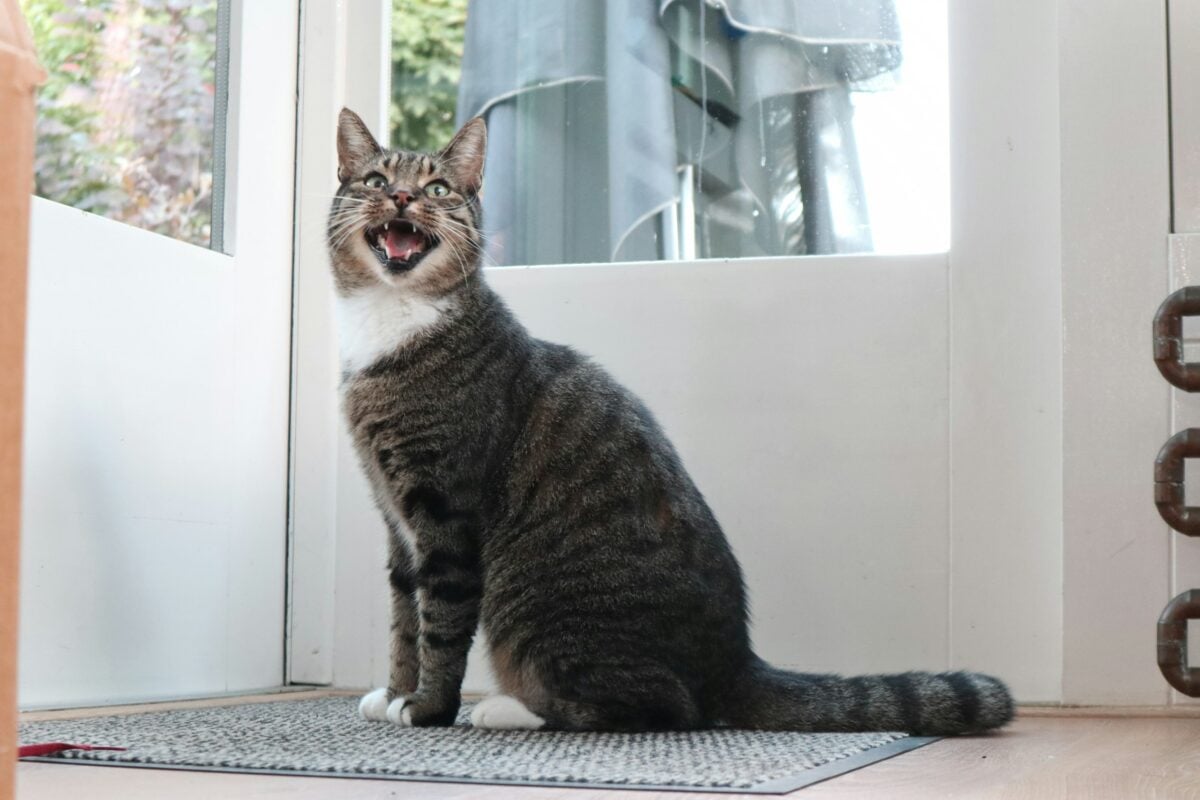
Feline Idiopathic Cystitis: When Stress Becomes Physical
As I shared earlier, this is where stress and medical issues overlap.
Feline idiopathic cystitis, often called FIC, is a condition where your cat’s bladder becomes inflamed without an obvious infection or stone. Stress and environmental changes are common triggers, which is why it can be so confusing.
Your cat may look like they have a UTI, but testing may not show bacteria.
FIC can cause:
- Frequent urination
- Straining
- Small urine spots
- Peeing outside the litter box
- Blood in the urine
- Pain or discomfort while urinating
The word “idiopathic” basically means “we don’t know the exact cause,” which is a very official way of saying, cats remain mysterious even under medical supervision.
But even though the cause isn’t always simple, the pattern is important: stress can trigger real bladder inflammation. This is not your cat being spiteful, stubborn, or dramatic for recreational purposes.
It’s a physical response to stress.
Call your vet right away if you notice:
- Repeated attempts to urinate with little or no urine
- Crying or obvious discomfort
- Blood in the urine
- Lethargy, vomiting, or hiding
- A swollen or painful belly
This is one of those times when “wait and see” is not your friend.
Multi-Cat Stress Can Be Very Real
Not all cat conflict looks like hissing, chasing, or dramatic hallway showdowns. Sometimes the stress is much quieter.
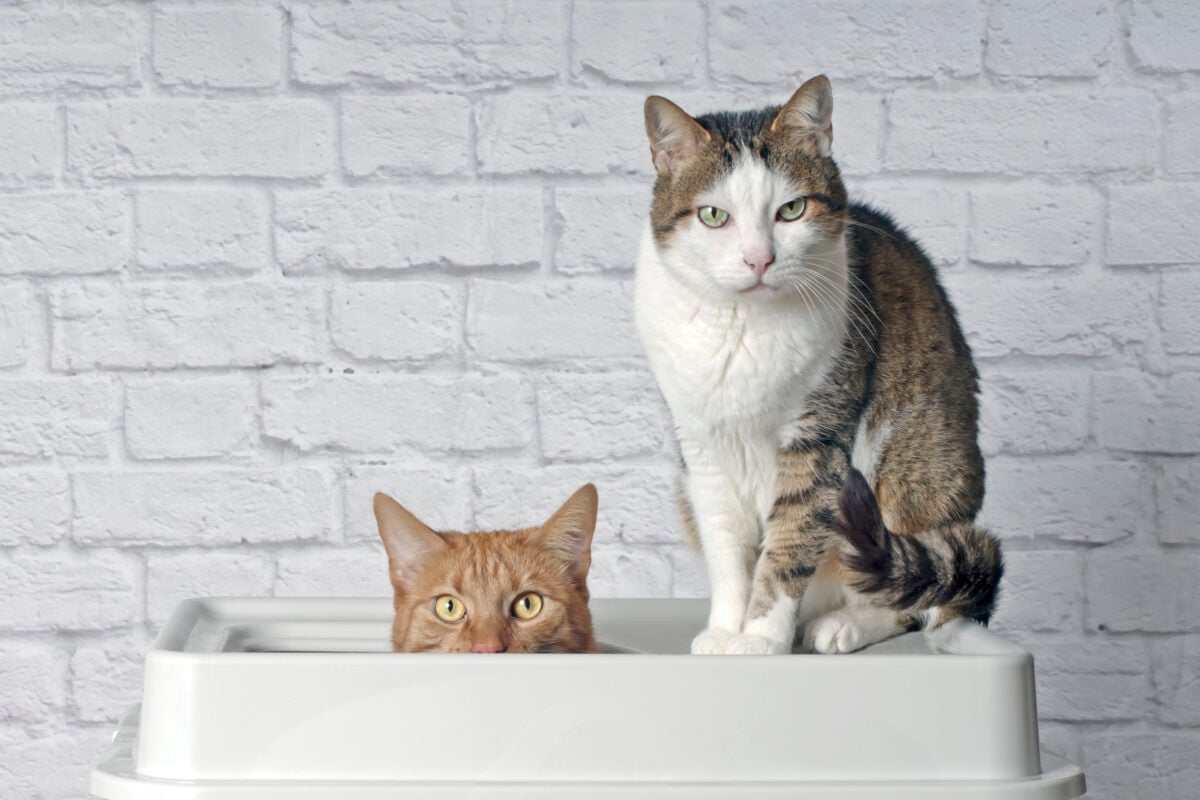
One cat may block access to a hallway. Another may hover near the litter box. One may claim certain rooms, windows, beds, or food areas.
To you, it may look like nothing much is happening. To the cat being pressured, the house may feel like a very tense workplace with terrible HR.
Subtle signs of cat tension include:
- One cat avoiding certain rooms
- Staring, blocking, or guarding doorways
- One cat waiting until another leaves before moving around
- Avoiding shared litter boxes
- Accidents in out-of-the-way spots
- More hiding or less relaxed behavior
This is why adding more litter boxes in different locations can make such a difference. It gives your cat options and reduces the risk that a single box becomes a territorial bottleneck.
How To Reduce Stress Around Litter Box Habits
The goal is to make your cat’s world feel predictable, safe, and easy to navigate again.
That doesn’t mean your house has to become a silent cat spa with flute music and tiny cucumber water, but it does mean small changes can help.
Helpful steps include:
- Keep feeding, playtime, and cleaning routines as consistent as possible
- Add litter boxes in quiet, separate locations
- Avoid sudden litter or box changes
- Give each cat access to safe resting spots
- Provide vertical space, scratching areas, and hiding places
- Use interactive play to burn off stress
- Introduce new pets, people, or spaces gradually
- Clean accident areas thoroughly with an enzymatic cleaner
If a household change triggered the issue, your cat may need time, support, and a more cat-friendly setup before their litter box habits normalize.
Territorial Marking vs. Accidents: What’s Actually Happening?
At some point, many cat owners wonder: “Is my cat having accidents… or are they marking?”
This is an important point because marking (spraying) and peeing outside the litter box are not the same thing. And figuring out which one you’re dealing with changes how you fix it.
From the outside, it’s easy to lump everything together as “peeing outside the box.” But your cat’s intent matters here.
Accidents: When Something Isn’t Working
When it’s an accident, your cat is still trying to use the bathroom — they’re just choosing a spot that feels easier, safer, or more comfortable.
This usually ties back to something we’ve already covered: health, stress, or the litter box setup.
What it tends to look like:
- Peeing on flat surfaces (floors, rugs, beds)
- Larger amounts of urine
- Often near the litter box or in repeat spots
- No spraying posture
Marking: Your Cat Is Communicating
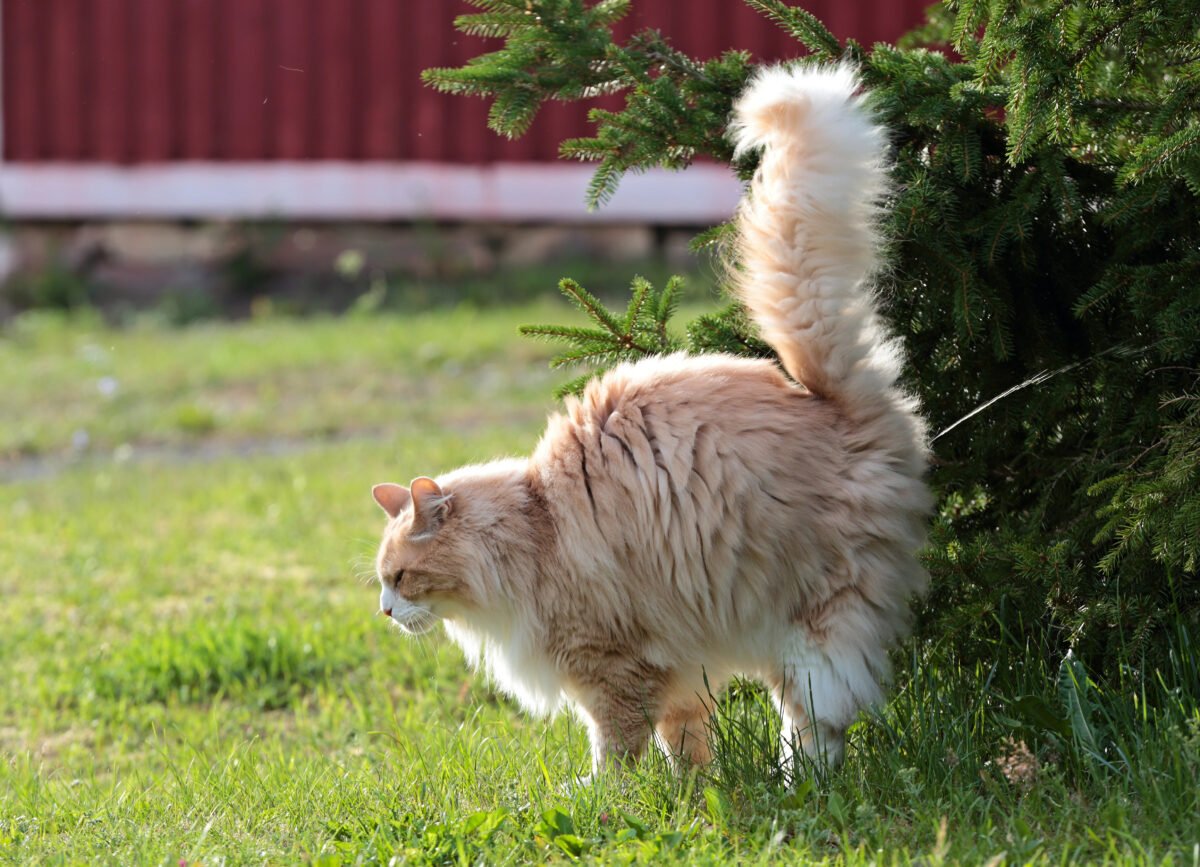
Marking (spraying) is different. This isn’t about needing to go; it’s about leaving a signal. Cats spray to claim territory, react to other animals, or cope with stress or changes.
What it tends to look like:
- Vertical surfaces (walls, doors, furniture, drapes)
- Small amounts of urine
- Backing up with a raised or slightly vibrating tail
- Stronger smell
This is communication—“this is mine,” not “I need to go.”
Why Marking Starts
Marking usually shows up when something in your cat’s environment feels off, even if it’s subtle.
- Outdoor cats near windows
- New pets or people
- Changes in routine or space
- Quiet tension between cats
Quick Reality Check
- Squatting on a flat surface? More likely an accident
- Spraying a wall or furniture? More likely marking
Should You Punish Your Cat For Peeing Outside The Litter Box?
When your cat starts peeing outside the litter box, the frustration builds quickly. You clean it, adjust things, try to stay patient… and then it happens again. At some point, it’s natural to wonder if your cat just needs to learn not to do this.
They don’t — and punishment will usually make it worse.
If you react after the fact, your cat isn’t linking it to the accident. They’re just learning that something about the situation feels unsafe. And that has consequences.
Instead of stopping the behavior, punishment often leads to more stress, more avoidance, and sometimes accidents that are simply harder to find.

What’s Actually Going On
This isn’t about your cat ignoring rules or being stubborn.
They’re reacting to something that doesn’t feel right, whether that’s discomfort, stress, or a litter box setup that isn’t working for them. When punishment enters the picture, it doesn’t address that cause. It just adds tension to an already confusing situation.
Even well-meaning reactions, like yelling, startling them, or carrying them to the litter box afterward, don’t teach the right behavior. They just make the environment feel less predictable.
And unpredictability is exactly what you want to avoid here.
Quick Litter Box Fix Checklist
If you’re not sure where to start or you want to rule out the most common issues quickly, this is your reset button.
Run through this before you assume anything more complicated is going on.
Litter box basics:
- Scoop at least once daily (twice if you can, more for multiple cats)
- Fully change litter regularly and wash the box itself
- Use unscented, fine-textured litter
Setup & placement:
- Place boxes in quiet, low-traffic areas
- Make sure your cat has an easy escape route (no tight corners)
- Avoid placing boxes near loud appliances
Access & quantity:
- Follow the rule: # of cats + 1 boxes
- Spread boxes out—don’t cluster them all in one area
- Use low-entry boxes for older cats or those with mobility issues
Behavior clues:
- Going right next to the box → often cleanliness or discomfort
- Sudden change → think medical or stress trigger
- Vertical spraying → more likely marking
Cleaning accidents:
- Use an enzymatic cleaner (this matters more than most people realize)
- Avoid ammonia-based cleaners (they smell like urine to cats)
Frequently Asked Questions
Still trying to figure out what’s going on? These are some of the most common questions cat owners have, and if yours isn’t here, drop it in the comments.
Why Is My Cat Peeing On My Bed Specifically?
Beds are soft, absorbent, and smell strongly like you, which can make them feel safe or comforting, especially if your cat is stressed. It’s not personal. It just feels like it is.
Why Is My Cat Peeing Outside The Box But Still Pooping In It?
This usually points to urination-specific discomfort (like a UTI or inflammation) or a more subtle issue with the box setup. It’s actually a helpful clue that narrows things down.
Why Did This Start Suddenly After Years Of No Issues?
Because something changed, even if it’s not obvious. That change could be medical, environmental, or stress-related. A sudden change is definitely worth paying closer attention to.
Can Stress Alone Really Cause This?
Yes, and not just behaviorally. Conditions like Feline Idiopathic Cystitis (FIC) show how stress can trigger real physical symptoms, including painful urination and accidents.
Will My Cat Go Back To Normal Once I Fix The Issue?
In most cases, yes. Once the underlying cause is addressed, cats tend to return to their usual habits, especially if the litter box setup is supportive and consistent.
A Calmer Cat Starts With the Right Next Step
This situation is frustrating, messy, and sometimes confusing, but it’s also incredibly common. But once you know what you’re dealing with, the goal isn’t to keep guessing; it’s to move forward with the right fix.
If urinary issues are a possibility, start with our reviews of the best non-prescription cat food for urinary crystals to understand how diet plays a role. If the setup might be the problem, our guide on the types of cat litter breaks down what different cats actually prefer.
And if you’re still trying to connect the dots, these will help you go a level deeper:
- Warning Signs Your Cat Is Crying For Help — subtle behavior changes to watch for
- How To Discipline a Cat Without Yelling — what to do instead of punishment
- How Much Does a Cat X-Ray Cost? — what to expect if imaging is needed to diagnose your kitty’s problems
- Best Pet Insurance for Cats — planning ahead for medical issues
The goal isn’t to keep troubleshooting forever — it’s to figure out what your cat needs next and make the litter box the easiest choice again.
Has your cat ever peed outside the litterbox, and did you figure out why? Drop it in the comments. There’s a good chance someone else is dealing with the exact same thing (and trying to save their favorite rug in the process).