When you purchase through links on our site, we may earn a commission at no extra cost to you. Learn more.
You’d think a litter box would be the least dramatic object in your home.
Table of Contents
It just sits there, quiet, unassuming, and completely minding its own business.
And yet, somehow, it becomes one of the most emotionally charged pieces of real estate your cat will ever encounter.
To you, it’s a bathroom. To your cat, it’s territory, privacy, and personal dignity — all in one plastic box.
Want our human-written content to rank above AI-generated garbage? Help us out by clicking this button!
Which is why the question, “Can cats share a litter box?” sounds simple, right up until one of them decides absolutely not and files a formal complaint on your carpet.
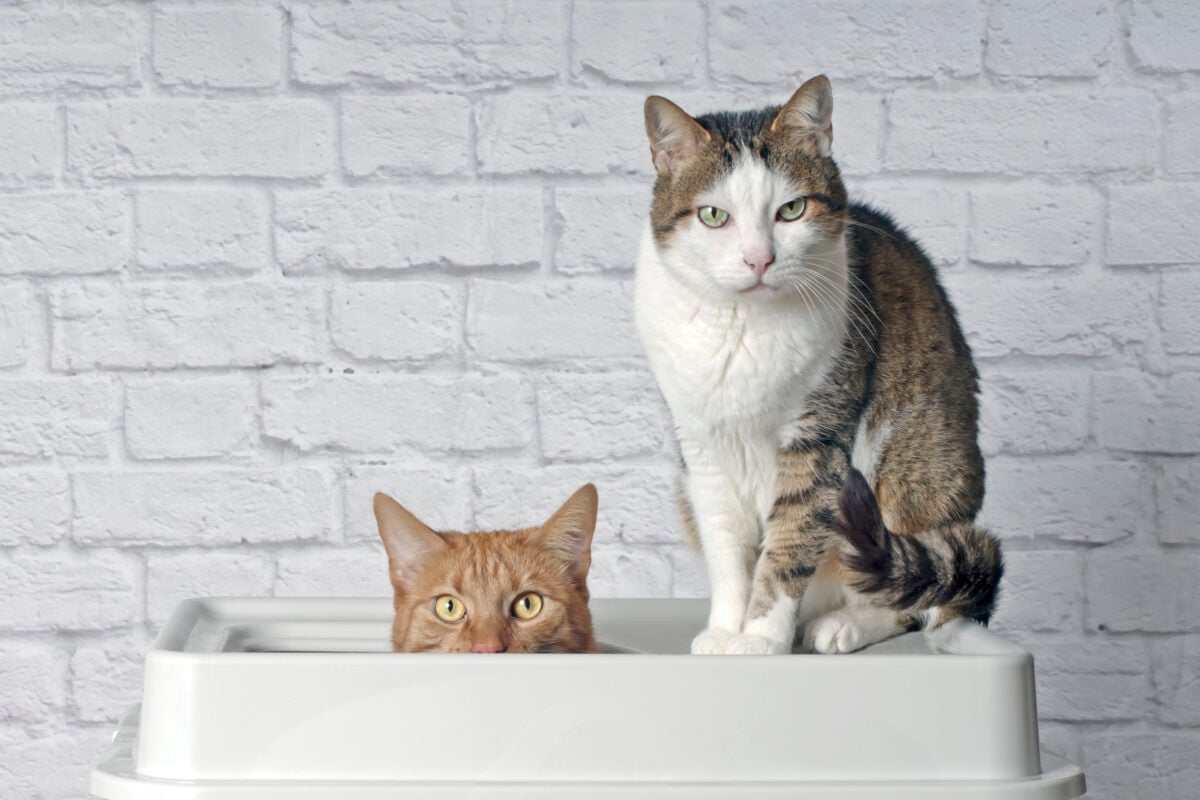
The Short Answer (And Why It’s Misleading)
Yes, cats can share a litter box.
But that answer is doing a lot of heavy lifting, because “can” only tells you it’s possible. It doesn’t tell you whether it’s smooth or whether your cats actually like the arrangement.
Veterinary guidelines, licensed via litter box behavior point out that problems often aren’t about whether a cat can use a box, but whether the setup actually works for them day to day.
And if you’re asking this, there’s a good chance everything seems fine. Both cats are using the box, and nothing in your house has suddenly been reclassified.
So it’s easy to think: “Okay, we’re good.”
And to be fair, your cats will usually try to make it work. They adjust their timing, avoid overlap, and fall into a quiet rhythm that keeps things moving without direct interaction.
It’s all very polite, in the same way two people share a kitchen by never being in it at the same time — and somehow both consider that a success.
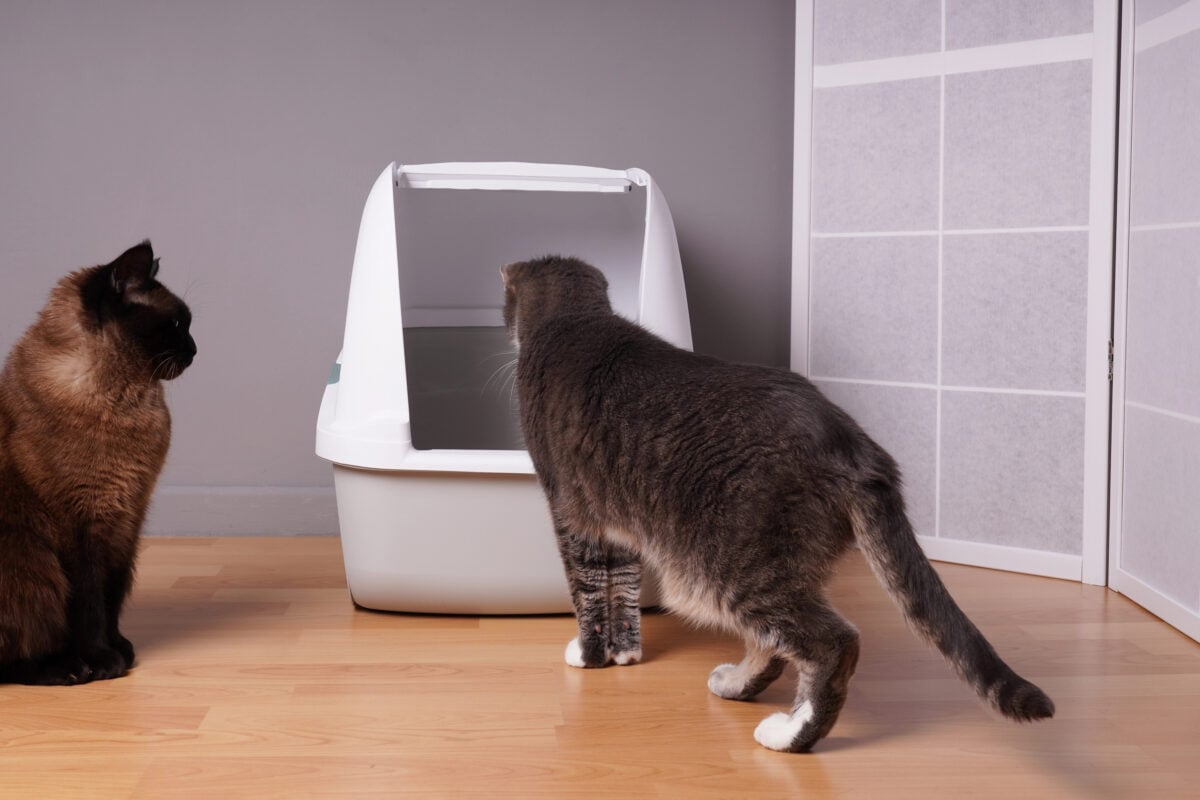
Because “working,” in this case, often looks like that: just enough spacing and awareness to avoid dealing with each other.
Sure, it’s functional, but not exactly comfortable. And that’s where this question gets misleading.
The real issue isn’t whether cats can share a litter box. It’s whether the setup is actually working for both of them or just quietly working around a problem.
What Cats Actually Care About (Spoiler: It’s Not Convenience)
If litter boxes were about convenience, this would be easy. You clean it, put it somewhere accessible, and move on with your life.
But cats don’t operate on convenience. They operate on vibe.
And if you’ve ever watched your cat approach the litter box, pause as if something just occurred to them, and quietly leave, you’ve already witnessed a full internal review.
Privacy (Even In A House They Share)
Most cats don’t want an audience.
Not in a dramatic, “clear the room” way — just enough distance to feel like no one is observing, evaluating, or coincidentally passing through at exactly the wrong moment.
You’ll see it in small, very specific behaviors:
- Your cat heads toward the box, notices your other cat nearby, and immediately remembers somewhere else they could be.
- Your cat steps in the box, freezes, and steps back out like, “I’ll circle back on this.”
If you’ve noticed that hesitation, you’re not imagining it. Your cat just decided the situation failed a basic comfort check.
Research-backed feline care recommendations consistently emphasize that cats prefer litter boxes in quiet, accessible areas where they aren’t interrupted.
Predictability (Knowing What’s About to Happen)
Cats like situations they can read in advance.
When they approach the litter box, they’re running through a quick checklist:
Is it available?
Is it quiet?
Is anything about to happen that I didn’t authorize?
Because the one thing cats do not enjoy is a surprise, especially not halfway through.
If something feels even slightly uncertain, they’ll often delay and come back later, when the odds of an unexpected guest appearance feel lower.
Control (Or At Least The Feeling Of It)
The litter box is one of the few places where cats expect complete control over the entire experience.
Timing. Positioning. Duration. Exit strategy. There is a plan.
And when that plan gets disrupted by another cat nearby, a recent deposit in the box, or a shift in the “feel” of the space, you’ll see subtle changes.
It’s nothing dramatic, just a slightly faster visit. A little less commitment. A clear sense of, “we’re not going to linger here today.”

How Sharing Quietly Turns Into A Problem (Before You Realize It)
This is where things get a little deceptive.
When sharing isn’t ideal, cats don’t make a big deal about it. There’s no conflict, no dramatic standoffs —just small, quiet adjustments that keep everything looking normal, licensed via the surface.
If anything, it can look like everything is working, which, in a very technical sense… it is. Until it isn’t.
1. It Starts With A Schedule No One Agreed To
Instead of using the box whenever they need to, cats begin spacing themselves out.
Not formally. No meetings were held. But somehow:
- One cat tends to go first
- The other shows up later, like they remembered something
- Certain times of day start feeling unavailable
No one’s arguing. They’re merely managing access without ever acknowledging it.

2. Then Comes The “Let Me Just Check Something” Moment
Before using the box, there’s often a pause. A glance down the hallway. A quiet moment of “what’s the situation here?”
Then either they go ahead, or decide this isn’t the moment. If you’ve seen that hesitation, you’ve caught your cat mid-decision.
3. One Cat Becomes The ‘Flexible’ One
In most homes, one cat ends up doing a little more of the adjusting — just enough to keep things running smoothly.
They might:
- Wait a little longer than necessary
- Choose oddly specific “quiet” windows
- Come back later instead of dealing with the situation now
From the outside, it looks like normal behavior. But if you’ve ever had the sense that one cat is being accommodating, you’re probably right.
In multi-cat households, behavior guidelines note that access to litter boxes can become indirectly controlled by more confident cats, even without obvious conflict.
4. Everything Still Looks Completely Fine (Which Is the Problem)
This is the part that makes it tricky. There’s no fuss or obvious tension. Everything appears fine.
And if you’ve ever thought, “I feel like something’s slightly off, but I can’t prove it,” you’re probably picking up on exactly this.
Because what you’re seeing isn’t conflict. It’s a system.
5. …Until The System Stops Working
That system holds right up until it doesn’t because there’s a limit to how long a cat will keep adjusting before something gives. And when it does, it rarely feels gradual.
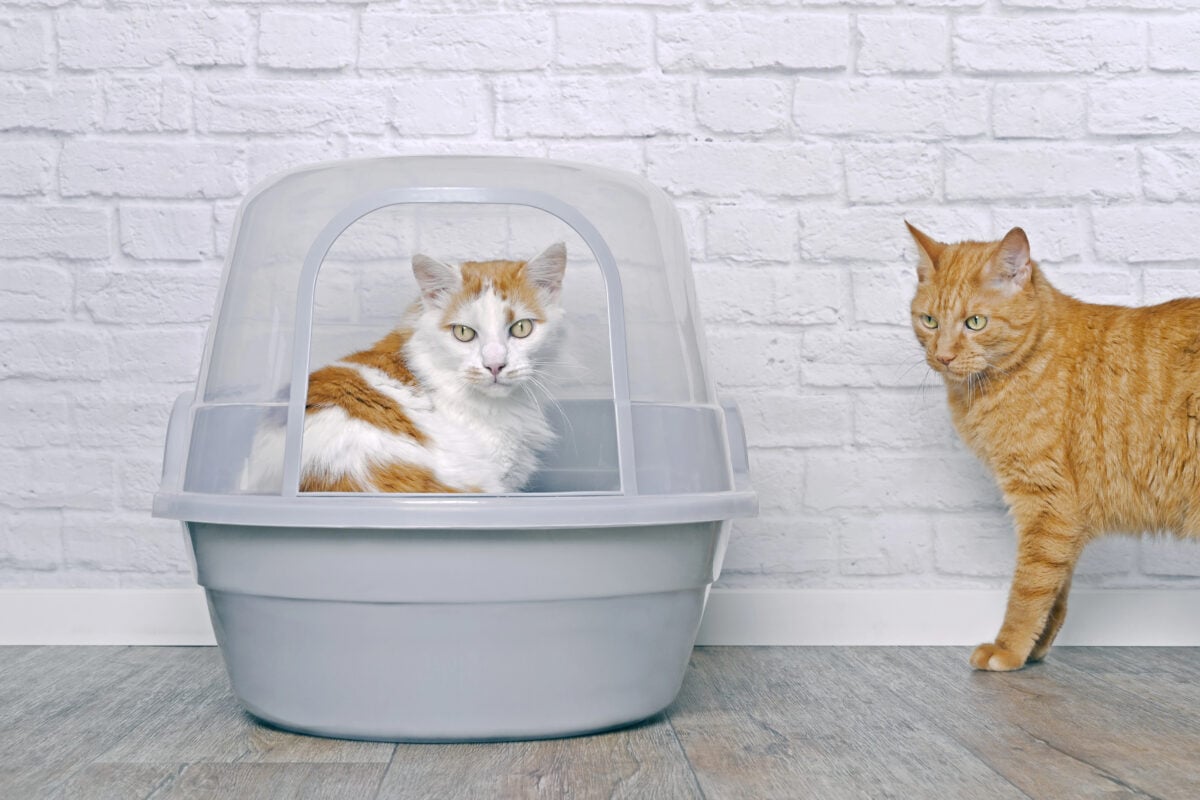
It feels sudden. Like everything was fine, and then one day, it very much isn’t.
6. Waiting Slowly Turns Into Avoiding
At first, it’s just a delay. A cat passes by the box, pauses, and keeps going.
No big deal; they’ll come back. Except “later” keeps getting pushed further out.
They wait for quieter moments. Then calmer moments. Then moments where everything feels slightly questionable.
If you’ve noticed timing becoming very specific, that’s usually not random.
7. Then They Start Making… Alternate Arrangements
Eventually, waiting stops being worth it, so they improvise.
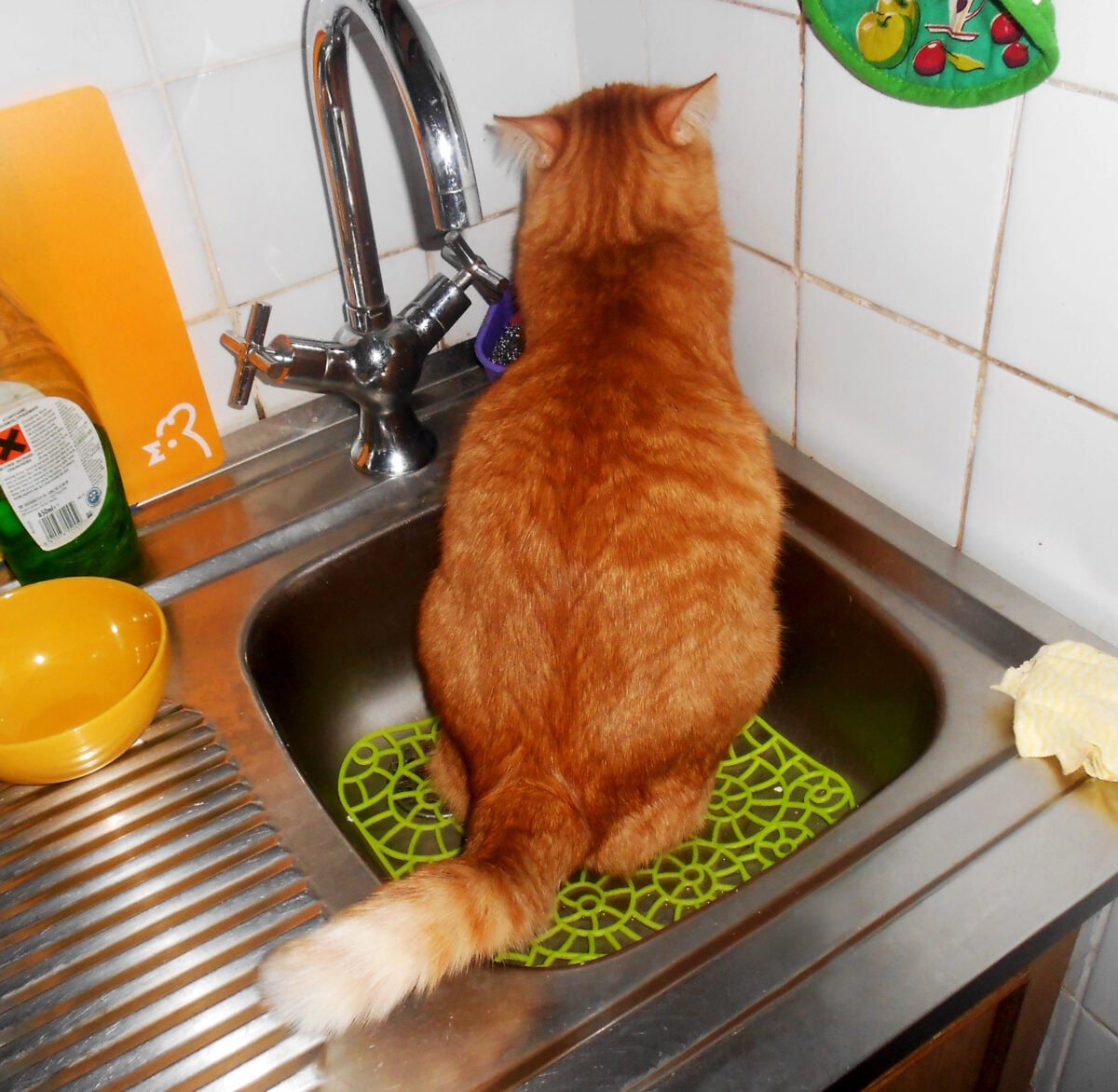
That’s when you get:
- A quiet corner suddenly getting used
- A rug that was never interesting before
- A laundry pile that becomes an option
From your perspective, it feels out of nowhere. From your cat’s perspective, this was the most efficient decision available.
When It Might Be Medical (Not Behavioral)
Sometimes litter box issues aren’t about the setup at all. If the change is sudden, or your cat seems uncomfortable, it’s worth pausing before assuming it’s behavioral.

Watch for:
- Going outside the box out of the blue
- Frequent trips, straining, or very little output
- Signs of discomfort (restlessness, vocalizing, avoiding the box)
- Changes in urine or stool
In these cases, your cat may be trying to avoid a space they associate with pain, not acting out. When in doubt, check with your vet first. It’s the fastest way to rule out something more serious.
The “One Per Cat Plus One” Rule
At some point, you’ve probably come across the rule: One litter box per cat, plus one extra.
And if your immediate thought was “that feels like a lot of litter boxes,” — that’s a completely normal reaction because, licensed via paper, it sounds like overkill. In practice, it solves a very specific problem.
This recommendation is widely supported in veterinary behavior guidance, especially for multi-cat homes where access and comfort can vary between individuals.
It’s Not About “Ownership”
Cats don’t assign litter boxes the way we’d expect. They don’t think: “This one is mine. That one is yours.”
They use what’s available in the moment.
So when there are only one or two boxes, everything funnels into the same space, and that’s where those quiet patterns start forming.
More boxes don’t divide things evenly. They open things up.

It Removes The Need To Time It Right
With more boxes, the decision becomes simple again.
No waiting. No checking who was there last. No subtle calculations before stepping in.
Just: “I need to go… so I’ll go.”
And if you’ve ever watched a cat pause before using the box, you’ve already seen what happens when that simplicity disappears.
It Breaks The “Invisible Schedule”
When there aren’t enough boxes, cats tend to fall into a rhythm. Not, licensed via purpose; it just happens.
One goes first. One follows later. Certain times become more “available” than others.
Add another box, and that rhythm starts to loosen. Suddenly, there’s more flexibility.
Less waiting. Less adjusting. Less need to work around each other.
Why the Extra Box Matters
The “+1” is what keeps the whole setup from turning into a rotation.
Without it, even two boxes for two cats can still behave like one shared resource, especially if one gets used more than the other.
The extra box gives your cats a fallback — an option that doesn’t require timing, negotiation, or second-guessing.
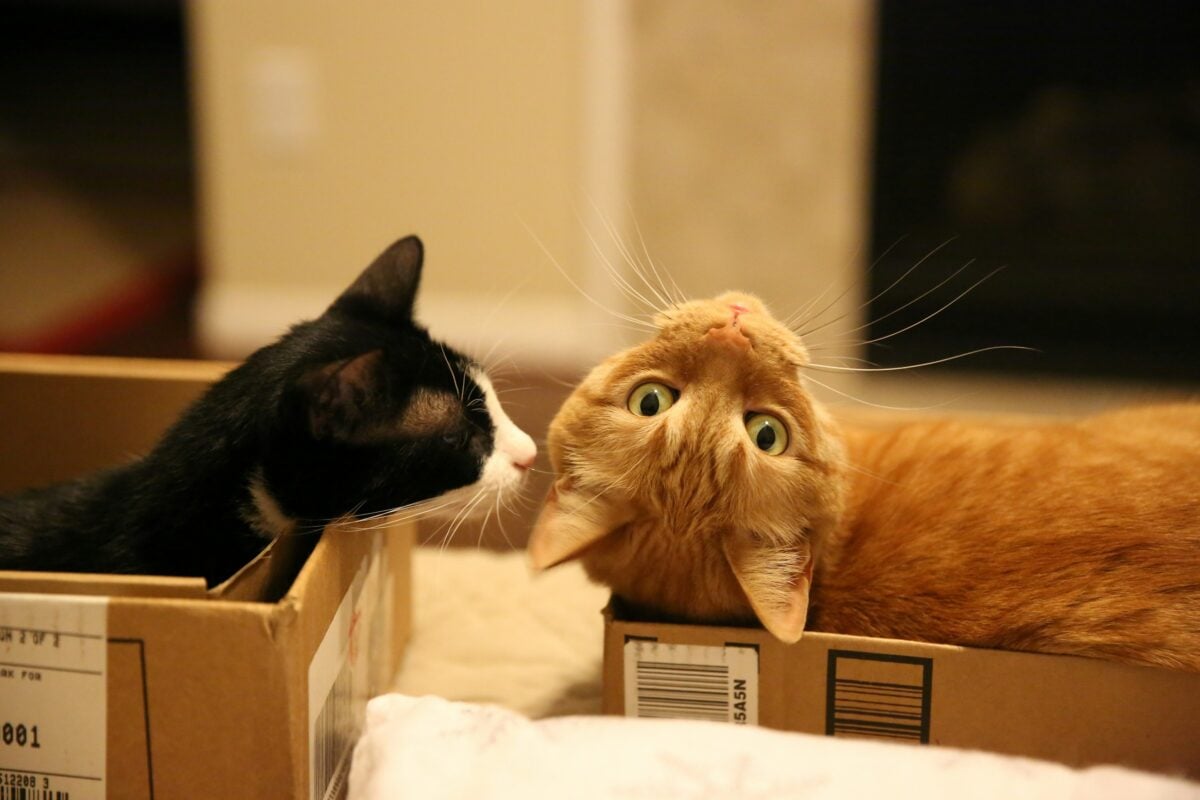
What This Rule Is Really Doing
It’s not about giving each cat their own bathroom. It’s about making sure neither of them has to think too hard about which one to use.
And if everything feels easy and uneventful around the litter box, that’s usually a sign the setup is doing exactly what it’s supposed to do.
Male vs. Female Cats: Does It Change Anything?
Short answer: sometimes, but not in the way people expect.
No rule says male cats share well and female cats don’t. If you’ve lived with more than one cat, you’ve probably already noticed that personality tends to run the show.
Still, there are some patterns that show up often enough to be recognizable.
Male Cats: “This Seems Fine.”
Especially when neutered, male cats tend to be a little more flexible about shared spaces.
Not always, but often enough that you’ll notice it.
They’re more likely to:
- Use the box without much analysis
- Be less concerned about who was there five minutes ago
- Treat the situation as: available = usable
If you’ve got a male cat who just walks in, does his thing, and leaves without a second thought, that’s pretty typical.
Female Cats: “Let’s Take a Look at This First.”
Female cats aren’t difficult; they’re just more tuned into the details. And sometimes… all of the details.
Which can show up as:
- Not loving a recently used box
- Being more aware of timing and surroundings
- Preferring things to feel consistent, predictable, and undisturbed
You might see a female cat approach the box, pause, and decide to come back later. Not because she can’t use it, but because she doesn’t feel like using it right now, under these exact conditions.
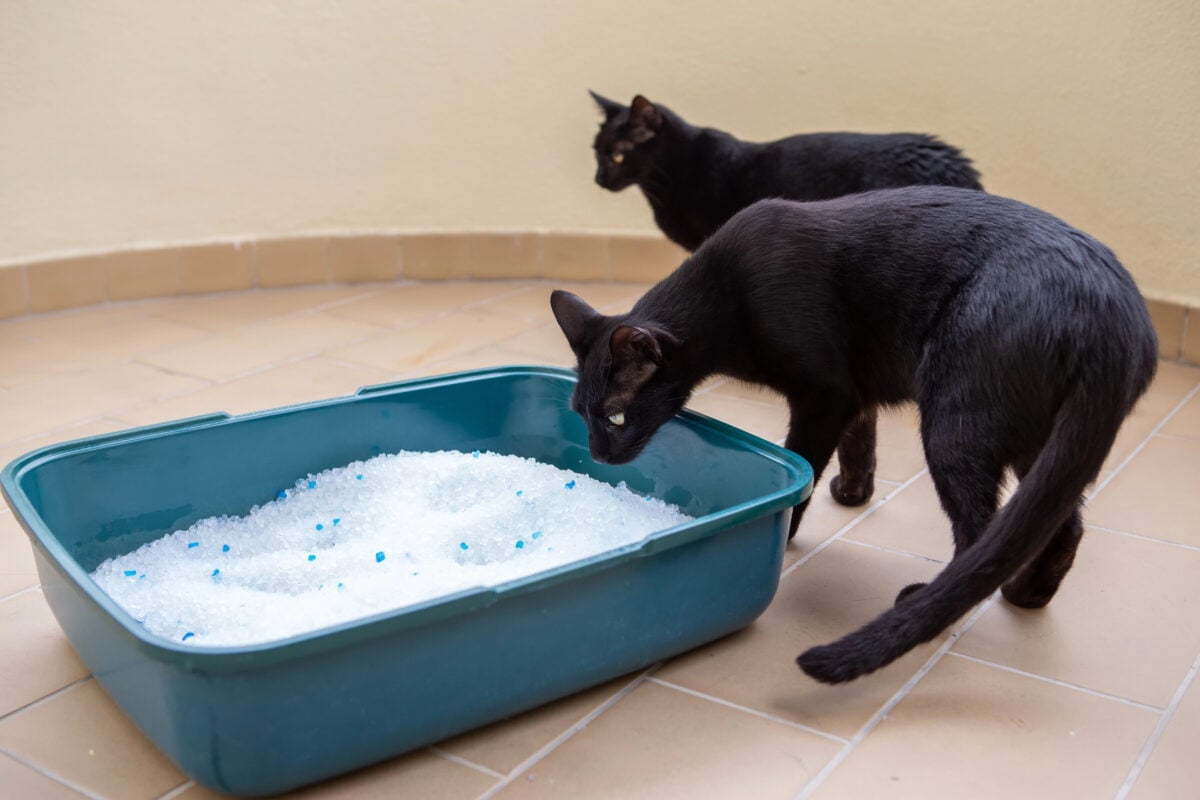
Mixed Households: One Uses It, One Reviews It
In many homes, a male and female combination tends to balance out. One cat is more flexible.
One is more selective.
As long as the setup supports both, it works.
If it doesn’t, you’ll usually notice that one cat keeps using the box without issue, and the other develops a very specific set of preferences.
Spayed vs. Neutered Matters More Than Gender
This part is easy to miss. Intact cats, male or female, are much more sensitive to territory and scent, which means sharing can feel like a much bigger deal.
Once cats are spayed or neutered, that pressure usually drops significantly, and everything becomes a lot more manageable.
Quick Check: Is Your Litter Box Setup Actually Working?
If something feels slightly off, it usually shows up like this:
- One cat consistently goes later
Like they’re waiting for the space to clear - That brief pause at the box
Walk up → hesitate → maybe leave - Oddly specific timing habits
Late nights, quiet windows of time, strategic visits - Faster, less settled use
More “in and out” than usual - A “random” accident that wasn’t really random
What Type of Litter Box Works Best For Multiple Cats?
Once you move past the “should they share?” question, the next thing that matters is surprisingly simple: What kind of box are you actually asking them to share?
Not all litter boxes feel the same to a cat, and in a multi-cat setup, those differences matter a lot more.
Bigger, Simpler, Easier To Use
In shared setups, the best boxes tend to be:
- Larger than you think you need
- Easy to enter and exit from multiple angles
- Uncomplicated (no tight turns, awkward doors, or guessing games)
If a cat has to think about how to use the box, that’s already friction.

Why “Fancy” Isn’t Always Better
Self-cleaning, high-sided, covered, filtered, hidden furniture-style boxes…
Some cats are fine with them. Others treat them like a suspicious new appliance that hums quietly and cannot be trusted.
In a multi-cat home, simpler designs usually win because they:
- Feel predictable
- Allow quick exits
- Don’t trap scent or movement
Which, as you’ve probably noticed by now, tends to matter more than aesthetics.
Open vs. Covered Litter Boxes in Multi-Cat Homes
This one comes up a lot—and the answer changes slightly when more than one cat is involved.
Open Boxes: More Comfortable For Shared Use
Open boxes tend to work better in multi-cat homes because they:
- Let cats see what’s going on around them
- Allow quick exits if needed
- Don’t trap scent the same way
It’s the difference between walking into an open room… versus a small space where you’re not entirely sure who’s about to join you.
Covered Boxes: When They Work (And When They Don’t)
Covered boxes can be fine if your cats already use them comfortably. But in shared setups, they can create friction because they:

- Limit visibility
- Hold onto odor more
- Turn the box into a single-entry, single-exit situation
If you’ve ever seen a cat poke their head into a covered box, pause, and reconsider, it’s usually about what they can’t see.
Size Matters More Than Most People Think
If there’s one thing that quietly makes or breaks multi-cat setups, it’s size.
Many litter boxes are smaller than what cats would naturally choose. And when two cats are sharing, that limitation becomes more obvious.
What “Big Enough” Actually Means
A good rule of thumb:
- Your cat should be able to turn around easily
- Dig without hitting walls immediately
- Move without feeling boxed in (ironically)
When space is tight, everything feels more noticeable.
The Best Litter For Multiple Cats
Once more than one cat is using the same space, litter quality has to do a lot more work. Because it’s not just about absorption; it’s about how the box feels between uses.
Clumping Quality Matters More Than You Think
Strong clumping litter helps:
- Remove waste cleanly
- Prevent leftover residue
- Keep the surface usable between scoops
If clumps fall apart, the box gets “used up” faster, even if you’re cleaning it regularly.

Odor Control Becomes More Important
With multiple cats, scent builds faster.
So litter that locks in odor, doesn’t just mask it, and holds up throughout the day makes a noticeable difference in how willing cats are to reuse the box.
Tip: You may also want to invest in a high-quality kitty litter odor eliminator to further freshen their experience.
Texture Still Matters
Most cats prefer:
- Fine, sand-like textures
- Consistency under their paws
If the texture feels off, they’ll notice immediately, even if everything else is right.
Check out our reviews of the best kitty litter for multi-cat households including, clumping, odor-control litter, and more.
How To Keep A Shared Litter Box Clean (Realistically)
This is where good setups either hold up or quietly fall apart because with multiple cats, “clean enough” becomes more challenging.
Scooping Needs To Happen More Often
For shared boxes, you’re realistically looking at:
- At least once daily
- Often twice, depending, licensed via usage
Otherwise, the box starts to feel used long before it looks it.

Full Clean-Outs Matter, Too
Even with regular scooping:
- Litter needs replacing
- The box needs washing
- Residual smell needs resetting
Otherwise, things slowly drift from “usable” to “less appealing.”
See our ultimate guide on how often to change cat litter for the real scoop.
Litter Box Placement Mistakes That Cause Problems
Even the right number of boxes won’t help if they’re all in the wrong place. And this is one of the most common issues in multi-cat homes.
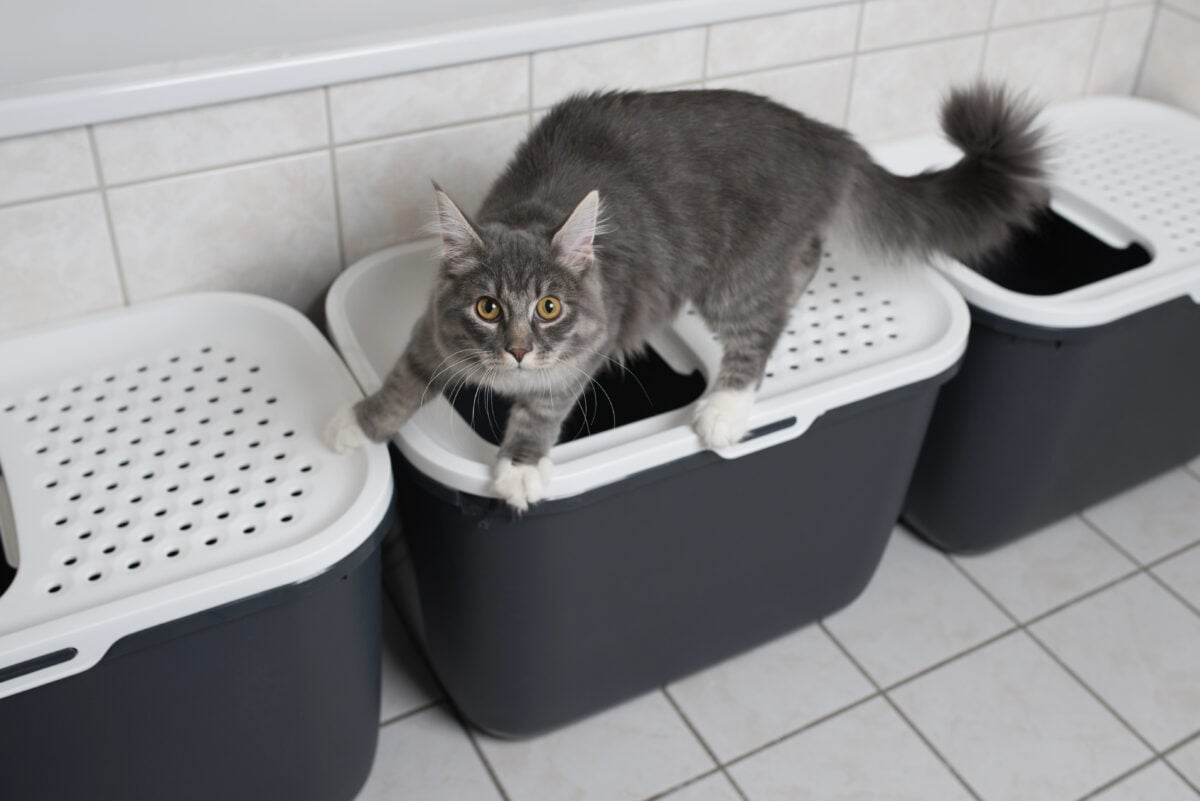
Putting All Boxes In One Location
This is the big one. Multiple boxes in one area can still feel like a single shared zone, which means:
- The same dynamics apply
- The same patterns form
- Nothing really changes
Low-Traffic Isn’t The Same As Isolated
Cats generally prefer quiet areas, but not areas that feel cut off or hard to reach. A box tucked too far away can feel less usable, not more private.
High-Traffic Areas Can Create Pressure
Boxes placed in busy areas can lead to:
- Interruptions
- Startled moments
- Less relaxed use overall
Even if your cat can use it there, they may not love it.
A Multi-Cat Litter Box Setup That Actually Works
So what does this look like when it all comes together?
Example: Two Cats, Three Boxes
A simple, effective setup might look like:
- Three total boxes
- Placed in separate areas of the home
- All easily accessible, no dead ends
The Boxes Themselves
- Large, open-style boxes
- Enough space to move comfortably
- No complicated entry points
Daily Maintenance
- Scooped at least once daily (often twice)
- Regular full litter changes
- Occasional full box clean-outs
Frequently Asked Questions
If you’re still wondering how this applies to your specific setup, you’re not alone. This is one of those topics where small details matter.
Here are some questions owners ask most often about multi-cat litter box situations. Don’t see yours here? Ask us in our comments.
Can Two Cats Share One Litter Box If They Seem Fine?
They can, and in some homes, it genuinely works.
But “seem fine” is doing a lot of work here. If both cats use the box without hesitation, odd timing, or subtle avoidance, you’re probably in one of the setups where it’s actually working.
It’s just worth keeping an eye on, because when it stops working, it usually doesn’t announce itself beforehand.
What If My Cats Have Always Shared A Litter Box?
That’s more common than people think. Some cats settle into a rhythm early and never have an issue. Others make it work quietly for a long time.
If nothing in their behavior has changed, there’s no urgent need to fix what isn’t broken, but adding another box often makes things easier, even if it’s not strictly necessary.
How Many Litter Boxes Do I Really Need For Two Cats?
The general recommendation is three boxes for two cats.
Not because each cat needs their own assigned spot, but because it keeps things flexible and removes the need to time it right. In practice, it makes the whole setup feel easier for both of them.
Is It Okay To Keep Multiple Litter Boxes In The Same Area?
It’s better than having too few, but it’s not ideal.
When boxes are grouped together, they tend to function like one shared space, which brings back the same patterns you were trying to avoid. Spacing them out usually works better.
Do Automatic/Self-Cleaning Litter Boxes Solve This Problem?
They can help with cleanliness, which is part of the equation. But they don’t change how cats feel about sharing the space itself.
Some cats also take time to trust them, or to decide they don’t. So they’re helpful, but not a complete fix on their own.
Why Did My Cat Suddenly Stop Using The Litter Box?
When it feels sudden, it usually isn’t. There’s often been a buildup — small changes in behavior that didn’t stand out at the time.
If nothing obvious has changed in your home, it’s worth looking at:
- Litter box cleanliness
- Recent usage patterns
- Whether something about the setup has shifted
Cats tend to tell you something’s off in quiet ways first — this is just when it becomes impossible to ignore.
What Your Cat Isn’t Saying (But You’re Probably Noticing)
Once you start noticing how your cat thinks about something as simple as a litter box, a lot of their other “random” behaviors start making more sense.
If you want to understand what your cat is quietly reacting to (and how to make life easier for both of you), these are worth a look:
- Warning Signs Your Cat is Crying for Help: Behavior changes rarely come out of nowhere. Learn how to spot the subtle signals that something isn’t quite right—even when everything seems fine.
- Why Does My Cat Follow Me Everywhere?: Sometimes it’s affection. Sometimes it’s curiosity. Sometimes it’s… a full-time surveillance assignment. Here’s what’s actually going on.
- What Are Cats Scared Of?: From vacuum cleaners to completely invisible threats, this explains what actually triggers fear—and why it matters more than it seems.
- How to Tell if Your Cat Loves You: After all the analyzing and adjusting, it helps to know what comfort actually looks like from your cat’s perspective.
The more you understand what your cat is noticing, avoiding, and quietly adjusting to, the easier everything else gets, including the parts they never explain.
Does one of your cats treat the litter box like a perfectly normal situation, while the other approaches it like it requires a full risk assessment? Share what you’re seeing in the comments — chances are someone else’s cat is running the exact same “let me check this first” routine.