When you purchase through links on our site, we may earn a commission at no extra cost to you. Learn more.
When cats feel safe, their love tends to come out sideways: a slow blink, a stolen warm spot, a bathroom escort no one requested.
Table of Contents
Cats are not exactly famous for grand emotional announcements. They usually skip the dramatic love confession and go straight to stealing your warm chair, blinking at you from across the room, or following you into the bathroom like a tiny unpaid supervisor.
But those odd little habits often mean more than they look like.
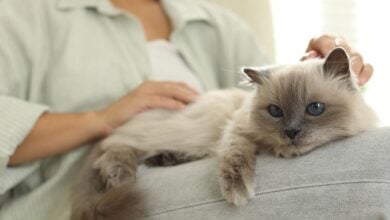
Cats are naturally cautious animals, so when they relax near you, sleep in your spot, turn their back to you, or groom themselves while you are nearby, they are doing something important. They are lowering their guard. In cat language, that is a pretty big compliment.
Want our human-written content to rank above AI-generated garbage? Help us out by clicking this button!
Your cat may not shout, “I trust you!” Mostly because cats do not shout unless dinner is late. But once you know what to look for, their trust shows up everywhere: in the slow blink, the nearby loaf, the bedtime routine, the toy dropped beside your shoe, and yes, even the suspiciously dramatic belly flop.
The Short Scoopon Cat Trust
If your cat trusts you, they may not always show it in obvious ways. Some cats cuddle. Others prefer to sit three feet away and act like your presence is merely acceptable, which, in cat terms, is basically a five-star review.
Common signs your cat feels safe with you include sleeping near you, slow blinking, grooming beside you, following your routine, kneading, bringing toys, showing their belly, or resting nearby without asking for attention.
The biggest clue is relaxation. A cat who feels safe will stretch out, nap deeply, turn away from you, or hang around without looking tense. They are not constantly watching for danger. They are comfortable enough to be their weird little self.
So if your cat steals your seat, supervises your bathroom trip, or parks beside you like a loaf of bread with opinions, take it as a compliment. Your cat may be saying, “You are safe. This place is safe. Also, I own this chair now.”
9 Surprisingly Sweet Signs Your Cat Trusts You
Cat trust does not always arrive as a dramatic cuddle puddle. Sometimes it looks like your cat is stealing your chair, showing you their belly and immediately regretting your hand, or following you into the bathroom like they have been assigned to your personal security detail.
The key is to look for relaxed, voluntary behavior. A cat who feels safe will often sleep more openly, hang around without asking for anything, blink slowly, groom nearby, or include you in their little daily rituals.
Some of these signs are obvious. Others look suspiciously like rudeness, theft, or tiny emotional sabotage. But in cat language, they can mean something surprisingly sweet.
Here are nine quirky cat habits that often mean, “I trust you, human. Do not ruin this.”
1. The Royal Back-Turn
Few cat behaviors feel more insulting at first than the back-turn.
Your cat sits nearby, calmly rotates away from you, and presents their fluffy backside like a tiny monarch ending an audience. Maybe you are working at your desk. Maybe you are drinking coffee. Either way, they have chosen to face the room while keeping you behind them.
Rude? Not usually.

A cautious cat likes to keep possible threats in view. If they are unsure about someone, they may watch that person closely, track their hands, or stay near an exit. Turning away while staying close sends a different message: “I do not need to monitor you.”
That is a quiet trust signal.
You might also notice:
- Their tail resting against your leg
- A back paw touching your foot
- Their body is facing away, but still relaxed
- A calm, loose posture instead of a tense crouch
Your cat is trusting you with their blind spot. In some cases, they may even treat you like part of the security team while they survey the kingdom, also known as the hallway, the couch, and one suspicious dust bunny.
No need to interrupt the moment. Let them sit there. A cat does not need constant eye contact to feel close.
Sometimes trust looks like a tiny royal guard facing outward, knowing you are safe behind them.
2. The Bed Thief
Every cat owner knows this crime scene.
You stand up for thirty seconds. Just thirty. Maybe you grab water or take a quick bathroom break. Maybe you go looking for the phone charger your cat was probably sitting on.
By the time you come back, your cat has claimed your exact spot.
Not the empty half of the bed or the other cushion. Not the blanket three inches away. And not their cozy, top-of-the-line cat bed.
Your spot. The warm one. The one shaped like you.
They look up like, “Oh, were you using this? Fascinating.”
Annoying? Absolutely. Sweet? Also yes.

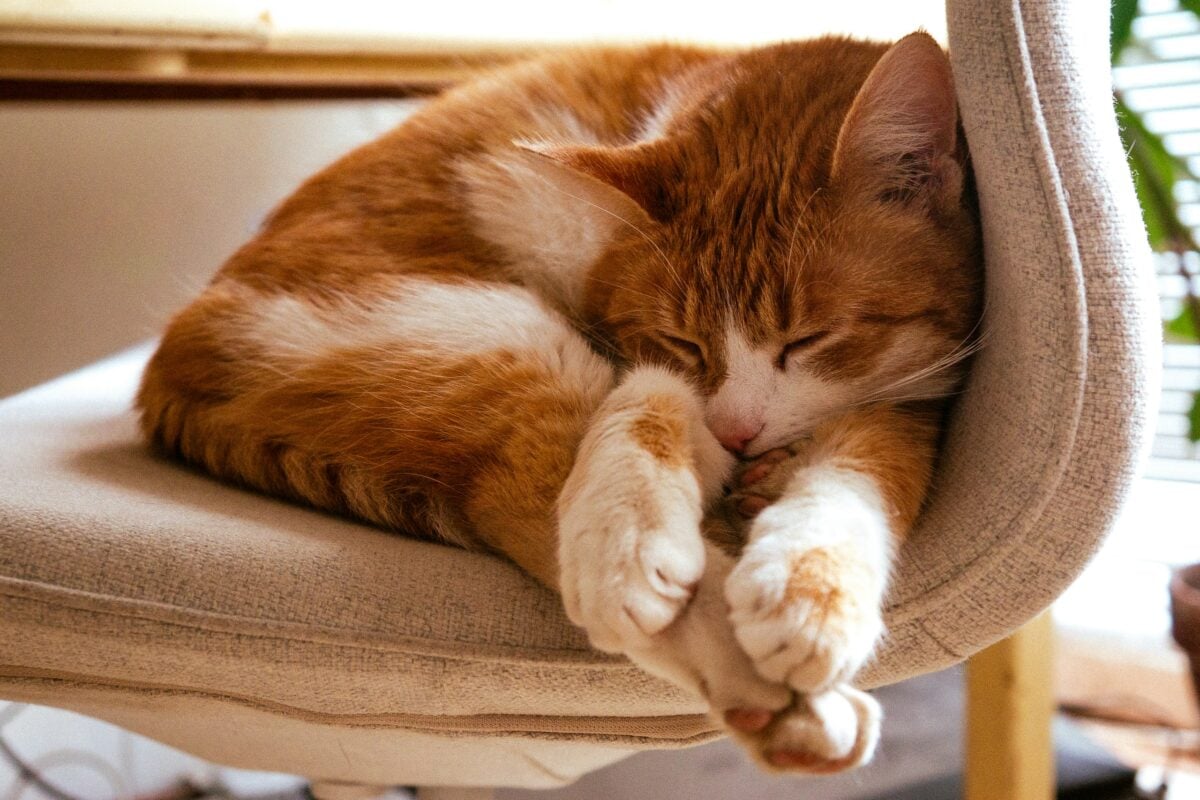
Your scent, warmth, and familiar routine make that spot comforting. Sleep is a vulnerable state for cats, so choosing your pillow, hoodie, laundry pile, office chair, or side of the bed can be a sign that your smell feels safe.
This matters even more if your cat is not naturally cuddly. Some cats will never melt across your chest like a Victorian fainting lady. They may still sleep at the foot of your bed every night like a tiny night watchman with whiskers.
That counts.
When cats feel safe in your space, they often choose the places that smell most like you. So yes, your cat may be a shameless seat burglar. But they are also giving you a compliment.
Your spot smells like home.
3. The Belly Trap
Few things test human self-control like a caton their back. There they are: belly exposed, paws curled, eyes soft, looking like a fluffy little croissant with no survival instincts whatsoever.
The belly is right there. The forbidden floof… the plush danger zone.
Naturally, your hand starts to move. Then comes the grab. Possibly a bite. Possibly bunny kicks. If you are especially unlucky, the full “you have violated the ancient treaty” response.

Here is the important part: your cat was not lying. They may have been showing trust. That does not mean they were offering a belly-rub coupon.
A cat’s belly protects vital organs, so exposing it can be a big deal. Rolling onto their back near you may mean, “I feel safe enough to relax like this around you.”
That is not the same as “Please touch the softest and most heavily defended part of my body.”
Best move? Admire respectfully.
Try:
- Talking softly
- Slow blinking
- Offering chin or cheek scratches instead
- Letting your cat decide whether to move closer
- Avoid sudden belly contact unless you know they enjoy it
Some cats like gentle belly rubs. Many do not. Both are normal.
Respecting the belly trap builds trust because it tells your cat, “You can be vulnerable around me, and I will not immediately launch a hand into the danger fluff.”
That is love. With boundaries. And claws.
4. The Slow Blink
The slow blink is tiny, but it can feel oddly magical.
You glance across the room. Your cat looks back. Their eyelids soften, close for a second, then open again like they are sending a sleepy little message only you understand.
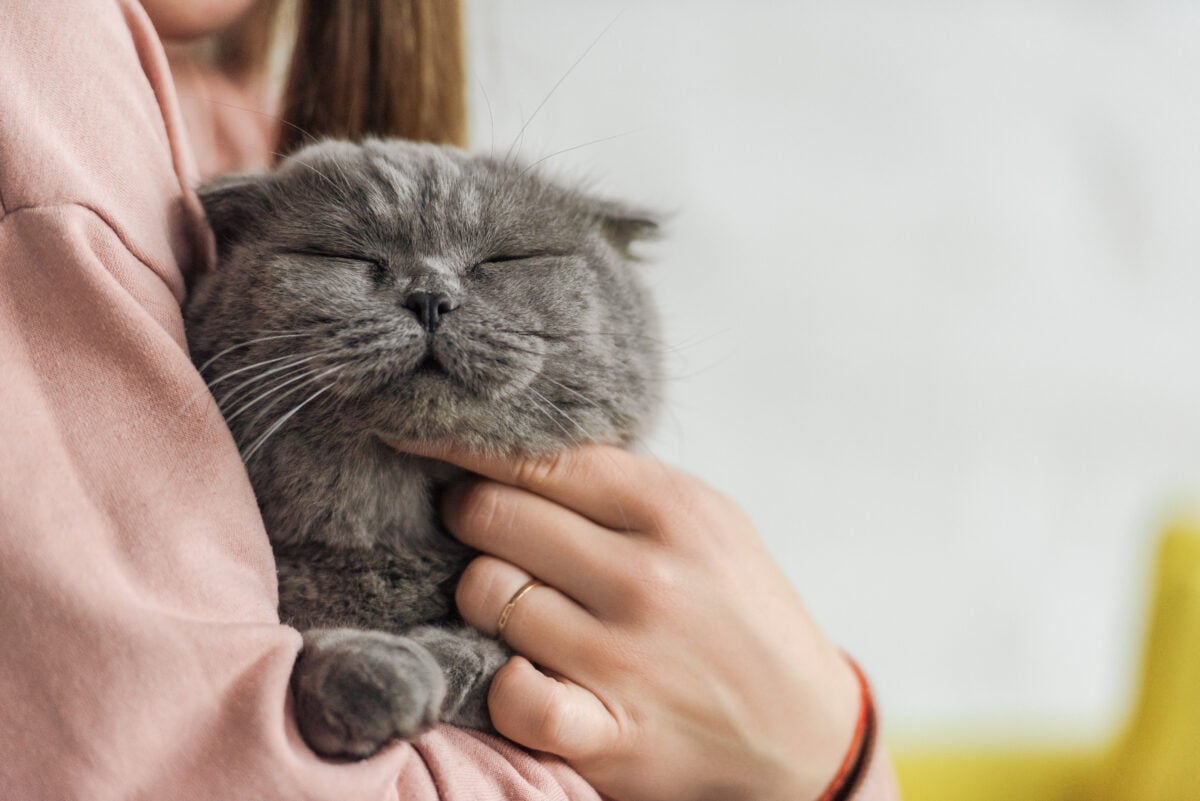
A slow blink usually means your cat feels calm and safe with you. Instead of holding a tense stare or tracking you like a suspicious vacuum cleaner, they soften their face and briefly close their eyes in your presence.
For an animal built to notice movement, that is not nothing.
Research backs this up, too: one study on cat-human communication found that slow blinking may function as a positive social signal between cats and people.
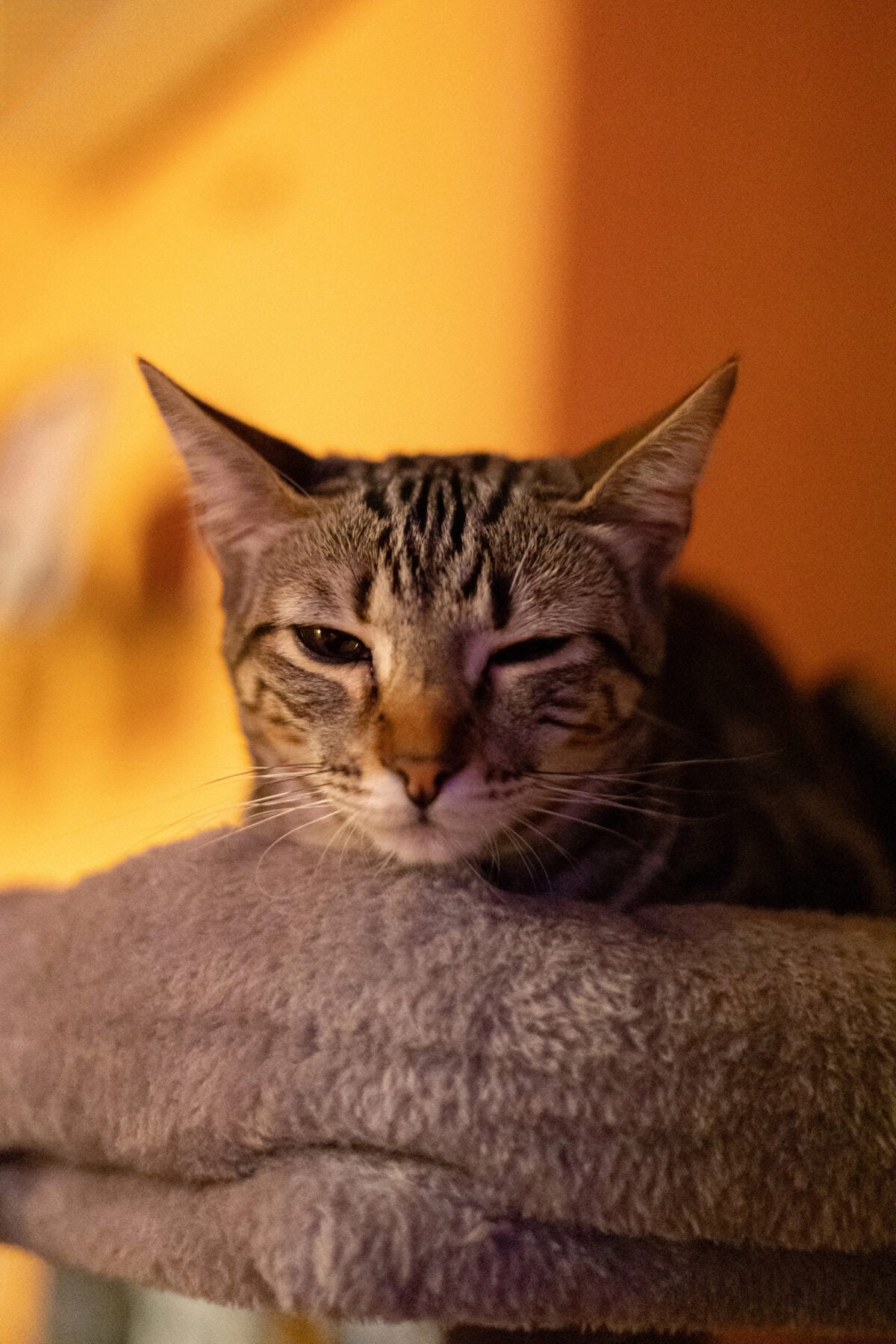
Possible translation: “I do not currently suspect you of nonsense.”
High praise.
You can slow-blink back, but keep it subtle. Relax your face, look toward your cat without staring hard, slowly close your eyes, then open them gently.
No leaning in or dramatic pause. No theater-kid energy.
Cats prefer quiet signals unless they are the ones knocking something off a shelf.
Some cats blink back. Others look away peacefully. A few ignore you completely because they have a brand to protect. Either way, slow blinking can become a sweet little ritual between you.
It is not loud affection. It is softer than that.
Comfort without pressure.
5. The Nearby Loaf
Not every cat wants to be scooped up and hugged like a baby.
Some prefer to sit three feet away and radiate affection from a legally protected distance. This still counts.
Your cat may nap at the other end of the couch, lie beside your desk, or perchon the windowsill in the same room while pretending they are only there for bird surveillance. Somehow, though, they keep choosing the room you are in.
No food request or dramatic meowing. No paw tapping your arm like a tiny debt collector. Just presence.
That quiet togetherness means a lot. Cats often show connection through shared space. They may not want constant touching, but they do want your company. You are part of the atmosphere they like.
Their preferred emotional setting might be: “near human, but not smothered by human.”
Very reasonable, honestly.
This is common with independent cats, older cats, shy cats, and cats who love their people but dislike too much handling. A lap may be too much. The chair beside you? Perfect.
Respecting that distance can deepen trust. When your cat learns that closeness does not come with grabbing, reaching, or forced cuddling, your presence feels easier to choose.
So if your cat parks nearby during work calls, movie nights, or morning coffee, do not dismiss it.
That little loaf chose you.
6. The Personal Stylist
Cats groom constantly, but location matters.
A cat calmly washing their paws, chest, or face beside you is doing more than maintaining their luxury fur situation. Grooming takes focus. It means looking away from the room, twisting into odd positions, and not tracking every little sound.
Most cats will not do that near someone they distrust.
If your cat grooms beside you in a relaxed way, they are showing comfort. They feel safe enough to stop scanning the room and start licking one paw like it contains state secrets.
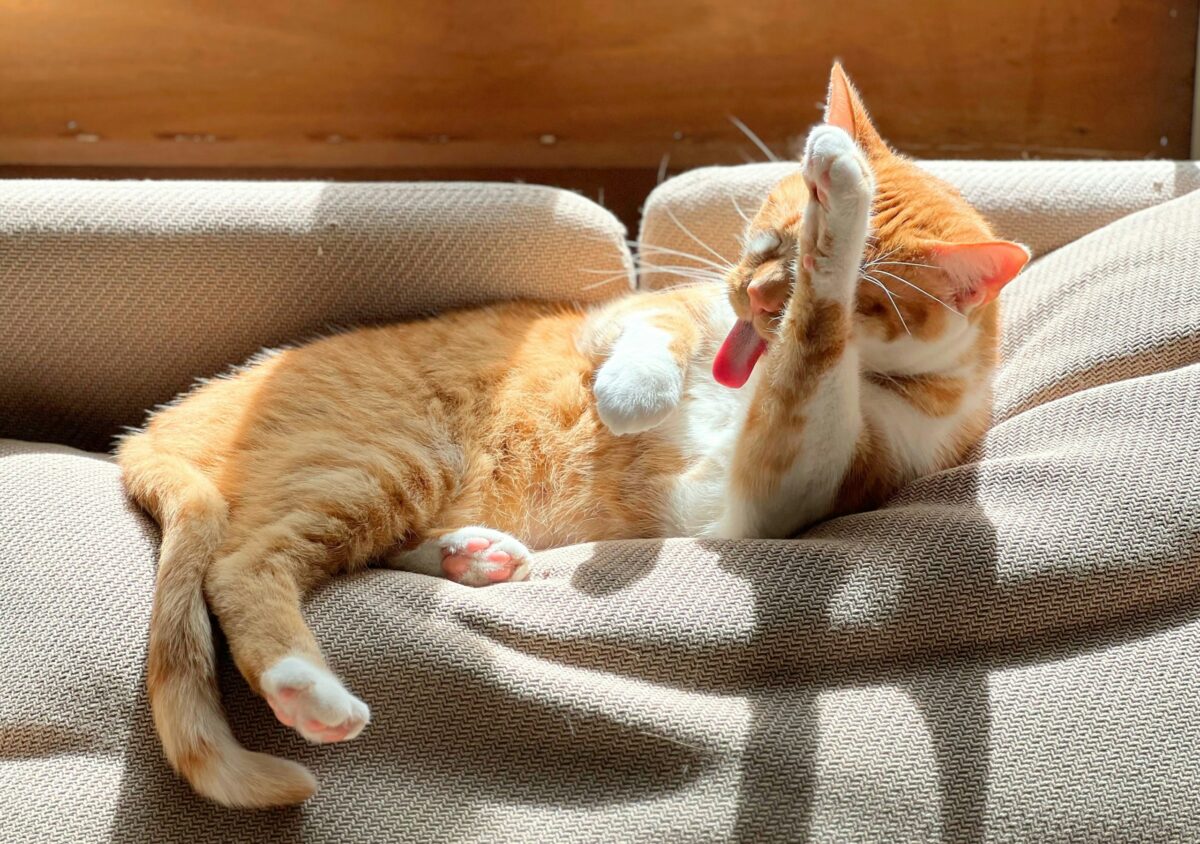
Even sweeter, some cats groom their humans.
Maybe yours licks your hand with that sandpaper tongue. Perhaps they nibble your hair. In rare salon-level cases, they drag one damp paw across your eyebrow like you have an interview in ten minutes.
Odd? Yes. Sweet? Also yes.
Cats who share a bond may groom each other to maintain connection and shared scent. When your cat includes you, they may be treating you like part of their trusted inner circle.
Possible translations include:
- “You smell like family.”
- “You are part of my group.”
- “Your grooming standards need work.”
- “Welcome to the Fur Salon.”
A few affectionate licks are usually harmless. Sudden overgrooming, bald patches, irritated skin, or frantic licking may point to stress or a health issue, so that deserves a vet check.
In ordinary relaxed moments, grooming near you is a warm sign.
Also, apparently, your hair needed notes.
7. The Constant Supervisor
Some cats follow routines with terrifying accuracy.
Your alarm goes off, and there they are. You walk to the bathroom, and they follow. Coffee starts brewing, and your cat appears in the kitchen like a tiny manager checking whether breakfast operations are behind schedule.
At your desk, they may claim the keyboard, your notes, your forearm, or the one important paper you actually needed.
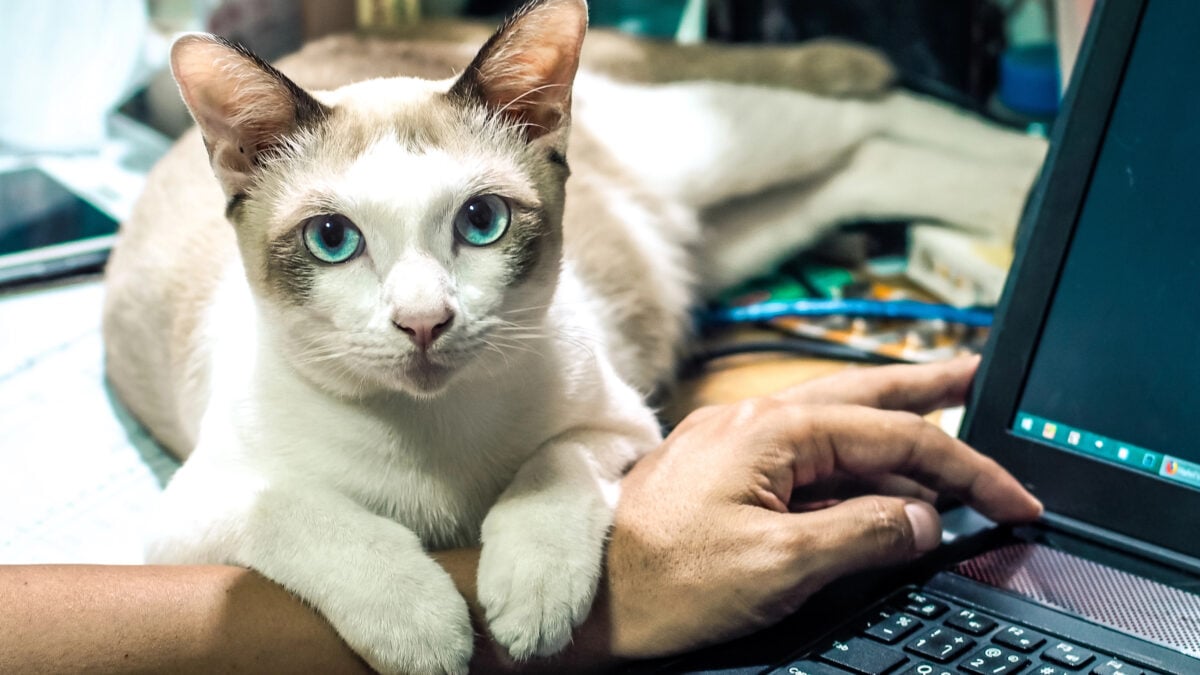
Bedtime has its own protocol. Certain cats lead the way down the hall as if to say, “Finally. The staff has remembered the evening schedule.”
Funny? Absolutely. Meaningful? Also yes.
Cats like predictability. A steady routine helps cats feel safe because the world becomes easier to understand. Your daily habits turn into familiar landmarks: morning coffee, shower steam, keyboard clicks, dinner prep, couch time, lights off.
When your cat follows along, they are weaving their day around yours.
That does not always mean clinginess. Often, it is companionship. They want to observe, be included, and confirm you are not doing anything suspicious, like opening a can that is somehow not tuna.
If your cat joins your routine without looking anxious, take it as a compliment.
Your day has become part of their map of home.
8. The Biscuit Factory
Kneading is ridiculous. There is no dignified way to describe it.
Your cat climbs onto a blanket, pillow, sweater, or your stomach and begins pressing their paws in and out like they are preparing dough for an extremely exclusive bakery.
The eyes half-close. The purr motor starts. Sometimes they drool.
Occasionally, the claws appear just enough to remind you that love has terms and conditions.

This behavior usually points to comfort. Kneading begins in kittenhood, when kittens press their paws against their mother while nursing. Many adult cats keep the habit because it is linked with warmth, softness, security, and deep relaxation.
When your cat kneads near you oron you, the emotional weather is usually cozy. The blanket is right. The room is calm. The human has been approved.
Biscuit production must begin immediately.
Purring can add another layer. Cats purr for different reasons, including comfort, communication, and self-soothing, so context matters. During relaxed kneading at bedtime or on the couch, though, it often points to contentment.
Think of it as a tiny engine idling in a safe driveway. If the claws are getting personal, place a thick blanket between their paws and your skin. Your cat is not trying to hurt you.
They are making emotional biscuits with built-in cutlery.
9. The Tiny Gift Delivery Service
Cats are natural hunters, players, collectors, and dramatic presenters of objects.
That is why your cat may drop a toy mouse at your feet, carry a crinkly ball into the kitchen, leave a sock outside your bedroom, or arrive with a muffled meow and something mysterious in their mouth.
Indoor cats often bring toys as a form of connection. They may be inviting you to play, showing off, placing a prized object in a trusted spot, or performing the ancient ceremony of “Look What I Have, Human.”
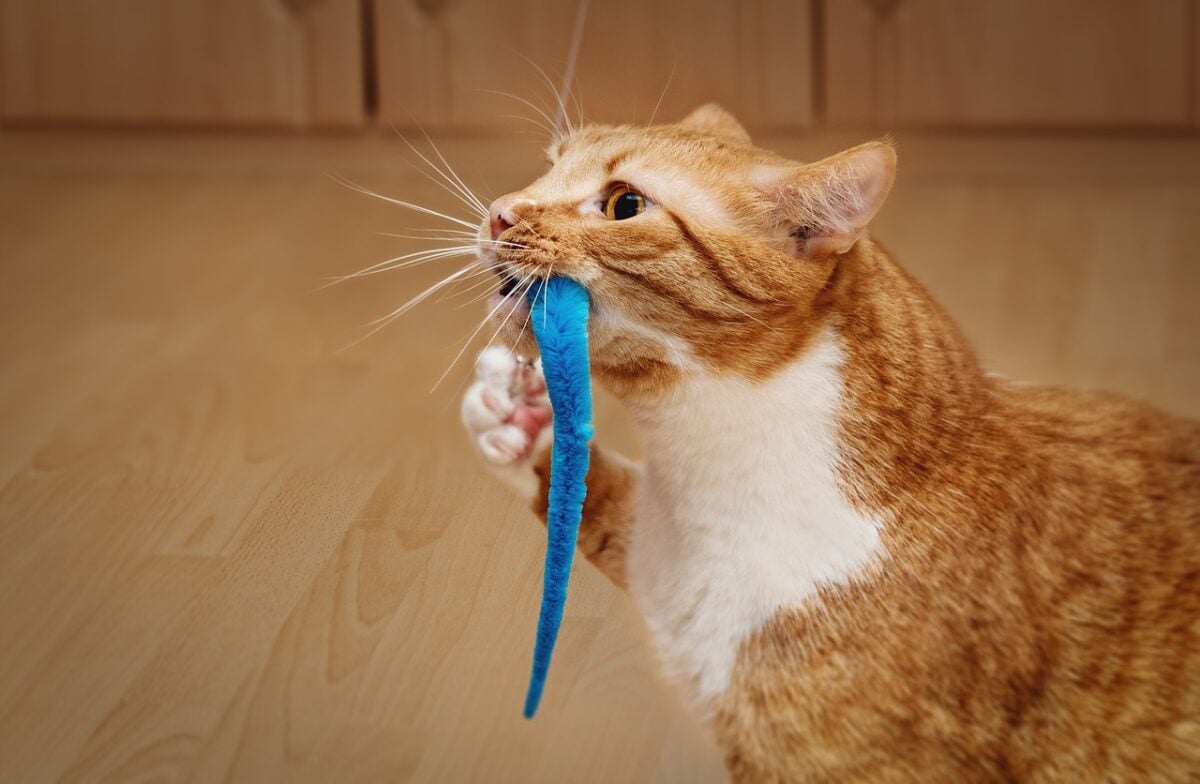
Some develop oddly specific gift rituals:
- Socks dragged into the hallway
- Toy mice placed in shoes
- Hair ties delivered at bedtime
- One battered plush shrimp presented like royal treasure
The object may look silly to you, but your cat chose it. Then they chose you as the audience.
That part matters.
Outdoor cats may sometimes bring less charming gifts, which can be upsetting. The instinct behind it is still tied to hunting, sharing, and communication. Your cat is probably not trying to ruin your morning. Probably.
For indoor toy gifts, respond warmly. Praise them. Toss the toy. Start a short play session. At least acknowledge the delivery, because your cat did not carry that fake mouse across the kingdom for nothing.
When cats feel safe with someone, they may include that person in their little rituals.
Whether the gift is a toy, a sock, or something you would rather discuss with a therapist, your cat is letting you into their world.
Why These Tiny Habits Matter
Cat trust rarely shows up with a dramatic soundtrack. It usually sneaks in quietly, one ordinary moment at a time.
At first, it may not look like much. You refill the water bowl, respect their space, learn the exact scratch spot under their chin, and stop launching your hand toward the belly trap like a doomed cartoon character. Maybe you speak a little softer. Maybe you keep routines steady. You let them approach instead of chasing them around the house like an overenthusiastic goblin with good intentions.
Over time, those small choices start to add up.
The cat who once hid under the bed may begin sleeping near the doorway. A few days later, they nap on the couch while you are in the room. Soon, there is a slow blink from across the carpet. Eventually, they steal your chair with the confidence of a landlord who has never read the lease.
That shift matters because these behaviors are chosen freely. Cats are sensitive to pressure. They may love you and still hate being grabbed. They may trust you deeply and still prefer not to be held. Some adore your presence from the opposite end of the sofa, where they can maintain their dignity and monitor the snack situation.
That does not make the bond weaker. It just makes it cat-shaped.
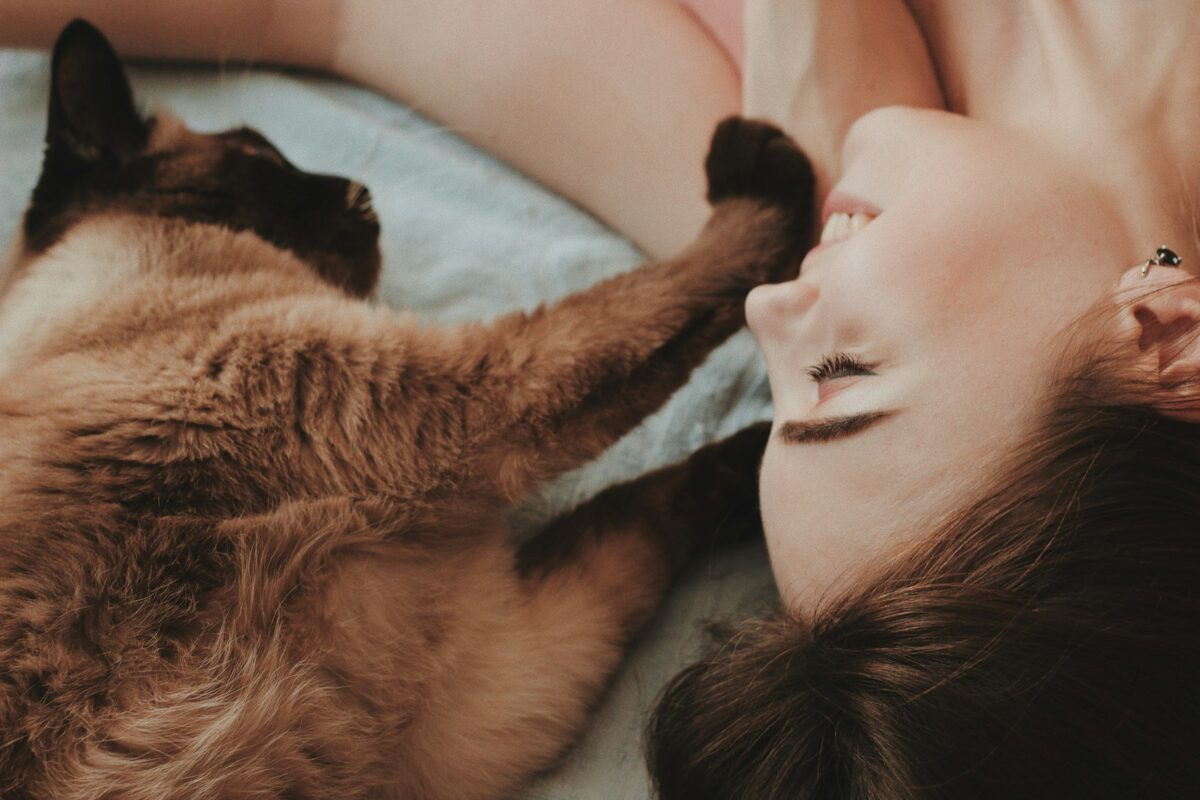
When cats feel safe, their affection often comes out in quiet, voluntary ways:
- Resting near you without needing anything
- Turning their back because they trust your presence
- Grooming beside you while their guard is down
- Following your routine because your day feels familiar
- Sleeping in your scent because it feels like home
- Blinking slowly instead of watching you like a suspicious Roomba
These are not performances. They are natural behaviors that show up when cats feel safe enough to relax, choose closeness, and be their full ridiculous selves.
The best thing you can do is stay predictable, gentle, and respectful. Let your cat decide when to approach. Notice their body language. Slow blink instead of staring. Offer play. Keep routines steady. Respect the no-touch zones, especially the plush danger region known as the belly.
When you give a cat room to feel safe, you get to see who they really are: silly, sleepy, demanding, curious, dramatic, affectionate, independent, and somehow all of those things within the same five minutes.
For more suspiciously sweet behavior, read our guide to cats that act sweet right before they cause trouble.
How to Help Your Cat Trust You More
Trust does not happen because you bought the fancy treats, although your cat will happily accept those for research purposes. It builds through small, steady moments that teach your cat you are safe, predictable, and not secretly planning to scoop them up during a peaceful loaf.
When cats feel safe, they relax more easily. They explore, play, nap deeply, and choose closeness without feeling pressured. Here are a few simple ways to help that trust grow.
- Let your cat make the first move.
Instead of reaching every time your cat walks by, give them space to approach. Sit nearby, offer a relaxed hand to sniff, and wait for signs like rubbing, head bumps, or a loose tail. A cat who chooses closeness learns that being near you does not come with surprise cuddles, sudden grabs, or emotional ambushes. - Learn their favorite petting spots.
Most cats prefer gentle scratches around the cheeks, chin, forehead, base of the ears, or shoulders. Sensitive spots often include the belly, paws, tail, and back legs. Watch their body language. Leaning in, purring, or staying loose usually means “yes.” Tail flicking, ear flattening, skin twitching, or pulling away means “please stop before I become a stapler.” - Stop before they have to warn you twice.
Cats often give small signals before swatting, biting, or leaving. If your cat suddenly gets still, looks at your hand, flicks their tail, or turns their ears sideways, pause. Ending the interaction early teaches them you listen. That makes petting and closeness feel safer over time. - Keep routines predictable.
Cats like knowing what happens next. Feeding around the same times, keeping the litter box in a consistent place, playing before bedtime, and creating calm daily rhythms all help cats feel safe. You do not need a tiny clipboard schedule. Just enough consistency for your cat to think, “Ah yes, the human is doing the usual human nonsense.” - Use play to build confidence.
Wand toys, feather teasers, crinkle balls, toy mice, and kicker toys let your cat stalk, chase, pounce, and catch. Let them win sometimes. A game where the cat never catches the toy is not enrichment; it is unpaid labor. Ending play with a treat or meal can also create a satisfying hunt-catch-eat-relax rhythm. - Give them safe places to retreat.
Even a trusting cat needs alone time. Cat trees, covered beds, window perches, quiet corners, open carriers with blankets, and cardboard boxes all give your cat a place to decompress. When they go there, let them be. A cat that knows they can leave an interaction safely is often more willing to come back. - Reward brave little moments.
Trust grows in tiny steps. Maybe your shy cat sits a little closer, eats while you are nearby, sniffs your hand, or stays in the room instead of vanishing under the couch. Reward those moments with a treat, gentle praise, play, a slow blink, or simply space. For some cats, the best reward is realizing they can be near you without being grabbed. - Stay calm when they are nervous.
If your cat hides, hisses, swats, or runs away, they are communicating discomfort. Scolding usually makes fear worse. Instead, give them room and think about what triggered the reaction. Did you move too fast? Pet too long? Touch a sensitive spot? Make the next interaction easier, quieter, and shorter.
The goal is not to force your cat into becoming a lap cat overnight. It is to become the kind of person your cat can relax around. Over time, that may turn into softer blinks, closer naps, more confident play, and maybe even the honor of being chosen as their favorite furniture.
Your Cat May Trust You More Than You Think
Cat love is not always loud. Sometimes it is a slow blink from across the room, a warm body pressed against your legs, or a toy mouse dropped beside your slipper like a tiny offering from a whiskered goblin.
These gestures may look small, but they carry weight. When cats feel safe, they do not need to perform affection every second. They simply let you into their quiet little world.
So the next time your cat steals your seat, follows you into the bathroom, kneads your blanket, or rests nearby without asking for anything, pause for a second.
That may be their way of saying, “I trust this place because you are in it.”
For a creature as careful, particular, and gloriously quirky as a cat, that is no small thing.
FAQs About Cat Trust and Safety
Still wondering whether your cat’s odd little habits mean trust, comfort, or just another mysterious cat agenda? You are not alone. Cat behavior can be subtle, dramatic, and mildly confusing all at once.
If your cat has a trust habit I missed, share it in the comments. Cat people love comparing notes, especially when the notes involve bathroom supervision, biscuit making, slow blinks, or crimes against clean laundry.
Does my cat trust me if they sleep near me but do not cuddle?
Sleeping near you can be a strong sign of trust, even if your cat does not want full-body contact. Some cats love laps, while others prefer “nearby love” from a respectful distance. If your cat chooses your bed, your chair, your hoodie, or the space beside you, your presence likely feels safe and familiar.
What does it mean when my cat follows me from room to room?
Your cat may be curious, attached to your routine, or comforted by your presence. Cats like predictability, so your daily habits can become part of their map of home. Following you around may be their way of saying, “Your schedule is strange, but I am involved.”
How do I know if my cat feels safe with me?
When cats feel safe, their body language usually softens. Look for loose posture, slow blinking, deep naps, grooming nearby, stretching out, resting close without tension, or turning their back while staying near you. A safe cat does not act like every movement in the room is suspicious breaking news.
How can I help a nervous cat trust me more?
Go slowly and let your cat set the pace. Use a calm voice, keep routines steady, offer play, respect hiding spots, and avoid forcing contact. For many nervous cats, the biggest trust-builder is learning they can be near you without being grabbed, chased, or overwhelmed.
How long does it take for a cat to trust you?
It depends on the cat. Some warm up in days, while shy, rescued, or sensitive cats may need weeks or months. The timeline matters less than the pattern. If your cat starts hiding less, eating near you, sleeping in visible spots, blinking softly, or sitting closer over time, trust is growing.
Can a cat trust you but still not like being picked up?
Absolutely. Many cats trust their people but dislike being held. Being lifted can feel restrictive, even for a bonded cat. Respecting that boundary can actually make your cat feel safer with you because they learn closeness does not come with surprise air jail.
Can a shy cat still feel safe with me?
Yes, they sure can. Shy cats often show trust in smaller ways, like staying in the same room, eating while you are nearby, blinking from a distance, or sleeping in a visible spot. Those little steps matter. For a cautious cat, “I did not hide under the couch today” can be a major relationship milestone.
Keep Learning Your Cat’s Little Love Language
Once you start noticing these tiny trust signals, cat behavior gets a lot more fun to read. The slow blinks, stolen chairs, nearby loafing, and dramatic biscuit sessions are not just random cat nonsense, although some of them are absolutely nonsense-adjacent.
They are part of the way cats build comfort, connection, and routine with their favorite humans.
For more ways to understand your cat’s soft, strange, and deeply specific affection style, check out these helpful guides:
- How to Tell If Your Cat Loves You
- Signs Your Cat Has Imprinted on You
- How Cats Choose Their Favorite Person
The more you learn their signals, the easier it becomes to see the sweet message underneath the quirks: your cat feels safe, connected, and very possibly convinced that your favorite chair belongs to them.
How Does Your Cat Show They Feel Safe?
Does your cat slow blink, steal your chair, follow you around, or bring you tiny “gifts”? Share the ways your cat shows they feel safe in the comments.