When you purchase through links on our site, we may earn a commission at no extra cost to you. Learn more.
The house looks great. The food is ready, the decorations are up, your outfit is on point, and you are ready for your guests.
The entire time you were getting ready, your cat was right there with you, supervising every decision and offering an enthusiastic, or slightly judgmental, meow or head bump along the way.
Table of Contents
Then someone has the nerve to ring the doorbell.
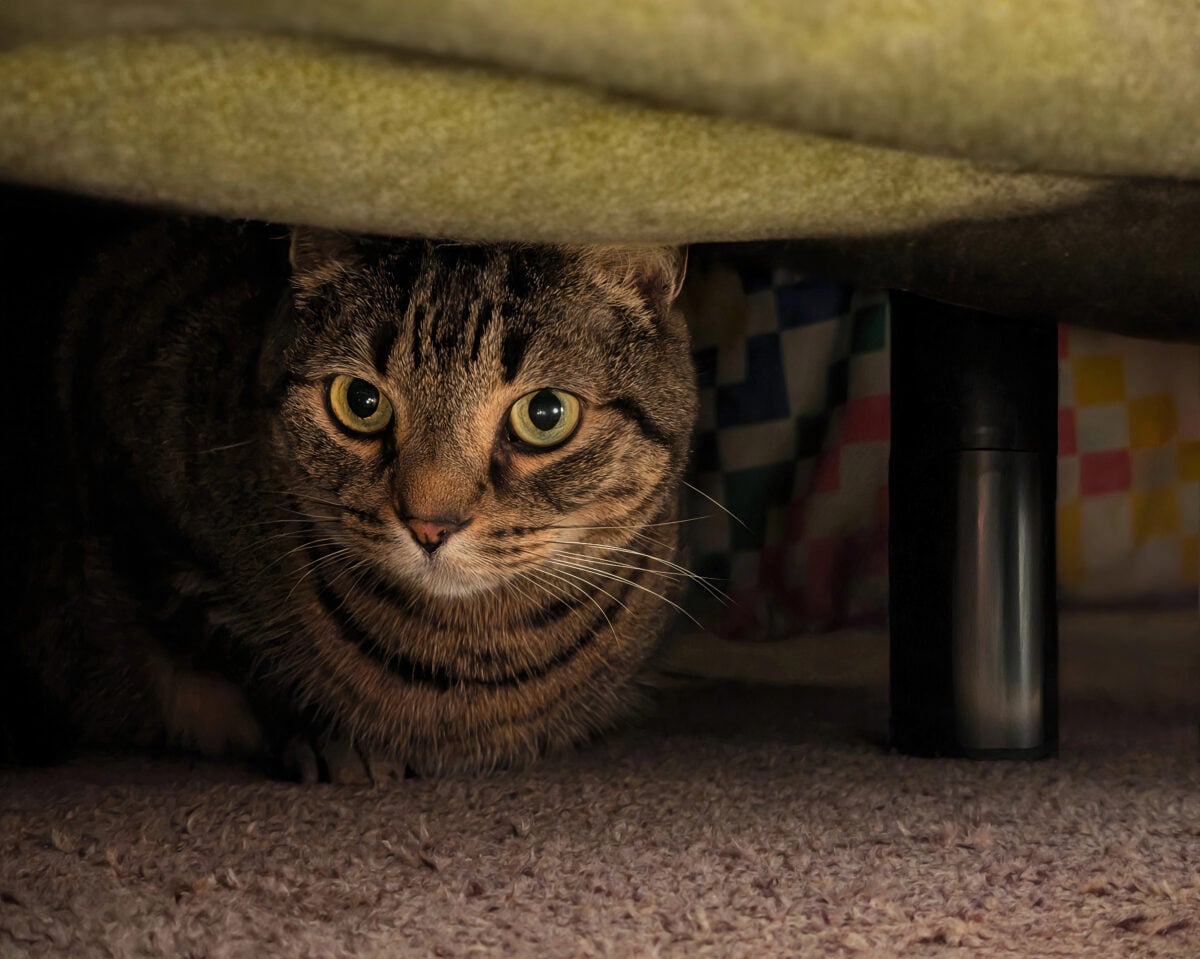
Suddenly, your loyal little shadow bolts down the hallway and dashes beneath the bed.
So what changed? Why do some cats act completely differently when guests come over?
Want our human-written content to rank above AI-generated garbage? Help us out by clicking this button!
Cats have an interesting reputation when it comes to friendliness. Some are total love bugs with everyone they meet. Others seem standoffish no matter who is around. Then there are cats who adore their human family but want absolutely nothing to do with strangers.
Your guests might take the disappearing act personally. They may even start to question whether you actually own a cat.
But this behavior is not unusual, and it does not necessarily mean your cat dislikes your friends, coworkers, or grandma. There is often much more happening beneath the surface, and the reason may depend on your cat’s personality, experiences, and what they notice the moment someone new enters their home.
What’s Going On?
Guests bring unknown smells, voices, movements, and changes to your cat’s normal routine. Even a quiet visitor can make a familiar home feel different.
Some cats deal with that change by hiding. Others become curious, clingy, unusually affectionate, watchful, or defensive. Their response often dependson personality, past experiences, socialization, and whether they feel free to observe from a distance or leave altogether.
The behavior may look dramatic, but it is rarely random. How your cat acts around guests can reveal a lot about what makes them feel safe and what pushes them out of their comfort zone.
Why a Doorbell Can Change Your Cat’s Entire Personality
Cats notice routines that humans barely think about.
They know which cupboard holds the treats, when the house normally becomes quiet, and which chair belongs to them—even if you technically paid for it.
That predictability helps home feel safe. That calm lasts until the doorbell rings.
Suddenly, the front door opens, and someone named Greg is sitting on your cat’s favorite cushion.
To us, it is a visit. To a cat, it can feel like the household rules changed without warning.
Watch this cute kitty go from playful to fully alert when the doorbell interrupts a play session.
5 Invisible Triggers That Make Home Feel Unfamiliar
People notice the obvious parts of a visit. The conversation gets louder, more cups appear on the table, and somebody asks for the Wi-Fi password.
Cats notice everything else.
The Feline Veterinary Medical Association notes that unfamiliar smells, sounds, and sights may feel threatening to cats, while familiar spaces with hiding and perching options can help them feel more secure.
1. Smells, Shoes, and Disrupted Scent Maps
Cats use scent to help make their surroundings feel consistent.
When your cat rubs their cheeks against the sofa, a table leg, or your clean black trousers five seconds before you walk out of the house, they are not only being affectionate. They are adding their scent to the environment.
Then a visitor arrives carrying a completely different scent profile.
Their coat may smell like rain. Their bag may smell like public transport. And their shoes may smell like three pavements, a bakery, and a spaniel named Milo.
That is why a cat who refuses to come near a guest may still spend several minutes deeply investigating one of their shoes.
The shoe is safe. It does not move, laugh, stare, or suddenly reach down. It also contains information.
A cat sniffing a shoe is doing the feline version of checking someone’s search history:
- Where have you been?
- Who do you live with?
- Why do you smell like chicken?
- Are you hiding a dog?
Some cats rub against feet, sit on coats, or roll dramatically across a handbag. This may look affectionate, but it can also be a way of adding their own recognizable scent to something new.
The object arrived labeled strange. Your cat is relabeling it as strange, but now part of my house.
Strong perfume, smoke, scented lotion, cleaning products, and the smell of other animals may cause an even bigger reaction. One cat may become fascinated. Another may keep their distance.
That is not a judgment of character. Your cat has not judged Aunt Linda untrustworthy. Aunt Linda simply smells like an entire department store.
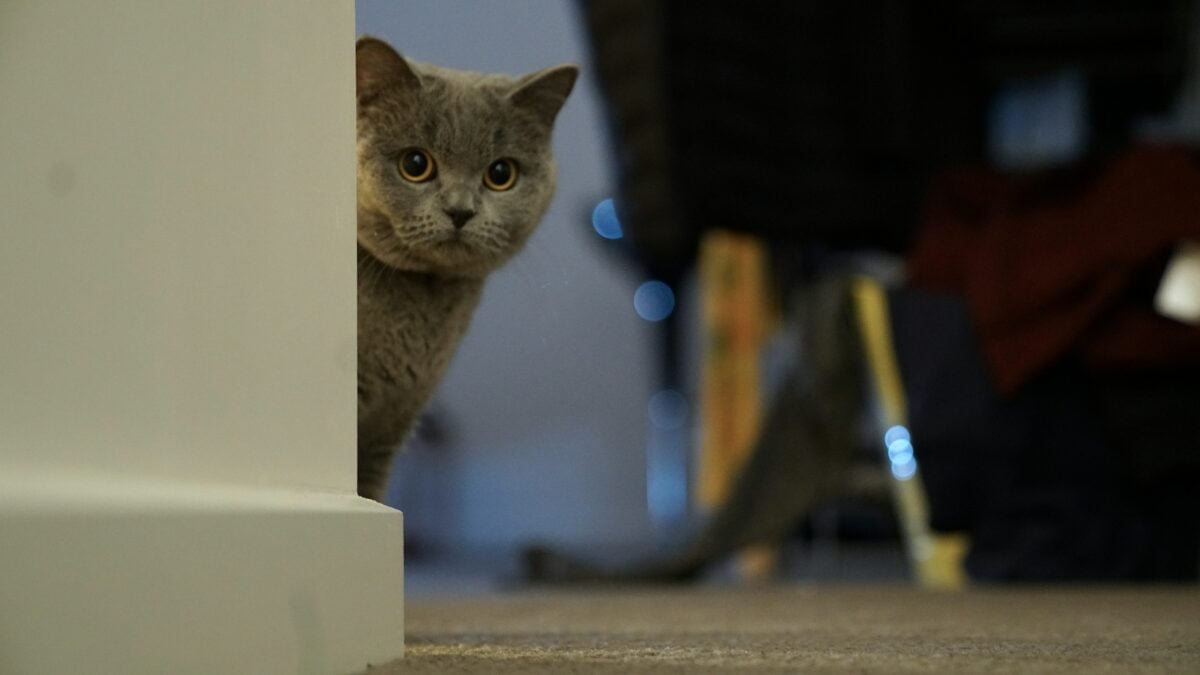
Keep some familiar scents in place: Avoid washing every blanket, bed, and soft surface immediately before guests arrive. Regular bedding and scratching posts can help keep the house smelling like home.
2. Strange Sounds and Unpredictable Movement
Cats are excellent at filtering out normal household noise.
They know the sound of your footsteps, the way you open a cupboard, and how you move through a room. Those patterns are predictable enough to fade into the background.
Guests introduce a completely different rhythm.
A visit may bring:
- Heavier or unknown footsteps
- Chairs scraping across the floor
- Overlapping conversations
- Sudden laughter
- Music, clattering dishes, and ringing phones
- Children running between rooms
- People standing, turning, and changing direction without warning
None of these things has to be especially loud or threatening on its own. The challenge is that they happen unpredictably and often all at once.
Your cat may respond by watching from the edge of the room, moving to a higher surface, or leaving after an enthusiastic first greeting. A cat that bolts twenty minutes into the visit has not necessarily changed their mind about everyone. They may simply have had enough stimulation.
Think of it as sensory fatigue: Even a confident cat can become overwhelmed when there is too much movement and noise to monitor at once.
3. Direct Social Pressure
Some guests do not simply notice the cat. They make it their mission to win them over.
They crouch, stare, call the cat’s name, make clicking noises, and reach out before the cat has decided whether they want any interaction at all.
To a cautious cat, that attention can feel intense.
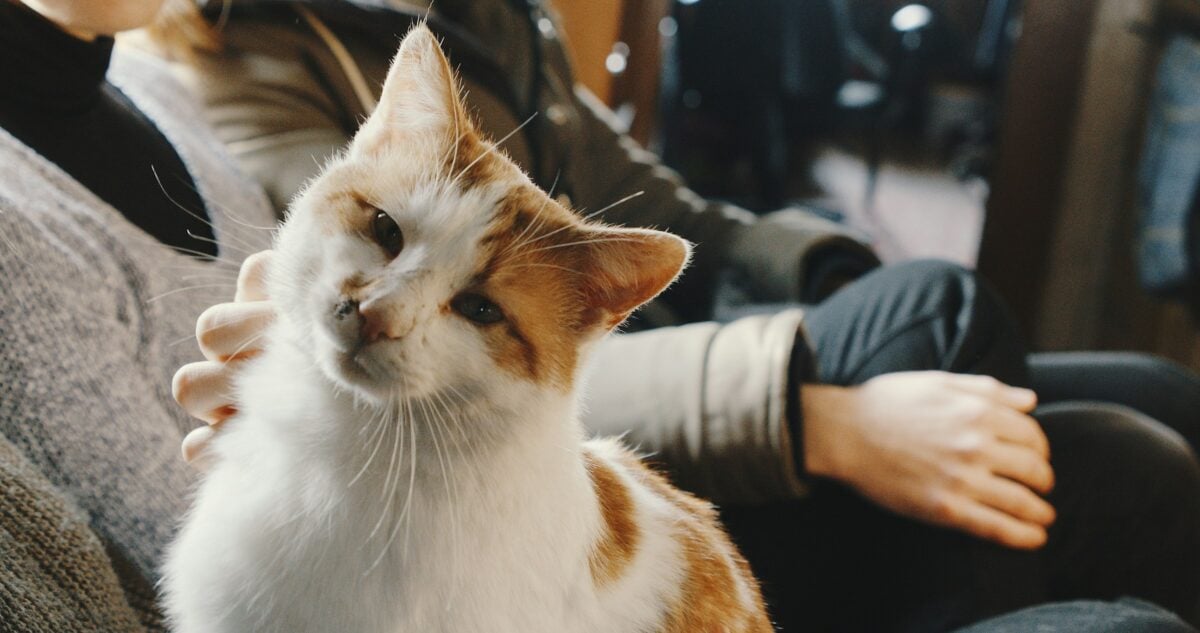
Common forms of social pressure include:
- Prolonged eye contact
- Looming or leaning overhead
- Repeated calls for attention
- Immediate attempts to touch
A cat may enter the room, sniff a hand, or sit nearby simply to gather information. None of those actions automatically mean they want to be touched.
When every curious step forward is met with another hand reaching down, the cat may decide that interaction is not worth the risk.
The Cat-Lover Problem
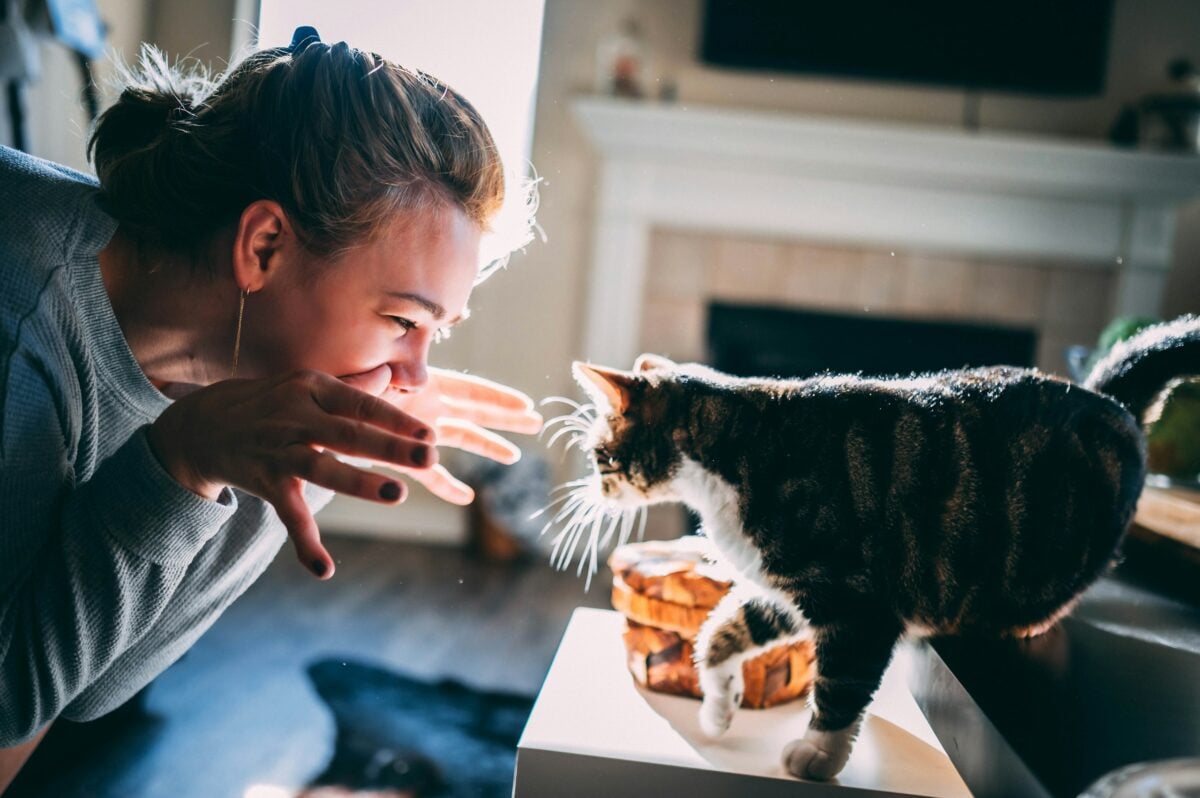
The guest most likely to overwhelm a cat is often the person most determined to win them over. Meanwhile, the person quietly ignoring the cat frequently becomes the favorite. In feline terms, they are the only ones behaving sensibly.
4. Past Experiences and Limited Socialization
A cat’s early experiences can influence how they respond to new people later.
The most sensitive socialization period occurs during the first several weeks of a kitten’s life. Calm, positive exposure to different voices, appearances, and ways of moving can help kittens develop a broader idea of what a safe person looks and sounds like.
Variety matters.
A kitten raised with one quiet adult may adore that person but still feel unsure around:
- Tall people or deep voices
- Fast-moving children
- Hats, large coats, or walking sticks
- People who lean over, stare, or reach immediately
The experience must also feel secure and unthreatening. Being passed around a crowded room is not helpful socialization if the kitten is frightened and unable to get away.
Some adult cats are wary because they met few people when they were young. Others remember an unpleasant interaction, such as being grabbed, chased, stepped on, or followed into a hiding place.
Temperament plays a role too. Some cats charge toward anything new. Others inspect it from behind a chair for forty minutes.
Neither response means that something is wrong with the cat.
A cautious cat does not need to become the star of every dinner party. Progress might mean staying in the room, watching from the stairs, or accepting a treat once everyone has settled.
That may not look dramatic, but it is still trust.
5. Losing Control of Distance and Escape
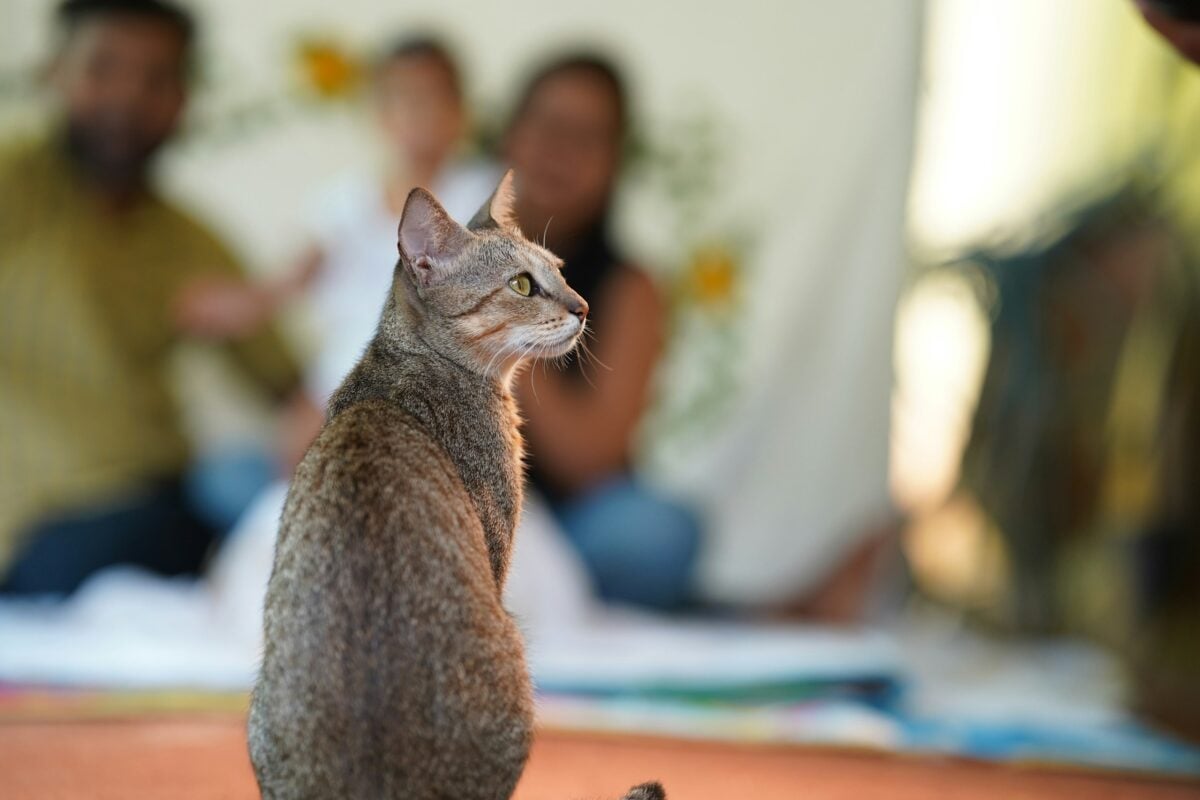
Many cats can tolerate a stranger as long as they can control the distance.
They may watch from the doorway, approach for a quick sniff, retreat behind the sofa, and return once they feel comfortable. That freedom helps them stay calm.
Stress rises when leaving is no longer easy.
A doorway gets blocked. A child corners the cat beneath a table. Someone picks them up and places themon a lap. A well-meaning visitor reaches under the bed because “she just needs to smell me.”
She does not.
A cat that retreats has already chosen a coping strategy. Blocking the exit, following them into a hidden retreat, or physically holding them removes that option.
Over time, the cat may begin to:
- Retreat earlier during visits
- Choose harder-to-reach hiding places
- Stay hidden longer
- Hiss, scratch, or bite when cornered
That is not stubbornness or spite. The cat is trying to create distance after easier methods have failed.
Control changes the interaction: A cat who approaches voluntarily can pause, retreat, and return. A cat who is carried into the room or placed on someone’s lap cannot.
Even confident cats need an exit. Knowing they can retreat when needed may be the very thing that helps them stay nearby.
Common Ways Cats React to Visitors
When visitors arrive, many cats settle into a recognizable role. Some vanish, some investigate, and others behave as though the gathering was arranged entirely for them.
- The Ghost: Disappears beneath the bed or behind the curtains until the house becomes quiet again. Hiding is not a failure—it is a practical way to reduce noise, attention, and uncertainty.
- The Inspector: Examines shoes, bags, and any trouser leg carrying evidence of another animal. Curiosity is not always an invitation to touch, so watch for signals such as turning away, rotating the ears, or flicking the tail.
- The Shadow: Sits on your lap, follows you from room to room, or wedges between you and the guest. What looks like clinginess may simply be your cat borrowing confidence from the most recognizable person in the room.
- The Host: Greets everyone, investigates every bag, and joins every conversation. Friendly cats still need a break, especially when several people try to pet them in succession.
These roles are not fixed. A cat may hide at first, investigate once everyone settles, and leave again when the room becomes too busy.
Instead of deciding that your cat is simply “shy” or “good with people,” ask: What are they communicating right now?
How to Tell If Your Cat Is Coping
Your cat’s body language matters more than the role they play. A friendly host can become overwhelmed, while a cautious observer may be perfectly comfortable watching from a distance.
- Alert but comfortable: Your cat watches, sniffs, approaches and retreats, accepts food, or settles nearby. They are gathering information, so let them observe without making them the center of attention.
- Asking for space: Your cat crouches, becomes still, turns their ears sideways, wraps their tail tightly, or moves away. Stop interacting and create a clear path to a quieter area.
- The red zone: Flattened ears, puffed fur, a rigid body, growling, hissing, swatting, or lunging mean your cat is becoming overwhelmed. End the interaction, move away slowly, and give them control over proximity.
A cat that backs away has answered the question. A hiss means stop, not challenge accepted.
When the Reaction Becomes Aggressive
Aggression around visitors is often described as dominance or a bad temperament. In most cases, it is better understood as a last attempt to create distance.

A cat may become aggressive when they are:
- Frightened: A stranger moves too quickly, reaches toward them, or follows them into a spot of refuge.
- Overstimulated: Too much petting, noise, movement, or attention pushes them past their tolerance level.
- Trapped: A doorway is blocked, they are picked up, or they cannot reach a safe place.
- In pain: Arthritis, dental pain, injury, or another health issue can make an unexpected touch feel threatening.
- Already stressed: A cat upset by another animal, a loud gathering, or changes in the home may redirect that tension toward the nearest person or pet.
The swat, hiss, or bite may seem sudden, but it often comes after quieter signals—turning away, crouching, freezing, tail flicking, or trying to exit—have been missed.
Context matters more than the label. A cat that scratches when someone reaches under the bed is responding to being cornered. A cat that bites after repeated petting may be overstimulated. A senior cat that reacts to touch may be protecting a painful area.
For cats with a history of biting or severe fear, prepare a comfortable private room before guests arrive. That is not giving up. It is preventing the situation from escalating.
Sudden or worsening aggression should be discussed with a veterinarian, especially if the cat previously tolerated visitors. Repeated or severe reactions may also require help from a qualified feline behavior professional.
The goal is not to make every cat sociable. It is to make sure they never feel that teeth and claws are their only remaining options.
Age Matters, Too
Kittens may greet guests with curiosity, while senior cats can be more easily startled or uncomfortable because of pain, hearing loss, vision changes, or cognitive decline.
Adult cats often develop a visitor routine, but any sudden change at any age deserves attention. What looks like moodiness may sometimes be stress, discomfort, or illness.
How to Help Your Cat Feel Comfortable When Guests Arrive
A calmer visit usually begins before the doorbell rings.
The goal is not to convince your cat that every visitor is wonderful. It is to preserve regular routines, reduce surprises, and make sure your cat always has somewhere comfortable to go.
1. Prepare the Environment Before Guests Arrive
First, determine whether your cat will be more comfortable in a private room or free to move around the house.
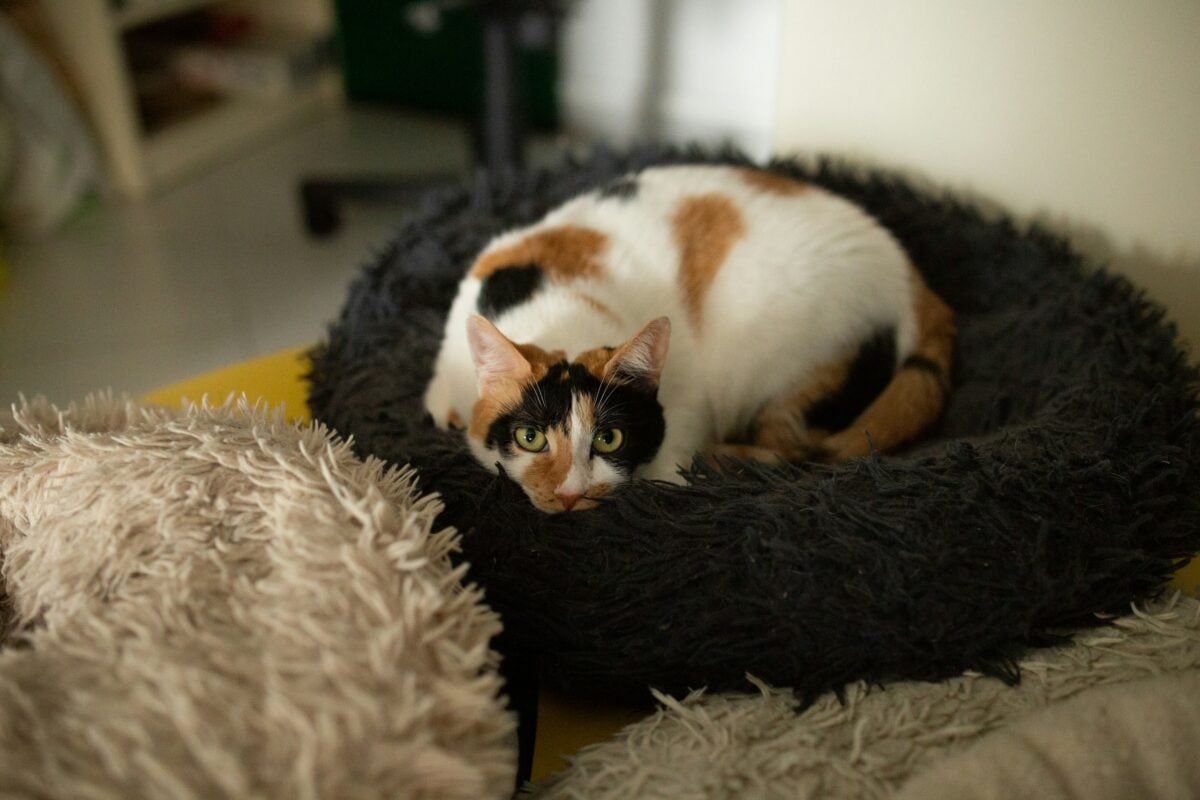
For cats who usually panic at the doorbell, prepare a quiet room with:
- Fresh water
- A clean litter box
- Usual bedding
- A covered hiding place
- A scratching surface
- A favorite toy or puzzle feeder
Keep food and water away from the litter box. A worn shirt or blanket carrying your scent can also make the room feel more consistent.
Move your cat before guests begin filling the hallway. Trying to guide a frightened cat through six pairs of legs while someone holds the front door open is not an ideal start.
Cats who remain in shared areas still need clear routes to a bedroom, cat tree, shelf, staircase, or covered bed. Check that coats, bags, and furniture have not blocked the paths they normally use.
Preserve as much of the usual routine as possible:
- Feed mealson schedule.
- Give medication at the normal time.
- Fit in a short play session beforehand.
- Leave favorite beds and scratching posts in place.
- Avoid washing every blanket immediately before the visit.
Routine will not prevent every nervous reaction, but it gives your cat something recognizable to rely on.
2. Tell Guests How to Interact With the Cat
Visitors often mean well. Unfortunately, good intentions can still involve staring, reaching, following, and repeatedly asking, “Does she like me yet?”
Give guests a few simple rules:
- Let the cat initiate contact first.
- Avoid prolonged eye contact.
- Do not pick the cat up.
- Stop when the cat moves away.
- Never follow the cat into a hiding place.
- Keep children away from the cat’s private area.
A cat entering the room does not require an announcement.
“Oh! There she is!”
Six people turn. The cat bolts.
Encourage guests to continue talking and let the cat observe without becoming the center of attention.
If the cat comes near, a guest can offer one finger low and still. Sniffing does not automatically mean the cat wants to be petted, so brief interactions are usually better than enthusiastic ones.
3. Use Treats Without Creating Pressure
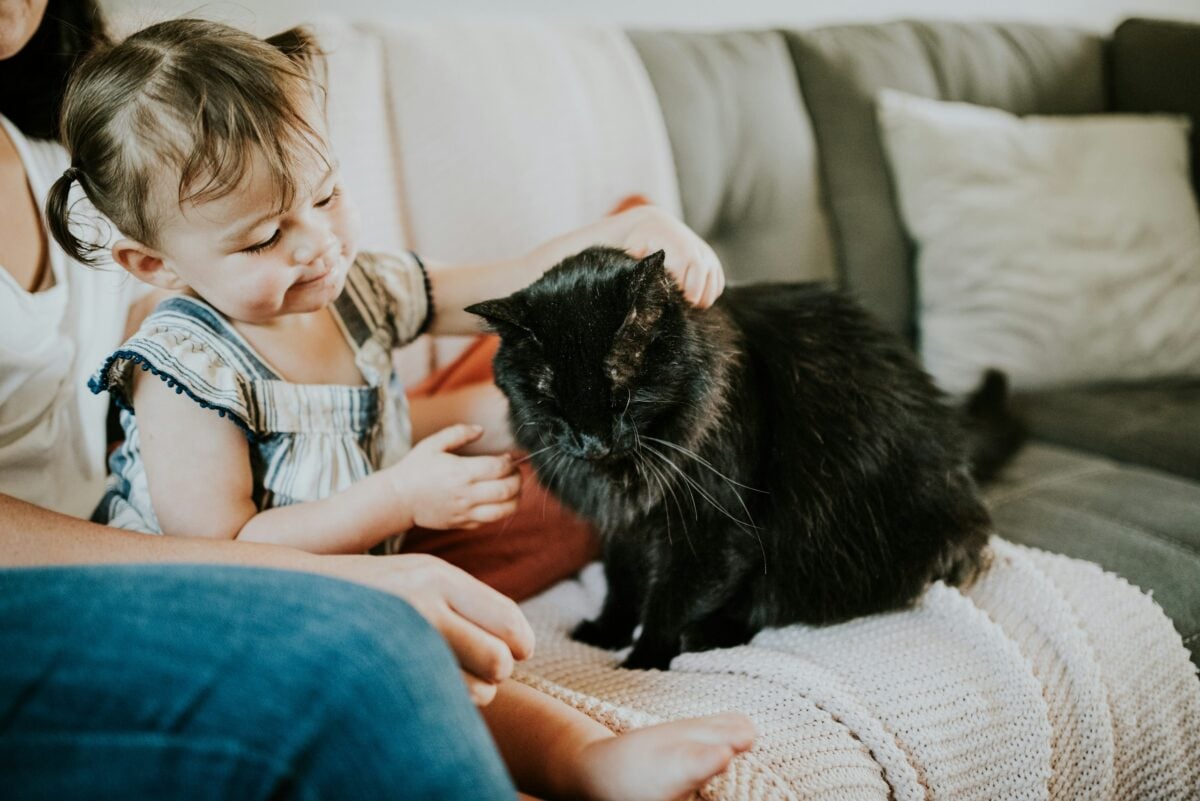
Food can help your cat form a positive association with visitors, but the treat should not come with strings attached.
Choose something your cat genuinely values, such as:
- A small spoonful of favorite wet food
- A lickable meat treat
- Freeze-dried chicken
- A few high-value treats
Have the guest toss the food from a comfortable distance.
No reaching or bargaining. No attempt to collect a petting fee afterward.
The message should stay simple:
This person appears, good food happens, and nobody grabs me.
If your cat eats the treat and walks away, the exercise still worked.
4. Protect the Cat’s Private Space
A safe room only works if it remains private. Tell guests that the room is not open to them. Someone may say, “I’ll just peek.”
No. The cat did not book a private suite so that strangers could tour it.
Apply the same rule to hiding places throughout the house. Do not let anyone enter, reach into, or interfere with the space your cat has chosen. Respecting that space helps your cat trust that retreating will actually bring relief.
5. Know When Your Cat May Need Extra Support
Synthetic feline pheromone products may help some cats, although results vary. Treat them as an optional extra rather than a substitute for regular routines, open escape routes, and respectful guests.
For severe or predictable anxiety, speak with your veterinarian before the next gathering. They can rule out pain or illness and may suggest a tailored behavioral or medical plan.
What a Successful Visit Looks Like
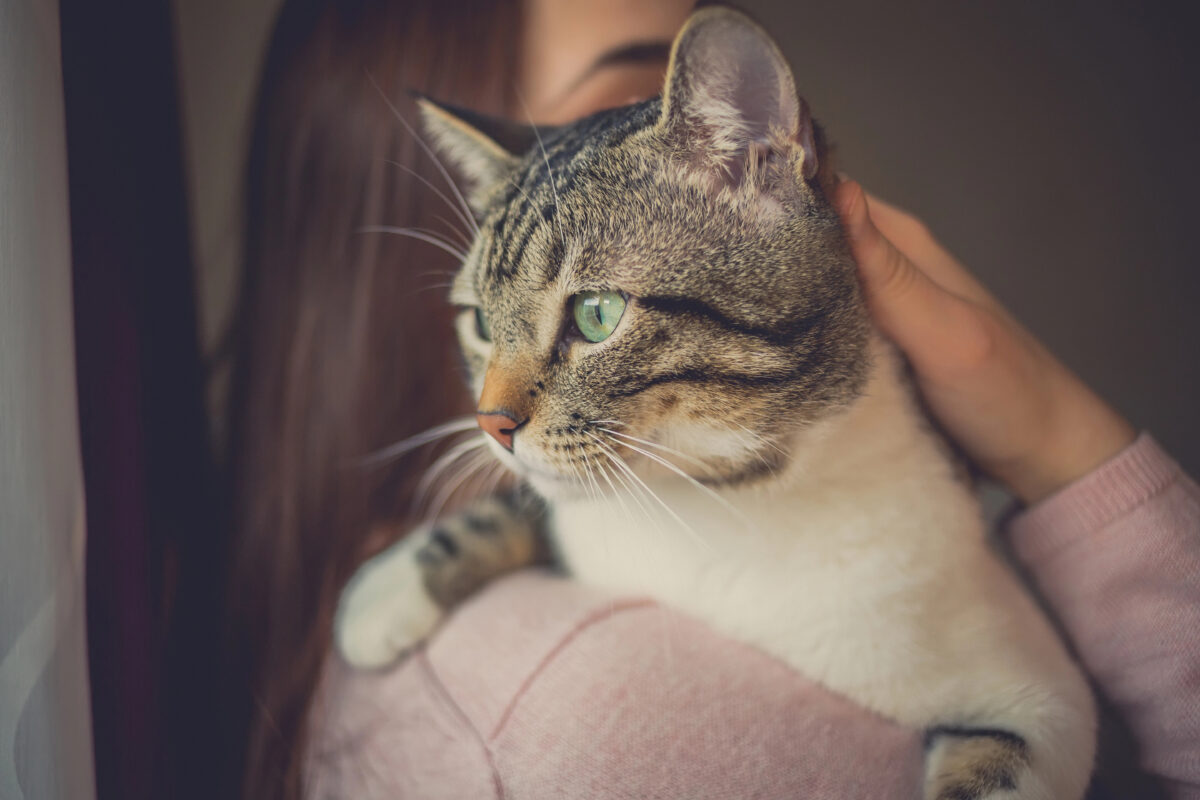
Success does not require your cat to greet anyone, siton a guest’s lap, or appear in the group photo.
A successful visit may simply mean your cat:
- Eats and drinks normally
- Uses the litter box
- Rests in a safe place
- Avoids panic or aggression
- Returns to normal after everyone is gone
That still counts.
Your cat does not need to become the entertainment. They only need to know that even when the house fills with unfamiliar voices and extra noise, and someone asks, “Where’s the kitty?” they still have somewhere safe to go.
Frequently Asked Questions
Every cat responds to visitors differently. If your question is not covered below, drop it in the comments and share a little about what your cat does when guests arrive.
Why does my cat hide from certain guests but not others?
Your cat may react to the person’s smell, voice, height, movement, clothing, or behavior. Someone who owns a dog may carry that scent, while a louder guest or a person who reaches for them quickly may feel harder to predict.
Past interactions can matter too. A cat may remember being picked up, startled, chased, or touched after trying to move away.
Why does my cat come out as soon as everyone leaves?
Once the guests are gone, the house becomes calm and normal again. Voices stop, pathways reopen, and unknown movement subsides.
Many cats then inspect the room, sniff the chairs, and check anything the visitors left behind. They are gathering information now that they can do it without social pressure.
Should I put my cat in another room when people visit?
Yes, if your cat is calmer there. Prepare the room before visitors arrive with water, litter, favorite bedding, and a hidden refuge, then keep it off-limits for the duration of the visit.
Why does my cat rub against a guest and then swat them?
Rubbing does not always mean the cat wants prolonged petting. They may be investigating the person, scent-marking them, or briefly inviting contact before becoming overstimulated.
Watch for tail flicking, sideways ears, skin twitching, sudden stillness, or a sharp turn toward the hand. Those are signs to stop.
Why does my cat become clingy when visitors come over?
Your cat may be using you as a source of reassuring safety. Your voice, scent, and movements remain constant even when the rest of the house feels different.
Clinginess can look like jealousy, but it is often reassurance-seeking. Let your cat stay close if they seem relaxed, but allow them to set the pace and move away whenever they choose.
Can a shy cat learn to tolerate visitors?
Many can become more comfortable with calm, consistent visits.
Start with one quiet guest, keep escape routes open, and use high-value treats without requiring the cat to come too close. Progress may mean watching from the doorway instead of hiding—not necessarily sitting on someone’s lap.
When should I be concerned about my cat’s behavior around guests?
Contact your veterinarian if the behavior changes suddenly or is accompanied by:
- Refusing food or water
- Avoiding the litter box
- Vomiting or panting
- Remaining hidden for an unusually long time
- New or escalating aggression
- Signs of pain or sensitivity to touch
A sudden change may be related to pain, illness, or another source of stress rather than the visitors themselves.
How can guests help my cat feel more comfortable?
Ask guests to ignore the cat initially, avoid staring or reaching, and let the cat initiate contact. Any interaction should end when the cat moves away.
More Cat Behavior to Decode
Guests are only one of the many situations that can bring out a surprising side of your cat. Continue decoding the strange, sweet, and occasionally chaotic behavior that makes living with them so entertaining:
- Why Cats Act Sweet Right Before They Cause Trouble: 7 Signs
Learn to recognize the subtle clues that your affectionate little angel may be seconds away from causing chaos. - Chaos Gremlin or Couch Potato? What Your Cat’s Energy Level Means
Discover why some cats race through the house at full speed while others appear committed to making as few movements as possible. - Things Every Cat Owner Stops Questioning Eventually Because Cats Have Their Own Rules
From stolen seats to unexplained staring, explore the everyday feline habits cat owners eventually learn to accept.
Because the more you understand your cat’s quirks, the easier it becomes to see the method behind the madness.
What Does Your Cat Do When Guests Arrive?
Do they vanish, play host, or suddenly become your shadow? Share your cat’s guest-time personality in the comments. Because every cat has a guest list—and most humans are still waiting for approval.