When you purchase through links on our site, we may earn a commission at no extra cost to you. Learn more.
I once heard someone say that the highest compliment you can give a cat is, “Wow, they act like a dog.”
Table of Contents
MEOW. Absolutely not.
If that made your whiskers twitch, you’re in good company. Cats don’t act like dogs because they’re falling short by being cats. They do it because they’re deeply social, wildly adaptable, and a lot more emotionally tuned-in than they get credit for. Sometimes they’re independent. Sometimes they’re clingy. Often, they’re both before breakfast.
People who don’t know cats are often shocked to learn they can do things we usually reserve for dogs, like coming when called, following their humans from room to room, or greeting someone at the door like a tiny, judgmental doorman.
Want our human-written content to rank above AI-generated garbage? Help us out by clicking this button!
The truth is, cats can be playful, loyal, trainable, and intensely bonded to their people, just in their own very feline way. And some breeds lean so hard into those traits that you start to wonder if there’s a dog hiding under all that fur… or at least a cat who missed the memo about being aloof.
The Great Species Blur
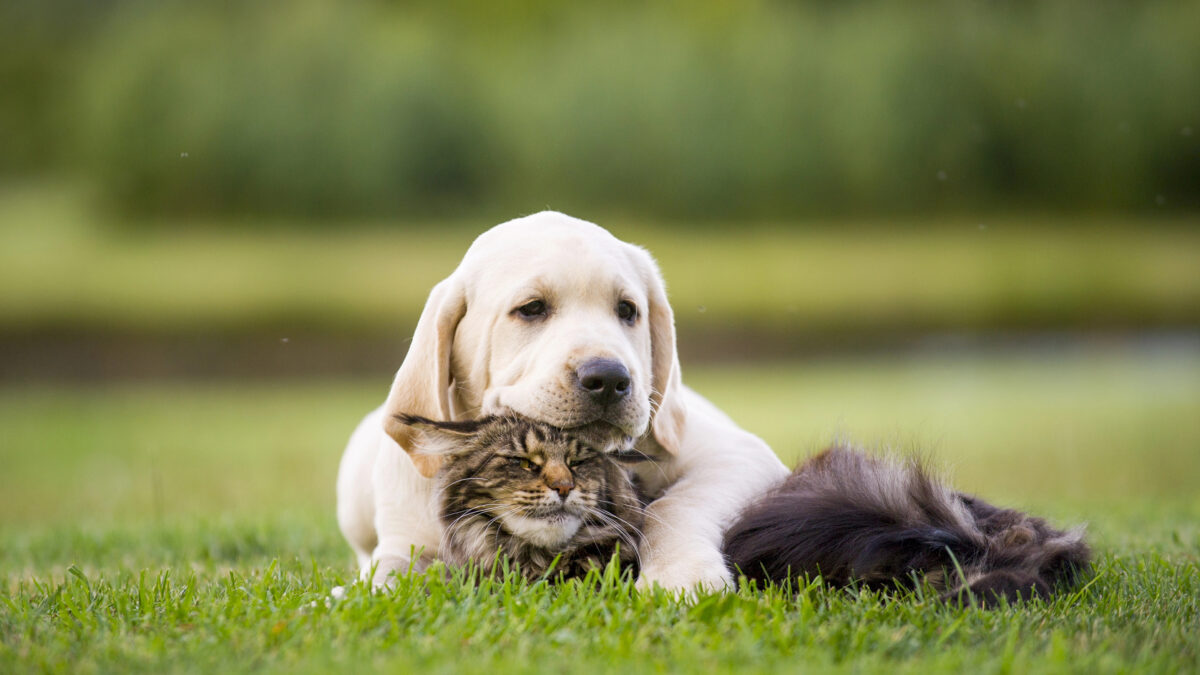
Is it an identity crisis or just a new kind of pack? Exploring why some cats are trading in their independence for canine-style companionship.
For decades, we’ve drawn a hard line in the sand:
Dogs are the loyal, tail-wagging sidekicks who follow you out of devotion, and cats are the mysterious, vibrating, silently judgmental roommates who may or may not be plotting your demise.
But if you’ve ever seen a Maine Coon fetch a bottle cap or a Savannah cat walk on a leash, you know that line isn’t just blurred, it’s been jumped over, scratched at, and completely ignored.
The “Puppy-Cat” isn’t a glitch in the matrix; it’s a fascinating intersection of selective breeding and evolutionary adaptation. We are witnessing a shift where feline independence is being traded for “canine-adjacent” social traits.
Caught on Camera: When Cats Forget They Aren’t Dogs
Want to see what an identity crisis looks like in high definition? Check out this highlight reel of cats who clearly missed the memo on feline independence. Whether they’re ‘guarding’ the bathroom or demanding a walk, these felines are living proof that ‘dog-like’ isn’t just a label, it’s a lifestyle.
The Science of the “Puppy-Cat”: Why Your Feline is a Secret Canine
For decades, the “aloof cat” was a scientific trope, a convenient excuse for why our cats wouldn’t come when called. But recent breakthroughs have proven that cats aren’t just “independent roommates”; they are biologically tethered to us in ways we previously thought were exclusive to dogs.
The Vitale Breakthrough: Secure Attachment
The most significant “mic drop” in feline science came in 2019 from Dr. Kristyn Vitale and her team at the Human-Animal Interaction Lab at Oregon State University.
In a study published in Current Biology, researchers used a “Strange Situation Test,” the same test used for decades to study bonds between human infants and their parents, as well as dogs and their owners.
- The Findings: The study revealed that 64.3% of cats displayed a “secure attachment” to their owners.
- The “Dog” Parallel: This number is nearly identical to the attachment rate found in dogs (around 58–61%).
- The “Secure Base” Effect: When a dog-like cat follows you into a room, they aren’t just looking for a snack. According to Vitale’s research, they are using you as a “secure base.” This means they feel safe enough to explore and be bold only when you are present, exactly how a puppy relies on its human “Alpha.”
What it means: When a “dog-like” cat follows you into a room, it’s not just looking for a snack. It’s using you as a “secure base” to explore the world. If you’re there, they feel safe enough to be bold; if you leave, they experience a measurable sense of loss.
The Training Myth: Brains vs. Motivation
One of the biggest insults to feline intelligence is the claim that they “can’t be trained.” The Vitale study also touches on this sociability, suggesting that because cats are so socially tethered to us, they are primed to learn if the motivation is right.
- Dogs work for “Good Boy”: A dog’s reward system is heavily tied to social praise. They have been bred for thousands of years to crave our “Yes!”
- Cats work for “The Goods”: Cats utilize Associative Learning. They don’t care if you’re proud of them; they care if that clicker sound means a piece of freeze-dried minnow is coming.
- Intellectual Equality: Cognitively, a cat’s ability to solve puzzles or follow cues (like pointing or name recognition) is on par with that of dogs. The difference isn’t intelligence; it’s compliance. A cat will learn to “sit” just as fast as a Labrador, provided you aren’t trying to pay them in “pats” when they want “poultry.”
The “Shadow” Phenomenon & Social Proximity
Does your cat follow you into the kitchen, the bedroom, or, inevitably, the bathroom? In the dog world, this is a “Velcro Dog.” In the science world, this is called social proximity.
- Allorubbing & The Pack Scent: In nature, wildcats are solitary. However, the domestic cat has evolved to be a social generalist. When your cat follows you and rubs your ankles, they are engaging in “allorubbing.”
- The Biological “Why”: This behavior, common in lion prides, creates a communal scent. By “marking” you, they are essentially saying, “You are part of my pack, and I am part of yours.”
- The Security Guard: Because of that Vitale-proven attachment, many cats (especially Maine Coons and Abyssinians) feel a drive to monitor their “colony” (you) at all times.
The science sets the stage, but the breeds themselves bring it to life. Below are the cats that best showcase these characteristics in everyday homes.
The Usual Suspects: 12 Cat Breeds That Act Suspiciously Like Dogs
Now that we’ve cracked the code on the science, understanding how secure attachment and associative learning turn a tiny predator into a loyal sidekick, it’s time to meet the specialists.
Not every dog-like cat is cut from the same cloth. Some want to go for a three-mile hike, while others just want to supervise you in your shower from the safety of the bathmat.
To help you find your perfect ‘canine-adjacent’ companion, we’ve broken the feline world’s top 12 overachievers into four distinct personality profiles. Whether you’re looking for a silent shadow or a vocal adventurer, one of these breeds is currently waiting to prove that everything a dog can do, they can do… with slightly more judging stares.
The Loyal Shadows (Always With You, Always Watching)
If Dr. Vitale’s study on “secure attachment” had a poster child, it would be the cats in this first group. While some felines treat their owners like staff, these breeds treat their humans like a life raft.
They don’t just happen to be in the same room as you; they are psychologically tethered to your presence. Let’s meet the “Velcro” specialists of the feline world.
1. Ragdoll: The Ultimate Feline Lap Dog
Ragdolls are famous for going limp when picked up, and yes, it’s as adorable as it sounds. This breed is deeply relaxed, highly affectionate, and unusually comfortable with physical closeness.
Unlike more independent cats, Ragdolls actively seek out human contact. They’ll follow you, settle next to you, and happily stay put for long cuddle sessions.
Personal space is optional. Emotional availability is not.
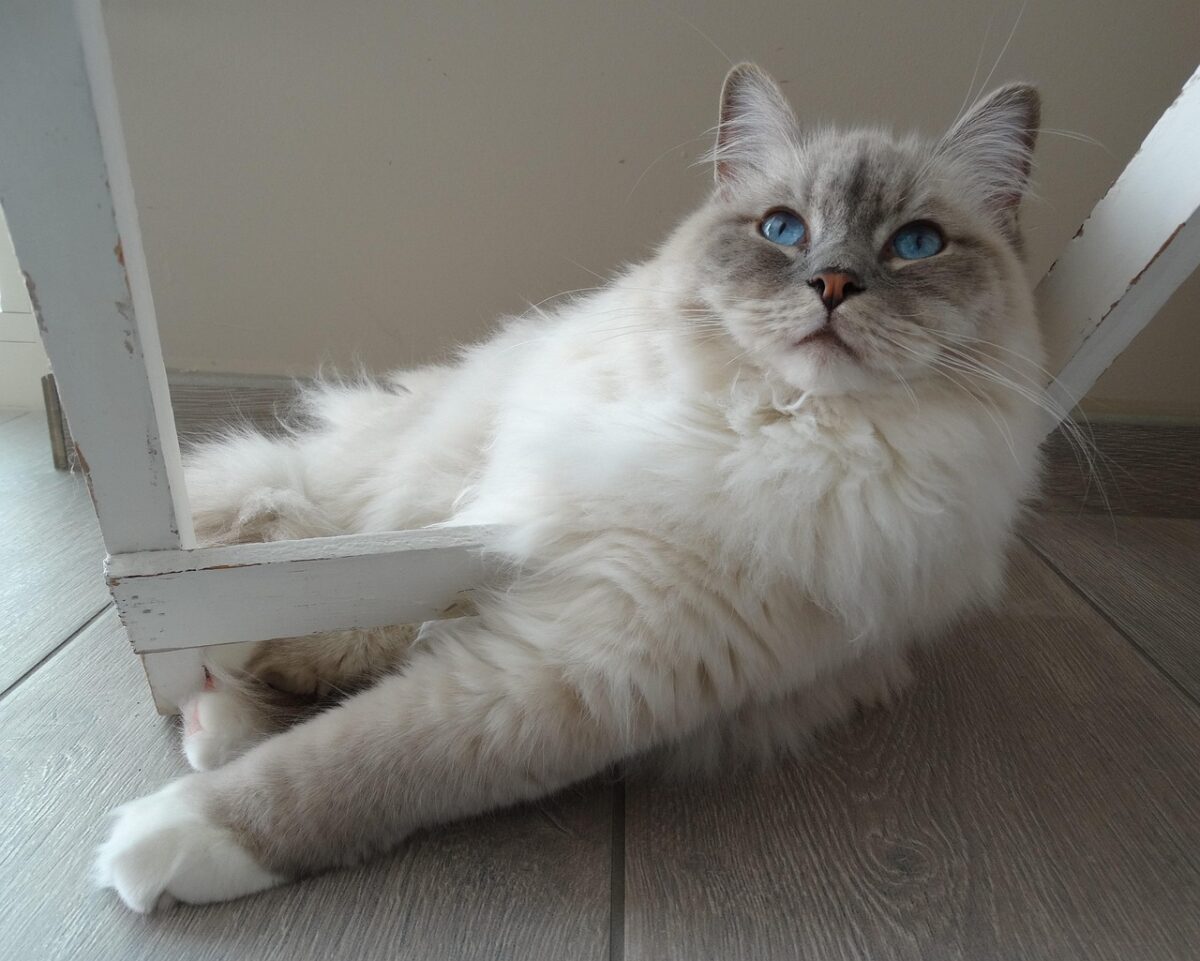
Their calm, trusting nature makes them feel very dog-like to people who expect cats to be hands-off. They’re not thrill-seekers or high-energy athletes. They’re emotional support specialists.
If you want a cat who greets you warmly, sticks close, and treats your lap like prime real estate, the Ragdoll delivers.
- Appearance: Massive, blue-eyed beauties with plush semi-long coats and pointed markings.
- Size: One of the largest domestic breeds; males can hit 15–20 lbs.
- Health: Generally sturdy, but predisposed to Hypertrophic Cardiomyopathy (HCM), regular heart screenings are a must for “responsible pet parent” status.
The Dog-Like Behavior: Known for “flopping” (muscle relaxation) when held. Like a Great Dane or other giant dog breed, they have no concept of their own size and will attempt to occupy 100% of your personal space. They are “floor cats,” preferring to follow you at heel rather than jump on counters.
2. Russian Blue: The Quiet Lap Cat With Deep Loyalty
Russian Blues don’t announce their affection loudly. They don’t demand it, either. Instead, they choose their people carefully, and once chosen, they settle in with a level of devotion that feels quietly profound.
These cats tend to form strong bonds with one or two humans and often prefer calm, predictable environments. When a Russian Blue curls up in your lap, it feels intentional, like you’ve passed a very selective interview process.

They’re affectionate without being clingy and social without being overwhelming. Many Russian Blues will follow their favorite person from room to room, not out of anxiety, but out of preference. They want to be near you. They just don’t need to narrate it.
For people who love the idea of a lap cat but prefer subtlety over nonstop attention, Russian Blues offer a very dog-like sense of loyalty, minus the noise.
- Appearance: Distinctive silvery-blue, dense coat that “stands out” and striking emerald-green eyes.
- Size: Medium (8–12 lbs); very elegant and muscular.
- Health: Prone to obesity (they love treats!) and bladder stones.
The Dog-Like Behavior: They are shy with strangers but fiercely loyal to their “Alpha.” Russian Blues are fastidious and quiet, but they will wait at the door for your return and “fetch” you to play by gently tapping your leg.
3. The Chartreux: The “Silent Bodyguard.”
If you’re looking for a cat that acts like a stoic old farm dog, the Chartreux is your cat breed. They aren’t about flashy tricks or demanding ‘look at me’ energy. Instead, they offer a quiet, watchful devotion that makes them feel less like a roommate and more like a four-legged bodyguard.
This breed tends to form strong attachments to one or two humans and shows affection through proximity rather than constant physical contact. A Chartreux might follow you from room to room, settle nearby while you work, or sit just out of arm’s reach, watching everything with calm focus.
They prefer to be wherever their people are, keeping a low profile while staying emotionally tuned in.

Chartreux cats don’t make a lot of noise about their feelings. Instead of constant chatter or clinginess, they rely on small signals, lingering eye contact, a well-timed appearance, and a quiet choice to sit close. Their affection feels intentional, like something they decided rather than something they default to.
For anyone drawn to the loyalty of a dog but happier with a calmer rhythm, the Chartreux fits beautifully. Grounded. Attentive. Close by without ever crowding the room.
- Appearance: Robust, “potato on toothpicks” body shape with blue-grey fur and orange/copper eyes.
- Size: Medium-Large (10–16 lbs).
- Health: Generally healthy, though some are prone to patellar luxation (knee issues).
The Dog-Like Behavior: They are famous for their dog-like devotion. They don’t just sit in the room; they “supervise.” If you move to the kitchen, they move to the kitchen. They are known for responding to their names, a trait highlighted in name-recognition studies.
The Playful Fetchers (Brains + Games = Happiness)
Understanding that a cat views you as a ‘surrogate parent’ is one thing, but some breeds take that bond and turn it into a team sport. These cats possess a high ‘prey drive’ that has been successfully rerouted into ‘social play.’
If you’ve ever wanted a pet that understands the joy of a tennis ball but fits on a bookshelf, these are your top contenders.
4. Maine Coon: A Gentle Giant With a Supervisor Badge
Maine Coons don’t live in your house; they participate in it as if they are just one of the kids. These are the cats who show up when you’re cooking, observe laundry like it’s a group project, and follow you down the hall just to see what’s happening next. Not pushy. Just… present.
Maine Coon cats bring that ‘old soul’ dog energy to your living room. They aren’t interested in clingy chaos; they’d rather be your quiet, capable co-pilot. Whether they’re bringing you a toy for a round of fetch or ‘helping’ you do the dishes by playing in the sink, it’s their rock-solid confidence and steady curiosity that make them feel like a Golden Retriever in a very fluffy cat suit.
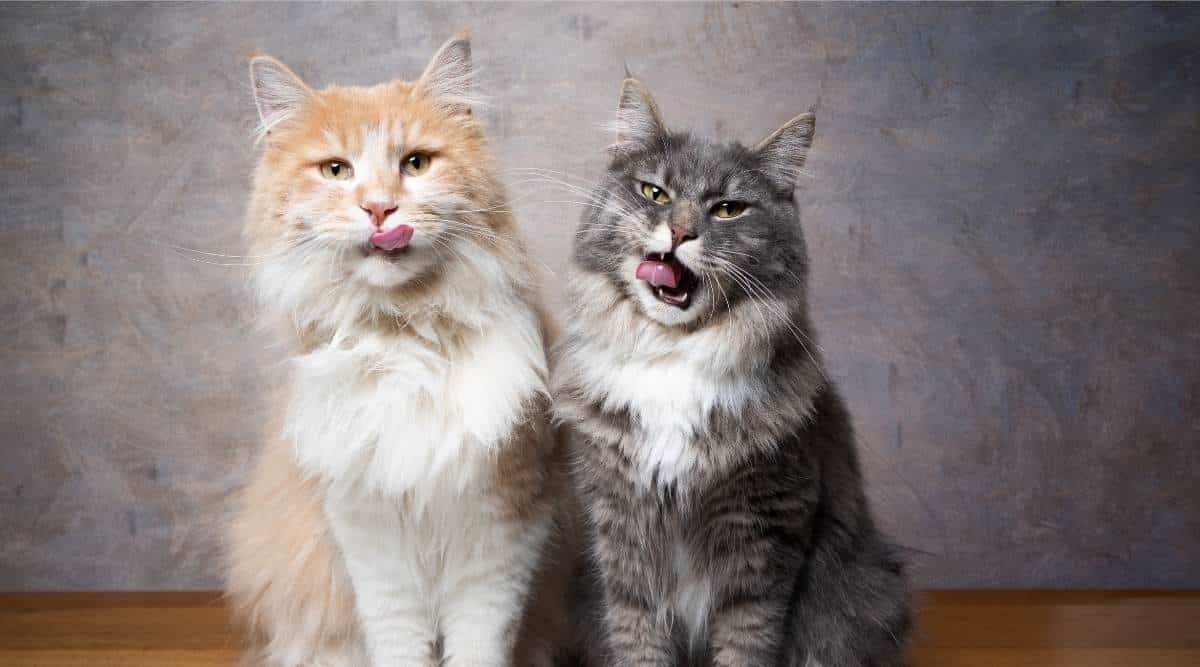
Many Maine Coons enjoy games like fetch, tolerate handling well, and even show a surprising interest in water. That combination of confidence, curiosity, and emotional steadiness is what earns them their “dog-like” reputation.
They don’t need to be on your lap 24/7, but they do want to know where you are, what you’re doing, and whether it involves snacks.
- Appearance: The “Gentle Giant” with tufted ears, shaggy coats, and massive raccoon-like tails.
- Size: Massive (up to 25 lbs).
- Health: Watch for HCM and hip dysplasia (common in large breeds, both cat and dog).
The Dog-Like Behavior: They are the undisputed kings of fetching. They love water and will “dig” at their water bowls. Like the beloved Golden Retriever, they are famously patient with children and other pets, making them the ultimate family “dog-cat.”
Photos don’t quite capture the scale, intelligence, and social nature of Maine Coons. This video gives a clearer look at how they move, interact, and command a room in real time.
5. Manx: The Playful Sidekick With Big Dog Energy
Manx cats don’t really do “background character.” They’re playful, social, and noticeably involved in whatever’s happening around them. If there’s movement, noise, or a human doing something mildly interesting, a Manx will probably show up to investigate.
This breed is especially known for its love of play, often the interactive, dog-like kind. Many Manx cats enjoy games of fetch, chase, and puzzle toys, and they tend to stay playful well into adulthood. They don’t just bat at toys; they engage with them like it’s a team sport.
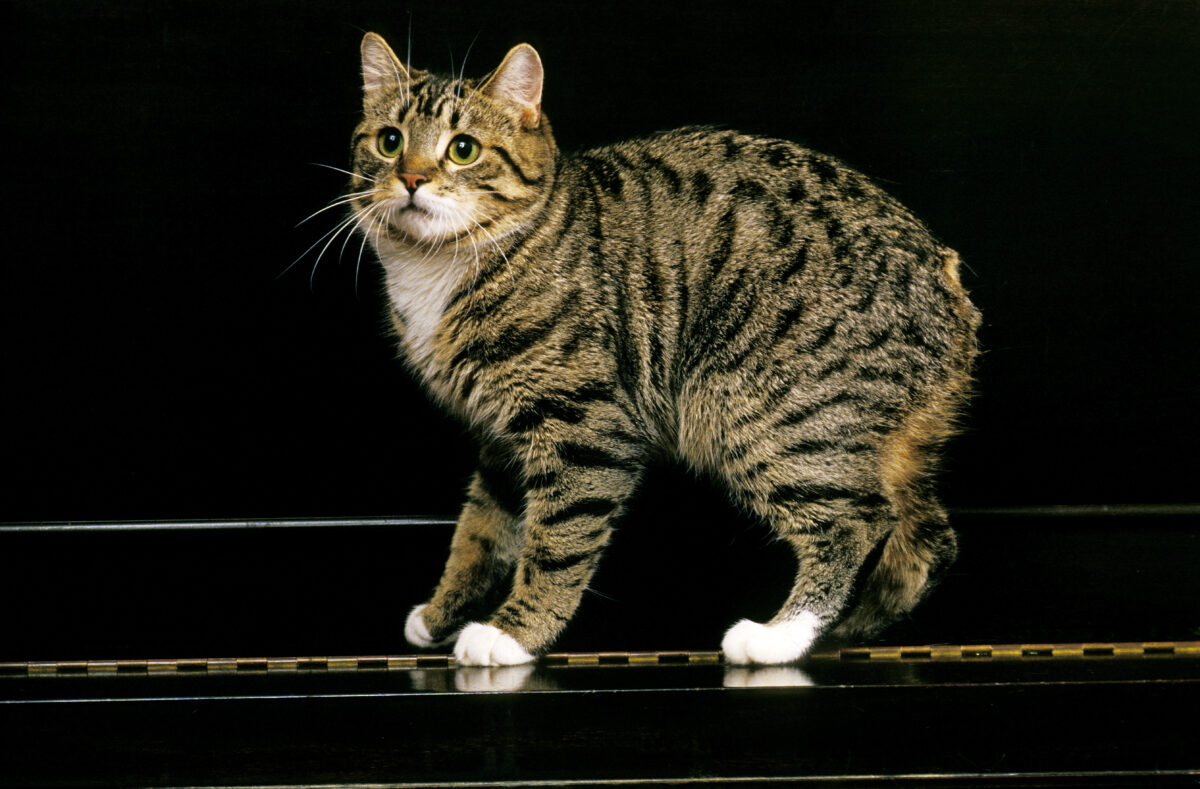
Manx cats also bond strongly with their families and often choose a favorite person, though they’re generally friendly with everyone. They like being included and may follow their humans from room to room, ready for the next activity or impromptu play session.
If you want a cat that feels more like a goofy, loyal companion than a mysterious house ornament, the Manx delivers. Playful, affectionate, and always up for something, especially if it involves attention.
- Appearance: Tailless (or a small “stumpy”) with a rounded rump and powerful back legs.
- Size: Medium (8–12 lbs).
- Health: “Manx Syndrome” (spinal issues) is a concern due to the tailless gene; choose breeders carefully.
The Dog-Like Behavior: They are “pogo sticks.” They love to bury toys and will respond to a whistle. Manx cats are brave, active, and surprisingly protective of their homes, often growling at strange noises.
6. Bombay: A Black Lab Disguised as a Cat
Sleek, glossy, and impossibly shiny, the Bombay looks like it was dipped in black patent leather and polished for effect. Those copper-penny eyes don’t just stand out, they lock in, especially when you’re holding something interesting or sitting still for too long.
Bombays are medium-sized cats, but their presence feels bigger. They’re sturdy, confident, and built for interaction rather than distance. Most are generally healthy and long-lived, though the breed can be prone to certain craniofacial issues, making responsible breeding and regular vet care especially important.
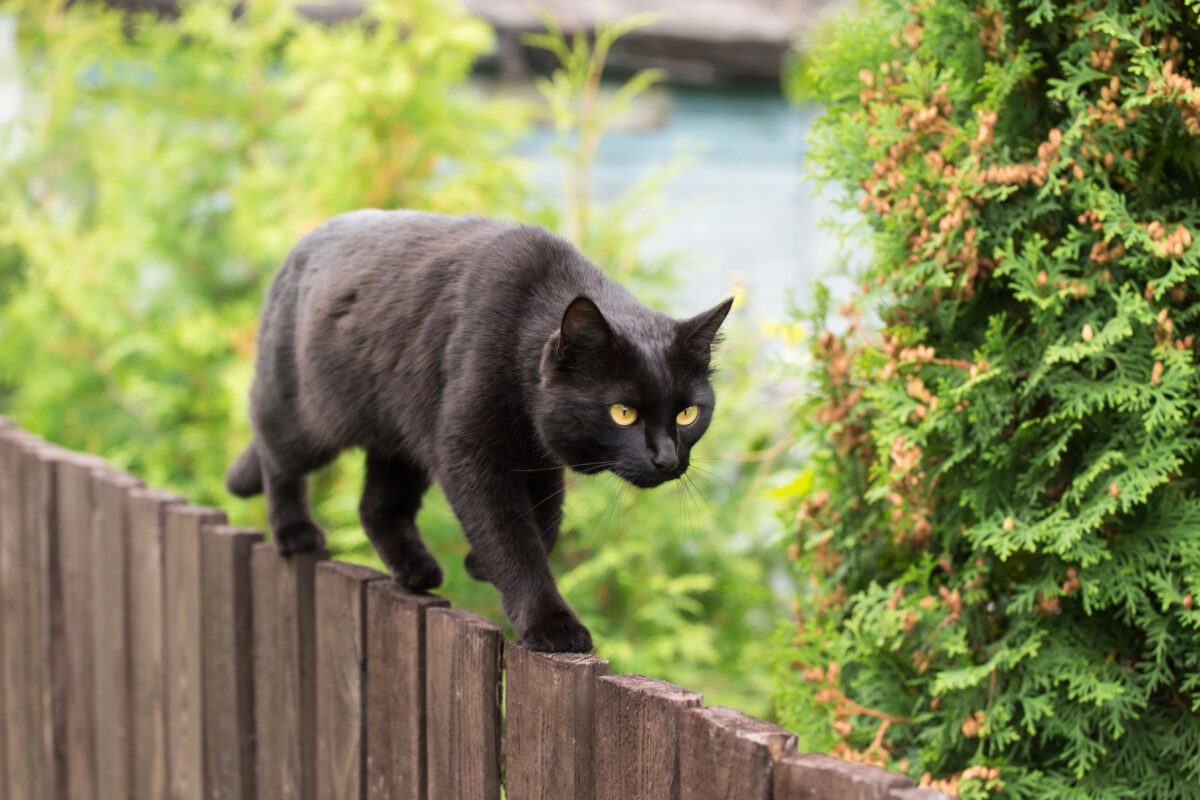
What really earns the Bombay cat its “Black Lab” reputation is personality. These cats are intensely people-oriented and thrive on physical closeness. Many will happily play fetch, follow their humans from room to room, and insert themselves into every social situation, especially if it involves visitors.
Like a classic Labrador, the Bombay doesn’t believe in strangers, only friends they haven’t met yet. If someone walks through the door, expect a confident greeting, curious sniffing, and a cat who fully assumes they were invited to the party.
- Appearance: Glossy, “patent leather” black coat and copper-penny eyes.
- Size: Medium (8–12 lbs).
- Health: Can be prone to craniofacial issues; generally long-lived.
The Dog-Like Behavior: They are “people-oriented” to the extreme. They crave physical touch and will play “fetch” for hours. Like a Black Lab, they are easy-going, social butterflies who want to greet every guest at the door with a wagging (okay, twitching) tail.
The Talkers & Thinkers
For some, ‘dog-like’ isn’t about following or fetching, it’s about communication. In the same way a Beagle or a Husky uses a ‘woo-woo’ to tell you exactly how they feel, certain cat breeds have evolved a complex, human-directed vocabulary.
These are the breeds that don’t just want your attention; they want to have a full-blown board meeting about the current state of the snack cabinet.
7. Siamese: Loud Opinions, Strong Feelings
Living with a Siamese cat is like living with a tiny, furry defense attorney.
They don’t just meow; they present a closing argument. Their voices are loud, expressive, and startlingly specific, a sort of melodic howl that leaves no room for interpretation. Within a week, you’ll be able to distinguish the exact tonal shift between “The bottom of the bowl is visible” and “You’ve been in the bathroom for three minutes, and I miss you.”
Visually, they’re unmistakable: sleek bodies, striking color points on the ears, face, paws, and tail, and piercing blue almond-shaped eyes that look straight through you. They’re elegant, but there’s nothing passive about them.
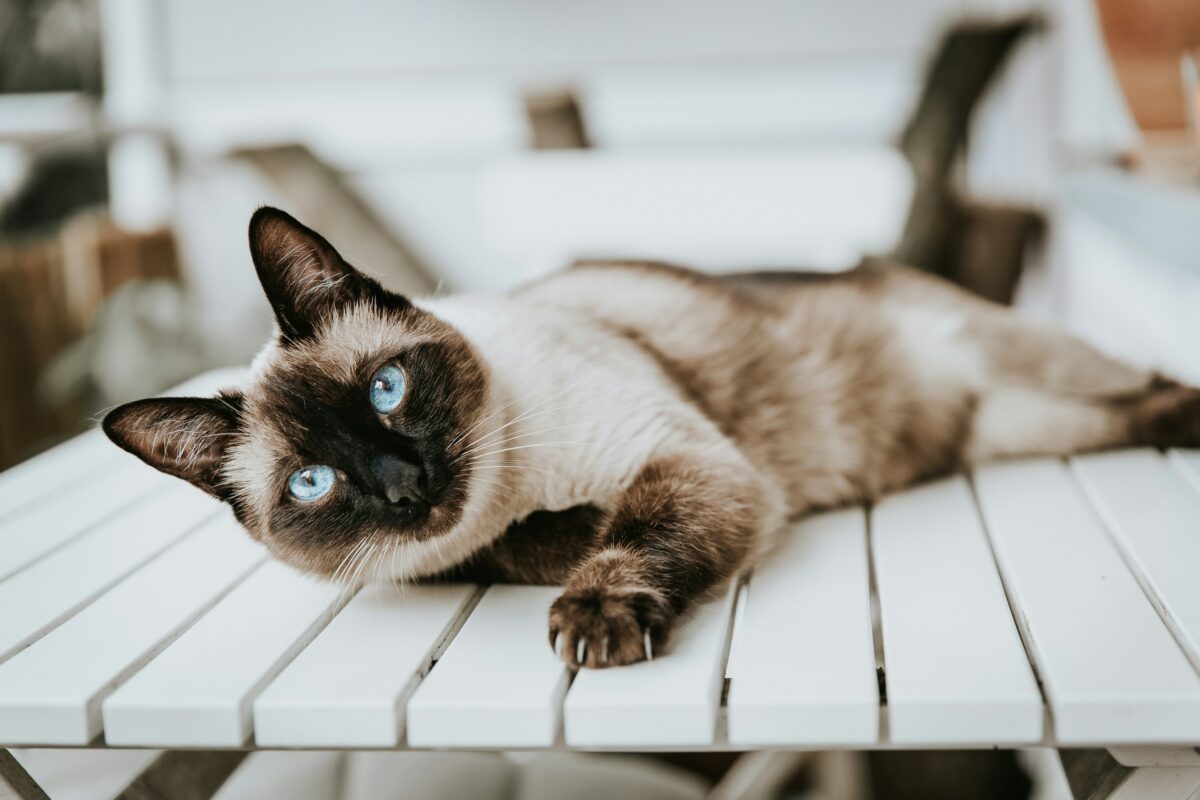
Siamese cats form intense bonds with their people and want near-constant interaction. Just like many dogs, they’re dramatic, emotionally invested, and not shy about expressing displeasure if their routine is disrupted. Miss dinner by ten minutes? You’ll hear about it.
Because of that deep attachment, some Siamese cats can struggle with separation anxiety. They thrive best in homes where someone is around often, or where they have another equally chatty companion to keep them company.
- Appearance: Sleek, pointed coat (darker ears/face/paws) and piercing blue almond-shaped eyes.
- Size: Small-Medium (6–10 lbs).
- Health: Prone to dental issues and amyloidosis (liver/kidney).
The Dog-Like Behavior: Their meow is a vocal “howl” designed to communicate specific needs. They are dramatic and will vocalize their displeasure if their routine is disrupted. They bond so intensely that they can suffer from separation anxiety.
8. Burmese: Everyone’s Best Friend
If cats had a “most likely to start a conversation” award, the Burmese would win it every year. These cats are famously social, affectionate, and deeply people-focused. Alone time is tolerated, but not preferred.
Burmese cats have a rounded head, expressive eyes, and a short, satin-like coat. They’re often described as feeling like a “brick wrapped in silk”, compact, muscular, and heavier than they look when you pick them up.

Their dog-like reputation comes from sheer extroversion. Burmese cats will talk to you throughout the day, follow you from room to room, and involve themselves in whatever you’re doing. Cooking? Helping. Working? Supervising. Sleeping? Cuddling.
Like Beagles, they’re food-motivated and highly trainable with positive reinforcement. Clicker training often works beautifully with this breed, especially when snacks are involved, which they will absolutely remember.
- Appearance: Rounded head, short satin-like coat, and a “brick wrapped in silk” weightiness.
- Size: Medium (8–12 lbs); they feel heavier than they look.
- Health: Prone to diabetes and certain cranial defects.
The Dog-Like Behavior: They are the “ultimate extroverts.” They will “talk” to you all day. Like many dog breeds, they are food-motivated and highly social, making them easy to train with the clicker methods we discussed earlier.
9. Sphynx: Clever, Clingy, and Always Involved
The Sphynx looks like no other cat, and behaves like no other cat, either. Hairless, wrinkled, and equipped with oversized ears, they’re warm to the touch and completely uninterested in personal space.
Personality-wise, Sphynx cats are part dog, part monkey, part performance artist. They crave attention and will actively seek it out, often climbing onto shoulders, burrowing under blankets, or perching somewhere inconvenient but visible.
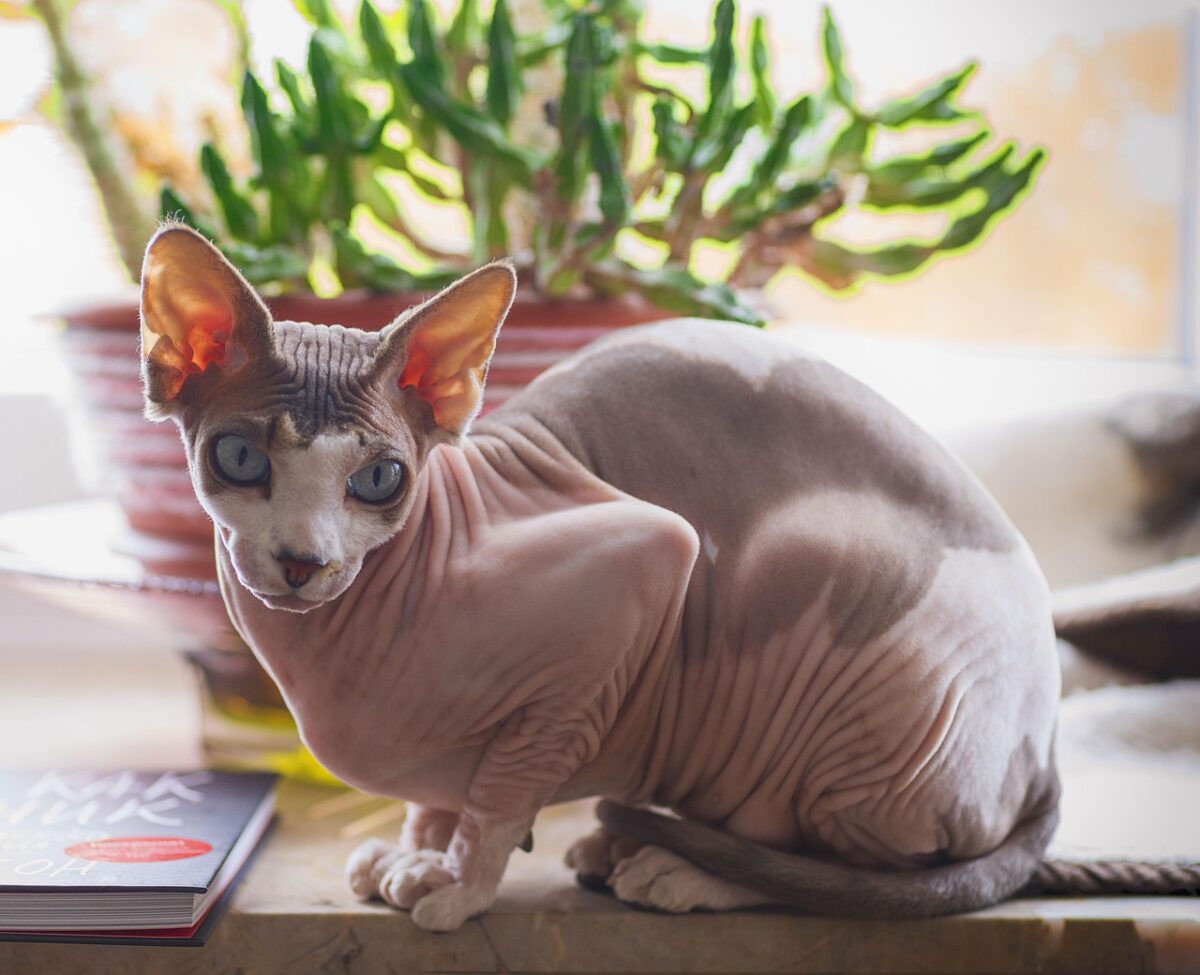
They’re clever and mischievous, using their paws like hands to open doors, knock things over, or “retrieve” items they definitely shouldn’t have. They’re smart, curious, and occasionally too clever for their own good.
Sphynx cats bond tightly with their people and prefer to be involved in everything. They’re affectionate to the point of clinginess, and proud of it.
- Appearance: Hairless, wrinkled skin with large “bat” ears and a lemon-shaped chest.
- Size: Medium (6–12 lbs).
- Health: Skin care is vital (oils/baths, and they are prone to HCM.
The Dog-Like Behavior: Part-monkey, part-dog. They perform for attention. They are clever and mischievous, often using their paws like hands to open doors and “retrieve” items they shouldn’t have.
The Adventurers (The Hiking Buddies)
Finally, we reach the ‘extreme sports’ category of the cat world. While the average tabby considers a trip to the vet a harrowing odyssey, these breeds view the front door as a gateway to adventure. Leveraging their low ‘reactivity thresholds’ and high curiosity, these cats are the closest you will get to a hiking partner that can also purr.
These are the felines that have officially traded the windowsill for the wilderness.
10. Abyssinian: If a Border Collie Were a Cat
Abyssinians have a very particular look, ticked, agouti coats that resemble wild rabbits, paired with large, alert ears that suggest they’re always listening. And they are. Always. Watching. Processing. Planning.

This is one of the most intelligent and inquisitive cat breeds out there. Abyssinians don’t just play with toys; they figure them out. Puzzle feeders, clicker training, and leash walks aren’t novelties to them; they’re necessities.
These cats thrive on having a job. Many Abyssinians will follow family members around, gently “encouraging” everyone to gather in the same room. Not out of anxiety, out of efficiency. Herding, but make it subtle.
Affectionate without being clingy, Abyssinians show love through shared activity. If you want a cat who does things with you, this breed is a standout.
- Appearance: Ticked “agouti” coat (like a wild rabbit) and large, alert ears.
- Size: Medium (8–12 lbs).
- Health: Monitor for gingivitis and “PK deficiency” (anemia).
The Dog-Like Behavior: They are the “smartest kids in the class.” They don’t just play; they solve puzzles. Like a Border Collie, they are easily trained on a leash and will “herd” family members into the same room.
11. Bengal: High Drive, High Intelligence
Bengal cats look wild, and they don’t totally disagree with that assessment. Their leopard-like spots or marbled coats often carry a “glitter” gene that makes their fur shimmer in the light, giving them an almost unreal appearance.

But the real story is their energy level. Bengals are intense. They love movement, challenge, and structured play. Leash walks, hiking, climbing walls, and long fetch sessions aren’t extras; they’re baseline needs.
A bored Bengal is a creative Bengal. And that creativity may involve climbing curtains, opening cabinets, or “redecorating” your drywall at 2 a.m. They don’t misbehave; they self-assign tasks.
When properly engaged, Bengals are affectionate, loyal, and deeply bonded to their people. They just need an outlet worthy of their brain and body.
- Appearance: Leopard-like spots or marbling with a “glitter” gene that makes their fur sparkle.
- Size: Medium-Large (10–15 lbs).
- Health: Prone to PRA (eyes) and HCM.
The Dog-Like Behavior: High-intensity athletes. They love leash walks and hiking. Like many high-energy dog breeds, if they don’t get 30–60 minutes of “work” (play) a day, they might start “reorganizing” your drywall.
12. Turkish Van: A Confident Companion With a Unique Twist
The Turkish Van breaks one of the biggest “rules” of being a cat: they often like water. Really like it. As in, will jump into tubs, sinks, and even pools if given the chance.
Part of that comes down to their coat. Turkish Vans have a unique, cashmere-like fur that lacks the heavy undercoat most cats have, so they don’t feel weighed down when wet. The result? A cat that treats water like a playground.
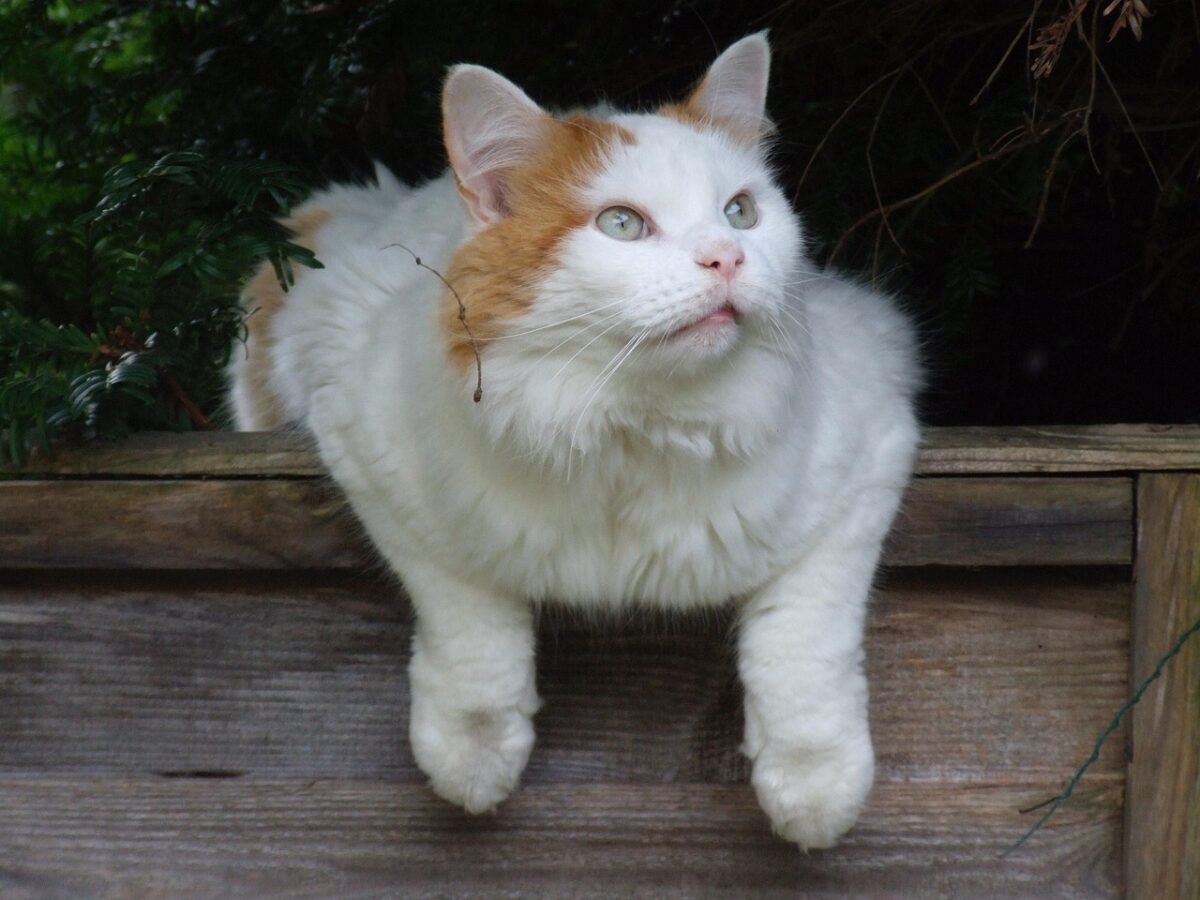
Large, athletic, and confident, Turkish Vans enjoy interactive play and physical challenges. They’re strong swimmers and enthusiastic retrievers, especially if a toy needs “rescuing.” These cats can give even the most water-loving dog breeds a challenge when it comes to liking the water.
They’re affectionate, but independent-minded, bonding deeply while still keeping a bit of that adventurous spirit intact.
- Appearance: Mostly white with color on the head and tail; “cashmere” water-resistant fur.
- Size: Large (12–18 lbs).
- Health: Generally very hardy; a natural breed.
The Dog-Like Behavior: They are “The Swimming Cats.” They lack the undercoat that makes most cats feel “heavy” when wet. Like many dogs, they are athletic and actually enjoy water sports, often jumping into pools or tubs to “rescue” toys.
A Word From the Cat Team: From the People Who Live With Cats
A lot of behaviors people label as “dog-like” in cats aren’t unusual at all. They just clash with a long-standing misunderstanding of cats as aloof, untrainable, and only loosely bonded to humans.
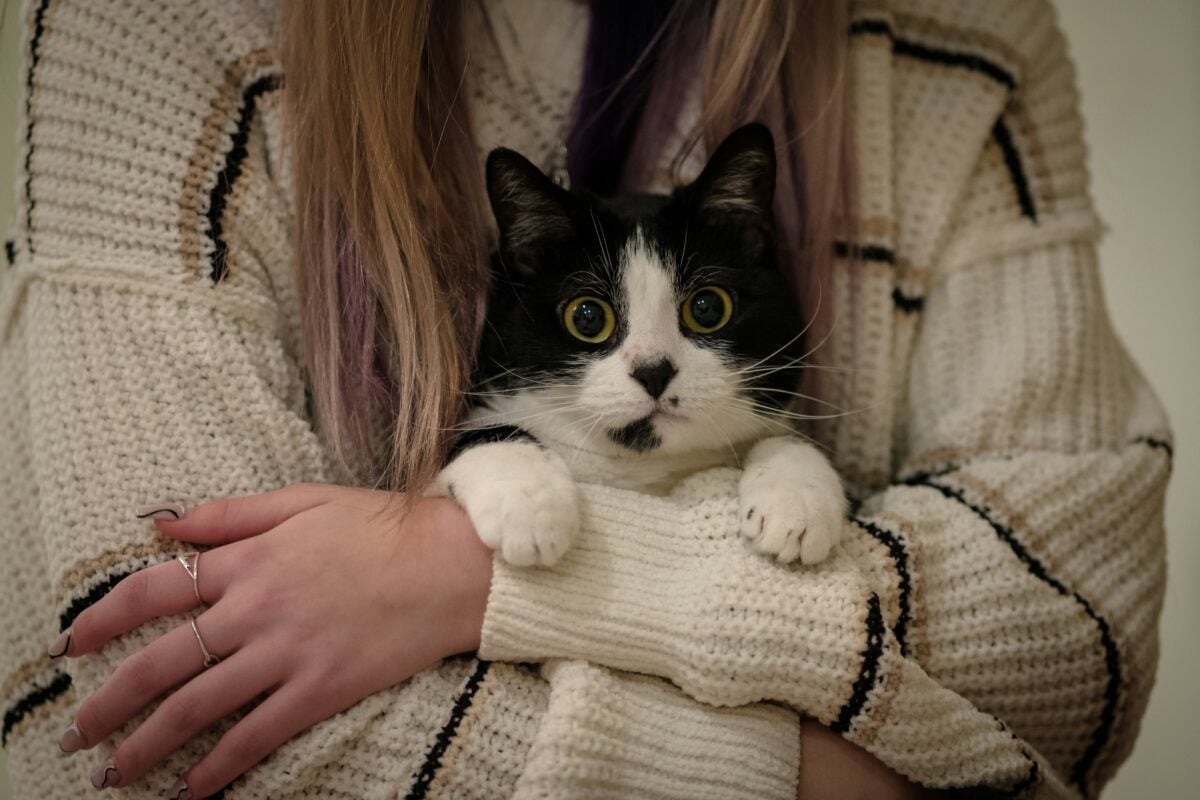
As Love Your Cat writer Tara Maurer, a lifelong cat owner, explains:
A lot of normal cat behaviors get labeled as ‘dog-like’ simply because of a long-standing misunderstanding of cats. For decades, cats were framed as aloof, untrainable, and only loosely bonded to humans. So when a cat comes when called, greets people at the door, or plays fetch, people reach for the closest comparison they understand: dogs. That doesn’t mean the behavior is unnatural for cats. It just means we were never taught to expect it.
That outdated framing has started to crack as both experience and science catch up.
As someone who has lived with cats my entire life, I can confidently say that cats are extremely social and deeply affectionate, and science backs this up. Research now shows that cats form distinct attachment styles with their human caregivers, similar to human infants and dogs. The bond may look different, but it is very real.
Training is another area where cats are often underestimated.
Cats are also incredibly smart. They are often labeled as untrainable, but in reality, training a cat feels less like obedience and more like negotiation. Cats participate when the arrangement makes sense to them. Motivation matters.
That idea, training as communication rather than control, shows up again and again in real homes. I’ve lived with cats for over three decades, many of whom display these same behaviors: cats who warn me when someone unexpected stops by, cats who stay on high alert in unfamiliar situations, and even one who came to get me when another person needed help.
I’ve taught cats to walk on a leash, play fetch, and engage in training that looks undeniably “dog-like” from the outside. None of it ever felt unnatural. It felt like trust, awareness, and social engagement playing out in a species that expresses those traits differently than dogs do.
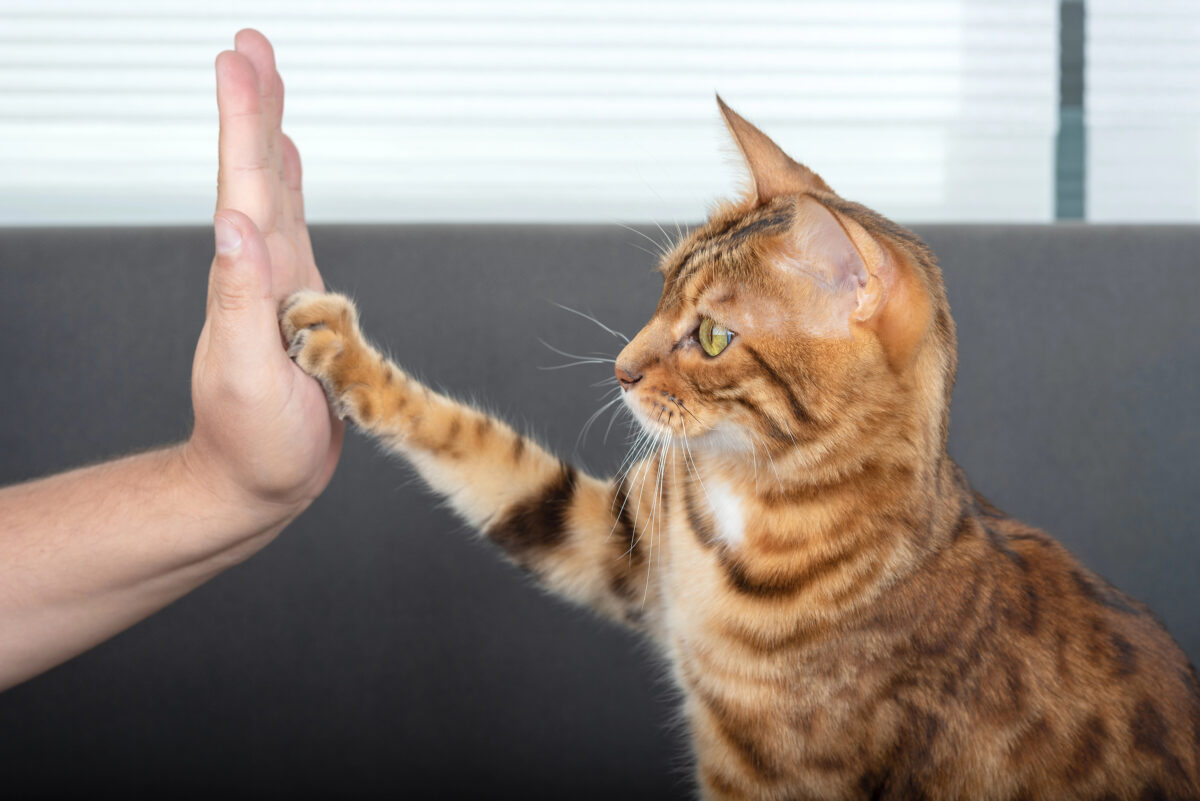
When motivation and connection are there, the results can look surprisingly familiar.
I have taught my cats a range of tricks, including sit, spin, lie down, sit pretty, high five, and shake.They come when called and greet me at the door when I get home. My cats follow me from room to room and vocalize when they cannot find me. They are almost always within arm’s reach.
Some cats even display protective behaviors that challenge common stereotypes.
One of my cats, Luna, is especially protective. If she senses that I am upset or feels something is off, she positions herself in front of me. I have seen her hiss at or confront people and animals she perceives as a threat in an effort to keep me safe.
That experience isn’t isolated. Love Your Cat writer Sally Jones has seen the same pattern across a lifetime of living with cats:
Cats often get a bad rap for not acting like dogs, but in my experience, that stereotype doesn’t hold up at all. I’ve owned cats my whole life, and many of them have shown the very traits dog lovers insist cats lack, loyalty, responsiveness, and a need to stay close to you.

In Sally’s case, those behaviors weren’t trained; they were simply how her cats chose to interact.
I’ve had cats who come when called (with reasonable hesitation), follow me from room to room, beg shamelessly for human food, and one who even played fetch with his favorite gold string for years. None of this was trained behavior; it was just how they chose to interact.
And for both writers, the conclusion is the same:
It’s never been about their breed. It’s about personality. Some cats are independent, all are social, and some quietly decide they’re going to act like a dog, just without the need for approval.
Taken together, these experiences point to a simple truth:
It’s less “my cat acts like a dog” and more “my cat is confident, bonded, and mentally engaged.” Most cats are capable of these behaviors when they are properly socialized, mentally stimulated, and supported. We’re just starting to recognize what cats have been capable of all along.
How to “Dog-Train” Your Cat
So… can you actually train a cat like a dog?
Yes, but not in the way most people mean. Cats can learn commands, tricks, and routines just as reliably as dogs. The difference isn’t intelligence. It’s motivation. Once you understand how cats learn and what makes them care, training stops feeling impossible and starts feeling surprisingly natural.
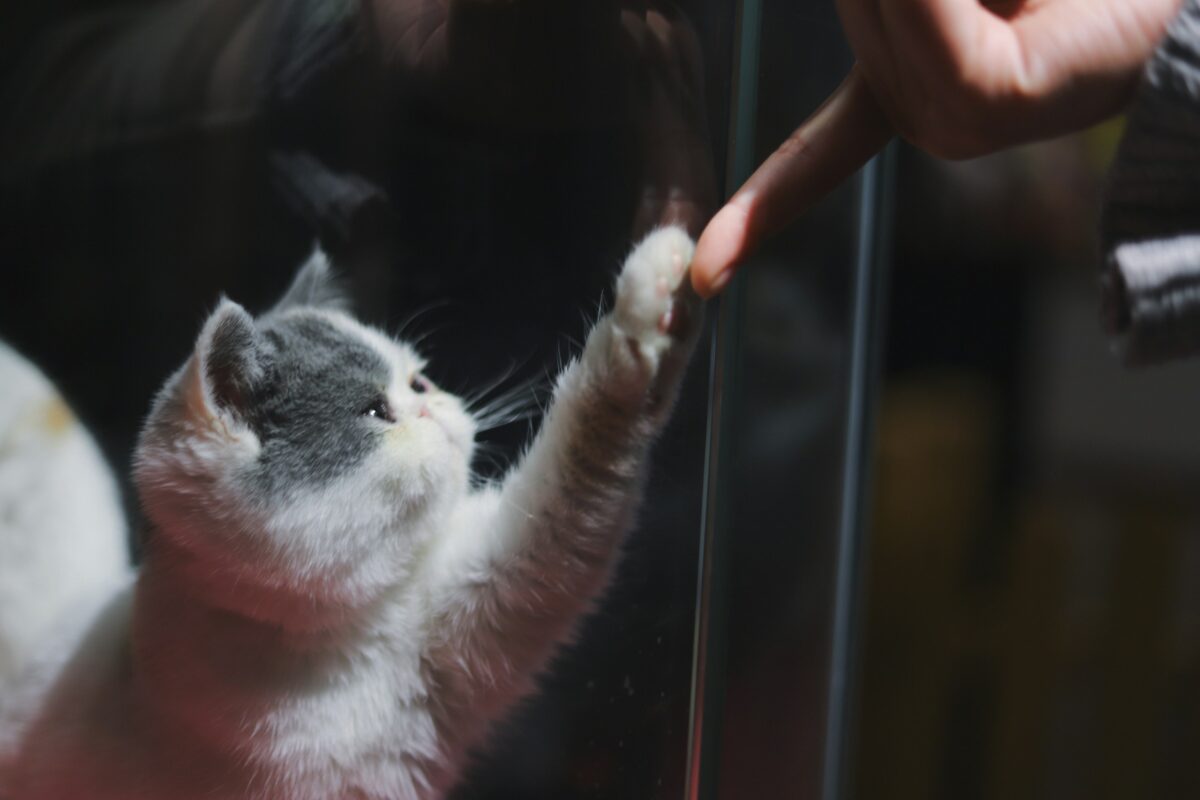
(Welcome to the Feline Academy)
Training a cat isn’t about “Obey me.” It’s about “Let’s make a mutually beneficial arrangement.”
Cats are perfectly capable learners, but they’re negotiators, not rule-followers. If something makes sense to them (and pays well), they’re in. If it doesn’t, they’re suddenly very busy staring at the wall.
Clicker Training: Why It Works So Well
Clicker training clicks (pun fully intended) with cats because it’s simple and precise. Cats aren’t big on vague encouragement or late rewards; they want to know exactly what worked and when.
The click tells them, “That right there, that was it.” The treat answers the obvious follow-up question: Why should I care? Think of the clicker as instant feedback and the snack as their well-earned bonus.
No lectures. No confusion. Just cause and effect. Very cat-friendly. Very effective.
Leash Walking: Defeating the Legendary Side-Flop
If you’ve ever put a harness on a cat and watched them collapse dramatically like their legs stopped working, congratulations, you’ve witnessed the Side-Flop.
This isn’t stubbornness. It’s a protest.
The fix is patience, not pressure. Start indoors. Pair the harness with treats and positive experiences. Let your cat wear it briefly, then remove it before they hit full existential despair. Over time, harness = snacks = adventure, and suddenly you have a cat who looks suspiciously like a tiny hiker.
Leash training a cat looks surprising until you see it done right. This video shows what the process actually looks like in real time.
Environmental Enrichment: Give Them a Job
A bored cat is a creative cat, and not in a way you’ll appreciate.
Turn your home into a place that rewards movement and thinking. Vertical shelves, climbing trees, puzzle feeders, rotating toys. Think agility course, not museum display.
A tired cat is a happy cat. And a happy cat is far less interested in chewing your shoelaces.
The Reality Check: It’s Still a Cat
Even the most dog-like cat has limits.
Cats have a social battery, and it’s very real. When the tail starts twitching like a windshield wiper on high, the session is over. Not almost over. Over. Pushing past that point doesn’t build skills; it builds resentment.
There’s also a delightful irony to cat training. A dog performs because they want to please you. A cat performs because they’ve successfully trained you to produce chicken whenever they sit on a specific rug.
Who’s really running the program here? The answer is obvious.
Planning Ahead for the Unexpected
Dog-like cats are often the ones getting into everything: harness walks, jumping higher, exploring harder, and generally testing the laws of physics with full confidence. Most of the time, that’s just part of the fun. But curious cats are also more likely to end up with surprise vet visits, like sprains, swallowed string, minor injuries, or stress-related flare-ups.
Pet insurance can help take the sting out of those “we should probably call the vet” moments by covering eligible exams, testing, and treatment for new accidents or illnesses.
If you’re exploring coverage, our best cat insurance guide breaks down what to look for and what to avoid. You can also get a quote for your cat to see pricing and plan options side by side.

The Sweet Spot Between Cat and Dog
Going for a more dog-like cat doesn’t mean trading away the things that make cats special. It means choosing a companion who enjoys interaction, seeks you out, and forms real emotional ties, just without the noise, the slobber, or the need for three walks a day.
You get the devotion and playfulness people love about dogs, paired with a cat’s built-in independence. No barking at delivery trucks. No muddy floors. Just steady companionship, thoughtful affection, and a pet who’s perfectly happy loving you… and then napping somewhere slightly out of reach.
Whether they’re playing fetch, learning the leash, or quietly supervising your most private moments, these cats make one thing clear:
- Cats and dogs were never on opposing teams.
- They were just bringing different strengths to the same roster.
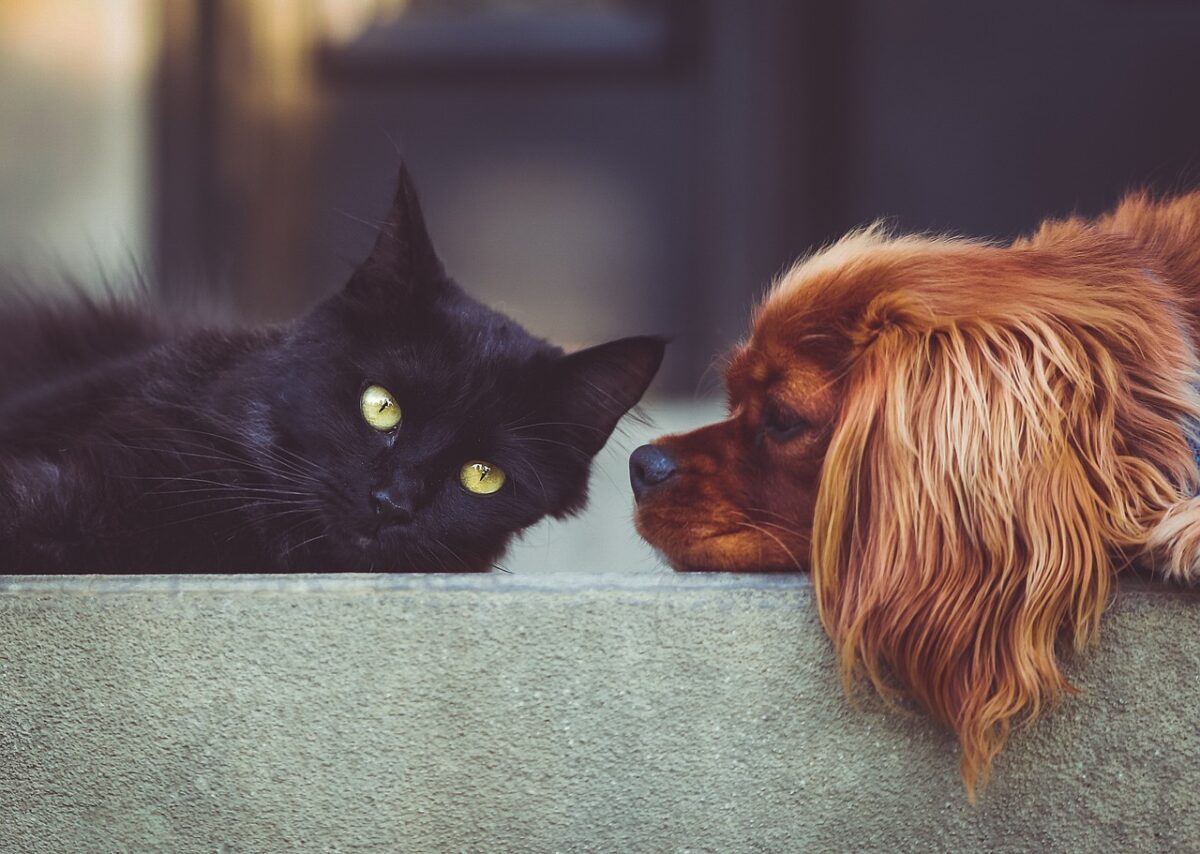
Can Cats and Dogs Really Get Along?
Short answer: yes. Honest answer: it depends on the individuals, not the species.
Cats and dogs don’t come pre-programmed to hate each other. Most of the conflict people expect comes from mismatched communication styles, poor introductions, or unrealistic expectations, usually on the human side.
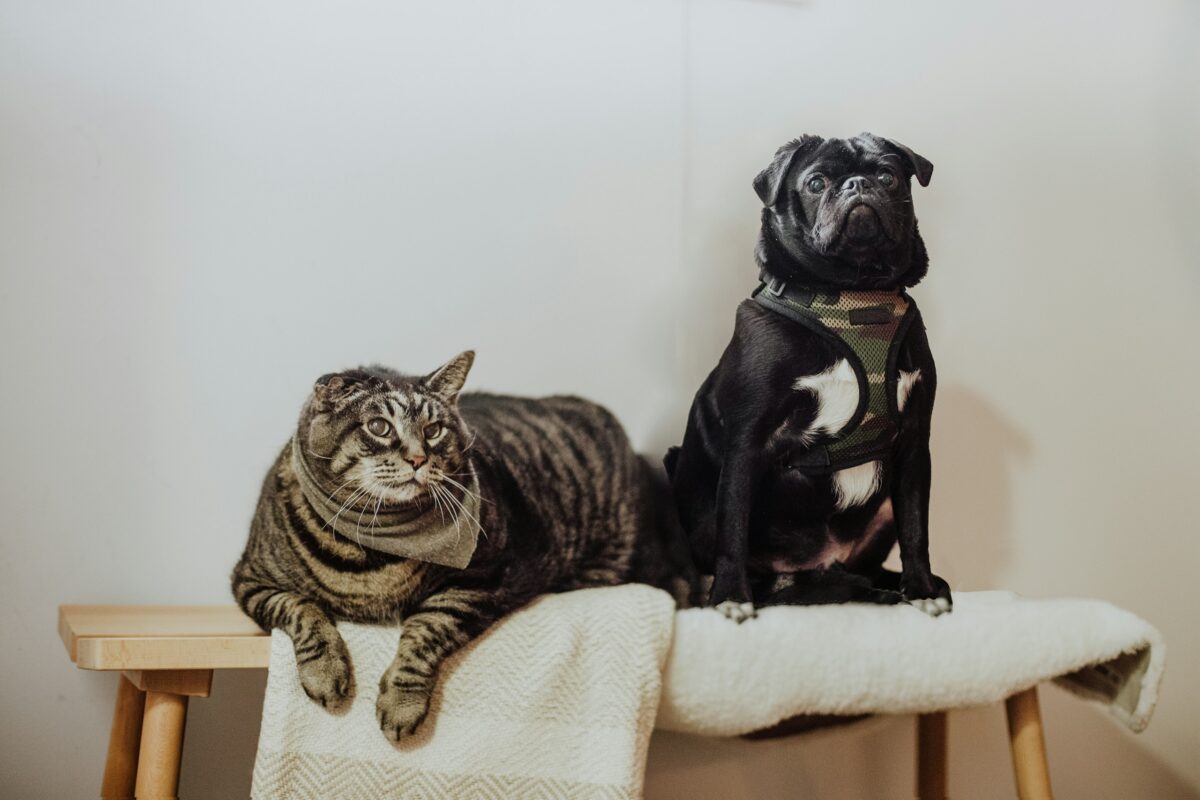
Dog-like cats often have an advantage here. Cats that are confident, social, and mentally engaged tend to handle dogs better than timid or easily overwhelmed cats. They’re less likely to panic, more likely to hold their ground, and better at reading intent instead of reacting purely on instinct.
That said, harmony isn’t automatic. Successful cat–dog relationships usually come down to a few key factors:
- Temperament match (calm dog + confident cat beats chaotic puppy + nervous cat)
- Proper introductions (slow, scent-based, and controlled)
- Clear escape routes for the cat (vertical space is non-negotiable)
- Respect for boundaries (no forced friendships)
When it works, it really works. You’ll see shared naps, mutual grooming, and a quiet understanding that we live together now. Not best friends in matching sweaters, but teammates.
What’s the Best Dog-Like Cat Breed for You?
Here’s the part most cat breed lists skip: There is no universally “best” dog-like cat… only the one that fits your lifestyle.
Instead of asking which breed is most like a dog, it helps to ask what kind of dog energy do I actually want in a cat?
Any cat breed can show dog-like behavior when they’re confident, bonded, and mentally engaged.
If you want a calm, loyal companion
Look toward breeds like Ragdoll, Chartreux, or Russian Blue.
These cats bond deeply, stay close, and offer steady companionship without constant demands.
If you want playful, interactive energy
Breeds like Manx, Bombay, and Burmese thrive on engagement.
They enjoy games, follow you around, and want to be part of daily life.
If you want intelligence and training potential
The Abyssinian, Bengal, and Siamese shine here, but they require time, enrichment, and patience. These cats need mental “jobs” to stay happy.
If you want bold, adventurous behavior
Cats like the Bengal, Savannah, or Turkish Van are confident explorers. They’re not for passive homes, but they’re incredible partners for active people.
Before you commit, remember that while breeds have “blueprints,” individual personalities vary. Many shelter cats (especially “tuxedo” cats or “orange tabbies”) exhibit these exact same dog-like traits without the designer price tag. Always ask a rescue coordinator which cats are the “greeters” or the “fetchers”; they usually know exactly who the secret puppies are!
The best choice isn’t the most famous breed. It’s the cat whose energy, needs, and communication style fit naturally into your life.
Beyond the Cat-and-Dog Divide
We love to sort ourselves into tidy categories, cat people or dog people, male cats versus female cats, affectionate versus independent. But the cats in this list quietly undo those labels.
At the end of the day, personality matters more than sex, or even species. Traits like loyalty, curiosity, and emotional awareness tend to show up wherever there’s trust, confidence, and a strong bond. Male or female, cats can become devoted shadows, playful sidekicks, or quiet emotional barometers. What shapes that isn’t gender. It’s the relationship.
And are cats better than dogs? That depends on what you value. Cats won’t bark at the wind or live to please, but they’ll choose you, stay close, and engage on their own terms. When a cat waits at the door or follows you from room to room, that devotion is just as real, only quieter. Maybe the point isn’t whether cats act like dogs at all, but whether you’re ready for a companion who blends independence with loyalty, and does it in a way that’s unmistakably, wonderfully feline.
So… Does Your Cat Act Like a Dog?
Does your cat break the “aloof” stereotype? Share the dog-like things they do in the comments. We’d love to hear your stories.