When you purchase through links on our site, we may earn a commission at no extra cost to you. Learn more.
Your cat has a perfectly clean water bowl… so why is she ankle-deep in it like she’s training to be a goldfish? While most people don’t associate cats with water-loving behavior, many felines have a strangely specific fascination with it, especially when it comes to pawing, tapping, or even flicking their bowl like it personally offended them.
Table of Contents
So what is it about water that gets cats going? Why the toe-dipping, bowl-scooping drama?
As it turns out, this behavior is more than just a quirky personality trait. Whether it’s instinct, vision, whiskers, boredom, or a deeper medical concern, your cat’s splashy habits actually tell us a lot about how they perceive the world and their place in your kitchen.
Let’s decode the paw-dipping mystery one splash at a time.
Want our human-written content to rank above AI-generated garbage? Help us out by clicking this button!
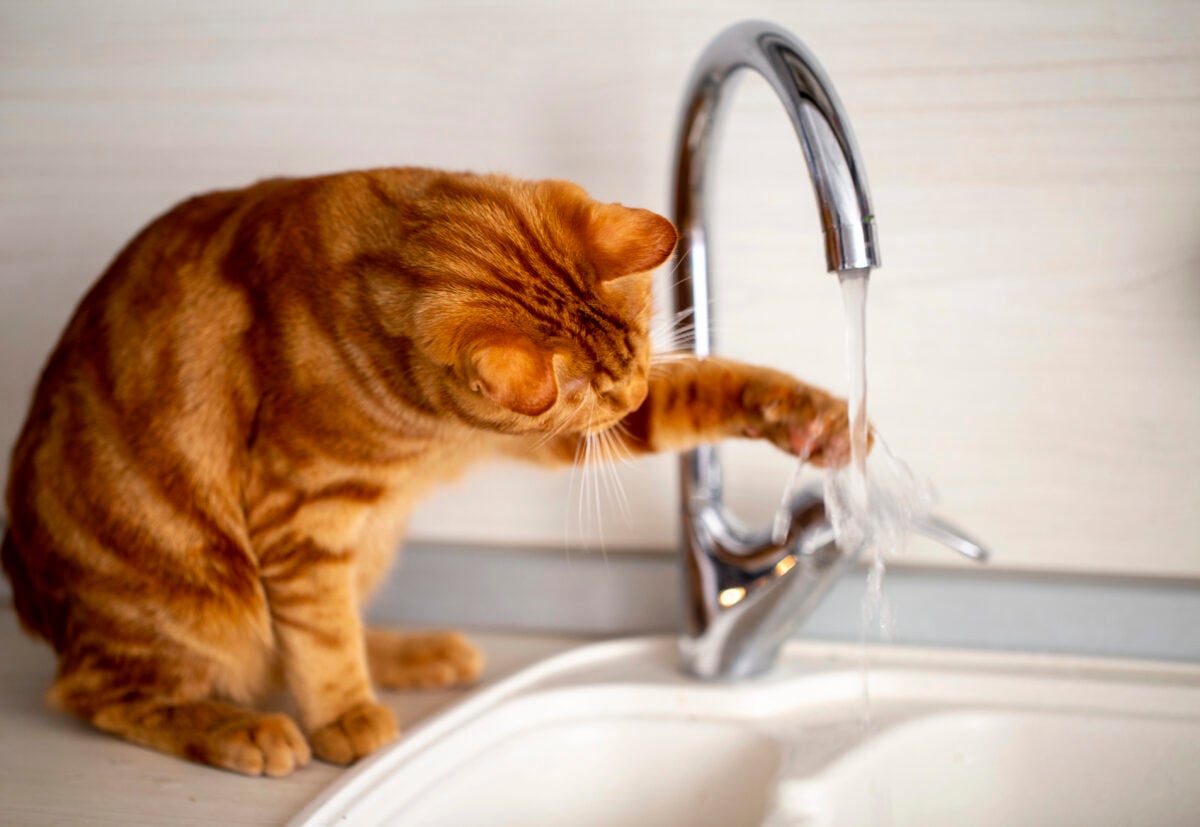
The Curious Case of the Bowl-Slapping, Splash-Happy Cat
I’ve long used a gravity refill water dispenser for my pets. Not only do they love drinking from it, but they also treat it like their personal splash pad.
My male cat, Zaphod, paws at the water before every single drink. It’s not subtle, either. He’ll swirl his paw around like he’s trying to summon something.
My other cat, Twilight, takes a more refined approach. She dips a paw in, gives it a thoughtful test, then settles in for a nice, long drink.
Zaphod,on the other hand, goes full chaos mode. And if the tank runs dry? He’ll gear up, throw a dramatic paw, and smack the empty tank so hard it skids across the floor like he’s had enough of this nonsense.
Toe-dippers, splash-slappers, full-on feline aquatic menaces; yep, they walk among us. And, as theatrical as it may seem, this behavior usually has its roots in instinct, not just chaos.
Is It Normal For Cats to Paw at Water?
Yes, this splashy little ritual is completely normal for most cats. Whether it’s a gentle tap or a full-on waterworks display, pawing at water usually comes down to comfort, curiosity, or instinct.
You’ll often see it in:
- Kittens exploring textures and sounds
- Older cats with vision changes or stiff joints
- Playful personalities who just enjoy making a little mess
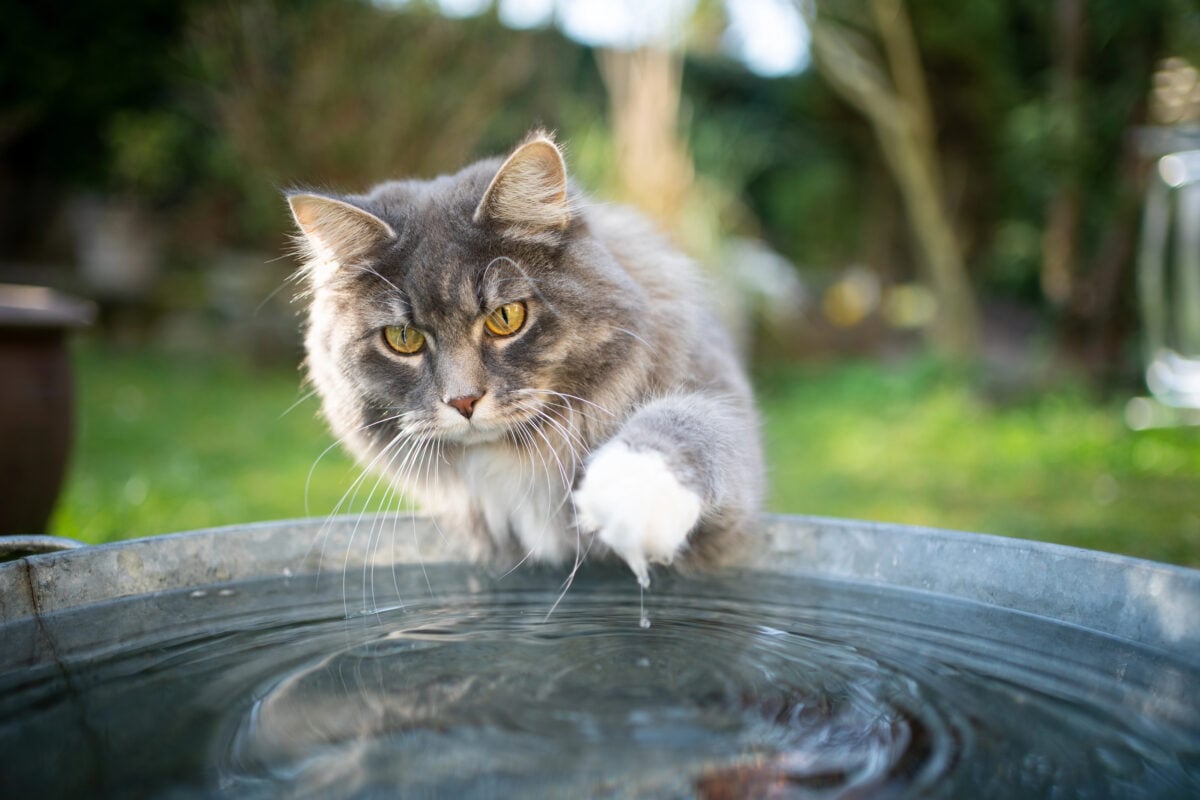
Some do it before every drink. Others just like the ripple effect. And for a few cats, the bowl might double as a toy or even a mini science experiment.
When It’s Cute vs. When It’s Concerning
Here’s a quick cheat sheet to decode what your cat’s splash session might mean:
- Totally Normal: A few paw dips before drinking, especially if they lick their paw afterward
- Just a Quirk: Occasional splashing, nudging the bowl around, or using their paw like a ladle
- Possibly a Problem: It’s a new behavior, they’re avoiding the bowl entirely, or suddenly drinking much more or less than usual, especially with other changes in appetite or mood
So what’s really behind all this watery drama? Is it instinct? Is something bothering them? Are they trying to tell you something, or just being a little extra?
Let’s break it down, splash by splash.
Why Is My Cat Splashing the Bowl? 5 Surprising Reasons Cats Paw at Water
If your cat turns their water bowl into a splash zone, it’s not just for fun (well, not always). There are several reasons cats dip, tap, or swat at water, and each one offers a clue into how your cat thinks, senses, and reacts to their environment.
Let’s break down the top five reasons your cat might be pawing at their water like it’s a personal science experiment.
1. Instincts and Evolution: A Wildcat Legacy
Cats may have traded the wild for window seats, but some instincts are just too deeply wired to leave behind. One of those is the way they interact with water.
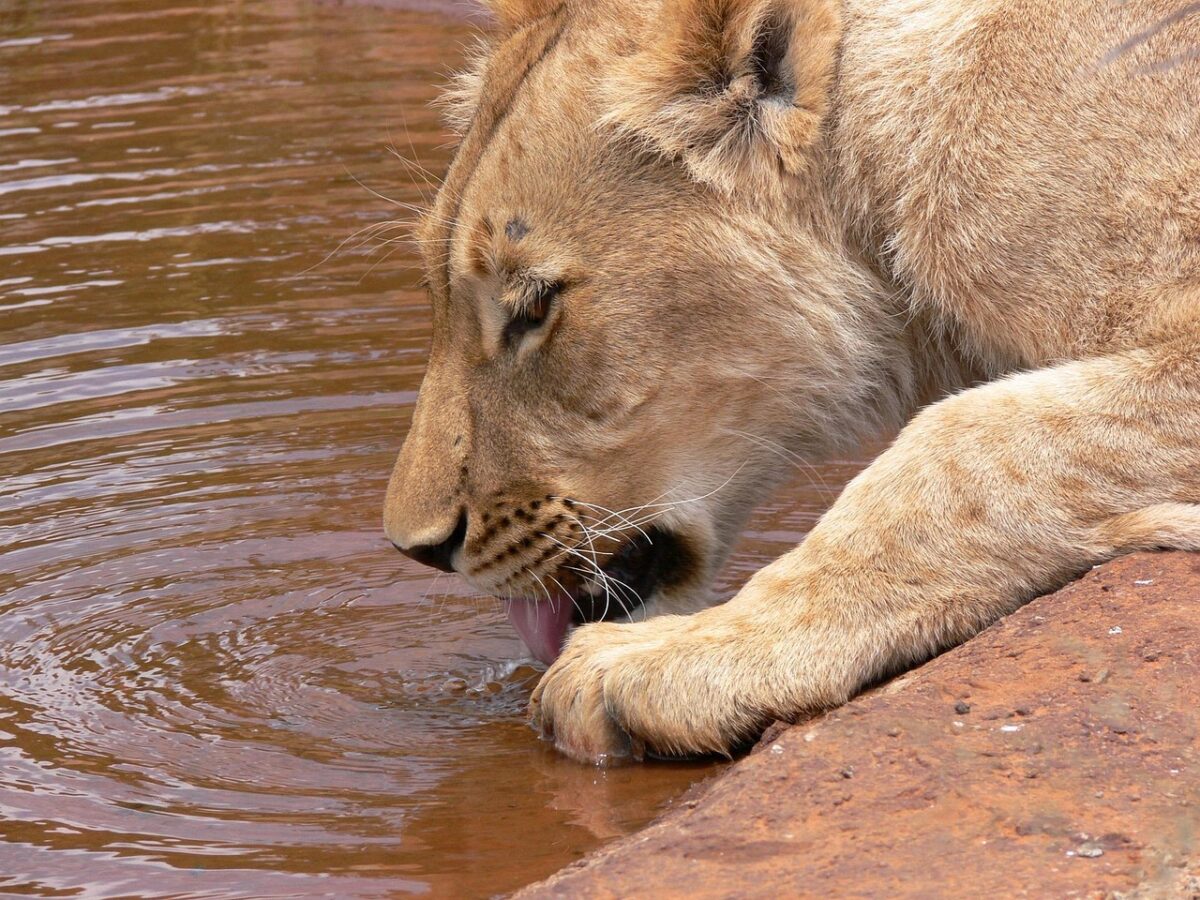
Why Do Cats Dip Their Paws In Water?
In the wild, still water isn’t always safe. It might be too shallow to drink, full of debris, or harboring bacteria or predators. Pawing at the surface creates ripples that can help a cat investigate the water and judge where the surface is before lowering their face to drink.
That instinct liveson in our modern housecats, especially those who approach their bowl with the delicacy of a food critic inspecting soup.
According to research from MIT, Virginia Tech, and Princeton, cats rely on subtle fluid dynamics when they drink. Their tongue creates a quick upward pull that forms a column of water, making surface movement easier for them to see and lap. This helps explain why many cats instinctively paw at still water before drinking.
The video below shows a perfect example of a cat using their paw to drink.
Why Does My Cat Dip Things In Water?
If your cat is dipping toys, food, or even random household items into their bowl, don’t be alarmed. This behavior is quirky but not unusual.
So why does my cat dip things in water? It might be:
- A throwback to wild “food caching” behavior, hiding prey for later
- A way of mixing scents to mark territory
- Pure, glorious experimentation
Think of it as your cat’s way of conducting daily science experiments. They’re testing how objects behave in water, what floats, what sinks, and whether they can drown their squeaky mouse toy for good.
Did You Know?
Cats can struggle to see still water clearly. Their eyes are better suited to detecting motion, which is why a few ripples from a paw can make drinking easier.
2. It’s Easier (and Safer) to Drink With a Paw
Ever caught your cat dipping their paw, then licking it like a tiny spoon? It might seem odd, but for many cats, drinking this way actually feels more natural.
Some cats don’t like putting their face deep into a bowl, especially if they’re nervous or have limited visibility. Paw-drinking keeps their head up and their field of vision wide open. It’s a more cautious posture, perfect for a species that likes to be aware of every exit at all times.
Then there’s the whisker factor (which we’ll cover next). Drinking with a paw helps cats avoid brushing those ultra-sensitive whiskers against the sides of the bowl. And let’s be real, some cats just enjoy having a dramatic flair.
If you’ve ever wondered, “Why do cats drink with their paws?”, the answer might be: because it works, it feels better, and no one ever told them not to.
3. Whisker Fatigue Is Real (and Really Annoying)
Your cat’s whiskers aren’t just adorable; they’re sensory superpowers. Each one is packed with nerve endings that help your cat detect changes in air currents, navigate tight spaces, and sense objects without even touching them.

But those same whiskers can become overwhelmed, especially when constantly pressed against the sides of a deep or narrow bowl. That’s called whisker fatigue, and for some cats, it’s enough to make drinking uncomfortable.
So instead of sticking their whole face into the bowl, they:
- Tap or paw at the water first
- Drink from the edges only
- Splash it out to drink off the floor
- Avoid the bowl altogether
Recent research published in the Journal of Feline Medicine and Surgery explored whether “whisker-friendly” bowls actually make a difference in feline behavior. The study found no significant change in how cats ate from wide, shallow bowls versus standard ones.
While the results suggest whisker fatigue may not affect all cats equally, many vets and cat parents still report that some cats prefer dishes that don’t crowd their whiskers, especially those who paw at water or avoid deep bowls.
Cat Fact Incoming
A cat’s whiskers are roughly as wide as their body, designed to help them judge whether they can fit through tight spaces. Constant contact with bowl sides can trigger sensory stress or even pain over time.
Signs your cat might be dealing with whisker fatigue:
- Avoiding the water bowl but drinking from faucets or puddles
- Knocking water out of the bowl before drinking
- Licking water off their paw instead of drinking directly
Try This: Swap their dish for a wide, shallow bowl, or better yet, a cat water fountain with an open drinking surface. Many cats instantly change their drinking behavior with a more comfortable setup.

4. They’re Testing the Water—Literally
Cats don’t just drink water; they evaluate it like it’s a vintage wine. Before they commit to a sip, many cats will test for freshness, temperature, scent, and even placement. A paw tap might be their way of asking, Is this suitable for royalty today?
So if your cat is pawing before drinking, it might not be a game. It could be a quality control check.
- Temperature – Some cats prefer cool water; others like room temperature. If it’s too cold or warm, they might hesitate.
- Smell – Cats have an incredible sense of smell. If the water is near food, litter, or has absorbed nearby odors, they might reject it.
- Freshness – Stale water? No thanks. A paw tap could be them deciding if it’s time for a refill.
- Surface tension – Still water is harder for cats to see. Pawing creates ripples that make the surface more visible.
Did You Know?
Cats have fewer taste buds than dogs, but up to 200 million scent receptors in their noses. They’re wired to smell before they sip.
Pro Tip: Try changing the water more often, placing the bowl away from food or litter, or using filtered water. A cat fountain also keeps the water moving, which many picky drinkers prefer.
5. It’s Just Fun (and Weirdly Satisfying)
Sometimes, cats paw at water for the same reason toddlers jump in puddles: because it’s fun. A ripple here, a splash there, and suddenly they’re having a sensory party by the water bowl.
For indoor cats especially, water offers something they crave: motion, reflection, and stimulation. Watching the surface shimmer or feeling it splash on their paws can be a full-on enrichment experience.
- High-energy cats or kittens
- Bored cats with limited environmental stimulation
- Cats who love exploring textures or sounds
- Smart or curious breeds like Bengals, Siamese, and Maine Coons
Did You Know?
While cats are famous for hating water, many are actually fascinated by it, especially in controlled environments like shallow bowls or a trickling stream.
When Pawing Is a Red Flag: Health Concerns to Watch For
Not all pawing is playful. If your cat suddenly develops a new, intense water-related behavior, or if something just feels off, it may be time to consider a medical cause.

In most cases, pawing at water is harmless. What matters more is whether the behavior is new and what else is happening at the same time.
Call your vet if you notice water pawing along with:
- Drinking much more or less than usual
- Repeated vomiting
- Unexplained weight loss
- Lethargy, weakness, or a noticeable drop in activity
- Confusion or disorientation
- Other sudden changes in eating, drinking or behavior
Potential causes include:
- Cognitive dysfunction in senior cats (confusion, disorientation)
- Vision problems are making it harder to locate the water surface
- Pain or recovery from surgery, especially involving the face, mouth, or head
- Excessive thirst due to conditions like kidney disease, hyperthyroidism, or diabetes
- Dehydration or fluid imbalances after illness or anesthesia
- Discomfort while drinking, such as dental pain or jaw stiffness
Planning For Vet Costs: When Pet Insurance Can Help
Most cats who paw at water are just being quirky. But if the behavior is new or paired with changes in thirst, appetite, or energy, your vet may recommend lab work, urinalysis, imaging, or dental evaluation to rule out common issues like kidney disease, diabetes, or hyperthyroidism.
Those tests and follow-up care can add up quickly, especially if your cat needs long-term treatment or prescription food. Pet insurance can reimburse eligible accident and illness costs (depending on your plan), making it easier to say yes to diagnostics and ongoing care without stressing over every line item.
If you are considering coverage, enrolling early often helps because most plans don’t cover pre-existing conditions. In other words, it is best to get insurance before your cat develops a diagnosed health issue.
Learn more in our guide to the best pet insurance for cats and get a free quote using the form below.

Want to compare options? Link to your internal guides like Best Pet Insurance For Cats and Is Pet Insurance Worth It to see what coverage can look like and how to choose a plan.
A Real-Life Example: Luna’s Story
One of our team members reported that her cat was pawing at water in an unusual manner after undergoing a medical procedure. She shared her cat’s story with us.
After my cat, Luna, had dental surgery, she started compulsively pawing at her water bowl—and I don’t mean playful splashing. She was aggressively digging with both front paws, flinging water everywhere for nearly half an hour.
I had to hold the bowl steady to stop Luna from tipping it over. Her fur was soaked, and she seemed almost hypnotized by the motion.
I’ve had cats that casually play in water before, but this was something entirely different. It honestly scared me.
We thought maybe she was in pain, and the water offered some relief.
I reached out to her veterinarian, who explained that this behavior can occur when cats are still recovering from anesthesia. She was likely still disoriented and experiencing lingering effects from the medication—something that matched what I saw since she was still unsteady on her feet.
The vet reassured us that it was okay to let Luna continue as long as she wasn’t hurting herself, and to monitor for other unusual behaviors. Sure enough, once the anesthesia fully wore off, she stopped pawing at the water and went back to her normal self.
–Tara Maurer, Writer for Love Your Cat (and Luna’s Full-Time Human Staff)
When Should You Call the Vet?
If your cat is:
- Suddenly pawing at water obsessively
- Refusing to drink altogether
- Drinking far more or far less than usual
- Showing signs of confusion, staggering, or zoning out
- Acting unlike their usual self in any way
Bottom line: If your cat’s water behavior changes suddenly or becomes intense, don’t wait. Call your vet. You know your cat best, and when something feels off, it’s always worth checking in.
How to Curb the Splashing (If It’s Making a Mess)
Let’s face it, cat water antics are cute… until you’re stepping in puddles at 2 a.m. If your feline friend’s drinking ritual is turning your floor into a splash zone, there are a few easy ways to redirect the behavior without spoiling their fun.
Try these 5 strategies to reduce the mess (and keep your socks dry):
- Try a water fountain: Many cats prefer moving water. A fountain keeps things interesting and may satisfy their urge to paw without the drama.
- Switch the bowl: Go for a wide, shallow dish that’s gentle on whiskers. Ceramic and glass bowls are often better than plastic, which can hold odors or slide around.
- Change the location: Move the water bowl away from noisy appliances, food dishes, or litter boxes. A quieter spot might reduce anxious or excited pawing.
- Add a mat or tray: Place a silicone mat or boot tray underneath to catch spills. It won’t stop the splashing, but it’ll protect your floor—and your sanity.
- Offer supervised water play: If your cat just loves water, give them a safe outlet. Try a shallow dish with a few floating toys or ice cubes they can paw at—somewhere far from anything absorbent.
Quick Tip: If you’re using a gravity-fed waterer or a lightweight plastic bowl, try switching to a heavy ceramic one. It’s harder to tip over, and it feels more natural for many cats to drink from.
Frequently Asked Questions About Cats Pawing at Water
Still curious about your cat’s splashy behavior? Below are answers to some of the most common water-related cat questions. Don’t see yours? Drop it in the comments, we’re always happy to add more!

Why Does My Cat Splash Water Out Of The Bowl?
Some cats splash because water is interesting to play with. The movement, reflections and sensation on their paws can be especially appealing to kittens, high-energy cats or cats looking for more stimulation.
Other cats paw at the surface before drinking, which can send more water over the edge than they intended. If your cat is otherwise drinking and behaving normally, try a wider, heavier bowl on a waterproof mat to contain the mess.
Why Does My Cat Drink Water From Their Paw?
Some cats dip a paw into the bowl and lick the water from their fur instead of drinking directly. Paw-drinking may help a cat investigate the water or avoid lowering their face into a bowl they find uncomfortable.
If your cat does this regularly, experiment with a wide, shallow bowl. If they continue using their paw but are drinking normally and seem comfortable, it may simply be their preferred technique.
Do Cat Water Fountains Actually Help?
For many cats, yes. Water fountains mimic streams found in nature, which encourages drinking, especially for cats who don’t like still water. They keep the water cooler and fresher, reduce whisker stress, and add motion cats can see more easily.
That said, a 2010 study found only a slight increase in water intake and no major change in hydration levels, so results may vary by cat. Even so, fountains are a great option for cats that paw at their bowl or show interest in running water.
Can Pawing At Water Be A Sign My Cat Is Sick?
Pawing at water by itself isn’t usually a sign of illness. A sudden change in your cat’s normal behavior is more important, especially when other symptoms appear at the same time.
Contact your veterinarian if new or unusual water behavior occurs alongside drinking much more or less than usual, repeated vomiting, unexplained weight loss, lethargy, weakness, confusion or other noticeable changes in eating, drinking or behavior.
Why Does My Cat Keep Tipping Over The Water Bowl?
Your cat may be tipping the bowl while pawing or playing with the water, particularly if the dish is lightweight and easy to move. Some cats also learn that pushing the bowl creates movement, spills and other interesting results.
Try a wide, heavy ceramic bowl with a nonslip base and place a waterproof mat or tray underneath it. If tipping the bowl is a new behavior accompanied by unusual thirst or other physical or behavioral changes, mention it to your veterinarian.
Why Do Cats Paw At Toilets?
From a cat’s perspective, toilets are just big, cool, moving water bowls. The sound, motion, and cooler temperature can be appealing, especially if their regular water source feels stale or boring.
However, toilet water may contain bacteria or cleaning chemicals, so it’s best to keep the lid down and offer a more engaging, safer alternative, such as a water fountain.
Oh, and while we’re talking toilets, whatever you do, don’t flush your cat’s poop. It may seem convenient, but it poses a significant problem for plumbing, wildlife, and water treatment systems. We break down all the messy reasons why it’s a no-go in our guide to flushing cat poop (spoiler: even if your cat helps you flush it, still no).
When A Splash Bowl Turns Into Olympic‑Cat Diving
Ready for a wild twist? Watch the video below to see a cat who didn’t just paw the water; this one absolutely went for a swim. It’s part impressive, part “did my cat just become a sea‑lion?” and 100% adorable.
Your Cat’s Weirdness Doesn’t Stop at the Water Bowl
If you thought pawing at water was odd, buckle up. Cats exhibit a range of baffling behaviors that somehow make perfect sense to them. Like when your cat stares at a blank wall, as if it’s whispering secrets from another dimension. They’re probably not haunted… probably.
Or when they twitch like they’re chasing dream-mice in their sleep. That one’s actually normal, unless they wake up mid-air. Then there’s the inexplicable urge to roll in dirt, flop belly-up on your driveway, and look smug about it. It’s a thing. Don’t question it. And of course, the 3 a.m. hallway sprint—a.k.a. the Zoomies, because nothing says “predator” like parkour off the couch cushions.
Let’s not forget the intense, soul-piercing stare. Yes, it means something. No, we’re not sure what. Oh, and if your cat suckles on blankets like it’s nursing from a throw pillow? That’s a thing too. Weird? Yes. But also oddly sweet. Basically, if your cat is acting strange… they’re probably just being a cat.
Does Your Cat Treat the Water Bowl Like a Splash Pad?
We want to hear all about it, whether you’ve got a delicate paw-dipper, a full-blown water slapper, or a cat who thinks they’re part koi. Drop your cat’s weirdest water habits in the comments below. Bonus points if towels were involved.