When you purchase through links on our site, we may earn a commission at no extra cost to you. Learn more.
No one could have prepared me for losing my 18-year-old cat, Cleo.
Table of Contents
I knew it was coming, and I had time to brace for it.
But I wasn’t prepared for the habits she’d leave behind — the way I still expected to see her curled up in the same spot on my bed every night, or her adorable habit of leaving her favorite toy mouse in my shoe.
She had this quiet way of being part of everything without ever asking for much attention.
Want our human-written content to rank above AI-generated garbage? Help us out by clicking this button!
And when that kind of presence is gone, it hurts in a way that’s hard to explain unless you’ve felt it, too.
If you’re going through that right now, you’re not alone. And there are a few things that can help, even if just a little.

Why Losing A Cat Hurts So Much
If this feels harder than you expected, there’s a reason for that, even if it’s hard to explain to other people.
Cats aren’t always loud or obvious with their affection. They don’t demand attention constantly or make a big show of being there. But they have a quiet, steady way of becoming part of your life.
They sit near you. Follow you from room to room. Sleep in the same spot every night.
And over time, that presence stops feeling noticeable — until it’s suddenly gone.
That’s the part people often underestimate because when you live with it every day, it’s not small. It’s comfort. Familiarity. A sense of normal that you didn’t realize you relied on so much.
And when that disappears, you’re not just missing your cat. You’re missing the feeling of your home being as it used to be.
The Science Of Pet Grief: Why It Feels Like Losing Family
When you lose a cat, your brain doesn’t treat it like a small loss. It processes it the same way it would any meaningful bond.
The part of your brain responsible for emotional attachment — the same one tied to close relationships — reacts as if someone important is suddenly gone.
In fact, a lot of research has shown that the grief people feel after losing a pet can closely mirror the emotional impact of losing a human loved one.
At the same time, your body goes through real physical changes. Stress hormones rise, while the chemicals linked to comfort and connection, like dopamine and oxytocin, drop.
That combination can create what people often describe as:
- A heavy, aching feeling in your chest
- Sudden waves of emotion that come out of nowhere
- Brain fog or trouble focusing
- Exhaustion that doesn’t quite make sense
Why Their Absence Feels So Disorienting
There’s also something else happening that’s easy to miss.
Your brain gets used to your cat being part of your everyday patterns — their movements, their sounds, the places they always were.
When that suddenly stops, your brain doesn’t adjust right away. It keeps expecting them.
You might catch yourself pausing when it’s feeding time. Or thinking you heard something in another room. I still found myself glancing toward Cleo’s spot at night, like she might be there.
That’s your brain trying to follow a pattern that no longer exists. And that disconnect is part of what makes this feel so disorienting.
So if this loss feels overwhelming, or even physical at times, it’s not because you’re overreacting.
It’s because someone important is missing.
Have you caught yourself still looking for your cat in their usual spot without thinking?
The Guilt That So Many Cat Owners Feel
For many people, this is one of the hardest parts.
It’s not just the loss. It’s everything you start replaying afterward.
- Did I miss something?
- Should I have taken them in sooner?
- Did I make the right decision?
Those questions have a way of showing up quietly and then sticking around.
Even when you know, logically, that you did everything you could, it’s easy to second-guess yourself. To go back through small moments and wonder if they meant more than you realized at the time.
The Guilt Around Euthanasia Feels Different
If you had to make the decision to let them go, that weight can feel even heavier because it wasn’t just something that happened. It was a choice.
And even when it’s the most compassionate option, that decision can still feel impossible to carry.
You might find yourself thinking:
- Did I do it too soon?
- Did I wait too long?
- What if they had more time?
That kind of guilt is incredibly common because choosing euthanasia often means stepping in at the exact moment when love and loss overlap.
You’re trying to prevent suffering, but in doing that, you’re also the one who has to say when it ends.
And your brain doesn’t separate those things cleanly. It just knows you made a decision that led to goodbye.
Why Your Mind Keeps Replaying Things
After a loss, your brain tries to make sense of what happened, so it looks for answers, patterns, or missed signs. That might explain why things unfolded the way they did.
But here’s the part that’s easy to lose sight of. You made every decision with the information you had at the time, from a place of care, love, and a desire to protect them.
Hindsight can make it feel like there was a “right” answer you should have seen, but that clarity only exists after everything has already happened.
What That Guilt Actually Means
If you’re carrying guilt right now, it doesn’t mean you did something wrong.
It means you cared deeply and were paying attention. It means their life mattered to you.
And it means letting go, especially in a moment where you had to make that call, was never going to feel easy.
What This Kind of Grief Can Feel Like
- Missing the little routines, not just the big moments
- Feeling fine one minute, then overwhelmed the next
- Replaying decisions and second-guessing yourself
- Expecting to see or hear them without thinking
- Feeling like your home doesn’t feel the same
The Grief Timeline: Why It Feels So Unpredictable
There’s no clear roadmap for figuring out how to cope with the loss of a cat.
One day, you might feel numb. The next day, it hits all over again. Grief doesn’t move in a straight line, and it rarely looks the same from one moment to the next.
You may find yourself moving through different feelings, sometimes more than once.
Veterinary experts, including guidance from the Cornell Feline Health Center, note that grief is often described in stages. Still, they don’t happen in a fixed order, and not everyone experiences all of them.
You might recognize some of these:
- Shock and disbelief:
“This doesn’t feel real.” - Guilt or anger:
“Did I miss something?”
“Should I have done more?” - What-if thinking:
“If only I had caught it sooner…”
“Maybe things could have been different…” - Deep sadness:
A quiet heaviness that makes even small things—like getting through the day—feel harder than usual. - A kind of acceptance:
Not that the pain is gone, but that you’re beginning to understand how love and loss can exist at the same time.
And then, sometimes, it loops. You might feel like you’re doing okay, only to have something small bring everything back again.
That doesn’t mean you’re going backward. It just means you’re still grieving.
If you find yourself feeling numb one moment, overwhelmed the next, or even catching a brief moment of normal, that’s all part of it, too.
A lot of people find this helpful:
If it helps to hear someone walk through this in a more personal way, this video—based on the illustrated book P.S. I Love You More Than Tuna by Sarah Chauncey and Francis Tremblay—captures what pet loss grief can feel like in a way a lot of people relate to:
How To Cope With The Loss Of A Cat (What Actually Helps)
There’s no way to take this kind of pain away, but there are small things that can make it a little easier to carry, especially in those first days and weeks when everything still feels off.
Not all of these will resonate with everyone. And that’s okay. Use what helps.
1. Let Yourself Grieve (Without Trying to “Handle It Well”)
A lot of people instinctively try to manage their grief. To stay composed, to be “okay,” and not let it take over.
But grief isn’t something you manage. It’s something you need to move through. And trying to contain it usually makes it last longer or come out in other ways.
If you feel like crying, cry. If you feel off, distracted, or emotional for no clear reason, that’s part of it.
One small thing that can help:
- Give yourself permission for specific moments to feel it (instead of fighting it all day)
- A few minutes in the morning
- Before bed
- Looking through photos
It sounds simple, but letting it come in controlled moments can make it feel less overwhelming overall.
2. Expect The “Trigger Moments” (So They Don’t Catch You Off Guard)
A lot of the hardest moments aren’t constant; they’re specific.
Walking into a room and expecting to see them.
Hearing a sound that reminds you of them.
Reaching for something you used to do together.
Those moments can hit harder than anything else. And when you’re not expecting them, they can feel overwhelming.
It helps to know they’re coming. Not to avoid them, but so when they happen, you can recognize it for what it is: a moment of adjustment, not a setback.
Some people find it helpful to:
- Pause and acknowledge it (“this is one of those moments”)
- Take a breath instead of pushing it away
- Let it pass without trying to fix it
Over time, those moments still happen, but they soften.
3. Talk About Them (So They Don’t Just Disappear)
One of the hardest parts of losing a cat is how quickly the world moves on. But you don’t.
And that disconnect can make you feel like you’re carrying it alone.
Talking about your cat — saying their name, sharing stories, repeating the little things they used to do — helps keep that connection from feeling like it just vanished.
If you’re not sure where to start:
- Tell someone your favorite “weird” habit they had
- Share a photo and the story behind it
- Write down a few memories you don’t want to forget
And if people around you don’t fully get it, that’s okay. There are spaces where people do. Even saying it out loud once can feel like a release.

4. Create A Real Goodbye
One thing people don’t expect is how unfinished it can feel, especially if things happened quickly or didn’t go the way you imagined.
Creating a small, intentional goodbye can help your brain process that it’s real.
It doesn’t have to be anything formal, just something that gives the moment a shape.
- Sit in their favorite spot and talk to them
- Write a short note (even just a few sentences)
- Light a candle at the same time each night for a few days
- Set out a photo that really captures them
The goal isn’t closure. It’s an acknowledgment that this mattered and that they were here.
5. Take Care of Yourself
Grief doesn’t just affect your emotions; it affects your body. You might feel more tired than usual, foggy or distracted, and less motivated to do normal things.
It’s easy to let basic things slide, but this is when simple routines matter most.
- Eat something, even if it’s small
- Try to sleep at roughly the same time
- Get outside for a few minutes
- Take care of your hygiene and get dressed every morning
- Spend time with loved ones and friends
- Keep one small part of your routine consistent
You don’t need to “get back to normal.” You just need to support yourself while things feel off.
Helping Children Deal With The Loss Of A Cat
If you have kids, this loss can feel even harder to navigate.
Not just because you’re grieving, but because you’re trying to help them understand something you’re still processing yourself.
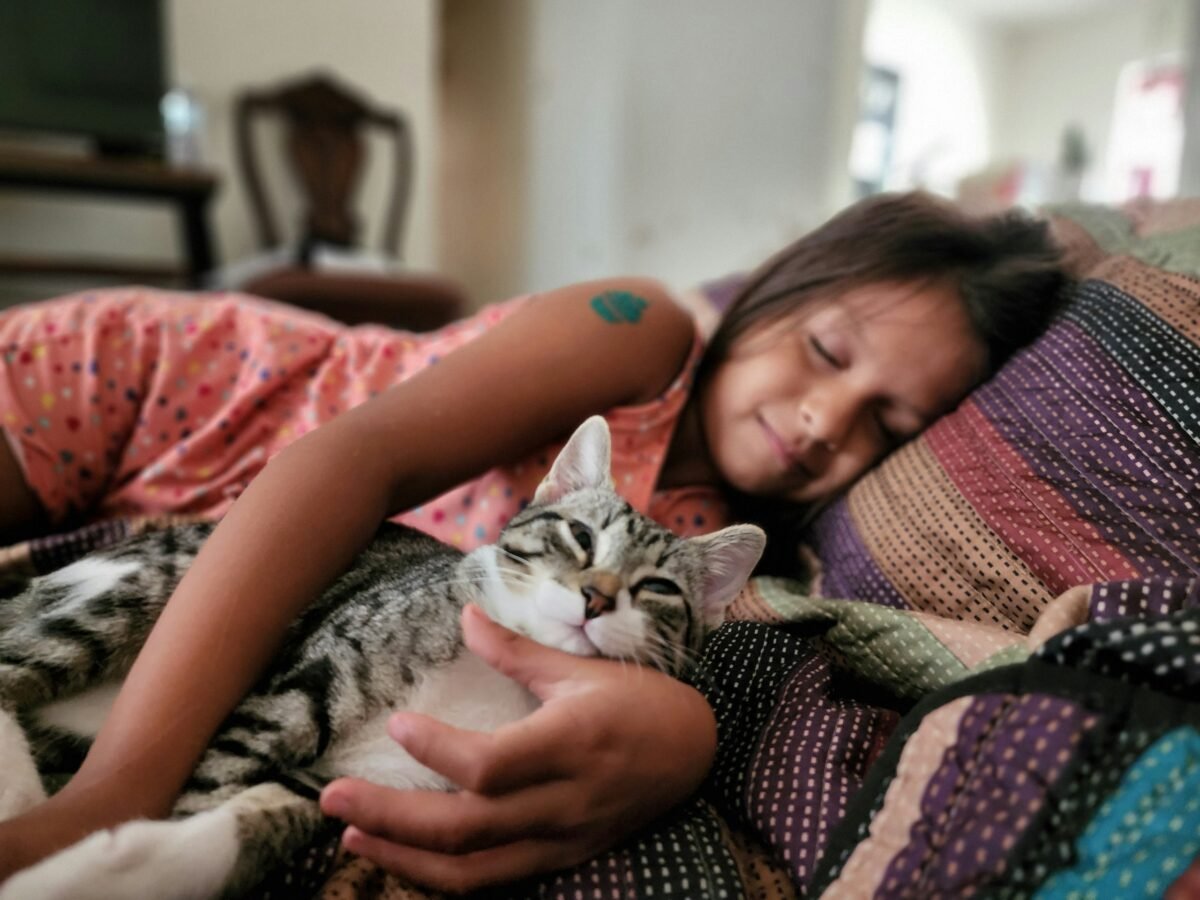
Children often experience grief differently. Some may be very emotional right away, while others might seem unaffected at first and then bring it up days or even weeks later. That’s normal.
What helps most is keeping things honest, simple, and reassuring.
- Use clear, gentle language.
Avoid phrases like “went to sleep,” which can be confusing or even scary for younger children. - Let them ask questions.
Even if they repeat the same ones. It’s part of how they process what’s happened. - Give them a way to say goodbye.
Drawing a picture, writing a note, or sharing a favorite memory can help them express what they’re feeling. - Reassure them that it’s okay to feel sad — or not.
Kids don’t always show grief the same way adults do.
And just like with you, there’s no timeline. Your child will move through it in their own way, and your presence, more than anything you say, helps them feel safe while they do.
Do Other Pets Grieve, Too?
If you have another cat or dog at home, you might notice changes after the loss.
Even if they don’t understand death the way we do, they do notice when a companion is suddenly gone.
You might see things like:
- Searching behavior, like looking around the house
- Changes in appetite or sleep
- More clinginess or sometimes more withdrawal
Some pets seem mostly unaffected. Others show clear signs that something has changed. And both responses are normal.
What tends to help is keeping their routine, such as feeding times, play, and familiar spaces, as consistent as possible while also giving them a little extra attention if they seem to need it.
Over time, most pets adjust. But just like with people, it can take a little while for things to feel steady again.
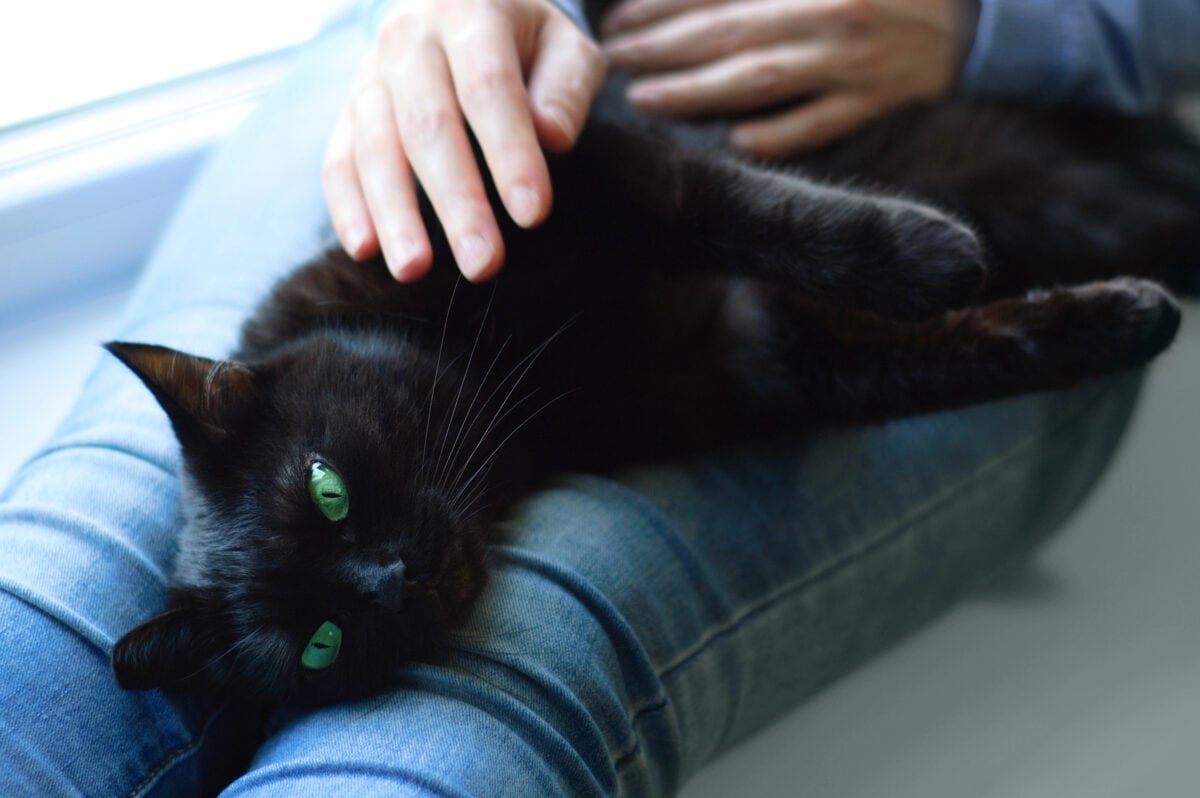
Ways To Honor Your Cat’s Memory
There’s no right way to remember a cat you loved. Some people prefer to keep things quiet and personal. Others find comfort in doing something more tangible.
Either way, it doesn’t have to be big. Often, it’s the small, meaningful things that matter most.
If it feels right, here are a few simple ways to honor them:
- Create a small photo collection.
A few favorite pictures in one place — on your phone, printed, or framed — can be something you come back to over time. - Keep something that reminds you of them.
A favorite toy, a collar, or even just a spot in your home that still feels like “theirs.” - Write down your favorite memories.
The little habits, the quirks, the things only you would notice. Those details are often the ones that fade first—and the ones worth holding onto. - Do something in their name.
A small donation, helping another animal, or even just sharing their story with someone who understands. - Create a quiet moment just for them.
Lighting a candle. Sitting in their favorite spot. Take a minute to think about them without distractions.
None of this is about “moving on.” It’s about holding onto what they meant to you in a way that feels right.
And over time, those memories can start to feel less painful and a little more like something you’re grateful to carry with you.
What’s one small thing about your cat that you don’t want to forget?
When Grief Feels Overwhelming
For most people, grief comes in waves. But sometimes, it can feel heavier than that, like it’s not letting up, or like it’s starting to affect everything else around you.
If that’s where you are right now, it’s okay to acknowledge it.
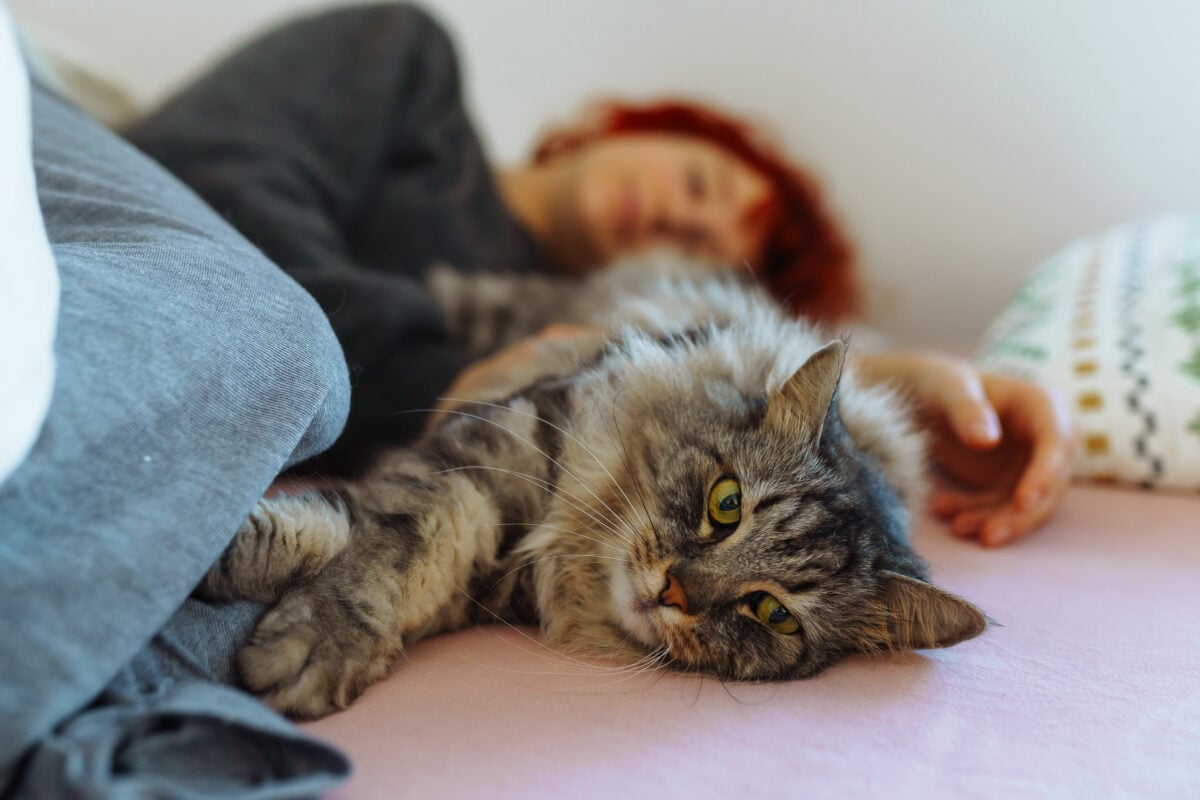
Grief can show up in ways that go beyond sadness:
- You’re having trouble getting through your normal day
- You feel constantly exhausted or emotionally drained
- It’s hard to focus on even simple things
- You’re withdrawing from people or things you usually enjoy
None of this means something is wrong with you. It just means your mind and body are under a lot of strain.
And sometimes, support can help carry some of that weight. That might look like:
- Talking to someone you trust
- Joining a pet loss support group
- Reaching out to a counselor or therapist
You don’t have to go through it alone.
Even though this kind of loss can feel very personal, some people understand it, and they can help you move through it at your own pace.
And asking for that kind of support isn’t a sign that you’re struggling too much. It’s a sign that you’re taking care of yourself while you heal.
Pet Loss Support Resources (If You Need Extra Support)
Sometimes talking to someone outside your immediate circle can make a real difference, especially if you’re feeling stuck, overwhelmed, or just need to be heard by someone who understands this kind of loss.
There are dedicated pet loss resources that offer support groups, one-on-one conversations, and safe spaces to process your grief.
If you feel like you could use that kind of support, here are a few trusted options:
- Lap of Love
Offers Zoom support groups for pet loss and anticipatory grief, including specific sessions for unexpected loss, behavioral euthanasia, and individual counseling, as well as a structured pet loss course. - PetCloud
Provides free weekly support groups along with optional paid one-on-one sessions. - Letters to Pushkin
An interactive platform that uses letter writing as a way to process grief—whether for a pet or a person. - Association for Pet Loss and Bereavement (APLB)
Offers moderated chat rooms and virtual support groups specifically for pet loss. - Cornell Pet Loss Support Hotline
A phone-based support line at 607-218-7457 that’s run through Cornell’s veterinary program. - Best Friends
Additional resources for dealing with pet grief.
You don’t have to use any of these, but if things feel heavier than you expected, it can help to know they’re there.

Should You Get Another Cat? (Only When It Feels Right)
At some point, this question usually comes up, and it can feel more complicated than you expect.
Part of you might miss the companionship, the routine, the quiet presence in your home.
And another part of you might feel like even thinking about another cat is somehow wrong.
Both can be true at the same time. There isn’t a “right” timeline for this.
Some people feel ready sooner, not because they’ve moved on, but because they miss that connection in their daily life. Others need more time before the idea even feels possible.
Neither is better. It just depends on you.
A few gentle ways to check in with yourself:
- If the idea brings comfort, you might be getting closer.
- If it feels heavy or overwhelming, you likely need more time.
- If it feels like replacing them, it may help to reframe it — you’re not replacing them, you’re opening space for a different relationship.
No cat replaces another. Each one brings their own personality, their own routines, their own way of becoming part of your life.
And when the time is right, that can feel meaningful again.
But there’s no pressure to get there — quickly or at all.

You Loved Them Well. And That’s Enough.
In the end, your cat’s story isn’t defined by the moment they left.
It’s in the thousands of small, quiet moments you shared together. The routines, familiar spots, and the way they fit so naturally into your day.
That bond was real, and that love doesn’t just stop.
Grief is what love looks like when something important is missing. And if it hurts this much, it means what you had mattered.
You don’t have to rush past that. You don’t have to “get over it.” Just take it one moment at a time. Remember them, miss them, and let yourself heal.
You loved them well. And that’s enough.
Frequently Asked Questions
Losing a cat brings up questions most people don’t talk about. If you don’t see yours here, feel free to ask it in the comments.
Why Do I Keep Thinking I See Or Hear My Cat?
This happens more often than people expect. When your cat has been part of your daily routine, your brain gets used to their sounds, movements, and presence. After they’re gone, it can take time for your brain to catch up.
You might hear them in another room or catch yourself looking toward their usual spot. It’s not strange; it’s your brain adjusting to a pattern that’s no longer there.
Is It Normal To Feel Worse Days Or Weeks Later?
Yes, and this surprises a lot of people. In the beginning, you may feel numb or just focused on getting through the day. As that wears off, the reality of the loss can hit harder.
You might feel like you’re “doing better,” only to suddenly feel overwhelmed again. That’s not a setback — it’s a normal part of how grief works.
Do Cats Know When Another Cat Dies?
They may not understand death the way humans do, but they do notice changes.
It’s common for cats to react to the absence of another pet through changes in behavior, routines, or mood.
Should I Keep My Cat’s Belongings Or Put Them Away?
There’s no right answer. Some people find comfort in keeping things where they are for a while. Others prefer to put them away sooner.
You can do it gradually, keeping a few meaningful items and letting go of others when it feels right. There’s no timeline you have to follow.
Should I Get Another Cat Right Away?
There’s no right answer. Some people feel ready sooner, while others need more time. The most important thing is that it feels right to you — not like a replacement, but like a new relationship when you’re ready for it.
When You’re Ready For Another Cat
If and when you do decide to welcome another cat into your home, it can help to go in with a little more clarity, especially after everything you’ve just been through.
Thinking about things like personality, household dynamics, and long-term needs can make that next relationship feel more intentional (and less overwhelming).
You might find these helpful as you start to think about what’s right for you:
What Helped You Through Losing Your Cat?
If you’ve been through this, what actually helped, even a little? Something small, something unexpected, or something you wish someone had told you sooner. Share it in our comments. There’s a good chance your experience could help someone else who’s going through this right now.