When you purchase through links on our site, we may earn a commission at no extra cost to you. Learn more.
I hear people say cats don’t really like to play, and every time I think: have you met a cat?
Table of Contents
These are animals who will stalk a dust bunny for six minutes, launch themselves at a shoelace, and turn a cardboard box into a full tactical operation.
Cats love to play. They’re just not always obvious about asking.
Your cat probably won’t carry over the wand toy and politely tap your knee. Instead, they might drop a crusty little mouse at your feet, stare at you like you’ve forgotten an appointment, chirp from the hallway, hide behind the sofa to ambush your ankles, or suddenly tear through the house at Mach 4.
Want our human-written content to rank above AI-generated garbage? Help us out by clicking this button!
Some cats are subtle. Some throw your pen on the floor or attack your furniture.
Once you figure out your cat’s personal playtime routine… the stare, the chirp, the dramatic ankle ambush… the signs get pretty hard to miss.
Here are 12 ways your cat may be saying: Excuse me. Put the phone down. It’s playtime.
Before You Assume Your Cat Wants to Play
Cats don’t all ask to play the same way. One may march over with a toy mouse hanging from their mouth like they’ve brought you an important document. Another will sit six feet away and stare until you somehow realize this is, in fact, a request.
The best clue is usually what happens when you respond. Pick up a toy and watch your cat. Play is a pretty good bet if they perk up, drop into a hunting crouch, start tracking the movement, do the little pre-pounce butt wiggle, or race away and look back to make sure you’re following.
A few things to watch for:
- Interest: Your cat immediately focuses on the toy or movement.
- Hunting behavior: Stalking, crouching, chasing, pouncing, and hiding are strong clues.
- Re-engagement: They come back for another round instead of wandering off.
- A familiar pattern: The same behavior tends to happen at similar times or before favorite games.
No single behavior automatically means play with me, which is why context matters. A stare is just a stare—until the wand comes out and your cat instantly transforms into a tiny predator.
Sometimes the invitation is a lot easier to recognize when you see it in action.
With that in mind, here are 12 of the most common ways cats try to get the game started.
12 Signs Your Cat Wants to Play
So, how does your cat actually say, Hey, put down whatever you’re doing and come entertain me?
Sometimes the message is surprisingly polite. Sometimes it involves a toy dropped at your feet. And sometimes your cat chooses chaos—ankle ambushes, midnight zoomies, or slowly pushing your belongings toward the edge of a table while making direct eye contact.
Every cat has their own style, but these 12 behaviors are worth watching for. You might discover your cat has been inviting you to play all along.
1. Bringing Toys to You
If your cat drops a toy at your feet, on your bed, or suspiciously close to your keyboard, there’s a decent chance they’re trying to start something. Some cats make the message even clearer by carrying toys around while making that muffled, dramatic meow that sounds like they’ve just returned from a very important hunt.
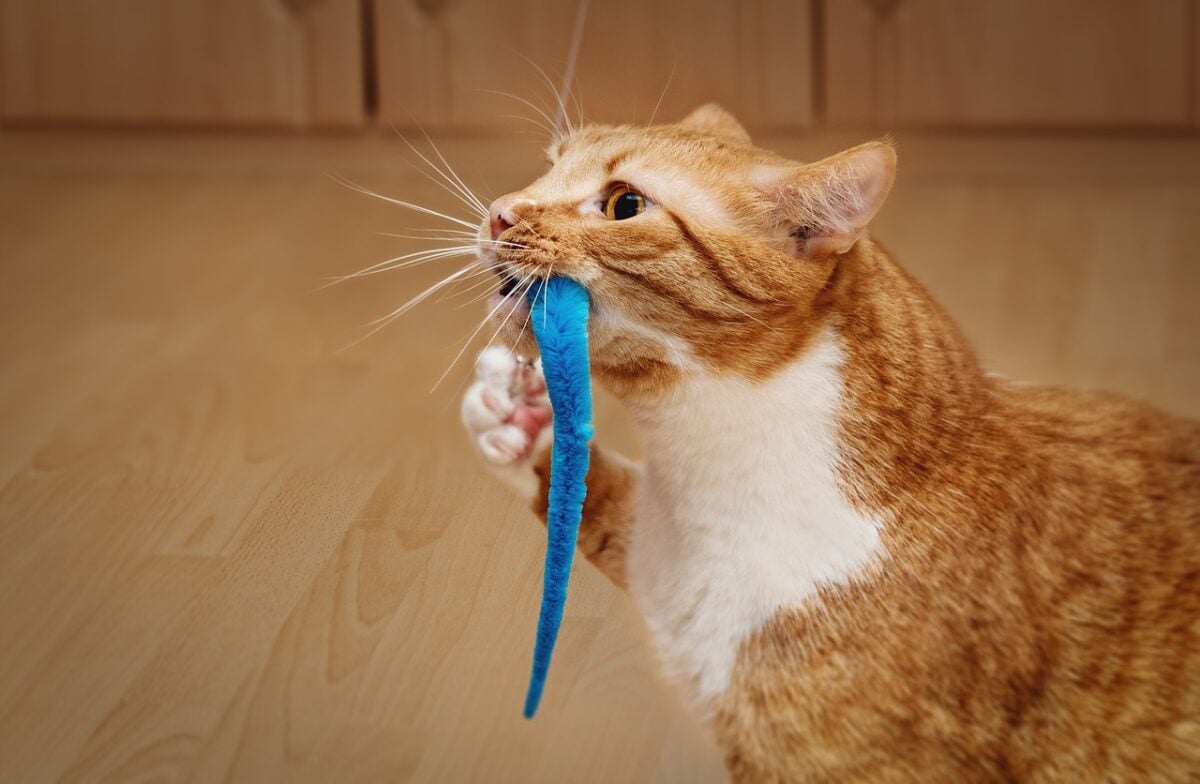
The easiest way to confirm it is to respond. Pick up the toy, toss it, or bring out a wand. If your cat perks up, crouches, chases, or comes right back for more, you’ve probably been invited to play.
For a better game:
- Toss lightweight toys down a hallway for cats who love to chase.
- Move wand toys like prey: creep, hide, pause, then dart away.
- Let your cat catch the toy sometimes. Hunting gets old when the prey is apparently immortal.
- Pay attention to favorites. If the same beat-up mouse keeps getting delivered, that is your review.
Rotate toys now and then, and check them for loose strings or small pieces. Your cat does not care that the expensive toy set had five-star reviews. The crusty mouse has been chosen.
2. Staring at You or Sitting Near a Favorite Toy
Some cats bring toys. Others sit next to them and wait for you to develop telepathy.
A cat parked beside the toy basket, wand drawer, tunnel, or favorite scratcher may be making a very quiet request. The stare itself doesn’t tell you much, but what happens when you reach for the toy often does.
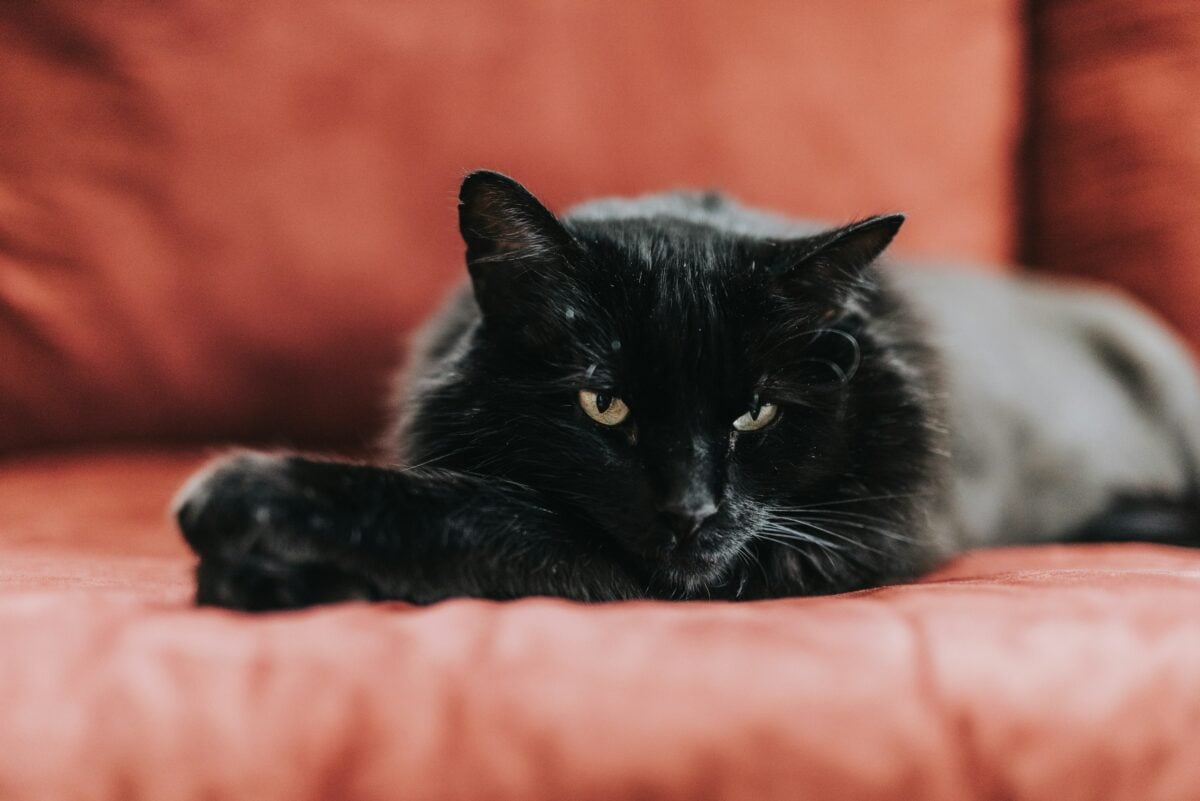
Look for signs that your cat has switched into hunting mode:
- Ears turn forward.
- Eyes lock onto the toy.
- The body lowers into a crouch.
- The backside starts doing that extremely serious little wiggle.
- Your cat launches the second the toy moves.
This is especially common with cats who are less pushy about attention. Older cats may also ask for play this way, but prefer slower wand movements, shorter sessions, soft kicker toys, or food puzzles over full-speed hallway chaos.
3. Chirping, Trilling, or Meowing From Across the Room
Some cats have a specific noise that means, more or less, come here immediately.
You hear a chirp from the hallway, answer it, and get another one. Then your cat trots away, looks back, and clearly expects you to follow. Cats can be surprisingly good at creating little routines like this, especially when a certain sound has successfully gotten you up before.
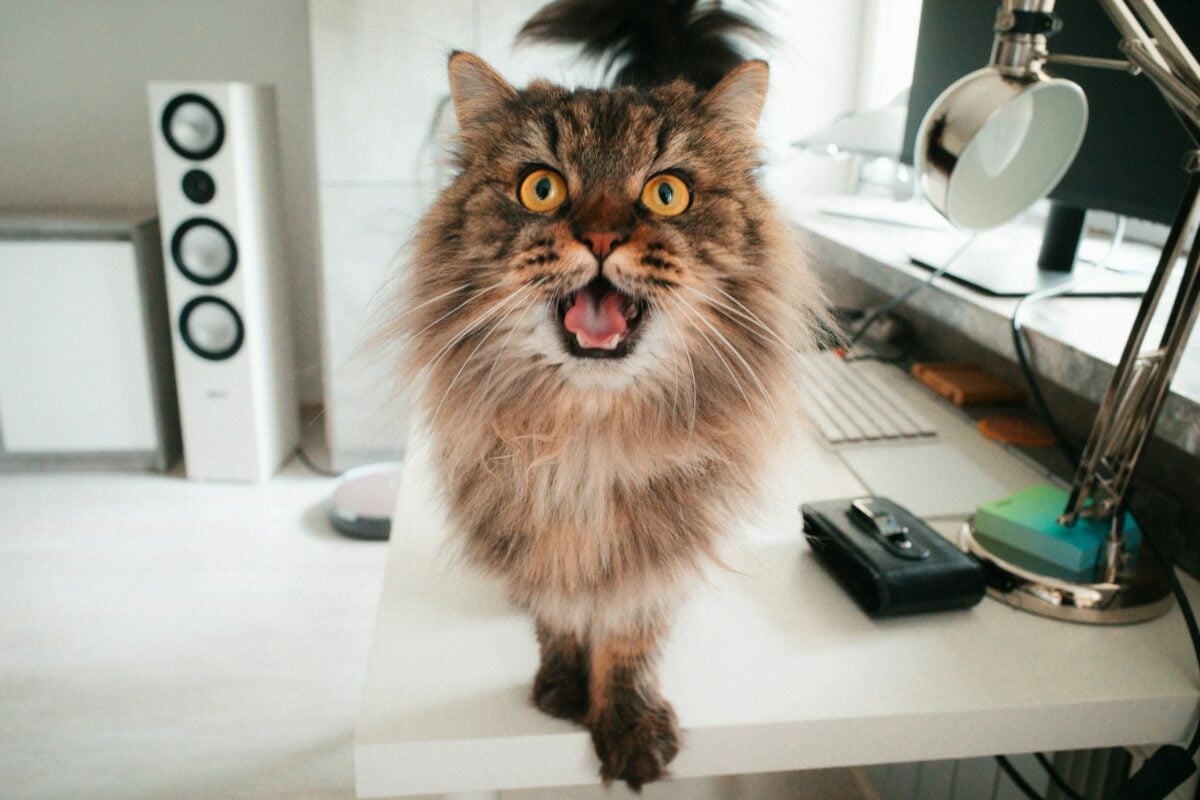
The key is to watch the whole sequence, not just the noise. Play is more likely if your cat:
- Chirps or trills, then runs toward a play area.
- Looks back to make sure you’re following.
- Heads toward a favorite toy.
- Immediately becomes excited when you pick it up.
Of course, cats vocalize for all kinds of reasons: food, attention, closed doors, discomfort, or simply because they enjoy commentary. A sudden increase in vocalizing, especially with changes in appetite, mobility, sleep, or litter box habits, is worth discussing with your veterinarian.
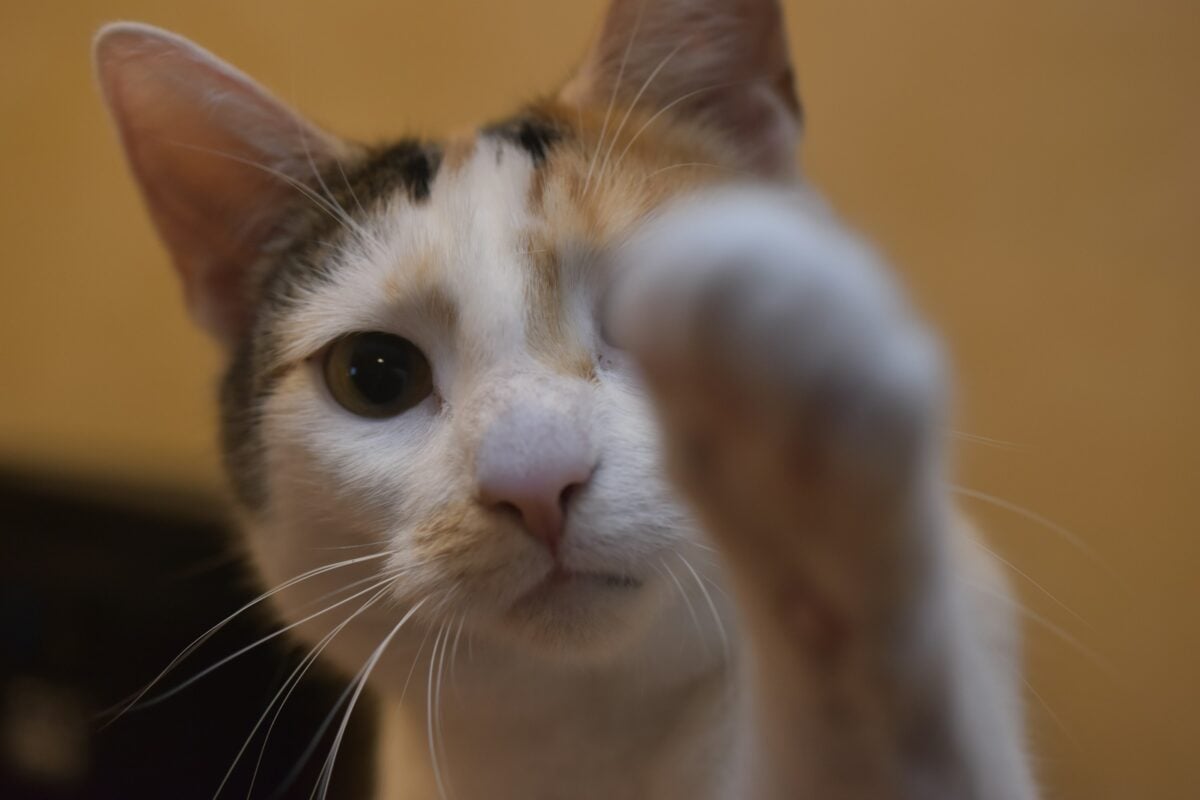
4. Pawing at You or Whatever You’re Using
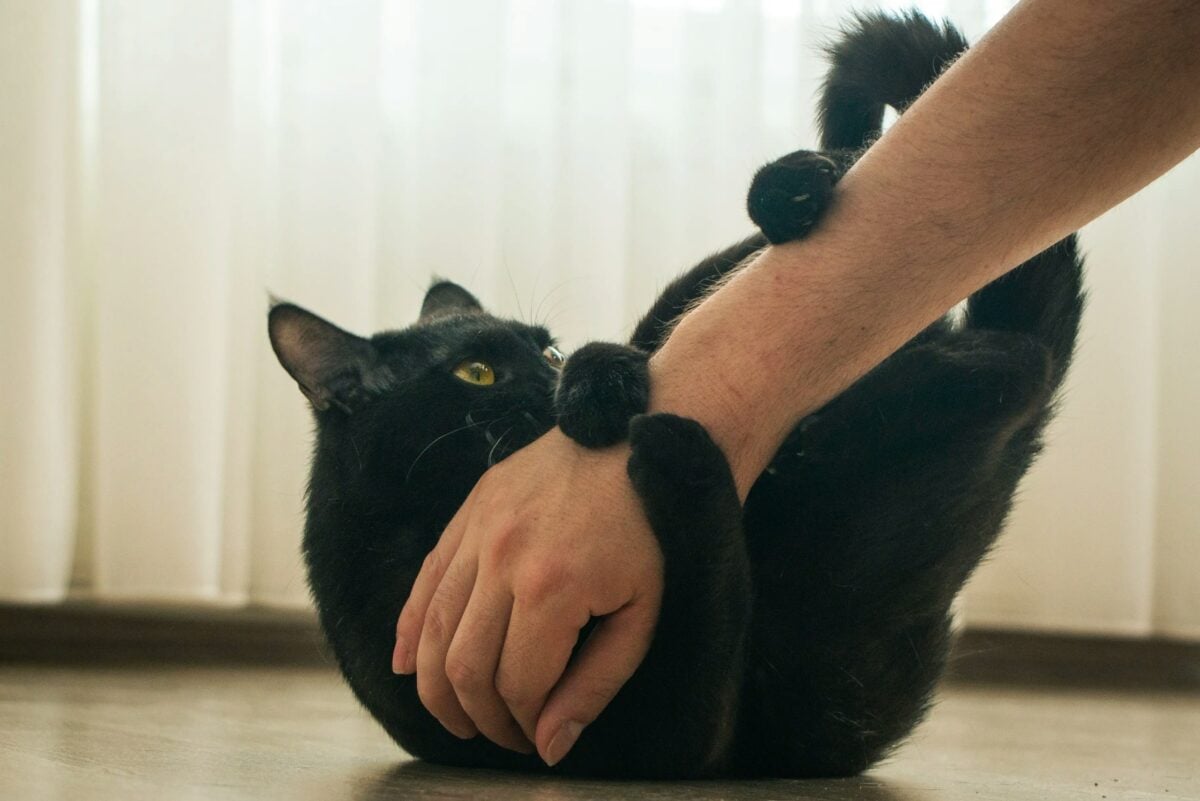
A paw on your arm can mean many things. A paw on your arm, then your laptop, then your arm again while your cat stares directly at you is a little less mysterious.
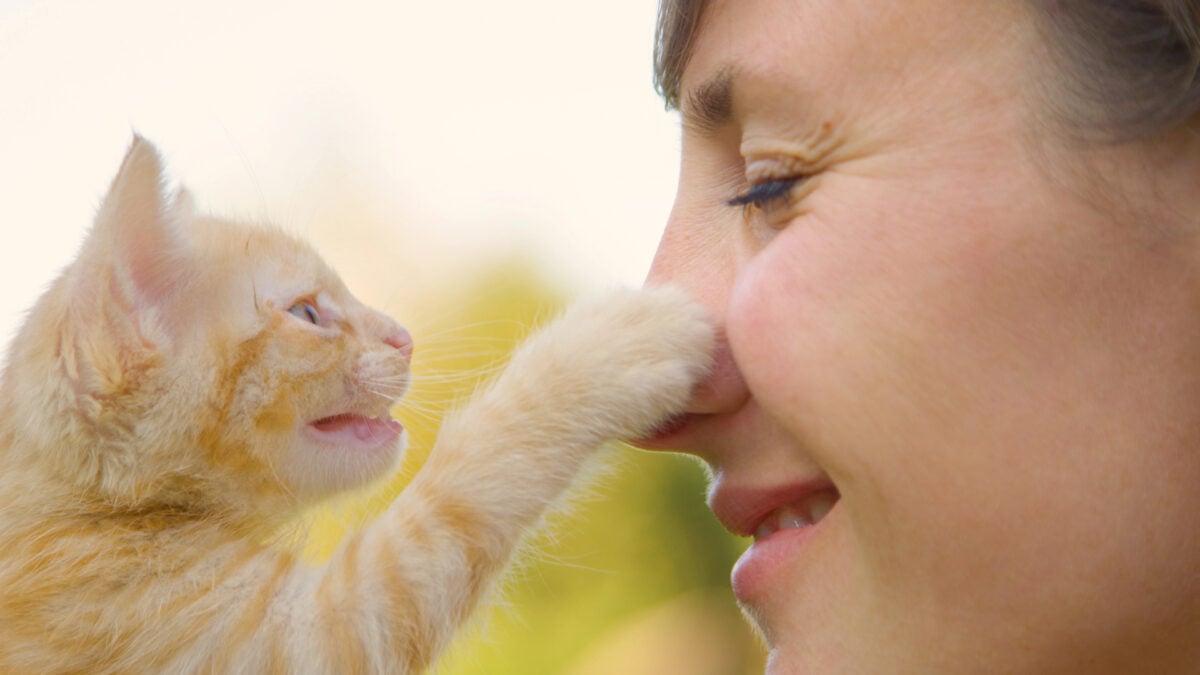
Some cats use gentle pawing to start interaction, especially when they’re alert and energetic. Others go for whatever is currently stealing your attention: your chair, your keyboard, the edge of the sofa.
If you think it’s a play request, redirect that energy onto a toy rather than your hands. Good options include:
- Wand toys for chasing and pouncing.
- Kicker toys for grabbing and bunny-kicking.
- Balls or springs for cats who like batting and chasing.
Hands and feet make lousy long-term cat toys. A kitten wrestling your fingers may be adorable, but that game becomes considerably less adorable when the kitten grows up and still believes your knuckles are prey.
Also watch body language. Loose, bouncy movement is different from a lashing tail, flattened ears, twitching skin, or a tense body. Those can mean your cat is becoming overstimulated, and that is usually your cue to stop.
5. Ambushing Your Feet or Ankles
If your cat waits behind a chair and launches at your ankles when you walk by, congratulations: your socks have entered the food chain.
Feet are almost unfairly tempting. They move unpredictably, vanish around corners, and usually produce an excellent reaction when grabbed. For a playful cat, that checks a lot of boxes.
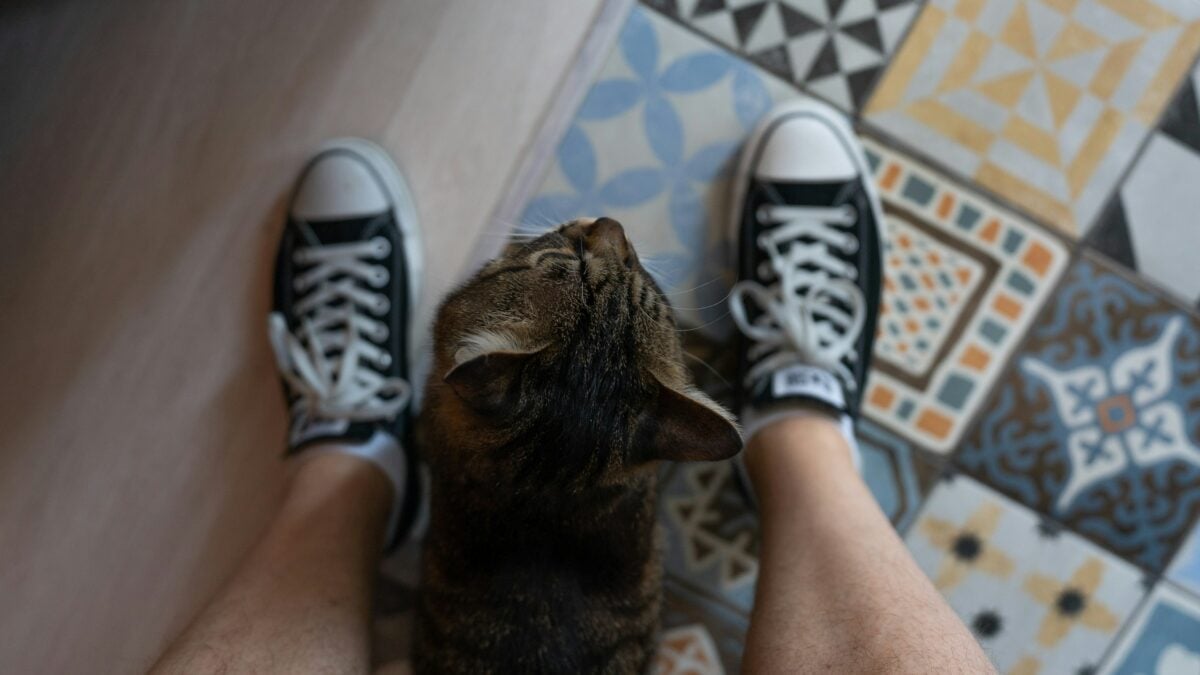
Try not to make the ambush more exciting by squealing, jerking your feet around, or chasing your cat afterward. Instead:
- Redirect with a wand toy or tossed mouse.
- Play before the usual ambush time if there’s a pattern.
- Notice where attacks happen; certain doorways and furniture make perfect hiding spots.
- Give your cat other chances to stalk and pounce during the day.
If the biting is intense, your cat seems frightened, or the behavior appears suddenly, that’s different. New aggression can have medical or stress-related causes and deserves a closer look.
6. Getting Sudden Zoomies
One minute your cat is asleep. The next they’re tearing down the hallway like rent is due and they’ve just remembered.
Zoomies are normal for many cats, especially in the evening or early morning. Some cats also sprint after using the litter box, waking from a nap, or getting excited by something happening in the house.
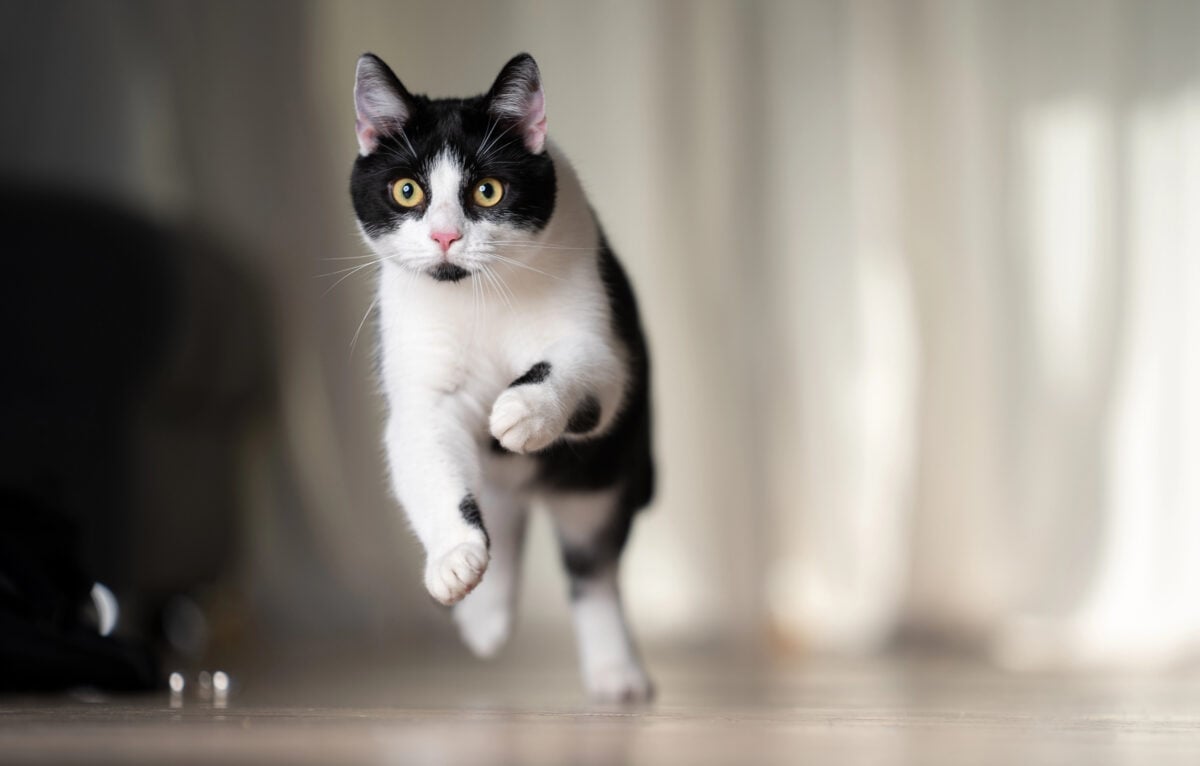
Zoomies don’t always mean play with me. Sometimes the running is the activity. But if your cat starts darting toward you, hiding, reappearing, or repeatedly circling back, that can be a perfect time to join in.
Try:
- Tossing a toy down the hallway.
- Running a wand around furniture.
- Adding a tunnel to the route.
- Using a sturdy cat tree for climbing and jumping.
Indoor cats especially benefit from having several ways to burn energy that aren’t your curtains.
7. Knocking Things Over to Get a Reaction
Some cats eventually discover a marvelous little equation:
Paw + object + edge of table = human attention

From there, your pen collection is doomed.
Cats knock things over because pawing and manipulating objects is normal and interesting. But if the behavior reliably gets you talking, chasing, picking things up, or starting a game, your reaction can become part of the reward.
Ask yourself:
- Does this happen after you’ve been busy for a while?
- Does your cat knock something down and immediately look at you?
- Does the behavior stop once you start interacting?
If yes, try getting ahead of it. Offer a ball, track toy, wand, or puzzle feeder before the nightly desk-clearing begins.
And move fragile or swallowable items out of reach. “My cat needed enrichment” is a terrible explanation for why the earring is at the emergency vet.
8. Scratching or Climbing More Than Usual
Scratching and climbing are normal cat behaviors, not acts of revenge.
Cats scratch to stretch, maintain their claws, and leave scent and visual marks. They climb for exercise, security, and the deeply satisfying experience of sitting above everyone else.
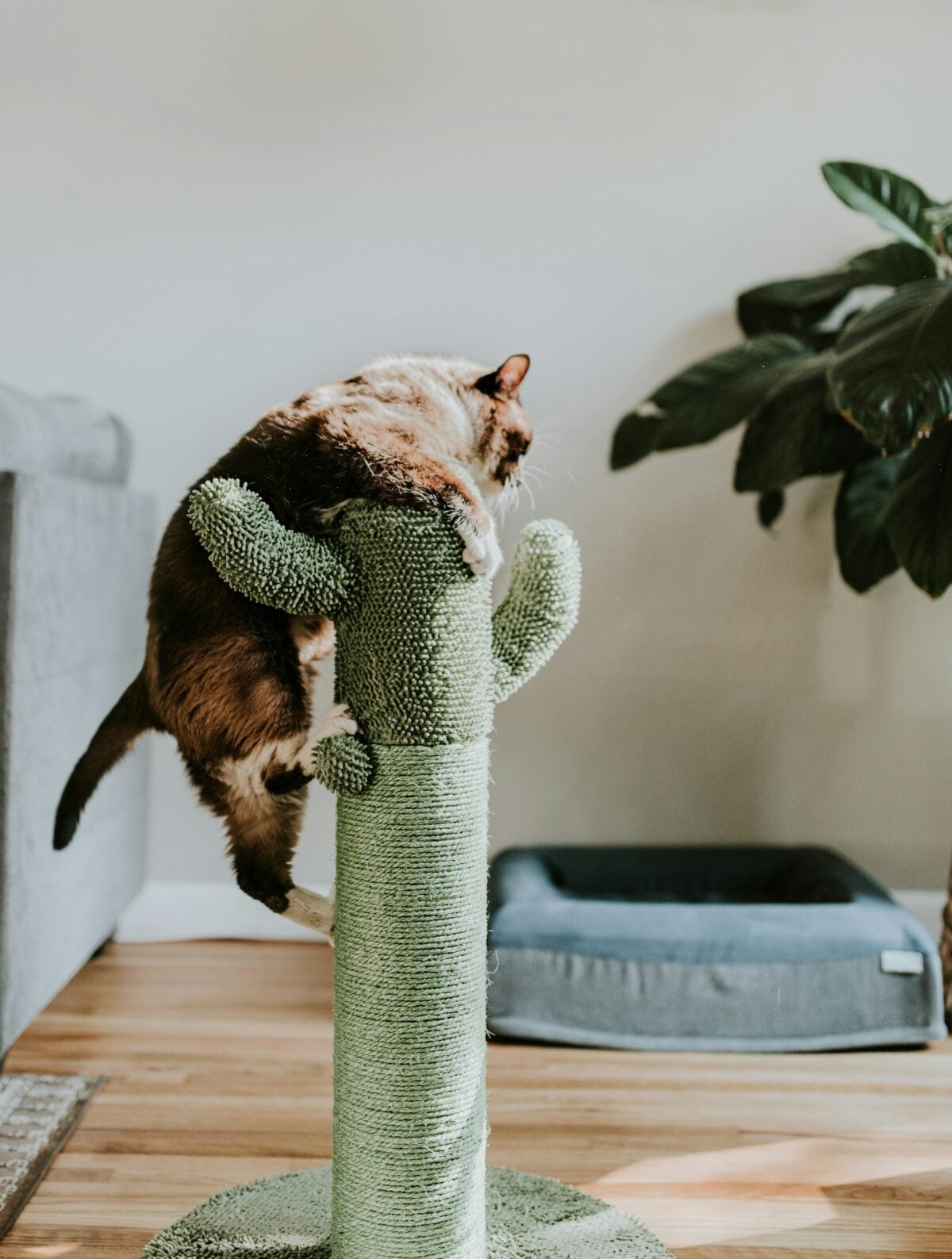
Scratching or climbing alone doesn’t mean play with me. But when it suddenly ramps up alongside racing, chirping, following, or other energetic behavior, your cat may be looking for something to do.
Make sure the basics are good first:
- Offer sturdy scratchers that don’t wobble.
- Try both vertical and horizontal surfaces.
- Put scratchers where your cat actually spends time.
- Give climbers secure, stable places to perch.
Interactive play can build on that setup. A wand toy moving around the base of a cat tree or disappearing behind a scratcher can make the whole environment more interesting.
9. Following You From Room to Room
Kitchen? Cat.
Bathroom? Cat.
Upstairs? Still cat.
Following you around can mean your cat wants company, food, entertainment, or simply access to whatever incredibly important thing you’re doing in the laundry room.
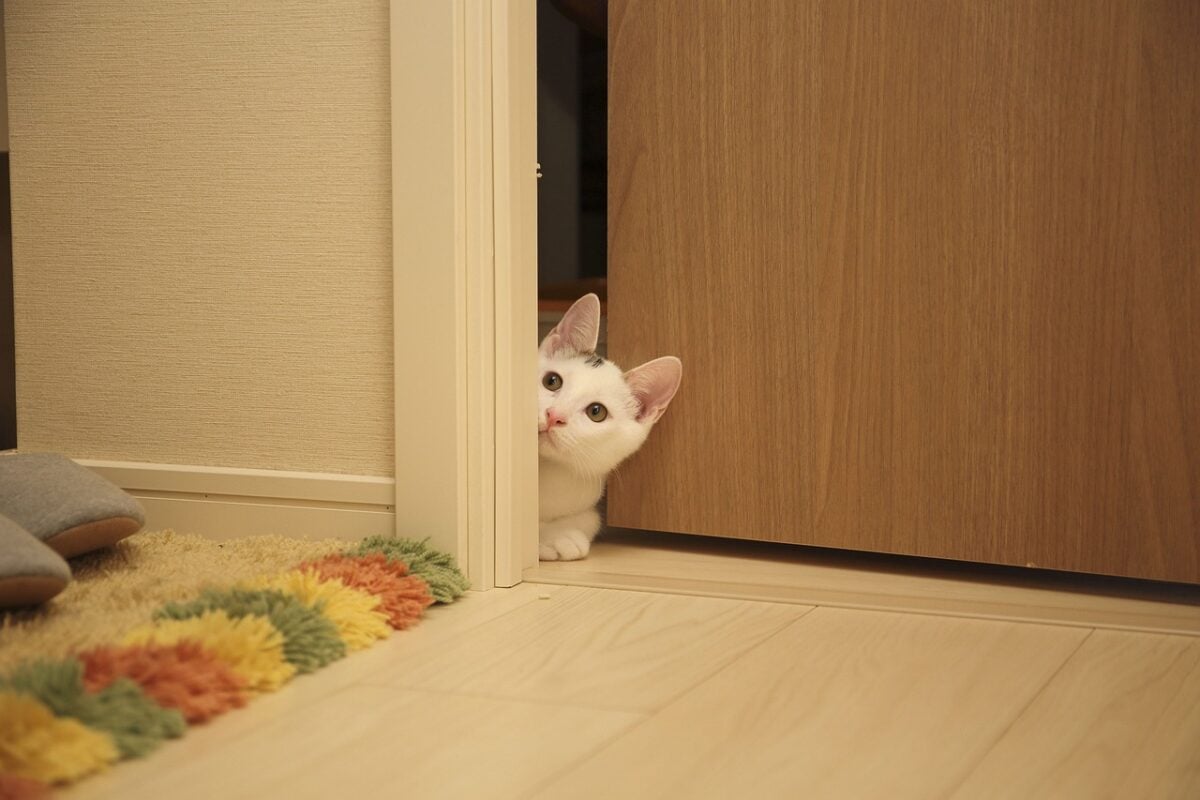
Play becomes more likely when following turns into a little game: your cat darts ahead, looks back, hides around a corner, then pops out again when you catch up.
If that sounds familiar, try transferring the game to a toy. A wand or tossed mouse lets your cat stalk and chase without turning the entire house into a pursuit scene.
This is also a reminder that sometimes you are the enrichment. A toy sitting still on the floor is fine. You make it creep, flee, hide, and suddenly change direction.
Basically, you’re production staff.
10. Interrupting You While You Work
Cats are excellent at identifying exactly what has your attention and sitting on it.
Laptop? Occupied.
Notebook? Occupied.
Hand on the mouse? Attackable.
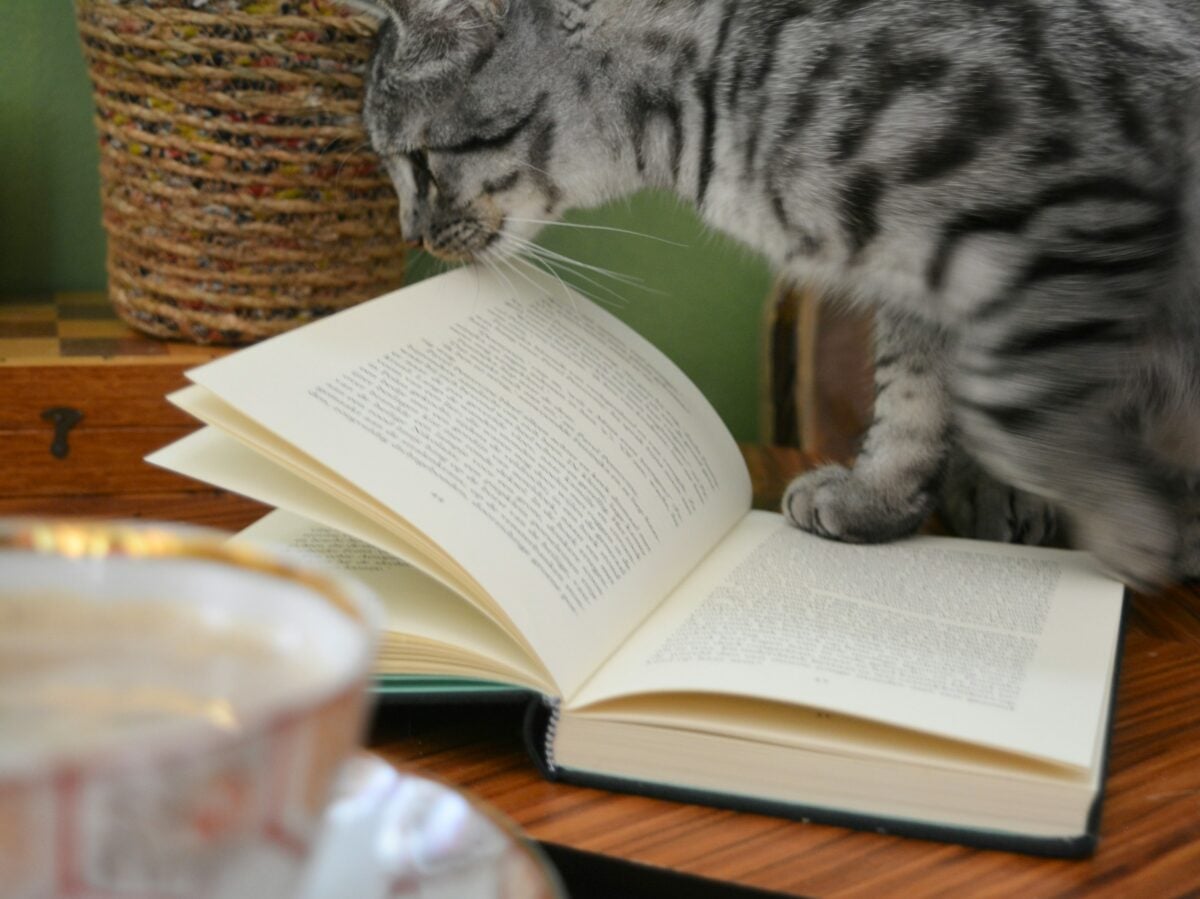
Sometimes your cat just wants warmth or company. But if the interruption comes with toy deliveries, pawing, crouching, chirping, or racing away when you look at them, they may be asking for a game.
A five-minute play break can work surprisingly well, especially if it’s focused. If you work from home, it can also help to give your cat their own setup nearby:
- A bed or perch beside your desk.
- A scratcher within easy reach.
- A window seat.
- A puzzle feeder during busy stretches.
Try not to make bad behavior the only guaranteed route to attention. If shoving your mouse onto the floor always produces ten minutes of play, your cat has discovered an extremely effective office policy.
11. Acting Restless at the Same Time Every Day
Cats notice routines with unsettling precision.
Feed breakfast at 6:30 a.m. long enough, and you will eventually have a furry alarm clock standing on your chest at 6:24.
Play can become just as predictable. If your cat starts pacing, chirping, racing, or pestering you around the same time each day, they may be anticipating activity.
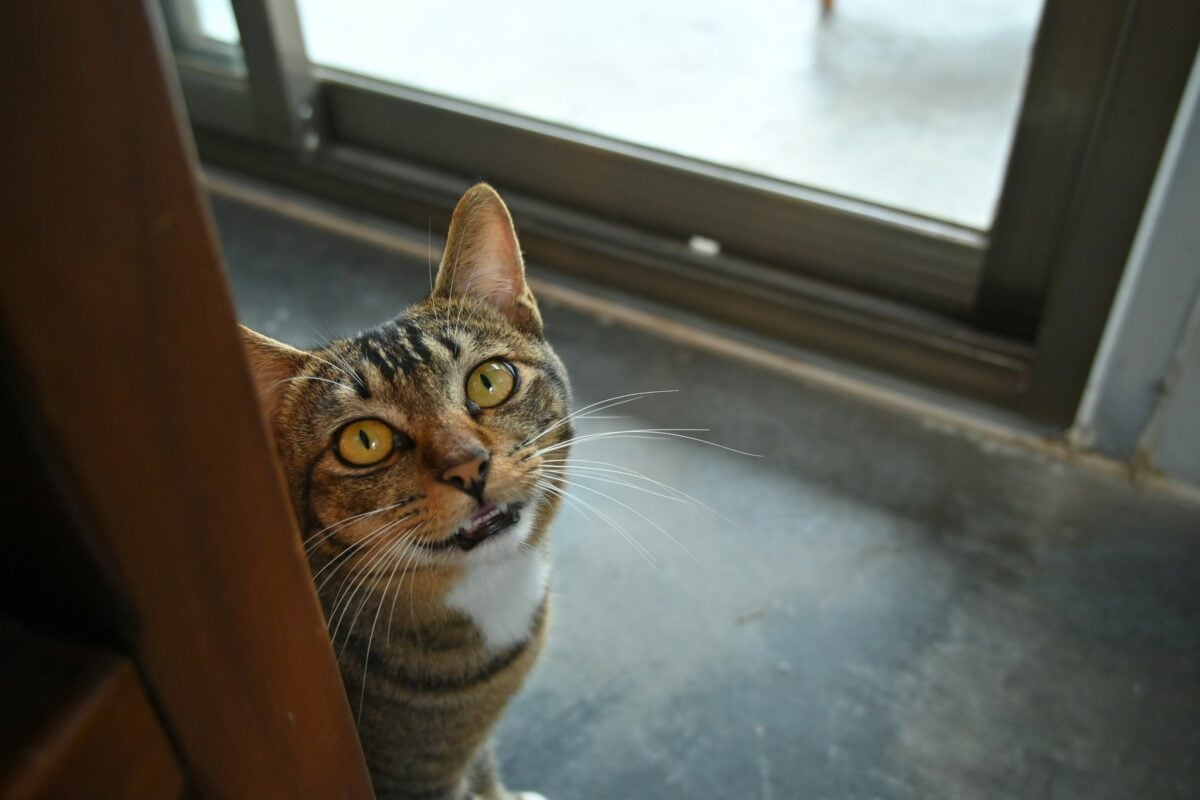
Use that to your advantage. If 8:00 p.m. usually becomes Goblin Hour, start a game at 7:50.
For a satisfying session:
- Let the toy creep, hide, pause, and sprint.
- Give your cat time to stalk instead of keeping everything in constant motion.
- Let them catch the toy.
- Mix things up with wands, food puzzles, boxes, tunnels, or hidden toys.
The goal isn’t to exhaust your cat until they collapse. It’s to give that predictable burst of energy somewhere useful to go.
12. Waiting, Hiding, or Pouncing From Strategic Spots
Behind the curtain. Under the table. Beside the doorway. Inside the cardboard box you absolutely meant to recycle.
To a cat, these are not random household locations. They are tactical positions.
If your cat waits, watches you approach, springs out, then runs toward another hiding place, you may already be participating in a game. Nobody bothered to give you the rulebook.
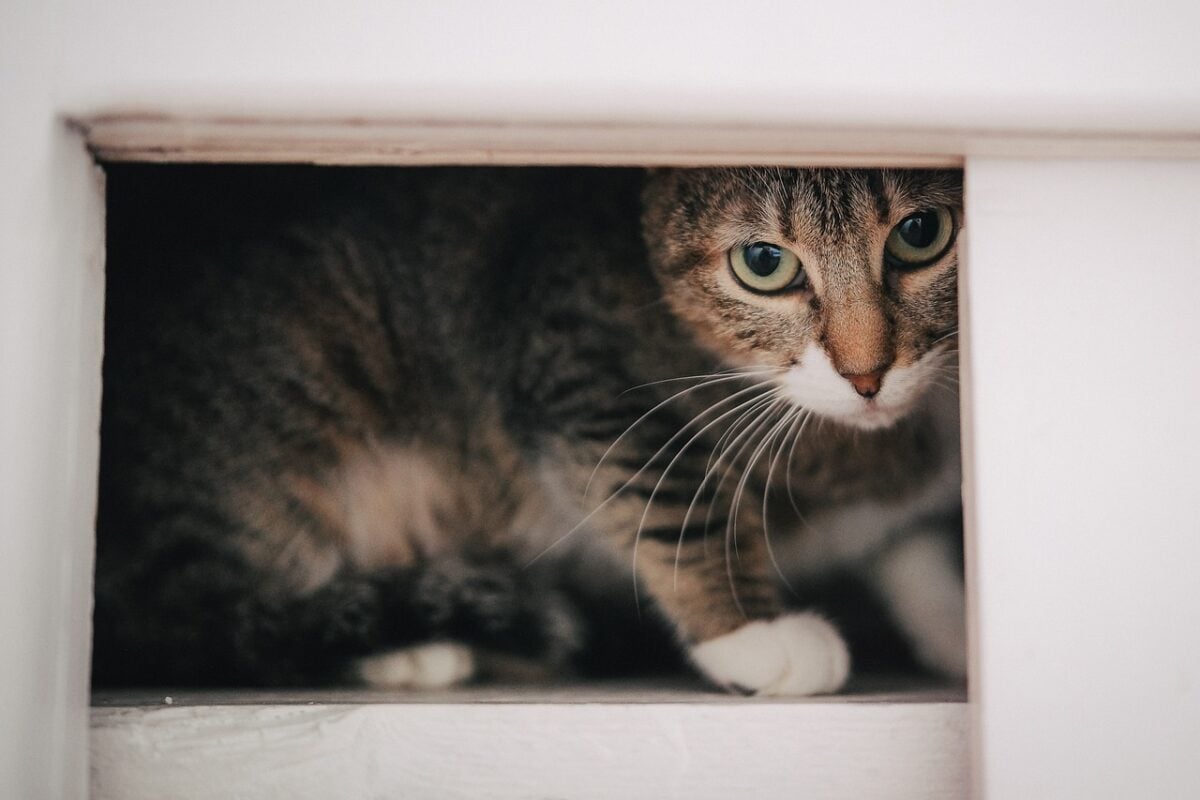
Use that same idea during play. Cats often enjoy toys more when they disappear and reappear rather than moving constantly in plain sight. Try letting a wand lure:
- Slip behind the sofa.
- Pause under a paper bag.
- Peek around a box.
That gives your cat time to stalk, calculate, and pounce instead of simply chasing.
Just keep the game safe. Avoid unstable furniture, dangerous jumps, and unsupervised string or ribbon toys.
And remember that not every hiding cat wants to play. A playful cat usually stays alert and chooses to re-engage. A frightened, stressed, or sick cat may be hiding because they want space.
Sometimes the box is a hunting blind.
Sometimes it is a very firm out-of-office message.
When “Play With Me” Might Mean Something Else
Cat behavior would be much easier if every action came with subtitles. Unfortunately, the same zoomie, meow, scratch, or dramatic hallway sprint can mean different things depending on the cat and the situation.
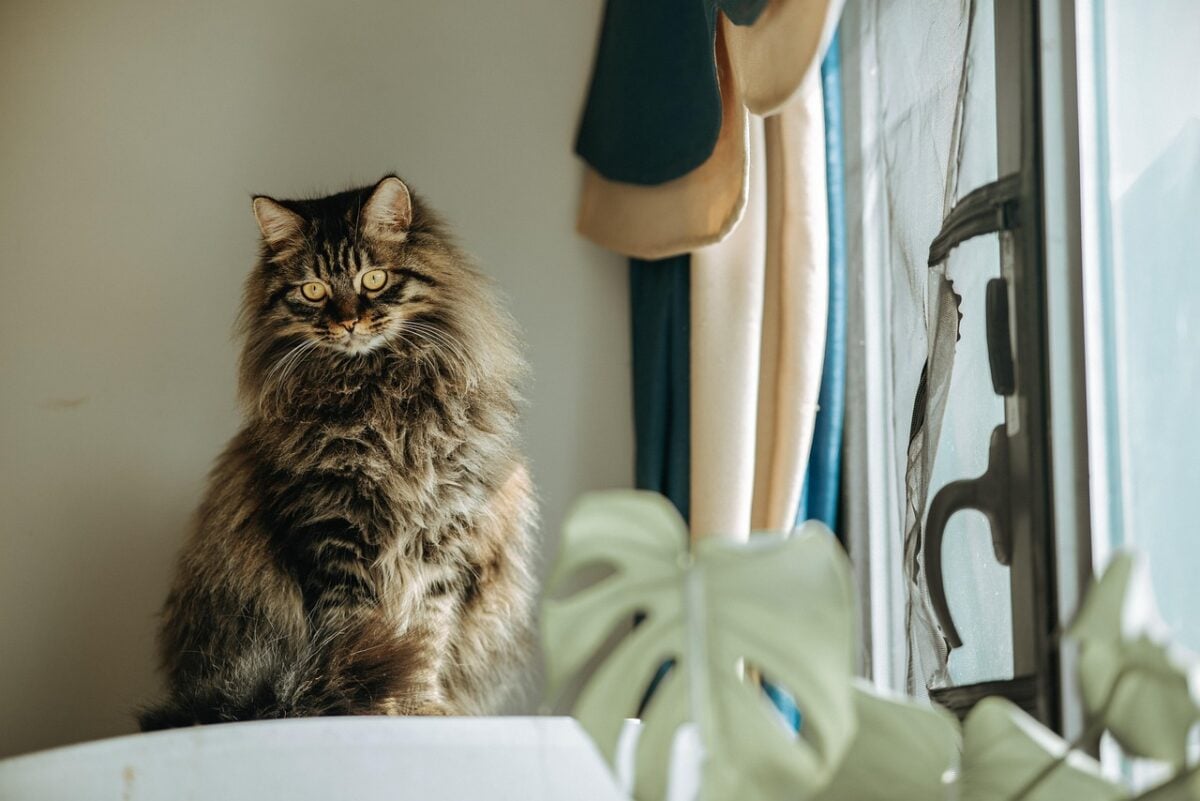
The best approach is to look for patterns instead of one isolated behavior. A cat asking to play will often choose to engage: approaching you, watching a toy closely, stalking, pouncing, retreating, then coming back for another round.
A few clues can help you tell the difference:
- Play-seeking: Your cat looks alert and interested, engages willingly, and keeps coming back to the toy.
- Overstimulation: Watch for a lashing tail, twitching skin, ears turning back, a tense body, sudden grabbing, or biting. That’s usually a good time to end the game.
- Stress: Persistent hiding, avoidance, flattened ears, unusual aggression, appetite changes, or litter box problems point to something more than “I’m bored.”
- Not enough enrichment: If your cat has very few chances to climb, scratch, chase, explore, forage, or interact, adding more of those opportunities may help.
The biggest clue, though, is change. You know what your cat’s normal brand of nonsense looks like. Sudden severe restlessness, new aggression, persistent hiding, appetite or thirst changes, or litter box problems deserve a call to your veterinarian rather than another round with the feather wand.
Every Cat Has Their Own Way of Asking
The signs can look wildly different from one cat to the next. Yours might deliver a toy mouse, chirp from the hallway, ambush your socks, or sit beside the wand drawer staring until you get the message.
The trick is noticing which little routines reliably turn into play.
When a behavior is becoming annoying, it can help to ask what your cat is trying to accomplish. An ankle ambush may need a better target. Sofa scratching may need a sturdy scratcher nearby. A cat pacing around the kitchen at the same time every evening may be ready for a five-minute hunt before dinner.
My own two cats could not be more different about this.
Zaphod is direct: he’ll swat at my face, stick out a paw as I walk by, or jump into whatever I’m working on and start knocking things over.
Twilight prefers commentary. She’ll start yowling, bat toys across the house, or do both at once—usually around 2 a.m.
After a while, you stop wondering what they want. Zaphod has the paw. Twilight has the 2 a.m. soundtrack. Every cat develops their own little playtime language.
Common Questions About Cat Play
Once you start noticing your cat’s play signals, a few practical questions usually follow: how much play is enough, which toys are worth trying, and when “high energy” might actually mean something else.
Here are the quick answers.
How Much Playtime Does an Indoor Cat Need Each Day?
There’s no universal target. Most cats do well with a few short, engaging play sessions rather than one long marathon.
Watch your cat’s interest level. If they’re still stalking, chasing, and re-engaging, keep going. If they wander off, groom, or settle down, they’re probably done.
How Do I Know When My Cat Is Done Playing?
Your cat may wander off, start grooming, lose interest in the toy, or simply lie down and watch instead of chasing. Let them end the session rather than trying to keep the game going.
What Toys Are Best for a Cat That Wants More Stimulation?
Match the toy to what your cat naturally likes doing.
- Chasers often love wands, springs, and balls.
- Wrestlers may prefer kicker toys.
- Food-motivated cats can enjoy puzzle feeders.
- Climbers benefit from cat trees and sturdy vertical spaces.
And never underestimate the entertainment value of a cardboard box.
Why Does My Cat Want to Play at Night?
Cats often have bursts of activity in the evening, especially if they’ve spent much of the day sleeping.
A short interactive play session before bed can help give that energy an outlet. If nighttime activity suddenly becomes intense or unusual, especially in an older cat, mention it to your veterinarian.
When Can Restless Behavior Mean My Cat Needs a Veterinarian?
Pay attention to changes from your cat’s normal behavior.
Restlessness is more concerning when it appears suddenly or comes with other changes such as reduced appetite, excessive thirst, hiding, pain, weight loss, new aggression, or litter box problems.
Repeated straining or unsuccessful attempts to urinate can be an emergency, particularly in male cats, and needs immediate veterinary attention.
Still wondering what your cat is trying to tell you? Drop your question in the comments, and tell us what your cat does when they’ve decided it’s officially playtime. We’re always up for decoding more feline nonsense.
Keep Decoding Your Cat
The more you pay attention, the easier it gets to recognize your cat’s particular version of play with me. Maybe it’s a toy dropped at your feet. Maybe it’s a chirp from the hallway. Maybe it’s Zaphod swatting me in the face because apparently subtle communication is for other cats.
And sometimes what looks like a play request is really your cat asking for more to do. If the ankle attacks, yelling, scratching, and household sabotage are becoming a regular event, these signs that your cat may be bored can help you figure out whether they need more stimulation.
If your cat’s preferred form of self-expression involves sprinting through the house like a tiny furry missile, we also have a full guide to why cats get the zoomies—including why they so often happen at night and when a sudden change is worth paying attention to.
You can also learn more about what your cat’s energy level may be telling you and how to read those twitching, swishing, pre-pounce signals in our guide to cat tail language.
Mostly, though, keep watching your cat.
They’ve probably been explaining themselves this whole time.
We’re just a little slow.
How Does Your Cat Ask to Play?
Toy delivery? Hallway yowling? Ankle ambush?
Tell us your cat’s signature play-with-me move in the comments. We want the weird little rituals, dramatic demands, and 2 a.m. nonsense. The comments are open for cat business.