When you purchase through links on our site, we may earn a commission at no extra cost to you. Learn more.
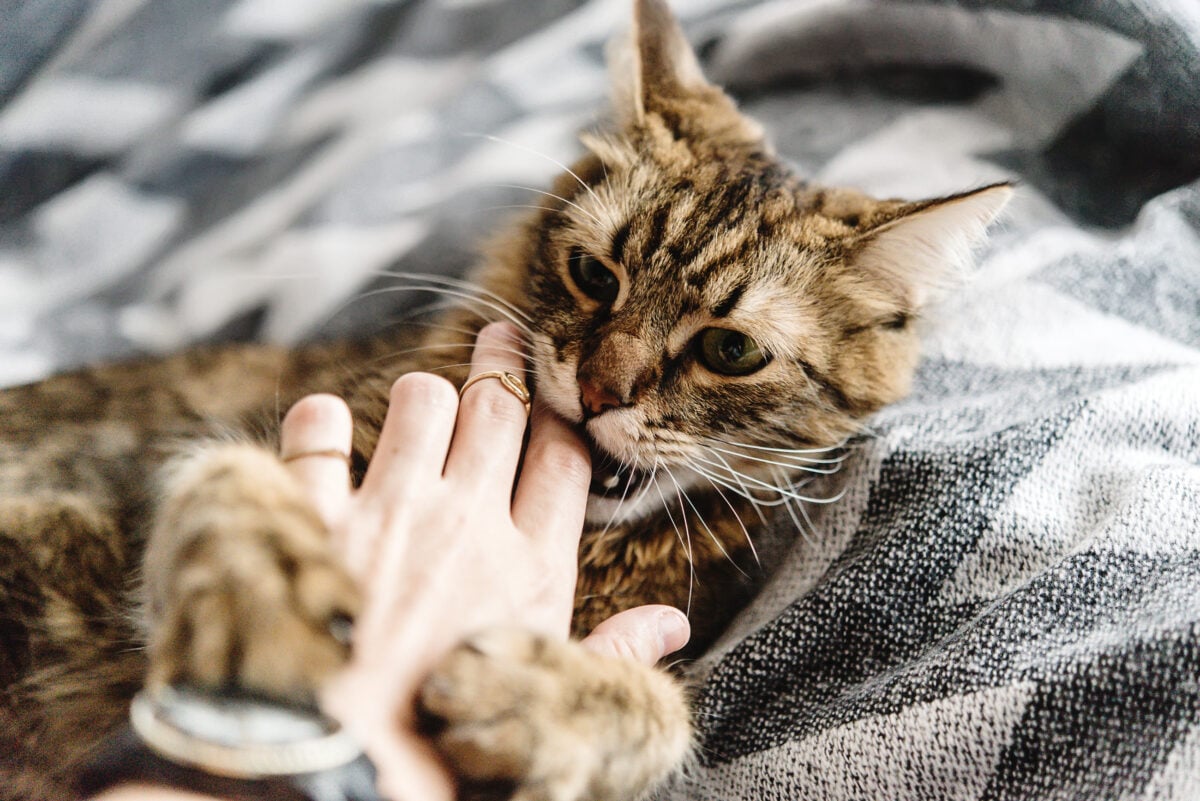
Picture this: You are relaxing on the couch, completely at peace, with your favorite feline curled up beside you. Or maybe you are fast asleep at 3:00 AM, deep in a good dream. Suddenly, your cat leans in close, purrs like a tiny engine, and gives you a soft, unexpected chomp right on the forehead, leaving you wondering: Why does my cat bite me gently?
Table of Contents
I know this specific brand of feline chaos all too well. My own cat has a bizarrely cute habit of treating my face like a midnight snack or a couch cushion chew toy, leaving me staring at the ceiling, wondering why my sweet, fuzzy little freeloading predator has suddenly decided to taste-test my nose.
Welcome to the ultimate feline paradox. One minute, they are a purring angel kissing your nose, and the next, they are delivering a tiny, confusing nibble like you missed a memo. It feels random, but gentle biting is usually a form of communication.
Let’s dive into what these gentle bites really mean, how to spot the warning signs, and how to kindly remind your tiny roommate that you are not a human-shaped cat treat.
Want our human-written content to rank above AI-generated garbage? Help us out by clicking this button!
What Your Cat Is Really Saying With a Gentle Bite
A gentle cat bite usually means your cat is trying to tell you something in the most cat way possible. Most of the time, a soft nip means your cat is feeling affectionate, playful, overstimulated, bored, or ready for the interaction to stop.
Here are the 6 most common meanings:
- Affection: Your cat may be giving you a “love bite,” especially if their body is relaxed, their eyes are soft, and they stay close afterward.
- Overstimulation: Petting may have felt good at first, but then it became too much. This is especially common if the bite happens after repeated strokes.
- Play or hunting instinct: Moving fingers, hands under blankets, or quick motions can trigger your cat’s prey drive.
- Attention-seeking: If your cat gently bites when you stop petting them, ignore them, or work at your desk, they may be trying to get a reaction.
- Boundary-setting: Your cat may be saying, “That’s enough,” especially if their tail is twitching, ears are shifting back, or body becomes tense.
- Pain or stress: If the biting is sudden, harder than usual, linked to one body area, or paired with hiding, growling, hissing, or flattened ears, it may be more than a harmless nip.
The teeth are only one clue; the timing, posture, and aftermath fill in the rest.
If your cat has ever purred sweetly, looked deeply into your eyes, and then casually sampled your hand like a forbidden snack, this video is for you. It walks through why cats give gentle bites and how to read the message behind the surprise nibble.
Once you know what to watch for, those surprising little nips start to make a lot more sense. That brings us to the part every cat owner knows too well: the moment when a cozy cuddle suddenly escalates.
6 Reasons Your Cat Bites You Gently
Now let’s match the fang tap to the most likely motive. The same bite can mean very different things depending on what happened right before it.
Start with the setup. What happened right before the bite? Was your cat relaxed or tense? Did they stay close afterward or run away? The bite itself is only one clue. The rest of your cat’s body language tells the real story.
1. Affection: The “I Love You, So I Must Taste You” Bite
Sometimes, teeth equal tenderness. Cats use their mouths during grooming, play, and social bonding, so a soft nip can show up during affectionate moments. If your cat gently bites you and then stays close, rubs against you, slow-blinks, or keeps purring, they may be giving you a strange little feline compliment.

This kind of bite is usually soft, brief, and controlled. Your cat is not clamping down, breaking skin, growling, or trying to escape. They may lick your hand, nibble once or twice, then go right back to cuddling, just like nothing happened.
What it often looks like:
- Your cat is purring, relaxed, and close to you.
- They lick your hand or fingers before the tiny bite.
- Their eyes look soft or half-closed.
- They rub their cheeks, head, or body against you afterward.
- They stay nearby instead of running away or acting tense.
The bottom line: A gentle love bite can be your cat’s odd but affectionate way of saying, “You are part of my trusted circle.” It is sweet, but you still do not want to encourage teeth on skin too much. If the nipping becomes a habit, calmly pause and reroute your cat to licking, rubbing, or a toy instead.
2. Overstimulation: The Sensory Circuit Overload Bite
One of the most common reasons cats bite gently is overstimulation. Your cat may enjoy petting at first, then suddenly hit their limit. To you, it feels like they changed their mind out of nowhere. To your cat, the sensation may have slowly shifted from pleasant to irritating.
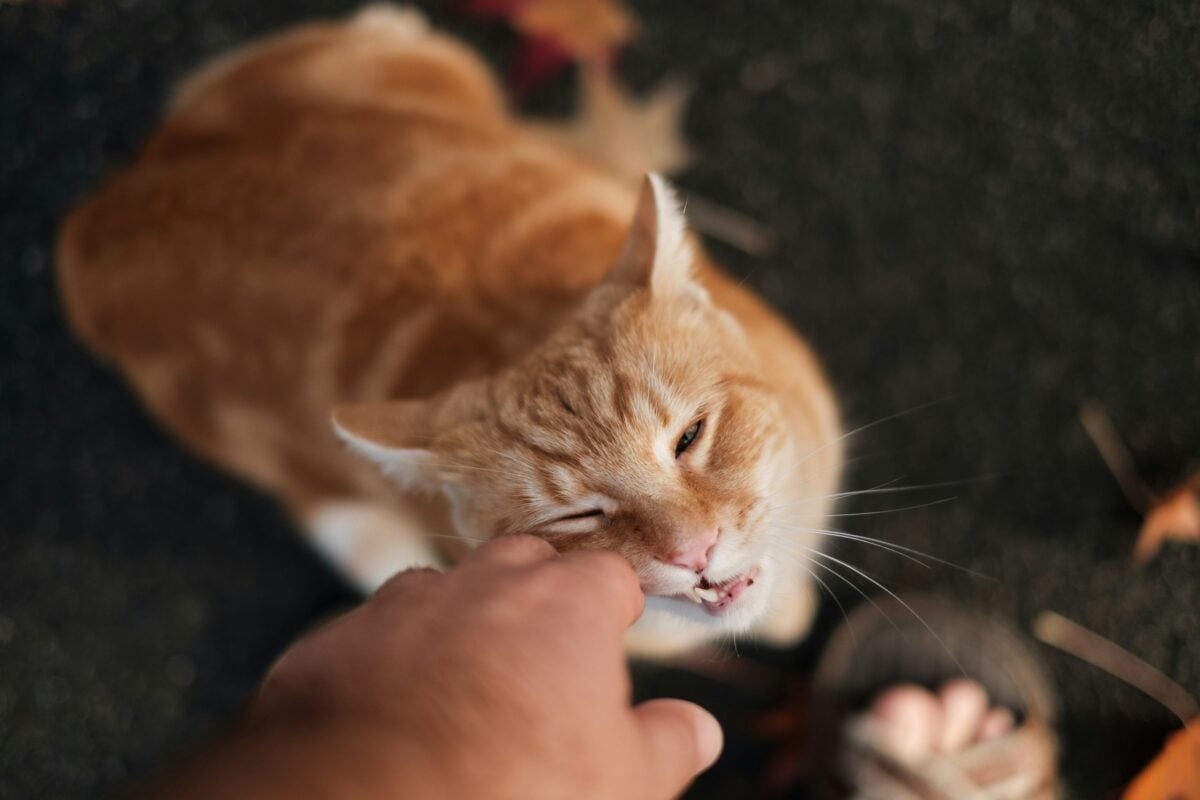
Think of it like being tickled. A few seconds might be funny. Too much in the same spot becomes unbearable. Repetitive petting can work the same way for some cats, especially along the back, belly, or base of the tail.
Classic signs of overstimulation:
- You have been petting the same area for a while.
- The tail starts twitching, thumping, or lashing.
- The ears rotate backward or flatten slightly.
- The body suddenly stiffens under your hand.
- The skin along the back ripples or twitches.
- Your cat stops leaning into the petting.
The cat’s perspective: This is not necessarily an attack. It is their nervous system saying, “That was nice, but now it is too much.” The gentle bite is often the final message after smaller warning signs went unnoticed.
The best fix is to make petting a conversation. Pet your cat two or three times, then pause. If they nudge your hand, lean in, or rub against you, they may want more. If they look away, twitch their tail, tense up, or stay still without re-engaging, the session is probably over.
3. Play or Hunting Instinct: The “That Blanket Moved” Bite
Your cat may look like a soft little couch ornament, but underneath the fluff is a tiny predator with excellent reflexes. Quick movements can trigger hunting instincts, especially when those movements look like prey.
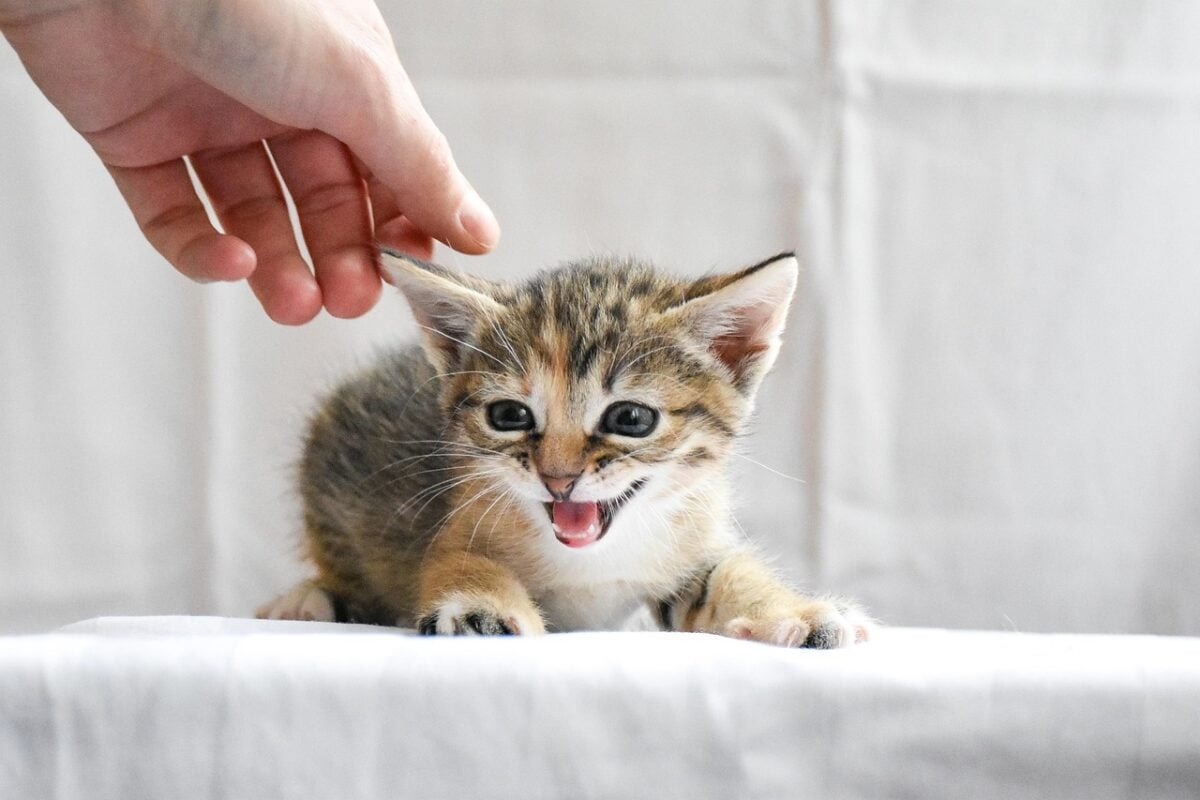
Wiggling fingers under a blanket, toes moving beneath sheets, a hand darting away, or fingers tapping on a keyboard can all look suspiciously mouse-like to your cat. You see your hand. Your cat sees a dramatic wildlife documentary happening in your living room.
Common triggers:
- Fingers moving under blankets or sheets.
- Toes wiggling at the end of the bed.
- Hands moving quickly near your cat’s face.
- Pulling your hand away fast during play.
- Using your fingers to tease your cat.
- Typing, tapping, or scratching surfaces while your cat watches.
The playtime problem: To a cat in stalk-and-pounce mode, your moving hand is not the beloved human hand that opens the food can. It is a rogue rodent that must be stopped.
The rule is simple: hands are for gentle touch, toys are for hunting. If your cat starts targeting your fingers, stop moving your hand like prey and shift their attention to a wand toy, plush mouse, feather teaser, or kicker toy. This gives your cat a proper outlet without turning your skin into part of the game.
4. Attention-Seeking: The “Pay Attention to Me” Bite
Sometimes a gentle bite is not about affection or petting at all. It is about customer service. Your cat wants something, and they have learned that a quick nip gets the human back online.
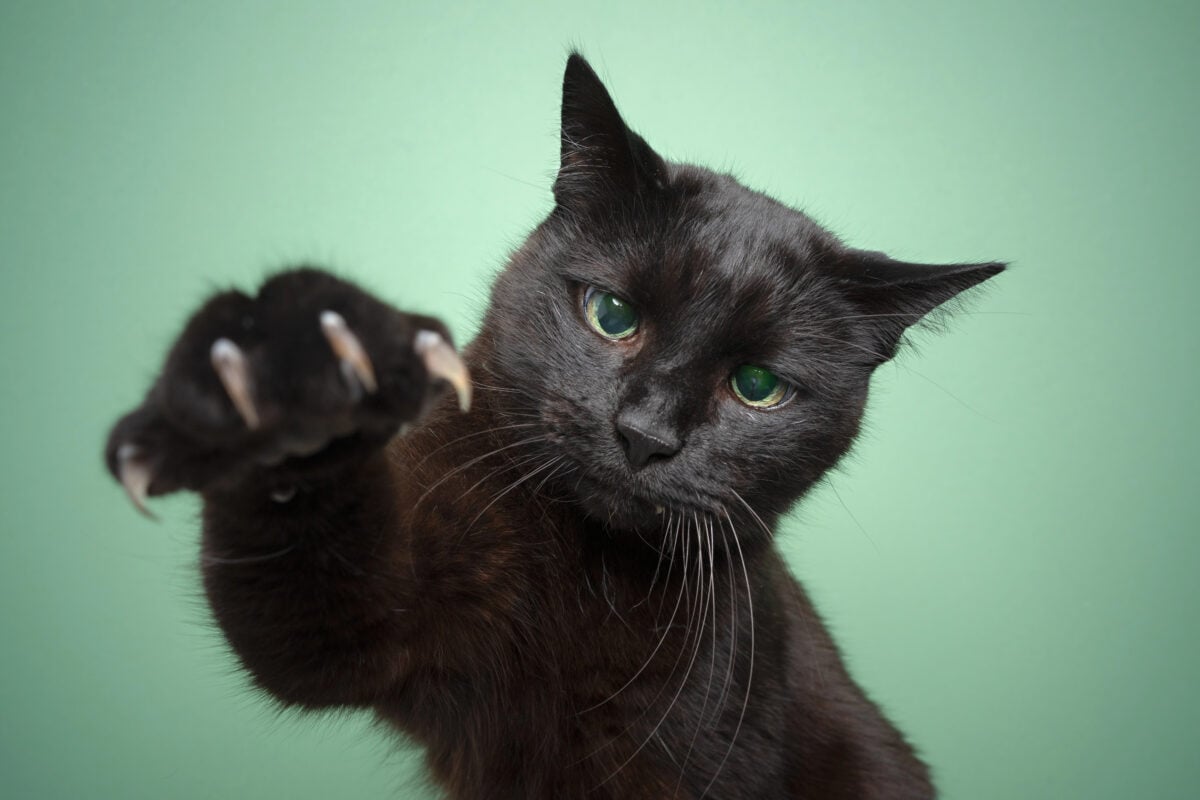
Maybe you stopped petting them. Maybe you are working, scrolling, sleeping, or taking a Zoom call very seriously. Then comes a small bite on your hand, sleeve, ankle, or calf. It is not usually hard. It is just enough to make you look.
When this bite usually happens:
- You stopped petting your cat before they were done.
- You are typing, reading, or looking at your phone.
- Your cat wants food, play, or attention.
- They nip your ankle as you walk away.
- They bite your sleeve or hand while you are busy.
- They do it repeatedly because it has worked before.
The feline logic: If biting makes you talk, move, feed them, pet them, or react dramatically, your cat may learn that teeth are the fastest button to press. If your cat follows you everywhere and then gently nips when ignored, the bite may be part of a bigger “please notice me” pattern.
Try not to reward the nip with instant attention. Keep the moment low-drama and avoid giving the bite the payoff it came for. Pause briefly, remove attention, and wait until your cat is calmer before turning that energy toward play.
If your cat has a full menu of attention-grabbing habits, from nipping to yelling to blocking your screen, this guide on why cats can be so annoying explains the lovable logic behind the chaos.
Midnight Bites Count as Attention-Seeking, Too
If your cat bites your forehead at 3:00 AM to wake you up, any reaction can feel like a win to them. If you get up, scold them, talk to them, or feed them, you may accidentally teach them that biting works.
Instead, make the bite as unexciting as possible. Tuck your face under the covers, stay still, and avoid giving them the attention they came for. Then, during waking hours, give them better outlets: a play session before bed, a puzzle feeder, an automatic feeder, or a consistent morning routine that does not begin with forehead chomps.
5. Boundary-Setting: The Polite “No Thank You” Bite
A gentle bite can also be a boundary. Your cat may not be trying to hurt you. They may be saying, “Please stop,” “Do not touch me there,” or “I need space now.”
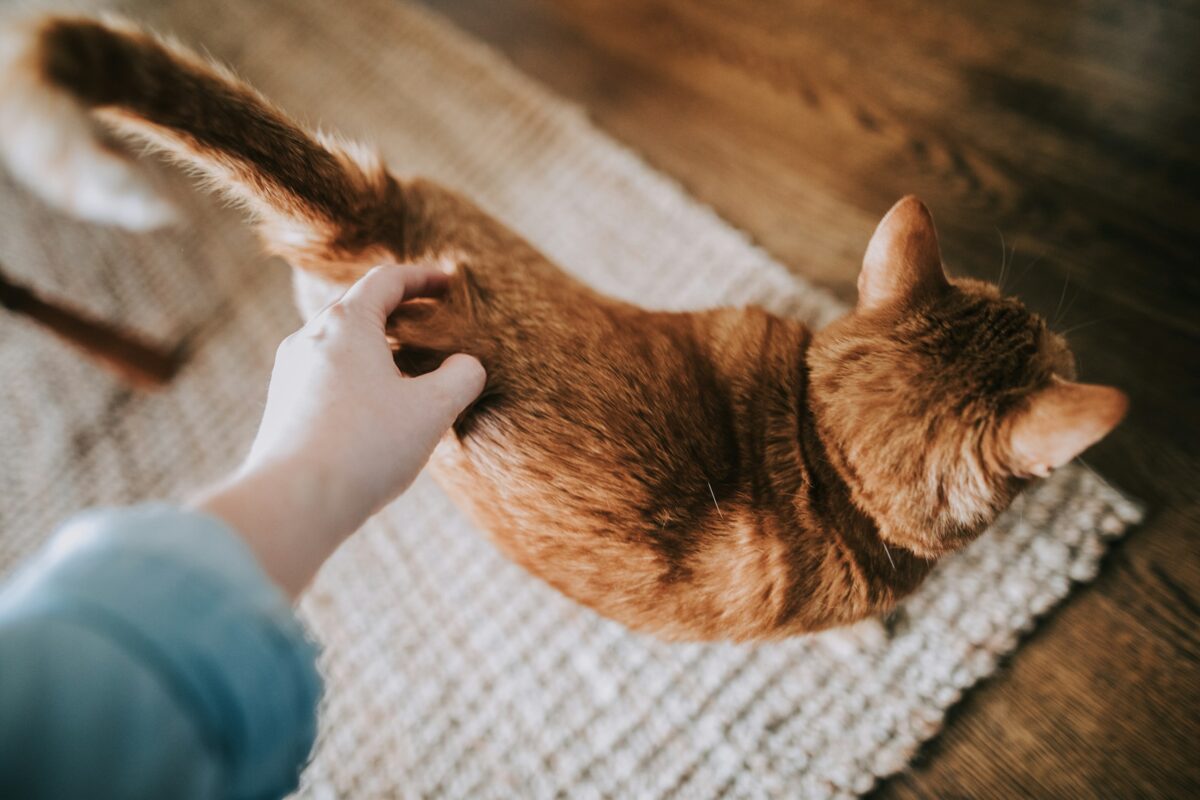
This can happen when you pet a sensitive area, pick them up when they do not want to be held, continue touching after they have lost interest, or miss their earlier warning signs. Cats often communicate quietly first. If the quiet signals do not work, they may use a firmer message.
Signs your cat is hitting their limit:
- The tail tip starts flicking or tapping.
- The ears turn sideways or backward.
- Their bodies go stiff instead of soft.
- They stop purring or stop leaning in.
- They look at your hand intensely.
- They shift away or try to leave.
- Their pupils look larger than usual.
The warning sign: Think of this bite as your cat putting up a tiny “Do Not Disturb” sign. If you listen to the gentle warning, your cat does not need to make the next message louder.
When this happens, calmly stop what you are doing. Do not scold, chase, or keep testing them. Give them space. Respecting the small boundary helps prevent bigger reactions later.
6. Pain or Stress: The “Something Feels Wrong” Bite
Most gentle bites are harmless communication, but not every bite should be brushed off. If the behavior is new, stronger than usual, linked to a specific body area, or paired with fearful or defensive body language, your cat may be stressed, frightened, or in pain.
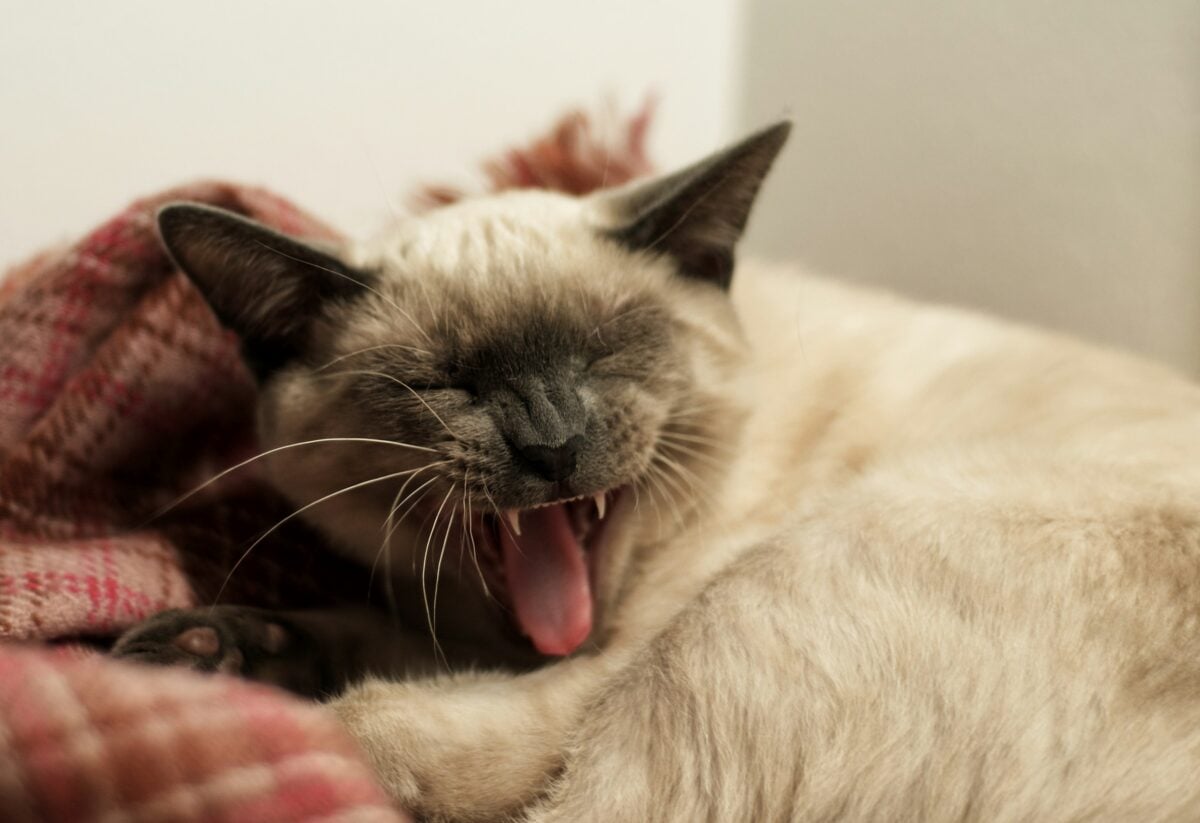
Cats are very good at hiding discomfort. Sometimes a bite is the clearest way they can say, “That hurts,” especially if you touched a sore spot.
Red flags to watch for:
- The biting starts suddenly or feels out of character.
- The bite is harder than usual or breaks skin.
- Your cat bites only when you touch one specific area.
- They growl, hiss, hide, or flatten their ears.
- They run away or avoid you afterward.
- They seem sensitive around the mouth, paws, back, hips, belly, or tail.
- You notice changes in appetite, grooming, litter box habits, movement, or mood.
When to call the vet: If your normally sweet cat suddenly becomes bitey, do not assume they developed a bad attitude overnight. Pain, stress, dental problems, arthritis, skin irritation, injury, or illness can change how a cat reacts to touch. When the biting is sudden, intense, repeated, or unusual for your cat, a veterinary check is the safest next step.
A gentle bite can mean many things, but it is rarely meaningless. Once you match the bite to the situation, your cat’s message becomes much clearer: “I love you,” “play with me,” “notice me,” “stop that,” or “something is wrong.” The more you understand the reason behind the nip, the easier it is to respond without fear, frustration, or accidentally encouraging more biting.
Love Bite or Real Aggression? How to Tell the Difference
A gentle cat bite can be cute, confusing, or mildly insulting, but it is not always a problem. The important question is not just “Did my cat bite me?” It is “What was my cat’s whole body saying when it happened?”
A soft mouthing from a relaxed cat means something very different from a hard bite from a tense, frightened, or overstimulated cat. The bite is only one word. The whole cat is the sentence.
What a Cat Love Bite Usually Looks Like
A cat’s love bite is usually soft, brief, and controlled. It may feel like a tiny pinch or careful nip rather than a serious bite. Your cat does not clamp down hard, shake their head, break the skin, or keep attacking.
The biggest clue is the relaxed context. Your cat may still be purring, slow-blinking, rubbing against you, licking your hand, or staying close afterward. Instead of trying to escape, puffing up like an angry bottle brush, or preparing for battle, they seem loose, comfortable, and connected to you.
Still, do not romanticize every bite. A gentle bite can be affectionate, but it can also mean, “I’m done now.” Ask yourself: Did my cat seem relaxed before, during, and after the bite? If yes, it may be a love bite or mild communication. If no, your cat may have felt overstimulated, stressed, cornered, or ready for the interaction to end.
What Real Aggression Looks Like
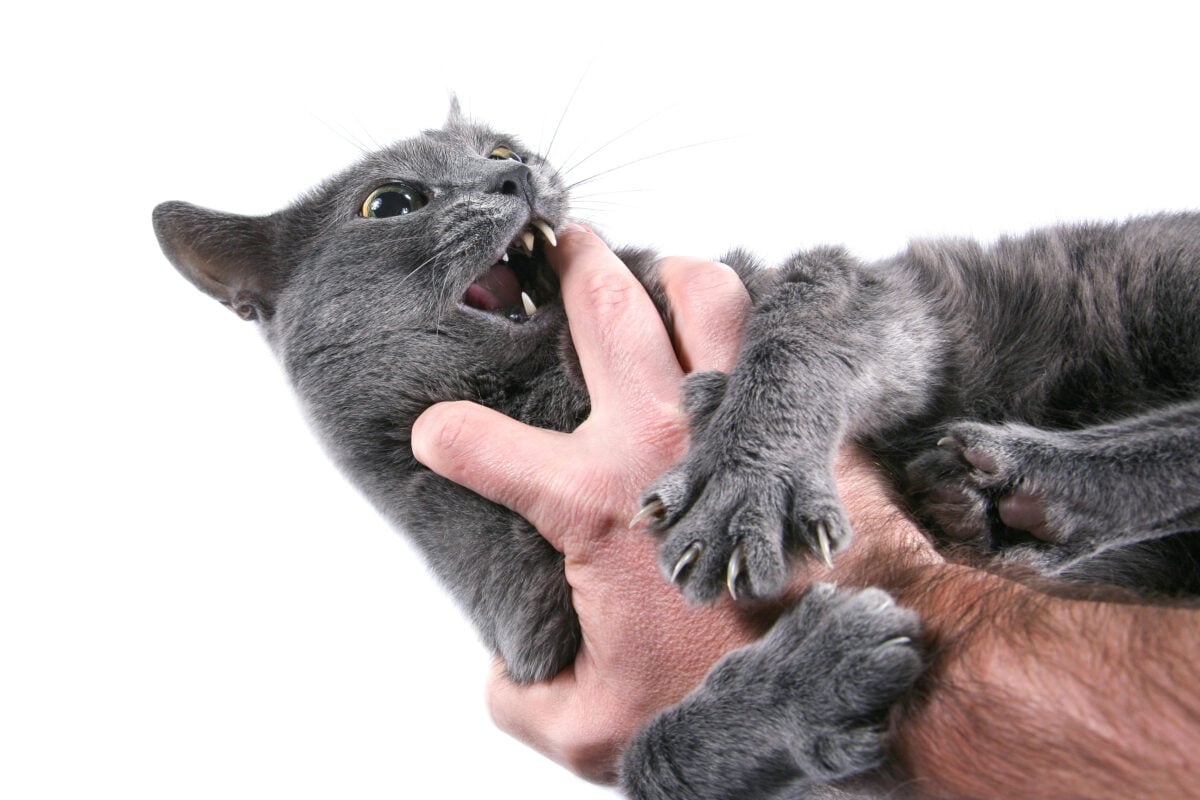
Real aggression looks and feels different from a soft love bite. The bite is usually harder, more painful, repeated, or paired with warning signals that are difficult to miss.
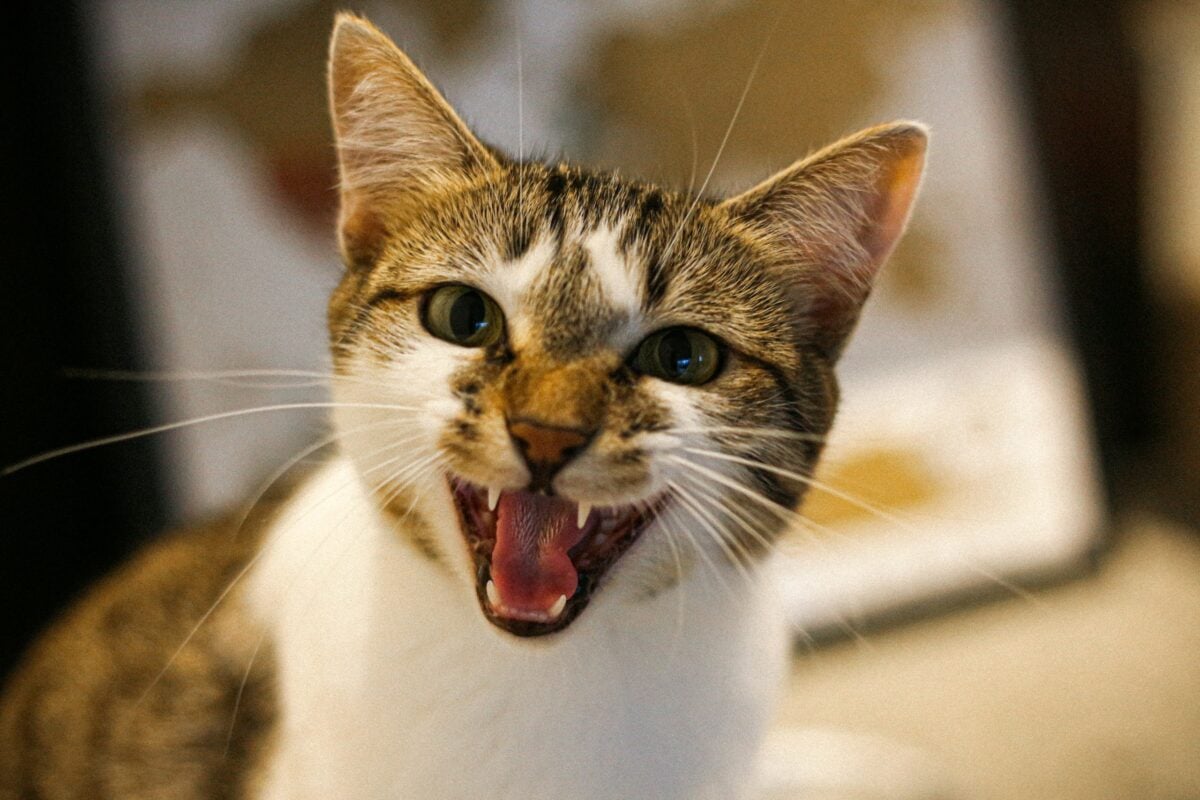
Your cat may hiss, growl, yowl, swat with claws, flatten their ears tightly, puff their tail, arch their back, or stare with wide, intense eyes. Their body may be stiff, low to the ground, or ready to flee or strike.
That is not a quirky love bite. That is your cat saying, “I am not okay.”
Signs a bite may be aggression or serious stress include:
- Hard bite pressure or broken skin.
- Hissing, growling, or yowling.
- Flattened ears or puffed tail.
- Stiff, crouched, or defensive posture.
- Repeated lunging, swatting, or chasing.
- Running away, hiding, or avoiding you afterward.
- Biting when touched in one specific body area.
Context matters, too. Did you pick your cat up when they were trying to leave? Maybe you touched a sore spot? Did another pet enter the room? Was there a loud noise? Did your cat see another animal outside the window?
Cats can bite defensively when they feel trapped, frightened, overstimulated, or in pain. They can also redirect stress. For example, a cat that is worked up after seeing another cat outside may bite the nearest person who touches them or comes close. In that case, the bite is not affection or attitude. It is misplaced stress.
Gentle Love Bite vs. Aggressive Bite: Quick Reference Chart
Use this quick comparison to decode the moment: a soft nibble from a relaxed cat is very different from a hard bite from a tense, frightened, or defensive cat.
| Behavior | Gentle Love Bite | Real Aggressive Bite |
|---|---|---|
| Bite pressure | Light, controlled, usually no broken skin | Hard, painful, may break skin |
| Body language | Relaxed body, soft eyes, loose posture | Stiff body, flattened ears, tense tail |
| Sounds | Often quiet, purring, or relaxed | Hissing, growling, yowling |
| After the bite | The cat may stay nearby or keep cuddling | The cat may flee, hide, swat, or attack again |
| Main message | Affection, play, or mild boundary | Fear, pain, threat, or serious stress |
When to Take the Bite Seriously
Most gentle bites are not dangerous, but they are still worth respecting. Even a soft bite means your cat chose teeth to communicate something.
Pay closer attention if the biting is new, frequent, intense, out of character, or connected to touching one specific area. Cats are famous for hiding pain. A cat who suddenly bites when touched on the back, hips, belly, mouth, paws, or tail may be reacting to arthritis, dental pain, skin irritation, injury, or another health issue.
VCA Hospitals also recommends paying attention to bites that appear suddenly or happen when a specific area is touched, since pain or redirected stress can change how a cat reacts to handling.
The “That Escalated Quickly” Checklist: Spotting the Signs Before the Bite
To the human eye, a cat’s transition from purring angel to tiny landshark can feel instantaneous. One second you’re sharing a beautiful moment on the couch, and the next, you’re being taste-tested.
But in reality, cats rarely bite without warning. They are usually trying to tell us to stop first; they just do it in a silent language of micro-movements. If you want to catch the shift before the teeth come out, watch for these subtle behavioral red flags:
- The Clock-Pendulum Tail: A happy cat’s tail is usually still, loose, or gently relaxed. If the very tip starts twitching, thumping against the couch, or swishing like a slow-motion pendulum, sensory overload may be building.
- The Airplane Ears: Watch the ears. If they rotate outward or flatten to the side like little fuzzy airplane wings, your cat may be shifting from “peaceful” to “highly annoyed.”
- The Sudden Statue: If your cat is melting into your hand while purring and suddenly goes completely rigid, pause immediately. That sudden stillness can be a major boundary-setting signal.
- The Dilated Stare-Down: If your cat turns their head, locks eyes with your face or hand, and their pupils expand into giant black saucers, their play, hunting, or irritation response may be kicking in.
- The Back Ripple: Sometimes, you can actually see the sensory overload happening. If the skin or fur along your cat’s spine starts twitching or rippling as you pet them, their nervous system may be hitting its limit.
The Golden Rule: The moment you see any of these signs, don’t wait for the bite. Pause, remove your hand, and give your tiny roommate some breathing room. Catching these signals early is how you turn a future taste test into a peaceful “okay, cuddle break.”
How to Respond Without Reinforcing the Bite
When a cat bites gently, your first instinct may be to yank your hand away. That reaction makes sense. Teeth on skin are startling. But to a cat, quick movement can look like prey trying to escape. If your hand jerks away, your cat’s hunting brain may switch on harder, which can lead to grabbing, chasing, or another bite.
The goal is not to punish your cat. The goal is to make biting boring, transfer the energy, and reward calmer ways of communicating.
Step 1: Go Still
If your cat has your hand, wrist, or sleeve in their mouth, freeze for a moment. Keep your hand as still as possible and relax your muscles. Do not pull, wiggle, or turn the moment into a game.
Once your cat loosens their grip or releases, calmly move your hand away.
Think: statue first, space second.
Step 2: End the Interaction Quietly
After the bite, pause the petting, play, or attention. No yelling or scolding. No finger-wagging or pushing your cat’s face away.
A calm pause teaches your cat that biting does not create fun movement, dramatic reactions, or more attention. It simply ends the thing they were trying to control.
Step 3: Match Your Response to the Type of Bite
Not every gentle bite means the same thing, so your response should depend on what your cat was trying to communicate.
- If the bite seemed playful:
Point your cat to something they are allowed to bite, grab, and kick. - If the bite seemed overstimulated:
Stop petting and give your cat space. Do not immediately start again. Next time, use shorter petting sessions and pause every few strokes to see whether your cat actually wants more. - If the bite seemed attention-seeking:
Remove attention briefly. Stay calm. Then, once your cat is calmer, offer attention, play, food, or affection in response to polite behavior instead of the bite. - If the bite seemed fearful or painful:
Do not push the interaction. Give your cat room to leave. If the behavior is sudden, intense, repeated, or linked to touching one specific area, consider a vet visit.
Step 4: Reward the Behavior You Want
Cats learn through patterns. If biting gets attention, play, food, or a big reaction, your cat may keep using teeth as a shortcut.
Instead, reward the moments when your cat asks politely. Give attention when they rub against you, sit near you, chirp, meow, slow-blink, or bring a toy. The lesson becomes simple: calm communication works better than teeth.
A Calm Game Plan for Bitey Moments
If your cat’s tiny fangs are just one item on a larger menu of household chaos, our guide on how to discipline a cat can help you refocus the drama without damaging trust.
This quick infographic gives you the cheat sheet version for discouraging your cat from unwanted toothy moments.

What Not to Do
Avoid anything that scares, hurts, or escalates your cat. A gentle bite is usually communication, not defiance, so the goal is to lower the intensity instead of turning the moment into a conflict.
Do not:
- Yank your hand away dramatically. Fast movement can trigger your cat’s chase-and-grab instincts and make the bite more exciting.
- Keep petting after the warning bite. If your cat used teeth to say “enough,” continuing to touch them teaches them that gentle warnings do not work.
- Yell, hit, flick, spray, or physically punish your cat. Punishment may stop the moment temporarily, but it can make your cat more fearful, defensive, or unpredictable later.
- Push your cat’s face away. This can feel threatening and may cause your cat to bite harder, swat, or panic.
- Use your hands as toys. If fingers are part of the game, your cat may learn that human skin is an acceptable target.
- Reward a bite with instant play, food, or attention. If a nip immediately gets your cat what they want, they may use biting as their fastest communication shortcut.
Punishment can damage trust and increase fear. A cat who feels unsafe may stop giving small warnings and move straight to stronger defensive behavior. You want your cat to believe their communication works, not that they need to shout louder with teeth.
The Better Pattern
The best response is calm, consistent, and without a big reaction. You are not trying to make your cat feel “in trouble.” You are teaching them that biting does not create a fun reaction, but calm communication does.
- When your cat says, “I’m done,” listen.
- When your cat needs to play, give them a toy.
- When your cat uses teeth, stay still, pause, and make the reaction uneventful.
- When your cat communicates gently, reward that instead.
That might mean petting them when they rub against your hand, starting a play session when they bring a toy, or giving attention when they sit calmly beside you instead of nipping your sleeve.
Over time, this pattern teaches your cat two important things: their boundaries will be respected, and human skin is not the right place for tiny fangs.
FAQs About Gentle Cat Biting
Cats are tiny mysteries with whiskers, opinions, and surprisingly specific boundaries. If your cat’s gentle bites still have you wondering whether you are loved, hunted, dismissed, or being summoned for snacks, these FAQs will help.
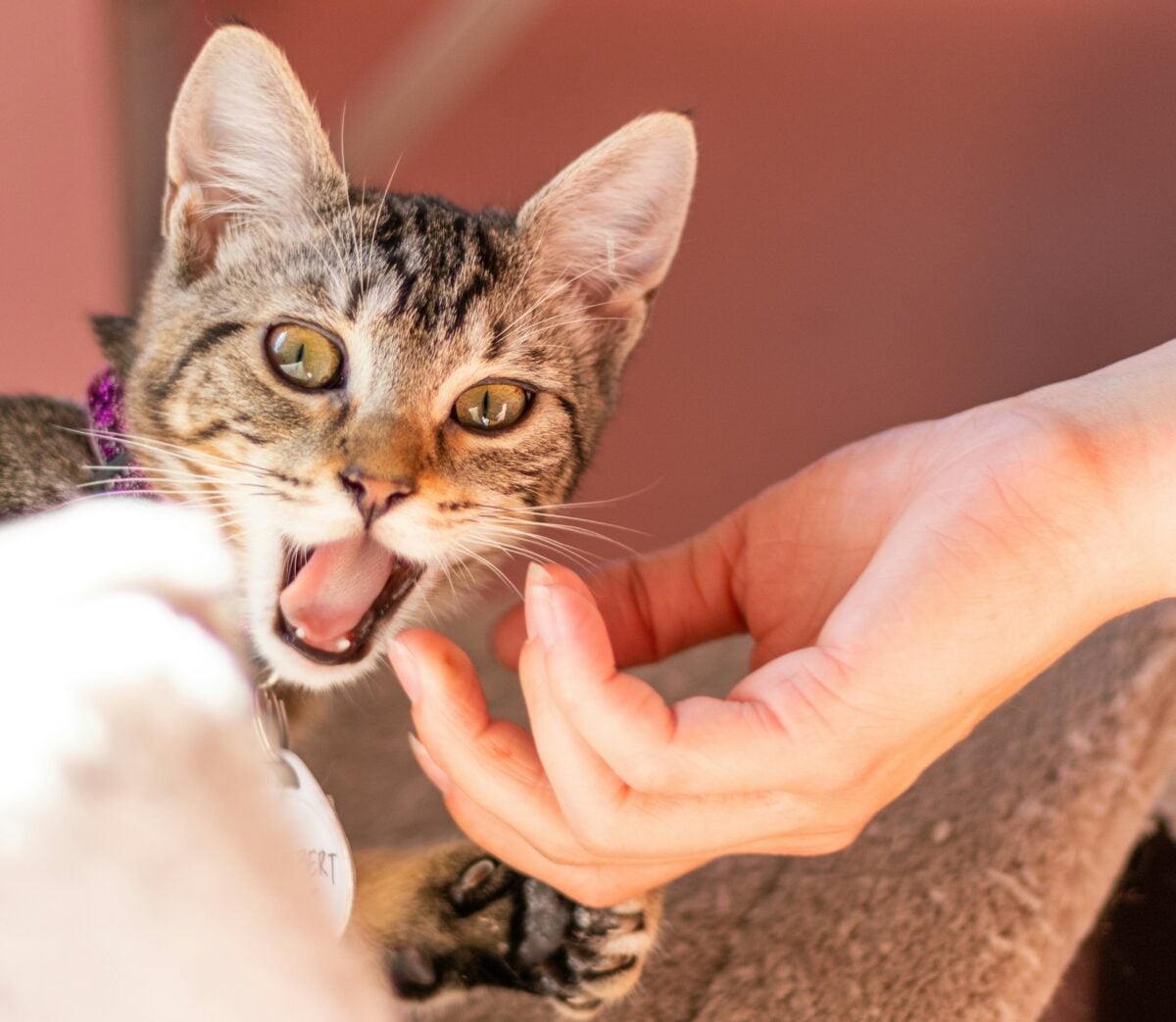
Why does my cat bite me gently while purring?
Your cat may be giving you a love bite, but they may also be overstimulated. Purring does not always mean pure happiness; cats may also purr when they are excited, conflicted, or trying to self-soothe.
Look at the rest of the body. If your cat’s posture is loose, their eyes are soft, and they stay close afterward, the bite is probably affectionate or playful. If their tail is twitching, their ears are shifting back, or their body feels tense, they may be saying, “That’s enough.”
Why does my cat bite my hand during play?
Your hand may be acting like prey. Quick finger movements, hands under blankets, or pulling away quickly can trigger your cat’s hunting instincts. The rule is simple: hands are for gentle touch, toys are for hunting.
Should I let my cat gently bite me?
It is better not to encourage biting, even when it is gentle. A soft bite can become a stronger habit if your cat learns that teeth get attention, play, food, or a big reaction.
You do not need to punish your cat. Just stay calm, pause the interaction, and turn the biting attention to a toy if they seem playful. This keeps the bond positive without teaching your cat that human skin is fair game.
Why does my cat lick me and then bite me?
Licking followed by biting often comes from grooming-style social behavior. Cats sometimes lick and nip at each other during bonding, grooming, or friendly social contact. Your cat may be treating you like part of their trusted group.
But a lick-then-bite can also mean the interaction is shifting. If the bite is soft and your cat stays relaxed, it may be affectionate. If the bite gets sharper or your cat seems tense, they may be saying they are done being touched.
Why does my cat bite me gently when I stop petting them?
That can be an attention-seeking nip. Your cat may want the petting to continue and has learned that a quick bite gets your focus back.
Avoid rewarding the bite directly. Do not immediately resume petting after the nip. Pause, stay chill, and wait for calmer behavior. Then offer attention again when your cat rubs, sits nearby, meows, or asks without teeth.
Why does my cat bite me when I pet them?
Your cat may be overstimulated. Petting can feel good at first, then become irritating if it goes on too long, happens in the same spot repeatedly, or touches a sensitive area like the belly, back, or base of the tail.
Try the two-or-three-stroke pause. Pet your cat briefly, then stop and see what they do. If they lean in or nudge your hand, they may want more. If they look away, twitch their tail, tense up, or stop engaging, the petting session is over.
Why does my cat bite me gently at night?
Night biting is often attention-seeking, boredom, hunger, or routine-based behavior. If your cat bites your forehead, hand, or toes at 3:00 AM and you get up, talk, scold, or feed them, they may learn that biting wakes the human.
Stay still, cover your face or hands if needed, and avoid rewarding the bite with attention. During waking hours, add a play session before bed, use a puzzle feeder, or consider an automatic feeder if hunger is part of the pattern.
Why does my cat bite my face, chin, or beard?
Face-focused bites often come from affection, grooming behavior, curiosity, or attention-seeking. Your cat may be drawn to your scent, facial hair texture, or the fact that your face gets an immediate reaction. If the bite is soft and your cat stays relaxed, it may be social or affectionate. But if it is sharp, sudden, or paired with tense body language, give them space.
If your cat is especially obsessed with facial hair, here’s more on why cats like beards.
How do I stop my cat from gently biting me?
First, figure out what kind of bite it is. A playful bite needs a safe outlet. An overstimulation bite needs shorter petting sessions. An attention-seeking bite needs less reaction and more reward for calm behavior. A pain-related bite needs a vet check.
In the moment, stay still, avoid yanking your hand away, pause the interaction, and give the bite as little payoff as possible. Then reward the behavior you want, like calm rubbing, sitting nearby, bringing a toy, or asking for attention without teeth.
When should I worry about my cat biting me?
Pay closer attention if the biting becomes hard, frequent, sudden, out of character, or breaks the skin. Also watch for signs of fear, pain, or aggression, such as growling, hissing, hiding, flattened ears, stiff posture, limping, appetite changes, or biting when touched in one specific area.
A sudden change in biting can point to stress or a medical issue. When the pattern feels unusual for your cat, a veterinary visit is the safest next step.
Still have a “why does my cat do this?” bite question? Drop it in the comments, and we’ll look into it.
Learning to Listen Before the Teeth Come Out
A gentle cat bite can feel confusing, but it usually makes sense once you look at the full picture. Your cat may be showing affection, setting a boundary, reacting to overstimulation, inviting play, or trying to get your attention. It is a message, just delivered by a tiny roommate with questionable manners.
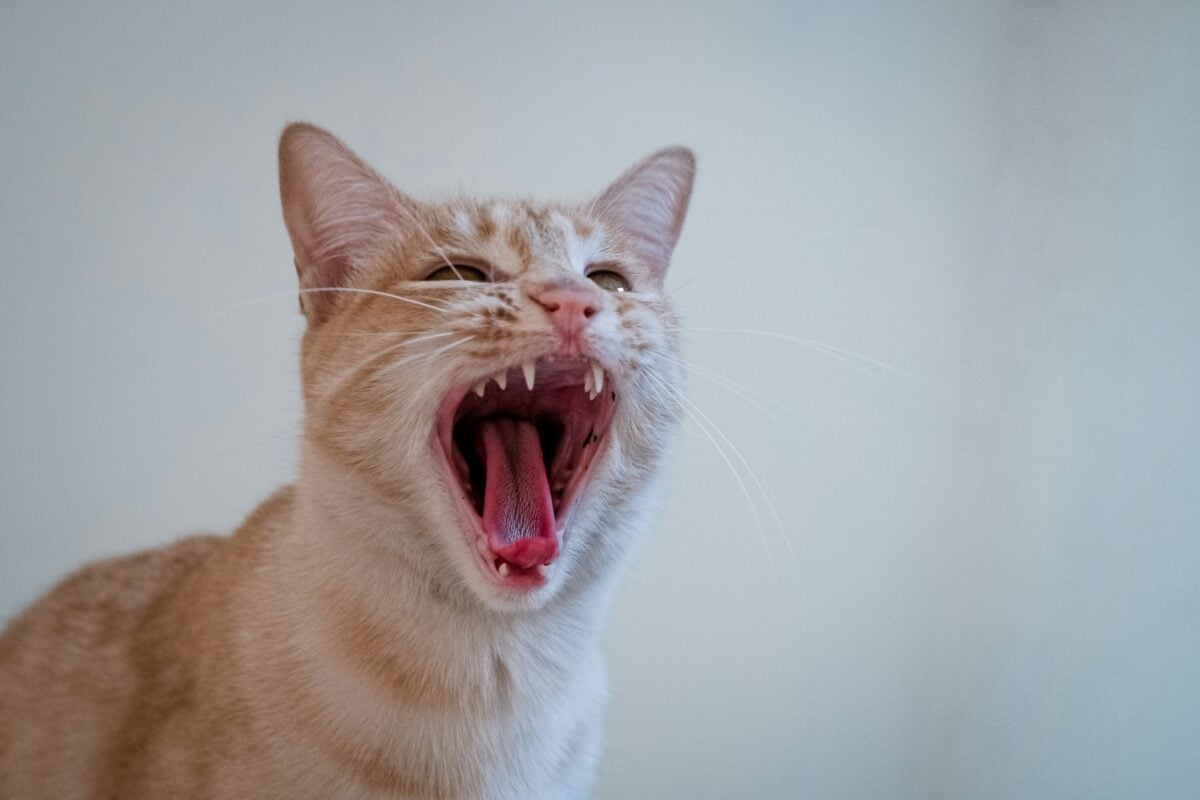
The real skill is learning to read the feline room before the biting happens. Watch the tail, ears, body posture, eyes, skin movement, and timing. Notice where your cat likes to be touched, how long they enjoy petting, and what changes right before they nip. Those small clues tell you whether your cat wants more affection, a toy, a break, or space.
So the next time your cat purrs, leans into your hand, and then gives you a little nip, do not panic. Pause, look at the situation, and ask what changed. When you listen before the teeth come out, you can keep the cuddles sweet, the trust strong, and the bites rare.
Of course, gentle biting is only one entry on the long list of things every cat owner stops questioning eventually… right between “Why are you yelling at a closed door?” and “Why is this cardboard box better than the bed I paid for?”
More Ways Your Cat Tries to Communicate
Once you realize a gentle bite is usually a message, other cat behaviors start looking a little less mysterious. Still very cat, obviously. This is an animal who may sprint down the hallway at midnight, sit on your laptop, ignore the expensive bed, and then bite your sleeve because you stopped admiring them.
- If the bites happen during petting, watch the rest of your cat’s body. The same scratch that triggers the classic butt-elevator move can sometimes tip from “yes, loyal servant” into “absolutely not.”
- If the bites happen when you stop paying attention, your cat may also park themselves on your laptop, book, phone, or anything else currently stealing their spotlight. That attention-seeking logic is closely related to why cats sit on everything you’re using or suddenly act like your clingy little shadow.
- And if the bites happen during ambush mode, blanket attacks, ankle pounces, or post-zoomies madness, your living room panther probably needs a better outlet. Before your hand becomes the featured prey item, try structured play, tunnels, toys, or even a cardboard fortress. These guides on cat zoomies and why cats like boxes explain more of the tiny chaos.
The more mysterious feline behavior you can decode, the easier it gets to spot the message before the teeth arrive.
Over to You: Has Your Freeloading Predator Taste-Tested You Lately?
Now it’s your turn to spill the tea (and the teeth). Does your cat treat your forehead like a midnight snack, or do they prefer to gently nip your elbow while you’re trying to type a serious work email? What’s the most unexpected place your cat has ever gently nibbled?
Drop your best “that escalated quickly” cat stories in the comments below. We need to know we aren’t the only ones catering to these demanding little roommates!