When you purchase through links on our site, we may earn a commission at no extra cost to you. Learn more.
Most cat cries are normal. Your cat may be asking for food, attention, playtime, or access to a closed room.
Table of Contents
But a new, unusually loud, panicked, or persistent yowl can be a warning sign, especially when it comes with litter box changes, trouble breathing, pain when moving, hiding, weakness, or changes in appetite or thirst.
Start by checking the most urgent clues, then decide whether to monitor your cat, call your vet, or seek emergency care right away.
I learned not to ignore a cry that sounds different with Ginger, my usually quiet cat. One evening, her yowl cut through the house like an alarm. It was not her normal meow, and it made me stop, listen, and look closer.
Want our human-written content to rank above AI-generated garbage? Help us out by clicking this button!
Is My Cat Crying for Help? The Fast Answer
A cat crying is not always an emergency. Cats may meow because they want food, attention, play, or access to a closed room.
But a cry that is new, unusually loud, frantic, painful-sounding, or paired with changes in breathing, litter box use, appetite, movement, hiding, or weakness deserves attention. Your cat may be trying to tell you something is wrong.
Start with a quick check. If you see trouble breathing, repeated straining with little or no urine, collapse, severe weakness, or sudden distress after an injury, contact an emergency vet right away.
First 5 Things To Check When Your Cat Cries Out
Before you assume your cat is just being noisy, take a minute to check for these five clues. They can help you tell the difference between a normal meow and a problem that needs veterinary attention.
1. The litter box
Is your cat repeatedly going in and out of the box, crying, straining, or producing little or no urine? Do not assume they are constipated. Difficulty urinating can become serious quickly.
2. Their breathing
Look for open-mouth breathing, panting, wheezing, rapid or shallow breaths, or obvious effort to breathe. A cat that is struggling to breathe needs urgent veterinary care.
3. Walking and jumping
Watch how your cat moves. Are they limping, walking stiffly, refusing to jump, crying when they land, or reacting when you touch a certain area? Do not force them to move or repeatedly test a painful spot.
4. Hiding, weakness, or confusion
A cat who suddenly hides, seems weak, cannot settle, stares into space, gets stuck in corners, or seems disoriented may be unwell even if they are not visibly injured.
5. Food and water access
Check that food, water, and the litter box are easy to reach. An older cat, a sore cat, or a cat who feels trapped may cry because they cannot comfortably get to something important.

What To Do Next: Monitor, Call Your Vet, or Emergency Vet Now
Not every unusual cry means an emergency, but it is important to know what to do next. Use these three levels to decide whether to watch closely, call your regular vet, or seek emergency care right away.
Monitor briefly
It may be reasonable to watch closely for the next few hours when your cat has a single, short cry with an obvious explanation, such as a closed door, meal time, or wanting attention.
Only monitor if your cat is otherwise breathing normally, walking normally, using the litter box normally, eating and drinking, and acting like themselves. Solve the obvious problem, stay nearby, and watch for the cry to repeat or change.
Call your vet
Call your regular vet promptly when the crying is new, unexplained, recurring, or increasingly intense, even if your cat does not appear to be in immediate danger.
You should call sooner when the crying comes with:
- A change in appetite or thirst
- Vomiting or diarrhea
- New hiding, clinginess, irritability, or aggression
- Reluctance to jump, stiffness, limping, or sensitivity to touch
- More frequent litter box trips, accidents outside the box, or changes in urine or stool
- New nighttime yowling in a senior cat
- A cry that simply sounds wrong for your cat
Emergency vet now
Do not wait for a routine appointment when your cat has any of these signs:
- Open-mouth breathing, panting, wheezing, or visible effort to breathe
- Repeated litter box straining with little or no urine produced
- Collapse, seizures, severe weakness, or inability to stand or walk normally
- Sudden severe pain, screaming after a fall or injury, or a painful swollen belly
- Crying plus repeated vomiting, severe diarrhea, or rapid worsening
- Extreme disorientation, unresponsiveness, or gums that look pale, gray, or blue
Quick Checklist: 7 Warning Signs Your Cat Needs Help
Treat these as a quick red-flag checklist:
- Crying or straining in the litter box, especially with little or no urine.
- Sudden, nonstop, or unusually intense yowling.
- Open-mouth breathing, panting, or obvious effort to breathe.
- Crying when walking, jumping, being picked up, or touched.
- Vocalizing with collapse, severe weakness, or refusal to move.
- New nighttime crying in an older cat with confusion or pacing.
- Crying, hiding, appetite changes, vomiting, diarrhea, or a sudden personality change.

What To Write Down Before Calling the Vet
A few notes can help your vet decide how urgently your cat needs to be seen. Write down:
- When the crying started, and whether it was sudden or gradual
- Whether the sound or tone is different from your cat’s usual voice
- How long each episode lasts and how often it happens
- What was your cat doing right before the crying started
- Any litter box changes, including straining, frequent trips, accidents, urine amount, or stool changes
- Appetite and thirst changes
- Vomiting or diarrhea
- Changes in walking, jumping, posture, grooming, hiding, or energy
- Any recent household changes, including visitors, a move, new pets, loud noises, schedule changes, or loss of another pet
A short video of the behavior may help, but do not delay urgent care to document it.
Why I Take a Different Yowl Seriously: Ginger’s Story
One of the first cats I ever had was Ginger, a gentle gray Persian. One night, she stood in the hallway making a sound I had never heard from her before: urgent, panicked, and completely unlike her normal meow.
She paced, looked directly at me, then ran down the hall and looked back as if she wanted me to follow. She led me to a visiting toddler who had become stuck between a chair and the wall.
That moment taught me not to dismiss a yowl that sounds different. Sometimes a cat is asking for food or attention. Sometimes they are telling you to look closer.
5 Common Reasons Cats Cry Out for Help
Not every loud meow is an emergency, but unusual cries usually point to one of five things: pain or illness, fear or anxiety, loneliness, concern for someone nearby, or an environmental problem such as being stuck or unable to reach something important.
Every cat has a different voice, so focus on what has changed. A normally quiet cat who starts yowling, a familiar meow that becomes strained or frantic, or repeated crying paired with other behavior changes can be a sign that something is wrong.
1. Physical Pain or Illness (The Red Flags)
When a cat cries out in an unusual way, a change in health is often the most serious and common cause. Because cats are evolutionarily hardwired to hide pain, a loud, distressed yowl or sudden increase in vocalizing often means the pain threshold has been reached.

Cats often hide pain or illness until it becomes serious, so it is very important to pay attention whenever your cat’s vocalizations become more distressed or seem out of character.
Pay close attention to a cry that is sudden, unusually loud, or happens when your cat moves, jumps, uses the litter box, or is touched. Crying paired with straining to urinate, trouble breathing, collapse, severe weakness, or obvious pain needs urgent veterinary attention.
These pain-related cries aren’t just “overreacting” or being dramatic. They often show up with common medical problems, including:
- Acute injuries: Falls, rough landings, sprains, strains, or fractures that suddenly make jumping or walking painful.
- Arthritis and joint disease: Stiff, sore joints that hurt more when your cat first gets up, jumps, or is picked up.
- Gastrointestinal issues: Constipation, diarrhea, gas, foreign objects, or pancreatitis that cause cramping and belly pain.
- Urinary problems: Urinary tract infections, crystals, or blockages (especially in males) that make peeing difficult or impossible.
What Pet Insurance Has To Do With Your Cat’s Cry For Help
When your cat cries out in distress, most of us do not hesitate emotionally. We hesitate practically.
- Is this serious enough for the emergency vet?
- Can I afford an urgent visit right now?
- What if they need X-rays, bloodwork, or overnight care?
Those questions are heavy, and they often arrive in the middle of the night when your cat is already scared and hurting.
This is where pet insurance quietly changes the entire experience.
Many of the medical causes behind “help me” cries, urinary blockages, GI emergencies, injuries from falls, sudden illness, and arthritis flare-ups require fast diagnostics and treatment. Emergency exams, imaging, IV fluids, hospitalization, and medications can easily climb into the hundreds or thousands of dollars in a single visit.
Pet insurance does not stop emergencies from happening. But it removes the financial hesitation that can delay care.
Instead of weighing your cat’s pain against your bank account, insurance allows you to focus on one question only:
“What does my cat need right now?”
If your cat suddenly cries in the litter box, screams when jumping, or vocalizes in a way that feels deeply wrong, time matters. Having coverage already in place means you are far more likely to seek care immediately, not hours later when symptoms worsen.
Important note: Pet insurance only covers new conditions. If your cat is already showing symptoms, it is too late to enroll for that issue. Insurance works best as a preventative decision you make before the midnight yowl, not after it.
For many cat parents, insurance is not about saving money overall. It is about buying peace of mind, confidence, and the freedom to act fast when your cat’s voice tells you something is wrong.
Learn more in our guide to the best pet insurance for cats and get a free quote using the form below.

2. Fear or Anxiety: When Something Has Your Cat on Edge
Not every unusual cry is caused by physical pain. Cats may also yowl or meow more when they feel scared, overwhelmed, or unsettled by a change in their routine or environment.
Look for clues such as hiding, crouching low, flattened ears, wide pupils, pacing, following you closely, or reacting strongly to noises, visitors, new pets, or a recent move. A cat that cries when left alone may be seeking reassurance or struggling with a disrupted routine.
Because pain and illness can also cause behavior changes, it is still worth calling your vet if the crying is new, persistent, or paired with appetite, litter box, grooming, energy, or movement changes.
3. Loneliness or Attention-Seeking: The “Don’t Leave Me” Cry
Then there is the cat who cries because their favorite person walked into another room. Or closed the bathroom door. Or dared to go to work. You can see an example of this in the video below:
For some cats, being alone does not feel peaceful; it feels like abandonment. They pace, call out, and ramp up the volume until you answer, and to them, that is not “being dramatic”; that is survival. Especially if they have been through loss, change, or long stretches of isolation before, their brain may already be primed to think, “If I can’t see you, you’re gone.”
A lonely or emotionally distressed cat often:
- Shadows you from room to room, meowing when you step away
- Greets you at the door with loud, pent-up crying
- Seems restless and needy rather than relaxed and sleepy
- Becomes more vocal after a big change (a move, a new baby, the loss of a person or another pet)
Once a vet has ruled out pain and illness, you are mostly working with a worried heart, not a broken body. Short, predictable “us” moments, like ten minutes of wand-toy play, a regular brushing session, or cuddles on the couch, can give anxious cats something solid to count on.
Enrichment helps too: puzzle feeders, window perches, safe high spots, and toys that move or crinkle can keep their brains busy when you are gone.
You do not have to respond to every single meow instantly for the rest of your life. But meeting their emotional needs intentionally, rather than only when they are loudest, often softens those “don’t leave me” cries into something calmer and quieter over time.

Real-Life Example of a Lonely Cat’s Cries
One of our team members shares her experience with a clingy cat and her warning cries.
My cat, Luna, is as clingy as they come. Wherever I go, she follows. If I close a door, she’ll camp outside it, waiting for the split second it opens so she can rush inside.
On the occasions when she can’t find me in the house, she gets genuinely distressed and yowls until I call out to let her know where I am.
The first few times it happened, I panicked and thought she might be hurt. Turns out she just really, really hates being alone.
– Tara Maurer, Lifelong Cat Owner, & Writer For Love Your Cat
4. Concern For Another Animal Or Human: When Your Cat Sounds The Alarm
Every once in a while, a cat does something so pointed that it is hard not to feel like you are living with a tiny, furry guardian. The crying is not random. It is not about food, toys, or their own litter box drama. It is laser-focused: you, come here, now.
These are the moments when a cat will sit by a specific door and yowl until you open it, or sprint between you and a baby’s room, or park themselves next to another pet and call out like they are trying to flag you down.
Sometimes you find something serious, like a pet stuck in a closet, a fragile animal in distress, or a toddler quietly having a meltdown. Other times, you find a fly or a very suspicious sock. But either way, the behavior is worth respecting.
If your cat suddenly starts:
- Fixating on one room or hallway while crying
- Meowing at you, then trotting away and looking back expectantly
- Vocalizing next to a specific person or animal and refusing to leave
Follow them. Even if it feels silly. In the best case, you stop an accident or help someone who needs it. Worst case, you have “inspected” a suspicious dust bunny and reassured your cat that their message was received.
Over time, that pattern of “they call, you check” builds trust. Your cat learns that you are a teammate, and you learn that sometimes those eerie “come here” cries actually have a very real target.
When Your Cat Cries Because They’re Worried About You
Not every cry for help is about your cat’s own body. Sometimes, the distress sound is really your cat saying, “Something is wrong with you, and I don’t know how to fix it.” A worried cat may use their voice to check on you, call you, or keep you from disappearing when you do not seem like your usual self.
If your cat is crying out because they are worried about you, you might notice:
- Crying outside closed doors: Meowing or yowling at the bathroom or bedroom door when you are sick, upset, or lying down longer than usual, as if they are saying, “Let me in, I need to see you.”
- Vocal “check-ins” when you move differently: Soft but insistent meows when you sit up suddenly, gasp, cough, or start crying, followed by them coming closer to investigate.
- Calling you back to bed or the couch: Meowing at you if you get up when you usually rest, then trotting ahead and crying until you follow them back to your resting spot.
- Staying close and talking softly: Quiet chirps, trills, or gentle meows as they curl up on your chest or next to you when you are unwell or emotionally drained.
- Alerting others: In multi-person homes, some cats will meow at another family member and then run back to you, almost like they are trying to recruit backup.
In these moments, your cat’s cry is not just attention-seeking noise. It is part of the same “help me” language, only this time, the help they are asking for is on your behalf. They sense the change in your scent, routine, posture, or mood, and their voice becomes the only way they know to say, “Something feels wrong. Please pay attention.”
5. Environmental Problems (Stuck, Trapped, Or Blocked From Something Important)
Not every cry for help has a deep emotional backstory. Sometimes your cat is literally yelling in their own way, “I am in the linen closet, and the door does not open from this side.”
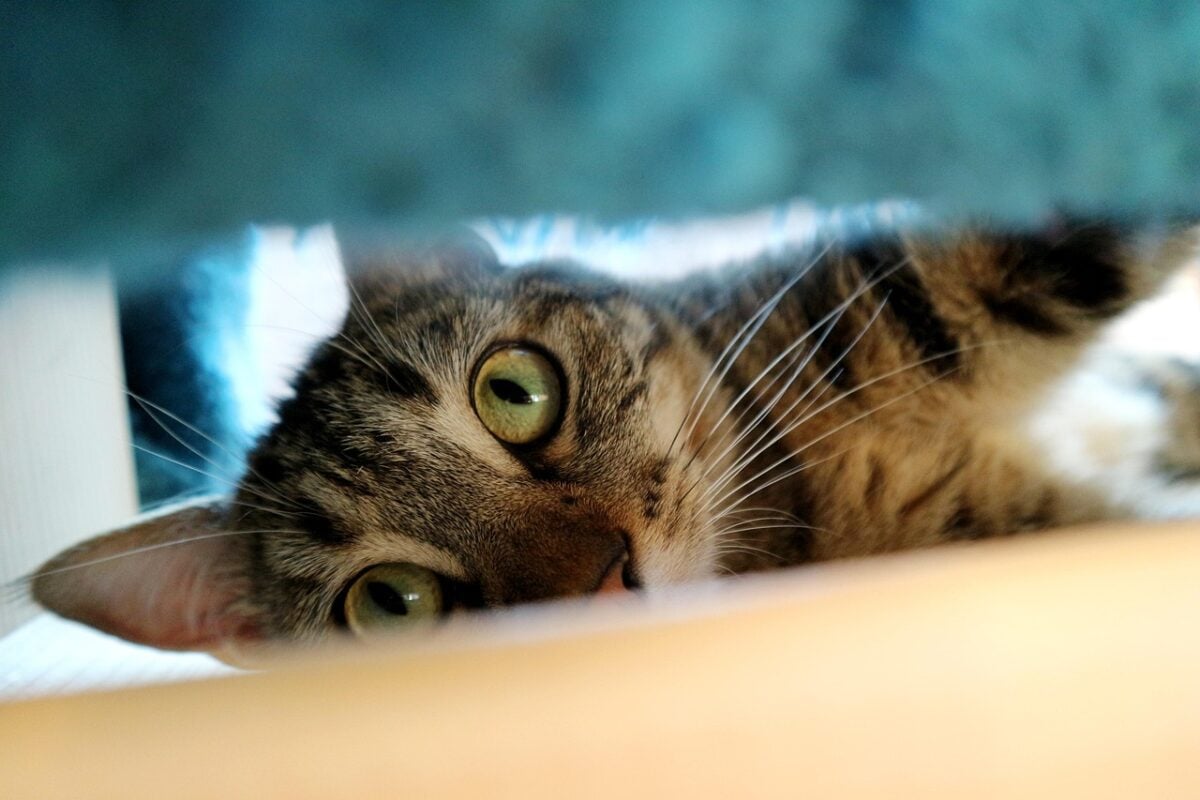
Cats are curious and not great with doors. They slip into closets, basements, garages, behind washers, under beds, and into any gap that looks like an adventure, and then the door swings shut, or the way out turns out to be trickier than the way in. The moment they realize they cannot fix it themselves, the panicked meow comes out.
Environmental “help me” situations might look like:
- Crying from behind a door you thought was just closed
- Meowing frantically under a bed or behind a heavy piece of furniture
- Yowling near a baby gate, staircase, or slippery floor, they are afraid to cross
- Sitting by the litter box area or food station, calling out because access is blocked
It is easy to brush this off as annoying or “dramatic,” but feeling trapped is genuinely scary, especially for smaller, less mobile, or older cats. Doing a quick rescue and then adjusting the environment, like propping certain doors open with doorstops, adding a ramp or small step to favorite high spots, and making sure litter, food, and water are always accessible without big jumps, can prevent repeat crises.
A good habit: When you hear a sudden, very specific cry and cannot see your cat, treat it like a game of “hot and cold.” Call their name, follow the sound, and see where they have gotten themselves wedged this time.
To them, that moment when you appear and free them does not just solve the problem physically; it teaches them that when they call, someone comes. And for a small creature in a big, confusing house, that matters more than we think.
Senior Cat Night Crying: Don’t Assume It’s Just Old Age
A senior cat who suddenly cries or yowls at night may be confused, uncomfortable, or having trouble navigating in the dark. It is tempting to call it “just old age,” but new nighttime vocalizing deserves a veterinary conversation.
Several issues can look similar at home, including:
- Cognitive decline or confusion
- Vision or hearing changes
- Hyperthyroidism
- High blood pressure
- Pain from arthritis or another medical condition
You may notice pacing, staring at walls, getting stuck behind furniture, calling from another room, sleeping less at night, or seeming unsettled after dark.
Make tonight easier by adding soft night lights, keeping food, water, and litter boxes easy to reach, avoiding major furniture rearrangements, and keeping bedtime routines calm and predictable.
But do not stop there. A new pattern of nighttime crying in an older cat is a reason to call your vet and ask whether a medical exam, blood pressure check, thyroid testing, pain assessment, or cognitive evaluation is appropriate.
How To Respond In The Moment When Your Cat Cries Out
When your cat suddenly cries out, pause for a few seconds and really look at them. Check their breathing, posture, and how they move. If they are screaming, straining in the litter box, having trouble breathing, or acting weak or disoriented, treat it as an emergency and call your vet or an emergency clinic right away.
If you do not see any obvious red flags, quickly check the environment (are they stuck, blocked from the litter box, or upset by something new?) and offer calm reassurance rather than yelling or punishing. Then watch for patterns. If the new crying continues or your gut keeps nagging at you that something is off, your next step is still the same: talk to your vet.
Reducing Attention-Seeking Cries: Environmental Enrichment
Once health problems have been ruled out, a lot of “crying for help” turns out to be a cat saying, “I am bored, lonely, or under-stimulated, and you are the most interesting thing in this house.” That kind of attention-seeking is not “naughty” behavior. It is a cat with too much energy and not enough places to put it.

Giving your cat more to do without relying solely on you can turn constant meowing into quieter, more normal check-ins. Think: hunting, climbing, scratching, watching, and then collapsing into a good nap.
Make Food Feel More Like A Hunt
Cats are built to work for their meals, not stand over a full bowl all day. When food appears with zero effort, all that hunting energy has to go somewhere else, often straight into pawing your face at 5 a.m.
- Use puzzle feeders. Food-dispensing balls, maze bowls, or simple DIY toys (like a toilet paper tube with holes and a few kibble bits inside) make your cat bat, roll, and think before they eat.
- Try “hide and seek” meals. Instead of one big bowl, place small portions of dry food in different safe spots around a room. Your cat gets to stalk, sniff, and “forage” their way through dinner.
- Let a feeder take the blame for early breakfasts. If your cat wakes you up to scream about breakfast, a timed automatic feeder can deliver the meal so they stop associating you with food on demand.
Build A Daily Play Ritual
A lot of demanding vocalizing comes from a simple mismatch: your cat’s body wants to hunt, pounce, and chase, while you want to sit down and scroll. Scheduled, intentional play gives your cat an outlet so they are not using their voice to beg for stimulation all evening.
- Use prey-like toys. Wand toys, feather teasers, and “fishing rod” toys that dart, pause, and hide are ideal. Move them like prey, not like a helicopter blade.
- Let them “win.” At the end of the session, let your cat catch the toy and hold it for a moment. That “I got it” feeling helps complete the hunting cycle.
- Follow play with a small meal. Play → eat → groom → sleep mimics a natural pattern and often leads to a satisfied nap instead of more yelling.
Expand Their World With Vertical Space And “Cat TV”
Some attention-seeking meows are really your cat saying, “I have nothing to do but bother you.” Giving them more territory and things to watch can keep their brain busy, even when you are working or out of the house.
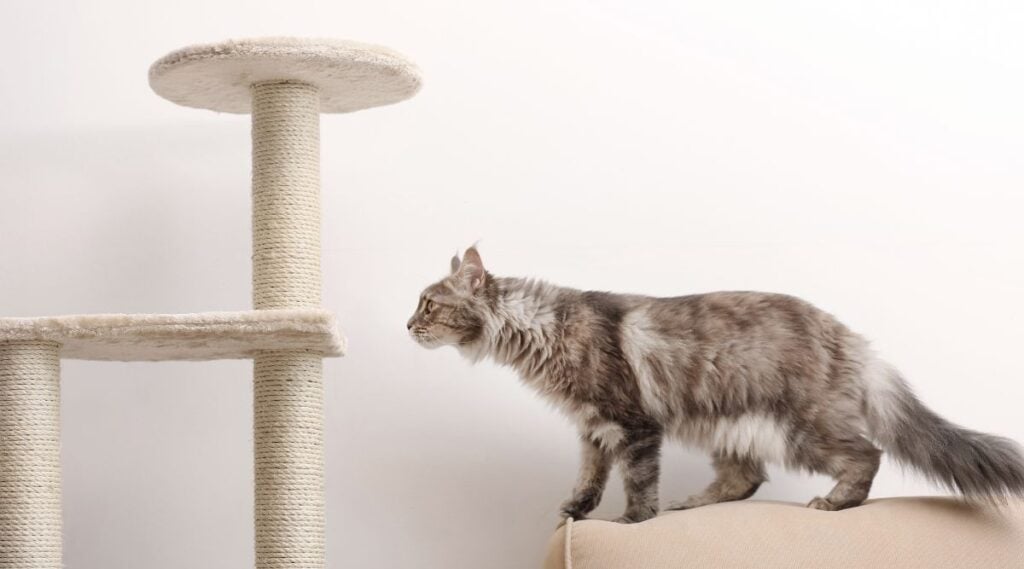
- Add cat trees or shelves. Tall, sturdy cat trees, window shelves, or wall-mounted perches let your cat climb, observe, and retreat without needing your lap every minute.
- Create a window lookout. A comfy bed or perch in a sunny window with a view of birds, people, or trees is low-effort entertainment they can choose any time.
- Offer plenty of scratching options. Vertical sisal posts, horizontal cardboard scratchers, and a few different locations help your cat burn energy and relieve stress in a healthy way.
If It Feels Like Separation Anxiety
When your cat saves their loudest, saddest cries for the moments you leave or close a door, you may be dealing with true separation anxiety rather than simple boredom. These cats are not just looking for playtime. They are worried about being left.
- Keep departures and arrivals low-key. Big goodbyes and dramatic reunions can make the comings and goings feel more intense. Calm, neutral is better.
- Offer something engaging before you go. A fresh puzzle feeder, treat ball, or special “you only get this when I leave” toy can help redirect that panic into problem-solving.
- Use a reassuring sound and scent. Soft background noise (TV or radio at low volume) and a blanket or bed that smells like you can make an empty home feel less lonely.
Environmental enrichment will not silence a truly sick or distressed cat, and it should never replace veterinary care. But once health problems are off the table, giving your cat more ways to hunt, climb, scratch, and explore can transform those relentless, attention-seeking cries into a healthier rhythm of play, rest, and quiet companionship.
Other Cat Behaviors That May Be Saying Something
Crying is only one way cats communicate. Their body language and everyday habits can also offer clues about how they feel.
Sudden bursts of energy, often called cat zoomies, can be a normal way to release excitement or pent-up energy. A twitching tail, flattened ears, or a sharp hiss may signal that your cat feels stressed or needs more space.
For more help reading the smaller signals, explore our guides to cat facial expressions and how to tell if your cat loves you.
Share Your Cat’s “Cry For Help” Story
Has your cat ever cried out and led you to a problem you might have missed, a sick pet, a stuck kitten, a scary moment in the night? Or have you lived through a time when a new, strange cry turned out to mean something serious?
Share your story in the comments. How did your cat sound? What did you discover? What did you learn from it? Your experience might be the nudge another worried cat parent needs to trust their instincts and get help sooner.