When you purchase through links on our site, we may earn a commission at no extra cost to you. Learn more.
One moment, your cat is padding peacefully through the house like a tiny landlord inspecting the property. Then suddenly, their eyes are enormous, their back is arched, and their tail has exploded into something resembling a feather duster with opinions.
Table of Contents
So, why do cats’ tails puff up?
A cat’s tail puffs up in response to intense emotion. Fear is a common cause, but cats may also fluff their tails when they are startled, excited, playful, territorial, or overstimulated.
The technical term for this reaction is piloerection. Tiny muscles attached to the hair follicles contract, causing the fur to stand on end and making the cat appear larger.
Want our human-written content to rank above AI-generated garbage? Help us out by clicking this button!
It is dramatic, but it is also meaningful.
Think of a bottle-brush tail as an exclamation mark rather than a complete sentence. To understand what your cat is saying, you need to read the rest of the message: their ears, eyes, posture, movement, sounds, and whatever suspicious event happened immediately before the fluff appeared.
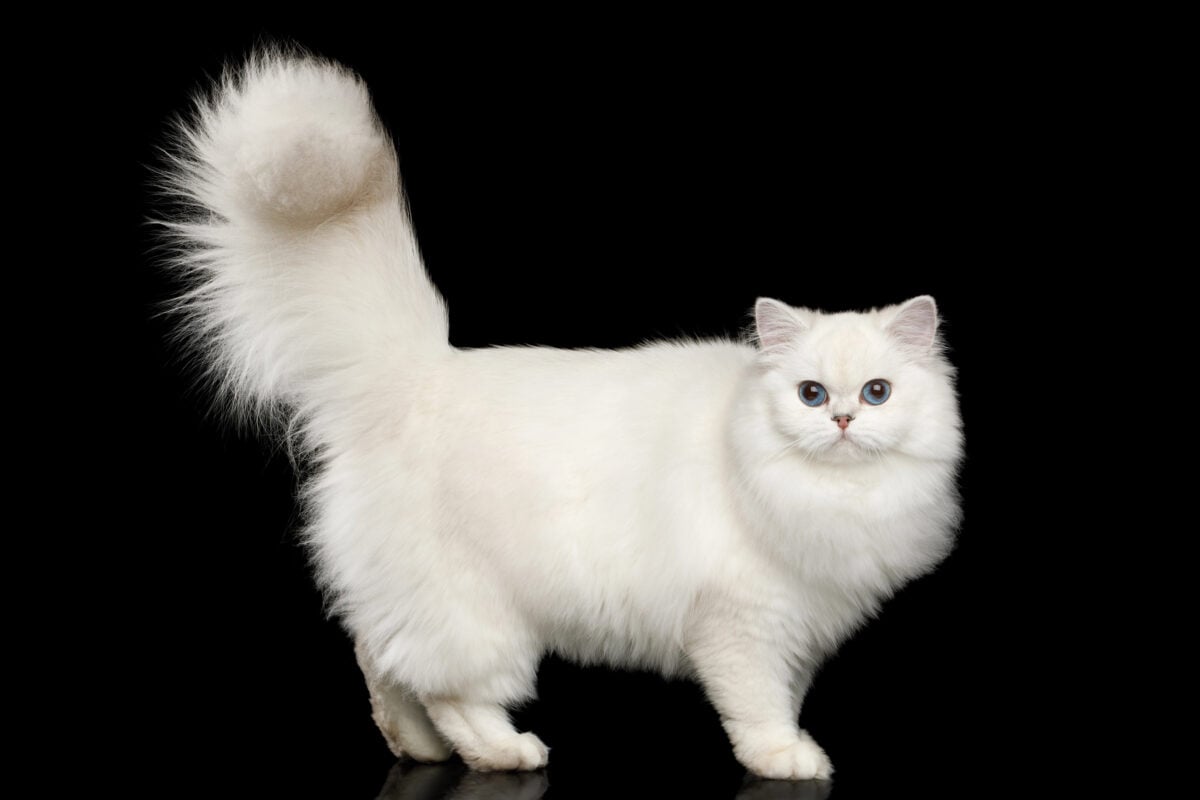
What Makes a Cat’s Tail Puff Up?
At a glance: A puffed-up tail usually signals a surge of emotion or adrenaline. Your cat may need space, a quieter environment, or—in the case of playful zoomies—another lap around the sofa.
A cat does not consciously decide to inflate their tail for dramatic effect, although the timing can feel suspiciously theatrical.
The reaction is automatic.
When a cat becomes frightened, startled, or highly excited, the sympathetic nervous system activates. This is the part of the nervous system responsible for the body’s fight, flight, or freeze response.
Adrenaline causes tiny muscles at the base of the hairs to tighten. The fur lifts away from the skin, making the tail—and sometimes the fur along the back—look much fuller.
Humans experience a far less impressive version when we get goosebumps. Cats, naturally, turn it into a full costume change.
There is a practical reason for all that extra fluff. Raised fur makes a cat look larger and potentially more intimidating. To a rival cat, loose dog, or unidentified monster-shaped vacuum cleaner, that suddenly enormous silhouette may be enough to communicate:
“Perhaps choose another victim.”
The bottle-brush tail is part reflex, part warning signal, and part extremely convincing special effect.
Watch the whole body: A puffed tail can signal fear, excitement, or play. The cat’s ears, posture, and movement reveal the difference.
Why Do Cats’ Tails Puff Up? 6 Common Reasons
A puffed-up tail can look like one big dramatic reaction, but the emotion behind it dependson what is happening around your cat. These are the six most common reasons for the sudden fluff.
1. Your Cat Feels Scared or Threatened
Fear is probably the best-known reason for a puffed-up tail.
Your cat may react this way after spotting an unfamiliar animal through the window, hearing a loud crash, meeting a dog, entering a strange room, or noticing that the carrier has appeared from the closet for reasons that are definitely not good.
A frightened cat may also:
- Arch their back
- Turn their body sideways
- Flatten or rotate their ears
- Widen their eyes
- Hiss, growl, spit, or yowl
- Freeze, hide, swat, or try to escape
- Hold the tail low, rigid, or curved around the body
The classic sideways pose serves a purpose. By displaying the full length of the body while raising the fur, the cat creates the largest possible outline.
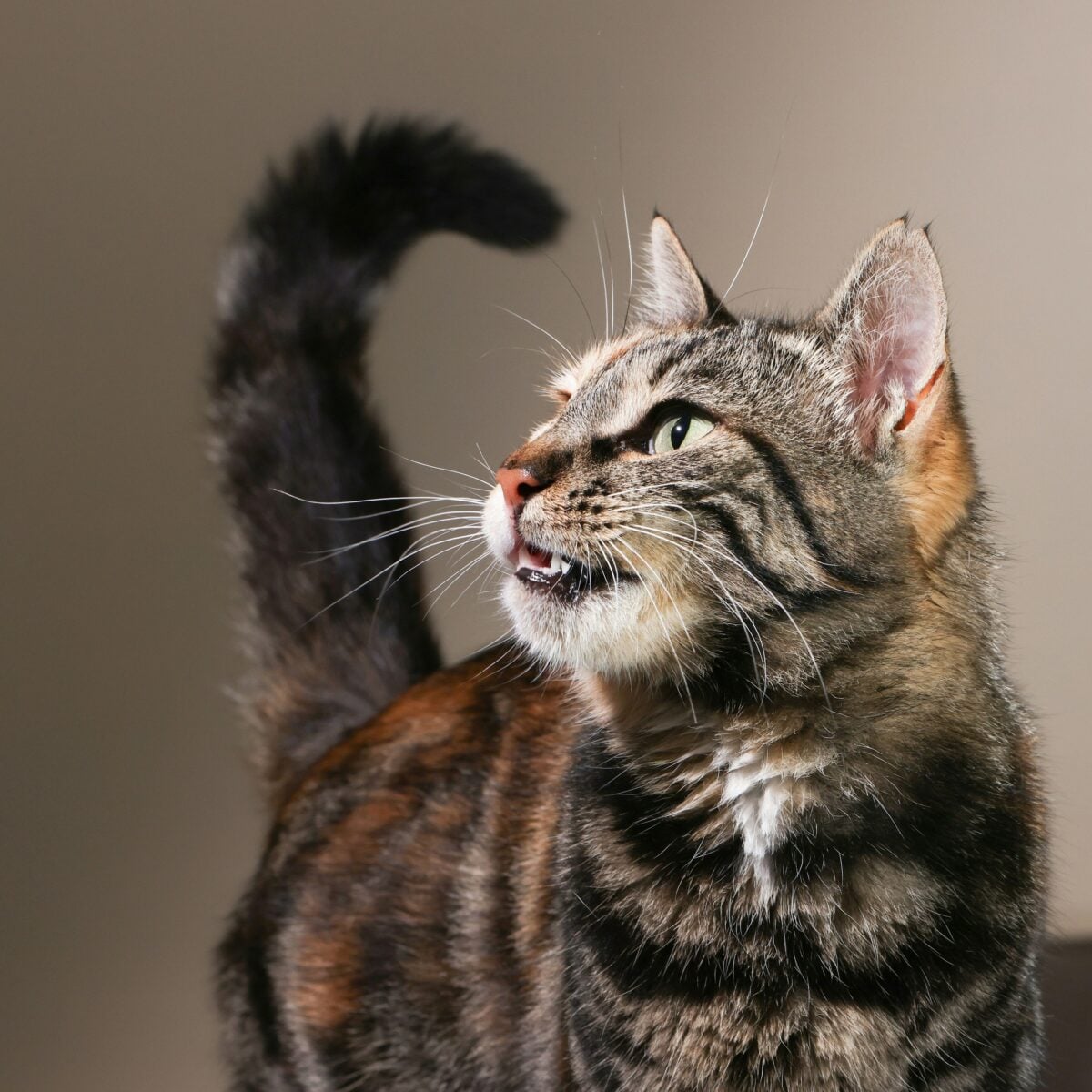
It is the feline equivalent of standing on tiptoe while wearing shoulder pads.
This posture does not necessarily mean your cat wants to attack. More often, they are trying to avoid a fight by appearing to be a terrible choice of opponent.
Loud noises, unfamiliar animals, sudden movements, and changes around the home are all common things cats are scared of.
It can be unsettling to see your normally cuddly cat suddenly appear tense and twice their usual size. In most cases, they do not become aggressive without warning. Their nervous system has gone into high alert, and they are asking for distance.
Give a frightened cat room.
Do not scoop them up, corner them, block their escape route, or insist on cuddling because “Mommy is here.” Even a normally gentle cat may scratch or bite when they feel trapped.
Let them retreat to a quiet hiding place and come down from high alert in their own time.
2. Something Startled Them
Sometimes the bottle brush appears because your cat has been caught completely off guard.
A dropped baking sheet, slamming door, sudden sneeze, barking dog, or mysterious object that definitely was not there five seconds ago can trigger an instant puff.
The body reacts before the brain has finished deciding whether the danger is real.
A startle puff is usually brief. Your cat may leap, freeze, stare accusingly at the offending object, inspect it from a safe distance, and then stroll away with the expression of someone who was never frightened and resents the accusation.
This is a normal reflex.
Deliberately scaring a cat for a reaction is not.
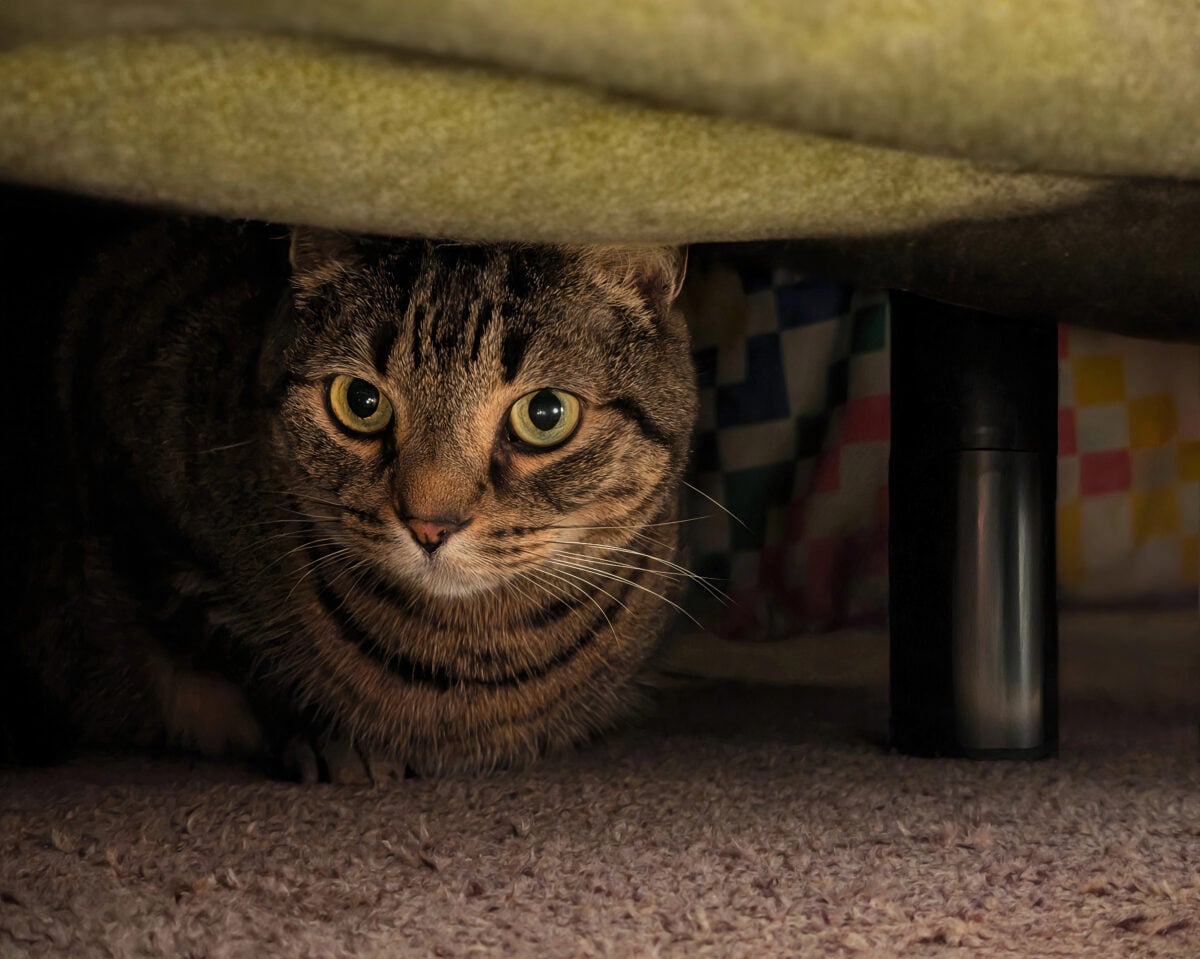
Pranks may look funny in a short video, but repeated startles can make a cat anxious in a home that should feel safe. Avoid sneaking upon your cat, cornering them with unfamiliar objects, or placing frightening items near them for entertainment.
Cats already live with several daily hardships, including closed doors and bowls that are only 70% full. They do not need manufactured terror added to the schedule.
Quick clue: If the tail returns to normal within a few moments and your cat quickly resumes exploring, resting, or playing, the puff was probably a temporary startle response.
3. Your Cat Is Excited or Playful
A puffed tail does not automatically mean, “Back away or lose a finger.”
Some cats fluff up when play becomes especially exciting. During the zoomies, they may sprint down the hallway, bounce sideways, skid across the floor, attack a toy mouse, and ricochet off the sofa as though they have remembered an urgent appointment in another dimension.
Playful puffing may happen while a cat is:
- Chasing a wand toy
- Ambushing a stuffed mouse
- Wrestling with a friendly housemate
- Bunny-kicking a kicker toy
- Sprinting after using the litter box
- Performing the classic sideways crab walk
- Racing from room to room for no reason visible to humans
The physical trigger is still adrenaline, but the emotional context is different.
Instead of feeling trapped or terrified, the cat is energized and ready to chase, pounce, or wrestle.

A playful cat usually has a looser, bouncier body. They may repeatedly return to the toy or playmate, pause and restart the game, or dart away only to come charging back seconds later.
In other words, they look more like an overexcited athlete than a cat preparing for battle.
4. Your Cat Is Becoming Overstimulated
Playful excitement can tip into overstimulation.
A cat who begins a game with a loose body and happy pounces may become tense if the interaction lasts too long or becomes too intense.
Watch for warning signs such as:
- Rapid tail lashing
- Skin twitching along the back
- Ears rotating backward
- Sudden freezing
- Harder biting
- Dilated pupils
- Growling or irritated vocalizations
- Abruptly turning toward your hand
When you notice these signals, pause the interaction.
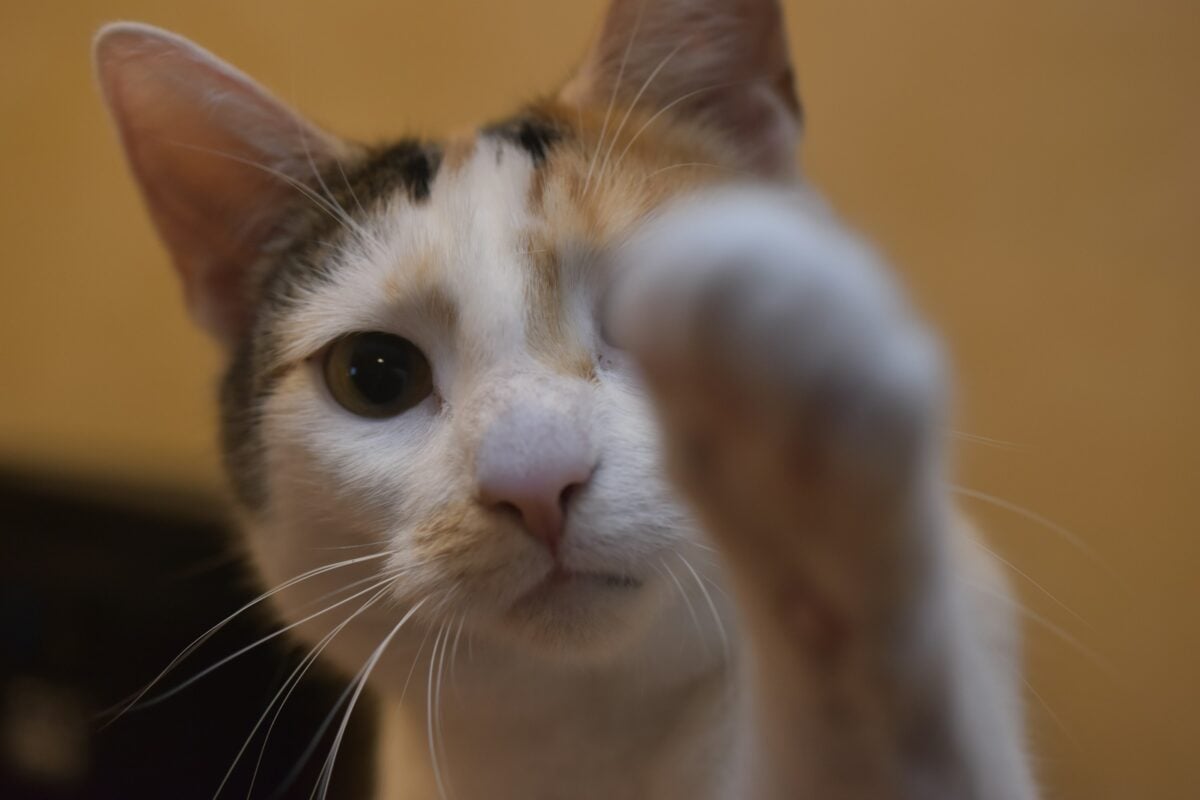
Stop moving the toy, lower the energy in the room, and give your cat space to settle. Do not punish them for becoming overstimulated. Their nervous system is simply telling you that the game has reached its limit.
Using wand toys, kicker toys, balls, or stuffed mice also helps keep human hands out of the action.
Fingers make terrible prey because cats tend to remember their training at inconvenient times, such as 3:14 a.m.
5. Your Cat Feels Territorial or Frustrated
A cat may puff up after spotting another cat, dog, or unfamiliar animal outside.
This can involve fear, territorial arousal, hunting instincts, or frustration—sometimes all before breakfast.
A cat watching an outdoor intruder may:
- Stare intensely through the window
- Flick or lash the tail
- Growl, chirp, or yowl
- Pace near the glass
- Redirect their frustration toward another pet
- Remain agitated after the animal leaves
The cat can see the perceived intruder but cannot approach, chase, or investigate it. That barrier can make the experience especially frustrating.
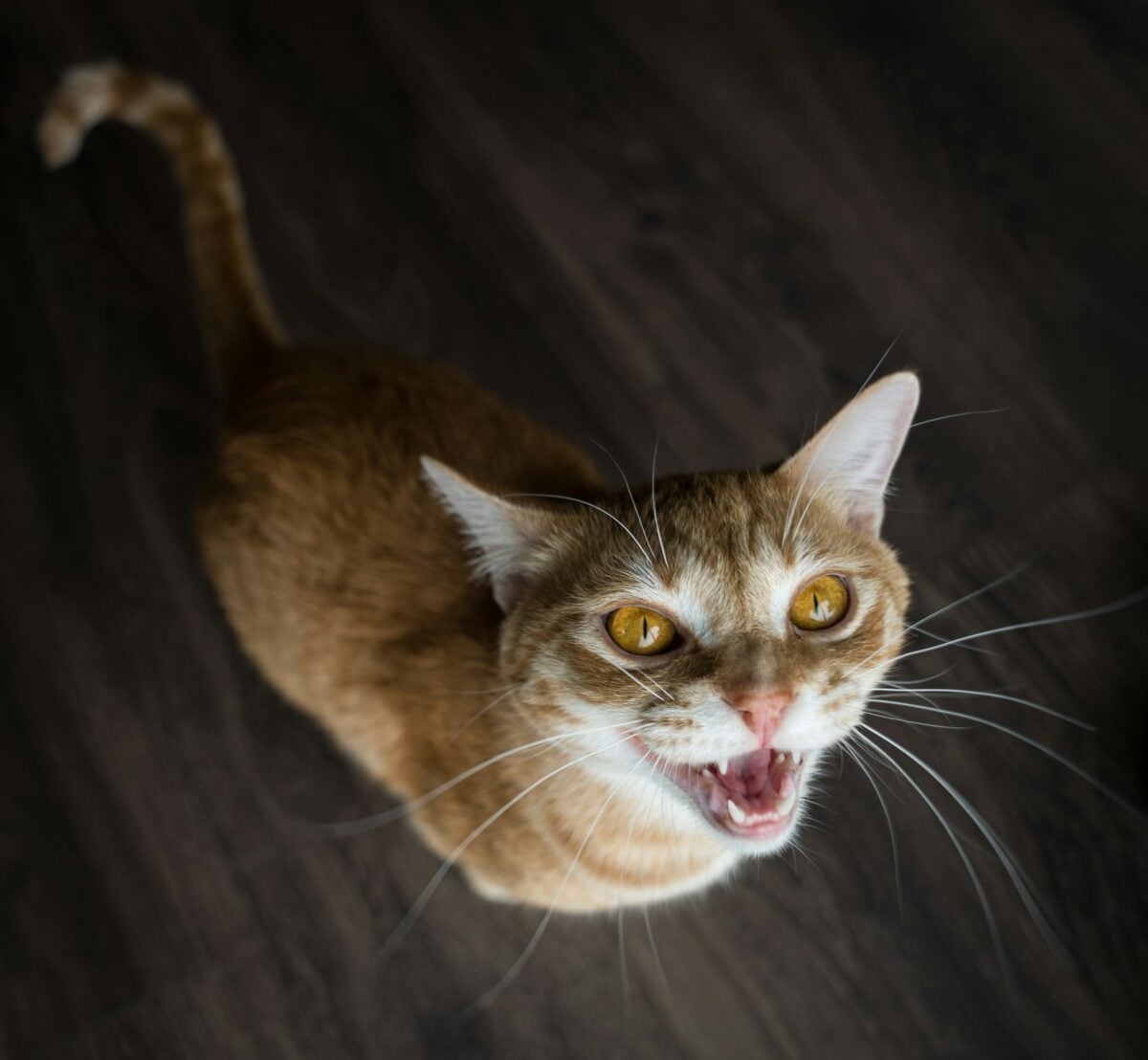
When your cat remains worked up, close the curtain, temporarily block the view, or encourage them to move to another room.
Be cautious around an intensely aroused cat. Redirected aggression can occur when a cat cannot reach the original trigger and instead lashes out at a nearby person or animal. In multi-cat homes, learn how to recognize tension and prevent cat fights before they escalate.
Give them time and distance until their body softens and their attention shifts.
6. Your Cat Is a Kitten, and Everything Is Apparently Shocking
Kittens can produce a bottle-brush tail over events that an adult cat would barely acknowledge.
A sock moves. A sibling appears behind a chair. Their reflection copies them. A piece of fluff exists nearby with no explanation.
Emergency.
A puffed tail, arched back, and sideways hop are often part of normal kitten play. Young cats are learning how to move, hunt, defend themselves, judge distances, and communicate with other animals.
Their miniature tough-guy performances are practice for adult life.
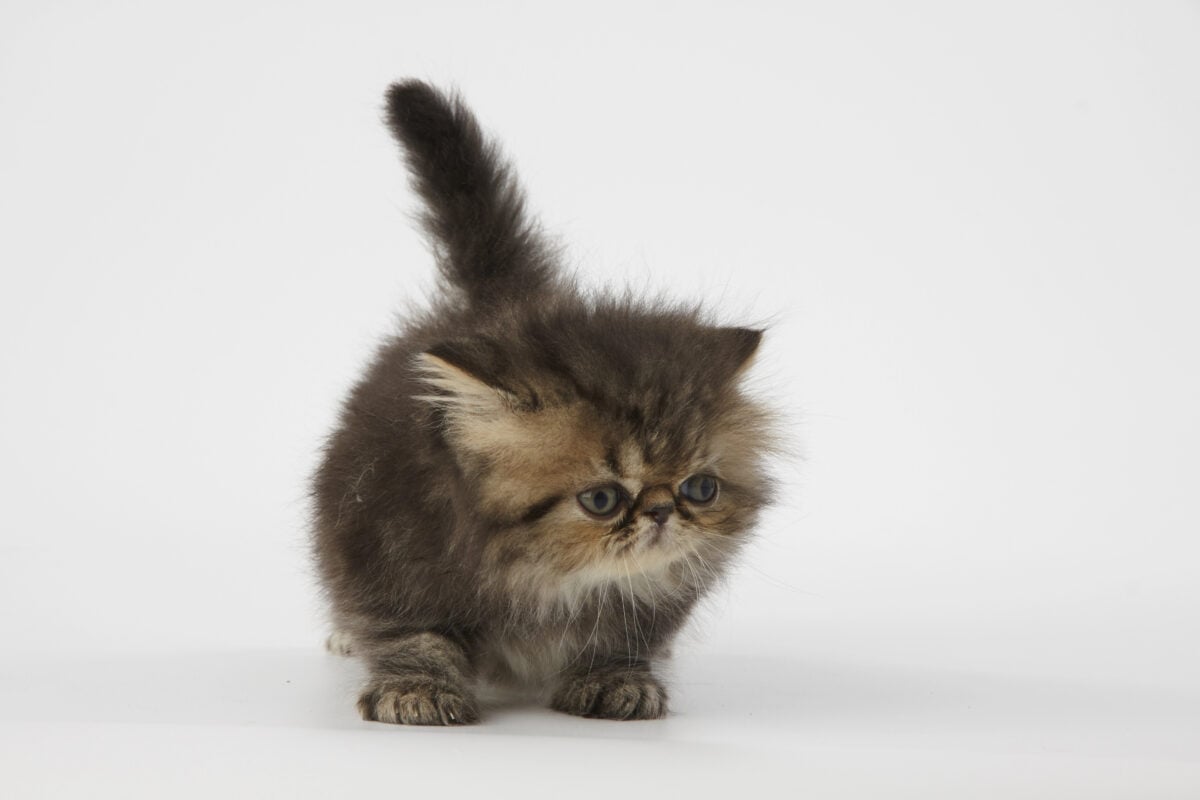
Frequent puffing during play is usually nothing to worry about when the kitten quickly relaxes, returns to the game, eats normally, and otherwise appears healthy.
Think of it as survival training conducted by someone who still occasionally falls off the bed.
Sideways hops, midnight sprints, dramatic stares, and arguments with closed doors are just a few of the strange cat behaviors owners eventually stop questioning. After enough time with a cat, “Why are you doing that?” slowly becomes, “Of course this is happening.”
How to Tell Whether Your Cat Is Scared or Playing
Never judge a puffed tail by fluff alone.
The rest of your cat’s body—and especially their facial expressions—usually reveals what is going on.
The situation matters just as much as the posture.
As International Cat Care explains, a cat’s tail, ears, posture, facial expression, and movement all work together as part of their communication. That is why the rest of your cat’s body usually reveals far more than the fluff alone.
A bottle-brush tail during a thunderstorm probably points to fear. The same tail during a frantic chase after a feather wand is more likely caused by excitement.
A cat puffing up while staring through a window may be frightened, territorial, or frustrated, or a combination of all three.
Look for the overall pattern rather than relying on one dramatic body part.
Why Does Only the Tail Puff Up Sometimes?
Piloerection does not always affect the entire body.
In some cats, only the tail becomes fluffy. In others, the fur rises along the spine, shoulders, or hindquarters as well.
The amount of visible puffing can vary depending on:
- The intensity of the emotional response
- The cat’s coat length and texture
- Which muscles are activated
- The cat’s individual body-language habits
- Whether the cat is frightened, playful, or highly aroused
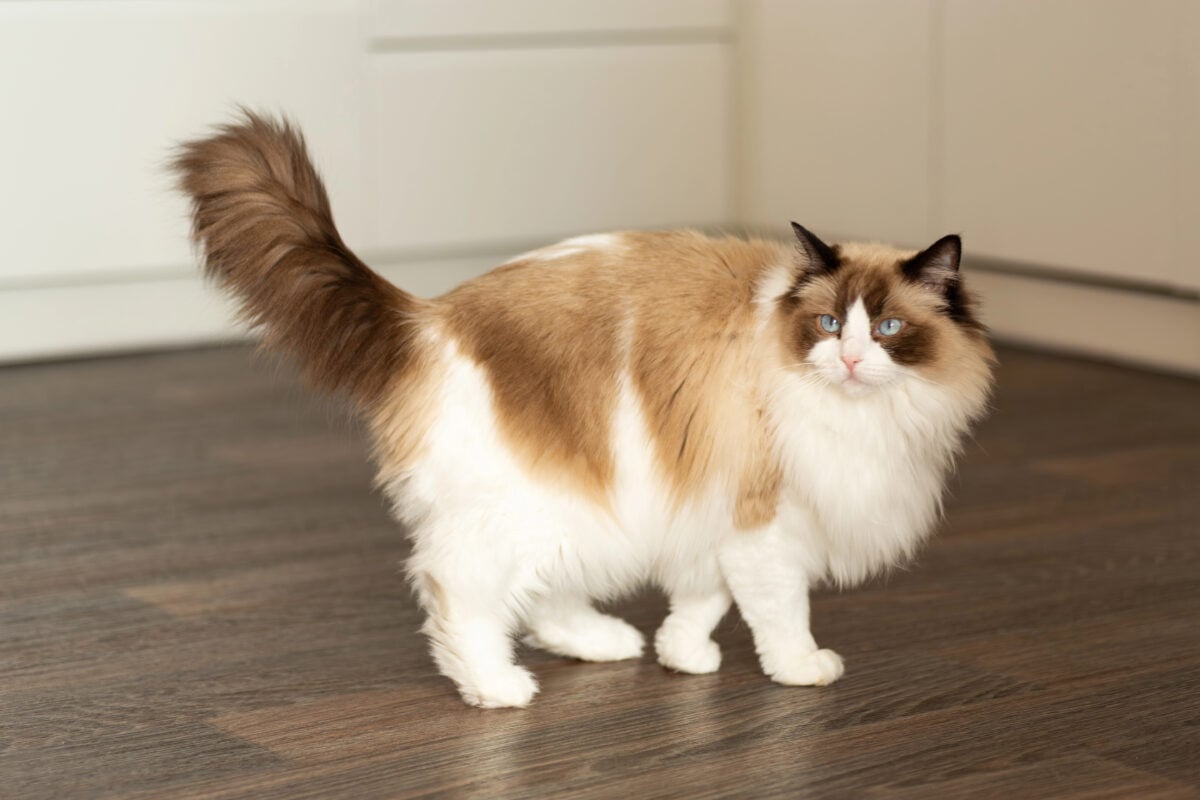
A long-haired cat may look spectacularly inflated, while the same response in a short-haired cat can be much subtler.
The location of the raised fur does not provide a complete emotional diagnosis. As always, read the entire body and consider what happened immediately before the reaction.
What Should You Do When Your Cat’s Tail Puffs Up?
Start by resisting the urge to touch the spectacular tail.
It may look soft enough to bury your face in, but this is not the moment.
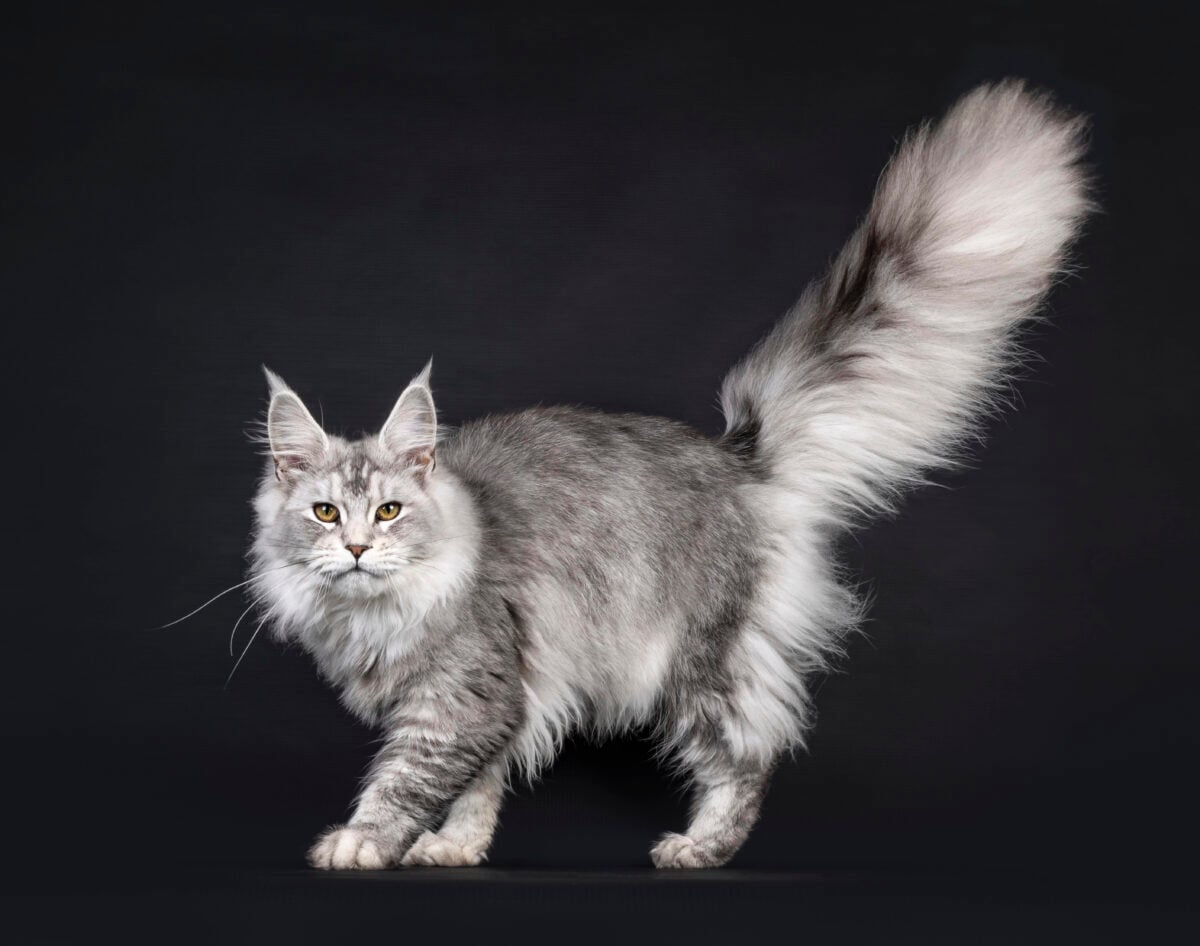
When Your Cat Seems Frightened
Lower the noise and activity around them.
Move slowly and give them a clear route to a hiding place, another room, or a high perch. Avoid staring directly at them, reaching over their head, or blocking the doorway.
If a sudden noise caused the reaction, let your cat investigate when they are ready.
Do not carry them toward the source like a nervous detective being forced onto the crime scene.
When Your Cat Seems Playful
The fun can usually continue as long as your cat’s body remains loose and they keep voluntarily returning to the game.
Use a wand or chase toy rather than your hands, and redirect rough play without yelling or punishment. Allow brief pauses so your cat can reset, and end the session if their body becomes tense or their bites become harder.
Several short play sessions are often better than one marathon game that ends in an incident report.
When Another Animal Is Involved
In a multi-cat home, make sure everyone is actually enjoying the interaction.
Healthy play usually includes:
- Pauses
- Role reversals
- Loose body language
- Voluntary re-engagement
- Opportunities for both cats to leave
One cat relentlessly chasing, cornering, blocking, or guarding another is not mutual fun just because nobody has filed a formal complaint.
Separate the cats calmly when one seems frightened or unable to escape. Avoid grabbing them with your bare hands during a tense encounter. Instead, create distance using a barrier, an open doorway, a large piece of cardboard, or another safe interruption.
Do this: Reduce stimulation, provide an escape route, and let your cat decide when to approach again.
Not this: Pick them up, punish them, corner them, or repeatedly expose them to the trigger.
How Long Should a Cat’s Tail Stay Puffed Up?
A brief bottle-brush moment after a loud noise, a sudden movement, an exciting play session, or a burst of zoomies is usually normal.
The fur should settle as the cat’s nervous system calms down.

Some cats return to normal within seconds. Others may need several minutes, particularly if they spotted another animal or experienced a genuinely frightening event.
Pay closer attention when your cat:
- Remains tense or puffed for an extended period
- Repeatedly startles without an obvious cause
- Hides long after the trigger has disappeared
- Seems disoriented
- Shows signs of pain
- Suddenly becomes unusually reactive
- Has difficulty walking or balancing
- Displays a major change in personality or behavior
Persistent distress is different from a quick, theatrical fluff during play.
When the reaction is new, frequent, unexplained, or accompanied by other concerning symptoms, contact your veterinarian.
When Frequent Puffing May Point to Stress
An occasional bottle-brush moment is part of normal cat behavior.
A cat who startles constantly, stays tense, or seems permanentlyon edge may be dealing with ongoing stress.
Other clues can include:
- Hiding more than usual
- Swatting, biting, or growling
- Overgrooming or developing bald patches
- Urinating outside the litter box
- Eating less
- Pacing or appearing restless
- Avoiding certain rooms
- Becoming unusually clingy or withdrawn
- Reacting strongly to small noises
- Sleeping less comfortably
- Showing tension around another pet
Cats are creatures of habit. Moving house, adopting another animal, rearranging furniture, hosting noisy guests, beginning construction, or changing the household routine can unsettle them.
Even changes that seem minor to us can feel enormous to a cat whose daily schedule is built around predictable meals, naps, window inspections, and your legally required presence in the correct chair.
Look for Quiet Conflict Between Cats
Conflict between cats is not always obvious.
One cat may quietly block a hallway, guard the litter box, occupy the only desirable window perch, or stare another cat away from the food bowl.
There may be no dramatic fight, but the tension is still real.
In multi-cat homes, spread important resources throughout the house.
A row of three bowls set beside one another may look generous to us, but cats may still view it as a single feeding location that a single individual can control.
Provide separate:
- Food stations
- Water sources
- Beds
- Scratching areas
- Hiding places
- High perches
- Litter boxes
Arrange them so that no single cat can guard everything from a single strategic position.
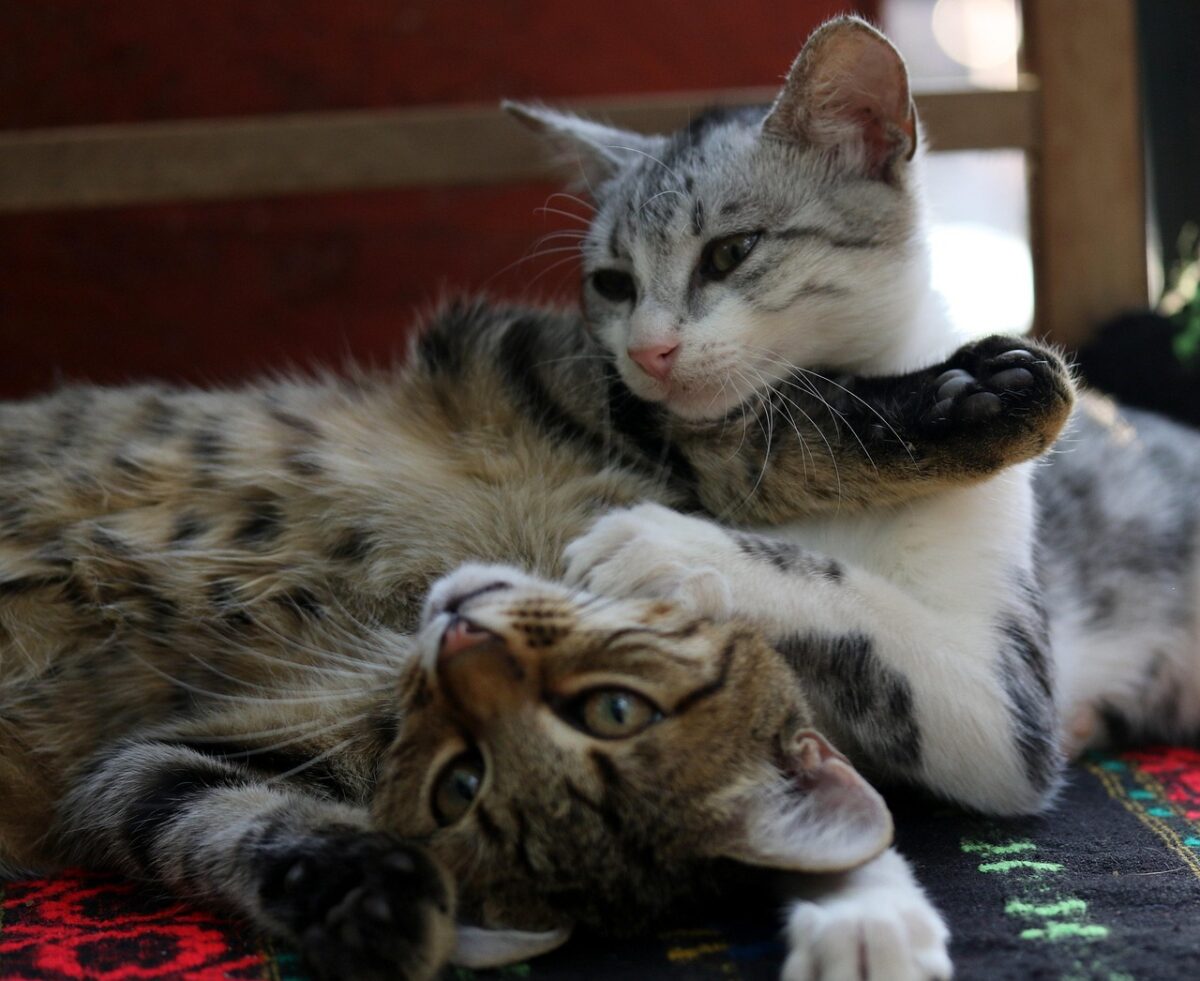
Create a Calmer Home Base
Give your cat access to a quiet area where they can eat, drink, sleep, scratch, hide, and use a litter box without being disturbed. Cozy hiding places such as cardboard boxes, covered beds, or quiet cubbies are safe places where they can decompress.
Vertical space can also help. A sturdy cat tree, shelf, or window perch allows your cat to observe the room without sitting in the middle of the action.
Predictable routines, gentle daily play, hiding spaces, and opportunities to climb can all help a cat feel more secure.
A sudden behavior change deserves a veterinary check. Pain, illness, changes in vision or hearing, and neurological problems can affect how a cat responds to their surroundings.
Once medical causes have been ruled out, a qualified feline behavior professional can help identify less obvious triggers and make the home feel less like a daily obstacle course.
Frequently Asked Questions
Still wondering what your cat’s puffed-up tail means? These frequently asked questions cover a few of the most common and most confusing situations. If your question is not answered here, leave it in the comments and tell us what your cat was doing when the fluff appeared.
Does a Puffed Tail Mean My Cat Is Angry?
Not always.
A cat may puff up because they are frightened, startled, excited, playful, defensive, territorial, or overstimulated. Check the ears, posture, sounds, movement, and situation before deciding what the tail means.
A cat with flattened ears, a stiff body, and a growl needs space. A cat bouncing sideways toward a toy is probably auditioning for a very small action movie.
Why Does My Cat Puff Up and Run Sideways?
The sideways run, often called a crab walk, helps a cat present a larger outline while keeping a possible threat in sight.
Adult cats may do it when frightened or defensive. Kittens often do it during play because being six inches tall has never stopped them from attempting intimidation.
Why Does My Cat’s Tail Puff Up During the Zoomies?
Zoomies involve a burst of physical energy and excitement. Adrenaline rises, the fur lifts, and your cat briefly becomes an electrified toilet brush racing through the hallway. When the body remains loose, and your cat keeps returning to play, the puffing is usually harmless excitement.
Why Does My Cat’s Tail Puff Up While Playing With Me?
Your cat may be highly excited by the toy’s movement or the thrill of the chase.
As long as their body remains loose, they continue to engage voluntarily, and they are not hissing or trying to escape, the puffing is probably related to playful arousal.
Pause when the tail starts lashing, the ears flatten, or the body suddenly becomes tense. Those signals suggest your cat may be moving from playful excitement into overstimulation.
Why Does My Cat Puff Up While Looking Out the Window?
Your cat may have spotted another cat, a dog, a squirrel, a delivery driver, or a leaf behaving suspiciously.
Outdoor animals can trigger fear, territorial excitement, hunting instincts, or frustration because your cat can see the visitor but cannot reach or investigate it.
Closing the curtain or guiding your cat away from the window can help when they remain agitated.
Why Does My Cat’s Tail Puff Up When I Pet Them?
Your cat may be startled, overstimulated, frightened, or uncomfortable.
Stop petting and observe the rest of their body. Twitching skin, flattened ears, tense muscles, tail lashing, or a sudden turn toward your hand are signs that they need a break.
When this reaction is new, frequent, or connected to touching a specific area, schedule a veterinary exam to rule out pain or sensitivity.
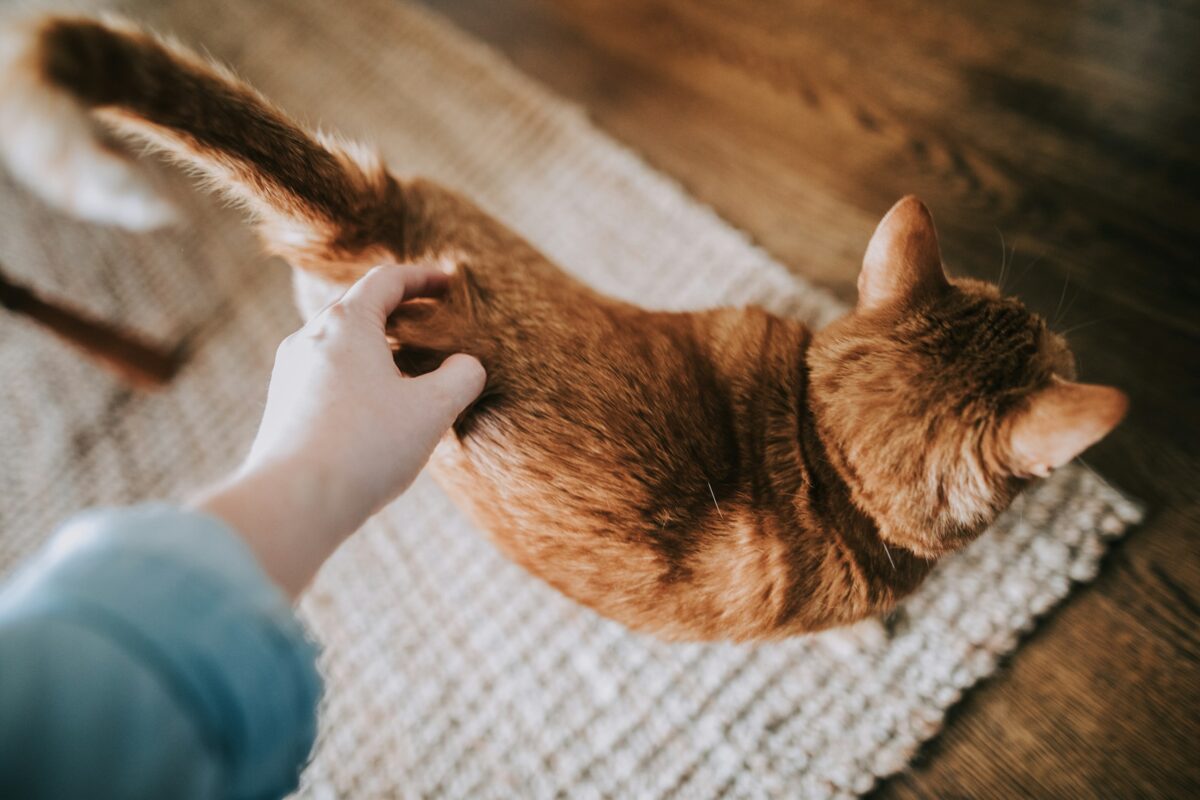
Should I Pet a Cat With a Puffed-Up Tail?
Usually, no—not immediately.
Pause and read the rest of the cat.
A frightened or overstimulated cat may defend themselves when touched. Wait until the body softens, the ears return to a neutral position, and the cat chooses to approach you.
Consent matters, even when the tail looks extremely pettable.
Is a Puffed-Up Tail Ever a Medical Emergency?
A puffed tail by itself is rarely an emergency.
Seek prompt veterinary advice when it is accompanied by severe pain, breathing difficulty, weakness, collapse,
disorientation, trouble walking, seizure-like activity, an injury, or another sudden and concerning physical change.
When in doubt, contact your veterinarian and describe the full set of symptoms rather than focusingon the tail alone.
The Bottom Line
A puffed-up tail is your cat turning the emotional volume all the way up.
It might mean:
- “I am terrified.”
- It might mean:
- “What in the name of tuna was that?”
Or it might mean:
- “This toy mouse has insulted my family, and I must destroy it.”
The tail alone cannot tell you which one.
Look at your cat’s ears, eyes, posture, movement, sounds, and whatever was happening just before the transformation.
Most bottle-brush moments are a normal part of being a cat: expressive, theatrical, and slightly ridiculous. Once you learn to read the whole body, it becomes much easier to tell whether your cat needs space, a quieter room, reassurance, or another lap around the sofa.
Understanding What Your Cat Is Trying to Tell You
Cats are always communicating, even when they are not making a sound. A puffed-up tail is only one piece of the conversation.
The more you notice your cat’s posture, routines, expressions, and reactions, the easier it becomes to understand what they need. You can learn to recognize the little habits that show your cat feels safe with you, spot the warning signs that they may be asking for help, and understand why their behavior changes when guests arrive.
Even familiar sounds can carry more meaning than they seem to. Your cat’s rumbling motor does not always mean simple happiness, so it is worth learning what your cat’s purr may be telling you, too.
Every tail flick, slow blink, hiding spell, and hallway sprint adds another clue. Pay attention long enough, and your mysterious little roommate may start making a surprising amount of sense.
What Makes Your Cat Puff Up? Share Your Story
Has your cat ever puffed up over something completely harmless, deeply suspicious, or hilariously ordinary? Tell us what happened in the comments—and let us know whether your cat was scared, playful, or simply being dramatic.