When you purchase through links on our site, we may earn a commission at no extra cost to you. Learn more.
Your cat used to communicate with a tasteful little mrrp and the occasional pointed stare.
Table of Contents
Now?
They’re standing in the hallway at 2:43 a.m. singing the song of their people.
Breakfast requires a press conference. Closed doors are unacceptable. Leave the room without explanation, and a mournful cry may follow.
Want our human-written content to rank above AI-generated garbage? Help us out by clicking this button!
So why has your older cat suddenly become so vocal?
Sometimes, the answer is wonderfully ordinary. Senior cats can become more attached to routines, more interested in your company, or simply more confident about telling you exactly what they want. After years of studying us, many have become very good at getting a response.
But a noticeable change in vocalization can also mean something else has changed—physically, emotionally, or cognitively.
The most useful question isn’t “Is my cat meowing too much?”
It’s “Is this new for my cat?”
A lifelong chatterbox may simply be carrying on as usual. A previously quiet senior who suddenly starts roaming the house and yowling at night is telling you something worth paying attention to.
Here’s how to figure out what that something might be.
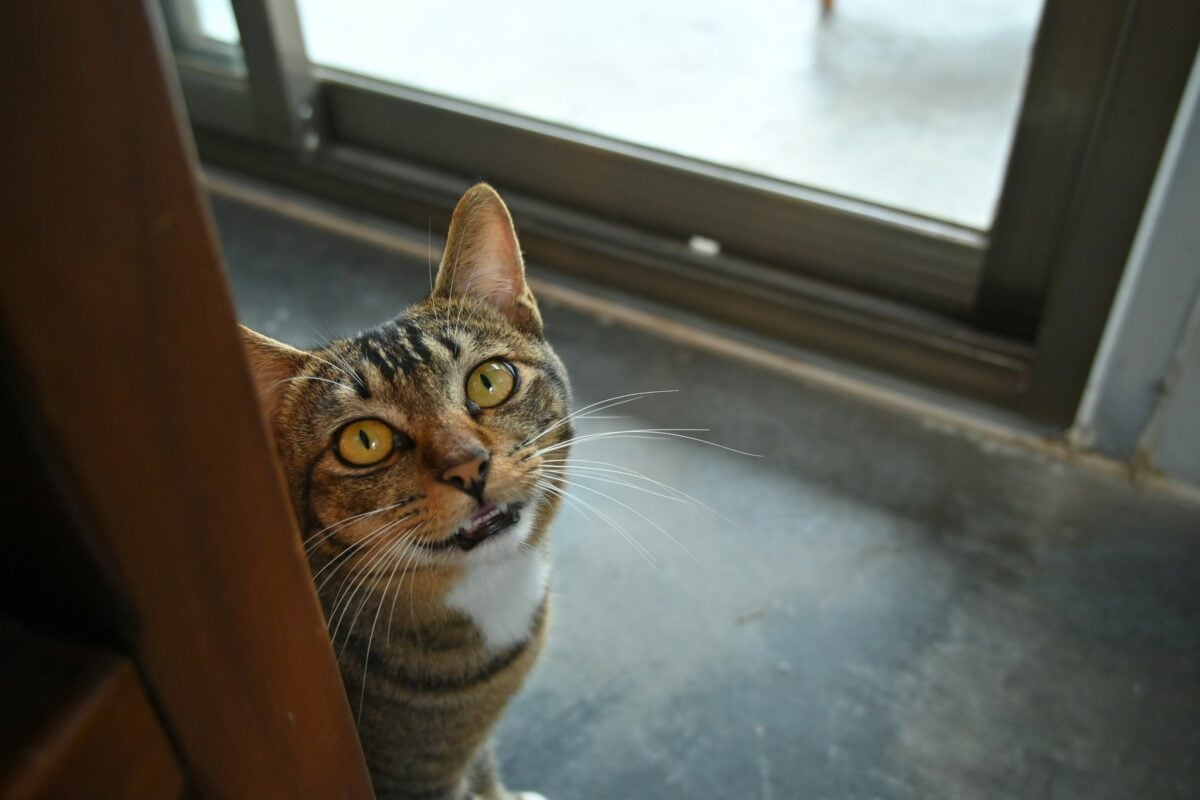
The Quick Answer: Why Older Cats May Start Meowing More
Senior cats can become more vocal for several very different reasons:
- They want attention or reassurance.
- They’ve learned that meowing gets results.
- Their daily routine has changed.
- Their hearing isn’t as sharp, so they don’t realize how loud they’re being.
- Reduced vision makes them less confident navigating the house.
- Arthritis or another source of pain is making everyday activities uncomfortable.
- A medical condition such as hyperthyroidism, hypertension, kidney disease, or diabetes is affecting how they feel.
- Their sleep-wake cycle has changed.
- They’re experiencing age-related cognitive changes.
Sometimes more than one thing is going on. An arthritic cat with fading vision, for example, may be perfectly comfortable during the day but become unsettled when the house gets dark, and everyone disappears upstairs.
That is why context matters so much.
Notice when your cat vocalizes, where they are, what happened immediately beforehand, and what happens when you respond. Those details are usually far more revealing than the number of meows involved.
First: Is Your Cat Simply Becoming More Talkative?
Cats do not reach adulthood, settleon one personality, and remain exactly that way forever.
Thank goodness, really. Half the fun of living with them is discovering that the dignified six-year-old who once regarded lap sitting as beneath her dignity can become a 13-year-old velcro cat who would now like to be physically attached to your rib cage.
Some senior cats genuinely become more social and communicative.
Maybe your cat has started greeting you every time you enter a room. Maybe dinner now requires increasingly forceful reminders beginning approximately 90 minutes before dinner. Maybe they wander into your office, yell once, and walk away after you’ve acknowledged their presence.
That can be normal. Older cats have also had years to learn how humans work.
Imagine your cat meows beside the sofa. You look over. Meow again. You pat the cushion.
Meow a third time. You get up, scratch their chin, and happen to walk toward the treat cupboard.
Congratulations. Your cat has just discovered a functioning customer-service button.
If vocalizing reliably produces attention, food, an open door, a warm lap, or some other desirable outcome, many cats will use it more often. They are nothing if not efficient.
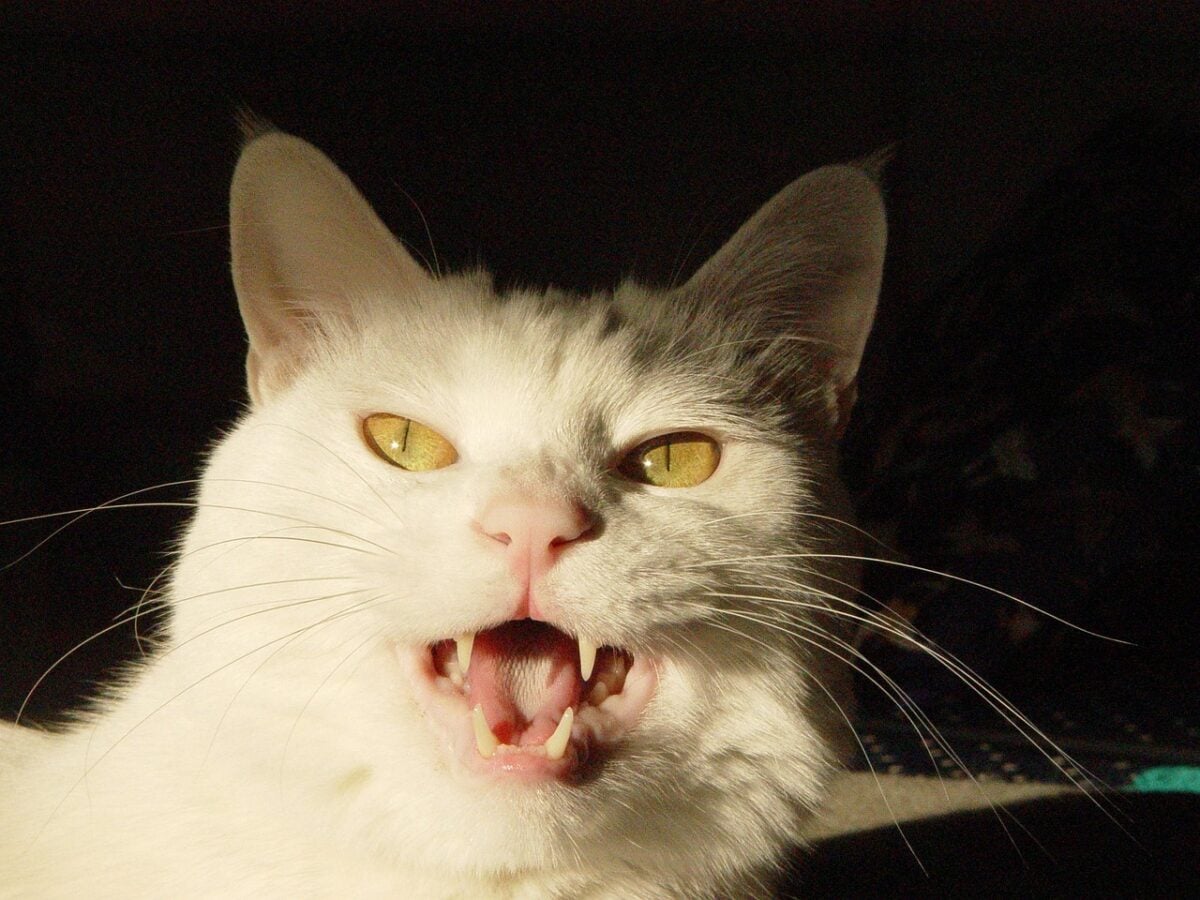
The Best Comparison Is Your Cat vs. Your Cat
Don’t compare your cat to the Siamese on TikTok who appears to host a daily podcast.
Every cat has a different normal.
One cat may scream like a tiny opera singer whenever someone touches cheese packaging and be completely healthy. Another may utter three meows per calendar year.
The important thing is whether your cat’s pattern has changed.
A gradual increase in conversational meowing from an otherwise happy, stable senior may not be particularly concerning.
A sudden change is different. Other cat behavior changes you shouldn’t ignore can be just as subtle, especially in older cats.
Pay closer attention if your cat is vocalizing more, and you’ve noticed things like:
- weight loss
- a much bigger or smaller appetite
- increased thirst
- more urine in the litter box
- vomiting or diarrhea
- difficulty jumping
- stiffness after resting
- poor grooming
- litter-box accidents
- restless pacing
- altered sleep
- staring at walls or seeming lost
- sudden clinginess or withdrawal
Those extra details give the meowing context.
Why Older Cats Sometimes Call for You From Another Room
There is a particular senior-cat cry many people know instantly.
Your cat is somewhere down the hallway. You are not.
This is unacceptable.
A long, mournful “MRAAAOW?” echoes through the house.
You call their name… Silence.
Thirty seconds later, your cat appears in the doorway looking mildly annoyed that you had wandered off without supervision.
Sometimes that really is all that’s happening.
As cats age, familiar people can become increasingly important anchors. If your cat isn’t quite as confident moving around the house anymore, calling may be easier than conducting a full room-by-room search.
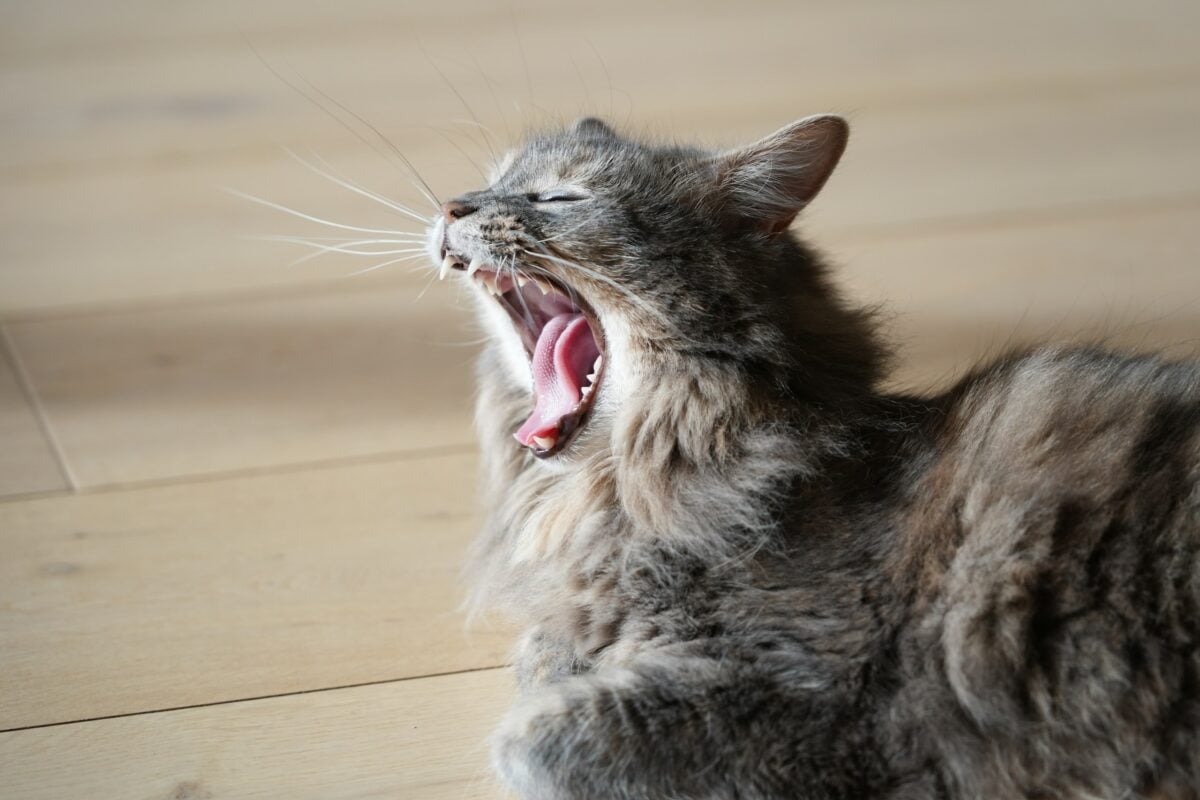
Hearing and vision changes can contribute too.
A cat with reduced hearing may no longer hear you typing, walking around, opening cupboards, or making the thousand other tiny sounds that once told them where you were.
A cat with reduced vision may feel less sure about walking through a dim hallway alone.
Your voice becomes a landmark.
If your cat calls, hears you answer, trots over, gets a head scratch, and settles into their usual loaf formation, the episode may be social reassurance.
Pay more attention if your cat seems genuinely unable to orient themselves.
A senior cat who repeatedly gets stuck behind furniture, stares into corners, can’t seem to find a familiar doorway, or continues wandering and crying after you approach may be experiencing something beyond an ordinary “Where’s my person?” moment.
Senior Cats Can Become Fiercely Attached to Their Routines
Cats appreciate routine at any age. Senior cats can take this enthusiasm to constitutional-law levels.
Breakfast happens at 7:00. Not 7:06. The blue blanket belongson the left side of the couch.
You sit in that chair after dinner. The bedroom door remains open.
These are not suggestions.
For an older cat, predictability may also provide genuine comfort. Familiar routines help make the world easier to navigate when hearing, vision, mobility, or cognition isn’t quite what it used to be.
That is why seemingly minor household changes can trigger a surprising amount of commentary.
You started working later. A family member went away. The automatic feeder changed time. You moved the litter box. A new puppy arrived and apparently has no respect for established feline law.
Your cat may respond by following you more closely, calling more frequently, waking you earlier, or loudly reminding everyone how the household used to operate.
When possible, keep the important anchors predictable: meals, medication, sleeping spots, litter boxes, water, and favorite social rituals.
Cats can adapt to change. However, they prefer receiving a memo first.
Why Does My Older Cat Yell Before Meals?
Some cats ask for breakfast. Others behave as though breakfast has been delayed since the Eisenhower administration.
Food-related vocalization is extremely common, and often it is learned.
Cats are excellent at recognizing tiny cues that precede meals: the alarm, your slippers hitting the floor, a particular cupboard opening, the coffee maker starting, or you making the reckless mistake of walking within six feet of the kitchen.
Once a cat learns the schedule, reminders may begin earlier and earlier.
And if yelling causes food to appear?
Excellent. The system works.
But there is an important distinction between a cat who has always been enthusiastic about food and a cat whose appetite suddenly changes.
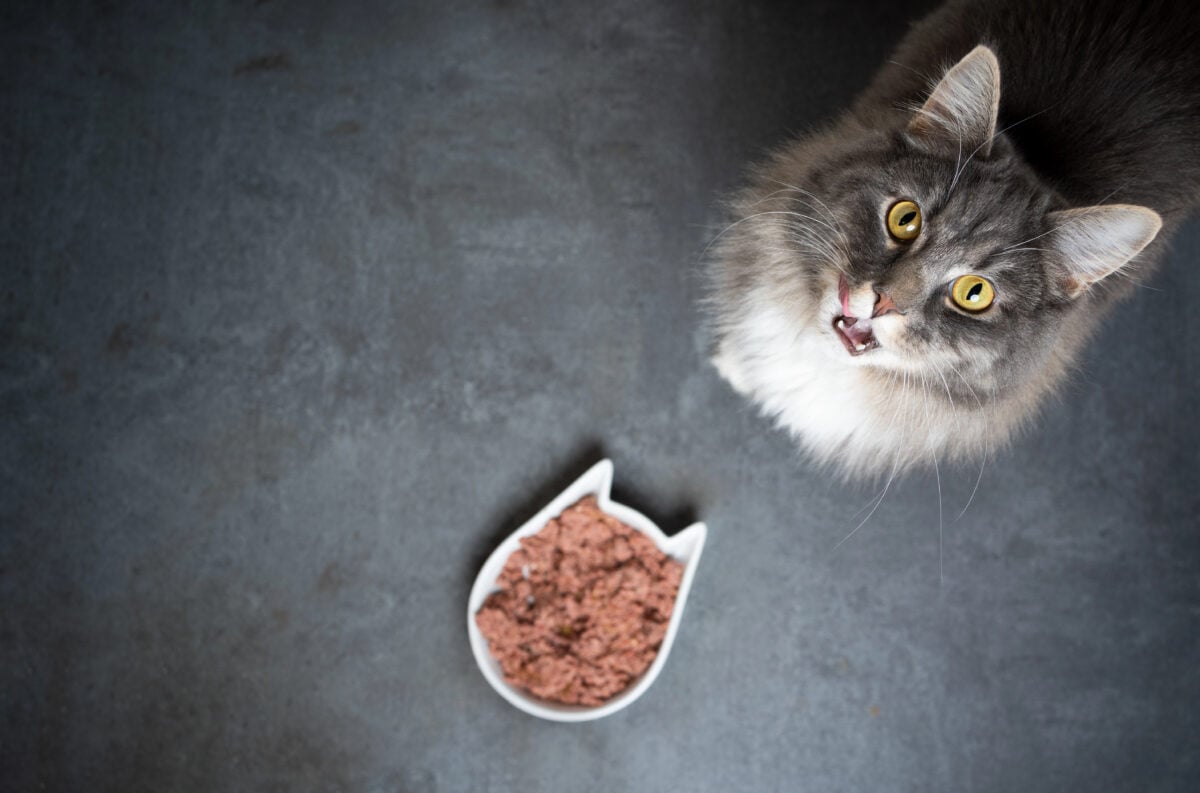
Watch Especially for Hunger Plus Weight Loss
A senior cat who becomes ravenously hungry while losing weight should be seen by a veterinarian.
Hyperthyroidism is common in middle-aged and older cats and can cause weight loss, increased appetite, increased thirst and urination, vomiting or diarrhea, hyperactivity, anxiety, and sometimes vocalization.
That combination can look very different from a normal food-obsessed cat.
You may notice that your cat:
- finishes meals unusually quickly
- begs again soon afterward
- steals food they previously ignored
- seems restless around the house
- drinks more
- becomes thinner despite eating well
Don’t solve that mystery by simply pouring more kibble into the bowl.
It’s worth investigating.
A cat may also approach food eagerly but then struggle to eat because of dental or mouth pain. If they sniff the bowl, try to chew, drop food, chewon one side, or repeatedly walk away despite seeming hungry, mention that too.
Why Older Cats Yowl at Night
My 12-year-old calico, Twilight, has a few different nighttime calls. One means “come find me,” another is unmistakably a snack request, and occasionally there’s one that sounds just different enough to make me get up and check on her. Twilight has also mastered the art of yelling once, waiting for me to respond, and then acting as though I was the one who started the conversation.
Nighttime is when senior-cat vocalization tends to go from “interesting behavioral development” to “we are all awake now.”
During the day, a few extra meows disappear into household noise. At 3:11 a.m., one magnificent hallway yowl sounds like an ancient spirit has entered your home.
Several things can make nights harder for an older cat.

The House Is Darker
A cat whose vision is declining may navigate familiar rooms beautifully in daylight but feel less certain when the lights go out.
Stairs, dark hallways, furniture edges, and doorways suddenly require more confidence.
The House Is Quieter
A cat with reduced hearing loses many of the small sounds that confirm where everyone is.
Once the humans are asleep, the house may feel unusually empty.
Stiff Joints Get Stiffer
Arthritis can make it difficult to settle comfortably, climb onto a bed, use stairs, or step into a high-sided litter box.
Cats with arthritis don’t always limp dramatically. Sometimes the clue is that they stop doing things they used to do.
Their Sleep Schedule Has Shifted
Senior cats may sleep for long stretches during the day and become active at strange hours.
If your cat spends the afternoon achieving a level of unconsciousness normally associated with anesthesia, they may be ready to start their day just as you’re ending yours.
Cognitive Changes Can Disrupt Nighttime Behavior
Feline cognitive dysfunction can affect orientation, sleep-wake patterns, memory, activity, social interactions, and vocalization.
Nighttime wandering and seemingly unprompted loud calling are among the behaviors that can occur.
But nighttime yowling does not automatically mean dementia. What matters is the rest of the picture. If the calling comes with pacing, pain, appetite changes, litter-box problems, or disorientation, these warning signs that a cat may be crying for help are worth knowing.
Pain, thyroid disease, high blood pressure, sensory loss, stress, and other medical problems can produce overlapping signs. Cognitive dysfunction is something veterinarians consider after looking at the whole picture and ruling out other explanations.
Hearing Loss Can Turn a Meow Into a Megaphone
Has your cat seemingly misplaced their indoor voice? Hearing loss may be part of the reason.
Cats normally hear themselves when they vocalize and adjust their volume accordingly. When hearing fades, that feedback changes.
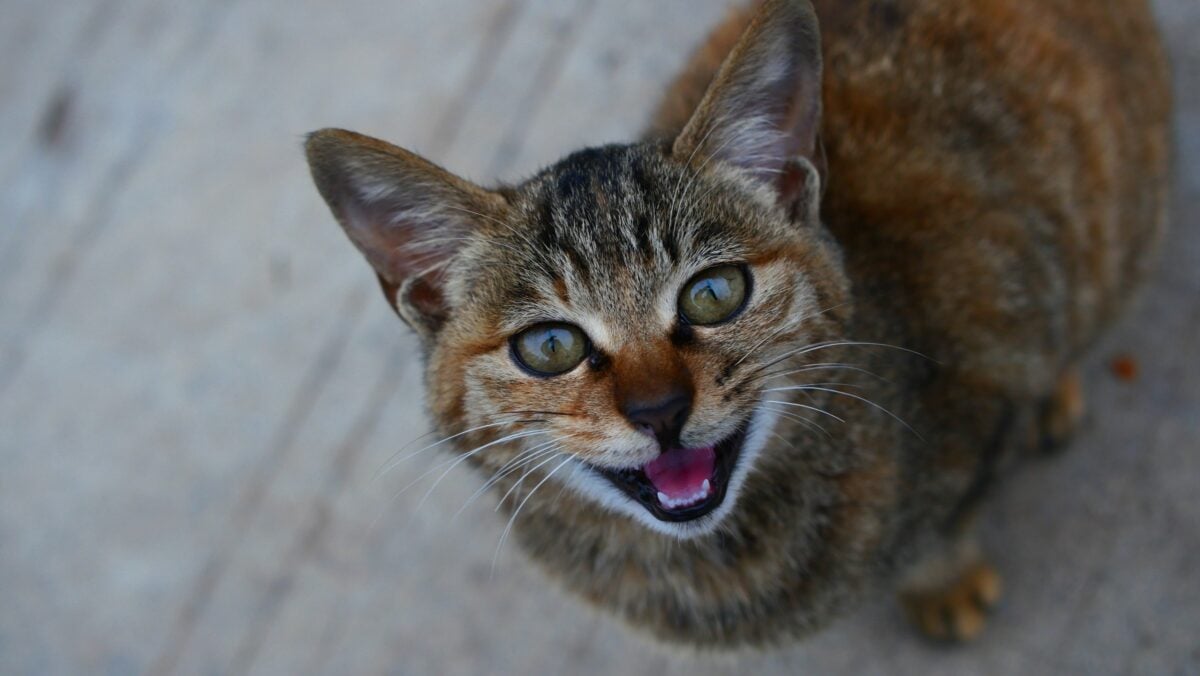
The result can be startling. Your cat believes they have produced a perfectly reasonable breakfast inquiry. You experience it as a small furry air-raid siren.
Other possible clues include:
- sleeping through noises that used to wake them
- no longer appearing when a treat bag rustles
- failing to notice you enter the room
- startling when touched because they didn’t hear you approach
- relying more heavilyon visual cues
Try not to test your cat’s hearing by clapping or making frightening noises near them. If you’re noticing a real change, bring it up with your veterinarian.
At home, approach where your cat can see you. Use predictable visual cues. Avoid sneaking up from behind.
A hearing-impaired cat isn’t ignoring you.
Although, to be fair, plenty of perfectly hearing cats are.
Vision Changes Can Make a Senior Cat More Vocal
Cats are ridiculously good at compensating for gradual vision loss.
They know the furniture layout. Their whiskers help. Their hearing helps. Their memory helps. They can smell their way toward familiar resources.

Because of that, you may not immediately realize that your cat isn’t seeing as well as they once did.
Instead, you might notice that they:
- hesitate in darker rooms
- call before moving through the hallway
- become cautious around stairs
- misjudge jumps
- dislike furniture rearrangements
- seem unusually dependent on your voice
Keeping the home layout consistent can help enormously.
Avoid moving food, water, litter boxes, and beds unless necessary. Add small nightlights along important routes. Keep walkways uncluttered.
Sudden vision loss is another matter.
High blood pressure can damage a cat’s eyes and may cause retinal detachment and blindness. A cat who suddenly begins bumping into things, appears unable to see, has noticeably abnormal pupils, or becomes acutely disoriented needs prompt veterinary attention.
Pain Doesn’t Always Look Like Pain
Cats have never been known for filling out symptom questionnaires.
A painful cat may not cry while lying still or dramatically limp across the room.
More often, life just gets smaller.
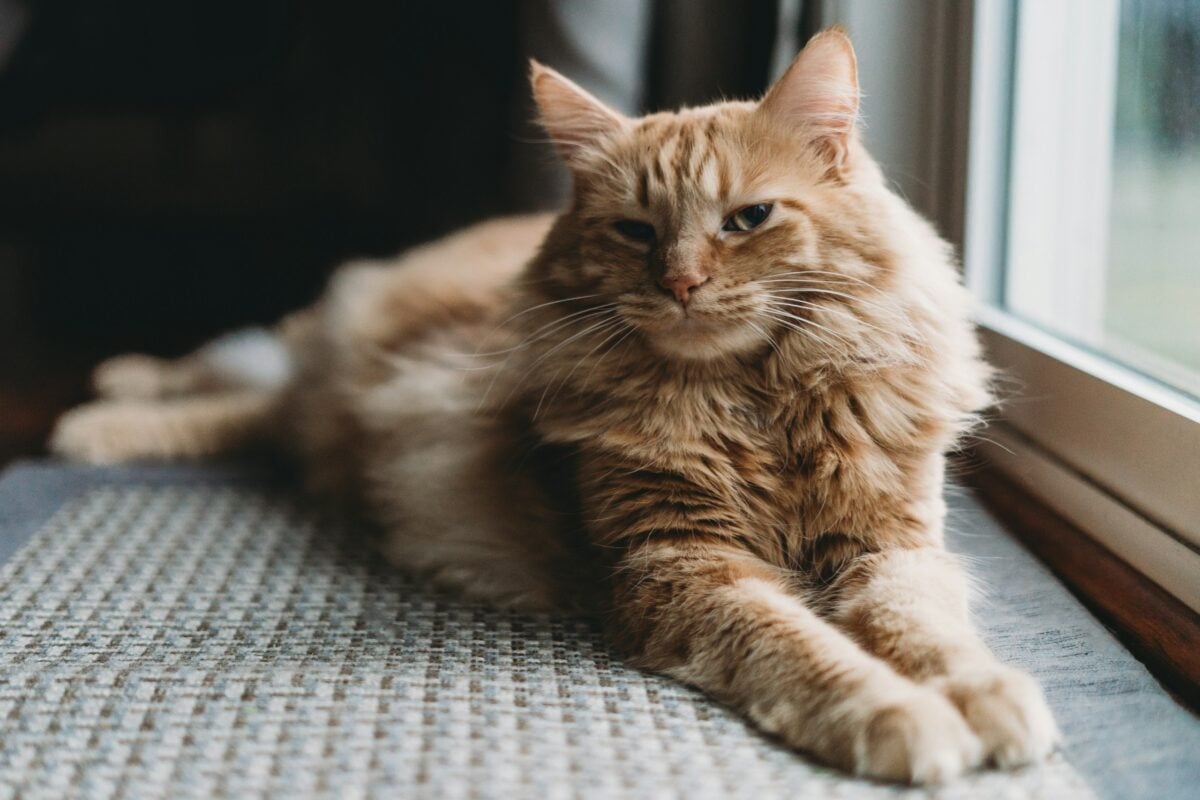
The cat who used to leap onto the windowsill stops going there. The cat who slepton your bed starts sleeping underneath it because the jump is uncomfortable. A cat who once groomed their lower back meticulously develops a slightly greasy patch because twisting hurts. The cat who used the upstairs litter box without complaint begins yelling at the bottom of the staircase.
Arthritis is especially easy to miss in older cats.
Watch for changes such as:
- hesitation before jumping
- using several smaller jumps instead of one
- stiffness after sleeping
- difficulty with stairs
- avoiding high furniture
- struggling with a tall litter-box entrance
- irritability when picked up
- reduced grooming
- repeated repositioning before lying down
If your cat vocalizes during a particular movement—jumping down, getting into the litter box, climbing stairs, or being lifted—that pattern is worth noting.
Pain can also change where a cat chooses to spend time, so a senior who is suddenly hiding more than usual may be telling you something through behavior rather than crying outright.
You can also make the house friendlier without turning it into a feline assisted-living facility.
Pet steps to the bed. A low-entry litter box. Non-slip runners on slick floors. Food and water on the level where your cat spends most of their time. A warm, supportive bed in a favorite spot.
Small changes can make a surprisingly big difference.
And please don’t give your cat human pain medication unless a veterinarian specifically instructs you to do so. Several common human medications can be extremely dangerous to cats.
Cognitive Changes in Senior Cats
Some older cats experience age-related changes in memory and cognition, commonly called feline cognitive dysfunction.
Signs can include:
- becoming disoriented in familiar places
- staring at walls or into space
- altered interactions with family members
- changes in activity
- house-soiling
- anxiety
- disrupted sleep
- wandering
- increased vocalization
The nighttime version is particularly familiar.
A cat wakes up, walks into the hallway, seems unsure where they are, and begins calling. Sometimes your voice is enough to reorient them.
Sometimes it isn’t.
What matters here is that cognitive dysfunction shouldn’t be diagnosed from one behavior alone. A cat who yowls at night may be uncomfortable, hyperthyroid, hypertensive, visually impaired, hungry, anxious, or simply extremely committed to discussing breakfast.
Your veterinarian may recommend an exam and testing to look for medical conditions that could explain or contribute to the change.
If cognitive decline is part of the picture, consistency becomes especially useful.
Keep resources easy to find. Avoid major furniture rearrangements. Use gentle night lighting. Maintain predictable meal and bedtime routines. Provide comfortable resting places and low-stress enrichment.
Older cats still benefit enormously from having interesting lives.
The activity may gradually change from “attack feather toy at Mach 3” to “bat suspiciously at feather toy from orthopedic bed.”
Both count.
Medical Problems That Can Make a Senior Cat More Vocal
A sudden personality change in an older cat deserves more attention than the same behavior appearing gradually over many years.
Veterinarians don’t diagnose a disease based on meowing. They look at the entire collection of clues.

Several conditions can contribute to new vocalization.
Hyperthyroidism
Hyperthyroidism affects middle-aged and older cats and can cause increased appetite, weight loss, thirst, urination, restlessness, vomiting, diarrhea, coat changes, and vocalization.
A cat who seems hungry enough to eat the refrigerator while getting thinner should be checked.
High Blood Pressure
Hypertension can occur on its own or alongside diseases such as kidney disease and hyperthyroidism.
Because high blood pressure can damage the eyes and brain, affected cats may develop vision problems, disorientation, or other behavioral changes.
You cannot tell whether a cat has high blood pressure by looking at them. It has to be measured.
Kidney Disease
Chronic kidney disease is common in older cats.
Signs vary, but increased drinking and urination, weight loss, appetite changes, vomiting, dehydration, and a general decline in how the cat feels may appear.
A cat who feels crummy may behave differently long before you can identify exactly why.
Arthritis and Other Pain
Pain changes behavior.
It may cause restlessness, irritability, changes in sleep, reduced activity, reluctance to jump, litter-box problems, or vocalization around movement.
Diabetes
Diabetes can cause increased thirst and urination, appetite changes, and weight loss. Those changes may also affect behavior.
Dental Disease
A cat can be hungry and still avoid eating because their mouth hurts. Dental pain can also make a normally tolerant cat irritable or less interested in grooming.
None of these conditions can be diagnosed from meowing alone.
That’s exactly why the accompanying details matter.
Stress Can Make an Older Cat Extra Chatty
Sometimes the problem isn’t inside the cat.
It’s the new puppy. Or the contractor drilling through the bathroom wall. Or your new work schedule. It could be the suitcase that appeared three days ago and clearly means betrayal is imminent.
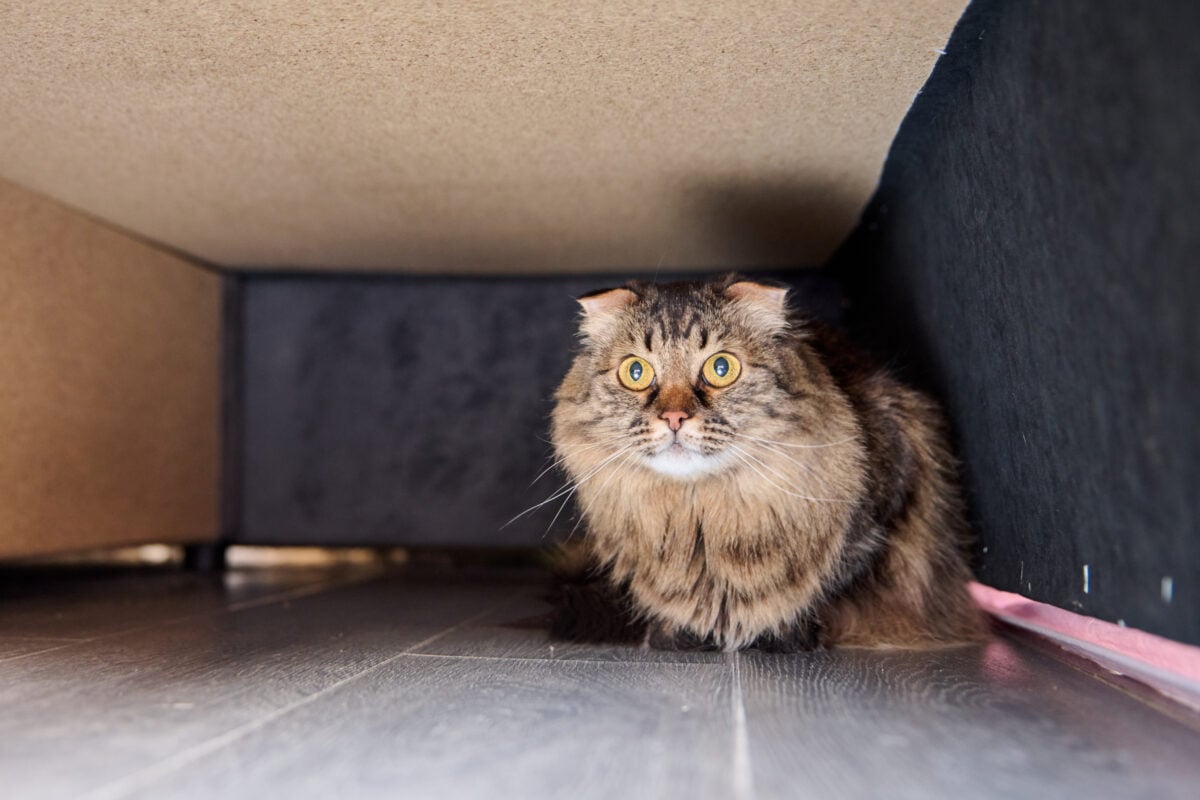
Senior cats can be less flexible about household upheaval than they were in their younger years. Vocalizing is only one possible clue; there are several other signs your cat may be stressed that can be easy to miss.
Common triggers include:
- moving house
- furniture rearrangement
- visitors
- renovations
- a new baby
- a new pet
- losing another pet
- schedule changes
- food changes
- moving litter boxes
- family members being away
A stressed senior cat may follow you more closely, call when left alone, hide, overgroom, eat less, become tense with other pets, or change their litter-box habits.
Try looking at the home from cat level.
Can your older cat reach the litter box without passing the new dog? Did their favorite afternoon sleeping spot disappear? Is a younger cat guarding the water bowl? Did you move everything they need to the basement even though stairs have become harder?
Sometimes a “behavior problem” makes perfect sense once you examine the logistics.
Attention-Seeking or Something Else? Watch What Happens Next
One of the easiest ways to understand vocalization is to watch what your cat does after you respond.
Suppose your cat walks into the room and meows. You sit down.
They climb beside you, knead your sweater for four minutes, drool slightlyon your elbow, and fall asleep.
Fair enough. They wanted you.
Now imagine your cat keeps pacing after you sit down. They cry again. They walk toward the kitchen, leave, circle the hallway, stare at a wall, return, and continue vocalizing.
That tells you something different.
There isn’t a perfect home test for distinguishing attention-seeking from discomfort, but patterns help.

Simple Ways to Help a Vocal Senior Cat at Home
If your veterinarian has ruled out urgent medical problems—or you’re waiting for an upcoming appointment—there are plenty of practical things you can do to make life easier.
Add Nightlights
Place low-level lights near hallways, stairs, litter boxes, food, water, and sleeping areas.
No need to turn the house into an airport runway. A little extra visual information can help.
Make Important Things Easy to Reach
Your senior cat should not have to complete an obstacle course to reach basic resources.
Consider:
- low-entry litter boxes
- pet steps or ramps
- non-slip rugs
- water on multiple floors
- comfortable beds in easy-to-reach locations
- food bowls that don’t require awkward bending or climbing
Keep the Furniture Predictable
If your cat’s vision or cognition is changing, knowing where things are becomes valuable.
The urge to completely redesign the living room can wait.
Your cat has memorized the map.
Build in Social Time
Senior cats may have fewer adventures than they once did.
A predictable brushing session, gentle play, lap time, window watching, or a food puzzle can add useful stimulation.
Don’t assume older cats don’t want to play. Some absolutely do.
But they might want the feather wand delivered at a more dignified speed.
Record Unusual Episodes
Your cat will almost certainly act completely normal the moment you enter the veterinary clinic.
This is ancient feline law.
Take a short video of unusual pacing, vocalizing, trouble moving, or disorientation at home.
Also note:
- time of day
- what happened beforehand
- how long the episode lasted
- whether anything stopped it
- appetite
- water intake
- litter-box changes
- mobility changes
That information can be incredibly helpful.
When Should You Take a Suddenly Vocal Older Cat to the Vet?
If your senior cat has become noticeably more vocal and you can’t easily explain why, bring it up with your veterinarian.
You don’t need to panic because your cat has added several new verses to the breakfast song. But you also don’t want to dismiss a meaningful behavioral change simply because your cat is old.

Make an appointment sooner rather than later if vocalization appears along with:
- weight loss
- dramatically increased appetite
- increased thirst
- noticeably larger urine clumps
- vomiting or diarrhea
- poor grooming
- difficulty jumping or walking
- litter-box accidents
- apparent pain
- nighttime pacing
- confusion or disorientation
- sudden personality changes
- changes in vision or hearing
Signs That Need More Urgent Veterinary Attention
Some situations shouldn’t wait for a routine appointment.
Seek urgent veterinary care if your cat:
- repeatedly strains to urinate but produces little or no urine
- suddenly appears blind
- collapses
- has difficulty breathing
- has a seizure
- becomes severely weak
- appears to be in significant pain
Changes around the litter box deserve particular attention. If your cat is suddenly peeing outside the litter box, the cause can range from stress and mobility problems to urinary or other medical issues. Urinary obstruction is particularly dangerous, especially in male cats.
If your cat keeps entering the litter box, straining, crying, and producing little or no urine, treat that as urgent rather than assuming they’re constipated or simply being vocal.
So… Has Your Cat Just Become More Opinionated?
Possibly. Cats do change as they get older. Some become cuddlier while others become fussier. Some develop deeply held political positions about the location of the water bowl.
A senior cat may call because they want you nearby, because dinner is allegedly late, because the hallway looks different in the dark, or because years of experience have taught them that one well-placed yell produces immediate staff assistance.
But new vocalization is still information.
Pay attention to when it happens, what your cat is doing, and what else has changed.
A cat who announces dinner with increasing theatrical flair but otherwise eats normally, maintains weight, moves comfortably, sleeps well, and uses the litter box normally is telling a very different story from a cat who suddenly starts yowling through the night while pacing, losing weight, drinking more, or becoming disoriented.
Listen to the whole cat, not just the soundtrack.
They’ve discovered that retirement comes with opinions. Or they may be telling you they need a little help.
Either way, they’re worth listening to.
FAQs About Older Cats Becoming More Vocal
Still trying to figure out what your senior cat is yelling about? You’re definitely not the only one living with a tiny furry town crier. Here are answers to some of the most common questions about older cats getting more vocal.
And if your cat has a particular meow, yowl, or 3 a.m. mystery we haven’t covered, leave your question in the comments below. Tell us your cat’s age and what you’ve noticed—we’d love to hear about them.
Why has my old cat suddenly started meowing all the time?
A sudden increase in meowing can have behavioral, sensory, medical, or cognitive causes.
Your cat may be seeking more attention, reacting to a change in routine, compensating for hearing or vision loss, experiencing pain, or dealing with a medical condition such as hyperthyroidism.
If the meowing comes with affectionate rubbing and following you around, this guide to why cats meow and rub against everything covers that more social pattern.
The suddenness matters.
If a previously quiet senior cat becomes dramatically more vocal—especially with weight loss, increased thirst, appetite changes, mobility problems, altered litter-box habits, or confusion—schedule a veterinary check.
Why does my senior cat yowl at night?
Nighttime yowling can be related to reduced vision, hearing loss, pain, hunger, altered sleep patterns, anxiety, or cognitive dysfunction.
Watch what your cat does during the episode.
- Do they call until you answer and then settle?
- Are they pacing continuously?
- Do they look lost in familiar rooms?
- Are they struggling with stairs or repeatedly changing sleeping positions?
Those details can help narrow down what may be going on.
Does nighttime yowling mean my cat has dementia?
No, it does not. Feline cognitive dysfunction can cause nighttime vocalization, altered sleep, wandering, staring, confusion, and other behavior changes, but several medical problems can cause similar signs.
Pain, hyperthyroidism, hypertension, sensory decline, and other illnesses should be considered before assuming cognitive dysfunction is the cause.
Can hearing loss make an older cat meow louder?
Yes, it can. A cat who can’t hear themselves as clearly may lose some ability to regulate their volume.
You may also notice that your cat sleeps through noises, doesn’t respond to familiar sounds, or startles when you approach from behind.
A louder voice alone doesn’t prove hearing loss, but it can be part of the picture.
Why is my old cat constantly yelling for food?
Some cats have truly perfected the art of meal-related harassment.
But a new, intense increase in hunger, particularly when paired with weight loss, increased thirst, restlessness, vomiting, or diarrhea, deserves veterinary attention.
Hyperthyroidism is one possible cause in older cats.
Can arthritis make a cat meow more?
It can. Cats in pain don’t always limp or cry obviously. Instead, they may vocalize before jumping, using stairs, entering the litter box, or being picked up.
You may also see reduced grooming, stiffness, hesitation, or changes in where they sleep.
Should I ignore my cat if the meowing is for attention?
Not necessarily. Senior cats often benefit from companionship and predictable social routines. The more useful question is whether your cat settles once they get what they’re asking for.
A cat who curls up happily after you sit beside them might really just want company. A cat who continues pacing, crying, and appearing unsettled may need a closer look.
When should I worry about an older cat becoming more vocal?
Pay particular attention when vocalization is sudden, persistent, intense, or accompanied by another change—especially weight loss, increased thirst, unusual hunger, litter-box problems, difficulty moving, confusion, or apparent pain.
And if your cat is straining to urinate without producing urine, suddenly loses vision, collapses, struggles to breathe, has a seizure, or appears severely ill, seek urgent veterinary care.
More Cat Behavior to Decode
Of course, meowing is only one item in the enormous file labeled Things Cats Do That Require Investigation.
There are the midnight sprints, the slow blinks, the sudden need to follow you into the bathroom, and those long, unsettling stares at a completely empty corner. Spend enough time with cats, and you eventually realize they’re communicating all day long—we’re just not always fluent.
If yours keeps you guessing, explore some of the strange cat behaviors we eventually stop questioning, find out why cats suddenly get the zoomies, or learn why some cats become so clingy.
And if your normally social cat suddenly goes quiet and disappears under the bed instead, don’t overlook that change either. Knowing why cats suddenly start hiding can help you tell ordinary feline alone time from behavior worth watching more closely.
The better you know your cat’s particular brand of weird, the easier it becomes to notice when something genuinely isn’t like them.
Does Your Cat Have Something to Say?
Has your cat become chattier with age—or developed a very specific meow that you know exactly how to translate? Tell us about their vocal habits in the comments, especially any changes you’ve noticed as they’ve gotten older. And, of course, we want to know their name. Around here, the cat details matter.