When you purchase through links on our site, we may earn a commission at no extra cost to you. Learn more.
I’m used to my cats being constant companions. They sleep on my bed, sit on my laptop, “help” me fold laundry, follow me from room to room, and are generally underfoot in a way that would be deeply annoying if I didn’t love them so much.
Table of Contents
So when one of my normally attentive, very social cats suddenly stopped wanting to be part of the household hustle and bustle, I noticed immediately. Instead of hanging out with the rest of us, they started seeking out quiet spots and spending more time alone.
Naturally, I got worried.
Why would a cat who normally wants to be involved in everything suddenly start avoiding everyone?
Want our human-written content to rank above AI-generated garbage? Help us out by clicking this button!
Because I am, in fact, obsessed with my cats, I did what any reasonable cat person would do: I took a deep dive into the possible reasons. I wanted to know whether this was normal feline behavior, a stress response, or a sign that something might actually be wrong.
The biggest clue, I found, is not simply that your cat wants to be alone. It’s whether that behavior is a noticeable change from their normal personality and routine.
Normal Cat Alone Time vs. Something Worth Watching
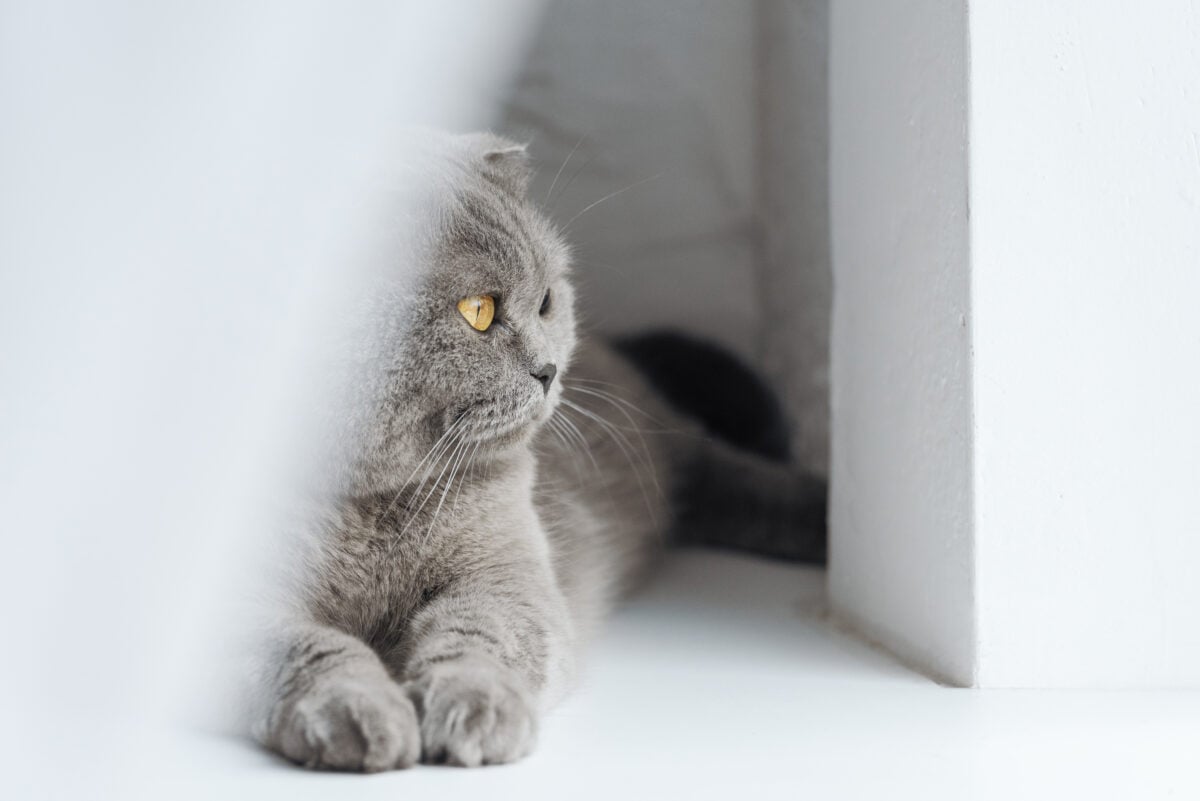
Healthy cats are not required to be social butterflies. Some spend half the afternoon asleep in another room and emerge precisely three minutes before dinner, while others would crawl inside your sweatshirt and live there permanently if basic physics allowed it.
Both can be perfectly normal. A comfortable cat taking some private time usually still behaves like themselves in every other way.
They may sleep in the guest room but come running when the treat drawer opens. They still eat normally, groom, stretch, patrol the house, use the litter box, jump onto familiar furniture, and occasionally materialize beside you at 2:14 a.m. demanding affection with no regard whatsoever for your REM cycle.
Their location has changed, but the rest of the cat has not. Sudden withdrawal feels different because several familiar habits may begin shifting at once.
Maybe the cat who normally sleeps openly on your bed now wedges themselves underneath it. Perhaps your kitchen assistant has stopped supervising dinner, the cat who usually meets you at the door stays upstairs, or they suddenly avoid being picked up and wait until the house is quiet before coming out to eat.
Those changes matter because cats cannot tell us, “My hip hurts,” “That new puppy is exhausting,” or “The contractor’s nail gun has destroyed my faith in civilization.” Behavior fills in some of the blanks.
The Baseline Rule: Compare Your Cat With Your Cat
One of the easiest mistakes we make is comparing our pet with somebody else’s. Your sister has a cat who climbs onto strangers before they’ve taken their coat off, while your friend’s cat has been hiding from the doorbell since 2017.
Neither tells you much about yours. Your cat’s normal behavior is its own little fingerprint.
Think about the routines you know without realizing you know them. Where do they sleep in the morning, how long do they tolerate petting, do they meet you after work, and do they jump onto the same windowsill every afternoon?
Those details become useful when something changes. If your cat has vanished for four hours every afternoon for six years, that is not sudden withdrawal; that is Tuesday.
If your famously food-obsessed cat stays under the bed when you shake the treat bag, however, you now have two changes instead of one. That carries more weight.
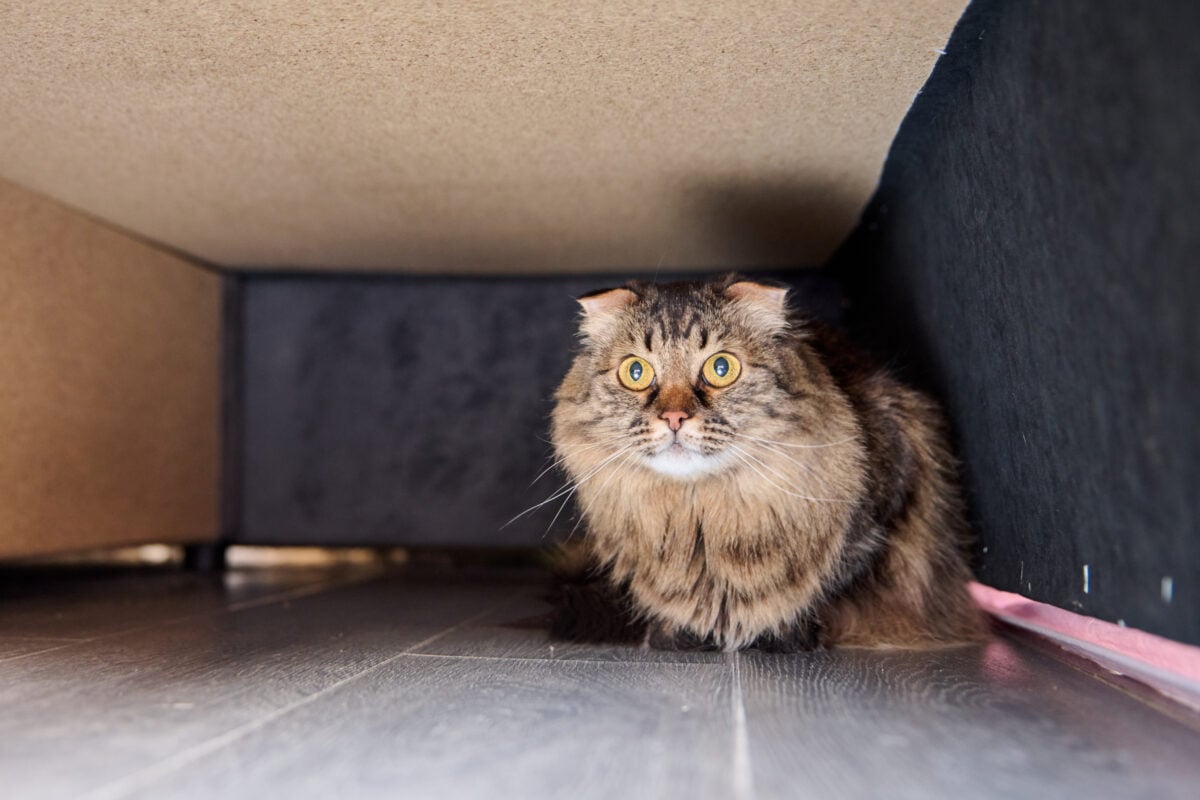
A Quick Guide: When Is Hiding More Concerning?
When your cat disappears into the closet, it’s remarkably easy to jump from “huh, that’s unusual” to “something is terribly wrong” in about thirty seconds. Before you start mentally financing an emergency vet visit, look at what’s happening alongside the hiding.
This quick guide can help you separate “my cat would like everyone to leave them alone, please” from behavior that deserves a closer look.
| What you’re seeing | What it may suggest | What to do |
|---|---|---|
| Hides while guests are over, then reappears afterward | Temporary stress | Give them space and restore their normal routine |
| Sleeps alone but still eats, plays, grooms, and interacts normally | Ordinary solitude | Keep an eye on them |
| Suddenly avoids being touched or picked up | Overstimulation, fear, or possible pain | Stop forcing contact and watch for other changes |
| Stops jumping onto favorite furniture | Possible discomfort or mobility pain | Arrange a veterinary check if the change persists |
| Hides and eats noticeably less | Possible pain or illness | Contact your veterinarian promptly |
| Makes repeated litter box trips with little or no urine | Possible urinary blockage | Seek emergency veterinary care |
| Hides with breathing difficulty, collapse, severe weakness, or obvious pain | Serious medical problem | Seek emergency veterinary care |
No chart can diagnose your cat, but this is the basic idea: one odd sleeping spot matters less than several parts of your cat’s normal routine changing at once.
7 Reasons Your Cat May Suddenly Want to Be Alone
There isn’t one universal reason a social cat suddenly decides to disappear from the family action. Sometimes the cause is harmless and temporary; other times, that change in behavior is the first clue that something is bothering them.
The key is to look at what changed around the same time. These are the most common reasons a normally social cat may suddenly start seeking more space.
1. Something in the House Changed
Cats can spend sixteen hours looking asleep while apparently maintaining an internal security department with very strong opinions about furniture placement. Their world runs on familiar territory, smells, sounds, people, resources, and routines, and some cats react to changes that barely register to us.
Think back over the last few days. Did relatives arrive, did you move furniture, has construction started nearby, did someone begin working from home, or did you replace a beloved old couch that smelled like eight years of family life and cat butt?
Even something as ordinary as a robotic vacuum can become a major event if your cat decides the machine is an enemy reconnaissance vehicle. Humans tend to rank events by importance, while cats often seem to rank them by predictability and control.
A schedule change can matter too. If breakfast moved from 6:00 to 8:00, somebody started taking Zoom calls in the favorite nap room, or a guest is sleeping where your cat normally hides, they may simply retreat somewhere quieter.
Stress-related withdrawal often follows a recognizable pattern. The cat may emerge when the house settles down, continue eating normally, and spend more time in a high or enclosed spot where nobody can sneak up and touch them. If you’re seeing other small changes too, these signs your cat may be stressed can help you put the behavior in context.
If that sounds familiar, don’t drag them back into family life to prove everything is okay. Give them what stressed cats usually need most: predictability, escape routes, and choice.
2. Visitors, Babies, New Pets, and Other Tiny Agents of Chaos
Some changes are impossible to miss. A new dog arrives, a baby comes home, you move house, or your brother visits for a week with two children who believe every cat wants to participate in a tea party.
New pets are particularly complicated because your resident cat does not need direct contact to know something has changed. They can smell the newcomer, hear them, see new bowls and toys, and detect unfamiliar movement on the other side of a door.
Their territory suddenly has another set of whiskers in it. A rushed introduction can send a resident cat into whatever corner of the home still feels controllable.
Babies create a different sort of upheaval with crying, unfamiliar smells, visitors, changed sleeping patterns, and exhausted adults wandering around at odd hours. Toddlers add speed, which many cats consider an unnecessary feature in humans.
Moving is an even bigger reset. Humans see the new kitchen and think about counter space, while the cat sees an unfamiliar planet where none of the walls smell correct.
A calm base room with familiar bedding, food, water, litter, scratching options, hiding places, and objects from the previous home can make the transition less overwhelming. The general rule is simple: when the household changes dramatically, do not expect your cat to process it on the same timetable you do.
3. Something Frightened Them
Not every scary thing lives inside the house. An unfamiliar cat staring through the patio door can turn an otherwise peaceful living room into disputed territory, and your indoor cat may have no way to resolve the problem.
That frustration may show up as hiding, pacing, spraying, avoiding the room, staring obsessively out the window, or snapping at another pet. Sometimes the cause is even more specific: a pan crashes beside them, someone accidentally steps on a tail, the smoke detector goes off above the couch, or a dog chases them through the hallway.
Cats learn associations quickly, and they do not necessarily understand that something was accidental. What looks suspiciously like a grudge can simply be fear-based avoidance.
Pay attention to the pattern. Does your cat avoid everyone or one person, all touch or being picked up, the entire house or one particular room?
Specificity can be revealing. A cat who refuses to sit on one chair after a scare may gradually return once nothing bad happens for a while, while a cat who suddenly objects every time you touch their lower back may be dealing with something physical instead.
When fear is involved, voluntary exposure works better than confrontation. Sit nearby, toss a treat, play at a comfortable distance, and block the view of an outdoor cat if necessary.
They do not need a motivational speech. They need evidence that the world has stopped doing terrible, suspicious things.
Is Your Cat Avoiding You—or Everyone?
Before assuming your cat has filed for an emotional separation, watch how they behave around everyone else. A cat who has stopped interacting with the entire household may be stressed, frightened, uncomfortable, or feeling unwell, while a cat who specifically avoids one person may have formed an association with something that person does.
Maybe you’re the one who gives medication, trims nails, picks them up when they’d rather remain firmly earthbound, or accidentally scared them recently. If your cat happily cuddles your partner but leaves the room when you arrive, look closely at what usually happens during your interactions; the pattern may tell you more than the disappearing act itself.
4. They Have Had Enough Petting, Thank You
Some mysteries become much easier to solve once we accept an uncomfortable truth: sometimes the human is the problem. Many cats love affection but have very specific terms and conditions.
Cheek scratches may be wonderful, chin rubs excellent, and three strokes down the back perfectly acceptable. Stroke number seventeen, however, can apparently constitute an act of war.

Petting overstimulation often builds gradually. Some cats can become aggressive during petting, possibly because of overstimulation, and may show warning signs such as tail lashing, dilated pupils, or ears moving backward before they react.
A twitching tail tip, skin rippling along the back, ears rotating sideways, sudden tension, or a head turning toward your hand may all be early versions of “I’m done.” Catch those signals before they escalate, and end the interaction while your cat is still comfortable.
If those signals never work because the petting continues anyway, your cat may eventually skip the polite warning phase and simply avoid situations where touch seems likely. Some cats take the opposite approach and communicate much more directly with a little chomp; if yours does, our guide to why cats bite gently digs into affection, play, and overstimulation.
Your cat is allowed to have preferences. There is, however, one important caveat: new touch sensitivity can also mean pain.
If your cat has happily accepted hip scratches for six years and suddenly flinches, growls, or walks away whenever you touch that area, don’t assume they’ve merely revised their petting policy. Something may hurt.
For ordinary overstimulation, rebuilding trust is wonderfully uneventful. Sit near your cat without touching them, let them approach, pet briefly, pause, and see whether they ask for more.
Sometimes the fastest route back to your cuddle monster is to stop insisting that cuddling happen on your schedule.
5. Another Cat—or Dog—Is Making Life Difficult
Multi-pet households contain social politics we humans often miss. Two cats may never have a screaming fight yet still have enough tension between them to change where one sleeps, eats, or travels through the house.
One cat may block a hallway to the litter box, another may monopolize the best perch, or a dog may never attack the cat but enthusiastically follow them every single time they move. Imagine having a roommate who did that, and you, too, might eventually relocate behind the washing machine.
Watch for subtle resource guarding and avoidance. Does your cat wait until another animal leaves before eating, abandon a favorite chair after a new pet arrives, hesitate at doorways, or travel through the house only during quieter times?
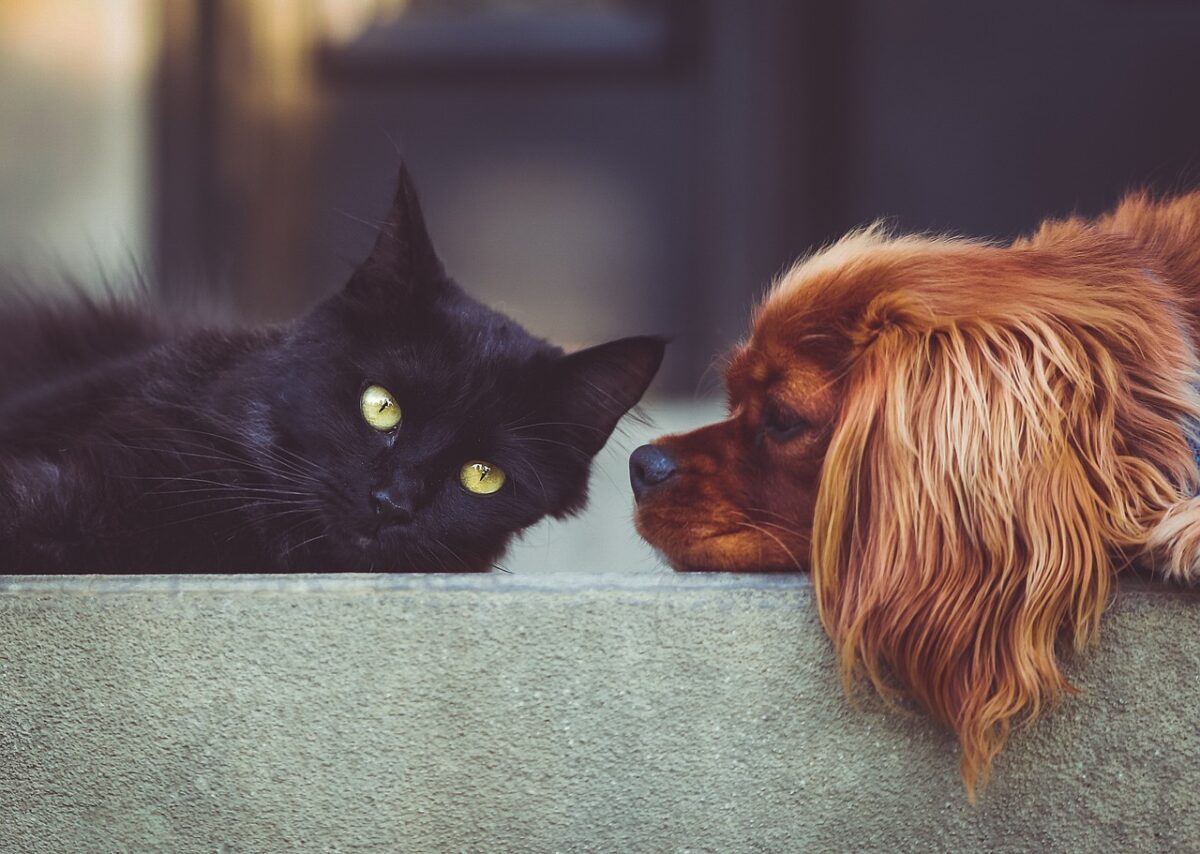
Essential resources should not all be clustered in one location where a single animal can control access. Cats need comfortable access to food, water, scratching areas, resting spots, safe routes through the home, and enough litter box options—especially in multi-cat households where sharing one litter box can create problems.
Sometimes a little environmental rearranging solves what looked like a sudden personality problem. Giving the more cautious cat options can reduce the need to disappear completely.
6. Pain or Illness Is Making Them Withdraw
This is the reason sudden behavioral change should never be dismissed as “cat attitude.” Cats can be annoyingly subtle when they hurt, and they do not always cry, limp dramatically, or deliver a formal written notice.
Sometimes the first obvious symptom is simply that they stop acting like themselves. In fact, the American Animal Hospital Association (AAHA) notes that pain in cats often shows up through changes in everyday behavior, including reduced activity, changes in social interaction, reluctance to jump, and hiding.
A sore cat may avoid handling, a nauseated cat may retreat to a quiet room, and a cat with painful joints may stop jumping onto your lap.
A cat with dental pain may eat more slowly, drop food, or walk away from the bowl, while abdominal discomfort may make them resist being picked up. Urinary pain can send a cat into hiding, make them irritable, trigger repeated trips to the litter box, or cause excessive licking around the genital area. Withdrawal alone cannot tell you what is wrong, but it can provide an important clue.

Signs Your Cat May Be in Pain or Feeling Unwell
What makes it more meaningful is everything happening around it. Reduced appetite, vomiting, diarrhea, changes in drinking, repeated litter box trips, stiffness, reluctance to jump, grooming changes, unusual posture, reduced play, sudden irritability, weakness, or breathing changes all add context.
You do not need to poke, squeeze, flex, or otherwise perform amateur veterinary orthopedics on a cat who seems to be in pain. Observe what happens during ordinary movement instead.
Does your cat hesitate before getting onto the sofa, use a chair as an intermediate step, stop sleeping on the windowsill, or walk stiffly after waking? Those details can be far more useful than repeatedly testing the sore spot.
Write them down, and take a short video if the odd movement happens at home. Your cat may walk into the veterinary clinic and immediately activate the ancient feline setting known as “I have never been sick a day in my life.”
When “Wanting to Be Alone” Wasn’t Just Wanting Space
I recently saw this with my own senior cat after he had a fall. At first, he simply seemed more withdrawn than usual, but because he’s normally very social, I noticed the change right away. Over the next couple of days, he spent more time by himself and eventually stopped eating.
At that point, this clearly wasn’t a cat who simply wanted a little peace and quiet. Once he stopped eating, I took him for emergency veterinary care, where he needed urgent treatment. His experience is one reason I pay so much attention to changes in a cat’s normal personality: withdrawal may seem minor on its own, but when it progresses, or other symptoms appear, the bigger picture can change quickly.
I don’t assume every cat hiding under the bed is sick because of what happened to him. I do take it seriously when one of my cats suddenly stops doing the things that make them them—joining the household, showing up for meals, demanding attention, or otherwise inserting themselves into whatever everyone else is doing.
7. Your Cat Is Getting Older—and Something About Daily Life Is Harder
Older cats often become quieter and more selective about interaction. A fifteen-year-old cat may quite reasonably decide that a peaceful bedroom is preferable to a living room containing two children, a Labrador, and a television loud enough to rattle the water glasses.
But “they’re just getting old” is not a diagnosis. Arthritis, dental pain, changes in vision or hearing, and other age-related problems can all change how social a cat appears.
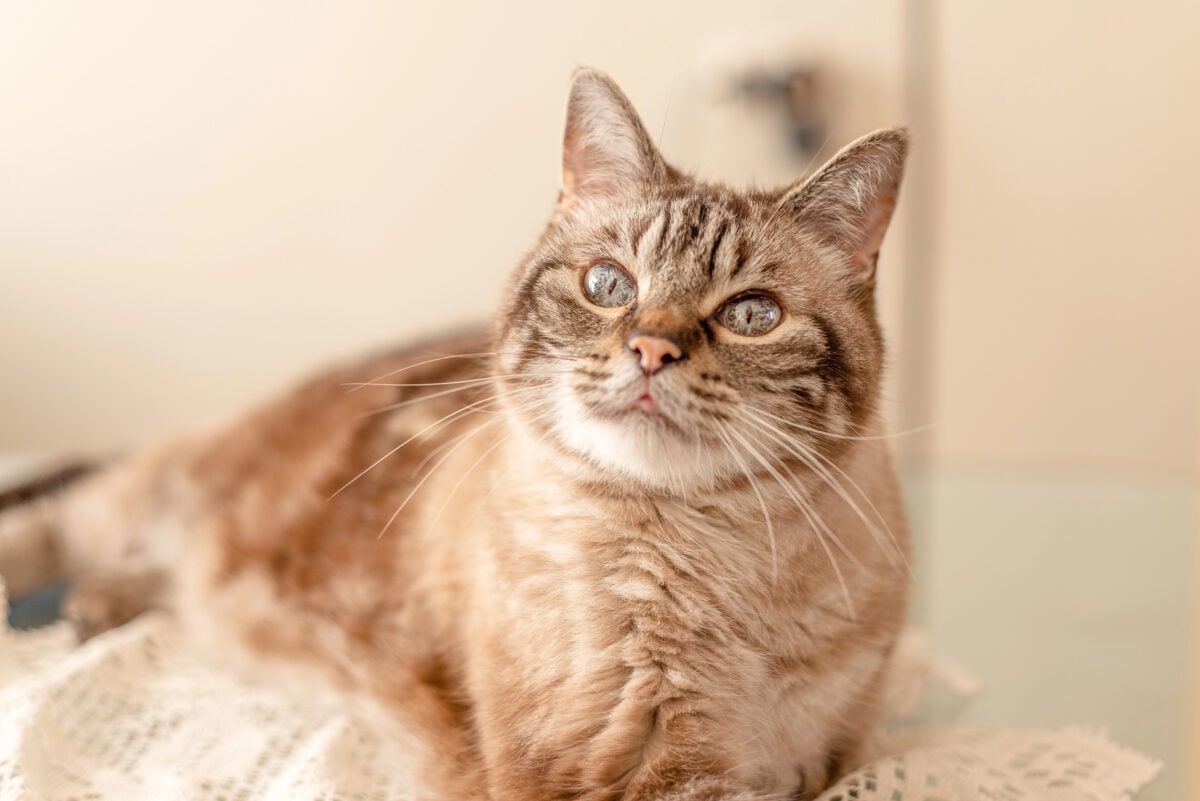
Arthritis is a classic example because it can masquerade as reduced affection. If your cat has always joined you on the couch and suddenly stops, the problem may not be that they no longer want to cuddle; the jump may simply hurt.
Watch how your cat moves through their normal routine. They may hesitate before jumping, climb onto furniture in stages, choose lower sleeping spots, move stiffly after resting, groom their back or hips less often, struggle with stairs, or react when you touch certain areas. These small changes can tell you far more than waiting for one obvious symptom.
Dental discomfort can be just as subtle. A hungry cat may still rush to the bowl, then eat slowly, drop pieces of food, chew awkwardly, favor softer textures, or walk away before finishing.
Hearing and vision changes can alter social behavior too. A cat who no longer hears you approaching may startle when you suddenly appear beside them, making a quiet and predictable resting place more appealing.
Senior cats often benefit from warm beds, low-entry litter boxes, steps or ramps to favorite furniture, easily reached food and water, and peaceful spots where younger pets cannot conduct surprise inspections. Those accommodations are useful, but they should not replace a veterinary check when an older cat’s behavior clearly changes.
When Alone Time Becomes Hiding
A cat peacefully sleeping alone in the guest room is very different from one suddenly wedged beneath the bed who won’t come out for dinner. New, prolonged, or unusually intense hiding deserves closer attention, especially when it replaces things your cat normally enjoys.
If hiding itself has become the main behavior you’re seeing, our guide to why cats suddenly start hiding takes a deeper look at that specific change.
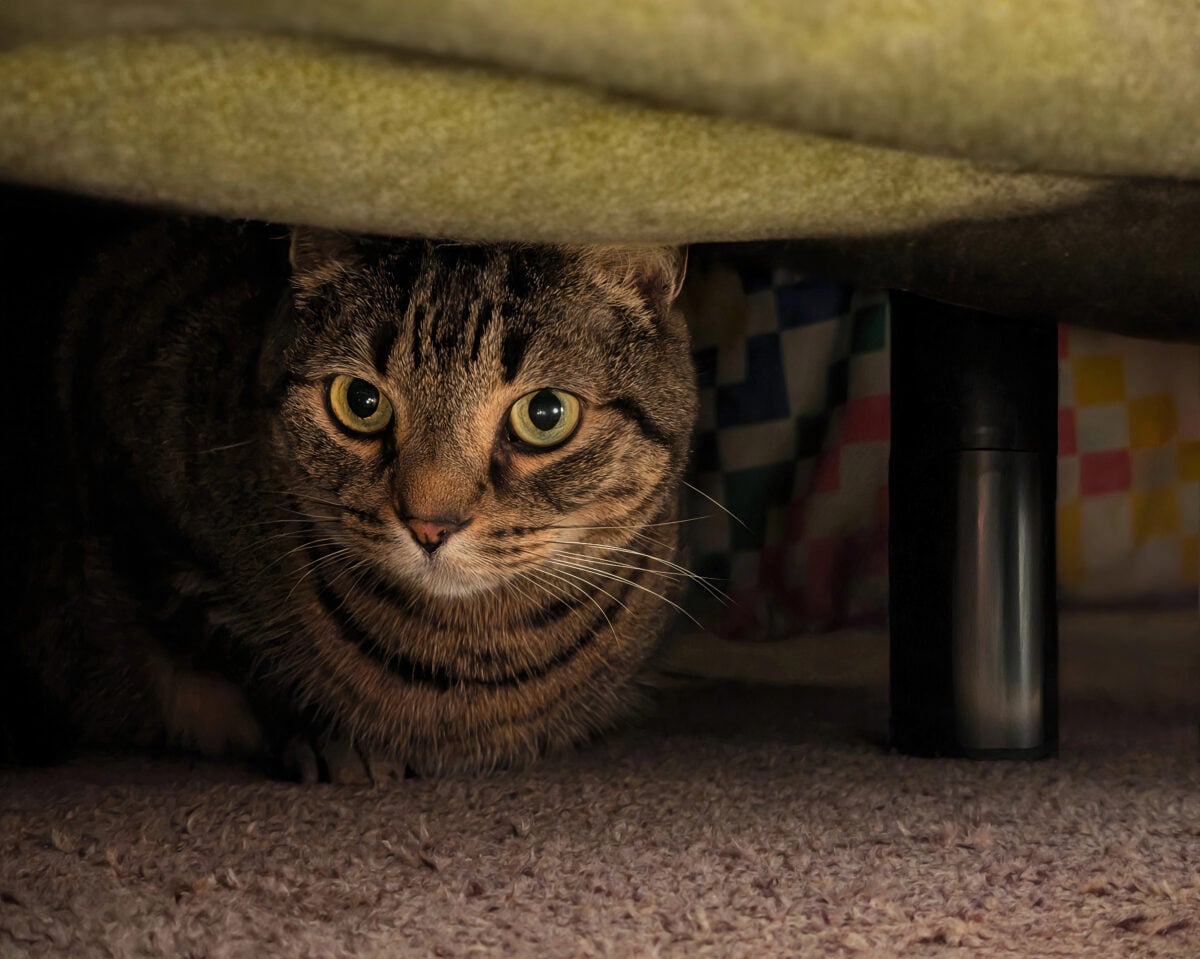
A cat who disappears during your niece’s birthday party and reappears thirty seconds after the final child leaves has delivered a fairly coherent message. A cat with no obvious stressor who starts spending nearly the entire day under the bed, eats half their usual amount, and stops joining you at night is telling you something else.
Avoidance does not always involve literal hiding. Some cats remain perfectly visible while creating more distance by moving to the far end of the couch, choosing shelves where hands cannot reach, or waiting until everyone goes to bed before exploring.
If you’re only asking, “Is my cat hiding?” you can miss the broader pattern. What matters is whether their normal willingness to move through the house and interact has changed.
The Whole-Cat Check: What Changed Besides Affection?
When your cat starts avoiding you, don’t judge the situation based on sociability alone. Conduct a quiet inventory of the basic things they normally do every day.
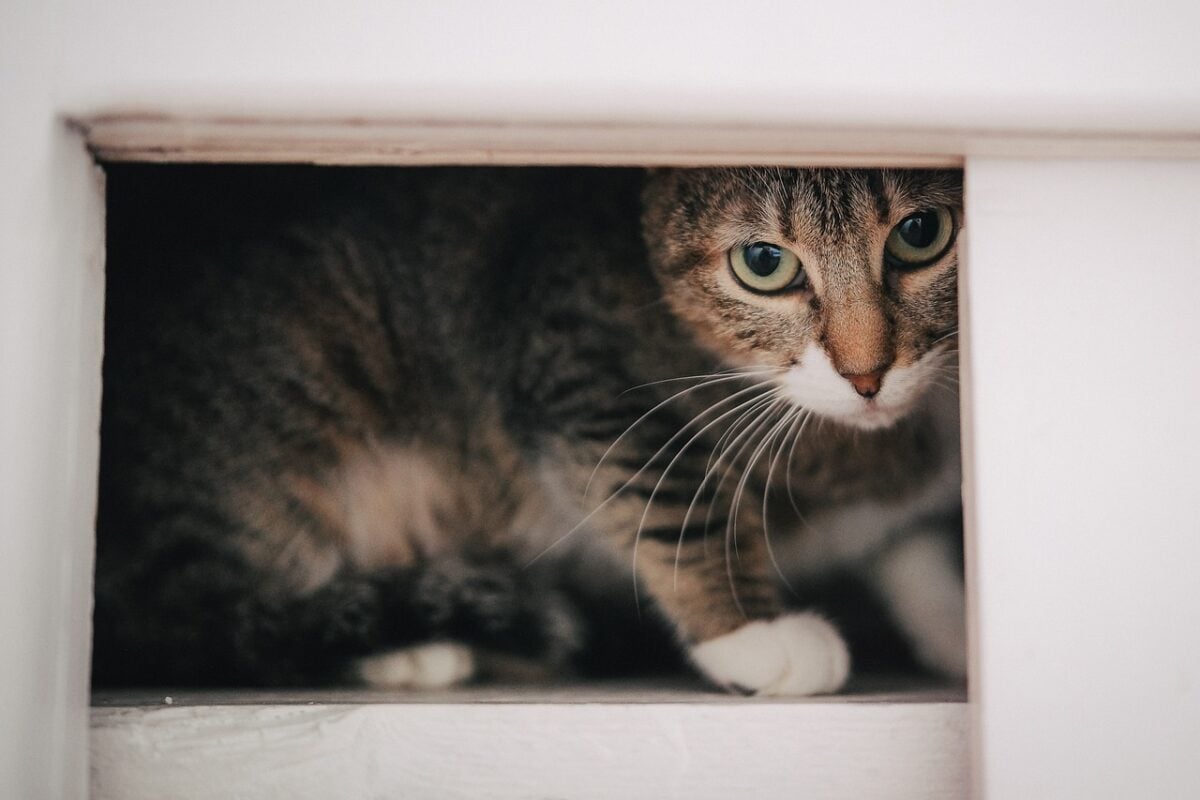
This is not an invitation to begin a two-hour internet diagnosis spiral and emerge convinced your cat has six rare diseases. You’re simply looking for changes that help put the withdrawal in context.
Appetite
Is your cat finishing roughly the usual amount of food, and do they come to meals with their normal enthusiasm? A cat who seems hungry, takes two bites, and walks away is giving you different information from one who merely chose a new sleeping spot.
In a multi-cat household, it can be surprisingly difficult to know who is eating what. Temporarily serving meals separately can help you get a clearer picture.
Water
Have you noticed your cat drinking dramatically more or less than usual? Water bowls that suddenly empty faster—or barely seem touched—can be worth noting, especially when another behavior has changed at the same time.
Litter Box
This is one area where cat people become forensic investigators, and for good reason. Repeated trips to the litter box, straining, crying, urinating outside the box, or producing only a few drops of urine deserve attention.
A cat who repeatedly tries to urinate but produces little or no urine may have a urethral obstruction, which the Merck Veterinary Manual identifies as a urinary emergency; male cats are particularly at risk. If you’re seeing repeated unsuccessful attempts to urinate, don’t wait to see whether your cat feels better later—seek emergency veterinary care.
Movement
Watch your cat do ordinary cat things such as walking after a nap, climbing stairs, jumping onto a chair, or stepping into the litter box. A cat who suddenly chooses floor-level beds instead of favorite shelves may not have lost interest in surveying the kingdom; getting up there may simply hurt.
Grooming
A painful or unwell cat may groom less, leaving the coat greasy, clumped, or scruffy. Stress or discomfort can also lead some cats to over-groom particular areas.
Favorite nonsense
Never underestimate the value of whatever ridiculous activity your cat normally loves. Do they still appear when the treat bag rustles, inspect every cardboard box, chase the feather wand, or investigate the refrigerator even though nothing good has ever happened there?
A cat who wants more private sleep but continues doing all their usual cat nonsense is different from one whose enthusiasm is fading across the board. The more pieces of your normal cat disappear at once, the more seriously you should take the change.
How to Help a Cat Who Suddenly Wants More Space
The first thing to give a withdrawn cat is something humans find surprisingly difficult: space without emotional commentary. If your cat retreats under the bed, repeatedly dragging them out for reassurance can increase stress and teach them that the hiding place is not actually safe.
Unless they are somewhere dangerous or need to be moved for medical reasons, let the refuge work. You can remain available without hovering.
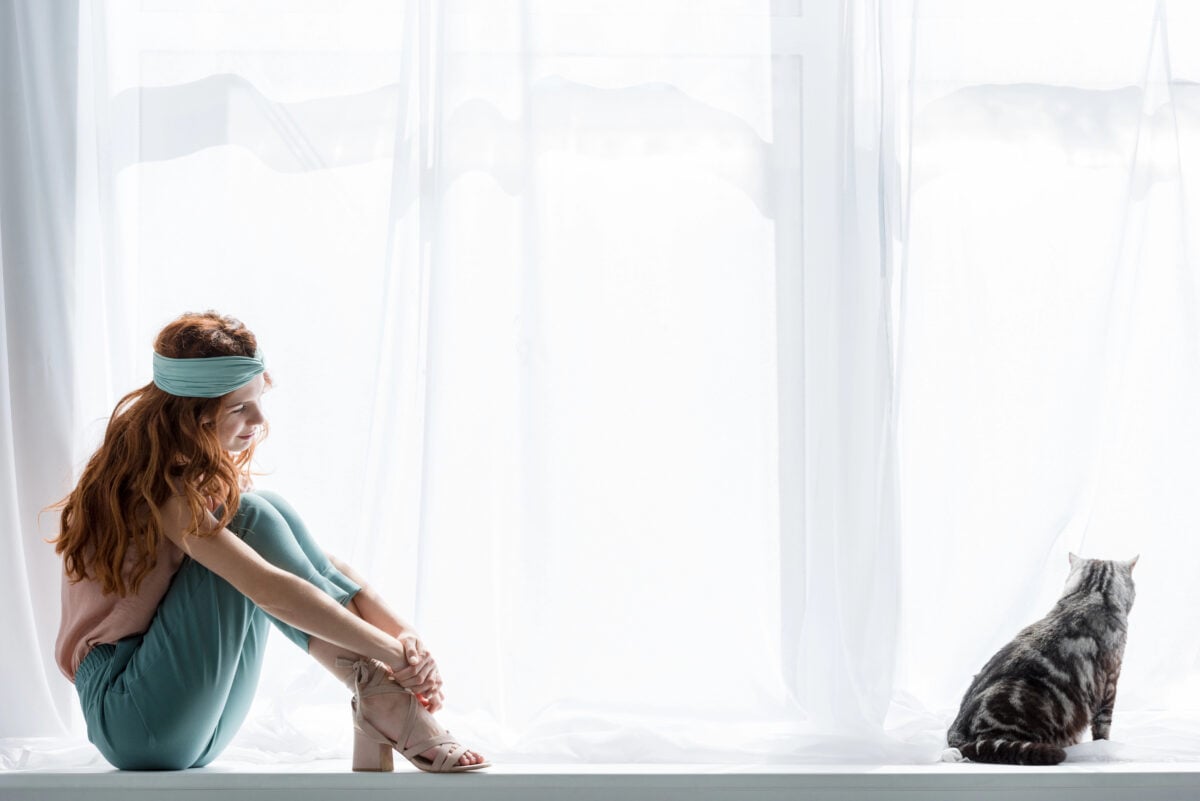
A few simple things can help:
- Give them a safe place to retreat. Let the closet, bed, cat tree, box, or other favorite hiding spot remain theirs unless it is unsafe.
- Reduce obvious stress. Keep noise reasonable, ask visitors not to pursue them, stop children from reaching under furniture after them, and make sure another pet cannot corner them.
- Keep routines predictable. Try to stick to familiar feeding, play, and household rhythms while your cat settles.
- Make essentials easy to reach. Food, water, litter boxes, scratching surfaces, comfortable beds, and elevated or enclosed resting spots should be available without requiring your cat to pass through a stressful area.
- Let them initiate contact. A treat, a slow blink, a wand toy, or two gentle cheek strokes followed by a pause may be plenty.
- Watch for other changes. Keep an eye on appetite, litter box habits, movement, grooming, and energy so “giving them space” does not turn into overlooking a medical problem.
How to Rebuild Trust Without Forcing Attention
Try the least glamorous relationship-repair technique imaginable: sit nearby and mind your own business. Read, work, fold laundry, scroll through your phone, and become furniture for a while.
Your presence begins to feel safer when it no longer predicts grabbing, hugging, checking, petting, or asking “What’s wrong with you?” seventeen times. If your cat appears, resist the urge to turn the moment into a full emotional reunion.
You’re not trying to convince them to love you again. They almost certainly still do; you’re simply giving them more control over the interaction while you figure out whether anything else has changed.
How Long Should You Let a Cat Hide?
There is no magic number of hours. “Wait 24 hours” is not useful if a cat is struggling to breathe, while “rush to the vet immediately” is not useful when the only issue is twelve relatives arriving with luggage and toddlers.
Context matters more than the stopwatch. A cat who hides through a loud afternoon but eats normally, urinates normally, moves comfortably, and strolls back into the living room once everyone leaves may simply need decompression.
A cat who begins hiding for no obvious reason and stops eating, playing, grooming, jumping, or using the litter box normally needs more attention. Watch function, not just location.
When to Call the Vet
A sudden personality change is a perfectly legitimate reason to contact your veterinarian. You know what your cat looks like on an ordinary Tuesday, and that knowledge is useful clinical information.
If the cat who normally follows you from room to room suddenly withdraws, seems uncomfortable, avoids normal activities, or becomes unexpectedly irritable, tell your veterinary team exactly that. You do not have to wait for a dramatic symptom to appear.
Contact your veterinarian promptly if withdrawal appears with reduced or absent appetite, repeated vomiting, significant diarrhea or constipation, marked lethargy, difficulty jumping or walking, apparent pain, major grooming changes, unexplained weight loss, unusual thirst, persistent hiding without an obvious stressor, or a significant change in litter box habits.
Some signs call for urgent or emergency care, including difficulty breathing or open-mouth breathing, collapse, severe weakness, seizures, major trauma, suspected poisoning, severe pain, sudden neurologic abnormalities, or repeated attempts to urinate with little or no urine.
When you call, specifics are much more useful than “he’s acting weird.” Tell them when the change started, whether your cat is eating and drinking, what the litter box looks like, whether there’s been vomiting or diarrhea, how they’re moving, whether anything changed at home, and whether a particular kind of touch seems uncomfortable.

What to Note Before You Call the Vet
If your cat’s sudden alone time has you concerned, jot down when the change started and what else you’ve noticed. Your veterinarian may want to know about appetite, drinking, litter box habits, vomiting or diarrhea, grooming, jumping and movement, recent household changes, and whether your cat reacts differently when touched.
Photos or short videos can help too, especially if your cat is walking strangely or behaving differently at home. Naturally, there is an excellent chance they will arrive at the veterinary clinic and immediately pretend none of this has ever happened.
Respect the Space, but Pay Attention to the Change
Cats are allowed to be introverts. They can abandon your lap for a cardboard box, become temporarily exhausted by houseguests, or decide that today’s ideal relationship involves sitting precisely six feet away while staring at you with enormous eyes.
That, by itself, is not a problem. The detail that matters is change.
If your normally social cat suddenly withdraws, think about what changed around the same time. Maybe the house got noisier, another pet became intrusive, a strange cat started appearing outside, somebody changed their schedule, or your cat simply reached the end of their patience with enthusiastic petting.
Then look beyond the social behavior. Are they still eating, drinking, grooming, playing, jumping, urinating normally, moving comfortably, and arriving from nowhere when a can opens in the kitchen?
Do not panic every time your cat chooses solitude, but don’t dismiss a dramatic personality shift because “cats are weird,” either. Cats are weird—profoundly, magnificently weird—but you know your particular weirdo.
You know the sound of their normal footsteps, their breakfast routine, which chair they steal, where they sleep when it rains, and how many seconds you are permitted to touch the belly before diplomatic relations collapse. That familiarity is useful because behavior may be the only clue you get when something feels wrong.
Give them quiet places, let them initiate contact, and keep life predictable. If the newly appointed closet goblin seems physically unwell, is eating less, has abnormal litter box habits, appears painful, is struggling to breathe, or simply seems unmistakably unlike themselves, call your veterinarian.
Maybe your cat just needs an afternoon alone. Maybe they’re telling you something, and being a cat person means respecting both possibilities.
Frequently Asked Questions
Still wondering whether your cat is taking a perfectly normal social sabbatical or quietly staging a one-cat retreat? These are some of the questions cat owners ask most when a formerly social cat suddenly starts keeping to themselves.
And if your question isn’t covered here, leave it in the comments. Cat people are exceptionally good at comparing notes on strange sleeping spots, suspicious behavior changes, and the many ways our tiny housemates keep us emotionally hostage.
Why is my cat suddenly hiding from me?
Cats may suddenly hide because of stress, fear, household changes, conflict with another pet, overstimulation, pain, or illness. The important question is whether hiding is normal for your cat.
If they have slept beneath the guest-room blanket every afternoon for years, the location itself probably means very little. If your confident, sociable cat suddenly spends most of the day concealed, look for an explanation and check whether eating, movement, grooming, litter box habits, or play have changed too.
Give a frightened cat somewhere safe rather than repeatedly pulling them into the open. If the behavior is unexplained, persistent, worsening, or paired with symptoms such as appetite loss, pain, vomiting, weakness, breathing difficulty, or urinary problems, contact your veterinarian.
Why does my cat leave the room when I enter?
Your cat may have learned that your arrival predicts something they would rather avoid, such as being picked up, medicated, brushed, followed by a child, or subjected to a very enthusiastic hug. Leaving before the interaction begins is an efficient way to keep control.
Try becoming pleasantly boring. Enter without approaching, sit down, occasionally toss a treat, and let the cat choose whether to come closer.
If the avoidance is new and your cat previously enjoyed contact, consider pain as well. A cat who suddenly walks away whenever you approach may be trying to avoid uncomfortable handling rather than avoiding you.
Can cats become less affectionate as they age?
Yes, older cats may sleep more, seek quieter places, and become more selective about interaction. A noticeable change, however, should not automatically be written off as age.
Arthritis, dental pain, changes in hearing or vision, and other medical problems can all alter social behavior. If a senior cat stops joining you on the couch, for example, watch whether getting onto the couch itself has become difficult.
Should I leave my cat alone if they don’t want to be touched?
Usually, yes. Turning away, flicking the tail, tensing, rotating the ears, watching your hand, shifting position, or simply walking away are all ways a cat may end an interaction.
Let those signals work, and offer companionship without insisting on touch. You can sit nearby, talk to them, toss a treat, or use a wand toy instead.
The exception is when touch sensitivity is new. A cat who suddenly flinches, hisses, growls, bites, or moves away when a particular area is touched may be painful, so don’t keep testing the spot; watch for changes in movement, appetite, grooming, posture, jumping, or litter box habits and discuss significant changes with your veterinarian.
Understanding Other Cat Behaviors
Figuring out why your cat suddenly wants to be alone is only one piece of the enormous, slightly ridiculous puzzle that is living with cats. Once you start paying attention, you realize they spend most of the day communicating with us—we are simply not always fluent in Cat.
If you enjoy decoding the strange little creature currently running your household, these behaviors are worth investigating next:
- How to Tell If Your Cat Loves You — From following you around and sleeping nearby to head bumps, slow blinks, and other suspiciously adorable signs that you may actually be their favorite person.
- Why Does My Cat Sit on Everything I’m Using? — Because apparently the laptop, book, clean laundry, and exact piece of paper you need are all premium cat furniture.
- Why Does My Cat Follow Me to Bed but Not Sleep There? — A look at bedtime routines, attachment, independence, and why your cat may escort you to bed only to immediately leave.
- Why Does My Cat Touch My Face? — Those tiny paw taps can mean attention, affection, habit, curiosity, or simply that breakfast should have happened approximately three minutes ago.
Of course, the more we learn about cat behavior, the more we realize they’ve been communicating quite clearly all along. We’re just the slightly obsessed humans following them around with questions.
Has Your Cat Suddenly Gone Into Hermit Mode?
Tell us about it in the comments. Did your usual shadow suddenly start sleeping alone, avoiding the family action, or trading your lap for a suspicious corner of the closet? Share what changed, how long it lasted, and whether you ever figured out why your normally social cat suddenly wanted some serious me-time.