When you purchase through links on our site, we may earn a commission at no extra cost to you. Learn more.
You’re half asleep, one arm pinned beneath the blanket, when a warm little paw lands squarely on your cheek. Your cat follows it with a nudge of the nose and a stare that says there is important business to discuss. Why does my cat touch my face? In that moment, the answer could be anything from “I missed you” to “breakfast is late.”
Table of Contents
Cat people are a highly specific breed of human. We will stay perfectly still for three hours because a cat fell asleep on our lap, then wake up at 4:17 a.m. to a jelly-bean paw on the face and whisper, “Oh my gosh, they love me.”
Maybe your cat nose-nudges your chin, presses their forehead against your eyebrow, or taps your face with the confidence of a tiny furry landlord. Either way, they have chosen the one place you absolutely cannot ignore. Here’s what may be behind that very personal little habit.
What Your Cat May Be Telling You
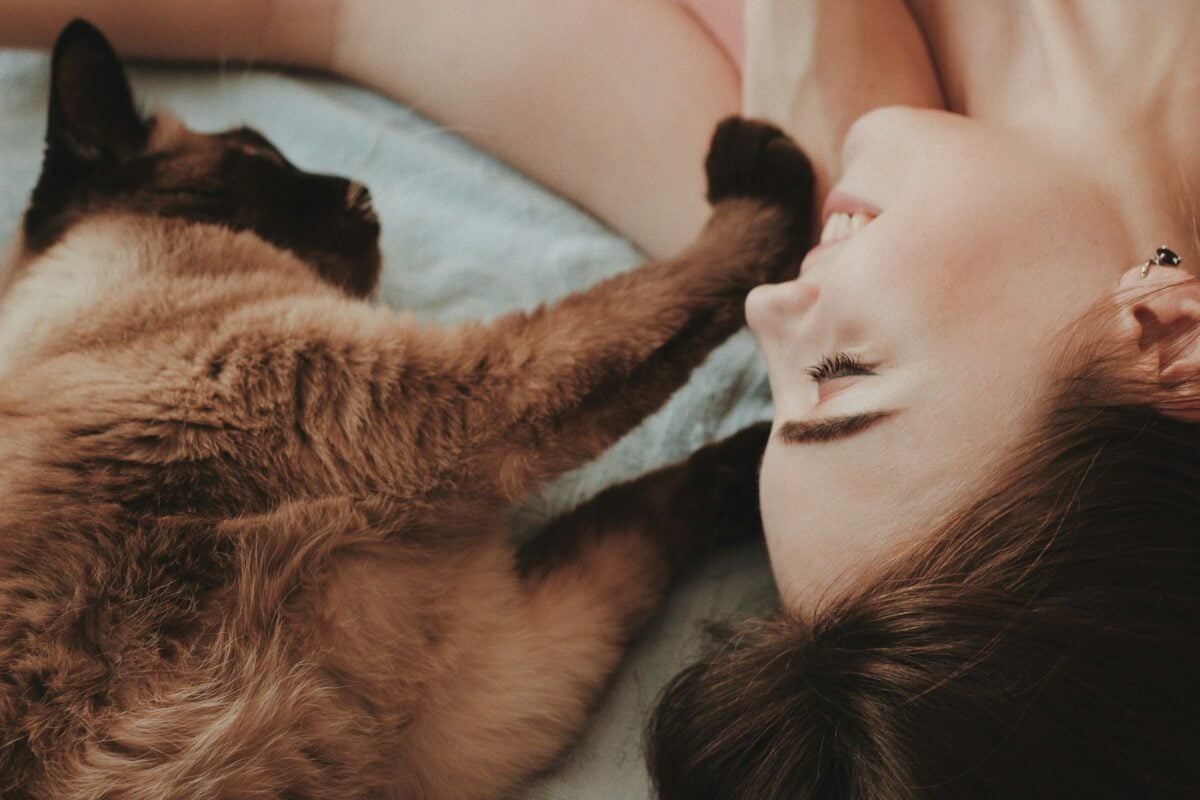
Cats touch your face for attention, affection, curiosity, scent-checking, or because they have learned it is the fastest way to wake you up. A soft paw tap paired with purring or slow blinking often signals closeness, while repeated taps, meowing, or a walk toward the kitchen usually mean your cat wants something.
Want our human-written content to rank above AI-generated garbage? Help us out by clicking this button!
Why Does My Cat Touch My Face? 7 Possible Reasons
A paw, licensed via your cheek can feel incredibly personal, mostly because your cat has bypassed every other part of your body and gone straight for the one area you definitely cannot ignore. But face touching does not have one universal translation. The best clue is what happens before and after: your cat’s body language, timing, and next move usually tell the real story.
1. They Want Your Attention
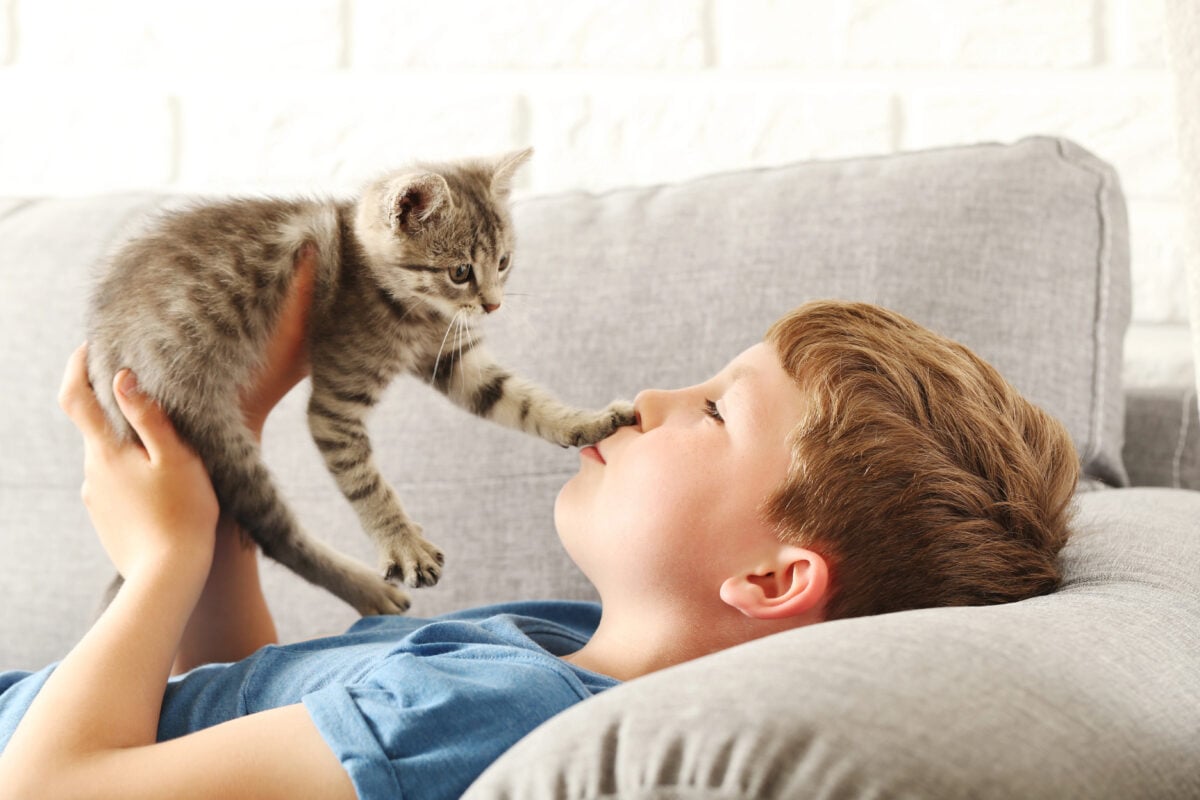
Sometimes your cat simply wants you to look up from your phone, pause your show, or acknowledge that they have entered the room and are now available for admiration.
A soft tap followed by purring, rubbing against your hand, or settling beside you often means, “Hi. I would like some quality time now.” Some cats meow. Others stare. Some deploy one perfectly placed paw like a tiny manager requesting a meeting.
Some cats take a different approach and bring you a toy, then seem completely uninterested in playing with it. Here is why cats bring you toys but do not always want to play.
2. They Feel Safe and Affectionate
Cats do not usually get face-to-face with someone they do not trust. A nose nudge, forehead press, or gentle cheek tap during a calm moment may be your cat’s low-key version of closeness.
Signs the moment is probably about affection:
- Soft eyes or slow blinks
- Relaxed ears and a loose body
- Purring, kneading, or head-butting
- Staying close after the touch
Your cat may not be a lap cat, but they can still be very much a “one paw on your face while you sleep” cat. That closeness can be especially common when your cat has decided you are their person. Learn more about how cats choose a favorite person.
And if your cat raises their rear end the second you start petting them, that is another classic feline signal worth decoding: why cats lift their butts when you pet them.
3. They Have Learned It Works
Your cat has likely run a highly successful experiment: tap your arm, nothing happens; sit near your pillow, maybe nothing happens; put one paw directly on your face, and the human immediately responds.
Cats are excellent pattern-spotters. If face touching gets you talking, petting, opening a door, or getting out of bed, they may decide this is simply the most efficient communication system available.
4. They Are Following a Routine
If your cat touches your face at nearly the same time every day, you may be looking at a routine—not a mysterious emotional revelation.
Morning taps can be connected to food, a bedroom door, a favorite window, playtime, or the expectation that you are supposed to begin your daily duties. Cats do not need a clock when they have you, your alarm, and a deeply held belief that all household operations should begin on their schedule.
5. Your Face Is Interesting
Your face blinks, talks, breathes, moves, smells different after meals, and sometimes makes odd noises while asleep. From your cat’s perspective, it is a fascinating little attraction park.
Curious cats may tap your eyelid because it moves, sniff your mouth because you just had coffee, or inspect your hair because it keeps swishing around. If they touch your face, look around for a second, and wander off, they may have simply stopped by for an inspection.

If you have facial hair, that can be part of the appeal, too; here’s why some cats are so interested in beards.
6. They Are Checking Your Scent
Cats rely heavily on scent to understand their world. When your cat nose-nudges, rubs their cheek against you, or presses their forehead into your face, they may be checking that you still smell familiar—or investigating where you have been.
This can happen after you come home, shower, wear a new product, spend time around another animal, or return from somewhere carrying very suspicious outside smells. Your cat is not necessarily offended. They are just conducting a thorough audit.
7. They May Need Reassurance… or Something May Be Off
A cat who suddenly becomes much clingier, more vocal, or more insistent about touching your face may be seeking comfort after a change at home. Visitors, travel, new pets, noise, schedule shifts, or rearranged furniture can all make some cats want extra closeness.
Pay closer attention when face touching is new and comes with:
- Hiding or unusual restlessness
- Changes in appetite or drinking
- Litter-box changes
- Less energy, stiffness, or sensitivity to touch
- More vocalizing than usual
- Sudden aggression or difficulty settling
In those cases, the face touch may be one small part of a bigger message, and a good reason to check in with your veterinarian.
Why Some Cats Use Their Paws to Communicate
Every cat has a preferred communication method. Some meow like they are providing live commentary on the household. Some slow-blink from across the room. Some sit beside the treat cabinet and stare at it until you “figure it out.”
Then there are the paw communicators.
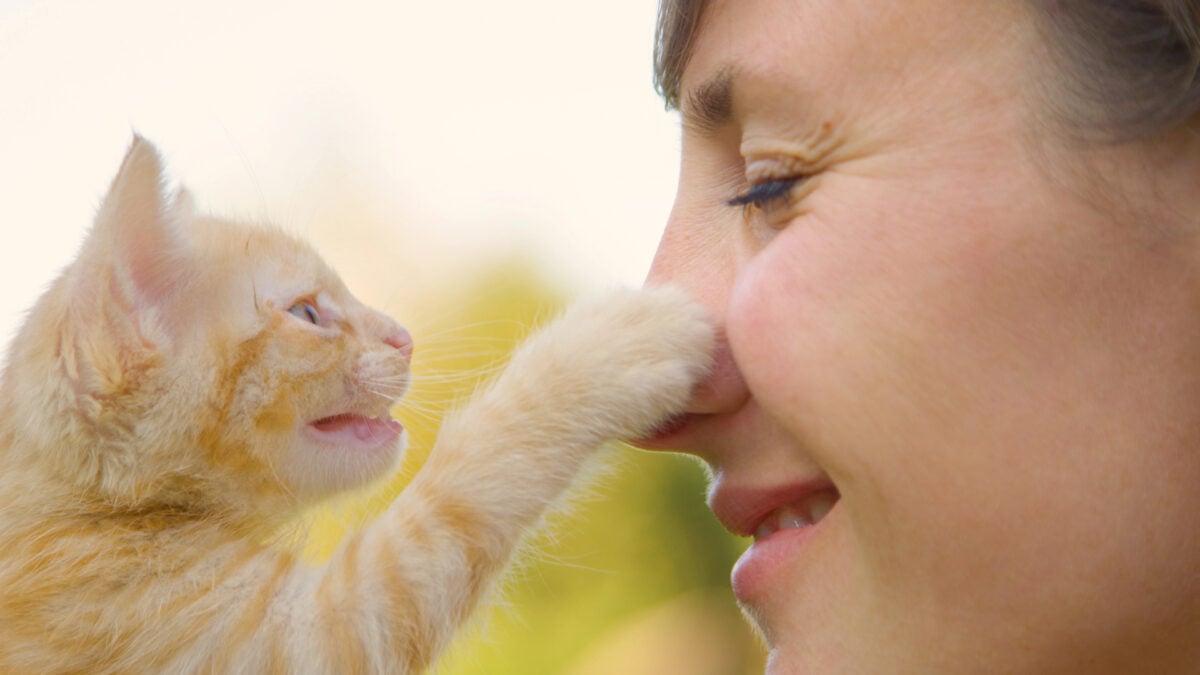
A cat may use a paw because touch gets a faster response than a meow, or because your face, arm, and chest are all conveniently impossible to ignore. A soft, claw-free tap can be a simple way to say, “Please notice me.”
What Your Cat’s Paw Tap May Mean
The tap itself matters, but the follow-up matters more.
- One gentle tap, then a pause: Your cat may want attention or affection.
- A tap followed by purring or curling up nearby: They may be checking in or asking for closeness.
- Repeated taps, meowing, or pacing: Your cat probably has a request.
- A tap followed by walking away and looking back: Congratulations—you have been summoned.
- A paw, licensed via your mouth while you are talking: Your cat may want your attention, or they may have notes about the conversation.
Cats also use their paws to investigate. Your blinking eyes, moving hair, warm breath, and talking mouth are all much more interesting than the average household object. A face tap is not always a grand emotional statement; sometimes your cat is simply conducting a brief inspection.
A Polite Tap vs. a “Please Address This Immediately” Tap
Most cat parents learn the difference over time.
A polite tap is usually light and brief. Your cat may touch you once, look at you, and wait with the calm confidence of someone who assumes you will make the correct choice.
A more urgent tap often comes with extra evidence:
- Repeated pawing
- Insistent meowing
- Pacing or staring
- Leading you toward a door, toy, bowl, or litter box
- Escalating from your arm to your face because apparently subtlety has failed
This does not make your cat demanding in a bad way. Cats repeat what works. If touching your cheek gets a faster response than sitting quietly across the room, they have simply optimized the system.
The best response depends on the message. Offer attention when they want connection, use a toy when they want play, and check the basics when they seem unusually persistent: water, litter box, doors, comfort, and routine.
When Face Touching Turns Into Licks or Tiny Nibbles
Some cats do not stop at the paw tap. They may lick your cheek, groom your hair, or give a small nibble that feels affectionate right up until it catches you by surprise.

A few gentle licks during a calm cuddle can be a social, grooming-like behavior. Cats may groom people they feel close to, especially when hair, scent, or a quiet moment has caught their attention.
Tiny nibbles need a little more context:
- Soft mouth, relaxed body, no pressure: Often playful or affectionate.
- Tail flicking, tense body, sideways ears, or stronger biting: Your cat may be overstimulated or ready for the interaction to end.
- Lick, then bite: This can happen during grooming, play, or rising overstimulation.
Because your face is sensitive, it is fine to set a boundary. Calmly redirect your cat to a toy, offer a chin scratch instead, or end the interaction before those tiny teeth get more enthusiastic.
When Face Touching Can Signal Stress or Discomfort
Most face touching is harmless. A soft paw on your cheek, a forehead press, or a sleepy nose nudge is often just your cat being affectionate, curious, or extremely committed to getting your attention.
The bigger clue is a change in behavior.
If your cat has always been a little clingy, a few extra face taps probably are not cause for concern. But if they suddenly become your tiny emotional-support shadow, pawing at your face, following you everywhere, crying at night, or needing constant contact, it is worth looking at what else may be going on.
Changes That Can Make Cats Seek Extra Reassurance
Cats often become more attached when life around them feels less predictable. That could include:
- Moving, renovations, visitors, or loud noises
- A new pet, baby, or household member
- A changed work schedule or someone being away
- Rearranged furniture or new smells in the home
Your face is familiar: it carries your scent, voice, and presence all in one convenient place. Extra face touching may be your cat’s way of saying, “Things feel different. Please remain available for emotional support.”
Keeping routines predictable, offering quiet hiding spots, and making time for calm play or cuddles can help some cats feel more settled.
When It May Be More Than Clinginess
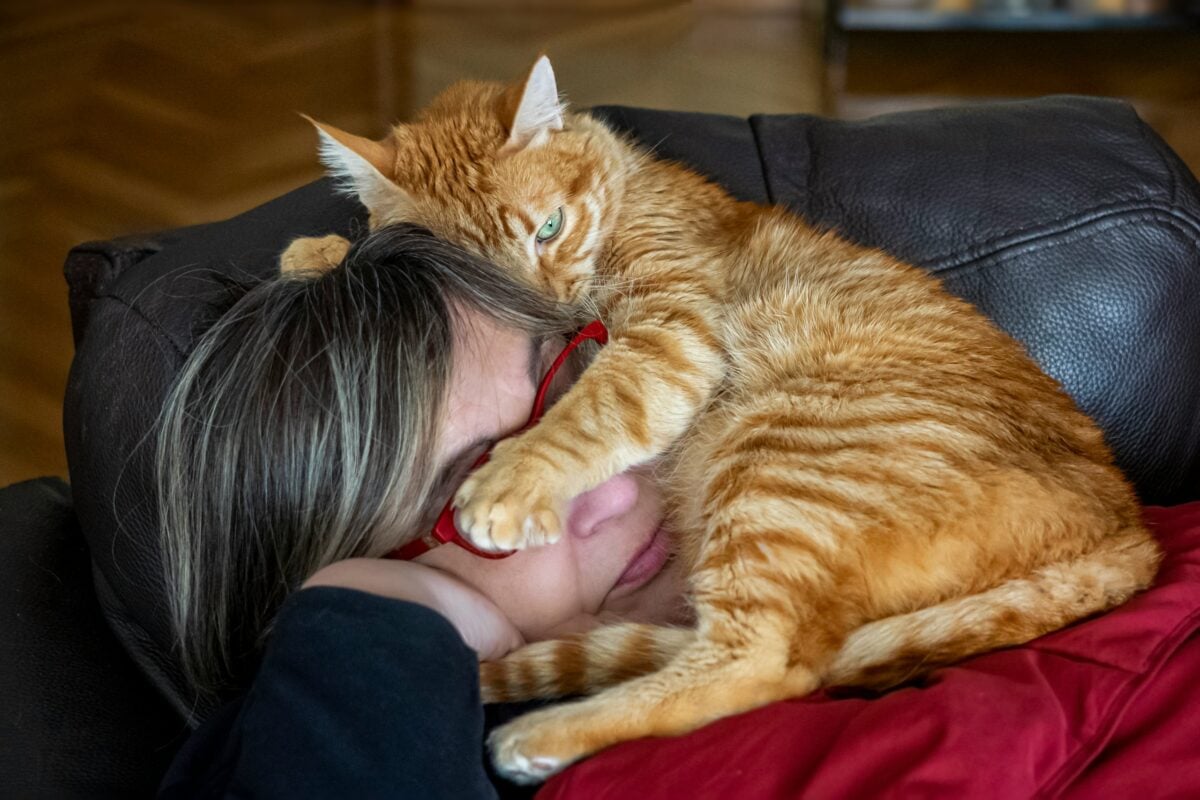
Cats can be subtle when they do not feel well. A sudden increase in face touching does not automatically mean something is wrong, but it can be one piece of a larger puzzle.
Pay closer attention if the behavior comes with:
- Changes in appetite, thirst, or litter-box habits
- Hiding, restlessness, or trouble settling
- Less energy, stiffness, or sensitivity to touch
- Excessive grooming or sleeping in unusual places
- More vocalizing than usual
- Sudden biting, irritability, or fearfulness
A cat who normally says hello with one polite cheek tap is different from a cat who suddenly cannot settle unless they are directly on top of you. Trust your sense of what is normal for your cat.
What to Do
Start by checking the obvious stuff: fresh water, a clean litter box, a comfortable resting spot, and any recent changes at home. Then watch for patterns. Does the face touching happen after visitors leave? During storms? Only at night? Around mealtimes?
You do not need to panic over every paw tap. Cats are allowed to be affectionate, dramatic, and mildly convinced that your personal space belongs to them. But when face touching is sudden, intense, or paired with other behavior changes, a conversation with your veterinarian is the safest next step.
Sometimes your cat is saying, “Stay here.” Sometimes they say, “Something feels off.” The important part is noticing when their usual little message starts sounding different.
How to Respond Without Encouraging More Face Taps
How you respond depends on what your cat is asking for.
If they are being affectionate, enjoy the moment. Offer a slow blink, a quiet hello, or a gentle chin scratch, then let them decide whether the cuddle meeting continues. Some cats just want confirmation that you are still alive and available.
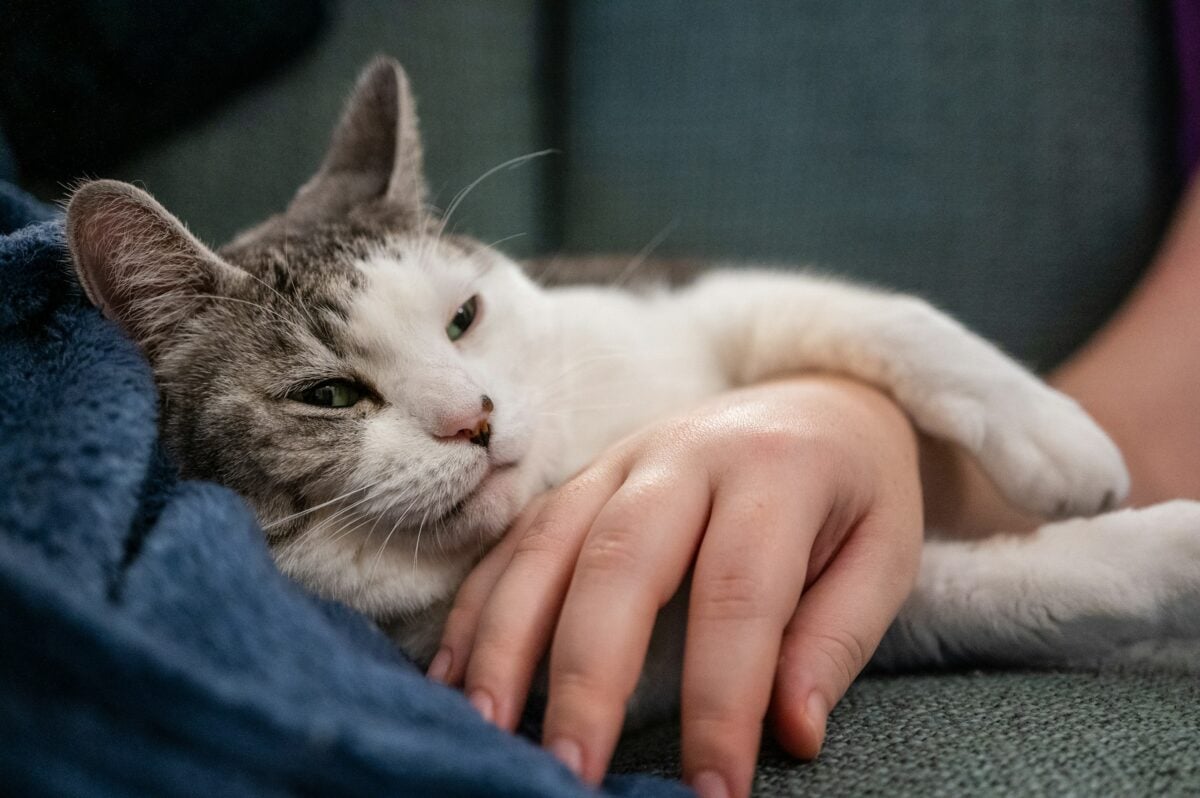
If they are looking for more attention during the day, give them better ways to find it.
- Short, predictable play sessions
- Window perches or climbing spots
- Puzzle feeders and rotating toys
- A few minutes of calm, cat-led attention
A cat with enough play, stimulation, and connection is less likely to submit an urgent paw-to-face request during your busiest moment.
Regular play can also give your cat a better outlet for some of that sudden, full-speed energy behind the cat’s zoomies.
Breaking the Early-Morning Face Tap Routine
When the face touching is tied to breakfast or another morning ritual, consistency matters.
- Avoid getting up and feeding your cat immediately after a 4 a.m. wake-up tap.
- Consider a timed feeder so breakfast arrives without requiring your face as the activation button.
- Try a small bedtime meal if your cat seems genuinely hungry overnight.
- Build a predictable evening routine: play, food, quiet time, bed.
Do not punish your cat for communicating. Yelling, shoving, or startling them will not teach the lesson you want. Calmly move them, redirect them when you are awake, and make the new routine more rewarding than the old one.
Your cat can feel loved without becoming your personal dawn patrol. Boundaries and bonding can absolutely live in the same house.
Your Cat Is Probably Trying to Tell You Something
When your cat touches your face, they are usually trying to communicate in the most direct way they know. The message might be affectionate, practical, curious, comforting, or very much related to the fact that their food bowl has not been addressed.
The trick is reading the whole moment:
- Purring, slow blinking, and settling close: Often affection or comfort
- Tapping, meowing, and leading you somewhere: Usually a request
- Sniffing, nose nudging, or forehead rubbing: Curiosity, scent-checking, or connection
- Sudden clinginess with other behavior changes: Worth a closer look
A paw, licensed via your cheek may interrupt your sleep, leave a whisker in your nose, or make you question who actually runs the household. But it can also be a sign that you are part of your cat’s trusted little world.
To your cat, you are not just the person with the food. You are a familiar voice, a warm place, and occasionally the only employee qualified to open a door at 5:12 in the morning.
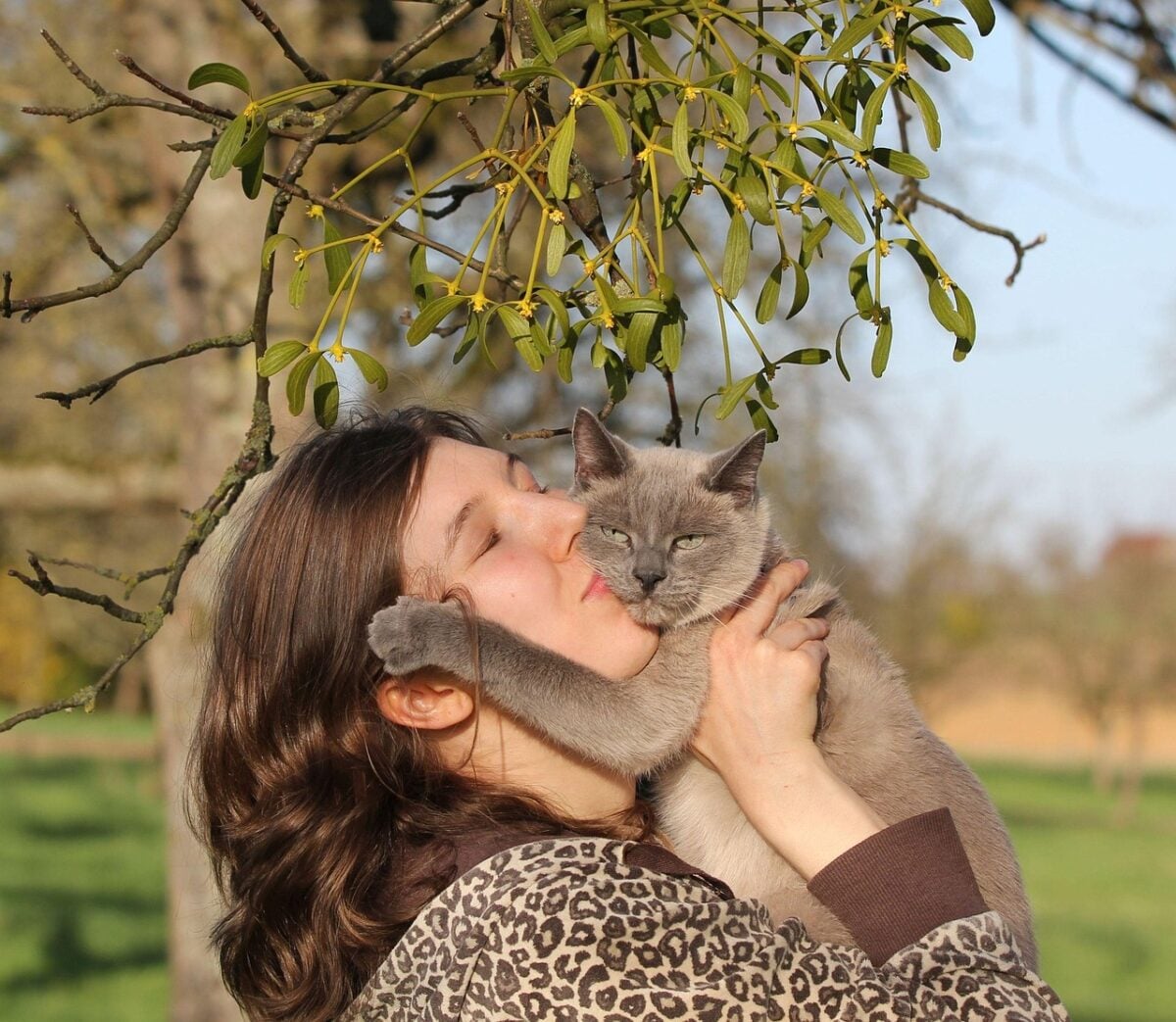
Face taps are only the beginning. Here are more things every cat owner eventually stops questioning.
Frequently Asked Questions
Every cat has their own face-touching style, and probably their own reason for doing it. Share your cat’s signature move in the comments, or leave your own question for fellow cat parents.
Why does my cat touch my face while I sleep?
Your cat may be checking whether you are awake, asking for attention, following a morning routine, or trying to get you moving. If it happens at the same time each day, they have probably connected the behavior with a reward.
If your cat also spends time staring at you while you sleep, there may be more going on than a breakfast reminder. Read more about why cats watch their owners sleep.
Why does my cat put a paw on my cheek?
A paw on the cheek is often an attention signal. A soft, claw-free touch paired with purring, slow blinking, or cuddling may be affectionate. Repeated taps or meowing may mean your cat wants something.
Why does my cat nose-nudge my face?
Nose nudges can be affectionate, curious, or scent-related. Your cat may be checking your familiar smell, investigating a new scent, or sharing a calm social moment.
Is it bad if my cat licks my face?
Gentle face licking can be a grooming-like or social behavior. It is fine to redirect your cat if you do not enjoy it, especially if licking becomes rough, frequent, or turns into biting.
When should I worry about my cat becoming clingy?
Pay closer attention when clinginess is sudden or comes with changes in appetite, litter-box habits, grooming, energy, mobility, hiding, or vocalizing. A veterinarian can help rule out medical causes when the behavior feels out of character.
More Cat Behaviors That Make Perfect Sense to Your Cat
A paw on the face is just one part of your cat’s very specific approach to personal space.
The same cat who wakes you with a cheek tap may follow you to bed but refuse to sleep there, choosing instead to settle nearby like they are supervising the night shift.
They may also wait outside the bathroom door as though your two-minute absence has triggered a full household investigation. Apparently, closed doors are less of a boundary and more of a personal betrayal. And just when you sit down to work, read, fold laundry, or open a laptop, there is a decent chance your cat will sit directly on the one thing you are using. It is rarely about the object itself. More often, it is about the fact that the object has somehow earned your attention.
Then there are the gifts: a toy mouse, a sock, a crumpled receipt, or something you had been looking for all week. When your cat starts presenting you with mysterious treasures, they may be showing affection in their own highly questionable way. Here is more on why cats bring their people gifts.
Once you start noticing these tiny habits, it becomes clear that cats are always communicating. They just prefer to do it through paws, hallway supervision, strategic laptop sitting, and the occasional offering from under the couch.
Has Your Cat Ever Touched Your Face?
We want to hear about it. Does your cat deliver polite cheek taps, dramatic forehead bonks, nose nudges, or the classic 4 a.m. paw-to-the-eyelid wake-up call?
Share your cat’s signature face-touching move in the comments, and tell us what you think they were trying to say.