When you purchase through links on our site, we may earn a commission at no extra cost to you. Learn more.
Living with cats is its own kind of roller coaster ride.
Table of Contents
One minute, your cat is curled against your chest, purring like a tiny lawn mower and looking at you as though the two of you share one soul. Three seconds later, they’re dodging your hand, glaring from across the room, or leaving mid-cuddle without so much as a goodbye.
Cats can feel like fluffy soulmates, loving, loyal, and strangely good at appearing when you need them. They can also deliver the coldest rejection you’ve felt since your sixth-grade crush pretended not to know you in the cafeteria.
If a friend hissed after you made them dinner, slapped your hand during a back scratch, or turned around and presented their rear end while you were trying to have a heartfelt conversation, you would probably reconsider the friendship.
Want our human-written content to rank above AI-generated garbage? Help us out by clicking this button!
Cats do all of that, and we respond by buying them a heated bed.
The thing is, cats are not rude. They are not plotting revenge because breakfast was seven minutes late. They are not passive-aggressive roommates in tiny fur coats. Cats are simply communicating in a language built around scent, movement, distance, touch, territory, and survival.
Once you stop judging feline behavior by human manners, a lot of their so-called attitude starts to make sense.
What Your Cat’s Body Language Is Really Saying
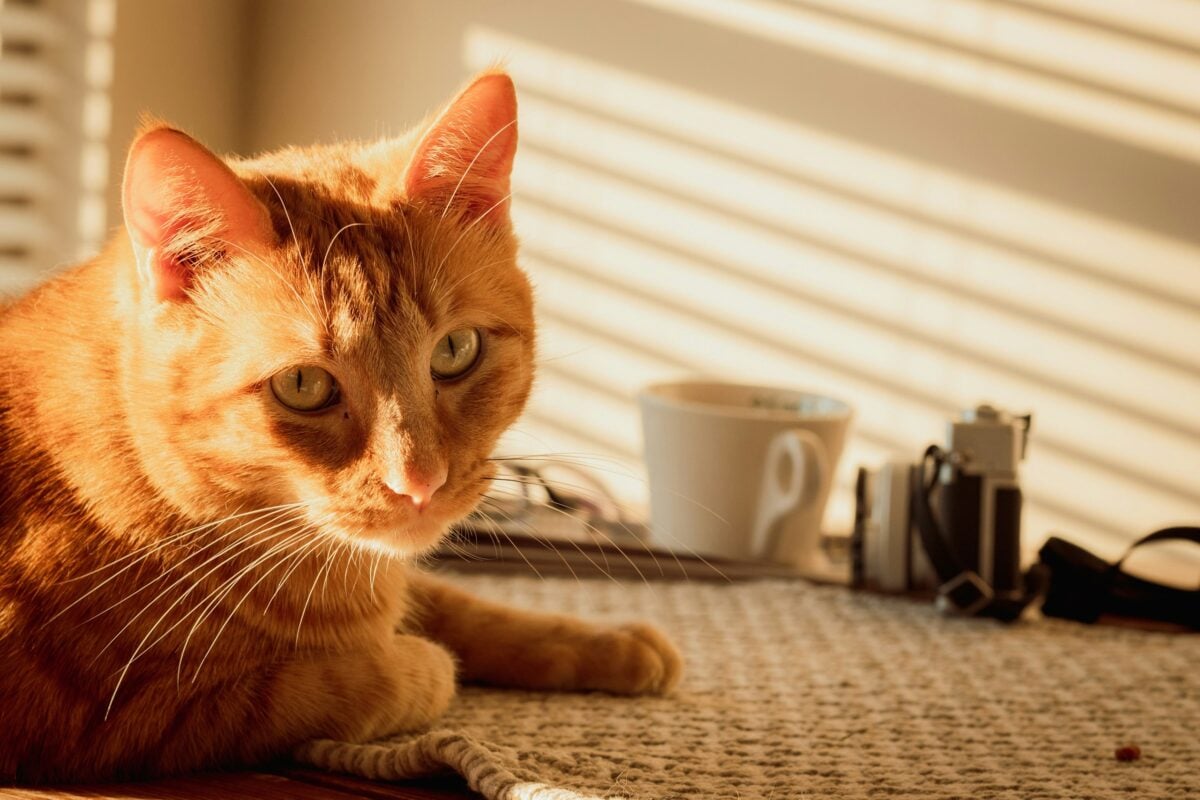
Cats rarely communicate with one obvious signal. They speak in combinations: the tail, ears, eyes, posture, movement, and whatever is happening around them.
- A flicking tail might signal irritation, excitement, or intense focus. A long stare from a loose, sleepy cat is very different from the same stare paired with flattened ears, wide pupils, and a rigid body.
- The pattern matters, too. A cat who has always preferred brief cuddle sessions may simply be enforcing a familiar limit. A cat who suddenly avoids touch, hides, cries out, or reacts aggressively may be uncomfortable.
The more you notice what happens before, during, and after a behavior, the easier it becomes to tell the difference between attitude, overstimulation, curiosity, trust, and a possible health concern.
12 Cat Behaviors That Seem Rude—but Aren’t
Once you start reading the full picture, many of your cat’s coldest moments look a lot less personal.
Walking away mid-cuddle may be a boundary, not a rejection. Ignoring your call may be recognition without interest. Staring, biting, blocking your laptop, or waking you in the middle of the night can all make sense when you consider instinct, routine, comfort, and learned behavior.
What feels rude by human standards is often simply a cat responding to the world in the most cat-like way possible.
Here are 12 familiar offenses—and what may actually be behind them.
1. Walking Away in the Middle of Being Petted
You are having a moment. Your cat is stretched beside you, eyes half closed, purring under your hand.
Then, without warning, they stand up and leave.
No explanation. No gratitude. Not even a glance back.
It feels like a review of your petting technique, and the review is not positive.
More often, your cat has simply reached their limit. Cats can enjoy touch while also becoming overstimulated quickly, especially when you pet sensitive areas such as the belly, legs, lower back, or base of the tail.
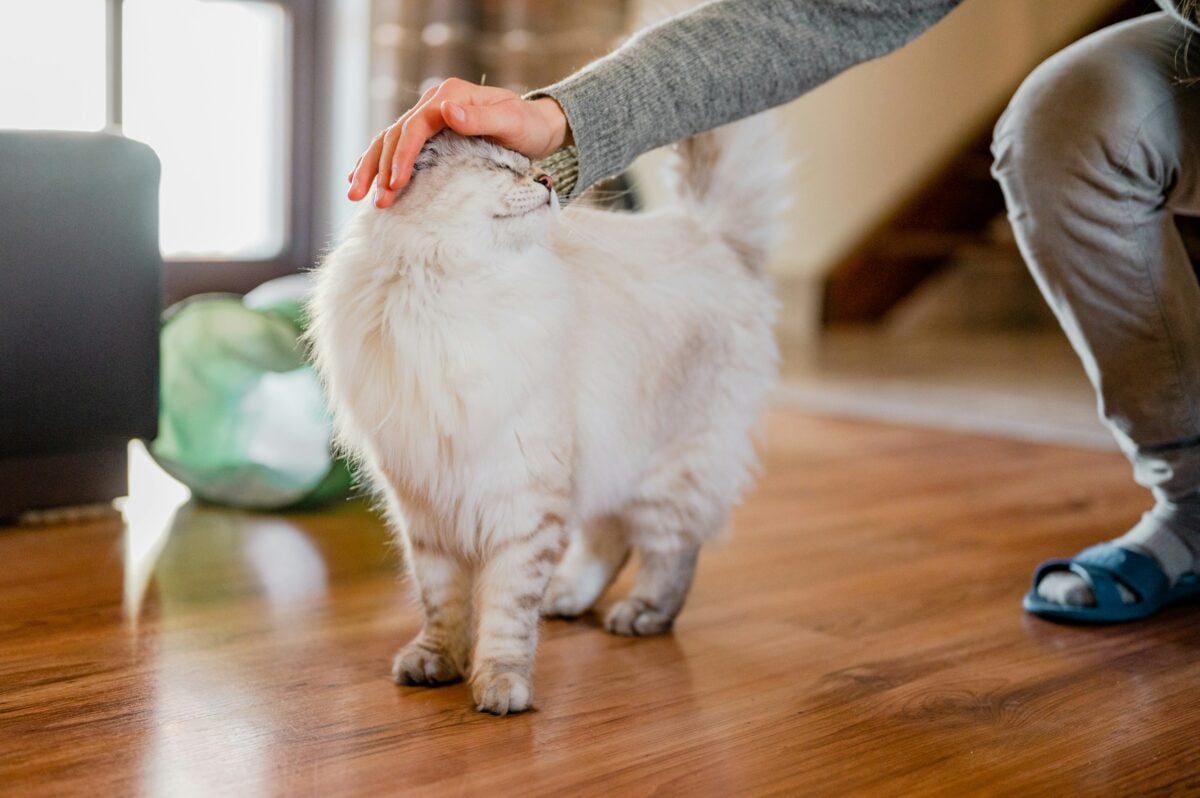
The warning signs may appear before the exit:
- A flicking or thumping tail
- Rippling skin along the back
- Ears rotating sideways or backward
- A sudden glance toward your hand
- A body that becomes noticeably still
- Purring that stops or changes abruptly
No single signal means exactly the same thing in every cat, but several appearing together can suggest that the pleasant part of the interaction is ending.
Walking away is actually the polite option. Your cat is creating distance before they feel the need to swat, nip, or bite.
A sudden change in tolerance is worth noticing, however. If a cat who normally enjoys being touched begins avoiding contact, flinching, hiding, or reacting aggressively, pain or discomfort may be involved.
What to do: Stop petting at the first signs of tension and allow your cat to leave without following. A cat who knows they can end an interaction safely may be more willing to return later.
2. Turning Their Back and Flashing Their Butt
Nothing says “welcome home” quite like a cat marching toward your face, lifting their tail, and giving you an uninterrupted view of their backside.
To a human, this feels less like affection and more like an HR violation.
In cat language, however, turning around can be consistent with comfort and trust. Your cat does not appear worried about keeping you in view, and they are comfortable enough to expose an angle they would protect around a threat.
The raised-tail approach is also commonly associated with friendly social greetings. Cats often approach familiar people and other cats with the tail upright, sometimes with a small curve at the tip.

The close-range rear presentation may be social, scent-related, or simply part of how your cat positions themselves during a greeting. Cats gather far more information through smell than humans do, so their standards for personal space are considerably different from ours.
That does not mean every rear-end appearance is a profound declaration of love. Context still matters. A loose body, upright tail, soft eyes, and relaxed approach tell a different story from a stiff posture or rapidly lashing tail.
What to do: Respond calmly with a head or cheek scratch if your cat enjoys it. You are not required to participate in the full traditional greeting.
3. Ignoring You When You Call Their Name
You call your cat. Nothing. You call again, using the special voice.
Still nothing.
Then you say the word “treat” at normal volume from two rooms away, and your cat appears as if summoned through a portal.
Research suggests that cats can distinguish their own names from other words, although recognizing a name does not mean they feel compelled to respond. They also learn to recognize familiar voices.

A dog may hear its name as a request for immediate engagement. A cat may hear its name, twitch one ear, confirm that you are alive, and continue staring at the wall.
That small response matters. A slight tail movement, ear turn, head tilt, or brief glance may be your cat’s version of acknowledging the message without agreeing to attend the meeting.
Repeatedly calling a cat when nothing meaningful follows can also make the sound easier to ignore. Cats may respond more reliably when their name predicts something worthwhile, such as food, play, affection, or access to a favorite place.
They are not necessarily confused.
They are evaluating the offer.
What to do: Say your cat’s name once, then reward any response with something they value. Avoid repeating it endlessly or using it mainly before unpleasant events such as nail trimming or medication.
4. Biting You in the Middle of a Cuddle
Few betrayals sting like the mid-purr bite.
Your cat leans into your hand. They seem blissful. Perhaps they even nudge you for more.
Then their teeth close around your fingers, and suddenly you are questioning the entire relationship.
This is often described as petting-induced aggression or petting intolerance, although the phrase can sound more dramatic than the behavior itself. In many cases, the bite is a warning that your cat has crossed from pleasantly stimulated into irritated, uncomfortable, or overwhelmed.
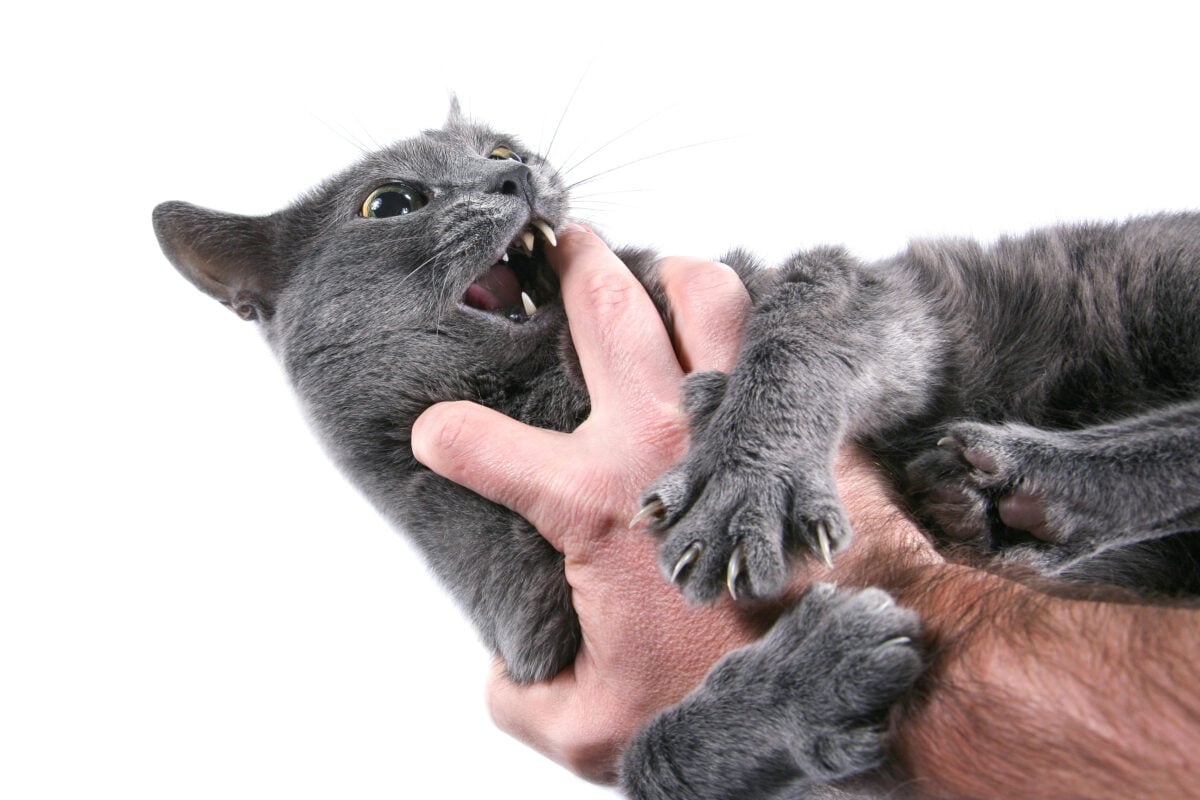
Some cats enjoy long petting sessions. Others have a strict three-stroke policy.
Watch for signs that your cat is approaching their limit:
- The tail begins flicking, thumping, or lashing
- The ears turn sideways or backward
- The pupils widen
- The skin along the back ripples
- The body becomes stiff
- The cat turns to watch your hand
- Purring stops or the cat suddenly becomes very still
A light nip can mean, “Stop now.” It does not erase the affection that came before it.
Do not punish a warning bite. Shouting, hitting, spraying water, or forcing the interaction to continue can increase fear and may teach a cat that lower-level warnings do not work.
Sudden or severe biting also deserves attention. If your cat’s tolerance changes abruptly, or if they react strongly when a particular area is touched, pain should be considered.
What to do: Stop at the first sign of tension, keep your hand still, and allow your cat to move away. Avoid using fingers as toys, especially with kittens.
5. Knocking Things Off Tables
A cat sees a pen near the edge of a desk.
Tap.
Pause.
Tap.
Longer pause while making eye contact with you.
Tap.
The pen falls. The cat watches.
Science has happened.
Cats explore with their paws, and small objects can trigger curiosity or play. A bottle cap skitters. A hair tie bounces. A pen rolls unpredictably. To a bored indoor cat, this may be excellent entertainment.
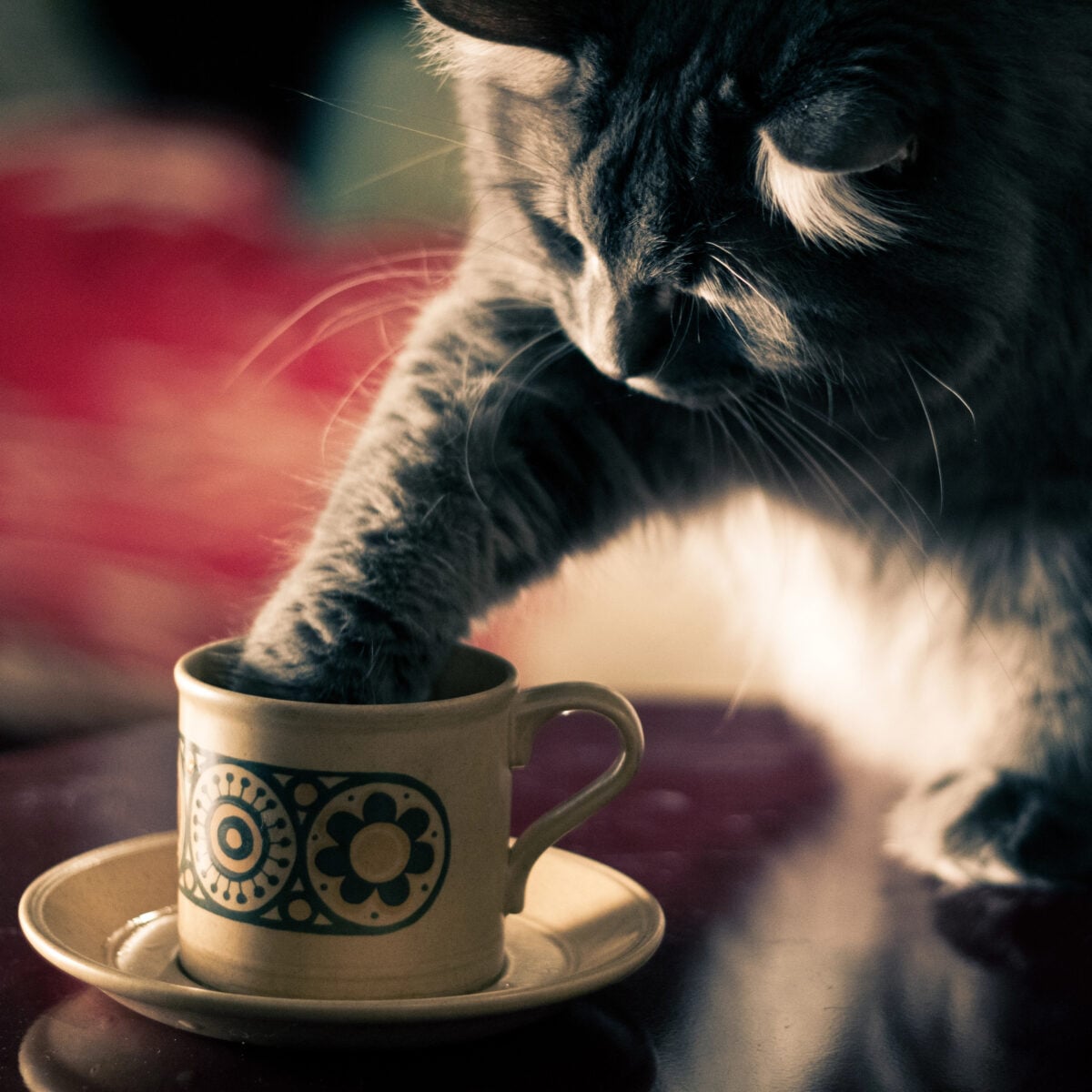
Your response can make the activity even more rewarding. If knocking over a water glass causes you to leap across the room shouting your cat’s full legal name, congratulations: you may have created an interactive game.
That sudden shift from angelic to destructive is familiar to many cat owners, and there may be a few subtle signs your cat is about to cause trouble before the chaos begins.
That does not mean every falling object is part of a calculated attention-seeking scheme. Cats may be investigating movement, texture, sound, or depth. An object may also be blocking a route or occupying a spot the cat wants.
Still, if the same item hits the floor every morning just before breakfast, your cat may have learned that gravity gets results.
What to do: Move fragile objects, secure anything dangerous, and offer safer outlets such as rolling toys, food puzzles, climbing spaces, and short daily play sessions. Try not to provide a spectacular reaction unless you want an encore.
6. Sitting on Your Laptop, Book, or Puzzle
You open your laptop to answer one email.
Your cat immediately sits on the keyboard and types:
“jjjjjjjjjjjj.”
This is not sabotage in the human sense.
Your cat has noticed that the laptop is receiving your hands, eyes, and attention. By placing themselves on top of it, they are moving into the most valuable spot in the room.
Laptops are also warm. Books and papers may carry familiar scents. Pages crinkle. Puzzle pieces move when touched and appear to have been arranged specifically for knocking onto the floor.
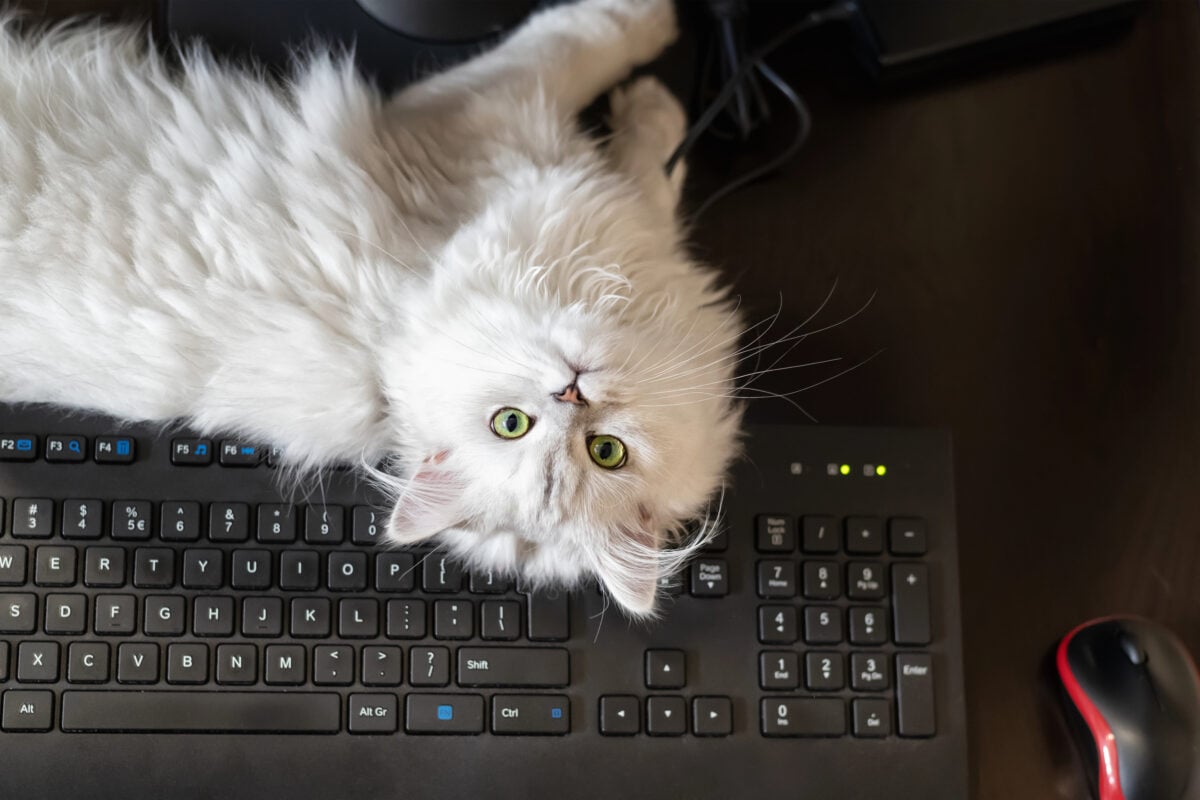
Cats are often drawn to places where activity is happening. They may also respond to changes in routine. If you usually relax on the couch but suddenly spend hours staring at a screen, your cat may try to insert themselves into the new pattern.
That does not necessarily mean they are jealous in the human sense. Warmth, proximity, curiosity, habit, and learned attention may all contribute.
What to do: Place a small bed, folded blanket, box, or perch beside your workspace. Reward your cat for using it, and provide brief attention or play breaks before they decide to become part of the spreadsheet.
Some cats will happily accept the alternative. Others will sit directly on the space bar. That is between you and your manager.
7. Staring at You Without Blinking
You wake in the middle of the night and find your cat sitting on the dresser, staring directly into your soul.
Naturally, you assume your time has come.
A steady gaze can mean several things. Your cat may be curious, waiting for movement, watching for a familiar routine, or trying to get your attention. They may have learned that you usually stand up after checking your phone, which means breakfast could be approaching.
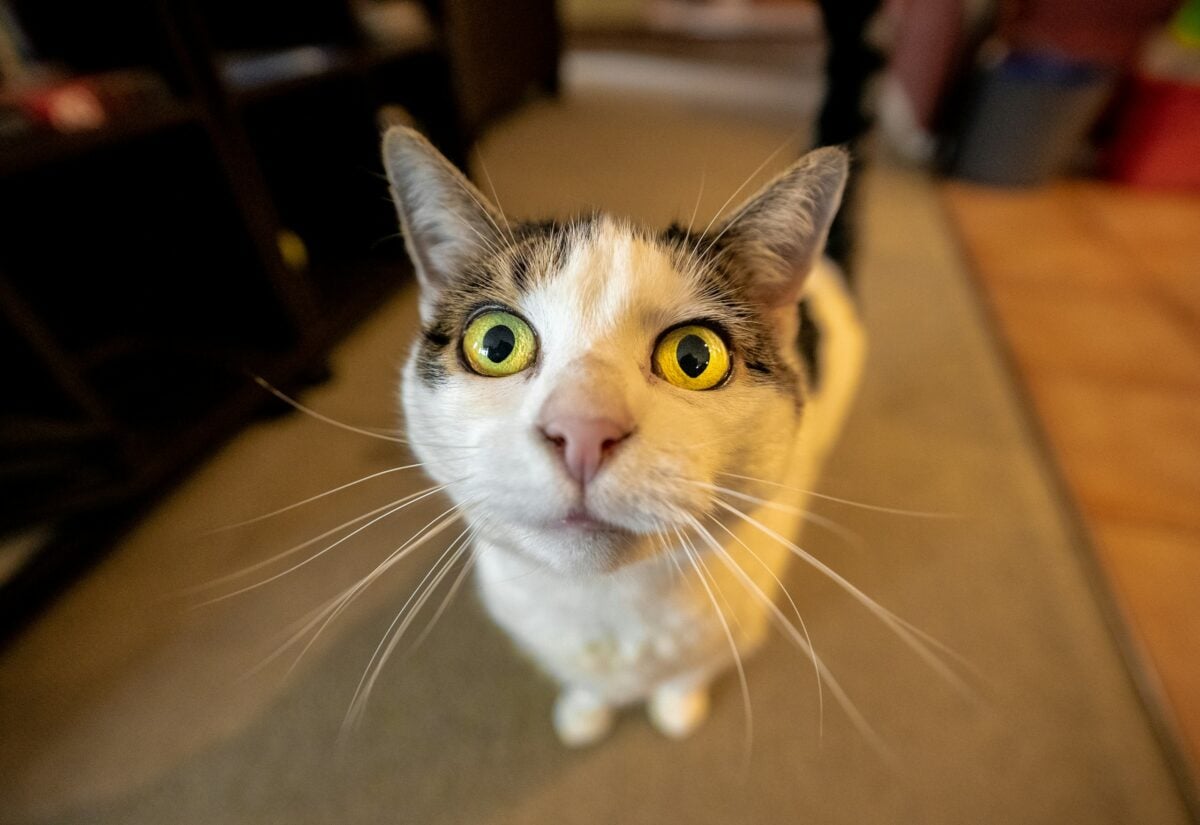
The eyes alone do not tell the whole story. Look at the rest of the body.
A relaxed stare may come with:
- Soft or partially closed eyes
- Neutral, forward-facing ears
- A loose body
- A still or gently moving tail
- Slow blinking
A tense stare may come with:
- A rigid or crouched posture
- Flattened or sharply rotated ears
- A lashing tail
- Very large pupils
- Raised fur, growling, or hissing
Slow blinking is often associated with relaxed social interaction. When a cat looks toward you and slowly closes their eyes, they appear comfortable enough to briefly reduce visual vigilance.
You can return the gesture by softening your face, looking slightly away, and blinking slowly.
Do not force prolonged eye contact with an unfamiliar, fearful, or tense cat. A hard stare can feel threatening.
What to do: Read the entire body rather than interpreting the eyes in isolation. Return a slow blink to a relaxed cat, but give space when the posture looks tense.
With your own comfortable cat, that dreamy blink from across the room may be about as close as they get to sending a love letter.
8. Showing Affection Only When They Choose
You sit down hoping for a cuddle. Your cat walks past you.
You pat the couch. They leave the room.
Then, three hours later, while you are carrying groceries, answering a work call, or trying to use the bathroom, they decide that now is the perfect time to press their entire body against your legs.
Cats often prefer to control when physical contact begins and ends. That can feel one-sided by human standards, but choice is an important part of how many cats feel safe during social interactions.
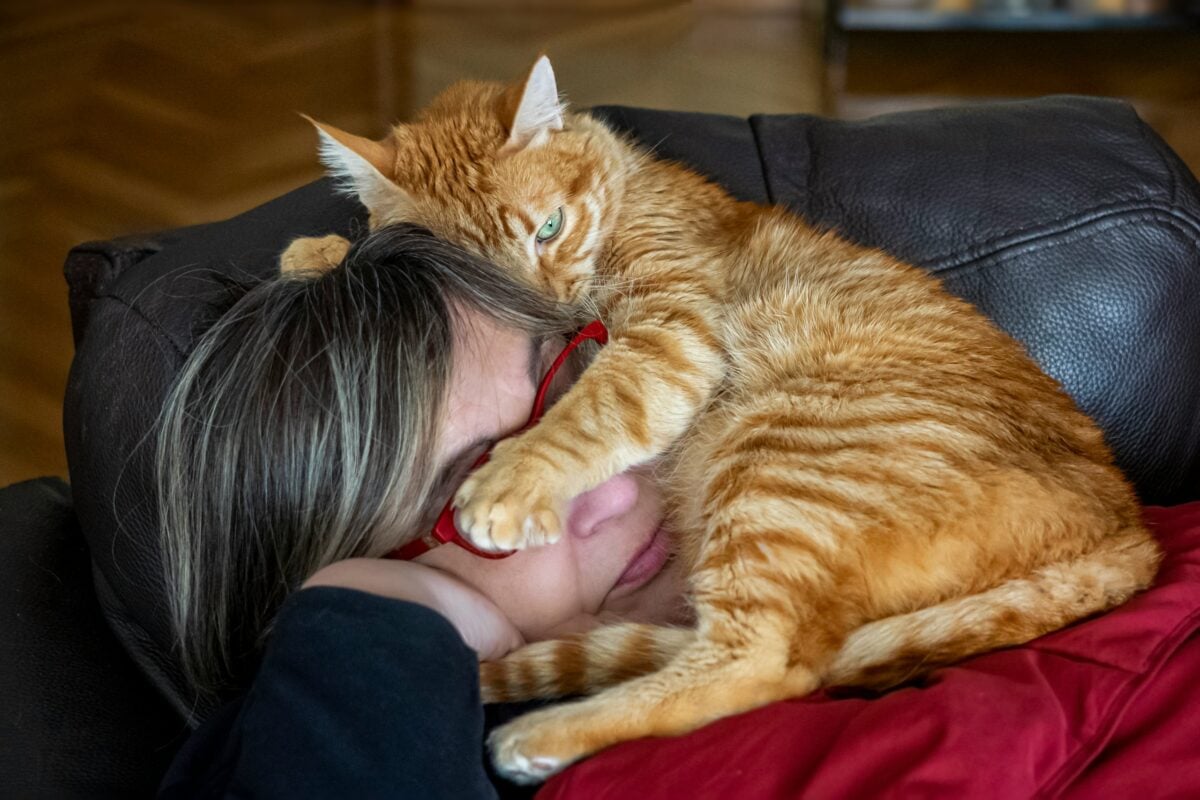
A cat may seek affection when the room is quiet, when they are relaxed, or when they know they can leave easily. They may avoid contact when they are alert, overstimulated, warm, tired, or focused on something else.
That preference for control can become even more obvious around visitors. A cat who is affectionate with you may hide, become clingy, or keep their distance when unfamiliar people disrupt the household routine. Here is a closer look at why cats act differently when guests come over.
Individual temperament matters, too. Some cats climb into every available lap. Others show attachment by sitting nearby, following you between rooms, greeting you with an upright tail, or resting where they can keep you in view.
Affection does not always look like prolonged cuddling. Your cat may be showing trust in smaller, less convenient ways.
Trying to force contact can make a cat more cautious. Picking them up, holding them in place, or continuing to pet them after they pull away removes the control that helped them approach in the first place.
What to do: Let your cat initiate contact when possible. Offer a hand to sniff, pet briefly, and pause to see whether they ask for more. Respecting their answer can make future affection more likely.
Your cat loves you. They simply prefer to manage the appointment calendar.
9. Lifting Their Butt When You Pet Them
You scratch your cat near the lower back. Their front half stays exactly where it is. Their rear end rises toward the ceiling like an elevator that has received an urgent request.
It can feel like a very strange response to affection.
For many cats, lifting the hindquarters means the touch feels pleasant or that they want you to continue. The area near the base of the tail contains many nerve endings, and some cats especially enjoy being scratched there.
The raised rear may also resemble social postures cats use during friendly interactions. In an unspayed female cat, however, an elevated hindquarters posture paired with vocalizing, restlessness, rolling, or moving the tail to one side can also occur during a heat cycle.
Not every cat enjoys pressure near the tail. Some become overstimulated quickly, while others may react because the area is sensitive or painful.
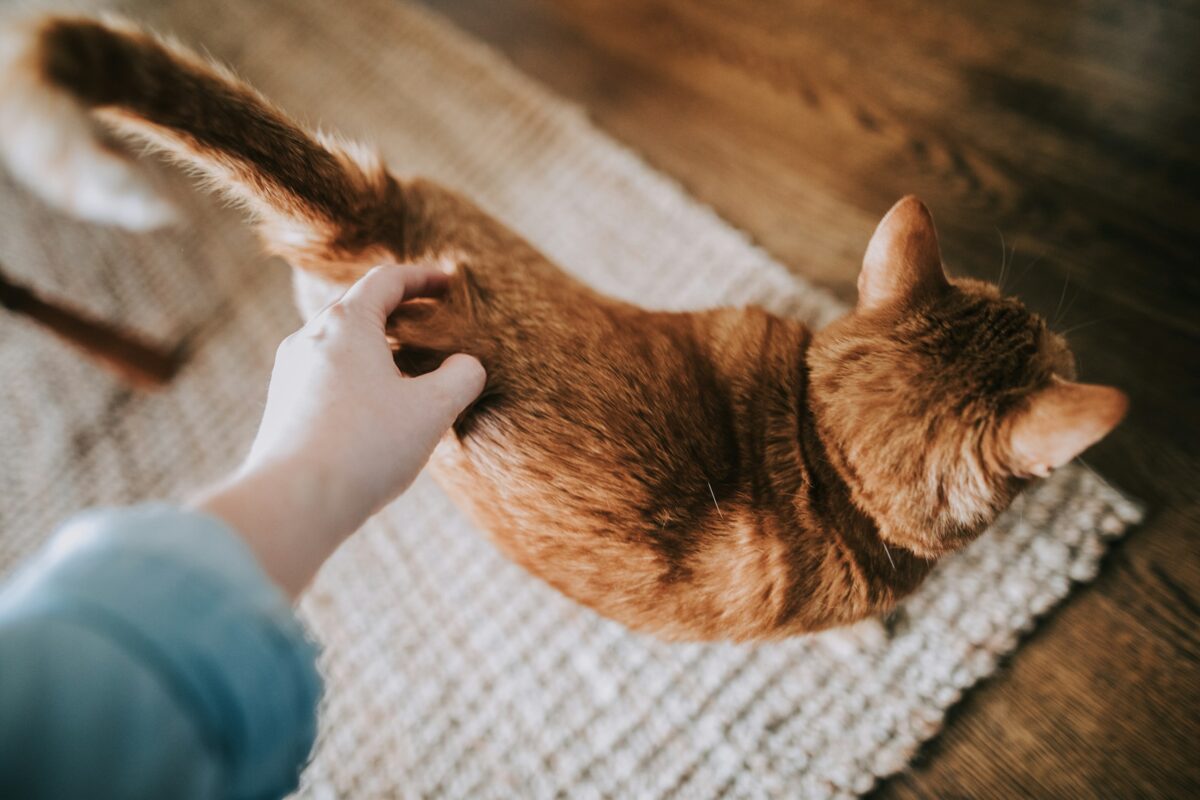
Watch the rest of the body.
Signs your cat is still enjoying the interaction may include:
- Leaning into your hand
- A relaxed body
- Soft eyes
- Purring or kneading
- Returning when you pause
Signs that it is time to stop may include:
- Tail lashing
- Rippling skin
- Ears turning back
- A sudden head turn
- Tensing, swatting, or biting
What to do: Use light pressure, pause frequently, and let your cat decide whether the petting continues. If touching the lower back suddenly causes pain, flinching, aggression, or skin twitching, contact your veterinarian.
Sometimes the raised butt means, “Yes, exactly there.”
Cats have never been known for subtle feedback.
10. Waking You Up in the Middle of the Night
It is 3:47 a.m. Your cat is standing on your chest. They tap your face once. Then again.
When that fails, they knock something off the nightstand and begin singing the song of their people directly into your ear.
Cats do not always follow the same sleep schedule humans do. Many become especially active around dawn and dusk, when their natural hunting instincts tell them it is a good time to stalk, chase, and search for food.
Indoor cats may also wake their people because they are bored, hungry, seeking attention, or following a routine that has worked before. If getting you out of bed once resulted in food, play, or even an irritated conversation, your cat may have learned that persistence pays.
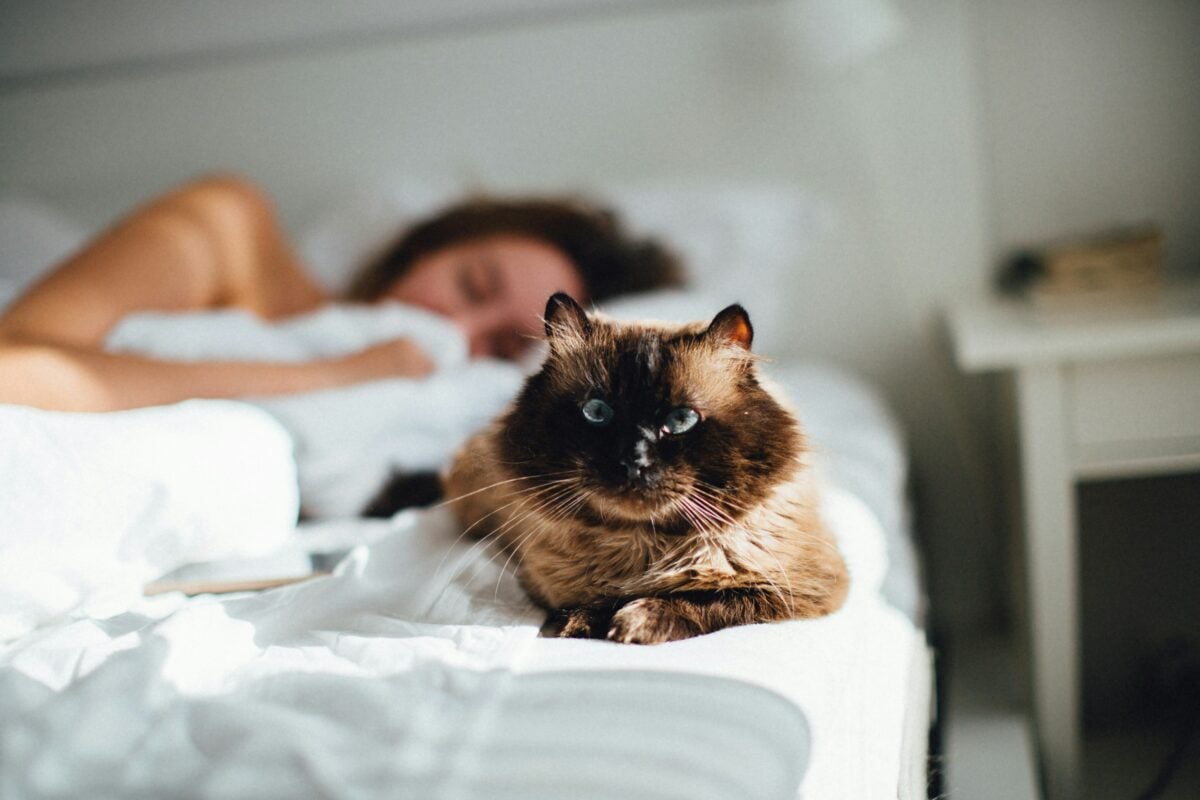
The difficult part is that any response can feel rewarding. Getting up, talking, petting, feeding, or chasing them out of the room may all confirm that waking you produces activity.
Try increasing play and enrichment during the day, especially in the evening. A vigorous hunting-style play session followed by a small meal before bed can help some cats settle more comfortably overnight. Timed feeders may also help when early-morning hunger is driving the wake-up call.
Avoid punishing your cat or turning nighttime disruptions into an exciting event. Keep your response calm, brief, and consistent.
A sudden change in nighttime behavior deserves closer attention. Restlessness, repeated crying, confusion, increased thirst, appetite changes, or difficulty settling can sometimes accompany pain, illness, or age-related changes.
What to do: Build a predictable evening routine with play, food, and quiet time. Reward calm nighttime behavior rather than responding immediately to every tap, meow, or carefully targeted object pushed from the nightstand.
Your cat may not understand why you need eight uninterrupted hours of sleep.
From their perspective, you have been lying there doing nothing for ages.
11. Sleeping Near You but Just Out of Reach
Your cat chooses the corner of the bed near your feet. Close enough to share space. Far enough to avoid your hand.
It can feel like affection with strict legal boundaries.
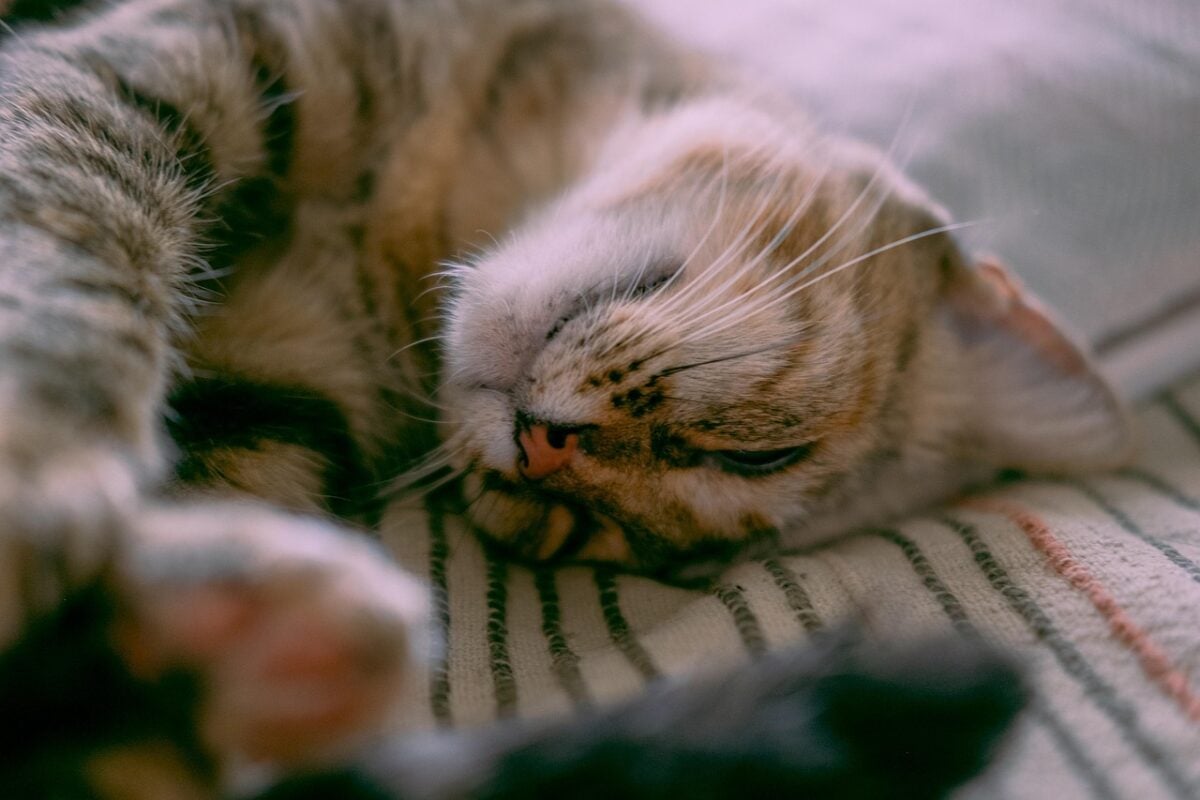
Sleeping puts cats in a less alert position, so regularly choosing to rest near you can be consistent with comfort and trust. Your scent, body heat, breathing, and predictable presence may all help the area feel safe. For these same reasons, your cat often steals your spot as soon as you get up.
At the same time, cats value control.
Some want companionship without being held. Others have learned that humans roll over, kick blankets, adjust pillows, snore, and occasionally mistake a tail for part of the comforter.
The foot of the bed offers a convenient escape route. A nearby chair provides closeness without compression. The opposite end of the couch allows your cat to remain part of the group while monitoring the room.
Temperature, noise, household activity, age, physical comfort, and individual temperament can also influence where a cat sleeps.
Do not measure attachment solely by physical distance. A cat who sleeps three feet away every night may be showing considerable comfort, even if they have no interest in drooling on your neck.
What to do: Let your cat choose the distance. Avoid pulling them closer or restraining them when they settle nearby.
Love has many forms.
Some of them require a small buffer zone.
What about the post-poop zoomies?
Some cats explode out of the litter box and race through the house as though they have just escaped a crime scene. And, without fail, a freshly changed litter box often seems to inspire an immediate and urgent deposit. The behavior is common, but there is no single proven explanation. It may follow physical relief, a burst of energy, or a simple desire to leave the litter area quickly. If the sprint is paired with crying, straining, repeated litter-box visits, scooting, or other changes in bathroom habits, contact your veterinarian.
12. Bringing You Dead Bugs, Mice, or Favorite Toys
Nothing strengthens a bond like waking up beside one sock, a toy mouse, and the remains of something that once had wings.
Cats carry objects for different reasons. Hunting instinct is often part of it, especially for cats with outdoor access or homes containing the occasional unlucky insect.
Stalking, chasing, catching, carrying, and depositing prey are all parts of the feline hunting sequence.
The popular explanation says your cat believes you are a hopeless hunter and is trying to feed you. That is possible, particularly because mother cats carry prey to kittens, but we cannot know exactly what a cat believes about our survival skills.
Your cat may be moving prey to a place that feels secure. They may want to continue playing. They may be bringing a valued object into a shared space. A cat who carries toy mice into your bedroom may simply be continuing a favorite hunting game and choosing you as the audience.

Either way, punishment is unlikely to help. A cat acting on instinct will not understand why you are angry about what appears, from their perspective, to be a successful catch.
- For indoor cats, offer wand toys, tossable toys, food puzzles, and short hunting-style play sessions. Let them stalk, chase, pounce, and catch.
- For cats who go outdoors, supervised access, an enclosed catio, or secure outdoor spaces can reduce risks to both the cat and local wildlife.
What to do: Remove real prey calmly, avoid punishment, and provide regular hunting-style play with an appropriate toy.
Then put the toy away before you step on it barefoot at 2 a.m.
Your Cat Is Not Being Mean. Your Cat Is Being a Cat.
Cats do not follow human rules of politeness.
Conversations end whenever they decide they are over. Unblinking stares arrive without explanation, rear ends appear at eye level, and closed doors become personal offenses. Whatever we are using becomes their seat, while boundaries are sometimes communicated with teeth.
None of this means they are cold, spiteful, or ungrateful.
Their behavior comes from instinct, sensory sensitivity, habit, comfort, curiosity, and an intense need to feel in control of their surroundings. Once you learn the small signals—the tail flick, the ear turn, the slow blink, the strategic retreat—their actions become much easier to read.
That rude walk-away may be good self-control. The unblinking stare may be affection. The dead bug may be an offering from a roommate who thinks your hunting record is frankly embarrassing.
Cats are strange, dramatic, tender little creatures. They love us in ways that do not always look like love at first glance.
Cats are not rude or mean. They are just cats. And honestly, we would not have them any other way.
When Rude Cat Behavior May Signal a Health Problem
Most of the behaviors on this list are normal expressions of instinct, preference, curiosity, or personal boundaries.
- The key question is not simply, “Is this behavior strange?”
- It is, “Is this behavior new, intense, or happening alongside other changes?”
Cats often hide pain and illness, so a sudden shift in personality or routine can be more significant than the behavior itself. A cat who has always preferred short petting sessions may simply know their limits. A cat who suddenly flinches, bites, hides, or avoids being touched may be uncomfortable.

Contact your veterinarian if you notice behavior changes alongside signs such as:
- Eating much less, refusing food, or losing weight
- Vomiting, diarrhea, constipation, or repeated litter-box visits
- Straining to urinate or defecate
- Crying during eating, movement, or litter-box use
- Sudden aggression, hiding, confusion, or unusual vocalization
- Limping, stiffness, reduced jumping, or reluctance to move
- Excessive grooming, scooting, or repeatedly licking one area
- A major change in sleep, thirst, activity, or social behavior
Because pain can appear as withdrawal, aggression, hiding, or reluctance to be touched, a sudden change in your cat’s normal behavior deserves attention.
Urinary straining deserves especially prompt attention. A cat who repeatedly enters the litter box but produces little or no urine may have a medical emergency, particularly if the cat is male.
Trust your knowledge of your own cat. You are the person most likely to notice that a familiar quirk no longer looks quite normal.
When in doubt, record what you are seeing, note when it began, and contact your veterinarian. A short video of the behavior can also help your veterinary team understand what is happening.
Cats are dramatic by nature. But when the drama suddenly changes, it is worth paying attention.

More Ways to Decode Your Cat’s Behavior
Once you stop interpreting everything your cat does as a personal insult, an entire world of feline logic begins to reveal itself.
Still wondering what is happening inside that tiny, dramatic head? Find out why some cats act completely different when guests come over, including how unfamiliar scents, sounds, and social pressure can change their behavior.
For cats who seem suspiciously charming right before disaster strikes, explore the signs your cat may be about to cause trouble.
You can also discover the strange behaviors cat owners eventually stop questioning—from 3 a.m. hallway races to sitting on whatever you are trying to use.
And when the meowing, knocking, biting, or attention-seeking begins to test your patience, learn why your cat may seem so annoying—and what they might actually need.
What is the rudest thing your cat does?
Does your cat walk away mid-cuddle, ignore you until food appears, stare at you from the darkness, or wake you at an hour no reasonable creature should be awake?
Share your cat’s most hilariously rude behavior in the comments, and tell us what you think they are actually trying to say.