When you purchase through links on our site, we may earn a commission at no extra cost to you. Learn more.
A bored cat rarely looks obviously bored. More often, boredom shows up as chaos: knocking pens off your desk, yelling from another room, attacking your ankles, scratching the sofa, or turning the kitchen cabinets into a personal escape room.
Table of Contents
Cats may live very comfortable indoor lives, but they still need chances to stalk, climb, scratch, chase, investigate, and solve little problems. When those outlets are missing, some cats simply invent their own.
That’s why it helps to stop asking, “Why is my cat being bad?” and start asking, “What is my cat getting out of this?”
A rolling pen creates movement. The couch feels great under the claws. Your feet act suspiciously like prey. A cabinet contains smells, textures, and forbidden mysteries. Once you understand the payoff, it becomes much easier to offer a better outlet.
Want our human-written content to rank above AI-generated garbage? Help us out by clicking this button!

Before You Blame Boredom
Not every weird cat behavior means your cat needs more entertainment. Pain, illness, stress, anxiety, aging, household changes, and conflict with other pets can all affect behavior, too.
Sudden or extreme changes deserve extra attention, especially if they come with appetite changes, litter-box problems, overgrooming, unusual vocalizing, hiding, or reduced activity.
For an otherwise healthy cat, though, the following behaviors can be clues that daily life has become a little too predictable.
11 Cat Behaviors That Can Point to Boredom
No single behavior proves your cat is bored. The bigger clue is the pattern: your cat repeatedly creates her own entertainment, pesters you for something to happen, or suddenly springs to life the moment an interesting activity appears.
Here are 11 behaviors worth watching—and what your cat may actually be trying to get from them.
1. Knocking Things Off Counters or Tables
You know the sequence.
Your cat notices the pen. One paw reaches out… Tap.
Another tap… A thoughtful pause.
Then the final push, followed by the tiny clack of the pen hitting the floor and a deeply interested cat peering over the edge to inspect the results.
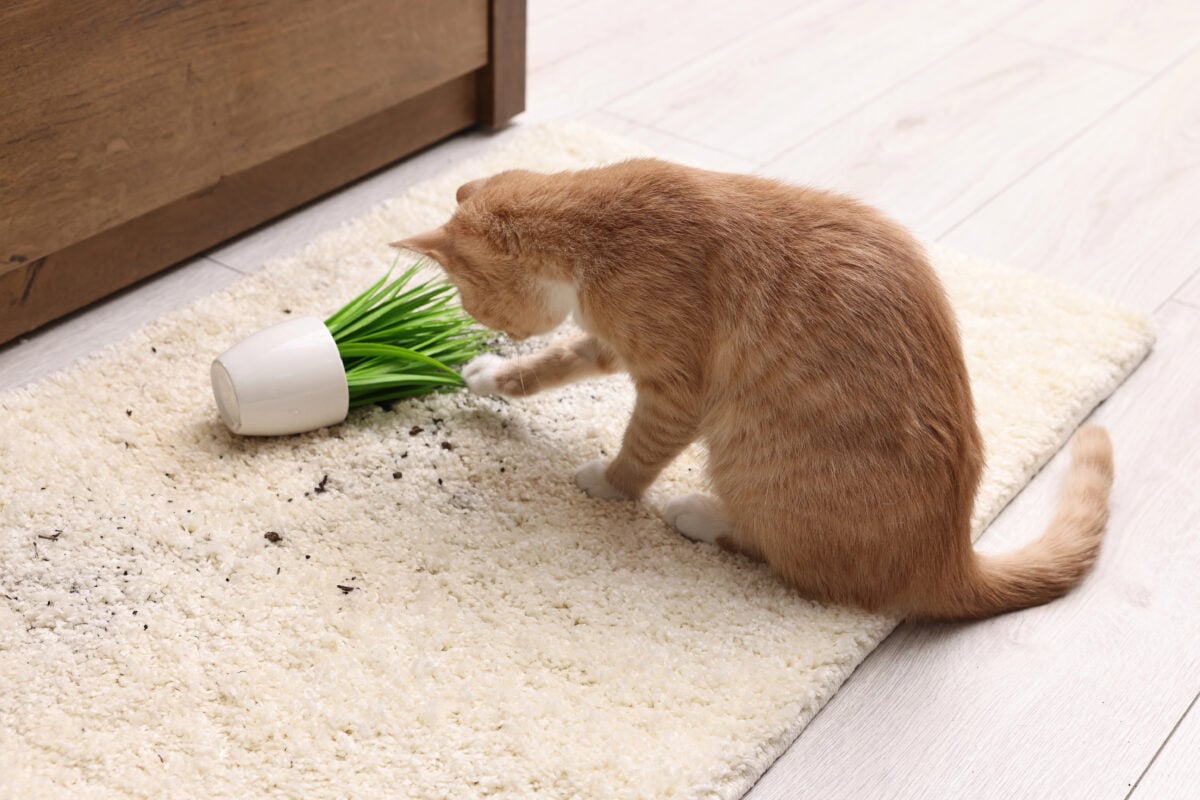
Moving objects are entertaining: they roll, bounce, make noise, and frequently cause a human to react. That’s a lot of payoff for one paw movement.
For a cat whose environment doesn’t offer many opportunities to chase or manipulate moving objects, your desk can become an accidental toy box. If you jump up every time something falls, the game gets even better. Your cat has essentially discovered a button labeled MAKE HUMAN DO SOMETHING.
Give Those Paws Something Better to Do
Instead of viewing every fallen object as an act of rebellion, give that paw something safer to work with. Springs, lightweight balls, toy mice, crinkle toys, rolling treat toys, and sturdy little objects designed for batting can all satisfy the same urge.
If this is one of your cat’s signature moves, we’ve taken a deeper look at why cats knock things over and why your reaction can accidentally make the game even better.
Toy rotation helps more than most people expect. Leaving twenty toys scattered around the house indefinitely tends to turn them into decor. Put some away and bring them back a week or two later. The plastic spring your cat ignored last month may return as if it has just completed a glamorous international tour.
Meanwhile, protect anything genuinely dangerous or valuable. Medications, toxic plants, breakable glass, string, hair ties, and small swallowable objects shouldn’t rely on your cat’s self-restraint for safety.
2. Scratching the Furniture More Than Usual
Scratching is not a character defect. It’s normal cat behavior, and cats have several good reasons for doing it: claw maintenance, stretching, scent communication, visual marking, and the simple pleasure of digging their claws into something with satisfying resistance.
The problem is usually not that your cat scratches.
The problem is that your cat has chosen the sofa you spent three months picking out.

Boredom becomes more plausible when scratching increases noticeably or starts appearing alongside other restless behavior. A cat with unused energy and not much else happening may scratch more simply because scratching feels good and gives her something physical to do.
Match the Scratcher to the Cat
Before buying another scratching post, inspect the crime scene.
Does your cat stretch vertically against the arm of the couch? She may want a tall vertical scratching surface. Does she go after rugs or carpet? Try a horizontal cardboard or sisal scratcher. Some cats love angled scratchers. Others have extremely specific texture preferences and will reject an expensive designer post in favor of the cardboard shipping insert it arrived in.
Welcome to cat ownership.
Height and stability matter, too. A post should be tall enough for a full stretch and sturdy enough that it doesn’t wobble when the cat really leans into it. Imagine being offered a gym where all the equipment tips sideways when you touch it. You’d probably go back to the couch, too.
Placement may matter even more than material. Put scratchers near the furniture your cat already targets, close to sleeping areas, or in busy parts of the home. A fantastic scratching post hidden in a spare bedroom has little chance against a sofa sitting right in the middle of family life.
Redirect the Behavior, Don’t Punish It
Active play can help as well. A good hunting-style game gives energetic cats another physical outlet, while well-placed scratching surfaces take care of the very normal need to scratch.
Skip yelling, spray bottles, and other punishments. They may make your cat wary of you without making the furniture any less appealing.
The goal isn’t to stop scratching.
It’s to make the correct scratching option so satisfying that the couch finally gets a day off.
If your sofa is already losing the battle, our guide to stopping cats from scratching furniture goes much deeper into scratcher height, texture, and placement.
3. Meowing or Demanding Your Full Attention
Some cats are conversationalists. They announce meals, comment on closed doors, narrate trips down the hallway, and apparently believe that anyone entering a bathroom requires supervision and a verbal briefing.

That’s personality, not necessarily boredom.
The clue is usually a change in the amount, timing, or intensity of the vocalization. Maybe your cat begins wandering around yelling during the afternoon. Maybe she repeatedly summons you from another room. Or maybe every work call now includes a guest appearance from someone standing just outside camera range, screaming about conditions in the household.
Cats are remarkably good at learning what gets a human response. If your cat meows and you look over, answer, stand up, toss a toy, offer a treat, or follow her toward the kitchen, something interesting just happened.
From the cat’s perspective, excellent system. No notes.
Get Ahead of the Attention-Seeking
That doesn’t mean you need to launch an exhausting campaign of ignoring every meow. It makes more sense to provide predictable interaction before your cat has to file a formal request.
If she gets restless around 3 p.m., try a short play session before that time. A food puzzle can occupy a food-motivated cat afterward. If she’s mainly interested in being near you while you work, a bed, shelf, or cat tree beside your desk may be enough to satisfy her need to supervise operations.
Focused interaction usually beats constant half-attention. Ten minutes spent actually playing with your cat can be more satisfying than an hour of distracted pats while you answer email.
New or excessive vocalization deserves more caution, particularly in older cats. Pain, hyperthyroidism, sensory decline, cognitive changes, and other medical problems can affect vocal behavior.
If your normally quiet cat suddenly begins roaming the house yelling at night—or the meowing comes with appetite, thirst, weight, litter-box, mobility, or sleep changes—call your veterinarian rather than assuming she needs another toy.
4. Chasing Feet, Hands, or Other Pets
You were walking toward the kitchen.
Your cat was apparently stalking a gazelle.
Unfortunately, you were the gazelle.
Ankle ambushes are a classic way for a cat with unused hunting energy to make the environment more interesting. Moving feet dart past furniture, disappear around corners, and occasionally wiggle under blankets. From a feline perspective, they’re doing an honestly irresponsible amount of prey cosplay.
Hands can end up in the same category, especially when kittens are encouraged to wrestle with fingers. It’s adorable when a tiny kitten grabs your hand with miniature paws and attempts a ferocious little bite.
Then the kitten becomes a twelve-pound adult with adult teeth.
The game has changed.

Redirect the Hunt
Tiny predator reminder: Your cat may weigh twelve pounds and sleep on a fleece blanket, but play still taps into the same stalk-chase-pounce sequence that makes moving feet so irresistible.
Interactive wand toys are ideal because they let cats chase, stalk, grab, and pounce without teaching them that human skin is part of the equipment. Move the toy like prey rather than waving it continuously in your cat’s face. Let it creep behind furniture, disappear around corners, freeze, twitch, sprint, and occasionally make a terrible life decision.
Most importantly, let your cat catch it.
A toy that escapes every single time can become frustrating. The capture is part of the hunting sequence. Your cat deserves to win the fake mouse occasionally.
When the Other Cat Isn’t Having Fun
Chasing another pet needs more careful interpretation because one cat’s fantastic afternoon may be another cat’s ongoing nightmare. Look at the cat being chased. Is she returning to the game? Is her body relaxed? Can she move freely around the home?
Hiding, hissing or growling, flattened ears, blocked access to litter boxes or food, persistent pursuit, and one cat constantly trying to escape suggest conflict rather than mutual play.
Boredom can certainly make an energetic cat pester another pet, but the solution can’t be “let them work it out.” Give the pursuer more appropriate outlets and make sure every animal has safe places and easy access to important resources.
One cat’s enrichment should not involve another cat living under witness protection.
5. Waking You Up or Creating Chaos at Night
At 11 p.m., your cat is an innocent cinnamon roll curled peacefully on the sofa.
At 3:12 a.m., she is qualifying for an event.
The hallway sprint begins. Something hits a wall. A toy is violently introduced to the bedroom door. Your cat jumps onto the bed, walks across your ribs, investigates the blinds, and then disappears at high speed because apparently there are urgent matters elsewhere.

Some nighttime activity is perfectly normal. Cats often become more active around dawn and dusk, and they aren’t biologically obligated to care that you have an 8 a.m. meeting.
Still, a cat who spends most of an uneventful day sleeping may have plenty of unused energy available when you’re hoping everybody will simply go to bed.
Shift Some of That Energy Earlier
The answer isn’t to exhaust your cat through military-grade exercise. It’s to make the entire day more interesting and put some meaningful activity in the evening.
Try an interactive hunting session before bed. Let your cat stalk, chase, and capture the toy, then follow the game with part of her meal. That sequence works nicely with the natural rhythm of hunt, catch, eat, and settle down.
Automatic feeders can also be lifesavers when breakfast is the problem. If your cat begins screaming at 4:53 a.m. because food traditionally appears when you get up, a feeder can change the relationship.
The machine becomes breakfast staff.
Your face is no longer the button.
Nighttime behavior that changes suddenly deserves medical attention, particularly in senior cats. Pain, hyperthyroidism, hypertension, sensory changes, cognitive decline, and other conditions can alter sleep and activity patterns.
If the midnight Olympics are a brand-new event, investigate before simply adjusting the enrichment schedule.
6. Overgrooming or Licking Until the Fur Thins
Cats groom constantly, and normal grooming isn’t a sign of boredom. Seeing your cat wash her face after breakfast or conduct a twenty-minute toe-cleaning seminar is ordinary cat business.
The situation changes when grooming becomes intense enough to thin the coat, create bald patches, irritate the skin, cause sores, or seem difficult for the cat to interrupt.
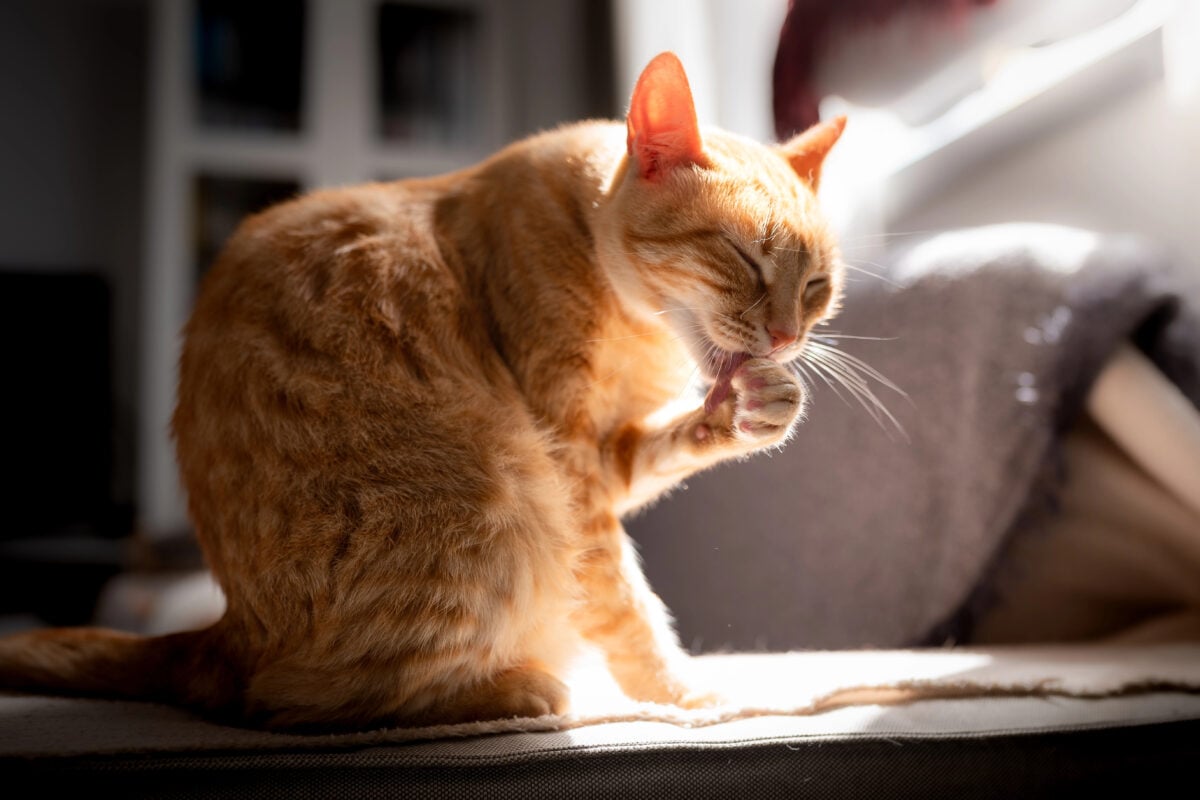
Stress and understimulation can contribute to repetitive grooming in some cats, but this is one behavior where it’s especially important not to jump straight to boredom. Fleas, allergies, mites, skin problems, pain, and other medical issues can all cause excessive licking.
A bald belly is not your cat submitting a request for a new feather wand.
It’s a reason to investigate.
Rule Out Medical Causes First
If you notice significant licking, chewing, missing fur, redness, scabs, or wounds, schedule a veterinary exam. Take photos if the appearance changes from day to day, and make a note of when you see the licking. Those little details may help your veterinarian narrow down the cause.
Then Look at Stress and Environment
Think about environmental changes as well. Did another pet arrive? Did you move? Has construction started next door? Did your work schedule change? Is an outdoor cat suddenly appearing at the window every afternoon?
Cats can be incredibly sensitive to changes we barely register.
7. Staring Out the Window for Hours
This one needs a little clarification because a cat watching a window is often doing the opposite of being bored.
A good window is premium cat entertainment.
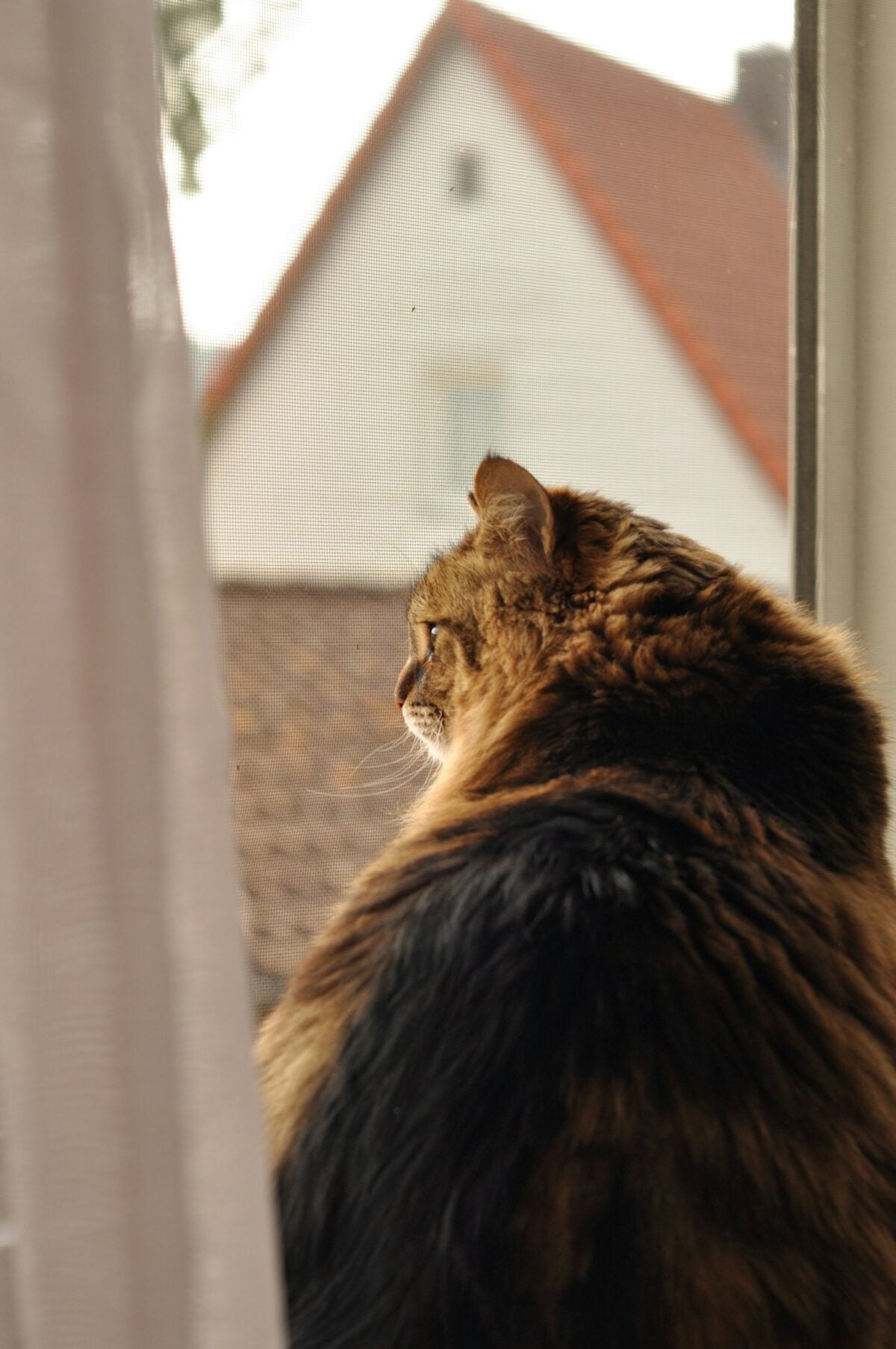
A relaxed cat sitting on a comfortable perch and quietly tracking outdoor activity is usually enjoying herself.
The boredom clue is not simply “my cat watches the window a lot.” It’s whether the window seems to be one of the only things in the house that reliably interests her.
If your cat comes alive when birds appear but shows very little interest in the rest of her indoor environment, use that information. She may be telling you that movement, observation, novelty, and elevated spaces are particularly rewarding.
Watch Whether the Window Is Relaxing or Stressful
Pay attention to body language because window watching can also create stress. A cat quietly following a chickadee with her eyes is having a very different experience from a cat growling, tail-thrashing, spraying, or attacking a housemate after seeing an unfamiliar cat outside.
Sometimes the neighborhood wildlife channel is relaxing.
Sometimes it’s a twenty-four-hour territorial drama.
If the view repeatedly triggers agitation, partially blocking it or changing access may help.
And no, your cat sitting at the window does not automatically mean she is desperate to become an outdoor cat. She may simply be doing what cats have perfected over thousands of years: sitting somewhere comfortable and monitoring absolutely everybody else’s business.
8. Getting Into Cabinets, Trash, Closets, and Everywhere You Said No
Some cats hear a cabinet door click shut and interpret it as a personal challenge.
You open the cupboard to get a plate. Before your hand reaches the shelf, there’s already a cat behind the mixing bowls looking like she has lived there for years.

Cabinets and closets offer novelty: unfamiliar smells, enclosed spaces, shifting objects, and the possibility that something interesting is hiding inside.
A cat with plenty to do may still investigate forbidden areas because curiosity is part of being a cat. But an understimulated cat has even more reason to turn household storage into recreational real estate.
My cat Zaphod has his own way of letting me know the enrichment program is falling below expectations. He’s a large male cat, so subtlety was apparently never on the table.
When he needs something more interesting to do, he marches over to my wardrobe and starts boxing at the closet doors with his front paws. Thump. Thump-thump. Thump. He’s not trying to get inside so much as making his own entertainment and making absolutely certain I hear about it. At this point, the wardrobe has basically become his suggestion box.
When the boxing starts, I know it’s probably time to get out the wand toy, set up a food puzzle, or otherwise give Zaphod a more satisfying problem to solve.
Secure the Dangerous Stuff First
Start with safety rather than trying to teach a determined explorer that cabinets are morally wrong. Secure cleaners, medications, dental floss, string, food wrappers, bones, sharp objects, toxic foods, and anything that could be swallowed or cause injury.
A pet-safe cabinet latch is not an admission that the cat won. It’s an acknowledgment that you understand your opponent.
Then create legal versions of what your cat likes about the forbidden place.
Build a Legal Version of the Crime Scene
- Does she adore squeezing into enclosed spaces? Offer boxes, tunnels, covered beds, or paper bags with the handles removed.
- Does she enjoy rummaging around? Hide a few pieces of kibble in safe locations or use a simple food puzzle.
- Does she like opening things? Try supervised puzzles with lids, sliding pieces, or compartments that reward persistence.
The best enrichment often copies the motivation behind the behavior instead of simply trying to stop the behavior.
Your miniature burglar is still allowed to conduct investigations. She just doesn’t need unsupervised access to the trash can.
9. Suddenly Shredding, Chewing, or Destroying Things
Some cats can turn a roll of toilet paper into an art installation before you’ve finished brushing your teeth.
Paper gets shredded. Blinds get climbed. Rugs get picked apart. Houseplants receive aggressive landscaping. The cardboard box that was supposed to be a cute bed becomes several hundred pieces of cardboard confetti.
For young cats and energetic adults, destruction can absolutely be connected to pent-up energy and a predictable environment.

But pay attention when the behavior is new.
Instead of looking only at the destroyed object, look for patterns around the behavior. Does it happen after you’ve been out all day? Shortly before dinner? After the household gets quiet? Did your schedule recently change? Is a new pet occupying some of your cat’s usual spaces?
The pattern may tell you more than the damage.
Match the Outlet to the Destruction
Then consider what the cat actually seems to enjoy doing.
Not every destructive object needs an expensive replacement activity. Sometimes the perfect enrichment tool is a cardboard box you were about to recycle.
Chewing Is Different From Shredding
Chewing and swallowing non-food items deserve more caution. If your cat actually eats fabric, plastic, litter, string, ribbon, plants, or other inappropriate materials, call your veterinarian. There can be both behavioral and medical contributors.
String, thread, ribbon, and yarn are especially dangerous when swallowed because they can cause serious gastrointestinal injury.
Your cat may believe she has captured the world’s longest noodle.
Her intestines may have a substantially different opinion.
10. Sleeping Through the Day Because Nothing Interesting Happens
Cats sleep a lot.
That statement probably isn’t news to anyone who has ever watched a cat spend fourteen hours recovering from the exhausting experience of walking from one sunny patch to another.
Sleep by itself is not a good test for boredom.
What matters more is what happens when something genuinely interesting appears.
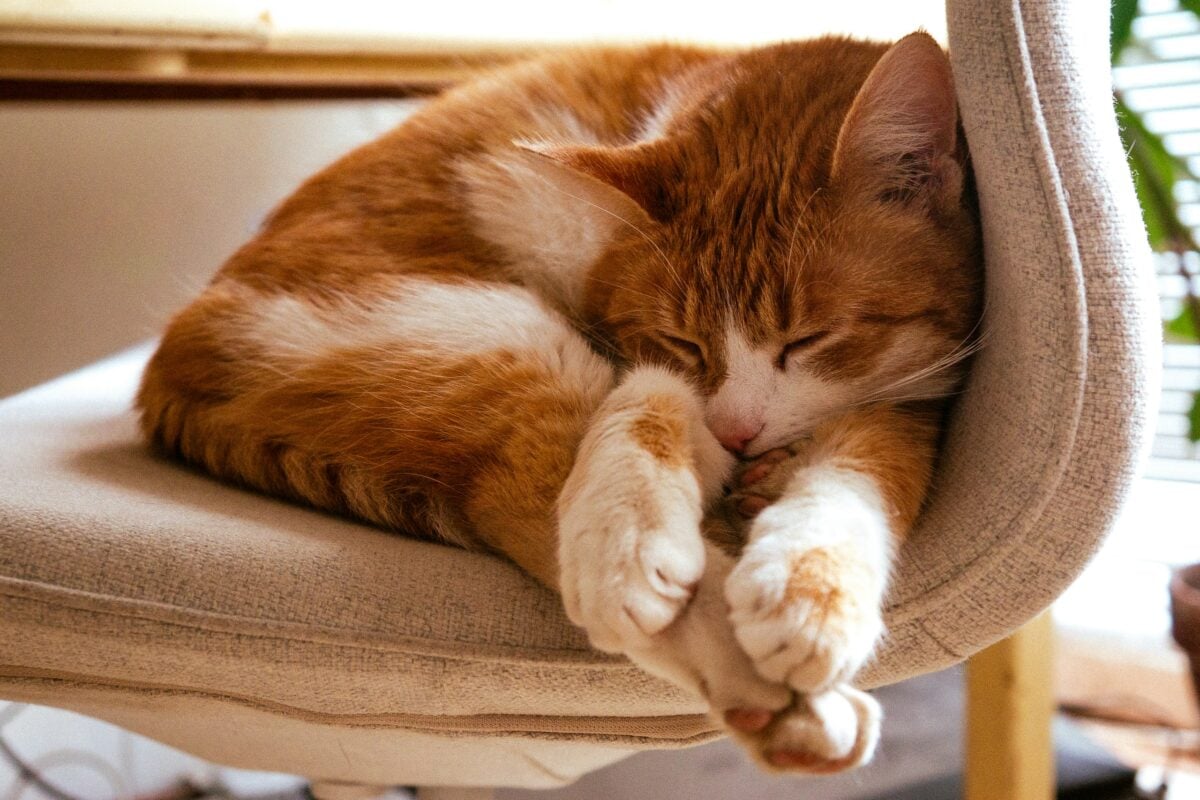
Bring out your cat’s favorite wand toy. Put down a food puzzle. Open a cardboard box. Move a tunnel. Toss a spring across the floor.
Does your apparently comatose housecat suddenly become a tiny predator with enormous pupils and very important business to conduct?
A healthy cat who readily engages when given opportunities but sleeps through long stretches of an otherwise uneventful day may simply need more interesting options during her awake periods.
Reduced interest is different.
Know the Difference Between Sleepy and Less Interested
If your cat once came flying into the room when you opened the toy drawer but now stays curled up, that’s worth paying attention to. Pain, illness, obesity, mobility problems, and age-related changes can all reduce activity.
Watch for other clues such as appetite changes, weight changes, difficulty jumping, hiding, grooming changes, litter-box changes, or reluctance to do things your cat previously enjoyed.
For healthy cats, enrichment isn’t about keeping them busy every waking minute.
11. Interrupting Your Work or Following You Everywhere
Cat people who work from home know exactly how this goes.
You sit down with coffee and open your laptop. The cat appears.
She walks across the keyboard, sits on the document you’re reading, blocks the monitor, knocks the pen onto the floor, and positions her rear end directly in front of the camera during your most important meeting of the week.
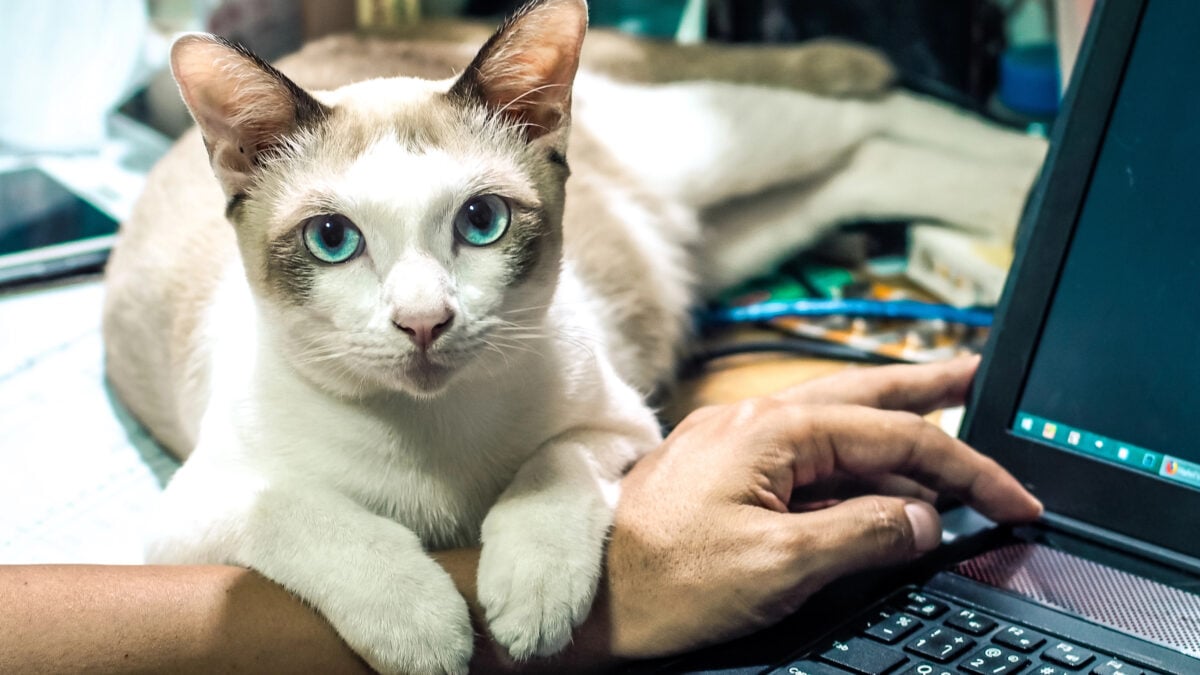
You gently move her.
Four minutes later, she returns because apparently your performance review has not improved.
Following people isn’t automatically a sign of boredom. Plenty of cats are social, curious, attached to their humans, or simply obsessed with knowing what everyone is doing at all times.
Some cats don’t want to do anything with you. They merely want full access to the situation.
Possibly for quality control. Possibly for world domination. We can’t rule anything out.
The boredom clue is stronger when your cat repeatedly demands interaction during long quiet periods and has few appealing alternatives. You may simply be the most interesting object in the room.
Play before predictable interruptions, then give her a good place beside you from which to supervise.
The goal is balance: predictable attention when you’re available and worthwhile choices when you’re not.
And if your cat seems specifically determined to sit on your laptop, book, or whatever object currently has your attention, there are a few very cat-like reasons for that too.
Boredom vs. Stress, Anxiety, and Health Problems
This is the most important distinction in the whole conversation because cat behavior rarely comes with a convenient label attached.
A cat who starts meowing more could be bored. She could also be stressed, hungry, uncomfortable, or ill.
A cat who overgrooms might be dealing with anxiety. She might also have fleas, allergies, skin disease, or pain.
A cat who suddenly urinates outside the litter box isn’t necessarily “acting out.” Urinary disease, pain, litter-box preferences, social conflict, location problems, and environmental stress all need to be considered.
Behavior tells you something is happening. It does not automatically tell you why.
When Boredom Is the Most Likely Explanation
Boredom tends to make the most sense when a healthy cat has limited opportunities to play, climb, scratch, hunt through play, explore, manipulate objects, or interact—and starts inventing substitutes.
When Stress May Be Driving the Behavior
Stress often appears around environmental or social changes: moving, construction, schedule changes, a new baby, a new animal, an outdoor cat appearing at the window, competition between household cats, or losing access to a favorite resource.
When to Call Your Veterinarian
Medical problems can be harder to spot because cats are famously unhelpful about announcing that they hurt.
Sudden changes deserve particular attention. Contact your veterinarian if unusual behavior appears alongside appetite or weight changes, vomiting, diarrhea, increased thirst, litter-box problems, abnormal urination, reduced mobility, excessive vocalization, significant overgrooming, bald patches, hiding, lethargy, aggression, or obvious discomfort.
Difficulty urinating—especially repeated straining with little or no urine—can be an emergency and needs prompt veterinary care.
Keep Notes Like a Cat Detective
It can help to become a mildly obsessive cat detective for a few days. Write down when the behavior happens, what occurred beforehand, what your cat did afterward, and whether anything recently changed in the household.
Videos can also be useful when they’re safe to take.
You don’t need to diagnose your cat from the kitchen table. You just need to notice patterns and give your veterinarian or behavior professional useful information.
How to Keep a Bored Cat Entertained
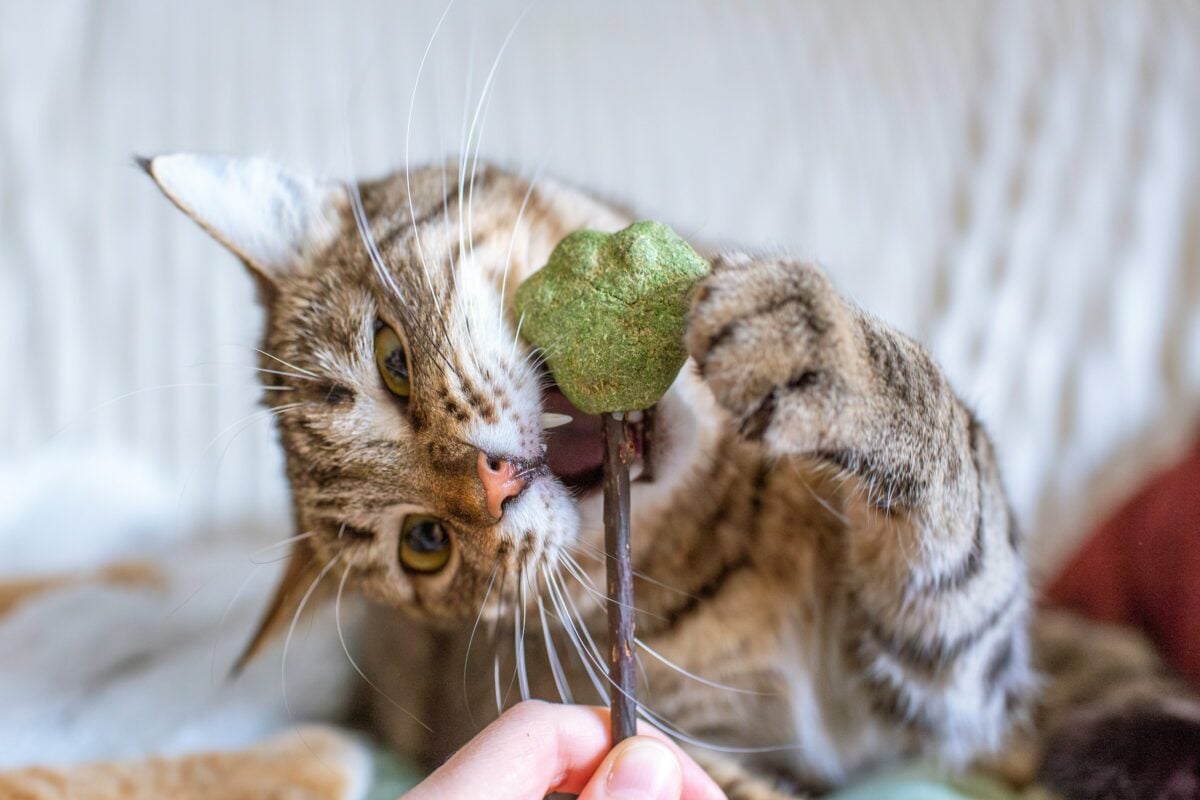
Here’s the reassuring part: good enrichment does not require turning your living room into an expensive feline theme park. It simply means giving your cat safe ways to do the things cats naturally find rewarding—climbing, stalking, scratching, sniffing, searching, hiding, watching, and occasionally sitting on top of a bookshelf like a tiny gargoyle.
In fact, feline veterinary guidelines emphasize that meeting a cat’s environmental needs is an important part of supporting her health and welfare.
Match Enrichment to the Cat You Actually Have
Start with the cat you actually have, not the imaginary universal cat who loves every product in the pet store. Climbers may care more about vertical space than floor toys. Dedicated scratchers need satisfying surfaces in useful locations. Hunters often live for interactive play, while food-obsessed cats may consider a puzzle feeder the greatest invention in human history.
The best activities are the ones that match what your particular cat already enjoys.
- Play when your cat is naturally active. If your cat gets restless at predictable times, schedule a short play session just beforehand. Use wand toys like prey—dart, pause, hide, and let your cat catch them.
- Rotate toys. Keep a few toys available and store the rest, then swap them every week or two. Familiar toys often become interesting again after a short disappearance.
- Make meals more interesting. For food-motivated cats, part of a meal can become enrichment. Puzzle feeders, treat balls, lick mats, or simple search games give them something to work out instead of receiving every bite from a bowl.
- Add vertical space. Cat trees, shelves, and secure window perches give climbers more territory to explore and can be especially helpful in multi-cat homes.
- Put scratchers where your cat actually wants them. Place scratching surfaces near favorite furniture or resting spots, and match your cat’s preference for vertical, horizontal, cardboard, sisal, or other textures.
- Make window watching comfortable. A secure perch overlooking birds, squirrels, and neighborhood activity can provide excellent stimulation. If your cat becomes agitated by animals outside, though, the view may be creating stress rather than entertainment.
- Offer safe things to investigate. A cardboard box, handle-free paper bag, tunnel, or crumpled packing paper can provide plenty of entertainment.
- Match the enrichment to the behavior. A curtain climber may need better vertical space. An ankle ambusher may need more chase play. A cabinet explorer may enjoy boxes, tunnels, or food puzzles. Ask, “What part of this behavior is fun for my cat?” and provide a safer version.
- Change small things before buying more things. Move a tunnel, relocate a perch, bring back a stored toy, or put an old favorite inside a box. Cats often respond to novelty more than price—which is convenient when the paper bag is already outperforming the expensive cat bed.
Your Cat May Need an Outlet, Not a Scolding
When your cat knocks a glass off the table, ambushes your feet, opens a cabinet, wakes you at 3 a.m., or begins systematically dismantling the sofa, it’s understandable to think, Why are you doing this to me? Cat people have all had that moment.
Behavior gets easier to understand when you stop treating it like a personal attack and look at the payoff instead. Your foot moves like prey. The couch feels fantastic under the claws. The cupboard smells interesting, the pen rolls dramatically, and pushing it off the desk has the added bonus of making you leap out of your chair and deliver a short speech. From your cat’s perspective, that’s a pretty rewarding afternoon.
That doesn’t mean every annoying behavior can be blamed on boredom. Stress, anxiety, conflict, pain, illness, and age-related changes can produce many of the same signs, so sudden or extreme behavior changes deserve attention.
Start With the Payoff
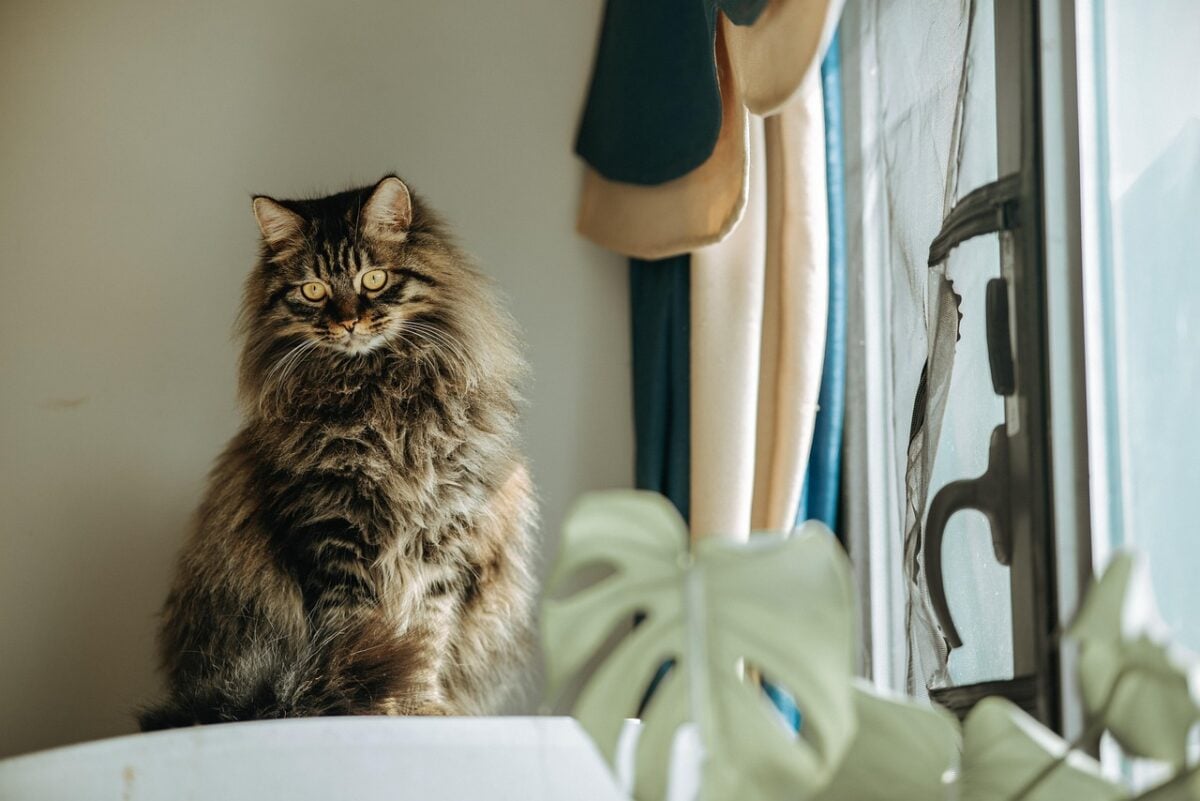
For a healthy cat who simply needs more to do, start with whatever behavior is driving you nuts and ask what she’s getting from it. Then offer a better version of the same experience. Put the scratching post beside the sofa, play with the ankle hunter before the usual ambush hour, give the climber somewhere legal to climb, or let the food-obsessed cat work for part of dinner. Sometimes moving a cardboard box into the living room is enough to create the hottest new property in the house.
You do not need a perfect enrichment schedule or a home that looks like a cat café designed by an architect with an unlimited budget. What matters more is knowing your particular cat well enough to notice what grabs her attention. Which toy brings out the butt wiggle? What scratching surface gets used immediately? Which box becomes headquarters, and which expensive cat bed is treated like an insult?
Cats are wonderfully specific creatures, and those preferences are useful information. Pay attention to them and your cat will usually show you what makes her world more interesting.
Sometimes the difference between a “naughty” cat and a satisfied one really is ten focused minutes with a wand toy, a scratching post moved three feet to the left, and a good window seat overlooking Gary the squirrel.
FAQs About Bored Cats
Still trying to figure out whether your cat is bored, quirky, plotting something, or simply being extremely cat? You’re in good company. Here are answers to some of the questions cat people ask most often about boredom and enrichment.
And if your cat has a behavior that has you completely stumped, leave your question in the comments below. Tell us what your cat is doing (the weirder the details, the better), and let’s see if we can figure out what your tiny household eccentric is trying to tell you.
How can I tell if my cat is bored?
Look for patterns rather than relying on a single behavior. Possible signs include persistent attention-seeking, ankle ambushes, increased destructive scratching, repeatedly investigating forbidden areas, nighttime chaos, or constantly inventing games with household objects.
Boredom becomes more plausible when your healthy cat has few opportunities to play, climb, scratch, hunt through play, explore, or solve simple problems—and the behavior improves when those opportunities increase.
Sudden behavior changes should be treated differently because illness, pain, or stress may be involved.
Do indoor cats get bored more easily?
Indoor cats can live extremely rich, satisfying lives, but their environment depends heavily on what we provide.
Outside, an animal encounters constantly changing smells, movements, sounds, surfaces, hiding places, and other stimuli. Indoors, the same rooms can become very predictable.
Climbing areas, scratching surfaces, interactive play, food puzzles, secure window views, hiding places, toy rotation, and social interaction can add variety without exposing a cat to outdoor hazards.
Indoor doesn’t have to mean boring.
It just shouldn’t mean bowl, sofa, nap, repeat forever.
How much should I play with my cat every day?
There isn’t one perfect number that suits every cat.
Age, health, temperament, energy level, and play style all matter. A young cat may happily participate in several energetic sessions, while a senior may prefer gentler games for shorter periods.
Watch engagement rather than obsessing over a timer. Several focused sessions often work better than one marathon play period.
Five attentive minutes can be surprisingly valuable when the toy is actually behaving like prey, and you’re paying attention to how your cat wants to hunt.
Will buying more toys fix cat boredom?
Not necessarily.
Many cat homes contain an impressive collection of toys being completely ignored.
Variety, rotation, placement, and matching the activity to your individual cat matter more than sheer quantity. A climber may get much more from a tall cat tree than another mouse. A food-motivated cat may prefer a puzzle feeder. A hunter may want an interactive wand game.
And yes, the cardboard box may still beat all of them.
Try not to take it personally.
When should I call a veterinarian instead of assuming my cat is bored?
Call your veterinarian when behavior changes suddenly, becomes extreme, causes injury, or appears alongside physical changes.
Overgrooming, bald patches, appetite or weight changes, increased thirst, vomiting, unusual urination, litter-box problems, reduced mobility, lethargy, persistent hiding, signs of pain, or sudden aggression deserve medical attention.
Difficulty passing urine can be an emergency.
Boredom is common and usually manageable, but it should never become the convenient explanation that causes a health problem to be missed.
The best approach is part observation, part experimentation, and part accepting that you now spend an unreasonable amount of time thinking about whether another living creature finds the placement of a cardboard box emotionally fulfilling.
Which, if we’re being fair, is exactly the sort of thing cat people signed up for.
Keep Your Cat’s Brain Busy
If you’ve discovered that your cat could use a little more action in her day, keep going down the feline-behavior rabbit hole. You might also enjoy reading about what your cat’s energy level really means, why cats get the zoomies, why indoor cats become obsessed with going outside, and why cats still feel compelled to hunt and bring you “gifts”.
Because once you start paying attention to what your cat is actually trying to do, a surprising amount of the chaos starts making sense.
Share Your Cat’s Best Boredom Move
Does your cat have a ridiculous way of saying, I need something to do? Tell us about it in the comments, and share what finally kept your little chaos gremlin entertained.