When you purchase through links on our site, we may earn a commission at no extra cost to you. Learn more.
Few things make your stomach drop like finding a bald patch on your cat or watching them bite and tug at their own coat. If your cat is licking, chewing, or pulling at their fur enough to thin the coat or expose their skin, this is not standard grooming. It usually means something is making them itch, hurt, or feel distressed, and an underlying health issue may be responsible.
Table of Contents
The location of the missing fur and any other changes in your cat’s behavior can offer important clues. Let’s look at what may be causing your cat to lick themselves bald, when to call your vet, and how to help them feel comfortable again.
What Does It Mean When A Cat Grooms Themselves Bald?
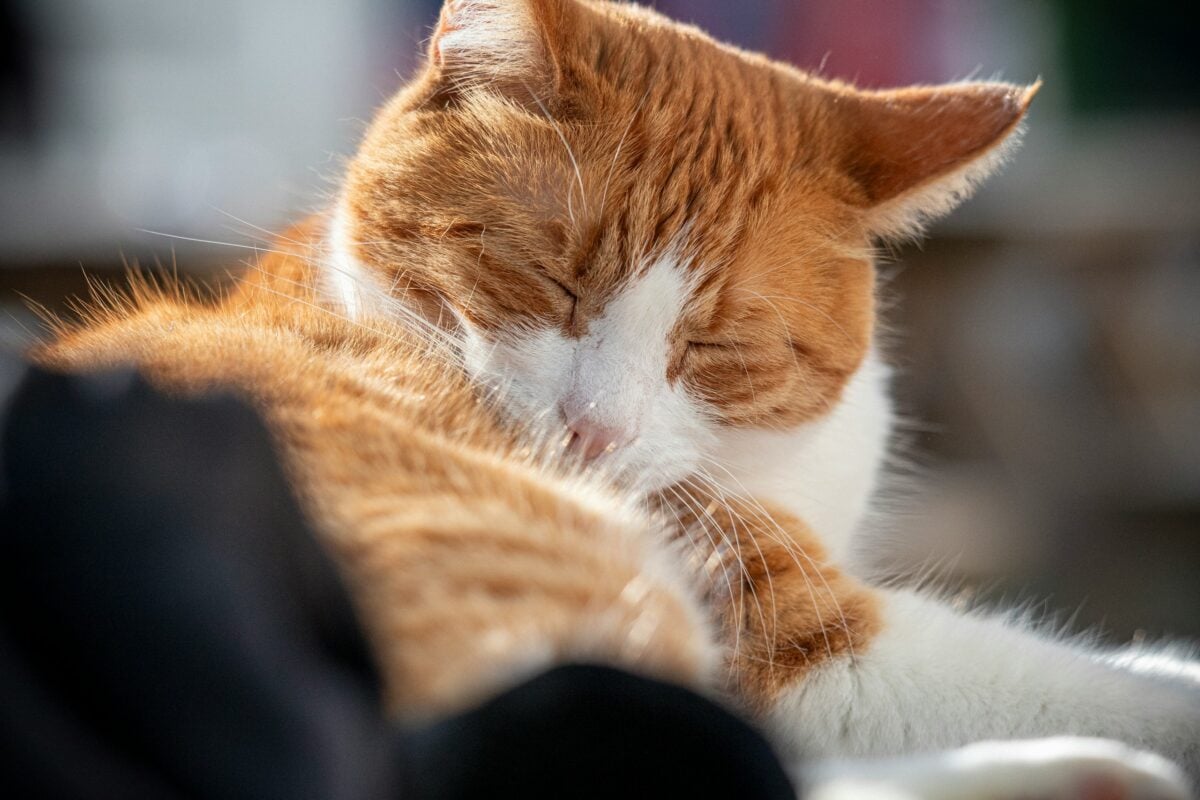
Have you noticed your cat repeatedly licking, biting, or chewing the same area? When they focus on one spot often enough, the hairs can break or come loose, leaving behind thinning fur, short stubble, or a bald patch.
This is known as self-induced hair loss or self-induced alopecia. Fleas, allergies, skin infections, and pain are among the most common causes.
Want our human-written content to rank above AI-generated garbage? Help us out by clicking this button!
Stress can also trigger compulsive grooming, but physical causes should be ruled out before assuming the behavior is emotional.
Where Is The Bald Patch? The Location Can Be A Clue
The location of the hair loss may help narrow down what is bothering your cat, although it cannot confirm the cause on its own.
Watch for other changes, such as scratching, head shaking, limping, hiding, reduced appetite, or unusual litter box behavior. These details can help your veterinarian determine where to start.
| Location | Possible Clues |
|---|---|
| Back, rump, or tail base | Fleas or flea allergy |
| Belly or groin | Allergies, stress, abdominal pain, or urinary discomfort |
| Legs, paws, or joints | Allergies, injury, arthritis, or localized pain |
| Head, neck, or ears | Ear mites, other parasites, allergies, or infection |
| Matching areas on both sides | Often self-induced through repeated licking, but the trigger may still be physical |
When Should You Call The Vet?
Contact your veterinarian if the grooming continues, creates a bald patch, or damages the skin. You should also schedule an examination if the hair loss appears suddenly, spreads, or occurs alongside changes in appetite, energy, mobility, or litter box use.
Seek prompt care for raw, bleeding, swollen, crusted, or oozing skin. Straining to urinate, repeatedly entering the litter box without producing urine, or crying in the litter box may indicate a painful or even life-threatening urinary condition and require emergency veterinary care.
Cats often hide pain and illness, so pay attention to these additional warning signs your cat is crying for help.
7 Reasons Cats Pull Out Their Fur
Cats can groom themselves bald in response to itchy skin, pain, emotional distress, or another medical problem. Because several conditions can cause nearly identical bald patches, a veterinary examination is often needed to determine the cause.
1. Fleas & Other Parasites
Fleas are one of the most common reasons cats bite, chew, or lick their fur. Cats with flea allergy dermatitis can react intensely to flea saliva, so a single bite may cause significant itching even when you never find a live flea.
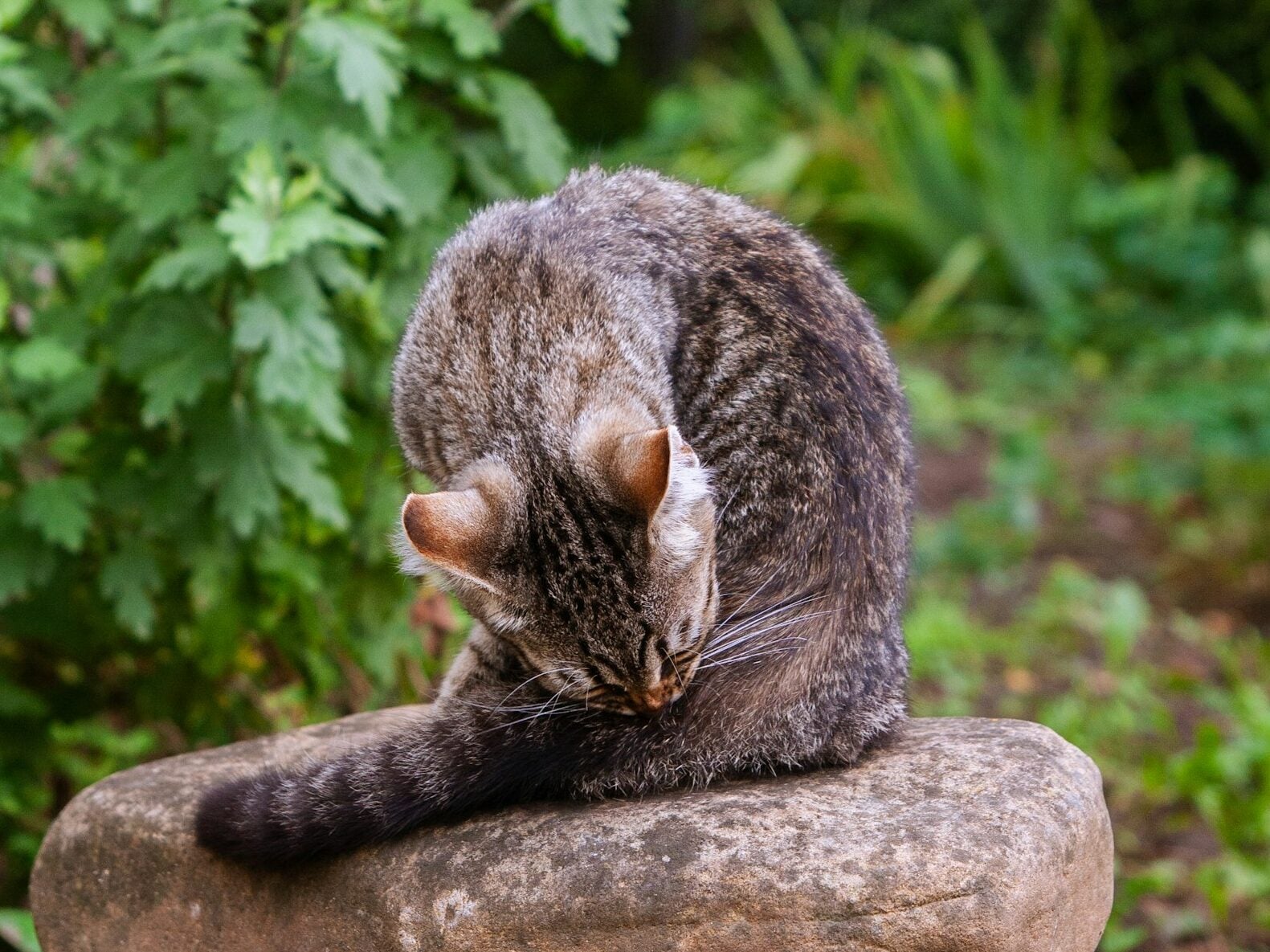
Hair loss caused by fleas often appears around the lower back, rump, tail base, belly, or thighs. You may also notice frequent scratching, small crusty bumps, irritated skin, or black specks of flea dirt in the coat.
Indoor cats can get fleas, too. Fleas may enter on another pet, a person’s clothing, or items brought into the home.
Mites and lice can also cause itching, inflammation, crusting, and hair loss. Ear mites commonly trigger scratching and grooming around the ears, head, and neck, while other mites may affect different areas of the body.
A Vet’s Perspective
When I see cats who are pulling their out, the most common reasons are stress or fleas. It’s usually quite straightforward to spot fleas or the signs of flea-allergic dermatitis.
If I can see live fleas or flea dirt, I prescribe a flea treatment and give advice about treating the home and other pets. If a cat shows signs of a flea allergy, I’ll also give an anti-inflammatory injection to reduce the itch and prevent self-trauma.
-Dr. Hannah Godfrey, BVetMed MRCVS
2. Food Or Environmental Allergies
Cats can develop allergies to ingredients in their food or substances in their environment. These reactions can cause intense itching even when the skin initially looks normal.
Environmental triggers may include pollen, mold, dust mites, or other allergens. Depending on the trigger, symptoms may occur seasonally or continue year-round.
A food allergy can cause itching around the head and neck or elsewhere on the body. Some cats also develop vomiting, diarrhea, or other digestive symptoms, but many show only skin-related signs.
Food allergies cannot be confirmed simply by switching brands or using a consumer hair, saliva, or blood test. A veterinarian-supervised elimination diet trial is generally needed to investigate whether food is responsible.
Important: During an elimination diet trial, even small amounts of another food, treat, flavored medication, or supplement can interfere with the results. Work with your veterinarian rather than attempting an elimination diet on your own.
3. Skin Infections
Bacterial, fungal, and yeast infections can make a cat’s skin itchy or uncomfortable. They may also develop after repeated licking, biting, or scratching damages the skin’s protective barrier.
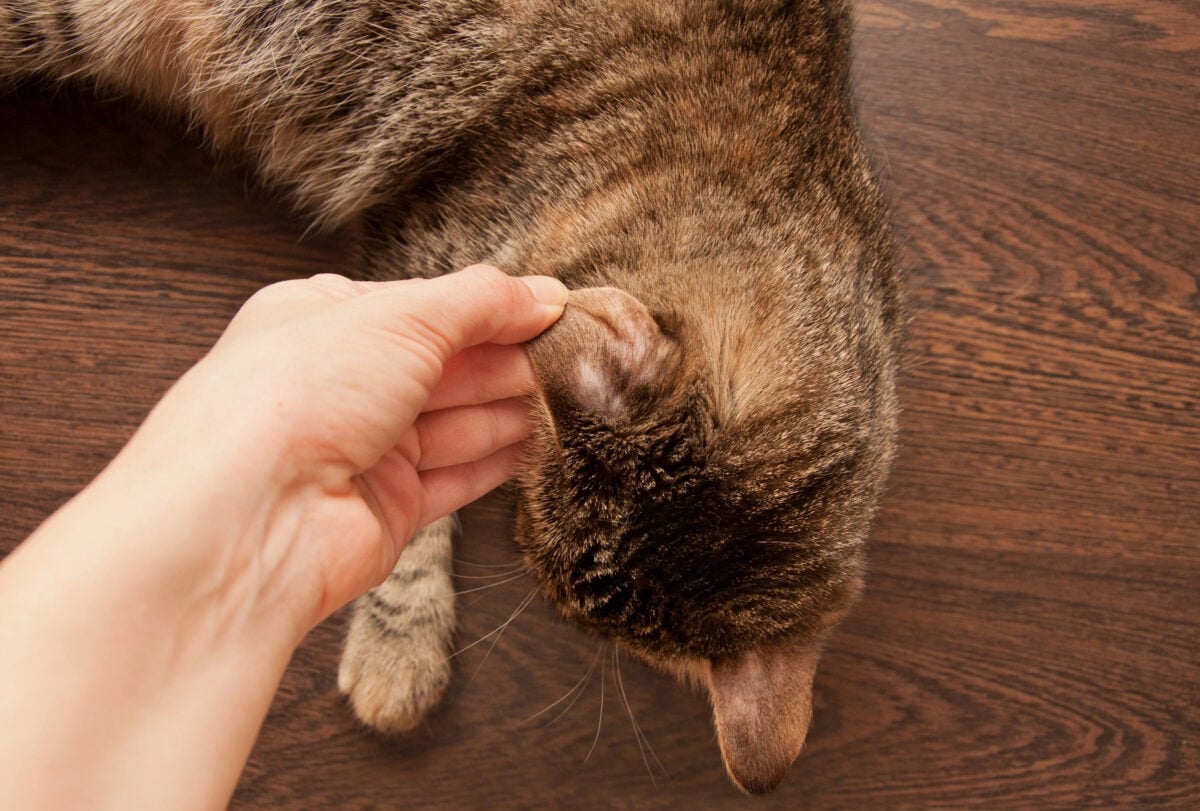
Possible signs include redness, scaling, crusts, bumps, odor, discharge, or sores that do not heal. However, the skin may look relatively normal beneath the thinning coat, especially early in the condition.
Ringworm is a fungal infection that can cause patchy hair loss, broken hairs, scaling, or crusting. It is contagious to other animals and people, although not every infected cat develops an obvious circular lesion.
A veterinarian may examine hairs, collect skin samples, or perform fungal testing to identify the infection. Treatment depends on the organism involved, so do not give antibiotics or antifungal medication without an appropriate diagnosis.
4. Pain Or Internal Discomfort
Cats sometimes lick or chew an area because it hurts rather than itches. Repetitive grooming may be an attempt to soothe discomfort, and the location can offer an important clue.
A cat with arthritis or an injury may focus on one leg, joint, or area of the back. They may also become reluctant to jump, move stiffly, hide more often, or react when you touch the area.
Lower-belly or genital grooming can accompany bladder or urinary tract pain. Watch for frequent litter box visits, straining, crying, blood in the urine, or producing little to no urine.
Abdominal discomfort may also lead some cats to focus on the belly. Because the painful area is not always visible from the outside, localized grooming deserves attention even when the skin looks healthy.
The Grooming Location Matters: Repeated attention to one joint, limb, or body region may point to pain beneath the skin. Tell your veterinarian exactly where your cat grooms and whether their movement, appetite, or litter box habits have changed.
5. Stress, Anxiety & Compulsive Grooming
Grooming releases feel-good chemicals and can help cats calm themselves during stressful situations. When that coping behavior becomes repetitive, a cat may continue licking until the fur breaks or disappears.
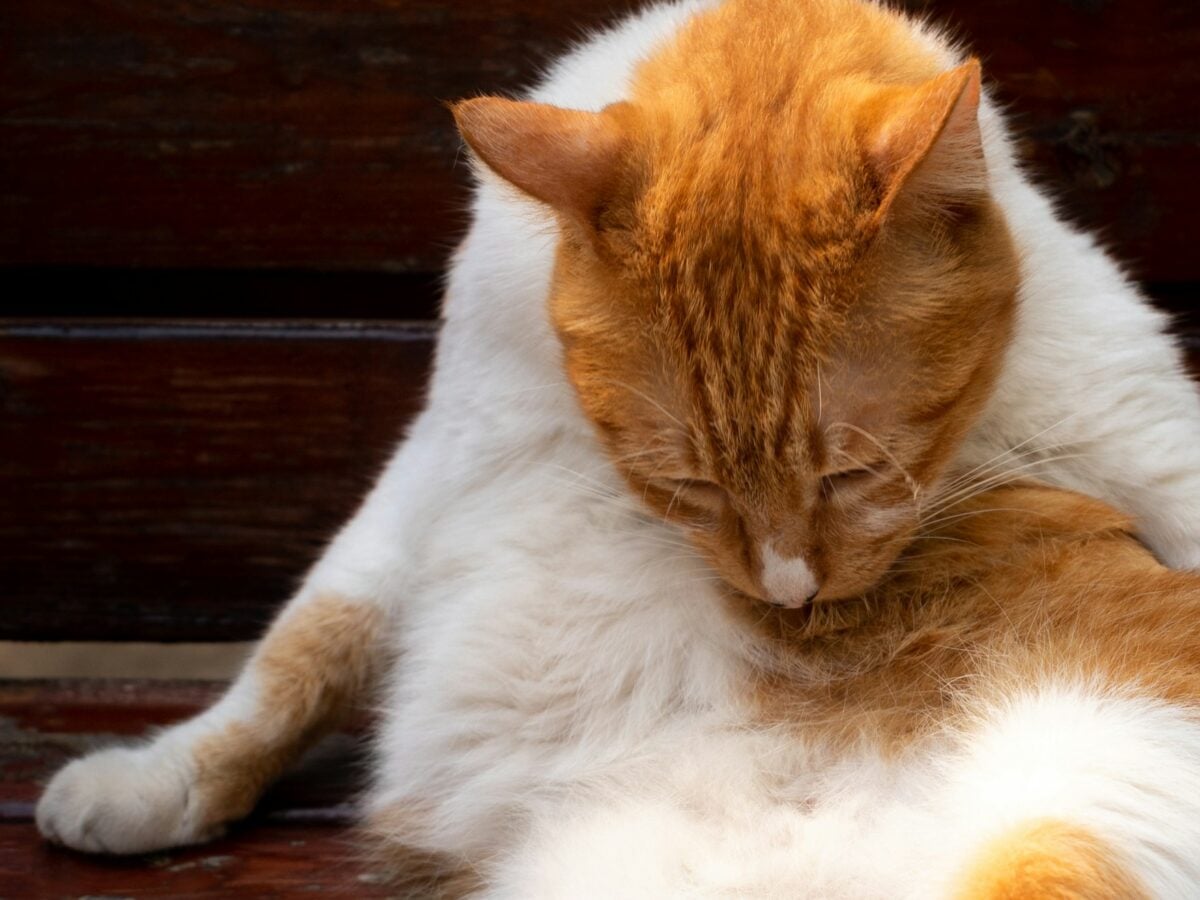
Potential triggers include moving, construction, visitors, a new baby, schedule changes, tension between pets, or unfamiliar cats outside. Limited hiding places, insufficient enrichment, and competition over food, water, litter boxes, or resting areas may also contribute.
Stress-related hair loss often affects areas the cat can easily reach, including the belly, inner thighs, sides, and front legs. The skin may look normal beneath short or missing fur unless repeated licking has irritated it.
Could Your Cat Be Stressed? Changes in grooming, hiding, appetite, sleep, or social behavior may be easy to miss. Learn the subtle signs your cat is stressed.
6. Feline Hyperesthesia Syndrome
Feline hyperesthesia syndrome causes extreme sensitivity, most often along the back and near the base of the tail. During an episode, a cat may suddenly bite or lick the area so intensely that it damages the skin or removes fur.
Other possible signs include rippling skin, dilated pupils, tail chasing, sudden running, vocalizing, or reacting strongly when the back is touched. Episodes may appear dramatic and then stop as suddenly as they began.
Veterinarians do not diagnose feline hyperesthesia based on one symptom alone. Parasites, allergies, fungal infections, spinal pain, and neurological problems can cause similar behavior and must be investigated first.
Watch For A Pattern: Record an episode if you can do so safely. A video may help your veterinarian see skin rippling, sudden biting, tail chasing, or other behavior your cat does not display during the examination.
7. Other Medical Conditions
Less commonly, neurological disorders, hormonal imbalances, skin tumors, or other illnesses may contribute to hair loss, abnormal skin sensations, or repetitive grooming. These possibilities become more important when common causes have been excluded, or the cat has additional symptoms.
Nutritional deficiencies can also affect the skin and coat. They are more likely in cats eating an incomplete or poorly balanced diet, but they may also develop when illness interferes with nutrient absorption or a cat does not eat enough.
Hair can also fall out because of a disease affecting the hair follicles rather than because the cat removed it. Your veterinarian can examine the remaining hairs and skin to help distinguish self-induced hair loss from shedding or another form of alopecia.
Because hair loss is a symptom rather than a diagnosis, treatment must target the underlying problem.
What To Do If Your Cat Is Grooming Themselves Bald
Once you notice thinning fur or a bald patch, schedule a veterinary examination rather than trying to diagnose the cause at home. Parasites, allergies, infections, pain, and stress can look remarkably similar from the outside.
In the meantime, watch your cat closely and gather information that may help your vet. The goal isn’t to stop every grooming session, but to identify what is making your cat focus on the area.
What To Note Before Your Vet Visit
Take clear photos of the affected area and, if possible, record a video of the grooming behavior. Cats may not groom or show discomfort during the appointment, so these records can provide useful clues.
Note when the behavior began, where your cat grooms, and whether the hair loss has spread. Also record any changes involving:
- Appetite, thirst, or weight
- Energy, hiding, or sleep
- Walking, jumping, or sensitivity to touch
- Urination or litter box habits
- Food, treats, or supplements
- Litter, cleaning products, or household fragrances
- Flea prevention for every pet in the home
- New pets, visitors, construction, travel, or schedule changes
- Itching, hair loss, or skin problems in other pets or people
Before Your Appointment: Do not clean the affected skin or apply a topical product unless your veterinarian tells you to. Residue from creams, sprays, or antiseptics may irritate the area or make certain skin findings more difficult to evaluate.
How Your Vet May Find The Cause
Your veterinarian will examine the hair, exposed skin, and the rest of your cat’s body. They may also ask about parasite prevention, diet, grooming patterns, household changes, and any additional symptoms.
Depending on what they find, testing may include:
- Flea combing or a parasite-control trial
- Skin scrapings or hair examination
- Skin cytology to look for bacteria or yeast
- Fungal testing for ringworm
- Bloodwork or urinalysis
- Imaging when pain or internal disease is suspected
- A veterinarian-supervised elimination diet trial
- A skin biopsy in less common or difficult cases
Finding the cause may take more than one visit or test. If initial treatment does not help, your veterinarian may recommend a veterinary dermatologist, neurologist, or qualified feline behaviorist.
What You Can Safely Do At Home
While you wait for your appointment, focus on protecting the skin, documenting the behavior, and keeping your cat comfortable.
- Photograph and monitor the affected area. Take a clear photo every few days so you can tell whether the hair loss, redness, or skin damage is spreading.
- Keep the area clean and dry. Avoid scrubbing, bathing, or repeatedly touching it. Contact your veterinarian if the skin becomes raw, swollen, bloody, crusted, or oozing.
- Maintain a predictable routine. Keep feeding, playtime, and household activity as consistent as possible, especially if stress may be contributing.
- Provide safe places and enrichment. Offer hiding spots, elevated perches, scratching surfaces, gentle play, and food puzzles. In multicat homes, provide separate food, water, litter boxes, and resting areas to reduce competition.
- Continue your cat’s regular diet. Do not change foods or add supplements unless your veterinarian recommends it.
- Ask before covering the area. A recovery suit or protective collar may sometimes prevent further injury, but the wrong fit or prolonged use can increase stress or irritate the skin.
What Not To Do
It can be upsetting to watch your cat damage their coat, but quick home remedies may make the problem worse or interfere with diagnosis.
- Do not punish or startle your cat. Scolding, spraying, or physically interrupting the behavior can increase anxiety without addressing the itch or pain.
- Do not apply human skin products. Creams, antiseptics, anti-itch sprays, and essential oils may irritate the skin or be toxic when swallowed during grooming.
- Do not use dog flea medication. Some canine flea products contain permethrin or other ingredients that can cause severe or fatal poisoning in cats.
- Do not give unprescribed medication. Human pain relievers and medications prescribed to another pet can be dangerous to cats.
- Do not begin an elimination diet on your own. Unplanned food changes can make an allergy investigation harder and may not provide complete and balanced nutrition.
- Do not assume the behavior is attention-seeking. Persistent grooming usually reflects itch, pain, discomfort, or distress and deserves investigation.
- Do not cover the area without guidance. Bandages, clothing, and poorly fitted collars can trap moisture, rub the skin, or cause additional stress.
Treatment Depends On The Cause
No single treatment will stop every cat from overgrooming. The right approach depends on whether the underlying trigger is parasites, allergies, infection, pain, stress, or a combination of problems.
Your veterinarian may also prescribe medication to reduce severe itching or inflammation while testing continues. Although this can help protect the skin, lasting improvement depends on identifying and managing the cause.
1. Parasite Treatment
Fleas and other parasites require a cat-safe product recommended by your veterinarian. Every dog and cat in the household may need treatment, even if only one pet appears itchy.
Flea eggs, larvae, and pupae can remain in carpets, bedding, furniture, and floor cracks. Depending on the infestation, treatment may include:
- Washing pet bedding
- Vacuuming carpets, rugs, and furniture regularly
- Treating every pet with an appropriate preventive
- Continuing prevention long enough to break the flea life cycle
- Using additional household treatment when recommended
Never use a flea product intended for dogs on a cat. Some dog treatments contain permethrin, which is highly toxic to cats.
2. Allergy Management
Allergy treatment depends on whether fleas, food, or environmental substances are triggering the reaction. Some cats have more than one type of allergy, which can make the investigation take time.
Treatment may involve:
- Consistent flea prevention
- Medication to control itching and inflammation
- Treatment for secondary skin infections
- A veterinarian-supervised elimination diet trial
- Reducing exposure to known environmental triggers
- Allergen-specific immunotherapy in select cases
During a food trial, your cat must eat only the prescribed diet for the recommended period. Treats, flavored medications, supplements, and another pet’s food can interfere with the results.
3. Treating Skin Infections
Skin infections require treatment matched to the organism involved. Depending on the diagnosis, your veterinarian may prescribe a topical or oral antibacterial or antifungal medication.
Ringworm treatment may include antifungal medication, medicated bathing, and careful cleaning of the home. Because ringworm can spread to other animals and people, follow your veterinarian’s instructions for handling, cleaning, and monitoring other pets.
Do not stop medication just because the skin begins to look better. Your veterinarian may need to repeat testing to confirm that the infection has cleared.
4. Relieving Pain
When a cat grooms because an area hurts, treatment must address the source of the pain. Arthritis, injury, urinary disease, abdominal discomfort, or another condition may require medication, lifestyle changes, or additional testing.
Your veterinarian may recommend steps such as:
- Prescription pain relief
- Weight management when appropriate
- Low-entry litter boxes
- Ramps or steps to favorite resting places
- Changes to food, water, or litter box access
- Treatment for urinary or internal disease
Never give your cat a human pain reliever unless a veterinarian specifically instructs you to do so. Common medications such as acetaminophen and ibuprofen can be fatal to cats.
Tip: If testing reveals urinary crystals, your veterinarian may recommend increasing moisture intake or changing your cat’s diet. Our guide to the best non-prescription cat food for urinary crystals explains several options, but confirm the appropriate food with your vet before making a change.
5. Reducing Stress-Related Grooming
Stress-related overgrooming is treated by making the cat’s environment safer, more predictable, and easier to control. First, however, physical causes of itching and pain should be appropriately investigated.
Helpful changes may include:
- Identify possible triggers. Consider whether the grooming began after a move, schedule change, new pet, visitor, construction project, or other disruption.
- Create safe hiding places. Give your cat quiet areas where they can retreat without being followed or disturbed.
- Separate important resources. In multicat homes, provide multiple litter boxes, food and water stations, scratching surfaces, and resting areas.
- Build a predictable routine. Keep meals, play, and daily interactions as consistent as possible.
- Provide appropriate enrichment. Use interactive play, food puzzles, window perches, climbing areas, and opportunities to scratch.
- Ask about calming support. Your veterinarian may suggest a pheromone diffuser, behavioral consultation, or prescription medication when environmental changes are not enough.
Some cats may benefit from prescription medication when environmental changes are not enough. Veterinarians sometimes prescribe gabapentin to reduce anxiety or manage pain, but it can cause sleepiness and poor coordination, so follow dosing instructions carefully and learn what to do if your cat cannot walk normally after gabapentin.
Do not force attention, play, or physical contact when your cat wants space. Let them choose when and how to interact.
Treatment Is Not One-Size-Fits-All: A cat can have more than one trigger, such as flea allergy combined with a secondary infection or pain worsened by stress. Tell your veterinarian if treatment helps only partially or the grooming returns.
When Will Your Cat’s Fur Grow Back?
You may see short new hairs within several weeks once the underlying itch, pain, or stress is controlled. A full coat can take several months to return, especially in long-haired cats or when the skin has been repeatedly inflamed or damaged.
Regrowth may take longer if your cat continues licking the area, has a persistent infection, or needs ongoing allergy management. Hair may initially look darker, lighter, or slightly different in texture as it grows back.
Contact your veterinarian if the skin improves but the hair does not begin returning, or if a new bald patch develops. Continued hair loss may mean the original trigger is still present or another cause needs to be investigated.
Frequently Asked Questions
Cats can groom themselves bald for many reasons, and the appearance of the affected area does not always reveal the cause. These common questions can help you recognize when further investigation is needed.
Don’t see your question? Respond in the comments, and we’ll get back to you!
Is It Dangerous If My Cat Pulls Out Their Hair?
The hair loss itself is not always an emergency, but it should not be ignored. Repeated licking and biting can damage the skin, cause sores, and allow a secondary infection to develop.
The underlying cause may also require treatment. Contact your veterinarian if the grooming continues, creates a bald patch, or occurs alongside skin damage or other changes in your cat’s health.
What Is Fur Mowing?
Fur mowing is a term used when a cat repeatedly licks or chews the coat until the hairs become short, broken, or missing. The remaining hairs may feel rough or stubbly, as though the area has been closely trimmed.
Cats often mow areas they can easily reach, including the belly, sides, inner thighs, and front legs. Although stress may contribute, parasites, allergies, infection, and pain should be considered first.
Can Indoor Cats Get Fleas?
Yes. Fleas can enter the home on another animal, a person’s clothing, or items brought indoors.
A cat with flea allergy may react strongly to only one or two bites, and they may groom away evidence before you find a live flea. Your veterinarian may recommend a consistent flea-control trial even when no fleas are visible.
Why Is My Cat Pulling Fur Out In Clumps?
Intense biting or chewing may loosen enough hair to leave clumps around the home or in your cat’s mouth. Severe itching from fleas, allergies, parasites, or infection can trigger this behavior.
Hair may also fall out because of inflammation or a disease affecting the skin and hair follicles rather than because your cat deliberately removed it. Schedule an examination if you find clumps of fur, rapidly spreading hair loss, or exposed skin.
Why Is My Cat Pulling Hair From Their Rear End?
Hair pulling around the back, rump, thighs, or base of the tail commonly raises suspicion for fleas or flea allergy. Other possibilities include mites, allergies, skin infection, a wound, pain, or feline hyperesthesia syndrome.
If your cat focuses on the genital area or lower belly, watch for changes in urination. Straining, crying, or repeatedly trying to urinate while producing little to no urine requires emergency veterinary care.
Your Cat Isn’t Doing This For No Reason
Your cat is not grooming themselves bald to be difficult or get attention. The behavior is a sign that something feels itchy, painful, uncomfortable, or emotionally overwhelming.
Cats often communicate distress through small shifts in their routines and body language. Learning the warning signs your cat is crying for help, , the behavior changes you shouldn’t ignore, and the subtle signs your cat is stressed but hiding it can help you recognize a problem sooner.