When you purchase through links on our site, we may earn a commission at no extra cost to you. Learn more.
My cat Zaphod has this ritual: he winds around my legs in tight little spirals, brushing his cheek against me, meowing with a voice that feels too insistent to ignore. Most days, it’s just Zaphod being Zaphod, affectionate, dramatic, impossible not to love.
Table of Contents
But every so often, something in the way he rubs harder, lingers longer, or meows with a sharper edge makes me wonder if there’s more going on behind those wide, unblinking eyes. Is he trying to tell me something? Is he uncomfortable? Anxious? In pain? Or is it simply one of those mysterious feline behaviors we’re meant to interpret like a secret code?
If you’ve watched your own cat meow nonstop and rub on every piece of furniture, and on you, until you start questioning what’s normal and what’s not, you are exactly where I was. The behavior can feel sweet one moment and oddly urgent the next. And it always carries a message.
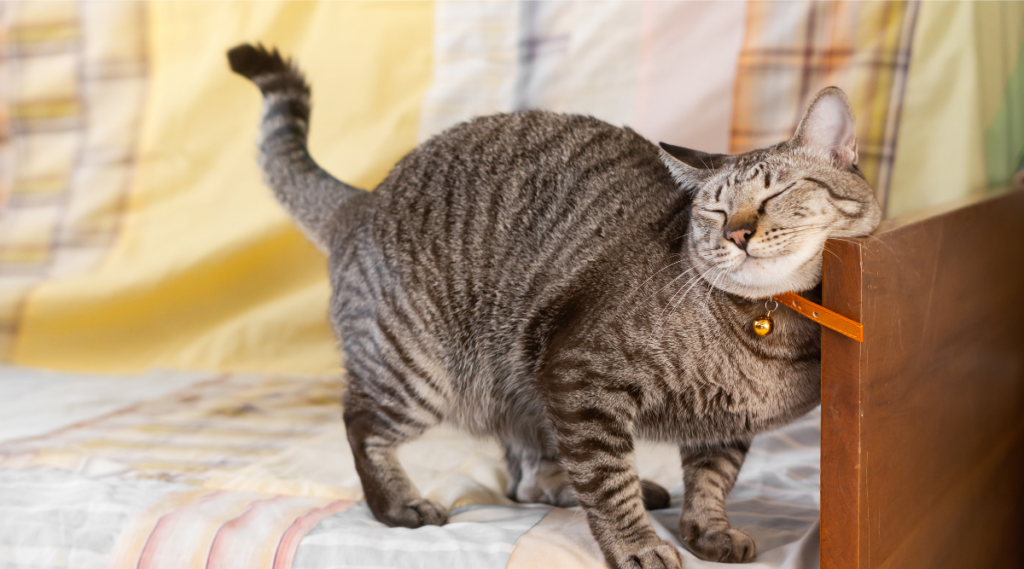
This guide breaks down what that message might be: the common reasons cats meow and rub obsessively, the subtle signs that hint at stress or illness, and how to tell when your cat’s behavior is perfectly harmless… or worth a closer look.
Want our human-written content to rank above AI-generated garbage? Help us out by clicking this button!
A Quick Example of the Behavior
If you have ever wondered whether your cat’s meowing and rubbing looks typical, this video shows a common version of the behavior. Watching it first can help you compare it to what your own cat is doing.
What It Means When Your Cat Will Not Stop Meowing and Rubbing on Everything
When a cat suddenly becomes louder, clingier, or fixated on rubbing against you and every surface in the house, it can feel like you are living with a small, furry alarm system you cannot quite interpret. One moment, the rubbing is familiar and comforting, and the next, it carries an intensity that makes you pause and wonder what changed.
Rubbing and meowing are two of a cat’s most reliable forms of communication. Cats use them to claim space, share their scent, ask for something, express stress, announce discomfort, or signal that something in their body does not feel right.
The challenge is that the behavior can look very similar whether your cat is delighted to see you or quietly distressed. This is why context matters. The timing, intensity, body language, and shift from the normal routine to something that feels unusual all help you understand what your cat might be trying to say.
Quick Checklist: Is This Normal or a Sign Something Is Wrong?
Before diving into every possible cause, the checklist below offers a quick way to get your bearings so you can determine whether your cat’s behavior falls within the spectrum of normal feline communication or warrants closer attention.

Usually Normal If Your Cat:
- Rubs on you when you come home
- Gives gentle cheek or head rubs
- Meows softly or chirps while rubbing
- Rubs on familiar furniture or corners
- Shows relaxed body language, such as slow blinking, tail up, or loose posture
- Performs this behavior at predictable times like mealtime or morning routines
- Stops easily when distracted with toys or affection
These behaviors often signal affection, scent sharing, excitement, or routine attention seeking.
Potential Concerns If Your Cat:
- Suddenly begins rubbing excessively when they never used to
- Meows loudly, urgently, or nonstop
- Seems restless, agitated, or unable to settle
- Recently experienced a change in the home, such as a move, new pet, or schedule shift
- Rubs obsessively on walls, floors, corners, or objects in a frantic pattern
- Paces, yowls, or attempts to escape
- Shows other changes like appetite loss, hiding, overgrooming, or lethargy
These behaviors can point to anxiety, hunger, being in heat, territorial stress, or a need for attention.
Seek Veterinary Guidance If Your Cat:
- Begins intense vocalizing with no clear trigger
- Appears to be in pain with stiff movement, flinching, or a hunched posture
- Stops eating or drinking normally
- Shows vomiting, diarrhea, or trouble using the litter box
- Seems confused, disoriented, or unusually clingy
- Overgrooms a specific area
- Vocalizes at night in a way that feels different from their usual patterns
Sudden changes, along with rubbing and meowing, often indicate discomfort, illness, or another medical issue that should be addressed promptly.
Research Spotlight: What Is Bunting?
Bunting is the behavior where a cat rubs its head or cheeks on a person or object. A 2025 study in PLOS ONE found that cats often rub their faces on items carrying unfamiliar human scents, suggesting that bunting is a form of scent marking used to create familiarity and reinforce a sense of safety in their environment.
The 7 Most Common Reasons Cats Meow and Rub on Everything
Even though the behavior can look confusing on the surface, the underlying motivations are surprisingly consistent. Here are the reasons that most often explain why a cat meows and rubs so frequently.

1. Could My Cat Be in Heat? (Signs, Timing, and What It Looks Like)
While this is a prevalent reason felines behave this way, this explanation applies only to female kitties who have not been spayed. Male cats and fixed females will not have this same problem.
When an intact female suddenly becomes vocal and rubs on everything, the behavior often ties directly to her heat cycle. The change can feel sudden and intense because her hormones are driving her to seek attention and potential mates.
This behavior happens because females cycle through their heat about every three months. They meow a lot and rub on things to get attention and find an available mate.
- Restlessness and pacing
- Rolling, stretching, or presenting the hindquarters
- Increased vocalizing that sounds urgent or distressed
- Attempts to escape outdoors
- Excessive licking of the genital area
A female cat in heat often becomes restless, vocal, and more intense in her rubbing. She may lick her genital area, try to escape outdoors, claw at doors, or display the classic heat posture with her hind end raised.
Unless she must remain intact for medical or breeding reasons, spaying during the first year is recommended. Older unspayed cats have a higher risk of reproductive health issues and unplanned pregnancies.
2. Is Your Cat Sharing Their Scent? (How Scent Glands Work)
Cats rely on scent to build familiarity and a sense of security in their environment. When your cat rubs on you or objects, they deposit their scent and gather yours in return, creating a shared smell profile they find comforting.
- Cheek or chin rubbing on furniture or walls
- Slow, relaxed body movement while rubbing
- Rubbing followed by gentle headbutts
- Increased rubbing when something new enters the home
Cats rely heavily on scent, with roughly 200 million scent receptors compared to the 5 million humans have. They also have scent glands on their cheeks, forehead, chin, paw pads, and tail base. These glands allow them to gather information about other animals and mark familiar places or companions.
Research Spotlight: Scent Glands Do the Talking
Research on the properties of feline facial pheromones highlights how strongly cats rely on chemical signals from their cheek and facial glands. These pheromones play a key role in marking familiar territory, maintaining social bonds, and creating a sense of safety within their environment. When a cat rubs its face on a person or object, it is depositing these scent markers to reinforce familiarity and reduce uncertainty.
3. Is This Scent-Marking or Territorial Behavior?
Some cats rub and meow to reinforce their claim over a space, object, or even a person. This territorial marking helps them feel secure, especially if their routine or environment has recently changed.
- Frequent rubbing on the same specific objects
- Standing tall with the tail upright
- Guarding certain rooms or entry points
- Occasional spraying or urine marking in severe cases
They are meowing to let everyone know that you, the furniture, or whatever the focus of their attention is, belong to them. Unneutered adult male kitties exhibit more territorial and confrontational behaviors than fixed ones.

There is a widespread myth that male felines are more territorial than females. In reality, both can become territorial and protective of certain people, items, and areas of the home.
Cats marking their territory sometimes also spray tiny amounts of urine to strongly scent-mark an area. This is definitely a problem if it happens inside, and it’s worth a conversation with your veterinarian to find the underlying cause.
4. Is Your Cat Just Asking for Attention or Affection?
Many cats use rubbing and meowing as a direct request for engagement. If the behavior escalates when you walk into a room or sit down, it often means your cat is seeking interaction, stimulation, or closeness.
- Following you from room to room
- Headbutting followed by vocalizing
- Stopping when you pet or acknowledge them
- Increased rubbing after long periods alone
If the meowing and rubbing are accompanied by headbutting, this is most likely the case. This means your kitty needs your attention, wants to interact with you, and is letting you know they are happy to be with you. Your kitty might be bored or lonely and need some playtime or cuddles.
Fun Fact: Cats Have a Signature “Scent Map”
Cats build a mental map of their territory using scent. Every rub adds a familiar marker that makes their environment feel predictable and safe.
5. Could Stress or Anxiety Be Driving the Behavior?
Stress can make cats clingier, more vocal, and more dependent on scent-based behaviors. Rubbing becomes a way to soothe themselves and create a sense of safety in an environment that suddenly feels unpredictable.
Cats are far more sensitive than owners realize, and something as simple as the furniture being rearranged, a change in their litter, a dirty litter box, or sudden substantial changes to the household can trigger feelings of anxiety.
- Restlessness or difficulty settling
- Hiding or seeking constant closeness
- Overgrooming or licking one area repeatedly
- Changes in appetite or litter box habits
- Rubbing more after loud noises or household disruptions
Anxious kitties can also start to increase self-grooming, become restless and lethargic, sleep a lot, and lose interest in food. Pay attention to your pet, and provide support if they are feeling anxious or threatened.
Some simple things, like leaving a radio or television on when you are not home and providing a wide variety of toys and exercise options throughout the day, may help. You can also try using an air purifier or a pheromone diffuser to introduce calming scents into your home.
Research Spotlight: Stress Triggers Rubbing and Grooming
Cornell University’s Feline Health Center explains that environmental disruption can lead to increased vocalizing, rubbing, and overgrooming as coping mechanisms for anxiety.
6. Is Your Cat Hungry or Expecting Food Soon?
If your cat rubs intensely and meows loudly near mealtimes, the meaning is often simple. This behavior becomes a demand for food and a way of guiding you toward the feeding area.

A hungry cat often becomes more vocal and persistent, using rubbing and meowing to guide you toward the place where food is usually served. Many cats learn that this combination of behaviors reliably gets a response, so the intensity often rises as mealtime approaches.
- Rubbing concentrated near the kitchen or food storage
- Short, repetitive meows
- Pacing or circling your legs
- Stopping once fed
Some cats will also patrol the kitchen, hover near their food bowl, or follow you closely as if trying to remind you of a missed schedule. This pattern usually stops once their appetite is satisfied.
7. Could Pain or Illness Be Causing Excessive Meowing?
When rubbing and meowing take on a frantic or distressed tone, it can signal discomfort or an underlying medical issue. Cats often mask pain, so any sudden behavioral shift deserves careful attention.
- Low energy or unusual lethargy
- Decreased appetite or thirst
- Hiding or avoiding touch
- Stiff movement, limping, or flinching
- Changes in bathroom habits or vocalizing in the litter box
Felines are very skilled at hiding injury and illness from their owners. They can mask symptoms very well, often leaving them quite ill before owners realize anything is happening. Pay close attention to your cat’s state when they start meowing and behaving this way.
What It Means When Your Cat Rubs on You and Purrs
When a cat presses against you and begins to purr, the behavior usually signals comfort and connection. Rubbing deposits scent, and purring reflect a state of ease, so together they often mean your cat feels safe and bonded with you.

However, purring is not always a sign of pure contentment. Some cats purr when they are anxious, hungry, or trying to soothe themselves during discomfort. Context matters. Body language, timing, and the intensity of the behavior help you understand what your cat is trying to communicate.
Signs It Is Positive:
- Loose, relaxed body posture
- Tail held in a soft upward curve
- Slow blinking or leaning into touch
- Rubbing followed by settling beside you
Signs It May Reflect a Need or Stress:
- Purring paired with pacing or agitation
- Clingy behavior after a sudden change in the home
- Persistent meowing during the rubbing
- Rubbing that becomes frantic or repetitive
Purring and rubbing are most often affectionate, but they can also be a request for reassurance or a signal that something in the environment feels off.
When to Be Concerned: Red Flags That Mean Your Cat May Need a Vet Visit
Rubbing and meowing are normal parts of feline communication, but certain changes can indicate pain, illness, or emotional distress. A sudden shift in frequency, intensity, or tone is one of the clearest signs that something may be wrong.
- A sharp increase in vocalizing with no clear trigger
- Rubbing that becomes frantic or obsessive
- Loss of appetite or drinking significantly less
- Lethargy, hiding, or withdrawal from normal routines
- Stiff movement, limping, or sensitivity to touch
- Litter box problems, straining, or vocalizing while urinating
- Vomiting, diarrhea, or sudden weight loss
- Disorientation, confusion, or unusual nighttime crying
- Overgrooming one specific area or pulling out fur
If a cat that rarely meows suddenly will not stop, or if a typically affectionate cat begins rubbing in a way that feels urgent or restless, the behavior deserves prompt attention. Behavioral changes often appear before physical symptoms, so early evaluation can make a meaningful difference.
When Meowing Becomes Non-Stop: What Constant Vocalization Usually Means
When a cat begins meowing without pause or acts as if every moment demands your attention, it often reflects a deeper need or discomfort. Occasional meows are normal. Constant vocalizing is your cat amplifying a message you have not yet understood.
You can see an example of some cute cats meowing below.
Nonstop meowing usually falls into a few clear categories:
- Unmet basic needs. Hunger, thirst, or a dirty litter box can trigger persistent vocalizing, especially if the issue is ongoing and your cat feels ignored.
- Loneliness or separation distress. Some cats become extremely vocal when they feel isolated, overstimulated, or left alone longer than they can tolerate.
- Environmental stress. A move, new pet, visitor, schedule shift, or change in the home can make a cat feel unsettled and more vocal as they seek reassurance.
- Boredom or lack of stimulation. Active or intelligent breeds often escalate vocalizing when they do not have enough enrichment throughout the day.
- Pain or illness. Sudden, intense meowing with no clear trigger is one of the strongest signs that something may be medically wrong and should be evaluated by a veterinarian.
- Age-related changes. Senior cats may meow excessively due to confusion, cognitive decline, or disorientation, especially during nighttime hours.
Any abrupt change from your cat’s usual vocal patterns to nonstop meowing should be taken seriously. Even if the cause is not medical, the shift itself is meaningful and deserves attention.
If your cat is starting to act hostile or seems distressed, taking an emergency trip to the vet may be worthwhile. Make sure to provide them with plenty of food and fresh water, and if possible, examine them to see if they have any injuries.
Fun Fact: Headbutts Are a Compliment
When a cat bumps its head against you, it is using the same social gesture it would offer a trusted cat. In feline language, that is a sign of true acceptance.
How to Help Your Cat Stop Excessive Meowing and Rubbing (If You Want To)
Some cats use rubbing and vocalizing as a normal part of their routine, and there is nothing wrong with allowing the behavior to continue. But if it starts to feel excessive, intrusive, or out of character, you can guide your cat toward calmer habits without punishing or confusing them. The key is to make changes that address the underlying reason, not just the behavior itself.
Identify the Root Cause First
You cannot change the behavior until you understand why it is happening. Excessive rubbing and meowing often stem from a specific need, such as hunger, boredom, stress, attention seeking, or discomfort.
- Has anything changed in the home recently
- Is this happening around mealtime
- Is your cat restless, clingy, or trying to get outside
- Is your cat older and possibly feeling confused or anxious
- Is the behavior new or suddenly more intense
Ruling out the cause prevents unnecessary frustration and helps ensure you address the actual issue rather than just the symptoms.
Environmental and Enrichment Fixes That Actually Work
Cats thrive when their environment supports their natural instincts. Increasing stimulation and predictability can significantly reduce excessive vocalizing and rubbing.
- Add interactive play sessions twice a day
- Rotate toys to keep novelty high
- Use puzzle feeders to extend mealtime and reduce boredom
- Provide vertical climbing spaces, such as shelves or towers
- Keep litter boxes clean and in quiet, accessible locations
- Create resting spots near windows for natural stimulation
- Keep a consistent feeding and activity schedule
Many cats vocalize less when they have meaningful outlets for energy and ways to control parts of their environment.
When Behavior Modification Helps
Some cats respond well to simple training patterns that redirect the behavior rather than shutting it down.
- Reward calm behavior with attention or treats
- Increase engagement before high-energy times, such as mornings or evenings
- Ignore attention-seeking meows, but reward quiet moments
- Redirect rubbing toward a preferred object if needed
- Encourage predictable routines so your cat knows what to expect
The goal is not to train your cat out of being a cat but to create patterns that make the behavior manageable and balanced.
When a Vet or Behaviorist Should Step In
If the behavior appears suddenly, becomes more intense, or comes with other physical or emotional changes, professional guidance can help identify underlying issues.
- Persistent or escalating vocalizing
- New anxiety or clinginess
- Signs of pain, mobility issues, or confusion
- Overgrooming, aggression, or hiding
- Changes in appetite or bathroom habits
- Rubbing and meowing that continue despite environmental changes
Veterinarians can rule out medical causes, and certified feline behaviorists can help diagnose emotional or environmental triggers.
Frequently Asked Questions About Excessive Meowing and Rubbing
Many owners notice patterns in their cat’s behavior that do not fit neatly into a single explanation. These frequently asked questions address the most common concerns and offer quick clarity on situations where the behavior feels confusing or out of character. If you still have questions, we would love to hear them in the comments.
Why is my cat meowing and clawing on the floor?
In order to answer this question, it is important to determine if your kitty is clawing at the floor or kneading the floor. Felines often paw at the floor for varied reasons.
Sometimes this is common when they eat, and it is an action they do to comfort themselves. Pawing at their food area helps wipe away their scent and tracks, something they do as a protective instinct.
A cat kneading or pawing on the floor may be trying to find a soft place to lie down, might be looking for something, or possibly might be anticipating something like a treat or a tasty meal.
Why does my cat meow and rub on me when I walk by?
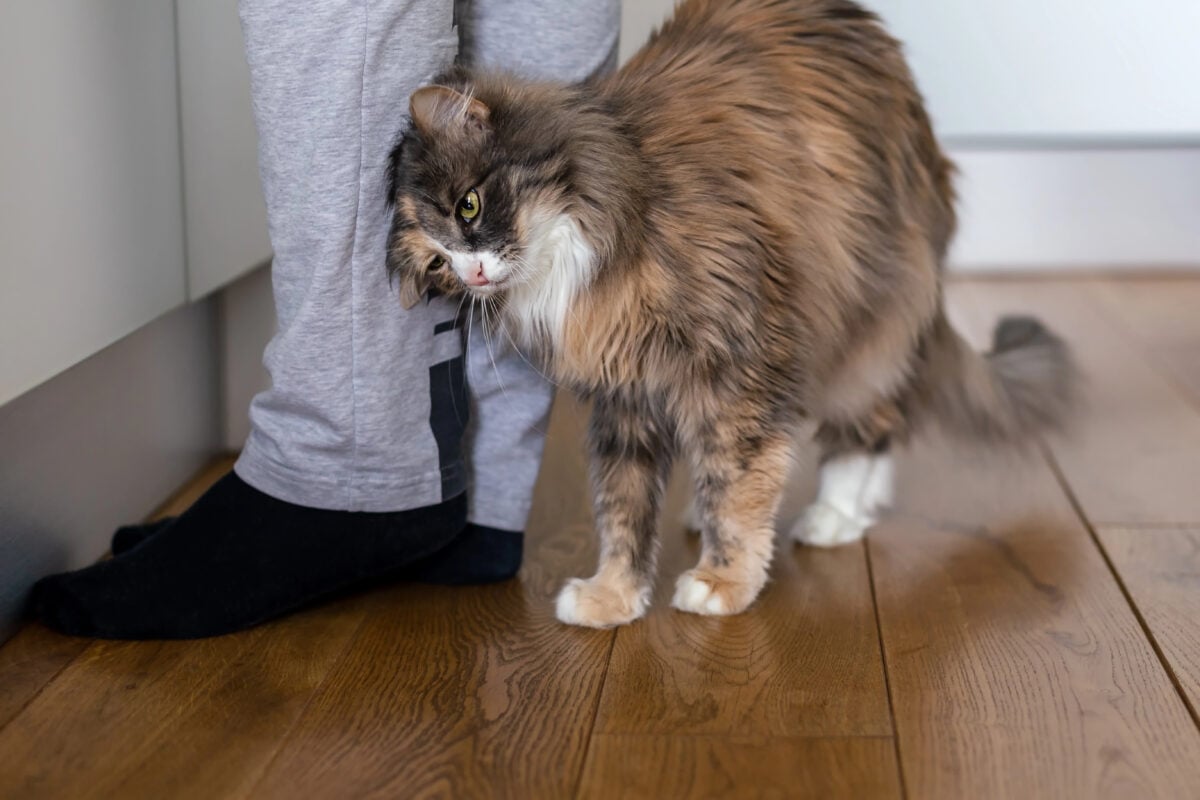
This is usually a greeting behavior combined with scent marking. Your cat is acknowledging you, sharing their scent, and asking for interaction or attention.
Why does my cat meow and rub on furniture but not on me?
Cats rub on furniture to reinforce familiar scents in the environment. They may choose objects over people when they feel uncertain, stressed, or simply prefer stable surfaces at that moment.
Why does my cat rub on me and then bite?
This often reflects overstimulation. Cats enjoy affection, but can reach their sensory limit quickly. It can also be playful behavior or a way to redirect your attention.
Why does my cat meow and rub before eating?
Many cats develop predictable pre-meal rituals. Rubbing paired with meowing communicates hunger, anticipation, and a desire to lead you toward the feeding area.
Why does my cat rub on my legs when I am standing still?
Your legs offer a steady, convenient surface for scent marking. Cats also do this when seeking reassurance or attention, especially when you have just moved into the home.
Why does my cat meow and rub more at night?
Nighttime vocalizing and rubbing often increase due to hunger, restlessness, or stress. Senior cats may meow more at night because of age-related confusion or cognitive changes.
Why does my cat rub on everything after coming inside?
This is a re scenting behavior. Outdoor smells can feel unfamiliar, so rubbing helps restore the comforting scents of home.
Why does my cat rub and meow after I pet them?
Your cat is continuing the social interaction. Some cats become more excited after being touched, while others follow a learned pattern of seeking more attention.
Should I ever discourage rubbing or headbutting?
Usually no. These are normal social behaviors. If they become excessive, gentle redirection and added enrichment are more effective than punishment.
One More Real-Life Example
This quick compilation shows how naturally cats use rubbing in their everyday routines. It is a simple visual reference that highlights just how common and varied this behavior can be.
Understanding Other Cat Behaviors
If rubbing and meowing have you curious about what else your cat may be trying to tell you, exploring other common behaviors can offer helpful context. Sudden bursts of energy, often called the zoomies, have clear physical and emotional triggers, which you can learn about in our guide on why cats get the zoomies. On the opposite end of the spectrum, quieter signals like slow blinking or choosing to rest near you can reveal a great deal about your cat’s attachment, as explained in our article on how to tell if your cat loves you.
Some behaviors offer insight into a cat’s emotional state. Hissing, for example, is often a defensive response rather than aggression, covered in our guide on why cats hiss. Tail movement also communicates mood, from irritation to curiosity, as explored in our piece on why cats wag their tails. Even simple habits like pawing at water can have instinctive explanations, which you can read about in this article about why cats paw at water. Understanding these patterns helps build a clearer picture of your cat’s daily communication.
How Does Your Cat Rub and Meow?
Every cat has its own style when it comes to rubbing, meowing, and getting your attention. Does your cat circle your legs, chirp for food, or announce itself the moment you walk in the door? Share your cat’s habits in the comments and help other owners see the many ways cats communicate.