When you purchase through links on our site, we may earn a commission at no extra cost to you. Learn more.
Cats don’t exactly send out a memo when they’ve decided your house is home. They just start acting like they own the place.
Table of Contents
Suddenly, they’re asleep in the middle of the hallway, supervising dinner from a kitchen chair, or showing up at the same sunny window every afternoon like they have a standing reservation. They may groom beside you, follow you from room to room, or flop down nearby without asking for attention.
Those little habits are easy to dismiss as “just cat stuff,” but together they tell a bigger story. Your cat has learned where it’s safe to sleep, where the good spots are, what happens next in the household routine, and, perhaps most importantly, that they don’t need to keep one eye open around you.
How Can You Tell When a Cat Really Feels at Home?
There’s no single behavior that proves it. One cat might sleep belly-up in the middle of the couch, while another considers sitting three feet away from you an enormous display of affection.
Want our human-written content to rank above AI-generated garbage? Help us out by clicking this button!
Instead, watch for patterns. As cats settle in, you’ll often notice changes in three areas: how willing they are to let their guard down, how comfortably they go about everyday cat business, and how naturally they begin fitting themselves into the rhythm of your household.
And some of those signs are wonderfully hard to miss once you know what you’re looking for.
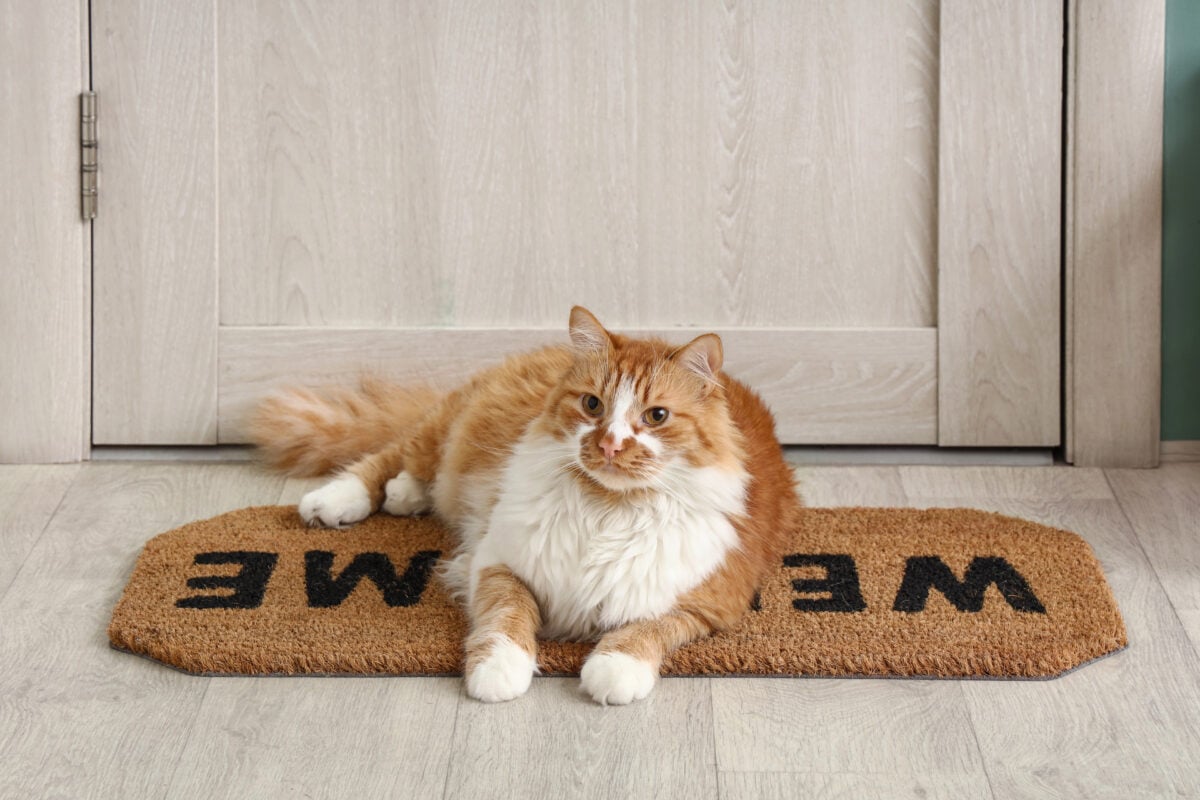
10 Signs Your Cat Really Feels at Home
These signs tend to show up in three places: how your cat rests, how they handle everyday routines, and how naturally they start fitting themselves into your household. Taken together, they paint a much clearer picture than any single behavior on its own.
When Your Cat Stops Sleeping Like a Fugitive
Feeling at home starts with something cats take very seriously: knowing when they can stop watching their backs. Cats are both hunters and potential prey, so rest leaves them vulnerable. As your cat becomes more comfortable, you may notice them choosing less protected places and generally being a lot less concerned about keeping themselves tucked away.
1. They Sleep Out in the Open
There’s something wonderfully ridiculous about a cat having an entire house at their disposal and choosing to sleep smack in the middle of the hallway.
But that inconvenient nap spot can tell you something. A cat who regularly sleeps on the rug, couch, bed, or other exposed area is comfortable enough to switch off without first disappearing into a protected hiding place.
You may notice the sleep itself looks different, too. Their body goes soft. Paws loosen. Their head slowly sinks into the cushion. You walk past, one eye cracks open, and—after a lightning-fast risk assessment in which you’re apparently deemed extremely boring—it closes again.

That doesn’t mean hiding is a bad sign. Cats love boxes, covered beds, closets, and other cozy hideaways even when they’re perfectly happy. What matters is having a choice. A formerly cautious cat who once vanished under the bed but now regularly snoozes, licensed via the sofa is showing you just how much their confidence has grown.
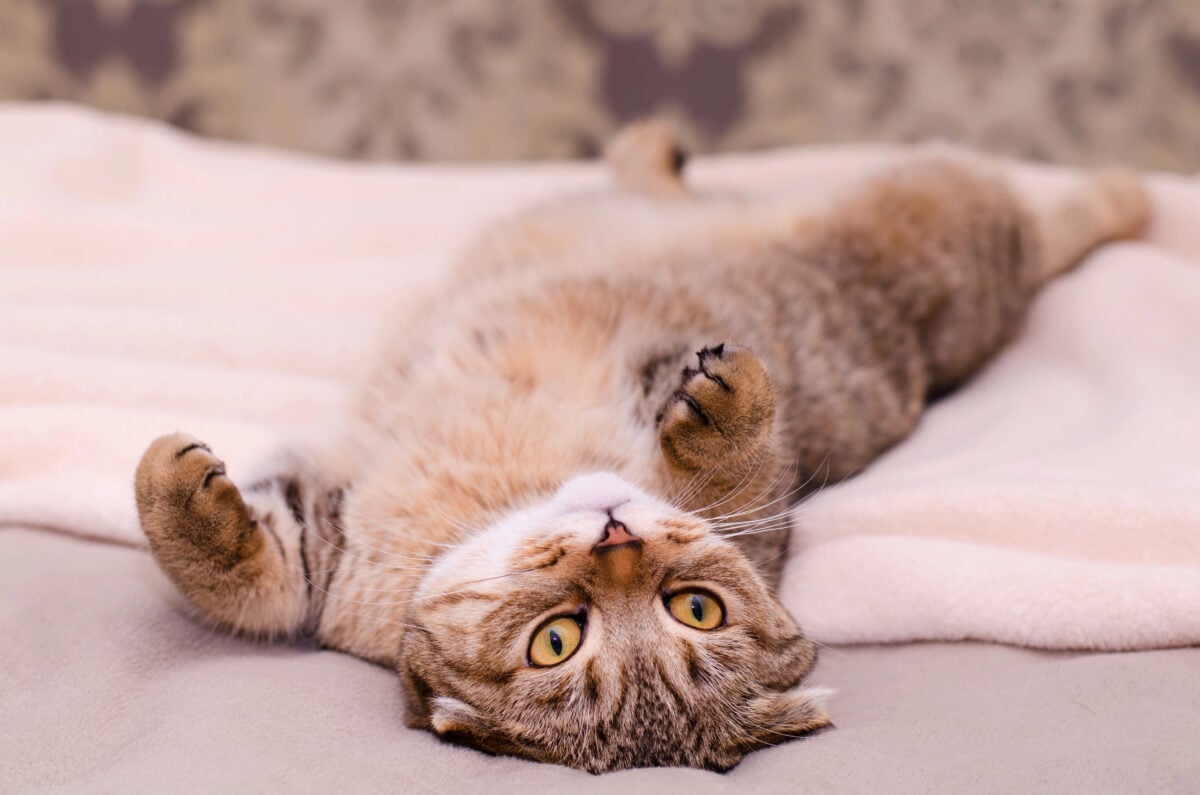
2. They Sprawl, Loaf, and Occasionally Go Full Belly-Up
Once a cat gets comfortable, basic feline geometry seems to go out the window.
You might find them stretched impossibly long across the couch, folded into a loaf, dangling halfway off a chair, or belly-up with all four paws pointing in directions that shouldn’t be anatomically possible. The technical term among cat people is, of course, liquid cat.
These loose resting positions can be another clue that your cat isn’t constantly preparing to bolt. A tense cat tends to hold their body differently; a relaxed one has the luxury of melting into the furniture.
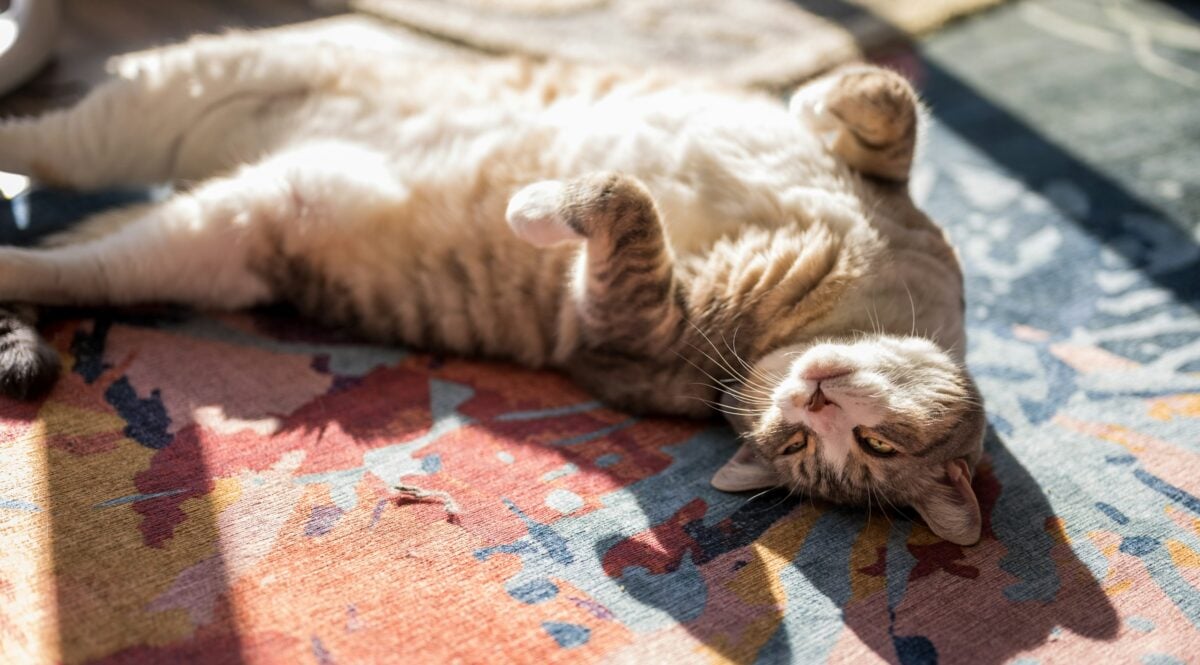
The belly-up position is especially easy to misread. Exposing the abdomen can be a sign that a cat feels wonderfully secure, but it is not a legally binding invitation to rub said belly. Plenty of cats will happily expose the goods and then act personally betrayed when you touch them.
Look at the whole cat rather than one pose. Loose muscles, neutral ears, soft eyes, normal breathing, and easy movement tell you much more than whether you can see a belly.
3. They Claim Their Favorite Spots
At some point, your cat stops exploring the house and starts acquiring property.
There’s the morning windowsill. The afternoon patch of sun. The corner of the couch nobody else is apparently allowed to use. And, naturally, your desk chair becomes prime real estate approximately four seconds after you stand up.
Favorite spots show familiarity. Your cat has learned where the sun lands, which room stays quiet, where the family gathers, which perch has the best view, and possibly which chair retains the most human-generated warmth.
Don’t be surprised if their choices make absolutely no financial sense. You can buy a plush cat bed with orthopedic foam and discover them asleep in the shipping box it arrived in. Cats have their own criteria.
Many also rotate through favorite locations as the day or season changes. That little schedule is part of what makes this behavior so telling. Your cat isn’t simply finding somewhere they can hide. They’re choosing between places they already know.

And once you’re moving your laptop because somebody has a 2 p.m. appointment with their desk chair, it’s probably safe to say they understand the floor plan.
When Everyday Cat Business Becomes Wonderfully Boring
Some of the best signs that your cat feels at home aren’t particularly glamorous. Nobody takes 47 photos of their cat calmly eating breakfast or using the litter box without incident.
But that’s exactly the point. When a cat feels secure, ordinary necessities can become just that: ordinary.
4. They Groom Wherever They Please
Cats aren’t exactly modest about bath time.
Once your cat feels comfortable, you may find them perched, licensed via the couch washing a paw, licking their chest in the middle of the living room, or hoisting one back leg into the air while the entire family attempts to watch television around them.
A leisurely grooming session requires attention. Your cat is busy cleaning rather than watching every doorway, noise, or person moving through the room. If you walk past and they barely interrupt the important business of washing between their toes, everyday household activity has probably become pretty unremarkable to them.
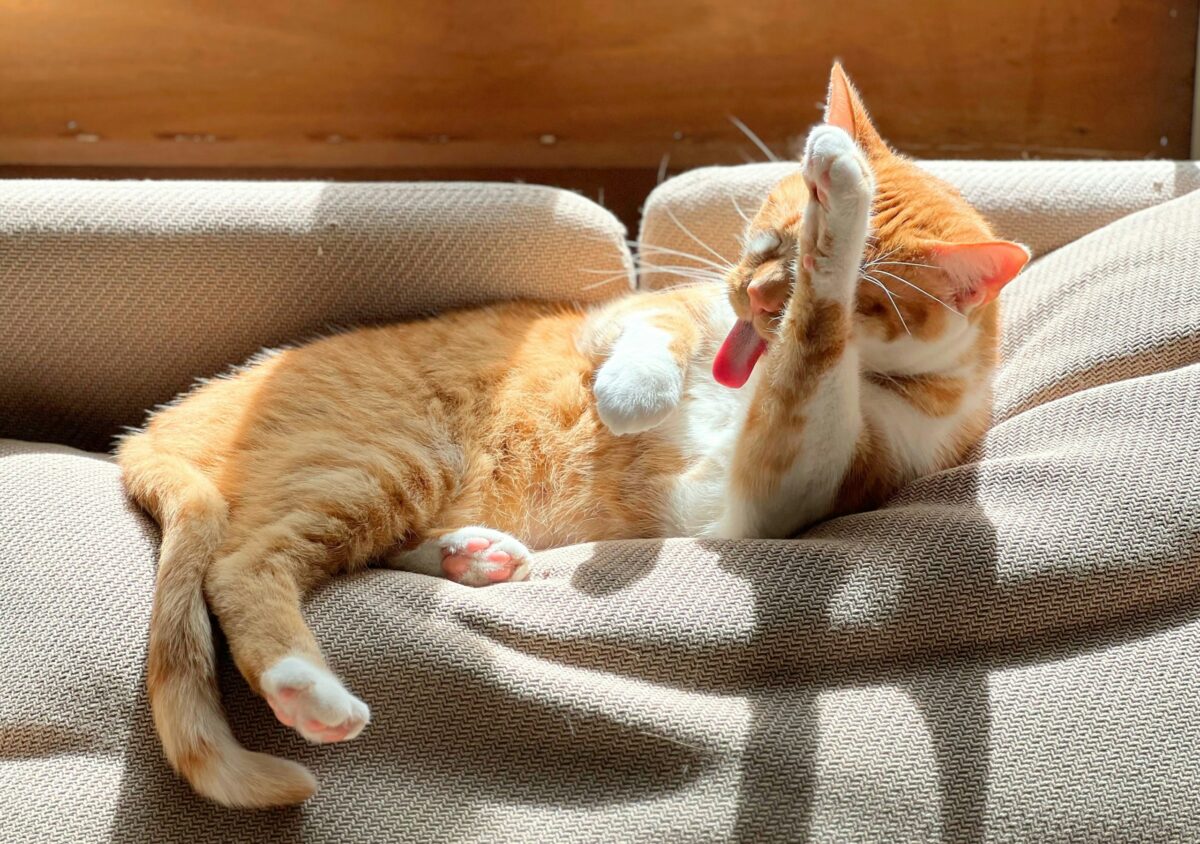
What matters here is normal, relaxed grooming. Excessive licking, repeatedly focusing on one spot, bald patches, skin irritation, or a sudden change in grooming habits can point to stress, pain, parasites, or another health issue. Likewise, a cat who suddenly stops keeping up with their usual grooming may not be feeling well.
But a healthy cat casually giving themselves a full bath beside you? That’s a pretty good indication they don’t consider you, or your television habits, something worth keeping an eye on.
5. They Eat and Drink Without Watching Their Back
A cat who feels secure shouldn’t have to treat dinner like a high-stakes operation.
They can walk up to their bowl, eat at their usual pace, take a drink, and leave when they’re finished without repeatedly stopping to scan the room. They might even develop the confidence to begin yelling about dinner well before dinner actually exists.
The exact routine varies wildly. Some cats graze. Others inhale breakfast and then insist they’ve never been fed in their entire life. What’s useful is knowing what normal looks like for your cat.
In multi-cat homes, pay particular attention to what happens around food and water. One cat staring, blocking a doorway, hovering near the bowls, or repeatedly pushing another cat away can create pressure even when there’s no obvious fight. Multiple feeding or drinking locations can give cats more choice and prevent one resource from becoming contested territory.

And appetite is one behavior you don’t want to explain away as simply emotional. If your cat suddenly stops eating, starts drinking dramatically more or less than usual, loses weight, has trouble chewing, or repeatedly vomits, talk with your veterinarian.
Otherwise, a cat confidently marching into the kitchen at 5:57 for a 6:00 dinner has clearly learned at least one important thing about living in your house.
6. Their Litter Box Routine Is Boringly Normal
There may be no less glamorous sign of feline happiness than a completely uneventful trip to the litter box.
That’s also why it’s useful.
Your cat knows where the box is, feels comfortable getting to it, does what they came to do, and carries, licensed via with their day. There’s no hesitation at the entrance, no apparent concern about being cornered, and no need to wait until the entire household has disappeared.
Don’t read too much into the exit, though. Some perfectly content cats launch themselves out of the litter box and sprint through the house as though they’ve just escaped a small explosion. The famous post-poop zoomies are their own mysterious branch of cat behavior.
Again, your cat’s usual pattern matters most. A sudden change in litter-box habits deserves attention, especially if they’re urinating outside the box, visiting it repeatedly, crying, straining, or producing little or no urine. Difficulty urinating can be a veterinary emergency, particularly in male cats.
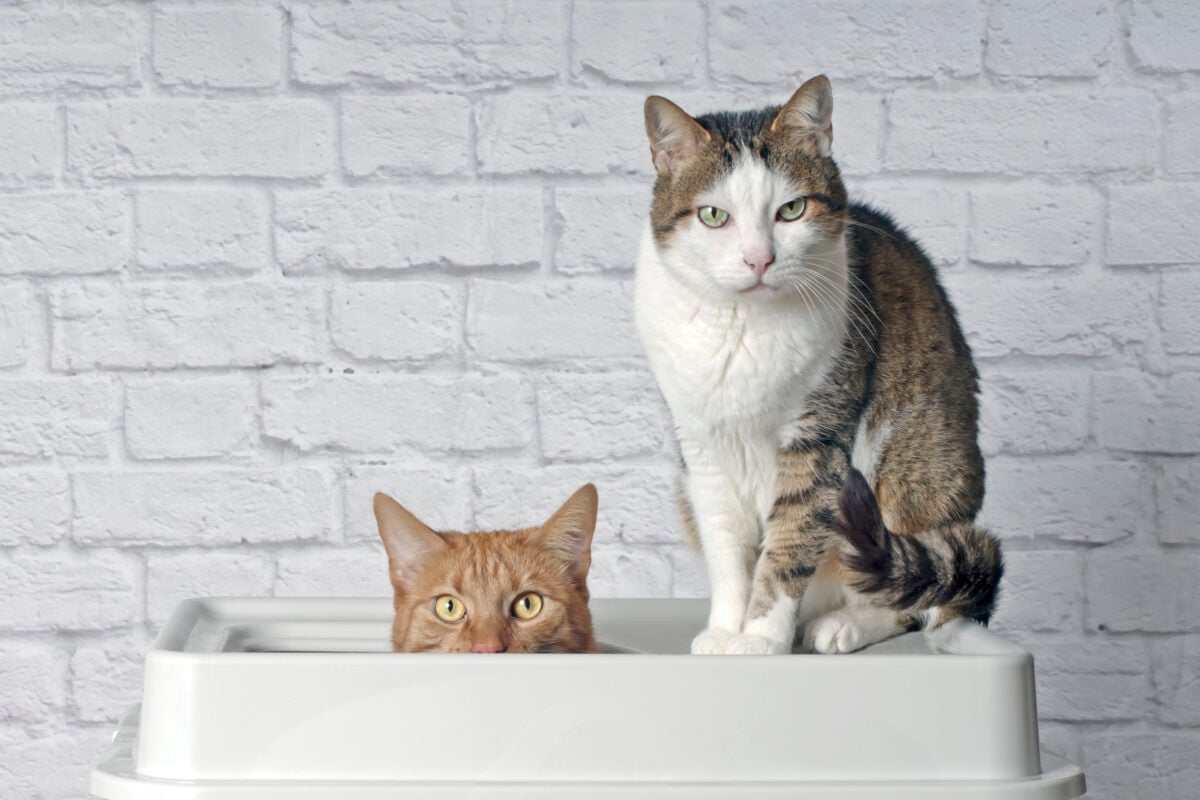
The setup matters, too. Cats generally do better with clean boxes in accessible locations where they don’t feel trapped or ambushed by another pet. In multi-cat households, providing multiple litter boxes in different locations can reduce competition and give everyone a little bathroom privacy.
When nothing interesting happens around the litter box, that’s exactly what you want. Your cat knows where the bathroom is, trusts that they can use it undisturbed, and sees absolutely no reason for the rest of the household to get involved.
When Your Routine Becomes Their Routine
Eventually, your cat doesn’t just get comfortable with the house. They start weaving themselves into whatever happens inside it.
They know when you wake up, where you spend your evenings, which cupboard contains the good stuff, and approximately how long you’re allowed to remain behind a closed bathroom door. They don’t necessarily need your attention. They just seem to have appointed themselves part of the household.
7. They Hang Out With You Without Needing Anything
Not every cat expresses affection by climbing into your lap.
Sometimes they walk into the room, settle three feet away, and proceed to completely ignore you. Oddly enough, that’s a compliment.
A cat who regularly chooses to nap on the other end of the couch, curl up under your desk, or watch birds from the window while you’re nearby is choosing your company without demanding an interaction. They have other places they could be. They picked this one.
This kind of quiet companionship is easy to overlook because, well, not much happens. But your typing, talking, cooking, or terrible television choices have become part of an environment where your cat feels comfortable enough to switch off.
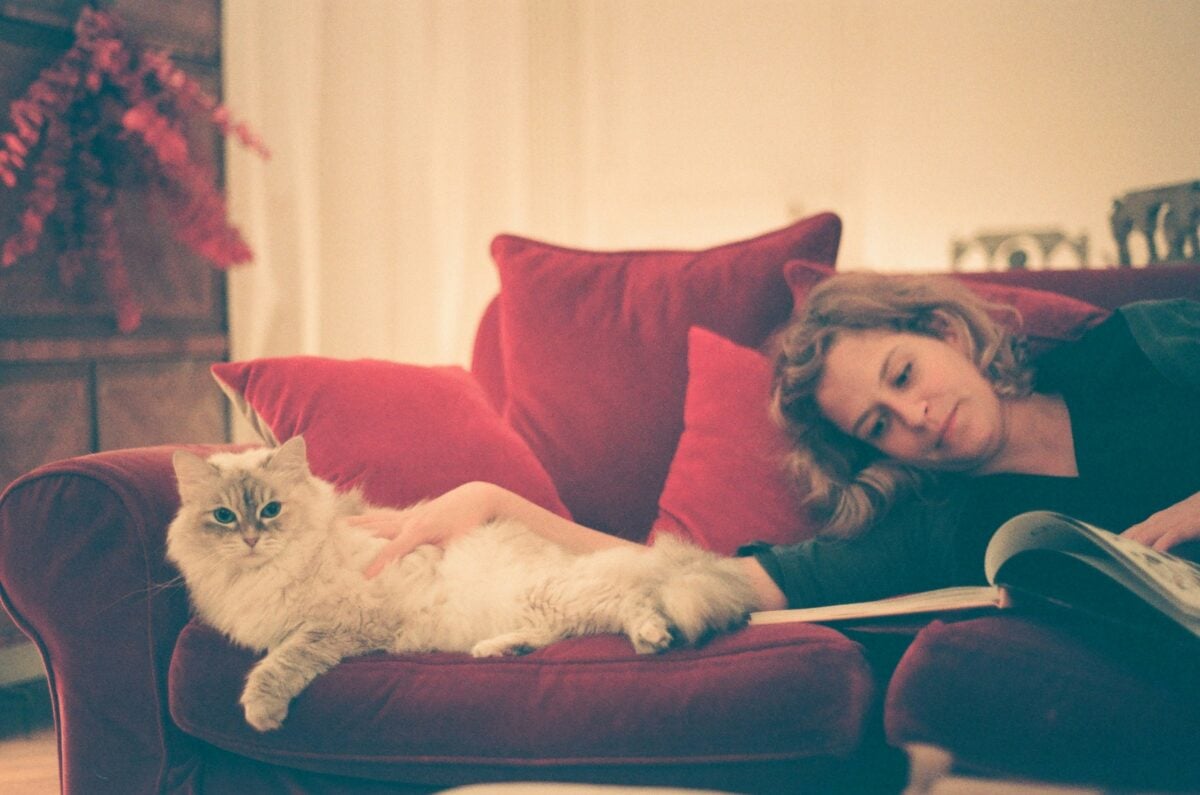
You may also catch a slow blink from across the room: that sleepy narrowing and reopening of the eyes cat people know so well. Research suggests these eye-narrowing movements can play a role in positive cat-human interactions. You can try slowly blinking back without staring or immediately moving toward them.
Most importantly, don’t assume proximity is a request to be picked up or petted. Sometimes your cat wants to sit beside you while remaining gloriously untouched. Respecting that choice is part of what makes your company so easy to choose again.
8. They Know the Household Schedule Suspiciously Well
You may think you run, licensed via your own schedule.
Your cat knows better.
They know the alarm means breakfast is approaching. They recognize the sound of the treat cupboard. They appear when you close your laptop, follow you toward the bedroom at night, or begin staring into your soul several minutes before dinner is due.
Cats are remarkably good at learning predictable routines and the little cues attached to them. Over time, your daily habits become landmarks in their day.
Some of those routines turn into rituals that have nothing to do with food. Your cat might wait outside the bathroom every morning, meet you when you come home, join you on the couch after dinner, or escort you to bed like a tiny security detail.
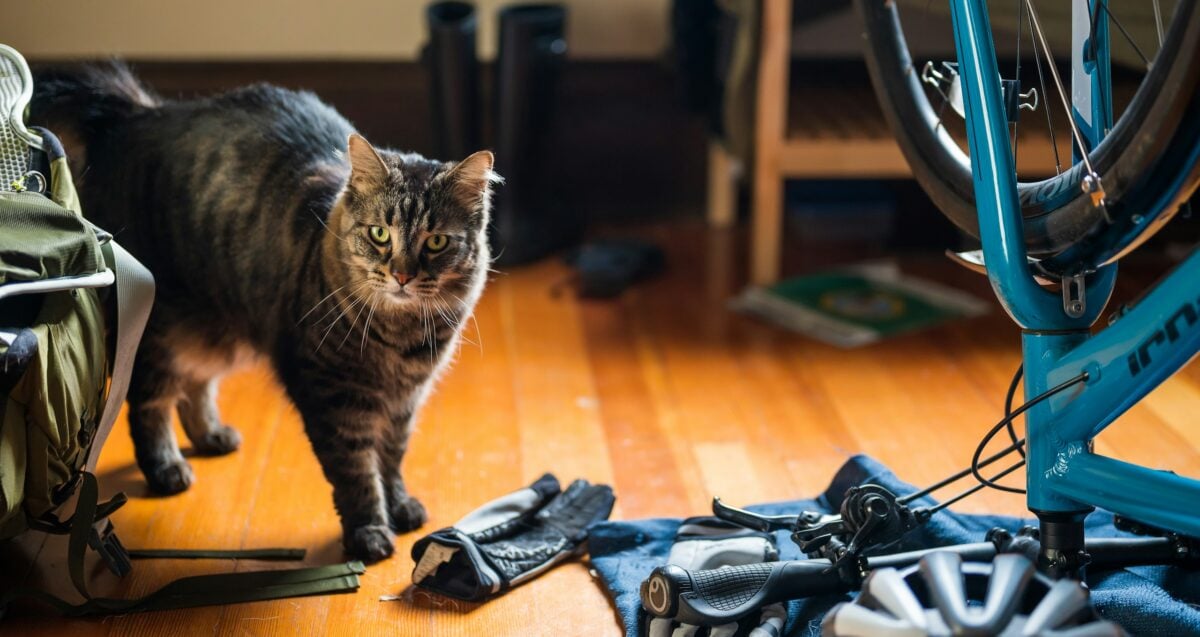
That’s what makes these habits so sweet. Your cat isn’t merely tolerating the activity happening around them. They’ve learned how the household works and started participating in it.
Of course, this also means being approximately six minutes late with breakfast may result in a formal complaint.
9. They Play Like Nobody’s Watching
Few things say “I feel pretty good about this place” quite like a cat suddenly tearing through the hallway at full speed.
One second, they’re sitting peacefully. The next, they’re ricocheting around a corner, attacking a toy mouse, launching themselves onto the couch, and staring at you with enormous pupils as though you’re the one behaving strangely.
Play takes attention and energy. A cat who feels comfortable enough to stalk toys, chase balls, pounce through tunnels, or engage in a completely unnecessary 10 p.m. sprint isn’t spending every moment worrying about what might happen next.
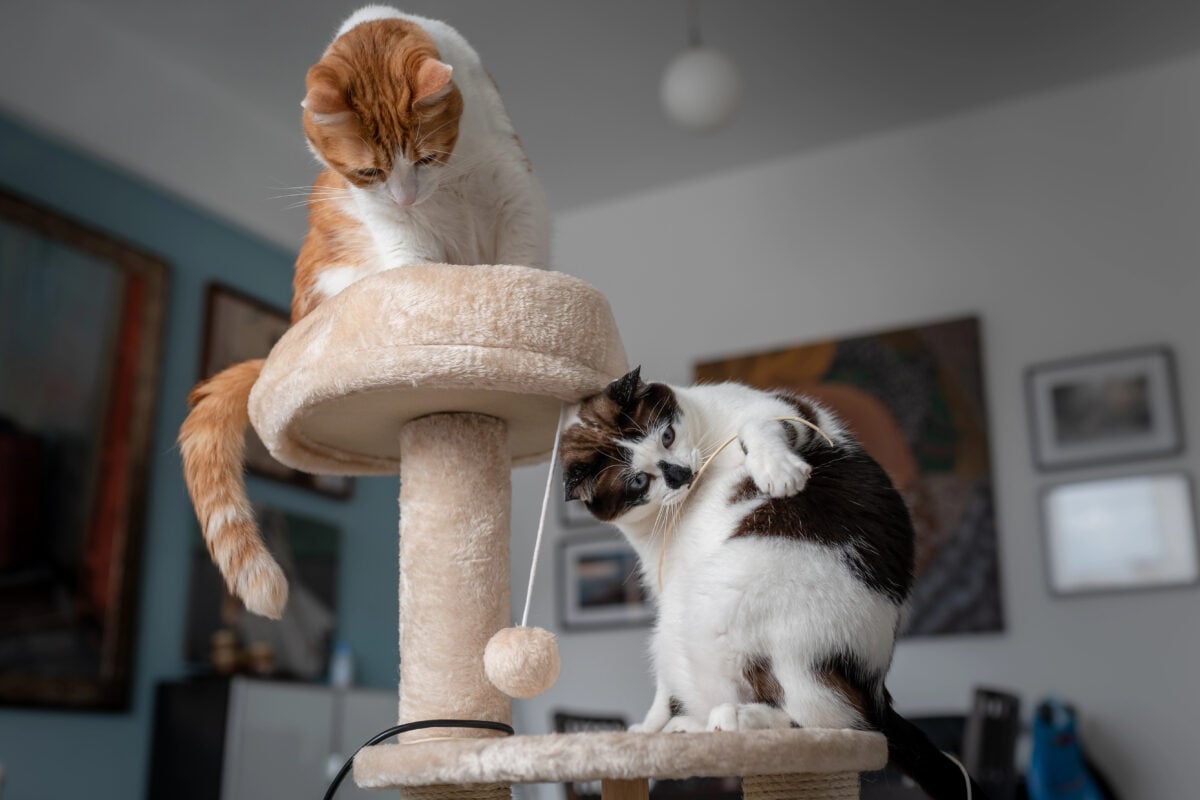
Not every happy cat gets dramatic zoomies. Older cats and naturally mellow cats may prefer batting at a toy from the rug or stalking a wand for thirty seconds before deciding they’ve done enough cardio for the week. What matters is whether play looks voluntary, engaged, and normal for your cat.
For a formerly timid cat, play spreading into new areas of the house can be particularly lovely to see. The hallway isn’t something to dash across because it feels exposed anymore. Now it’s a racetrack.
10. They Explore Like They Own the Place
At some point, cautious investigation turns into casual nosiness.
Your cat strolls into the kitchen to inspect the groceries. A delivery box requires immediate examination. An open cupboard apparently triggers a mandatory audit. Move a chair six inches and somebody arrives to determine why this unauthorized renovation was not discussed beforehand.
That kind of relaxed curiosity shows just how familiar the house has become.
A comfortable cat generally moves through known rooms without constantly crouching, hugging walls, or sprinting from one hiding place to another. They stop to sniff things. They sit in doorways. They investigate changes and then wander off when the investigation proves disappointing.
Secure cats can still startle, of course. Drop a pan, and your cat may temporarily leave this dimension. The more useful clue is what happens afterward. Once the commotion is over, a comfortable cat can usually recover and return to whatever they were doing.
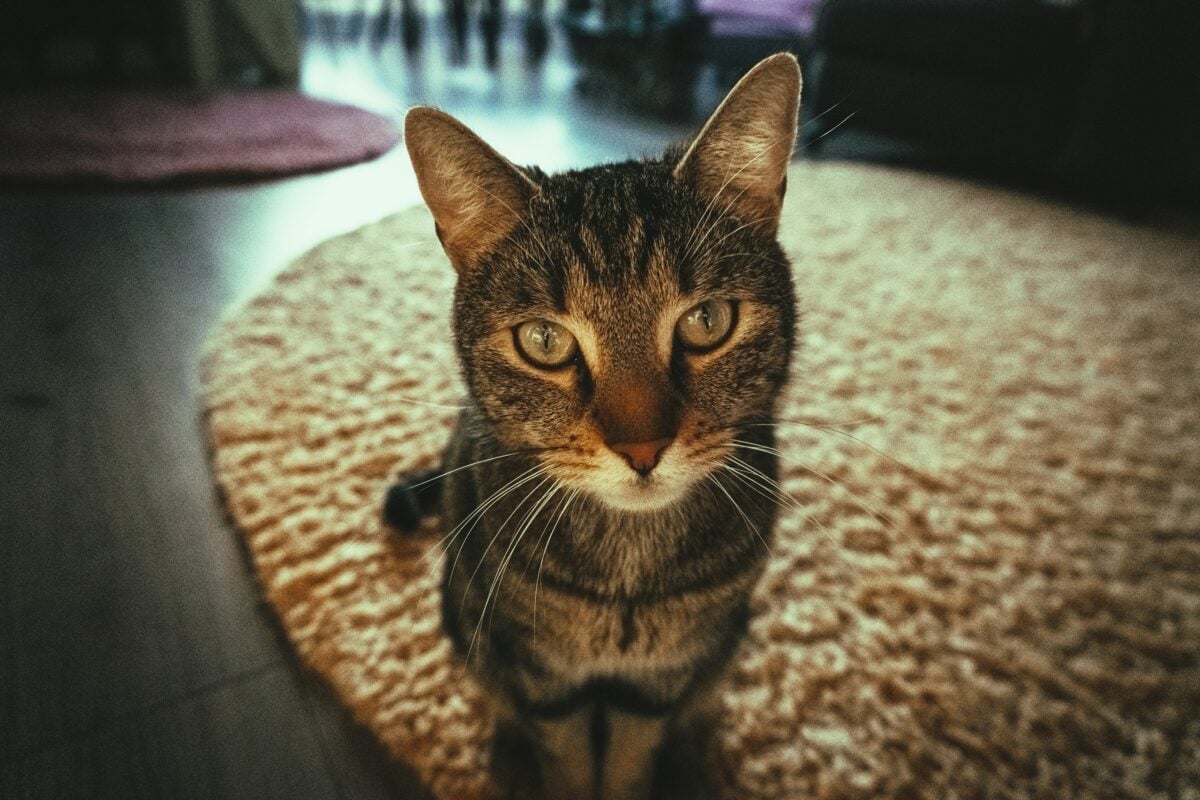
For a shy or newly adopted cat, that change can happen gradually. First they venture out when the house is quiet. Then they stay when someone enters the room. Eventually, they’re lying directly in the busiest walkway, forcing everyone else to step around them.
And that may be the clearest sign of all.
At some point, your cat stopped moving through the house like a visitor.
They started moving through it like you are.
How to Help Your Cat Feel Safe Enough to Make Themselves at Home
If your cat isn’t sprawled across the hallway like a tiny landlord just yet, don’t try to rush them into it. Cats tend to become confident when they have choice, predictability, and places to retreat when the household gets a little too people-y.
Start with the basics.
Give Them Somewhere They Can Disappear
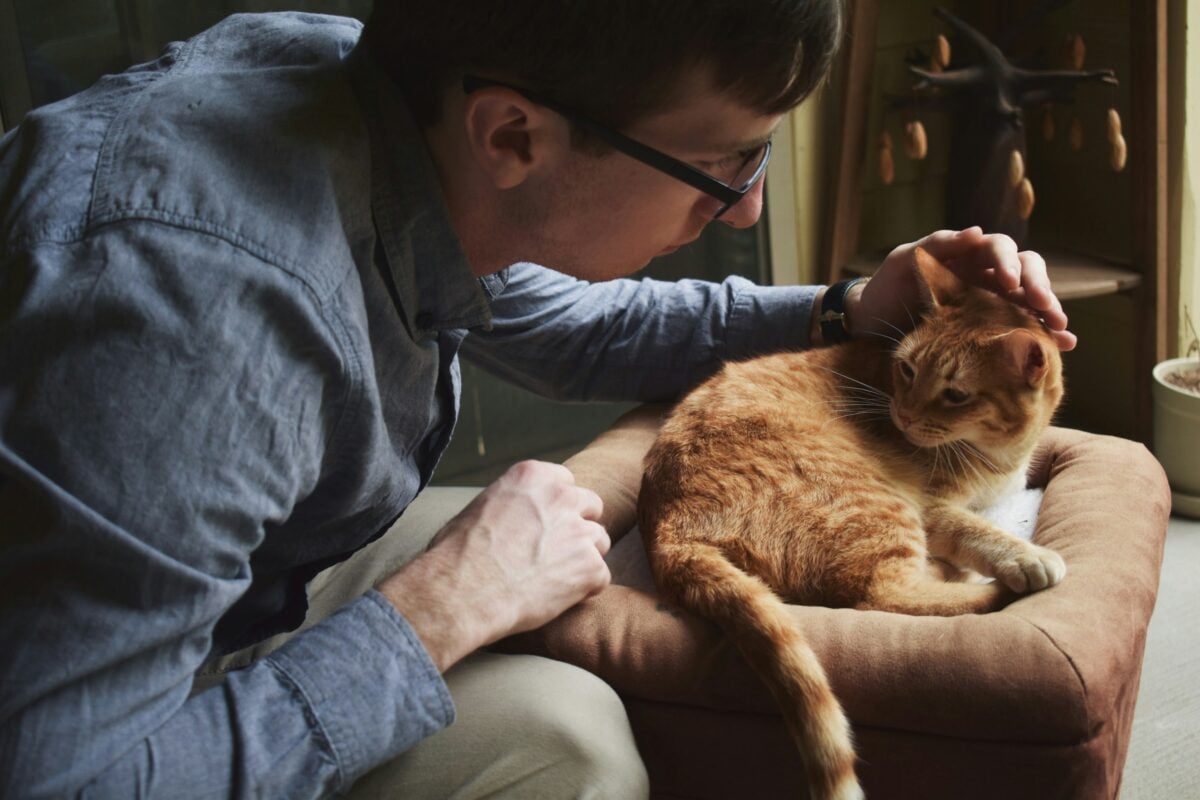
A cat who feels secure doesn’t necessarily stop hiding. In fact, knowing there’s a safe place to retreat can make them more willing to come out.
That might be a cardboard box, covered bed, quiet bedroom, space beneath a chair, or perch where nobody bothers them. Some cats want a cozy cave. Others want a penthouse suite where they can silently judge everyone from above.
If your cat is suddenly hiding far more than usual, though, pay attention. A big change in hiding behavior can sometimes point to stress, conflict with another pet, pain, or illness.
Add Height, Not Just Floor Space
Cats don’t experience a room only from ground level.
A sturdy cat tree, shelf, window perch, or the back of a sofa gives them another way to use the space, and somewhere to observe what’s happening without sitting directly in the middle of it.
For a cautious cat, that extra bit of elevation can make a busy room feel much more manageable.
Keep the Important Stuff Easy to Reach
Food, water, litter boxes, scratching spots, and resting areas shouldn’t require your cat to run a daily obstacle course.
This becomes especially important when you have more than one cat. Two cats may appear to share resources peacefully while one is quietly waiting for the other to leave before eating, drinking, or using the litter box.
Spreading resources around the home gives everybody options.
And yes, that may mean more litter boxes than you’d personally choose from an interior-design standpoint. Your cats remain unmoved by this concern.
Give Them Something to Hunt
A safe home shouldn’t be a boring home.
Wand toys, little mice, puzzle feeders, scratching surfaces, tunnels, window watching, and short play sessions give indoor cats somewhere appropriate to put all that predator software running in the background.
You don’t need to entertain your cat every waking minute. Give them opportunities, rotate things occasionally, and let them decide what counts as fun. One cat’s thrilling enrichment activity is another cat’s suspicious object that must be ignored for six business days.
Keep Life Reasonably Predictable
Cats notice patterns remarkably quickly.
Meals around the same general time, familiar bedtime rituals, regular play sessions, and calm interactions help make the household easier to predict. Even your everyday sounds like the alarm, coffee maker, garage door, or laptop snapping shut – can become part of your cat’s mental map of what happens next.
You don’t need to run your house according to a feline-approved military schedule.
Just remember that when life gets chaotic, a few familiar routines can be surprisingly reassuring.
Let Your Cat Set the Pace
- This may be the hardest one for humans.
- When a shy cat finally comes out from under the bed, every cat-loving cell in your body may scream, PICK UP THE BABY.
- Try not to.
Let them investigate. Sit nearby. Toss a treat. Play if they’re interested. Offer a hand and allow them to decide whether contact happens.
Confidence grows much more easily when your cat learns that approaching you doesn’t automatically mean being scooped up, restrained, or loved within an inch of their life.
Eventually, that cat who once needed a quiet corner may be lying directly across your keyboard during an important email.
Progress.
What If Your Cat Still Doesn’t Seem Comfortable?
Some cats simply take longer.
A bold kitten may be inspecting the top of your refrigerator before you’ve finished unpacking the carrier. A cautious adult may need days or weeks before they’re willing to nap somewhere that doesn’t have three walls and an emergency exit.

That’s okay. Look for progress rather than a deadline.
Maybe your cat starts eating while you’re still in the room. They venture out before bedtime instead of waiting until everyone is asleep. They play for the first time, choose a new resting spot, or remain on the couch when somebody walks past.
Those little changes count.
What deserves more attention is a sudden change from your cat’s normal behavior. A cat who abruptly starts hiding, stops eating, avoids the litter box, overgrooms, becomes unusually withdrawn, or seems unable to relax may be dealing with stress, but pain and illness can cause behavioral changes too.
Cats are famously talented at making “something feels wrong” look like “I’d simply prefer to be under this bed now.”
If the change is significant, persistent, or accompanied by physical symptoms, check in with your veterinarian rather than assuming your cat just needs more time to settle.
Knowing all those quirks has a serious upside, too. The better you know your cat’s normal—their favorite spots, appetite, routines, bathroom habits, and preferred way of derailing whatever you’re doing—the easier it is to spot behavior changes you shouldn’t ignore.
The Real Sign? You’ve Stopped Questioning Who Owns the House
At some point, you stop wondering whether your cat feels comfortable at home and start wondering when exactly you lost control of the property.
The cat who once cautiously inspected the living room is now asleep on the clean laundry. Your chair is their chair. Closed doors require immediate investigation. Breakfast has a deadline. You’ve also stopped questioning the things every cat owner eventually accepts, like 3 a.m. hallway sprints and the undeniable superiority of a cardboard box over the expensive bed it arrived with.
Once cats settle in, they also get very comfortable expressing their opinions. That can mean increasingly creative ways of demanding your attention or behaviors that seem rude but usually aren’t. Maintaining eye contact while knocking something off the table remains difficult to defend.
And, because cats are cats, there will still be moments when they are far more dramatic than necessary. The difference is that now you know the cast of characters. You know the breakfast stare, the offended tail flick, the suspicious silence from the other room, and the exact sound of a cat doing something they absolutely should not be doing.
Then one day, the cautious cat who was learning the rules is sprawled belly-up in the middle of the floor while everyone automatically steps around them.
They feel safe. They feel loved.
And apparently, you live in their house now.
Your Turn: What Says “I Live Here Now” in Your House?
Every cat has their own way of making themselves at home. Maybe yours steals your pillow, supervises every bathroom trip, or has claimed a piece of furniture you foolishly thought belonged to you. Tell us in the comments: what does your cat do that makes it very clear they’re completely at home?