When you purchase through links on our site, we may earn a commission at no extra cost to you. Learn more.
I’ve owned cats my entire life and had never heard the term “single kitten syndrome” until recently.
Table of Contents
It came up when a friend of mine tried to adopt a kitten and was told the shelter wouldn’t place a single kitten under 12 weeks old unless there was already another young cat at home — or if she also adopted one of the kitten’s littermates.
Single kitten syndrome isn’t a medical diagnosis, but it’s a pattern some shelters and cat behaviorists take seriously. So, what are they worried about?
What Is Single Kitten Syndrome?
Single kitten syndrome, sometimes called “Tarzan Syndrome,” is an informal term used by some shelters, rescues, and animal behaviorists to describe a pattern they sometimes see in kittens raised without other cats during early development.
Want our human-written content to rank above AI-generated garbage? Help us out by clicking this button!
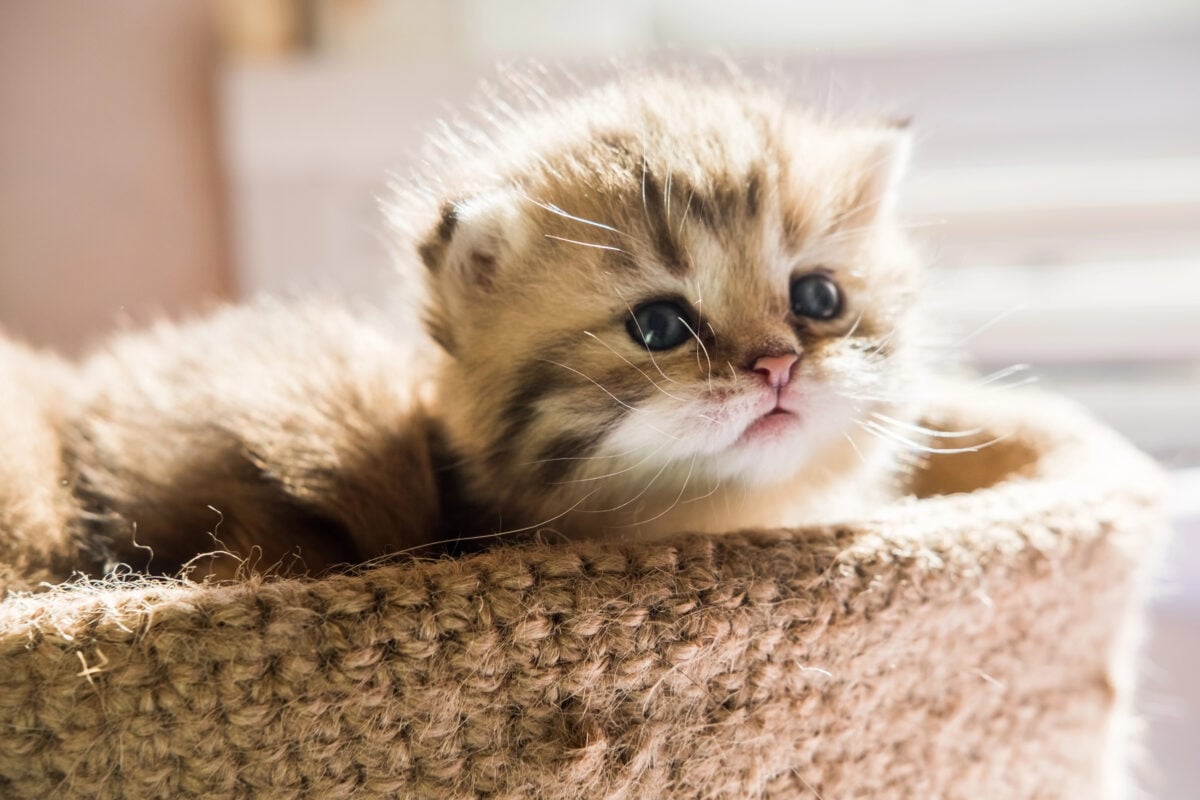
At its core, the concern is about early social learning. Kittens typically pick up key skills from other cats, including:
- How hard is too hard when play turns physical
- When to back off during rough play
- How to read feline body language and boundaries
The idea is that when a kitten grows up without that built-in feedback, some of those lessons can take longer to develop.
However, that doesn’t mean every single kitten will struggle. Many grow into well-adjusted adult cats, especially in homes with plenty of interaction, enrichment, and routine. Single kitten syndrome isn’t a guarantee of problems — it’s better understood as a possible risk factor, not an outcome.
You may also hear the term single cat syndrome used interchangeably. The focus of this theory isn’t strictlyon age, but on whether a cat had sufficient early, consistent exposure to other cats to learn social cues and play boundaries.
Why Some Shelters & Rescues Worry About Single Kittens
Shelters don’t make single-kitten adoptions strict or difficult. Most of the concern comes from what they see months or years later, after kittens grow up and families start asking for help, or end up surrendering the cat back to the shelter.
Over time, rescues notice a recurring pattern: kittens raised without other cats are more likely to develop certain behavior challenges as they mature. Not always, but often enough to sometimes influence adoption policies.
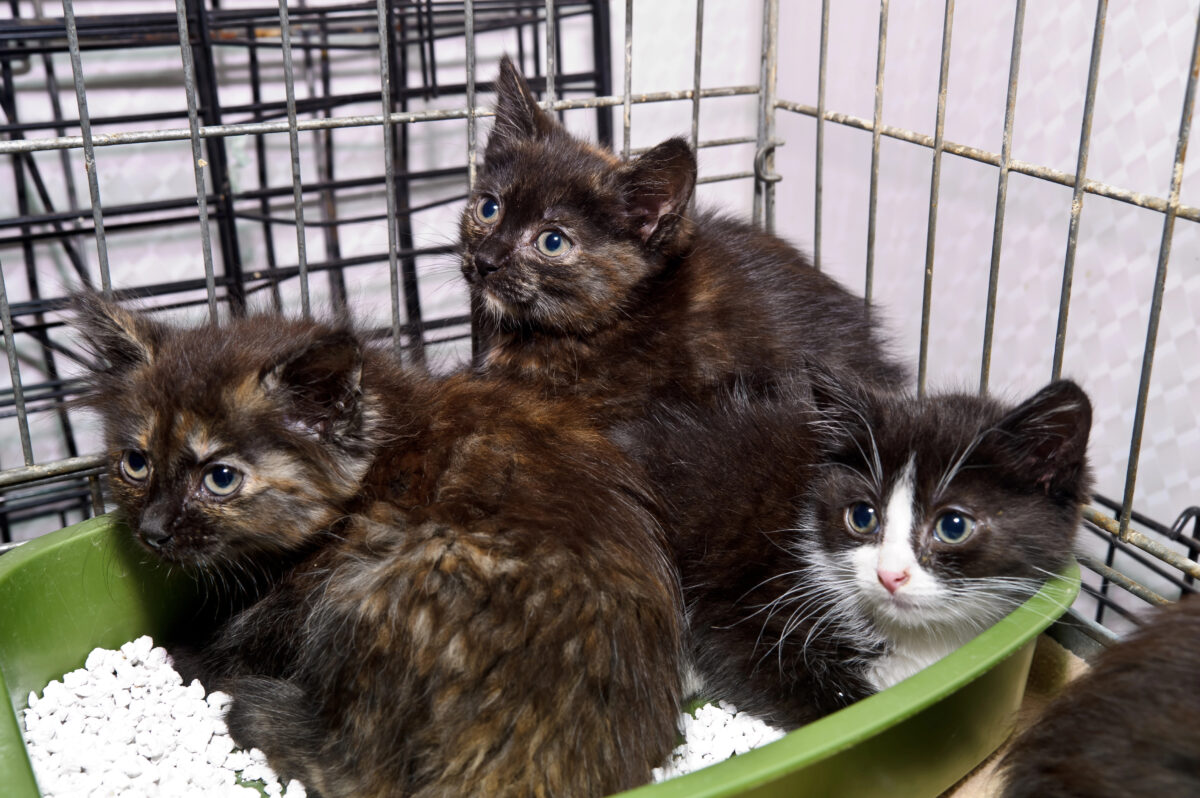
What shelters are trying to reduce includes:
- Rough or painful play that doesn’t taper off with age
- Difficulty reading boundaries from humans or other pets
- High frustration during play or attention-seeking moments
- Overdependence on human interaction for stimulation
These behaviors aren’t signs of a “bad cat.” They’re signs that some social lessons didn’t fully land early on.
Another reason some shelters push for paired adoptions is energy balance. Kittens have intense play needs, especially in the first year. When there’s another kitten around:
- They tire each other out
- They redirect rough play away from humans
- They learn limits naturally, without the need for constant human correction
Without that outlet, all of that energy lands on the household — often in the form of biting, climbing, or nonstop attention demands.
In short, shelters worry about single kittens not because they can’t thrive, but because some need more structure, more play, and more guidance than many adopters expect.
5 Signs Often Linked To Single Kitten Syndrome
Cats associated with single kitten syndrome don’t all behave the same way. When signs do appear, they tend to cluster around play, boundaries, and attention-seeking rather than severe aggression.
Commonly mentioned patterns include:
1. Rough Or Poorly Regulated Play
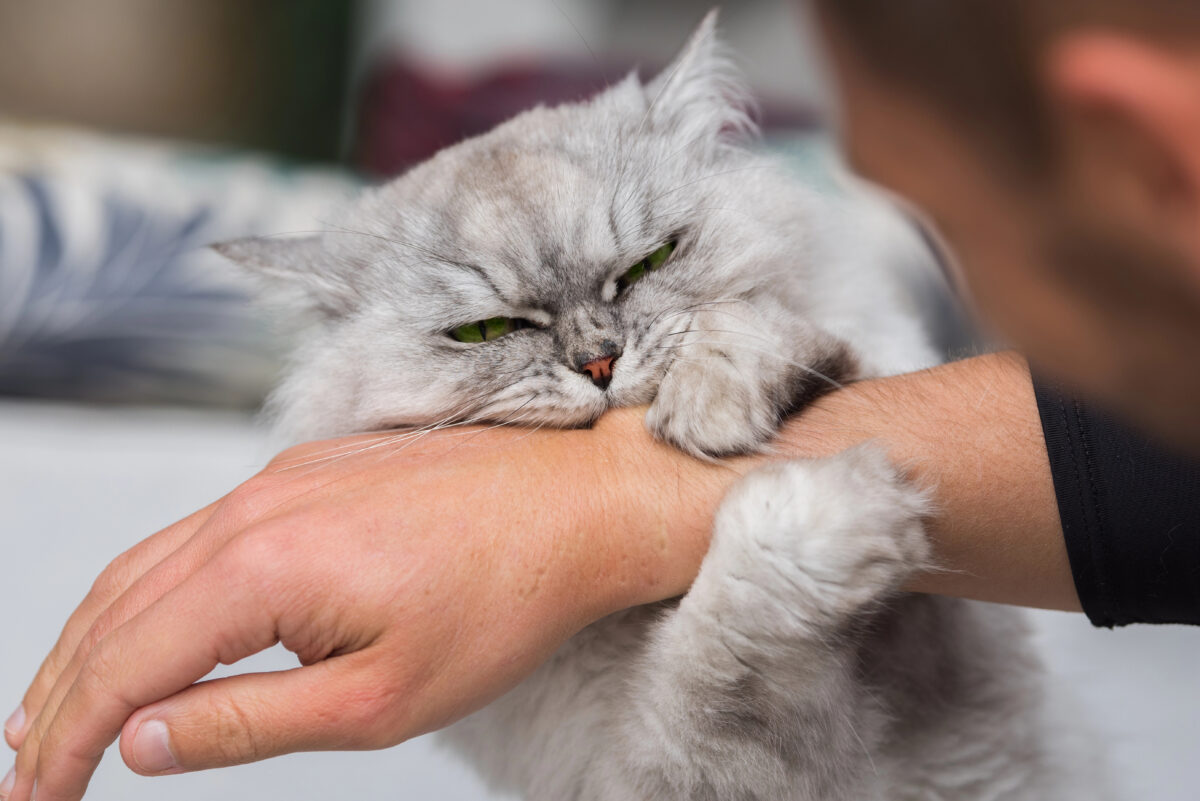
This often shows up as biting or grabbing hands and feet during play, especially when excitement ramps up quickly.
You might notice a kitten happily chasing a wand toy and then suddenly latching onto a moving ankle or hand when play pauses. The shift feels abrupt, but it’s often a sign the kitten doesn’t yet know how to downshift once play starts.
This kind of rough play is common in young cats and usually reflects a lack of self-regulation, not intent.
2. Low Bite Inhibition
Play bites may feel harder than expected, even when the cat seems excited rather than upset.
During play, a kitten may start by gently mouthing a hand, then gradually increase pressure rather than back off, even when the interaction stays calm. Without early feedback from other kittens, learning where the limit is can take longer.
Hard play bites don’t automatically mean aggression. They usually point to incomplete feedback during early play with fellow felines.
3. Difficulty Reading Boundaries
Some cats miss subtle cues that signal “that’s enough.”
This can look like continued pawing or pouncing after a person pulls their hands away or turns their body, with the cat only stopping once overstimulation kicks in. The cues were there — they just weren’t fully processed.
This isn’t defiance. It’s often a gap in social communication skills.

4. Excessive Need for Human Interaction
A single kitten may rely heavily on people for stimulation and reassurance.
Instead of settling after play, a cat might immediately demand another round, trail you from room to room, or vocalize the moment attention drops. The behavior can feel intense, even when you’ve already engaged.
This usually reflects unmet energy or enrichment needs, not emotional dependence.
5. Destructive Boredom Behaviors
When mental or physical stimulation runs low, boredom often spills into the environment.
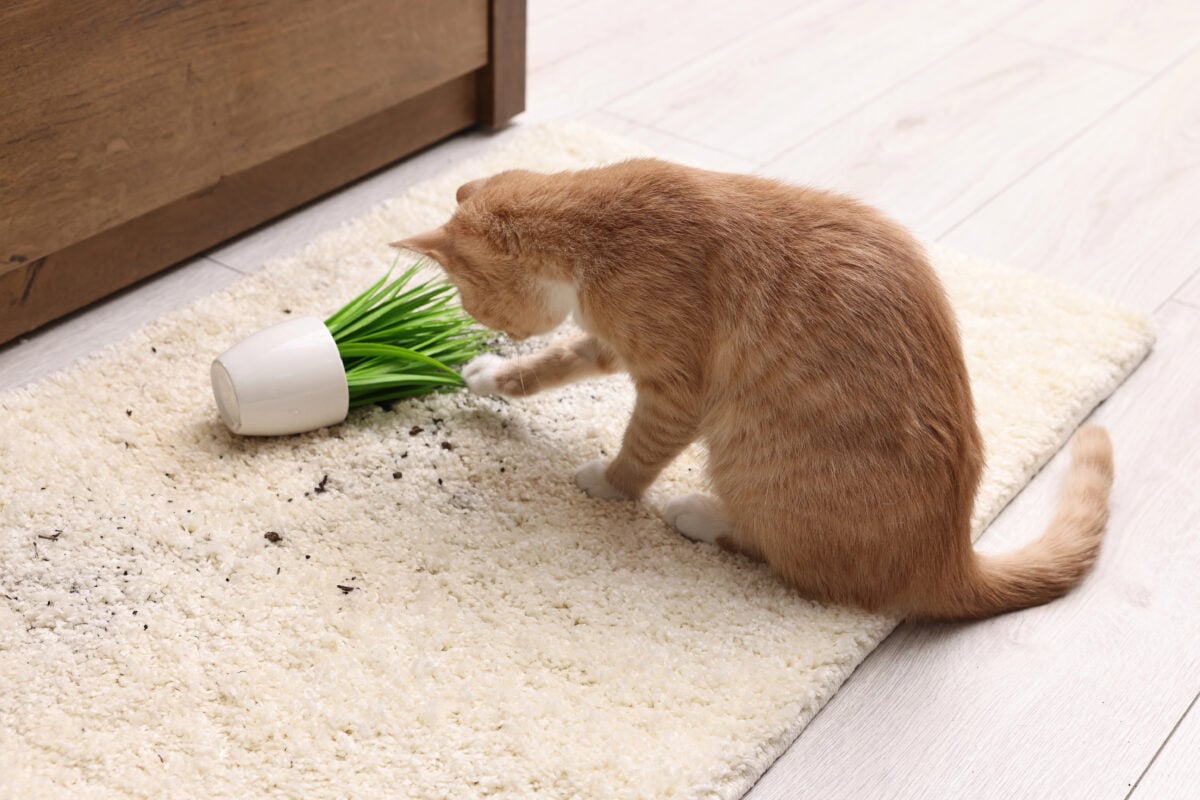
During quiet moments, a cat may start knocking items off tables or chewing objects they usually ignore. The behavior can seem random, but it’s often an attempt to create stimulation where none is available.
In many cases, this is a sign the environment isn’t doing enough of the work yet.
An Important Note Before You Self-Diagnose
It’s essential to zoom out here. Many of these behaviors are also common in kittens and young cats, especially during high-energy periods. Seeing one or two of these signs doesn’t automatically point to single kitten syndrome.
Context matters more than any single behavior.
Things like age, environment, play opportunities, and routine all influence how a cat acts. A solo kitten in a highly enriched home may show none of these patterns, while a multi-cat household can still struggle if personalities clash.
The key takeaway: these signs aren’t a diagnosis — they’re signals. And signals are useful because they show where support, structure, or enrichment may help most.
Factors That Can Contribute To Single Kitten Syndrome
Not every kitten raised alone struggles, which is why single kitten syndrome can feel confusing and inconsistent. The difference usually isn’t whether a kitten lives with other cats — it’s how much consistent social feedback they receive during early development.
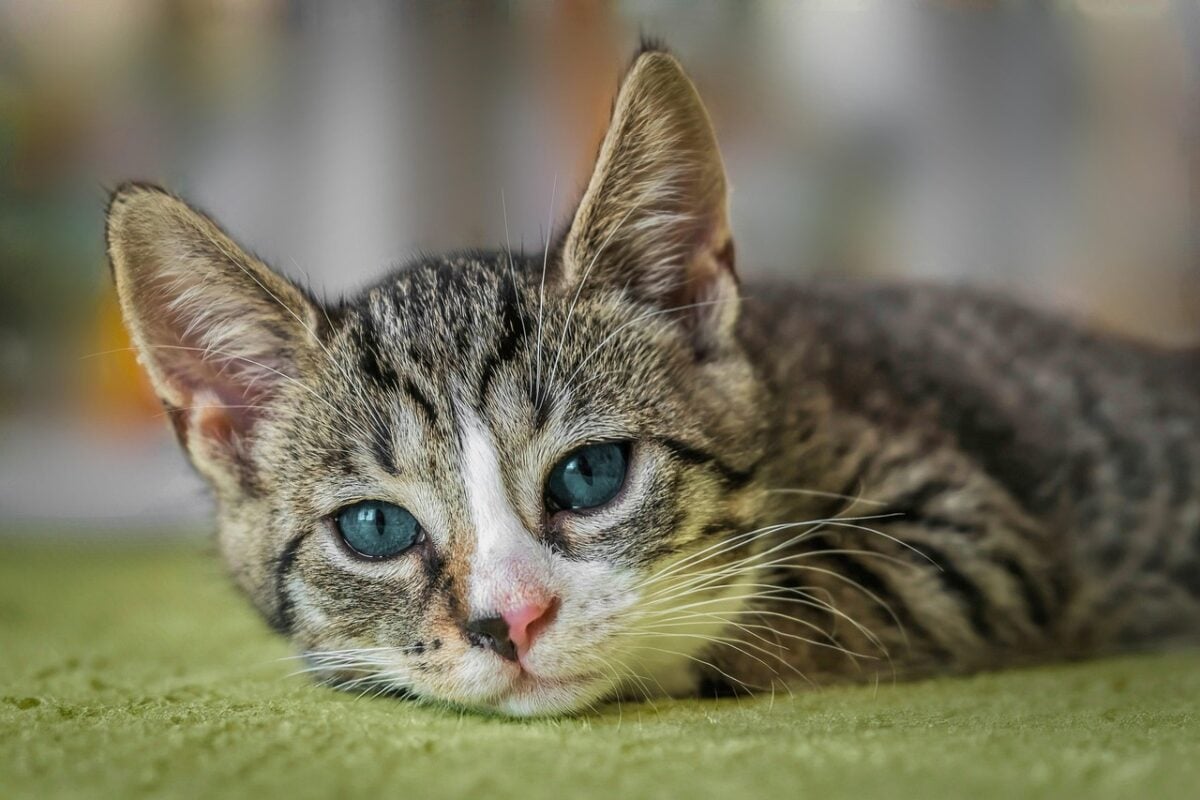
Several situations tend to increase the likelihood that challenges show up later:
Limited Early Social Feedback
Kittens learn quickly through real-time responses from their mother and littermates. Those early interactions help teach when play has gone too far and how to adjust behavior in the moment. When that feedback is inconsistent or delayed, some social skills simply take longer to develop.
Narrow Sources Of Interaction
When humans are a kitten’s only play partners, learning can skew in subtle ways. People tend to tolerate behaviors that other cats would correct immediately, leaving gaps in boundary-setting, pacing, and feline play cues.
High Energy Without Reliable Outlets
Energy itself isn’t a problem — mismatched outlets are. Kittens have bursts of intense activity, and without structured ways to release that energy, frustration can build. Over time, that frustration may show up as rough play or attention-seeking behaviors.
Inconsistent Responses To Behavior
Kittens learn through patterns. When rough play is sometimes allowed and sometimes interrupted, it becomes harder to connect actions with outcomes. Clear, predictable responses help social learning click faster and reduce confusion.
Early Timing And Transitions
Kittens separated very young may miss key learning windows, even if they later receive excellent care. Early transitions don’t guarantee problems, but they can influence how much intentional support a kitten needs as they continue developing.
None of these factors means a kitten was “raised wrong.” They’re developmental variables, not failures — and many can be offset with the right environment and support.
This is also why the term “lonely kitten syndrome” sometimes appears. It isn’t about emotional loneliness. It’s about limited input during a short, high-impact learning period.
What Experts Agree On About Early Socialization
According to experts, including the American Animal Hospital Association (AAHA) and The International Cat Association (TICA), a kitten’s critical socialization window begins as early as two weeks of age and gradually tapers off around nine weeks. Whenever possible, kittens benefit from staying with their mother and littermates until roughly 12–13 weeks of age, alongside regular, positive human interaction.
Single Kitten Syndrome: Myth vs. Fact
There’s a lot of noise around single kitten syndrome, especially online. Some of it’s rooted in real behavioral patterns. Some of it gets exaggerated fast. This section separates what’s actually supported by experience and science from what tends to spiral.

#1 Myth: Single kitten syndrome is a medical or behavioral diagnosis
Fact: It isn’t.
Single kitten syndrome isn’t recognized as a medical condition or formal behavioral disorder. It’s a shorthand term used by shelters and behavior professionals to describe patterns they sometimes observe — not something a cat can be officially diagnosed with.
#2 Myth: Every single kitten will develop problems
Fact: Many single kittens grow up just fine.
Plenty of cats raised alone become calm, social, and well-adjusted adults. Environment, enrichment, play quality, and consistency matter just as much — sometimes more — than whether a kitten had a feline companion early on.
#3 Myth: If you adopted one kitten, you made a mistake
Fact: Adoption choices are rarely that simple.
Families adopt single kittens for many valid reasons: housing limits, finances, existing pets, or availability. Single kitten syndrome isn’t a judgmenton owners; it’s a consideration, not a verdict.
#4 Myth: Rough play or biting always means single kitten syndrome
Fact: Those behaviors are common in kittens, period.
Play biting, zoomies, and boundary-testing are normal developmental behaviors, especially in young cats. Context, frequency, and whether behavior improves with guidance matter far more than any single sign.
#6 Myth: The only solution is getting another cat
Fact: A second cat can help, but it’s not the only path.
Many single kittens thrive with structured play, enrichment, and clear boundaries from humans. Adding another cat can be beneficial, but it’s not always practical or necessary to raise a healthy, happy cat.
#7 Myth: Single kitten syndrome should be treated as a rule in adoption decisions
Fact: It’s a debated idea — and rigid rules can have unintended consequences.
There’s no scientific consensus showing that kittens raised alone are destined for behavioral problems. In fact, at least one extensive study found no clear link between early social exposure (including being raised alone, bottle-reared, or rehomed early) and later aggression. Outcomes were far more closely tied to a cat’s individual personality, home environment, and how owners responded to the cat’s behavior.
When ideas like single kitten syndrome are treated as hard rules instead of risk considerations, they can create unnecessary barriers to adoption — discouraging capable adopters who are ready to provide a safe, enriching home.
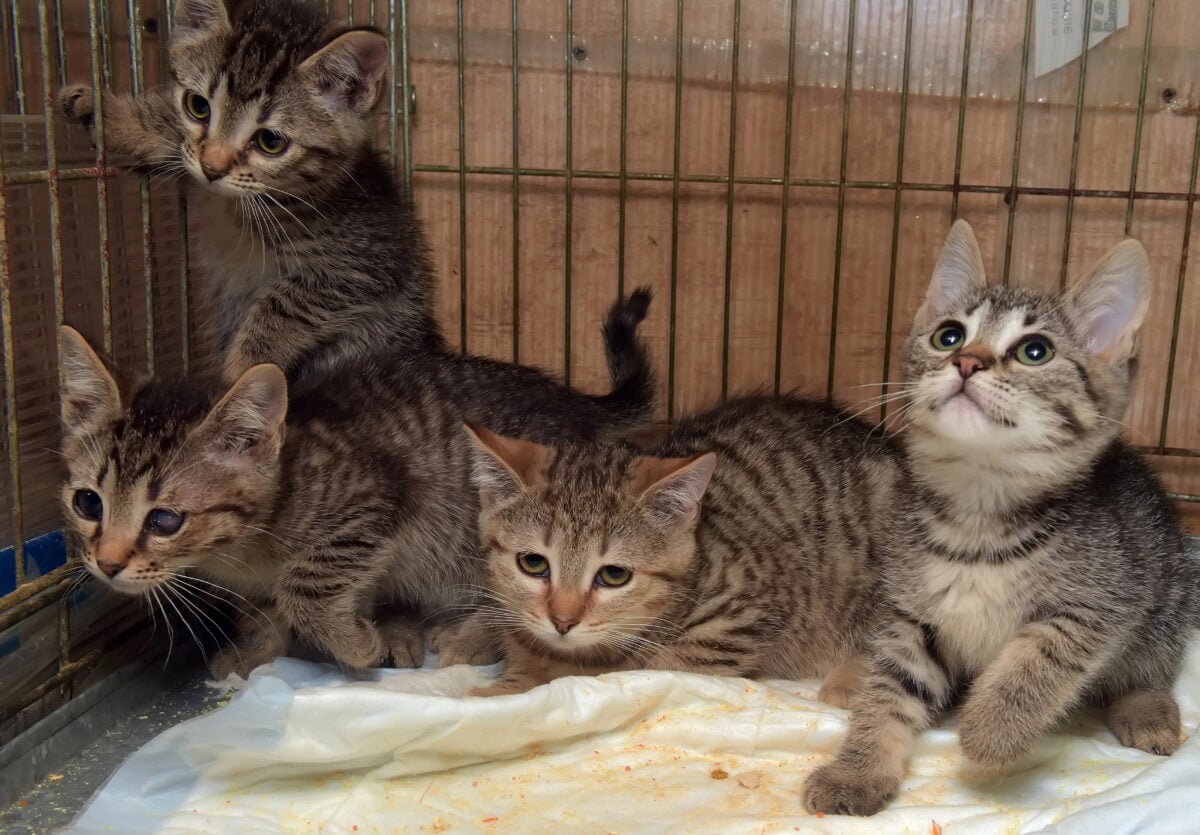
In peak seasons, shelters are over capacity. The longer kittens remain there, the more stress they experience and the fewer options shelters ultimately have.
Animal welfare decisions are rarely black-and-white, but one point is widely agreed on: kittens are better served in homes than in shelters. Single kitten syndrome isn’t settled science, and it shouldn’t be used as a gatekeeping tool when care, enrichment, and human commitment matter far more.
How To Support A Single Kitten & Build Solid Social Skills
If you’re raising a single kitten or adult cat, the goal isn’t to punish unwanted behavior. It’s to ensure their environment provides sufficient structure, feedback, and stimulation to support healthy social development.

A few consistent habits make the most significant difference:
1. Teach Kittens To Associate Human Handling With Positive Consequences
Handling tolerance is learned, not automatic, and it’s easiest to teach early.
- Pair brief handling (paws, ears, gentle restraint) with treats or praise
- Keep sessions short and end on a calm note
- Stop before overstimulation sets in
A few seconds of gentle handling followed immediately by a reward teaches kittens that touch leads to good things, not stress. This pays off later during vet visits, grooming, and daily care.
Did You Know?
According to the Feline Veterinary Medical Association, kittens are most open to human socialization between about 2 and 9 weeks of age. A lack of positive interactions with humans during this period can lead “cats to view humans as a non-friendly (threatening) species, resulting in a lifelong fear of humans.”
2. Prioritize Interactive Play (and Teach Kittens How to Play Nice)
Play isn’t optional enrichment — it’s how kittens burn energy and practice self-control.
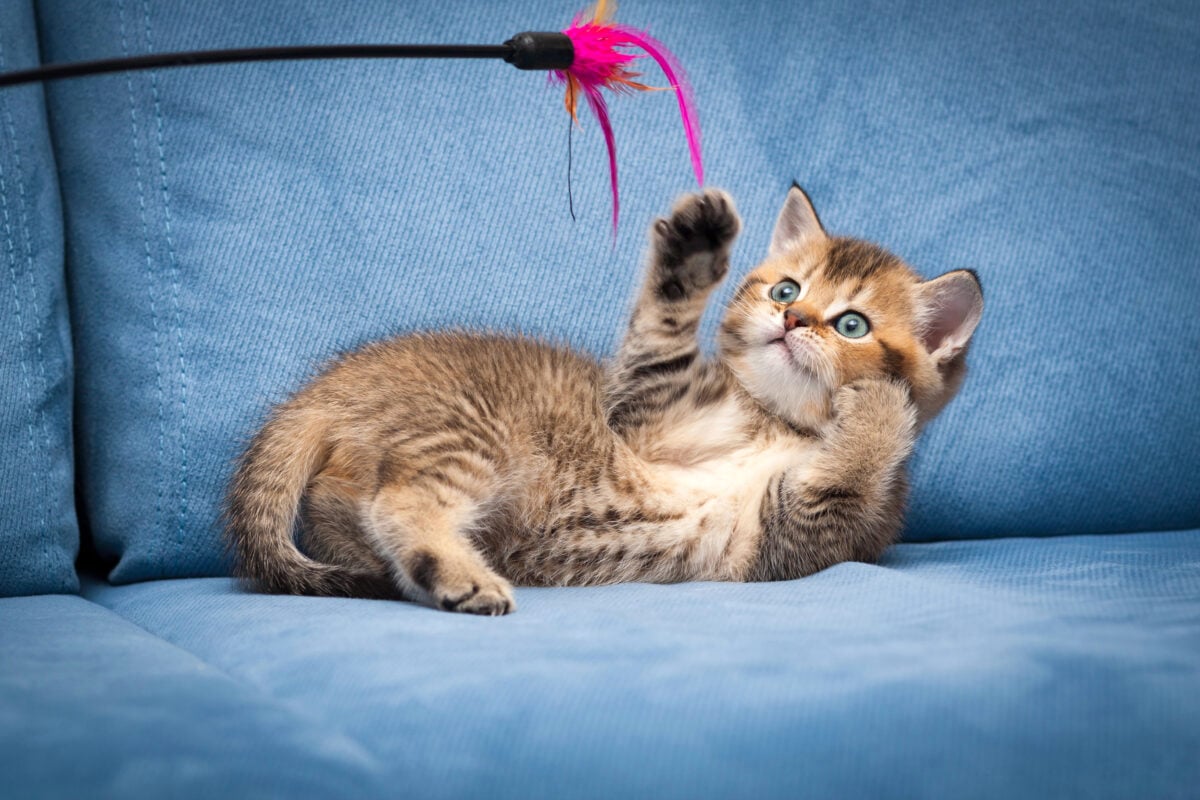
- Use wand toys, chase toys, or kickers instead of hands or feet
- Keep sessions short but frequent
- End play with a clear cooldown
If a kitten gets bitey in the evening, they often need more structured play earlier in the day. Ending play when bites get too hard and restarting only after calm behavior teaches that gentle play keeps the fun going.
3. Set Clear, Predictable Boundaries
Kittens learn boundaries through repetition and consistency.
- Avoid mixed signals during play
- Pause interaction calmly if play gets too rough
- Resume once the kitten settles
Predictable responses help kittens connect actions with outcomes without fear or punishment — especially important for single kittens without feline feedback. another cat reinforcing those limits.
4. Encourage Positive Interactions With New People
Single kittens often bond closely with one caregiver simply because that’s who they see most.
You can gently broaden their comfort zone by:
- Letting trusted visitors offer treats or play
- Pairing new people with positive experiences
- Allowing the kitten to approachon their own terms
Early, low-pressure exposure teaches kittens that new people are part of everyday life, not something to avoid.
5. Build A Stimulating Environment
A single kitten relies entirely on their environment for mental engagement.
Helpful enrichment includes:
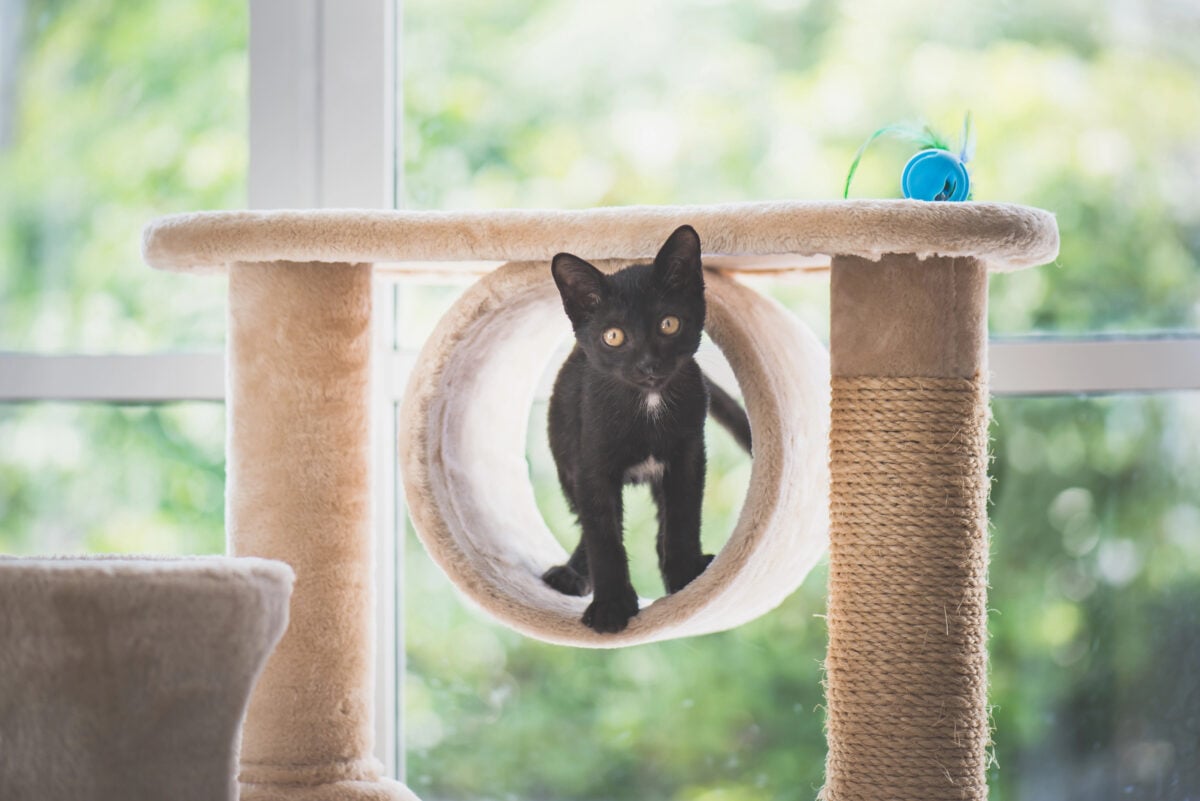
- Climbing spaces and window perches
- Puzzle feeders or treat-dispensing toys
- Rotating toys to keep novelty high
A well-set-up space does a lot of the work for you, reducing boredom before it turns into frustration or destruction.
6. Encourage Independence Alongside Attention
Affection matters, but so does self-regulation.
- Support solo play as well as interactive play
- Avoid reinforcing constant attention-seeking
- Make rest and downtime part of the daily rhythm
This balance helps kittens grow into confident, adaptable adults, not cats who need constant stimulation.
7. Adjust Expectations Over Time
Many behaviors soften naturally as kittens mature, especially when their needs are consistently met.
Progress is usually gradual. Signs like shorter play bites, faster settling, and less frustration mean your approach is working.
Raising a well-socialized kitten isn’t about doing everything perfectly. It’s about responding thoughtfully, staying consistent, and adjusting as your cat grows.
The Benefits Of Adopting Two Kittens Together
Adopting two kittens together can make certain parts of kittenhood easier — for both the cats and the people living with them.

From my personal experience, this is one area where I’ve seen a real difference. I adopted two female littermates when they were about four months old, and it was the smoothest multi-cat transition I’ve ever had. They bonded quickly, worked things outon their own, and skipped the tense “figuring each other out” phase I’d seen with other cats.
When kittens grow up alongside another kitten close in age, they naturally provide things humans can’t fully replicate:
They burn energy together.
Kittens play hard with each other, which often means fewer midnight zoomies and less pressure on you to be the sole source of entertainment.
They correct each other in real time.
Rough play gets instant feedback. Bite inhibition, boundaries, and pacing are learned naturally, without constant human intervention.
They learn social cues through daily interaction.
Littermates (or well-matched pairs) practice communication, body language, and conflict resolution in everyday life.
They’re less likely to get bored or frustrated.
Companionship helps fill gaps that toys and enrichment alone can’t always cover, especially for high-energy or people-focused kittens.
Aren’t Two Kittens More Work?
Many adopters are surprised to discover that two kittens don’t automatically mean twice the work. In some homes, it’s actually the opposite. Kittens entertain each other, settle more easily, and rely a little less on humans to meet every social need.
That said, adopting two isn’t always possible, and it isn’t required for a happy outcome. Plenty of single cats thrive with attentive care and enrichment.
For those who can make it work, though, a bonded pair often grows into a calmer, more balanced household, one where play, learning, and companionship happen naturally.
While adopting a second kitten can help prevent single kitten syndrome, it’s also important to understand potential challenges, like littermate syndrome, where closely bonded kittens may struggle with independence and social development.
Frequently Asked Questions
If you’re still wondering where your own cat fits into all of this, you’re not alone. Single kitten syndrome is one of those topics that raises more “what about my situation?” questions than clear yes-or-no answers.
Below are some of the most common questions cat owners ask. If yours isn’t here, feel free to share it in the comments — chances are someone else is wondering the same thing.
Is Single Kitten Syndrome Real Or A Myth?
It’s real in the sense that shelters and behaviorists observe consistent patterns in some cats raised without other kittens. It’s not a medical diagnosis, and it doesn’t affect every single kitten.
If I Adopted One Kitten, Did I Do Something Wrong?
No. Many people adopt single kittens due to availability, housing limits, finances, or existing pets. Single kitten syndrome isn’t a judgment on owners or adoption choices.
Can Adult Cats Have Single Kitten Syndrome?
The behaviors associated with single kitten syndrome usually stem from early development, but they can show up later if a cat didn’t get much social feedback as a kitten. That said, adult behavior is shaped by many factors, not just early life.
Does My Cat Need Another Cat To Be Happy?
Not necessarily. Some cats thrive as the only pet, especially with enough enrichment and interaction. A second cat can help in some cases, but it isn’t a requirement for a healthy or content cat.
Will These Behaviors Go Away On Their Own?
Many kitten behaviors soften with age, especially when paired with consistent play, structure, and boundaries. Improvement tends to be gradual rather than sudden.
Is It Too Late To Change Things If My Cat Is Already Older?
No. Cats continue learning throughout their lives. While early socialization matters, environment and routine continue to play significant roles well into adulthood.
A Well-Adjusted Cat Starts With The Right Support
If you’re raising a single kitten or trying to make sense of behaviors that feel confusing or intense, you’re definitely not the only one out there. It helps many feline owners understand what makes their kitties tick.
These Love Your Cat guides are good next reads to help you figure out your furry friend:
Do you have a cat who grew up solo and did great — or one who needed a little extra help learning boundaries? Tell us about your cat in the comments. We’re always curious how different personalities play out.