When you purchase through links on our site, we may earn a commission at no extra cost to you. Learn more.
You’ve told your cat to get off the counter for what feels like the hundredth time today. They jump down, but five minutes later, they’re right back where they started.
Table of Contents
Here’s the plot twist: Some of the most common ways we correct our cats can actually encourage the very behaviors we’re trying to stop. Even well-intentioned reactions can send the wrong message, leaving us wondering why nothing seems to work.
From shredded furniture and midnight meowing to biting and litter box troubles, there’s often more going on than meets the eye. Let’s look at the training mistakes cat owners make, why they backfire, and what actually works.

Start Here: Why Your Cat’s Bad Habits Are So Hard to Break
There’s nothing quite like the frustration of watching your cat do something you’ve spent weeks trying to stop. The shredded couch, the 4 a.m. wake-up calls, the litter trail covering your freshly cleaned countertops. At some point, you have to wonder whether you can train your cat to do anything.
Want our human-written content to rank above AI-generated garbage? Help us out by clicking this button!
Here’s the thing: Cats have their own priorities, and they don’t necessarily align with yours. So, when you’re trying to train your cat or break a bad habit, the key is to make it worth their while.
Cats aren’t particularly motivated by household rules, especially when breaking them comes with a reward. Once they discover something they enjoy, convincing them to give it up can be a challenge.
Sometimes, we’re even responsible for creating the habits that drive us crazy. Something that’s adorable when they’re kittens can quickly lose its charm when they grow up.
Then there are the ways we react when those habits become frustrating. We yell, chase, spray, scold, or give in because we’re tired of dealing with it, often without realizing what our cats are learning from the interaction.
The solution usually starts with understanding why your cat wants to do something in the first place. Once you address that motivation and provide a better alternative, you have a much better chance of changing the behavior for good.
The Plot Twist: Every time you react to your cat’s unwanted behavior, you might be teaching them something. The question is whether they’re learning the lesson you intended.
Quick Guide: Cat Training Mistakes That Backfire
Think you’re correcting your cat’s behavior? Here’s what they might actually be learning.
| The Mistake | Why It Backfires | What Works Better |
|---|---|---|
| Yelling, hitting, or spraying water | Creates fear and may teach cats to avoid you, not the behavior | Calm redirection |
| Reacting to attention-seeking | Even negative attention can encourage repeat performances | Ignore unwanted demands; reward calm behavior |
| Inconsistent rules | Occasional rewards teach cats that persistence might pay off | Consistent boundaries |
| Punishing after the fact | Cats may not connect your reaction to something they did earlier | Prevent problems and reward good choices |
| Expecting cats to follow human rules | Scratching, climbing, and hunting are natural instincts, not deliberate defiance | Appealing alternatives |
| Changing too much at once | Can overwhelm your cat and make it difficult to tell what’s actually helping | Make gradual, manageable changes |
| Ignoring boredom or stress | Unmet needs can fuel destructive or disruptive behaviors | Play, enrichment, and safe spaces |
| Overlooking medical problems | Pain or illness may be mistaken for a behavior problem | Veterinary evaluation |
Is Your Cat Driving You Crazy?
You’re not alone. Some of the most frustrating feline habits are actually perfectly normal behaviors. Discover why some of your cat’s “bad” behaviors are completely normal and why your cat can be so annoying.
6 Everyday Cat Habits That Drive Owners Crazy
We love our cats, but that doesn’t mean we love everything they do. From ruined furniture to interrupted sleep, some feline habits can test even the most patient cat owner’s limits.
The good news is that many of these behaviors are manageable once you understand what’s keeping them going. And sometimes, the smallest change in how you respond can make a surprisingly big difference.
1. Scratching Furniture & Carpets
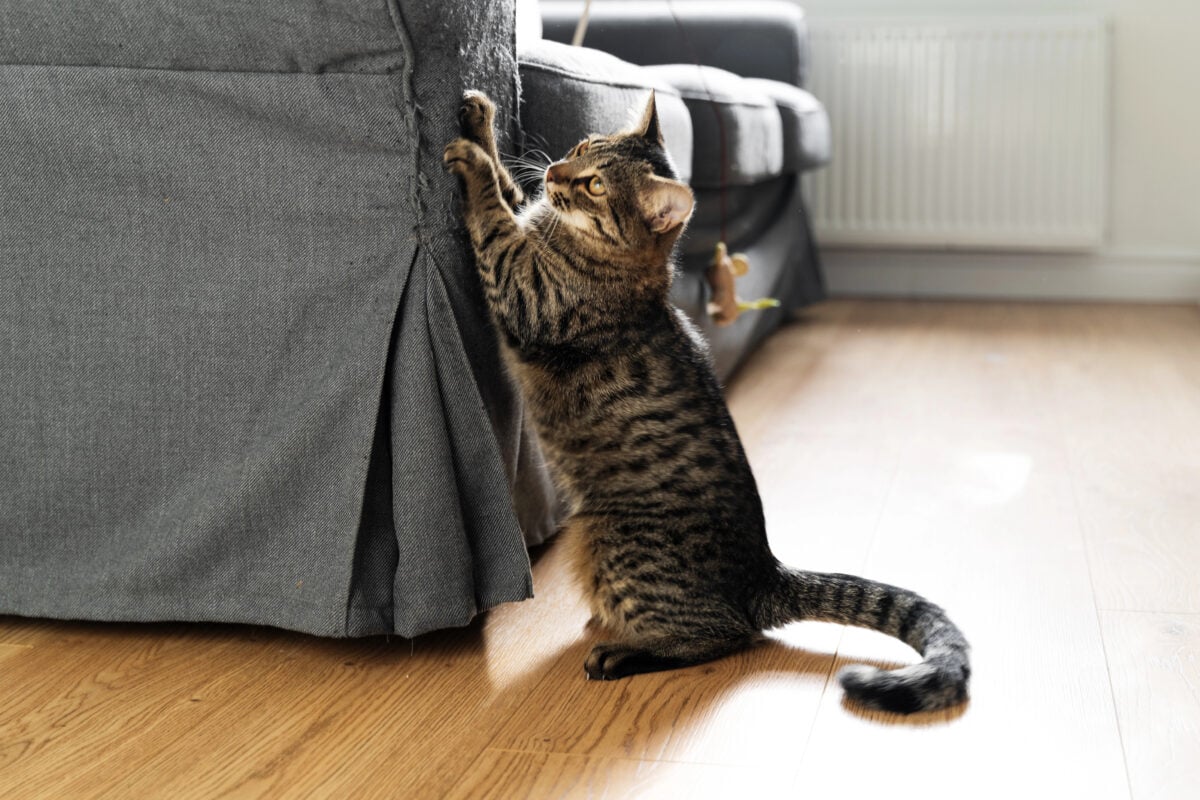
You’ve spent good money on scratching posts, yet your cat keeps destroying the couch. You scold them, move them away, and point them toward their perfectly good scratching post, only to find fresh claw marks on the furniture the next day.
As irritating as it is, scratching is a natural feline instinct. Cats scratch to stretch their muscles, maintain their claws, and leave visual and scent markers around their territory.
The Mistake: Fighting a Natural Instinct
One of the biggest mistakes owners make is assuming that simply owning a scratching post is enough. Unfortunately, that beautiful cat tree tucked into the guest bedroom isn’t particularly helpful when your cat wants to scratch the living room sofa.
Why might your cat be ignoring the scratching post?
| Possible Problem | What to Try |
|---|---|
| Not enough options | Provide scratchers in several favorite spots |
| Wrong orientation | Experiment with vertical, horizontal, and angled scratchers |
| Unappealing material | Try sisal, cardboard, wood, or other textures |
| Too small or unstable | Choose a sturdy scratcher that allows a full stretch |
| Poor placement | Position scratchers near furniture, resting spots, or entrances |
And if you’ve been yelling at your cat or punishing them for scratching the furniture, that can create additional problems. Punishment doesn’t eliminate the instinct to scratch, and your cat may simply learn to do it when you’re not around.
Why Declawing Isn’t The Answer
Declawing isn’t just removing claws. It involves amputating the last bone of each toe and can cause lasting pain and behavioral problems. Learn more about why declawing cats is harmful and safer alternatives.
What Actually Helps: Make Scratching Posts More Appealing
Pay attention to where and how your cat likes to scratch. If they’re tearing up the side of your favorite chair, start by placing an appropriate scratcher right beside it rather than expecting them to seek one out somewhere else.
You can also encourage your cat to investigate the new scratcher with catnip, toys, or treats. Reward them when they use it, and gradually move the post if you want it in a different location.
In the meantime, there’s nothing wrong with protecting your furniture while you’re building better habits:
- Furniture covers or blankets: Protect the areas your cat frequently scratches without creating a frightening experience.
- Furniture-safe double-sided tape: The sticky texture discourages some cats, although others ignore it or try to chew it. Avoid tape if your cat might ingest it.
- Scratch guards: Clear furniture protectors can shield vulnerable areas while you encourage your cat to use an alternative.
Whatever you try, make sure your cat has an appealing scratching surface nearby. The goal is to make the scratching post the most convenient and rewarding option.
Pro Tip: Make the better option the easier option. With the right scratching post in the right spot, your cat is much more likely to choose it over your furniture or carpet. Learn more tips on how to stop cats from scratching furniture.
2. Jumping on Kitchen Counters
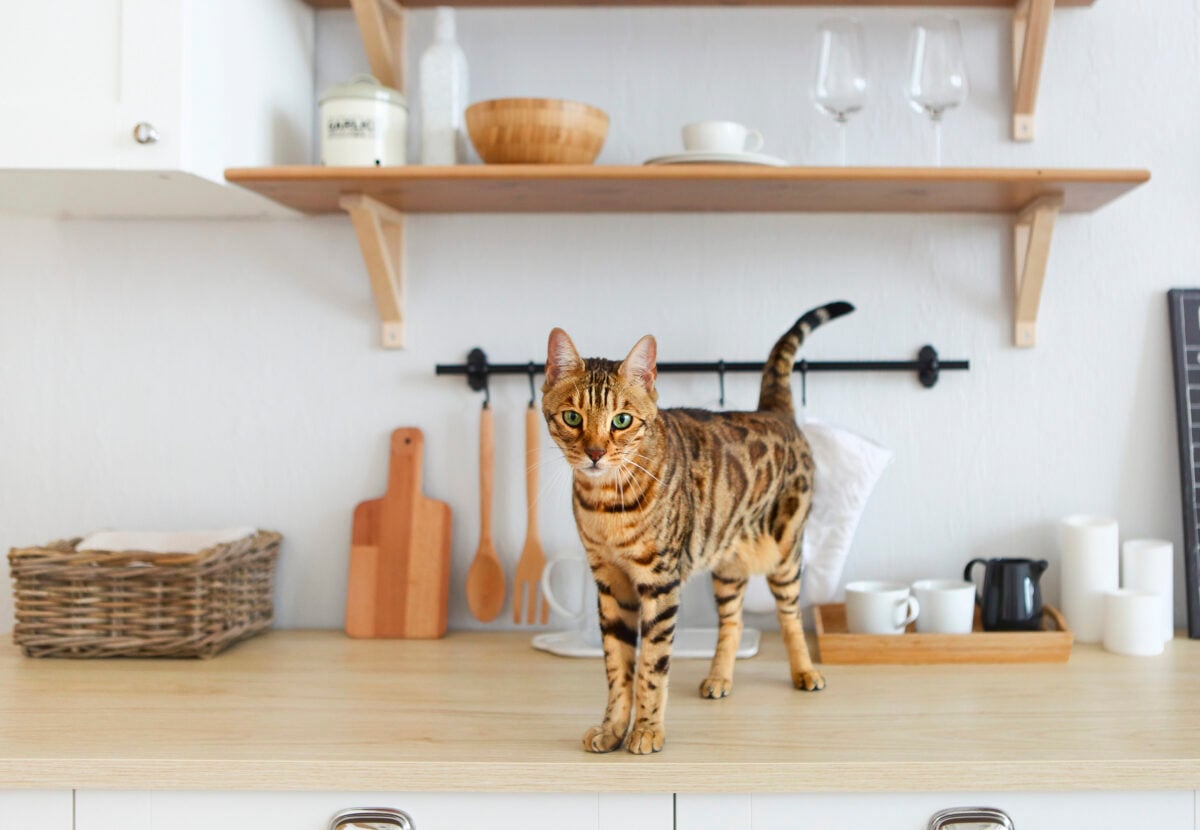
You’ve tried aluminum foil, spray bottles, motion-activated deterrents, and just about everything else the internet recommends. Yet somehow, your cat still ends up on the kitchen counter, usually five minutes after you’ve cleaned it.
Cats are natural climbers, and your countertop has plenty to offer. It’s elevated, provides an excellent view of the room, and might even have food, running water, or something interesting to investigate.
The Mistake: Making It a Battle
The biggest mistake is focusing on keeping your cat off the counter without considering why they want to be there. Spray bottles, aluminum foil, and motion-activated deterrents might interrupt the behavior, but they don’t necessarily make the counter any less appealing.
Cats can be remarkably good at working around our attempts to stop them. Some figure out how to avoid a motion sensor’s detection area, others become accustomed to certain deterrents, and many simply wait until nobody’s watching.
More importantly, startling or punishing a cat can create fear and anxiety without teaching them where they’re allowed to climb.
What Actually Helps: Give Them a Better View
Give your cat a better option that satisfies whatever is drawing them to the counter. Just remember that location matters. Your cat probably isn’t going to abandon a prime kitchen viewing spot for a cat tree in another room.
Here’s what might be drawing your cat to the counter and how to make another spot more appealing:
| What Your Cat Wants | What to Offer Instead |
|---|---|
| A high place to observe | A nearby cat tree, stool, shelf, or designated perch |
| Food or interesting smells | Clear counters of food, crumbs, and dirty dishes |
| Running water | A cat water fountain |
| Attention while you’re cooking | Reward your cat for staying on an approved nearby perch |
| Something to do | Interactive play, puzzle feeders, and climbing opportunities |
Consistency matters, too. Make sure everyone in the household follows the same rules rather than occasionally feeding your cat from the counter or encouraging them to jump up.
If your cat jumps on the counter while you’re preparing their food, consider changing your routine. Try keeping them in another room until dinner is ready, preparing their food on a low, easy-to-clean surface, or teaching them to wait in a designated spot.
You can also try gentle, passive deterrents, such as foil or temporary surface coverings, as long as they’re safe for your cat. But remember, some cats are particularly determined counter explorers. Even with better alternatives, you should always keep dangerous foods, sharp utensils, and hot surfaces out of reach.
Pro Tip: Sometimes it’s easier to wipe down your countertops before cooking than to spend your life fighting your cat over who gets to use them.
3. Opening Cabinets & Drawers
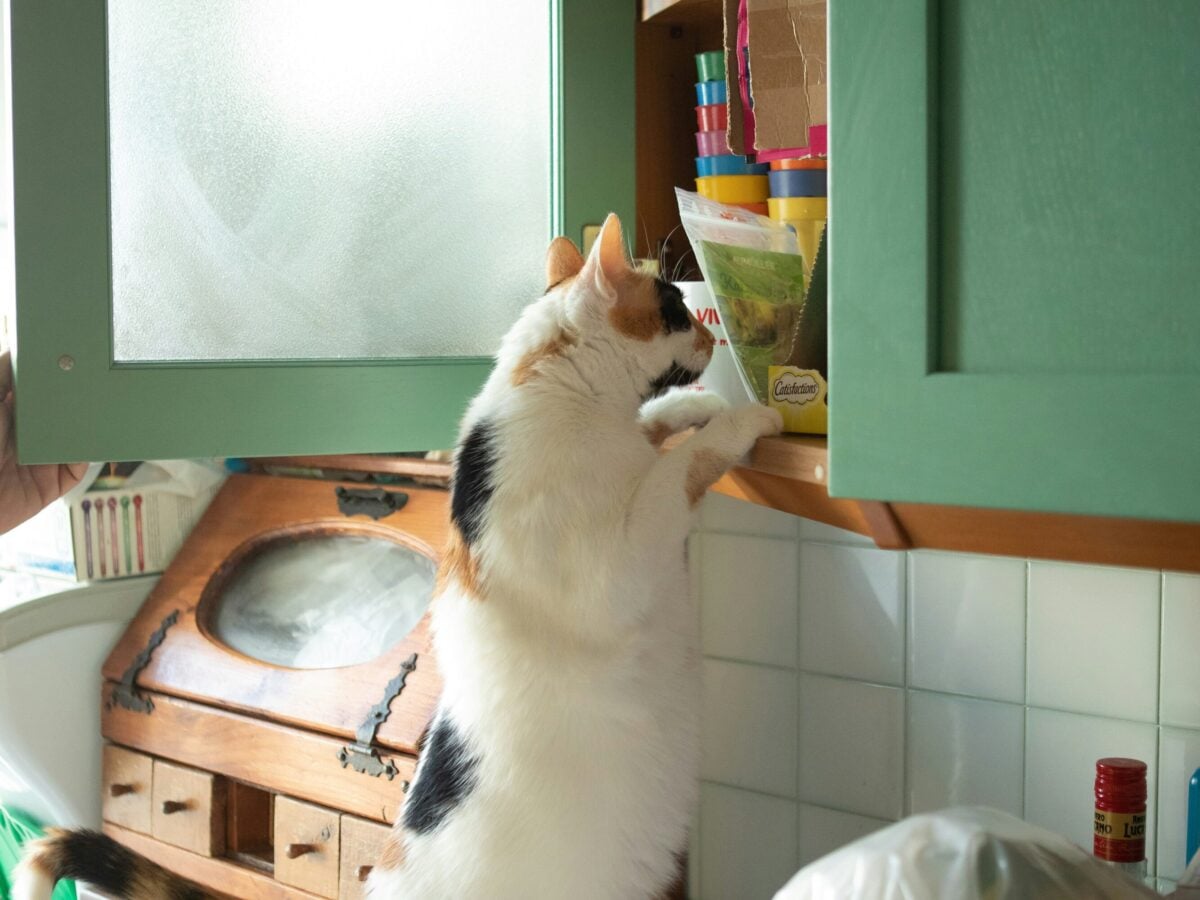
You hear a familiar rattling sound coming from the kitchen, followed by the unmistakable thud of a cabinet door. Sure enough, your cat has managed to open another cupboard and is happily investigating its contents.
Some cats are remarkably good at figuring out how doors, drawers, and cabinets work. Whether they’re hunting for food, searching for a cozy hiding spot, or simply satisfying their curiosity, a closed door can become an irresistible challenge.
The Mistake: Underestimating Their Curiosity
It’s tempting to repeatedly remove your cat from the cabinet, close the door, and hope they eventually get the message. Unfortunately, if opening that cabinet leads to food, an interesting hiding spot, or something fun to investigate, your cat has plenty of motivation to try again.
And once they’ve figured out how to open it, they may keep practicing. Some cats even discover that rattling cabinet doors gets their owner’s attention.
The bigger mistake, however, is assuming your cat will learn to leave dangerous cabinets alone. Cleaning supplies, medications, sharp objects, and certain foods can pose serious risks, and curiosity can get cats into trouble surprisingly quickly.
What Actually Helps: Remove the Reward
Sometimes, the easiest way to stop an unwanted behavior is to make it physically impossible. Childproof cabinet latches or magnetic locks can keep determined cats out of places they shouldn’t be, especially cabinets containing anything hazardous.
Other ways to manage your cat’s curiosity include:
- Secure dangerous items: Keep cleaning products, medications, toxic foods, and other hazards behind reliable latches or in inaccessible storage.
- Remove tempting rewards: Store cat food and treats in sealed containers that your cat can’t reach.
- Offer appropriate hiding spots: Cat tunnels, covered beds, and cardboard boxes give curious cats places to explore.
- Provide mental stimulation: Puzzle feeders and interactive toys can keep cats occupied with activities they’re actually allowed to investigate.
- Avoid turning it into a game: Repeatedly chasing your cat away or giving them lots of attention may make cabinet exploration even more interesting.
If your cat loves squeezing into enclosed spaces, consider giving them a designated cabinet or cubby that’s completely hazard-free and easy to access. Sometimes, letting your cat satisfy their curiosity in one acceptable place is easier than trying to keep them out of every cabinet in the house.
Just remember that safety comes first. Even a cat who’s usually well-behaved can end up somewhere dangerous when you’re not watching.
4. Waking You Up for Food
It’s 4 a.m., and your cat has decided it’s breakfast time. The meowing starts quietly, then escalates to pacing across your pillow, pawing at your face, or knocking something off the nightstand.
Eventually, you drag yourself out of bed and fill their food bowl, hoping to squeeze in another hour of sleep. Unfortunately, you may have just guaranteed another early wake-up call tomorrow.

The Mistake: Giving In Just Once
Cats are remarkably good at establishing routines, especially when food is involved. If meowing, pawing, or knocking things over gets you out of bed to serve breakfast, your cat has every reason to keep doing it.
And here’s where things get particularly frustrating: Giving in occasionally can make the habit even harder to break. Your cat learns that persistence sometimes pays off, even if it takes 20 minutes of increasingly desperate attempts to wake you.
Over time, your feline alarm clock may start going off earlier and earlier. What began as a perfectly reasonable 7 a.m. breakfast can gradually creep back to 6, then 5, and eventually some ungodly hour when the rest of the world is still asleep.
What Actually Helps: Stop Being the Breakfast Alarm
Break the connection between waking you up and getting fed. An automatic feeder can be a lifesaver because your cat learns that breakfast comes from a machine rather than the half-asleep human.
If your cat is particularly persistent, you might need to evict them from the bedroom. Earplugs or a white noise machine can help you survive the inevitable protests, but introduce the new sleeping arrangements gradually, especially if your cat is used to sharing your bed.
A few small changes can help break the early-morning routine:
| Instead of This | Try This |
|---|---|
| Feeding your cat as soon as you wake up | Stick to a consistent feeding time, regardless of when you get up |
| Getting up or giving in when the meowing escalates | Wait until your cat is calm before rewarding with food and attention |
| Expecting your cat to settle down on their own | Try bedtime play or a food puzzle using part of their daily food allowance |
You can also gradually shift breakfast later if you’ve accidentally established an earlier feeding time than you’d like. Small changes are often easier to manage than suddenly expecting a cat accustomed to a 4 a.m. meal to wait until 8.
Health Alert: Don’t assume your cat is simply being demanding. A sudden increase in appetite, persistent hunger, unexplained weight loss, or unusual vocalization can indicate an underlying medical condition. If you notice these changes, schedule a veterinary checkup.
5. Knocking Things Over
You’re sitting on the couch when you hear something hit the floor. You look over to find your cat standing beside a newly empty shelf, casually surveying the damage.
As irritating as this habit is, cats aren’t necessarily trying to drive us crazy. They’re curious creatures that use their paws to investigate objects, and watching something move, fall, or bounce can be surprisingly entertaining.

The Mistake: Rewarding the Chaos
Sometimes, our reactions make knocking things over even more rewarding. If your cat pushes a pen off your desk and you immediately jump up, shout, or chase them away, they’ve just discovered a reliable way to get your attention.
Of course, attention isn’t always the motivation. Cats have natural hunting instincts, and batting at small objects can mimic prey movement. For a bored cat, your collection of pens, hair ties, and other household belongings might be the most interesting toys in the room.
Simply scolding your cat or repeatedly picking up the same objects doesn’t address either of those motivations. And if your cat has learned that knocking things over gets you to stop what you’re doing, the habit may become even more appealing.
What Actually Helps: Give Them Something Else to Do
Give your cat something more interesting to investigate than your belongings. Regular opportunities to chase, pounce, bat, and explore can help satisfy their curiosity and hunting instincts.
Try incorporating a few of these activities into your cat’s routine:
- Interactive play: Wand toys and other prey-like toys give your cat something appropriate to stalk, chase, and capture.
- Puzzle feeders: Make your cat work for a portion of their daily food while providing mental stimulation.
- Independent play: Balls, tunnels, electronic toys, and other interactive toys can keep your cat entertained when you’re busy.
- Toy rotation: Put some toys away and swap them regularly to keep things interesting.
- Reward calm behavior: Give your cat attention when they’re playing appropriately or relaxing nearby, rather than waiting until something crashes to the floor.
You’ll also want to do a little cat-proofing. Keep fragile items, medication, breakables, and small objects that could be swallowed out of reach, especially if your cat has a habit of clearing every available surface.
And if you suspect your cat is knocking things over specifically to get your attention, try redirecting them before the behavior starts. A short play session or a few minutes of interaction might save your favorite coffee mug from an untimely demise.
Why Do Cats Knock Things Over? Boredom, curiosity, attention-seeking, or something else entirely? There’s more to this frustrating habit than you might think. Discover why cats knock things over and what their behavior might be telling you.
6. Meowing Excessively for Attention
Some cats are naturally chatty, while others seem determined to narrate every waking moment. But when your cat follows you around the house meowing nonstop, interrupts every phone call, or demands attention the second you sit down, even the most devoted cat lover can reach their limit.
And somehow, telling them to be quiet only seems to make the conversation louder.
The Mistake: Answering Every Demand
You might be rewarding the very behavior that’s driving you crazy. Even reactions that seem harmless, or downright discouraging, can teach your cat that meowing is an effective way to get what they want.
Here’s what your cat might be learning from your reactions:
| Your Reaction | What Your Cat Might Learn |
|---|---|
| Yelling at them to be quiet | Meowing gets your attention |
| Picking them up to stop the noise | Meowing earns physical contact |
| Offering a treat to distract them | Meowing might earn a snack |
| Ignoring them until you finally give in | Persistence eventually pays off |
Of course, not every meow is a demand for attention. Cats also vocalize when they’re hungry, stressed, uncomfortable, or trying to communicate a legitimate need.

What Actually Helps: Reward the Quiet Moments
The goal isn’t to stop your cat from communicating but rather to stop making excessive meowing the most effective way to get your attention.
Start by looking for patterns. Does your cat become particularly vocal when you’re working, watching television, or getting ready for bed? They may have learned that meowing is the fastest way to interrupt whatever has your attention.
Once you’ve ruled out unmet needs, try these strategies:
- Reward quiet behavior: Give your cat affection, treats, or playtime when they’re calm rather than waiting until they start demanding attention.
- Get ahead of the demands: Schedule regular play sessions and one-on-one time before your cat typically starts getting vocal.
- Provide enrichment: Puzzle feeders, window perches, interactive toys, and climbing spaces can help keep your cat occupied when you’re busy.
- Be consistent: If you’ve decided not to respond to attention-seeking meowing, make sure everyone in the household follows the same approach.
- Don’t discourage normal communication: Respond to genuine needs and pay attention to changes in your cat’s usual vocalizations.
And remember, you don’t have to ignore your cat completely. Sometimes, simply waiting for a brief quiet moment before offering attention can help reinforce a calmer way of asking.
Health Alert: If your typically quiet cat suddenly becomes unusually vocal, don’t assume they’ve developed a demanding personality. Increased meowing or yowling, especially in older cats, can be associated with pain, hyperthyroidism, cognitive changes, or other health problems. Learn more in our guide to why older cats become suddenly vocal.
5 Cat Habits That Are Easier to Prevent Than Fix
Some cat habits start innocently enough. A kitten attacking your fingers is adorable, sharing a little food from your plate seems harmless, and grooming can always wait until they’re older.
Unfortunately, the habits we encourage or overlook early on can become much harder to change later. A little preparation, consistency, and positive reinforcement can save you a lot of frustration down the road.
7. Biting Hands During Play
Few things are cuter than a tiny kitten wrestling with your fingers, kicking your hand with their back legs, or pouncing on anything that moves. Fast-forward a year, and suddenly those sharp teeth and claws aren’t nearly as entertaining.
Cats are natural hunters, and play allows them to practice stalking, chasing, grabbing, and biting. Unfortunately, they don’t understand why your hands were acceptable prey yesterday but are suddenly off-limits today.
The Mistake: Teaching Them Hands Are Toys
Using your hands as toys teaches your cat that human skin is fair game. While it may seem harmless with a young kitten, those play habits can follow them into adulthood.
Another mistake is responding to rough play by yelling, hitting, or grabbing your cat. These reactions can frighten them or escalate an already overstimulating interaction.
Even pulling your hand away can make things worse. To a playful cat, those quickly retreating fingers can look an awful lot like fleeing prey.
What Actually Helps: Redirect the Hunting Instinct
Teach your cat that toys are for hunting and hands are for gentle interactions. Wand toys, kicker toys, and other interactive options let your cat grab, bite, and kick without making your skin the target.
A few strategies can help:
- Keep hands out of playtime: Avoid wiggling fingers under blankets, wrestling with kittens, or encouraging your cat to chase your hands.
- Choose the right toys: Wand toys keep your hands away from sharp teeth, while kicker toys give your cat something appropriate to grab and bunny-kick.
- Redirect early: If your cat starts targeting your hands, offer an appropriate toy before the interaction escalates.
- Keep play sessions manageable: Short, regular sessions can help satisfy hunting instincts without pushing your cat into overstimulation.
- Reward gentle interactions: Give your cat attention and affection when they’re interacting calmly instead of grabbing or biting.
If your cat bites during play, calmly end the interaction once you can safely disengage. Avoid turning it into a wrestling match or punishing them for a behavior you may have encouraged for months.
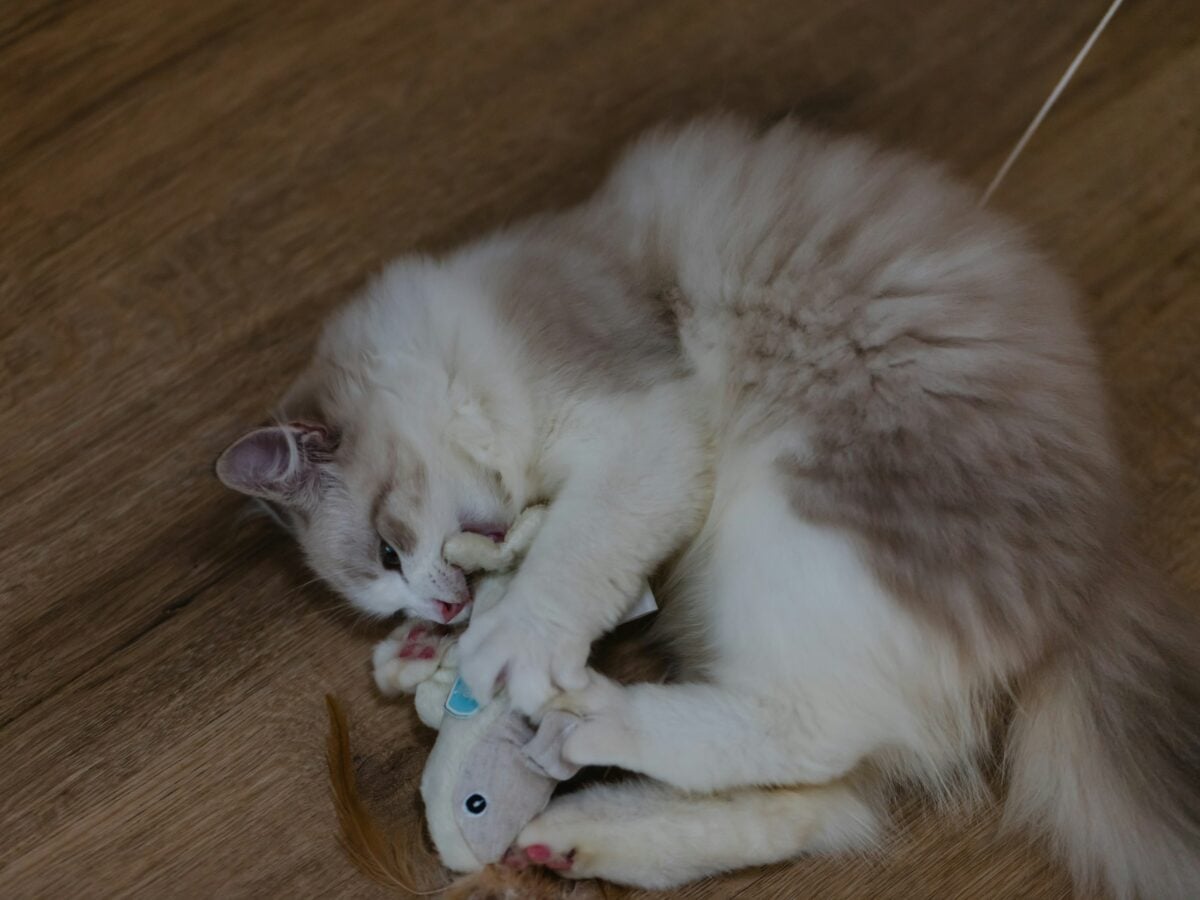
What If Your Cat Already Has Your Hand in Their Mouth?
Here’s a tip that feels completely backward: If your cat grabs your hand during play, resist the urge to yank it away. That sudden movement can trigger their hunting instincts, potentially causing them to bite down harder or dig in with their claws.
Instead, try keeping your hand completely still. Without movement to chase, your cat may lose interest and loosen their grip.
If they’re holding on, you can also try a very slight, gentle movement toward your cat rather than pulling away. This may prompt them to release, allowing you to withdraw your hand slowly.
Don’t force your hand deeper into their mouth or attempt this with a frightened or aggressively attacking cat. The goal is to disengage safely, not provoke a stronger reaction.
Safety Note: Cat bites that puncture the skin can become infected quickly. Wash the wound immediately and seek prompt medical advice, even if the puncture looks small.
8. Begging or Stealing Your Food
You sit down to enjoy dinner, and suddenly, you have company. Your cat is sniffing your plate, reaching for your fork, or trying to sneak a bite the moment you look away.

The Mistake: Sharing From Your Plate
Giving your cat food from your plate, even once, can create a relentless beggar. If you ever want peace at dinnertime, don’t offer your cat part of your meal.
But sharing food isn’t the only way you might be encouraging the behavior.
| What You Do | What Your Cat Might Learn |
|---|---|
| Leave pantry items within reach | Food packaging is worth tearing into |
| Give in after repeated begging | Persistence might earn a snack |
| Leave dirty plates in the sink | Table scraps are fair game |
| Let guests sneak them treats | Begging works on certain people |
Scolding, pushing your cat away, or repeatedly removing them from the table doesn’t necessarily solve the problem, either. The possibility of getting something delicious may be far more motivating than your disapproval.
What Actually Helps: Keep Your Meals Off-Limits
Stop making your meals an opportunity for your cat to score a snack. Establishing consistent boundaries is much easier than negotiating with a determined cat every time you sit down for dinner.
A few strategies can help:
- Keep everyone consistent: Make sure family members and guests aren’t sneaking your cat bites under the table.
- Keep them occupied: Offer a puzzle feeder, lick mat, or portion of their regular food while you eat.
- Remove temptation: Don’t leave food unattended on tables or countertops. Even dirty plates in the sink can become a gateway to food stealing.
You might also try feeding your cat around the same time you eat, especially if they become particularly interested in your meals. Just account for that food in their daily allowance rather than adding an extra dinner.
And remember, some human foods are dangerous for cats. Keep onions, garlic, chocolate, alcohol, and other toxic ingredients out of reach.
9. Darting Out the Door
You open the front door to grab a package, and suddenly, a furry blur shoots past your ankles. Now you’re standing barefoot in the yard, trying to convince your cat to come back inside before they run farther away.
The Mistake: Underestimating the Escape Artist
If you don’t want your cat constantly trying to sneak outside, one of the easiest ways to prevent the habit is to avoid introducing them to outdoor adventures in the first place.
Leash walks and catios can provide wonderful enrichment, but there’s a potential downside: Once your cat discovers how exciting the Great Outdoors can be, they may start looking for opportunities to get back out.
Of course, some cats are determined door-dashers even if they’ve never set a paw outside. Curiosity, unfamiliar smells, wildlife, and the occasional open door can be tempting enough.
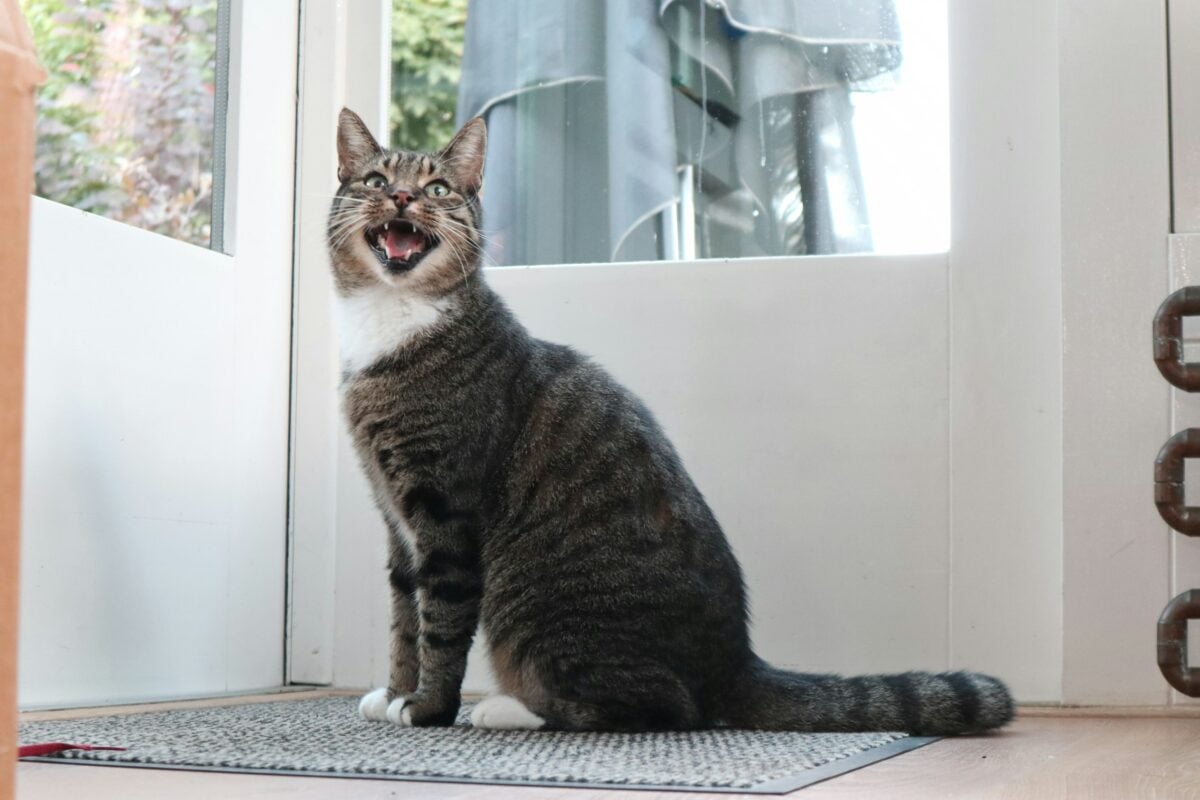
What Actually Helps: Make the Door Less Tempting
Indoor-only cats that escape often stay relatively close to home, sometimes hiding beneath porches, decks, or bushes. However, that doesn’t mean they’ll come running when you call, and preventing an escape is much easier than finding a frightened cat.
Make escaping harder and staying inside more rewarding. Establishing a consistent doorway routine can help prevent your cat from treating every open door as an invitation.
A few strategies can help:
- Create a barrier: Use a secure screen door, enclosed entryway, or other physical barrier to keep your cat away from exterior doors.
- Build a doorway routine: Before opening the door, toss a treat or toy away from the entrance to encourage your cat to move elsewhere.
- Keep guests informed: Remind visitors to watch for your cat before opening exterior doors, especially during busy gatherings.
- Keep outdoor access predictable: If you offer supervised outdoor time, use a consistent routine and secure equipment rather than letting your cat wander through an open door.
And if your cat does escape, resist the urge to chase them. Stay calm, check nearby hiding spots, and try coaxing them back with familiar sounds, treats, or food.
For extra peace of mind, make sure your cat is microchipped and that your contact information is current. Even indoor-only cats can escape unexpectedly.
Why Do Cats Run Away? Your cat might have everything they need at home, so why are they so determined to escape? From curiosity and hunting instincts to fear and stress, there are several reasons cats wander off. Discover why cats run away and what might be drawing yours outdoors.
10. Fighting Grooming & Nail Trims
You’ve got the brush in one hand and treats in the other, but your cat isn’t interested in negotiating. After a few minutes of squirming, swatting, growling, and attempting to escape, you’ve managed to brush approximately six hairs.
Nail trims and toothbrushing can be even more challenging. And unfortunately, putting these tasks off doesn’t make them any easier.
The Mistake: Forcing the Issue
Waiting until your cat needs grooming before getting them comfortable with it. If the first time you try to brush your cat is when their fur is tangled, or you only handle their paws when it’s time for a nail trim, they may associate these experiences with discomfort and restraint.
This can become a particularly big problem for longhaired cats, who are more prone to mats and tangles. As cats age, arthritis, reduced flexibility, and other health issues can also make self-grooming more difficult.
What Actually Helps: Start Small & Build Trust
Start introducing your cat to gentle handling early, ideally when they’re still a kitten. The goal is to make brushing, paw handling, and other routine care feel familiar rather than frightening.
But don’t worry if your cat is already an adult. Older cats can still learn to tolerate grooming through gradual, positive experiences.
Here’s how to build their confidence, one small step at a time:
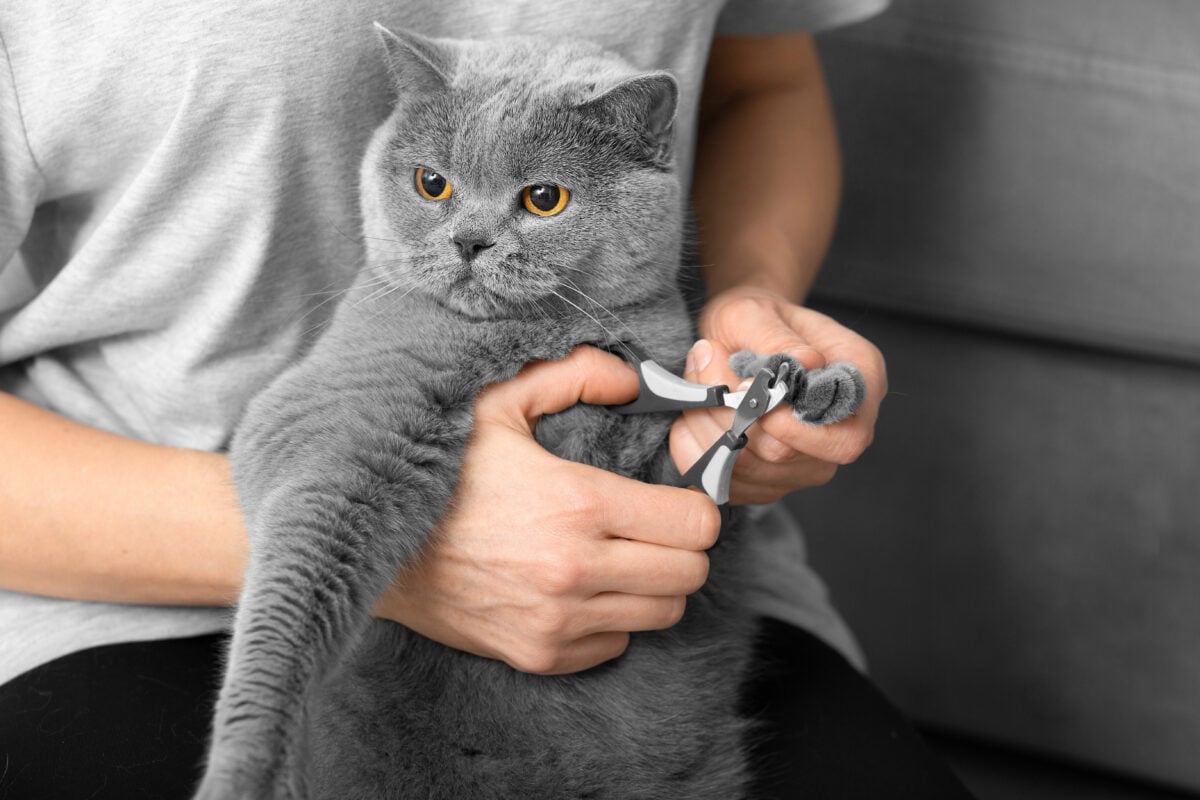
- Introduce the tools: Let your cat investigate brushes, nail clippers, and toothbrushes without immediately attempting to use them.
- Get comfortable with handling: Briefly touch their paws, ears, and face, rewarding relaxed behavior without forcing contact.
- Start ridiculously small: One brush stroke or one trimmed nail is a perfectly good first session. Pair each step with a favorite treat or another reward your cat enjoys.
- Build up gradually: Practice regularly, increasing the duration only as your cat becomes comfortable. If they pull away, swish their tail, or become tense, stop and try an easier step next time.
You can also practice gently lifting your cat, examining their mouth, and briefly handling their paws when no grooming is necessary. These skills can make future veterinary visits and routine care much less stressful.
And remember, short, positive sessions are generally more productive than occasional wrestling matches.
11. Refusing to Get Into The Carrier
You’ve got a veterinary appointment in 20 minutes, and your cat has mysteriously vanished. The carrier is sitting by the front door, the treats aren’t working, and you’re contemplating whether you can reschedule your appointment for next year.
For some cats, the mere sight of their carrier is enough to send them running for the nearest hiding spot. And considering what usually happens after they get inside, can you really blame them?
The Mistake: Only Bringing It Out for Vet Visits
Only bringing out the carrier when it’s time for a veterinary visit or car ride. If every trip inside ends with unfamiliar smells, strange people, and an uncomfortable examination, your cat may quickly learn that the carrier means trouble.
Another mistake is forcing your cat inside at the last minute. Chasing, grabbing, and wrestling them into a carrier can make an already stressful experience even worse.
And if your carrier spends the other 364 days of the year collecting dust in a closet, your cat has very few opportunities to develop a positive association with it.
What Actually Helps: Make the Carrier Part of Everyday Life
Make the carrier a familiar part of your cat’s environment rather than a warning that something unpleasant is coming. Ideally, your cat should be comfortable entering it long before you need to leave the house.
Here’s how to make the carrier less scary, one step at a time:
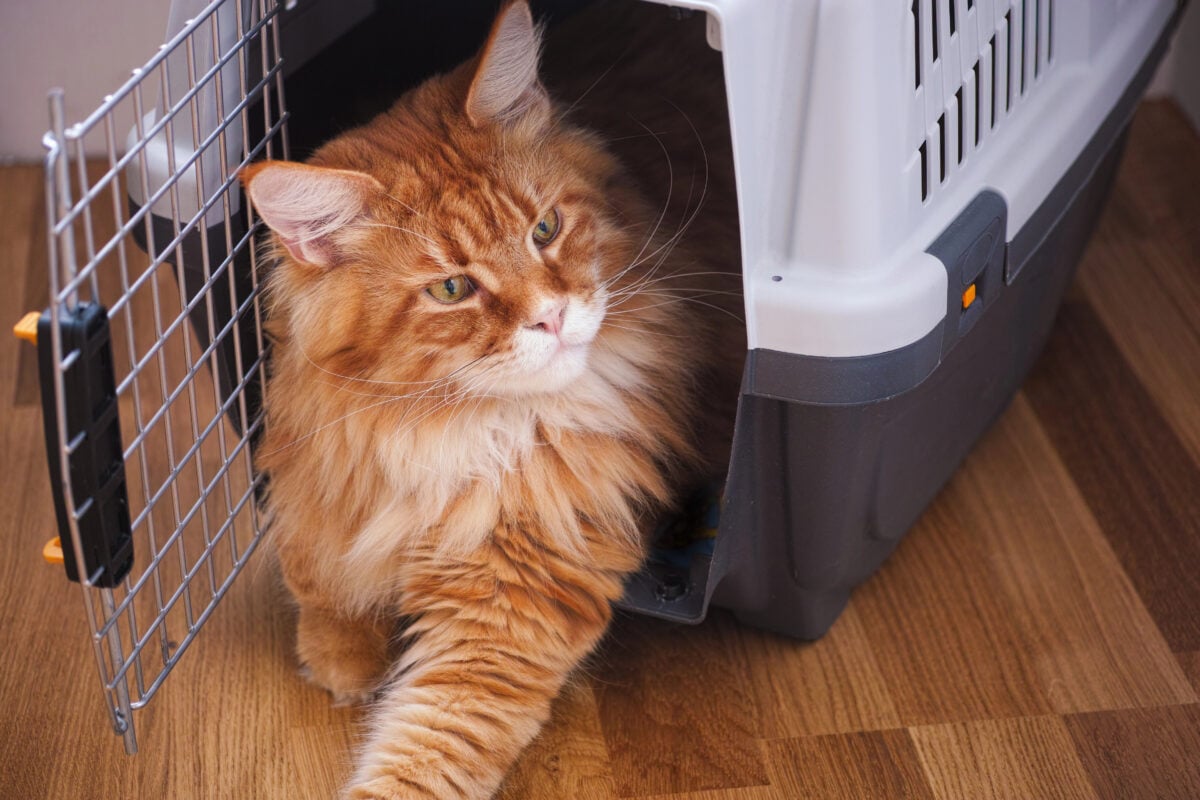
- Leave it out: Keep the carrier in a quiet, accessible location with the door secured open so your cat can investigate it voluntarily.
- Make it inviting: Add familiar bedding or a blanket that smells like home.
- Reward curiosity: Place treats near the entrance, then gradually farther inside as your cat becomes comfortable.
- Practice without going anywhere: Once your cat willingly enters, briefly close the door, reward them, and reopen it before they become distressed.
- Build up gradually: Practice lifting the carrier, walking around the house, and eventually taking short car rides, progressing at your cat’s pace.
Don’t overlook the carrier itself. A sturdy model with a removable top can make veterinary examinations easier for cats that are uncomfortable being pulled through a small opening.
Keep practice sessions short and positive. There’s no prize for getting your cat inside quickly if the experience leaves them even more frightened of the carrier.
And remember, carrier training isn’t just about making veterinary appointments easier for you. A cat who willingly enters their carrier is much easier to transport during an emergency, evacuation, or unexpected trip.
3 Cat Behaviors That Warrant More Attention
Some cat behaviors are irritating. Others can leave you wondering whether something is seriously wrong.
When a cat suddenly stops using the litter box, lashes out during petting, or becomes aggressive toward another pet, it’s especially important to look beyond the behavior itself. Pain, fear, stress, and other underlying problems can be easy to overlook when you’re focused on stopping what’s happening.
12. Peeing or Pooping Outside the Litter Box
Few things test your patience quite like discovering cat pee on your freshly washed bedding. Or worse, realizing that suspicious smell you’ve been searching for is coming from the corner of your living room.
It’s tempting to think your cat is acting out, especially when they seem perfectly capable of using their litter box. But cats rarely abandon their bathroom habits without a reason.
The Mistake: Assuming It’s Spite
Assuming your cat is being spiteful or deliberately misbehaving. Yelling, rubbing their nose in the mess, or punishing them after an accident won’t teach them where to go. It may simply make an already stressful situation worse.
One of the biggest mistakes is overlooking a medical problem. Urinary inflammation, bladder stones, constipation, arthritis, and other conditions can make using the litter box painful or difficult.
Sometimes, the problem is the litter box itself. Cats can be remarkably particular about cleanliness, location, litter texture, and even the size of the box.
And if you’ve recently changed litter brands, moved the box, or introduced another pet, your cat may be reacting to changes you hadn’t considered.
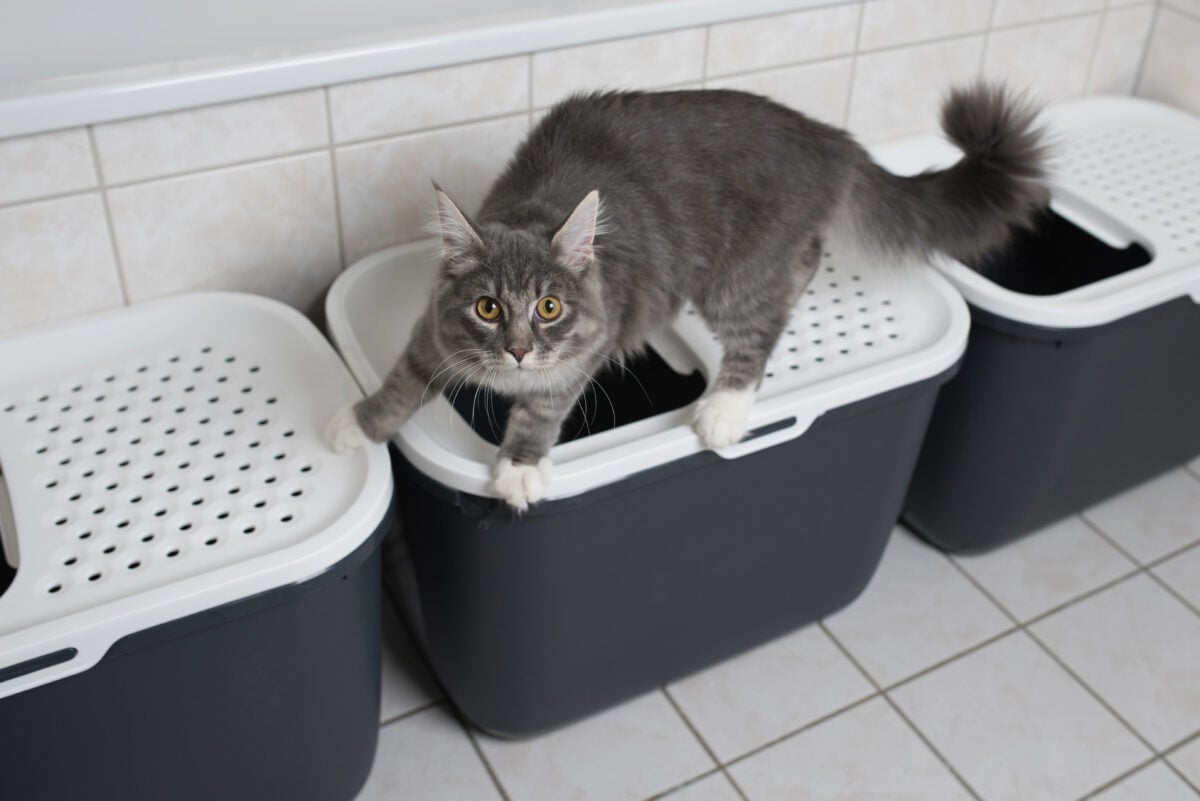
What Actually Helps: Find the Real Cause
Start with a veterinary visit, especially if your cat’s bathroom habits have changed suddenly. Once medical problems have been ruled out or treated, take a closer look at their litter box setup.
| Possible Problem | What May Help |
|---|---|
| Dirty litter box | Scoop daily and clean the box regularly |
| Not enough boxes | Aim for one box per cat, plus one extra |
| Litter they dislike | Try unscented litter or a different texture |
| Poor box location | Choose quiet, accessible spots away from noisy appliances |
| Stress or conflict | Reduce triggers and provide separate resources |
| Difficulty getting inside | Try a larger box with a low entry |
| Sudden litter or box changes | Return to a familiar setup or introduce changes gradually |
Don’t change everything at once. If you suspect your cat dislikes their litter, offer a second box with a different type rather than suddenly replacing the litter in every box.
Clean accidents thoroughly with a pet-safe enzymatic cleaner to help remove lingering odors. Avoid ammonia-based cleaners, which can smell similar to urine.
And pay attention to where the accidents happen. A cat repeatedly urinating beside the box may be experiencing a different problem from one spraying small amounts of urine on vertical surfaces.
Litter Box Troubles? When your cat starts having accidents, figuring out why is only half the battle. Learn why cats pee outside the litter box, whether cats can share a litter box, and how often you should change cat litter to help keep everyone happy.
13. Biting or Scratching During Petting
Your cat climbs into your lap, curls up, and starts purring while you scratch behind their ears. Everything is going beautifully until, seemingly out of nowhere, they turn around and sink their teeth into your hand.
What happened? You were having such a nice moment together.
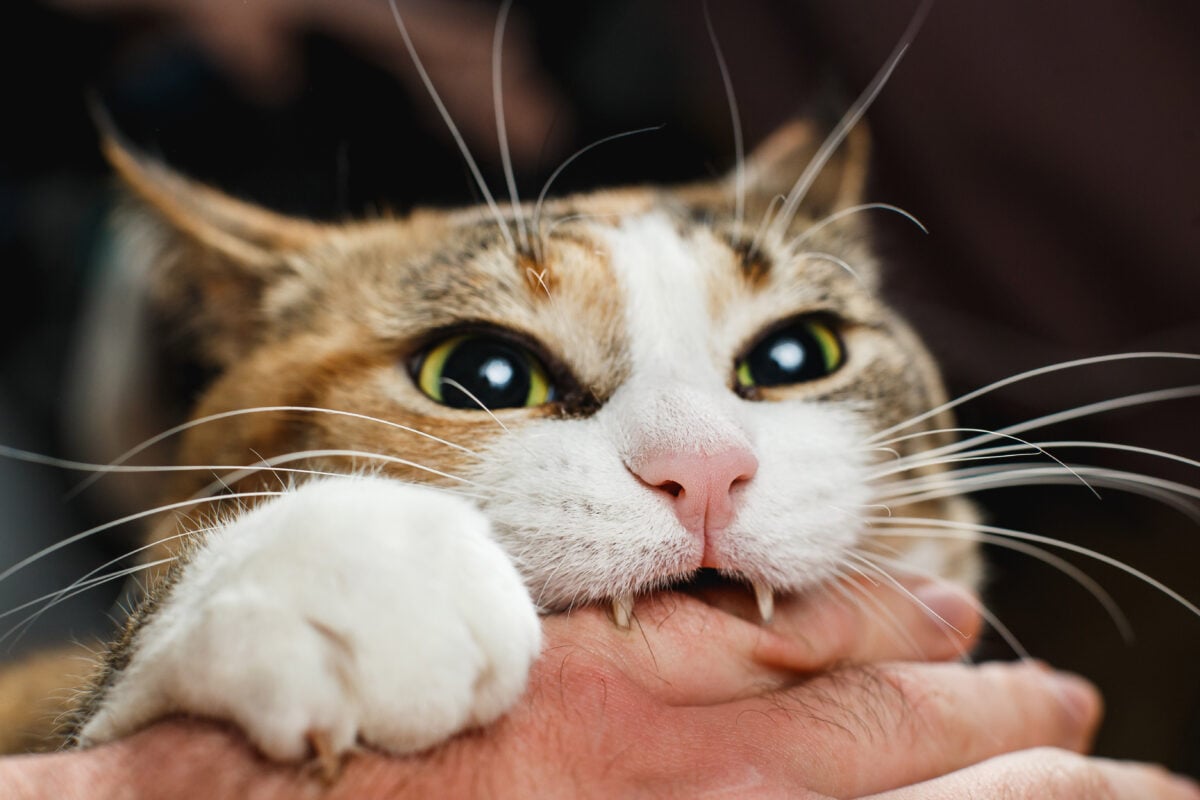
Why Does Your Cat Bite During Affection? One minute, they’re licking your hand or enjoying a good scratch. The next, you’re getting bitten. Discover why cats lick you and then bite and what those gentle cat bites might actually mean.
The Mistake: Missing the Warning Signs
Assuming that because your cat wanted affection, they want an unlimited supply of it. Some cats love a long cuddle session, while others have a surprisingly short tolerance for physical contact.
Petting-induced aggression can happen when repeated touching becomes overstimulating or uncomfortable. Your cat may have genuinely enjoyed those first few scratches, but somewhere along the way, the experience stopped feeling good.
The bigger mistake is missing the warning signs. What seems like a completely unprovoked bite may actually be your cat’s final attempt to tell you they’ve had enough.
Watch for these subtle signals:
- Tail twitching or swishing: Especially when the movements become quicker or more forceful.
- Ears turning backward: Your cat may flatten their ears or repeatedly flick them.
- Skin rippling: The skin along their back may twitch when you touch it.
- Turning toward your hand: A sudden glance or head turn can be an early warning.
- Body tension: Your cat may become restless, stiffen, or stop leaning into your touch.
Continuing to pet your cat after these warnings can turn mild irritation into biting or scratching. Scolding them afterward doesn’t address the discomfort that triggered the reaction.
What Actually Helps: Let Your Cat Set the Limits
Let your cat decide how much affection they’re comfortable receiving. Pay attention to where they enjoy being touched, how long they tolerate petting, and what their body language looks like when they’re relaxed.
A few strategies can make cuddle time more enjoyable for everyone:
- Let your cat initiate: Allow them to approach and choose whether they want physical contact.
- Keep petting sessions short: Try a few gentle strokes, then pause to see whether your cat wants more.
- Stick to favorite spots: Many cats prefer being stroked around the cheeks, chin, and head rather than their belly, paws, or lower back.
- Don’t force affection: Avoid restraining your cat, holding them in place, or insisting on cuddles when they’re trying to leave.
You can also try what some feline behavior experts call a consent test. Pet your cat briefly, then stop and see what they do. If they lean toward your hand, rub against you, or otherwise invite more contact, you can continue.
If they move away or show no interest, let them be. Sometimes sharing the couch without touching each other is exactly the kind of quality time your cat wants.
Is Your Cat Telling You to Stop?
Cats often give subtle warnings before they bite or scratch. Here’s what to watch for:
| What You Notice | What It Might Mean |
|---|---|
| Tail twitching or swishing | Growing irritation or overstimulation |
| Ears turning sideways or backward | Discomfort or uneasiness |
| Skin rippling along the back | Sensitivity to touch |
| Body stiffening or turning toward your hand | A bite or swat may be coming |
| Pulling away or walking off | Your cat wants the interaction to end |
Health Alert: If your normally affectionate cat suddenly becomes sensitive to touch, starts biting when you pet a particular area, or seems uncomfortable being picked up, don’t assume it’s just overstimulation. Pain from arthritis, injury, dental disease, or other medical conditions can make handling unpleasant. Schedule a veterinary examination to investigate the change.
14. Fighting With Other Pets or Lashing Out at People
One minute, your cats are peacefully sharing the living room. The next, there’s hissing, flying fur, and a full-blown wrestling match that definitely isn’t playtime.
Or maybe your cat suddenly swats at you when you walk past, even though you’ve done absolutely nothing to provoke them. Whether they’re reaching out with their claws or launching into a full-blown attack, there’s often more going on than meets the eye.
The Mistake: Punishing Fear or Frustration
Assuming your cat is being mean, territorial, or simply doesn’t like the person or pet they’re attacking. Aggression can have several causes, including fear, pain, stress, competition for resources, and frustration.
Punishing an aggressive cat can make matters worse. Yelling, spraying water, or physically restraining them may increase fear and stress, potentially escalating the aggression.
And one of the biggest mistakes owners make is trying to break up a catfight with their bare hands. Even a normally affectionate cat can cause serious injuries when highly agitated.
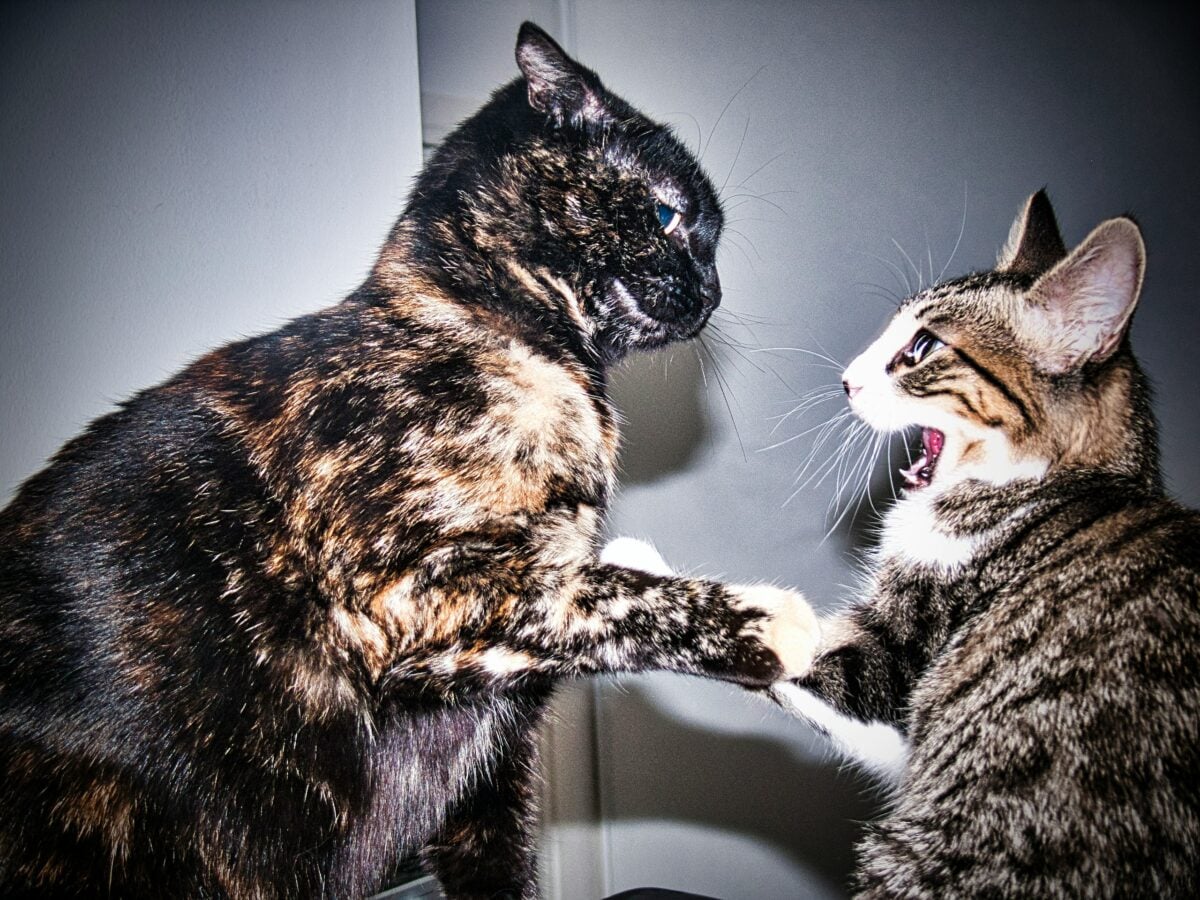
Redirected Aggression
Ever had your cat suddenly lash out at you or another pet for seemingly no reason? They may be redirecting frustration from something else.
Imagine you scold your cat for knocking a full glass of water off the counter. Your other cat walks over to investigate the commotion and suddenly finds themselves on the receiving end of the first cat’s frustration.
The same thing can happen to people. A cat who’s frightened, overstimulated, or already worked up may swat or bite someone nearby, even if that person had nothing to do with the original problem.
What Actually Helps: Identify the Triggers
Identify what’s triggering the aggression before trying to correct the behavior. Look for patterns involving feeding times, unfamiliar animals, changes in routine, crowded spaces, or particular interactions.
A few strategies can help:
- Make introductions slowly: Give new pets time to adjust through separate spaces, scent exchanges, and gradual, supervised interactions. Rushing introductions can create tension that’s difficult to undo. Learn more about the warning signs when introducing cats.
- Give everyone their own resources: Provide multiple feeding stations, water bowls, litter boxes, scratching surfaces, and resting spots throughout the home.
- Watch for subtle tension: Staring, blocking doorways, stalking, and preventing another cat from reaching resources can signal trouble before a fight breaks out.
- Create escape routes: Cat trees, shelves, hiding spots, and separate resting areas allow cats to avoid one another when they need space.
- Reduce known triggers: If outdoor cats cause agitation, try blocking the view or limiting access to the problem window.
If a fight has already started:
- Separate cats safely: Use a sturdy barrier rather than your hands, and allow everyone to calm down before attempting further interaction.
- Reintroduce after conflicts: If cats have started fighting, separate them and allow time to settle before attempting a gradual reintroduction. Don’t force them back together immediately.
Don’t force cats to spend time together or expect them to work out serious conflicts on their own. Some cats become close companions, while others are perfectly content maintaining a respectful distance.
Important: If your cat suddenly becomes aggressive toward you or another pet, schedule a veterinary visit to rule out pain or illness. For persistent or escalating aggression, a veterinarian or qualified feline behavior professional can help develop a safe management plan.
Why Redirection Works Better Than Punishment
Ever notice how your cat suddenly remembers the house rules when you walk into the room? They hop off the counter, abandon your favorite chair, or stop whatever questionable activity they’ve been enjoying.
Then you leave, and it’s business as usual.
Here’s the problem with punishment: Your cat may learn to avoid getting caught without ever learning what you actually want them to do. Yelling, spraying water, or chasing them away can also create fear and stress, making an already frustrating situation worse.
Redirection takes a different approach. Instead of trying to convince your cat to stop wanting something, you give them an acceptable way to get it.
A few things to remember:
- Make the alternative appealing: Your cat needs a good reason to choose it over their current favorite activity.
- Reward the right behavior: Treats, play, and attention can reinforce the choices you want them to repeat.
- Get the timing right: Reward your cat immediately so they can connect their behavior with the outcome.
- Be consistent: If something works for your cat once in a while, they may keep trying their luck.
And don’t expect every solution to work immediately. Cats have preferences, and sometimes finding the right alternative takes a little experimentation.
Small Changes That Prevent Bigger Cat Behavior Problems
There’s a special kind of regret that comes with realizing you’ve spent the last three years encouraging something you now desperately want your cat to stop doing.
Maybe you taught your kitten that fingers make excellent chew toys. Or perhaps you shared a little chicken from your plate, and now you haven’t eaten a peaceful dinner since.
Some of the easiest cat habits to prevent are also the most frustrating to undo. And while you can’t anticipate every behavior problem, a little preparation can save you plenty of headaches later.
A few things worth doing before they become an issue:
- Start handling practice early: Introduce gentle brushing, paw handling, nail trims, and toothbrushing through short, positive sessions.
- Keep playtime appropriate: Save your hands for affection and give your cat toys they can wrestle, chase, and bite.
- Make the carrier familiar: Let your cat explore it regularly rather than bringing it out only when something unpleasant is about to happen.
- Introduce new pets and people gradually: Give your cat time to adjust instead of forcing interactions.
- Don’t create rules you won’t enforce: If you don’t want your cat stealing food, begging, or climbing somewhere, avoid occasionally rewarding the behavior.
- Respect their comfort zone: Maintain familiar routines and provide safe places to retreat when life gets chaotic.
Of course, older cats aren’t beyond help. You can change established habits, but convincing a cat to abandon something that’s worked for years may take more patience than preventing it in the first place.
When Your Cat’s Behavior Needs Veterinary or Professional Help
We’ve spent a lot of time discussing the ways we accidentally encourage our cats’ most frustrating habits. But there’s an important distinction between a cat who’s learned that meowing gets breakfast and one who’s suddenly behaving completely out of character.
Sometimes, what looks like bad behavior is actually a sign that something is wrong. Pain, illness, fear, and stress can all change how a cat behaves, even when the connection isn’t immediately obvious.
Contact your veterinarian if you notice:
- Sudden aggression: A normally friendly cat begins biting, scratching, or attacking other pets.
- Litter box changes: Your cat starts having accidents, straining, or showing discomfort.
- Unusual vocalization: Excessive meowing or yowling, especially with appetite, thirst, or weight changes.
- Increased hiding: Your cat becomes withdrawn, unusually fearful, or reluctant to interact.
- Grooming changes: Excessive licking, a neglected coat, or sudden resistance to handling.
- Escalating behavior: A problem becomes increasingly intense or difficult to manage.
If medical problems have been ruled out, a qualified feline behavior professional can help identify triggers and develop an appropriate plan. Sometimes, the solution requires more than another scratching post or a change in routine.

Frequently Asked Questions
Cats have a remarkable ability to keep us guessing, especially when we’re trying to convince them to stop doing something. Here are a few more questions about feline behavior, training, and those stubborn habits that just won’t quit.
Don’t see your question? Respond in the comments, and we’ll get back to you!
Do Cats Know When They’ve Done Something Wrong?
Your cat may recognize your angry tone, facial expression, or the sound of you approaching, but that doesn’t mean they understand which household rule they’ve broken. If they jump off the counter when you enter the kitchen, they may have learned that getting caught leads to an unpleasant interaction.
And that guilty-looking expression? It may be a response to your behavior rather than an admission of wrongdoing.
Is It Ever OK to Punish a Cat?
Physical punishment, yelling, and frightening deterrents aren’t recommended. They can damage your cat’s trust, increase fear or anxiety, and often fail to address why the behavior is happening.
Instead, focus on preventing unwanted behaviors, offering acceptable alternatives, and rewarding the choices you want your cat to repeat. Sometimes, changing the environment is far more effective than trying to change the cat.
Can You Train an Older Cat to Break Bad Habits?
Absolutely! Cats can learn throughout their lives, although changing a habit they’ve practiced for years may require extra patience.
Start by figuring out what makes the behavior rewarding, then offer an alternative that meets the same need. Consistency, positive reinforcement, and realistic expectations can make a big difference, even with a stubborn senior.
How Long Does It Take to Change a Cat’s Behavior?
There’s no magic number. Some cats respond to a new routine within days, while others need weeks or months to develop different habits.
The longer a behavior has been rewarding, the more persistence it may take to change. Your cat’s personality, motivation, environment, and everyone else’s consistency can all affect progress. If the behavior involves fear, aggression, or an underlying medical issue, the timeline may be different.
Why Does My Cat Behave When I’m Around but Misbehave When I Leave?
Your cat may have learned that certain behaviors lead to consequences only when you’re watching. They stop scratching the couch when you enter the room, but once you’re gone, there’s nothing discouraging them from doing it again.
This is why punishment often falls short. Your cat may learn to avoid your reaction without ever losing interest in the behavior itself. Making acceptable alternatives more appealing, and removing access to tempting rewards, can help produce more lasting changes.
Understand Your Cat Before Trying to Change Their Behavior
Living with a cat means accepting that some of their habits will test your patience. But the next time your cat does something that drives you crazy, consider what they might be getting out of it and whether your reaction is making it worth repeating. Sometimes, the smallest changes in how we respond can make the biggest difference.
Of course, not every strange habit is something to laugh off. Keep exploring your cat’s behavior with these articles:
- Cat Behavior Changes You Shouldn’t Ignore: Learn which changes in your cat’s behavior might signal something more serious.
- Cats That Act Sweet Right Before They Cause Trouble: Discover the mischievous side of cats who seem perfectly innocent.
- Cat Behaviors That Seem Rude But Usually Aren’t: Find out why some seemingly obnoxious habits are perfectly normal feline behavior.
You might just see your cat’s next questionable decision a little differently.