When you purchase through links on our site, we may earn a commission at no extra cost to you. Learn more.
You’re sick in bed, and the cat who usually schedules affection around their own convenience has barely left your side.
Table of Contents
Cats can notice changes in your scent, behavior, and routine, so your unexpected bedside companion may be responding to something different about you. Whether they understand that you’re sick is a harder question.
For anyone who’s woken up feeling miserable and found a familiar little face beside their pillow, the experience can feel surprisingly emotional. Here’s what science can explain about those visits, what remains uncertain, and why a cat can be comforting company without knowing your diagnosis.

Can Cats Actually Tell When You’re Sick?
Cats have powerful senses and impressive social cognitive skills. Research shows they can distinguish familiar human scents and respond to behavioral cues, giving them several ways to notice when you seem different.
Want our human-written content to rank above AI-generated garbage? Help us out by clicking this button!
Their keen sense of smell could also help them detect illness-related scent changes, although researchers haven’t established that pet cats reliably identify diseases. Sensing something is “off” is very different from connecting those clues to sickness.
Still, you don’t have to explain your sore throat for your cat to notice your raspy voice, missed morning routine, or unusual availability for an afternoon nap. Those changes could help explain the extra sniffing and bedside visits.
Quick Answer: Cats may recognize that something about you has changed, but research hasn’t confirmed whether they understand that you’re sick.
What Might Your Cat Do When You’re Sick?
Some owners describe a normally independent cat becoming unusually attentive. Others get a brief nose-to-face inspection followed by a departure that feels a little rude under the circumstances.
Here are some behaviors you might notice and the possible explanations behind them.
| What Your Cat Does | What Could Be Behind It |
|---|---|
| Sleeps beside your pillow or stays close | More access to you, familiar company, or comfortable bedding |
| Sniffs your face, skin, or clothing | Interest in a different or unfamiliar odor |
| Follows you whenever you get up | Seeking interaction, anticipating food, or investigating a changed routine |
| Meows or paws at you more often | A missed meal, reduced play, or an attempt to get a familiar response |
| Watches from a chair or doorway | Interest while maintaining a comfortable distance |
| Leaves when you cough or sneeze | A response to a sudden sound or movement |
Timing helps put those visits in context. Extra attention after a late breakfast means something different from a quiet visit after everyone’s needs have been met.
6 Changes Your Cat May Notice When You’re Unwell
A sick day can change several things about you at once. Some possible clues connect with research on feline senses; others are reasonable household explanations that haven’t been directly tested in sick-owner experiments.
1. You Smell Different
Cats have an exceptional sense of smell, using scent to investigate their surroundings, recognize familiar odors, and gather information we’d miss entirely. That includes the way you smell.
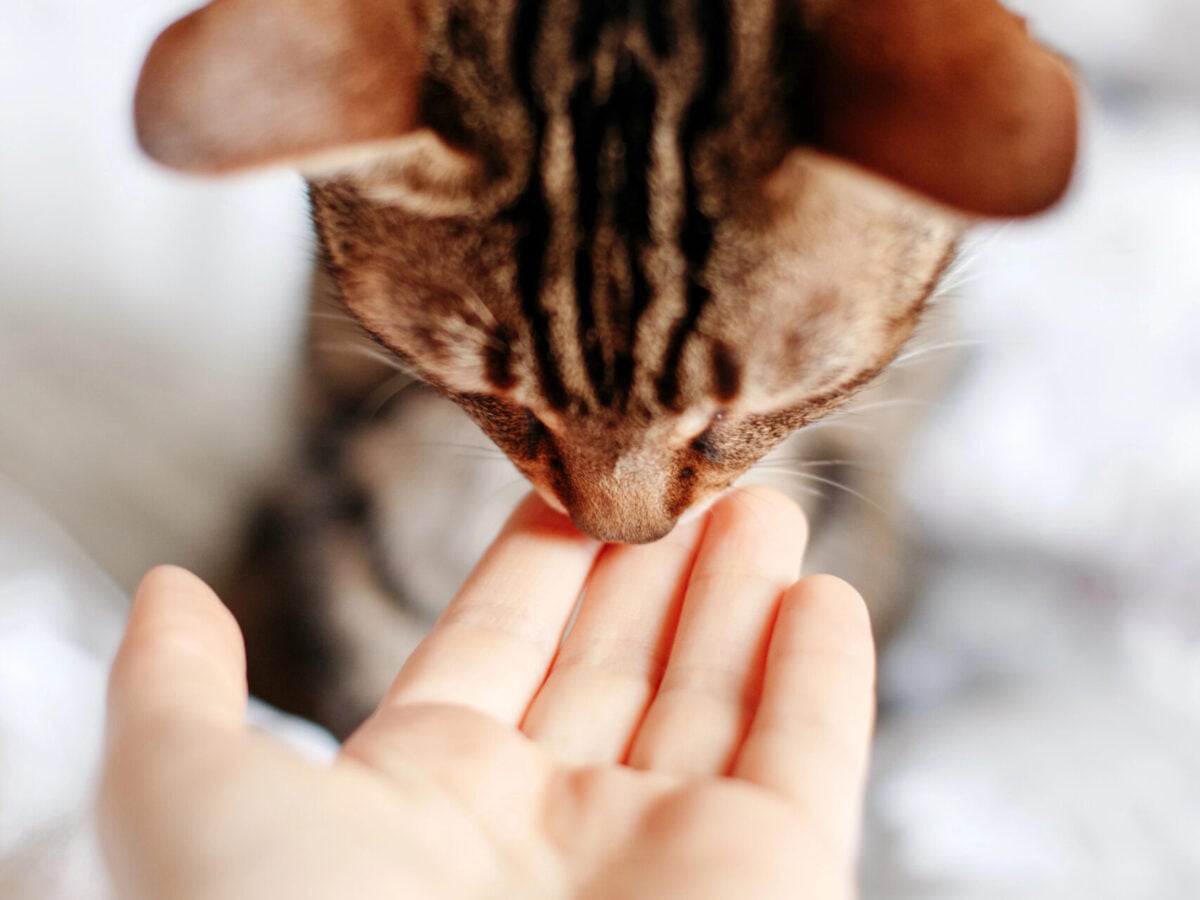
In a 2025 study published in PLOS One, researchers presented 30 cats with scent samples from their owner, an unfamiliar person, and an unscented control. Cats spent longer investigating the unfamiliar person’s scent, suggesting they could distinguish familiar human odor from unfamiliar odor.
Knowing your usual scent could give your cat a reference point when something changes. A sick day or medical visit may bring several unfamiliar smells into the picture:
- Sweating more than usual.
- Applying a topical treatment.
- Wearing clothing or bedding with unfamiliar smells.
- Returning from a hospital or medical appointment.
Your Scent, Your Bond
The study also found an intriguing connection with the human-cat bond. Cats whose owners described a closer bond tended to rub their cheeks more against a sample containing their owner’s scent. While more research is needed, the finding hints that scent and rubbing may play a role in the connection you share.
Can Cats Smell Illness?
Like most mammals, cat have a two-part olfactory system:
- The main olfactory epithelium (MOE), which detects airborne odors and volatile organic compounds, or VOCs.
- The vomeronasal organ (VNO), or Jacobson’s organ, which specializes in detecting chemical signals like pheromones.
Cats have over 200 million scent receptors within the MOE, compared to humans’ approximately 12-20 million, allowing them to detect volatile organic compounds (VOCs) and chemical odors at extremely low concentrations.
Their sensitivity to scent makes it possible that cats can scent the VOCs released due to illness, but whether cats reliably detect those disease-related changes in their owners remains unproven.
2. Your Routine Has Gone Off Script
Your cat may know the sequence: alarm, bathroom, coffee, food bowl. Today, the alarm stopped, and nothing else happened.
A sick day can interrupt the household patterns your cat is accustomed to. Meals move, doors stay open, the house gets quieter, and someone who normally disappears for hours is unexpectedly available.
A cat who visits the bedroom repeatedly could be checking out that change. They could also be trying to restart the part of the morning involving breakfast.
3. Your Emotional Signals Have Changed
Cats are masters at reading human body language, and when you are feeling down or unwell, they notice immediately. They don’t just listen to your words — they piece together your mood using three powerful clues:
- Facial expressions & voice: Cats can match an angry or strained voice to an unhappy face. Angry faces and voices also prompt more stress-related behavior from our furry friends.
- Changes in your interactions: While anxiously waiting for medical news, you might overlook your cat’s greeting or sound frustrated when they jump onto your lap. Those familiar exchanges may suddenly feel different.
- Scent clues: Emotions can leave traces in your body odor, too. Cats are sensitive to human emotions and show more stress-related behavior when sniffing human “fear” odors.
When you combine a worried face, a strained voice, and a change in your natural scent, you are sending a clear signal to your cat that something is wrong. Because they care about you, our bad days can unfortunately become their bad days too!
4. Your Voice Sounds Different
Your cat knows the voice that greets them every morning, calls them for dinner, and occasionally asks what they’ve knocked over. When a sore throat turns that familiar voice into a croak, you may sound different before you’ve said much at all.
Research shows that cats can distinguish their owner’s voice from strangers’ voices, often responding with ear or head movements. Familiarity with your usual voice could give them a reference point when congestion makes you sound nasal, a sore throat makes you hoarse, or speaking becomes an effort.
5. You Move & Breathe Differently
A migraine might leave you motionless in a dark room, while surgery may have you walking slowly or protecting a tender spot. Changes in your movement, coughing, and noisier breathing could all catch your cat’s attention.
A coughing fit may send them off your lap. Some cats might watch from nearby or return once you’re settled again.
6. Your Body Warmth & Bedding Have Changed
Extra blankets, a quiet room, and a person who’s staying put can make an inviting resting spot. If your cat also joins every movie marathon under that blanket, the comfort may explain their sick-day visits.
A fever could change your warmth, but your cat’s choice to sleep with you doesn’t mean they’ve noticed it. Use a thermometer to check a suspected fever.
Is My Cat Trying To Comfort Me?
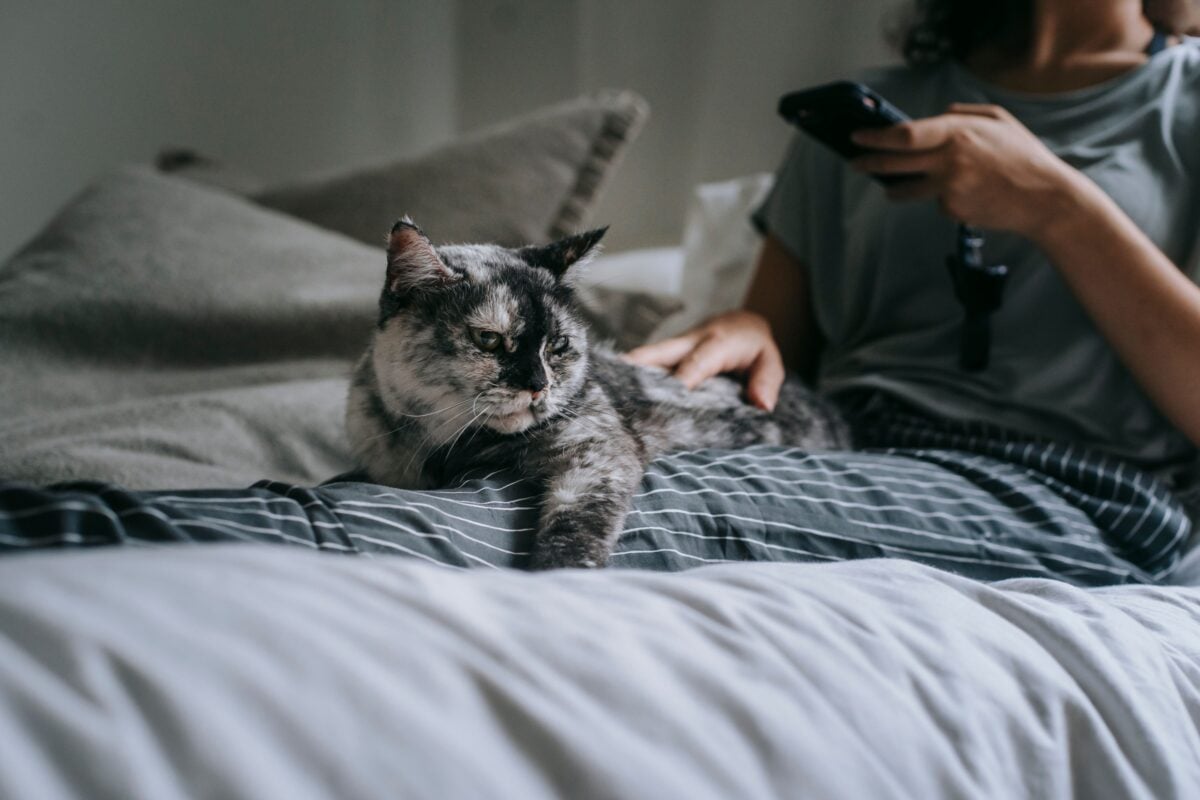
Your cat climbs onto the bed, presses against you, and starts purring. It certainly feels like they’re trying to help, and they may be responding to your distress by seeking contact.
But we also tend to anthropomorphize our pets, giving their behavior human feelings and intentions. A bedside cuddle is easy to interpret as “You’re sick, so I’m staying,” even when warmth, affection, and their own need for reassurance could all play a part.
Take purring. We often hear that familiar rumble as “I love you,” but cats also purr when they’re stressed or uncomfortable, possibly as a way to self-soothe. If your cat senses something is off, they may settle beside you and turn on the motor for their own benefit, too.
Still, that doesn’t mean the purring isn’t good for you. Cats can make excellent emotional support animals, and research suggests that cats purr at a frequency that can be calming and physically healing for humans. Learn more in our article covering cats as emotional support animals.
Why Does My Cat Keep Their Distance When I’m Sick?
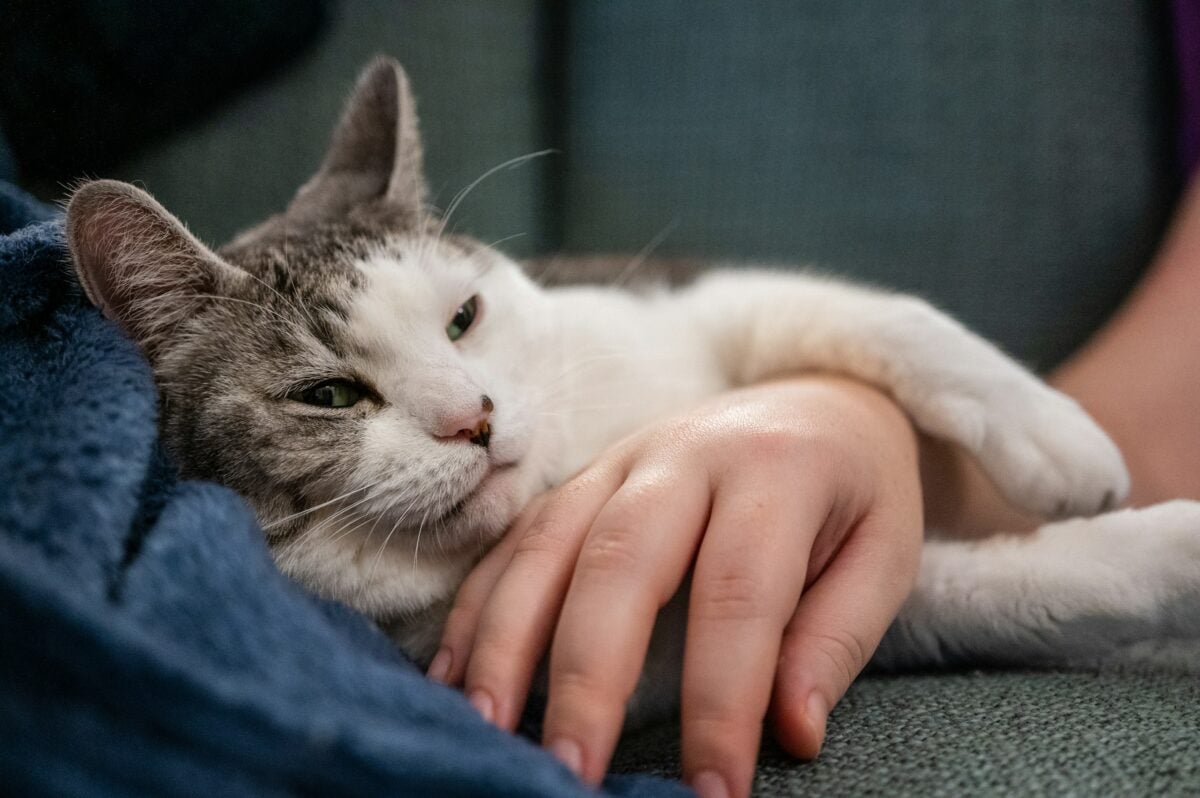
If your cat keeps their distance when you’re sick, they may be reacting to the disruption in their routine. Sudden coughing, unfamiliar smells, visitors, and medical equipment can make their usual hangout feel less inviting.
Your cat’s response to a sick day isn’t a test of how much they love you. A coughing fit can startle them even when you’re their favorite person, and a cat who enjoys quiet cuddle time may wait until you’ve settled down to join you.
Keeping their distance doesn’t always mean avoiding you, either. Your cat might sit in the doorway or sleep on the next cushion, staying nearby without getting caught up in your tossing, turning, and trips for tissues.
Give them the option of company, and let them decide how close to get. A familiar blanket or an open spot beside you offers an invitation without repeatedly picking them up and placing them there.
Can My Cat Catch What I Have?
Some infections can pass from people to cats, including COVID-19 and certain influenza viruses. This is known as reverse zoonosis. It’s uncommon, and many human illnesses don’t spread to cats.
If you have COVID-19, avoid close contact with your cat while you’re sick, including kissing, sharing food, and sleeping together. If possible, have someone else care for them while you’re ill.
For other illnesses, ask your veterinarian whether any precautions are needed. If your cat develops coughing, sneezing, unusual tiredness, or a reduced appetite after you’ve been sick, mention your illness when you call.
Can Cats Notice Illness Before You Do?
Your cat may notice changes in your sleep, energy, or routine before you realize you’re getting sick. However, noticing something different isn’t the same as knowing you’re ill.
It’s also easy to remember the extra cuddles before a migraine and forget the ones followed by an ordinary day. If you suspect a pattern, jot down what your cat did, any changes in your routine, and whether you actually became ill. Those notes may help you understand your cat’s behavior, but don’t rely on it to tell you whether you’re sick or need medical care.
Research Spotlight: A 2019 research perspective published in Oncoscience explored whether cats could detect cancer-related scents after a family reported unusual behavior in their cat when its owner developed brain tumor symptoms. The account raises the possibility that cats could detect disease-related changes, but controlled studies would be needed to confirm that ability.
When Your Cat’s Behavior Has Another Explanation
Your health is one part of the household picture. An affectionate, restless, or withdrawn cat may be responding to something else entirely.
Before connecting the behavior with illness, consider:
- A colder room: Your lap or bedding may have become more attractive.
- A disrupted schedule: Meals, play, or familiar interactions may have shifted.
- Less time together recently: Your unexpected availability creates more opportunities for company.
- A household change: Visitors, noise, or another animal may affect where your cat feels comfortable.
- A new resting spot: A freshly arranged blanket can be an event in its own right.
- Your cat’s health: Unusual sociability or withdrawal can accompany their own discomfort.
Feline illness can affect energy, sociability, appetite, litter box habits, and other everyday behaviors. Contact your veterinarian if a behavior change persists or comes with changes in those areas.
Pay particular attention when the change continues after your household returns to normal. A cat who’s still hiding or eating differently after you recover deserves attention for their own sake.
How To Keep Your Cat Comfortable While You Recover
When you’re exhausted, even routine care can feel like an ambitious project. A little help can keep your cat’s day predictable while giving you room to rest.
- Preserve the essentials. Keep food, fresh water, and litter box care on schedule as much as possible. Arrange help before a planned procedure.
- Offer a nearby resting place. A familiar bed beside the sofa lets your cat join you without pressing on a painful area or incision.
- Keep interaction manageable. Brief, familiar attention may be easier than your usual play routine; ask someone else to help with active play when needed.
- Protect medical supplies. Store medications, creams, and used supplies where your cat can’t investigate them.
Frequently Asked Questions
Have more questions about how cats react when you’re unwell? Here are answers to common questions. If we missed yours, ask in the comments.
Why Does My Cat Stay Close To Me When I’m Sick?
Your cat may be responding to changes in your routine, enjoying the extra time beside you, or seeking out your warmth. They may also be responding to your distress and offering comfort in their own way, though we can’t know whether that’s their intention.
Can Cats Sense When You’re In Pain?
Cats may notice outward changes associated with pain, such as reduced activity, different posture, or unusual sounds. Whether they understand your experience of pain is much harder to establish.
You may see your cat pause beside you, sniff your hand, and settle nearby. That observation is real; the precise thought behind it is something we can’t retrieve from the cat.
For an owner who feels awful, though, the difference between being alone and having familiar company can be substantial. A small head resting against your ankle can make a long afternoon feel a little less lonely.
Why Does My Cat Sleep On Me When I’m Sick?
Spending more time in bed or on the couch gives your cat more opportunities to curl up on you. Warmth, familiar scents, and a comfortable place to rest may all play a role.
Can Cats Tell When You Have A Fever?
Your cat might notice that you feel warmer than usual, but their behavior can’t reliably tell you whether you have a fever. Use a thermometer rather than your cat’s interest in cuddling to check.
More Ways To Understand Your Cat
Whether your cat stays close when you’re sick or checks on you from the doorway, their behavior can leave you guessing. Explore the signs your cat has imprinted on you, learn why some behaviors look like they’re ignoring you, and find out whether cats get lonely.
Does your cat act differently when you’re sick? Share what they do in the comments below.