When you purchase through links on our site, we may earn a commission at no extra cost to you. Learn more.
Picture this: The big orange cat eats breakfast at 6:00 a.m. The little gray one eats at 6:40.
Table of Contents
Not because she isn’t hungry. Because the orange cat is standing in the kitchen doorway like a nightclub bouncer, and she has decided she’d rather live.
She spends afternoons under the guest bed, takes the long way around the living room, and waits until 2 a.m. to use the litter box.
Nobody’s fighting. Nobody’s bleeding. If you asked whether your cats get along, you’d probably say, “Mostly?”
Want our human-written content to rank above AI-generated garbage? Help us out by clicking this button!
But here’s the uncomfortable part: one cat can quietly make another cat’s life miserable without ever getting into a real fight.
Cat bullying is often about controlling access to food, litter boxes, favorite spots, and even you. The other cat doesn’t necessarily fight back. She just shrinks her world until it fits under a bed.
Fortunately, you don’t need to turn your house into a maze of baby gates to change the house rules. Sometimes, a few clever adjustments make all the difference.
Here’s how to spot the bullying, understand what’s driving it, and help both cats feel safe again.
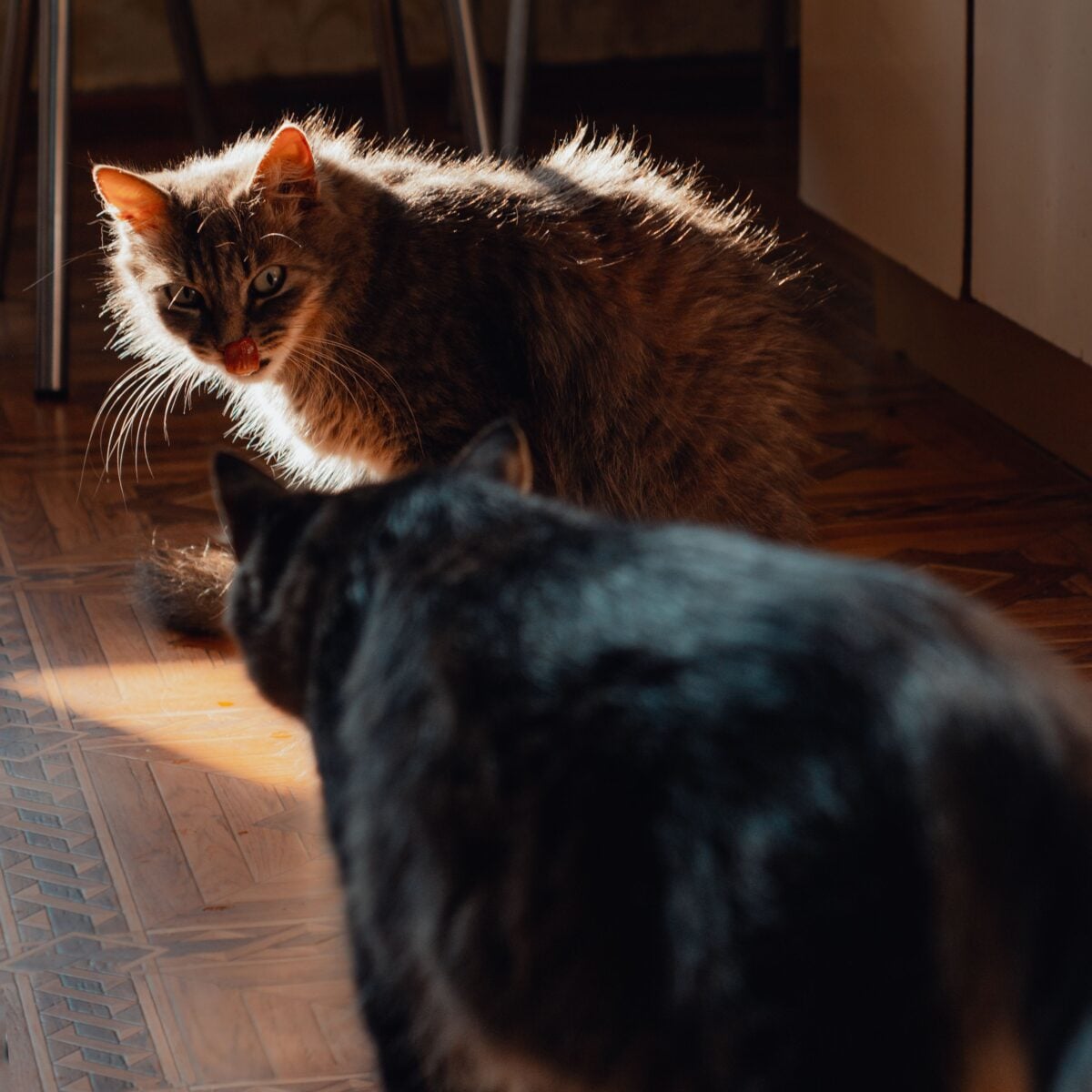
What Cat Bullying Actually Looks Like
Cats don’t need to throw punches to have a serious disagreement.
In fact, some of the most stressful relationships between cats are remarkably quiet. One cat controls the space. The other cat adjusts her entire day to avoid trouble.
Veterinary behavior specialists often call this intercat tension, a term that covers everything from silent intimidation to open fighting.
According to the 2024 AAFP Intercat Tension Guidelines, subtle behaviors such as staring, blocking, hiding, and avoidance can signal trouble between household cats.
Here are eight signs worth watching.
1. The Stare
Long, flat, unblinking. Usually from a doorway, the end of the hallway, or the top of the cat tree.
The other cat looks away, sinks a little lower, and suddenly remembers urgent business in another room.
One stare doesn’t make a bully. But when the same cat repeatedly makes the other retreat just by looking at her, pay attention.
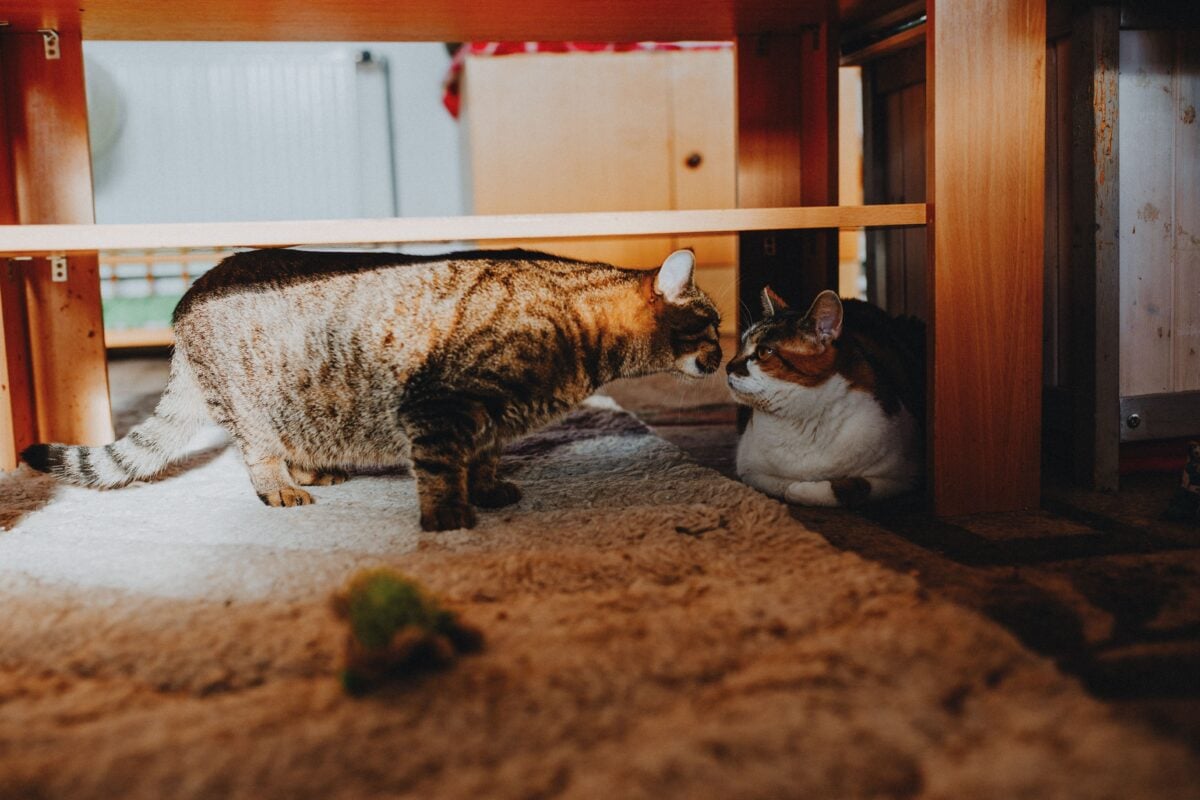
2. The Hallway Toll Booth
The bigger cat lies across the hallway leading to the litter box.
Not once. Every day. Same spot, same timing.
That’s not necessarily a nap. It might be a checkpoint.
Cats can control access to important places without ever physically touching another cat.
3. One-Way Chases
Same cat chases. Same cat runs.
Every time.
A little chasing can be normal play, but healthy play usually includes some back-and-forth. If one cat is always the pursuer and the other is always trying to escape, that’s a different story.
4. Resource Squatting
Eating from the other cat’s bowl first. Sitting beside the litter box. Taking over the sunny window perch the other cat used to love.
Or teleporting onto your lap the second the other cat approaches.
The issue isn’t necessarily that one cat wants everything. It’s that the other cat no longer feels comfortable using those resources.
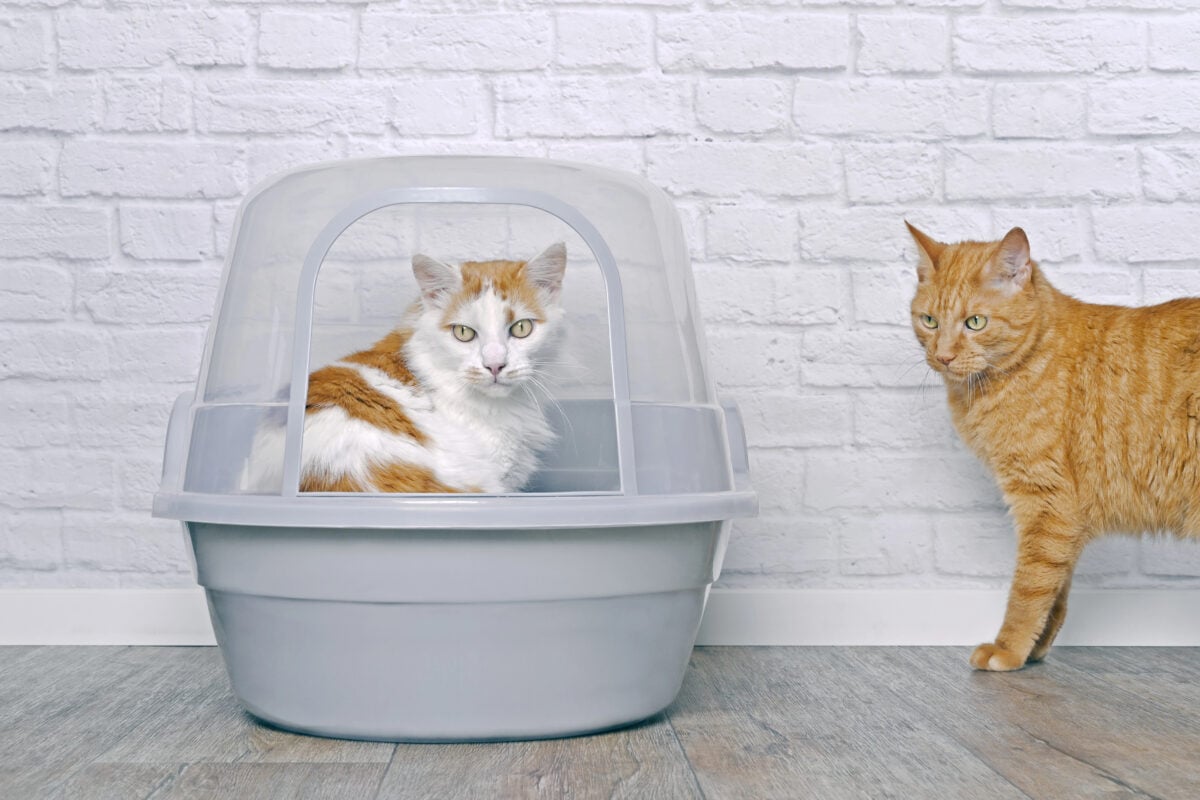
5. Litter Box Ambushes
Have you ever imagined having to use the bathroom while someone waits outside the door to tackle you?
That’s what a litter box ambush can feel like to a cat.
A cat who gets cornered or chased near the box may start avoiding that location entirely. Sometimes that means holding it until the house is quiet. Sometimes it means finding somewhere else to go.
And often that somewhere else is your bathmat.
Important: Litter box accidents aren’t always behavioral. If your cat is straining to pee or producing little or no urine, seek emergency veterinary care. A urinary blockage can be life-threatening.
6. Hiding More Than Usual
A cat who used to nap on the couch now spends the afternoon under the bed, emerging only when the other cat is asleep.
If your once-social cat has suddenly become a permanent resident beneath the furniture, it’s worth understanding why cats suddenly start hiding. Stress, pain, and changes around the house can all play a part.
7. Nervous Eating and Drinking
Nervous eating can look different depending on the cat. Some cats start eating in little rushed bursts, watching the doorway between bites.
Others might avoid a food or water station because reaching it means passing the other cat. Keep an eye not only on how much your cats eat, but also whether they can eat comfortably.
8. Changes in Grooming or Daily Routines
Overgrooming, less play, disrupted sleep, and unusual litter box habits can all accompany chronic stress.
One cat might become almost nocturnal, emerging only when the other is asleep.
These changes aren’t proof of bullying on their own. But when they happen alongside staring, blocking, or repeated chasing, the relationship deserves a closer look.
The tricky part is that cats can hide signs of stress surprisingly well. Small changes in their daily routines may be your first clue that something’s wrong.
Plot Twist: The Bully May Not Be the Cat You Think
The cat doing all the hissing, spitting, and yowling may actually be the one on defense. She’s loud because she’s frightened and wants the other cat to back off.
Meanwhile, the calm one sitting in the doorway with just the tip of his tail flicking may be running the whole operation.
He never has to raise his voice. He just has to be there.
So before scolding the noisy cat, watch who’s moving out of whose way. Who gives up the favorite sleeping spot? Who waits until the other cat leaves before approaching the food?
The cat making the most noise isn’t necessarily the one causing the problem.
Are Your Cats Playing or Fighting?
Some cats wrestle like tiny professional wrestlers and are perfectly happy about it.
Others look almost peaceful until you notice that one cat is desperately trying to get away.
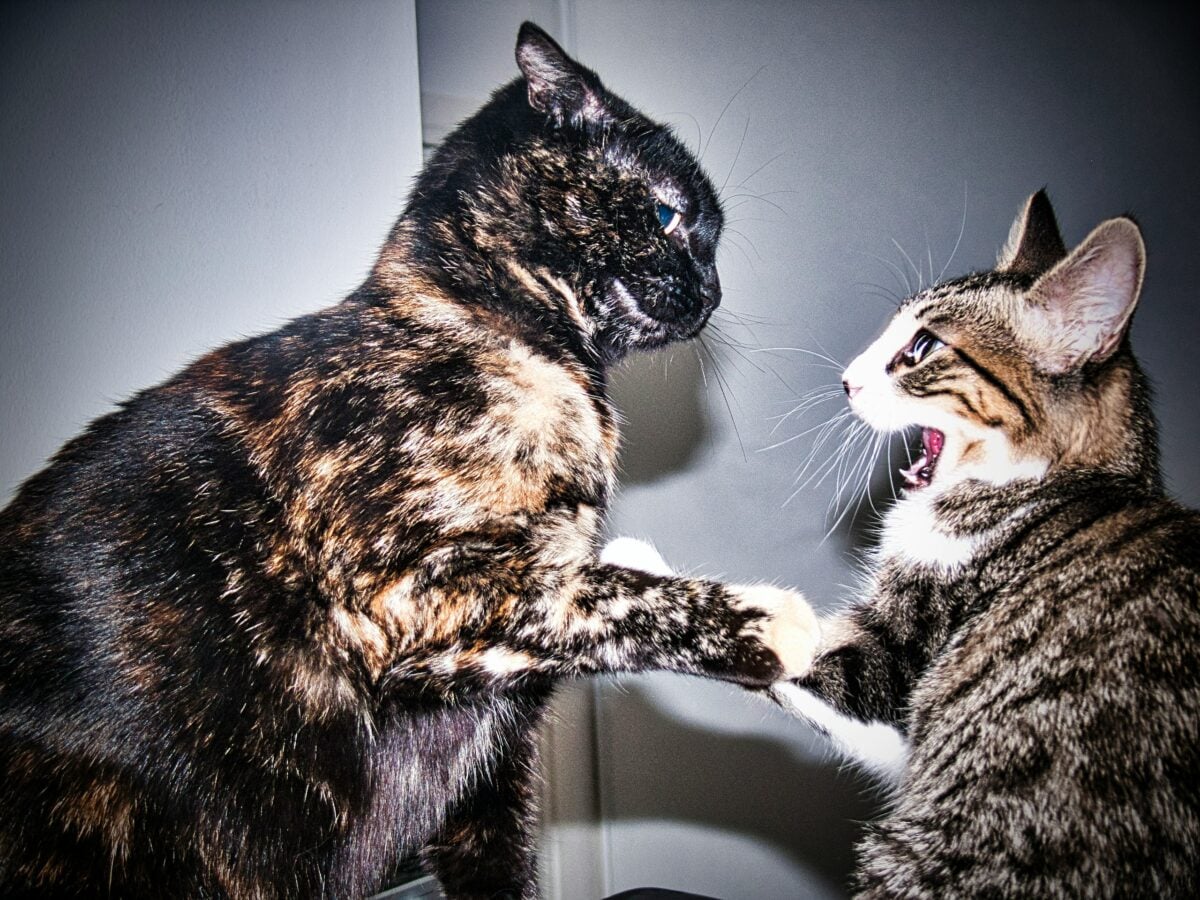
Here’s a quick gut check.
| More Likely Play | More Likely Bullying or Conflict |
|---|---|
| Both cats initiate or take turns chasing | The same cat always chases, and the other runs |
| Wrestling is mostly quiet | Frequent growling, hissing, or yowling |
| Both cats willingly return for more | One cat tries to escape, hide, or avoid contact |
| Bodies look loose and relaxed | Stiff posture, flattened ears, or intense staring |
| Cats relax around each other afterward | One cat continues avoiding the other afterward |
No single clue tells the whole story. Some cats play roughly, while others experience serious tension without making a sound.
The biggest question is whether both cats seem to be enjoying themselves. If one keeps trying to leave and the other won’t let her, it’s time to intervene.
And remember, cats who wrestled happily as kittens can develop tension as they mature. If their play has become increasingly one-sided, don’t assume it’s still harmless.
If things have escalated into real aggression, learn more about how serious cat fights can become.
Why Do Cats Start Bullying Each Other?
Cats can form close relationships. Some groom each other, sleep in a tangled pile, and genuinely enjoy each other’s company.
But they also need control over their own space and resources.
And two cats who tolerate each other perfectly well under one set of circumstances may struggle when something changes.
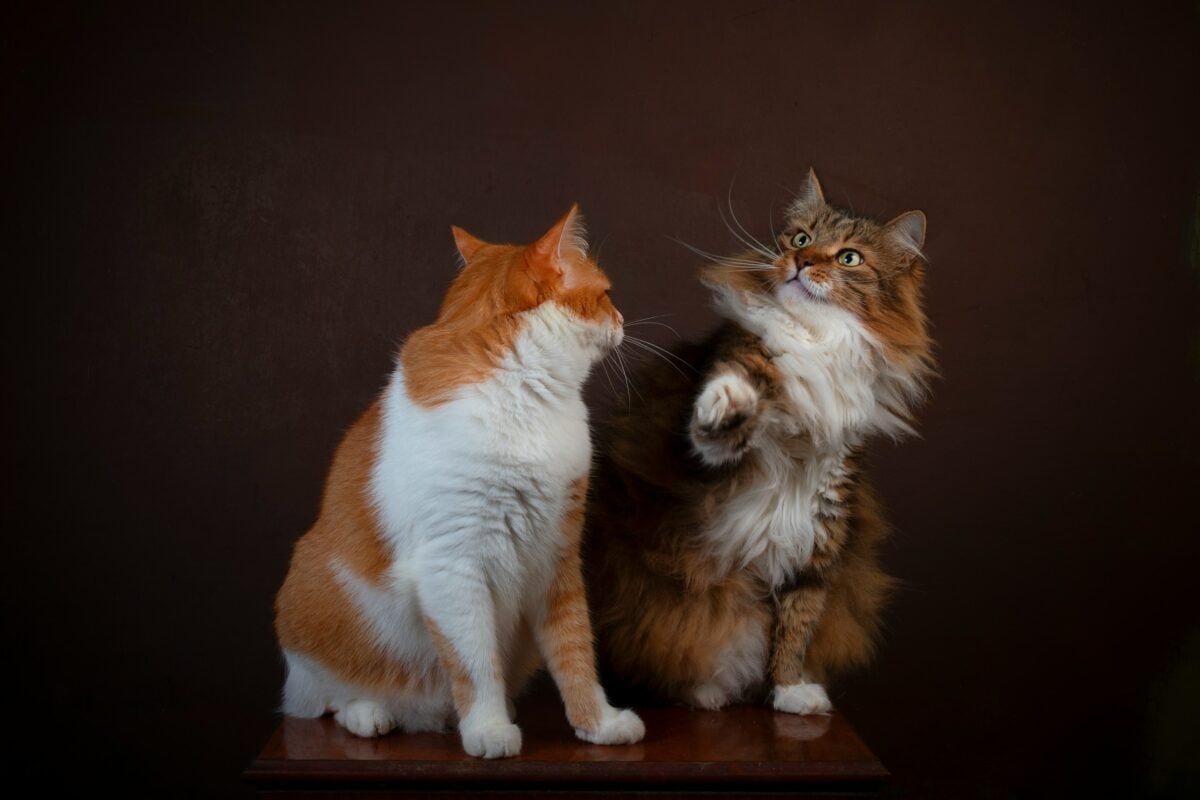
Too Few Resources (Or Too Many in One Spot)
Two cats. One litter box. Tucked in the laundry room behind a half-closed door.
That’s not a bathroom. That’s a toll road.
And three boxes lined up like porta-potties at a festival aren’t necessarily much better. If one cat can guard the entire area from a single spot, the other cat still has a problem.
Resource Guarding: When One Cat Controls Everything
Some cats don’t just want the best spot in the house. They want to make sure the other cat can’t have it.
This is called resource guarding, and it doesn’t always involve growling, hissing, or swatting. Sometimes all a cat has to do is park himself in the right doorway.
Cats may guard food, water, litter boxes, sleeping spots, favorite humans, or entire rooms. The guarding cat might look perfectly relaxed while the other one quietly rearranges her whole day to avoid him.
It’s not necessarily about dominance. Fear, insecurity, and competition over limited resources can all contribute.
And the solution usually isn’t teaching the guarding cat to share.
It’s making sharing unnecessary.
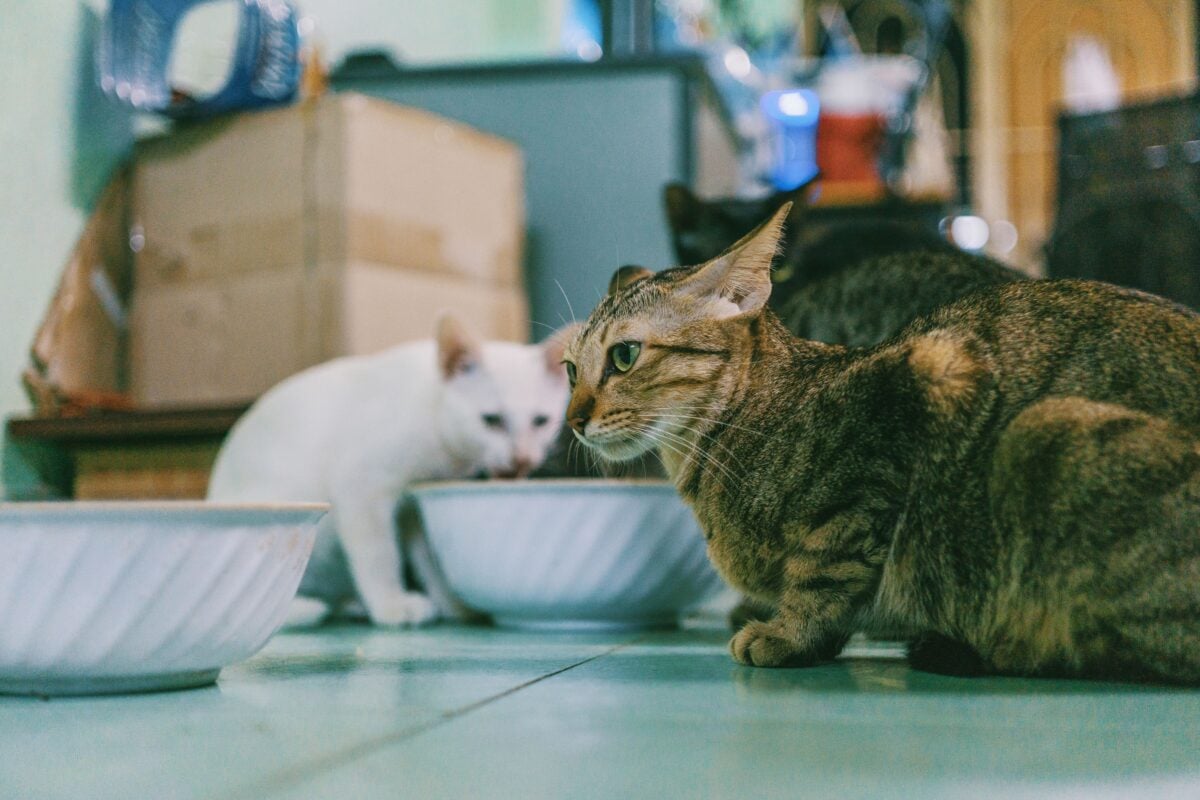
When Ace Made the House His Own
I learned about resource guarding the hard way with my own cats.
Ace was a huge, 25-pound Siamese mix, and Roxie was a little thing by comparison. When Roxie started peeing in the laundry, scratching the furniture, and even scratching us, we couldn’t figure out what had gotten into her.
Then we started paying closer attention to Ace.
He was keeping Roxie away from her food and guarding the litter box. Poor Roxie wasn’t being difficult. She was trying to live with a furry 25-pound security guard who thought he owned the place.
So we changed the house rules. We separated their food, water, and litter boxes, gave Roxie her own cozy hiding spot in a closet, and made sure both cats got special one-on-one playtime.
And it worked. Roxie’s behavior improved once she had her own space and could go about her day without constantly worrying about Ace.
It taught me something I’ve never forgotten: sometimes the cat showing all the problem behaviors isn’t the one causing the problem.
A House With No Escape Routes
Cats often avoid conflict by keeping their distance.
High perches, shelves, hiding spots, and multiple pathways give them options.
Take those away, and they may have no choice but to walk straight past each other.
Something Changed
A move. A new baby. A kitchen remodel. A new cat.
Or a cat who came home from the vet smelling like a stranger.
Relationships that seemed stable can wobble surprisingly fast when the household changes.
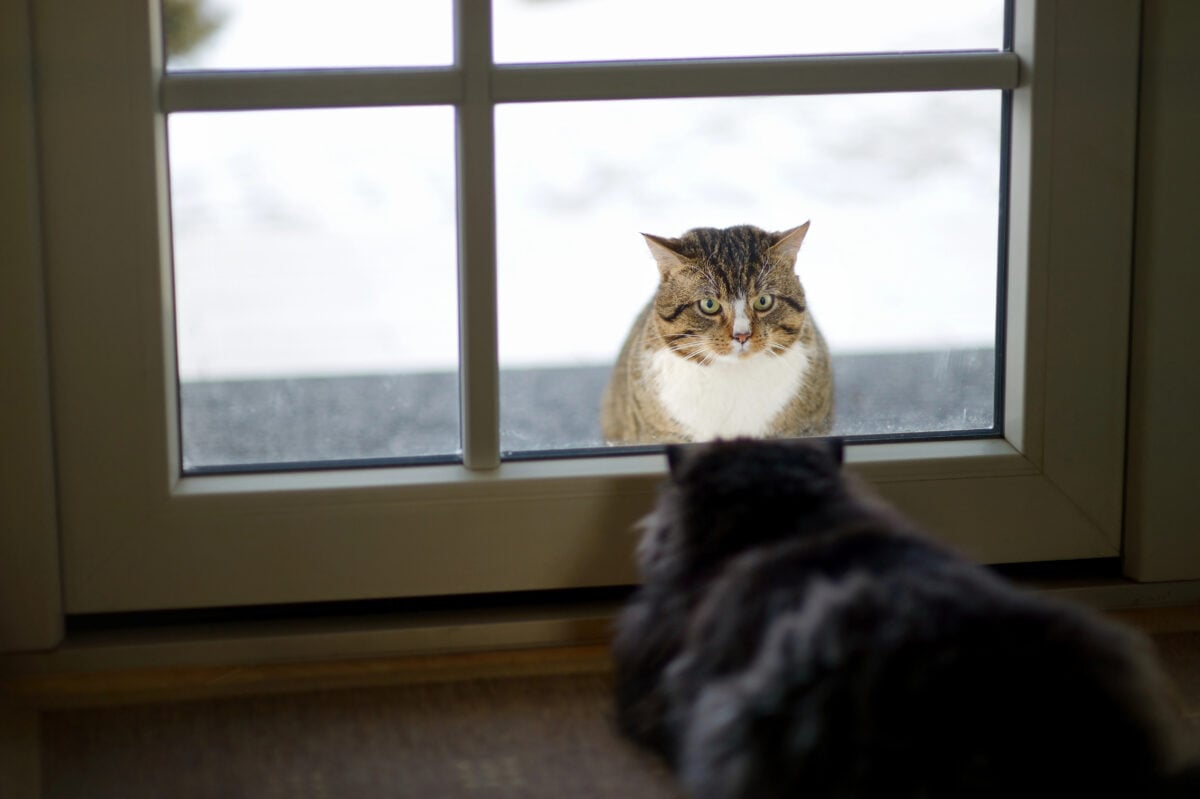
The Cat Outside the Window
The neighbor’s tomcat strolls across the patio.
Your cat sees him, gets worked up, and can’t reach him.
Then your other cat wanders into the room at exactly the wrong moment.
It’s called redirected aggression. The upset cat directs that arousal toward another nearby animal, and one frightening incident can damage the relationship between cats who previously got along.
Different Personalities and Play Drives
Sometimes one cat wants to wrestle all afternoon, but the other would prefer to spend the day contemplating a sunbeam and eventually napping in it.
An energetic youngster may repeatedly chase a quiet older cat, not necessarily out of malice but because their needs don’t match.
That doesn’t make the older cat’s stress any less real.
Pain or Illness
Pain or illness can change how cats interact. A previously friendly cat may become irritable, while a sick or vulnerable cat may start withdrawing. Sudden behavior changes deserve a veterinary check.
What to Do Tonight if One Cat Is Bullying Another
You don’t have to redesign your entire house before bedtime.
Start by making the nervous cat’s world a little safer.
- Stop the active conflict. If there’s chasing, cornering, or repeated intimidation, calmly separate the cats behind closed doors. Don’t force them to work it out.
- Give each cat access to essentials. Set up food, water, a litter box, and somewhere comfortable to rest in areas they can reach without passing each other.
- Create a protected retreat. A spare bedroom or quiet office can give the nervous cat somewhere to relax without being followed.
- Remove the obvious bottlenecks. Look for guarded doorways, narrow hallways, and litter boxes with no easy escape.
- Watch what happens. Note which cat retreats, which one follows, and where the tension begins. A short video taken safely from a distance can help you show your vet or a behavior specialist how the cats are behaving.
If either cat is injured, refusing food, or showing sudden behavior changes, contact your veterinarian rather than waiting for things to improve.
Otherwise, it’s time to make a few changes to the house rules.
How to Stop Cat Bullying at Home
Sometimes the problem isn’t your cats’ personalities. It’s the way your home is set up. In fact, some of the most common indoor cat mistakes seem perfectly reasonable to us but can leave cats feeling stressed, frustrated, or crowded.
You don’t need to turn your living room into a luxury cat resort to fix things. A few thoughtful changes can make it much harder for one cat to control everything the other needs.
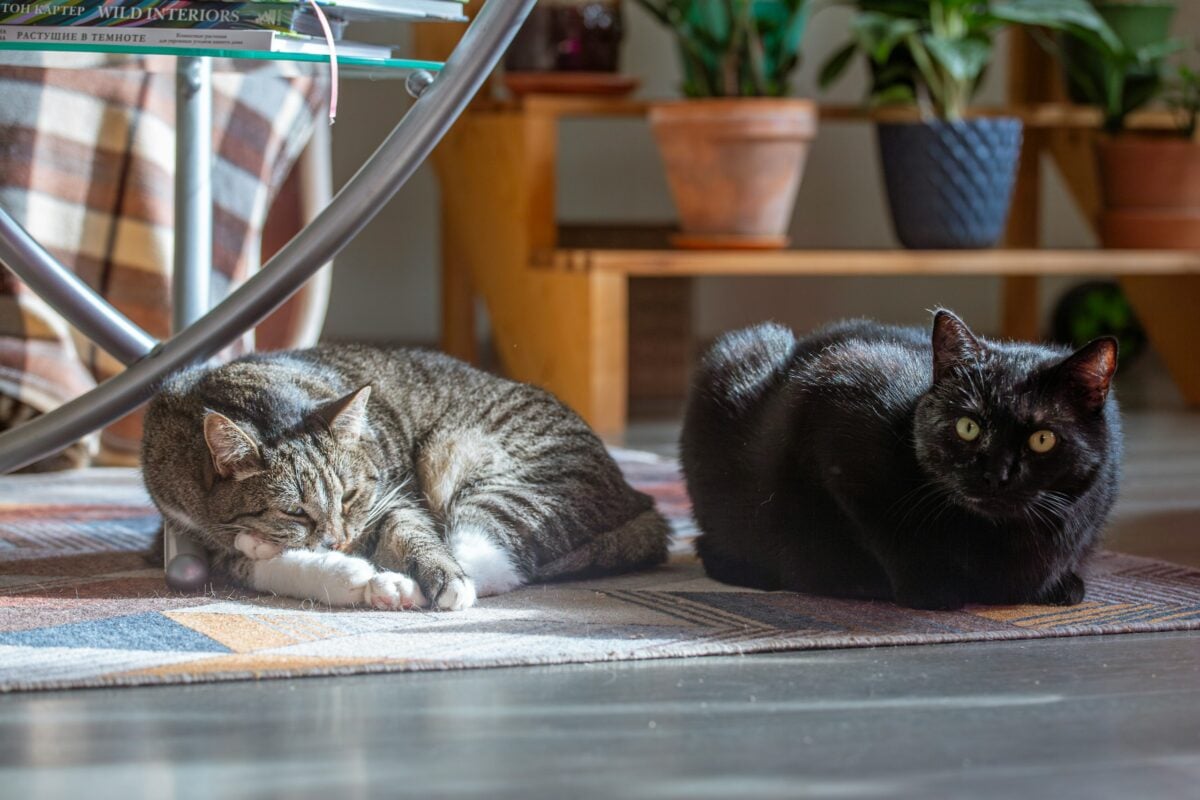
Litter Boxes: Aim for More, and Spread Them Out
If you’ve ever wondered whether two cats can share a litter box, the answer is a little more complicated than whether they’ll both use it. Feeling safe enough to use it is the part that matters.
The usual recommendation is one litter box per cat, plus one extra. For two cats, that means three boxes.
But placement matters just as much as the number of litter boxes. Three boxes lined up in the same bathroom may still let one cat control access to the entire area.
Try this instead:
- Put litter boxes in different parts of the house, including different floors if possible.
- Avoid tight closets, dead-end corners, or anywhere a cat could get trapped.
- Choose open boxes with clear escape routes, especially if one cat has been ambushed.
- If one cat guards a particular box, add another somewhere she doesn’t spend much time.
The Ohio State University Indoor Pet Initiative recommends separate resources in places where cats can use them without feeling threatened by housemates.
Food and Water: Separate Dining Rooms
Two bowls six inches apart may be convenient for you. For the nervous cat, they may be one very uncomfortable dining room.
Feed the cats in separate rooms whenever possible. If that isn’t practical, create enough distance and visual separation that neither cat has to watch the other eat.
A kitchen counter for one cat and the home office floor for the other might work, as long as both locations are accessible and appropriate for each cat.
Add water stations in several quiet locations too. If the pushy cat steals food, a microchip feeder that opens only for its designated cat can be useful.
It’s not magic, and the nervous cat still needs a comfortable place to eat. But it can stop one cat from treating every bowl in the house like a personal buffet.
Go Vertical
If your house is flat, build up.
Cat trees. Wall shelves. Window perches. A cleared-off bookcase top.
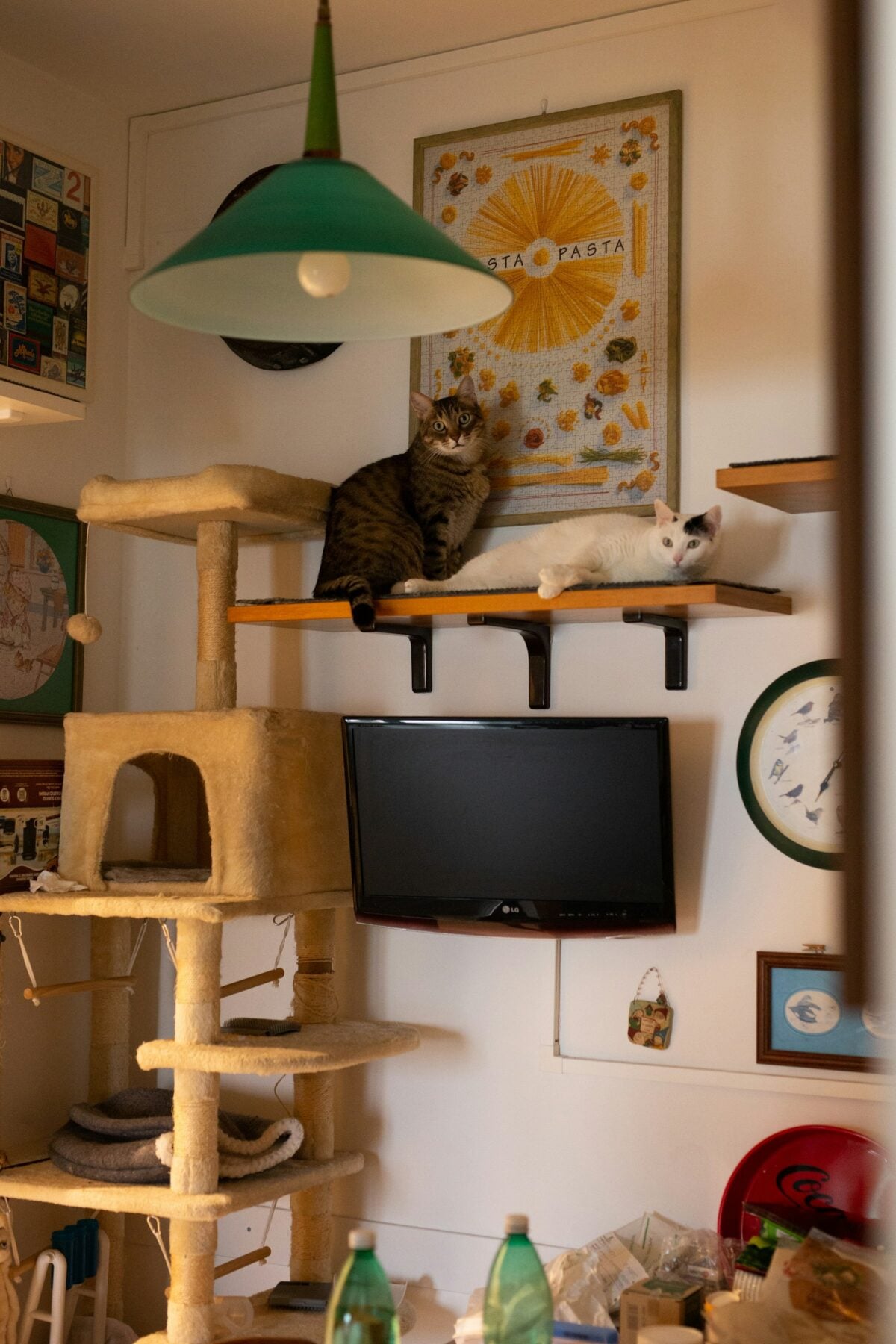
Height gives cats more ways to move and rest without bumping into each other.
A series of secure shelves along a hallway can create an alternate route around a difficult area. Just make sure the route actually leads somewhere. A single high shelf with no second exit can become another dead end.
And aim for more than one desirable perch. If there’s only one throne, guess who’s sitting on it.
Give the Bullied Cat Places to Escape
The bullied cat needs somewhere she can eat, drink, sleep, and use the litter box without being followed.
A spare bedroom or quiet office with a closing door works well. Add a cozy bed, scratching surface, toys, and somewhere to hide.
In some homes, a secure microchip-operated cat flap can give one cat access to a protected room. Just make sure the other cat can’t slip through behind her.
Then scatter hiding spots throughout the house: cardboard boxes, covered beds, or quiet spaces beneath furniture. Ideally, choose spots where another cat can’t block the only exit.
You’re not trying to exile the nervous cat. You’re giving her somewhere she can relax while you work on restoring the peace.
Don’t Forget Yourself
You’re a resource too. Some cats compete for attention just as they compete for sunny spots and window seats.
Make time for individual play, brushing, or quiet company with the bullied cat, away from her pushy housemate.
Let her choose how much affection she wants. The point is to make sure she doesn’t have to compete for every pleasant thing in her life.
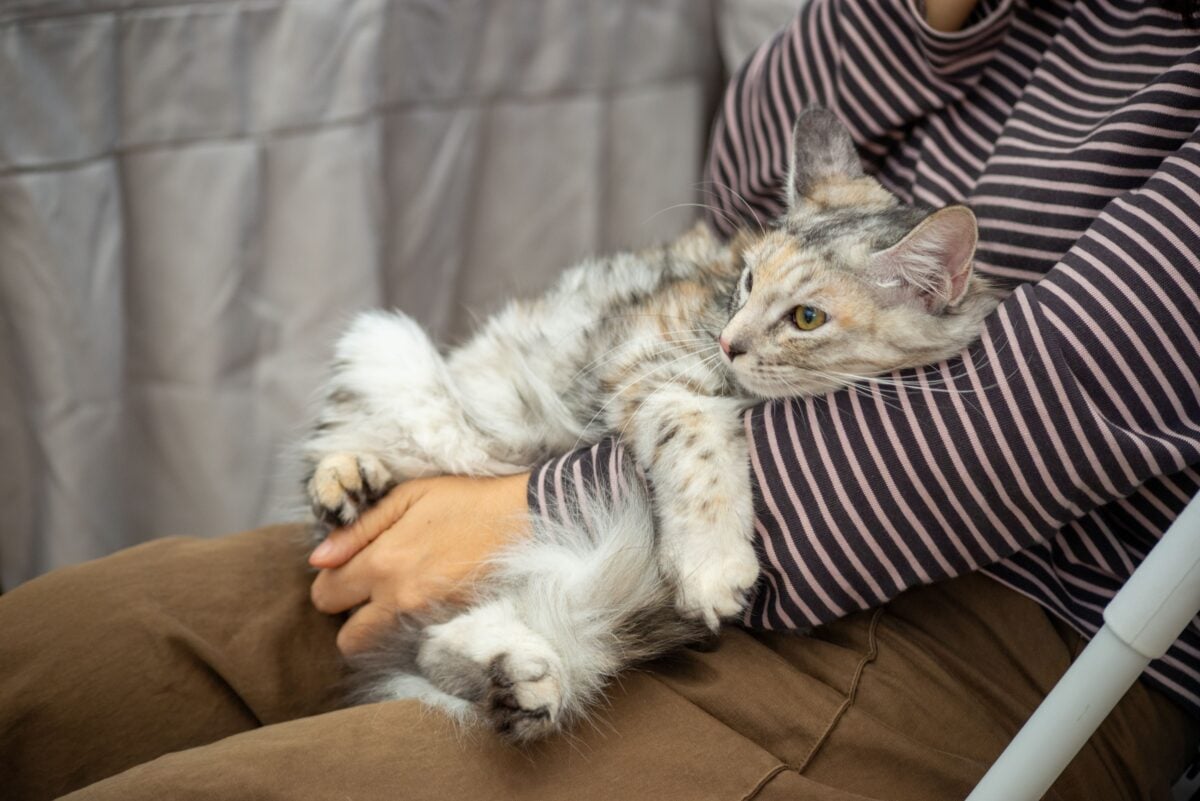
Give the Pushy Cat a Better Hobby
Sometimes the problem isn’t a cat determined to rule the household. It’s a young, energetic cat with nothing better to chase than his housemate.
If you’re noticing the signs your cat wants to play, a little extra enrichment may help. These simple ways to make your indoor cat’s day more interesting can give him something to do besides treating the other cat like a giant squeaky toy.
Schedule Interactive Play Sessions
Start with two short, interactive play sessions a day. Adjust as needed to your cat’s age and energy level.
Ten or fifteen minutes with a wand toy may be a good starting point.
Make the prey act like prey: skitter behind the couch, freeze, dart across the floor, disappear around a corner.
Let your cat catch it regularly.
Finish with a small meal or treat to create a satisfying routine.
And put string or wand toys away afterward so nobody gets tangled up or swallows something they shouldn’t.
Make Food Take Effort
Puzzle feeders, treat balls, and small food portions hidden around the house can provide mental stimulation.
Breakfast doesn’t have to be over in 40 seconds.
Just make sure feeding games don’t create new competition. If one cat guards the puzzles, offer separate activities in different rooms.
Watch the Windows
If an outdoor cat consistently upsets your indoor cat, block the view temporarily.
Frosted window film across the lower glass may help. You can also move a perch or close a curtain when the outdoor visitor usually appears.
Out of sight really can reduce the excitement.
Reducing that excitement may also help prevent the other household cat from becoming an innocent bystander.
How to Break Up Cat Bullying Without Making It Worse
Eventually, you’ll catch them mid-standoff. One cat is frozen in the doorway, the other is crouched beside the couch, and the air feels like somebody just announced an awkward family secret.
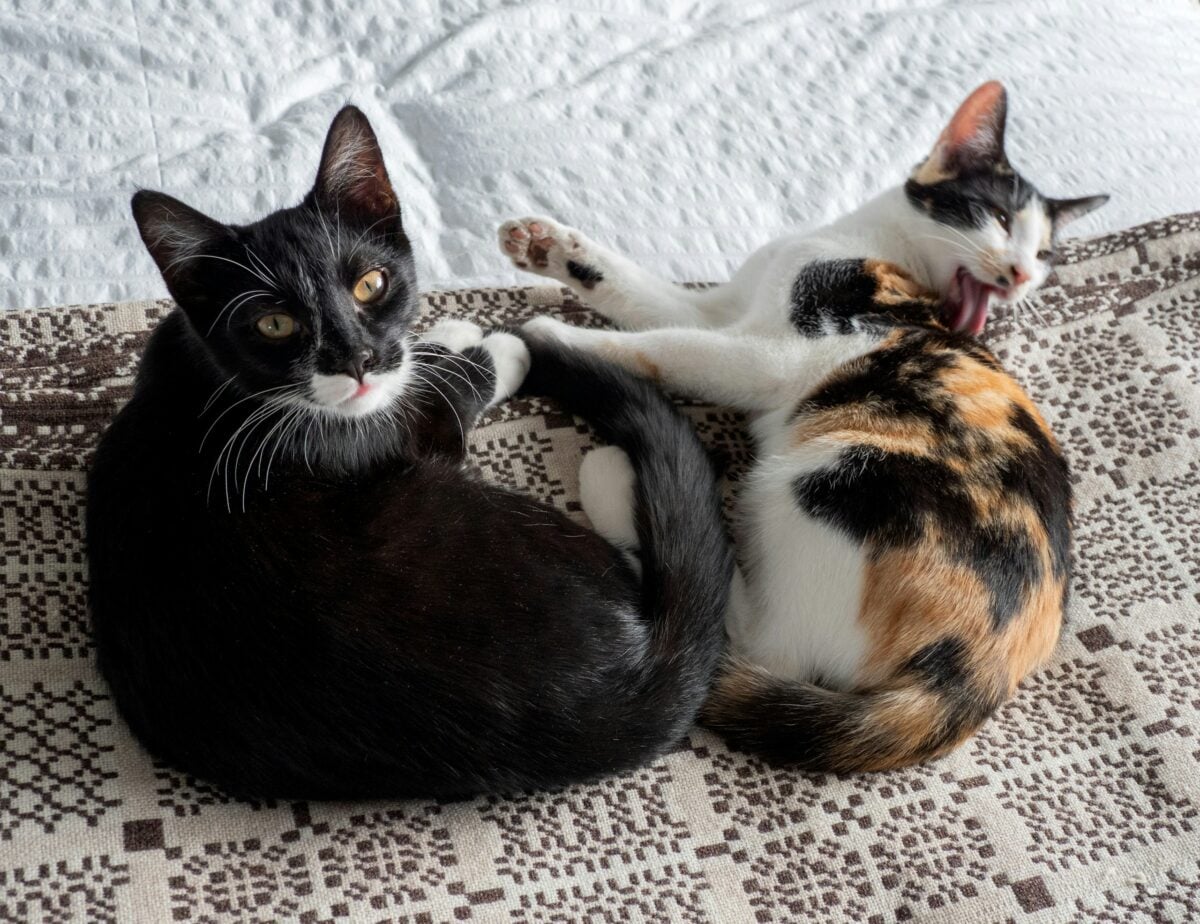
Here’s how to step in without making things worse.
Intervene Early
The best time to intervene is before the chase happens.
If both cats are still calm enough to respond, gently redirect their attention with a familiar toy or another positive activity.
Don’t wave treats between two tense cats and create something else to compete over.
If the staring continues, move to a visual barrier.
Block, Don’t Grab
Slide a couch cushion, large piece of cardboard, or another solid barrier between the cats so they can no longer stare directly at each other.
Then calmly guide them into separate areas if needed.
Never reach between cats who are fighting, and don’t try to pick up a highly aroused cat.
Even a normally affectionate cat can bite or scratch when frightened or overstimulated.
Skip the Punishments
Don’t reach for the spray bottles. No yelling. No chasing anyone around the house with a stern lecture.
Punishment can increase stress and may make the cats associate each other’s presence with unpleasant experiences.
Instead, work on preventing repeated confrontations and rewarding calm behavior.
Pay for Peace
When both cats are comfortably sharing a space without staring, stalking, or blocking, reward that relaxed behavior. Offer treats separately and with enough distance that neither cat feels pressured. You’re helping them learn that being near the other cat can predict good things.
Start at a distance where both cats are already comfortable. Don’t push them closer just to test whether the training is working.
Consider a Gentle Warning Bell
For some households, a small bell on a properly fitted breakaway collar can help a nervous cat hear the other approaching.
The 2024 AAFP guidelines mention this as one possible management tool.
A bell is not appropriate for every cat, nor will it solve the underlying conflict. Some cats dislike collars or bells, so monitor comfort and behavior carefully.
Think of it as an optional early-warning system, not the centerpiece of your peace treaty.
When Things Are Really Bad: Hit Reset
If your cats have had a serious fight or still can’t share space peacefully, it may be time for a gradual reintroduction.
Yes, even if they’ve lived together for six years.
You’re helping them get reacquainted under better circumstances. For severe aggression, involve your vet or a qualified feline behavior professional. Only move forward when both cats are relaxed, and don’t rush the process.
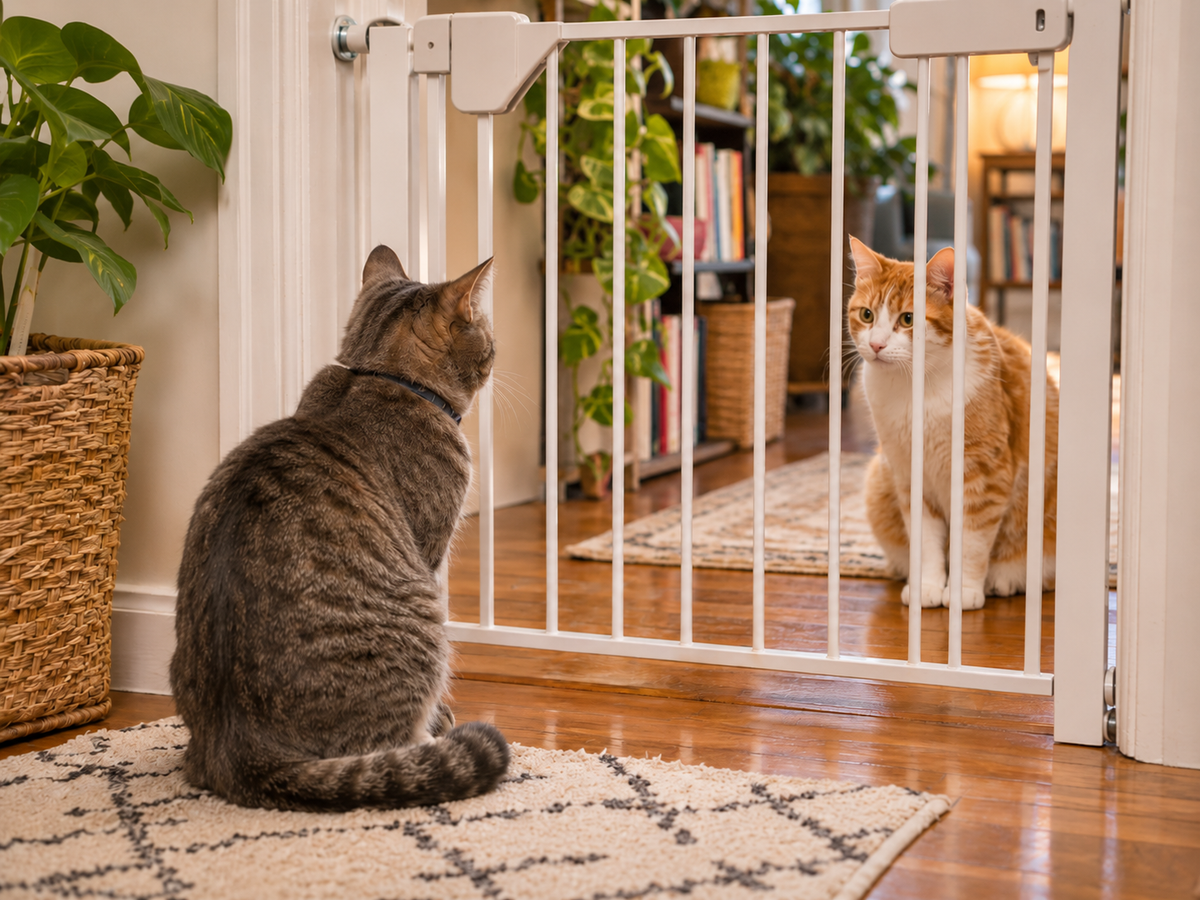
Step 1: Separate Completely
Give each cat a secure area with food, water, a litter box, and comfortable resting spots. Keep doors closed to prevent surprise encounters, and allow both cats to settle back into their normal routines before moving on.
Step 2: Swap Scents and Spaces
Exchange bedding or let each cat explore the other’s area while they’re safely separated. Keep things low-pressure. If either cat becomes upset, slow down or take a break.
Step 3: Make the Closed Door Predict Good Things
Feed your cats on opposite sides of a closed door, starting far enough apart that both eat comfortably. Gradually move their bowls closer over several sessions. If either cat freezes, refuses food, or becomes agitated, increase the distance again.
Step 4: Allow Brief Visual Contact
Once they’re comfortable with the closed-door routine, let them see each other through a secure screen or barrier. Keep sessions short and watch for stiff postures, fixed staring, or growling.
You’re looking for calm curiosity, not a showdown through the screen door.
Step 5: Try Short Supervised Visits
When both cats are consistently relaxed during visual sessions, allow brief, supervised time together with plenty of space and safe barriers handy. Use separate play or treats to make the experience positive.
End while things are going well. If tension builds, separate them safely and return to an earlier step.
Step 6: Gradually Increase Their Time Together
Slowly extend their visits while maintaining separate resources and escape routes. Reintroduction can take weeks or months, depending on the cats.
And remember, success doesn’t have to mean a joined-at-the-hip friendship.
Think less forced friendship, more peaceful coexistence with separate bathrooms.
Could Something Medical Be Going On?
Sometimes the cat who suddenly starts picking fights isn’t being difficult. He’s hurting.
Arthritis, dental disease, urinary problems, and even an overactive thyroid can make a cat irritable or less tolerant of other cats. A cat who’s feeling sick or vulnerable may also start hiding or avoiding her housemates.
If your cats suddenly stop getting along, a veterinary check can help rule out an underlying medical problem.
Straining to urinate or producing little or no urine is a veterinary emergency, as Cornell University’s Feline Lower Urinary Tract Disease guide explains.
What about pheromone diffusers? Products designed for multi-cat homes may help ease tension, although results vary. Think of them as supporting actors, not the stars. They work best alongside environmental changes and positive interactions, not instead of them.

When to Call In the Pros
Some problems need more than another cat tree and a handful of treats.
It’s time to get professional help if you notice:
- Fighting that causes injuries, especially bite wounds.
- A cat regularly avoiding food, water, or the litter box.
- Weight loss, persistent hiding, or significant behavior changes.
- Repeated chasing or cornering that you can’t safely prevent.
- Little improvement despite consistent changes at home.
Cat bites deserve prompt veterinary attention, even when the wounds look small. They can become infected quickly.
For stubborn cases, your vet may recommend a board-certified veterinary behaviorist or qualified feline behavior professional. Sometimes anti-anxiety medication is part of the plan, alongside environmental changes and behavior work.
And one difficult truth deserves mentioning: some cat pairs simply can’t live together comfortably, even with professional help.
If one cat continues spending most of her life hiding or afraid to move around her own home, finding a more suitable home for one of them may eventually be the kindest choice.
It’s a decision to make carefully, not after one bad afternoon.
Frequently Asked Questions About Cat Bullying
If you’ve got two cats who can’t seem to agree on the house rules, you’ve probably got questions. Is it normal for one cat to chase the other? Will they ever become friends? And how do you know when their little disagreements have turned into a real problem?
Here are answers to some of the most common questions about cat bullying.
Why Does My Cat Block My Other Cat From the Litter Box?
Your cat may be resource guarding, even if he never growls or takes a swipe at the other cat.
He might sit outside the litter box, block the doorway, or stare until the other cat gives up and walks away.
The problem is that a nervous cat may eventually stop using that box altogether. Try placing additional litter boxes in different rooms, preferably with clear escape routes, so one cat can’t control access to every bathroom in the house.
Should I Separate My Cats if One Is Bullying the Other?
If one cat repeatedly chases, corners, or frightens the other, temporary separation can help everyone settle down.
Give each cat food, water, a litter box, and a comfortable resting area. Once they’re relaxed, you can begin carefully managed reintroductions. Don’t make them fight it out.
Why Is My Cat Suddenly Scared of My Other Cat?
Something may have happened when you weren’t watching.
A frightening chase, an ambush near the litter box, or even a fight triggered by a strange cat outside the window can change how two cats feel about each other.
Illness, pain, and household changes can also cause sudden behavior shifts.
If your cat starts hiding, avoiding rooms, or acting frightened around a cat she previously liked, schedule a veterinary visit and give her a safe place to retreat while you figure out what’s going on.
Will My Cats Ever Get Along Again?
Many cats can learn to coexist peacefully with the right changes and gradual reintroduction. Some become affectionate companions again, while others prefer to keep their distance.
That’s okay. They don’t have to be cuddle buddies to share a happy home.
Is My Cat Bullying the Other Cat Out of Jealousy?
It can certainly look that way, especially when one cat pushes between you and the other cat every time you sit on the couch.
But what looks like jealousy may actually be competition for attention, frustration, insecurity, or resource guarding.
Instead of guessing or assuming your cat is jealous, note what triggers the behavior. Does he interrupt mealtimes? Block favorite resting spots? Chase the other cat whenever you give her attention?
Those behavior patterns will tell you more about what needs to change than deciding which cat is jealous of whom.
How Long Does It Take to Stop Cat Bullying?
Some cats improve quickly after getting separate resources and safer spaces. Others need weeks or months of gradual reintroduction.
Look for small victories: fewer standoffs, relaxed mealtimes, and the nervous cat venturing into rooms she’d been avoiding.

Still Negotiating the Cat Peace Treaty?
Living with more than one cat can feel like managing a tiny apartment building full of complicated roommates. If you’re still trying to keep the peace, these guides can help you understand what your cats need and how to make life easier for everyone.
- Love at First Hiss? How to Tell If Two Cats Will (Eventually) Get Along — Learn which early interactions are normal, which are warning signs, and how to help cats build trust at their own pace.
- Things Every Cat Owner Stops Questioning Eventually Because Cats Have Their Own Rules — From 3 a.m. hallway races to dramatic protests over closed doors, some cat behavior simply comes with the territory.
- Should You Get a Second Cat, or Are You About to Ruin a Good Thing? — Explore what really changes when you add another cat to the household and how to set everyone up for success.
You may never convince your cats to become best friends, but if everyone can eat breakfast, use the litter box, and walk down the hallway without a diplomatic incident, I’d call that a pretty good peace treaty.
Have Cat Drama in Your House?
Every cat has their unique quirks, and every multi-cat household has a story! Whether your cats are best friends, reluctant roommates, or still figuring things out, I’d love to hear about them.
Share your stories, questions, or tips in the comments below.