What Cats Experience When The Lights Go Out: Why Some Cats Struggle When Left Alone In The Dark

When you purchase through links on our site, we may earn a commission at no extra cost to you. Learn more.
Your cat is fine in the dark. Right?
Table of Contents
They’ve got those glowing eyes, sleep most of the day, and move through your house as if they know it better than you do. Leaving the lights off feels harmless. Logical, even.
But here’s the part most cat owners don’t realize. Darkness doesn’t automatically equal comfort for cats, especially when they’re alone.
What actually happens when the lights go out depends on your cat’s personality, routine, and stress tolerance. Some cats snooze peacefully. Others spiral into midnight zoomies, anxious pacing, or creative destruction involving your favorite shoes.
Want our human-written content to rank above AI-generated garbage? Help us out by clicking this button!

Before You Flip The Light Switch & Walk Away
Cats may act chill, but once the lights go out, their inner gremlin sometimes comes to life. That “perfectly fine” cat you left snoozing on the windowsill might turn into a zooming, yowling, furniture-shredding mystery after sundown.
For some cats, darkness feels cozy and safe. For others, it creates uncertainty, boredom, or anxiety that shows up as nighttime chaos.
To understand what’s really going on after the lights go out, we need to separate myth from reality and look at how cats actually experience darkness.
Top 10 Mysteries & Myths Surrounding Cats & Darkness
After months of reader questions and behavior research, these are the ten things cat owners are most confused about when it comes to cats, darkness, and being left alone. Let’s clear them up.
1. Can Cats Really See In The Dark, Or Is That Just A Myth?
Cats in a dark house might look like they’re thriving. Slipping through hallways. Appearing out of nowhere. Watching you with glowing eyes.
But even your spooky little roommate needs some light to see.

Myth: Cats Have Night Vision Superpowers
They don’t. Cats cannot see in total darkness.
What they can do is see exceptionally well in low light. Here’s why:
- More rod cells in their eyes to detect motion and light
- A reflective layer (tapetum lucidum) that bounces light inside the eye
- Slit-shaped pupils act like dimmer switches for incoming light
- A wider field of view than humans
That’s why your cat can move confidently through a dim hallway. But in pitch black conditions, they’re guessing just like you.
What Cats Can (And Can’t) See At Night
Cats have impressive vision, but it comes with limits:
- They can’t see in complete darkness
- They don’t focus well on distant objects
- They don’t see the full color spectrum
- Slow-moving objects are easier for them to miss
Why Twilight Is The Sweet Spot
Cats aren’t nocturnal. They’re crepuscular.
That means their favorite time to be active is dawn and dusk, when there’s just enough light to hunt and explore. Low light is ideal. Total darkness is not.
If your cat is home alone overnight, a small light isn’t spoiling them. It’s helping them navigate safely.
Did You Know? Cats can see six times better than humans in low light. But in total darkness, they’re just as blind as we are. (Sorry, night ninjas.)
2. What Do Cats Get Up To When The Lights Go Out?
Once the house goes quiet, many cats don’t settle in for the night. Some do. Others clock in for their shift.
Nighttime behavior varies wildly depending on energy levels, enrichment, and personality.
Common Night Behaviors Owners Notice
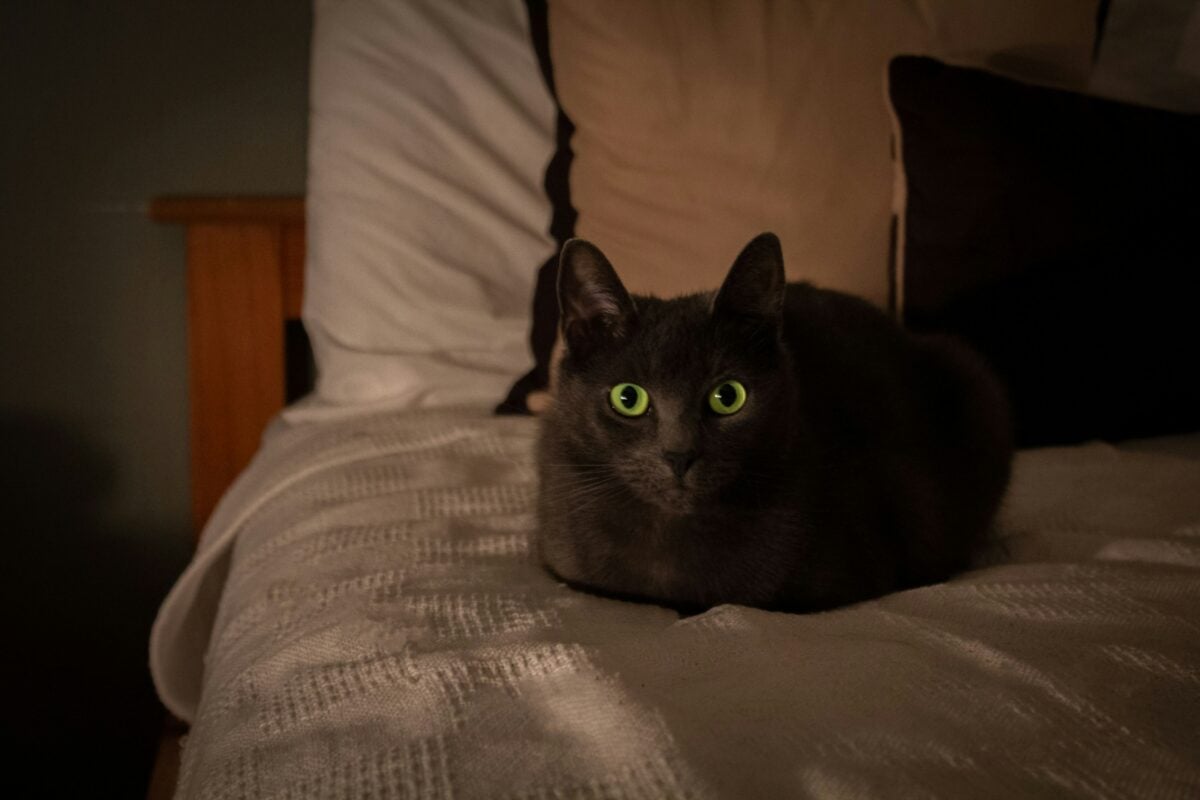
Some cats patrol the house like tiny security guards, while others curl up and snooze peacefully. Some common night behaviors you may have noticed include:
- Zoomies through hallways and staircases
- Stalking toys or shadows
- Knocking objects off surfaces
- Vocalizing for attention or food
These behaviors are a mix of instinct and boredom. In the wild, cats hunt during low light. Indoor cats often redirect that energy into midnight mischief.
Are They Hunting, Sleeping, or Pacing?
- Hunting or playing: Shadow stalking, toy attacks, trophy delivery to your bed
- Sleeping: Well-exercised cats may sleep through the night
- Pacing or vocalizing: Often linked to boredom, anxiety, or routine disruption
Pro Tip: A short play session and a small meal before bedtime can reduce nighttime chaos.
What Kind Of Night Cat Do You Have?
- The Midnight Zoomer: Energy spikes after dark. Hallways are racetracks.
- The Silent Stalker: Appears and disappears without warning. Knows your location at all times.
- The Anxious Yowler: Vocalizes once the house goes quiet. Often seeking reassurance.
- The Furniture Inspector: Knocks objects off surfaces like it’s a job.
- The Angel Sleeper: Curls up and doesn’t move until morning.
3. Do All Cats Love The Dark?
Cats seem like they enjoy the dark. They hide in closets. They curl up under beds. They vanish into cabinets like little burglars.

But loving a dim corner doesn’t mean loving complete darkness. Some cats thrive during quiet, low-light hours. Others follow their humans everywhere and struggle when routines change.
A few factors shape how cats feel about darkness:
- Crepuscular rhythm: Dawn and dusk are their peak activity times
- Household schedule: Indoor cats often mirror their humans
- Energy storage: Cats who nap all day may explode with energy at night
Cats don’t need bright lights, but complete darkness can make some cats uneasy.
Signs A Cat May Be Uncomfortable
If you notice these signs, a soft light near their favorite spot can make a big difference.
- Restless pacing
- Increased vocalization
- Avoiding dark rooms
- Clingy behavior after sunset
4. Why Do Cats Like To Sneak Into Dark Spaces?
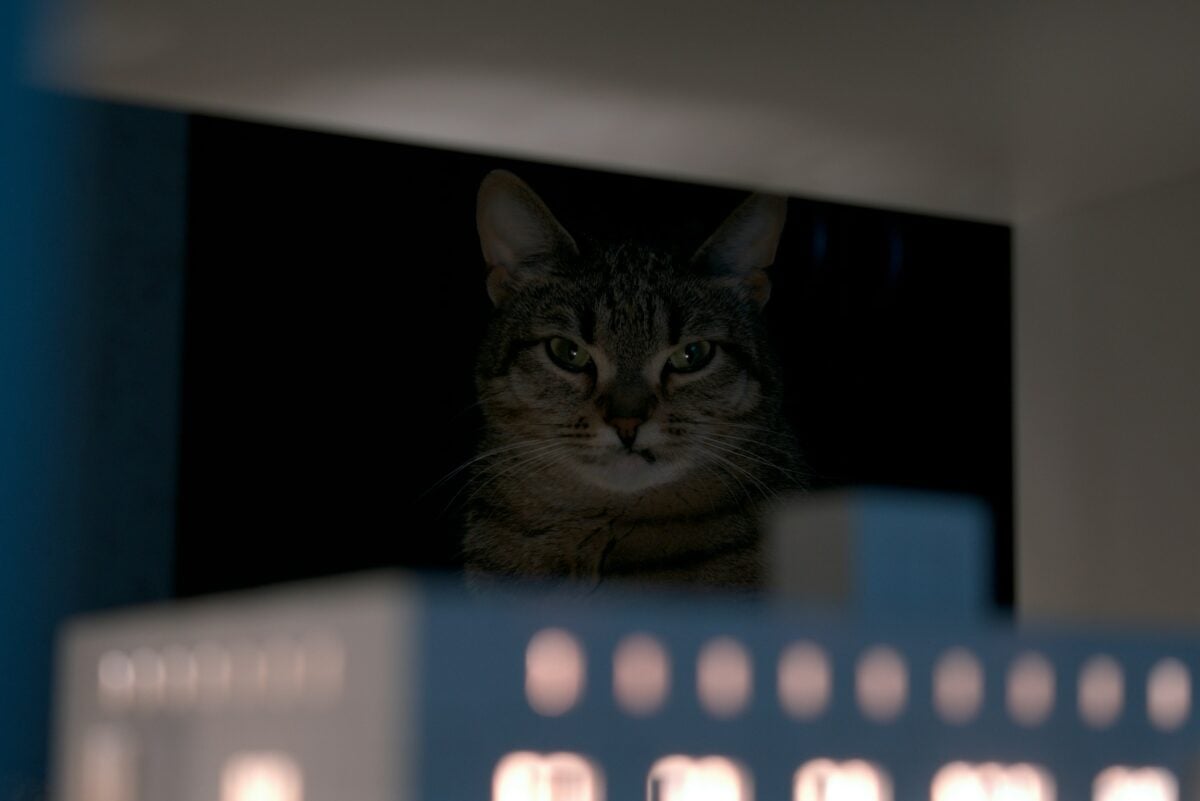
It’s not really about the darkness; it’s about the feeling of safety, warmth, and control.
Cats seek out spaces that feel enclosed, quiet, and predictable. Dark spaces just happen to offer those qualities.
What Makes These Spots So Appealing?
- Enclosure: Surrounded on multiple sides for security
- Warmth: Small spaces retain heat
- Reduced stimulation: Escape from noise and activity
- Environmental control: They can observe without being surprised
Under beds, behind curtains, inside boxes. These aren’t spooky choices. They’re strategic ones.
5. Can Cats Be Afraid Of The Dark?
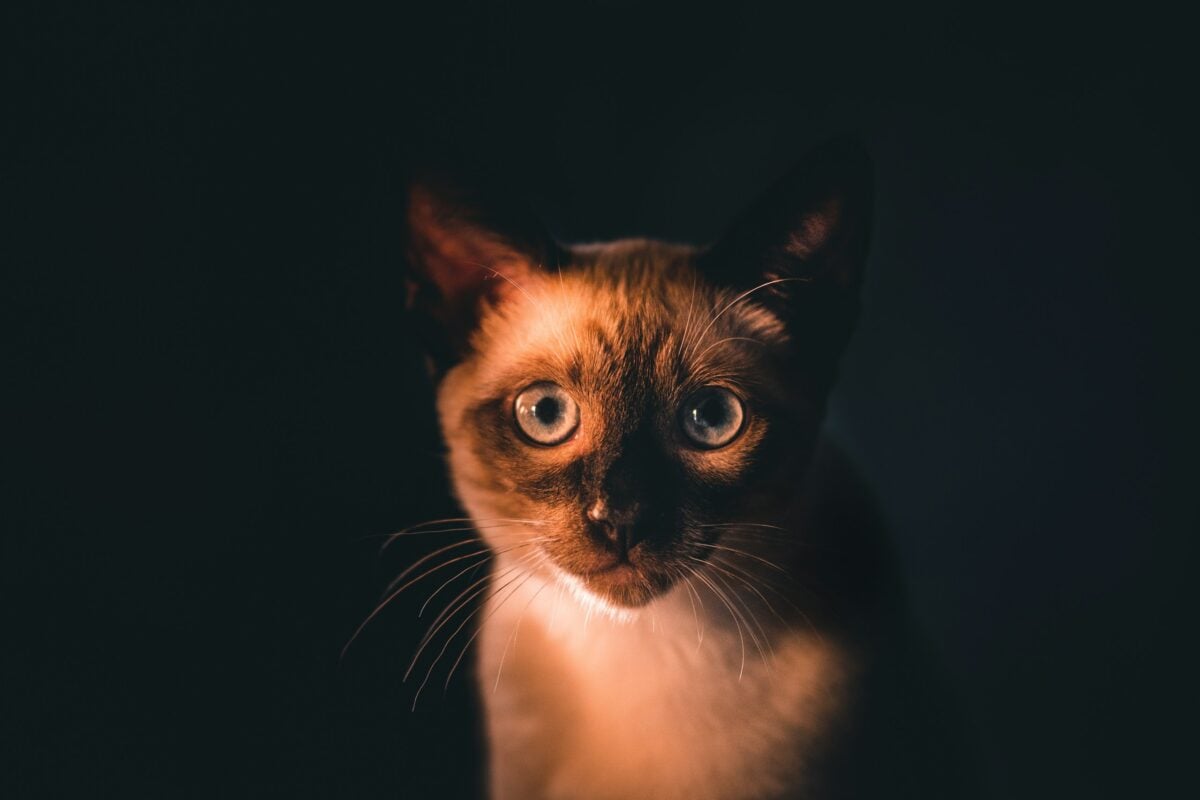
Yes. Cats can absolutely be scared of the dark.
Even with their impressive low-light vision, a completely dark house can make them feel vulnerable. Imagine being tiny, alone, and suddenly hearing a loud noise, or worse, getting stepped on by your giant human.
Common Triggers
Fear can be triggered by:
- Past negative experiences
- Sudden silence or unfamiliar sounds
- Separation anxiety
- Vision changes with age
- Lack of stimulation
If your cat cries, paces, or knocks things over when the lights go out, they’re not being dramatic. They’re communicating discomfort.
Roxy The Night Owl: A Real-Life Example of Feline Nighttime Anxiety
Back when I was working nights at a cocktail bar, I had a sweet little tabby named Roxy. She was affectionate, quiet, and perfectly content during the day. But it was like flipping a switch once the sun went down, and I grabbed my keys.
As soon as I left, Roxy would cry at the door, paw at the windows, and knock things off shelves like she was staging a tiny protest.
I’d come home to overturned water bowls. Pillows were dragged onto the floor, and her wide-eyed stare from the hallway was like, “Where have you been?” It was equal parts heartbreaking and dramatic.

Eventually, I figured out it wasn’t just separation anxiety. It was the dark, quiet house that really unsettled her. She stopped panicking once I started leaving on a light and playing soft music while I was gone.
She’d still greet me with that look (you know, the one), but at least she wasn’t tearing apart the living room. Roxy taught me that even confident cats can feel vulnerable at night and that a little comfort goes a long way.
Moral of the story: If your cat’s acting spooky, there’s usually a logical (if invisible) cause.
6. Do Cats Prefer The Lights On Or Off?
Neither. It depends on their routine, environment, and personal quirks.
Most owners assume that cats either love or hate darkness. In reality, most cats fall somewhere in between, and it’s the sudden change that causes stress, not the darkness itself.
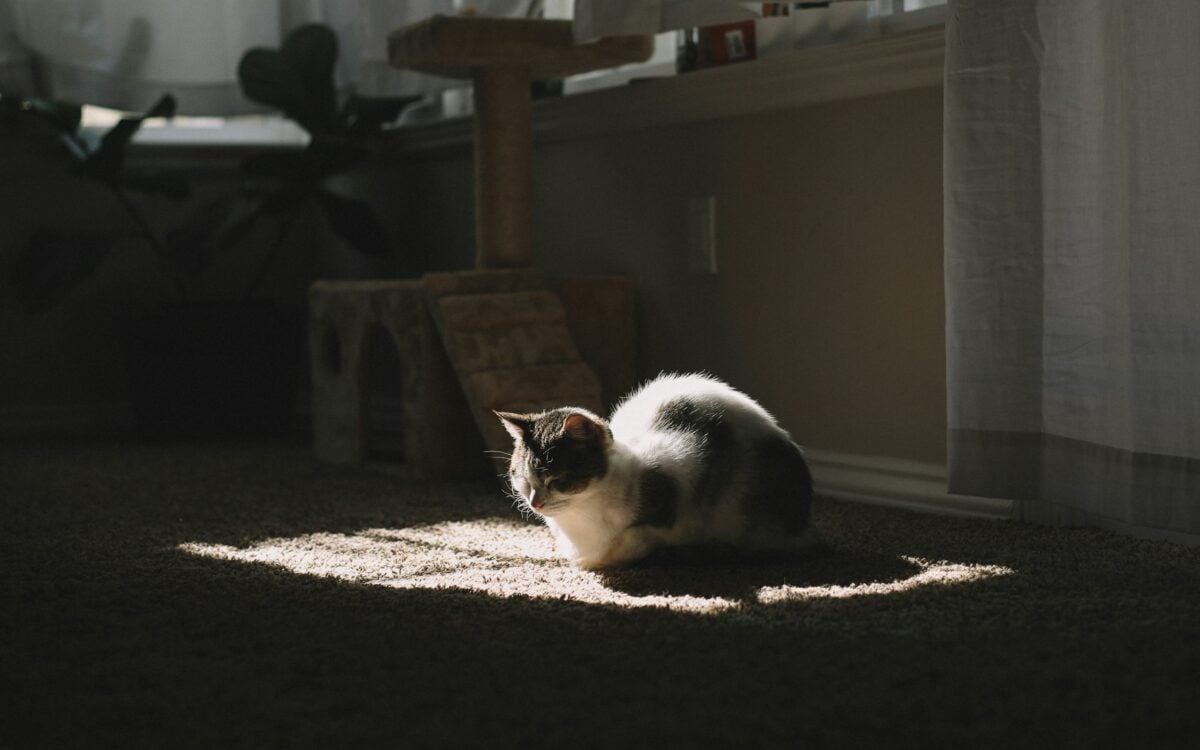
Darkness Setup Guide
If you’re wondering whether your cat wants the lights on or off, you’re already thinking like a thoughtful cat owner. This table covers the small details most people overlook.
| If Your Cat Is… | Consider This At Night |
|---|---|
| Senior or visually impaired | Nightlights near litter box and food |
| Anxious or vocal | Soft background noise + dim lighting |
| High-energy | Pre-bed play + puzzle feeder |
| Confident and independent | Minimal lighting, routine consistency |
7. Should You Leave A Light On For Your Cat?
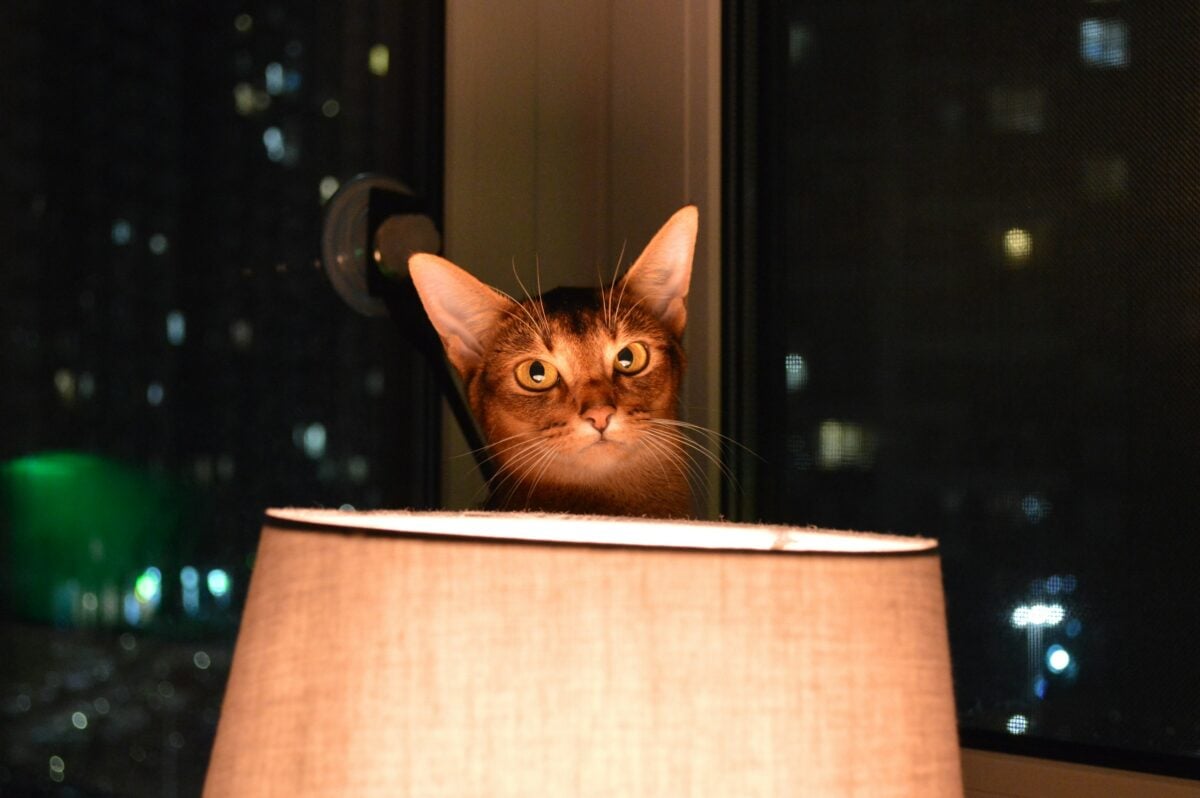
Yes. A soft lamp, a hallway light, or even open curtains letting in moonlight is enough. Cats in a dark house do best when there’s some visibility.
Soft lighting helps cats navigate, reduces anxiety, and lowers the risk of injury.
8. What About Leaving the TV On?
This depends on the cat.
Some felines are comforted by the background noise if they’re used to the TV being on during the day. Others might find it overstimulating. Try it out and see how your cat responds.
If the house goes from lively to silent and dark all at once, your cat may feel unsettled. A little light and familiar background sound can smooth the transition and help her feel less alone.
9. Is It Okay To Leave A Cat Alone Overnight In A Dark House?
Here’s the short answer: sometimes, yes. But it depends on the cat and the setup.
Some cats handle solo sleepovers like pros. Others spiral into emotional chaos and act like you vanished forever. That’s because, just like us, cats can get lonely.

What Can Happen
Even the chillest cat can get anxious if you leave them alone and in the dark.
- They might scratch furniture or knock things over.
- They may cry, hide, or suddenly forget how a litter box works.
- Some overeat. Others stop eating at all.
And yes, some cats get weirdly moody when you come back… like you betrayed them personally.
A Few Hours vs A Full Night
For confident, independent cats, overnight alone can be fine if you plan carefully.
Make sure they have:
- Fresh water
- Clean litter box
- A measured amount of food (automatic feeders are great)
- Some dim lighting or cracked blinds
- Safe, lighted areas to explore
- Bonus: a piece of your worn clothing for comfort
- Enrichment (toys, scratching post)
Long stretches of darkness and silence increase boredom and anxiety.
10. Can Cats See Ghosts? Or Are They Just Being Weird?
We’ve all seen it: your cat stares into a corner, eyes wide, tail flicking… with nothing there.

Myth: Cats Can See Ghosts
Truth: There’s no proof of ghost-sensing whiskers, but cats definitely react to things we can’t see, such as tiny bugs, flickering lights, and vibrations. Still, when your cat stares into the corner at nothing for ten minutes straight… It’s hard not to wonder.
Why Your Cat Might Stare Into Nothing
Nope, it’s probably not a ghost. Cats have super-sensitive senses:
- Hearing: High-frequency sounds humans miss
- Vision: They pick up subtle movements even in low light
- Smell: Lingering scents
So when your cat locks eyes with a corner for ten minutes, it’s probably not paranormal. Just unsettling.
How Age, Health, & Personality Affect Night Behavior
Not all cats experience darkness the same way.
Kittens: Curious But Clingy
Kittens are naturally energetic and curious, but being alone in the dark can be stressful for them. If separated from their littermates or owners, they may cry out or act anxious.
Their small size also makes them more vulnerable to getting into unsafe spaces at night.

Helpful Adjustments For Kittens
Kittens are energetic and easily overwhelmed. Helpful adjustments include:
- Warm, cozy sleeping spots
- Heartbeat toys or soft blankets
- A soft nightlight nearby
- Consistent bedtime routines
Senior Cats: Slower, Sleepier, & Sometimes Confused
Older cats often experience declining eyesight, arthritis, or cognitive dysfunction. In total darkness, they may feel disoriented or anxious, especially if their environment changes or they have difficulty locating key areas, such as the litter box or food bowls.
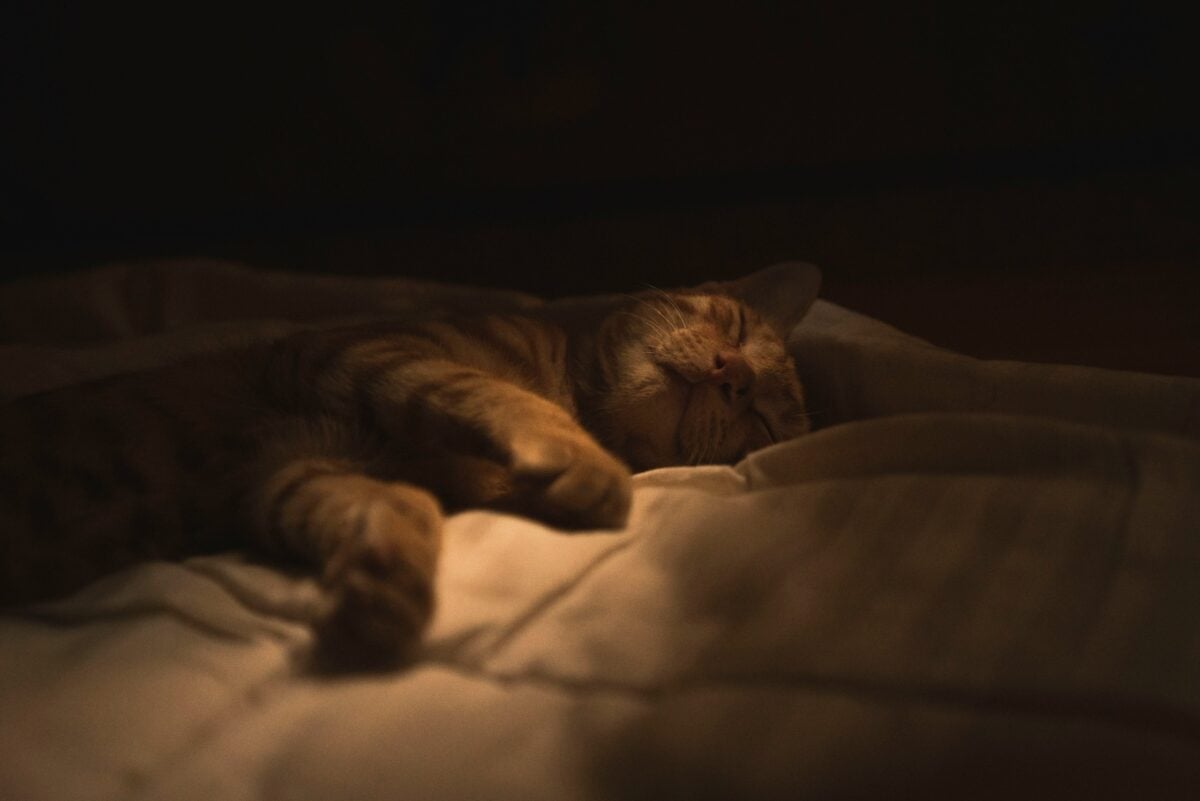
Support Your Senior Cat
Aging cats may struggle more in the dark due to vision loss, arthritis, or cognitive changes. Support them with:
- Nightlights near litter boxes, stairs, or feeding areas
- Easy access to beds and favorite spots
- Monitoring for nighttime confusion
Our Personal Experience With Senior Nighttime Adjustments
I’ve added nightlights throughout my house and made sure my cats’ litter box area is always well-lit, especially at night. Both of my cats are seniors, and one of them, Luna, has a bad eye, so I want to be sure they can move around confidently after dark.
– Tara Maurer, Cat Owner & Writer For Love Your Cat
Personality Matters
Even healthy adult cats may react poorly to being left in the dark if they’re naturally anxious or if their routine is disrupted. Cats that are clingy, high-energy, or easily stressed may show more nighttime restlessness or vocalization.
Big changes, such as moving homes, adding new pets, or scheduling shifts, can amplify these behaviors. Ensure your cat receives ample daytime stimulation and offers comfort at night if you notice any unusual behavior.
Tip: Watch for patterns over time. If your cat seems increasingly restless or fearful after dark, it may be time to adjust their environment or speak with your veterinarian.
Is Your Cat Struggling With Darkness Or Loneliness?
Cats hide stress well. But when darkness or alone time becomes a problem, it often shows up in behavior.
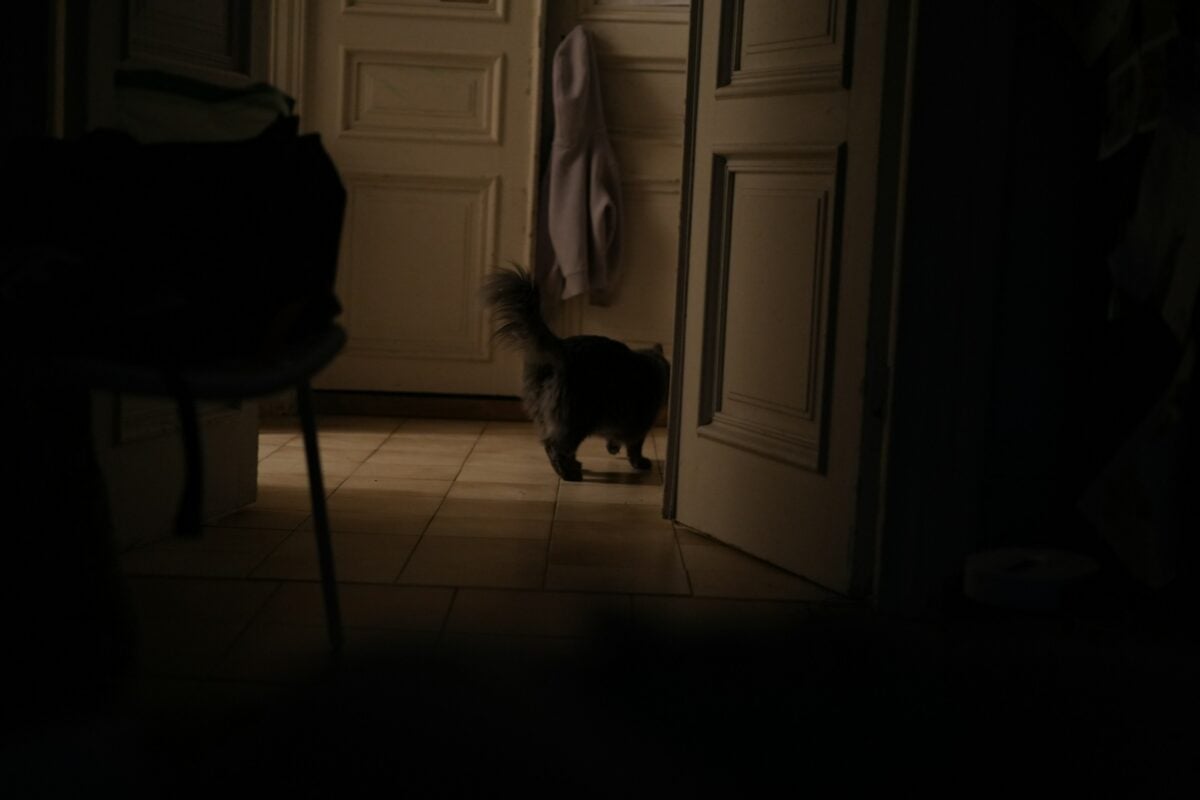
5 Signs Your Cat Isn’t Coping Well
If your cat isn’t quite themselves when the lights go out, or you’re away for the night, it might be more than just a quirky mood swing. Here are some common signs your cat may be struggling with the darkness or alone time.
1. Aggression Or irritability
Your sweet, purring lap cat suddenly hissing or swatting at shadows? That may be anxiety showing up in the form of mood swings. Stress makes cats more reactive, even if they don’t really know what they’re reacting to.
2. Loss Of Appetite
A skipped meal or ignored treat is more than just pickiness. Cats often go off their food when they’re overwhelmed or unsettled. If darkness or loneliness makes them anxious, their appetite might be the first thing that disappears.
3. Vomiting Or Diarrhea
An anxious belly is a real thing for cats. Just like in humans, stress can upset their digestion. If your cat suddenly has tummy troubles when left alone at night, it’s worth paying attention.
4. Litter Box Issues
If your cat starts peeing outside the litter box, especially when left in a dark house, it’s not rebellion. It’s communication. They’re not being “bad”. They’re trying to tell you something doesn’t feel right.
5. Clinginess Or Hiding
Some cats react to stress by becoming extra needy. Others vanish into the nearest closet or under the bed. Both are coping mechanisms.
If your cat’s behavior changes dramatically when the lights go out, they might be scared or looking for comfort.
Science Says Light Matters
Studies have shown that indoor lighting can actually affect your cat’s stress levels and behavior. One research study found that cats exposed to different light conditions had changes in both behavior and stress hormones.
Another study showed that cats slept more and were less active when it was dark, suggesting that too much artificial light might disrupt their natural rhythms.
So yeah, lighting matters.
Can Cats Get Injured In A Dark House?
Yes, cats can get hurt if left alone in a dark house.
Cats may be graceful, but they’re not invincible. In total darkness, even a confident cat can misjudge a jump, crash into furniture, or get stuck somewhere weird (hello, laundry basket).
If there’s no light at all, their excellent night vision doesn’t work. And that puts them at risk for bumps, bruises, or worse.
The Best Solution: A Human Check-In
If you’re away for more than 12–24 hours, bring in a friend or pet sitter. Even a quick visit helps. Your cat doesn’t need a party; it’s just a reminder that she hasn’t been forgotten.
A sitter can:
- Refill food and water
- Scoop the litter box
- Turn on the TV or a light
- Sit on the couch and snack like a normal human, which helps your cat feel less alone
Even shy cats notice when the house isn’t completely empty. Just having a person nearby makes them feel more secure.
6 Ways To Help Cats Handle The Dark
If your cat gets anxious at night, or you need to leave them alone, try adding a few of these comforts to reduce stress and avoid injury:
- Puzzle feeders: Great for keeping their brain busy.
- Interactive toys & tunnels: Stimulating toys can redirect anxious energy. Cat tunnels give them cozy, safe hideouts.
- Cat tree or perch: Elevated spaces help cats feel secure. Make sure it’s stable and easy to access in dim lighting.
- Soft bedding: Whether it’s a blanket in a box or a luxe cat bed, soft spots give them a place to relax and self-soothe.
- Clean litter box: No one wants to stumble into a mess in the dark. Your cat included.
- Low, warm lighting: A nightlight, a dim lamp, or a cracked curtain goes a long way in helping your cat navigate and feel at ease.
Small changes add up.
What About Medication?
If your cat seems anxious in the dark, pacing, vocalizing, hiding, or refusing to eat, it might be more than just quirky behavior. These could be signs of stress, fear, or an underlying health issue that’s worth taking seriously.
The first step? Talk to your veterinarian.
If your vet determines that your cat is healthy but struggling with anxiety or nighttime stress, they may suggest:
- Short-term anti-anxiety medication: This is often used during transitions, like moving to a new home or during travel, but it can also help cats who become distressed when left alone in the dark.
- Long-term behavioral support meds: If the anxiety is severe or persistent, longer-term options, like fluoxetine or gabapentin, may be considered. These are prescribed carefully and closely monitored.
- Pheromone diffusers or sprays: Non-drug solutions like Feliway can help some cats feel calmer by mimicking natural feline facial pheromones. It’s a good starting point for mild cases.
- Supplements: Products like L-theanine or calming treats with casein, CBD, and tryptophan might help take the edge off, especially when combined with environmental changes like nightlights or soothing background noise.
Medication isn’t a first resort, but it can be a powerful tool when used responsibly, especially when your cat’s quality of life is being affected. No one wants their cat to feel scared or alone, and there’s no shame in getting help
If your cat is suffering silently, a calm night might be a vet visit away.
When Nighttime Issues Lead To Vet Bills
Many cat emergencies don’t happen during business hours. Stress-related behaviors, sudden injuries, and urgent symptoms often show up at night, when vet care is more expensive, and decisions have to be made quickly. Pet insurance can help cover exams, diagnostics, and treatment for new medical issues, making it easier to act promptly rather than worry about cost.
If you’re planning ahead, our guide to the best pet insurance for cats breaks down coverage options and what to look for before an emergency happens. You can also get a free quote below.

Stress-related behaviors and injuries happen more often at night. If your cat develops symptoms that require a vet visit, pet insurance can help cover exams, tests, and treatment. Explore the best pet insurance for cats and protect your feline, day or night.
Frequently Asked Questions
If you’re still scrolling, you’re probably thinking, “Okay, but what about my cat?”
Cats are masters of mixed signals, and nighttime behavior can feel especially confusing when you’re not there to witness it. These are the most common follow-up questions cat owners ask once they understand the basics, especially after leaving a cat alone in a dark house.
Don’t see your question? Respond in the comments, and we’ll get back to you!
Is It Cruel To Leave My Cat Alone In The Dark Overnight?
For most healthy adult cats, occasional overnight darkness isn’t cruel as long as their basic needs are met.
Problems tend to arise when darkness combines with anxiety, boredom, or a sudden change in routine. A little light and enrichment usually go a long way.
Should I Leave Lights On Every Night Or Only When I’m Gone?
You don’t need to leave lights on every night if your cat is confident and relaxed after dark. However, when you’re away overnight, a soft light helps with navigation and reduces stress, especially for anxious or senior cats.
What If My Cat Suddenly Starts Crying Or Yowling At Night?
New nighttime vocalization can signal anxiety, disorientation, vision changes, or age-related confusion. If the behavior is sudden, frequent, or escalating, it’s worth checking in with your veterinarian to rule out medical causes.
Do Kittens Need Lights On At Night?
Often, yes. Kittens are more curious, less spatially confident, and more likely to get into unsafe spots in the dark. A nightlight can help prevent accidents and reduce distress, especially when they’re alone.
Is Silence Worse Than Darkness For Cats?
For some cats, yes. A house that is both dark and silent can feel unsettling, especially if they’re used to daytime noise and activity.
Gentle background sound, like a TV or music, can be comforting for cats who struggle with sudden quiet.
Why Does My Cat Act Weird Or Distant When I Get Home?
Cats don’t hold grudges the way humans do, but they do notice routine disruptions. Aloofness, clinginess, or mild attitude after being alone overnight is common and usually fades once their environment feels stable again.
Keep Your Cat Happy & Out Of Trouble
By tuning in to your cat’s habits and carefully adjusting their surroundings, you can create a home where they feel confident, calm, and content, even when you’re not around. View our recommendations for sturdy cat trees, wall steps, and hanging perches to keep them busy when you’re out of reach.