When you purchase through links on our site, we may earn a commission at no extra cost to you. Learn more.
A confident cat has some very clear ways of showing it.
Table of Contents
And no, confidence doesn’t always mean being loud, bossy, or demanding. Some of the most self-assured cats are also the quietest. They stroll into a room with their tail held high, inspect a new grocery bag before you’ve finished unpacking, or stretch out in the middle of the couch like they’ve been paying the mortgage.
But feline confidence goes beyond having a bold personality. It’s about feeling safe, secure, and comfortable enough to explore, relax, and handle everyday surprises without much fuss.
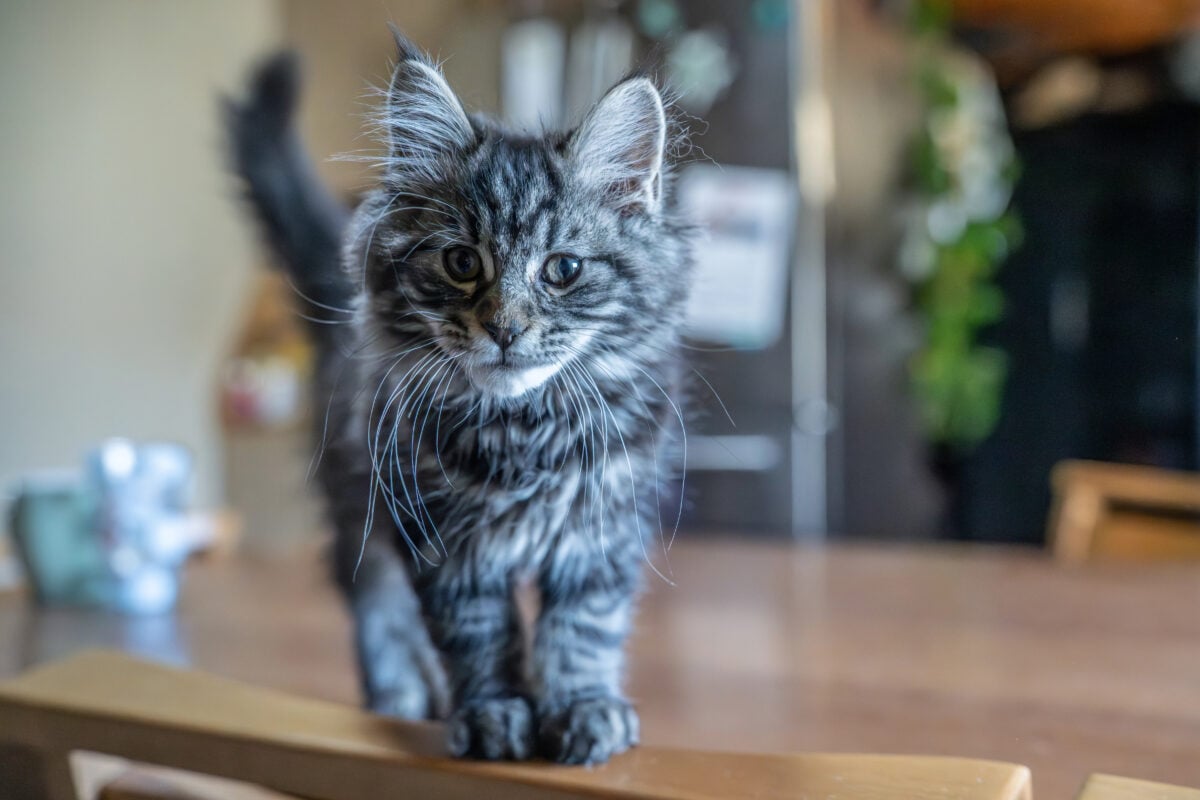
Your cat may be more confident than you realize. These 10 everyday habits show how cats feel at home, including a few subtle signs you might be overlooking.
Want our human-written content to rank above AI-generated garbage? Help us out by clicking this button!
What Does a Confident Cat Look Like?
Confidence looks a little different for every cat. Some are fearless explorers who have to investigate everything, while others prefer to quietly observe before making their move. Neither personality is necessarily more confident than the other.
The real clues are in how your cat carries themselves, responds to new experiences, and goes about their daily routine. From a proud tail-up strut to a surprisingly relaxed reaction to something unexpected, these 10 habits can reveal just how secure your cat feels at home.
10 Everyday Habits That Show Your Cat Feels Confident
You don’t need to be a cat behavior expert to spot these signs. Many show up in ordinary moments, from the way your cat walks into a room to where they choose to nap. Once you know what to look for, you might realize your cat has been showing off their confidence all along.
1. The Tail-Up Strut
You know the walk. Your cat enters the room with their tail pointed straight toward the ceiling, looking entirely pleased with themselves. They might even add a little curve at the tip, like a question mark.
That upright tail is one of the clearest positive signals in feline body language. Cats often use it during friendly greetings with both people and other cats. When paired with a loose body, relaxed ears, and an easy stride, it suggests your cat feels comfortable approaching.
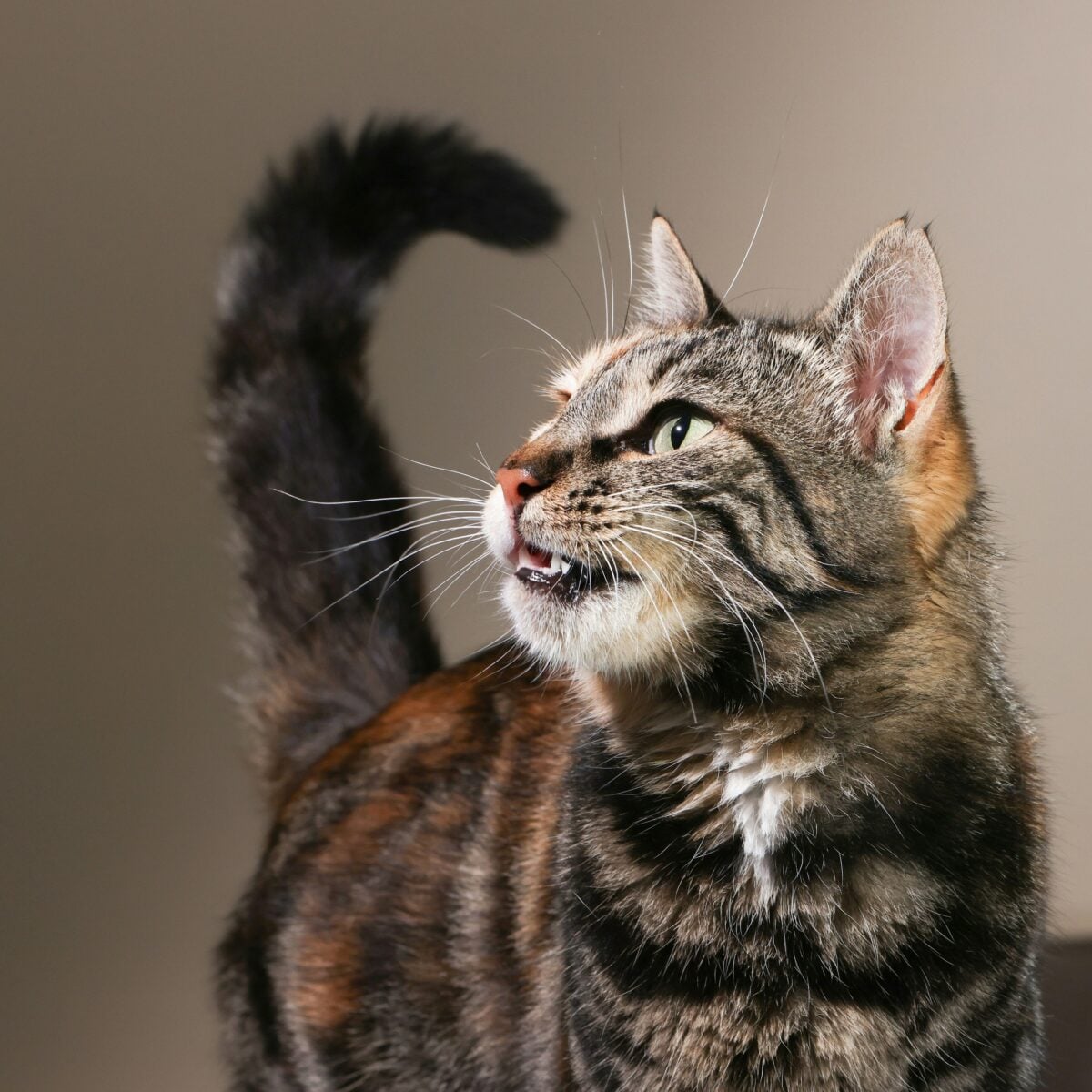
Some cats take this greeting a step further, wrapping their tail loosely around your leg or rubbing against you as they pass.
Look for these little clues:
- A relaxed, upright tail as your cat walks toward you.
- A slightly curved tail tip during a friendly greeting.
- A confident hallway strut without crouching or hesitation.
- A tail that rises when your cat spots a familiar person.
A tail held low, tucked close to the body, or puffed up can suggest a very different mood. As with any cat behavior, the rest of the body tells the bigger story.
Fun fact: Kittens often approach their mothers with raised tails, and adult cats continue using this friendly signal throughout their lives.
2. Investigating Everything New
Bring home a cardboard box, move a chair, or leave a suitcase open, and some cats are on the scene before you’ve even turned around.
My cats take this curiosity a step further. It doesn’t even have to be something new. If I pull out an item that’s been stored away, they’re immediately interested. Before I know it, one of them is lying right on top of it, as if they’ve been waiting for its grand return. Apparently, everything that enters the house needs a cat’s seal of approval.
First comes the sniff test. Then a cautious paw. Before long, your cat is sitting inside the box, supervising the situation like an inspector who takes their job very seriously.
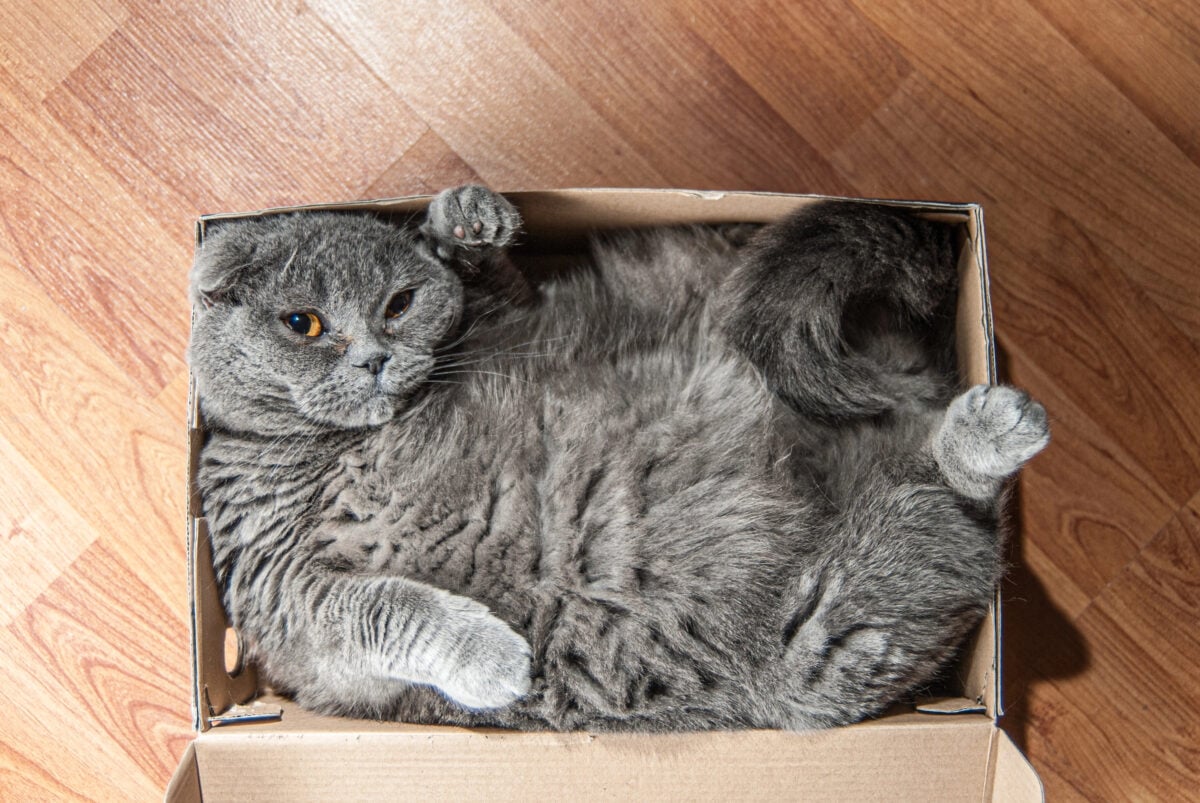
Exploring unfamiliar things is a natural feline behavior, but a cat who willingly investigates new objects often feels secure enough to let curiosity take the lead.
That doesn’t mean confidence always looks fearless. Some cats charge straight into a new room, while others watch from the doorway before slowly moving closer. Both can be confident responses, especially when your cat chooses to explore at their own pace.
You might notice your cat:
- Climbing into a delivery box within minutes.
- Sniffing and investigating newly arranged furniture.
- Exploring an unfamiliar room without immediately retreating.
- Inspecting bags, shoes, or other objects brought into the house.
Safety tip: Remove handles from paper shopping bags and keep plastic bags out of reach. Curious cats can become tangled, trapped, or frightened if a handle catches around their neck.
3. Sleeping Out in the Open
Some cats prefer a cozy hiding place for their afternoon nap. Others stretch out across the living room rug, take over the center of the couch, or fall asleep directly in everyone’s walking path.
The second group certainly isn’t worried about staying out of sight.
Sleeping leaves cats more vulnerable to their surroundings. When a cat regularly naps in busy, open areas, it may feel safe enough to relax without constantly watching for potential threats.
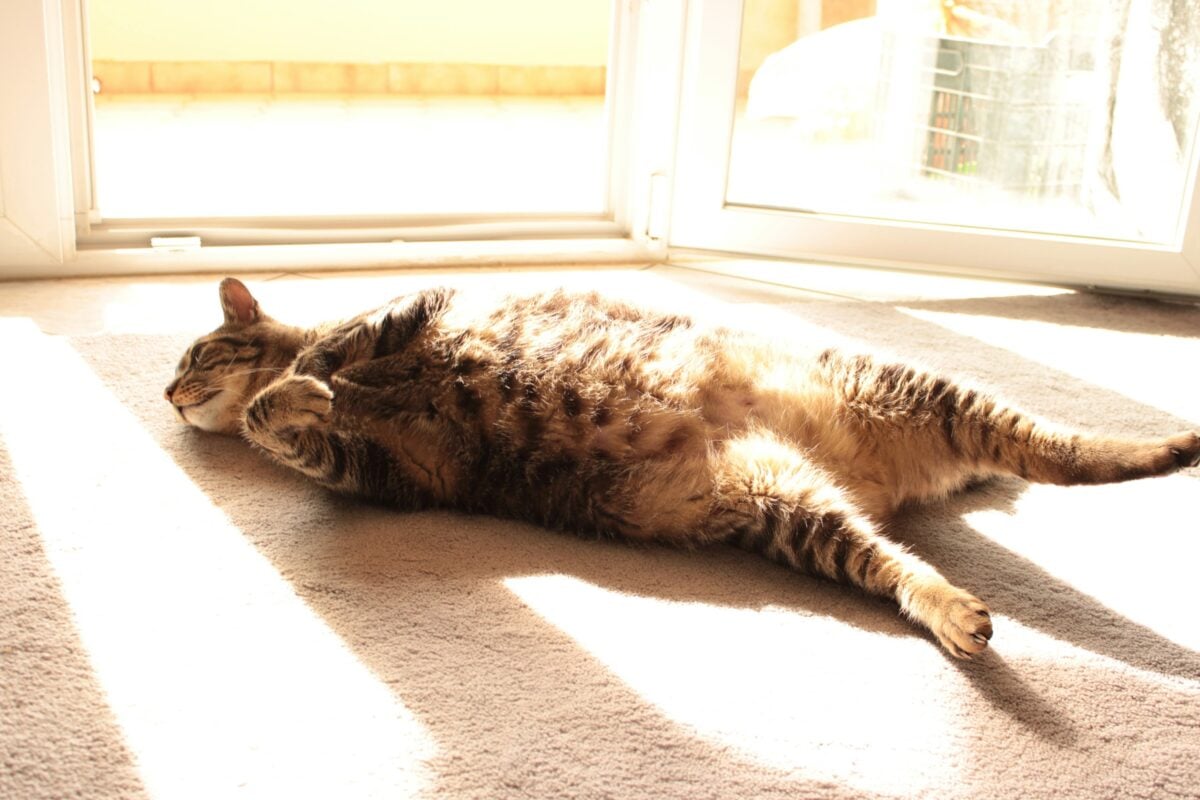
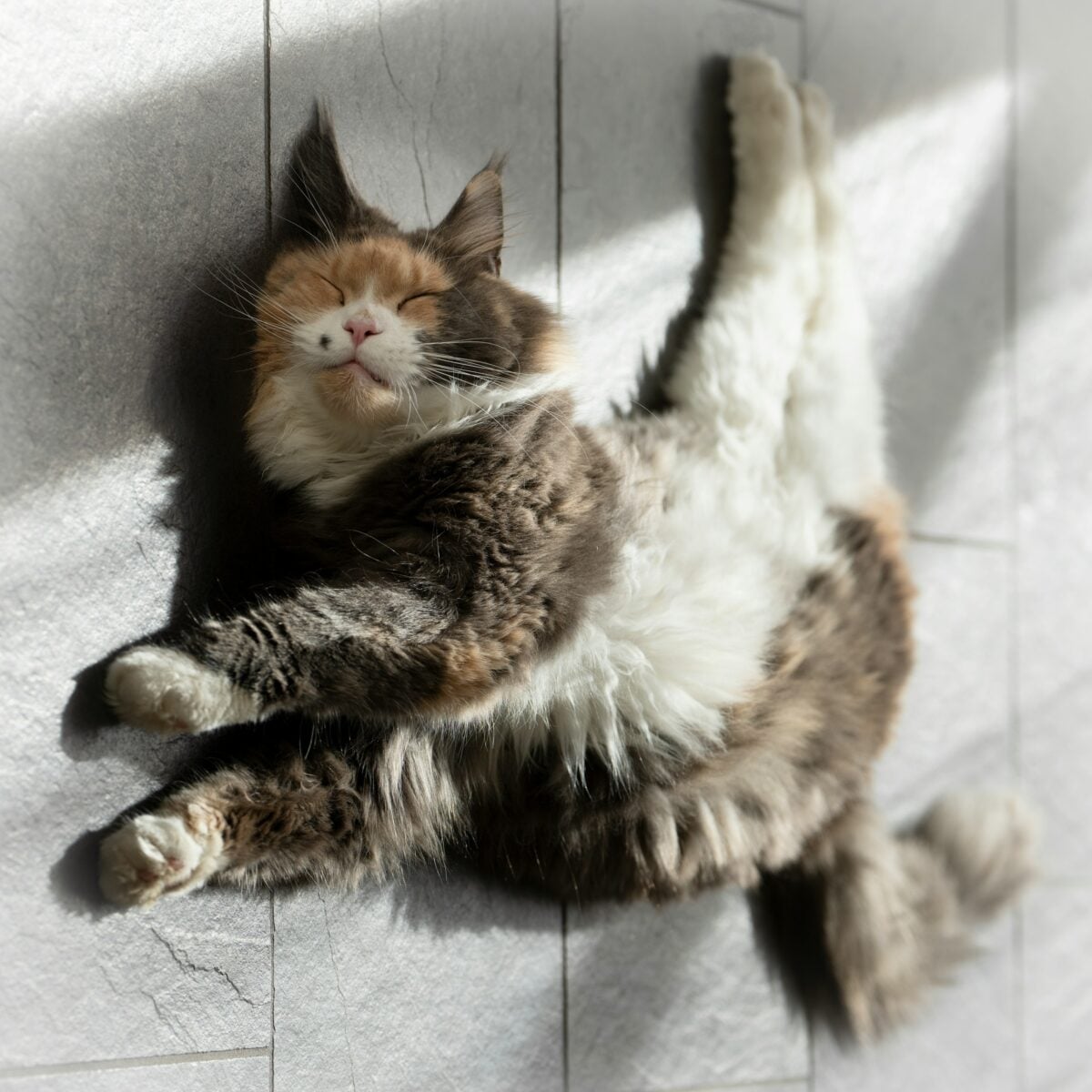
You might catch your cat stretched out on their side, dangling a paw off the sofa, or sleeping belly-up with all four legs in the air. That last position is especially entertaining. The belly is vulnerable, so exposing it while resting can signal comfort and security.
My two cats have absolutely no reservations about sleeping wherever they please. I’ll find them sprawled in the middle of the hallway or completely passed out on the living room floor, bellies exposed and all four legs sticking up in the air. They look so comfortable that I’m almost jealous. Of course, they’re usually lying exactly where I need to walk!
Still, a cat doesn’t have to sleep belly-up to be confident. Many perfectly secure cats prefer enclosed beds, quiet corners, or elevated sleeping spots. Individual preference matters as much as posture.
And one important reminder: A displayed belly isn’t necessarily an invitation for a belly rub. Your cat may trust their surroundings completely while having absolutely no interest in your hand approaching their stomach.
4. Approaching People Instead of Automatically Hiding
The doorbell rings. Your cat lifts their head, considers the situation, and strolls toward the front door to investigate.
Some cats are enthusiastic greeters. Others prefer to observe visitors from a few feet away before deciding whether an introduction is worthwhile.
Both approaches can show confidence.
What matters isn’t whether your cat loves every person who walks through the door. It’s whether they seem comfortable making their own decisions instead of reacting with overwhelming fear.
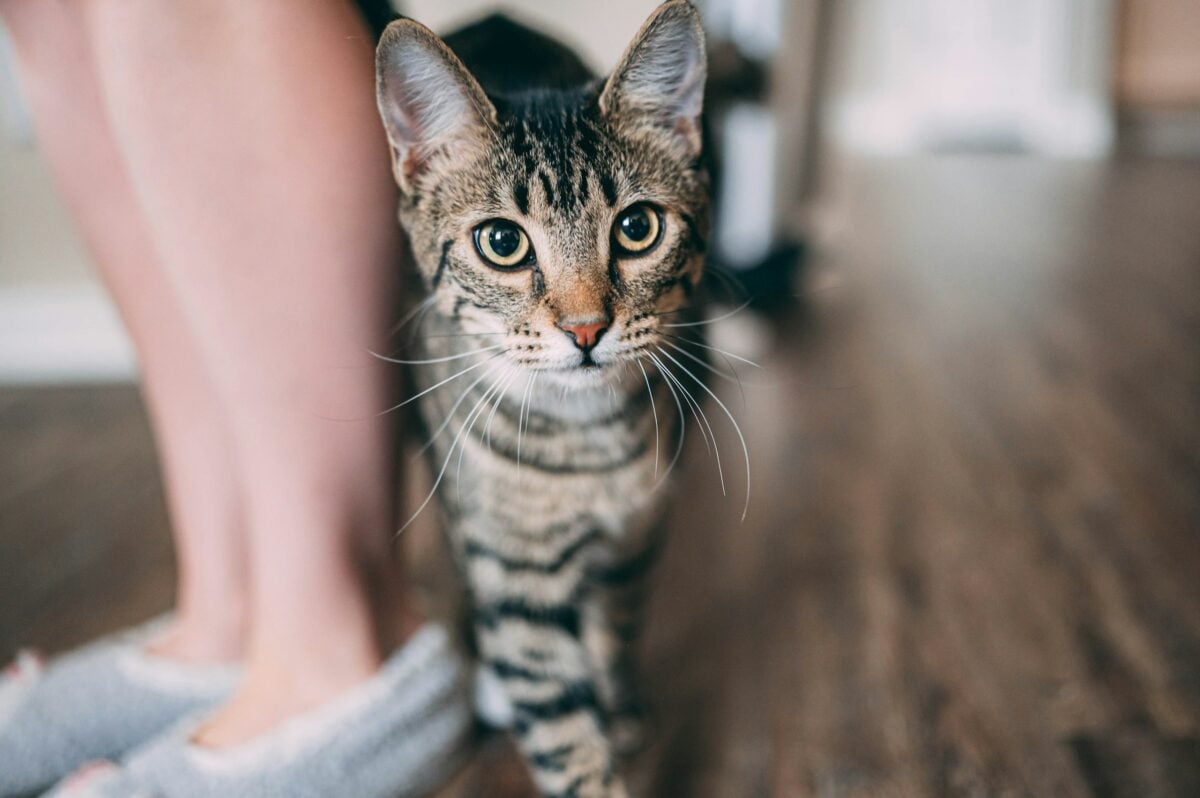
A secure cat might approach a visitor, sniff their shoes, and then casually wander off. That calm exit is just as meaningful as an enthusiastic greeting.
Watch how your cat handles new people:
- Do they remain relaxed when someone enters the room?
- Will they approach and sniff when they’re ready?
- Can they observe visitors without appearing tense or frightened?
- Do they comfortably walk away when they’ve had enough?
Some confident cats simply aren’t interested in strangers, and that’s perfectly fine.
Help visitors make a good impression: Ask them to sit quietly and let your cat initiate contact. Avoid reaching toward, chasing, or picking up a hesitant cat. Giving cats a choice often makes social encounters more comfortable.
5. Playing Without Holding Back
There’s something wonderful about watching a cat completely lose themselves in a game.
One moment they’re crouched behind a chair, eyes locked on a feather toy. The next, they’re launching across the room with impressive athletic ability and absolutely no concern for the furniture.
That enthusiastic play can reflect a cat who feels comfortable enough to focus on having fun.
Play taps into natural hunting behaviors, including stalking, chasing, pouncing, and grabbing. When a cat feels secure in their environment, they may be more willing to engage in these activities openly.
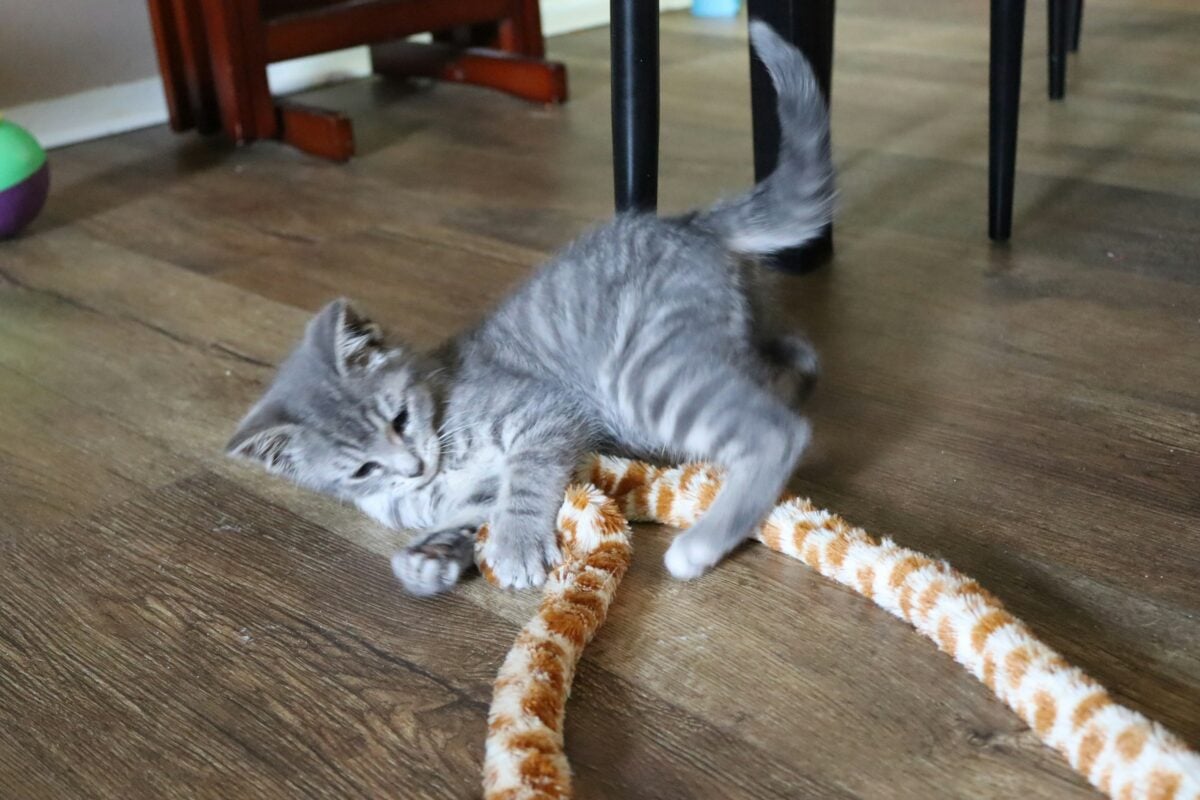
Some cats even initiate games themselves, carrying toys into the room or dropping a favorite mouse at your feet.
Of course, not every confident cat is an acrobat. Older cats, less energetic individuals, and cats with mobility limitations may prefer gentle batting games or short play sessions.
What matters is comfortable, voluntary engagement, not how high your cat jumps.
Try a wand toy that lets your cat stalk, chase, and successfully capture their target. Letting them catch the toy keeps the game satisfying and encourages natural hunting behavior.
If your cat suddenly loses interest in play, especially alongside changes in appetite, movement, or energy, check with your veterinarian.
6. Scratching and Scent-Marking Familiar Spots
Your cat doesn’t need to own the furniture to mark it. Although, judging by the condition of some couches, they may strongly disagree.
Cats have scent glands in their paws and around their faces. Scratching and rubbing against objects help distribute familiar scents throughout their environment.
Those smells play an important role in making a home feel recognizable and secure.
A cat who comfortably scratches a favorite post in the living room or rubs against familiar furniture is engaging in normal territorial communication. These behaviors may help them maintain a reassuring environment.
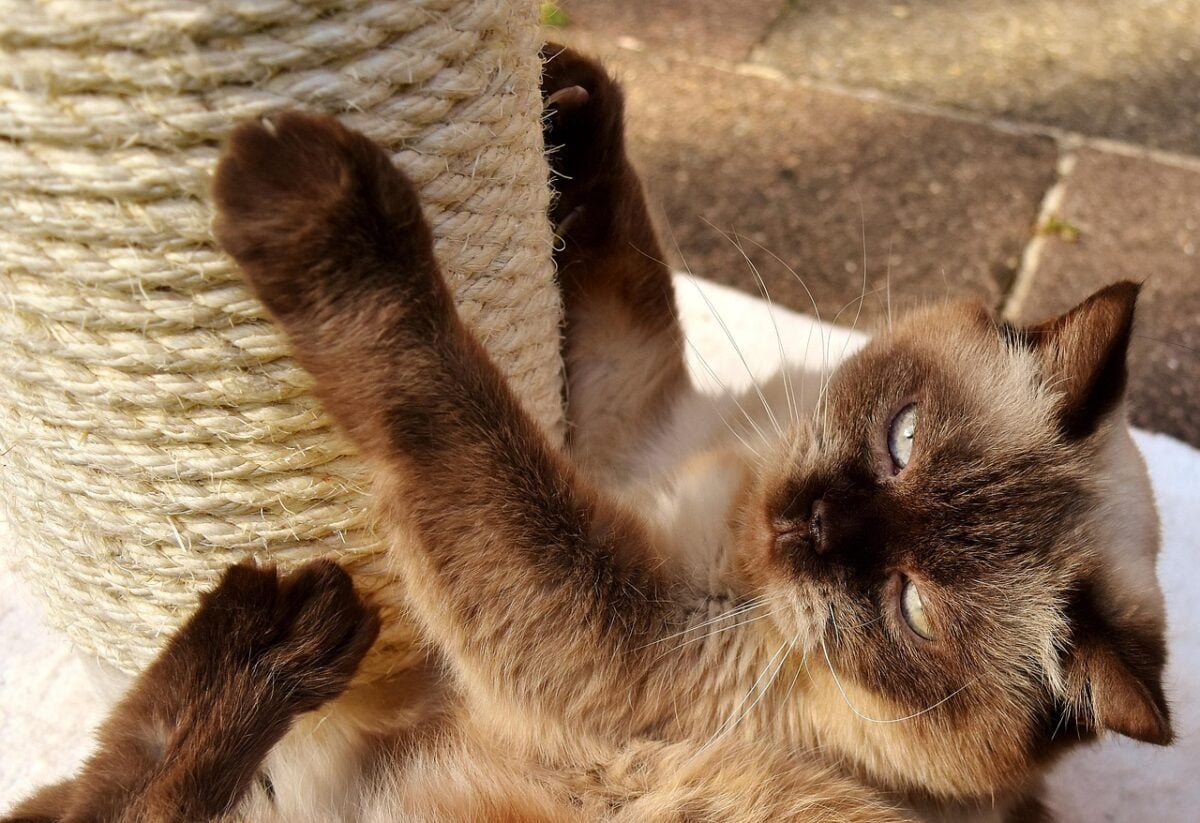
You might notice your cat stretching against a scratching post after waking up, rubbing their cheeks against doorframes, or revisiting favorite scratching spots throughout the day.
Scratching alone doesn’t prove confidence, though. Cats may also scratch more when excited, frustrated, or stressed.
The useful clue is the overall picture: relaxed body language, normal routines, and comfortable movement around familiar spaces.
Want to save your couch? Place sturdy scratching posts near the furniture your cat already likes to scratch. Cats often prefer prominent, familiar locations over a lonely scratching post hidden in a spare room.
For more practical strategies, see our guide on how to stop cats from scratching furniture without discouraging this natural behavior.
7. Supervising the House From Above
If your cat spends half the day perched on the back of the couch, atop a cat tree, or watching you prepare dinner from a strategically chosen lookout, they’re taking advantage of one of their favorite feline privileges: a good view.
Cats naturally seek elevated spots where they can observe their surroundings.
Height provides useful information about what’s happening nearby and gives cats more options for moving away from unwanted activity.

A cat who regularly relaxes on a favorite perch may feel comfortable surveying the household without needing to hide.
There are plenty of familiar examples:
- Lounging across the top platform of a cat tree.
- Watching everyone from the back of the sofa.
- Stretching out on a sturdy windowsill.
- Observing dinner preparations from an elevated spot.
In multi-cat households, vertical space can be especially valuable. Multiple perches at different heights give cats more choices and may help reduce competition over favorite resting areas.
The cat sitting highest isn’t automatically the most confident or dominant. Some cats choose elevated spots for security, while others prefer the view.
Helpful tip: If your cat insists on supervising the kitchen from the counter, try offering a stable cat tree or perch nearby, safely away from cooking surfaces. They can enjoy the action without inspecting your dinner ingredients firsthand.
8. Slow Blinks, Soft Eyes, and Relaxed Grooming
Not every sign of confidence involves exploring, climbing, or proudly marching through the house. Sometimes, it’s as subtle as a slow blink.
When a cat looks toward you with soft eyes and slowly closes them, they’re often communicating in a relaxed, positive way.
A 2020 study published in Scientific Reports found that cats were more likely to slow-blink when people slow-blinked at them. They were also more willing to approach an unfamiliar person following a slow-blink interaction.
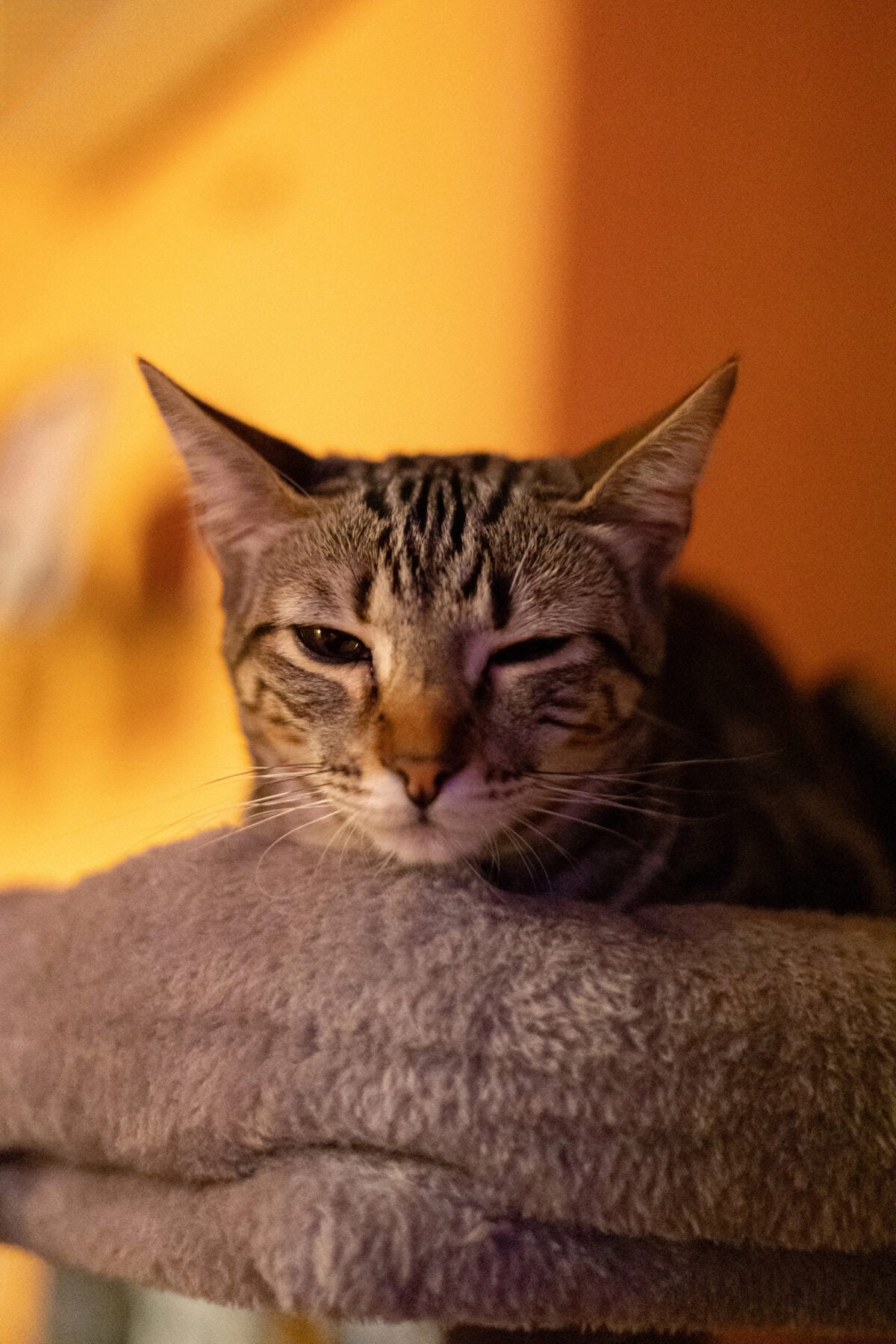
It’s a fascinating example of how much cats communicate without making a sound.
Relaxed grooming can offer another clue. A cat who calmly washes their paws while sitting in the middle of the living room may feel comfortable enough to focus on their daily maintenance without constantly checking their surroundings.
My cats certainly don’t feel the need to find a private spot for grooming. They’ll stop and give themselves a thorough wash just about anywhere, including right on my pillow. It’s a good reminder of how completely at ease they feel in our home, even if I occasionally wish they’d choose somewhere other than where I put my face at night!
Other relaxed body-language signals include:
- Ears resting in a natural, neutral position.
- Soft facial muscles and relaxed whiskers.
- A loose body without obvious tension.
- Unhurried grooming in familiar shared spaces.
Try offering your cat a slow blink of your own. Relax your face, gently narrow your eyes, and slowly close and reopen them.
You might get a slow blink back.
Remember, though, that slow blinking and grooming are signs to interpret alongside other behaviors rather than definitive tests of confidence. Excessive grooming, bald patches, or repeated licking of one area can signal stress or a medical problem.
9. Bouncing Back After a Scare
A pan crashes in the kitchen. The vacuum starts unexpectedly. Someone sneezes with enough enthusiasm to wake the entire house.
Your cat jumps, perhaps darts a few steps away, and then stops to assess the situation. A minute later, they’re back to investigating, playing, or taking their interrupted nap.
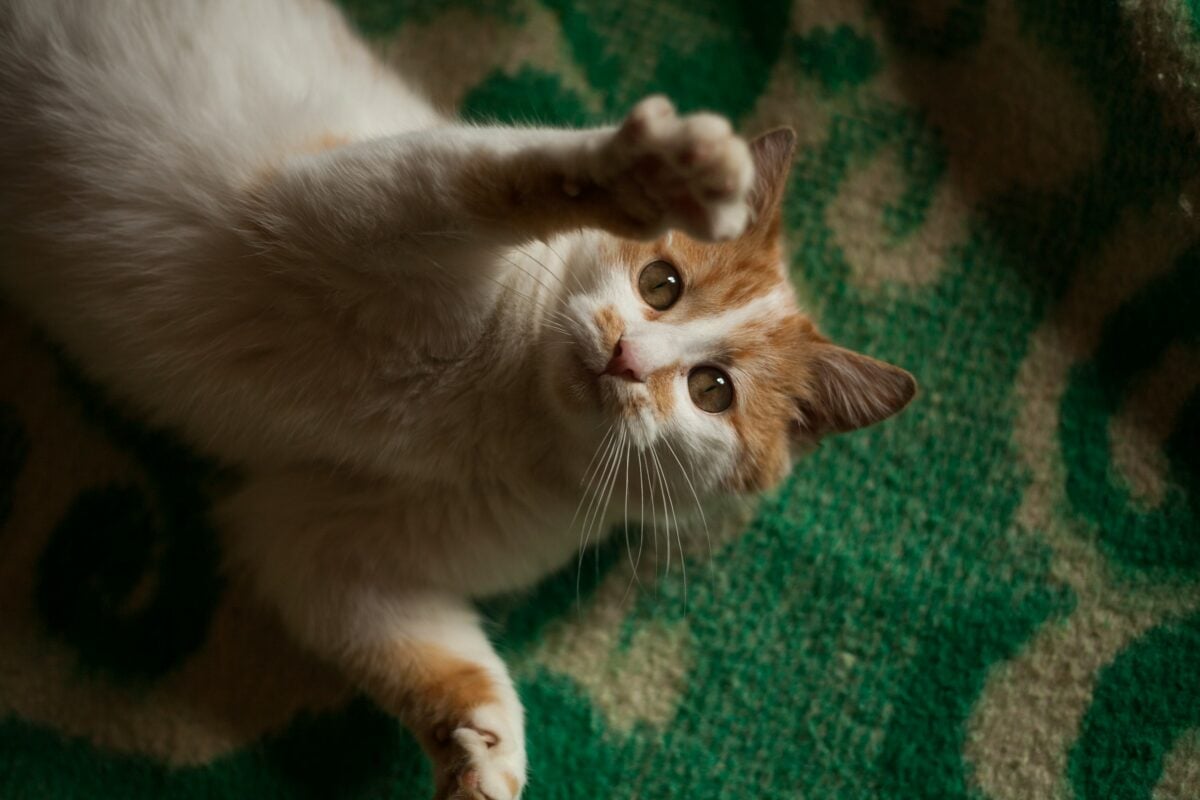
That ability to recover from a small surprise can be one of the most useful signs of confidence. All cats startle. It’s a normal protective response, and even an exceptionally secure cat can be frightened by an unexpected noise.
The important difference is what happens afterward.
A cat who feels safe may recover relatively quickly once they realize the situation isn’t threatening. They might return to the room, cautiously inspect the offending object, or settle back into their usual activity.
A more frightened cat may need additional time and distance before feeling comfortable again.
Neither reaction makes a cat good or bad. Temperament, past experiences, and the intensity of the scare all influence recovery.
Of course, some cats have a flair for the dramatic, even when the situation is completely harmless. A bag falls over, a chair moves, or something unfamiliar appears, and suddenly it’s a full-blown feline emergency. If that sounds familiar, you’ll love these 15 ridiculously dramatic things cats do over completely normal situations.
How to help: Avoid chasing or grabbing your cat after something startles them. Give them space, keep the environment calm, and allow them to return when they’re ready.
Confidence doesn’t mean your cat will never feel afraid. It means having the security and flexibility to recover when something unexpected happens.
10. Feeling Comfortable With Everyday Routines
Cats are creatures of habit, and many become wonderfully skilled at predicting what happens next.
They know when breakfast usually appears, which window gets the best afternoon sun, and exactly when you should be available for evening playtime.
Some even seem to know you’re running late before you’ve checked the clock.
My cats have our daily routine figured out down to the smallest detail. They eat dinner at the same time each evening, and I’ve always given them a little snack before I leave the house. Now, the moment they see me putting on my shoes and heading toward the door, they know exactly what’s coming. They’re not necessarily interested in where I’m going, but they certainly aren’t about to let me forget their snack!
Predictable routines help cats feel familiar with their surroundings. When they know what to expect, they can move through their day with less uncertainty.
A cat who comfortably eats, rests, plays, and uses the litter box in familiar locations shows that their daily environment meets their needs.

You might notice your cat:
- Relaxing near their food bowl before meals.
- Following familiar routes through the house.
- Settling into favorite spots at predictable times.
- Using the litter box comfortably without appearing fearful.
- Waiting in a familiar location for daily play or attention.
These habits don’t mean every routine-loving cat is automatically confident. Some anxious cats rely heavily on predictability, too.
Instead, look for a cat who seems relaxed and secure while going about ordinary daily activities.
In multi-cat homes, pay attention to access. A cat who avoids a food bowl, litter box, or favorite resting area because another cat blocks the way may be experiencing social tension rather than simply preferring a different routine.
Providing separate resources in different locations gives every cat more freedom to move around comfortably.
Confidence vs. Overstimulation vs. Aggression: Know the Difference
A confident cat isn’t necessarily the loudest, most energetic, or most assertive cat in the house.
The biggest distinction is body language.
A comfortable, confident cat generally moves with a relaxed body and makes choices without appearing threatened. An overstimulated or defensive cat may behave boldly, too, but their movements often look much more tense.
| Confident & Relaxed | Overstimulated | Defensive or Aggressive |
|---|---|---|
| Loose, comfortable body posture | Increasing tension or restlessness | Stiff, crouched, or defensive posture |
| Tail upright, gently curved, or resting loosely | Repeated tail flicking, lashing, or thumping | Puffed-up, stiff, or tightly tucked tail |
| Soft eyes and relaxed ears | Ears turning sideways or backward; widening pupils | Flattened ears, tense facial expression, or intense stare |
| Calm exploration and voluntary interaction | Skin twitching, sudden head turns, or growing agitation | Hissing, growling, swatting, or attempting to escape |
| Comfortably approaches or walks away | May nip or pull away when interaction continues | May threaten, swat, or bite to create distance |
These signals can overlap, and context matters. A frightened cat may react defensively, while an excited cat can become overstimulated during play or petting.
If your cat begins twitching their skin, lashing their tail, or turning sharply toward your hand, stop petting and give them space.
And remember, bold isn’t the same as bullying. A cat who blocks doorways, guards food bowls, or repeatedly chases another cat away from resources isn’t necessarily demonstrating healthy confidence. Those behaviors can indicate tension between housemates.
How To Help Your Cat Feel More Confident
Some cats naturally approach new experiences with curiosity, while others prefer to take their time. Both personalities can thrive in the right environment.
If your cat tends to be cautious or easily frightened, a few thoughtful changes can help them feel more secure.
Give Them Safe Places to Explore and Retreat
Offer a combination of elevated perches, cozy hiding spots, scratching posts, and comfortable resting areas.
A safe place to retreat can make a nervous cat more willing to explore. They know they have somewhere to go when things feel overwhelming.
Make Daily Life Predictable
Keep feeding, play, and other important routines reasonably consistent.
You don’t need a minute-by-minute schedule, but familiar patterns can reduce uncertainty and help your cat feel settled.
Encourage Curiosity Without Forcing It
Introduce unfamiliar objects, spaces, and experiences gradually.
Let your cat investigate when they’re ready, and reward voluntary exploration with a treat, gentle praise, or play.
Avoid pulling a frightened cat from hiding or forcing interactions with visitors.
Build Confidence Through Play
Daily play sessions give your cat opportunities to practice stalking, chasing, and catching.
Start with activities your cat already enjoys, especially if they’re shy. A cautious cat might prefer batting at a toy from a sheltered position before progressing to more active games.
Let Your Cat Make Choices
Choice is one of the most valuable things you can offer a cat.
Allow them to decide whether to approach a visitor, climb onto your lap, investigate something unfamiliar, or watch from a comfortable distance.
Confidence grows when cats feel they have some control over their environment.
When a Sudden Loss of Confidence May Signal a Problem
Even the most confident cat can have an occasional nervous day. A loud storm, visiting relatives, or rearranged furniture might temporarily change how they behave.
But if a normally outgoing, curious cat suddenly starts hiding, avoiding people, or abandoning favorite activities, it’s worth paying attention.
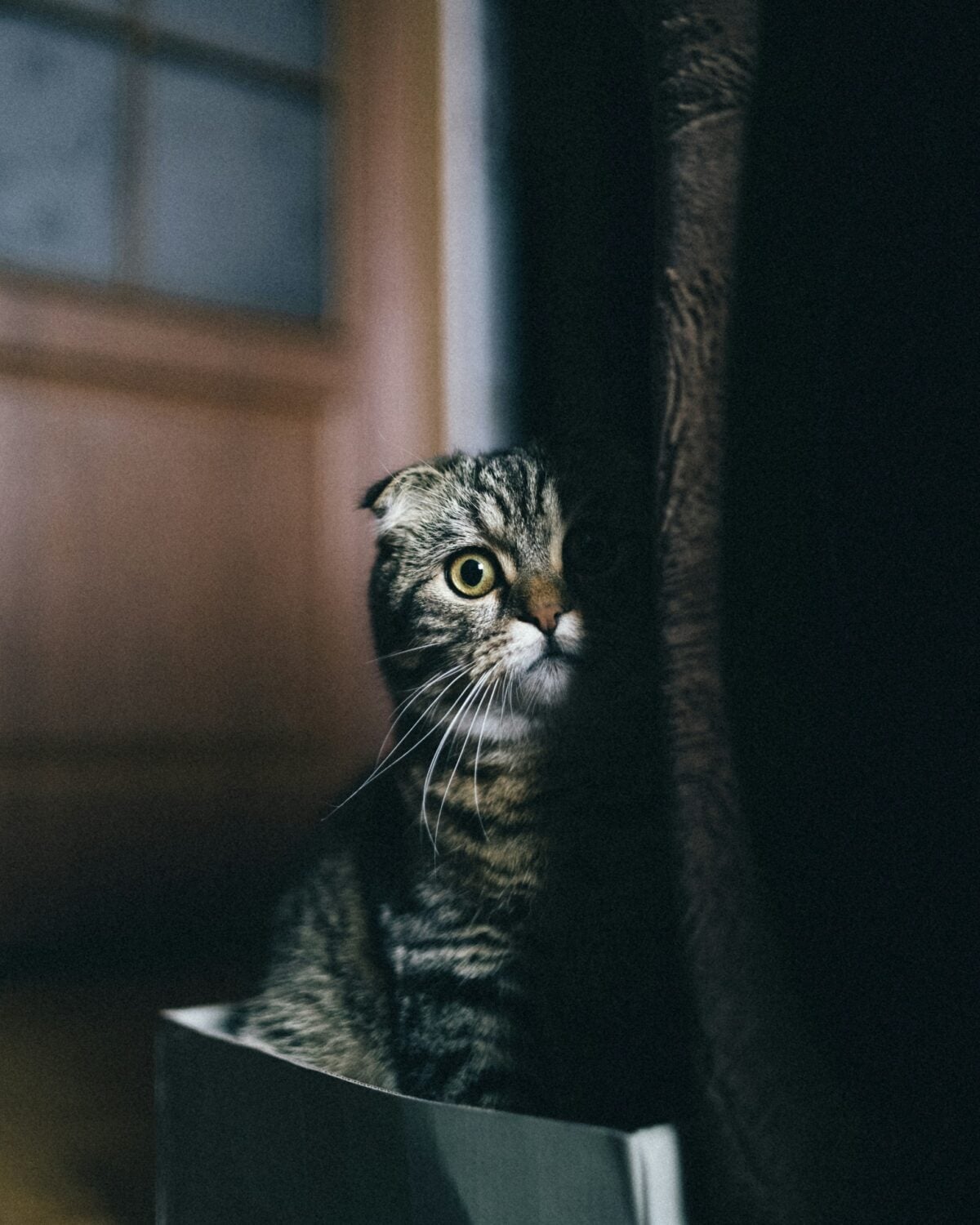
A noticeable behavior change may indicate:
- Stress: Changes in routine, moving, construction, or a new family member or pet.
- Fear: A frightening experience, conflict with another animal, or repeated exposure to something threatening.
- Pain or illness: Physical discomfort that makes normal activities or interactions difficult.
- Age-related changes: Arthritis, reduced vision, or other conditions that affect how comfortably a cat moves around.
For example, a senior cat who suddenly stops climbing onto their favorite perch may be experiencing joint pain rather than losing interest in the view.
Contact your veterinarian if you notice:
- Sudden or persistent hiding that’s unusual for your cat.
- Reduced appetite or changes in drinking habits.
- Changes in litter box use.
- Reluctance to jump, climb, or move normally.
- Unusual aggression when touched.
- Changes in grooming, energy, or overall behavior.
Don’t wait several days if your cat stops eating or appears ill. Contact your veterinarian promptly.
Important: A cat who repeatedly strains to urinate but produces little or no urine needs emergency veterinary care. Urinary obstruction can become life-threatening, particularly in male cats.
If hiding is the main change you’ve noticed, our guide to why cats suddenly start hiding explains common causes and when to be concerned.
Frequently Asked Questions About Cat Confidence
Still wondering what your cat’s behavior says about their confidence? Every cat has a unique personality, and sometimes the difference between being shy, cautious, or completely comfortable isn’t obvious. Here are answers to a few common questions about feline confidence.
Have a question we haven’t covered? Leave it in the comments below! We’d love to help you better understand your feline friend.
Can a Shy Cat Still Be Confident?
Absolutely! A confident cat doesn’t have to be outgoing or eager to meet strangers. Some cats naturally prefer quiet spaces, familiar people, and watching from a distance. A shy cat can still feel secure and comfortable in their environment. Look for relaxed body language, curiosity at their own pace, and the ability to settle comfortably into daily routines.
Do Cats Become More Confident as They Get Older?
Some cats become more confident as they mature and grow familiar with their surroundings. Positive experiences, predictable routines, and opportunities to explore can help build confidence over time. However, age alone doesn’t guarantee a bolder personality. Genetics, early socialization, health, and individual temperament all play a role.
How Can I Tell If My Cat Is Confident or Dominant?
Confidence and dominance aren’t the same thing. A confident cat generally appears relaxed, explores comfortably, and interacts without needing to control other animals. Behaviors such as blocking doorways, guarding resources, or repeatedly chasing another cat may signal social tension rather than confidence. Look at the overall body language and interactions instead of assuming the most assertive cat is the most secure.
Every Confident Cat Has Their Own Style
Some cats announce their presence with a proud tail-up strut and insist on supervising everything you do. Others quietly explore, claim their favorite sunny spot, and watch the household from a comfortable perch.
Both can be wonderfully confident.
What matters most isn’t how outgoing your cat seems compared with another. It’s whether they feel safe enough to explore, relax, make choices, and enjoy their everyday surroundings.
And now that you know what to look for, you might start noticing little signs of confidence all over your home.

More Ways To Understand Your Cat’s Behavior
Cats have a fascinating way of communicating without saying much at all. If you enjoy figuring out what your feline friend is thinking, explore these guides next:
- How To Tell If Your Cat Loves You: Explore familiar feline behaviors that can reflect affection and connection.
- 15 Signs Your Cat Has Imprinted On You: Discover the behaviors that may reveal a strong attachment to a favorite person.
- Why Is My Cat Suddenly Hiding?: Learn when hiding is normal and when a behavior change deserves closer attention.
The more you understand your cat’s body language and daily habits, the easier it becomes to recognize when they’re comfortable, curious, or asking for a little extra space.
What’s Your Cat’s Biggest Confidence Move?
Does your cat greet everyone at the door, march down the hallway with their tail held high, or claim the best seat in the house like it’s their personal throne? Maybe they’re the quiet observer who never misses a thing.
Tell us about your cat’s most confident habit in the comments below. We’d love to hear what makes your feline friend such a character!