When you purchase through links on our site, we may earn a commission at no extra cost to you. Learn more.
If your cat waits outside the bathroom, they are not just being nosy; in their mind, something mysterious is happening behind that door, and you are at the center of it.
Table of Contents
Living with cats can completely redefine privacy. Changing clothes, closing a door, and even taking care of business in the bathroom are no longer solo activities.
Even if you manage to slip into the bathroom for a shower without the ever-watchful eye of your feline boss, there’s a good chance you’ll find them waiting just outside the door afterward, wearing an expression that says, “I know what you did in there,” and “I’m offended you didn’t take me with you.”
So why do cats wait outside the bathroom door?
Want our human-written content to rank above AI-generated garbage? Help us out by clicking this button!
It turns out your tiny room-service critic isn’t just trying to micromanage your morning routine. The logic behind this behavior is a funny, fascinating, and occasionally touching mix of curiosity, instinct, territorial ownership, routine, and genuine attachment.
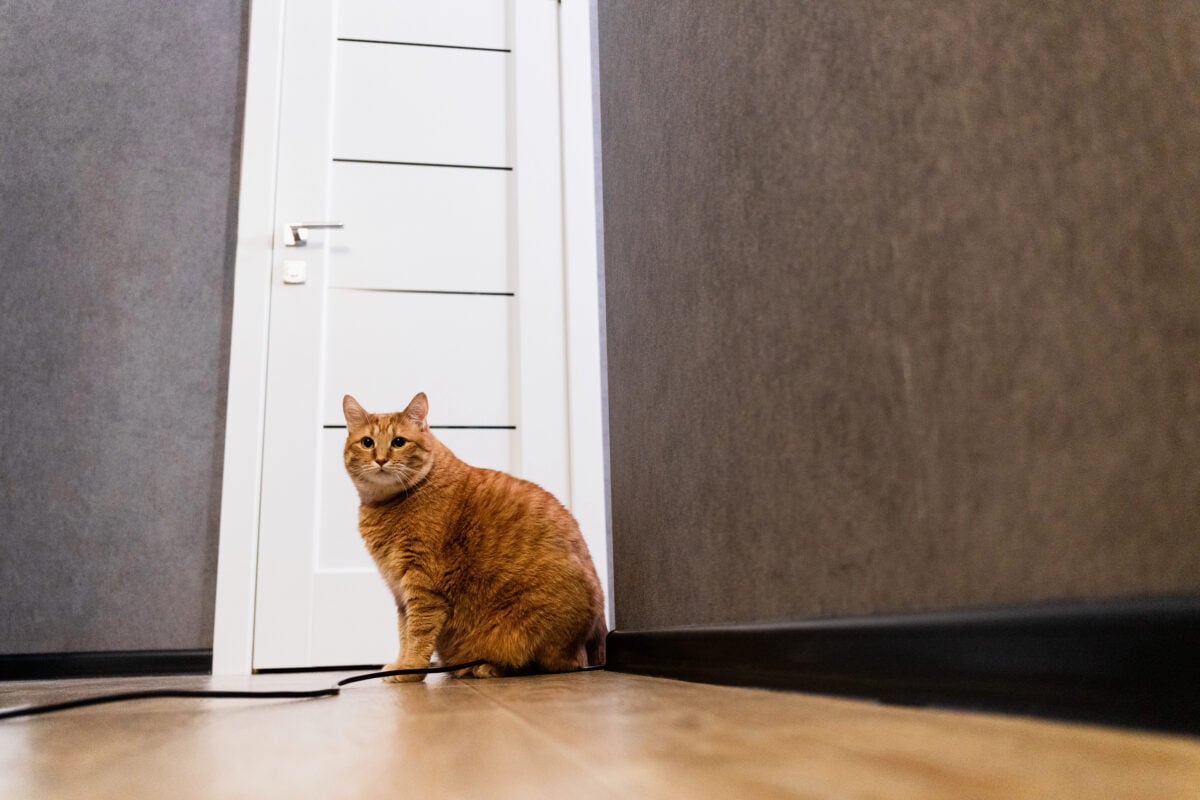
In most cases, your cat is waiting because the closed door blocks access, interrupts their routine, separates them from you, or turns an ordinary bathroom trip into a mystery they feel obligated to investigate.
Why the Bathroom Door Becomes a Big Deal
The bathroom-door routine is familiar to almost every cat parent. You close the door, and suddenly your cat has questions. They may meow, chirp, scratch, slide one paw under the door, or sit silently outside like they are waiting to file a complaint.
Need visual proof that cats take bathroom privacy personally? This video captures the exact energy we’re talking about:
As funny as it looks, the behavior usually has a real explanation. To your cat, a closed bathroom door can mean:
- Access has been blocked
- Part of their territory is suddenly unavailable
- Their trusted person disappeared
- An interesting routine is happening without them
- Meowing or pawing might get your attention
That is why a cat who ignored you all morning may suddenly become invested the moment you close the bathroom door. The issue is not always the bathroom itself. Often, it is the barrier. Your cat may not even want to come in; they may simply want the option.
This can feel personal because humans see the bathroom as a private space. Cats see it as one more room in a shared territory. If they are allowed on your bed, in your laundry basket, across your keyboard, and directly in your line of vision while you eat cereal, they do not understand why this particular door is suddenly sacred.
In most cases, bathroom waiting is not a sign that your cat is being difficult. It is usually a mix of curiosity, routine, attachment, and a very cat-like dislike of being left out.
5 Reasons Your Cat Waits Outside the Bathroom
Your cat’s bathroom-door obsession may look ridiculous, but there is usually a real reason behind the drama. Most of the time, it comes down to five very cat-like motivations: access, attention, protection, curiosity, and attachment.
Let’s decode the tiny hallway protest.
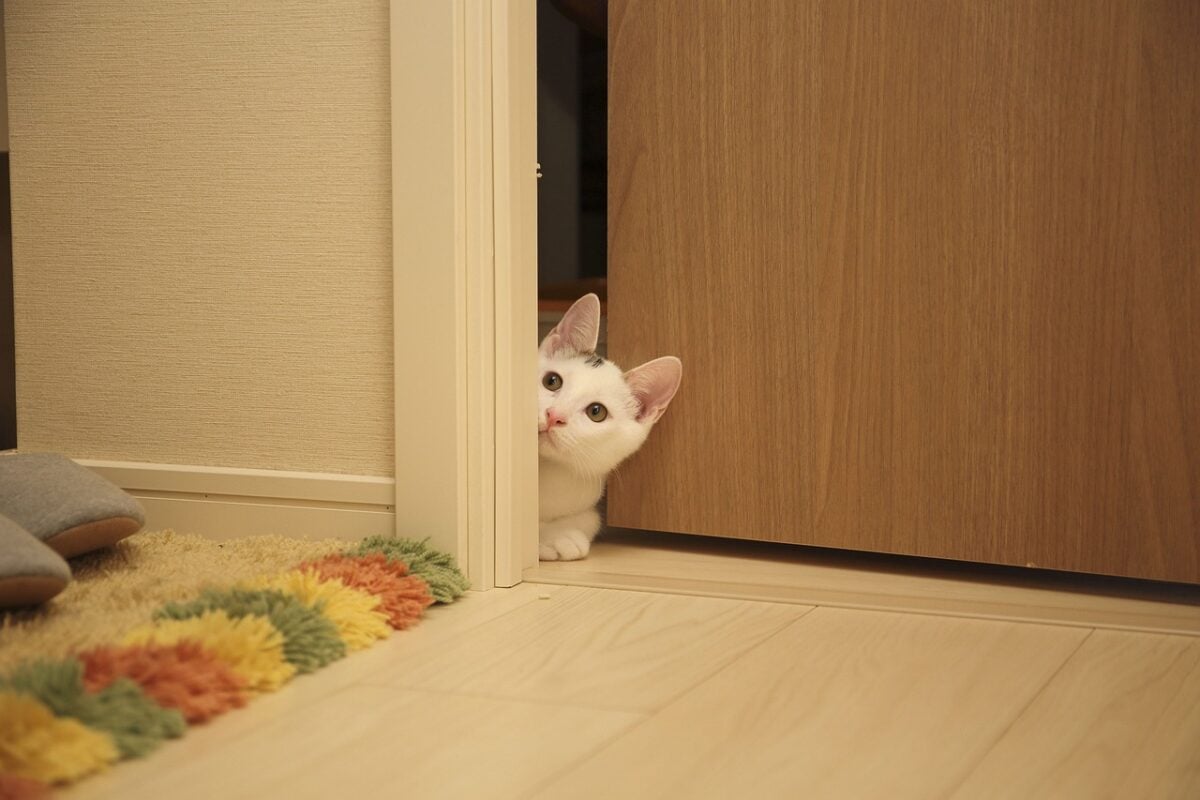
1. The Great Barrier Grief: Cats Hate Closed Doors
First things first: many cats simply hate closed doors.
Not because they always want what is behind them. Not because the bathroom is suddenly the most thrilling room in the house. The real issue is access. A cat may have zero interest in entering the bathroom, but they usually want the option.
Anyone who has opened a door for a cat, only to watch them stand in the doorway doing absolutely nothing, understands this perfectly.
To your cat, a closed door can feel like:
- A loss of control: They can no longer move freely through their space.
- A territorial lockout: Part of their home has suddenly become unavailable.
- A mystery: They can hear or smell you, but they cannot see what is happening.
- A broken routine: They are used to following, watching, or checking in on you.
- A personal inconvenience: Which, in cat logic, is basically a crime.
Your cat does not necessarily want the bathroom. Your cat wants access to the bathroom.
That distinction matters because cats are highly aware of their environment. They learn the layout of the home, monitor changes, inspect sounds, and keep track of where their favorite people are. When the bathroom door closes, a familiar part of their world suddenly goes offline.
From your point of view, you closed a door. From your cat’s point of view, a section of their kingdom has been stolen by a giant, clumsy tenant who happens to pay the mortgage.
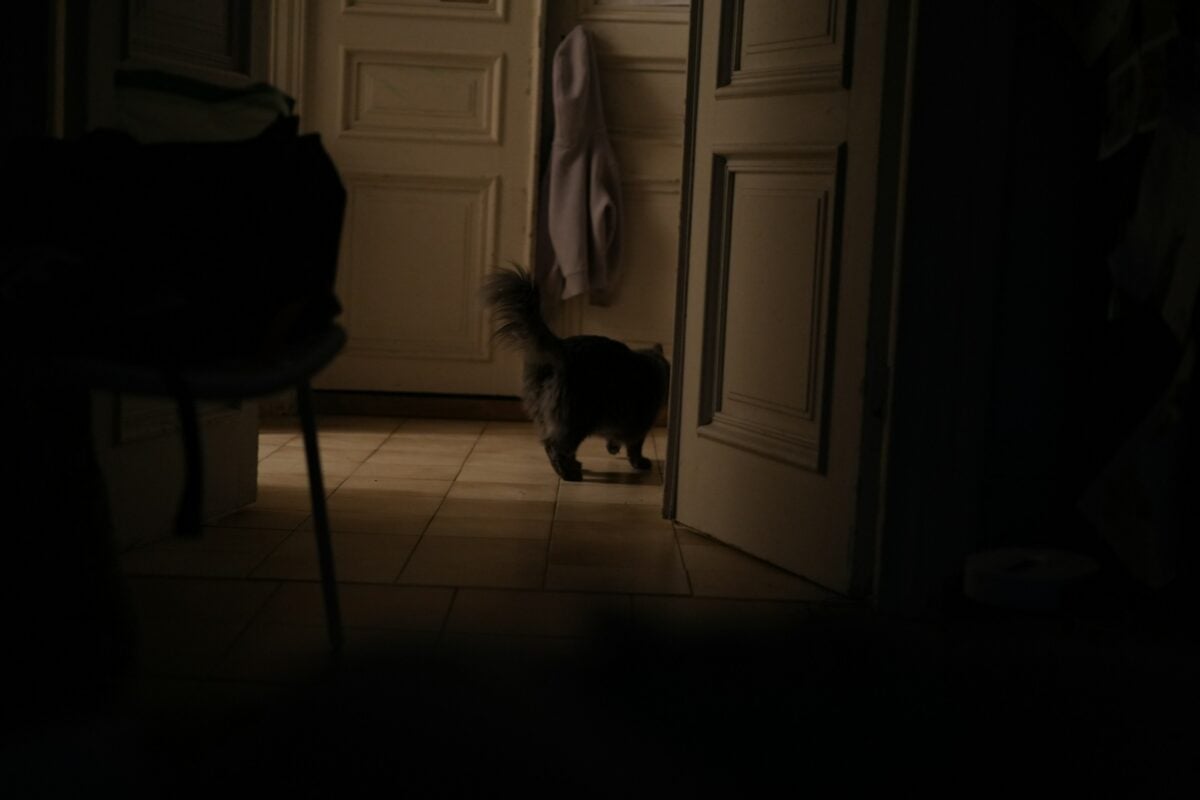
This is why some cats meow, scratch, or shove one dramatic paw under the door crack. They are not always begging to come in. Sometimes they are simply trying to make the barrier disappear.
The bathroom also comes with built-in feline FOMO. Water runs. Cabinets open. Towels move. Strange smells appear. You go in looking one way and come out smelling like soap, shampoo, or suspiciously clean betrayal. Naturally, your cat has questions.
They may be wondering:
- Where did you go?
- Why is the door closed?
- What is making that water sound?
- Why does the room smell different?
- Are you doing something interesting without them?
- Most importantly, why were they not invited?
So if you see a furry pink nose pressed to the crack or two twitching paws wedged under the door, it probably is not an emergency. It is more likely a protest over lost access, interrupted supervision, and the horrifying possibility that something happened in the house without your cat’s approval.
In classic feline logic, forbidden does not always mean desirable. Sometimes it simply means unacceptable.
2. You’re a Captive Audience, and Your Cat Knows It
Another very practical reason your cat waits outside the bathroom is simple: attention.

Cats are excellent pattern readers. They notice when you are busy, when you are available, and when you are most likely to respond to them. When you are cooking, cleaning, working, or walking around the house, you are inconveniently mobile. In the bathroom, you are often still, contained, and much easier to supervise.
From your cat’s point of view, bathroom time may be prime attention time because:
- You are not moving around as much
- Your hands may be free
- You are easier to reach
- You might talk back when they meow
- You may pet them just to keep the peace
- Opening the door rewards their persistence
This is why some cats become extra affectionate in the bathroom. They rub against your legs, jump onto the counter, chirp, purr, or demand head scratches at the most ridiculous moments. You went in to brush your teeth. They came in for customer service.
The important part is that cats learn from outcomes. If meowing outside the bathroom door gets your attention, they may do it again. If pawing under the door makes you laugh, talk to them, or open the door, that behavior becomes more rewarding. Even a frustrated “What do you want?” can still count as a response.
That does not mean your cat is manipulating you in some sinister way. They are simply learning what works. Bathroom door plus dramatic behavior equals human reaction, and for many cats, that is a successful little routine.
So yes, to a clever feline, the bathroom may not be a room for human hygiene. It may be a specialized petting station where their favorite person is finally still enough to serve them.
If your cat has turned bathroom meowing, door pawing, and general household disruption into a full-time hobby, you may also appreciate this guide to why cats can be so annoying, and why the behavior usually makes more sense than it seems.
3. Your Cat May Be Keeping Watch
This is where the bathroom-door behavior takes a surprisingly sweet turn. Your cat may not just be curious or offended by the closed door. They may also be staying nearby because, in their mind, you are part of their trusted social circle.
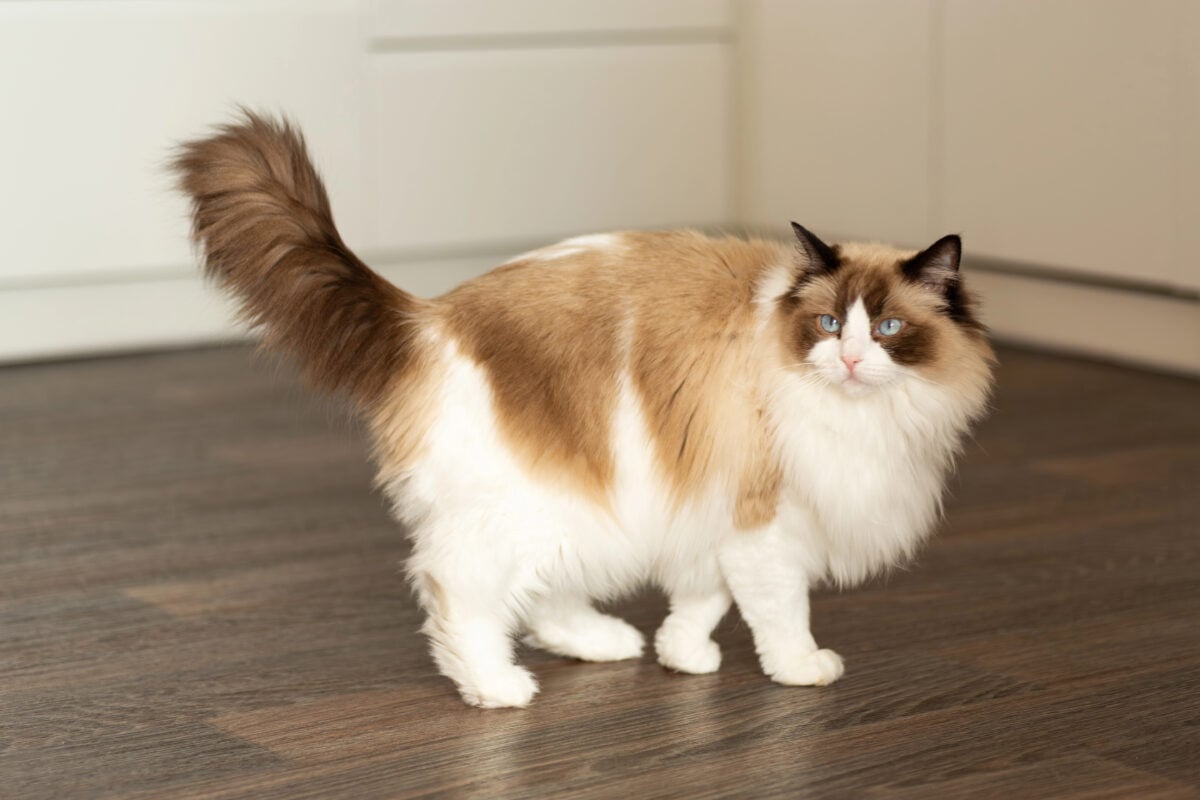
In the animal world, certain activities can leave a creature less alert to its surroundings. Sleeping, eating, grooming, drinking, and eliminating all require some level of focus. Your modern bathroom is probably not crawling with predators, but your cat does not need to understand plumbing to notice that you are temporarily occupied, behind a door, or standing under loud falling water.
Your cat may find bathroom time suspicious because:
- You disappear into a small room
- The door blocks visual access
- Water starts running
- Steam, smells, and sounds change
- You sit still or become distracted
- A shower curtain may hide you completely
For a bonded, alert, or naturally supervisory cat, that can be enough reason to hover nearby. Sitting outside the door, following you in, or staring at you with unsettling intensity may be their way of keeping tabs on you.
That does not mean your cat is consciously thinking, “I must protect my human during this dangerous toilet mission.” Cats are not tiny security guards filling out bathroom incident reports. But instinct and attachment can show up as watchful behavior before logic gets involved.
Your cat may feel more secure when the household group stays together. They may also feel reassured when they can see you, smell you, and confirm that everything is normal. This is similar to the way some cats settle near their humans during sleep, sit close when someone is sick, or follow a favorite person from room to room.
In that sense, bathroom waiting can be a sign of trust. Cats usually do not spend energy shadowing someone they dislike. If your cat follows you into private spaces, waits outside the door, slow-blinks at you, rubs against your legs, sleeps near you, or chooses your lap when other options are available, they may be showing that you are part of their safe circle.
So yes, the bathroom stare can feel deeply awkward. But in cat language, it may not be judgment. It may be vigilance, attachment, or simple reassurance-seeking.
Your little bathroom goblin might not be saying, “How dare you close the door?”
They might be saying, “I’ve got the perimeter. Please continue your weird human ritual.”
4. The Bathroom Is Basically a Feline Playground
Beyond attachment, closed doors, and supervision duties, there is a simpler reason your cat may wait outside the bathroom: the bathroom is interesting.

Humans see the bathroom as a place for quick routines. Cats see it more like an interactive science museum filled with strange sounds, changing smells, unusual textures, and objects that seem specifically designed to be investigated.
To your cat, the bathroom may offer:
- Running water: Dripping faucets, shower sounds, and flushing toilets can be fascinating because they move, sparkle, swirl, and make noise.
- Cool surfaces: Tile floors, tubs, and porcelain sinks can feel refreshing, especially on warm days.
- Perfect hiding spots: Shower curtains, cabinets, laundry piles, and bathmats create cozy places to explore.
- Interesting smells: Soap, shampoo, toothpaste, towels, cleaning products, and your scent all mix together in one small room.
- Forbidden entertainment: Toilet paper, cotton swabs, hair ties, dangling robe belts, and bathmats can look like toys to a curious cat.
For indoor cats, especially, small changes in the home can become a big source of enrichment. A water droplet in the sink may become prey. A shower curtain may become a cave. A toilet paper roll may become a shreddable masterpiece. Even opening a bathroom cabinet can attract your cat because, in feline logic, any space that was closed two seconds ago must contain something important.
The sink is often one of the biggest attractions. It is cool, smooth, curved, and perfectly cat-shaped. A porcelain sink may look uncomfortable to you, but to your cat, it can feel like a custom lounge chair in a private spa. Add a dripping faucet nearby, and suddenly the bathroom has become prime real estate.
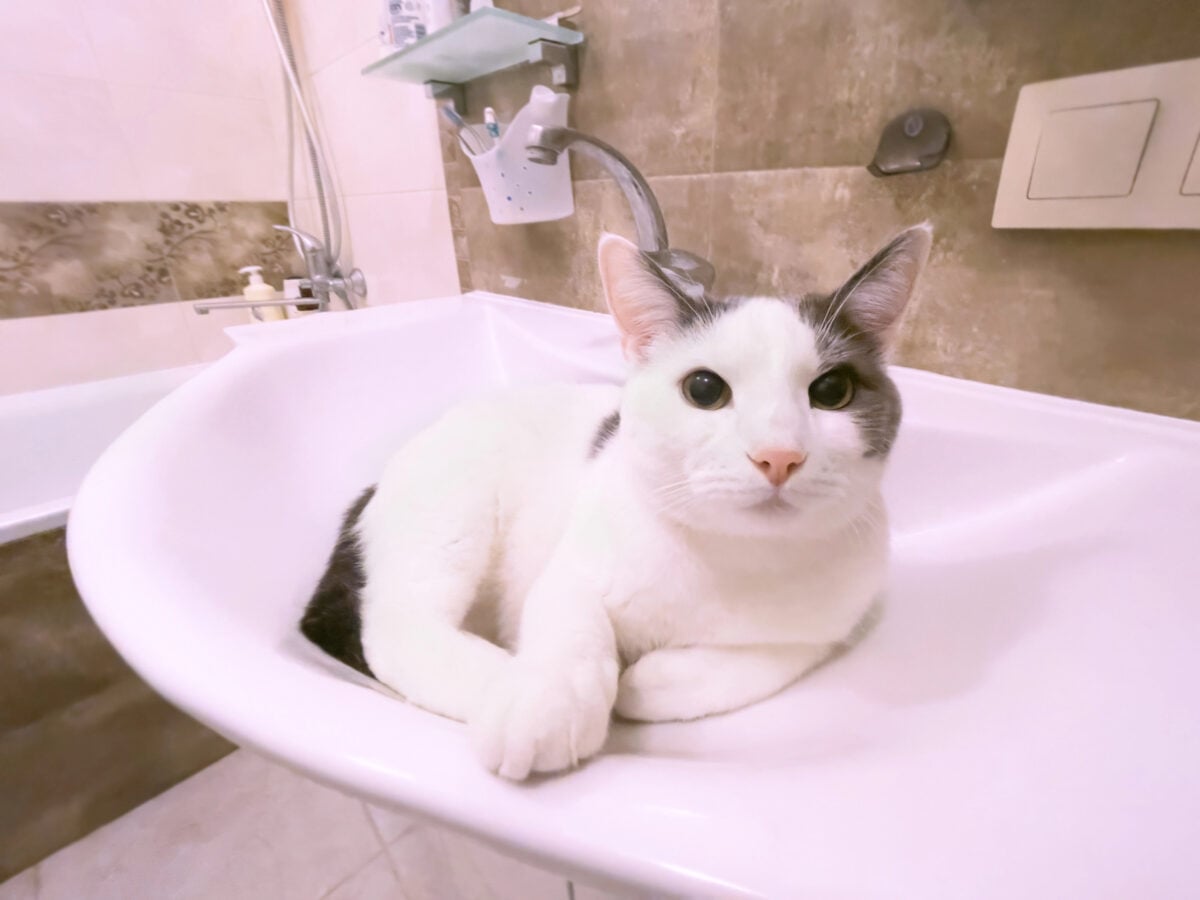
There is also the routine factor. Cats are excellent at learning daily patterns. They may notice that your bathroom visit happens before breakfast, after your alarm, before you leave the house, or right before you settle somewhere they like. Over time, the bathroom becomes part of the schedule.
Your cat may connect bathroom time with:
- Food coming soon
- A door opening afterward
- Morning attention
- A shower routine
- Fresh water sounds
- You are sitting still enough to pet them
That means your cat may not be waiting outside the bathroom only because they are curious. They may also be participating in the rhythm of the day. To them, your routine is not just your routine. It is a household event, and naturally, they expect to be included.
Of course, not everything in the bathroom is safe for cats. Hair ties, dental floss, cotton swabs, medications, cleaning products, and small trash items can be dangerous if chewed or swallowed. If your cat likes to explore the bathroom, keep risky items secured and offer safer alternatives, such as a cat water fountain, puzzle feeder, window perch, or rotating toys.
So when your cat waits outside the bathroom, they may not be obsessing over your private life. They may simply know that behind that door is a tiny theme park full of water, echoes, forbidden paper products, and their favorite unpredictable human.
5. Attachment, Comfort, and the Chosen Human Effect
Sometimes the simplest explanation is also the sweetest: your cat may wait outside the bathroom because they really, really like you.
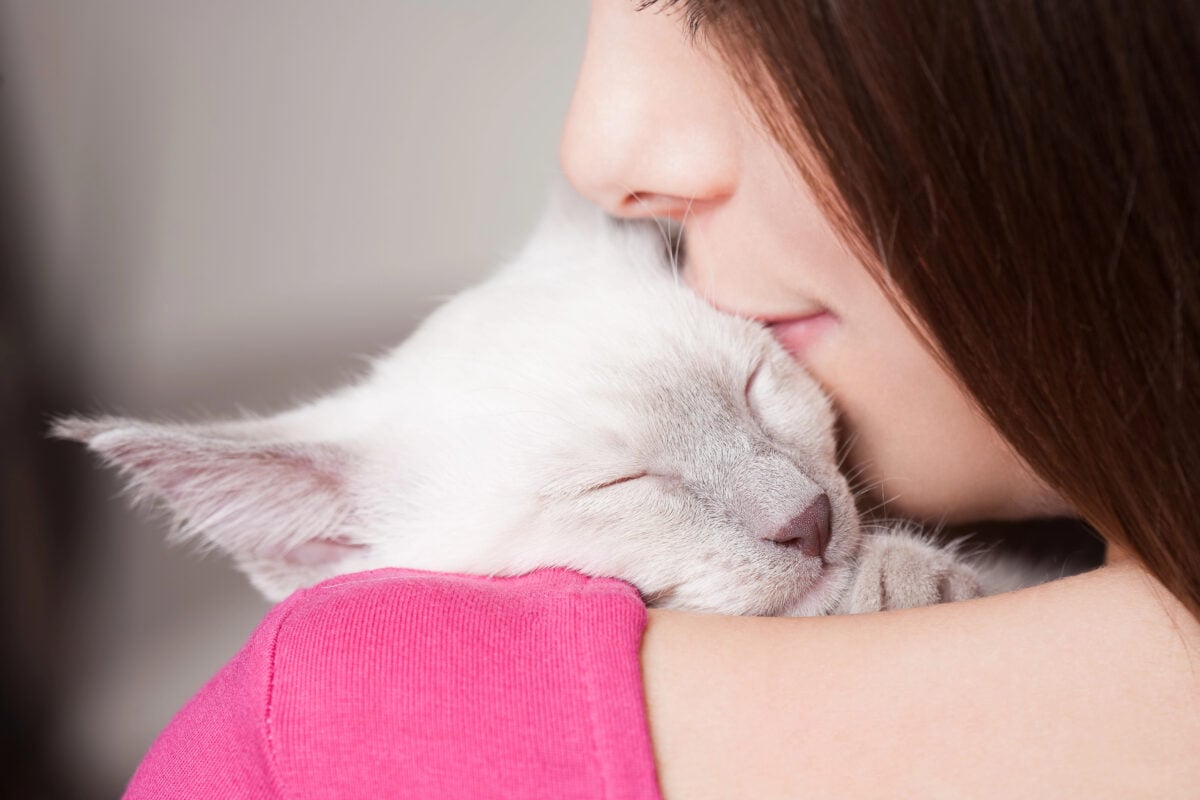
Cats have a reputation for being aloof, but many form strong bonds with their people. Some show that bond loudly by following their favorite human from the couch to the kitchen to the hallway to, unfortunately, the bathroom. Others are more subtle. They appear nearby when you settle down, nap close to you, or wait quietly outside doors until you return.
Research has found that many cats form secure attachment bonds with their caregivers, which helps explain why some cats prefer to stay close to their favorite person.
Your cat may be especially likely to shadow you if you are the person who usually provides:
- Food and treats
- Playtime
- Grooming
- A warm lap
- Gentle attention
- A predictable routine
- Comfort when they feel uncertain
Over time, your movements start to matter. When you leave the room, they notice. If you close a door, they object. When you disappear into the bathroom, they may wait because your absence creates a tiny gap in their daily map of safety and routine.
This does not mean your cat is panicking. In many cases, they simply prefer life when you are visible, reachable, and available for chin scratches at a moment’s notice.
Bathroom waiting is often part of a larger following behavior, too. If your cat shadows you from room to room, your bathroom routine may simply be another stop on the household schedule. You can read more about why cats follow their owners everywhere if your cat treats the entire house like a guided tour.
Your scent may also be part of the comfort. Cats rely heavily on smell, and familiar scents can help them feel secure. That is one reason cats nap on laundry, curl up on your pillow, rub against your shoes, or settle in places you recently occupied.
So when the bathroom door closes, your cat may know you are nearby because they can hear and smell you, but still feel frustrated because they cannot reach you. You are close, but unavailable, which is basically the feline equivalent of seeing a snack behind glass.
In most cases, this behavior is not about invading your privacy. It is about staying near someone who makes them feel safe, comfortable, and included. Even a thirty-second barrier can feel unnecessary when your cat has decided you belong to them.
When Does Bathroom Clinginess Become a Problem?
Most of the time, a cat waiting outside the bathroom is normal, funny, and harmless. A few meows, a paw under the door, or a dramatic hallway sit-in usually means your cat is curious, attached, bored, or offended by the closed door.
The key difference is emotional tone.
A relaxed cat may complain briefly, wait nearby, and then go back to normal once you open the door. A distressed cat seems unable to settle, becomes frantic when separated from you, or shows other changes in behavior.
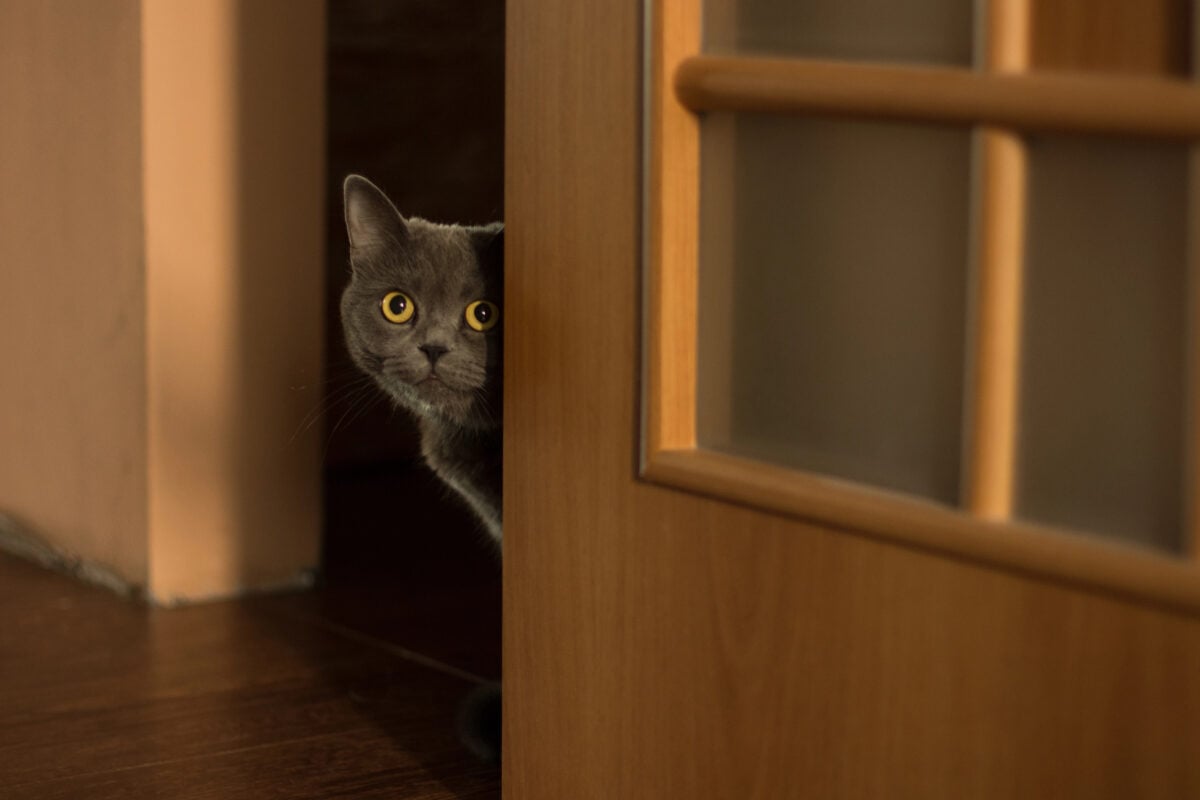
Bathroom waiting may be normal if your cat:
- Meows once or twice, then settles
- Paws under the door without panic
- Waits quietly until you come out
- Follows you around but still eats, plays, naps, and explores
- Acts normal once you reappear
It may be worth a closer look if your cat shows signs of stress or separation-related anxiety, such as:
- Frantic scratching that damages the door, carpet, or their claws
- Nonstop yowling that sounds panicked rather than demanding
- Pacing, panting, or trembling when you leave their sight
- Urinating or pooping outside the litter box
- Refusing food when you are gone or separated
- Overgrooming, bald patches, or sudden hiding
- Aggression, vomiting, diarrhea, or major behavior changes
- Sudden clinginess that feels very different from their normal personality
This is where context matters. Has your cat always waited by the door, or is this behavior new? Did it start after a move, a new pet, a schedule change, construction noise, a new baby, or the loss of another animal? Also, pay attention to everyday habits: eating, litter box use, grooming, sleeping, and play. If those have changed, too, the bathroom behavior may be part of a greater stress or health signal.
No need to stress over every single scratch on the door. Just keep an eye out for when the typical “let me in, peasant” routine turns into something desperate or obsessive. You know your cat’s normal better than anyone. If the behavior is sudden, intense, or paired with appetite changes, litter box issues, hiding, overgrooming, vomiting, or diarrhea, check in with your veterinarian.
How to Make Bathroom Boundaries Easier
You do not have to surrender all privacy forever, even if your cat strongly disagrees. If the bathroom waiting is harmless and you find it funny, it is perfectly fine to accept it as one of those strange little rituals of cat ownership.
But if the meowing, scratching, or pawing is becoming stressful, you can help your cat learn that a closed bathroom door is not the end of civilization.
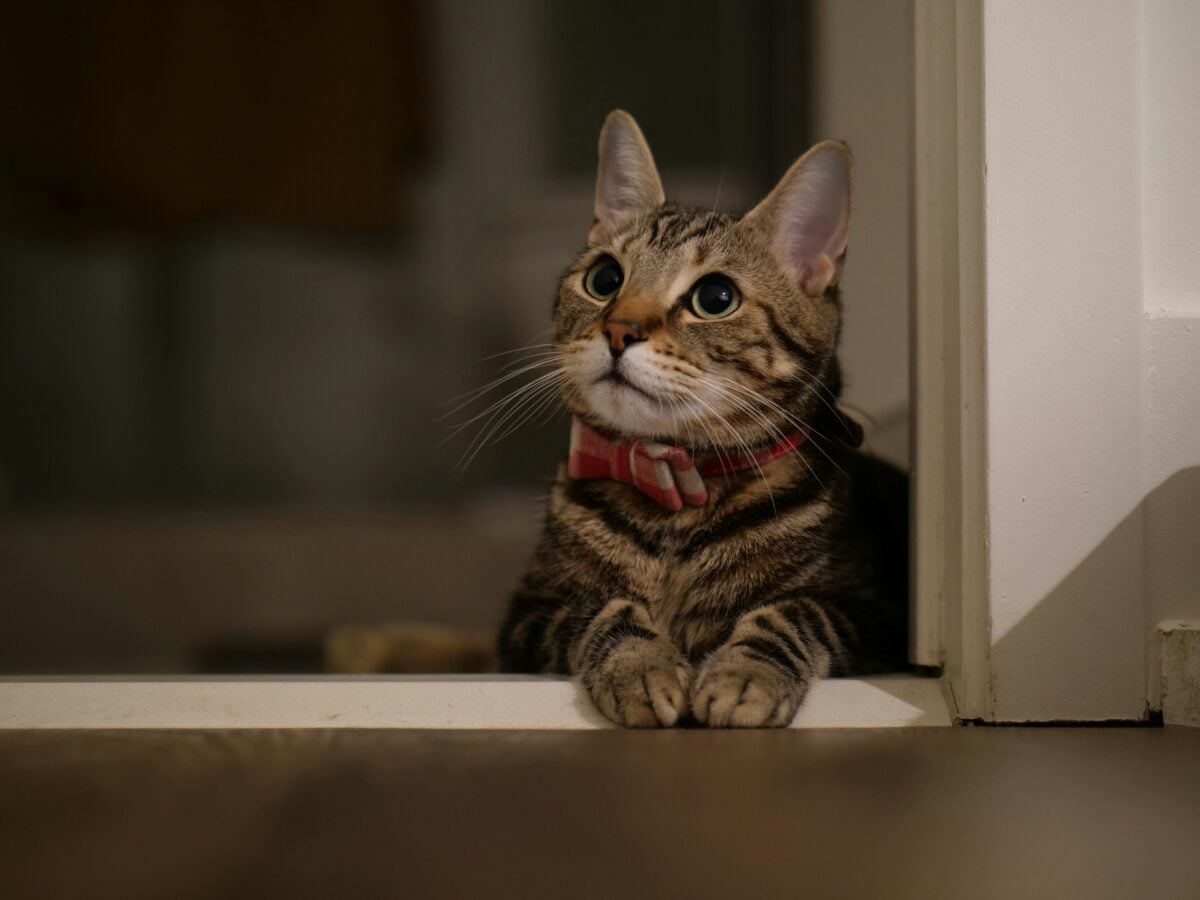
The goal is not to punish your cat for wanting to be near you. The goal is to make the closed door feel boring, temporary, and less rewarding.
Try these gentle strategies:
- Create a better waiting spot: Place a cozy bed, blanket, or cat tree near the bathroom so your cat has an approved place to settle.
- Offer a distraction before closing the door: A treat puzzle, favorite toy, or small snack can redirect their attention.
- Keep your entrance and exit calm: Big emotional reactions can make bathroom time feel like an important event.
- Reward quiet behavior: If your cat is meowing or scratching, wait for a brief pause before opening the door.
- Practice short door closures: Close a door for a few seconds outside bathroom time, reward calm behavior, then reopen it.
- Add more daily enrichment: Play sessions, scratching posts, window perches, food puzzles, and rotating toys can reduce attention-seeking behavior.
One of the biggest mistakes is accidentally rewarding the loudest behavior. If your cat screams and the door immediately opens, they may learn that screaming works. That does not mean you should ignore true distress, but for ordinary demanding meows, wait for even a few seconds of quiet before responding.
For cats who love water, a cat fountain may help satisfy some of the faucet obsession. For cats who simply want to be near you, a comfy “waiting station” outside the bathroom can turn the hallway from a protest zone into a lounge.
With consistency, your cat may start to understand that closed doors are temporary, calm waiting works, and bathroom privacy is not a personal attack.
Now That We’ve Talked About Your Bathroom Habits…
So, why does your cat wait outside the bathroom?
Usually, it comes down to a mix of curiosity, attachment, routine, territory, and a very cat-like belief that closed doors require immediate investigation. Your cat may want access to the room, reassurance that you are still nearby, a chance at attention, or confirmation that nothing interesting is happening without them.

In most cases, those paws under the door are not a problem. They are simply part of how your cat monitors their world and stays close to someone they trust.
But now that we have spent all this time discussing your cat’s intense interest in your bathroom habits, it is only fair to turn the spotlight back on them.
Because your cat’s bathroom behavior can tell you a lot, too.
If your cat is suddenly peeing outside the litter box, avoiding the box, visiting it more often, or acting stressed around it, that is worth paying attention to. Sometimes the issue is medical. Other times, the problem is the setup: the box is too dirty, too crowded, too smelly, too hard to access, or simply not up to your cat’s very specific standards.
That is especially true in multi-cat homes, where sharing one litter box can quietly create tension even when your cats seem to get along. And if the issue is odor or cleanliness, it may help to look at cat litter odor eliminators or review how often to change cat litter so the box stays fresh enough for your tiny household inspector.
One thing not to do? Treat the toilet like a shortcut. Even though it may seem convenient, flushing cat poop down the toilet is usually not the best solution.
Your cat may treat your bathroom routine like breaking news, but their own bathroom routine deserves just as much attention. After all, in a house with cats, no bathroom mystery stays private for long.
Still Have Bathroom Door Drama? FAQs
Cats do not all supervise bathroom time the same way. Some meow. Others like to paw under the door. Some sit silently in the hallway like tiny judgmental gargoyles.
Here are the most common questions cat parents ask about this behavior. If your cat has an even stranger bathroom routine, leave it in the comments… because chances are, another cat parent has wondered the same thing.
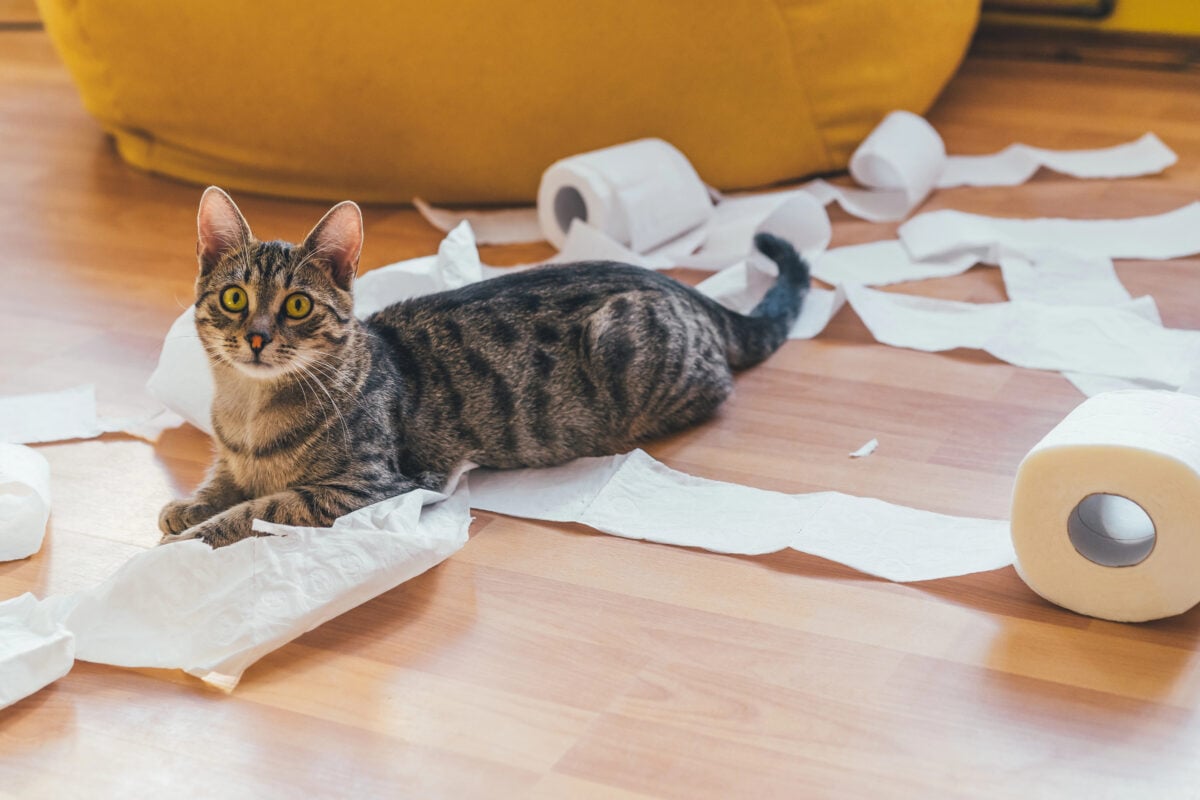
Why does my cat meow outside the bathroom door?
Your cat may meow outside the bathroom door because they want access, attention, or reassurance. A closed door blocks their view of you and cuts them off from part of their territory, which can be frustrating for a cat who likes to know what is happening.
Some cats also learn that meowing gets a response. If you talk back, open the door, or give them attention, they may repeat the behavior. A few casual meows are usually normal. Panicked yowling, destructive scratching, or sudden behavior changes may be worth a closer look.
Why does my cat put their paws under the bathroom door?
Cats put their paws under the bathroom door because they are trying to investigate, reach you, or interact with the barrier. The gap under the door gives them just enough access to smell, feel, and remind you that your privacy request has been denied.
It can also be playful. If your voice, movement, or shadow makes the door seem interesting, your cat may treat the gap like a tiny game.
Is it normal for my cat to follow me into the bathroom?
Yes, it is very normal for cats to follow their humans into the bathroom. Many cats are curious about running water, bathroom smells, closed doors, and daily routines. Others follow because they are attached to you and prefer to stay nearby.
As long as your cat seems relaxed, eats normally, uses the litter box, plays, and settles when you are unavailable, bathroom following is usually just normal cat behavior.
Does my cat wait outside the bathroom because of separation anxiety?
Sometimes, but not usually. Most cats who wait outside the bathroom are curious, social, bored, attached, or annoyed by the closed door.
Separation-related anxiety is more likely if your cat becomes frantic when separated from you, vocalizes nonstop, scratches destructively, refuses food, overgrooms, hides, or has litter box changes. Calm waiting is usually normal. Distressed, obsessive, or sudden behavior deserves more attention.
Should I let my cat into the bathroom with me?
That depends on your comfort level and your cat’s behavior. If your cat calmly sits nearby, lounges in the sink, or just wants to supervise, letting them in may be harmless.
If they shred toilet paper, chew hair ties, dig in the trash, jump near cleaning products, or make you uncomfortable, it is reasonable to set a boundary. Give them a cozy spot, toy, or treat puzzle outside the door so they have something better to do while they wait.
Your Cat’s Bathroom Drama Is Only the Beginning
If your cat waits outside the bathroom, congratulations: you have officially discovered one of the many ways cats turn ordinary human life into a full-time mystery. And bathroom supervision is only the beginning.
There is a reason cats like boxes, a reason behind cat zoomies, a reason cats knock things over, and yes, a reason cats sit on everything you’re using. Cats may act mysterious, but they are rarely random. Whether they are guarding the bathroom door, launching themselves down the hallway at 2 a.m., or occupying your keyboard during an important email, there is usually a mix of instinct, curiosity, comfort, and attention-seeking behind the chaos.
In other words, your cat is not just being dramatic. They are being a cat. And honestly, that explains almost everything.
Tell Us About Your Bathroom Door Boss
Does your cat sit outside patiently, cry like you have abandoned them forever, slide paws under the door, or force their way in like building security?
Tell us about your pushy little bathroom monitor in the comments. We want to know what they do, how dramatic they get, and whether they eventually forgive you for closing the door.