When you purchase through links on our site, we may earn a commission at no extra cost to you. Learn more.
Your cat just threw up, and the color can be alarming. Before you clean it up, take a quick look: the color, texture, and how your cat is acting can help you decide whether to monitor at home, call your vet today, or seek emergency care.
Table of Contents
This cat vomit color chart explains what clear, yellow, green, brown, red, and other colors may mean, plus the warning signs that matter more than color alone. You’ll also learn how to spot possible hairballs, regurgitation, foreign objects, and patterns worth sharing with your vet.
Start with the quick emergency check below, then use the chart to find your next step.
Start Here: Is This an Emergency?
Before you check the color, use these signs to decide whether to monitor, call your vet, or seek urgent care.
🚨 Emergency: Go to an emergency vet now
Your cat may have eaten a toxin or swallowed a string, is struggling to breathe, collapsing, repeatedly dry-heaving, has severe pain, or is vomiting obvious blood.
📞 Call your vet today
Your cat vomits more than once, seems tired or painful, will not eat, cannot keep water down, has diarrhea, or is a kitten, senior, or medically fragile cat.
👀 Monitor closely at home
Your healthy adult cat vomited once and is now acting normal, drinking, eating, and behaving like themselves. Take a photo and watch for another episode.
Important: Do not pull visible string, ribbon, or thread from your cat’s mouth or rear end.
Next: Check the color and texture of the vomit ↓
Cat Vomit Color Chart: What Each Color May Mean—and What to Do Next
To help you navigate what you are seeing on the floor, here is a breakdown of common vomit colors and their potential underlying causes.
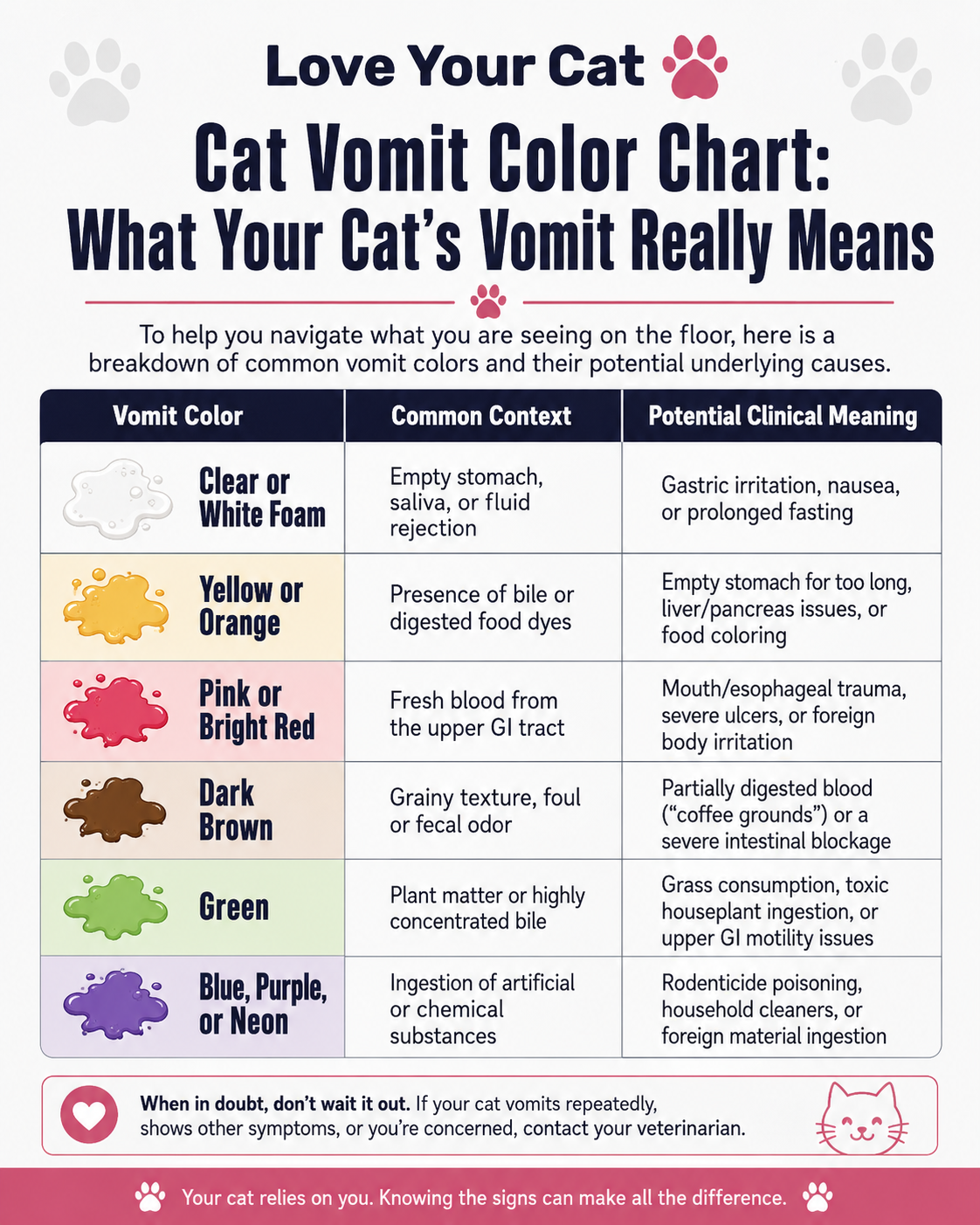
Vomiting vs. Regurgitation: Why the Difference Matters
Cats do vomit from time to time, but frequent episodes should not be dismissed as “just hairballs.” The color, texture, frequency, and your cat’s behavior can all offer clues about what is going on.
One common example is the “scarf and barf”: your cat eats quickly, walks away, and brings up intact food soon afterward. This is often regurgitation, not true vomiting.
Regurgitation usually looks like:
- Food comes up soon after eating
- Little warning or effort
- Undigested food, often in a tube-like shape
- Your cat is acting normal afterward
Vomiting often includes:
- Retching or abdominal contractions
- Drooling, lip-licking, or repeated swallowing
- Nausea or hiding
- Food, foam, bile, hair, or other material in the vomit
A one-time episode after eating too fast may not be an emergency if your cat is otherwise bright, eating, drinking, and acting normally.
But repeated vomiting—or vomiting paired with other symptoms such as appetite changes, low energy, weight loss, diarrhea, or pain—is worth discussing with your veterinarian. Learn how to tell the difference between nausea, hairballs, and respiratory concerns in Why Is My Cat Gagging But Not Throwing Up?.
Quick Note: Pet insurance may help cover eligible future accidents and illnesses. Compare plans to see what may fit your cat and budget.

What Each Vomit Color May Mean
The color of cat vomit can give you useful clues about what may be happening in your cat’s body. It cannot diagnose the problem on its own, but it can help you decide what to watch, what to write down, and when to call your veterinarian.
Some colors are more commonly linked to an empty stomach, fast eating, bile, or hairballs. Others may point to something more serious, such as blood, toxin exposure, plant ingestion, or a possible blockage.
As you move through each color, look at the full picture: the color, the texture, how often it happened, and how your cat acts afterward.
Use the sections below as a guide to understand what each vomit color may mean, when it may be okay to monitor, and when it is safer to call your veterinarian.
Clear, White, or Foamy Vomit
Clear liquid is typically a mix of saliva, gastric juices, or water that came back up because the cat drank too quickly. White foam usually occurs when these stomach fluids mix with air during active retching.
If this happens occasionally right before breakfast, your cat’s stomach may simply be empty for too long overnight, causing acid buildup. Many owners find success by switching to smaller, more frequent meals or utilizing an automatic feeder for a late-night snack. However, if clear or foamy fluid is rejected repeatedly, or if it is accompanied by increased thirst and urination, it can be an early warning sign of metabolic conditions like kidney disease or diabetes.

Yellow or Orange Vomit
Yellow vomit almost always indicates the presence of bile, a digestive fluid produced by the liver and stored in the gallbladder. When a cat’s stomach remains empty for too long, bile can back up into the stomach, causing irritation and triggering a protective vomit reflex.
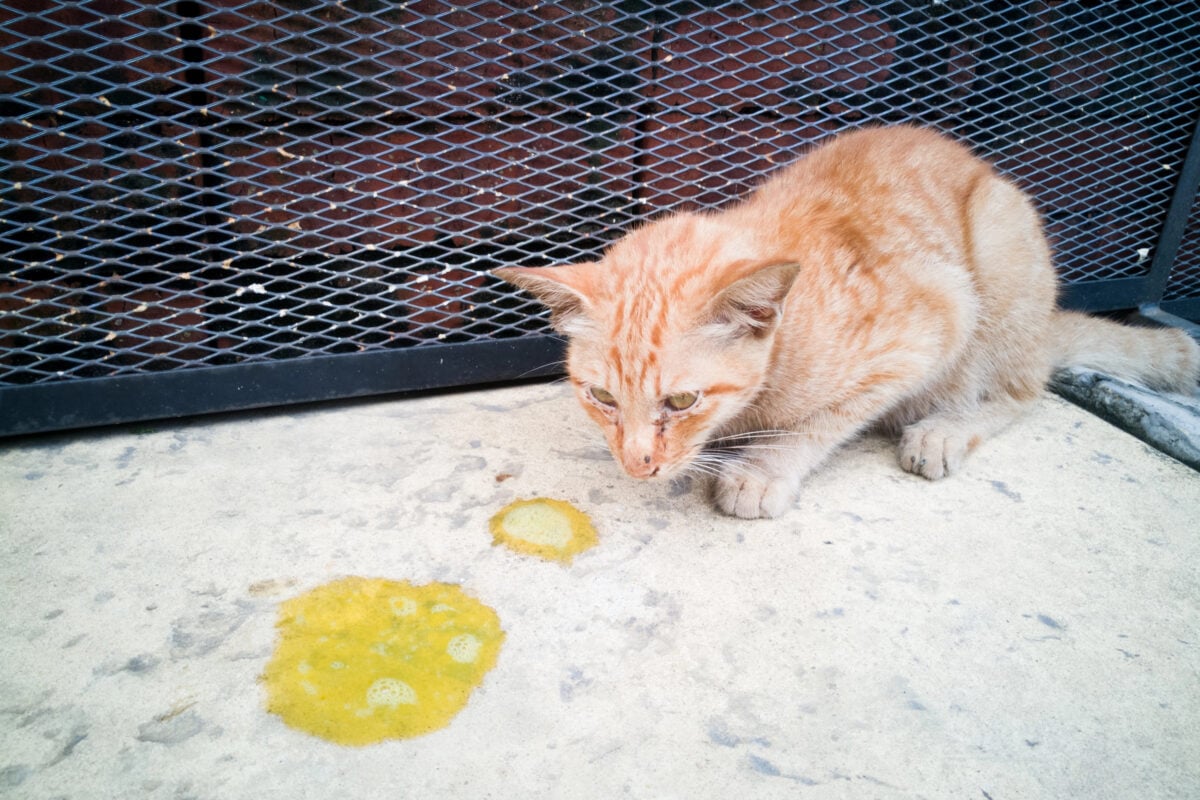
Orange vomit, on the other hand, is usually a combination of yellow bile mixing with the artificial dyes found in many commercial kibbles, wet food gravies, or treats. If the orange hue appears shortly after a meal and contains food particles, it is likely diet-related. If it is purely watery or happens on an empty stomach, it points back to bile or generalized upper intestinal inflammation.
Pink or Red Vomit (High Priority)
Seeing red or pink on the floor should always prompt close observation. Pink vomit typically means a small amount of fresh blood has mixed with foam or saliva. This can sometimes happen if a cat retches forcefully, causing minor micro-tears or irritation in the lining of the throat or esophagus.
Bright red vomit, however, implies active, fresh bleeding within the mouth, throat, or stomach. In clinical emergency protocols, red and orange visual indicators are used to triage urgent stabilization needs. Active bleeding can point to severe ulcers, toxin ingestion (such as rodenticides), or internal trauma from swallowing a sharp object.
Brown or Dark Brown Vomit (Critical Warning)
Brown vomit requires a distinction between food and fluid. If your cat throws up right after eating brown kibble, the color is self-explanatory. However, if the vomit is a dark, fluid-based brown without obvious food chunks, especially if it has a grainy texture, it is a major red flag.
This appearance is often referred to as “coffee-ground vomit.” This happens when blood has spent enough time in the stomach to be partially broken down by gastric acid, turning it dark and granular. Furthermore, if the brown liquid carries a distinct fecal odor, it suggests that the digestive tract is entirely obstructed, causing lower intestinal contents to back up and exit through the mouth. This is a life-threatening veterinary emergency.

Green Vomit
Green vomit is most commonly visual proof that your cat has been grazing. If your cat has access to safe outdoor grass or indoor cat grass, the blades often trigger a mild purge reflex.
The danger arises if the green matter comes from a common houseplant. Many popular indoor plants, such as lilies, pothos, and philodendrons, are highly toxic to felines.
If your cat vomits green fluid and you suspect they chewed on an unfamiliar plant, identify the plant immediately and head straight to a clinic.

Blue, Purple, or Neon Vomit (The Chemical Emergency)
If you look down and see bright blue, purple, or neon green liquid, you can immediately rule out typical stomach upset or bile. These colors are a definitive sign that your cat has ingested something artificial, and it usually points to a chemical emergency.
Many commercial mouse and rat poisons are intentionally dyed bright blue, green, or purple by manufacturers to make them easily identifiable. If an outdoor cat catches a rodent that has ingested poison, or an indoor cat finds a hidden bait station, this vibrant color will often show up in their vomit. Bright blue or purple can also point to toilet bowl cleaners, laundry pods, or swallowed pieces of dyed plastic toys.
Treat blue, purple, or neon vomit as an immediate toxicity emergency. Do not wait for symptoms to worsen. Grab a photo of the mess, check your home for missing household chemicals or pest traps, and contact an emergency veterinary clinic or a pet poison helpline immediately.
Texture Clues: Food, Hairballs, and Foreign Objects
While color grabs your attention first, the consistency and contents of the mess tell the rest of the story. Examining the texture might not be the highlight of your day, but it provides essential context for your veterinarian.

Undigested Food vs. Regurgitation
If the pile on the floor looks exactly like the kibble that was in the bowl five minutes ago, your cat likely ate too fast or exercised immediately after a meal. However, pay attention to the shape.
If the food is entirely undigested and comes up in a moist, tubular log, it was likely regurgitated from the esophagus before ever reaching the stomach. If it is partially broken down and mixed with fluid, it makes it to the stomach before being rejected, pointing more toward gastric irritation or a food intolerance rather than just a “speed-eating” issue.
Hairballs (The Cigar-Shaped Culprits)
Despite the name, true hairballs are rarely round; they usually present as damp, tightly compressed, cigar-shaped masses of fur. An occasional hairball is normal, particularly during seasonal shedding or for long-haired breeds. However, if your cat is hacking up hairballs weekly, it is a sign that something is amiss. It could mean they are overgrooming due to stress, skin allergies, or fleas, or it could indicate that their gastrointestinal tract is too sluggish to move normal amounts of fur through their system.
Gagging without bringing anything up can look like a hairball, but it may also point to nausea or a respiratory issue.
Foreign Objects and Hidden Dangers
This is the most critical texture clue. Finding bits of plastic, rubber bands, toy stuffing, or houseplants in the vomit means your cat has been chewing on things they shouldn’t. Linear foreign objects, like yarn, sewing thread, or dental floss, are particularly perilous. If you see a small piece of string in the vomit, never assume the danger has passed; the rest of it could still be trapped inside their digestive tract.
How Often Is Too Often?
You can have a cat vomit clear fluid or yellow bile, and the severity of the situation completely hinges on one factor: how often is it happening? Frequency is often the true dividing line between a minor dietary fluke and a medical crisis.
The Isolated Event
An isolated vomiting episode, where your cat gets sick once, cleans themselves up, and immediately returns to playing, eating, and using the litter box normally, is generally a “monitor closely” situation. Cats, like humans, can experience transient upset stomachs that resolve on their own.
The Cluster (When to Step In)
The situation shifts from standard pet ownership to a veterinary concern when the vomiting becomes a pattern. If your cat vomits multiple times within a 24-hour window or if they are dry-heaving and unable to keep water down, they need professional help. Felines can become dangerously dehydrated remarkably fast. This risk escalates exponentially for fragile populations, including young kittens, senior cats, or those managing pre-existing metabolic conditions like kidney disease.
What to Note for Your Vet
If your cat vomits again or needs care, these details can help your vet spot patterns faster:
- When it happened: date, time, and whether it followed eating
- What it looked like: color, texture, amount, and anything unusual in it
- How often it happened: one episode or multiple vomiting events
- Food and water: when your cat last ate, drank, or kept either down
- Changes you’ve noticed: appetite, energy, hiding, diarrhea, litter box habits, or behavior
Tip: Take a quick photo before cleaning it up.
When to Seek Urgent Veterinary Care
An isolated vomit episode where the cat immediately bounces back, grooms themselves, and demands food is generally a situation where you can monitor them at home. However, you should bypass the wait-and-see approach and call a veterinarian immediately if you observe any of the following clinical red flags:
- High Frequency: Vomiting multiple times within a 24-hour window, or an inability to keep water down.
- Behavioral Crash: Extreme lethargy, glassy eyes, hiding in unusual spaces, or continuous low groaning/vocalizing.
- Physical Pain: A tense, tucked-up abdomen, or crying out when their belly is touched.
- Linear Foreign Bodies: If your cat has swallowed a string, thread, ribbon, or tinsel.
Note: If you see a piece of string protruding from your cat’s mouth or anus, never pull it. Pulling a caught string can saw through the intestinal walls, causing fatal internal damage. Leave it completely intact and let an emergency veterinarian handle it safely.
Higher-Risk Cats: Kittens and Seniors
A healthy three-year-old indoor cat throwing up an occasional hairball is a completely different scenario than a twelve-week-old kitten or a fifteen-year-old senior cat getting sick. Feline age completely dictates how much room for error your cat has, and it should directly influence how quickly you pick up the phone to call the clinic.

Kittens: The Zero-Tolerance Zone
Young kittens are incredibly fragile. Because their bodies are so small, they have virtually no fluid reserves to spare. A single afternoon of repetitive vomiting can cause a kitten’s blood sugar to dangerously crash, plunging them into severe, life-threatening dehydration in a matter of hours.
What might be a “wait and see” situation for an adult cat is an automatic medical emergency for a kitten. If your kitten vomits more than once, skips two consecutive meals, or becomes lethargic, skip the internet searches and head straight to an emergency vet.
Senior Cats: The Hidden Warning Signs
For older felines, a sudden increase in vomiting is rarely just a simple case of dietary indiscretion or a stubborn hairball. As cats age, chronic vomiting becomes one of the primary outward symptoms of serious, age-related systemic issues. Frequent vomiting in a senior cat is often the first major warning sign of:
- Chronic Kidney Disease (CKD)
- Hyperthyroidism (an overactive thyroid gland)
- Feline Diabetes
- Gastrointestinal Lymphoma
If your senior companion starts getting sick once a week or changing their daily routine, don’t dismiss it as them just “getting old.” Schedule a veterinary visit specifically to request a senior bloodwork panel. Catching these metabolic conditions early can add years of high-quality life to your cat’s golden years.
Monitoring Recovery: Appetite, Water, and Behavior
After one vomiting episode, the best sign is a cat who gradually returns to their normal routine: drinking, eating, and acting like themselves.

Keep fresh water available and watch for changes around the bowl, such as avoiding it, pawing at the water, or drinking much less than usual. Why do cats paw at water? explains some common reasons for that behavior, while this guide on how long cats can go without water covers why reduced drinking deserves attention.
A skipped meal after nausea can happen, but ongoing food refusal is more concerning. Read how long a cat can go without food for the warning signs to watch for.
Call your vet if vomiting returns, your cat cannot keep water down, refuses food, seems weak or painful, hides, or is not acting like themselves.
The Cleanup: How to Safely Clean and Sanitize the Mess
If you are reading this article, there is a very high chance you have a roll of paper towels in one hand and a bottle of cleaner in the other. Before you start scrubbing furiously, take a deep breath and look at the floor one last time.
Before you clean, snap a quick photo if the color or texture looks unusual.
Then:
- Keep your cat away from the area while you clean. Strong fragrances and sprays can irritate an already nauseous cat.
- Use gloves and paper towels to remove the mess, then seal and discard it.
- Use an enzymatic cleaner on carpet, rugs, or upholstery to help break down the mess and remove lingering odor.
- Check for anything unusual, like blood, string, plant pieces, or rice-like segments. Take a photo and call your vet if you are unsure.
Tip: Do not pull on a visible string or thread. It can be dangerous if your cat swallows part of it.

The Secret to Stain Removal: Always reach for an enzymatic cleaner. These specialized formulas contain live cultures that literally eat away the biological proteins, neutralizing the stain at a molecular level.
Finally, if you notice tiny white segments (resembling grains of rice) moving in the mess, your cat likely has tapeworms. Put on disposable gloves, discard the mess in a sealed bag, and sanitize the entire floor surface thoroughly with a pet-safe disinfectant to prevent any risk of reinfection.
Frequently Asked Questions
When your feline companion is feeling under the weather, a million different questions can race through your mind at once. While a color chart is a fantastic starting point, feline health is rarely one-size-fits-all, and every cat has their own unique quirks.
Below, we have answered the most common questions cat parents ask when faced with a messy floor. If you don’t see your specific situation covered below, please scroll down and ask your question in the comments section! We monitor our community closely and are always happy to help you navigate your cat care journey.
What color of cat vomit is the absolute most concerning?
Red, pink, dark brown, and any neon or artificial colors (like bright blue or purple) require the most immediate attention. Red or dark brown indicates bleeding in the digestive tract or a severe blockage. Blue, purple, or neon green points directly to chemical ingestion, such as rodenticides or household cleaners.
Is yellow cat vomit always just a sign of an empty stomach?
While yellow vomit usually contains bile, which often means your cat’s stomach has been empty for too long, it is not always harmless. Frequent bile vomiting can be a secondary symptom of underlying conditions like pancreatitis, liver disease, or inflammatory bowel disease. If it happens regularly, it warrants a veterinary evaluation.
Why does my cat bring up completely undigested food right after eating?
This is typically a classic “scarf and barf” scenario, often classified as regurgitation rather than true vomiting. It happens when a cat eats too quickly, swallows air, or swallows kibble whole without chewing. Utilizing slow feeders, puzzle bowls, or breaking meals into smaller, more frequent portions can dramatically reduce this habit.
Are hairballs a normal part of being a cat?
Occasional hairballs are normal, especially for long-haired breeds or during heavy shedding seasons. However, coughing up a hairball every single week is not normal. Frequent hairballs can indicate a skin issue causing overgrooming (like fleas or allergies) or a sluggish gastrointestinal tract that is struggling to push normal amounts of fur through the digestive system.
Should I withhold food after my cat vomits?
It is wise to withhold food for a few hours immediately after an episode to let your cat’s stomach settle. However, you should never withhold food for more than 12 to 24 hours. Because cats are highly susceptible to liver complications when they stop eating, a prolonged lack of appetite requires professional veterinary medical intervention rather than continued fasting.
Related Cat Health Guides
Being a dedicated cat parent means understanding both their physical health and their complex behavioral quirks. To continue building your feline care toolkit, explore some of our other comprehensive guides:
- Feline Behavior & Development: Raising a young feline or thinking about adopting pairs? Learn how to spot, manage, and prevent early behavioral issues in our deep dives into Understanding Single Kitten Syndrome and The Truth About Littermate Syndrome.
- Just for Fun: Want to look beyond physical health clues to unlock your cat’s quirky personality? Take a playful look at your feline’s cosmic side with our guide to Cat Astrology: Decoding Your Pet’s Zodiac Sign.
Keep your log handy, keep your camera ready, and remember that you know your cat better than anyone else. If your gut says something is off, trust it!
Join the Conversation: Over to You!
We have all experienced that sudden midnight sprint across the bedroom to find the paper towels. Does your cat have a notorious “scarf and barf” routine, or have you ever had to use a vomit log to crack a feline health mystery?
Drop a comment below to share your stories, your questions, or even your absolute best carpet-cleaning secrets. Our community of cat parents is here to support each other. We read and reply to every single one!