When you purchase through links on our site, we may earn a commission at no extra cost to you. Learn more.
Cats are masters of mystery. From their baffling obsession with cramming themselves into microscopic cardboard boxes to their sudden 3 AM zoomies, felines love to keep us guessing. But beyond their quirky behaviors, their actual anatomy holds a few well-kept secrets, too.
Table of Contents
Take, for instance, the elusive feline belly button.
If you’ve ever been lucky enough to be granted access to a cat’s tummy for a rare belly rub, you’ve probably noticed something missing. Unlike humans, who proudly sport distinct innies and outies, a cat’s midsection appears to be nothing but an endless, uninterrupted sea of fluff. You can search high and low, part the fur, and still find absolutely nothing.
So, are felines just magically exempt from this standard mammalian feature? Or is there a tiny, hidden secret buried under all that hair?
Want our human-written content to rank above AI-generated garbage? Help us out by clicking this button!
Grab your magnifying glass… we’re about to dive into the fascinating, slightly weird biology of your cat’s abdomen to uncover the truth.
So… Do Cats Actually Have Belly Buttons?
Yes, cats do have belly buttons.
Cats are placental mammals, meaning kittens develop in the womb and receive nutrients through an umbilical cord connected to the placenta, according to the Cornell University Feline Health Center. After birth, the cord dries up and falls off, leaving a tiny scar on the kitten’s abdomen.
That scar is the cat’s belly button.
However, unlike humans, a cat’s belly button is very small and usually hidden beneath fur, which is why most owners never notice it.
Quick Fact: The scientific term for a belly button is the umbilicus. It is simply the residual scar left behind after the umbilical cord falls off!
Fun Fact: Mother Cats Usually Handle the Umbilical Cord
In most births, the mother cat (called a queen) takes care of the umbilical cord herself.
Shortly after the kitten is born, she will chew through the cord and clean the kitten. This natural behavior helps stimulate breathing and removes the placenta.
If the mother doesn’t chew through the cord, a veterinarian or experienced breeder may carefully cut it.
This is one reason newborn kittens should generally be left alone during birth unless there is a clear emergency.
Where Is My Cat’s Belly Button?
If you want to find your cat’s belly button, you’ll need to look in the middle of their abdomen.
It’s usually located just below the rib cage and between the rows of nipples, roughly along the centerline of the stomach.
But don’t expect to see a deep indentation like humans have.

Instead, a cat’s belly button is typically just a tiny, flat scar on the skin. In many cases, it’s so small that it blends in with the surrounding fur and is almost impossible to spot without carefully parting the hair.
Even veterinarians sometimes have to look closely to find it.
So if you’ve searched your cat’s belly before and come up empty-handed, don’t worry, you’re definitely not the only one.
How to Find Your Cat’s Belly Button
Kitties are notoriously protective of their tummies. If your cat is one of the rare felines who actually enjoys a belly rub, you can use that bonding time to go on a belly button hunt!
Here is how to safely find it:
- Wait for a relaxed moment: Ensure your cat is calm, purring, and stretched out on their back.
- Locate the ribs: Gently run your fingers down to the bottom of their ribcage.
- Move down the abdomen: Trace a line about two-thirds of the way down the stomach.
- Check between the nipples: Feel around in the center of the belly, just between the two rows of nipples.
What does it feel like? You are looking for a small, flat, smooth patch of skin. It might feel slightly firmer than the surrounding tissue. If you have a long-haired breed like a Persian, Maine Coon, Norwegian Forest Cat, or Ragdoll, finding it will be like looking for a needle in a haystack—but rest assured, it is there!
What Does a Cat’s Belly Button Look Like? (Compared to Humans)
If you’re expecting to find a tiny “innie” or “outie” like humans have, you might be disappointed.
A cat’s belly button looks much more subtle.
In most cats, the belly button appears as a small, flat scar on the skin located along the center of the abdomen. It may look like:
- A tiny wrinkle in the skin
- A faint circular mark
- A small patch where the fur grows slightly differently
Because the scar is so small — and usually hidden beneath fur — it can be extremely difficult to see unless you part the hair and look closely.
In fact, many cat owners search their cat’s belly and never manage to spot it at all.
Cat Belly Buttons vs Human Belly Buttons
One reason people assume cats don’t have belly buttons is that they look very different from ours.
Here’s a quick comparison:
Human Belly Buttons
Human belly buttons are usually easy to see. They often appear as:
- An “innie” (a small indentation in the abdomen)
- An “outie” (a slight outward bump)
This happens because the umbilical cord in humans is clamped and cut, leaving a deeper scar as it heals.
Cat Belly Buttons vs. Human Belly Buttons
Although cats and humans both have belly buttons, they look quite different. Here’s a quick comparison to help you understand what you’re actually looking for.
| Feature | Human Belly Button | Cat Belly Button |
|---|---|---|
| Visibility | Usually easy to see | Often hidden beneath fur |
| Shape | Innie or outie | Small, flat scar |
| Size | Clearly noticeable | Very tiny |
| Location | Center of the abdomen | Center of the abdomen, just below the ribs |
| Texture | Indentation or small bump | Tiny wrinkle or faint mark |
Now that you know what to look for, the real question is: can you actually find your cat’s belly button?
Can You Actually See a Cat’s Belly Button?
We know cats do have belly buttons, but spotting one in real life can be surprisingly tricky.
Because the scar is so tiny and usually hidden under fur, many cat owners go years without ever seeing one.
The short video below shows a close-up of a real cat’s belly so you can see exactly what a feline belly button looks like.
Warning: This video may also make you want to rub your cat’s belly immediately.
Did you spot the tiny scar? That little mark is the cat’s belly button.
Now the real challenge begins… can you find one on your own cat?
Why Do Cats Show Their Belly?
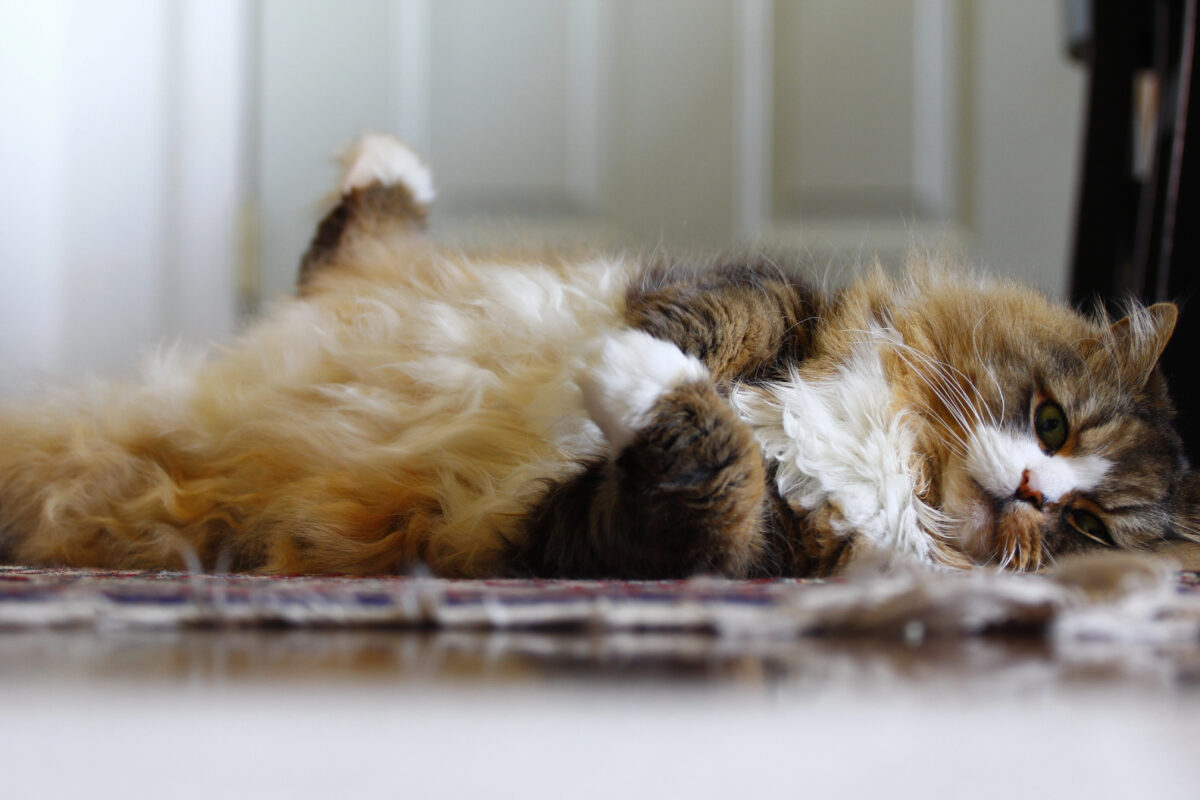
If a cat’s stomach is such a sensitive area, why do they sometimes roll over and show it to you?
When a cat exposes their belly, it usually means they feel safe and comfortable in their environment. The stomach is one of the most vulnerable parts of a cat’s body because it protects vital organs, so showing it is often a sign of trust.
However, that doesn’t necessarily mean your cat is inviting you to rub their belly.
Many cats roll onto their backs simply because they feel relaxed, want to stretch, or are inviting play. In other cases, they may be demonstrating that they trust you enough to expose their most vulnerable area.
Think of it as a compliment — your cat feels secure around you. Just don’t assume it’s an open invitation for a full belly massage.
Why Do Cats Hate Belly Rubs?
If you try to rub your cat’s stomach while searching for their belly button, you might quickly discover something surprising: many cats absolutely hate belly rubs.

This reaction is rooted in feline survival instincts.
A cat’s abdomen protects several vital organs, so it is one of the most sensitive and vulnerable areas of their body. Even though a cat may trust you enough to expose their belly, touching it can trigger a defensive reflex.
In the wild, predators often attack the stomach area. Because of this, cats are naturally programmed to protect it. When you touch a cat’s belly, their instincts may kick in, causing them to grab your hand with their front paws and kick with their back legs, a move sometimes called the “bunny kick.”
This doesn’t necessarily mean your cat is angry. In many cases, they’re simply reacting instinctively to protect a vulnerable area.
If you want to try finding your cat’s belly button, the best time is when they are calm, sleepy, or already enjoying gentle petting.
Is That Floppy Belly Your Cat’s Belly Button?
While searching for your cat’s elusive belly button, you might notice something else on their stomach — a loose, saggy flap of skin hanging down near the back of their belly.
Many cat owners feel this pouch and immediately panic, mistaking it for a giant “outie” belly button, sudden weight gain, or even a large umbilical hernia.

Rest assured, this is completely normal. Veterinarians refer to this loose belly flap as the primordial pouch. According to VCA Animal Hospitals, it’s a natural fold of skin along the abdomen that helps protect a cat’s internal organs and allows greater flexibility when running or twisting.
Unlike the belly button, which is a tiny, flat scar located about two-thirds of the way down the abdomen, the primordial pouch sits further back on the lower belly, just in front of the rear legs. It is a loose fold of skin and fat that can sometimes swing slightly when a cat walks or runs.
All cats have a primordial pouch, although it can be much more noticeable in certain breeds like Bengals and Egyptian Maus. It may also become more pronounced as cats age or after they are spayed or neutered.
What Does the Primordial Pouch Actually Do?
Far from being an overgrown belly button, this pouch serves several important survival purposes for cats:
- Protection in a Fight: When cats fight, they often kick with their powerful hind legs. The thick, loose skin of the primordial pouch helps protect their sensitive internal organs from claws and bites.
- Extreme Flexibility: Cats are famous for their agility. The extra skin in the pouch allows their bodies to stretch, twist, and extend fully when running, jumping, or turning mid-air.
- Room for Big Meals: In the wild, cats don’t always know when their next meal will come. The pouch allows the abdomen to expand after a large meal, helping it store extra calories when food is available.
How to Tell the Difference
If you are feeling around your cat’s belly and trying to figure out what you’re touching, here is a quick guide:
- The Belly Button: A tiny, flat scar hidden under the fur, usually located in the center of the abdomen just below the ribs.
- The Primordial Pouch: A loose, swinging flap of skin and fat located on the lower belly near the hind legs.
- An Umbilical Hernia: A soft bulge directly underneath the belly button scar that may push inward when gently pressed. If you notice this type of lump, it’s a good idea to have a veterinarian examine your cat.
Can a Cat’s Belly Button Cause Health Problems?
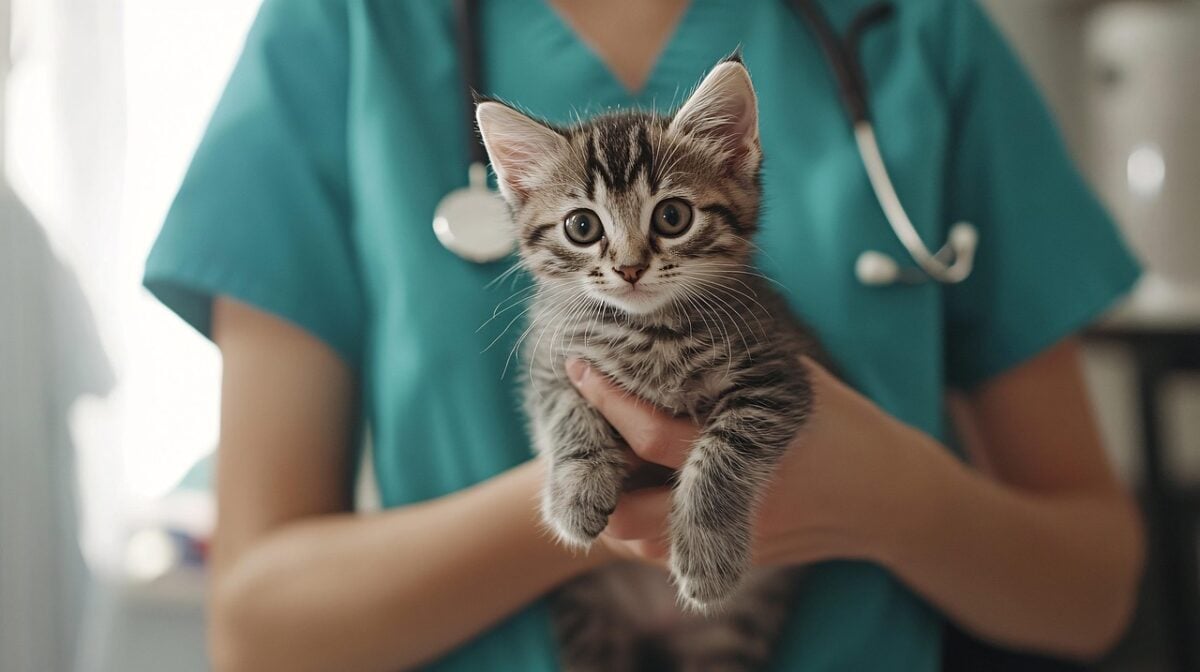
In most cases, a cat’s belly button is simply a tiny scar on the abdomen and never causes any problems. However, in young kittens, there are a couple of rare conditions that can affect the area where the umbilical cord was attached.
Can Cats Have “Outie” Belly Buttons?
Humans sometimes have “outie” belly buttons that stick outward from the abdomen. Cats, however, normally do not.
A healthy cat’s belly button is a tiny, flat scar that sits flush against the skin. It is usually so small that it’s difficult to see under the fur.
Umbilical Infections
Occasionally, newborn kittens can develop a bacterial infection in the area where the umbilical cord was connected. This condition is known as omphalitis.
Signs of an infection may include:
- Redness around the belly button
- Swelling or warmth in the area
- Discharge from the belly button
- Pain when the abdomen is touched
If a kitten shows these symptoms, a veterinarian should examine it right away. Early treatment with antibiotics usually resolves the infection quickly.
Umbilical Hernias
If you ever spot what looks like a cat “outie,” it’s probably not a belly button at all, it’s more likely an umbilical hernia, which can create a small bump near the navel.
Veterinary references such as the Merck Veterinary Manual explain that umbilical hernias occur when the abdominal muscles around the belly button do not fully close after birth. When this happens, a small amount of tissue or fat can push through the opening, creating a soft bump under the skin.
Umbilical hernias often appear as:
- A small lump on the kitten’s belly
- A soft bulge near the navel
- A swelling that may change size when pressed
Many small hernias close on their own as kittens grow. If they do not, veterinarians can often repair them during a routine spay or neuter surgery.
If you notice a bump on your kitten’s stomach, it is always a good idea to have a veterinarian take a look.
Do Other Animals Have Belly Buttons?
Cats aren’t the only animals with belly buttons. In fact, all placental mammals develop belly buttons because they grow inside their mother’s womb and receive nutrients through an umbilical cord.
This means animals like dogs, horses, cows, whales, and even elephants all technically have belly buttons.
However, just like cats, many animals have belly buttons that are extremely difficult to see. In species covered with fur or thick skin, the scar left behind by the umbilical cord often becomes nearly invisible as the animal grows.

On the other hand, animals that hatch from eggs, such as birds, reptiles, and fish, do not have belly buttons at all because they never develop an umbilical cord.
So while your cat’s belly button may be hard to find, it’s actually part of a shared feature among many mammals.
More Questions About Cat Belly Buttons (FAQ)
Even after learning about feline belly buttons, a few questions tend to pop up for curious cat owners. Here are answers to some of the most common questions about cat belly buttons and what’s normal.
If you have another question we didn’t cover, feel free to leave it in the comments below. We’re always happy to help, and your question might inspire future articles for fellow cat lovers.
Do kittens have belly buttons when they are born?
Yes. Kittens are born with an umbilical cord attached to their abdomen. Within a few days after birth, the cord dries up and falls off, leaving behind a tiny scar that becomes the kitten’s belly button.
Why can’t I see my cat’s belly button?
A cat’s belly button is extremely small and usually hidden beneath fur. Unlike human belly buttons, it typically appears as a tiny flat scar rather than a noticeable indentation, which makes it difficult to spot.
Do dogs have belly buttons, too?
Yes. Dogs are also placental mammals, which means puppies develop in the womb and are connected to their mother by an umbilical cord. After birth, the cord falls off and leaves behind a small scar that functions as the dog’s belly button.
Can a cat’s belly button disappear over time?
No, the belly button doesn’t disappear, but it can become harder to see as the cat grows older and the scar fades or becomes covered by fur.
Should I worry if my cat has a lump near its belly button?
A lump near a cat’s belly button could be an umbilical hernia. Many are harmless, but any unusual swelling or bump should be examined by a veterinarian to rule out potential health problems.
More Cat Mysteries Worth Solving
So yes, cats really do have belly buttons. They’re just tiny, subtle, and hiding under all that fluff like one more secret in a very long list of feline mysteries. Because if you live with a cat, you already know they operate under a completely different set of rules. One minute they’re peacefully asleep, and the next they’re sprinting down the hallway like a tiny furry missile. (There’s actually a reason behind those sudden cat zoomies.)
Then there are the questions nobody prepares you for. Yes, cats do fart. Yes, they are weirdly obsessed with cardboard containers, which explains why cats love boxes. And yes, knocking your stuff off the table might be completely intentional.
And just when everything seems normal again, there’s the moment a cat freezes and stares into an empty hallway like it’s watching something nobody else can see. Turns out there are explanations for that spooky behavior… and even for those intense staring contests.
In other words, finding a cat’s belly button may solve one mystery, but living with cats guarantees there will always be several more waiting.
Found Your Cat’s Belly Button?
Did you manage to spot the tiny belly button… or did the investigation end with a surprise bunny kick?
Share your best cat stories in the comments below. Belly button discoveries, failed belly rub attempts, or any other hilarious cat moments are welcome.