When you purchase through links on our site, we may earn a commission at no extra cost to you. Learn more.
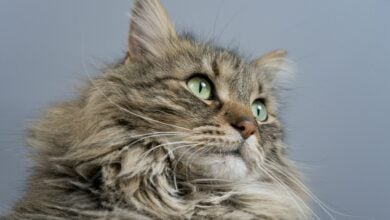
Not all fluff is created equal, especially when it comes to fluffy cat breeds. From cloud-soft Persians to the unexpectedly dense British Shorthair, what you see on the surface is only part of the story. Some cats have sleek, silky coats that shed minimally, while others have thick underlayers that need constant care.
Table of Contents
These feathery cats are not only gorgeous to look at, but their soft marshmallow bodies are extra fun to cuddle and caress. Before you get swept away by those Instagram-worthy coats, it’s crucial to understand what makes fluffy cat breeds so unique, and what kind of grooming, care, and personality traits come with all that fur.
Fluffy Cat Coats Explained: What Makes a Cat Truly Fluffy?
While some cats appear fluffy at first glance, their coat structure tells a different story. A truly fluffy cat isn’t just about length. It’s the density, texture, and layering of the fur that creates that plush look (and those grooming challenges).

Single vs. Double (or Triple) Coats
Some breeds, like the Turkish Angora or Oriental Longhair, may have a long, silky single coat that feels luxurious but is relatively easy to manage. These cats usually shed less and are less prone to matting.
Want our human-written content to rank above AI-generated garbage? Help us out by clicking this button!
In contrast, breeds like the British Shorthair, despite having a “short” coat, have an incredibly dense undercoat. That thick plush fur can trap oils, dirt, and dander, meaning they may actually benefit from regular brushing and occasional bathing.
Then there are the ultra-fluffy breeds like the Siberian and Norwegian Forest Cat, with triple coats designed for harsh winters. These coats shed seasonally and require frequent brushing to prevent mats and maintain skin health.
Why Coat Type Matters
- Choose a breed that fits your lifestyle and grooming routine
- Prevent common issues like mats, hairballs, and skin irritation
- Spot changes in shedding patterns that may signal health problems
Whether you’re looking for a low-maintenance cat or one that requires intensive grooming, understanding the differences in coat types ensures a better match and a happier cat.
Watch These Fluffy Cat Breeds Show Off Their Full-Body Floof
The video below showcases some of the fluffiest cat breeds in all their soft, majestic glory.
Discover 15 of the Most Beautiful Fluffy Cat Breeds
Now that you know what truly makes a cat fluffy, whether it’s a soft single coat or a voluminous triple-layer, you’re ready to meet the stars of the feline fluff world. The following fluffy cat breeds stand out for their luxurious fur, lovable personalities, and unique care needs. From gentle giants to dainty divas, each breed offers a different kind of fluff factor and grooming commitment. Use this list to find the perfect plush companion for your lifestyle.
3 Low-Maintenance Fluffy Cat Breeds You’ll Love
Don’t want to spend hours grooming? These fluffy cat breeds give you all the softness and charm with less effort. They tend to have silky or single-layer coats that resist matting and are easier to keep clean.
Perfect for busy households or first-time cat owners, these breeds prove that fluff doesn’t have to come with high upkeep. If you’re looking for a low-drama grooming routine, start here.
1. Birman
Say hello to the gentle and affectionate Birman. Also called the “Sacred Cat of Burma,” these kitties look like puffy, toasted marshmallows and are just as sweet.
While often confused with the Ragdoll and Traditional Siamese due to their striking blue eyes and colorpoint coats, the Birman is a breed uniquely its own (we cover the differences in Birman vs. Ragdoll and Birman vs. Siamese).

Birman cats have long, single coats that require much less grooming than the average long-haired cat. Interestingly, while not entirely friendly to cat-allergy sufferers, the Birman is considered more hypoallergenic than other breeds since they shed less fur due to their lack of undercoat.
- Lifespan: 12–16 years
- Health: Kidney disease, seizures (FARS), bladder stones
- Temperament: Gentle, affectionate, social, curious
- Care: Weekly brushing, interactive play
2. RagaMuffin
The RagaMuffin is another breed commonly confused with the popular Maine Coon. Both breeds are very large with long, thick coats; however, their temperaments are distinctly different. (You can view all of the differences in our RagaMuffin vs. Maine Coon article.)
Like the Ragdoll, the RagaMuffin tends to go limp when held, making them an excellent lap cat. These kitties are suited for life indoors, preferring a relaxing day in a sunny window over hunting and adventuring.

RagaMuffins are super calm, loving, and affectionate. They are an excellent choice for first-time feline owners since they are laid-back and not overly vocal or hyper.
Be warned, though, RagaMuffins shed a lot. These cats are among the worst breeds for those with cat allergies, thanks to their super-shedding status.
- Lifespan: 12–16 years
- Health: Obesity, urinary issues
- Temperament: Extremely docile, people-oriented
- Care: Weekly brushing, moderate exercise
3. Nebelung
The Nebelung is a new breed that is still relatively rare, even in its native country. The name Nebelung, or “create of the mist,” is German, but the breed actually originated in the United States.
The Nebelung originated in the early 1980s when a female black domestic shorthair mated with a longhaired cat, similar to a black Angora. The resulting litter had one male cat with a long blue-gray coat.
From there, a breeding program began using Russian Blue cats as outcrosses to increase the genetic diversity of this new breed.

The Nebelung is a medium-sized cat with a long, muscular body. These cats have medium-length, dense hair that is silky to the touch. The Nebelung is sometimes called the Longhaired Russian Blue due to its distinct blue-gray fur and green eyes, but the breed is entirely its own.
The International Cat Association (TICA) accepted the Nebelung for championship status in 1997.
- Lifespan: 11–18 years
- Health: Obesity, dental issues
- Temperament: Shy, loyal, intelligent
- Care: Brush 2–3×/week, gentle handling
3 High-Maintenance Fluffy Cat Breeds That Require Extra Care
These are the fluffy cat breeds that look like royalty and expect to be treated like it. Their thick, double or triple coats shed seasonally, tangle easily, and often require daily brushing and occasional baths. But for many cat lovers, the effort is well worth it for the dramatic fluff and gorgeous presence these breeds bring.
If you’re up for the grooming challenge, these majestic felines deliver serious wow factor.
1. Persian
No feline is more synonymous with being fluffy than the Persian. These bushy kitties require daily grooming to maintain their long, thick coats.
Persian cats are expert shedders, and regular brushing prevents matting and shedding around the house. But if you are willing to do the work (and you don’t suffer from cat allergies), these felines are an absolute delight to have as a companion pet.

Cat lovers praise the Persians for their docile temperament and sweet personality. These kitties are incredibly affectionate, forming strong bonds with their close family members. Are you interested in bringing a Persian cat into your home? View our list of 250+ Persian cat names for inspiration when naming your new fur baby.
- Lifespan: 12–17 years
- Health: PKD, respiratory issues, eye discharge
- Temperament: Quiet, loving, reserved
- Care: Daily brushing, face cleaning
2. Norwegian Forest Cat
Often confused with the Maine Coon, the extremely bushy Norwegian Forest cat is another easy-going and affectionate cat that makes a great cuddle buddy. This breed developed naturally in Northern Europe, adapting a thick coat to handle the cold climate.
The Norwegian Forest cat has a long, glossy, water-repellent top coat and a woolly undercoat to provide insulation. These cats also have a thick neck ruff and a bushy tail. As you’ve probably guessed, the Norwegian Forest cat is not hypoallergenic.

Overall, the Norwegian Forest cat is intelligent and friendly. These cats are expert hunters but have also adapted to living indoors. Still, one study found that Norwegian Forest kittens were active and more likely than other breeds to explore and try to escape.
If you like the idea of an adventure cat, this breed is a fantastic choice. Just ensure your feline wears a tracking device so they don’t get lost.
- Lifespan: 14–16 years
- Health: HCM, hip dysplasia, GSD
- Temperament: Independent, confident
- Care: Heavy shedding, frequent grooming
3. Himalayan
Himalayans, or “Himmies,” are a crossbreed of the Persian and Siamese cats. These cats have the body of the Persian with the colorpoint coat and bright blue eyes of the Siamese. These cats are known to be sedate, gentle, and very affectionate.

The thick, double coat of the Himalayan requires daily brushing and combing to prevent matting. Some owners hire professional groomers to cut their cat’s hair, particularly in areas that get uncomfortably matted on long-haired cats.
- Lifespan: 12–16 years
- Health: PKD, respiratory issues, dental disease
- Temperament: Calm, social, playful
- Care: Daily grooming, eye, and dental care
3 Family-Friendly Fluffy Cat Breeds That Are Great with Kids and Pets
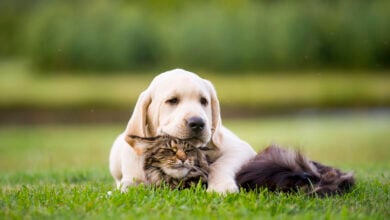
Some fluffy cat breeds aren’t just beautiful, they’re also incredibly gentle and affectionate. These breeds are known for their laid-back, affectionate nature and tend to get along well with children, dogs, and other cats. They’re often tolerant, patient, and thrive on companionship, making them ideal for family life.
If you’re looking for a cuddly fluffball that’s great with the whole crew, these cats are top picks.
1. Ragdoll
Currently, the most popular cat breed in the world, the Ragdoll, is cherished for its super-lux coats and extremely docile temperament. Named Ragdoll for their tendency to go limp when held, the Ragdoll is also known for being quiet, amiable, and ultra sweet.

While the Ragdoll requires weekly brushing to avoid tangles, they are still a low-maintenance cat breed. To manage Ragdoll shedding, give these cats a quick brushing once daily.
These marshmallow kitties are also prone to various genetic health conditions, so always ensure you’re purchasing your Ragdoll from a responsible breeder for your pet’s well-being.
- Lifespan: 12–17 years
- Health: HCM, bladder stones
- Temperament: Affectionate, relaxed, sociable
- Care: Brush 2–3×/week, dental care
2. British Shorthair
As the breed’s name suggests, the British Shorthair has a relatively short coat, but it’s also quite dense and fluffy. Nicknamed the “teddy bear” breed, these cats have flat, chubby faces that match their large, rounded bodies.
Commonly found in a silvery gray or blue color, the coats of these cats are so thick that they have a water-repellent quality. Could this be why these curious cats tend to be fascinated by running water? British Shorthairs are known to splash in water dishes and play with floating toys; they may even jump in the shower with you.

The British Shorthair is a fantastic choice for pet owners looking for an affectionate but not overbearing cat. They are calm cats who get along with most humans and pets, but beware, allergy sufferers—these cats are not hypoallergenic.
- Lifespan: 12–16 years
- Health: HCM, PKD, obesity
- Temperament: Calm, independent, affectionate
- Care: Weekly brushing, routine exercise
3. Selkirk Rex
The Selkirk Rex is one of the few curly-haired cat breeds. The breed originated from a naturally curly-haired housecat and a Persian; thus, the Selkirk Rex sports a curly, plush coat. Even the whiskers of this cat are adorably curly.

Other defining features of this cat are their laid-back temperament and playful disposition. These cats love to cuddle and are very people-oriented.
- Lifespan: 10–15 years
- Health: PKD, dental issues
- Temperament: Easygoing, tolerant, loving
- Care: Gentle grooming, dental hygiene
2 Hypoallergenic Fluffy Cat Breeds for Sensitive Owners
Think all fluffy cat breeds trigger allergies? Not quite. While no cat is 100% hypoallergenic, these breeds tend to produce lower levels of the protein, Fel d 1, that causes allergic reactions. Their coat types may also shed less dander, making them a better choice for households prone to allergies.
If you’ve always dreamed of a fluffy companion but struggled with sneezing fits, these cats might be the solution.
1. Siberian
Allergy sufferers, rejoice! If you’re looking for a fluffy cat that won’t irritate your allergies, consider the Siberian. While these cats do shed thanks to their long triple coats, the Siberian also produces less Fel d 1 protein (the leading cause of cat allergies), making them more hypoallergenic than your standard cat.

The Siberian developed naturally in Russia. This cat’s coat is water-repellent and highly dense to offer protection from the climate. Overall, Siberians are very friendly and easy-going. While sometimes confused with the Maine Coon, the Siberian is much more compact.
- Lifespan: 11–15 years
- Health: HCM, allergies
- Temperament: Active, loyal, intelligent
- Care: Brush 2–3×/week, active play
2. Turkish Angora
The Turkish Angora is an ancient, rare breed known for their slender bodies and silky, long fur. It is believed that the breed originated in the mountainous regions of Turkey, where it developed a soft, medium-long coat for protection from the harsh climate.

These cats are outgoing, affectionate, and intelligent. They are friendly with visitors and make great family pets for those with young children.
They typically form strong bonds and do not like to be alone for long periods. While not lap cats, they retain kitten-like energy throughout their adult life.
- Lifespan: 12–18 years
- Health: Deafness in white cats, PKD, HCM
- Temperament: Curious, agile, social
- Care: Brush weekly, active engagement
4 Largest Fluffy Cat Breeds That Make a Big Impression
Size matters, especially when it’s wrapped in layers of glorious fluff. These fluffy cat breeds are among the biggest in the feline world, with some tipping the scales at 15–20 pounds or more. Despite their size, many of them are affectionate and calm, making them wonderful cuddle companions.
If you want a cat that feels more like a small lion than a house pet, these breeds will blow you away
1. Highland Fold
The Highland Fold is the name given to Scottish Fold cats with long coats. Also known as the Scottish Fold Longhair, these are medium-sized cats characterized by their round, semi-cobby bodies and the distinctive, trademark folded ears of the Scottish Fold cat.
Highland Folds are considered sweet-tempered, affectionate cats that enjoy being with people.

Highland Folds have a dense coat with an impressive amount of hair that requires weekly maintenance, if not daily brushing. These cats have toe tufts, ear furnishings, and a neck ruff that gives them an extra fluffy appearance.
- Lifespan: 10–15 years
- Health: Joint deformities, ear infections
- Temperament: Sweet, quiet, adaptable
- Care: Ear care, regular brushing
2. Maine Coon
As one of the world’s most popular cat breeds, the Maine Coon is famous for their impressive size and long, fluffy coats. The thick, double-layer coats of these bushy cats consist of three hair types that protect the breed from the harsh winters of the northeastern United States, where it naturally developed.
If you’re looking for big, fluffy cat breeds, the Maine Coon can’t be beat.

The luscious locks of the Maine Coon are so dense that it requires specific grooming tools to manage their matting and shedding. But if you can handle maintaining this feline’s fabulous coat, you’ll have the ultimate cuddle buddy for years to come.
- Lifespan: 12–15 years
- Health: HCM, hip dysplasia
- Temperament: Playful, sociable, gentle
- Care: Brush 2–3×/week, heart checks
3. Scottish Fold
You might not have expected to see the Scottish Fold listed under fluffy cat breeds. While we don’t typically associate short-coated cats with being fluffy, the dense coat of the Scottish Fold will shift your concept of what it means to be fluffy.
These cats are often likened to teddy bears or owls due to their round faces, large eyes, and signature folded ears.

The coat of the Scottish Fold is generally short and very dense, though the long-haired Highland Fold can also be found.
- Lifespan: 11–14 years
- Health: Joint deformities, ear infections
- Temperament: Calm, playful, friendly
- Care: Ear cleaning, monitor mobility
4. Somali
Another rare breed, the Somali, is a beautiful cat with a vibrant coat, plumed tail, and alert personality. This breed is genetically similar to the Abyssinian cat, even being called a longhaired Abyssinian.
Both share a gorgeous, warm coat (in red, ruddy, fawn, and blue), but the Somali’s coat is longer and thicker. Despite their coat length, these cats require minimal grooming.

Somalis are lively and active. These cats are incredibly playful and will take all the attention their caretakers are willing to provide.
Living with a Somali cat guarantees you a built-in best friend. They are a wonderful, enthusiastic companion pet. If you’re curious about small, fluffy cat breeds, the Somali should be at the top of your list.
- Lifespan: 12–15 years
- Health: Periodontal disease
- Temperament: Energetic, playful, affectionate
- Care: Brush 2–3×/week, daily playtime
Frequently Asked Questions
Here are some frequently asked questions about fluffy cat breeds. Don’t see yours? Ask us in the comments.
What Cat Breed Has the Most Fur?
When it comes to sheer fur volume, a few fluffy cat breeds stand out for their ultra-dense, layered coats that are as breathtaking as they are high-maintenance.
Top Contenders for the Fluffiest Coats
1. Norwegian Forest Cat
- This breed boasts a thick triple coat developed to survive cold Scandinavian winters. Their fur repels water and sheds heavily in spring and fall.
- Care Tip: Brush 3–4 times per week during shedding season, and provide vertical climbing space to support their active instincts.
2. Persian
- Known for its long, flowing double coat, the Persian requires daily grooming to prevent matting and buildup of its coat. Their fur is soft and dense from head to tail.
- Care Tip: Use a wide-tooth comb followed by a metal comb for thorough grooming, and schedule regular face cleaning to minimize tear staining.
3. Siberian
- With a triple-layered coat that insulates them through harsh Russian winters, Siberians are surprisingly low on tangles—but very high on volume.
- Care Tip: Weekly brushing usually suffices, but be prepared for seasonal “fur storms” that occur twice a year.
4. Maine Coon
- Often the largest of the fluffy cat breeds, the Maine Coon sports a shaggy, water-resistant double coat with a thick ruff and tufts between its toes and ears.
- Care Tip: Focus on detangling under the arms and belly, and use a dematting tool to manage knots without painful pulling.
5. Ragdoll
- Ragdolls have a semi-long, silky coat that gives them their signature plush look, without a dense undercoat, making them one of the fluffiest yet easier-to-manage breeds.
- Care Tip: Brush 1–2 times per week to reduce shedding and keep their fur free of tangles.
What Is the Softest Cat?
When it comes to velvety-soft fur, a few fluffy cat breeds truly stand out. The Birman, Ragdoll, and Turkish Angora are often praised for their exceptionally smooth, silky coats that feel like satin under your fingertips. These breeds not only look luxurious, they’re also a joy to cuddle, thanks to their gentle personalities and coat textures that rarely mat.

If you want to enhance your cat’s natural softness, diet plays a significant role. Omega-3 fatty acids, often found in fish oil supplements, can improve coat shine, reduce dryness, and minimize shedding.
Grooming technique matters too: using a boar bristle brush helps evenly distribute your cat’s natural oils, keeping their fur sleek, soft, and healthy. Even if your cat wasn’t born with show-stopping softness, the right care routine can make a visible and touchable difference.
How Much Grooming Time Do Fluffy Cats Need Weekly?
It depends on the breed and coat type, but most fluffy cat breeds need 30 to 90 minutes of grooming per week. Cats with dense double or triple coats, like the Persian or Norwegian Forest Cat, benefit from daily brushing sessions of 10–15 minutes to prevent matting, reduce shedding, and minimize hairballs.
Breeds with silkier, single coats, like the Birman or Turkish Angora, can usually get by with brushing 2–3 times a week.
Do Seasonal Molts Affect Indoor Cats?
Yes, even indoor cats experience seasonal shedding cycles, although they may be less dramatic than those of outdoor cats. Fluffy cat breeds with thick undercoats, such as the Siberian, Maine Coon, and Himalayan, tend to experience noticeable molts in spring and fall, triggered by light exposure rather than temperature changes.
Indoor lighting can disrupt a cat’s natural shedding rhythm, leading to more consistent low-level shedding throughout the year. Regular grooming and a diet rich in omega-3 fatty acids can help manage loose fur and keep your home cleaner during these seasonal changes.
How to Groom a Fluffy Cat
Grooming a fluffy cat is essential for their health and comfort. Most long-haired or dense-coated breeds benefit from brushing at least 2–3 times per week, and some, like Persians or Himalayans, may need daily attention.
- Start with a wide-tooth comb to remove tangles, followed by a slicker or bristle brush to smooth the topcoat and spread natural oils.
- Don’t forget tricky areas like the belly, underarms, and behind the ears, where mats form quickly.
- For particularly fluffy breeds, a dematting tool can help manage knots gently and effectively.
- Other grooming essentials include trimming nails, cleaning ears, and, if needed, sanitary trims around the rear.

Introduce grooming gradually, using treats and praise, to make it a stress-free routine for both of you.
Fluff Starts From Within: The Role of Diet in a Healthy Coat
A shiny, soft coat isn’t just the result of good grooming; it’s a reflection of what’s happening inside your cat’s body. For fluffy cat breeds, a balanced, high-quality diet is essential to maintaining thick, vibrant fur that doesn’t tangle or shed excessively.
Key nutrients like omega-3 and omega-6 fatty acids, biotin, and high-quality proteins help nourish the skin and support strong, resilient hair growth. Cats fed a poor diet often develop dull, dry coats and may shed more than normal.
If you want your cat’s fluff to truly shine, look for foods with salmon oil, flaxseed, or other natural omega sources, and avoid low-grade fillers. Supplements can help, too, but whole-food nutrition is the foundation. Consider fresh food like Smalls, or freeze-dried options like Stella & Chewy’s to add that boost of flavor and coat-supporting nutrition.
Remember, caring for your cat’s coat starts in the food bowl. The healthier they are on the inside, the softer and more beautiful their fluff will be on the outside.
Share Your Fluffy Cat Story
Do you live with a fluffy feline of your own? We’d love to hear about them! Whether it’s your best grooming hack, favorite brush, or just a cute story about your Persian’s latest hairball escapade, share it in the comments below.