When you purchase through links on our site, we may earn a commission at no extra cost to you. Learn more.
If you disappeared for a year, would your cat still remember you?
Table of Contents
I had been gone for almost three weeks, and I couldn’t wait to get home to my sweet cats. I’d thought about them constantly while I was away. But as excited as I was to see them, I couldn’t help feeling a little nervous about our reunion.
Now, I’m the kind of cat person who tells my cats exactly where I’m going and when I’ll be back, even if I’m just running errands for a couple of hours. They get a full explanation of my plans. Whether they listen or care is another story.
Would they recognize my voice? My smell? Would they come running to greet me, or would I get the feline equivalent of “Excuse me, do I know you?”
Want our human-written content to rank above AI-generated garbage? Help us out by clicking this button!
The good news? Cats can remember familiar people for a long time, and a few weeks apart isn’t likely to erase years of shared experiences.
But exactly how long do those memories last? Could your cat recognize you after a year, or even several years? And why do some cats act like you’ve returned from the dead while others barely look up from their nap?
It turns out, science has uncovered some fascinating clues about what cats remember and how they recognize the people in their lives.
How Does Cat Memory Actually Work?
Cat memory isn’t one giant filing cabinet. Different kinds of memory help cats learn, recognize familiar things, and navigate their world.
- Short-term memory helps a cat keep track of recent information, like where a toy rolled under the couch.
- Long-term memory helps them retain information they have learned over time.
And if you’ve lived with a cat for more than five minutes, you already know some things stick remarkably well.
The sound of the treat container opening—the cabinet where the good food lives—that one drawer containing the terrifying nail clippers. Or the carrier that appeared three years ago and has apparently never been forgiven.
Cats learn through experience, and repeated interactions help familiar sights, sounds, smells, and routines become meaningful.
A 2017 study published in Behavioural Processes even found evidence that cats could recall information about food containers from a previous experience. They remembered details about what had happened and where.
That doesn’t mean cats remember life events exactly as we do. But it shows their memory is more sophisticated than the old stereotype suggests.
And you’re a much bigger part of your cat’s everyday life than a toy disappearing under the sofa.
One thing worth knowing: You may see claims that cats have a short-term memory lasting exactly 16 hours or that they forget people after a certain number of years. Those numbers aren’t established rules for feline memory.
Cat Memory Myth: Cats Have Terrible Memories
Not so fast! Cats can remember learned information and familiar experiences long after they happen. They might lose track of a toy under the couch, but that doesn’t mean they’ll forget someone they’ve spent years with. Besides, anyone who’s tried to put a cat in a carrier knows some memories are remarkably hard to shake.
How Do Cats Recognize Their Owners?
Your cat doesn’t need to recognize you from a photograph to know who you are. They have several clues, including your scent, your voice, the way you move, and the routines you’ve developed together.
Think about how your cat behaves when you get home.
Maybe they’re already waiting when your car pulls into the driveway. Perhaps they recognize your footsteps in the hallway. Or they materialize from a dead sleep the moment you walk toward the food cupboard.
That’s not magic. Your cat has learned patterns that help them predict what happens next. But two senses are especially useful for recognizing familiar people.
Your Scent Tells Your Cat More Than You Think
You might recognize your cat by their face, their markings, or that particular expression they make before knocking something off the counter. Your cat is paying attention to something you probably don’t think about much: how you smell.
And a fascinating 2025 study gives us a better idea of how important that might be.
Researchers at Tokyo University of Agriculture tested 30 domestic cats using tubes containing scent samples from their owners, unfamiliar people, and blank controls.
The cats spent significantly longer sniffing unfamiliar human odors than familiar ones. In other words, their owners’ scents were already familiar enough to attract less investigation.
The researchers collected samples from armpits, behind ears, and between toes. Not the most glamorous day in scientific history, but valuable research nonetheless.
The study, published in PLOS ONE, supports the idea that cats can distinguish familiar people from strangers using smell. It doesn’t yet prove that cats can identify one particular person by scent alone or tell us how long that recognition lasts.
Still, it’s a pretty compelling clue. And it might explain why your cat sometimes treats you like a suspicious visitor after you’ve been traveling.
You’ve brought home hotel smells, airport smells, unfamiliar laundry detergent, and possibly the scent of somebody else’s dog.
Your cat has some investigating to do.
Yes, Your Cat Knows Your Voice (Even When They Ignore You)
You’ve called your cat’s name six times. Nothing.
Not a twitch. Not a glance. Absolutely no indication that the small furry creature three feet away possesses functioning ears.
Then you open a can of food. Suddenly, their hearing is miraculous.
Sound familiar?
A 2013 study from the University of Tokyo found that cats could distinguish their owners’ voices from unfamiliar voices.
Researchers played recordings of strangers and owners calling 20 cats by name. The cats often responded to their owners’ voices with subtle movements of their ears or heads. They didn’t necessarily get up or approach. They simply showed that they could tell the difference.
So that tiny ear flick when you call your cat from the other room? It may mean a lot more than you realize.
Of course, these experiments tested voice recognition under controlled conditions. They don’t tell us whether that same recognition survives a separation lasting several years.
But they do confirm something cat owners have suspected for ages.
Our cats hear us. Whether they feel like responding is another matter entirely.
Cat Memory Myth: Cats Only Remember Whoever Feeds Them
Sure, being the keeper of the treats earns you some serious points. But you’re more than a walking can opener. Cats recognize familiar voices and scents and can form meaningful attachments to their people. Playtime, comfort, and everyday companionship all help build familiarity. Even if your cat occasionally acts like dinner is your only redeeming quality
How Long Do Cats Remember Their Owners After Being Apart?
Here’s the question that matters most when you’re facing a separation. Will your cat remember you after weeks, months, or even years?
The answer depends on the cat, the relationship, and the circumstances. There is no scientifically established expiration date for a cat’s memory of a person.
That last part matters. You may see confident claims online that cats remember owners for three years, five years, or even a decade.
The research doesn’t support assigning one specific number to every cat.
Here’s what we can reasonably say about different lengths of separation.
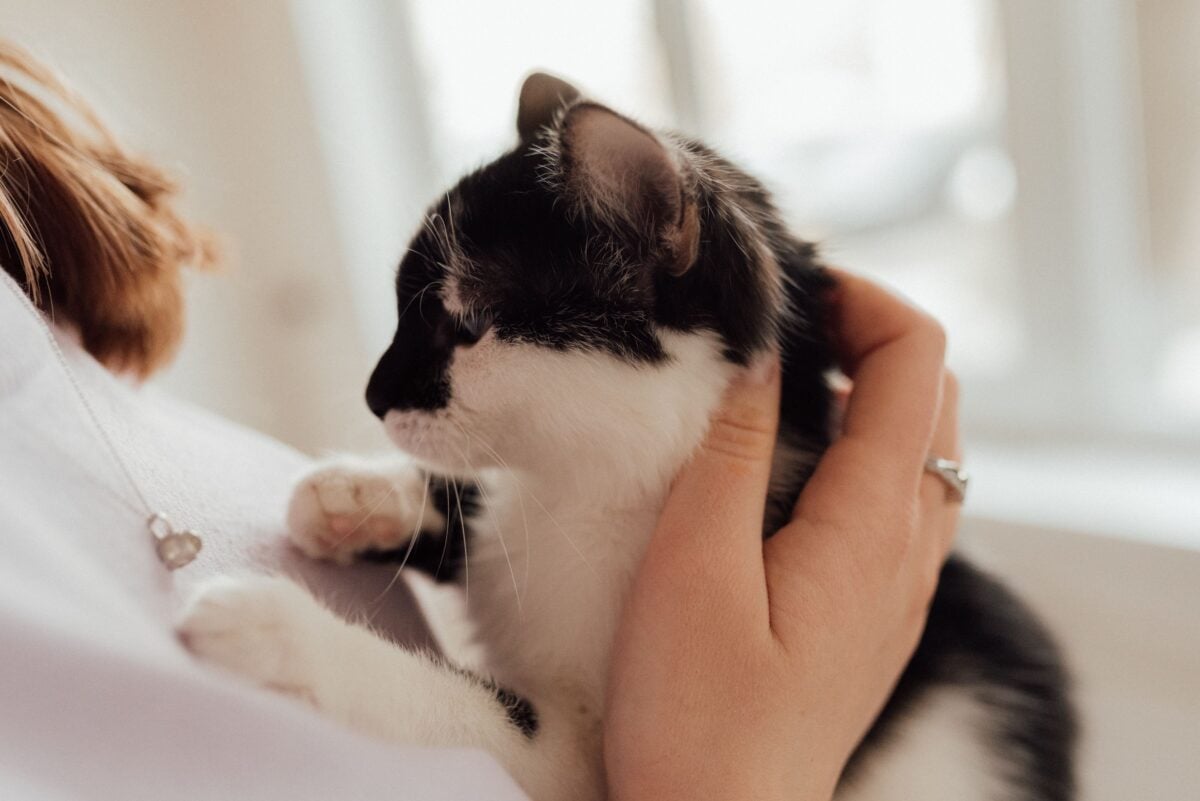
After A Few Days Or Weeks
If you’re worried about a vacation, there’s little reason to think a healthy cat will suddenly forget someone they’ve lived with for years.
Think about everything your cat has learned about you.
Your voice. Your smell. The way you scoop their food. Your favorite spot on the couch. The exact time you’re supposed to get out of bed, according to their very strict breakfast schedule.
A week or two away doesn’t automatically undo all those associations. Your cat might notice the disruption, though.
Some cats become more vocal, quieter, or extra affectionate when their owners return. Others seem completely unbothered.
The bigger concern during a short trip is usually keeping your cat comfortable, safe, and properly cared for. Our article on how long cats can be left alone explains what to arrange before you travel.
After Several Months
What if you’ve been away much longer? Maybe you went to college, moved overseas, were in the hospital, or left your cat with family while you sorted out a difficult living situation.
A cat who spent years living with you may still recognize familiar aspects of your voice, scent, and behavior when you return.
But we can’t promise that every cat will react the same way.
Imagine visiting the family cat after eight months away. You walk into your childhood bedroom, sit on the bed, and call their name.
They watch you from the doorway. A few moments pass. Then they approach, sniff your hand, and settle beside you in the same spot they always claimed.
It’s hard not to see something meaningful in that little reunion. It may reflect recognition and familiarity. But we can’t know exactly what the cat is remembering from their behavior alone.
After A Year Or Several Years
This is where the science becomes much less certain.
Researchers have shown that cats can recognize familiar humans and retain learned information. Still, we don’t have controlled evidence establishing how reliably they recognize former owners after separations lasting multiple years.
Recognition after that much time is possible, particularly when a cat shared a long, positive relationship with someone.
Personal reunion stories can be encouraging, but they aren’t proof that every cat retains those memories for the same length of time.
There’s also an encouraging thought here.
Your cat may build a close relationship with another caregiver during your absence without necessarily losing all familiarity with you.
Cats can develop bonds with more than one person. Affection isn’t a one-person membership program.
Five years is a long time to be apart from someone you love, especially when that someone has whiskers and four paws. In April 2026, a cat named KitKat was reunited with her owner after five years missing. Her story is a touching reminder of how remarkable these reunions can be, even if we can’t know exactly what a cat remembers.
Do Cats Remember Their Previous Owners?
Adopting an adult cat comes with a little mystery. You know the cat sitting in front of you now. But what about the years before you met?
Did they have a favorite person? A particular bedtime routine? Someone who always shared the sunny side of the couch?
Cats can retain learned associations from past experiences, so an adopted cat may remember familiar people, places, and routines from an earlier home.
What we don’t know is how they experience those memories or whether they consciously think about former owners in the way people remember someone they miss.
Sometimes, a newly adopted cat has habits that make you wonder about their past.
Maybe they seem fascinated by a particular kind of toy. Perhaps they react to a familiar-sounding voice or seem completely at ease with one person but cautious around another.
Those behaviors may reflect previous learning. They don’t necessarily reveal exactly what happened before the cat came to you.
And if you’re wondering whether your adopted cat can love you while still remembering someone else, absolutely don’t treat those possibilities as mutually exclusive.
Cats can learn to trust new people and build new attachments.
A cat doesn’t need to forget a previous home to feel safe and loved in a new one.
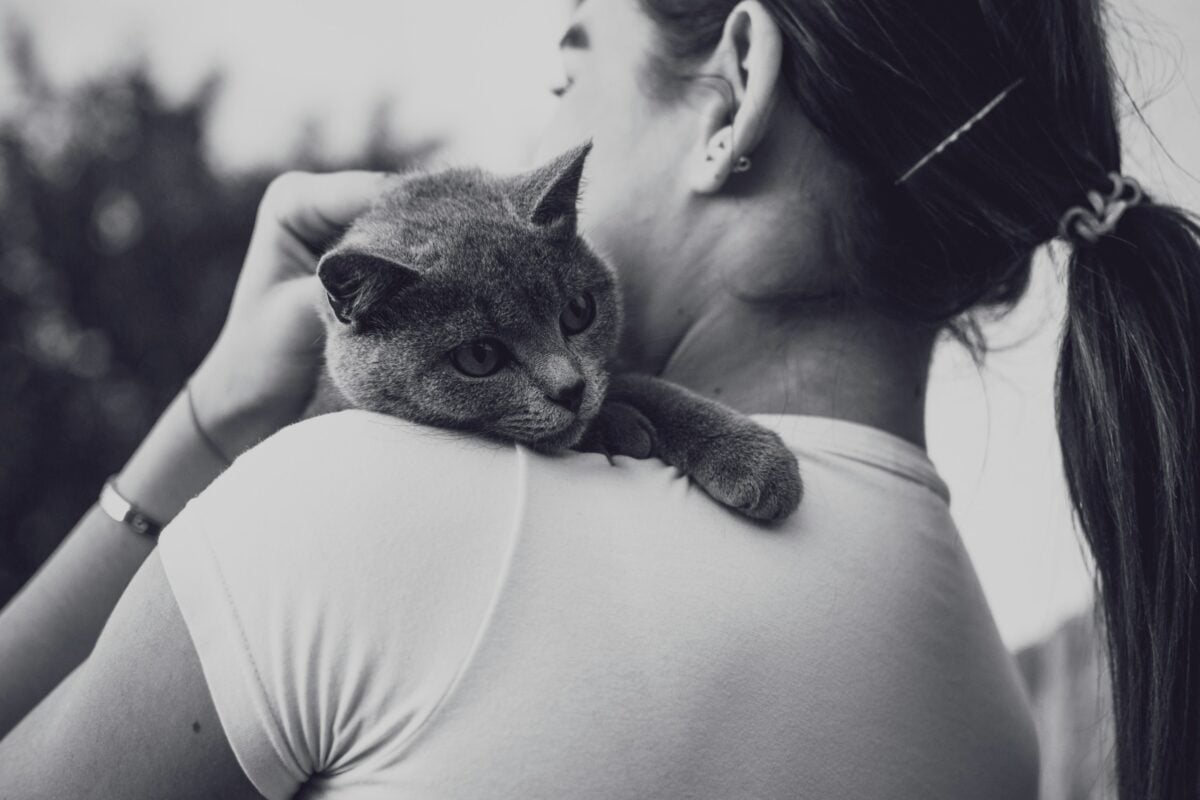
Some cats settle into a new home like they’ve owned the place for years. Others need a little more reassurance. Learning to spot the quiet ways your cat asks for reassurance can help you build trust without pushing them before they’re ready.
Do Cats Remember People Who Were Cruel To Them?
Unfortunately, unpleasant experiences can influence a cat’s behavior long after the original situation has ended.
A cat who repeatedly experienced frightening or rough handling may become wary of particular movements, voices, or situations. Fear can create learned associations that are difficult to overcome.
But there’s a catch. A cat who flinches when you reach toward them isn’t automatically remembering an abusive former owner. Pain, limited early socialization, unfamiliar surroundings, temperament, and ordinary fear can produce similar responses.
If you’ve adopted a nervous cat, focus less on solving every mystery about their past and more on helping them feel safe now. Offer predictable routines, quiet hiding places, gentle interactions, and plenty of opportunities to approach on their own terms.
Trust can take time to build.
And watching a frightened cat gradually become comfortable enough to sleep beside you? That’s one of the most rewarding parts of giving a rescue cat a home.
What Happens When You Reunite With Your Cat?
You’ve been away for weeks. You’ve checked every photo the pet sitter sent, asked for updates, and imagined that wonderful moment when you finally walk through the door.
In your head, it’s a beautiful reunion. Your cat comes running, leaps into your arms, and refuses to leave your side.
In reality?
They sniff your suitcase, glance at you, and head back to bed. Welcome home, apparently.
Cats can respond to reunions in all kinds of ways.
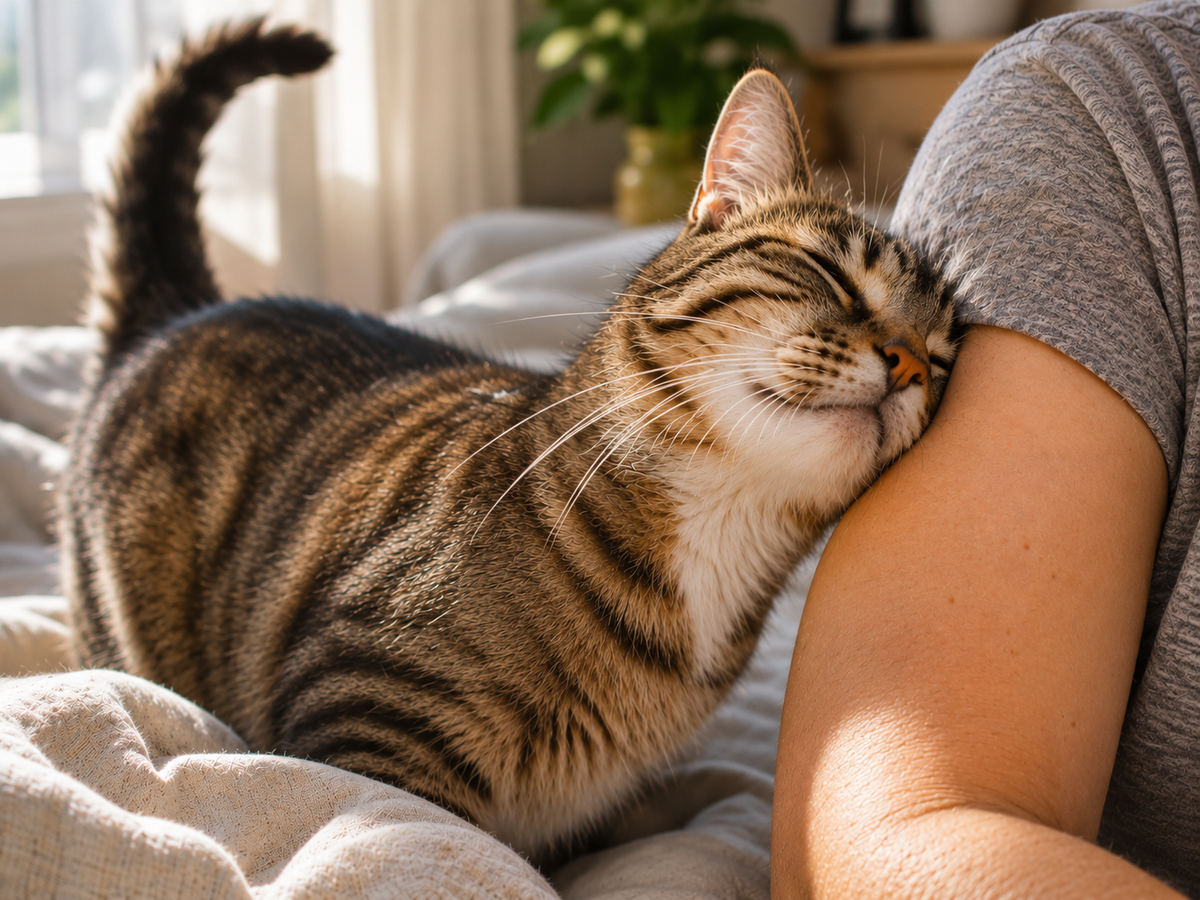
Some hurry over with upright tails, chirps, and enthusiastic head bumps. Others become extra clingy and follow their people from room to room. And some offer a brief acknowledgment before returning to important cat business.
Interestingly, a small 2017 study published in PLOS ONE found that cats purred and stretched more when reunited with their owners after four hours apart than after just 30 minutes.
The study involved only 14 cats and didn’t examine extended separations, but it suggests that the length of an owner’s absence can influence reunion behavior.
That doesn’t mean every cat will throw a welcome-home party. Some cats are much more expressive than others.
My Two Cats, Two Very Different Reunions
When I finally returned home after almost three weeks away, my two cats gave me very different welcomes.
Zaphod immediately planted himself on my feet, apparently determined to make sure I wasn’t going anywhere again. Twilight, on the other hand, hung back and gave me that look. You know the one. The kind that makes you wonder whether you should apologize or offer treats.
But her cool reception didn’t last. Once she’d had a little time, she became wonderfully cuddly, and we settled back into our familiar routine.
I’d spent weeks wondering whether they’d remember me. As it turned out, I got a little bit of everything: affection, suspicion, and a healthy dose of cat attitude.
And honestly, I wouldn’t expect anything less from those two.
Living with cats teaches you to develop a pretty thick skin. One minute you’re their favorite person, and the next they’re looking at you like you’ve personally offended their ancestors. It’s just one of the many things cat owners eventually learn to stop taking personally. And after Twilight’s welcome-home performance, I’d say I’ve earned my diploma.
Why Does My Cat Act Distant When I Return?
Few things sting quite like missing your cat terribly and getting the feline equivalent of “Oh. You.” But a distant greeting doesn’t necessarily mean your cat has forgotten you.
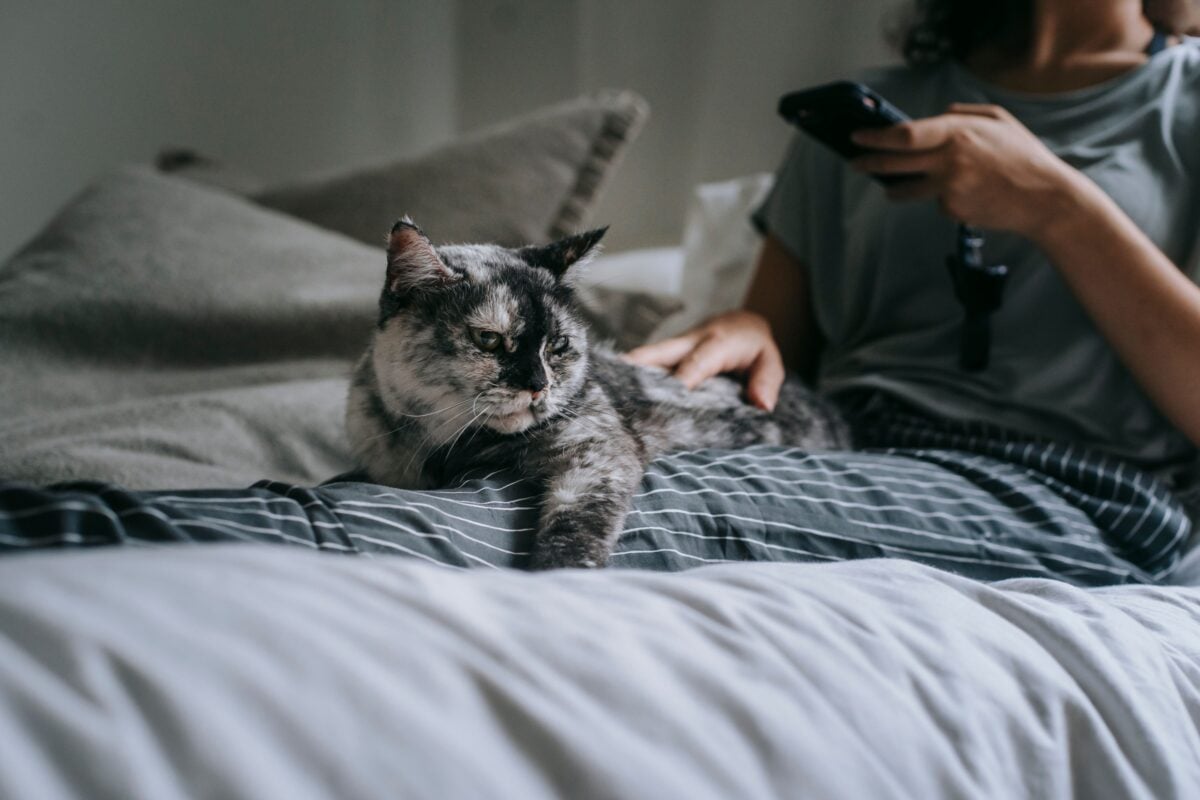
Several things could be happening:
- You smell different. Traveling, staying in a hospital, wearing unfamiliar clothes, or visiting other animals can introduce strange scents.
- Their routine changed. Your absence disrupted their familiar schedule. Your return is another adjustment.
- They’re stressed. Boarding, unfamiliar caregivers, travel, or household changes can leave some cats unsettled.
- They’re naturally reserved. Not every cat enjoys excited greetings, even with people they know well.
- They need a moment. Some cats prefer to investigate before deciding whether they want attention.
It’s tempting to joke that your cat is punishing you for leaving. But a cautious greeting isn’t evidence of revenge.
The best thing you can do is act like someone your cat already knows.
Speak in your normal voice. Settle down somewhere familiar. Offer a favorite toy or treat, and let your cat approach if they want to.
Don’t chase them around demanding hugs.
That’s rarely a winning strategy, even when you’ve missed them desperately.
Of course, sometimes it’s more than a little post-vacation attitude. Cats are surprisingly good at hiding stress, and the clues aren’t always obvious. If your cat seems unusually withdrawn, clingy, or out of sorts, these 10 signs that your cat is stressed but hiding it can help you spot changes worth paying attention to.
If your cat remains withdrawn, stops eating, develops litter-box problems, or shows other unusual behavior, contact your veterinarian. Medical problems and stress can look similar.
If your cat continues giving you the cold shoulder, it’s worth exploring why cats sometimes suddenly avoid their favorite people. Stress, discomfort, and changes at home can all play a role, and a little space may be exactly what your cat needs.
Cat Memory Myth: If Your Cat Ignores You, They’ve Forgotten You
That dramatic cold shoulder isn’t proof your cat has forgotten you. Some cats need time to adjust after you’ve been away, while others are simply too dignified to make a fuss. A familiar voice, scent, or routine may still mean something to them, even if their welcome-home greeting consists of one suspicious glance before returning to their nap.
Does Remembering You Mean Your Cat Missed You?
Here’s where cat memory gets even more interesting.
Recognizing someone and being emotionally attached to them aren’t the same thing.
Your cat might recognize a visitor who comes over every few months without feeling particularly close to them.
But the person who feeds them, plays with them, comforts them, and shares their daily life may represent something much more meaningful.
In 2019, researchers published a study in Current Biology showing that cats can develop attachment relationships with their human caregivers.
Many of the cats displayed behavior consistent with using their caregivers as a source of security in an unfamiliar environment. That’s a pretty significant finding for an animal so often described as independent and emotionally detached.
Still, attachment research doesn’t tell us exactly how a cat experiences missing someone. We can’t know whether your cat spends a quiet afternoon thinking about you the way you think about them. But we do know that familiar human relationships can play an important role in a cat’s life.
And the cat who follows you into the bathroom, curls up beside you every night, or insists on supervising your workday may be showing something beyond a simple interest in dinner.
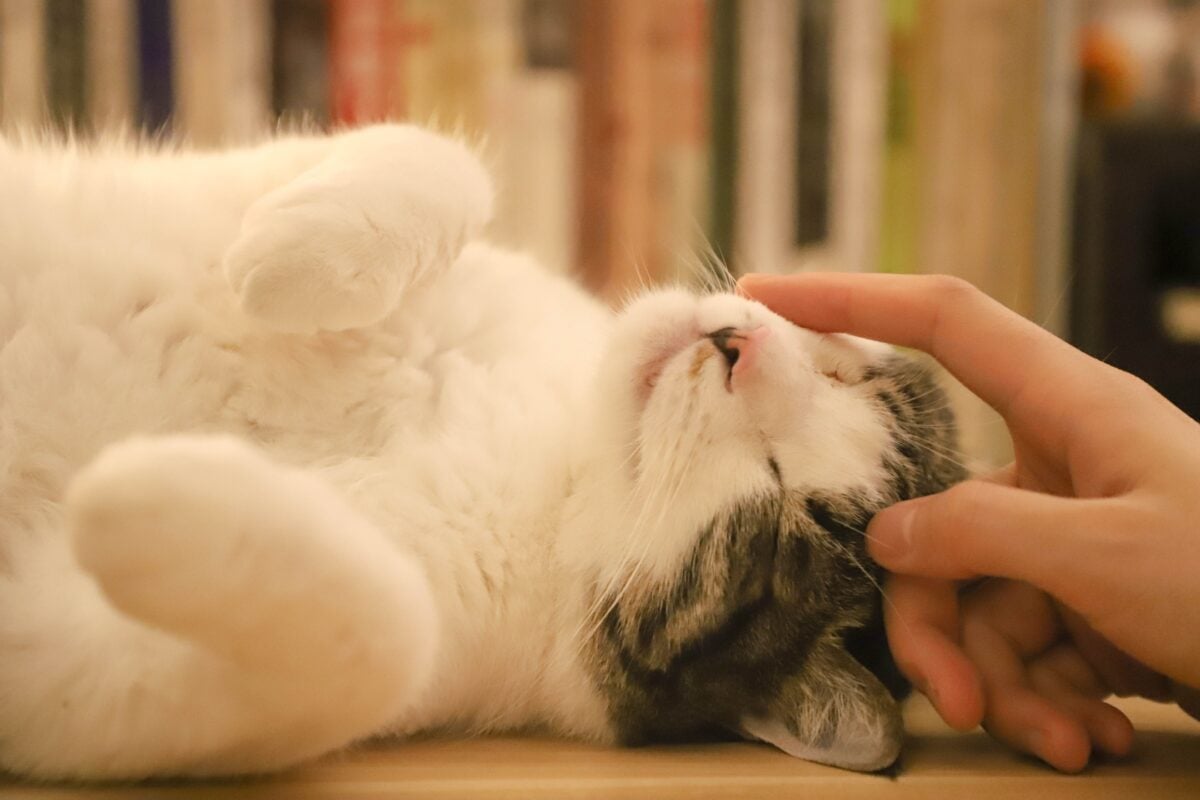
For more about these connections, explore signs your cat has imprinted on you and how to tell if your cat loves you. And what about those cats who suddenly become furry little shadows? There are several reasons a cat might become unusually clingy, from seeking comfort after a change in routine to health problems that deserve attention.
Does Age Affect A Cat’s Memory?
Older cats can experience changes in learning, memory, and awareness as they age. Some develop feline cognitive dysfunction, a condition associated with changes in brain function and behavior.
Possible signs include confusion, wandering, altered sleeping habits, increased nighttime vocalization, and changes in how they interact with familiar people.
But don’t assume an older cat who doesn’t greet you enthusiastically has forgotten you. They might have hearing loss, vision changes, arthritis, or another health problem affecting their response.
For example, a seventeen-year-old cat may recognize your voice but have trouble hearing it from across the room. Or they may be uncomfortable jumping off the bed to greet you.
Sudden confusion or behavior changes deserve a veterinary examination rather than being dismissed as old age. Our article about why older cats suddenly meow so much explores some of the health and cognitive changes worth watching for. Growing older doesn’t automatically erase a cat’s familiar relationships.
5 Signs Your Cat May Recognize You After Time Apart
There’s no foolproof test you can perform during a reunion to prove your cat remembers you.
Still, a few behaviors may suggest familiarity, particularly when they resemble how your cat interacted with you before the separation.
- They respond to your voice. Their ears swivel, their head turns, or they become more attentive when you speak.
- They approach and investigate your scent. They sniff your hands or clothing, then seem comfortable moving closer.
- They greet you with familiar affection. Head bumps, cheek rubs, an upright tail, or friendly vocalizations may appear.
- They return to old routines. Your cat settles into their usual spot beside you or resumes a favorite shared habit.
- They choose to stay nearby. Relaxed body language, resting close to you, or following you around may suggest they’re comfortable with your presence.
Remember, these behaviors aren’t proof of a specific memory, and their absence doesn’t mean your cat has forgotten you.
A shy cat may need more time to approach. A confident one may act as though you never left.
Both deserve the chance to reconnect at their own pace.
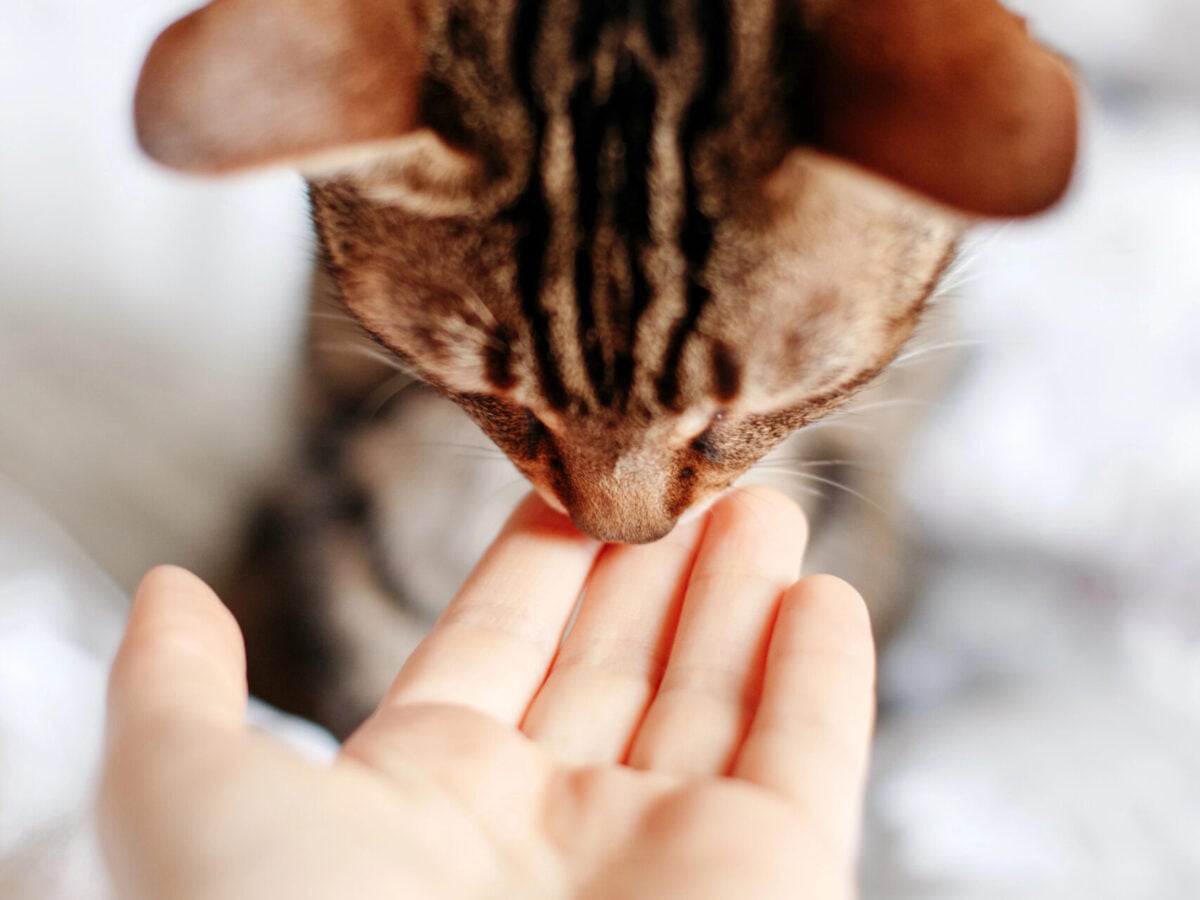
Of course, the rest of your cat’s body language matters, too. Researchers have discovered that cats use a surprising range of facial expressions, and learning to recognize those subtle cues can help you understand when your cat feels comfortable, curious, or unsure.
Frequently Asked Questions About Cat Memory
Cats have a way of keeping us guessing, especially when it comes to what goes on in those furry little heads. And just when you think you’ve figured them out, they do something that leaves you scratching yours.
Still curious? We’ve rounded up a few more questions cat owners have about feline memory.
And if your burning question isn’t answered here, drop it in the comments! We love a good cat mystery, especially one involving a furry little roommate who refuses to explain themselves.
Can A Cat Remember Someone After Five Years?
It’s possible, especially if they shared a strong relationship over a long period. However, researchers haven’t established whether cats reliably recognize former caregivers after five years apart. Reunion stories are interesting, but they can’t tell us what every cat will remember.
Will My Cat Recognize Me If I Look Or Smell Different?
They may. Cats use multiple clues to recognize familiar people, so a haircut, new clothes, or unfamiliar scent doesn’t automatically make you a stranger. Your cat may investigate you more carefully at first, especially if you’ve been around other animals.
Can Cats Forget Their Owners But Remember Their Homes?
Cats can learn associations with both people and familiar environments. We don’t know how long every individual memory lasts or whether memories of places consistently outlast memories of people. Moving to a new home may affect a cat’s behavior because so many familiar environmental cues change at once.
Do Cats Remember Their Owners Better Than Other People?
Cats have more opportunities to become familiar with someone they spend time with every day. Repeated interactions, predictable routines, and past experiences can all contribute to learning. But research hasn’t established a simple ranking of how long cats remember owners compared with other familiar people.
Your Cat May Remember More Than They Let On
We may never know exactly how long cats remember their owners, but one thing is clear: the people in their lives can leave a lasting impression.
And if your cat greets you after a long absence with a suspicious stare instead of a head bump, don’t take it personally. Sometimes they just need a minute. Or a snack. Preferably both.
Have you come home to a clingy cuddlebug, a cold-shoulder diva, or a chatty little welcome committee? Maybe a cat recognized you after years apart?
Tell us your reunion story in the comments. We’d love to hear how your cat reacted!
Before You Go: There’s More To Your Cat Than Meets The Eye
Cats have a funny way of making us feel like the center of their universe one minute and completely unnecessary the next. But there’s so much more going on behind those whiskers than they let on.
Ever wondered if cats get lonely when we’re away, or whether your furry little shadow has imprinted on you? From slow blinks to head bumps and those mysterious middle-of-the-night visits, there are plenty of ways cats show us they love us.
And if you’ve ever wondered how cats choose their favorite person, you might be surprised by what earns someone that coveted title. Spoiler: It’s not always the person filling the food bowl.
Life with cats is never dull. We’re just the staff, and they’re kind enough to let us think we’re family.