When you purchase through links on our site, we may earn a commission at no extra cost to you. Learn more.
Our adorable little repeat offenders have a remarkable talent for making normal cat behavior look suspiciously premeditated.
Table of Contents
They knock our stuff onto the floor, scale surfaces we’ve declared off-limits, wake us at ungodly hours, and occasionally make prolonged eye contact while doing the exact thing we just told them not to do.
Naturally, we conclude that our cats are being stubborn, dramatic, spiteful, or simply enjoying our rapidly deteriorating mental state.
And honestly? Sometimes the evidence is pretty damning.
Want our human-written content to rank above AI-generated garbage? Help us out by clicking this button!
But before we start building a case against them, a surprising amount of feline “naughtiness” makes perfect sense once we know what our cats are actually trying to accomplish.
So before we convict them, let’s hear our cat’s side of the story.
12 Things Cats Do That Aren’t As Naughty As They Look
Some of these behaviors are destructive. Others are annoying, baffling, or so perfectly timed that it’s difficult not to take them personally. But each one makes much more sense when we stop focusing, licensed via what our cat did and start focusing on what they were trying to accomplish.
Here are 12 familiar offenses that may deserve a second look.
1. Scratching The Furniture You Specifically Asked Them Not To Scratch
Few things test our devotion to cats quite like watching one ignore the scratching post we carefully selected and sink their claws into the sofa six inches away. Apparently, our upholstery has features we fail to appreciate.
But scratching furniture isn’t random destruction. It serves several perfectly normal purposes:
- Claw maintenance: Scratching helps remove old outer claw layers.
- A full-body stretch: That long pull against a sturdy surface lets cats stretch their backs, shoulders, legs, and paws.
- Visual marking: Those claw marks leave an obvious sign that a cat has been there.
- Scent marking: Glands around the paws can leave chemical signals behind as they scratch.

And sometimes, the location is exactly why the sofa keeps winning.
Cats often scratch in places that matter to them, including areas where they spend time, move through regularly, or interact with us.
A beautiful scratching post tucked into a corner they rarely visit may be less appealing than the sturdy sofa arm sitting right in the middle of family life.
Save Your Furniture
If your cat has already nominated a piece of furniture, put an appropriate scratcher right beside the problem area rather than wherever it looks nicest. Pay attention to their preferences, too.
Some cats want a tall vertical surface they can really stretch against, while others prefer horizontal scratchers. Texture can also make a difference.
Once they consistently use the new option, you can gradually move it somewhere that works better for the humans, too.
2. Knocking Things Off Tables, Shelves, And Counters
You can give a cat an entire basket of toys, and somehow the bottle cap on the coffee table remains the evening’s hottest entertainment. One paw reaches out, the object moves, another tap sends it closer to the edge, and eventually gravity gets invited to participate.
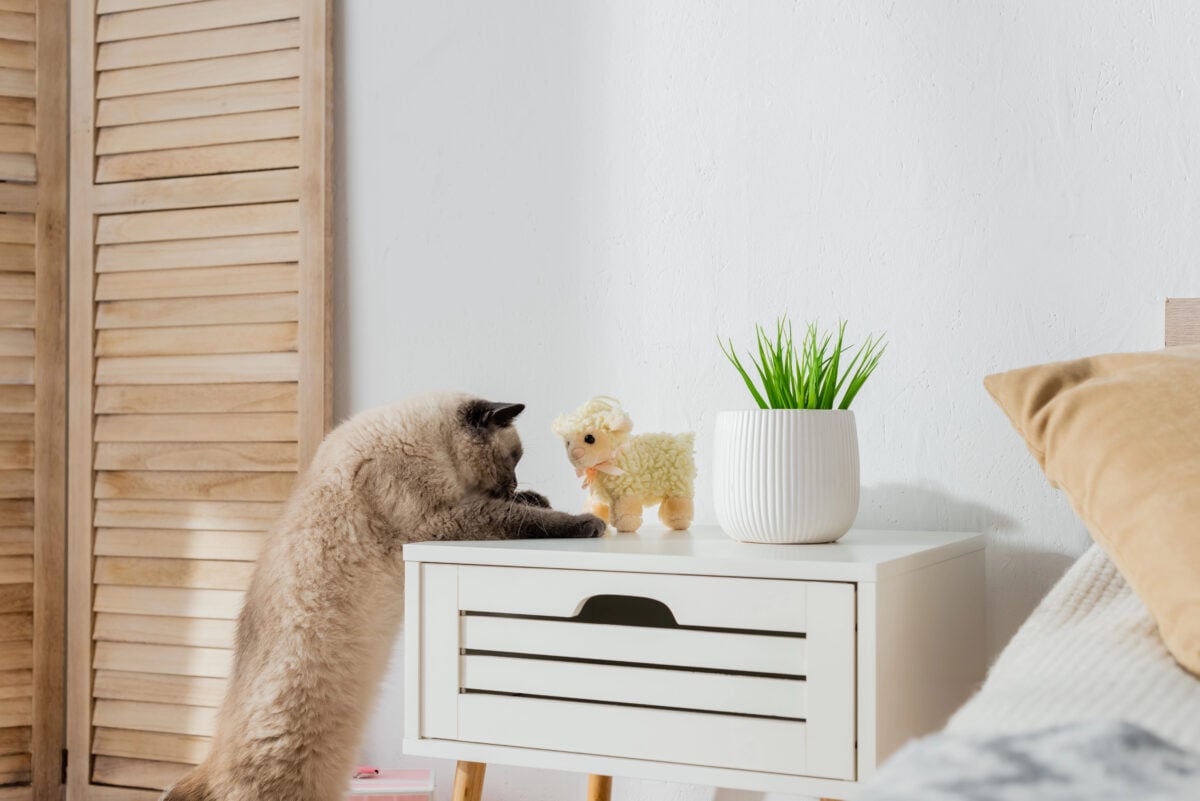
To us, this can look like casual destruction. To a cat, batting at objects is a highly effective way to investigate them. Cats use their paws to test what things do, and small objects offer particularly satisfying results:
- They move: A little tap can make something roll, slide, spin, or wobble.
- They make noise: Clattering or bouncing objects provide instant feedback.
- They can resemble prey: Small, unpredictable movements can trigger stalking, batting, and pouncing behaviors.
- They keep changing: Every swat can produce a slightly different result, which makes the object worth investigating again.
Sometimes we make the activity even more interesting. If knocking something down reliably brings us over to retrieve it, talk to our cat, or put the object back, our reaction can become an added bonus. But plenty of cats are perfectly happy conducting these experiments without an audience.
Give Those Paws Something Better To Do
Cats who love manipulating objects may enjoy small cat-safe toys, balls, track toys, puzzle toys, or interactive play that gives them plenty of things they’re actually allowed to bat around.
For everything else, prevention is our friend. Move fragile or dangerous objects away from favorite perches and edges, especially if your cat has already demonstrated a recurring interest in them.
Sometimes the simplest solution is accepting that a breakable object displayed six inches from a cat is less décor and more an unresolved situation.
3. Jumping, licensed via Counters Again…And Again…And Again
We lift our cat off the counter. Our cat jumps back onto the counter. We lift our cat off again. Then, the cat begins to suspect we’ve invented a repetitive new game with disappointingly unclear rules.
From our perspective, the rule couldn’t be clearer. From theirs, the kitchen counter has a lot going for it.
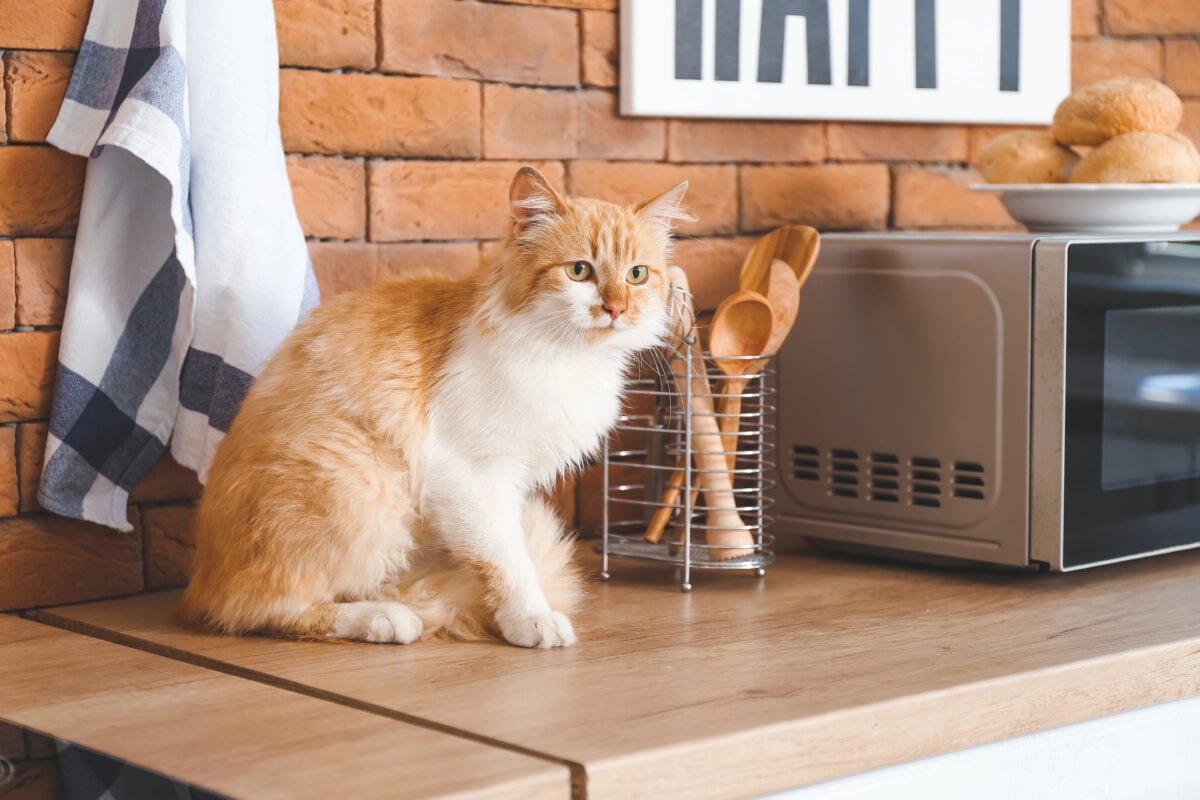
Cats are natural climbers, and elevated spaces let them survey what’s happening around them from a secure vantage point. But kitchen counters come with additional perks:
- Interesting smells: Food often appears here, even when none is currently sitting out.
- A great view: Counters can offer a better view of the room, windows, sinks, and whatever we’re doing.
- Human activity: Kitchens tend to be busy places, making the counter prime observation territory.
- Potential rewards: A crumb, dirty plate, dripping faucet, or abandoned morsel can make checking the counter worth repeating.
Simply putting our cat back on the floor doesn’t make any of those attractions disappear. If the counter remains the most rewarding elevated spot in the room, they’ll keep checking it.
Give Them A Better View
Start by removing the easy rewards: wipe down food-prep surfaces, don’t leave tempting food or dirty dishes accessible, and avoid feeding treats from the counter.
Then look at what the counter provides that your cat may be missing elsewhere.
A sturdy cat tree, window perch, wall shelf, or other approved elevated spot near the action can give them somewhere to supervise us without planting themselves beside tonight’s dinner.
The better the alternative competes with the counter, the less we’re relying on an endless human-powered elevator back to the floor.
4. Ignoring You When You Call Their Name
You call your cat. Nothing. You call again, louder. Still nothing.
Ten minutes later, you’re opening closets, looking under beds, checking rooms you’ve already checked twice, and wondering how an animal that screams when a bathroom door is closed can become completely undetectable when you actually need to find them.
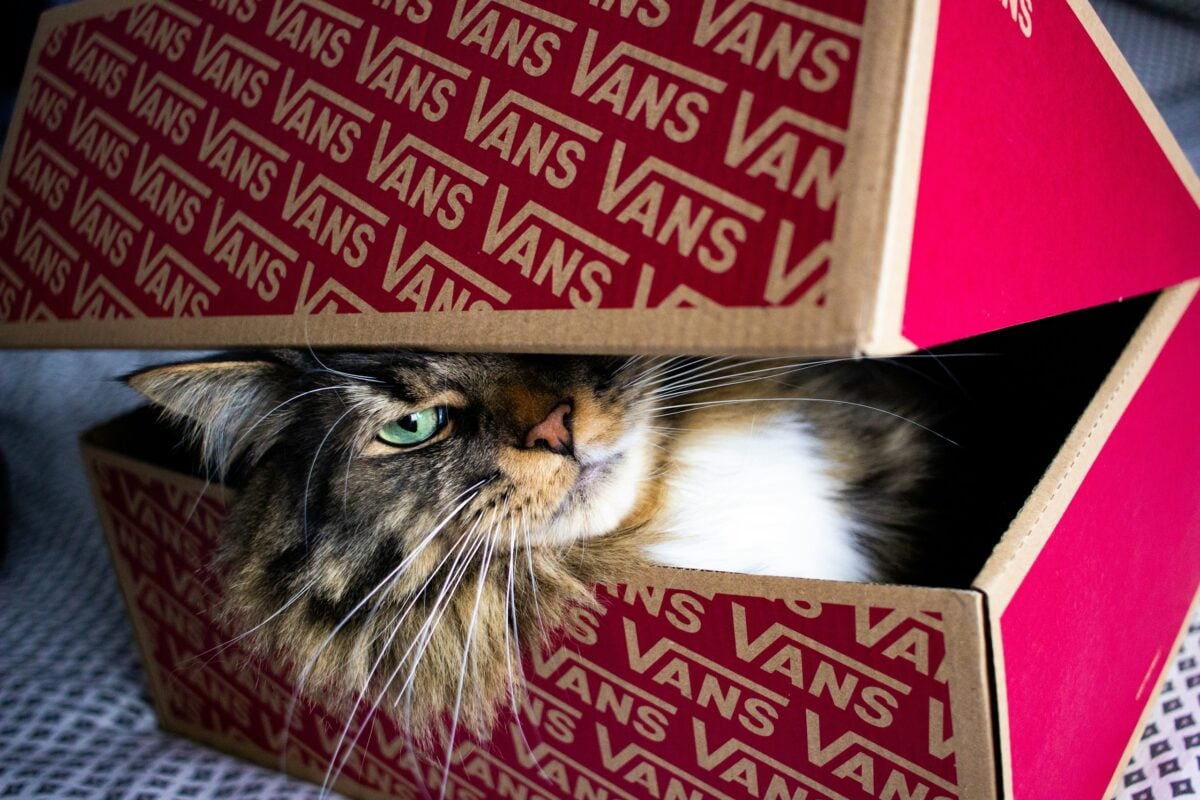
Eventually, you discover them asleep behind the curtains or folded into a box roughly half their body size. They were home. They were fine. And yes, there’s a very good chance they heard you.
Research suggests cats can distinguish their own names from other words and recognize familiar human voices.
But recognizing that we’re calling them isn’t the same as feeling compelled to come running. Unlike dogs, cats haven’t undergone the same long history of selection for working cooperatively with humans and responding to our cues.
Hiding itself can also be perfectly normal. Cats often seek enclosed, secluded spaces where they can rest without interruption, so a comfortable cat halfway through an excellent closet nap may simply have very little motivation to announce their location.
Make Coming To You Worth It
If you want your cat to reliably come when called, treat it as a behavior to teach rather than something their name should automatically accomplish.
Start somewhere easy and reward them immediately when they come to you with something they genuinely value — a favorite treat, play, or affection if that’s their thing. Keep the experience positive and avoid calling them only when something unpleasant is about to happen.
5. Giving You A Little Bite In The Middle Of Petting
One minute, your cat is purring while you scratch their back. The next, your hand has apparently violated a term of the agreement you were never shown.
A quick nip during petting can feel wildly unprovoked, especially when your cat seemed to be enjoying the attention seconds earlier. But cats can reach a point where continued touch becomes overstimulating, and biting may be their way of saying they’ve had enough.
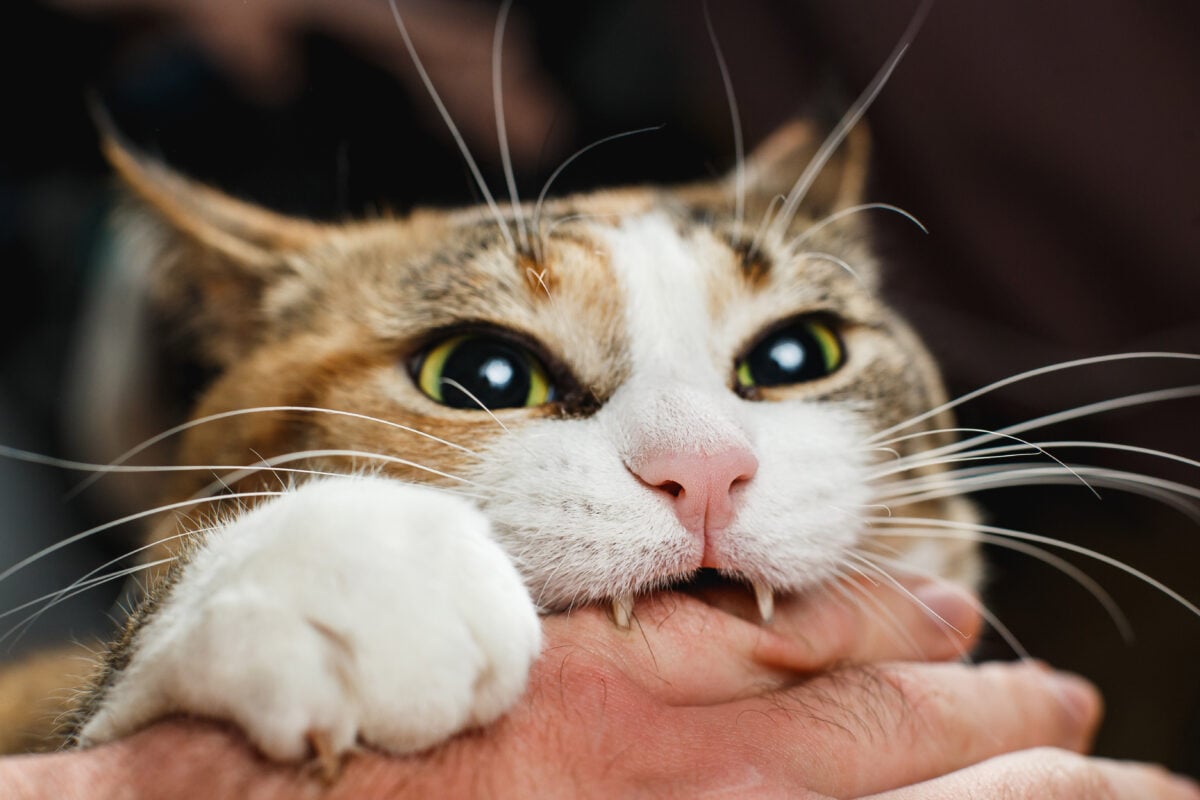
The tricky part is that the bite may not have been the first message. Some cats give much subtler signals beforehand:
- The tail starts twitching or thumping.
- The ears shift back or sideways.
- The skin along the back ripples or twitches.
- The body becomes more tense.
- The cat turns their head toward your hand.
- Purring or relaxed behavior stops.
A gentle bite can also happen during play or excited social interaction, so context matters more than assigning every nip one universal meaning.
Learn Their Earlier Exit Signs
Pay attention to how your individual cat behaves just before they bite. If the same tail flick, head turn, or body tension appears repeatedly, that’s your cue to stop petting before your cat needs to make the message considerably less subtle.
Some cats also prefer shorter petting sessions or being touched around the cheeks, chin, and head rather than along more sensitive areas of the body.
If biting is new, suddenly more intense, or consistently happens when you touch a particular area, pain or discomfort may be involved and deserves a conversation with your veterinarian.
6. Sitting, licensed via The Exact Thing You’re Trying To Use
A laptop can sit untouched for hours. A book can remain completely uninteresting on the coffee table. Paperwork may as well not exist. Then we start using it.
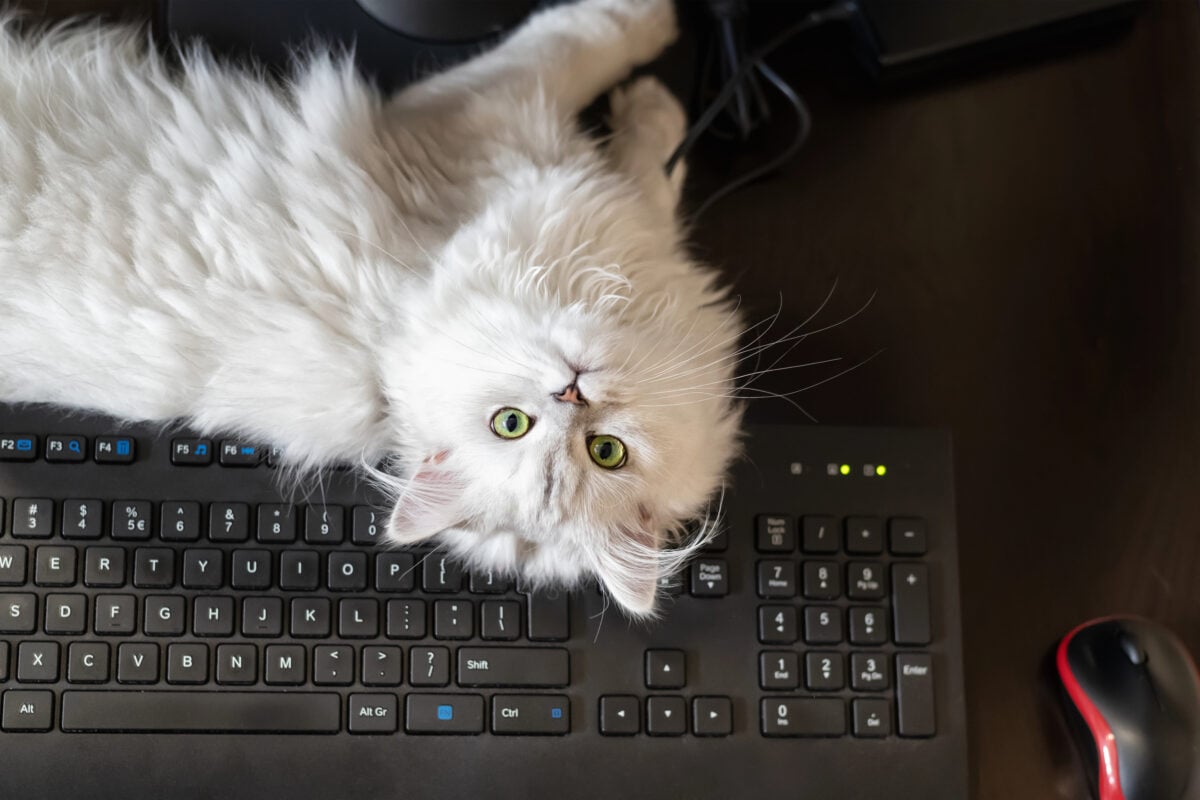
Suddenly, our cat must sit directly on the keyboard, occupy the open page, or lower themselves onto the one document we are actively attempting to read. There may be several acres of perfectly good furniture nearby. Those are irrelevant.
Part of the appeal is practical. The objects we’re using often come with things cats like:
- Warmth: Laptops and other electronics can produce an inviting warm surface.
- Our scent: Frequently handled belongings smell familiar.
- Novelty: Papers, books, bags, and other objects that appear or move around can be worth investigating.
- Proximity: Sitting on what we’re using puts a cat conveniently close to us.
- Our attention: If we’re intensely focused on something, inserting themselves between us and that object is extremely effective at changing the situation.
That doesn’t mean your cat is sitting on your laptop thinking, You have neglected me for 11 minutes and must now suffer. But they can learn that occupying certain objects reliably gets our attention.
Create A Better Place To Land
If this happens regularly while you work or read, try giving your cat an appealing spot close to you rather than repeatedly relocating them across the room.
A bed, folded blanket, box, perch, or other favorite resting place beside your workspace lets them stay near the action. For cats drawn to warmth, a safely warmed cat bed may be especially persuasive.
Of course, none of this guarantees they won’t still choose the laptop. We are competing with a warm rectangle that contains both our scent and our undivided attention.
7. Trying To Steal Your Food Like They Haven’t Eaten In Weeks
Your cat has eaten dinner. You know this because you personally served it about nine minutes ago. And yet the moment you sit down with your own food, a small furry face appears beside the plate looking as though you’ve been withholding nourishment since spring.
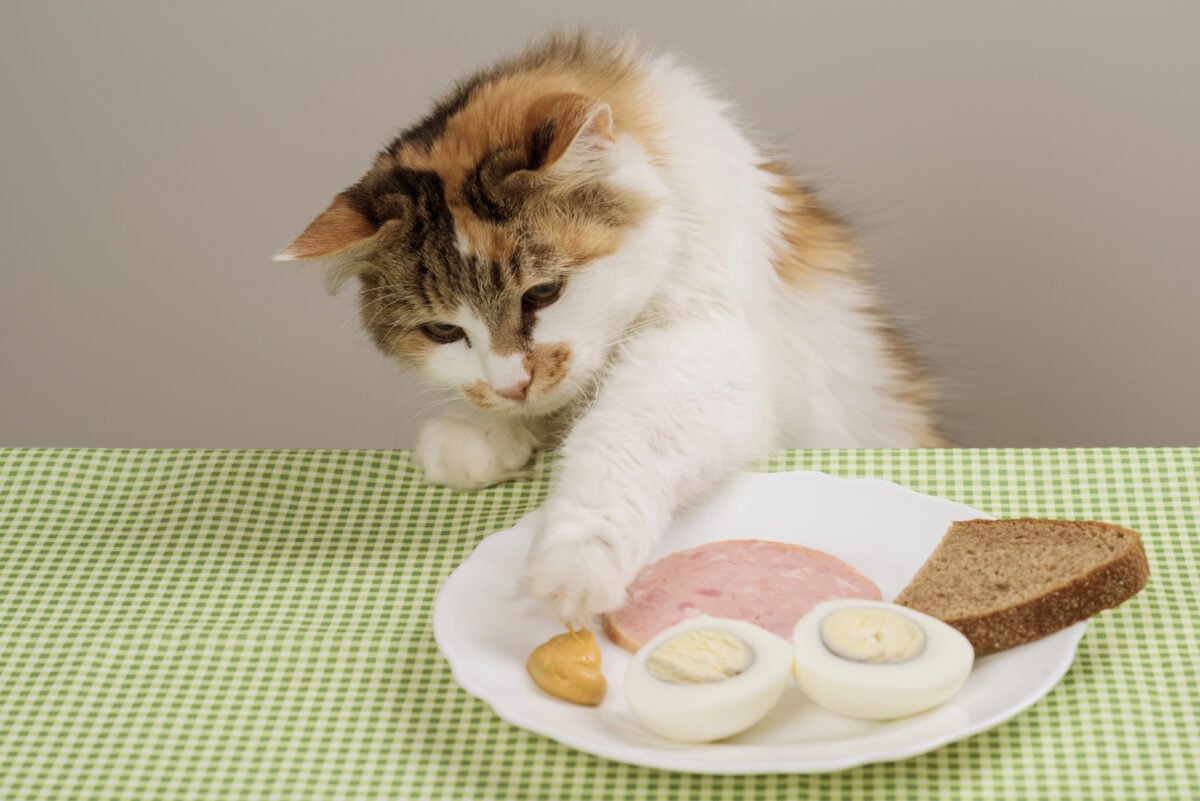
Food is valuable, smells interesting, and is absolutely worth investigating from a cat’s perspective. But our cats are also very good at learning which food-seeking strategies have worked before.
Maybe someone once slipped them a piece of chicken from the table. Maybe licking the abandoned plate occasionally produces a jackpot. Maybe persistent hovering eventually makes one of us cave.
The problem is that occasional success can make a behavior remarkably persistent. If begging or plate-raiding works sometimes, there’s good reason to keep trying.
Stop Paying The Snack Tax
Consistency matters. If you don’t want your cat begging at the table or investigating your plate, avoid feeding them directly from your own eating area, even when they’re deploying their most convincing famine-victim expression.
It can also help to give them something else to do while you eat, such as:
- Offering their regular meal around the same time.
- Using a food puzzle or appropriate treat activity.
- Providing an appealing perch or resting spot away from the table.
A cat who has always been enthusiastic about food is one thing. A sudden, dramatic increase in hunger is different and can sometimes accompany medical problems, so mention it to your veterinarian.
8. Waking You Up At An Hour That Should Not Legally Exist
There’s a particular kind of betrayal in opening your eyes at 4:52 a.m. and finding a cat six inches from your face who looks refreshed, focused, and ready to discuss breakfast.
Cats don’t necessarily share our enthusiasm for eight uninterrupted hours of sleep. They’re often particularly active around dawn and dusk, and our indoor cats can also develop activity patterns around household routines.
Then there’s the uncomfortable possibility that we helped create the problem.
Imagine the sequence:
- Cat meows at 5:00 a.m.
- We try to ignore it.
- Cat escalates to walking across us, batting objects, or testing whether human eyelids are load-bearing.
- We eventually get up.
- Breakfast appears.
From our cat’s perspective, persistence worked beautifully.
Reclaim Your Morning
If breakfast is the main event, an automatic feeder can help break the connection between “wake human” and “food appears.” Gradually adjusting feeding times may also help, rather than abruptly expecting a determined early riser to abandon a well-established routine.
An active play session followed by food later in the evening may also help some cats settle into a routine that works better for the household.
Most importantly, try not to occasionally reward the behavior you’re trying to eliminate. Cats are excellent students when the lesson is “keep escalating until the human folds.”
9. Ambushing Your Ankles From Behind The Furniture
You’re walking through your own home, minding your own business, when something furry launches from beneath a chair and latches onto your lower leg. Congratulations. You were today’s gazelle.
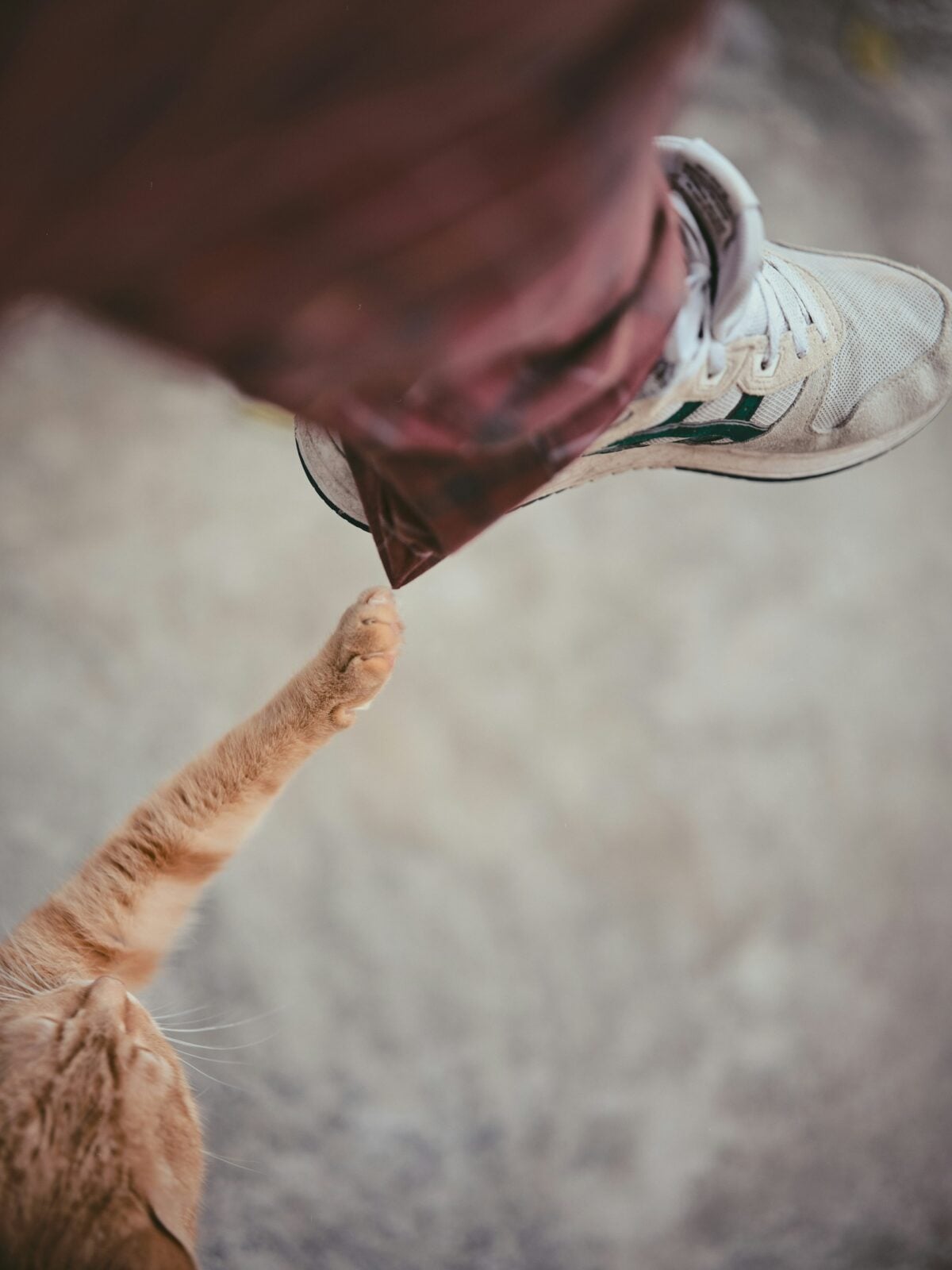
Stalking, chasing, pouncing, grabbing, and biting are all part of normal feline predatory behavior, and play gives cats a chance to practice many of those same movements.
Unfortunately, our moving feet and ankles can make remarkably convincing targets, particularly for kittens and energetic cats.
They have several qualities working against us:
- They move unpredictably.
- They disappear around corners and furniture.
- They react when pounced on.
- They’re conveniently available throughout the day.
Cats that don’t have enough appropriate opportunities to stalk and chase may be especially tempted to recruit human body parts.
Retire Your Ankles From Active Duty
Use interactive toys that let your cat stalk, chase, pounce, and grab something that isn’t attached to you. Wand-style toys can be especially useful because they create movement away from our hands and feet.
Avoid deliberately wrestling with kittens using fingers or toes, adorable as it may seem when they’re tiny. A game that’s charming with a two-pound kitten becomes considerably less delightful once that kitten has grown into an adult cat with upgraded equipment.
10. Shredding Toilet Paper Like It Personally Offended Them
Some cats can walk past a roll of toilet paper every day without incident.
Others see a rotating cylinder that produces an apparently infinite supply of shreddable material and understand immediately what must be done.
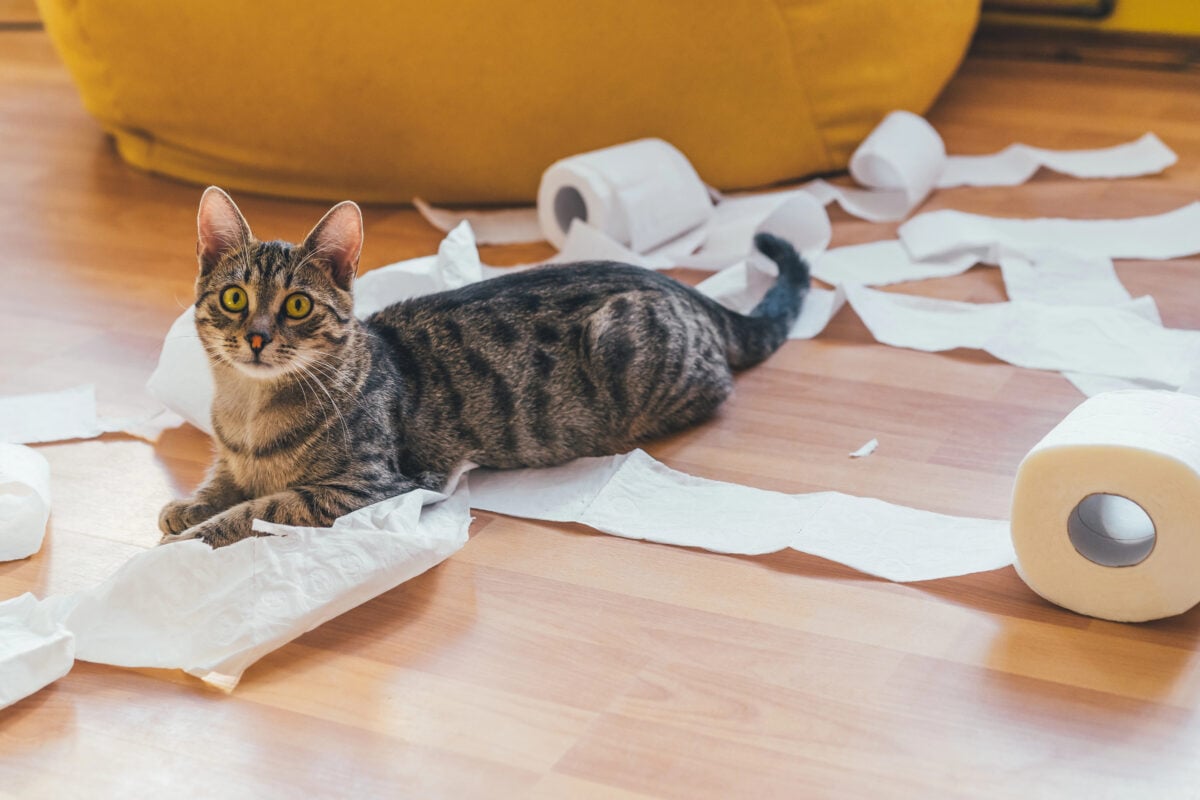
Toilet paper offers a surprisingly impressive entertainment package. It moves when pawed, spins when pulled, tears easily, changes shape, and produces more material as the game continues. Paper towels, tissues, cardboard, and loose paper can hold similar appeal.
For a cat interested in pawing, grabbing, scratching, tearing, or simply investigating how objects respond, the aftermath we call destruction may have been extremely satisfying.
Protect The Paper Supply
If your cat has discovered the recreational possibilities of toilet paper, physical prevention is often easier than trying to convince them it’s suddenly boring. Close the bathroom door, use a covered holder, or otherwise make favorite targets inaccessible.
Then give them appropriate things they can grab, scratch, kick, and manipulate, such as cardboard scratchers, sturdy cat-safe toys, and interactive toys that move when pawed.
One important distinction: shredding isn’t the same as eating. Repeatedly chewing or swallowing paper, plastic, fabric, or other non-food materials can be a different issue and deserves veterinary attention.
11. Suddenly Sprinting Through The House Like Something Is Chasing Them
Everything is peaceful. Your cat is lounging on the rug looking as though movement is beneath them.
Then, without warning, they achieve highway speed. Around the sofa. Down the hall. Up the stairs. Back down the stairs. Brief wall-assisted turn. Gone.
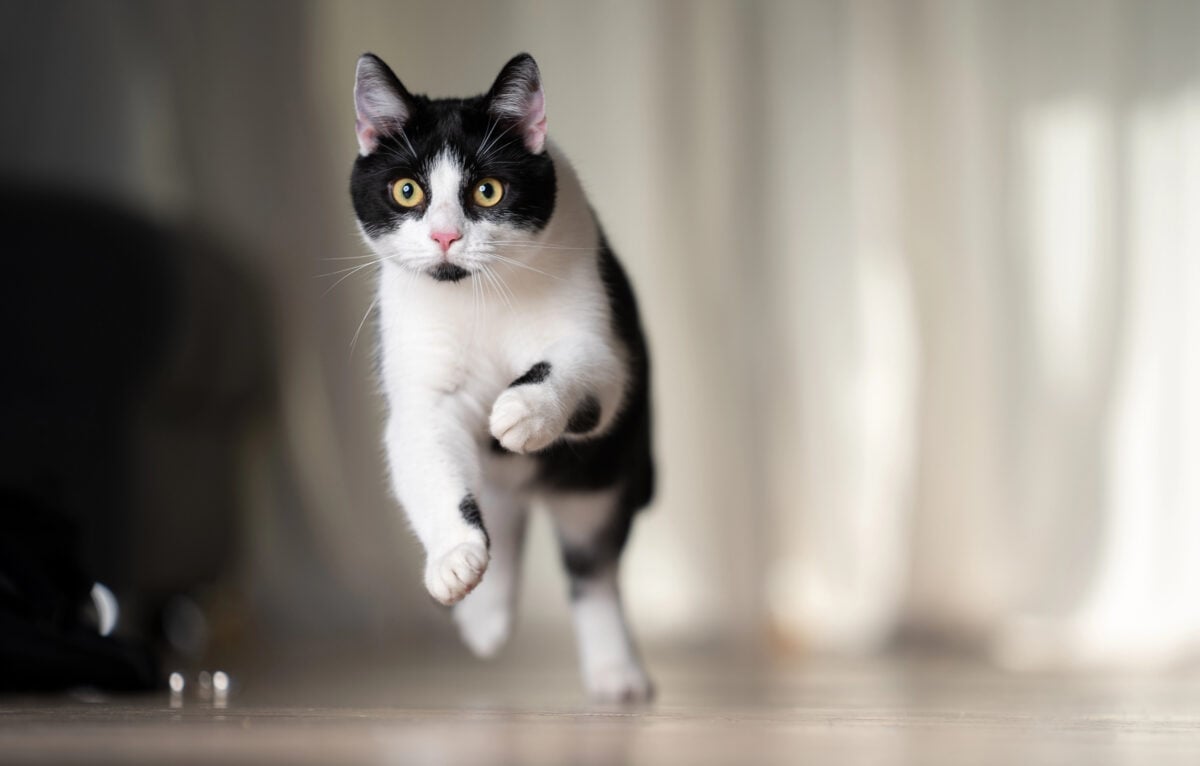
These sudden bursts of activity — our beloved zoomies — can be a perfectly normal way for cats to expend energy. Cats naturally alternate between rest and short bursts of intense activity, and indoor cats may unleash that energy in spectacularly concentrated doses.
You may notice zoomies:
- After a long period of resting
- Around dawn or dusk, when many cats naturally become more active
- During or after an exciting play session
- After using the litter box, although there isn’t one proven explanation for why some cats do this
Young cats and kittens may turn the entire house into a racetrack more often, but plenty of adult cats still appreciate the occasional unsanctioned time trial.
Give The Zoom Somewhere To Go
Regular interactive play gives cats appropriate opportunities to run, stalk, chase, leap, and pounce rather than expecting them to manufacture all of their own entertainment.
Try short play sessions at times when your cat tends to become especially active. Cat trees, tunnels, toys, and safe climbing opportunities can also make the indoor environment considerably more interesting.
If your cat’s frantic activity is genuinely new or comes with distress, disorientation, excessive vocalization, or other behavioral changes, that’s different from their usual evening lap around the sofa.
12. Demanding That You Open A Door They Didn’t Care About Until You Closed It
The door was open all afternoon. Your cat walked past it repeatedly without so much as a glance. Then you close it.
Suddenly, whatever lies beyond that door is of urgent national importance.
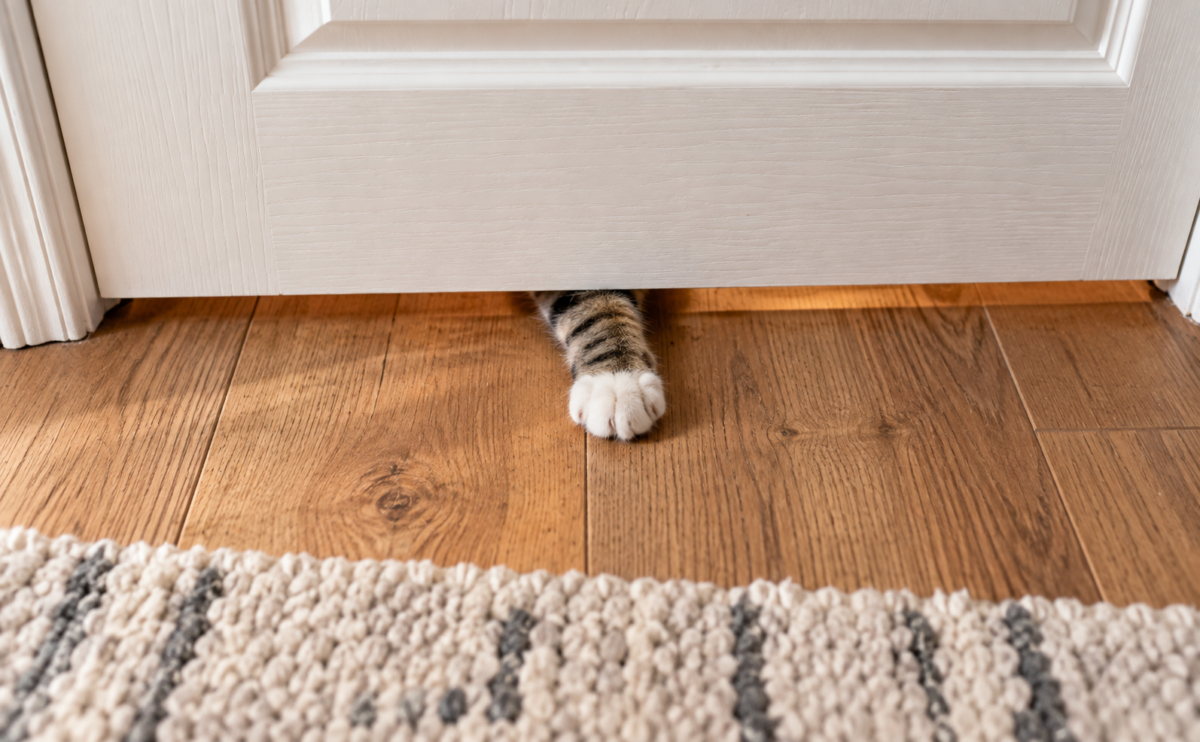
There’s pawing underneath it. Possibly scratching. Perhaps a formal complaint delivered at increasing volume. You open the door, and your cat may not even enter the room, which somehow makes the entire episode more insulting.
But a closed door represents something significant from a cat’s perspective: a sudden change in access to their environment.
Cats pay close attention to familiar spaces and routines. Closing a door can cut them off from:
- A favorite resting or observation spot
- Interesting sounds and smells
- A person they want access to
- Part of their usual route through the house
- Resources or spaces they normally investigate
Sometimes, the newly restricted access itself makes the door interesting. Yesterday’s boring spare bedroom has become today’s forbidden frontier.
Why Do Cats Do The Forbidden Thing While Looking Right At You?
One complication in our cats’ defense we need to address: eye contact.
After 12 perfectly reasonable explanations for our cats’ alleged misbehavior, some of you are probably thinking: Fine. Then explain why mine looks directly at me before doing the exact thing I’ve asked them not to do.

You know the look. That brief glance in your direction right before they proceed anyway can make it awfully hard to believe they don’t know exactly what they’re doing.
And in one sense, they probably do. Cats are very good at learning patterns, including patterns involving us. They can learn that jumping onto a particular surface makes us get up, scratching a certain object makes us approach, or pawing something gets an immediate reaction.
What they likely aren’t doing is applying our human concept of “I know this is wrong, but I’m going to break the rule anyway.”
That look may be less “Watch me defy you” and more “I know what usually happens next.”
And if what usually happens next involves us rushing over, talking to them, picking them up, or otherwise becoming extremely interesting, we may have accidentally become part of the routine. Sometimes our cats aren’t plotting against us. They’ve just gotten alarmingly good at predicting us.
Before You Call It Naughty, Look For The Pattern
Our cats won’t limit themselves to the 12 behaviors we’ve conveniently covered. So when yours invents some entirely new way to make you ask, “Why are you like this?”, resist the urge to focus only on the offending act.
Instead, look for the pattern around it:
| Ask Yourself | What It Can Tell You |
|---|---|
| What happened right before it? | There may be a predictable trigger. |
| What does my cat get from doing it? | Look for attention, food, play, access, comfort, movement, or another payoff. |
| Where does it happen? | The location itself may be important. |
| When does it happen? | Time of day or household routines may reveal a pattern. |
| What happens immediately afterward? | Our response may be helping the behavior stick around. |
How To Redirect Normal Cat Behavior Without Starting A Battle
We don’t have to stop our cats from being cats. We just need to give some of their more inconvenient ideas a better destination.
Simply saying “no” doesn’t tell a cat what we’d prefer instead. The better approach is to match the alternative to whatever made the original behavior worthwhile.
| If Your Cat Wants To… | Try Offering… |
|---|---|
| Scratch | A sturdy scratcher in a location they already use |
| Climb and observe | Cat trees, shelves, or approved elevated perches |
| Stalk and pounce | Interactive toys that mimic prey movement |
| Bat and manipulate objects | Balls, track toys, puzzle toys, or other cat-safe options |
| Be near you | A comfortable bed, box, or perch beside your usual spot |
Notice that the alternative matches the job the original behavior was doing. A toy on the floor isn’t much of a substitute for a cat who wants height, just as a tall cat tree doesn’t solve a need to scratch if its posts have an unappealing texture.
Skip The Scare Tactics
Yelling, spraying water, startling, or physically punishing a cat may interrupt what they’re doing in that moment, but it doesn’t teach them which behavior will work better instead. Aversive interactions can also create fear or stress and may damage the cat-human relationship.
Make the unwanted option less rewarding where possible, make the appropriate alternative easy to find and worthwhile to use, and reward the behavior you actually want to see again.
We’re not trying to win an argument with a cat. Frankly, the historical record isn’t encouraging.
When “Naughty” Behavior Is Actually A Clue Something Has Changed
After spending an entire article defending our cats, there are times when a behavior change deserves more attention than an eye roll.
The useful question isn’t only, “Is this something cats normally do?” It’s also: “Is this normal for my cat?”
A lifelong counter surfer who continues inspecting the kitchen is very different from a cat who suddenly develops a behavior we’ve never seen before. Pay closer attention when something is:
- New or unexplained: Your cat suddenly starts hiding, biting, vocalizing, or behaving differently.
- Much more frequent or intense: A familiar quirk has noticeably escalated.
- Paired with appetite or thirst changes: They suddenly become ravenous, lose interest in food, or drink differently.
- Accompanied by litter box changes: Their frequency, habits, urine, or stool seem different.
- Linked to touch or movement: They suddenly resist handling, avoid jumping, move differently, or react when you touch a particular area.
- Part of a larger personality shift: A normally social cat withdraws, seems unusually restless, or stops doing things they usually enjoy.
Cats can’t tell us that something hurts, feels strange, or has become stressful, so behavior is sometimes where a problem first becomes visible.
For example, a cat who has always considered the linen closet prime napping real estate may simply love hiding there. A normally social cat who suddenly spends most of the day under the bed gives us a reason to look closer.
When a behavior changes significantly without an obvious explanation, check in with your veterinarian rather than assuming your cat has simply developed a new attitude.
When Your Cat Needs Medical Care You Didn’t Plan For
When a strange new behavior sends you to the vet, the last thing you want is to find yourself weighing what your cat needs against what you can afford. An exam may lead to diagnostic testing and treatment — and those costs can add up quickly.
Having pet insurance already in place can provide some valuable breathing room to help cover unexpected illnesses and accidents. Instead of cost being the first question when your veterinarian recommends the next step, you may have more freedom to focus on getting answers and choosing the care your cat needs.
Coverage still matters before that moment arrives because pet insurance generally doesn’t cover pre-existing conditions. If you’re considering a policy, our guide to the best pet insurance for cats can help you compare coverage, exclusions, costs, and other factors before you need to use it.
Frequently Asked Questions About “Naughty” Cat Behavior
Cats have far more than 12 ways to make us question what goes on inside those furry little heads. Here are a few more questions about feline misbehavior that are worth unpacking. If your cat has a baffling habit we haven’t covered, drop it in the comments below.
Do Cats Grow Out Of Destructive Behavior?
Some cats become less rambunctious as they mature, especially compared with the kitten stage when nearly everything seems worthy of climbing, chasing, chewing, or knocking onto the floor.
But getting older doesn’t erase normal feline needs. Adult cats still need to scratch, climb, explore, play, and investigate their surroundings. What may change is how intensely and frequently they pursue those activities.
So while your kitten may eventually stop treating the entire house like an obstacle course, don’t count on age alone to protect the sofa. Providing appropriate outlets remains useful long after the kitten chaos subsides.
Does My Cat Understand The Word “No”?
Your cat can learn that “no” predicts something, especially when it’s consistently associated with a particular situation or response. But that doesn’t mean they understand “no” as a universal human concept meaning whatever you’re currently doing is forbidden.
It’s generally more useful to teach what you want your cat to do instead and reward that choice. “Get off the counter” becomes much easier when an appealing approved perch is nearby.
Why Is One Of My Cats So Much “Naughtier” Than The Other?
Two cats can live in the same house, have access to the same toys, and somehow leave us wondering why only one has declared war on the toilet paper.
Age, energy level, temperament, past experiences, and individual preferences can all influence which activities a cat finds rewarding. One may spend hours watching birds from a window while another needs considerably more opportunities to climb, chase, investigate, and interact.
That’s why comparing cats can be misleading. The better question is what repeatedly motivates this particular cat. The one dismantling your bathroom may simply need different outlets than the one sleeping peacefully through the entire incident.
Why Does My Cat Act Differently When Guests Come Over?
Guests can change a surprising amount about your cat’s environment at once. There are unfamiliar voices and smells, more movement through the house, doors opening and closing, furniture being occupied differently, and changes to the routine they normally expect.
One cat may disappear until everyone leaves. Another may become unusually energetic, vocal, curious, or determined to inspect every handbag in the room.
Rather than assuming your cat is suddenly behaving badly, pay attention to what changed when the visitors arrived. Giving them access to familiar hiding places, elevated perches, and a quieter area away from the activity lets them decide how involved they want to be.
Why Does My Cat Behave Differently When I’m Not Home?
Because we’re part of our cat’s environment, too.
Our presence changes the sounds, activity, routines, available attention, and sometimes even which parts of the house are accessible. Some behaviors also require us to be there to produce the payoff—there’s not much point trying to interrupt a Zoom meeting when nobody is holding one.
Other cats may spend much of our absence sleeping and become considerably more active once we return.
If you’re curious about what actually happens after you leave, a pet camera can be surprisingly enlightening. You may discover a secret life of elaborate mischief—or eight uninterrupted hours of absolutely nothing.
Your Cat Makes More Sense Than You Think
Once you start looking at the world from your cat’s side of the sofa, a lot of their strangest behavior becomes considerably less mysterious. Of course, understanding them better doesn’t mean they’ll stop doing baffling things. Where would be the fun in that?
If you’re ready to keep decoding your favorite furry weirdo, these behaviors get even more interesting:
- Why Does My Cat Stare At Me? — That intense stare can mean everything from affection and curiosity to a very specific demand.
- Why Do Cats Wag Their Tails? — Learn what those flicks, swishes, twitches, and quivers can tell you about your cat’s mood.
- Why Does My Cat Bring Me Gifts? — Because apparently leaving a soggy toy beside your bed is a perfectly reasonable form of communication.
- How To Tell If Your Cat Loves You — Decode the sometimes wonderfully weird ways cats show that we’re their people.
And now we want to hear about your repeat offender. What’s the funniest, weirdest, or most spectacularly “naughty” thing your cat does? Tell us in the comments.