When you purchase through links on our site, we may earn a commission at no extra cost to you. Learn more.
Cats can look completely asleep while still tracking everything around them. One ear follows footsteps in the hallway. An eye opens when a bird lands outside. Touch the treat drawer, and suddenly they’re fully awake.
Table of Contents
That constant awareness is part of being a cat, which is why real relaxation is so easy to spot. A comfortable cat starts taking up more space, sleeping in ridiculous positions, grooming in the middle of family activity, and treating normal household noise like background sound instead of a possible emergency.
No single behavior tells the whole story. Cats curl up for warmth, purr for different reasons, and hide even when they’re perfectly happy. The best clues come from patterns: loose body language, deep sleep, normal grooming, play, familiar routines, and a willingness to settle in shared spaces.
If your cat regularly does the following, they may feel far safer and more at home than you realize.
Want our human-written content to rank above AI-generated garbage? Help us out by clicking this button!
13 Signs Your Cat Has Finally Settled In
Some of these signs are obvious. Others are so ordinary that you may have been stepping over them in the hallway for years without giving them much thought. Here’s what a cat who feels comfortable enough to lower their guard can look like.
1. They Stretch Out Instead of Keeping Themselves Tucked Up
A curled-up cat can be perfectly happy. Cats tuck themselves into compact little circles for warmth, comfort, and apparently the satisfaction of looking exactly like a cinnamon roll. What’s more revealing is seeing how freely your cat changes position when they’re comfortable.
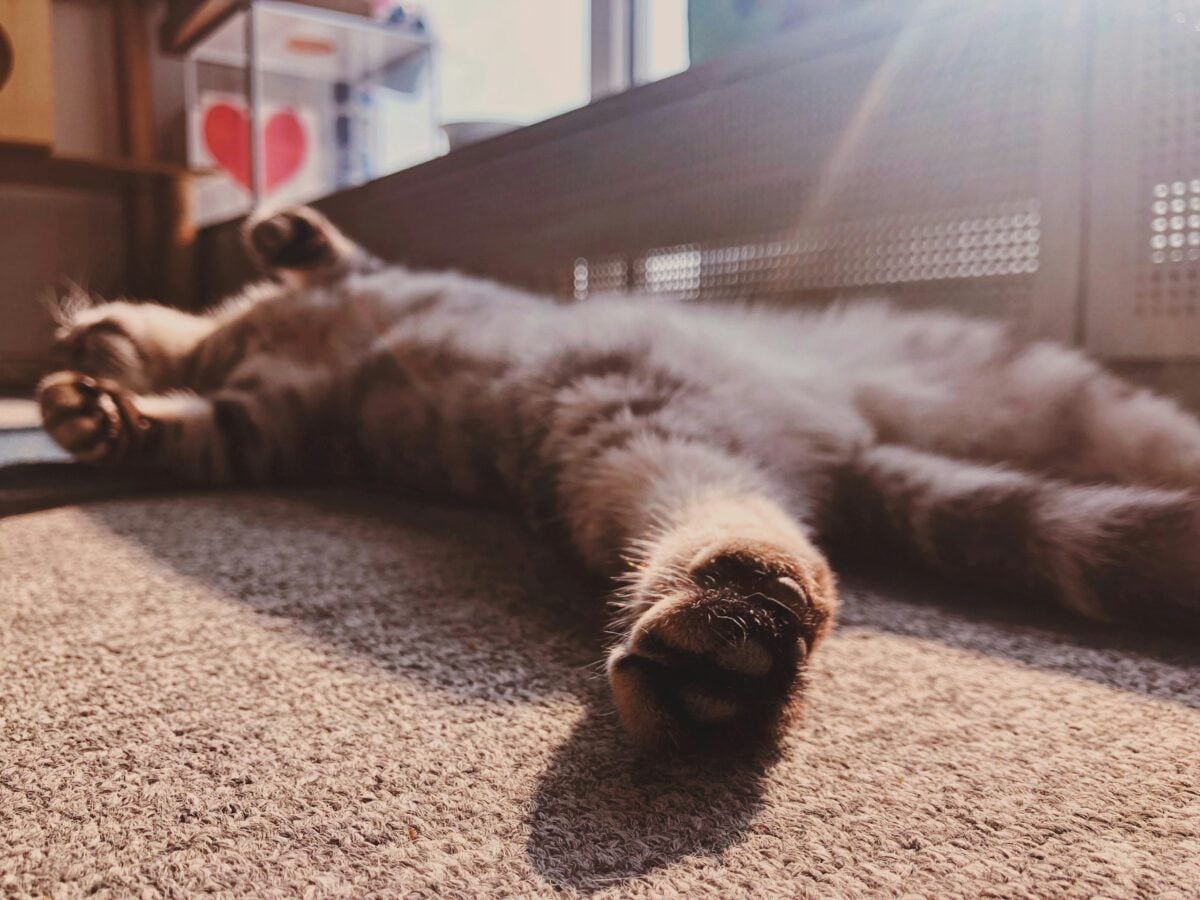
Relaxed cats often start taking up more room. They sleepon their sides, extend their front paws over their heads, let their back legs trail behind them, or stretch diagonally across a bed that was supposedly designed for humans.
Some sploot with both hind legs straight out behind them. Others twist themselves into positions that make you briefly wonder whether cats have the same number of vertebrae as everyone else.
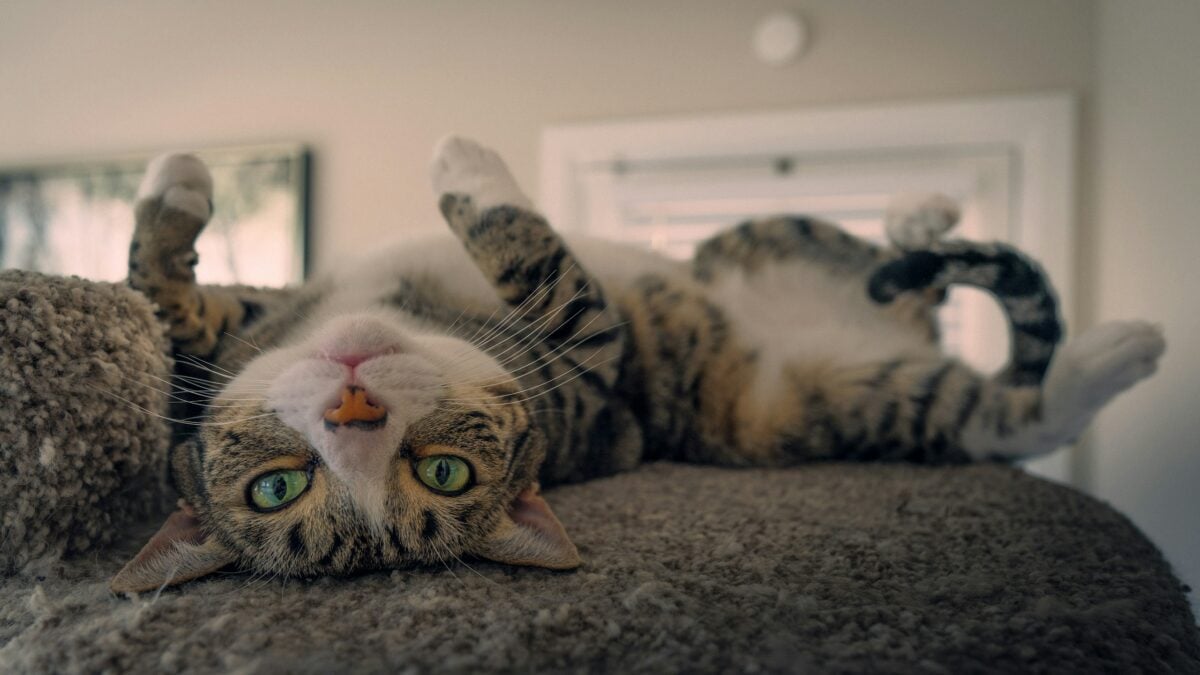
An elongated posture is less immediately ready for action than a tightly contained one. If your cat regularly stretches out in the rooms where your family spends time, especially with soft eyes, loose paws, naturally positioned ears, and relaxed muscles, they probably aren’t expecting to make a quick exit.
You may notice this change with a shy cat before you notice anything more dramatic. The cat that used to sit tucked tightly beneath a chair begins sleeping on one side. A few weeks later, a paw is hanging off the cushion. Eventually, they’re occupying half the sofa and looking mildly offended that you would like some of it back.
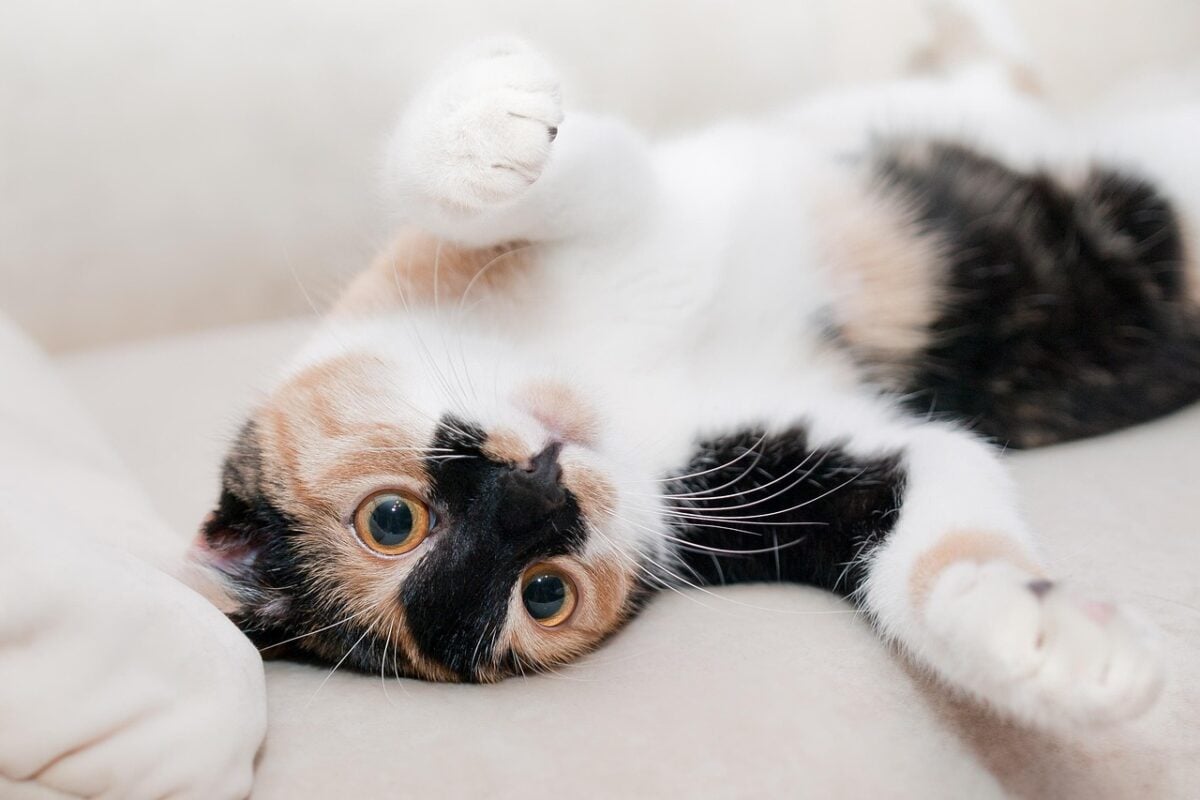
2. They Sleep Belly-Up or in Ridiculously Exposed Positions
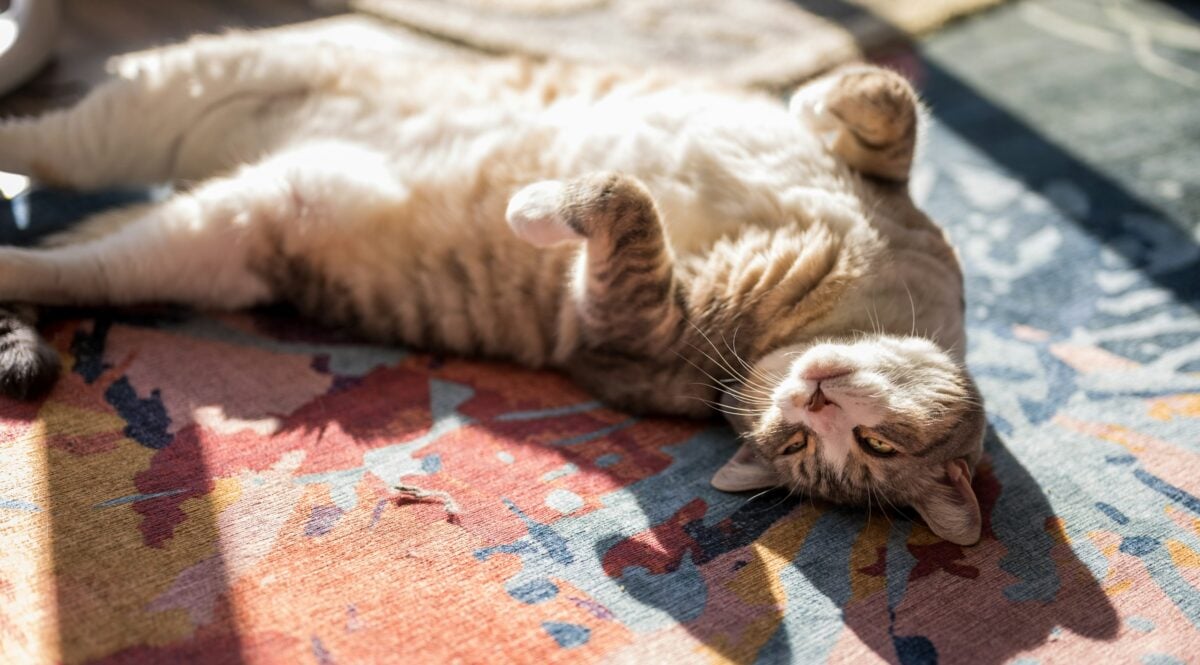
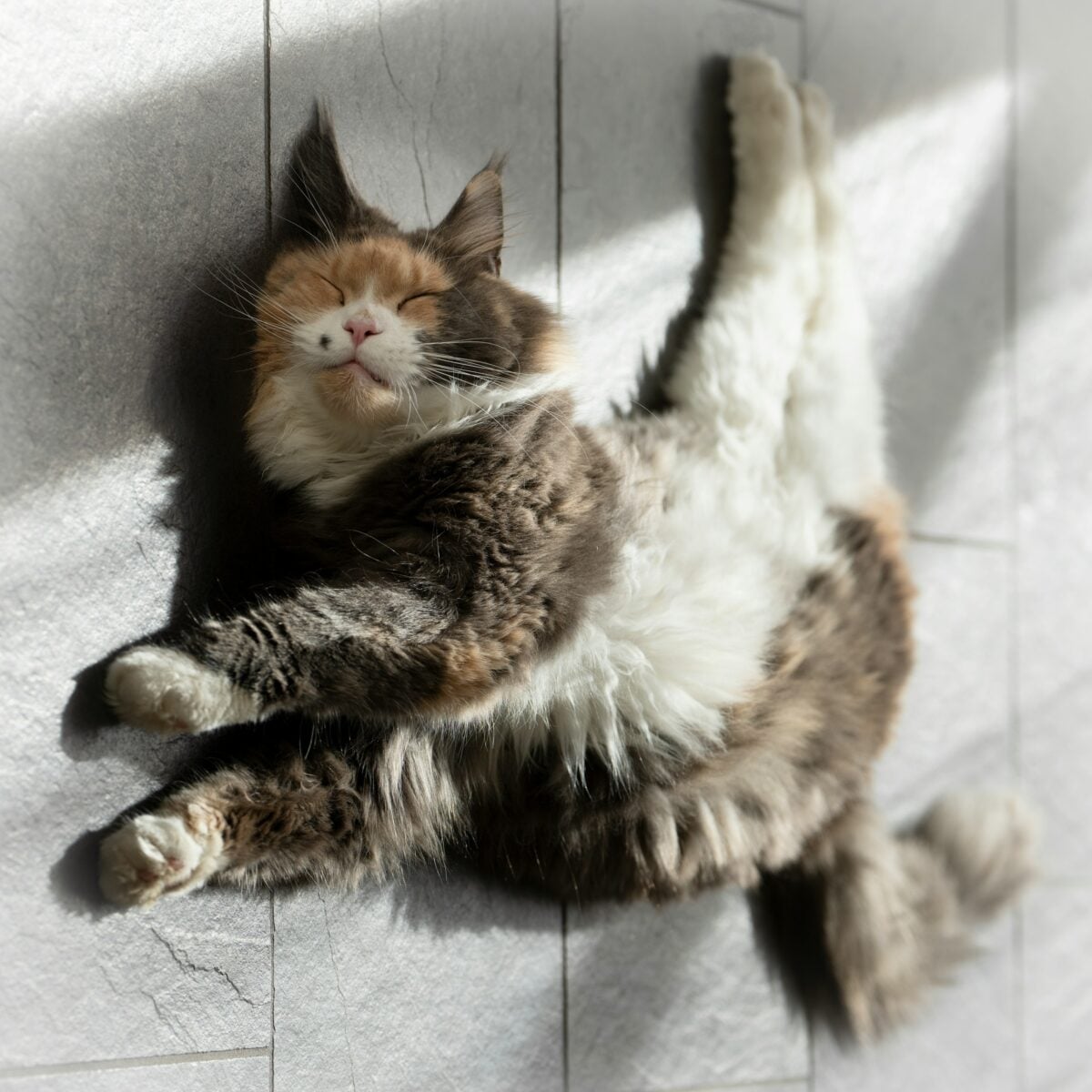
Few things say “I have abandoned all professional responsibilities” quite like a cat asleep on its back. The belly is pointing toward the ceiling, paws are folded at strange angles, and the head is somehow hanging halfway off the edge of the couch. It is not an efficient position from which to respond to an emergency.
That matters because a cat’s abdomen is vulnerable. When a cat sleeps belly-up or sprawls openly on their side, they’re choosing comfort over a posture that would make getting up quickly easier.
If the paws are loose, the face is relaxed, and they remain asleep while normal household activity carries on around them, you’re looking at a cat that feels pretty comfortable where they are.
There is, however, an important rule of feline diplomacy: an exposed belly is not automatically a request for a belly rub. Some cats love having their stomach touched. Many absolutely do not. A cat can trust you enough to sleep with their belly exposed and still respond to an approaching hand with four paws, several claws, and an expression of profound betrayal.
Temperature also affects sleeping positions. Cats often spread out when they’re warm, so you may see more dramatic belly-up naps near sunny windows,on heated blankets, or during warmer months. As always, the position makes the most sense when you consider what the rest of the cat is doing.
3. They Give You Long, Slow Blinks
If you live with a cat, you’ve probably caught this little exchange. Your cat looks at you from across the room, slowly lowers their eyelids, pauses for a moment, and opens them again. There’s no meow, no head bump, and sometimes no movement at all, yet the interaction feels oddly personal.
Slow blinking is commonly associated with calm, friendly interactions between cats and people. It makes sense when you consider what the eyes are doing. Rather than maintaining an intense stare, the cat softens their gaze and briefly reduces visual monitoring. Paired with neutral ears, relaxed whiskers, and an easy posture, it fits naturally with the rest of relaxed feline body language.
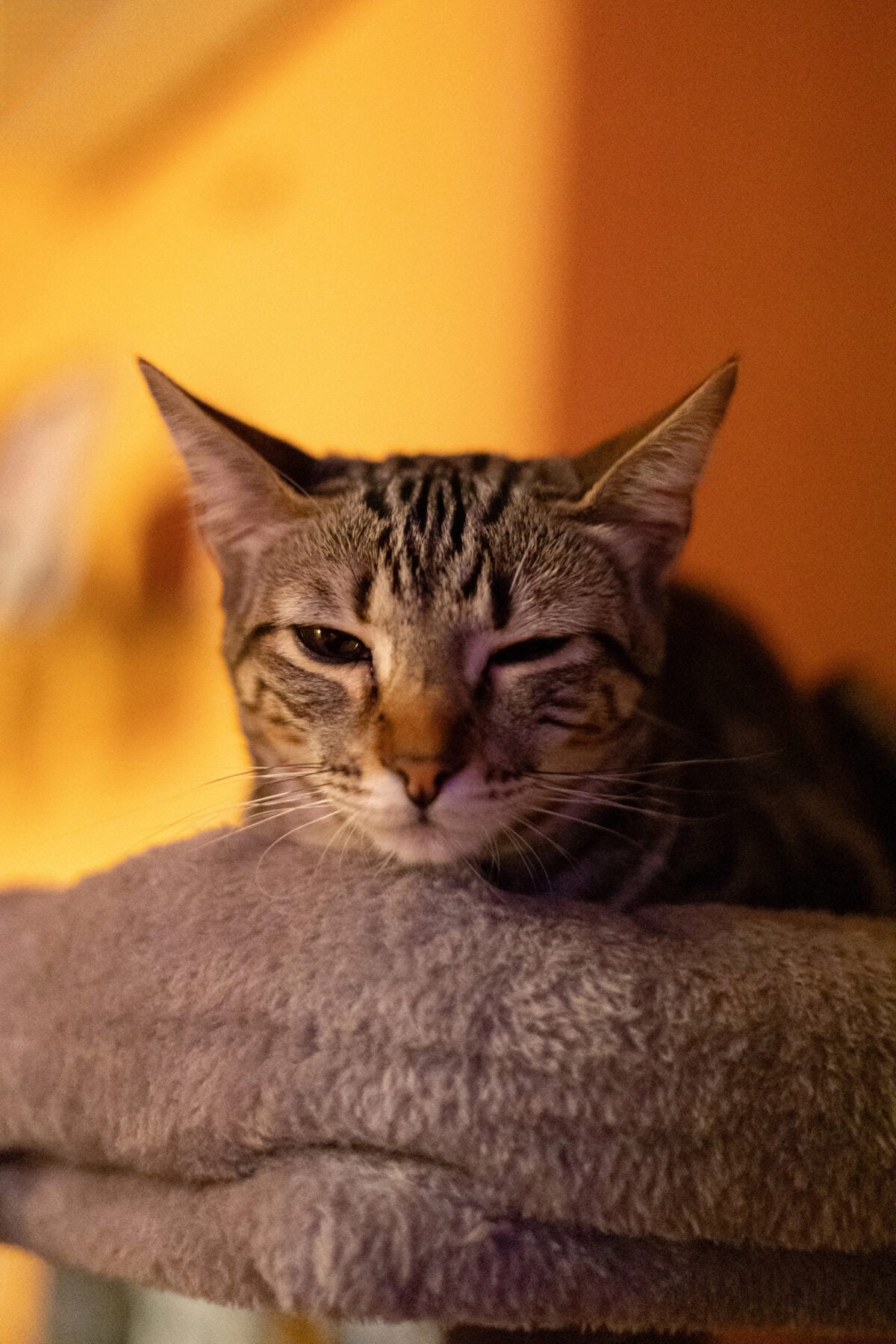
You can try returning the blink. Look toward your cat without staring, soften your face, slowly close your eyes, and open them again. Then leave it there. There’s no need to immediately move closer or reach out for a cuddle. Some cats blink back, some wander over, and some continue staring as though you’ve just failed a very simple test.
This is also a nice reminder that cats don’t all express attachment through physical contact. A cat that would rather not sit on your lap may still spend every evening on the chair beside you, offering slow blinks from a comfortable distance. For some cats, that quiet companionship is exactly how they like things.
4. They Groom Themselves While You’re Nearby
Grooming looks so ordinary that it’s easy to overlook. Your cat hops onto the bed, licks one paw, wipes it over an ear, cleans a shoulder, and then contorts themselves into a position that would require an ambulance if you attempted it.
Normal grooming takes attention. A cat turns their head away from the room, focuses on different parts of the coat, partially closes their eyes, and spends several minutes absorbed in the task.
When your cat regularly chooses to do that beside you or in the middle of family activity, your presence has probably become part of the familiar background rather than something they feel compelled to monitor.
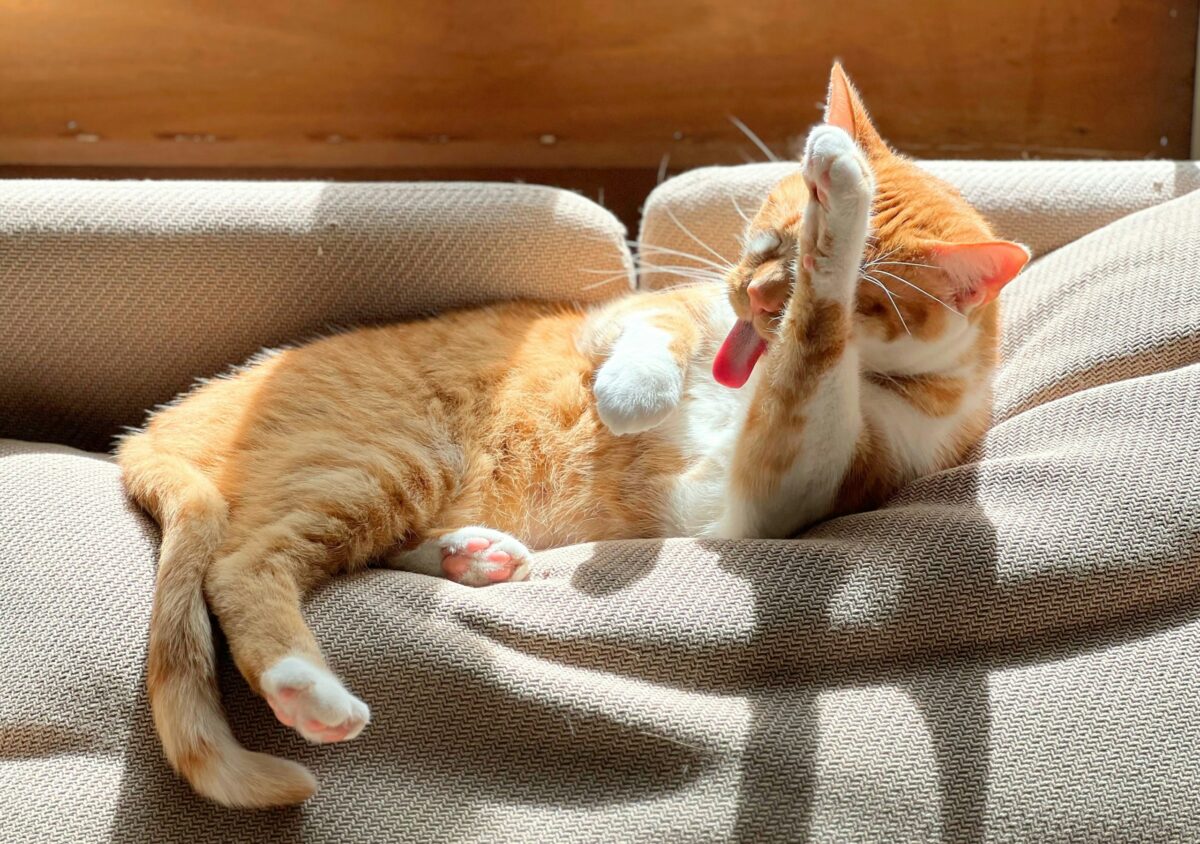
This can be particularly noticeable with a newly adopted or naturally cautious cat. Early on, they may stop whatever they’re doing when you enter the room. Later, they’ll keep washing a paw while you walk past. Eventually, they may conduct an entire evening bathon the opposite end of the couch before curling up to sleep.
Grooming isn’t always evidence of relaxation, though. Cats may also groom when stressed, and excessive licking, bald patches, skin irritation, or repeated attention to one area can signal a problem. What you’re looking for here is ordinary, unhurried grooming from a cat whose overall behavior looks comfortable and normal.
5. They Loaf in the Middle of Shared Spaces
The cat loaf is one of nature’s better designs. Front paws disappear beneath the chest, the body becomes compact and symmetrical, and the cat transforms into a warm bread-shaped object with ears.
A loaf isn’t necessarily a deeply relaxed posture. Your cat is still upright and can easily become active again. But where they choose to loaf can tell you quite a bit. A cat that routinely settles beside your desk, on the living-room rug, near the kitchen, or in the hallway is choosing to be part of ordinary household activity instead of retreating somewhere private.

Pay attention to the details. A comfortable loaf usually comes with a body that looks settled rather than rigid. The eyes may be partially closed. The ears still rotate toward interesting sounds, but they aren’t constantly snapping toward every little noise. Familiar people can walk past without the cat immediately getting up.
Some cats become so confident about this arrangement that they choose the worst possible location from a human point of view: the kitchen mat while you’re cooking, the top of the stairs, or the darkest part of the hallway at night. Apparently, feeling safe also means trusting that the humans will eventually learn to watch where they’re going.
6. They Knead, Purr, and Settle Into Their Favorite Soft Things
Most cat people recognize the beginning of the ritual. Your cat climbs onto a blanket, presses one paw down and then the other, starts purring, turns around several times, and finally collapses into the spot they have spent the last five minutes preparing.
Kneading begins in kittenhood, when kittens press their paws against their mother while nursing. Many cats keep doing it as adults, particularly when settling onto soft surfaces. Some barely move their paws. Others knead with extraordinary commitment, claws included, as though your favorite throw blanket has placed a very large biscuit order.

Purring often accompanies the routine, but it deserves some nuance. Cats don’t purr only when they’re happy; they may also purr when stressed, frightened, uncomfortable, or trying to soothe themselves. A purr by itself doesn’t tell you enough.
The whole scene is more useful. A cat with soft eyes, loose muscles, rhythmic paws, a comfortable purr, and an increasingly sleepy expression is probably winding down rather than sounding an alarm. If they repeat the same routine every eveningon the same blanket beside the same person, that spot has clearly earned a place on their personal comfort map.
Unfortunately, the blanket now belongs to the cat.
7. They Start Spending More Time Where the Family Is
Happy cats hide too. A cardboard box, closet shelf, covered bed, or quiet room can be an excellent place to sleep, and choosing privacy doesn’t automatically mean a cat is anxious.
What can be meaningful is a change in where a cautious cat chooses to spend time.
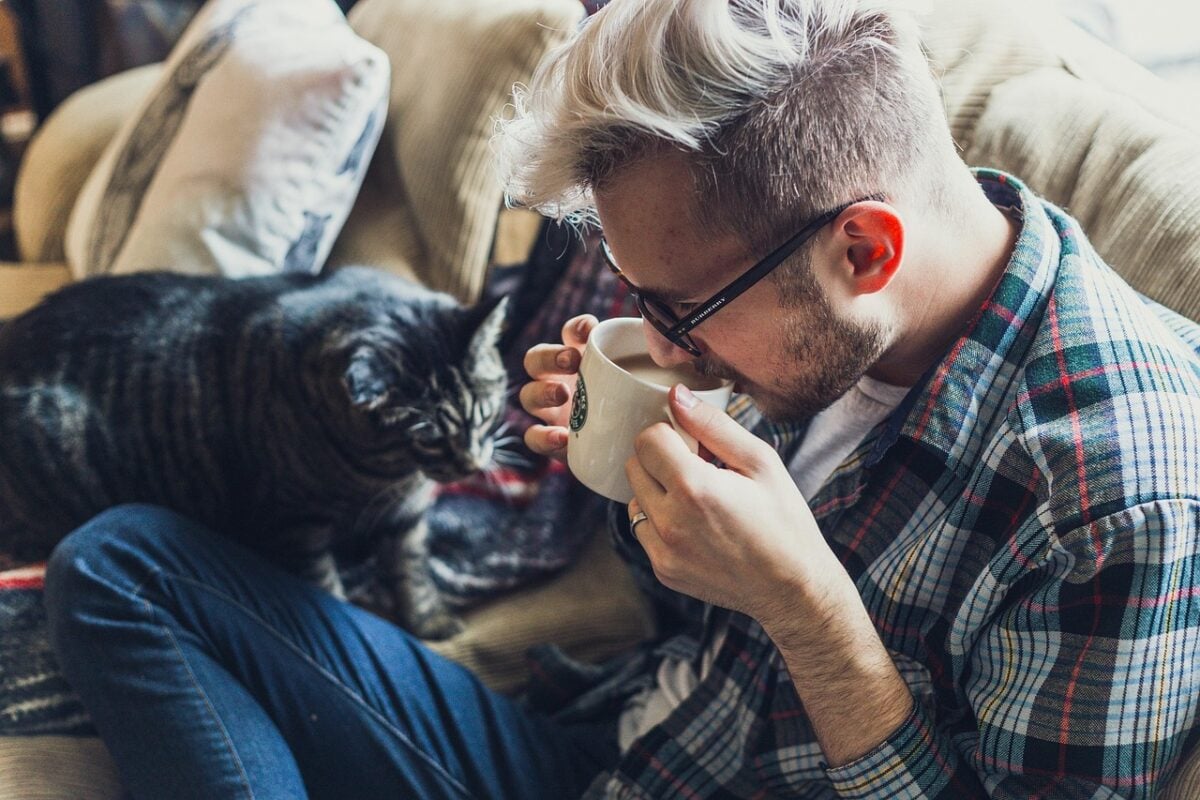
A newly adopted cat might initially stay upstairs while everyone watches television. Then they start sitting at the edge of the hallway. A few days later, they’re behind the sofa. Eventually, you realize they’re asleep under the coffee table while people are talking, laughing, opening snack bags, and generally making the sort of unnecessary noise humans make.
That gradual migration toward the center of household life often happens as everyday sounds become predictable. Your footsteps are familiar. The dishwasher does the same thing every night. The television isn’t dangerous. Someone opening the refrigerator is usually interesting rather than alarming.
This doesn’t mean your cat suddenly wants constant attention. Plenty of cats practice what could best be described as parallel hanging out. You sit on the sofa. They lie three feet away. Nobody touches anybody, and everyone considers the evening a success.
For an independent cat, choosing to be near you can be just as meaningful as climbing onto your lap.
8. Their Entire Body Starts Looking Softer
One of the easiest mistakes when reading cats is focusing too heavily on one body part. People want to know what a particular tail position means or whether a certain ear angle means their cat is happy. Those details matter, but the whole animal usually gives you the better answer.
Relaxed cats tend to look soft. Their shoulders aren’t hunched tightly, their paws aren’t braced against the floor, and their facial muscles don’t look intensely focused. The whiskers sit naturally rather than being strongly pulled back. The ears may rotate toward sounds, because cats are always going to be cats, but they aren’t persistently flattened or tense.
The tail adds another piece of information. A resting cat may leave it loosely beside the body or curl it comfortably nearby. An upright tail during a friendly approach can also be a positive social signal. Repeated hard thumping or forceful lashing, on the other hand, usually means you should pay attention to what else is happening.
This is particularly useful during petting. A cat may begin with a loose body and soft expression, then gradually become overstimulated. The tail starts moving. The skin twitches. The ears turn back. The head suddenly follows your hand. That change tells you more than any one fixed posture.
Think of cat body language as a sentence rather than a vocabulary word. Eyes, ears, whiskers, tail, posture, movement, and context work together. Once you start reading the whole sentence, cats become much easier to understand.
9. They Get Completely Ridiculous During Play
There is normal play, and then there is the kind of play that suggests a cat has forgotten anyone is watching.
The sideways hop makes an appearance. There’s an enormous butt wiggle before a three-inch pounce. A toy mouse is attacked, abandoned, rediscovered, and attacked again. Your cat sprints down the hallway, ricochets off a piece of furniture, and returns looking as though you were the one behaving strangely.
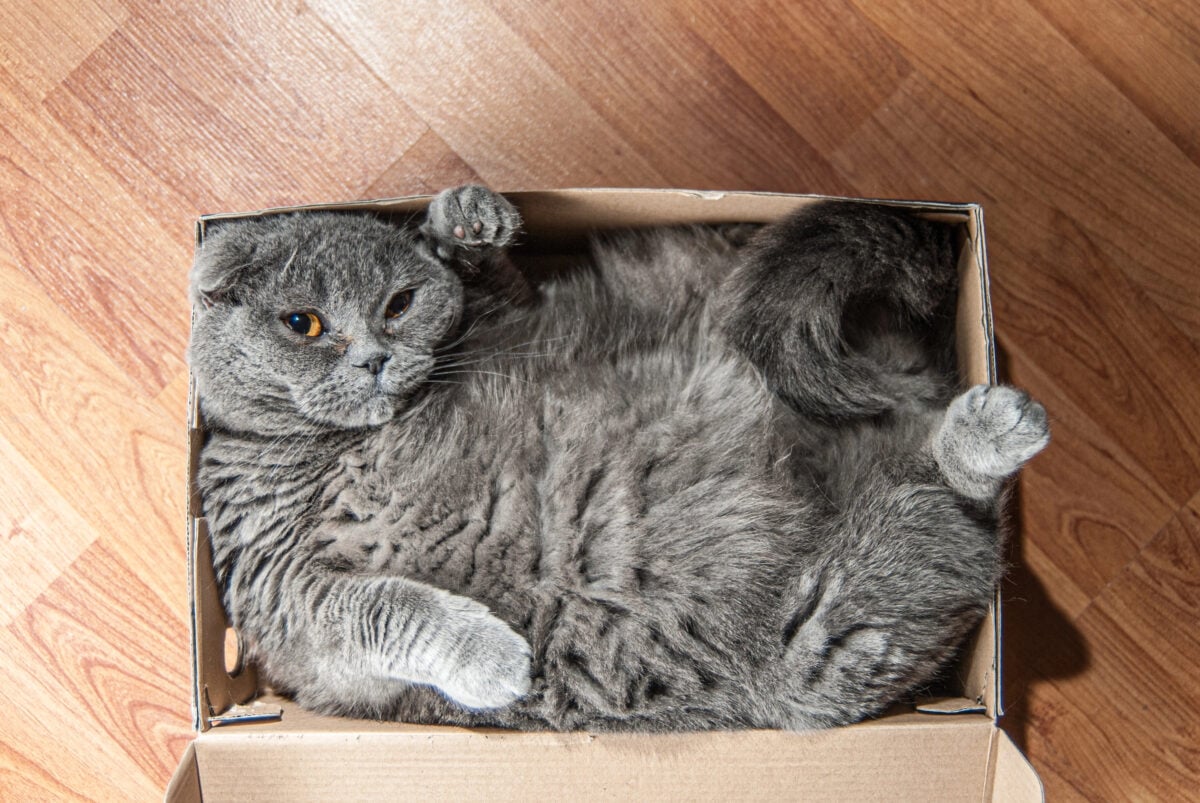
Relaxed play often has an absorbed, fluid quality. The cat is paying attention to the game rather than repeatedly stopping to check the environment. Someone shifts in a chair and an ear turns, but the game continues. A cabinet closes, and they look up briefly before going straight back to stalking the feather wand.
This can be a wonderful change to watch in a shy cat. At first, they may only swat at a toy from underneath the bed. Eventually, a paw becomes half a cat. Half a cat becomes a full cat crouching in the doorway. Then one evening they’re tearing through the living room at full speed with a toy in their mouth.
The cat hasn’t necessarily become fearless. Curiosity has simply started winning more often.
10. They Return to the Same Favorite Resting Spots
Once a cat has settled into a home, they tend to develop a surprisingly detailed property portfolio. There’s the morning windowsill, the afternoon couch cushion, the chair beside your desk, the warm patchon the bedroom floor, and whichever part of your bed causes the greatest inconvenience.
These places become familiar in ways that matter to a cat. The smells are known. The temperature is predictable. They know what they can see from there, what usually happens nearby, and whether anyone is likely to disturb them.
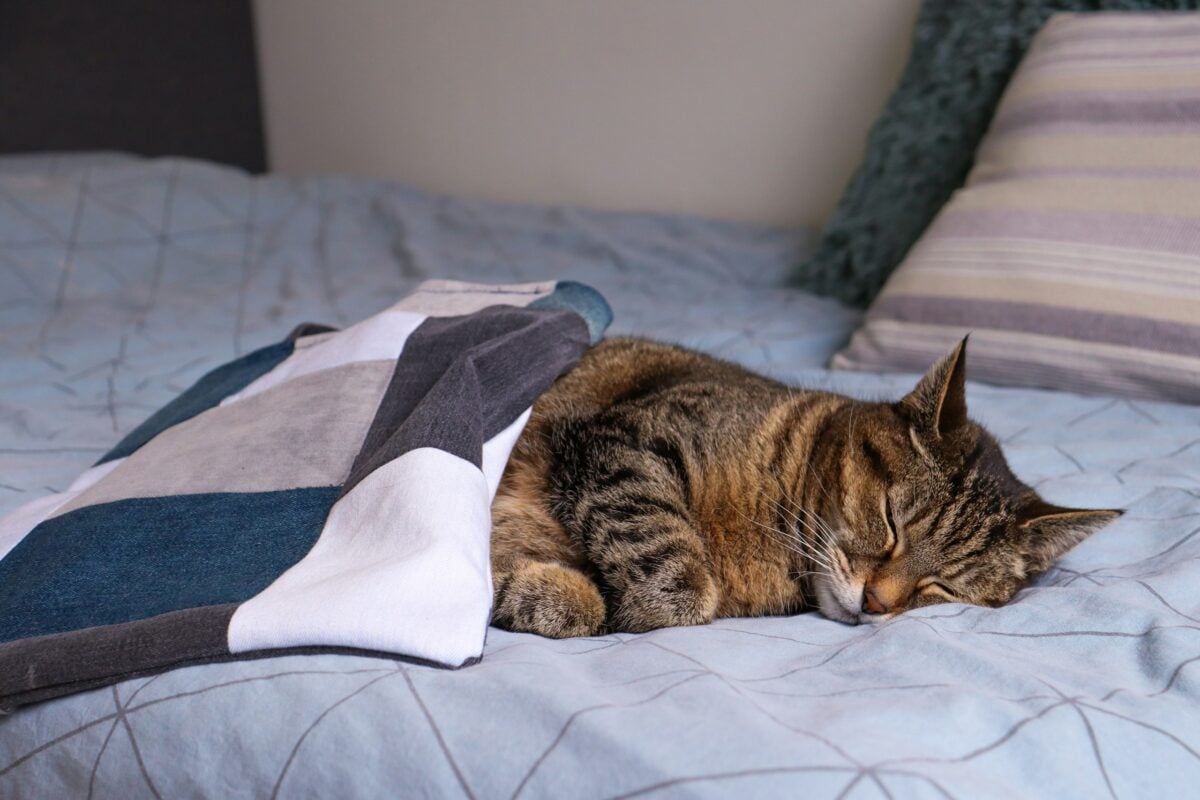
You may notice your cat rotating through favorite spots according to the time of day. Morning sunlight means the east-facing window. Afternoon means the spare bed. Evening means the end of the couch. At 2 a.m., for reasons understood only by the cat, the preferred location is directly between your knees.
Favorite resting spots can also be social. A cat that doesn’t enjoy lap time may still choose the chair next to you every day while you work. Another might claim one end of the sofa during movie nights. They want company; they simply have very clear zoning regulations.
Repeatedly returning to these familiar places is part of what makes a house feel predictable. The cat knows this cushion. They slept here yesterday. Nothing terrible happened. The sun was excellent. There is no reason not to come back.
11. They Sleep So Deeply They Become Almost Useless
Anyone who lives with a cat knows there are different levels of feline sleep.
Sometimes a cat appears asleep but is actually operating a full surveillance system. One ear swivels toward every footstep. Their eyes open when someone stands up. A cupboard door closes, and the head pops straight up.
Then there are the serious naps.
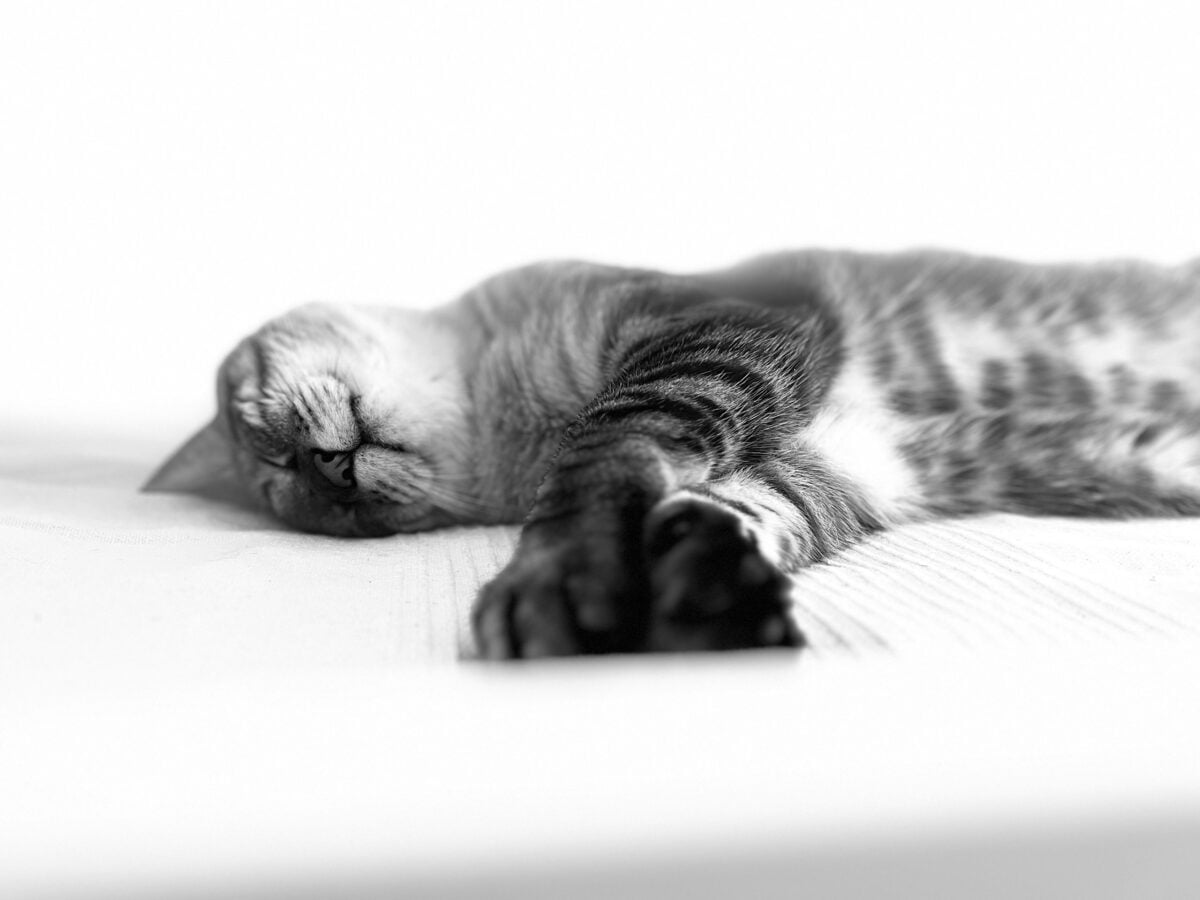
The head sinks into the cushion. The paws go loose. Whiskers twitch. A back foot moves during a dream. You walk past and get half of one eye before it closes again. Some cats snore. Others sleep with their face pressed directly into a blanket, raising reasonable questions about how breathing works.
Being able to sleep deeply around ordinary household activity suggests those sounds and movements have become familiar enough to ignore. Your cat knows your footsteps. They’ve heard the dishwasher before. The television is not a threat. Someone walking past the sofa usually does not require feline involvement.
Deep sleep should still be distinguished from unusual lethargy. If your cat suddenly starts sleeping much more than normal and also loses interest in food, stops playing, hides more, seems weak, or moves differently, that deserves attention.
A healthy cat waking from a magnificent four-hour couch coma generally returns to normal cat business: stretching, eating, grooming, investigating something unnecessary, asking for a door to be opened, and then refusing to go through it.
12. They Turn Their Backon You Without Worry
Humans sometimes take this personally. Your cat walks over, sits beside you, and immediately turns around to face the opposite direction.
Charming.
But a cat that feels uncertain about someone has a reason to keep that person in view. Watching allows them to track movement and decide whether they need to respond. If your cat can sit close to you while looking out the window, groom with their back toward you, or fall asleep facing away, they may simply know you well enough that constant supervision is unnecessary.
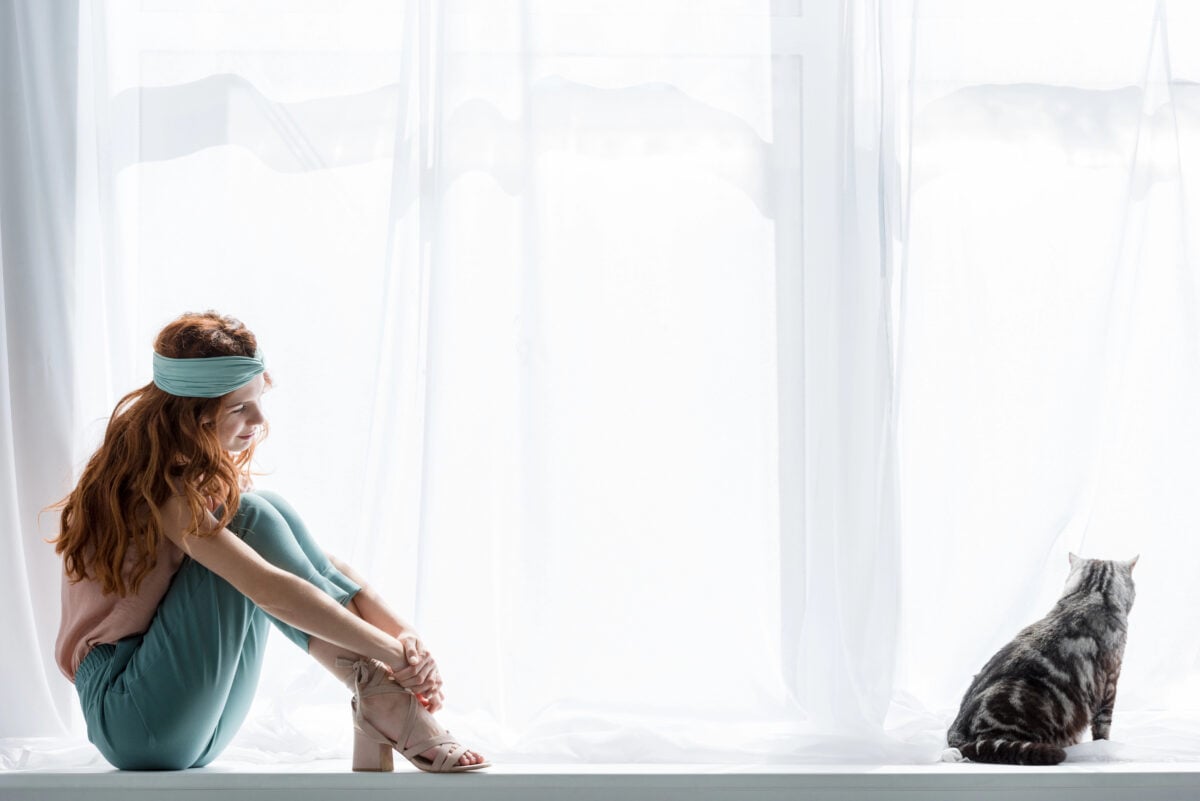
Context matters here too. A cat moving away with a tense body is different from one voluntarily sitting inches from you with loose muscles and relaxed ears. In the second situation, they aren’t trying to create distance. They just have something else to look at.
This is one of those behaviors that makes more sense once you stop expecting cats to show affection the way people or dogs might. Trust doesn’t always involve eye contact or cuddling. Sometimes your cat demonstrates trust by deciding you are so thoroughly predictable that they can stop watching you altogether.
You drink your coffee. They watch the window. Nobody requires anything from anybody.
For a lot of cats, that’s excellent company.
13. They Build Weird Little Routines Around You
One of the clearest signs that a cat has settled into a home is the appearance of tiny rituals you never deliberately created.
Maybe your cat sits on the same windowsill while you make coffee. They appear beside your desk shortly after you start work. At 4:55 p.m., they materialize in the kitchen because dinner is at 5:00 and apparently you need supervision. When the television turns off at night, they head toward the bedroom before you do.
Cats are excellent students of routine. They learn which footsteps belong to which person, which cupboard contains food, what the morning alarm means, and which particular drawer makes the interesting crinkling sound. They may know your schedule better than you realize.
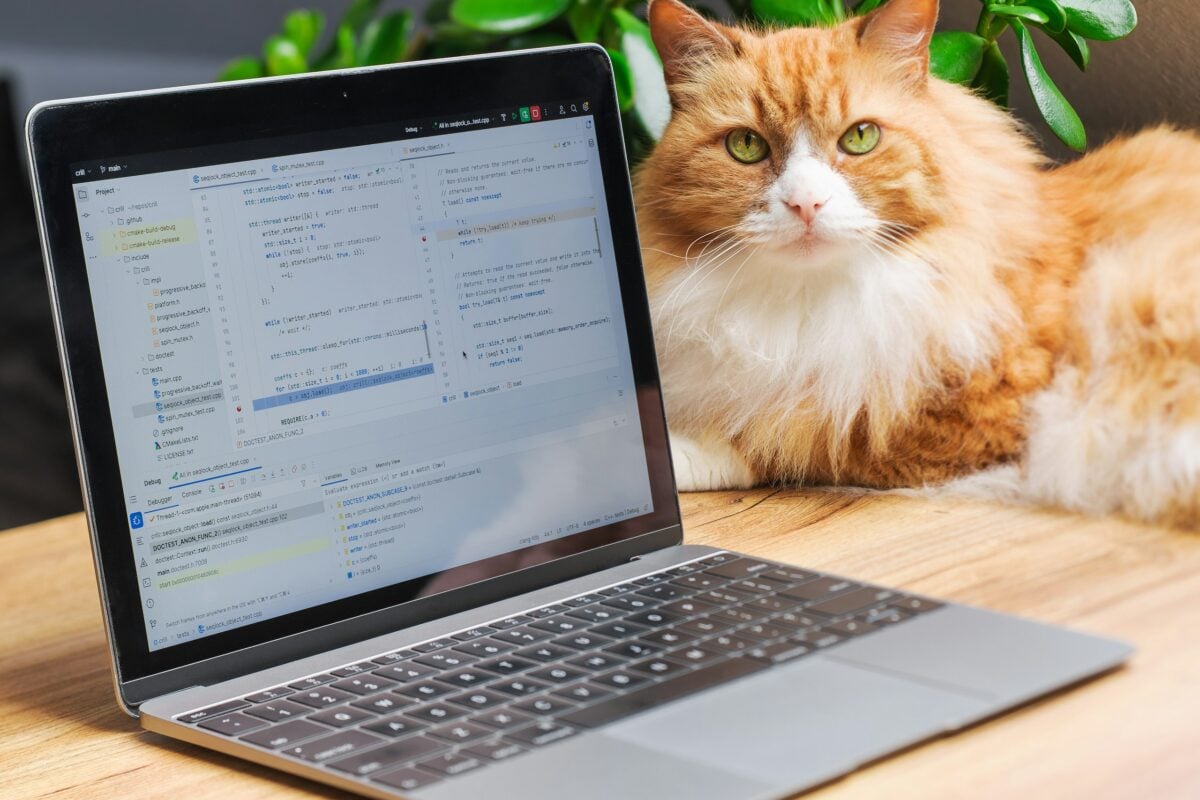
Eventually, they start building their own routines around it. The blanket coming out means couch time. The laptop closing means you’re available. The bathroom light turning off means bedtime. Your habits become landmarks in their day.
That can be surprisingly meaningful with cats that aren’t overtly affectionate. Your cat may never sleepon your chest or follow you from room to room. But if they expect to find you in the same chair every evening and routinely appear nearby, you’ve become part of what feels normal.
And normal is valuable to cats. Normal means known sounds, known smells, known people, known resting spots, and fewer surprises that require investigation.
At some point, your routine became their routine too.
Relaxed Cat vs. Stressed Cat: Look at the Whole Picture
One behavior can be misleading. Purring can happen during stress. A cat can crouch because they’re comfortable or because they’re uneasy. Hiding can mean fear, but it can also mean your cat found an excellent box and would appreciate some privacy.
Patterns are much more useful.
A relaxed cat generally moves comfortably through familiar parts of the home. Their body looks loose, they eat and groom normally, they can settle into proper sleep, and they show interest in things they usually enjoy.
They may still startle, hide, get annoyed, or decide the grocery bag you brought home is deeply suspicious. Relaxed cats do not stop being alert cats.
Stress tends to produce a different overall picture. You may notice persistent hiding, a tense or crouched posture, flattened ears, repeated tail lashing, unusual aggression, reduced appetite, excessive grooming, house-soiling, or a sudden reluctance to interact.
Changes from your cat’s normal behavior matter more than comparisons with somebody else’s cat. A naturally reserved cat may be perfectly content spending most of the evening several feet away from you. A normally social cat suddenly hiding under the bed every day deserves more attention.
Cats have individual personalities, preferences, and tolerances. Learning your particular cat’s baseline is far more useful than trying to fit every feline into the same body-language chart.
When a Behavior Change Deserves a Vet Call
Relaxed and unwell can occasionally look similar from across the room. A cat that sleeps more, moves less, stops seeking attention, or spends longer periods alone may seem unusually mellow when they’re actually uncomfortable.
Cats are notoriously good at hiding pain and illness, which is why changes in routine can be important. Pay attention if your cat suddenly eats or drinks less, stops jumping onto familiar surfaces, hides much more than usual, becomes aggressive when touched, develops litter-box changes, grooms less, repeatedly licks one area, vomits frequently, seems stiff, or simply stops doing things they normally enjoy.
The word suddenly matters. A sixteen-year-old cat who has always considered sleeping a full-time career is different from an energetic five-year-old who abruptly stops leaving the bedroom.
You know what ordinary looks like for your cat. When something feels genuinely out of character and stays that way, it’s worth talking to your veterinarian rather than trying to explain the change through body language alone.

Sometimes Trust Looks Like Doing Absolutely Nothing
A cat settling into a home rarely comes with one big moment. More often, the changes sneak up on you.
The cat that used to retreat when someone entered the room starts grooming on the bed. Later, they begin loafing in the hallway. One afternoon you realize they’re asleep on the living-room rug while people walk around them. A few weeks after that, they’re belly-up on the couch, paws in the air, completely unconscious while the dishwasher runs.
Somewhere along the way, the house stopped feeling unfamiliar.
It became home.
That doesn’t mean your cat will never hide, startle at a noise, stare suspiciously at a grocery bag, or leave the room because somebody sneezed. Cats remain wonderfully committed to being cats. What changes is their baseline. Their body gets softer. Their sleep gets deeper. They take up more space. They develop favorite places and peculiar routines. They stop feeling the need to watch every move you make.
Those little changes are easy to miss precisely because they become ordinary. Eventually, you forget that your cat once hid beneath the bed because now you’re busy asking them to move their enormous stretched-out body six inches so you can sit down.
And perhaps that’s one of the nicest signs of all. A relaxed cat doesn’t necessarily make a grand display of trust. Sometimes they simply behave with the casual confidence of an animal who has decided this is their house too.
If that means you now get approximately fourteen inches of your own couch, so be it.
Frequently Asked Questions
Cat behavior rarely gives us neat, one-size-fits-all answers, and that’s part of what makes living with them so interesting. If you’re still wondering whether a certain habit means your cat is relaxed, stressed, affectionate, annoyed, or simply being extremely cat-like, you’re not alone.
Here are a few of the most common questions. And if your cat does something we didn’t cover, leave your question in the comments—we’d love to hear about the strange little behaviors your cat has trained you to notice.
How Can You Tell If a Cat Feels Safe?
Look for patterns rather than one specific behavior. A cat that feels secure will usually eat, groom, play, sleep, and explore normally while showing loose, comfortable body language.
Compare your cat with themselves, not somebody else’s pet. One confident cat may greet every visitor, while another feels perfectly safe from three feet away. What matters is whether your cat can move through normal daily routines without spending most of the time tense, hiding, or on alert.
Does Showing Their Belly Mean a Cat Wants a Belly Rub?
Not necessarily. A belly-up position can mean your cat feels comfortable enough to expose a vulnerable part of the body, but that doesn’t automatically mean they want it touched.
Some cats love belly rubs. Others will happily sleep upside down every day and still object the second a hand gets involved.
If your cat has consistently shown that they enjoy belly contact, follow their cues. Otherwise, it’s perfectly fine to admire the fluff from a respectful distance.
Why Does My Cat Slow Blink at Me?
Slow blinking often happens during calm, friendly interactions. Your cat looks toward you, gently narrows or closes their eyes, then opens them again while the rest of the body stays relaxed.
You can try blinking back. Keep your expression soft, close your eyes briefly, and reopen them without immediately reaching toward your cat.
Some cats blink back. Others come closer. Some simply keep sitting there, which is also a very cat response.
Why Has My Cat Started Sleeping in the Middle of the Room?
If your cat used to sleep in hidden spots and now naps out in the open, they may simply feel more comfortable with the home.
Familiar footsteps, voices, appliances, and routines stop feeling noteworthy over time. Temperature matters too, so your cat may also have discovered better sunlight, cooler flooring, or a superior view.
If they’re eating, grooming, playing, and behaving normally, the change can fit with growing confidence. A sudden change paired with weakness, appetite loss, unusual hiding, or other symptoms deserves veterinary attention.
How Long Does It Take a Cat to Relax in a New Home?
There’s no standard timeline. Some cats settle in within days, while others need weeks or months.
Instead of watching the calendar, watch for progress. A cautious cat may start eating reliably, exploring more, playing in your presence, grooming nearby, sleeping in open spaces, or spending more time with the family.
Provide hiding places, predictable routines, easy access to food, water and litter boxes, opportunities to play, and control over social interaction. Then let your cat set the pace.
One day you may realize the cat who once vanished under the bed is asleep upside down on your couch.
More Cat Behaviors Explained
Once you start paying attention to the little things your cat does, it’s hard to stop. A slow blink suddenly means more than sleepy eyes, a wildly swishing tail deserves a second look, and those 2 a.m. zoomies begin to feel slightly less random.
If you enjoy decoding your cat’s stranger habits, dig into cat zoomies, why cats suddenly start hiding, and how to tell if your cat loves you.
And because cats somehow manage to make sleeping complicated, too, we’ve also explained why cats cover their faces when they sleep and why your cat follows you to bed but doesn’t actually sleep there.
The more you learn their particular language, the easier it becomes to tell the difference between “I’m completely comfortable,” “I need some space,” and “You are six minutes late with dinner.”
What Does Your Cat Do When They’re Completely Relaxed?
Every cat has their own wonderfully weird way of showing they feel safe. Maybe yours sleeps belly-up with all four paws in the air, turns into a puddle on the couch, makes biscuits on the same blanket every night, or snores so loudly you can hear them from the next room.
Tell us in the comments: What cute, funny, or downright ridiculous thing does your cat do when they’re completely relaxed and comfortable? We’d love to hear about it, and we have a feeling other cat people will too.