When you purchase through links on our site, we may earn a commission at no extra cost to you. Learn more.
Cats have somehow convinced the world that they do not need attention. They are independent. Self-sufficient. Perfectly content to be left alone while humans carry on with their unimportant little tasks.
Table of Contents
That is the illusion.
Cats may be more selective about attention than dogs, but selective does not mean indifferent. Many cats form strong bonds with their people, seek out interaction, and develop highly effective ways to interrupt anything that competes for human focus.
Anyone who lives with a cat knows the truth. You can spend an entire afternoon available for cuddles, only to be ignored from six feet away. Then, the moment you open your laptop, answer a phone call, or try to eat without supervision, your cat suddenly has urgent business.
Want our human-written content to rank above AI-generated garbage? Help us out by clicking this button!
A paw appears. A meow echoes from the hallway. Something fragile moves suspiciously close to the edge of a table.
Cats may not always ask for attention directly, but they have developed a remarkably effective collection of alternatives.
Either way, the message is clear: Look at me. Come here. Put that down. Human, we have business.
Why Cats Keep Trying to Get Your Attention
Cats repeat behaviors that reliably produce a result. A stare may get you to stand up. A paw may earn a few scratches. A dramatic keyboard takeover may bring your workday to an immediate halt.
The reason behind the behavior can vary. Your cat may be looking for play, food, comfort, companionship, access to a closed room, or simply a reaction. Some cats are naturally more social and energetic than others, while boredom, routine changes, or stress can make the demands more noticeable.
The important part is the pattern: your cat does something, you respond, and they remember what worked.
That is how a tiny chirp becomes a nightly announcement, and how a gentle paw eventually becomes a claw-assisted follow-up.
Need proof? Watch this cat make its request for attention impossible to miss.
10 Ways Cats Demand Your Attention
Cats may have a reputation for being independent, but they are remarkably good at making themselves impossible to ignore.
Sometimes the request is obvious, like a paw on your arm or a loud meow from the hallway. Other times, it involves sitting on your laptop, knocking a pen off the table, or throwing themselves directly into your walking path.
These behaviors can come from affection, curiosity, boredom, routine, or a desire for food and play. Whatever the reason, your cat has learned which tactics make you stop what you are doing and pay attention.
Here are 10 of their most effective moves.
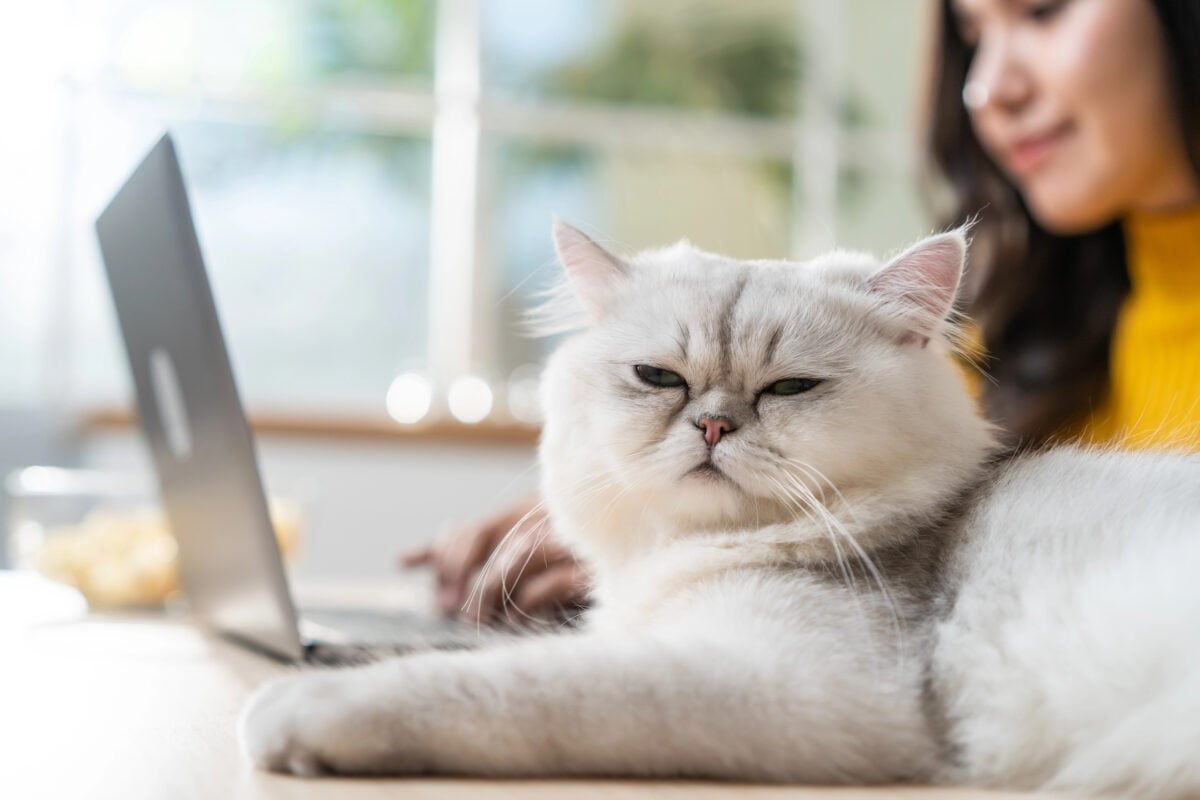
1. Sitting on Your Laptop: The Digital Hijack
The laptop has been open for three seconds. You have typed half a sentence. Suddenly, your cat discovers that the keyboard is the finest bed ever created.
Phones receive similar treatment. So do books, tablets, newspapers, notebooks, and any piece of paper you appear to care about.
Your cat may have six actual beds, including one you bought after reading 400 reviews, but the object currently occupying your hands will always be more desirable.

Cats are highly responsive to human attention, and studies of cat–human interaction suggest they adjust some of their behavior depending on whether their caregiver is watching. The laptop may also offer warmth, your scent, and a guaranteed place at the center of your focus.
The logic is simple: If your hands are busy, they are not petting the cat. By sitting on the problem, the cat solves the problem.
Some cats take a more technical approach. They send unfinished emails, open settings menus, rotate the screen, or type a long string of letters that looks suspiciously like a password from another dimension.
What your cat may want: Attention, warmth, closeness, or access to whatever has stolen your focus.
Helpful? No. Effective? Absolutely.
2. Staring at You: The Unblinking Look of Judgment
You are watching television when you feel it: the unmistakable sensation that someone is observing you. You turn around.
There sits your cat, two feet away and perfectly still. No meow. No movement. Just wide, unblinking eyes aimed directly at your soul.
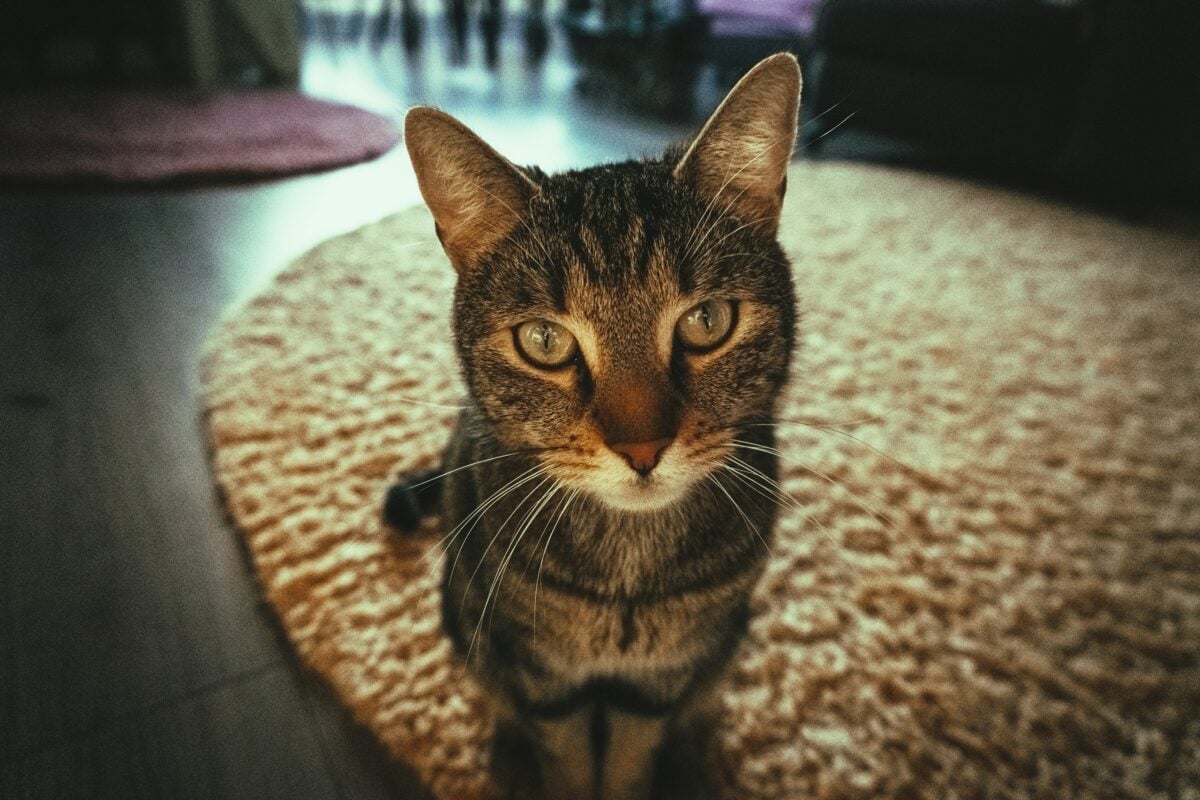
Cats often use this stare when they want something but believe explaining it would be beneath them. Dinner may be late. A door may be closed. A blanket may require lifting.
You are expected to review the available evidence and reach the correct conclusion.
Eye contact can be part of how cats communicate with people, although its meaning depends on the rest of the cat’s body language. Researchers have found that cats use gaze and gaze alternation, looking between a person and an object, during some human-directed interactions.
What your cat may want: Food, affection, access to a room, or acknowledgment that they exist.
The cat is transmitting a request telepathically. The fact that you cannot receive it is apparently a personal failure.
3. Knocking Things Down: The Gravity Audit
A pen sits near the edge of the table. Your cat notices it. You notice your cat noticing it.
One paw reaches forward.
Tap… The pen moves half an inch.
You say your cat’s name in a warning tone. The cat pauses, looks directly at you, and taps it again.
This is not clumsiness. This is a live demonstration.
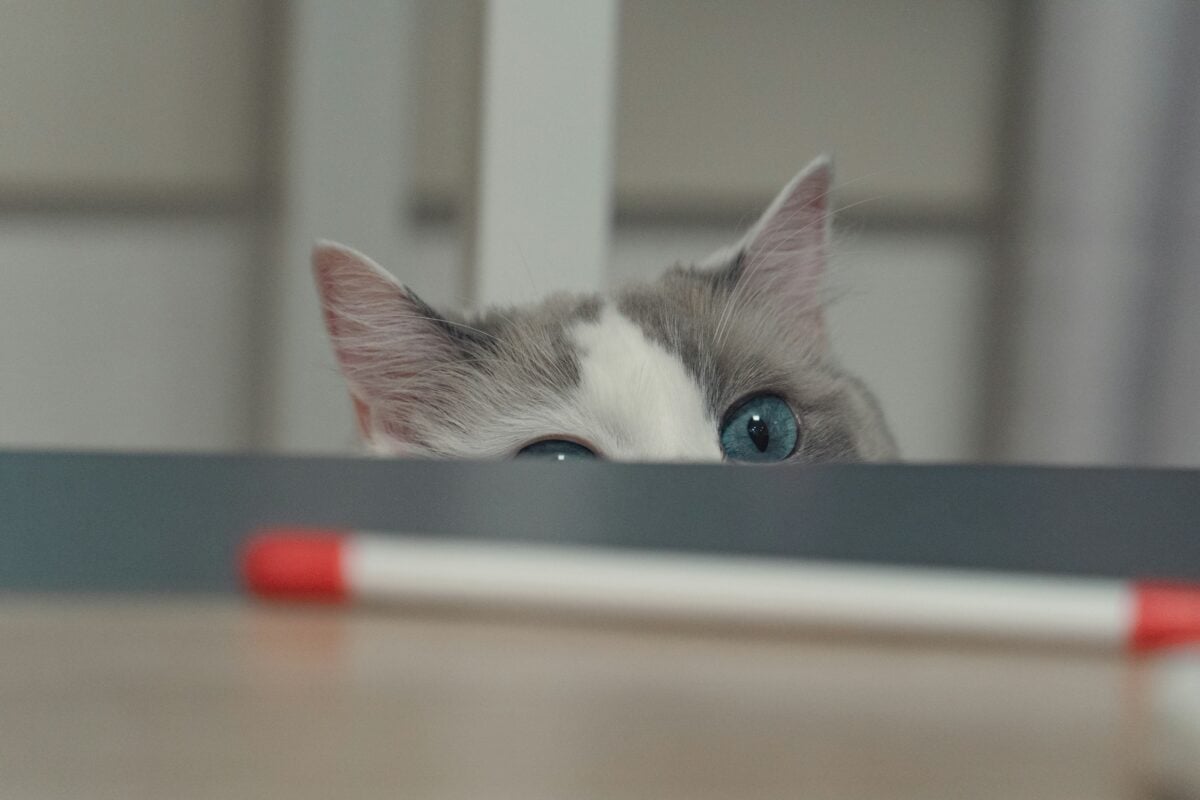
Cats knock down pens, earbuds, bottle caps, lip balm, keys, and half-full glasses with the focus of scientists conducting important research.
The object is rarely pushed off in one quick motion. That would waste the performance. Instead, the cat inches it toward disaster while repeatedly checking that you are watching.
Then it falls. What an unexpected development.
What your cat may want: Play, stimulation, a reaction, or confirmation that gravity remains operational. The motivation is not always attention. Moving a small object can also trigger the stalking, pawing, and object-manipulation behaviors cats use during play and hunting.
Now that the experiment has concluded, you may provide applause, petting, or a replacement object.
4. Following You Everywhere: The Shadow Protocol
Some cats follow their people from room to room while pretending it is merely a coincidence.
You go to the kitchen. The cat also had business in the kitchen.
You walk upstairs. The cat suddenly remembers an appointment upstairs.
You enter the bathroom. The cat charges through the doorway as though you were attempting to leave the country without proper documentation.
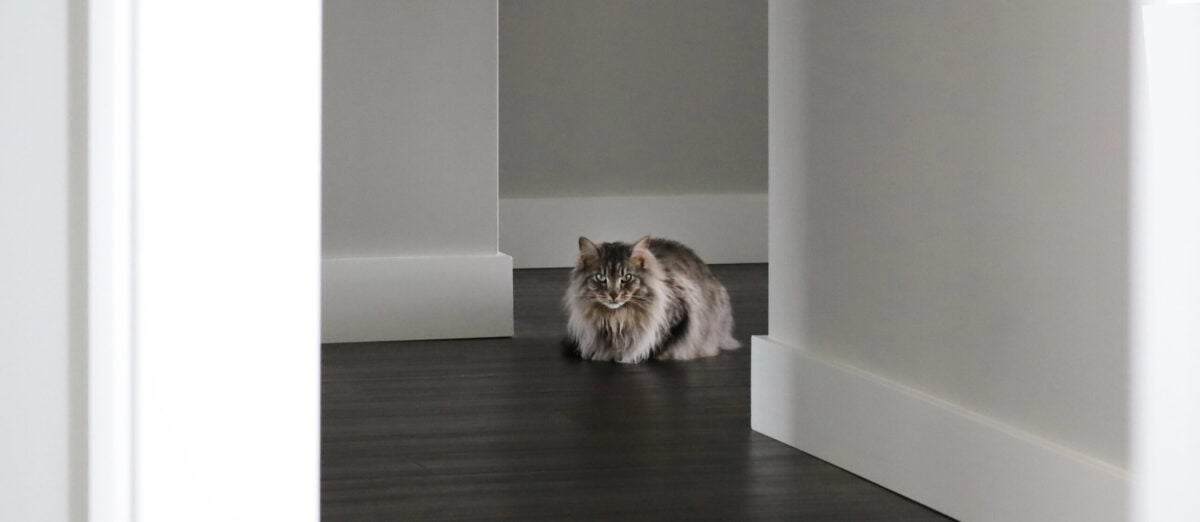
Closed bathroom doors are especially offensive. A paw may appear underneath. The doorknob may rattle. A sorrowful meow suggests that your cat has been abandoned for several decades rather than 45 seconds.
Domestic cats vary widely in how social they are, but many form active relationships with their caregivers and initiate contact on their own terms. Following you may be one way your cat maintains proximity while monitoring what you are doing.
Part of this behavior is curiosity. Part of it is companionship. Much of it is supervision.
What your cat may want: Company, reassurance, entertainment, or the chance to monitor your suspicious activities.
You cannot be trusted alone. You might open tuna.
5. Chirping, Trilling, and Yelling From Hallways
Not every cat communicates with a standard meow.
Some cats chirp. Others trill. Some produce tiny squeaks that seem wildly mismatched with their body size.
Others walk into an empty hallway and release one enormous, echoing cry at absolutely nothing.
This is how cat owners end up shouting, “What?” from another room… The cat rarely clarifies.
Adult cats use vocalizations extensively in their relationships with humans, and they can distinguish their owner’s voice from unfamiliar voices. They may not come when called, but research suggests they often recognize exactly who is calling.
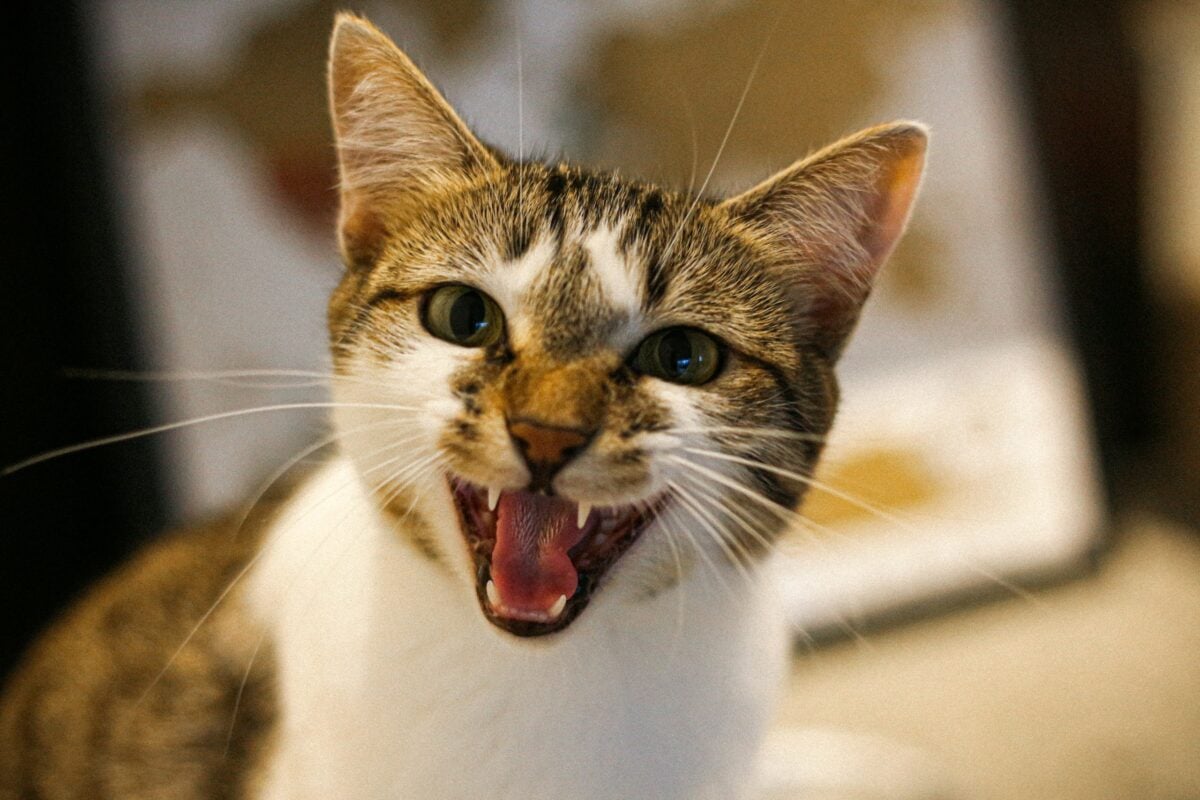
These sounds can work as check-ins. Your cat may be announcing their arrival, asking where you are, requesting that you follow them, or testing whether the household staff remains operational.
The phantom hallway meow is especially powerful at night. It has the acoustics of a Victorian ghost child and usually happens just as you begin falling asleep.
What your cat may want: A response, companionship, play, food, or assistance with a mysterious problem they refuse to identify.
You call the cat’s name.
Silence.
The system works.
6. Pawing at You: The Request That Escalates
It usually begins with a gentle tap.
A soft paw lands on your arm. You ignore it.
The paw returns, slightly firmer. You continue scrolling.
A third tap arrives, this time featuring the delicate tip of one claw. The escalation has begun.

Cats may paw at your legs, shoulders, face, or hands when they want food, affection, playtime, or access to a forbidden room.
Some reach out from behind furniture and hook your clothing as you pass. Others place one paw directly on your mouth while you are sleeping.
Cats are good at learning which actions produce a response. When pawing repeatedly leads to petting, food, play, or a door opening, the behavior is more likely to be repeated.
What your cat may want: Immediate attention—and evidence that you understood the first two reminders.
The first tap is a request. The claw is the follow-up email.
7. Bringing You Toys: The Trophy Presentation
Your cat enters the room carrying something important. It might be a stuffed mouse, a crumpled receipt, a hair tie, a foam ball, or a sock dragged from the laundry basket.
One especially ambitious cat may arrive with a shoe insert soaked in water.
The item is dropped at your feet. Then comes the look.
Praise is now required.
Carrying and manipulating toys draws on behaviors associated with hunting and play. When your cat brings an object to you, they may be inviting interaction, continuing a play sequence, or simply carrying their valuable possession somewhere socially important.
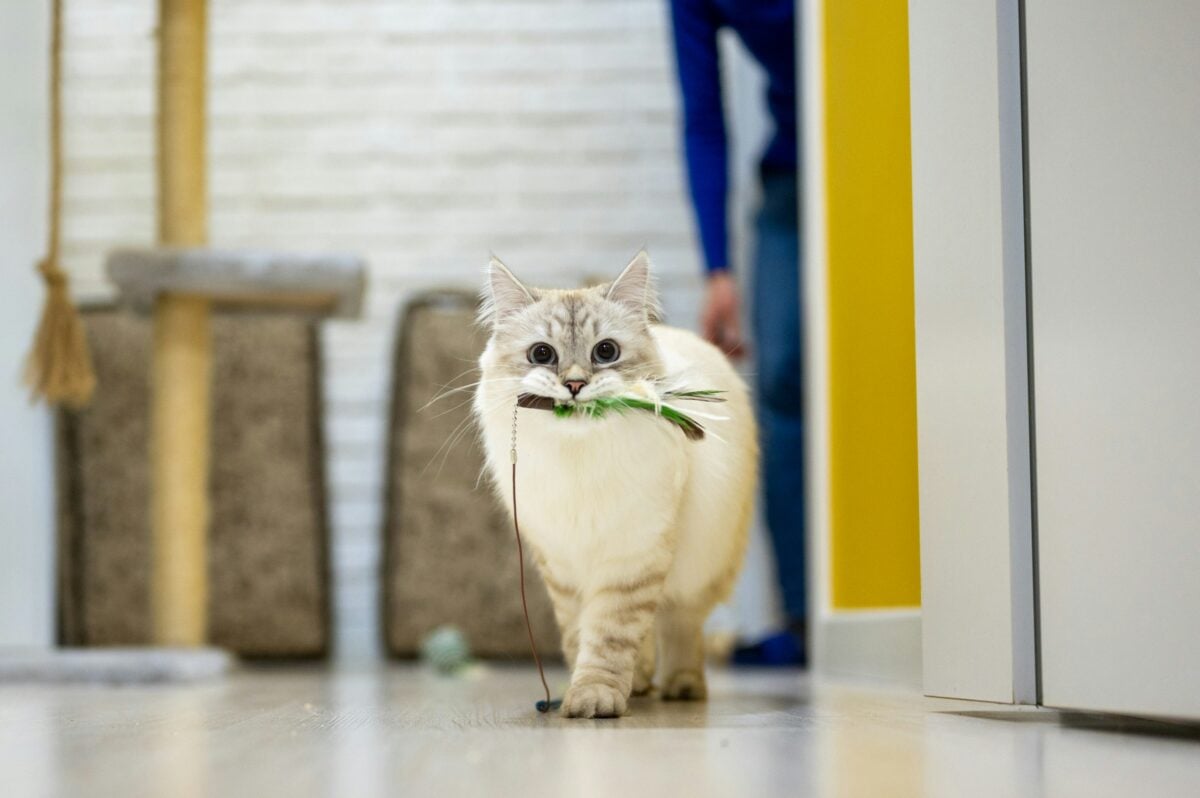
Or they may be acknowledging that they have once again provided for this struggling household.
What your cat may want: Playtime, praise, interaction, or recognition of their outstanding hunting abilities.
The correct response is enthusiastic admiration.
“Oh my goodness! Is that your mouse?”
Yes, you have seen the mouse 900 times. That is not the point.
8. Demanding Dinner: The Mealtime Melodrama
No creature has ever suffered like a cat whose dinner is four minutes late.
The performance may begin with pacing. Then comes the yelling. Next, the cat weaves around your ankles while you attempt to carry a bowl without causing a workplace accident.
Some cats flop onto the floor and stare weakly into the distance. Others sprint toward the feeding area, then race back to make sure you are still coming.
A few inspect the bowl and object because they can see the bottom through a small gap in the kibble.
This means the bowl is empty.
Do not attempt to introduce geometry into the discussion.

Cats are quick to form associations between predictable cues and rewards. Once a particular sound, movement, or time of day regularly precedes food, even the smallest cue can announce that dinner should be arriving immediately.
A cupboard opening, a spoon touching ceramic, or a human standing up at 5:58 p.m. can trigger a full production.
What your cat may want: Dinner, a snack, a fuller-looking bowl, or reassurance that starvation is not imminent.
Tell their story if they do not survive until 6:00.
9. Rubbing Against Your Legs: The Shin Ambush
A cat rubbing against your legs can be sweet. It is also an excellent way to knock over an adult carrying hot coffee.
Rubbing is more than a convenient way to trip you. Cats have scent glands around parts of the face and body, and rubbing can deposit scent while also functioning as friendly, social contact.
You cannot ignore a cat who is actively weaving between your feet while you walk. Near the kitchen, however, the greeting often develops a clear sense of direction.
Left ankle. Right ankle. Sudden stop directly in front of you.
This is affection with a liability waiver.
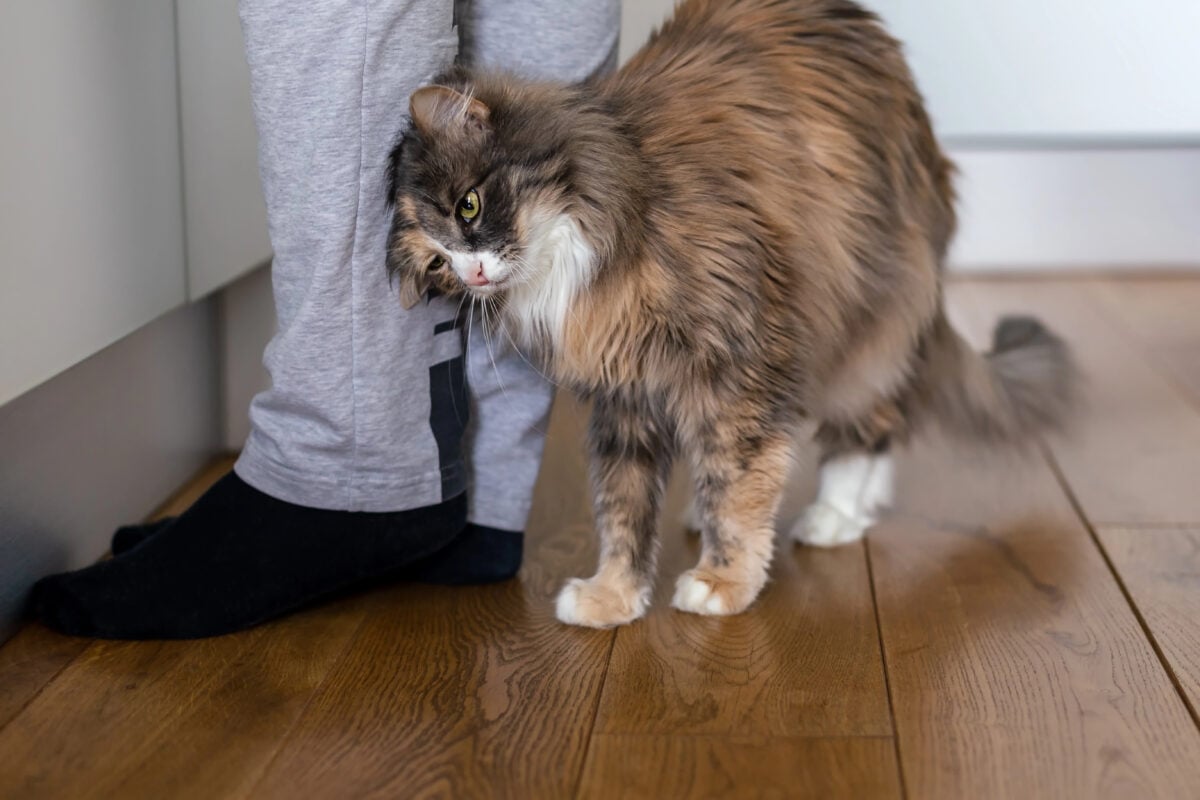
What your cat may want: Affection, acknowledgment, food, or permission to guide you toward the correct cupboard.
The cat is greeting you, claiming you, and redirecting your travel plans at the same time. Multitasking should be respected.
Watch your step.
10. Flopping in Your Path: The Strategic Speed Bump
You are walking through the house when your cat runs ahead, drops to the floor, and rolls dramatically onto one side. The belly may be displayed. This is where judgment becomes important.
Sometimes the flop is an invitation for petting. Other times it is a request for play. Sometimes the exposed belly is a beautifully arranged trap designed to capture your hand with all four paws.
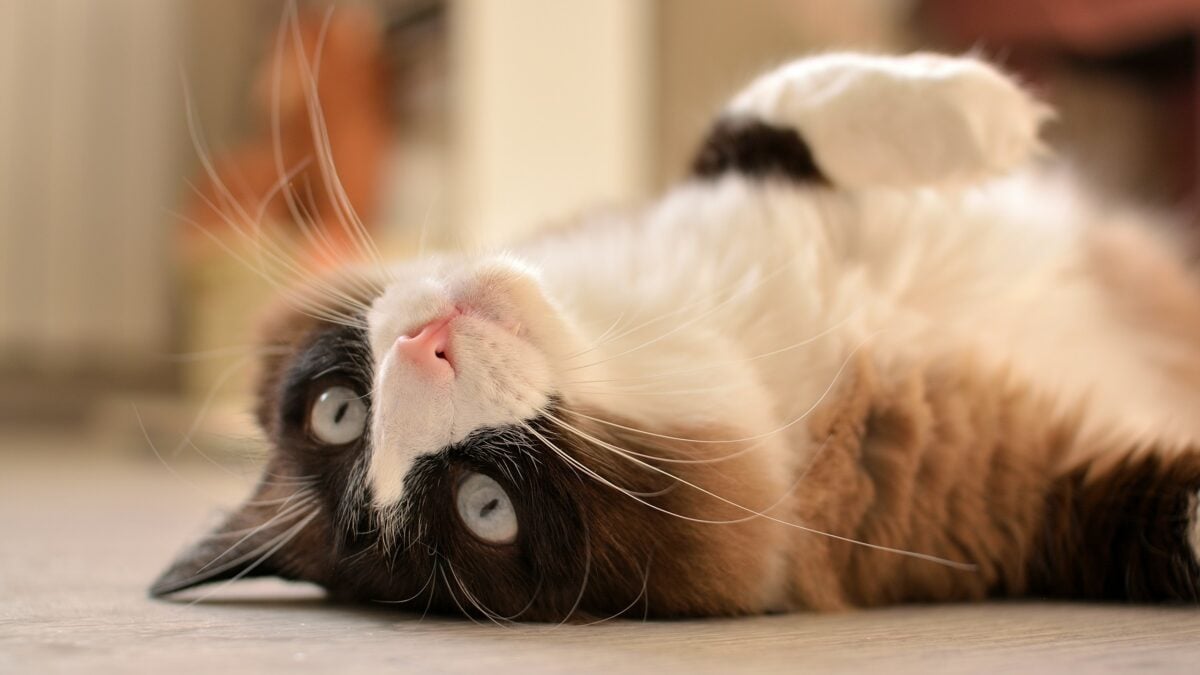
Rolling over can indicate comfort, excitement, playfulness, or a desire for interaction, but it is not automatically permission to touch the belly. The safest approach is to consider the entire body: loose posture is encouraging, while a twitching tail, tense legs, flattened ears, or widening pupils may mean your hand is entering dangerous territory.
Experienced cat people know to begin with the cheeks or chin and watch the cat’s body language before proceeding.
The body flop is hard to ignore because it happens directly in your path.
Your cat is not merely asking for attention. Your cat has become a speed bump.
What your cat may want: Petting, play, admiration, or the satisfaction of successfully stopping human traffic.
Naturally, you stop. The cat has won, and all is right with the world.
Life With a Cat Who Refuses to Be Ignored
Cats may have a reputation for aloofness, but their behavior often tells a different story.
They follow us from room to room, deliver soggy toys, interrupt phone calls, and stage dramatic emergencies beside bowls that are clearly not empty. Their methods may be chaotic, inconvenient, and occasionally dangerous to glassware, but the message underneath them is often simple:
A little neediness, a little curiosity, and a great deal of excellent timing.
Notice me. Stay close. You are my human.
We complain, of course. Then we lift the blanket, refill the bowl, praise the soggy toy, and make room beside the keyboard.
How to Give Your Cat Healthy Attention
You do not need to remain available for feline requests 24 hours a day. Keep in mind that your cat may disagree.
A healthier approach is to make attention positive, predictable, and suited to your cat’s personality. Feline welfare guidelines emphasize regular opportunities for play, natural hunting behaviors, safe resting places, and social interaction that cats can choose rather than having contact forced on them.
Try building a few short attention sessions into the day. Use a wand toy for an energetic chase, toss a lightweight toy down the hallway, offer a puzzle feeder, or simply sit nearby and let your cat decide whether petting is required.
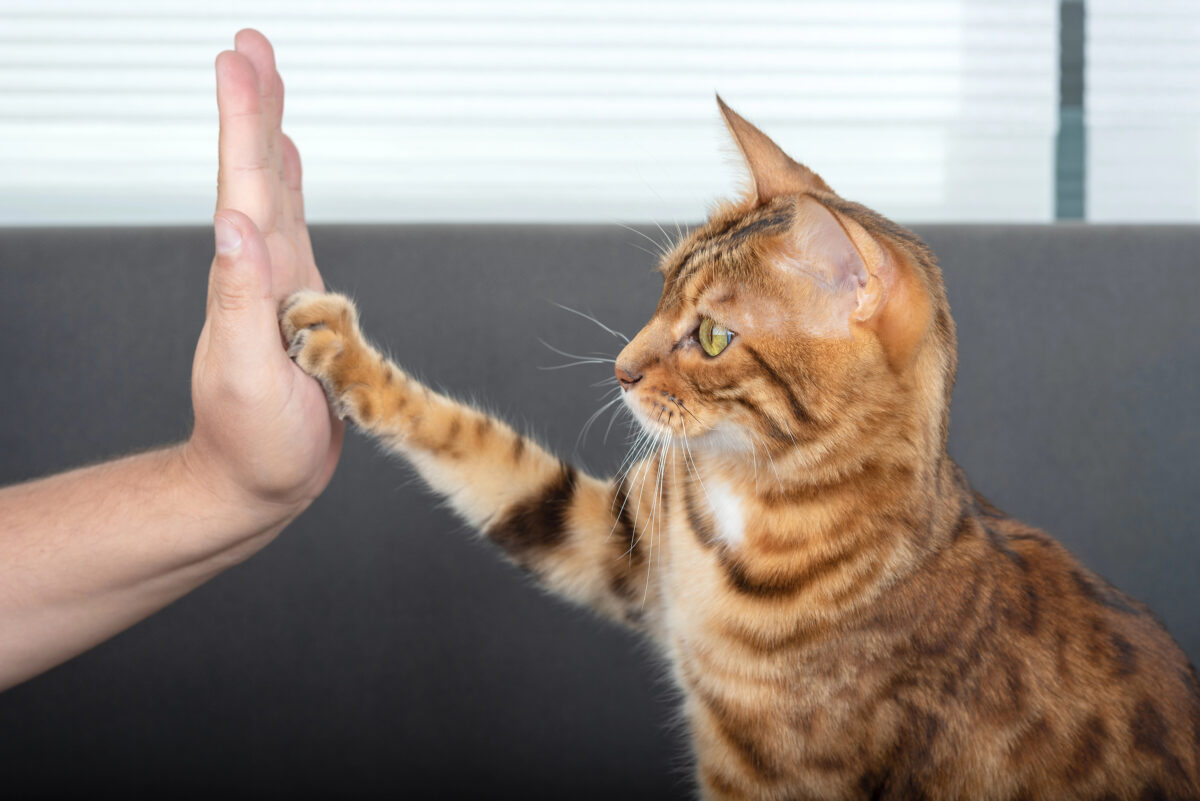
Many cats prefer several brief interactions over one long session. The ideal amount and type of attention will vary.
One cat may demand vigorous play, while another considers quietly occupying the same couch a major social event. A cat’s preferred level of activity can vary widely, so it helps to understand your cat’s natural energy level before deciding how much play or stimulation they need.
A few simple habits can help:
- Schedule interactive play at predictable times.
- Rotate toys to keep them interesting.
- Provide scratching areas, hiding places, window views, and vertical spaces.
- Reward calm approaches with petting, conversation, or play.
- Let your cat initiate and end physical contact when possible.
Routine object play is especially useful because it gives cats an appropriate outlet for stalking, chasing, pouncing, and grabbing. Feline behavior guidance recommends offering this type of play regularly, including for adult and senior cats.
Healthy attention does not always require active entertainment, either. Talking to your cat, inviting them onto the couch, or allowing them to supervise while you fold laundry may be enough.
Your cat may still sit directly on the shirt you were folding.
Enrichment is not magic.
What to Do When Attention-Seeking Gets Out of Hand
There is a difference between a cat who occasionally walks across your keyboard and one who yells for hours, bites for attention, destroys objects, or repeatedly wakes the household at 3:00 a.m.
Before treating the behavior as a discipline problem, ask what may be driving it. Your cat could be bored, hungry, stressed, under-stimulated, reacting to a schedule change, or repeating a behavior that has worked before. It is also worth considering whether something in the home has unsettled them, since many common noises, objects, and situations can trigger fear in cats.
Cats learn from consequences. When yelling, pawing, or knocking something down reliably produces food, play, conversation, or a human leaping dramatically from the couch, the behavior may become more frequent. Even annoyed attention can still count as attention.
The solution is not to punish your cat. Yelling, spraying water, or frightening them can increase stress and may damage trust without teaching them what to do instead. Punishment can also create fear or defensive behavior—and in some cases, the reaction itself becomes part of the reward.
Instead:
- Meet the underlying need. Add appropriate play, enrichment, resting areas, or predictable feeding times.
- Reward the behavior you prefer. Give attention when your cat approaches calmly, settles nearby, uses a scratching post, or plays with an appropriate toy.
- Avoid rewarding the full performance. When possible, wait for a brief pause in the yelling or pawing before offering attention.
- Redirect before the behavior escalates. Start a scheduled play session or offer an independent activity before your cat reaches the laptop-closing stage.
- Be consistent. A behavior that works occasionally can be especially difficult to stop because the cat learns that persistence may eventually pay off.
Be prepared for the behavior to become temporarily louder or more determined when it stops producing the usual result. In behavioral terms, this is sometimes called an extinction burst. In cat terms, it is a formal complaint about declining service standards.
Most importantly, pay attention to sudden changes.
New or unusually intense vocalizing, clinginess, aggression, restlessness, nighttime activity, or destructive behavior can sometimes be connected to pain, illness, stress, or age-related changes. Contact your veterinarian when the behavior appears suddenly, persists, or occurs alongside changes in appetite, thirst, weight, grooming, mobility, sleep, or litter-box habits.
Sometimes your cat wants attention. Sometimes your cat needs help. The challenge is learning which memo they are trying to send.
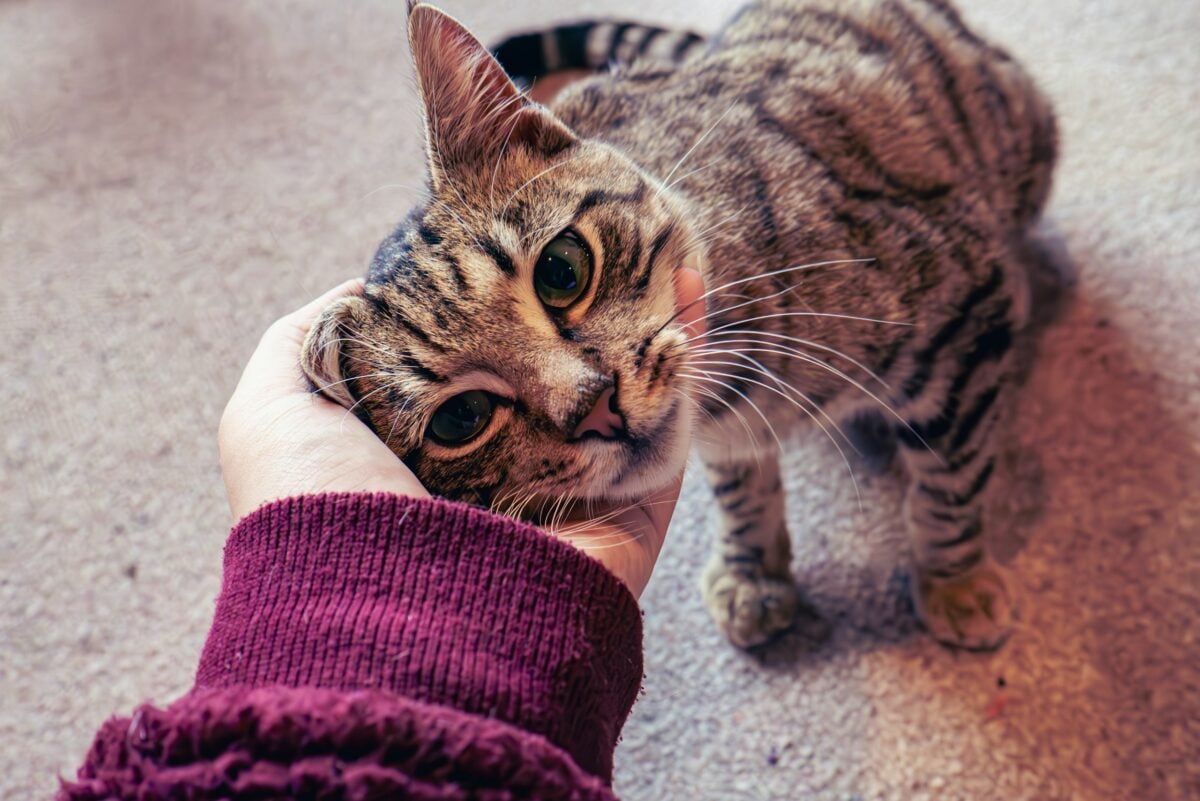
Your Cat Has Trained You Well
Living with a cat means accepting that attention is rarely requested politely.
It arrives as a paw on your keyboard, a scream from the hallway, or a dramatic flop directly in your path. Your cat knows which stare gets the blanket lifted and exactly how close a glass can get to the edge before you react.
- Some of these habits are simply cat behaviors that seem rude but usually aren’t. Others suggest your cat is acting sweet right before causing trouble.
- Either way, being singled out is strangely flattering. Cats are selective, and there are often clear signs when a cat has chosen a favorite person.
- Favorite-person status comes with duties: admire the toy, open the door, make room near the laptop, and stop questioning the many things every cat owner eventually accepts.
The message beneath all the chaos is simple: Notice me. Stay close. You are my human.
What’s Your Cat’s Most Dramatic Demand for Attention?
Which attention-seeking move has your cat perfected? Share their most dramatic tactic in the comments.