When you purchase through links on our site, we may earn a commission at no extra cost to you. Learn more.
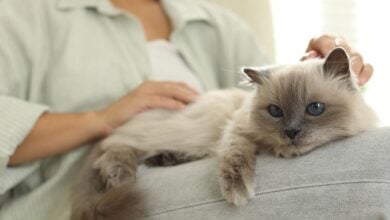
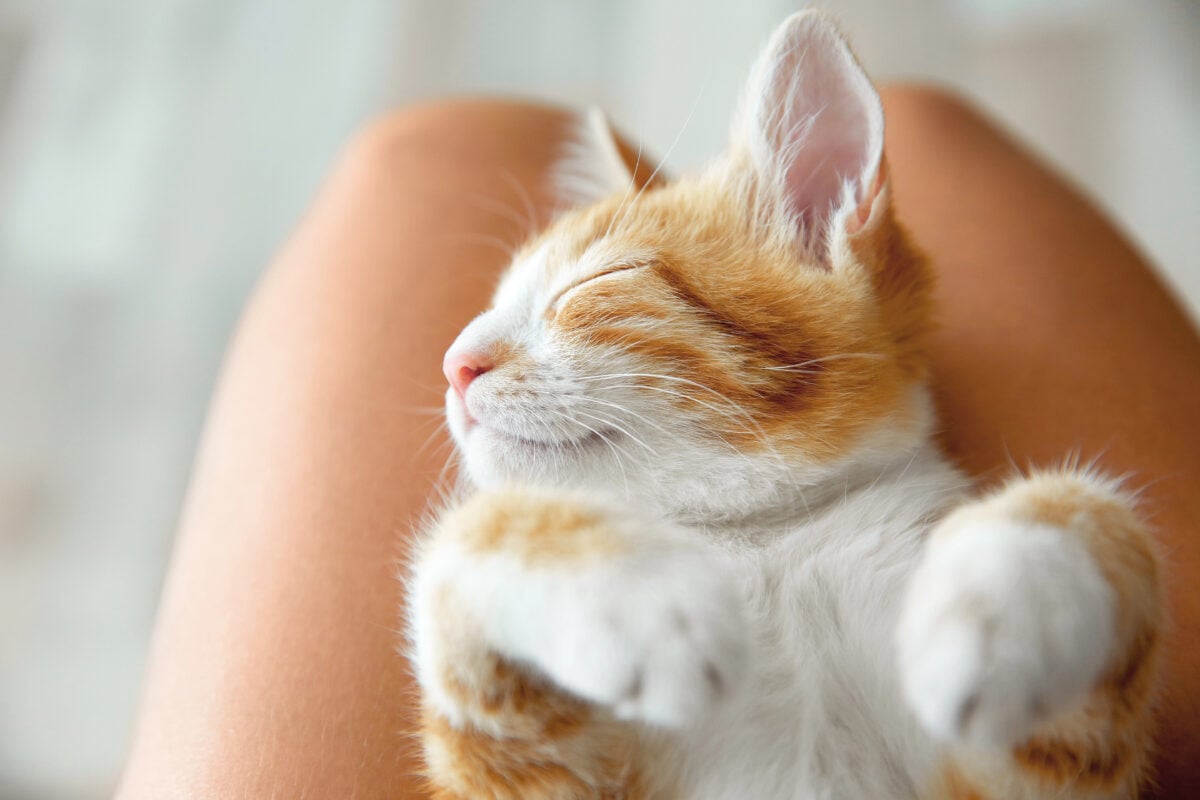
You know the sound: your cat curls up in your lap, closes their eyes, and starts that tiny rumbling engine that somehow makes it impossible to move for the next hour.
Table of Contents
Most cat owners hear a purr and assume one thing: “My cat is happy.”
And sometimes, that’s exactly what your feline friend is saying. But cats are complicated little creatures (as anyone who has apologized to a cat for moving their own leg already knows).
A purr can mean comfort, affection, curiosity, a request for something, or even a way for your cat to calm themselves down. The secret is learning what your cat’s purr means in the moment because that familiar little vibration may be telling you more than you think.
Want our human-written content to rank above AI-generated garbage? Help us out by clicking this button!
First, How Do Cats Purr?
For something cats do so often, purring is surprisingly mysterious.
Scientists spent decades debating exactly how cats create that steady rumbling sound. Unlike a meow, which is a deliberate vocalization, a purr is produced by a rapid series of muscle movements deep inside a cat’s throat.
When a cat purrs:
- The brain sends signals to the muscles surrounding the larynx (voice box)
- Those muscles rapidly tighten and relax
- Air moves across the vocal cords
- Vibrations are produced during both inhalation and exhalation
The result is the continuous rumbling sound we recognize as a purr.
That’s one reason a purr feels different from most animal sounds. It doesn’t stop and start with each breath. Instead, the vibration continues while a cat breathes in and out, creating that familiar motor-like hum.
And that vibration doesn’t stay in the throat. If you’ve ever rested your handon a purring cat, you’ve probably felt the rumble travel from their chest, through their neck and shoulders, and throughout their entire body.
Why Do Cats Purr? 6 Reasons Your Cat Turns On The Motor
If cats could talk, life would be a lot easier. Instead, they communicate through body language, vocalizations, facial expressions, and, yes, purring.
The tricky part is that a purr isn’t a single message. The same sound can mean very different things depending on what’s happening around your cat at that moment.
A cat stretched out in a sunny window may be communicating something entirely different than a cat purring beside an empty food bowl or inside a veterinarian’s office.
The key is learning to look beyond the sound itself and pay attention to the situation, body language, and timing.
Here are six common reasons your cat may start their motor.
1. Your Cat Feels Happy, Safe, And Completely Relaxed
Let’s start with the reason most people think of first, because sometimes the obvious answer is the right one.
When cats feel comfortable, secure, and content, purring is often part of the package. For many cats, a purr is simply a sign that they’re enjoying the moment.
You may hear this type of purring when your cat is:
- Curled up in your lap
- Lounging in a sunny window
- Being gently petted
- Kneading a blanket
- Settling in for a nap beside you
Many cats also have favorite purring rituals. Some start the moment you sit down on the couch. Others fire up their motor the second you get into bed. A few seem convinced that every freshly folded blanket was placed there specifically for them.
While every cat is different, a contented purr is usually accompanied by relaxed body language, such as:
- Slow blinks
- Loose muscles
- Stretching
- Kneading
- A relaxed posture
When your cat looks completely at ease and starts purring, happiness is usually the simplest—and most accurate—explanation.
2. Your Cat Is Strengthening Their Bond With You
Not every purr is about comfort. Sometimes, it’s about connection.
Cats begin purring as early as a few days old. Kittens purr while nursing, and mother cats purr back to them. Before kittens can see clearly or confidently explore the world, purring helps create a line of communication between mother and baby.

Many cats continue using purring similarly throughout their lives.
You may notice your cat purr when they:
- Jump onto your lap after you’ve been away
- Rub against your legs when you come home
- Curl up beside you at bedtime
- Follow you from room to room
In these moments, the purr may be less about the chair, blanket, or lap itself and more about who they’re sharing it with.
This is one reason cats often reserve certain behaviors for their favorite people. One cat may happily sit beside everyone in the household, but only climb into one person’s lap. Another may greet every visitor politely but save the enthusiastic purring for a specific family member.
A bonding purr is often part greeting, part affection, and part social connection.
It’s your cat’s way of saying, “I like being here, and I like being here with you.”
3. Your Cat Wants Something From You
Cats may have a reputation for being independent, but many become surprisingly chatty when they want something.
You might hear this type of purr when your cat is:
- Standing beside an empty food bowl
- Walking you toward the kitchen
- Staring at the treat cabinet
- Pawing at your arm while you’re working
- Positioning themselves between you and whatever currently has your attention
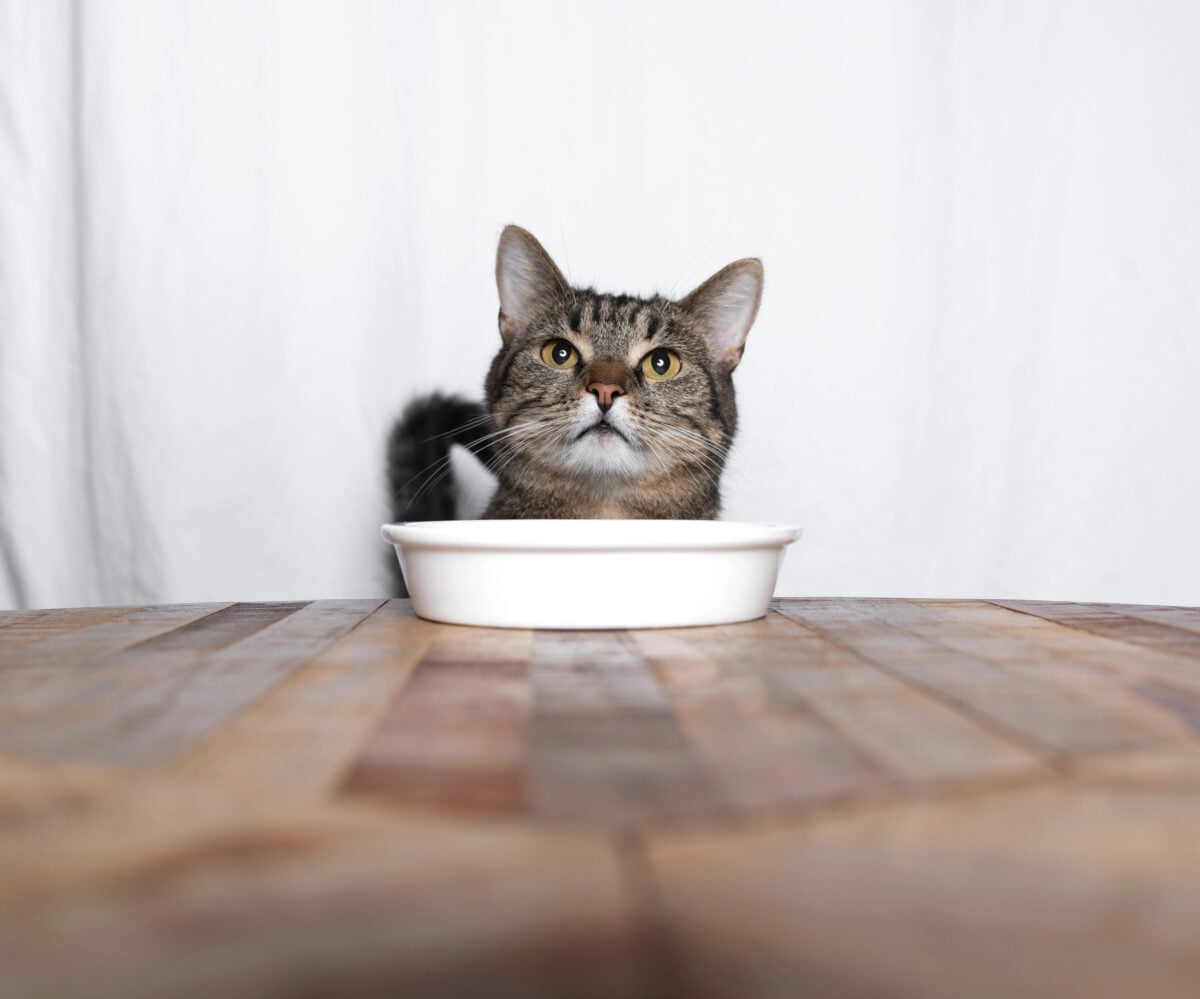
This isn’t necessarily manipulation (although, honestly, it can be). It’s communication.
Over time, cats learn which behaviors get results. If purring has successfully led to breakfast, treats, playtime, petting, or an opened door in the past, there’s a good chance they’ll try it again.
Some cats even develop a special type of purr that researchers call a “solicitation purr.” This purr combines the familiar rumbling sound with a higher-pitched element that many people find difficult to ignore.
This may explain why a cat can somehow wake an entire household at 5:17 a.m. without technically making much noise.
Unlike the relaxed purr of a cat napping in a sunbeam, an attention-seeking purr is usually paired with action. Your cat is moving, watching you, leading you somewhere, or repeatedly directing your focus toward a specific goal.
The purr isn’t the destination. It’s part of the sales pitch.
4. Your Cat Is Trying To Calm Themselves Down
One of the most surprising things about purring is that cats don’t reserve it for pleasant situations. Some cats purr when they’re nervous, uncertain, or dealing with something stressful.
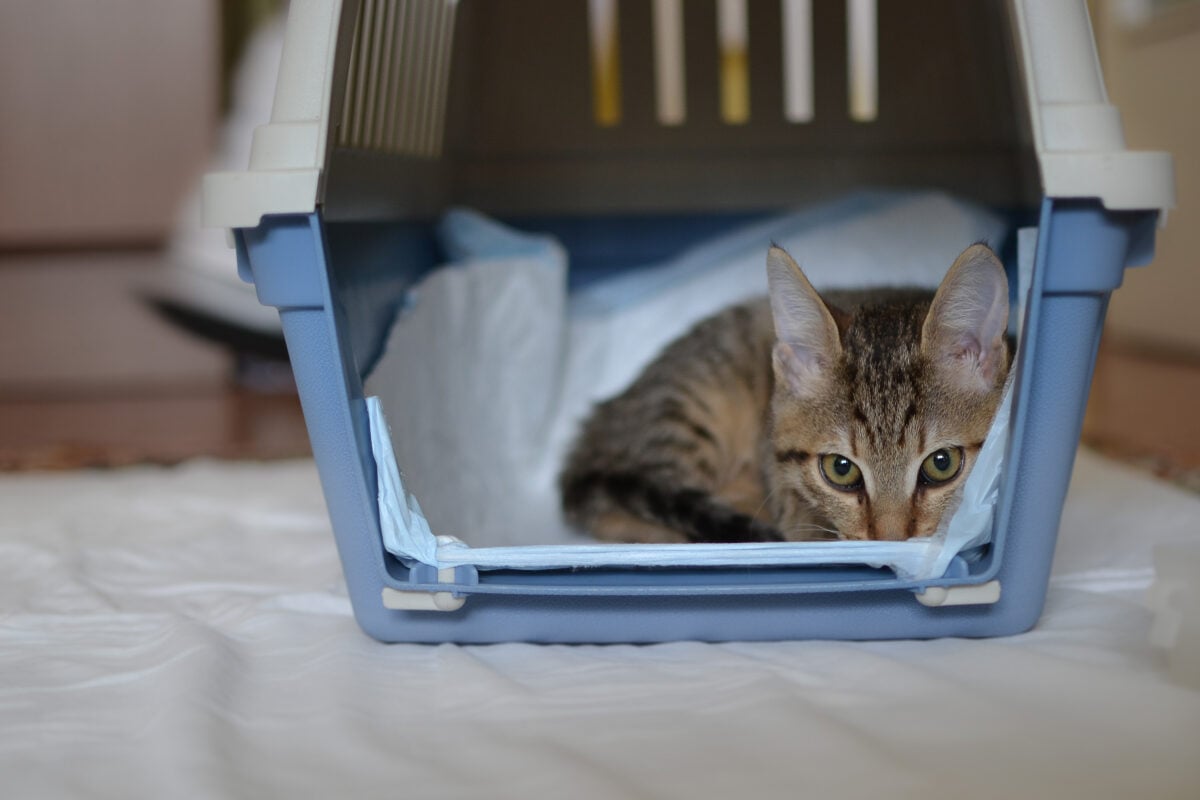
You may notice this type of purring during:
- A trip to the veterinarian
- A car ride
- Moving to a new home
- The arrival of a new pet
- Other major changes to their routine
At first, this can seem confusing. If a cat is stressed, why would they make the same sound they use in positive situations?
Researchers believe purring may sometimes serve as a form of self-soothing. Much like a person might hum, fidget, pace, or take deep breaths when they’re anxious, a cat may purr as part of their effort to cope with a stressful situation.
In these moments, the purr isn’t necessarily telling you that your cat feels comfortable. It may be helping them become comfortable.
If your cat is purring during an unfamiliar or stressful event, pay attention to the rest of their body language.
Signs of tension may include:
- Flattened ears
- Dilated pupils
- A tucked posture
- Hiding or freezing
- A tightly wrapped tail
The purr may be part of your cat’s coping strategy rather than a sign that they’re enjoying the experience.
5. Your Cat May Be Uncomfortable Or Not Feeling Well
This is the reason that surprises many cat owners. Cats sometimes purr when they’re injured, sick, or experiencing discomfort.

Researchers have proposed a fascinating possibility.
Domestic cats’ purrs typically occur within a frequency range of about 25 to 150 hertz. Similar frequencies have been studied for their potential effectson bone density, tissue repair, and muscle recovery, leading some scientists to speculate that purring may offer healing benefits for cats themselves.
While the theory is intriguing, it has not been definitively proven.
What researchers do know is that cats sometimes purr during periods of illness, injury, stress, and recovery—not just when they’re happy.
Cats are also remarkably good at hiding vulnerability. In the wild, advertising weakness could make an animal a target, so cats evolved to mask pain far better than most owners realize.
Because of this, a cat that isn’t feeling well may continue purring while showing other subtle signs that something is wrong.
Watch for changes such as:
- Eating less than usual
- Sleeping significantly more
- Hiding more often
- Reduced interest in play
- Changes in grooming habits
- Limping or moving differently
- Weight loss
- Vomiting or diarrhea
6. Your Cat Loves The Routine
Cats may act spontaneously when they’re sprinting through the house at 2 a.m., but most are creatures of habit.
And when something they enjoy is about to happen, the purr can start before the event itself.
You may notice your cat purring when:
- You head toward the food bowl at breakfast
- You sit down in their favorite cuddle spot
- You pick up a toy
- You start your nightly bedtime routine
- You settle into the chair where they usually join you
In these moments, your cat isn’t necessarily responding to what’s happening right now.
They’re responding to what they expect is about to happen.
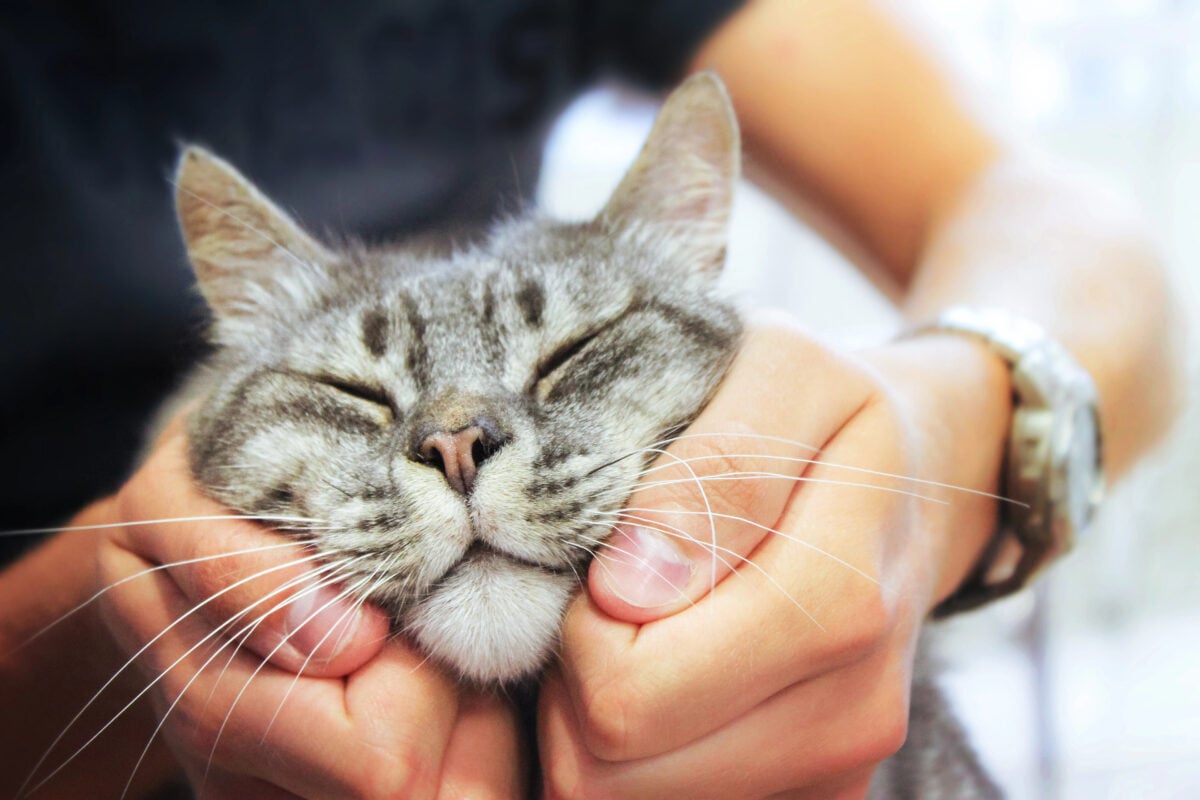
Think about how many parts of your cat’s day run like clockwork. They know when meals usually appear. They know where the best naps happen. They know which human is most likely to hand out treats.
Some cats seem to have a better grasp of the household schedule than the people living in it.
That’s because cats are excellent at recognizing patterns. When a favorite activity becomes part of a familiar routine, anticipation itself can trigger positive emotions—and sometimes a purr.
Your cat may not be celebrating the present moment. They may be celebrating the fact that their favorite moment is only seconds away.
How Can You Tell What Your Cat’s Purr Actually Means?
By now, you’ve probably noticed a pattern. The same sound can show up during a cuddle session, a breakfast demand, a stressful car ride, or a favorite bedtime ritual.
That’s why interpreting a purr on its own can be misleading. A purr isn’t a standalone message. It’s one piece of a larger conversation.
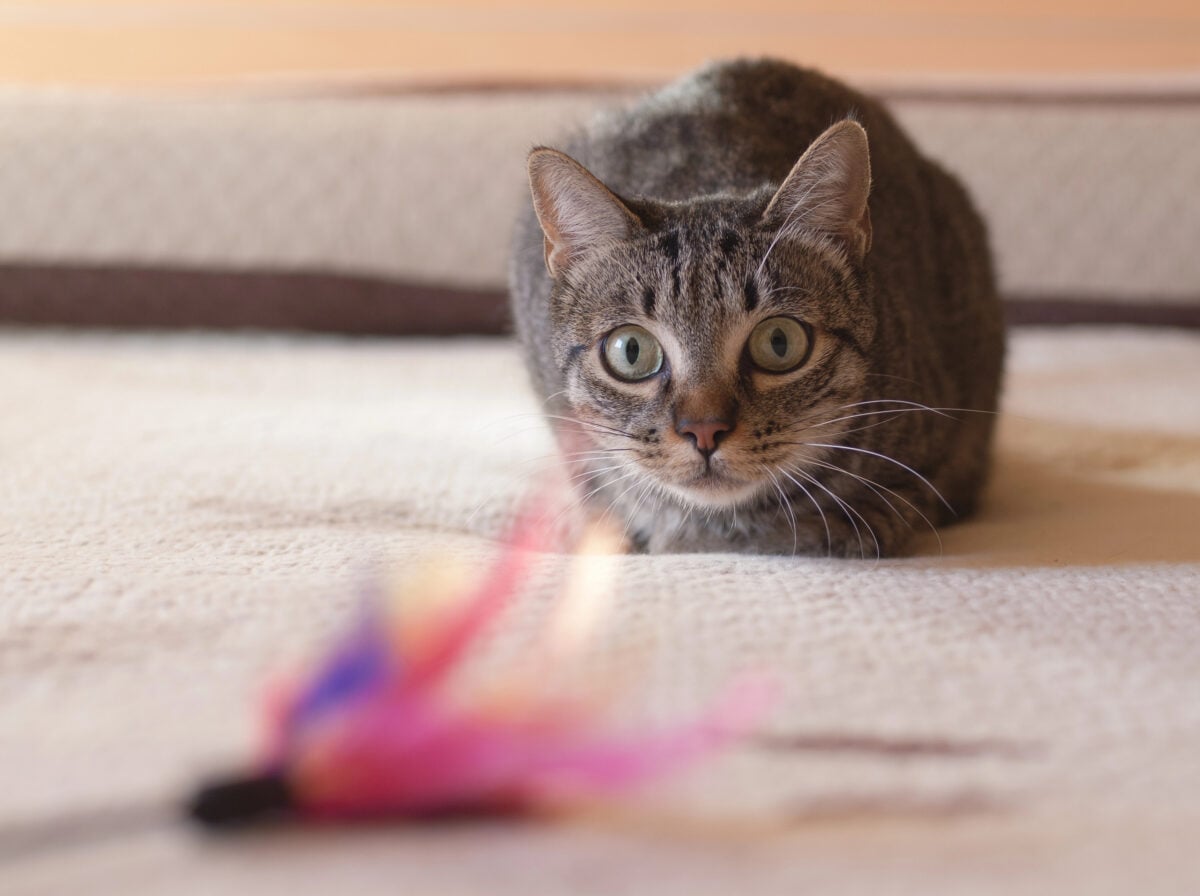
To understand what your cat is trying to tell you, look at three things:
1. What’s Happening Around Them?
Context is often your biggest clue.
A cat purring while stretched across your lap is sending a very different message than a cat purring inside a carrier at the veterinarian’s office.
Ask yourself:
- Where is my cat?
- What just happened?
- What is about to happen?
2. What Is Their Body Language Saying?
Cats communicate with their entire body.
Look for clues such as:
- Ear position
- Eye shape
- Tail posture
- Muscle tension
- Overall activity level
A relaxed cat and a stressed cat may both purr, but they rarely look the same.
3. Has Anything Changed Recently?
One of the most useful things you can track is whether your cat’s behavior has changed.
Pay attention if your cat suddenly begins:
- Hiding more often
- Eating less
- Sleeping more than usual
- Avoiding favorite activities
- Acting differently than they normally do
A single purr rarely tells the whole story. Patterns tell a much clearer story. The better you know your cat’s normal routines, habits, and personality, the easier it becomes to recognize what their purr is actually trying to communicate.
When Your Cat Purrs… Here’s What To Look For
| Situation | Other Clues | What It May Mean |
|---|---|---|
| Curled up in your lap | Slow blinks, relaxed posture | Contentment |
| Following you to the kitchen | Meowing, staring, pacing | Wants food or attention |
| During a car ride | Tense body, dilated pupils | Self-soothing |
| During illness or injury | Other behavior changes | Possible discomfort |
| At bedtime every night | Familiar routine | Anticipation |
Can Your Cat’s Purr Actually Benefit Your Health?
Most cat owners don’t need a scientific study to tell them that a purring cat feels good to be around.
There’s a reason people will sit in an uncomfortable position for an hour rather than disturb a sleeping, purring cat. The sound itself is calming.
Researchers have also explored this connection. Studies have found that spending time with companion animals can help reduce stress and promote feelings of well-being, and for many cat owners, purring becomes part of that experience.
A purr often acts like a tiny soundtrack to moments of connection.
Think about when you’re most likely to hear it:
- During a quiet eveningon the couch
- While reading in bed
- During a slow weekend morning
- After a long day at work
The purr becomes associated with routines that feel safe, familiar, and enjoyable.
That’s one reason many cat owners say they can instantly recognize their own cat’s purr, even in a room full of cats. Over time, that sound becomes woven into daily life.
And while your cat probably isn’t purring specifically to lower your stress levels, that doesn’t mean it can’t have that effect.
Sometimes the health benefit isn’t in the vibration itself. It’s in the relationship behind it.

How Loud Can A Cat Purr Get?
If you’ve ever had to pause a conversation because your cat was purring too loudly, you’re not imagining things.
Some cats can produce remarkably powerful purrs.
The current Guinness World Record for the loudest purr by a living domestic cat belongs to a cat named Bella, whose purr measured 54.59 decibels—about as loud as a boiling kettle.
And that’s not even the loudest purr ever recorded.
Two British cats, Smokey and Merlin, both reached an astonishing 67.8 decibels, roughly comparable to the sound level of a normal conversation or a dishwasher running nearby.
For comparison:
- A typical cat purr is often around 20–30 decibels
- Normal conversation is around 60 decibels
- A dishwasher typically operates around 60–70 decibels
No wonder some owners claim they can hear their cat from another room.
Of course, a loud purr doesn’t necessarily mean a happier cat. Just as people differ in how loudly they communicate, some cats are naturally louder communicators than others.
Still, if your cat sounds like they’re hiding a tiny motorcycle under their chin, you’re definitely not alone.
Do Big Cats Purr, Too?
Yes, several wild cat species can produce true purrs, including:
- Bobcats
- Cheetahs
- Servals
- Mountain lions
In fact, if you were standing next to a relaxed cheetah, the sound would be surprisingly familiar. So why can some big cats purr while others roar?

The answer appears to involve a small structure in the throat called the hyoid bone, which helps support the tongue and larynx.
Cats that can produce a true purr, such as domestic cats, cheetahs, and bobcats, have a more rigid hyoid bone. Lions and tigers, on the other hand, have a more flexible hyoid structure that helps enable their famous roars.
Interestingly, lions and tigers can make sounds that resemble purring, but they don’t produce the continuous inhale-and-exhale purr that house cats do.
A true purr happens during both inhalation and exhalation.
That’s what makes the sound so distinctive.
The next time your cat curls up beside you and starts rumbling, you’re hearing a communication tool shared with some of the most impressive predators on the planet.
Just not the ones famous for roaring.
Are Cats The Only Animals That Purr?
For a long time, scientists thought purring was essentially a feline superpower. And for the most part, they were right.
While a variety of animals can make rumbling, buzzing, or purr-like sounds, true purring is surprisingly rare.
Researchers define a true purr as a sound that occurs during both inhalation and exhalation—the same continuous rumble produced by domestic cats.
As far as scientists currently know, the only non-feline animal that can do this is a genet, a small, spotted mammal native to Africa that happens to be a distant relative of cats.
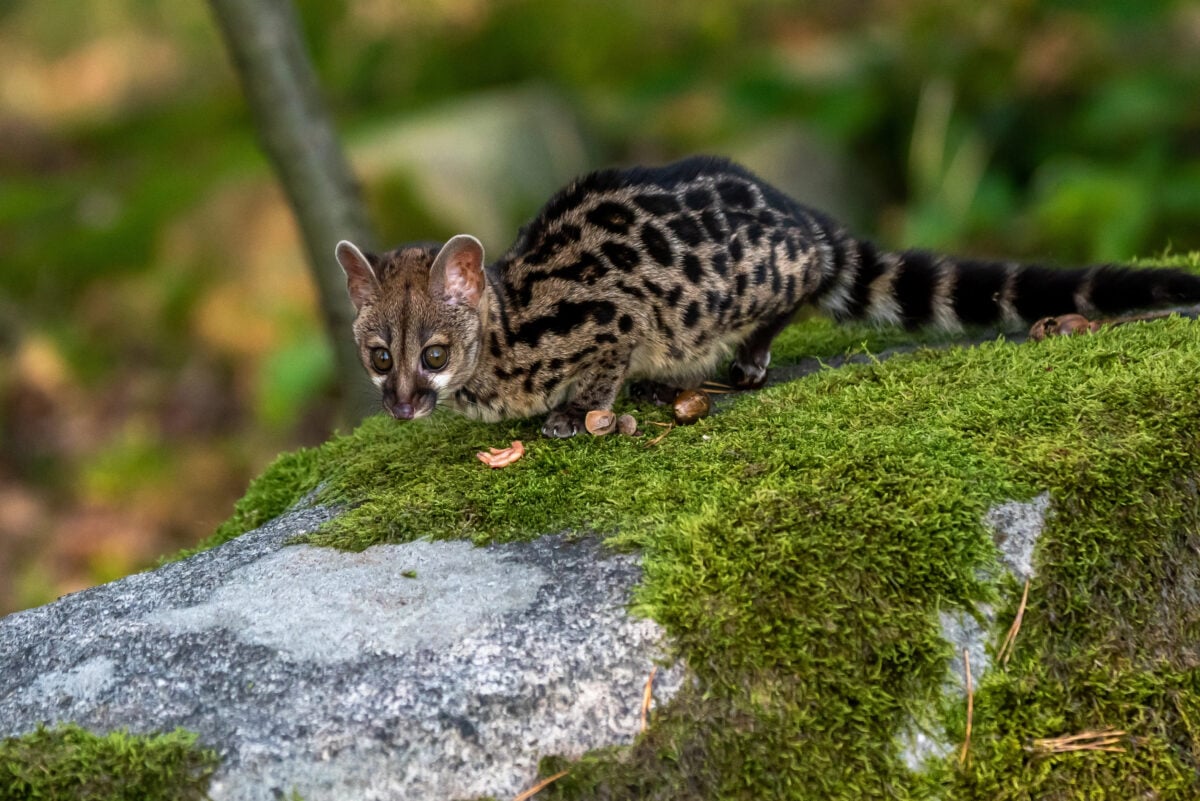
At first glance, a genet looks a bit like someone combined a cat, a ferret, and a leopard and decided to see what happened.
Despite the family connection, genets aren’t cats. They belong to a different branch of the carnivore family tree.
That makes them an unusual exception.
After all, no other animal has built quite the same reputation around climbing into your lap, turningon a tiny internal motor, and refusing to move for the next three hours.
Is Something Wrong If My Cat Never Purrs?
After reading an entire article about purring, you may have realized something: Your cat hardly ever does it. Or maybe you’ve never heard them purr at all.
In most cases, that’s completely normal. Some cats are simply quieter communicators than others.
Just as some people are naturally talkative and others barely say a word, cats have individual personalities and communication styles.
Some cats:
- Purr loudly enough to be heard across the room
- Produce such soft purrs that they’re felt more than heard
- Purr only in specific situations
- Rarely purr at all
A cat that doesn’t purr much may express affection and contentment in other ways, such as:
- Following you around the house
- Slow blinking
- Head bunting
- Sleeping nearby
- Greeting you at the door
Not every cat reads from the same script.
If your cat is healthy, active, eating normally, and behaving like their usual self, a lack of purring is rarely a reason for concern.
When Should You Worry About Your Cat’s Purring?
Most of the time, purring is simply part of being a cat. On its own, a purr is rarely a reason to worry.
What deserves attention is a sudden change in your cat’s normal behavior or purring patterns.
Consider contacting your veterinarian if you notice:
- A cat who normally purrs frequently but suddenly stops
- A cat who rarely purrs begins purring excessively
- Changes in appetite or water intake
- Hiding or withdrawing from family members
- Unexplained weight loss
- Difficulty moving, jumping, or walking
- Vomiting, diarrhea, or other signs of illness
- Significant changes in energy level
Fortunately, most purring falls into the much less dramatic categories we’ve discussed throughout this article: comfort, connection, anticipation, communication, and the occasional attempt to convince you that breakfast should have happened 20 minutes ago.
Frequently Asked Questions
Cats may all purr, but they don’t always do it for the same reasons. Here are answers to some of the most common questions cat owners ask. If you don’t see yours here, ask in the comments.
Why Does My Cat Purr And Then Bite Me?
This can feel like mixed signals, but it’s actually pretty common.
Many cats enjoy petting up to a certain point and then decide they’ve had enough. A cat may be purring because they were enjoying the interaction, but a sudden bite can happen when they become overstimulated or want the petting to stop.
Watch for clues such as tail flicking, skin twitching, flattened ears, or a shift in body posture. These signals often appear before the bite.
Why Does My Cat Purr While Kneading?
Kneading and purring often go hand in hand because both behaviors can be traced back to kittenhood.
Kittens knead their mother while nursing, and purring is part of the communication between mothers and kittens. Many adult cats continue both behaviors when they feel especially comfortable and secure.
Why Does My Cat Purr When I Talk To Them?
Some cats respond to their owners’ voices as part of a social interaction.
If your cat starts purring when you speak to them, they may recognize your voice as a source of attention, comfort, or positive experiences. For many cats, it’s another way of participating in the conversation.
Why Does My Cat Purr In Their Sleep?
Sleeping cats often continue behaviors they exhibit while awake, including purring.
If your cat is deeply relaxed, you may hear a soft purr while they’re napping. Some cats also twitch their whiskers, paws, or tails during sleep, much as humans do during certain sleep stages.
Can Cats Fake Purrs?
Not exactly, but they can use purring strategically.
Cats quickly learn which behaviors elicit a response from humans. A cat that has discovered purring helps earn breakfast, treats, or attention is likely to repeat the behavior. They’re not being deceptive so much as effective.
Why Does My Cat Purr At Me But Not Other People?
Cats form different relationships with different individuals.
Your cat may associate you with food, playtime, comfort, or daily routines, thereby creating a stronger bond. Some cats are also naturally selective about who receives their most affectionate behaviors.
If your cat saves their loudest purrs for you, consider it a compliment.
What Is Your Cat Really Trying To Tell You?
A purr is one of the sweetest sounds in the world, but it is not your cat’s only way of communicating. Those slow blinks, bedtime snuggles, dramatic meows, leg rubs, and occasional “absolutely not” hisses are all part of the same feline language.
The more you learn your cat’s personal patterns, the easier it becomes to tell the difference between happy purring, needy purring, nervous purring, and the classic “I love you, but also please feed me immediately” purr.
Want to keep decoding your cat’s weird little habits? These guides can help:
- How To Tell If Your Cat Loves You… Or Just Wants The Treats
- Why Your Voice May Be One Of Your Cat’s Favorite Sounds
- Why Your Cat Will Not Stop Meowing And Rubbing On Everything
- Cat Suddenly Hissing At You? Here Are 5 Common Reasons
- Warning Signs Your Cat Is Crying For Help
And now we need to know: what kind of purr does your cat have? Tiny whisper? Full-body motorcycle? Suspicious breakfast alarm? Share your cat’s purr personality in the comments.