When you purchase through links on our site, we may earn a commission at no extra cost to you. Learn more.
Why does my cat follow me to bed but not sleep there? It is a question I have asked myself more times than I can count.
Table of Contents
Your cat follows you upstairs, hops onto the bed, accepts a few chin scratches, purrs like a tiny engine, and then leaves five minutes later to sleep in a chair, a cardboard box, or the suspiciously glamorous laundry basket.
It feels rude. You were prepared for a cozy night of mutual emotional support. Apparently, your cat had other plans.
But this bedtime disappearing act usually is not a rejection.
Many cats treat bedtime as a familiar moment for company, a quick check-in, or a little affection before choosing the sleeping spot that feels best to them. They may enjoy being near you without wanting to spend the whole night on a warm, moving mattress.
Want our human-written content to rank above AI-generated garbage? Help us out by clicking this button!
In other words, your cat can love you deeply and still prefer the couch.
Here are the most common reasons cats escort their people to bed, then sleep somewhere else.
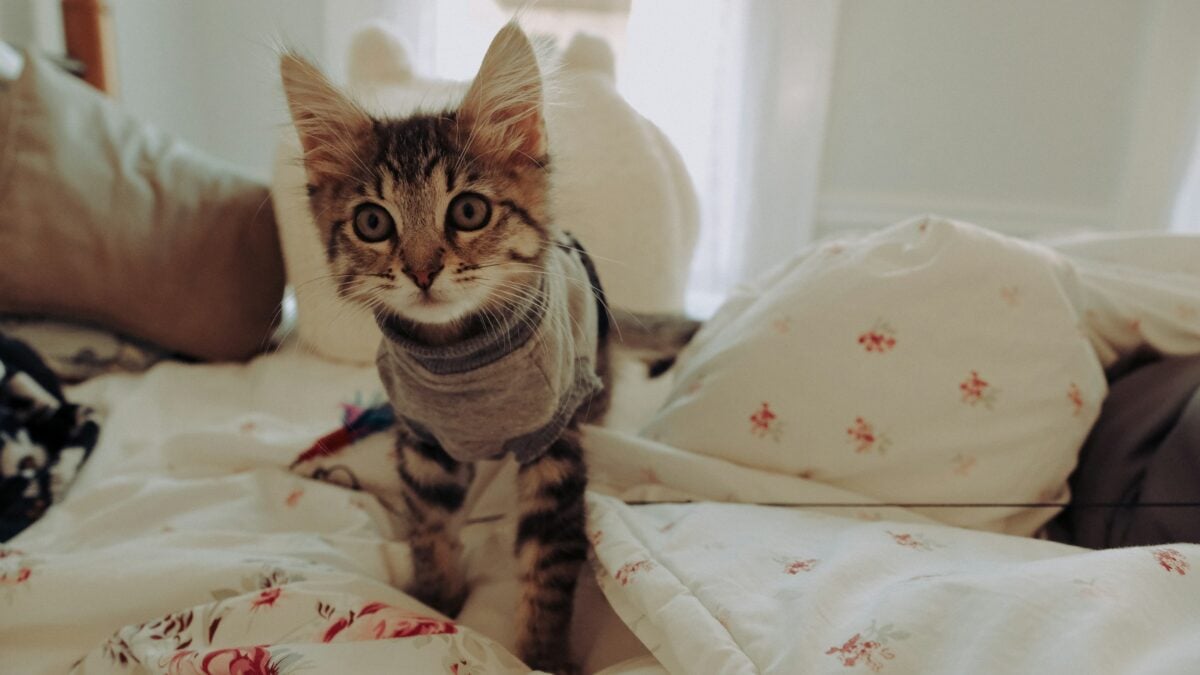
6 Reasons Your Cat Follows You to Bed but Doesn’t Sleep There
It can feel a little personal when your cat follows you upstairs, hops onto the bed, and then leaves five minutes later for a chair, a cat tree, or the laundry basket.
Usually, though, it is not a rejection. Your cat may like the bedtime routine, want a quick moment with you, or simply prefer another place for serious sleep. Cats are picky little creatures with strong opinions about comfort, temperature, and personal space. Here are six common reasons your cat may escort you to bed, then sleep somewhere else.
1. Bedtime Is Part of Their Routine
Cats notice patterns. They may act mysterious, but they know exactly when you usually start winding down for the night.
When you head upstairs, turn off the television, dim the lights, or start your nightly hunt for the “good” pillow, your cat may recognize the whole sequence. To them, bedtime is one more predictable event on the household calendar.
Your cat may be responding to cues like:
- You’re changing into pajamas
- The lights are getting lower
- The sound of your nightly skincare routine
- A final trip to the kitchen or bathroom
- The bedroom door opening
Following you upstairs does not always mean, “I would now like to sleep on this mattress until sunrise.” It may simply mean, “Ah, yes. The humans are doing the nighttime thing. I should attend.”
They may hop onto the bed, inspect the pillows, make one tiny circle, and then wander off to their preferred sleep station. The routine matters. The location? That is apparently negotiable.
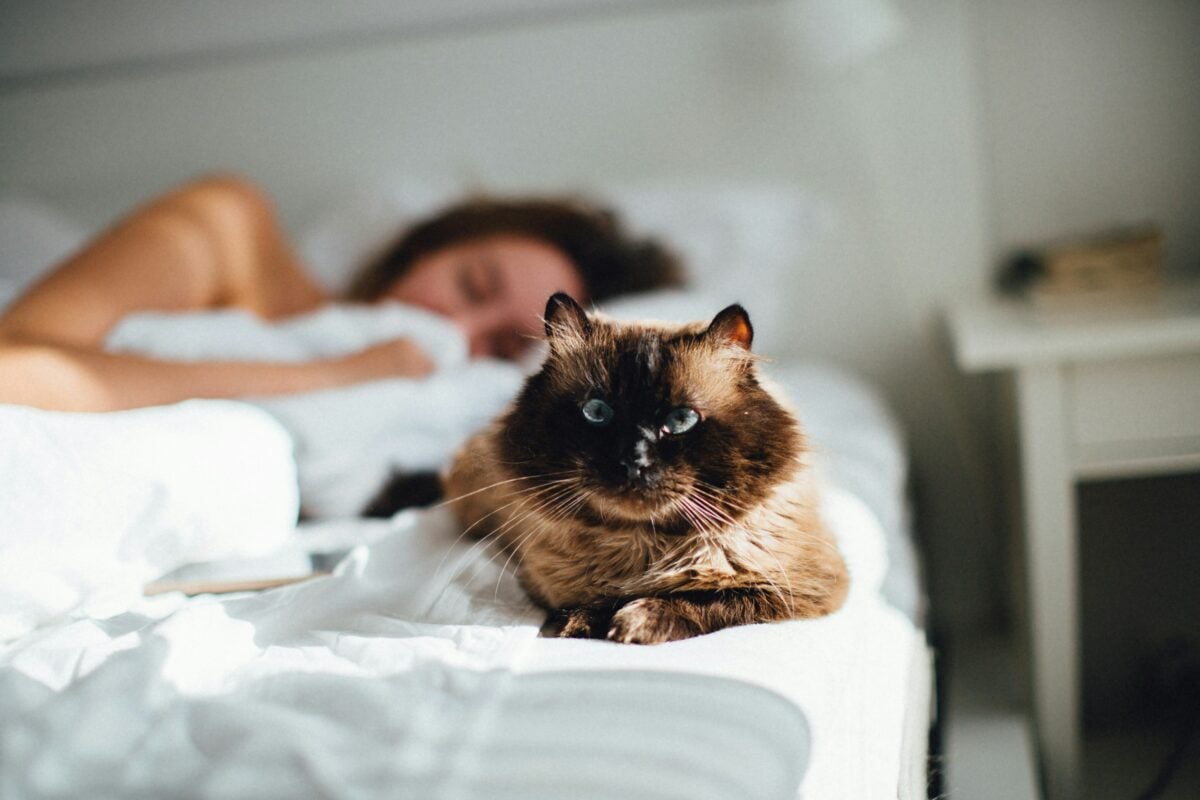
2. They’re Checking on Their Favorite Person
Some cats like to do a quick final check before settling down. Not because they think you cannot survive without them—although they may have doubts—but because you are an important part of their daily world.
You may be the person who fills the food bowl, opens doors, starts playtime, hands out treats, and knows the exact spot behind the ears. Your cat may follow you upstairs simply to make sure you are where you are supposed to be before they pick their own sleeping spot.
This can look like:
- Following closely behind you, then stopping once you get into bed
- Looking back to make sure you are still coming
- Hopping up for a minute, then leaving once you settle in
- Sleeping nearby, but not directly on the mattress
- Returning to check on you later in the night
Think of it as a tiny attendance check. Your cat has located their person, confirmed that all is normal, and can now move on to more urgent matters—like sleeping in a box that has been sitting by the recycling for four days.
3. They Want a Little Interaction Before Sleep
Sometimes, your cat is not looking for a place to sleep. They are looking for a few minutes of you.
A short bedtime visit can be their version of saying goodnight. They may purr beside your shoulder, bump their forehead against your hand, knead the duvet like they are preparing bread for a very tiny bakery, or flop over in a way that suggests a belly rub but absolutely does not guarantee one.
That little social visit may include:
- A forehead bonk or cheek rub
- A slow blink from the foot of the bed
- A brief lap test
- A few dramatic biscuits on the comforter
- Purring loudly beside your ear at the exact moment you are trying to relax
There is a little science behind the cheek rubbing, too. Cats have scent glands around their faces, and rubbing helps them leave a familiar scent on people and objects. When your cat rubs against your hand, pillow, or headboard, they may be enjoying the attention while also making the room smell more like home.
Then, once their social battery is topped up, they may leave. It is not cold, and it’s not personal. It is just very cat.
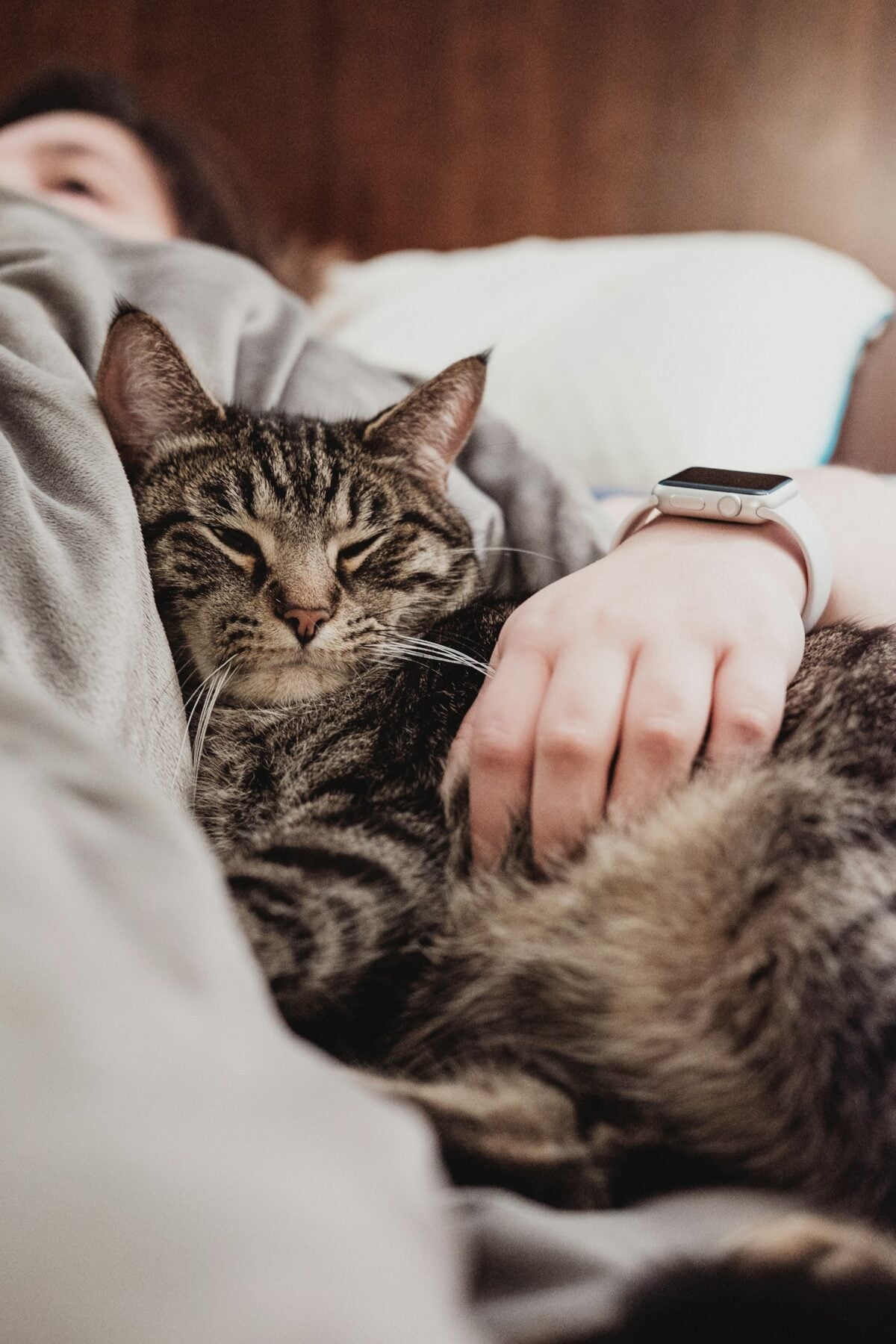
4. They Prefer to Monitor the House
Your bed may be soft, but it is not always the best place to keep an eye on the room.
Many cats prefer spots that give them a little space, a decent view, and an easy exit. That might be a cat tree, windowsill, chair, shelf, sofa back, or the one cardboard box you were absolutely planning to throw away.
A different sleeping spot may offer your cat:
- A clearer view of the room
- More distance from noise or movement
- An easy escape route when someone gets up
- Space away from a dog, another cat, or a restless sleeper
- A familiar place that smells strongly like them
Feline veterinary guidance recommends giving cats safe resting places, hiding spaces, and vertical options. High spaces and hideouts can help cats feel secure and give them more control over their environment.
Your cat is not necessarily guarding the house from imaginary hallway ghosts. But they may enjoy having a good vantage point just in case the robot vacuum starts acting suspiciously again.
Cats are also often described as crepuscular, meaning they may be more active around dawn and dusk. So while you are ready to power down, your cat may still be in the mood for one more quiet lap around the house.

5. Your Bed May Be Too Warm, Wiggly, or Busy
Your mattress may feel like heaven after a long day. To your cat, it may feel like a giant heat pad that shifts every time you breathe.
At first, the bed can be perfect. It is soft. It smells familiar. You are nearby. Then the covers come up, someone rolls over, feet start moving around under the duvet, and suddenly the whole thing feels less like a cozy nest and more like a low-budget earthquake simulator.
Your cat may leave because the bed is:
- Too warm under the blankets
- Too bouncy when someone shifts position
- Too crowded with a partner, child, dog, or another cat
- Too noisy for deep sleep
- Too risky for anyone who has ever been accidentally kicked at 2:00 a.m.
Cats often enjoy warm places, but there is a difference between “pleasantly cozy” and “wedged beside a human under a heavy comforter.” Your bed may be lovely for a five-minute cuddle and far too toasty for a full night of sleep.
The chair across the room may not look better to you. But it is cooler, quieter, and blissfully free of surprise foot attacks.
Fair? Maybe not. Very cat? Absolutely.

6. Their Personality May Be More Independent Than Cuddly
Some cats are true cuddle bugs. They want to sleep beside you, on you, or directly across your face if you are not paying close enough attention.
Other cats are social but independent. They like being near you. They like following you upstairs. Many cats might even want a few minutes of affection before bed. But once it is time for serious sleep, they prefer their own space.
You may have a cat who is:
- A full-time cuddle bug: Sleeps pressed against your legs or curled behind your knees.
- A nearby-but-not-touching cat: Chooses the chair, cat tree, or floor beside the bed.
- A social visitor: Stops by for purrs and pets, then sleeps somewhere else.
- A seasonal snuggler: Wants the bed in winter but acts personally offended by it in summer.
None of these personalities means your cat loves you more or less. Cats show affection in different ways. A cat who sleeps three feet away may feel just as safe and bonded as the one trying to merge with your ribcage at 3:00 a.m.
Why Some Cats Return Later in the Night
Then comes the plot twist.
Your cat leaves the bed at 10:00 p.m. Instead, they choose the chair, the hallway rug, or a laundry basket full of clothes you have been meaning to fold since Tuesday.
But a few hours later, they are back.
Many cats move between sleeping spots overnight. Once the house is quieter, the room has cooled down, and you have stopped performing your Olympic-level blanket tossing routine, your bed may suddenly become much more appealing.
Your cat may return because:
- The room is cooler than it was at bedtime
- You are moving less
- The house is quieter
- They have finished their late-night wandering
- Your legs have finally become acceptable furniture
You may wake up with a furry loaf pressed against your feet, a cat curled behind your knees, or a tiny face staring directly into your soul from six inches away.
That later-night return is a good reminder that your cat was probably never rejecting you in the first place. They were simply choosing the right sleep spot for the right part of the night.
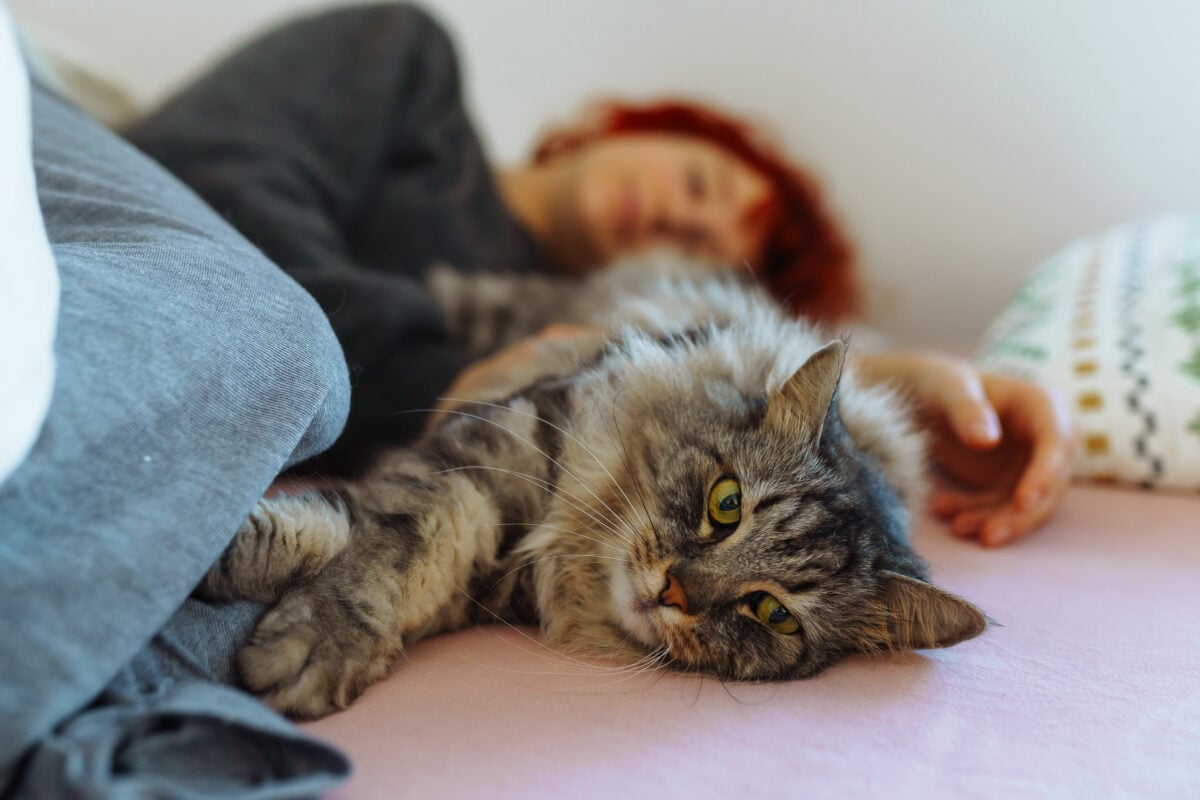
One quick note: If your cat suddenly stops jumping onto the bed or other furniture, seems stiff, hides more, avoids touch, or changes their normal habits, it is worth checking with your veterinarian. Reluctance to jump can sometimes be linked to pain or mobility issues.
How to Build a Sleep Sanctuary (Without Forcing Them to Love Your Bed)
So, your cat has once again chosen a laundry basket over the expensive mattress you pay for every month. Rude? A little. But there are a few ways to make your bed more appealing without turning bedtime into a hostage situation.
You cannot force a cat to cuddle. That is not how this works. But you can make your bed feel warmer, calmer, and a little more cat-approved. Think gentle persuasion, not a full-scale feline marketing campaign.
Give Them Their Own Warm Patch
Many cats love warmth. They just do not always love being pinned against a sweaty human leg under a heavy duvet.
A self-warming cat mat at the foot of the bed can give your cat a cozy little zone without the constant movement and trapped heat that comes with sleeping beside you. A purpose-made heated pet bed may also work for some cats, but follow the manufacturer’s instructions carefully and make sure your cat can move away whenever they want.
- Try a self-warming mat first; it does not need a cord.
- Place it at the foot or edge of the bed, not under your body.
- Leave your cat an easy path off the bed.
- Avoid using a regular human heating pad, which can get too hot for sleeping pets.
For cats who crave warmth but hate the full-body human furnace experience, this can be a nice compromise.
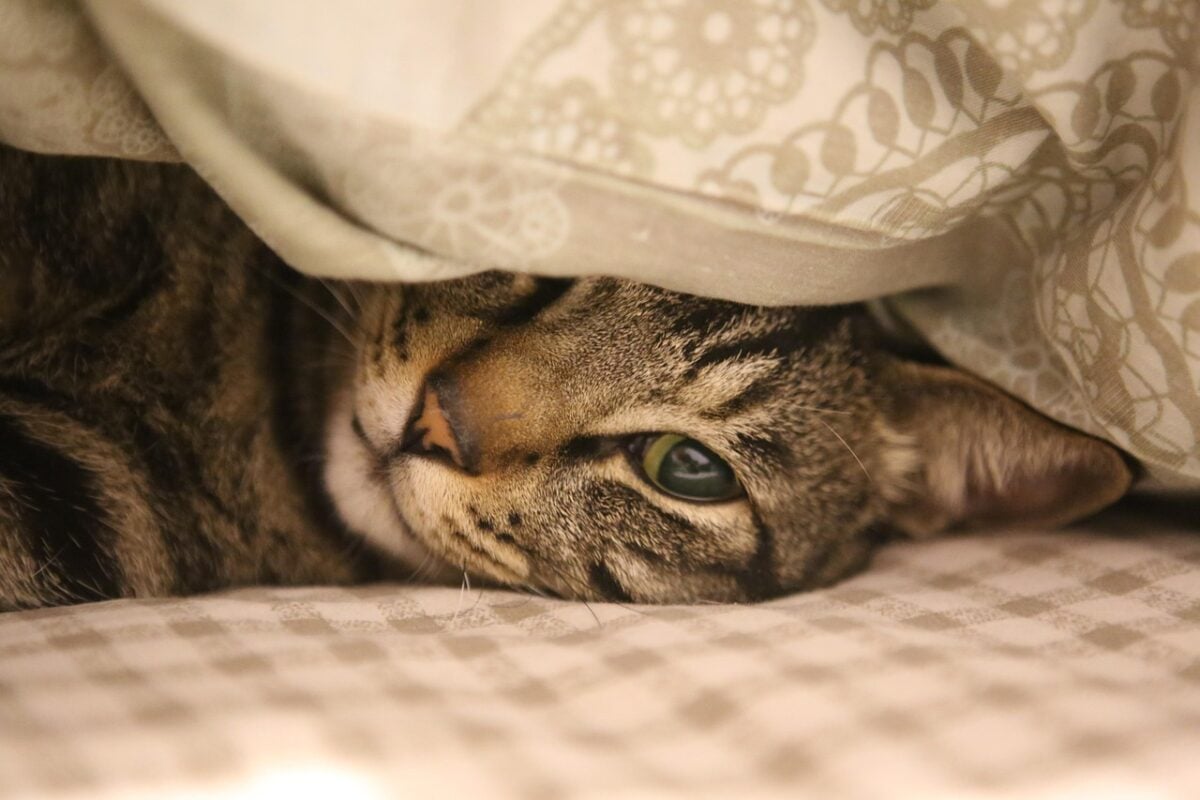
Create a Tiny “Cat Zone” on the Bed
Some cats do better when they have a defined little spot instead of an entire mattress full of shifting blankets and mysterious human limbs.
Try placing a low-sided cat bed, a folded fleece blanket, or a small open basket at the foot of the bed. The goal is not to trap your cat in place. It is simply to give them a predictable, familiar area that feels like theirs.
A good cat zone should be:
- Soft but not overly deep or floppy
- Easy to step in and out of
- Far enough from your feet to avoid midnight kickboxing
- Close enough for a quick head bump or emergency 3:00 a.m. cuddle
Some cats will ignore it for a week, then suddenly decide it is the finest accommodation they have ever seen. Naturally, they will act as if they invented it.
Go Easy on Strong Scents
Your “Lavender Meadow” detergent may smell like a peaceful spa day to you. To your cat, it may smell like someone detonated a candle store inside their territory.
Cats rely heavily on scent to understand their surroundings. That does not mean every cat will reject freshly washed sheets, but some may be less interested in bedding covered in strong fragrance, fabric softener, scent boosters, or essential-oil sprays.
Try switching to a fragrance-free detergent for a few wash cycles and see whether your cat hangs around longer. It is a low-effort experiment, and your bedroom may stop smelling like artificial spring rain anyway.
Give Them a Nearby Backup Spot
Here is the slightly annoying truth: your cat may not want to sleep on your bed. They may simply want to sleep near you.
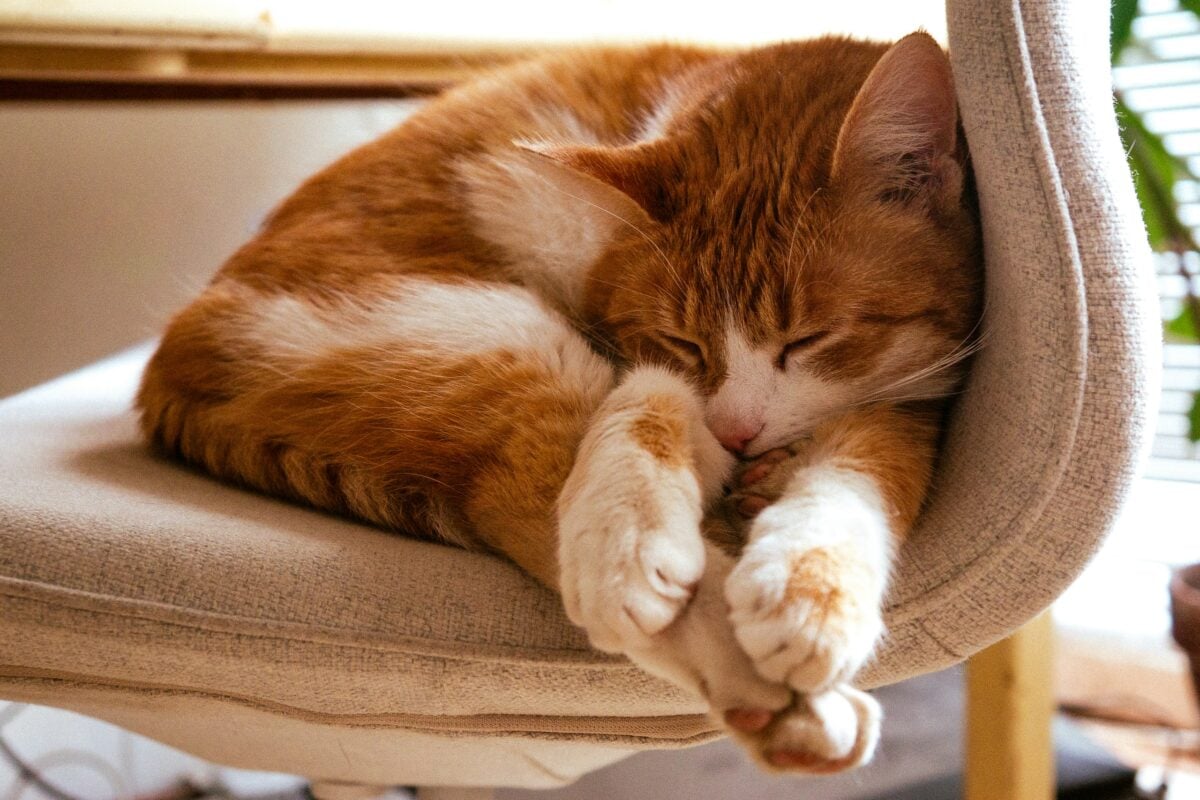
A cat tree, chair, window perch, or cat bed in the bedroom can give them the best of both worlds. They get to stay close to their favorite person while keeping their own space, preferred temperature, and escape route.
That may not deliver the exact midnight serotonin hit you were hoping for. But a cat choosing to sleep nearby is still a pretty solid sign that they feel safe in your company.
Make Changes Slowly
Cats are not always fans of surprise renovations. Add one new mat, bed, or blanket at a time, then give them a few days to investigate it on their own schedule.
Do not place your cat on the new bed and wait for a thank-you. Do not tuck them in. And whatever you do, do not try to explain how much that mattress costs.
Just make the spot available, act casual, and let your cat decide it was their idea.
The Feline Night Shift: More Midnight Habits Explained
Following you to bed and then wandering off is only one part of your cat’s after-hours routine. Once the lights go down, many cats seem to unlock an entirely different personality—one that involves claiming your warm spot, staring at you while you sleep, and suddenly racing through the hallway like rent is due.

Most of these little nighttime habits are normal cat behavior. They may look random from your side of the bed, but they often come down to comfort, instinct, curiosity, or your cat’s very firm belief that 3:00 a.m. is a reasonable time to make an entrance.
- They steal your exact spot the second you get up. You leave the bed for water, the bathroom, or one last attempt to check your phone responsibly. By the time you return, your cat has claimed the warm space you just left behind. Your spot is cozy, smells familiar, and has already passed the comfort inspection. Here’s why cats are so committed to stealing your seat the second you stand up.
- They sit nearby and watch you sleep. Waking up to a cat perched on the dresser or sitting beside the bed can feel a little intense. Usually, though, they may be waiting for movement, listening for familiar sounds, hoping breakfast is somehow about to happen, or simply enjoying a quiet moment near their person. This closer look at why cats watch people sleep may make those midnight stares feel slightly less suspicious.
- They cover their face like they have had a long day. A paw draped across the nose can be adorable, dramatic, and oddly relatable. Cats may cover their faces for warmth, comfort, light control, or because they have found the perfect “do not disturb” position. Cats who sleep with their faces covered are usually just getting very serious about their naps.
- They sleep pressed against you—until they suddenly do not. Some cats want to be tucked against your legs, back, or side for part of the night. Others stop by for warmth and closeness, then move once they get too warm or you start shifting around. Cats who sleep pressed against their people may be looking for comfort, security, or simply the best available heat source.
- They twitch, chirp, or paddle their paws while asleep. Tiny paw flicks, whisker twitches, and quiet sleep noises can make it look like your cat is chasing something in dreamland. Mild twitching during sleep is often normal, especially when it happens briefly, and your cat wakes up normally afterward. This guide to cats twitching in their sleep breaks down what is usually harmless and when a closer look may be needed.
- They get a sudden case of midnight zoomies. One minute, your cat is asleep. Next, they are tearing down the hallway, bouncing off the couch, and launching into the air for reasons known only to them. Those bursts of energy can be tied to play, hunting instincts, excitement, or a post-litter-box celebration. Cat zoomies have their own strange little logic, even when they happen directly outside your bedroom door.
Living with a cat means accepting that bedtime is not always the end of the day. For your cat, it may simply be the start of a quieter, stranger shift.
And while they may not sleep beside you all night, the fact that they keep checking in, stealing your spot, or returning before morning is often its own kind of compliment. You are part of their routine—even if the laundry basket is still their preferred suite.
Frequently Asked Questions
Still have questions about your cat’s bedtime habits? Drop them in the comments; we’d love to hear what your tiny nighttime roommate gets up to after lights out.
In the meantime, here are answers to a few questions cat owners ask most often.

Why does my cat follow me to bed and then leave immediately?
Your cat may be following a familiar routine, checking that you are settled, or stopping by for a quick moment of attention before bed.
Once they have had that little social check-in, they may head to a sleeping spot that feels cooler, firmer, quieter, or gives them a better view of the room. It is not necessarily a rejection. Your cat may simply prefer a different place for serious sleep.
Does my cat love me if they do not sleep in my bed?
Yes. Sleeping on your bed is only one possible sign of closeness, and plenty of affectionate cats would rather sleep nearby than directly beside someone.
Following you around, greeting you, rubbing against you, slow blinking, sitting close by, or returning to check on you can all be social behaviors that suggest your cat feels comfortable with you. Some cats are full-time cuddle bugs. Others love you deeply from the chair three feet away.
Why does my cat sleep on the couch instead of with me?
The couch may simply work better for your cat. It can be cooler, firmer, quieter, and more stable than a mattress that moves every time you turn over.
It may also give your cat a better view of the room and an easier path to other parts of the house. Your bed may be great for a quick cuddle, while the couch is their preferred spot for uninterrupted sleep.
Why does my cat come back to bed at 4:00 a.m.?
By early morning, the room may be cooler, the house may be quieter, and you may finally be moving less. At that point, your bed can become much more appealing.
Some cats also return because they are ready for warmth, companionship, or because they have started thinking very seriously about breakfast. Your legs may not have been acceptable furniture at 10:00 p.m., but by 4:00 a.m., they are apparently premium real estate.
Should I worry if my cat suddenly stops sleeping near me?
A gradual change in sleeping location is often normal, especially during seasonal temperature changes, a new household routine, or changes in where people and pets sleep.
But it is worth calling your veterinarian if your cat suddenly avoids the bed or other furniture and also seems stiff, hides more, avoids touch, eats less, becomes less active, vocalizes unusually, or has litter-box changes. A sudden reluctance to jump can sometimes be linked to pain or mobility problems.
Why does my cat sleep at my feet instead of next to me?
Sleeping at your feet can be your cat’s version of staying close without getting too close. Your feet may be warmer, move less than your arms, and give your cat an easy path off the bed if they decide they need a midnight snack or a quick patrol around the house.
It can also be a practical choice. Your cat gets to enjoy your company while avoiding face-level breathing, surprise arm movements, and the risk of being trapped under the blankets. In other words, your feet are nearby, warm, and much less dramatic than the rest of you.
Still Decoding Your Cat? Start With These Classic Cat Mysteries
Following you to bed and then vanishing to sleep in the laundry basket is only one chapter in the very long, very confusing cat handbook.
Once you start paying attention, you realize your cat has a whole collection of habits that seem random at first—but usually come with their own tiny, highly specific logic. These are a few good places to continue your investigation:
- Why do cats knock things over?
That glass of water on your nightstand may not be safe just because your cat made eye contact with it first. Find out why cats knock things over and why they always seem to choose the one object you do not want to replace. - What is the deal with “elevator butt”?
You find the right scratching spot, and suddenly your cat’s rear end rises toward the ceiling like they are trying to become a furry forklift. Learn why cats lift their butts when you pet them and when that reaction means they have had enough. - Which cat behaviors do owners eventually stop questioning?
Cardboard boxes beat expensive cat beds. Random sprinting at midnight. Sitting directly on the thing you need. These are the things most cat owners eventually accept as part of life with a tiny, opinionated roommate. - Why does your cat sit on everything you are using?
- Laptop, book, paperwork, clean laundry—your cat somehow knows exactly what needs their immediate attention. Find out why cats sit on everything you are using, especially when you are clearly trying to get something done.
- Could your cat be especially attached to you?
Bedtime check-ins, following you upstairs, stealing your warm spot, and sitting nearby can all be part of a close bond. These signs may show your cat has imprinted on you—even if they still refuse to sleep beside you all night.
Cat behavior is not always obvious, but that is part of the charm. Your cat may ignore the bed, claim the laundry basket, and stare at you at 4:00 a.m. and then follow you from room to room the next day, like you are their entire world.
That is cat logic. You do not always understand it, but you are definitely part of it.
Does Your Cat Tuck You In, Then Ghost You?
We need to know: does your cat follow you all the way to bed, demand a little attention, and then abandon you for a cardboard box or laundry basket?
Share your cat’s bedtime routine in the comments. Tell us where they actually sleep, whether they come back at 3:00 a.m., and which household object they have declared more luxurious than your mattress.