When you purchase through links on our site, we may earn a commission at no extra cost to you. Learn more.
We’ve all been there. You open up your laptop to answer a quick email, crack open a brand-new thriller novel, or lay out important paperwork across the dining room table. You take a sip of your coffee, look down, and, boom.
Table of Contents
Out of nowhere, a furry vortex materializes and parks itself directly on top of whatever you are doing.
If you try to move them, they turn into a 20-pound cinderblock. If you give them an identical, untouched notebook just two inches to the left? They ignore it entirely. Your cat must sit on the exact object you are actively using.
Suddenly, your serious email contains seventeen letter Js, your meeting is muted, and your cat is staring at you like this was always the plan.
Want our human-written content to rank above AI-generated garbage? Help us out by clicking this button!
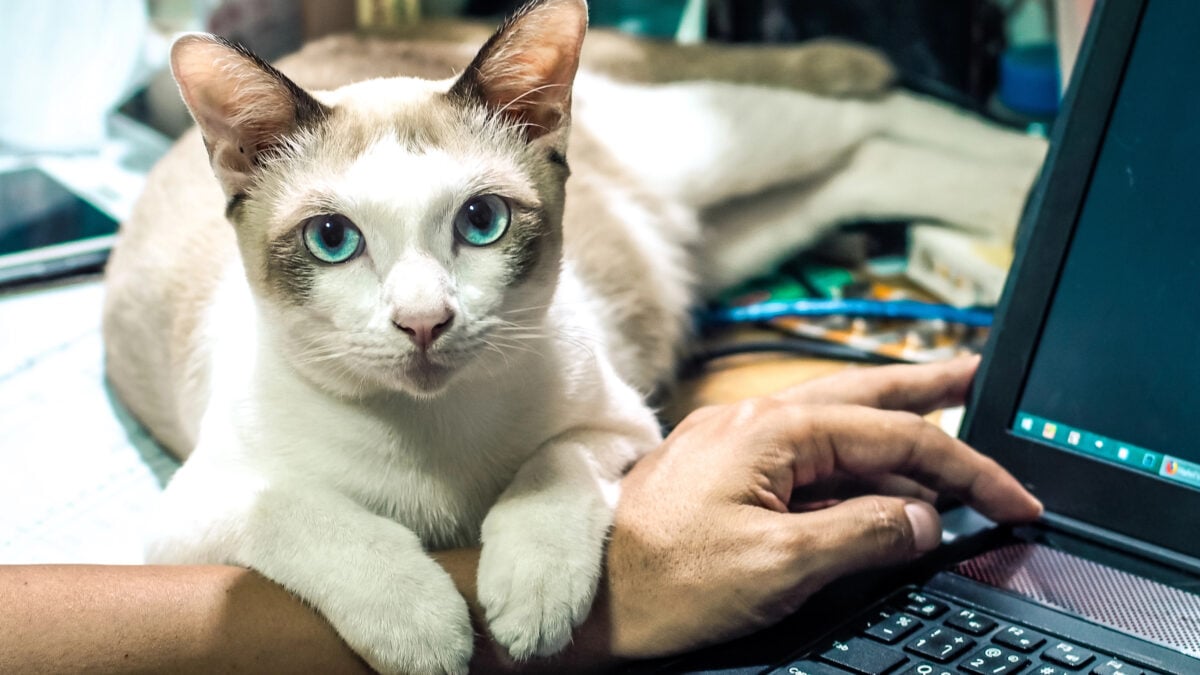
Is it a malicious plot to interrupt your life? Not quite. Most of the time, this behavior comes down to a few very cat-like motivations: attention, warmth, scent, curiosity, and routine.
Here is what is actually goingon inside your cat’s mind.
Quick Answer: Why Cats Sit on Everything You’re Using
Your cat sits on the exact thing you are using because that object has suddenly become important. It has your attention, your scent, your warmth, your movement, or your hands all over it. To your cat, that makes your laptop, book, laundry, purse, puzzle, chair, or paperwork suddenly part of the action… and sometimes the perfect place to nap.
One Second You’re Working, the Next Second There’s a Cat
Cats have a suspiciously perfect sense of timing. They may ignore you for hours while you call their name, but the moment you sit down with a laptop, book, puzzle, sewing project, or stack of paperwork, they suddenly become deeply invested in your plans.
You open your computer, and your cat appears as if they have been assigned to supervise. The newspaper you unfolded becomes a blanket, the puzzle becomes a landing pad, and the crinkly gift wrap somehow turns into a bed, a toy, and a sworn enemy all at once.
As random as it seems, your cat is probably responding to a change in your behavior. When you sit down, lean forward, and focus on one object, you become still and predictable. To a cat, that can look like an invitation. You are no longer rushing around the house, cooking, vacuuming, or moving from room to room. You are finally in one place.
And that one place looks interesting.
Your hands are moving. Your eyes are fixed. The object in front of you has clearly become important. Your cat may not understand emails, tax forms, or why humans willingly do puzzles with a thousand tiny pieces, but they do understand attention. If something has captured your focus, it is too interesting to ignore.
It is less “I want to ruin your day” and more “Hello, I see you are doing something, and I would like to be included.”
It’s Not Just Laptops
Your cat’s target may be your laptop, but the behavior is not really about technology. Cats can be drawn to anything connected to you, especially if your hands, eyes, or body keep returning to it.
That might include:
- A book, magazine, or newspaper you are reading
- A puzzle, craft project, sketchbook, or sewing pattern
- Wrapping paper, ribbons, yarn, or fabric
- A chair you are sitting in, or the chair you just left
- A plate of food, a snack wrapper, or anything that smells interesting
- Clean laundry, a backpack, a purse, or a suitcase
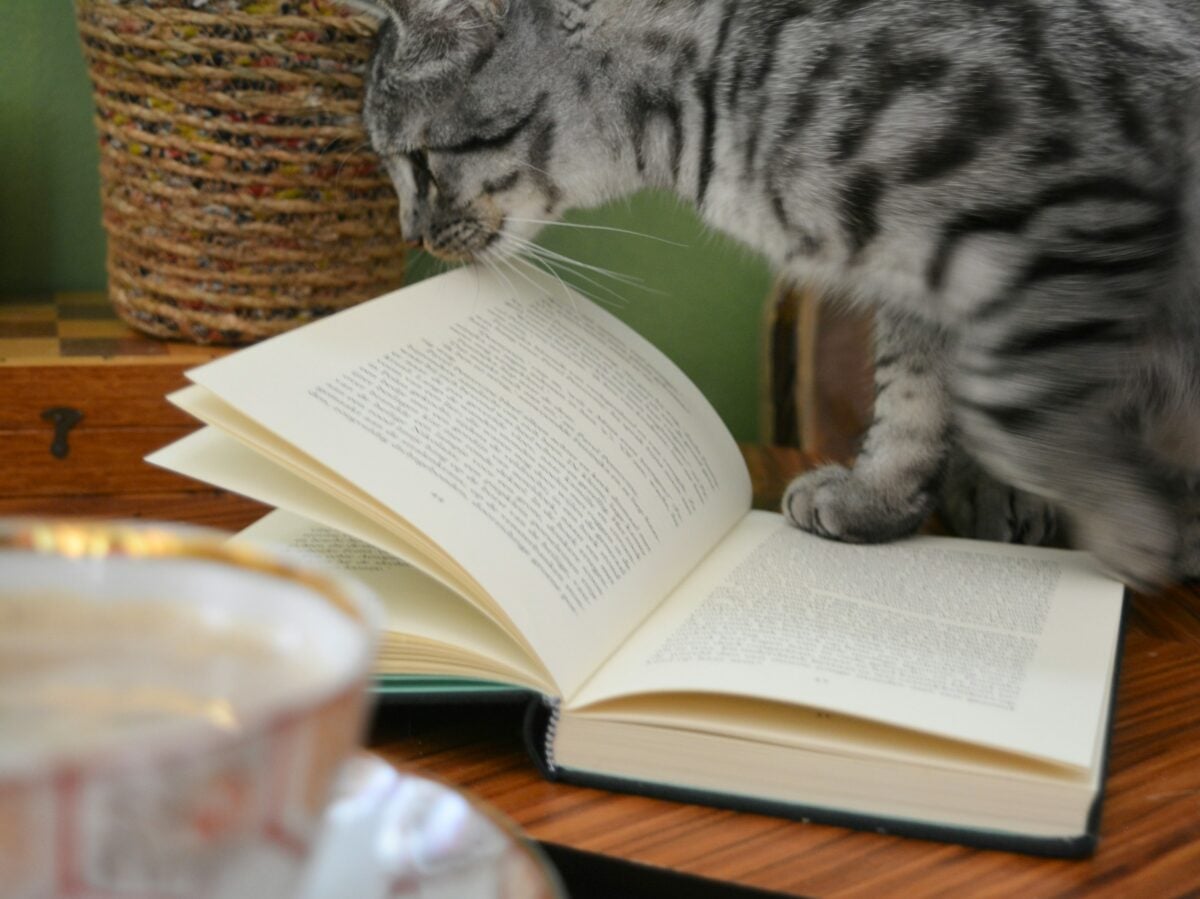
The common thread is not always the object itself. It is the meaning that the object takes on in the moment. If it smells like you, moves under your hands, makes an interesting sound, holds warmth, or clearly has your attention, your cat may decide it belongs in the middle of the action.
Food deserves its own tiny mention, because sometimes the thing you are “using” is a sandwich. Cats may hover near your plate because it smells interesting, especially if it contains meat, dairy, or anything rich. They may also be curious because you are clearly focused on it. Since not every human food is safe for cats, redirect them with a cat-safe treat, puzzle feeder, or their own mealtime nearby.
5 Reasons Your Cat Sits on Everything You’re Using
Your cat may look like they are choosing chaos, but most of the time, this behavior comes down to a few very cat-like motivations.
Here are the most common reasons your cat keeps claiming the exact thing you need.
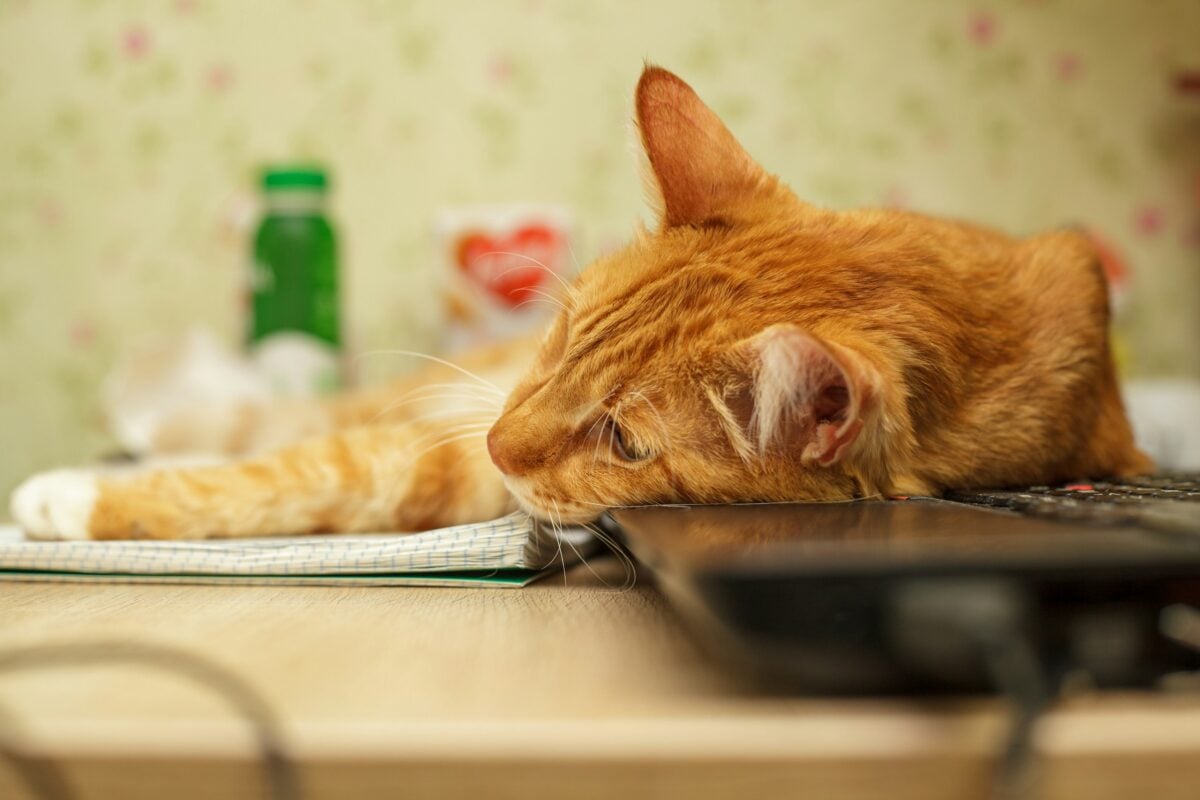
1. Your Cat Wants Your Attention
When your attention shifts to something, your whole rhythm changes. You settle into a new posture, reach toward the same object again and again, and keep your eyes fixed in one place. To your cat, that object suddenly has meaning.
It is not just a laptop, book, purse, puzzle, chair, or pile of laundry anymore. It is the thing their human is focused on. Your focus adds value.
And sometimes, your cat wants that focus back.
Not casual, “I know you’re in the room” attention. They want the good stuff. Eye contact. Petting. Their name said in that ridiculous voice you pretend you do not use. When your focus locks onto a screen, book, notebook, or stack of paperwork, your cat may decide the fastest way back to you is to block the competition.
A laptop creates an especially obvious attention barrier. Your eyes stay lockedon the screen, your hands keep returning to the keys, and your voice may even drift toward whatever is happening there. You might laugh at it, talk near it, or react to it like it’s part of the room. From your cat’s point of view, this glowing rectangle has somehow become very important, and that naturally makes it suspicious.
So your cat does what cats do best: they insert themselves directly into the situation.
As soon as your cat lands on the keyboard, the room rearranges around them. Typing stops, your eyes shift, and their name suddenly enters the conversation. Maybe you laugh, sigh, reach for your phone, offer a few pets, or gently move them aside.
Either way, the strategy worked.
A moment ago, the keyboard had your attention. Now your cat does.
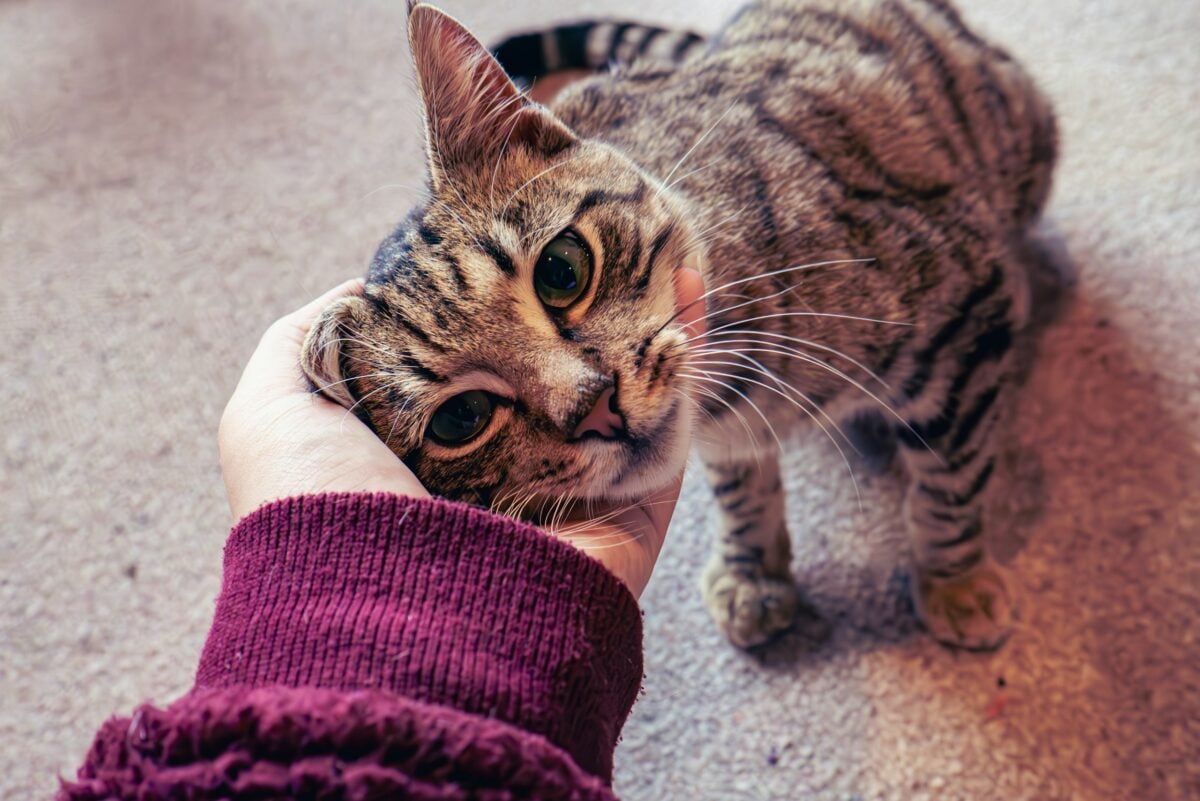
That is also why the behavior can become a habit. If sitting on your laptop gets a reaction every time, your cat may learn that it is an extremely reliable way to summon you. Even negative attention can still feel rewarding if it comes with eye contact, movement, and interaction.
In other words, your cat may have trained you just as much as you think you have trained them.
Cats have plenty of oddly specific attention habits. For example, if yours raises their back end the second your hand reaches the right spot, we also explain why some cats lift their butt when you pet them.
Why Cats Love Keyboards So Much
The keyboard walk deserves its own tiny museum exhibit because nearly every cat owner has experienced it. One moment, your document is normal. The next, your cat has typed a password, opened a new tab, muted your meeting, and possibly sent your boss a message that says “88888/////pppppp.”
Part of the keyboard’s appeal is attention, but the keyboard is also interesting on its own. Your fingers move quickly, the keys click and dip, and the screen changes in response. To a curious cat, it can look like you are playing with a strange flat toy and refusing to share.
Keyboards are just the most dramatic version of a bigger pattern: your cat wants the object that has your hands, eyes, and attention.
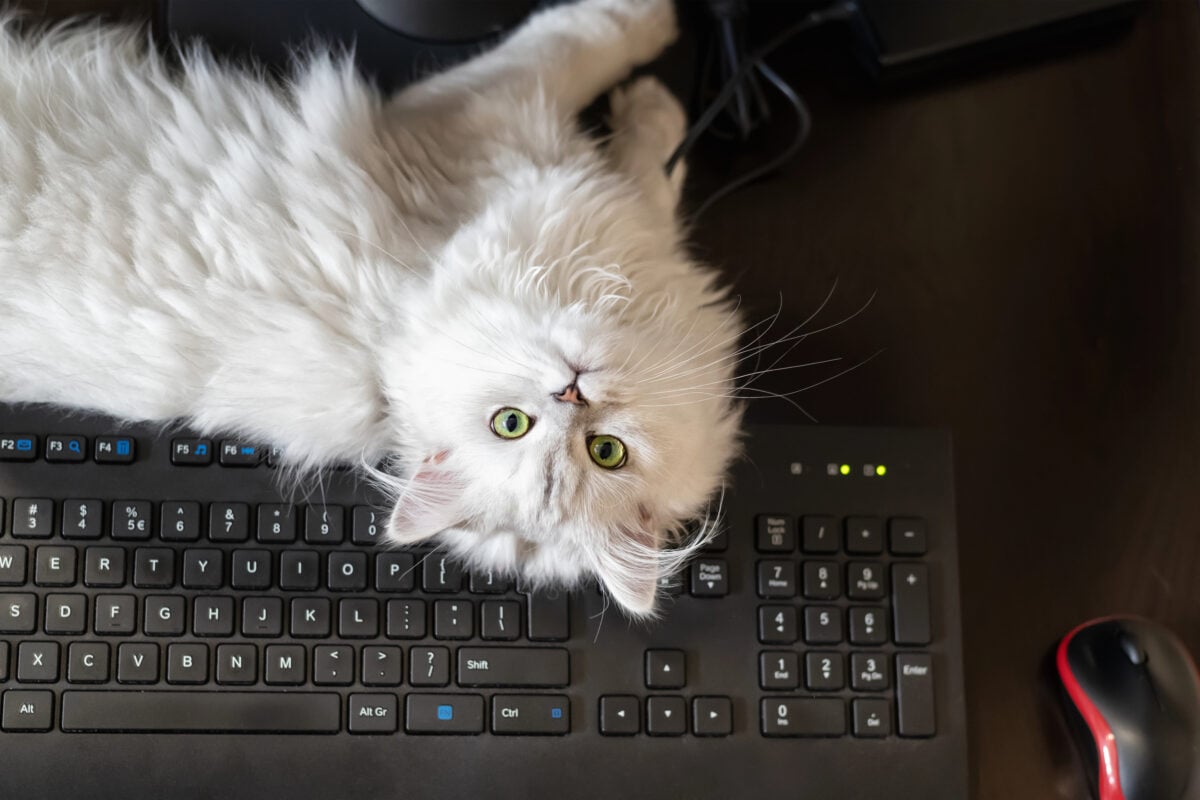
2. Warmth Makes Your Stuff Hard to Resist
Cats are professional warmth seekers, and they have an almost supernatural talent for finding the coziest spot in the room. A sunbeam becomes prime real estate. Fresh laundry turns into a heated nest. Blankets, radiators, and the warmest available lap are all fair game.
So when your laptop starts humming and giving off gentle heat, your cat may see it less as a work tool and more as a luxury heated lounge.
Cats also tend to run warmer than humans, with a normal body temperature around 101 to 102.5 degrees Fahrenheit. Warm places help them stay comfortable without spending extra energy. Even indoor cats with soft beds and scheduled meals still carry those old comfort-seeking instincts.
Your laptop, tablet, gaming console, printer, or even a book you have been holding can become a tiny warm zone. It does not need to feel hot to you. A little residual warmth may be enough to make the spot appealing.
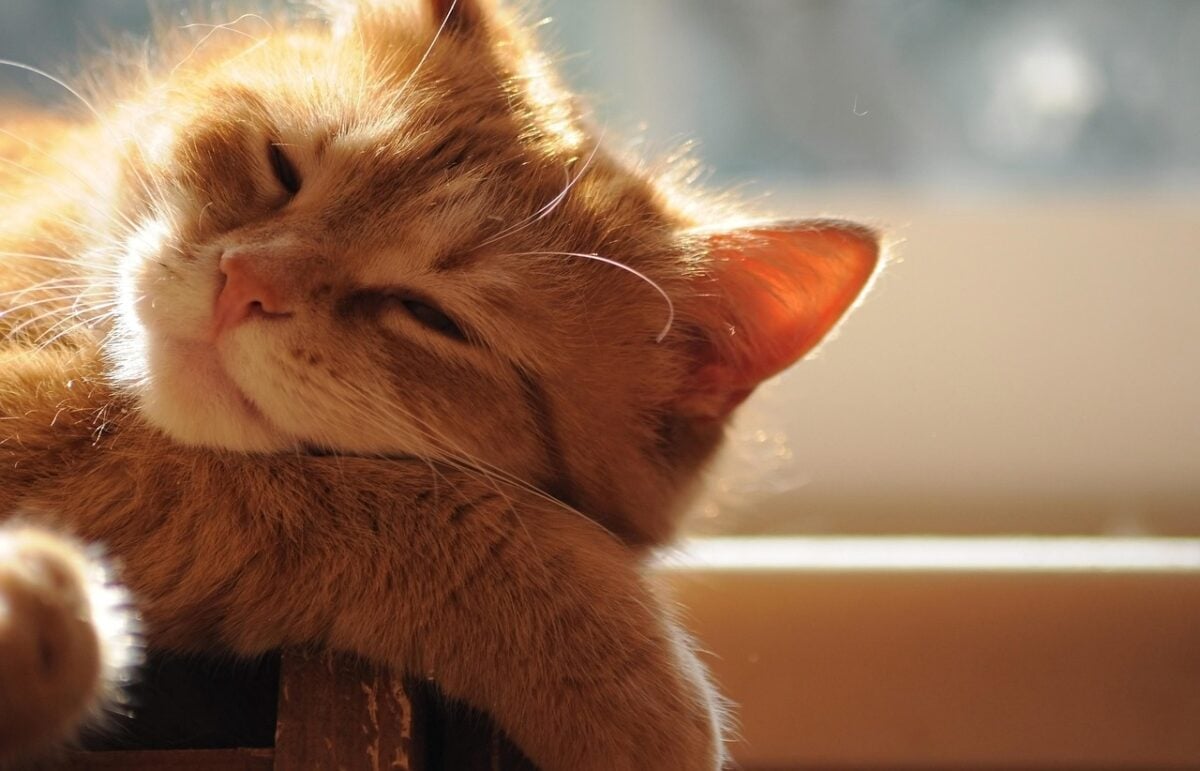
Add your scent and attention to that warmth, and the object becomes even harder for your cat to resist.
- Warmth
- Location
- Familiar scent
- Security
- Closeness to the action
A bed across the room may be soft, but it is not where you are sitting, reading, folding, eating, or typing.
Still, electronics need boundaries. Blocked vents can cause devices to overheat. Loose cords can become chew hazards. A spilled drink during a cat interruption can become an expensive disaster.
Your cat may think technology exists for comfort, but you still have to be the responsible adult in the room.
3. Your Stuff Smells Like You
Cats experience the world through scent far more than we do. While humans tend to focuson what we see, cats gather huge amounts of information through smell.
Your everyday belongings carry your scent, especially the things you touch often:
- Your laptop or keyboard
- Your favorite blanket
- Your phone
- A hoodie you wear often
- The side of the bed where you sleep
- A notebook, book, or planner you use every day
To your cat, those objects can feel familiar, comforting, and socially meaningful.

So when your cat sits on your stuff, they may not be choosing a random object. They may be choosing something that smells like you.
Scent is also part of how cats mark familiar spaces. They have scent glands around areas like their cheeks, paws, and tail base. When they rub against you, knead a blanket, scratch a post, or settle onto an object, they may be adding their own scent to the mix.
That does not mean they are being possessive in a dramatic villain way. It is more like creating a shared family smell.
When your cat sits on your laptop, book, paperwork, laundry, purse, or chair, they may be blending their scent with yours. In cat language, that can mean, “This belongs in our world.”
The simple translation: if it smells like their human, it belongs to them a little bit, too.
Why Cats Love Laundry, Shoes, Purses, and Suitcases
Clothes, laundry baskets, shoes, gym bags, backpacks, purses, jackets, and suitcases are especially tempting because they combine scent, texture, warmth, and routine. A hoodie you wore all day smells like you. Fresh laundry may still hold heat. Shoes and purses bring in outside scents from places your cat never gets to explore.
Your purse may be especially interesting because it smells like your hands, your daily routine, food crumbs, fabric, leather, and whatever mysterious human nonsense lives at the bottom.
These items can also signal that something is about to happen. When you fold laundry, lay out an outfit, put on shoes, grab your purse, or pull out a suitcase, your cat may recognize that the routine is shifting.
If you have ever wondered why your clean laundry is covered in cat hair five minutes after folding it, this Maine Coon is here to present the evidence.
If you want to protect your laundry, clothes, or bags, give your cat an approved scent-friendly alternative nearby, like a small blanket, towel, old T-shirt, or open box. That way, your cat still gets a familiar place to settle while they supervise.
4. Movement, Sound, and Curiosity
Think about your home from your cat’s point of view.
It is not boring. It is a carnival of textures, sounds, movement, smells, and forbidden objects. The things you use every day may seem ordinary to you, but to your cat, they can look like tiny mysteries waiting to be investigated.
To a cat, your activity might include:
- A glowing screen
- The turning of a book page
- A twitching cursor
- Clicking keyboard keys
- Rustling newspaper
- Rolling pens
- Moving hands
- Crinkly wrappers
- Yarn, ribbon, or string
- A plate that smells interesting
- A chair that is still warm
- A bag, box, or purse with new smells
Your normal afternoon may look like a miniature hunting ground.
This is where instinct comes into the picture. Cats are predators, even when they are pampered indoor pets with a water fountain and a favorite blanket. Their brains are wired to notice movement, sound, and scent. The flick of a page, the tap of your fingers, the crinkle of a bag, or the pull of yarn can instantly catch their attention.
Books and newspapers are especially attractive because they change shape. Pages turn, corners lift, and paper makes soft rustling sounds. A cat may pounce on the page because it moves like something alive.
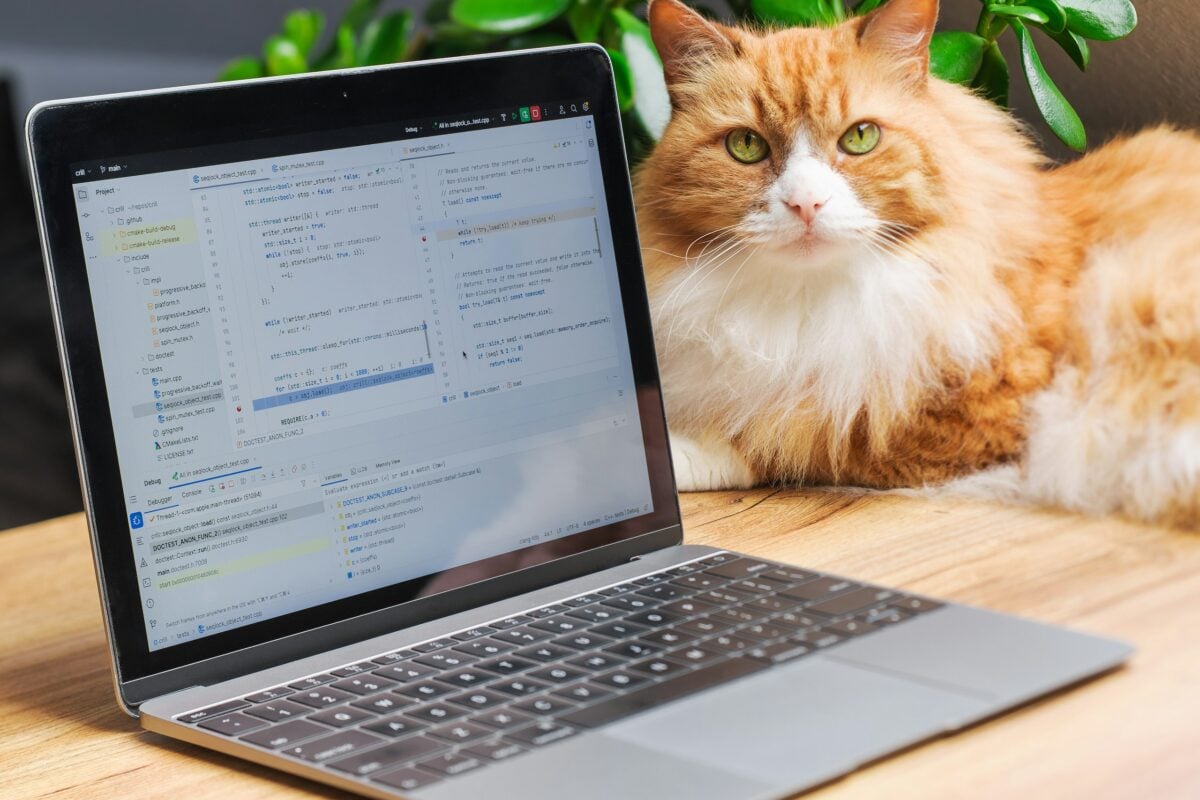
Screens add another layer because they are visually active. A cursor, scrolling page, flashing notification, or moving image can draw your cat’s eye. If they paw at the screen, they may be trying to catch the movement. When they cannot catch it, sitting in front of the screen may feel like the next best option.
In cat logic, this may mean: “I have contained the problem.”
This is why simply saying “no” often does not solve the issue. The object is still interesting. Your attention is still there. The movement, sound, warmth, or smell is still happening.
A better approach is to offer something equally satisfying nearby, such as a crinkle toy, treat puzzle, window perch, cardboard box, kicker toy, or soft blanket.
Your cat gets stimulation. You get to keep using your book, laptop, chair, craft project, or snack. Mostly.
If your cat’s interest in moving objects turns into full-speed hallway chaos, you might also enjoy our guide to cat zoomies and why cats suddenly sprint around the house like tiny maniacs.
Why Decoy Objects Usually Fail
Many cat owners have tried the decoy trick: an extra notebook beside the real one, a spare sheet of paper near the paperwork, or a second keyboard that is not even plugged in.
To you, it looks like the perfect alternative.
To your cat, it looks like the boring one.
That is because cats are not always drawn to the object itself. They are drawn to your relationship with the object. The real thing has your hands, scent, movement, eye contact, and attention. The decoy may look identical, but it is missing the part your cat cares about most: you.
A decoy is more likely to work if it offers something your cat genuinely values, like warmth, softness, height, your scent, an enclosed shape, or a spot close to the action.
A random notebook may fail, but a warm box beside you might win. A fake keyboard may fail, but a soft blanket in your lap might succeed.
The key is not to trick your cat once. It is to build a new pattern. If sitting nearby earns warmth, attention, and comfort, many cats will eventually choose that instead of taking over the thing you are actually using.
They may still stage the occasional keyboard protest, of course. Cats believe in keeping management humble.
5. Territory and Claiming Behavior
Sometimes your cat sitting on your stuff really is a little bit of claiming behavior. Not in a dramatic “this laptop is mine forever” way, but in a normal cat way.
Cats use scent to understand their world. When they rub their cheeks on your book, knead your blanket, curl up on your laundry, or sit on your purse, they may be adding their own scent to something that already smells like you. To your cat, that can help the object feel familiar, safe, and part of home.
This is why your cat may seem especially interested in things that are new, freshly moved, or full of outside smells, like delivery boxes, backpacks, shoes, purses, suitcases, or clothes you just wore. Sitting on them can be your cat’s way of saying, “This belongs in my world now.”
Most of the time, this kind of claiming is relaxed and harmless. Your cat may loaf, stretch out, slow blink, purr, rub their face on the object, or settle down for a nap. It may look possessive, but it is usually more about comfort and familiarity than control.

Body language can help you tell the difference. Your cat’s tail, for example, can offer clues, so it helps to understand why cats wag their tails when you are trying to read the mood behind the behavior.
When Claiming Looks More Serious
Claiming behavior may be more stress-related if your cat seems tense or defensive around the object. Pay attention if they growl, hiss, swat, bite, guard the item, block another pet from approaching, spray nearby, or suddenly act unusually possessive.
A simple way to think about it is this: relaxed claiming looks cozy; territorial guarding looks tense.
If your cat simply naps on your laundry, sits on your purse, or steals the warm chair you just left, that is usually ordinary cat behavior. But if they guard the item, act aggressively, or the behavior appears suddenly with other changes, it may be worth checking in with your veterinarian or a qualified cat behavior professional.
How to Reclaim Your Stuff Without Hurting Their Feelings
You do not have to choose between loving your cat and using your things, doing chores, and otherwise living your life.
The goal is not to punish your cat for wanting to be near you. The goal is to redirect them kindly and consistently. Cats respond best when the alternative is genuinely rewarding. If the only option is “stop doing that,” many cats will simply wait until you are distracted and try again.
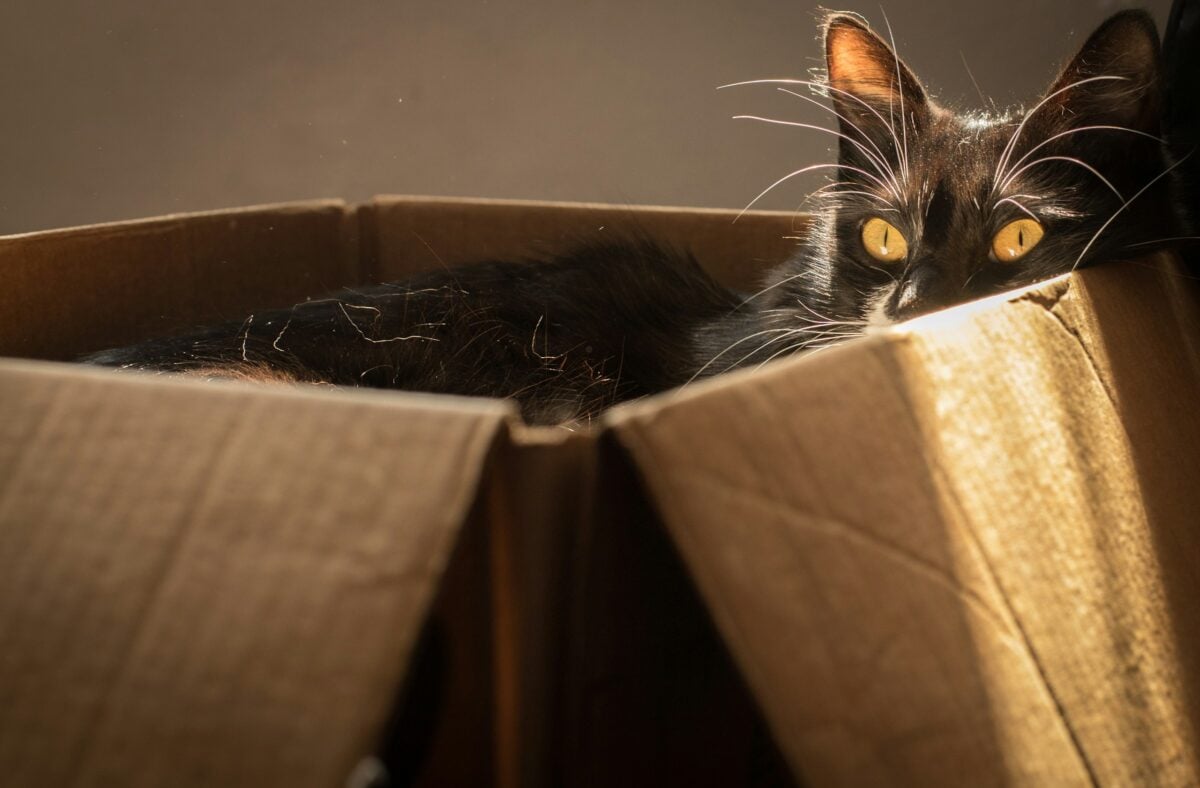
Start by creating a cat-approved spot near the action.
Not across the room.
Not in another room.
Near you.
Cats who siton your stuff often want closeness, warmth, attention, scent, or a good view of what you are doing. The replacement spot should offer at least one of those rewards.
Try this:
- Put a box near whatever you are doing. A shallow cardboard box can feel secure, cozy, and official enough to satisfy your tiny coworker.
- Add a soft blanket or self-warming mat nearby. If your cat loves warm spots, give them a safer, cozy place nearby.
- Play with your cat before you work or get into a task like laundry. A few minutes with a wand toy, feather toy, or toy mouse can help burn off energy before you sit down.
- Give them a “desk spot.” Place a cat bed, folded towel, or small blanket on the desk or on a chair beside you.
- Reward the behavior you want. When your cat chooses their approved spot, give them calm praise, a chin scratch, or a small treat.
- Close your laptop, cover food, or move fragile items when you step away. A closed or sleeping laptop is less tempting and helps prevent surprise keyboard disasters.
- Keep drinks covered and cords tucked away. Even a sweet cat can create chaos with one badly timed tail swish.
- Stay boring when they interrupt. If your cat gets a huge reaction every time they sit on your keyboard, the behavior may become even more rewarding.
Avoid these common mistakes:
- Do not yell or punish them. Your cat is not trying to be bad. Yelling can make them anxious, confused, or more determined to get your attention.
- Do not shove them off abruptly. Gently move them to an approved spot instead. You want redirection, not a wrestling match.
- Do not turn every interruption into playtime. If sitting on the keyboard always leads to fun, your cat may keep doing it.
- Do not put their alternative spot too far away. A cat bed across the room may be comfortable, but it does not solve the real issue if your cat wants to be close to you.
A better response is simple: stay calm, gently move your cat to their nearby bed, box, blanket, or perch, and reward them when they settle there. Over time, they can learn that the approved spot still gets them warmth, closeness, and attention without turning your keyboard into a catwalk.
If you are not sure how to correct the behavior without scaring your cat, our guide on how to discipline a cat explains how to set boundaries in a safer, more cat-friendly way.
When Sitting on Your Stuff Might Be a Concern
Most of the time, a cat sitting on your laptop, book, or paperwork is normal cat behavior. It usually points to attention-seeking, warmth, scent comfort, curiosity, or a desire to be near you.
But a sudden change in behavior is worth paying attention to.
If your normally independent cat suddenly becomes clingy, restless, or obsessed with sitting on you or your belongings, something else may be going on. Cats can become more attached when they are stressed, bored, anxious, uncomfortable, or not feeling well.
Watch for changes like:
- Hiding more than usual
- Eating less or drinking much more
- Using the litter box differently
- Meowing more than normal
- Acting unusually aggressive or fearful
- Sleeping far more than usual
- Grooming excessively or not grooming enough
- Following you constantly when they did not before
- Suddenly refusing favorite resting spots
- Seeming restless, uncomfortable, or unable to settle
Also think about recent changes in your cat’s world, such as a new schedule, moved furniture, guests, construction, a recent move, a new pet or baby, the loss of another pet, or less playtime than usual.
If the behavior appears suddenly or comes with other physical or emotional changes, it is a good idea to check in with your veterinarian. You do not need to panic, but you also do not want to dismiss a major behavior shift as “just cats being cats.”
In most cases, your cat is simply saying, “I want to be near you.” But if the message suddenly gets louder, more intense, or out of character, it is worth listening a little more closely.
If your cat suddenly seems jumpy, clingy, or focused on something you cannot identify, this may be connected to stress or sensitivity in their environment. Our guide on why your cat may be scared of something you can’t see explains what might be going on.
Still Wondering Why Your Cat Does That? FAQs
Cats have a way of turning everyday objects into tiny mysteries. One minute your laptop is for work, the next it is a heated throne with paws. These FAQs cover the most common questions cat owners ask about laptops, books, keyboards, paperwork, and why cats seem determined to sit on the exact thing you need.
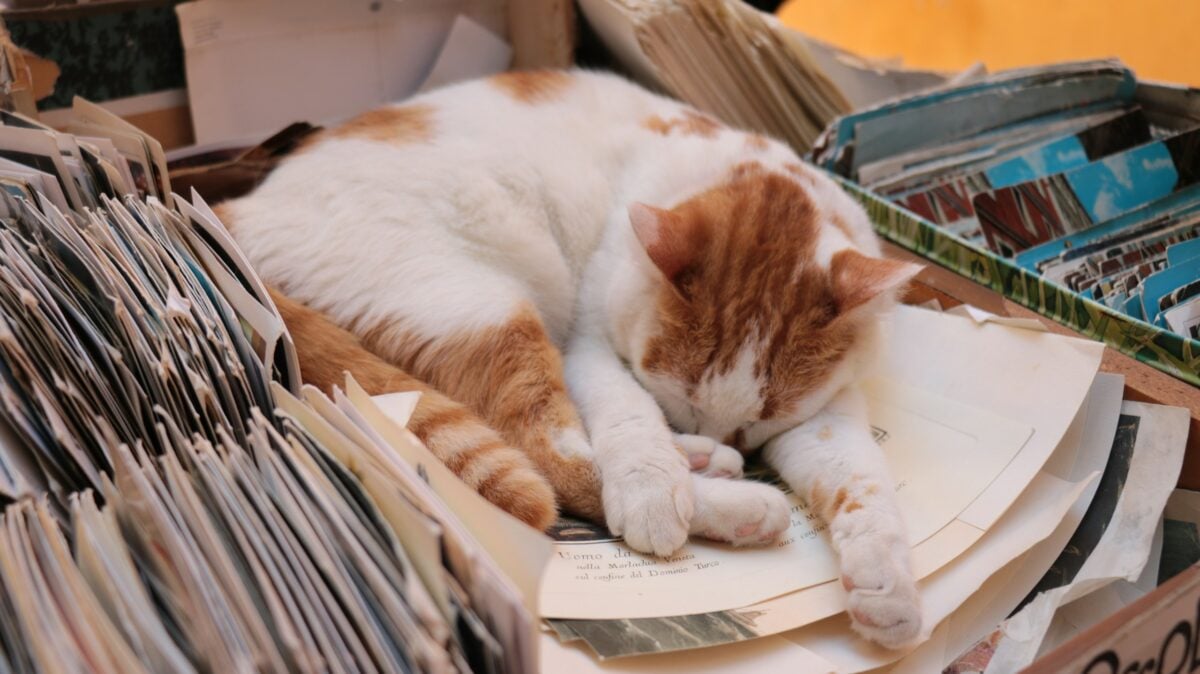
Have a question we did not answer? Ask it in the comments, or tell us the weirdest thing your cat has ever claimed as their personal property.
Why does my cat sit on my laptop every time I use it?
Your cat likely sits on your laptop because it combines several things cats love: warmth, your scent, movement, and your attention. When you are using it, the laptop becomes the center of your focus, which makes it socially important to your cat. Sitting on it is an easy way for them to get noticed and feel included.
Is my cat trying to annoy me on purpose?
Probably not. Cats can learn which behaviors get a reaction, but they are usually motivated by attention, comfort, curiosity, warmth, or scent rather than spite. What feels like sabotage to you may simply feel logical to your cat: you are focused on something, and they want to be part of it.
How can I stop my cat from walking on my keyboard?
Give your cat a better nearby option before they take over the keyboard, book, paperwork, or project. Try a shallow cardboard box, soft blanket, self-warming mat, or cat bed beside your desk. Offer a few minutes of play before you work, then gently move your cat to their spot when they interrupt. Reward calm behavior with attention.
Is it safe for my cat to sit on electronics?
It is better to discourage it. Electronics can overheat if vents are blocked, and cords can be dangerous if chewed. Your cat may also damage the device or cause spills if drinks are nearby. A warm, cat-safe spot near whatever you are doing is a better long-term solution.
Why does my cat sit on my stuff after I leave the room?
Your belongings carry your scent, which can feel familiar and comforting to your cat. A laptop, hoodie, blanket, chair, or notebook may smell like you even when you are not nearby. Sitting on those items may help your cat feel close to you.
And if your cat’s sitting habits get even stranger than claiming your laptop, laundry, purse, or favorite chair, you may also enjoy our guide to why some cats sit like humans.
Why does my cat sit on whatever I’m reading?
Books, magazines, and tablets sit directly in your line of sight, which makes them obvious attention targets. Pages also move and carry your scent from your hands. Your cat may sit on your reading material because it is interesting, familiar, and perfectly positioned between you and your focus.
Why does my cat sit on my puzzle, craft project, or wrapping paper?
Your cat may be drawn to the movement, texture, sound, and attention around the project. Puzzle pieces slide, paper crinkles, ribbons move, and your hands keep returning to the same spot. To your cat, that makes the whole setup interesting enough to investigate or claim.
Want to Understand More Mysterious Cat Behavior?
If sitting on everything you touch is only one of your cat’s many strange habits, welcome to life with a tiny mystery roommate. Cats have a way of turning ordinary life into a daily guessing game. One minute, they are blocking your laptop; the next, they are staring at you, licking your face, or slowly pushing something off the table like gravity needs testing.
For more sweet-but-confusing behavior, check out our guides on how to tell if your cat loves you, why your cat stares at you, and why your cat licks your face. Those little moments can look mysterious, but they often come back to attention, trust, affection, or your cat’s very specific way of communicating.
And for the truly classic cat chaos, you may also enjoy why cats knock things over and things every cat owner stops questioning eventually. The more you understand these little behaviors, the easier it is to tell the difference between normal cat weirdness, affection, curiosity, stress, and a very committed attempt to become the center of your universe.
What Has Your Cat Claimed?
Does your cat have a favorite thing to sit on, steal, flatten, or dramatically supervise?
Tell us in the comments what your cat loves to claim: your laptop, laundry, purse, puzzle, chair, paperwork, dinner plate, or something even stranger. Bonus points if they looked extremely proud of themselves while doing it.