When you purchase through links on our site, we may earn a commission at no extra cost to you. Learn more.
Your cat curls up next to you every night. Follows you from room to room. Sits outside the bathroom door like you’ve just vanished into another dimension.
Table of Contents
Which makes it hard not to wonder… Are they lonely when you’re not there?
Or is your kitty perfectly content ruling the house solo — knocking things off counters, sprinting through invisible enemies at 2 a.m., and judging your life choices from the windowsill?
And if your cat is lonely, would getting a second cat make their life better… or just double the chaos?
Want our human-written content to rank above AI-generated garbage? Help us out by clicking this button!
The Biggest Myth About Cats (That Might Be Steering You Wrong)
Most people grow up hearing the same thing: cats are independent and solitary. They don’t need anyone.
And to be fair, cats are very good at acting like that’s true.
They’ll ignore you for six hours, then suddenly sit on your laptop like you’re the one interrupting their schedule.
Cats Aren’t Actually “Loners” — They’re Selectively Social
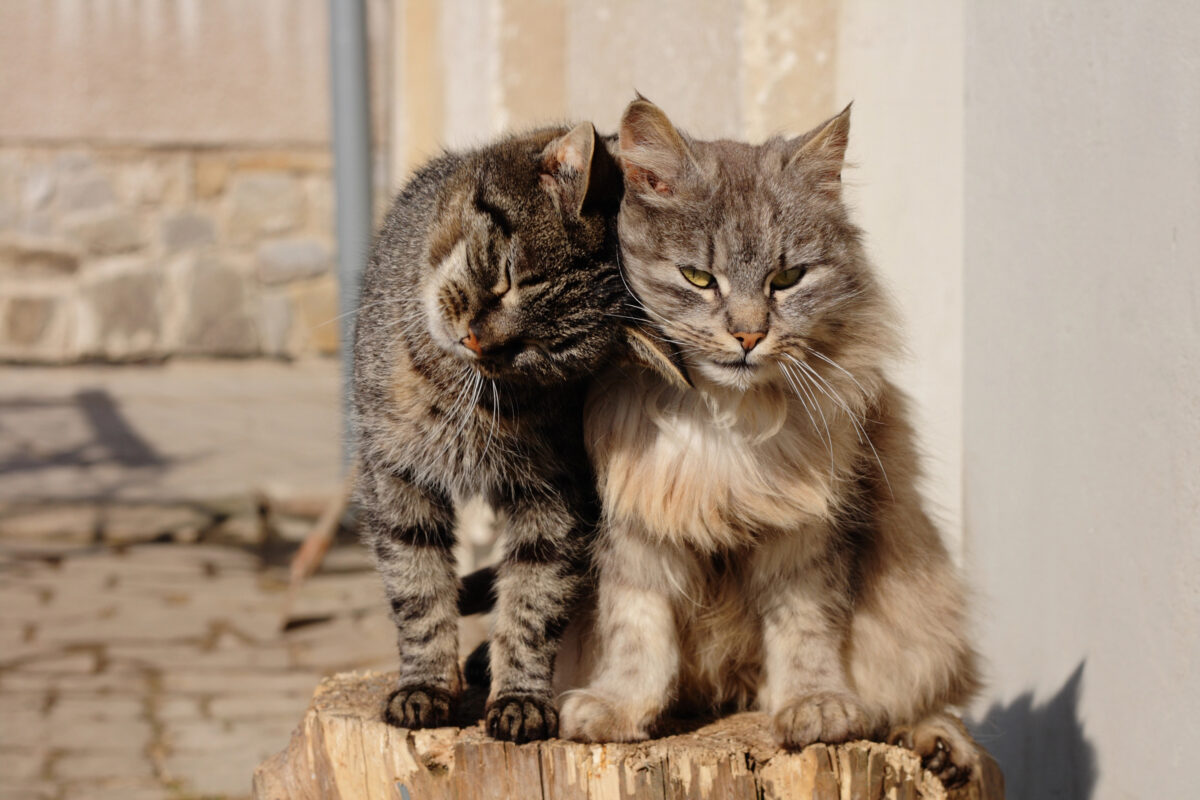
But here’s what gets missed: cats aren’t truly solitary animals. They’re selectively social.
In the wild, cats often form loose social groups, especially when resources are stable. They groom each other, sleep near each other, and develop familiar routines.
It’s not chaotic pack behavior like dogs, but it’s not isolation either.

Research backs this up, too. A peer-reviewed study on free-ranging cats found that when resources like food are consistent, cats often form flexible social groups and build relationships with familiar cats, which doesn’t exactly fit the “strictly solitary” stereotype.
What That Looks Like In Your House
At home, that flexibility shows up in different ways. Some cats are perfectly happy being the only pet.
Others adapt to it, even if it’s not their ideal setup.
And some? They genuinely do better with a companion.
The tricky part is that cats won’t sit you down and explain which category they fall into. They’ll just start sitting on your face at 5 a.m. instead.
Signs Your Cat Might Actually Want A Companion
Not every cat is secretly hoping for a roommate. Some are living their best, drama-free, single-cat life.
But others? They start showing it in small ways, which aren’t always dramatic or obvious — just patterns that build over time.

1. They Treat You Like Their Full-Time Entertainment System
If your cat relies on you for everything — play, stimulation, attention — you’ll feel it.
- Following you from room to room
- Interrupting whatever you’re doing (especially work calls)
- Demanding play at very specific, inconvenient times
This isn’t always just affection. Sometimes, it’s a lack of other outlets.
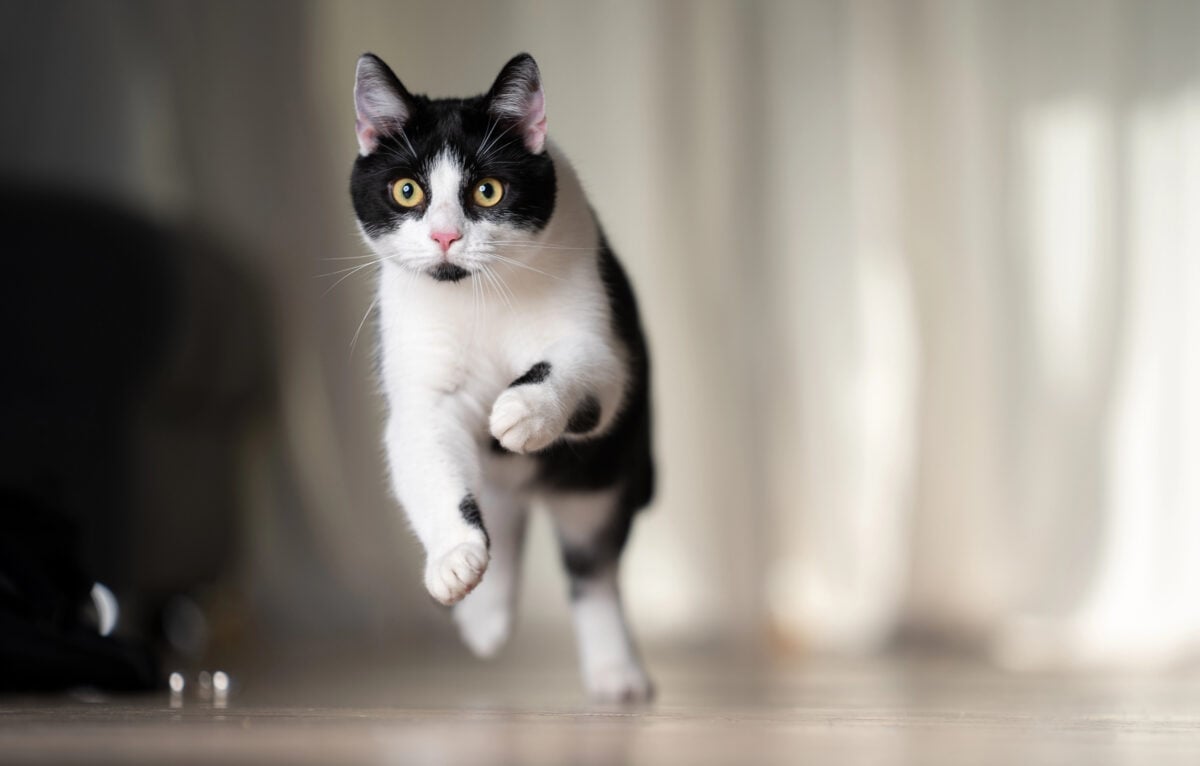
2. The Zoomies Feel… Less Like Fun and More Like A Cry For Help
Random bursts of energy are normal, but when your cat is:
- Sprinting laps multiple times a day
- Launching off furniture like it’s a parkour course
- Turning your ankles into moving targets
…it can point to excess energy with nowhere to go. Another cat can absorb a surprising amount of that chaos.
3. They Get Bored (And Then Creative About It)
Bored cats don’t just sit quietly. They find projects.
- Knocking things off counters (with eye contact)
- Getting into cabinets, cords, or “off-limits” zones
- Fixating on things they normally wouldn’t care about
This is usually a stimulation problem rather than a “bad behavior” issue.
International Cat Care points out that indoor cats need consistent play and environmental stimulation, which is why so many “annoying” behaviors are really cats finding their own entertainment.
4. They’re Extra Clingy (Or Suddenly Not)
Not all cats react to under-stimulation the same way, but noticeable changes matter.
Some become more demanding of your attention:
- Always on you, always watching you
- Interrupting whatever you’re doing
- Struggling to settle on their own
Others go quieter:
- Sleeping more than usual
- Less interactive or playful
- Seeming disengaged from things they used to enjoy
They’re different reactions, but the same signal: their environment may not be giving them enough to do.
5. They Seem Interested In Other Animals
This one’s easy to overlook.
- Watching animals through the window for long stretches
- Trying to interact with pets on TV
- Showing curiosity (not fear) around other cats
That curiosity can translate well to a real-life companion, with the right match.
Important: Not Every Cat Wants a Friend
Some cats prefer control over company.
- Guard their space
- Get stressed by change
- Prefer predictable, quiet environments
For them, adding another cat doesn’t solve a problem; it creates one.
Why Two Cats Are Better Than One (When It Works)
When the match is right, adding a second cat doesn’t just give your current cat company; it changes how they (and you) experience the entire day.
1. Built-In Companionship (That You Can’t Replicate)
You can give your cat attention and toys, but you can’t be another cat.
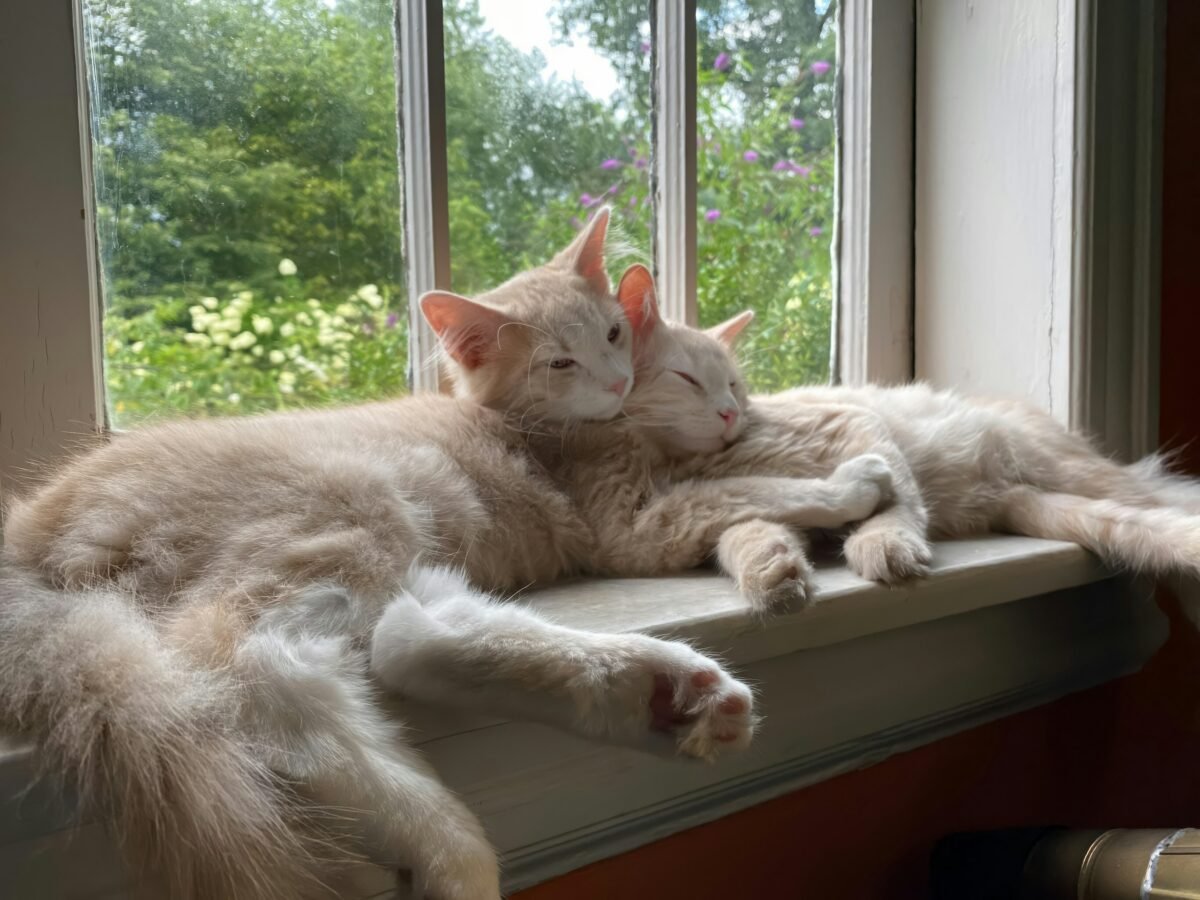
Cats communicate in ways we don’t, through body language, subtle signals, and shared routines that don’t involve you at all:
- Grooming each other
- Sleeping curled up together
- Quietly choosing to be in the same space
It’s a kind of companionship that’s easy to miss until you see it in action.
2. They Burn Energy Off Each Other
A second cat gives that energy somewhere productive to go.
Instead of:
- Attacking your feet under the blanket
- Zooming through the house with no clear objective
- Treating your furniture like a climbing structure
…they have a built-in play partner.
The chasing, wrestling, and stalking that used to involve you (or your ankles) gets redirected into something more natural.
What makes this different from solo play is consistency.
When a cat plays alone, even with toys you provide, it tends to happen in short bursts. A few minutes of interest, then they wander off like the toy personally offended them.
With another cat, that interaction becomes more dynamic and unpredictable.
One initiates. The other responds. The game pauses, then restarts five minutes later like nothing happened.
Over time, that creates a more natural cycle of activity and rest — less energy building up all day, and fewer moments where it all gets released at once.
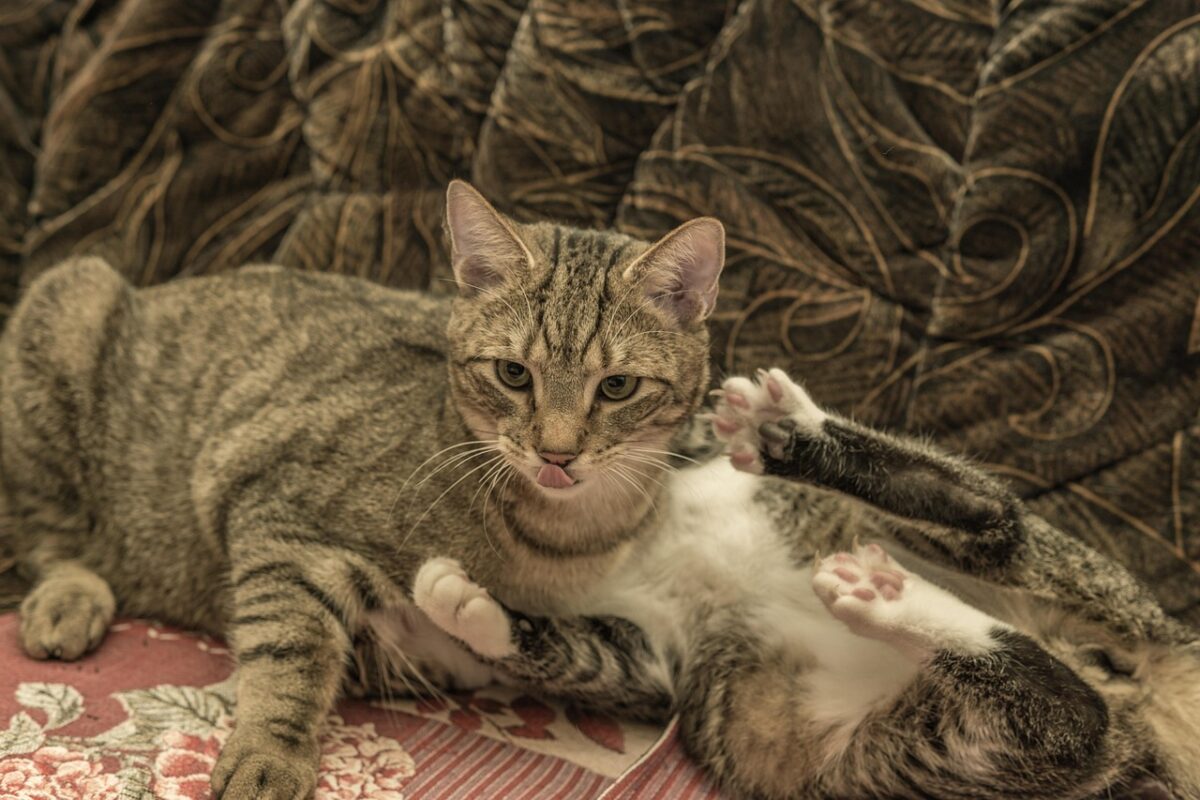
3. They Stay Mentally Engaged Without You
Even in a well-enriched home, there are long stretches when nothing new happens.
With two cats, those gaps don’t feel as empty. They create their own stimulation:
- Watching each other
- Reacting to each other’s movements
- Turning ordinary moments into something interactive
What’s easy to underestimate is how much cats rely on movement and unpredictability.
A toy sits still unless something activates it. A window view changes slowly. Even enrichment setups have limits. Another cat doesn’t.
They move unpredictably, react, and interrupt each other at the exact worst moment.
And then they turn an ordinary hallway into a full tactical operation.
It’s less about “entertainment” and more about giving your cat something that feels alive and responsive throughout the day, without requiring you to be on-call 24/7.
4. They Learn From Each Other
Cats pick up on each other’s behavior more than people expect.
A more confident cat can help a shy one come out of their shell. A younger cat can bring energy into a quieter household.
They also teach boundaries, such as how hard is too hard, when to back off, and when to engage.
That kind of feedback doesn’t come from humans the same way.
5. It Can Reduce Attention-Seeking Behavior
When your cat isn’t relying on you as their only source of interaction, the pressure shifts. They’re often:
- Less demanding of constant engagement
- Better at settling on their own
- More balanced throughout the day
Instead of needing you to fill every gap in their day, they have another outlet. You become part of their routine — not the entire structure of it.
For a lot of owners, that’s the difference between a cat that gently joins your day and one that aggressively schedules themselves into it.
6. You’re Saving Another Life
There’s a practical side to this decision — and an emotional one.
If you’re already considering adding a second cat, adopting one (or adopting a pair) means:
- One more animal out of the shelter system
- One more cat is getting a stable home
- Potentially keeping a bonded pair together
It’s one of the few times where doing what benefits your pet can also directly help another cat in need.
When Two Cats Are Not Better Than One
For the right cat, a companion can be enriching. In the wrong situation, it can introduce stress that didn’t exist before. Here are some situations to consider.

1. Your Cat Strongly Prefers Control Over Company
Some cats don’t just tolerate being alone. They prefer it.
They’re territorial, predictable, and comfortable having full ownership of their space.
You’ll usually see it in how they respond to change:
- Easily stressed by new environments or routines
- Defensive around unfamiliar people or animals
- Quick to guard food, space, or favorite spots
For these cats, adding another animal doesn’t feel like companionship. It feels like competition.
2. Your Home Doesn’t Have Enough Space To Separate Them
Even cats that eventually get along need distance, especially early on.
Without enough space:
- There’s no way to decompress
- Tension builds faster
- Avoidance turns into confrontation
This isn’t about square footage alone. It’s about whether your home can support:
- Separate feeding areas
- Multiple litter boxes
- Places to retreat and reset
Space, in this context, is really about options. Cats handle tension by creating distance. Even cats that get along will sometimes choose to separate.
If your home doesn’t allow for that, small irritations build. And when cats can’t avoid each other, avoidance turns into confrontation much faster.
Think less “roommates who keep to themselves” and more “two people forced to share one chair.”
That’s why vertical space, separate zones, and multiple resting areas matter just as much as square footage.
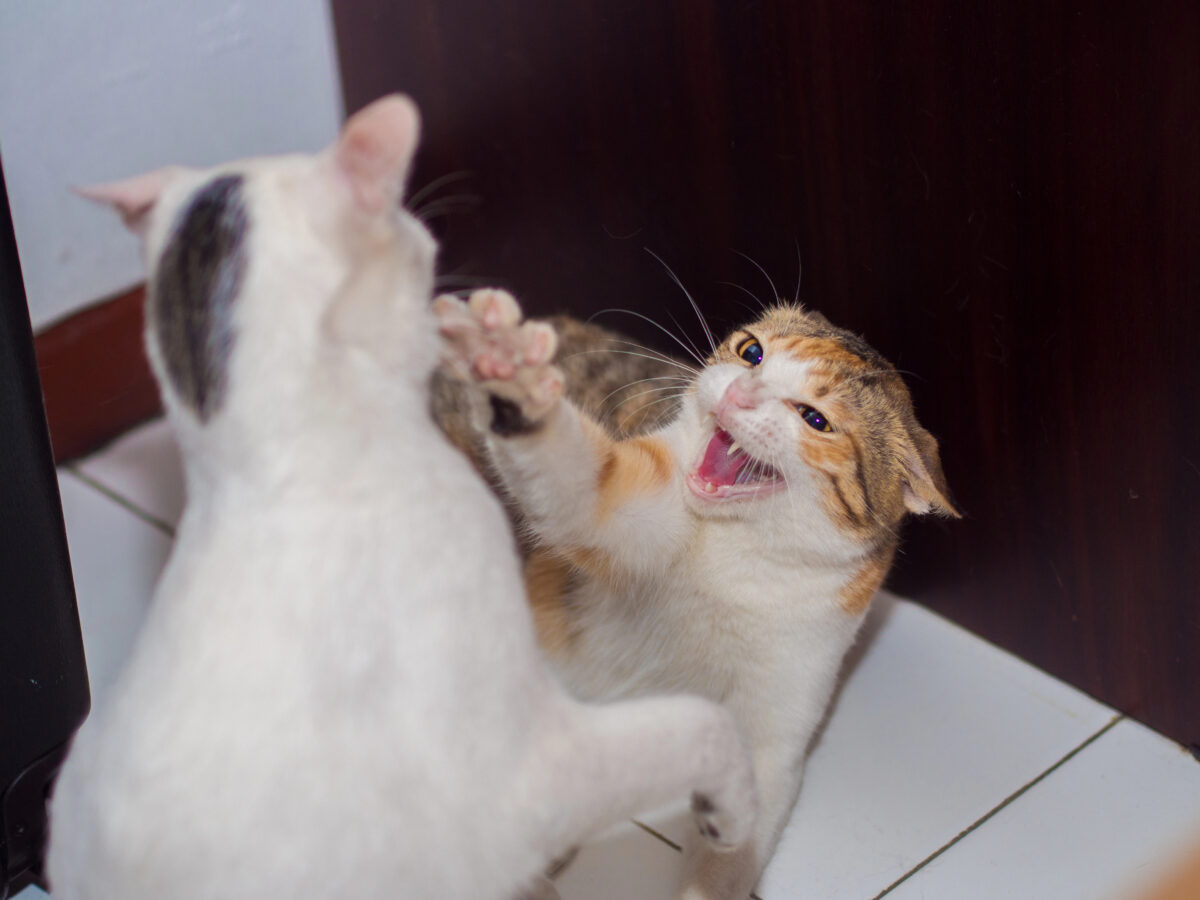
3. You’re Hoping A Second Cat Will “Fix” Behavior
This is one of the most common (and most risky) reasons people add another cat.
They hope a second cat will help with:
- Boredom
- Excess energy
- Mild attention-seeking behavior
But it won’t fix:
- Anxiety
- Aggression
- Litter box issues
- Medical or stress-related behaviors
In some cases, it amplifies them.
4. You Don’t Have The Time For A Proper Introduction
Cats don’t do well with sudden change, especially around territory. A rushed introduction can lead to:
- Long-term tension
- Avoidance patterns
- Ongoing stress between cats
Cats form associations quickly, and a few negative early interactions, such as feeling cornered, startled, or threatened, can shape how they view each other in the long term.
That’s why slowing things down is about giving both cats the chance to build neutral or even positive associations from the start.
Because once a cat decides, “I don’t like this situation,” they tend to commit to that opinion.
New Cat = Stress? Watch For This
Even well-planned introductions can trigger stress or depression in your current cat.
Early signs include:
- Hiding or withdrawing
- Changes in appetite
- Less interaction than usual
Catching it early makes a huge difference.
5. Your Lifestyle Is Already Stretched
Two cats don’t require double the work, but they do require more.
- More food
- More litter maintenance
- More vet expenses
- More attention during transitions
If things already feel tight, adding another variable can tip the balance.
6. The Match Isn’t Right
This is the most important factor — and the easiest to overlook.
Energy level, age, temperament, and social tolerance all matter.
- A high-energy kitten paired with a quiet older cat
- A confident cat paired with a timid one
- Two cats with incompatible play styles
Even small mismatches can create ongoing friction.
That matters more than people realize. The American Association of Feline Practitioners’ 2024 intercat tension guidelines note that conflict between household cats is common, and many signs are subtle enough that owners may miss them at first.
The Reality Check: Pros & Cons of Having Two Cats
At a glance, having two cats can feel like either a genius decision or a questionable life choice. In reality, it’s both, depending on your setup.
| Pros | Cons |
|---|---|
| Built-in companionship | Higher ongoing costs |
| More natural play and exercise | Introductions require effort |
| Less boredom-driven behavior | Potential for conflict |
| More balanced daily rhythm | More cleaning & maintenance |
| Takes the pressure off you to entertain |
Adopting Two Kittens At Once: The “Easy Mode” Option
If you’re starting from scratch, this is usually the smoothest path. Kittens are naturally more adaptable. They’re still learning social boundaries, play styles, and how to exist around other cats.
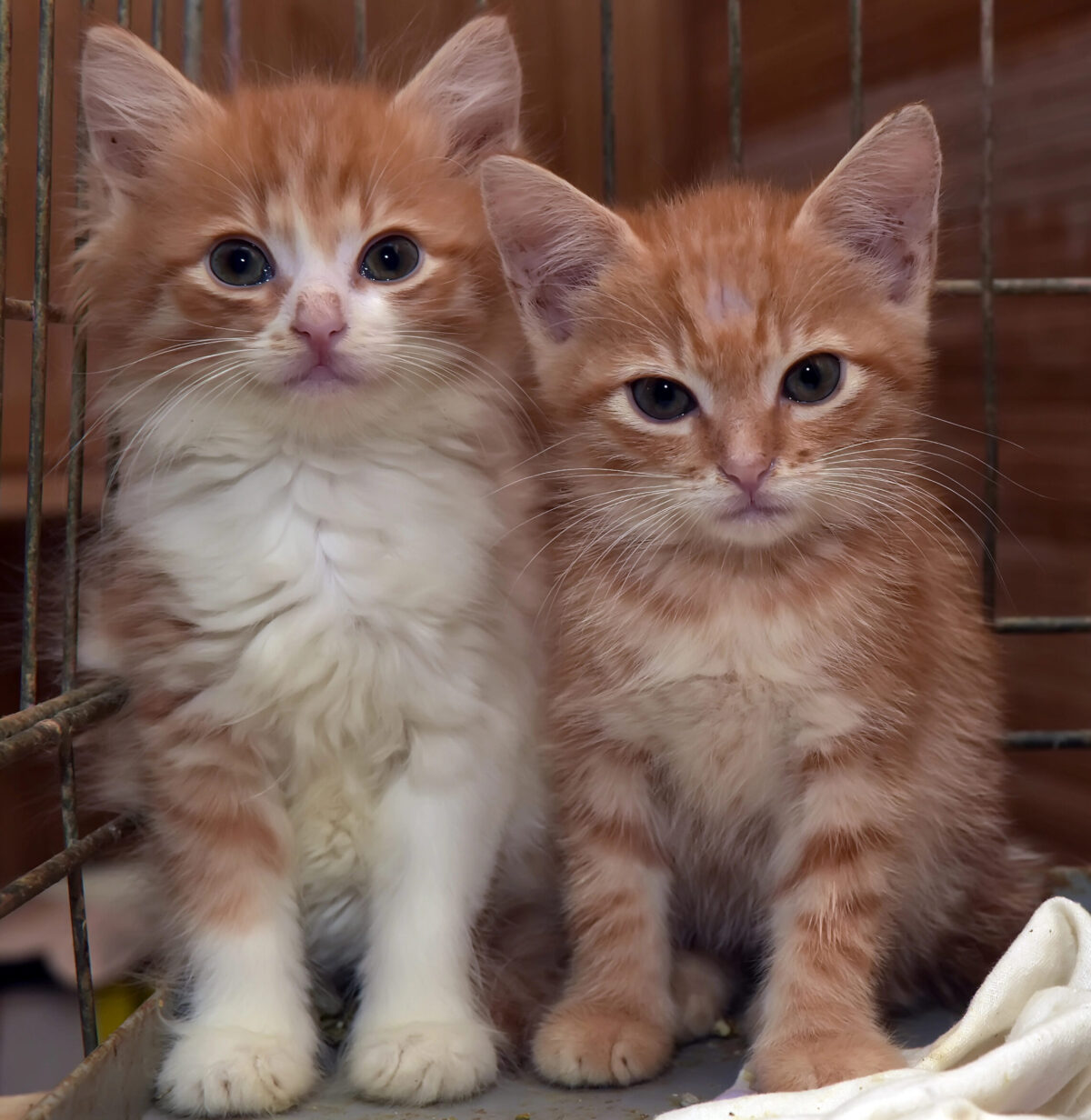
That flexibility makes a huge difference. When you adopt two together:
- They bond early
- They match each other’s energy
- They grow into the dynamic instead of adjusting to it later
This is why shelters often encourage adopting pairs, especially littermates or already bonded kittens.
It’s not just easier for you. It sets them up for a more stable social life from the start.
Thinking About Getting Just One Kitten? Read This First
A lot of people assume one kitten is easier. In reality, it can create a very specific set of problems known as “single kitten syndrome.” Without another kitten to learn from, some kittens:
- Develop rough play habits (your hands = target practice)
- Struggle with boundaries
- Become more demanding or harder to settle
It’s one of the most common reasons owners end up wishing they’d adopted two from the start.
Already Have One Cat? Here’s How To Add A Second Without Chaos
This is where things get more nuanced. Adding a second cat to an established home is less about luck and more about good decisions.

Match Energy, Not Just Age
A calm, older cat paired with a high-energy kitten can work, but it often creates tension.
Look for compatibility in:
- Activity level
- Play style
- Social tolerance
This is where a lot of well-intentioned decisions go wrong. People assume a kitten will “liven up” an older cat or that an older cat will “calm down” a younger one.
In reality, mismatched energy levels create frustration on both sides. One cat wants to engage, and the other wants to disengage. Repeatedly.
It’s the feline version of one roommate training for a marathon while the other is in a committed relationship with the couch.
Compatibility doesn’t mean identical personalities, but it does mean their expectations of interaction aren’t constantly at odds.
Give Them Their Own Resources
Sharing everything sounds efficient, but it rarely works that way.
Multiple cats need:
- Separate feeding areas
- More than one litter box
- Multiple resting spots
This reduces competition, even between cats that get along.
That setup isn’t overkill. The AAFP’s step-by-step guide for introducing a new cat recommends giving each cat their own key resources, including food, water, resting areas, scratching options, and litter boxes, to reduce tension from the start.
Design The Environment For Two Cats
Space matters, but how it’s used matters more.
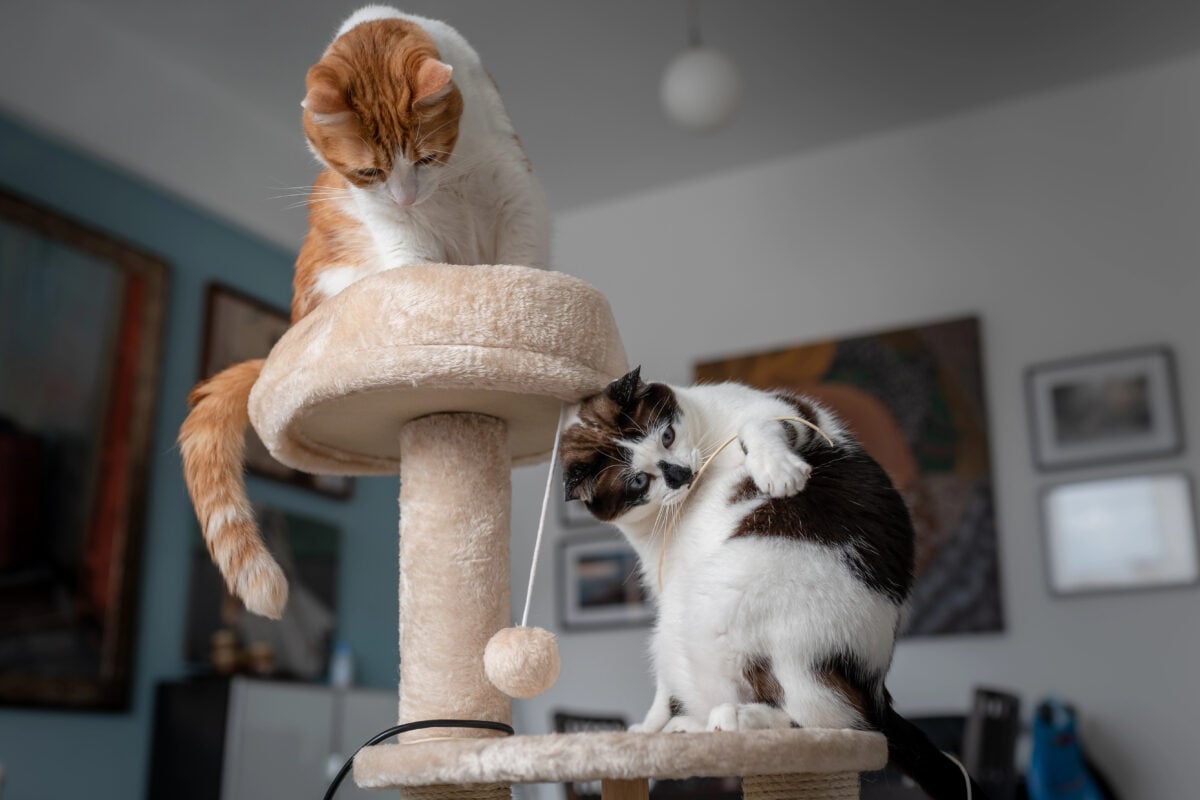
- Vertical space (cat trees, shelves/steps, etc.)
- Multiple pathways and escape routes
- Separate “zones” within the home
Cats coexist better when they’re not forced into constant interaction.
Don’t Rush The Introduction
Cats don’t need instant friendship. They need a controlled, low-pressure way to get used to each other.
Here’s how to do that without creating long-term tension.
Step 1: Start With Full Separation
Bring the new cat home, but don’t introduce them face-to-face yet.
Set up a separate room with:
- Food and water
- Litter box
- Bed or hiding spot
- Toys
This gives both cats time to adjust to the idea of each other without direct contact.
Step 2: Let Them Learn Each Other’s Scent
Before they ever meet, they should become familiar with each other’s smell.
- Swap bedding or blankets
- Rub each cat with a cloth and place it near the other
- Let them sniff under the door
Cats rely heavily on scent. This step turns the other cat from “intruder” into “something familiar.”
Step 3: Controlled Visual Introductions
Once both cats seem calm during scent exposure, introduce limited visual cues.
- Crack the door slightly
- Use a baby gate
- Let them see each other from a distance
Watch for curiosity over tension. A little staring is normal. Stiff posture, growling, or intense fixation means slow it down.
Step 4: Short, Supervised Interactions
When both cats are relaxed, allow brief, supervised time together.
- Keep sessions short
- End on a neutral or calm note
- Separate them again afterward
You’re not aiming for bonding; you’re building tolerance.
Step 5: Gradually Increase Time Together
As reactions improve, extend their time together. Let them share space, move freely, and interact naturally.
At this point, you’re looking for:
- Less tension
- More neutral coexistence
- Occasional positive interactions
Watch For These Early Signs
Not all tension is obvious.
Warning signs to look for include:
- Staring + stiff body language
- Blocking access to spaces
- Subtle avoidance patterns
These typically appear before the real conflict.
The Question Most Owners Are Really Asking:
If I Already Have One Cat, Should I Get Another?
There’s no universal answer, but there is a clear framework.
It’s Probably A Good Idea If…
- Your cat shows signs of boredom or excess energy
- They’re curious or neutral around other animals
- Your home can support separation and gradual introduction
- You’re prepared for the transition period
It’s Probably Not The Right Move If…
- Your cat is highly territorial or easily stressed
- You’re hoping this will fix deeper behavioral issues
- You don’t have the time or space to introduce properly
- Your current setup already feels maxed out
This decision isn’t about whether two cats are “better.” It’s about whether a second cat fits the life your current cat is already living.
Frequently Asked Questions
Have a question that didn’t get covered? Drop it in the comments. There’s a good chance other cat owners are wondering the same thing.
Is It Better To Adopt Two Cats At The Same Time?
Often, yes, especially with kittens. They adapt faster, form bonds early, and grow into the dynamic together instead of adjusting to it later.
Do Cats Get Lonely Without Another Cat?
Some do. It depends on personality, environment, and the amount of stimulation they receive throughout the day.
Is Having Two Cats Twice The Work?
Not usually, but it is more work. Daily routines don’t double, but costs and logistics increase.
What’s The Best Age Gap Between Cats?
Closer energy levels matter more than age. A playful younger cat and a similarly active companion tend to pair better than mismatched personalities.
Can Two Adult Cats Learn To Get Along?
Yes, but it takes time, proper introductions, and realistic expectations. Coexistence is the first goal.
What Happens Next Matters More Than The Decision
Adding a second cat is one thing. Getting the dynamic right is everything. Before you make the move or if you’re already in the thick of it, these will help you avoid the most common (and most fixable) mistakes:
- Spot early tension: How To Tell If Two Cats Will (Eventually) Get Along
- If your cat seems off after the change: How To Handle Cat Depression After A New Kitten
- Dealing with behavior issues: How To Discipline Cats Without Yelling
Are you still on the fence about getting another cat? Drop your situation in the comments. Sometimes the difference between “great idea” and “absolute chaos” comes down to a few details.