When you purchase through links on our site, we may earn a commission at no extra cost to you. Learn more.
If you live with a cat, you’ve probably watched them panic over something that seemed harmless five seconds earlier. A shoe that suddenly appears. A bag that has clearly been plotting something. A sound only they could hear, but fully believed required immediate evacuation.
Table of Contents
What makes it confusing is how selective that fear can be. Your cat might sleep through a thunderstorm but bolt because you shifted in your chair. One moment they’re calm and curious. The next, they’ve decided the house is no longer safe.
This isn’t randomness, and it isn’t bad behavior. Cats are wired to notice change quickly and respond before they stop to think. Once you understand what scares cats and why, their reactions start to feel a lot more familiar.
Fear In Cats Often Looks Different Than People Expect
Most people expect a scared cat to make a scene. Hissing, puffed fur, dramatic exits. Sometimes that happens. More often, fear shows up quietly and is easy to misread.
Want our human-written content to rank above AI-generated garbage? Help us out by clicking this button!
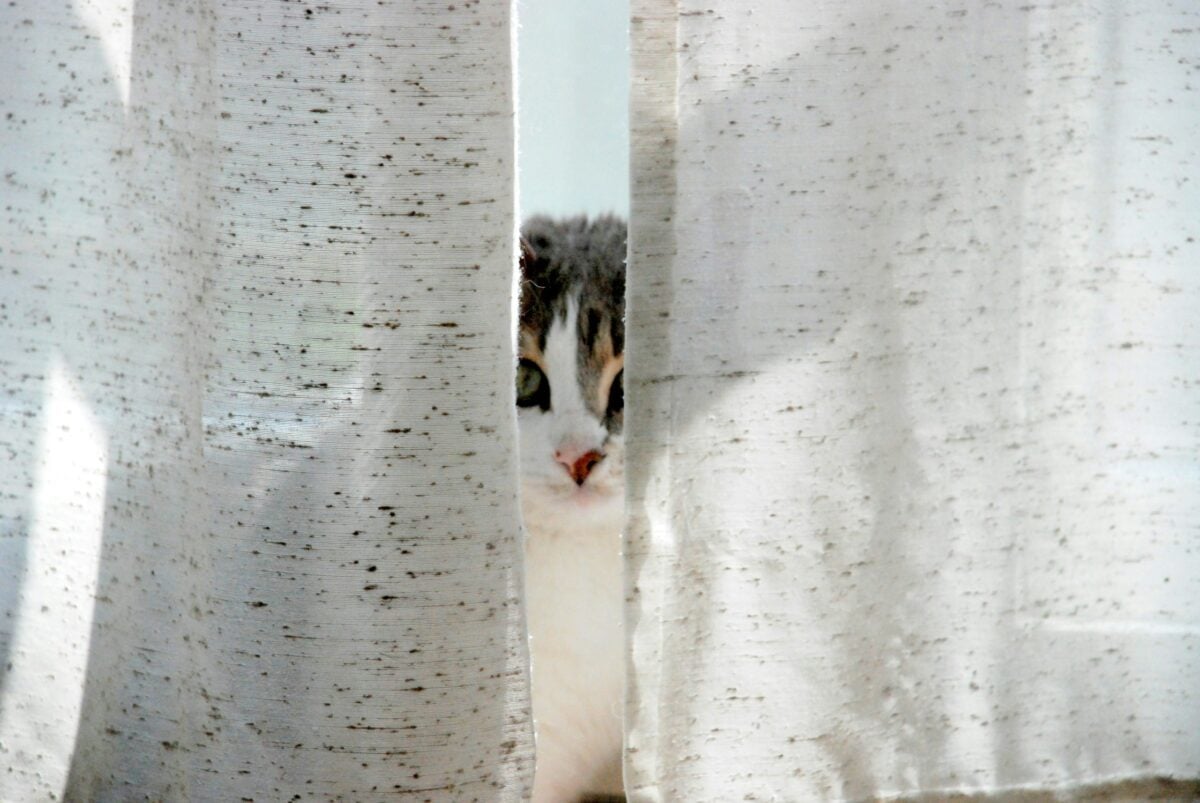
Cats aren’t built to announce discomfort. When something feels uncertain, they default to minimizing exposure rather than drawing attention. That response is intentional, even if it looks confusing from the outside.
This is why fear can feel inconsistent. Cats don’t evaluate situations by size or logic. They assess them by predictability. Once you understand that, many reactions stop feeling random and start feeling easier to interpret.
Common Signs Your Cat Is Scared
Once you know what to look for, fear becomes easier to recognize. Some signs are subtle enough to blend into everyday behavior. Others are immediate and unmistakable. Both matter.
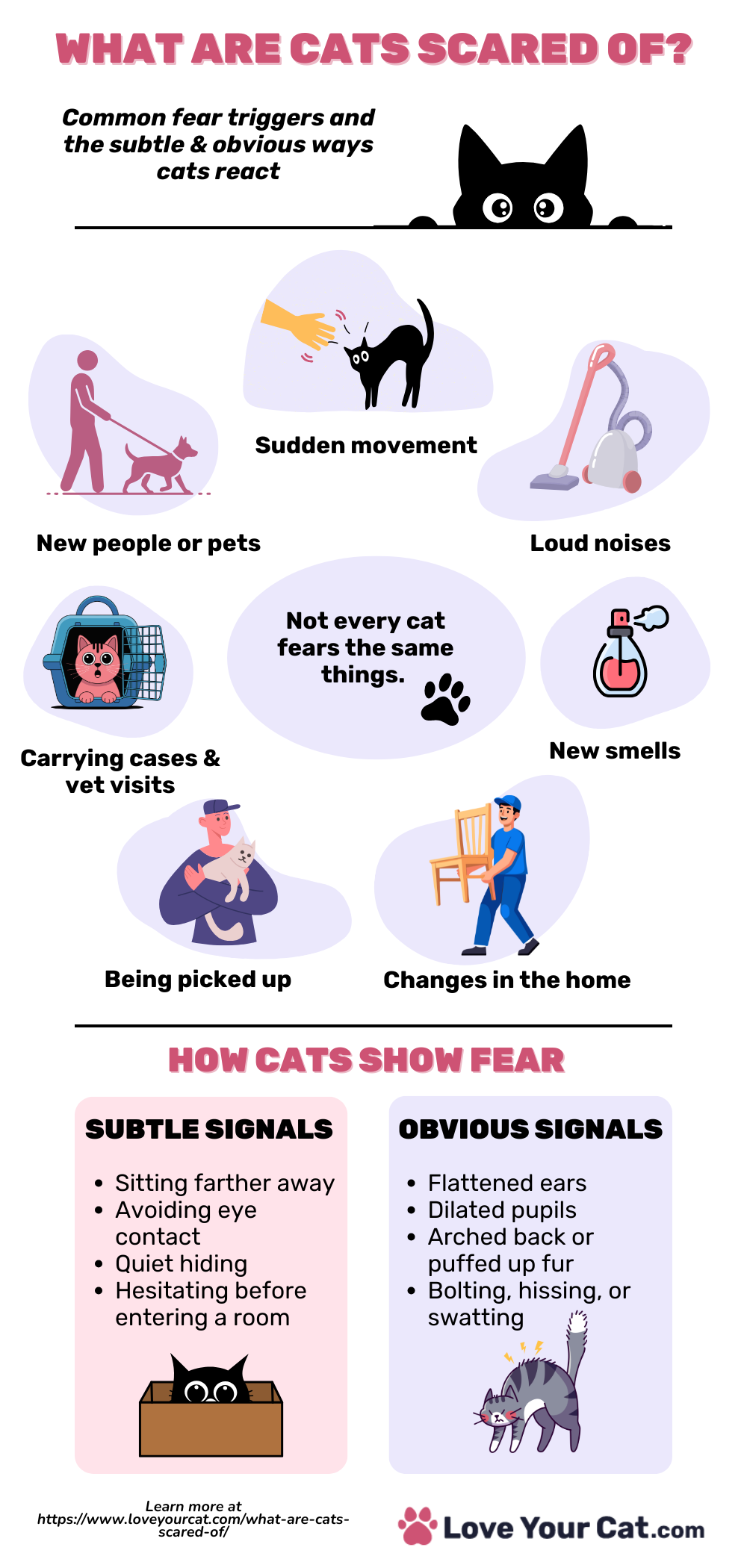
Subtle fear often looks like quiet avoidance rather than panic. You might notice your cat:
- Leaving a room sooner than usual
- Sitting farther away than they usually would
- Hesitating before entering familiar spaces
One of the most common signs is sudden hiding. This isn’t playful disappearing. It’s your cat choosing a spot where they can observe without being seen, often staying there longer than usual. Some cats respond instead by freezing in place, holding still while everything around them is assessed.

Other fear signals are more obvious and tend to concern owners right away. Experts at the Cornell Feline Health Center say fear in cats often shows up through body language, including:
- Flattened ears or ears pinned back
- Wide, dilated pupils
- Arched back or puffed-up fur
- Hissing, growling, or yowling
- Swatting or biting when approached
- Springing up or bolting suddenly
Fear can also show up as changes in routine. Skipping meals, avoiding certain rooms, abandoning favorite spots, or hesitating near the litter box are common signs that something feels off.
Why Cats React So Fast (And Think About It Later)
If you’ve ever watched your cat launch off the couch before you even noticed something change, you’ve seen this happen. The reaction is instant. What comes after is usually what confuses people.
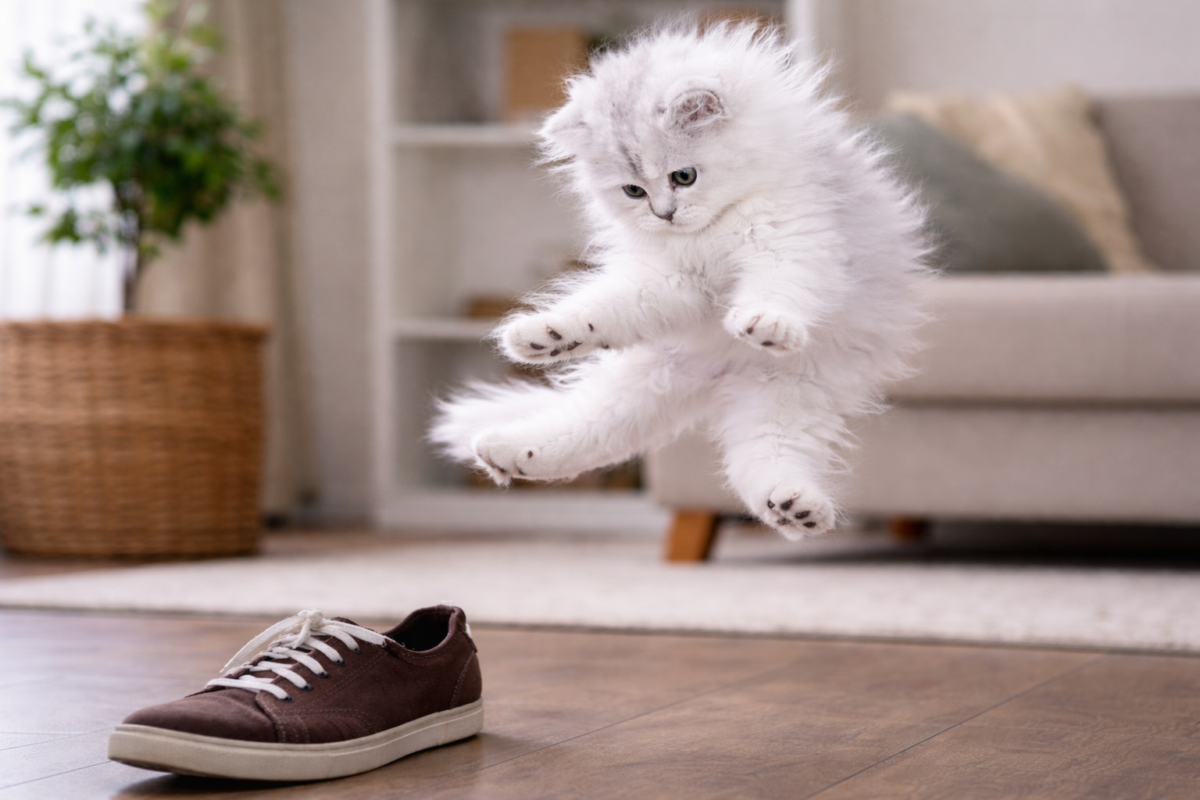
The moment itself may pass quickly, but your cat’s body doesn’t reset at the same pace. After a sudden noise, movement, or disruption, many cats stay on alert longer than we expect. They might retreat to a safe spot, watch from a distance, or avoid the area entirely, even though everything appears calm again.
This lag is important. Cats don’t immediately return once they’ve flagged a situation as uncertain. They wait, observe, and re-enter on their own terms. If your cat refuses to come back into a room where “nothing happened,” it’s because their system hasn’t fully settled yet.
None of this means your cat is jumpy or anxious by nature. It means they are very good at their job. Reacting quickly keeps cats safe, even if it occasionally makes them look like they overreacted to a sock.
Why Some Cats Are More Fearful Than Others
If you’ve ever lived with more than one cat, you’ve probably noticed this. One cat walks into new situations like they own the place. The other disappears because a chair is slightly out of position. Both are normal.
A large part of that difference comes down to temperament. Some cats are naturally cautious and detail-oriented. Others are more flexible and quick to adapt. Many fall somewhere in between.
According to research, early experiences also play a role. Kittens go through a key socialization window between two and twelve weeks of age, when their brains are especially open to learning what’s safe. Cats who had calm, positive exposure during that time often grow up more comfortable with change. Cats who missed some of that exposure may remain more sensitive to it.
That sensitivity isn’t a flaw. It simply means the cat gathers more information before engaging. What matters most is fit. Confident cats tolerate surprises easily. Cautious cats do best with consistency, warning, and choice. When the environment matches the cat, even very watchful personalities settle into steady, workable routines.
What Are Cats Afraid Of? 10 Common Triggers
If you live with a cat, you’ve already seen this moment: everything is fine, until it isn’t. Your cat pauses, reassesses the room, and decides that something ordinary has crossed an invisible line.
The triggers below are some of the most common reasons cats startle, retreat, or go on alert. Not every cat reacts to all of them, and some reactions will still surprise you.
1. Sudden Movement: Why Your Cat Panics When You’re Just Existing Normally
From your point of view, nothing happened. You stood up. You reached for something. You turned around. From your cat’s point of view, the room shifted without warning.
This kind of fear usually shows up around movement that feels abrupt or directional, especially when it comes toward your cat or over their head. It’s not about who you are. It’s about how fast everything changed.
Everday moments that trigger it:
- Standing up suddenly from the couch
- Reaching out without your cat noticing first
- Leaning over them while they’re resting
- Moving quickly in their direction
- Turning on the lights or entering a room unexpectedly
If your cat reacts differently to the same thing on different days, you’re not imagining it. Fear depends on timing, energy, and what else is happening in the environment.
2. Loud Noises: Why The Vacuum Has Never Been Forgiven
Some noises don’t just bother cats. They completely rewrite the mood of the house. One minute, your cat is relaxed. The next, they’re gone, and the vacuum has officially joined their list of enemies.

Cats hear far more than we do, especially higher-pitched and sudden sounds. What registers to you as background noise can feel sharp, invasive, or unpredictable to them. The problem isn’t volume alone. It’s noise that arrives without warning or control.
Common sound triggers include:
- Vacuums and carpet cleaners
- Thunderstorms and heavy rain
- Fireworks
- Hair dryers and blenders
- Dropping something unexpectedly
Once a cat associates a sound with disruption, they tend to remember it. That’s why some cats disappear at the first hint of a vacuum coming out of the closet, even before it’s turned on. They’re not reacting to the noise anymore. They’re responding to the expectation of it.
Not all cats respond the same way. Some will hide. Some will freeze. Some will leave the room and keep an eye on things from a distance. All of these responses are normal. Loud, unpredictable noise removes a cat’s sense of control, and retreating is often the fastest way to get it back.
Did You Know?
Cats hear far more than we do, especially high-frequency sounds. Their ear structure amplifies these noises, so sounds that feel tolerable to us can feel sharp or overwhelming to them. When a loud sound is unfamiliar or challenging to locate, fear often follows.
3. Changes In The Home: When The Floor Plan Violates Expectations
Cats notice changes in their environment long before we do. Sometimes, before we even realize something counts as a change. A chair moved slightly. A box that didn’t exist yesterday. A room that looks the same to you but feels different to them.
For cats, the home isn’t just a place. It’s a map of expectations. When that map changes without warning, even in small ways, it can trigger caution or fear.
Common household changes that unsettle cats include:
- New furniture or rearranged rooms
- Boxes, bags, or packages left on the floor
- Items leaning where they usually aren’t
- Temporary clutter during cleaning or organizing
- Objects that reflect light or make noise when touched
Some cats respond by avoiding the area entirely. Others approach slowly, sniffing and watching as if the object might move on its own. A few will sit across the room and stare at the problem until it’s dealt with, preferably by someone else.
This is also why particular “surprise objects” get such strong reactions. Unfamiliar shapes on the floor (cue the viral cucumber craze), shiny surfaces like aluminum foil, or items that appear suddenly can all trigger that uneasy pause. It’s not the object itself. It’s the fact that it wasn’t part of the plan.
4. “Unfamiliar” People & Animals: Why Some Guests Never Win Your Cat Over
You invite someone over who has been in your home plenty of times before. Your cat has seen them. Smelled them. Technically knows them. And yet, the moment they walk in, your cat disappears like this is a brand-new situation.
For cats, familiarity isn’t a permanent setting. It’s conditional. Slight differences in movement, voice, energy, or smell can reset how safe someone feels, even if that person has been around before.
Cats are especially sensitive to:
- New or unfamiliar voices
- Different walking patterns or body language
- Strong scents like perfume or cologne
- Guests who move quickly or make direct eye contact
- Other animals, especially new cats or dogs
To you, it’s just a person stopping by. To your cat, the social environment has changed, and that matters.
Some cats choose to hide immediately. Others stay nearby but keep their distance, watching closely from a doorway or high spot. A few may approach, then retreat the second the interaction doesn’t go as expected. None of this means your cat is unfriendly. It means they’re cautious about social variables they can’t control.
5. Carriers, Car Rides & Vet Visits: Why Your Cat Knows Before You Leave
You haven’t said anything yet, but your cat already knows. The carrier comes out. A cabinet opens. Something about the routine feels different. Suddenly, your cat is nowhere to be found.
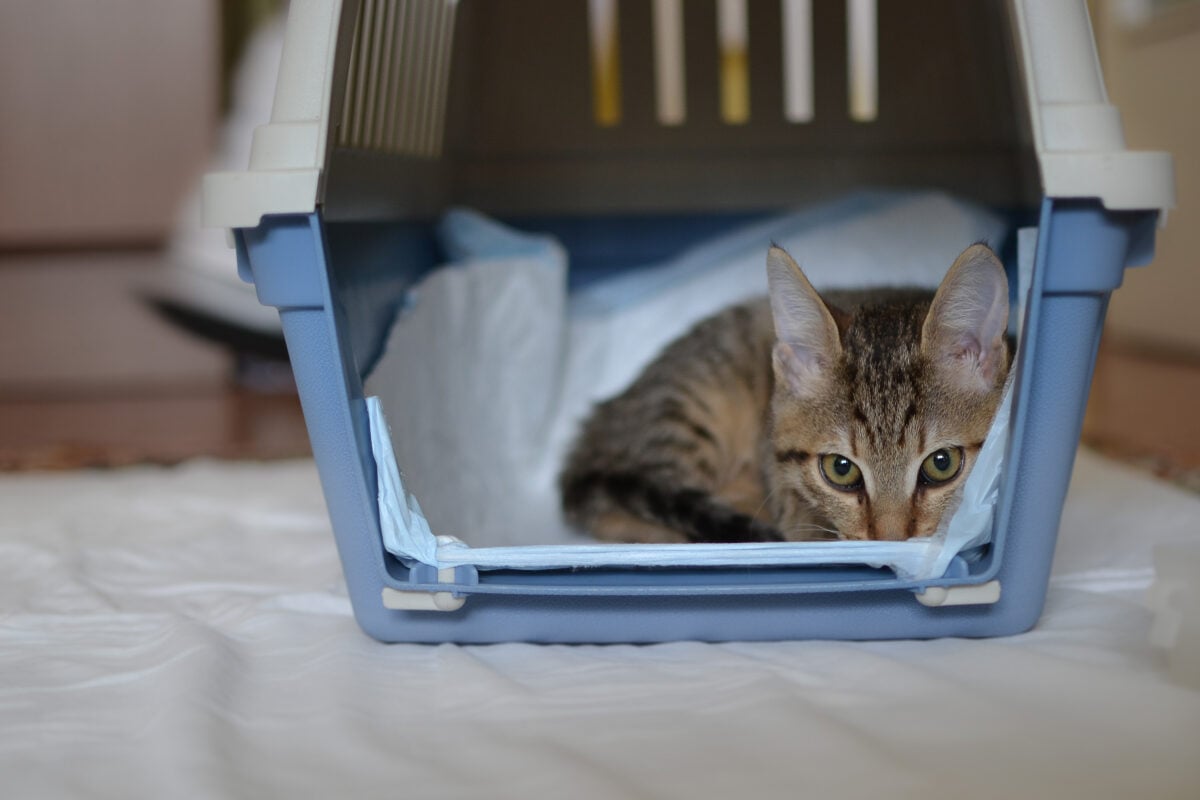
Carriers and car rides combine several things cats dislike all at once: confinement, motion, noise, and loss of control. Add in unfamiliar smells and handling, and it’s easy to see why these moments trigger fear, even in otherwise calm cats.
Common stress points include:
- Seeing the carrier appear
- Being placed in a small, enclosed space
- The movement and vibration of the car
- Loud road noise or sudden stops
- Arriving somewhere that smells strongly of other animals
Some cats protest loudly immediately. Others go very quiet and still. A few seem calm until the moment they’re released, then refuse to make eye contact for the rest of the day. All of these reactions come from the same place: the situation removes choice.
Veterinary visits add another layer. New people, unfamiliar animals, bright lights, and strange surfaces can make even confident cats retreat inward. Your cat isn’t afraid of the vet personally. They’re reacting to everything that surrounds the visit.
When Fear Leads To Vet Visits (And Unexpected Costs)
Fear doesn’t just change behavior. In some cases, it leads directly to vet visits.
Cats who panic can injure themselves trying to escape, refuse food, trigger stress-related medical issues, or need urgent care after a sudden scare or accident. And many of these visits happen after hours, when care is more expensive and decisions have to be made quickly.
Pet insurance can help cover exams, diagnostics, and treatment for new illnesses or injuries, making it easier to focus on your cat’s care instead of hesitating over cost. Coverage needs to be in place before symptoms appear to be useful, which is why many cat owners choose insurance while their cat is still healthy.
If you’re planning ahead, our guide to the best cat insurance walks through top providers, coverage options, and common exclusions. You can also get a personalized quote for your cat (using the form below) to see what coverage and pricing look like based on their age and needs.

6. Mirrors & Reflections: When Your Cat Meets Someone They Don’t Recognize
Most of the time, mirrors are ignored. Then one day, your cat catches their reflection at the wrong angle, in the wrong light, and everything changes.
Cats don’t automatically understand reflections. Some figure it out early. Others never fully do. When a reflection appears suddenly or moves in an unexpected way, it can feel like another animal appeared without warning.
Situations that tend to trigger reactions include:
- Catching their reflection at night or in low light
- Seeing movement in mirrored closet doors
- Reflections on shiny appliances or windows
- A mirror placed at floor level or leaned against a wall
Some cats investigate cautiously. Others freeze, puff up, or retreat and watch from a distance. A few will avoid that spot entirely, as if the reflection might still be waiting for them.
7. Water: When The Sink Becomes A Bad Idea
Water is one of those things cats seem to have complicated feelings about. They’ll stare at it. Paw at it. Lean in close. And then suddenly act like it has personally betrayed them.
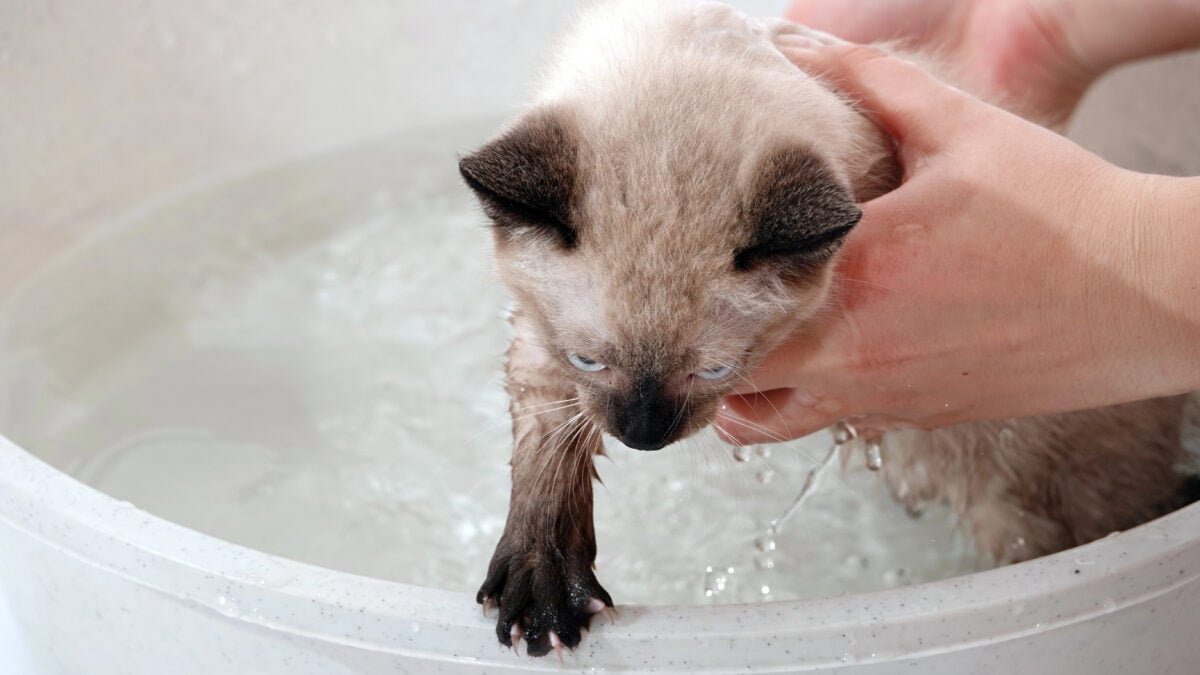
Most cats don’t hate water across the board. What they dislike is unpredictable movement and loss of control. Still water in a bowl is usually fine. Moving water, splashing, or unexpected contact is where things go sideways.
Common water-related triggers include:
- Running faucets or toilets
- Water splashing during dishwashing
- Sudden drips or leaks
- Being brushed by wet surfaces
- Slipping near sinks, tubs, or bowls
This is why some cats are fascinated by sinks but panic the moment water touches their fur. Wet fur feels heavy, changes how they move, and interferes with their ability to react quickly. That alone is enough to make water feel risky.
8. New Scents: When The Air Has Changed
Sometimes nothing looks different, nothing sounds different, and yet your cat acts like something is deeply off. That’s usually a smell problem.
Cats experience the world through scent first. When a new smell enters their space, it can change how safe a room feels instantly. If the house smells wrong, the house feels wrong.
New scents that commonly trigger fear or avoidance include:
- Cleaning products or air fresheners
- Perfume, cologne, or strongly scented lotion
- Grocery bags and takeout containers
- Items that smell like other animals
- New furniture, rugs, or boxes
To you, these smells fade quickly. To your cat, they linger and overlap, sometimes masking familiar scents that typically signal safety. This can make even a well-known space feel unfamiliar.
Some cats respond by sniffing cautiously and backing away. Others avoid the area entirely, choosing rooms that still smell “right.” A few will investigate repeatedly, clearly unsettled but unable to ignore it.
Did You Know?
Domestic cats have twice as many scent receptors in their nose as humans, and can smell about 14 times better than humans. They also rely on a specialized organ called the vomeronasal (Jacobson’s) organ to process chemical signals. This allows them to detect and interpret smells at a level we simply don’t register.
9. Not Having Enough Space: When Privacy Is Compromised
Cats handle stress best when they have options. When those options disappear, fear shows up quickly.
This isn’t just about square footage. It’s about escape routes, height, and privacy. When a cat can’t leave a situation on their own terms, even mild stress can feel overwhelming.
Situations that commonly trigger this:
- Closed doors that block favorite exits
- Guests filling the rooms your cat usually uses
- Other pets crowding shared spaces
- No access to high perches or shelves
- Too few hiding spots during busy moments
Some cats retreat to the highest place they can find. Others squeeze into tight spaces that seem uncomfortable but feel protected. A few hover nearby, clearly uneasy, waiting for an opening.
What looks like avoidance is often a search for control. Having somewhere to go matters more to cats than being comforted. When space feels limited, fear has fewer places to drain off.
10. Being Picked Up: When This Wasn’t Requested
Some cats love being held. Many tolerate it. A few would rather not discuss it at all.
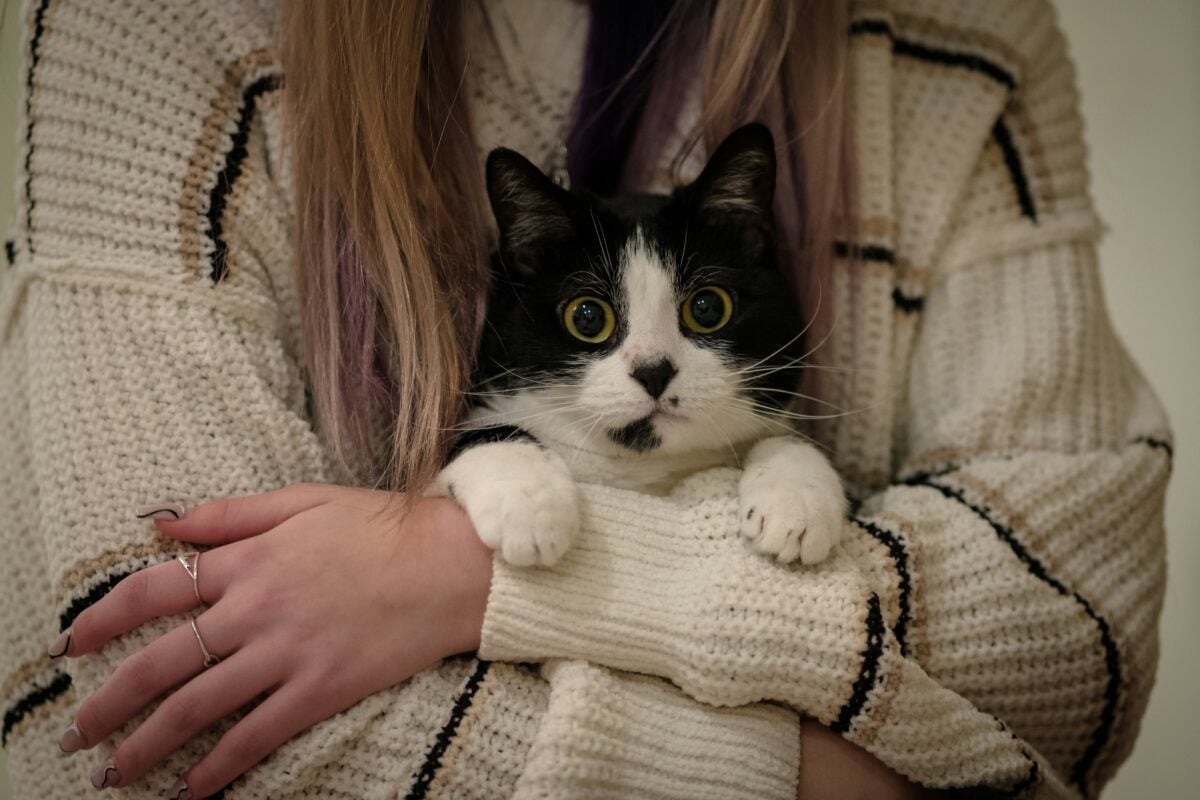
Being picked up removes choice, changes balance, and lifts a cat into a position they didn’t ask for. Even cats who trust you can find this unsettling, especially if it happens suddenly or lasts longer than they expect.
Moments that tend to trigger fear or resistance include:
- Being lifted without warning
- Being held too tightly or too high
- Facing outward instead of toward your body
- Not having their feet supported
- Being carried while other people or pets are nearby
You might notice stiff legs, a tense body, a flicking tail, or that frozen look that means your cat is counting the seconds. These aren’t signs of aggression. They’re signs your cat is managing discomfort.
If your cat wriggles, vocalizes, or asks to be put down quickly, they aren’t rejecting affection. They’re telling you that this form of closeness doesn’t feel safe or enjoyable in that moment.
Why Your Cat’s Fear Is Actually A Superpower
After reading through that list, it’s easy to start thinking your cat is scared of everything. In reality, they’re very good at noticing when something feels off and responding quickly.
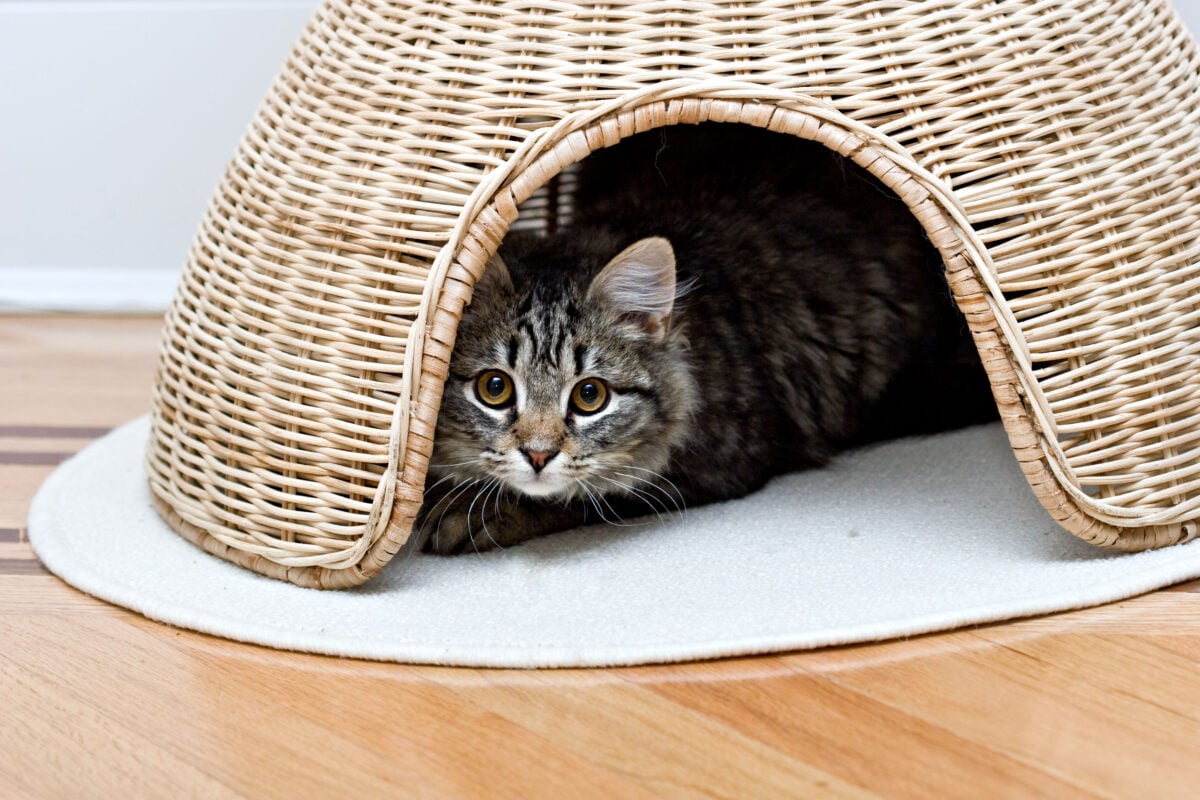
Fear helps cats stay safe. It pushes them to pause, retreat, observe, and choose distance when something doesn’t feel right. That instinct has kept cats alive for a very long time, even if it occasionally makes everyday life feel dramatic.
What looks like overreacting is often a cat gathering information. They’re watching, listening, and waiting for things to settle before re-engaging. This is why a cat may hide during a noisy event and reappear later like nothing happened. From their point of view, the system worked.
Understanding this shifts how you interpret their behavior. Instead of seeing fear as a problem to fix, you start seeing it as communication. Your cat is telling you what feels safe and what doesn’t, using the only language they have.
Once you view fear as a skill instead of a flaw, it becomes much easier to help your cat feel secure without trying to force confidence where it doesn’t exist.
How To Help A Fearful Cat Feel Safer
When a cat is scared, the instinct is often to fix it quickly. Reassure them. Pick them up. Encourage them to face the thing that’s bothering them. Most of the time, that backfires.
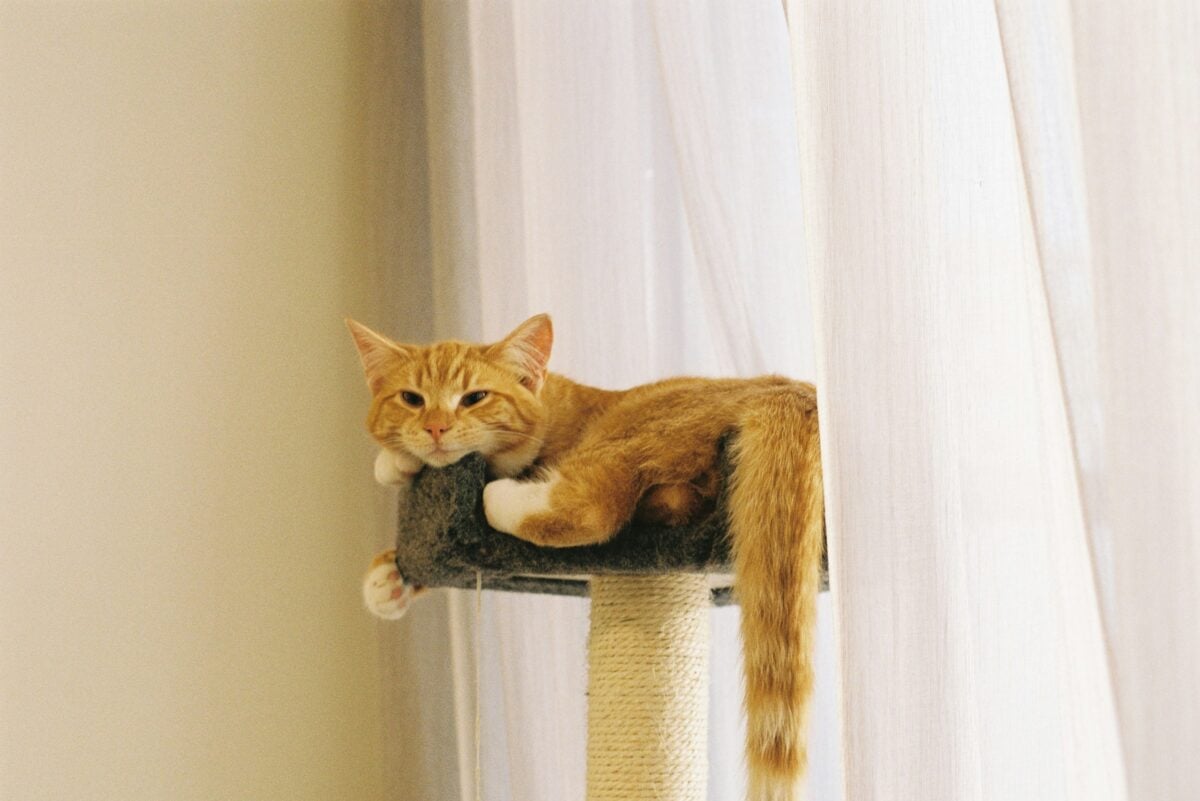
What actually helps fearful cats is predictability and choice. When cats know what to expect and feel in control of their space, fear loses its edge.
1. Create Safe Spaces That Actually Feel Safe
Every cat needs at least one place where nothing is expected of them. No handling. No interaction. No surprises. The key is consistency. Safe spaces only work when they stay secure, even during busy or noisy moments.
That might look like:
- A quiet room with the door cracked open
- A covered bed or box in a low-traffic area
- A high perch where they can observe without being approached
Check out our reviews of the best wall steps and cat towers/trees where your kitty can get their much-needed getaway space. We also review the best cat toys to help your furball stay mentally stimulated, which may help with anxiety.
2. Let Your Cat Set The Pace
Fear eases fastest when cats are allowed to approach new situations on their own timeline. Watching from across the room counts as progress. Staying nearby without engaging counts too.
Instead of coaxing or carrying them closer, try:
- Sitting quietly in the same space
- Avoiding direct eye contact
- Letting them come to you, if and when they’re ready
This feels slow, but it builds trust in a way cats actually understand.
3. Reduce Stress Around Known Triggers
You don’t have to eliminate every trigger, but you can soften the experience.
Small changes help, like:
- Moving more slowly around nervous cats
- Giving a heads-up before reaching or picking up
- Keeping routines steady during loud or busy times
- Putting carriers away when not in use
These adjustments don’t coddle your cat. They make the environment easier to read, which is what fearful cats need most.
4. Consider Calming Supports When Needed
Some cats benefit from extra support during stressful periods. Veterinary experts recommend plug-in pheromone diffusers, such as the FELIWAY Cat Calming Plug, or vet-approved calming aids, like CBD oil, can take the edge off, especially during stressful situations or noisy events.
These tools work best as part of a larger approach, not a quick fix. They support calm behavior. They don’t replace safety or trust.
When It’s Time To Talk To Your Vet
Most cats have specific triggers and predictable reactions. When fear starts showing up out of pattern, that’s when it’s worth paying closer attention.

It may be time to check in with your vet if you notice:
- Fear, anxiety, or aggression that appears suddenly
- Hiding or withdrawal that lasts days instead of hours
- Skipping meals or changes in drinking
- Litter box avoidance without an apparent cause
- A typically social cat becoming consistently reactive
These shifts don’t automatically mean something serious is wrong. Pain, illness, or age-related changes can lower a cat’s tolerance for stress, making everyday situations feel harder to handle.
A vet visit can help rule out medical issues and, if needed, talk through behavioral support options. Addressing the physical side first often makes the emotional side easier to manage, especially in cats whose fear feels new or escalating.
Reaching out doesn’t mean you’ve failed to help your cat. It means you’re listening when their behavior changes, which is precisely what a good cat owner does.
Frequently Asked Questions
Cats are very good at creating questions without answering them. If you’ve made it this far and are still wondering whether your cat’s behavior is normal, you’re not alone. If there’s something you’re curious about that isn’t covered here, drop it in the comments. Other cat owners are probably wondering the same thing.

Do Cats Have Separation Anxiety?
Yes, some do. While cats are often described as independent, many form strong attachments to their people. Fear or anxiety related to separation can show up as vocalizing, pacing, destructive behavior, or sudden clinginess when routines change. It’s more common than most people realize, especially in cats that are very bonded or sensitive to change.
What Are Cats Afraid Of The Most?
There isn’t one universal answer. Unpredictability tends to matter more than the object itself. Loud noises, sudden movement, unfamiliar people, and environmental changes are common triggers, but every cat has their own personal list.
Why Is My Cat Scared Of Something They Were Fine With Before?
This is one of the most frustrating situations for owners. A previous neutral experience doesn’t guarantee future comfort. Changes in health, stress levels, environment, or routine can lower a cat’s tolerance, making familiar things suddenly feel threatening.
Can A Cat Grow Out Of Being Fearful?
Not always. Some cats become more confident with time and positive experiences. Others remain cautious throughout their lives. Fearfulness isn’t something a cat needs to outgrow to live a good life. The goal is comfort and predictability, not turning a cautious cat into a bold one.
Is It Okay To Comfort A Scared Cat?
It depends on the cat. Some cats find calm presence reassuring. Others prefer space. Forcing interaction, even gently, can increase stress. Let your cat decide whether comfort or distance feels better in the moment.
Does Fear Mean My Cat Isn’t Happy?
Not necessarily. Fear is a response, not a personality trait. Many cats who are easily startled are also affectionate, playful, and content once they feel secure. A fearful reaction doesn’t cancel out a happy life.
A Calmer Cat Starts With A Calmer Home
If your cat startles easily, hides from “nothing,” or treats everyday household life like it’s a suspicious activity, you’re not alone. The best improvements usually come from small, practical changes that make your home feel more predictable and easier to navigate.
If you want to keep helping your cat feel safer (and save yourself from guessing games), these Love Your Cat guides are good next reads:
- My Cat Is Scared Of Something I Can’t See (what it might be)
- Warning Signs Your Cat Is Crying for Help (and what to do)
- Why Indoor Cats Try To Escape (and how to stop it)
- Cat Sedative for Travel
- Do Cats See Ghosts?
Does your cat have one oddly specific fear that makes zero sense to anyone else? Share your experiences in the comments. Someone else’s cat is probably terrified of the same everday object.