When you purchase through links on our site, we may earn a commission at no extra cost to you. Learn more.
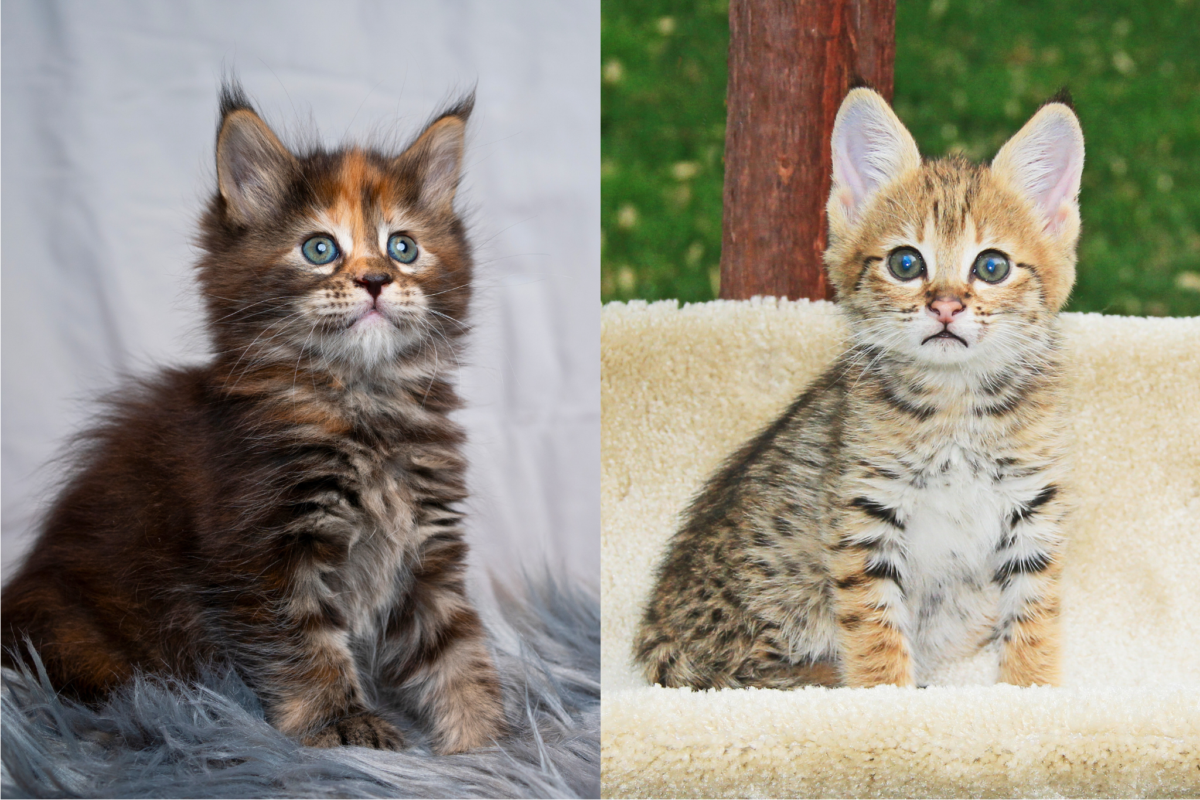
If you want a big cat, you probably picture one of two things: a fluffy, lion-like Maine Coon or a sleek, spotted Savannah cat that looks like it belongs on safari.
Table of Contents
Both are large. Both are impressive. But they are not remotely the same experience.
If size is your starting point, here’s everything else that matters.
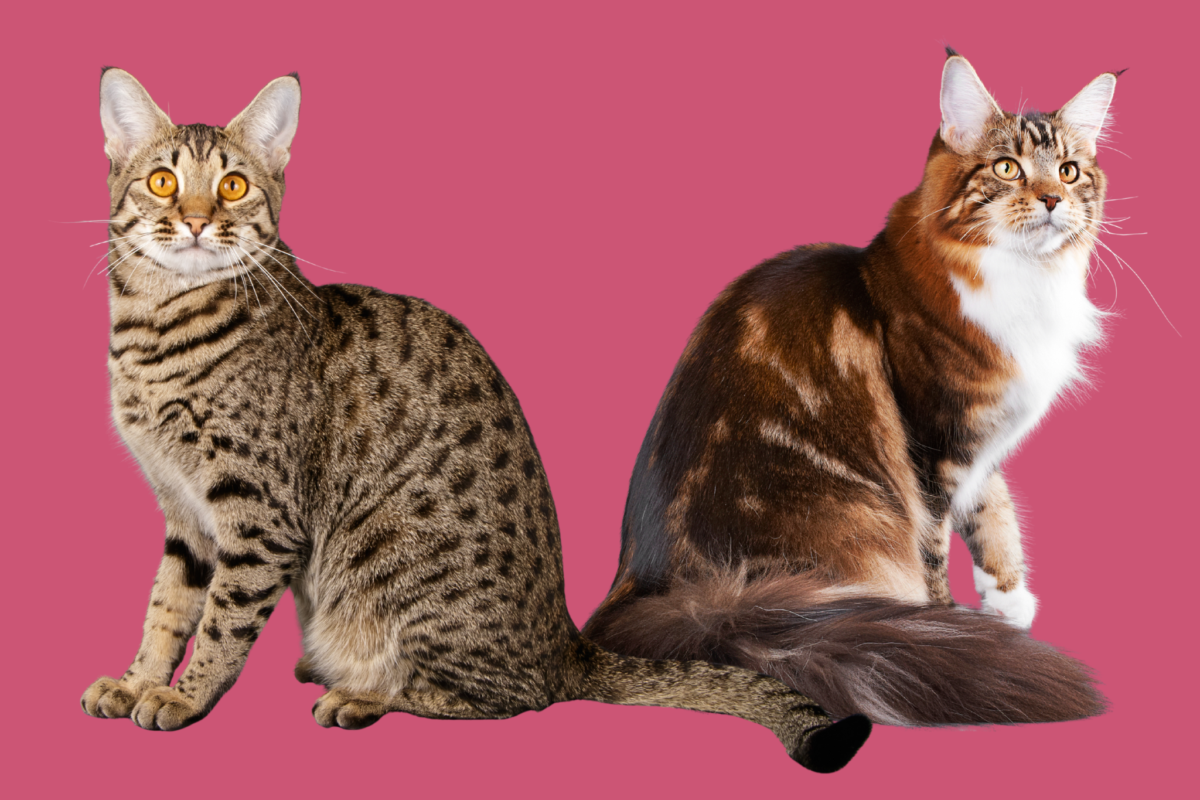
Breed Comparison
- Weight15-25 pounds
- Weight12-25 pounds
- Height10-16 inches
- Height17 Inches
- TemperamentGentle, smart, playful, loving, loyal
- TemperamentSmart, friendly, loyal, hunter
- EnergyModerate
- EnergyVery high
- Grooming2 to 4 x a week
- Grooming1 x a week
- HealthAverage
- HealthAverage
- Lifespan12 to 15 years
- Lifespan12 to 20 years
- FriendlinessVery friendly
- FriendlinessModerately friendly
- Kitten Price$500-$2,500 +
- Kitten Price$1,000-$20,000 +
- NicknamesGentle Giant, Maine Cat
- NicknamesVelcro Cat
Start Here: The Biggest Difference Isn’t Size
When people compare the Maine Coon and the Savannah cat, they usually focus on pounds and inches. That’s not the real dividing line.
Want our human-written content to rank above AI-generated garbage? Help us out by clicking this button!
The Maine Coon is a fully domestic breed that developed naturally in harsh New England winters. The Savannah is a hybrid that traces part of its lineage to the African serval, a wild cat species.
That one difference changes everything. It affects:
- Energy levels
- Prey drive
- Mental stimulation needs
- How easily they fit into a typical household
If you want a relaxed, adaptable giant, that points one direction.
If you want an athletic, high-intensity cat with an exotic edge, that points another.
Now let’s talk size, because yes, it still matters.
How Big Do They Really Get?
On paper, these two breeds overlap. In person, they feel very different.
Maine Coon Size
The Maine Coon is the largest fully domestic cat breed in North America.
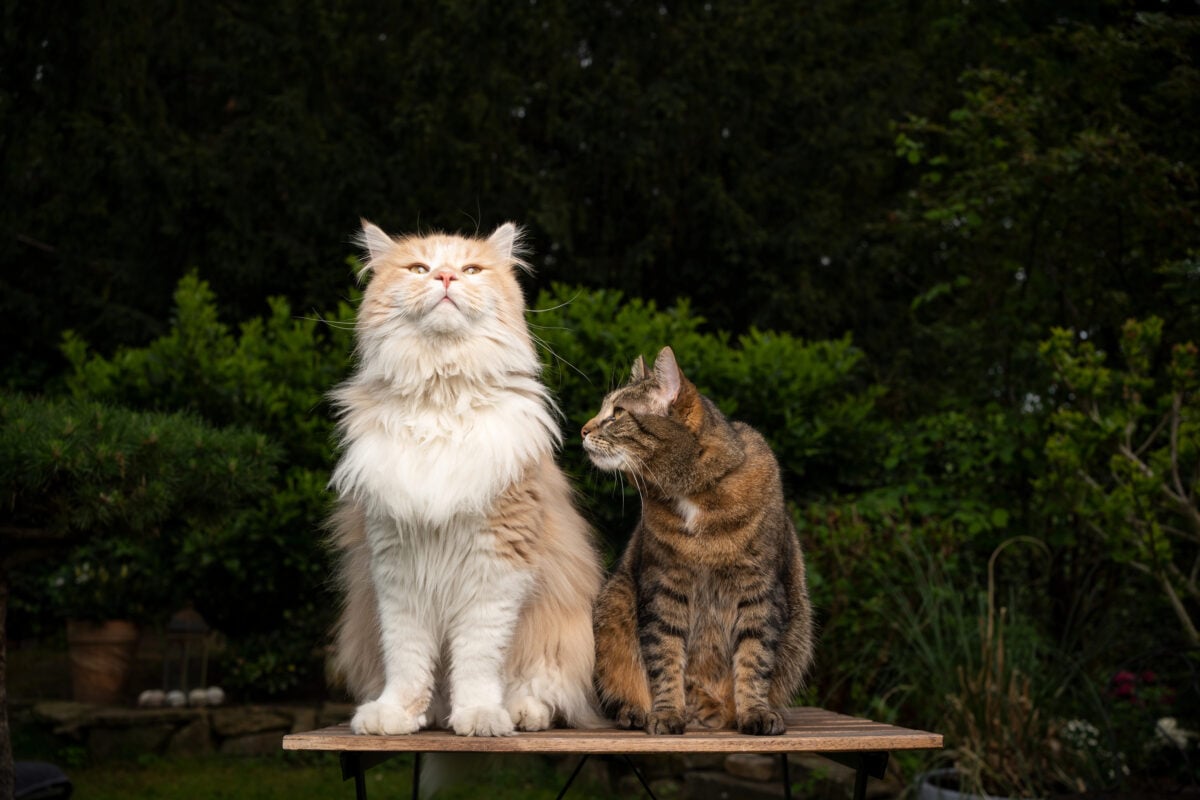
They are thick-boned and muscular with heavy coats and massive, plume-like tails. When you pick one up, you feel the density.
- Weight: 15 to 25+ pounds
- Height: 10 to 16 inches
- Length: Up to 40 inches including tail
They mature slowly and can take three to five years to reach full size. For a more detailed breakdown of growth milestones, see our Maine Coon size chart.
Savannah Cat Size
Savannah size depends heavily on generation.

Early generations are typically larger and more extreme in build.
- Weight: 12 to 25 pounds
- Height: Up to 17 inches tall
- Body type: Long, lean, athletic
Savannahs often look bigger than they weigh because of:
- Extremely long legs
- Upright posture
- Narrow waist
- Serval-like stance
Which One Is Actually Bigger?
The Maine Coon is heavier and bulkier. The Savannah is taller and more athletic-looking.
If you care about presence, both deliver. If you care about manageability, that’s where differences start to show.
Wild Blood vs Domestic Roots
When comparing the Maine Coon and the Savannah cat, their ancestry quietly shapes everything. One developed naturally as a hardy American working cat. The other was intentionally created by crossing a domestic cat with a wild African serval.
That distinction influences energy, instincts, and what daily life actually looks like with each breed.
The Maine Coon: A Fully Domestic Foundation
The Maine Coon evolved in the northeastern United States as a farm and ship cat. Natural selection favored thick coats, strong hunting skills, and adaptable personalities.
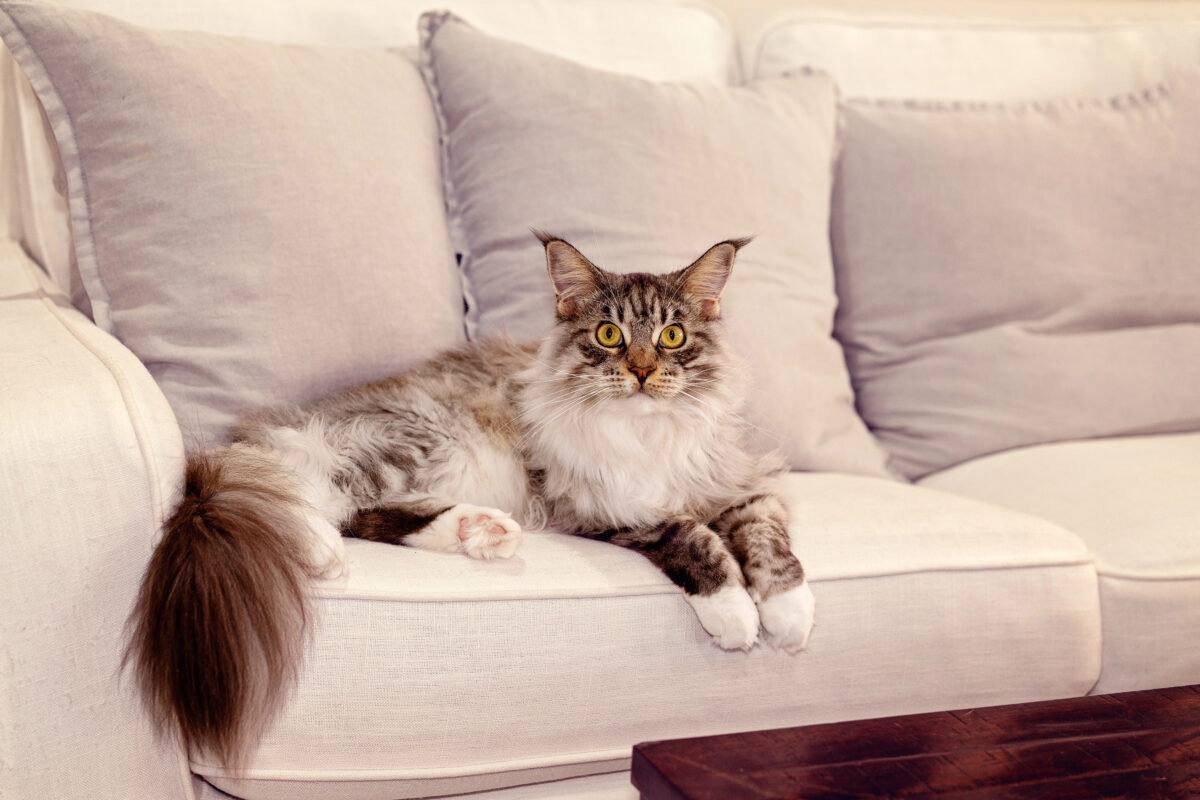
There is no wild species in their lineage. Despite the persistent raccoon myth, Maine Coons are entirely domestic.
Because of that, their behavior is predictable. Their playfulness is balanced. Their independence fits comfortably within most homes.
The Savannah: A Purpose-Bred Hybrid
The Savannah was created by crossing a domestic cat with an African serval.

Generation matters significantly:
- F1: One serval parent
- F2: Serval grandparent
- F3 and later: Increasingly domestic
If you’re unsure what F1, F2, or F3 actually mean, here’s a full breakdown of Savannah cat generations explained.
Even in later generations, serval influence can appear in:
- Vertical jumping ability
- Strong prey drive
- High stimulation needs
- Intense bonding tendencies
- Sensitivity to confinement
For some owners, this intensity is exciting. For others, it is overwhelming.
What This Means For You
A Maine Coon generally adapts to your routine. A Savannah often requires a more structured, enriched environment.
Maine Coons typically integrate well into busy households and multi-pet homes. Savannahs tend to thrive with experienced owners who can provide daily mental and physical outlets.
The choice is less about appearance and more about lifestyle alignment.
Appearance: Fluff vs Safari
At a glance, these two breeds are almost opposites. The Maine Coon looks like a forest animal built for snow. The Savannah cat looks like it walked out of a wildlife documentary.
Both are striking. But the build, posture, and coat tell very different stories.
Head & Expression
Facial structure is one of the easiest ways to tell these breeds apart. The shape of the muzzle, eye placement, and ear set create very different expressions.
Maine Coon
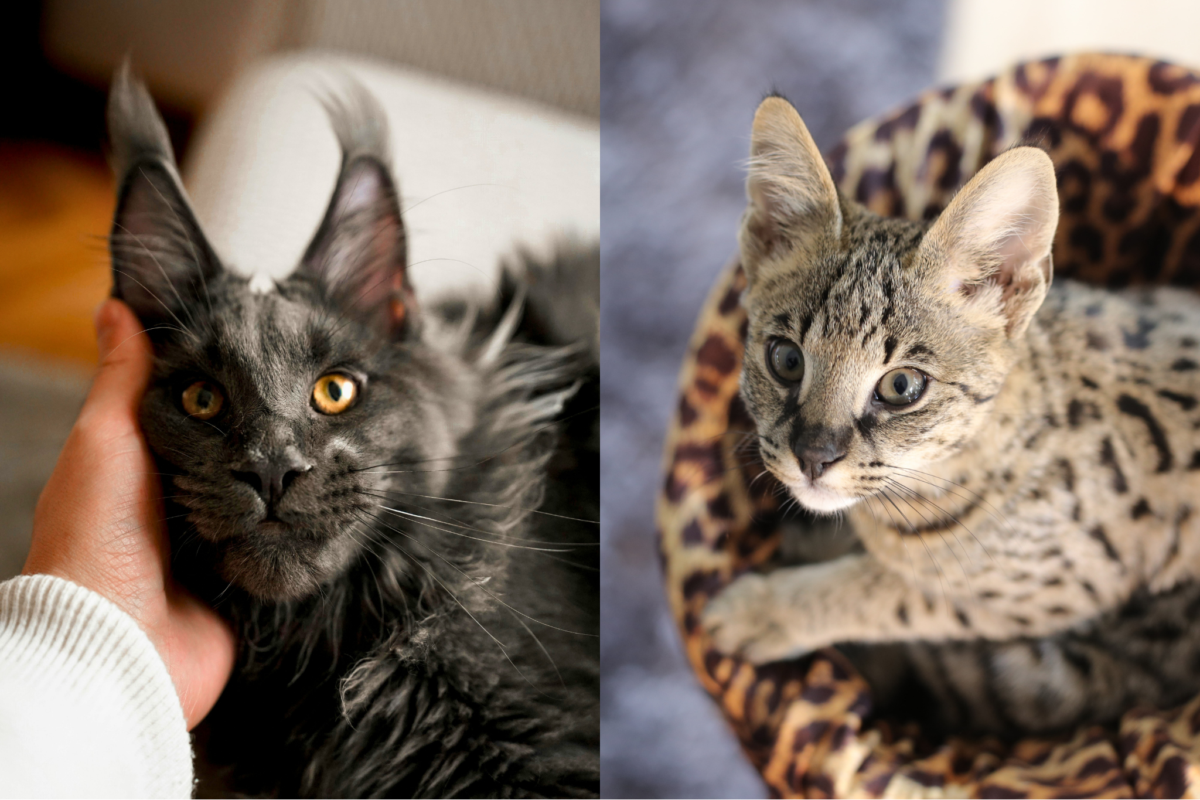
The Maine Coon’s face is broad and structured. Their square muzzle and high cheekbones give them a slightly rugged look, softened by large, expressive eyes and dramatic ear tufts. Despite their size, their expression usually feels open and approachable rather than intense.
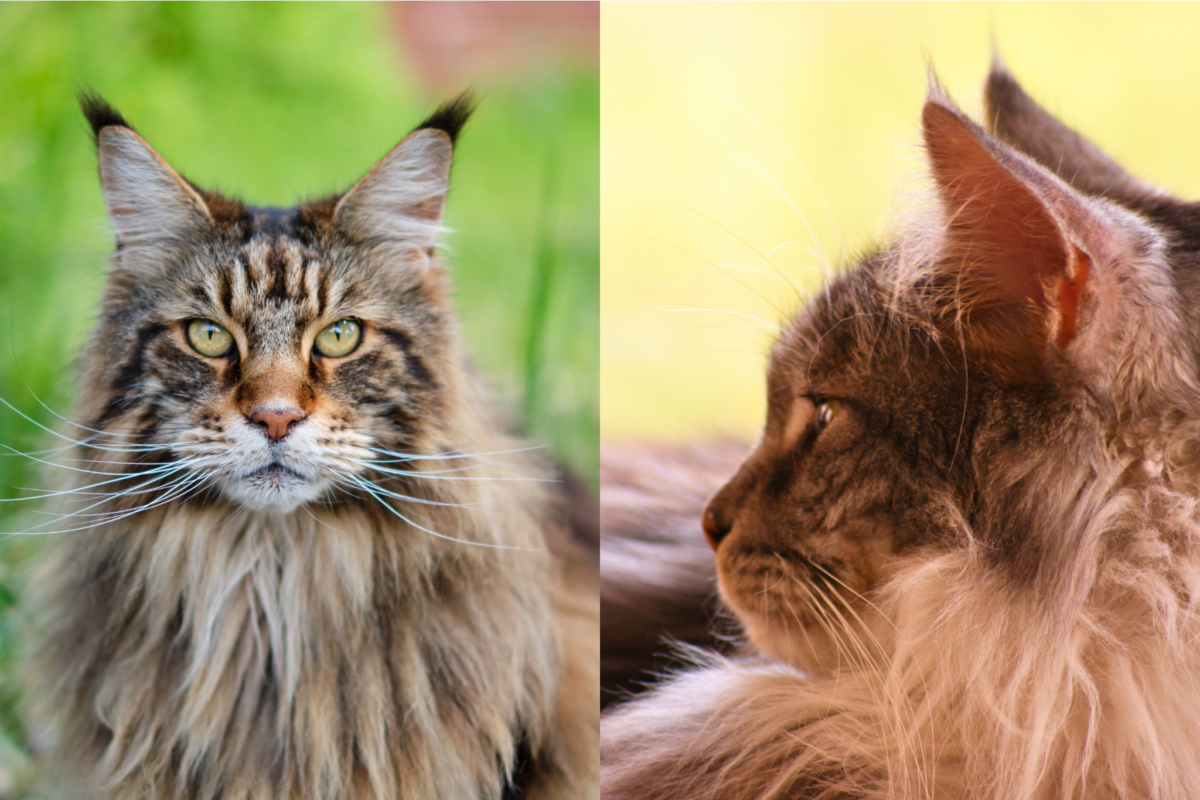
Key facial traits you’ll notice:
- Large, square muzzle
- High cheekbones
- Big oval eyes
- Prominent ear tufts
- Often a noticeable neck ruff
Savannah
The Savannah’s face is lean, angular, and alert. Their smaller head, hooded eyes, and tall upright ears create a focused, almost predatory expression that immediately sets them apart from typical domestic cats.
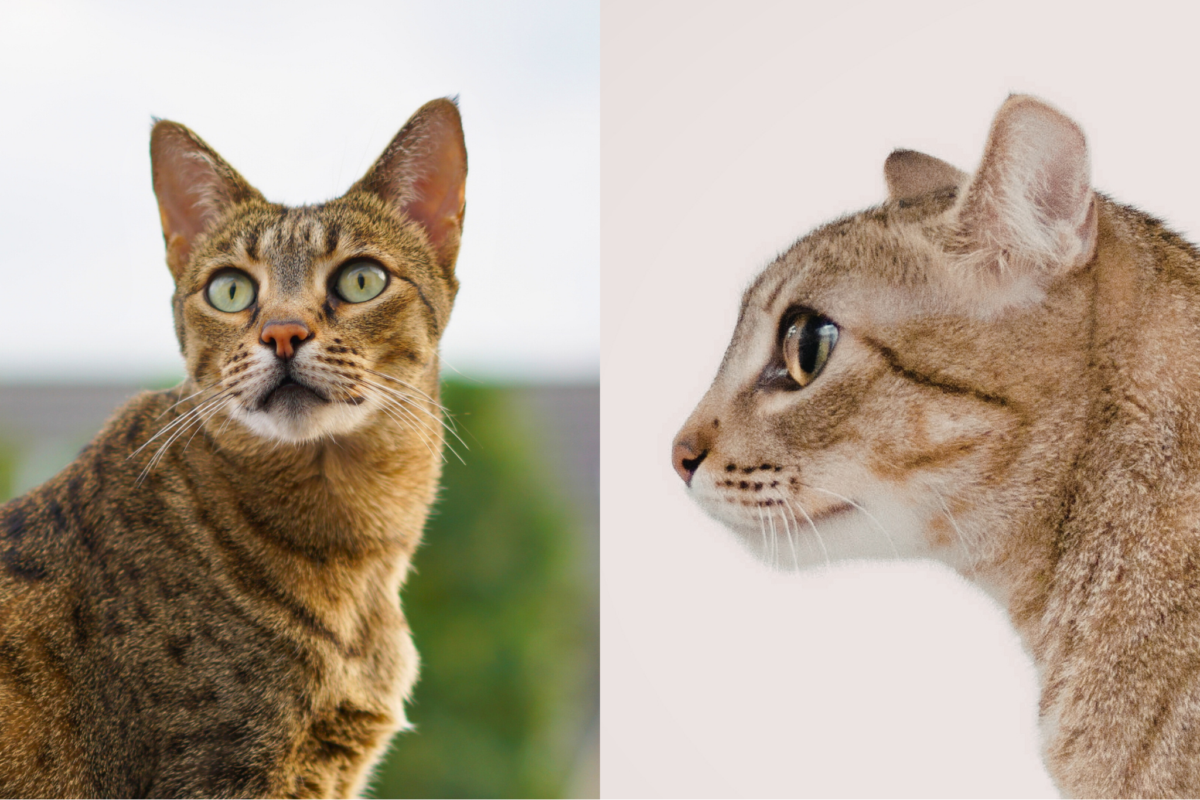
Key facial traits you’ll notice:
- Smaller, triangular head
- Hooded, almond-shaped eyes
- Tall, upright ears set high
- Distinct dark tear markings
Body Structure
Beyond the face, overall frame and posture create the strongest contrast between these two cats. Their proportions affect not only how they look, but how they move and carry themselves in a room.
Maine Coon
The Maine Coon’s build emphasizes density and power over height. Their frame feels grounded and substantial.
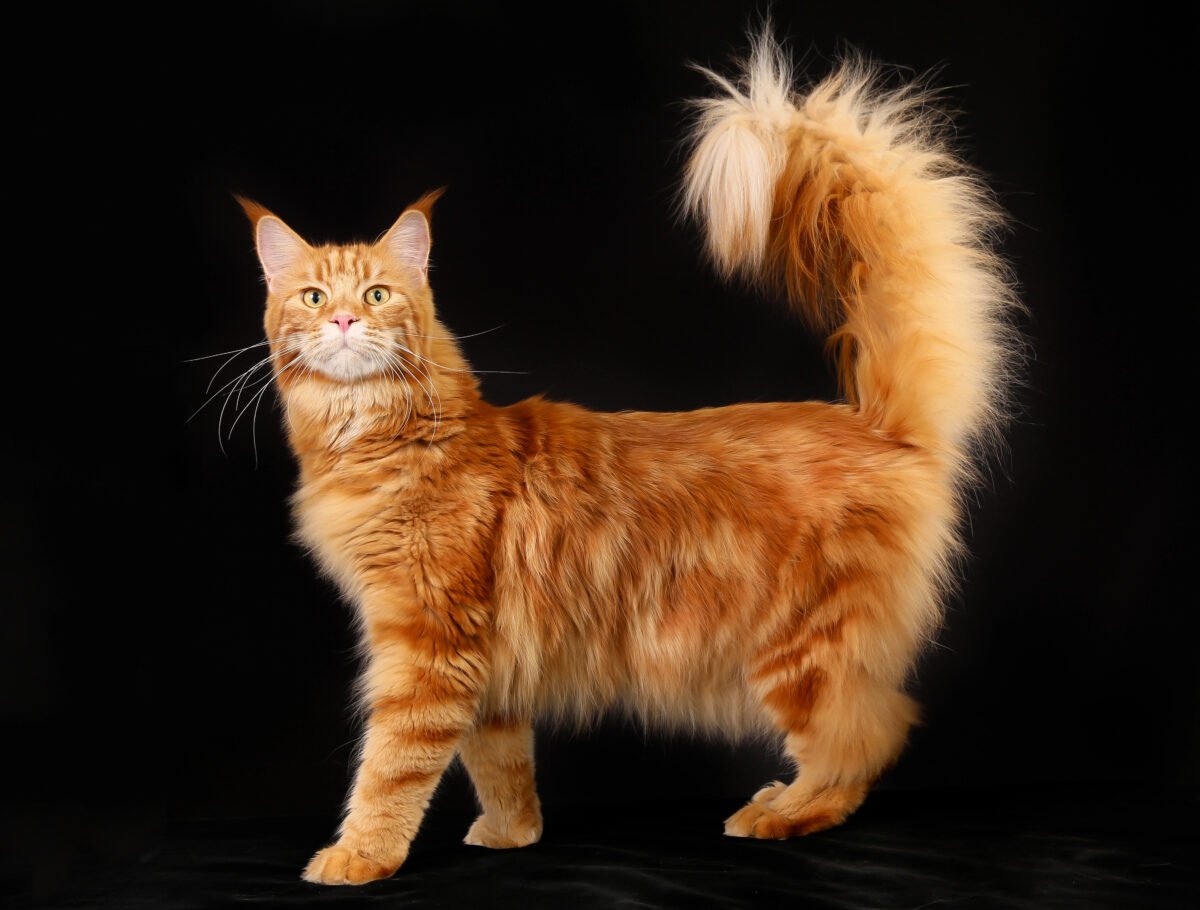
- Broad chest
- Heavy bone structure
- Muscular but thick-bodied
- Medium-length legs
- Long rectangular torso
When they walk, there is weight behind each step. They feel solid when lifted and fill space with mass rather than height.
Savannah
The Savannah’s body tells a completely different story. Their proportions prioritize length, vertical reach, and athleticism.
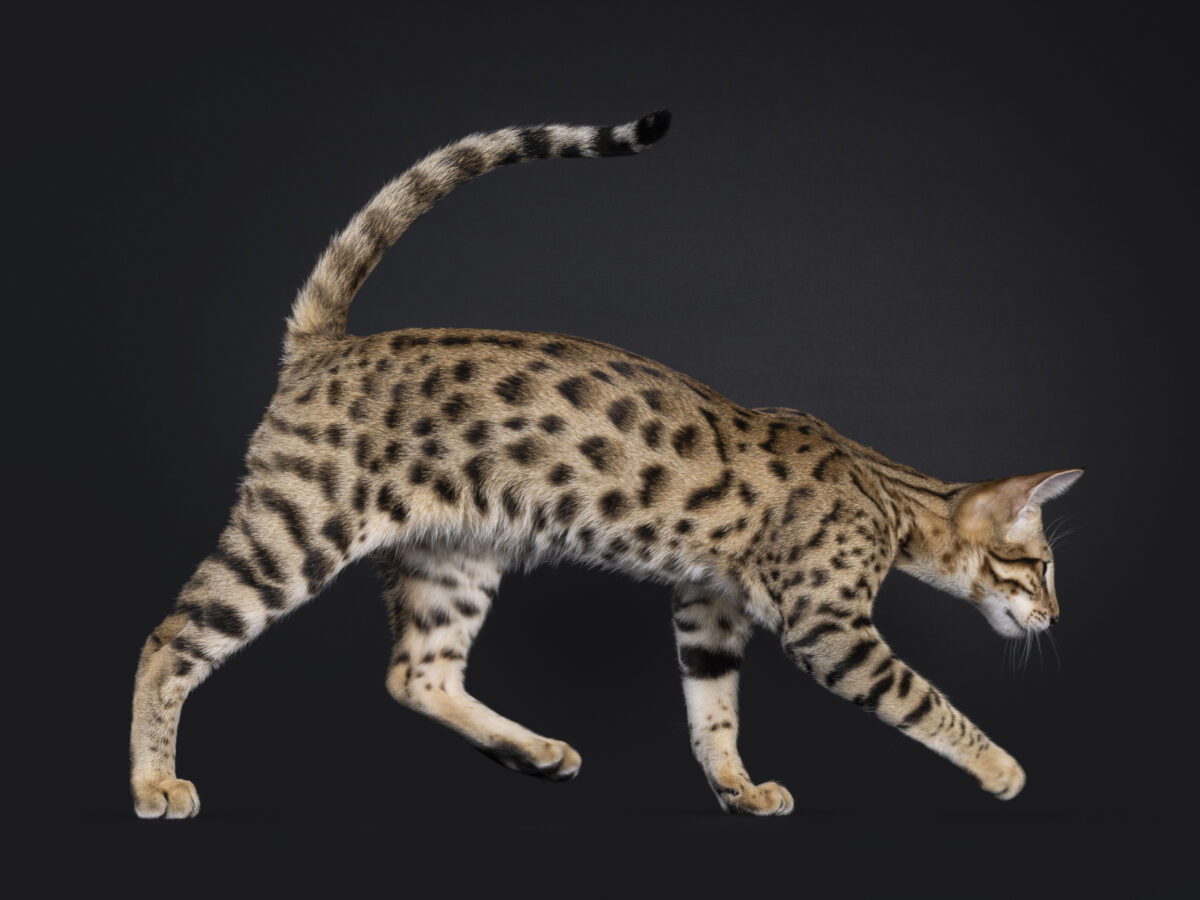
- Extremely long legs
- Narrow waist
- Lean muscle
- High hip line
- Upright serval posture
They often look taller than they weigh because of their limb length and upright stance. Movement tends to be fluid and spring-loaded rather than heavy.
Tail & Proportion
Maine Coons have long, bushy, plume-like tails that can reach 11 to 16 inches or more. The tail adds volume and enhances their already substantial presence.
Savannah tails are shorter relative to body length, thick at the base, and marked with dark rings and a black tip. The shorter tail visually elongates their legs even more.
Coat Texture & Pattern
Coat type dramatically affects how large each cat appears in person.
Maine Coon
The Maine Coon’s coat is long and layered, which increases their visual size.
- Long, shaggy double coat
- Thick insulating undercoat
- Wide range of colors and patterns
- Tabby, solid, tortoiseshell, bi-color, silver, and more
Even a moderately sized Maine Coon can appear massive because of coat density.
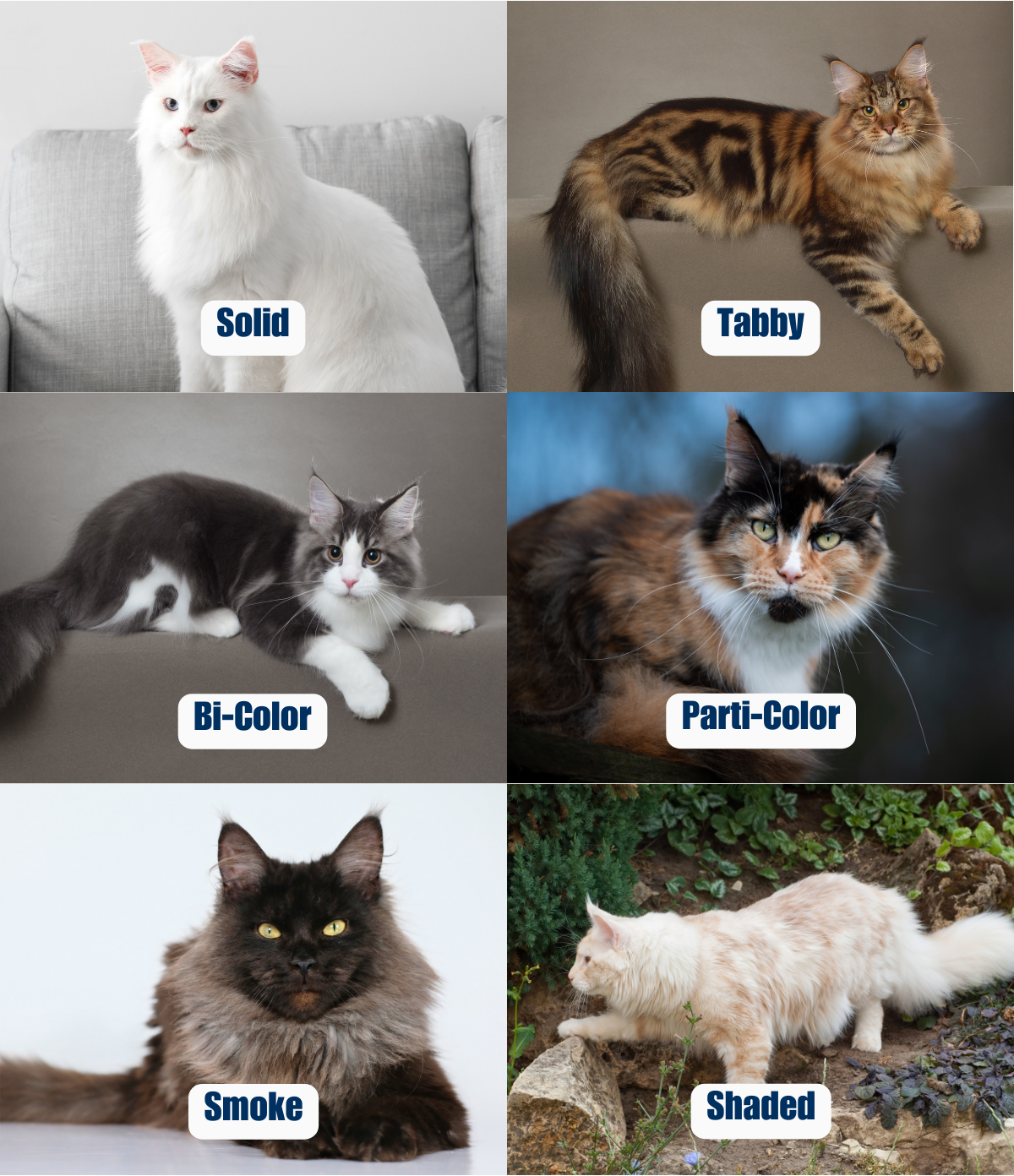
Curious about all the possible coat variations? Explore the full range of Maine Coon colors and patterns.
Savannah
The Savannah’s coat is sleek and minimal, which emphasizes body structure.
- Short, silky coat
- Spotted or marbled pattern
- Standard colors include brown spotted tabby, silver, black, and smoke

The coat lies flat against the body, making their frame look leaner and more athletic.
Are Either Of These Breeds Hypoallergenic?
Neither breed is considered fully hypoallergenic. If allergies and shedding are a concern, read:
Temperament: Calm Giant Or Velcro Athlete?
A cat’s personality determines what daily life actually feels like. The Maine Coon and the Savannah cat may both be large and intelligent, but they bring very different emotional energy into a home.
Attachment Style
How a cat bonds with you often matters more than how they look.
Maine Coon
Maine Coons are affectionate without being overwhelming. They enjoy proximity but typically respect personal space.
- Follow you from room to room
- Sit nearby rather than on top of you
- Accept attention without demanding it constantly
- Tend to bond with the whole family
They are social and people-oriented, but rarely frantic.
Savannah
Savannahs often bond intensely and selectively. Their attachment can feel stronger and more focused.
- Shadow their preferred person closely
- Demand interaction and stimulation
- Vocalize when bored
- Can become clingy with one primary human
Many owners describe them as “Velcro cats.” The bond can be deep, but it usually requires active engagement.
Energy Level
Energy output is one of the most noticeable lifestyle differences.
Maine Coon
Maine Coons are playful and athletic, but balanced.
- Enjoy interactive play sessions
- Capable climbers
- Often settle into long naps
- Handle downtime well
They need stimulation, but they are not constant motion machines.
Savannah
Savannahs are high-output cats. Their energy levels reflect their hybrid ancestry.
- Exceptional jumpers
- Strong prey drive
- Highly curious and exploratory
- Require daily physical and mental challenges
Without consistent stimulation, boredom can quickly turn into destructive behavior.
With Kids & Other Pets
Household dynamics matter significantly with large breeds.
Maine Coon
Maine Coons tend to adapt well to busy environments.
- Often patient with children
- Integrate well into multi-pet homes
- Generally tolerant of noise and activity
Their size may look intimidating, but temperament is usually gentle.
Savannah
Savannahs can coexist with other pets, but careful introductions are critical.
- High prey drive may be risky with small animals
- May become dominant with other cats
- Thrive best with experienced owners
They are not automatically difficult, but they are rarely low-maintenance.
The Personality Verdict
- If you want a large cat that blends into family life with relative ease, the Maine Coon is often the smoother fit.
- If you want intensity, athleticism, and a highly interactive relationship, the Savannah delivers that experience.
If temperament is your deciding factor, read our deeper dive into Maine Coon temperament and personality traits.
Exercise & Mental Stimulation Needs
The difference between the Maine Coon and the Savannah cat isn’t whether they need play. All cats do. It’s how much structure they require, and how quickly boredom turns into trouble.
What A Maine Coon Actually Requires
Maine Coons are active, but their energy comes in waves.
They enjoy:
- Two or three solid interactive play sessions per day
- Climbing trees or wall shelves
- Puzzle feeders
- Window watching
- The occasional hallway sprint
After activity, they settle. If you miss a play session, you may get a little extra zoom time later, but not chaos. They are engaged cats, not hyper-driven ones.
What A Savannah Demands
Savannahs are built for vertical movement and constant exploration. They do not just like activity. They expect it.
Typical Savannah needs include:
- Daily structured play that pushes them physically
- Tall climbing systems, not just basic cat trees
- Rotating enrichment to prevent boredom
- High-protein fueling to sustain activity
- Secure environments that prevent escape
A Savannah needs more than floor space. They need vertical challenge and mental complexity.
Training & Intelligence: Smart, But Not The Same Experience
Both the Maine Coon and the Savannah cat are highly intelligent. Both can learn tricks, walk on a leash, and master puzzle toys quickly.
Maine Coons tend to approach training as a social activity. They enjoy interaction and often respond well to positive reinforcement. Teaching them sit, fetch, or simple leash walking usually feels cooperative.
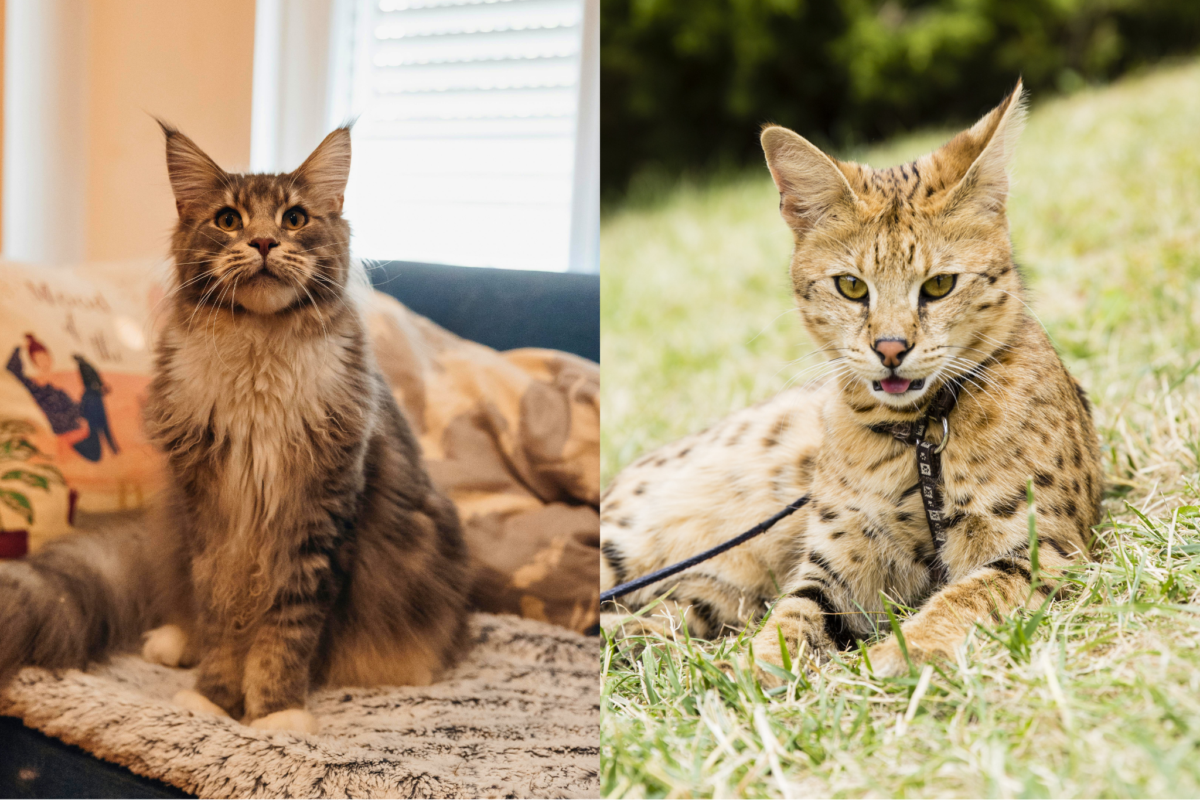
Savannahs also learn quickly, but their motivation often runs deeper. They are alert, observant, and highly aware of patterns. Their curiosity and physical ability mean “out of reach” often does not exist.
If a cabinet opens once, it becomes a challenge. If a door latch moves, they study it.
This is where daily life shifts. A Maine Coon may test a boundary occasionally. A Savannah may test it repeatedly.
Both breeds benefit from:
- Clicker training
- Interactive puzzle feeders
- Clear household rules
- Early socialization
Health & Lifespan Differences
Both the Maine Coon and the Savannah cat are generally healthy, long-lived breeds. But large size and hybrid ancestry come with different considerations.
Shared Risk: Hypertrophic Cardiomyopathy
Both breeds can develop hypertrophic cardiomyopathy (HCM), a thickening of the heart muscle. If you are purchasing from a breeder, cardiac screening documentation should be non-negotiable.
Maine Coon Health Snapshot
Maine Coons are prone to certain health concerns, including:
- Hip dysplasia
- Stomatitis
- Osteorthritis
- Obesity
Average lifespan: 10 to 15 years, sometimes longer with good care.
Savannah Health Snapshot
Common health considerations for Savannahs include:
- Digestive sensitivity in some lines
- Male sterility in early generations
Earlier-generation hybrids may require vets comfortable with exotic or hybrid cats.
Average lifespan: 15 to 20 years.
Cost & Ownership Reality
Purchase price is only part of the equation. The ongoing cost of living with a large cat can differ just as much as the upfront investment.
Kitten Price
- Maine Coon: Typically $500 to $2,500+ from a breeder
- Savannah cat: Commonly $1,000 to $20,000+
Savannah pricing varies heavily by generation and breeder reputation.
Ongoing Expenses
Both breeds eat more than the average house cat due to size.
However, Savannah ownership often includes:
- Higher-protein diets
- More enrichment equipment
- Larger climbing systems
- Potential insurance premiums related to hybrid status
Maine Coons may incur higher grooming costs due to coat maintenance.
Which Big Cat Fits Your Life?
Choosing between the Maine Coon and the Savannah cat is less about size and more about lifestyle alignment.
The Maine Coon Is Likely A Better Fit If You:
- Want a large cat that adapts easily to family life
- Have children or multiple pets
- Prefer steady, balanced energy
- Want intelligence without constant boundary testing
- Do not want hybrid ownership complexity
The Savannah May Be A Better Fit If You:
- Want an exotic, athletic presence
- Enjoy structured training and daily engagement
- Have time for high-output enrichment
- Are comfortable managing strong prey drive
- Understand hybrid ownership responsibilities
Other Large Cat Breeds To Consider
If you’re drawn to big cats but still exploring options, there are several other large or striking breeds worth considering beyond the Maine Coon and Savannah cat.
Each offers a different mix of size, temperament, and maintenance level.
- Norwegian Forest Cat – A thick-coated, cold-weather breed similar in size to the Maine Coon, known for independence and climbing ability.
- Ragdoll – Large, soft-coated, and famously relaxed, often going limp when held.
- Chausie – A high-energy hybrid breed with wild ancestry, closer in intensity to a Savannah.
- Bengal cat – Sleek, spotted, and energetic with a wild look but fully domestic lineage.
If size is your starting point, narrowing by temperament and daily energy demands will lead you to the right fit.
What About Mixes?
Some owners are curious about crossing breeds. Learn more about:
- The Savannah Maine Coon mix
- The Savannah Bengal mix
- More Maine Coon mixes
Frequently Asked Questions
Choosing between a large domestic breed and a hybrid raises practical questions. Here are the ones readers ask most often.
Don’t see your question? Respond in the comments, and we’ll get back to you!
Is A Savannah Cat Bigger Than A Maine Coon?
Not usually in weight. The Savannah cat is often taller due to long legs, but the Maine Coon is typically heavier and bulkier.
Savannahs look larger because of their height and posture, while Maine Coons feel heavier when lifted.
Are Savannah Cats Legal In All States?
No. Ownership laws vary by state and sometimes by county.
Earlier generations such as F1 and F2 are restricted in many areas. Later generations are more widely permitted, but buyers should always check local regulations before purchasing.
Are Maine Coons Better For Families?
In most cases, yes. Maine Coons tend to be patient, adaptable, and tolerant of children and other pets.
Savannahs can live in family homes but usually do best with experienced owners who can provide structured enrichment.
Do Savannah Cats Act Wild?
They are not wild animals, but they retain higher prey drive and athletic intensity than most domestic breeds.
Their behavior is not unpredictable, but it is more demanding. Owners should expect strong curiosity, jumping ability, and a need for daily stimulation.
More Cat Comparisons
Still weighing your options? If you’re comparing size, personality, grooming needs, or lifestyle fit, these side-by-side guides can help narrow things down:
- Bengal vs Maine Coon — Maine Coon’s gentle giant nature versus the energetic, spotted Bengal.
- Maine Coon vs Siberian Cat – A close look at two rugged, large-bodied breeds built for cold climates.
- Ragdoll vs Birman — Two soft-coated, affectionate breeds that make wonderful family cats.
Explore these to refine what “big” and “personality match” means for your home and routine.