When you purchase through links on our site, we may earn a commission at no extra cost to you. Learn more.
At first glance, the Savannah Maine Coon mix sounds like the ultimate dream cat: wild, exotic markings, impressive size, and the intelligence of two legendary breeds combined into one unforgettable feline. It’s easy to see why this rare hybrid sparks so much curiosity.
Table of Contents
But behind the striking appearance lies a cat that is far more complex than most people expect.
The Savannah Maine Coon mix is not a recognized breed, is difficult to find ethically, and can be challenging to live with, even for experienced cat owners. Temperament, size, energy level, and care needs can vary dramatically from one cat to the next, making preparation absolutely essential before bringing one home.
This guide takes a realistic, experience-based look at the Savannah Maine Coon mix—covering temperament, size, health risks, legality, cost, and daily care requirements—so you can decide with confidence whether this rare hybrid cat is truly right for your home and lifestyle.
Want our human-written content to rank above AI-generated garbage? Help us out by clicking this button!

 Weight16-18 Pounds
 Height10-17 Inches
 Lifespan12-15 Years
 ColorsBrown Tabby, Brown Spotted
What Is a Savannah Maine Coon Mix? (Breed Status & Expectations)
A Savannah Maine Coon mix is a cross between a Savannah cat and a Maine Coon, combining one of the most exotic hybrid cats with one of the largest domestic breeds in the world. While the idea sounds straightforward, the reality is far more complex.
First, and most importantly, this mix is not a recognized cat breed. There is no official breed standard, registry classification, or predictable set of traits. Each Savannah Maine Coon mix can look, behave, and develop very differently depending on genetics, generation, and upbringing.
Because Savannah cats themselves are hybrids (descended from African servals), most Savannah Maine Coon mixes come from later-generation Savannahs, typically F4 or beyond. Earlier generations are rarely bred and are often restricted or illegal to own in many regions. As a result, reputable breeders are cautious, selective, and relatively rare.
What Makes This Mix So Unpredictable?
Unlike established breeds, mixed-breed cats inherit traits randomly from both parents. With a Savannah Maine Coon mix, this unpredictability is amplified due to the Savannah’s wild ancestry. One kitten may inherit the Maine Coon’s laid-back temperament and long coat, while another from the same litter may display the Savannah’s intense energy, strong prey drive, and shorter fur.
Potential owners should be prepared for:
- Wide variation in size, energy level, and sociability
- Strong intelligence that requires daily mental stimulation
- A cat that may bond deeply with one or two people rather than everyone
- Higher-than-average care and enrichment needs
What This Mix Is Not
A Savannah Maine Coon mix is not:
- A guaranteed “gentle giant”
- A low-maintenance or beginner-friendly cat
- A predictable alternative to either parent breed
- Suitable for every household or living situation
That said, for experienced owners who understand hybrid behavior and are prepared for an active, demanding cat, this mix can be an incredibly engaging and rewarding companion.
Understanding what a Savannah Maine Coon mix truly is, and what it isn’t, is the most important step before exploring the parent breeds in more detail.
Savannah Cat Overview: Origins, Traits & Legal Considerations
The Savannah cat is a hybrid breed created by crossing a domestic cat with an African serval. The first known Savannah kitten was born in 1986, and the breed was named after that original cat.

Savannahs are prized for their exotic appearance and high intelligence, but their wild ancestry also comes with important considerations.
- Origin: Hybrid of domestic cat × African serval
- Weight: Approximately 12–25 pounds (varies by generation)
- Height: Around 14–17 inches at the shoulder
- Appearance: Tall, lean body with bold spots and large ears
- Energy Level: Very high
Savannah cats are categorized by filial generations (F1–F5), which indicate how close they are to their serval ancestor. Earlier generations tend to be larger, more energetic, and less predictable in behavior.
Legal restrictions apply in many areas. Some U.S. states restrict or ban ownership of certain Savannah generations, while others prohibit the breed entirely. Most Savannah Maine Coon mixes come from later-generation Savannahs (typically F4 or beyond), which are legal in more regions.
Maine Coon Cat Overview: Size, Personality & Genetics
The Maine Coon is one of the largest and most popular domestic cat breeds in the world. Unlike Savannahs, Maine Coons developed naturally rather than through intentional hybrid breeding.

Often called the “gentle giant” of the cat world, Maine Coons are known for their friendly temperament, impressive size, and luxurious coats.
- Origin: Native to New England, United States
- Status: Official state cat of Maine
- Weight: Typically up to 18 pounds (some exceed 20 pounds)
- Coat: Long, thick, and weather-resistant
- Personality: Affectionate, social, and people-oriented
Maine Coons come in a wide variety of colors and patterns, including tabby, tortoiseshell, calico, and colorpoint variations. Despite persistent myths, they are not related to raccoons or bobcats—those legends are purely folklore.
Because of their calm demeanor and adaptability, Maine Coons are frequently used in crossbreeding programs. Their size, intelligence, and gentle nature often balance more demanding or energetic breeds, which is one reason they are paired with Savannahs.
History & Origins of the Savannah Maine Coon Hybrid
The temperament of a Savannah Maine Coon mix can be fascinating, but also challenging. Because this mix combines a hybrid breed with a large domestic cat, personality traits can vary widely from one individual to another.

That said, most Savannah Maine Coon mixes share a few common behavioral tendencies.
Highly Intelligent & Curious
These cats are exceptionally smart and quick to learn. Many enjoy puzzle toys, interactive games, and exploring their environment. Boredom can quickly lead to unwanted behaviors, so mental stimulation is just as important as physical exercise.
Loyal but Selective With Affection
Savannah Maine Coon mixes often form strong bonds with one or two people rather than the entire household. They may follow their favorite person from room to room and seek interaction on their own terms. While affectionate, they are not typically lap cats and prefer companionship without constant handling.
Reserved Around Strangers
It’s common for this mix to be cautious or aloof around unfamiliar people. They usually warm up slowly and prefer to observe before engaging. Early socialization can help, but most will always be more loyal to their inner circle than to visitors.
Strong Prey Drive
Due to the Savannah’s wild ancestry, many Savannah Maine Coon mixes retain a pronounced prey instinct. Fast-moving objects, birds, and small animals can trigger chasing behavior. This makes them a poor match for homes with small pets unless careful management is in place.
Playful, Active & Sometimes Demanding
These cats tend to remain playful well into adulthood. They enjoy climbing, jumping, and interactive play sessions. Owners should expect a cat that wants daily engagement rather than one that entertains itself.
They will most likely need careful training to refrain from scratching furniture to sharpen their claws, like cats in the wild do
Not Ideal for First-Time Cat Owners
Because of their intelligence, energy, and strong instincts, Savannah Maine Coon mixes are best suited for experienced cat owners. Without proper boundaries, enrichment, and training, they can become destructive or develop behavioral issues.
Size, Height & Growth Expectations (How Big Do They Really Get?)
One of the biggest questions potential owners have is: How big will a Savannah Maine Coon mix get? The honest answer is that size varies a lot because this is not a standardized breed, and kittens can take after either parent.
In general, you should expect a medium-to-large cat, with some individuals reaching truly impressive size depending on genetics, generation, and overall build.
Typical Size Range
- Weight: Often around 16–18 pounds, but some may be smaller or larger
- Height: Roughly 10–17 inches at the shoulder
- Build: Can range from athletic and lean (Savannah-like) to broader and heavier (Maine Coon-like)
Why Size Can Vary So Much
Both parent breeds are known for size, but they carry it differently. Savannahs tend to be tall, long, and athletic, while Maine Coons are often large-boned and sturdy. A mixed kitten may inherit either body type or a combination of both.
Even within the same litter, you may see noticeable differences in adult size and overall shape.
Growth Timeline
Maine Coons are slow to mature and may not reach full size until 3–5 years old. If your mix takes after the Maine Coon side, you may notice steady growth well past the first year, with the frame continuing to fill out over time.
Appearance Notes
- Ears: Often large and prominent, sometimes with tufts
- Body: Long, tall, and muscular
- Eyes: Can range from greenish-hazel to deeper copper tones
Bottom line: Plan for a cat that needs a little extra space—larger cat trees, sturdy scratching posts, and a roomy litter box are usually non-negotiable for this mix.
Appearance, Coat Type & Color Variations
The Savannah Maine Coon mix is best known for its striking, often dramatic appearance. Because this is not a standardized breed, no two cats look exactly alike, and appearance can vary even within the same litter.
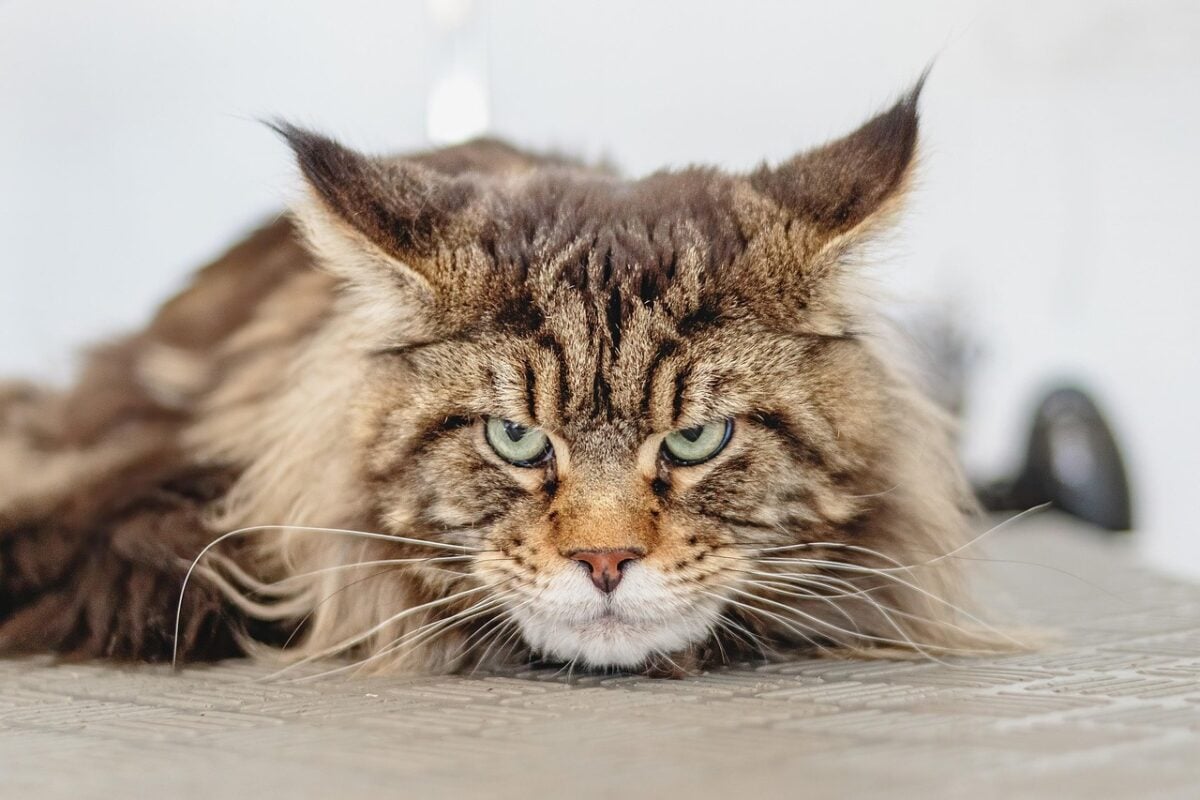
Most individuals display a blend of the Savannah’s wild elegance and the Maine Coon’s powerful build, resulting in a cat that looks both exotic and substantial.
Overall Build & Features
Savannah Maine Coon mixes are typically:
- Tall and long-bodied, often appearing larger than their actual weight
- Muscular and athletic, rather than stocky
- Broad-chested with strong hind legs built for jumping
They often have:
- Large, upright ears, sometimes with tufts
- Long legs and neck, especially if they take after the Savannah parent
- Expressive eyes that range from greenish-hazel to deep copper tones
Coat Length & Texture
Coat type depends heavily on genetics:
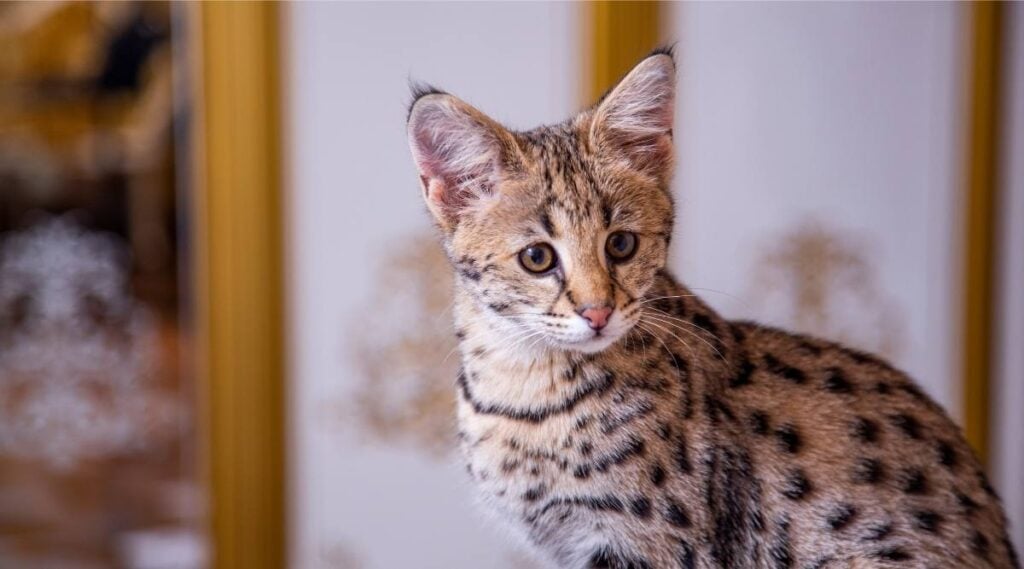
- Some mixes inherit a shorter, dense coat similar to a Savannah
- Others have a medium to long, fluffy coat like a Maine Coon
- Many fall somewhere in between, with a plush but manageable coat
Texture is usually soft and silky, though longer-coated cats may develop a thicker ruff around the neck and extra fur on the belly and tail.
Color & Pattern Variations
Most Savannah Maine Coon mixes appear in shades of brown, but patterns can vary:
- Spotted coats resembling the Savannah parent
- Tabby striping from the Maine Coon side
- Occasional solid or subtly patterned coats
Ringed tails, dark facial markings, and high-contrast spotting are common, especially in cats that strongly resemble the Savannah.
Unpredictability Is the Rule
One of the most important things to understand is that appearance is never guaranteed. A kitten that looks very Savannah-like may mature into a fluffier, more Maine Coon–styled adult, or vice versa.
For many owners, this unpredictability is part of the appeal. For others, it can be surprising. Either way, prospective owners should choose this mix for temperament and care compatibility first, not appearance alone.
Grooming & Shedding: Maintenance Reality Check
If you’re considering a Savannah Maine Coon mix, it’s important to go in with realistic expectations about grooming. This is not a low-maintenance cat, and shedding is very much part of the package.
Because this mix can inherit traits from either parent, coat type and grooming needs can vary. Some individuals have a shorter, denser coat like a Savannah, while others inherit the Maine Coon’s long, thick fur, or something in between.

How Much Do Savannah Maine Coon Mixes Shed?
Most Savannah Maine Coon mixes shed moderately to heavily, especially during seasonal coat changes in spring and fall. Even cats with shorter coats tend to shed more than the average domestic shorthair due to their dense fur.
If you’re sensitive to pet hair or prefer a pristine home, this mix may require more upkeep than you’re comfortable with.
Grooming Needs by Coat Type
- Short to medium coat:
Brushing 1–2 times per week is usually enough to control loose hair and reduce shedding. - Medium to long coat:
Brushing 3–4 times per week is often necessary to prevent tangles and matting, especially around the neck, belly, and hind legs.
Regardless of coat length, regular grooming helps reduce hairballs and keeps the coat healthy.
Tools You’ll Likely Need
Owners of Savannah Maine Coon mixes should expect to invest in quality grooming tools, including:
- A slicker brush or pin brush
- A wide-tooth comb for detangling
- Nail clippers for routine trims
- Dental care tools or treats to support oral health
A strong vacuum cleaner is also a practical (and often necessary) addition to your home.
Do They Tolerate Grooming Well?
Most Savannah Maine Coon mixes handle grooming reasonably well, especially if they’re introduced to brushing early. Their intelligence can work in your favor, but they also tend to have strong opinions. Short, positive grooming sessions are usually more successful than long ones.
Living Requirements: Space, Environment & Daily Care Needs
A Savannah Maine Coon mix can thrive in the right home—but this is not a cat that adapts effortlessly to every living situation. Their size, intelligence, and energy level mean they need more than the bare basics to stay happy and well-behaved.

Space Requirements
While this mix can live indoors full-time, they do best in homes that offer:
- Enough floor space to move and explore
- Vertical space, such as tall cat trees, shelves, or climbing walls
- Room to retreat when they want quiet or independence
Small apartments aren’t automatically a deal-breaker, but owners must compensate with daily enrichment and interactive play.
Environmental Enrichment
Savannah Maine Coon mixes are highly curious and easily bored. A stimulating environment is essential and should include:
- Multiple scratching posts or pads
- Climbing structures and perches
- Rotating toys to prevent boredom
- Puzzle feeders or treat-dispensing toys
Without adequate stimulation, these cats may become destructive or develop attention-seeking behaviors.
Litter Box Setup
Because of their size, standard litter boxes are often too small. Most Savannah Maine Coon mixes require:
- Extra-large litter boxes
- High-quality litter with good odor control
- More than one box in multi-level homes
Placement matters—quiet, accessible areas work best. You may also want to invest in an air purifier, which can help keep the litter box area and your home cleaner.
Daily Care Commitments
Owning this mix means committing to:
- Daily play and interaction
- Regular grooming and nail care
- Consistent feeding routines
- Ongoing mental stimulation
This is not a “low-effort” pet. These cats notice when their needs aren’t met.
Household Compatibility
Savannah Maine Coon mixes tend to do best in homes where:
- Someone is home part of the day
- There is a predictable routine
- Owners enjoy interacting with their cat daily
Homes with constant noise or little structure may overwhelm more sensitive individuals.
Exercise, Enrichment & Mental Stimulation Needs
A Savannah Maine Coon mix is a high-energy, highly intelligent cat that requires daily, intentional exercise. Simply leaving toys around the house is not enough—these cats need active engagement to stay physically and mentally healthy.

Daily Exercise Requirements
Most Savannah Maine Coon mixes need:
- At least 30–60 minutes of active play per day
- Multiple short play sessions rather than one long one
- Activities that involve running, jumping, and stalking
Without adequate exercise, boredom can quickly lead to destructive behaviors such as scratching furniture, knocking items over, or excessive vocalization.
Best Types of Play
This mix thrives on interactive activities, including:
- Wand toys and teaser poles that encourage jumping
- Toys that mimic prey movement
- Games of chase or fetch (some individuals enjoy retrieving)
- Puzzle toys that challenge their problem-solving skills
Because of their powerful hind legs, these cats often jump higher and move faster than the average domestic cat.
Mental Stimulation Is Just as Important
Physical exercise alone isn’t enough. Savannah Maine Coon mixes are thinkers, and they need mental challenges to stay satisfied.
Helpful enrichment includes:
- Puzzle feeders
- Rotating toys to maintain novelty
- Clicker training or trick training
- Exploring new environments within the home
A bored Savannah Maine Coon mix will often create its own entertainment—and owners don’t always appreciate the result.
Love of Climbing & Height
Both parent breeds enjoy vertical space, and this mix is no exception. Tall cat trees, shelves, or wall-mounted climbing systems allow them to:
- Burn excess energy
- Observe their surroundings
- Feel secure and confident
Providing vertical outlets can significantly reduce stress and behavioral issues.
Water Curiosity
Many Maine Coons enjoy water, and some Savannah Maine Coon mixes inherit this trait. You may find your cat:
- Splashing in water bowls
- Playing in sinks or tubs
- Showing interest in flowing water
While not guaranteed, this curiosity can add another layer of enrichment.
Reality Check
This mix is not self-entertaining. If your lifestyle doesn’t allow for daily interaction and structured play, a Savannah Maine Coon mix may become frustrated or difficult to manage.
Outdoor Access, Leash Training & Wildlife Safety
Savannah Maine Coon mixes are smart, curious, and highly active cats — but these traits come paired with a strong instinctual drive that can be difficult to manage without careful planning.
Why Outdoor Freedom Isn’t Safe
Because these cats retain some predatory behaviors associated with their hybrid ancestry, allowing them to roam freely outside can pose serious risks, both to your cat and to the local environment.
Research on hybrid and free-roaming cats suggests that when allowed unsupervised outdoor access, hybrid cats can exert a strong influence on wildlife through hunting behaviors similar to their parent species. In one scientific review, hybrid cats like Savannahs were assessed for their potential to establish feral populations and prey on native species if they were to escape captivity, which was part of why some countries have outright banned their importation.
Even well-fed pets often behave like hunters outdoors, a behavior rooted in feline evolution.
The Reality of Prey Drive
Savannah Maine Coon mixes often:
- Track moving targets instinctively
- Ambush small animals and birds
- Approach unfamiliar spaces with bold curiosity
These behaviors can put:
- Your cat at risk from cars, predators, and hazards
- Local wildlife at risk from hunting pressure
- You at risk of a lost or injured pet
Safer Outdoor Alternatives
If you want your cat to enjoy fresh air and stimulation without risk, consider:
Leash Training
- Start indoors first
- Use a well-fitted harness
- Keep sessions short and positive
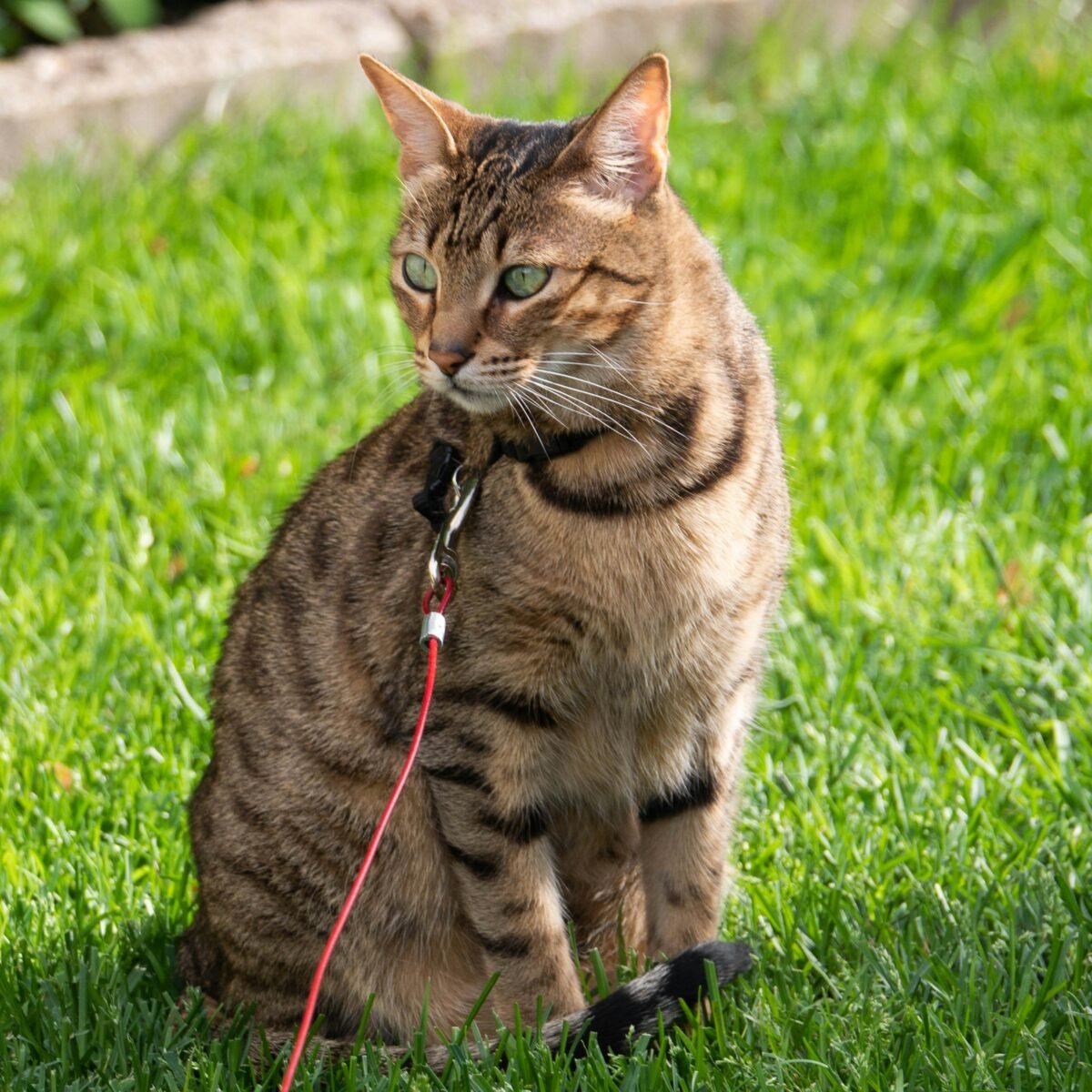
Many Savannah mixes take to leash walking with patience and treats — their intelligence often shines when they’re learning new skills.
Catio or Enclosed Outdoor Space
- Secure screened runs
- Raised platforms & shade
- Enrichment toys
An enclosed outdoor area lets cats explore safely without impacting wildlife or exposing themselves to hazards.
Training & Intelligence: What You Can (and Can’t) Train
Savannah Maine Coon mixes are highly intelligent cats, but intelligence does not automatically mean easy training. These cats are capable learners, yet they remain independent and selective about cooperation. Successful training depends on understanding how cats learn, not forcing dog-style obedience.
What Science Says About Cat Training
Cats are capable of associative learning, meaning they can learn to connect actions with outcomes, and positive reinforcement is one of the most effective ways to support this type of learning.
Studies on domestic cat behavior show that reward-based methods (such as treats or play) are linked with better task acquisition and reduced stress compared with punishment-based approaches. This aligns with research on feline cognition and training, which emphasizes that cats learn most effectively when training sessions are short, predictable, and tied to desirable outcomes.
Are Savannah Maine Coon Mixes Trainable?
Yes, but on feline terms.
Most individuals can be trained to:
- Use scratching posts instead of furniture
- Walk on a leash with a harness
- Respond to simple cues (come, sit, target touch)
- Tolerate grooming and handling
- Respect household boundaries
They are not naturally inclined to:
- Follow repeated commands
- Perform tasks without incentive
- Respond to punishment or dominance-based methods
Training works best when it is reward-driven, brief, and consistent.
Best Training Methods for This Mix
Training a hybrid cat like the Savannah Maine Coon requires a gentle, consistent approach.
Positive Reinforcement Only
Reward-based training is essential. Punishment or scolding increases stress and can damage trust without correcting behavior.
Effective rewards include:
- Small, high-value treats
- Short play sessions
- Verbal praise paired with rewards
Timing matters; rewards must come immediately after the desired behavior.
Common Training Mistakes
Avoid:
- Expecting obedience without rewards
- Repeating commands excessively
- Using punishment or negative reinforcement
- Training sessions that are too long
Cats learn best in short, positive interactions, not prolonged drills.
Training Expectations at a Glance
- Trainability: High, with motivation
- Consistency Required: High
- Response to Punishment: Poor
- Best Owner Fit: Patient, engaged, reward-focused
Health, Lifespan & Genetic Risks to Know About
The health of a Savannah Maine Coon mix can vary significantly, largely because this is not a standardized breed. These cats may inherit health traits from either parent or avoid some issues entirely. Understanding the potential risks helps owners plan responsibly rather than react later.

Average Lifespan
Most Savannah Maine Coon mixes live approximately 12–15 years, though lifespan depends on genetics, diet, environment, and quality of veterinary care.
Cats that come from reputable breeders, receive regular checkups, and maintain a healthy weight tend to live longer, healthier lives.
Potential Genetic Health Concerns
While mixed-breed cats can sometimes benefit from genetic diversity, this mix may still be predisposed to certain conditions associated with its parent breeds.
Some common health problems are:
- Hypertrophic Cardiomyopathy (HCM)
A heart condition commonly seen in Maine Coons that causes thickening of the heart muscle. Screening of breeding cats significantly reduces risk. - Hip Dysplasia
More common in large cats. It can affect mobility and comfort, especially as the cat ages. - Spinal Muscular Atrophy (SMA)
A genetic condition seen in Maine Coons that affects muscle strength. Responsible breeders test for this. - Polycystic Kidney Disease (PKD)
Less common but possible if present in a cat’s lineage.
Not every Savannah Maine Coon mix will develop these conditions, but awareness allows for early detection and proactive care.
Hybrid Considerations
Because Savannahs are hybrid cats, some individuals may have:
- Higher activity levels can stress joints if overweight
- Increased sensitivity to nutritional imbalances
- Greater need for structured exercise to maintain muscle health
These factors don’t automatically mean poorer health—but they do mean careful management matters.
Importance of Veterinary Care
Routine veterinary care plays a major role in long-term health. Owners should prioritize:
- Annual or biannual wellness exams
- Heart and joint monitoring for large cats
- Maintaining a lean, muscular body condition
- Prompt attention to changes in behavior or appetite
Early intervention often makes a significant difference in outcomes.
Are Mixed Breeds Healthier?
Mixed-breed cats may have a lower risk of certain inherited diseases, but this is not guaranteed, especially when one parent breed already carries known genetic risks. Health outcomes depend more on responsible breeding and ongoing care than on breed status alone
Considering Pet Insurance
Because Savannah Maine Coon mixes can be large, active, and genetically unpredictable, some owners choose pet insurance for added peace of mind. Coverage can help offset the cost of unexpected injuries, diagnostic testing, or treatment for inherited conditions, depending on the policy. Enrolling while your cat is young and healthy typically offers the best coverage options.
Nutrition & Diet: Feeding a Large Hybrid Cat Properly
Proper nutrition is one of the most important factors in maintaining the long-term health of a Savannah Maine Coon mix. Because these cats are typically large, muscular, and highly active, their dietary needs often exceed those of the average domestic cat.

Obligate Carnivore Needs
Like all cats, Savannah Maine Coon mixes are obligate carnivores, meaning they require nutrients found primarily in animal tissue to thrive.
A quality diet should be:
- High in animal-based protein
- Moderate in healthy fats
- Low in unnecessary carbohydrates and fillers
Cat foods that list real, named meat sources as the first ingredients are generally the best choice.
Protein & Taurine Requirements
Savannah-type cats are sometimes associated with higher taurine needs. Taurine is an essential amino acid that supports:
- Heart health
- Vision
- Muscle function
Cats cannot produce taurine on their own, so it must come from their diet. Feeding a high-protein, meat-rich diet helps ensure adequate intake.
Wet Food, Dry Food, or Both?
Each feeding method has advantages:
- Wet and fresh food:
Supports hydration and urinary health; often higher in protein and lower in carbohydrates. - Dry food:
Convenient and can help with dental abrasion when properly formulated.
Many owners choose a combination feeding approach, offering both wet and dry food to balance nutrition, hydration, and practicality.
Portion Control & Weight Management
Because this mix can grow quite large, maintaining a lean body condition is essential. Overfeeding can increase the risk of:
- Joint strain
- Reduced mobility
- Heart stress
Meals should be measured, and treats should be given sparingly. Your veterinarian can help determine appropriate portion sizes based on age, size, and activity level.
Raw or Homemade Diets
Some owners consider raw or homemade diets, but these require careful formulation to avoid nutritional deficiencies. If exploring these options, consultation with a veterinary nutritionist is strongly recommended.
Breeders, Ethics & Kitten Costs
Savannah Maine Coon mixes are rare, which means ethical breeding is especially important. Reputable breeders focus on later-generation Savannahs, perform genetic health testing, and prioritize the welfare of both parent cats and kittens.
Prospective owners should expect kitten prices to range from several hundred to over a thousand dollars, depending on lineage, location, and breeder reputation. Always avoid breeders who refuse health documentation, rush sales, or cannot clearly explain the kitten’s Savannah generation.
Choosing an ethical breeder protects not only your future cat but also the long-term health of the mix.

Rescue & Adoption Options
Finding a Savannah Maine Coon mix in a shelter is uncommon, but not impossible. Some cats labeled as “mixes” may not have confirmed lineage, but they can still make excellent companions.
Breed-specific rescues, hybrid cat rescues, and large-cat rescues are often the best places to look. Adoption offers a chance to provide a home to a cat in need while avoiding the risks associated with unethical breeding.
Are Savannah Maine Coon Mixes Good Family Pets?
Savannah Maine Coon mixes can do well in families that understand their needs. They are often loyal and engaging but may be better suited to homes with older children who know how to respect boundaries. Their size, energy level, and strong instincts mean they are not ideal for every household, especially those seeking a low-maintenance or very laid-back pet.
These felines also get along with dogs if they’re introduced calmly. However, keeping small animals such as birds may pose a problem with your cat due to their jumping ability and heightened prey drive.
Is the Savannah Maine Coon Mix Right for You?
The Savannah Maine Coon mix is a striking, intelligent cat that can be incredibly rewarding in the right home, but it is not a casual or low-maintenance choice. Their size, energy level, grooming needs, and strong instincts require owners who are prepared to invest time, structure, and attention into daily care.
If you’re still deciding, it can help to explore more about each parent breed, compare large or hybrid cats, and learn what responsible ownership really looks like. Taking the time to research related topics—such as Savannah cat generations, Maine Coon health considerations, or living with high-energy cats—can help you make a confident, well-informed decision.
With the right expectations and preparation, a Savannah Maine Coon mix can become a deeply engaging companion and a memorable part of your household.
Have You Owned a Hybrid Cat?
Have you ever lived with a Savannah, Maine Coon, or hybrid cat mix? We’d love to hear about your experience, what surprised you, what you loved, and what you wish you had known sooner. Share your thoughts in the comments below to help other readers learn from real-world experiences.