When you purchase through links on our site, we may earn a commission at no extra cost to you. Learn more.
Indoor cats have a pretty sweet deal. Meals arrive on schedule, cozy beds are everywhere, and their biggest daily responsibility is deciding which sunny spot deserves the next nap. But even a safe, comfortable, thoroughly spoiled indoor cat can benefit from a little variety.
Table of Contents
I know this because I live with two feline overlords who seem to think I’m their full-time entertainment director. Some days, they’re perfectly content snoozing in the sunshine. Other days, they knock pens off my desk, investigate things they’ve ignored for months, or tear through the house like a herd of tiny horses.
The good news? Making an indoor cat’s day more interesting doesn’t require expensive toys, a custom catio, or an entire room dedicated to feline entertainment.
A few simple indoor cat enrichment activities can give your cat new opportunities to stalk, chase, climb, sniff, and explore. And some of the best boredom-busters involve things you already have around the house.
Want our human-written content to rank above AI-generated garbage? Help us out by clicking this button!
From cardboard boxes and hidden treats to five-minute play sessions, these easy ideas can make your cat’s daily routine a lot more interesting without making yours more complicated.
Why Indoor Cats Need Mental And Physical Stimulation
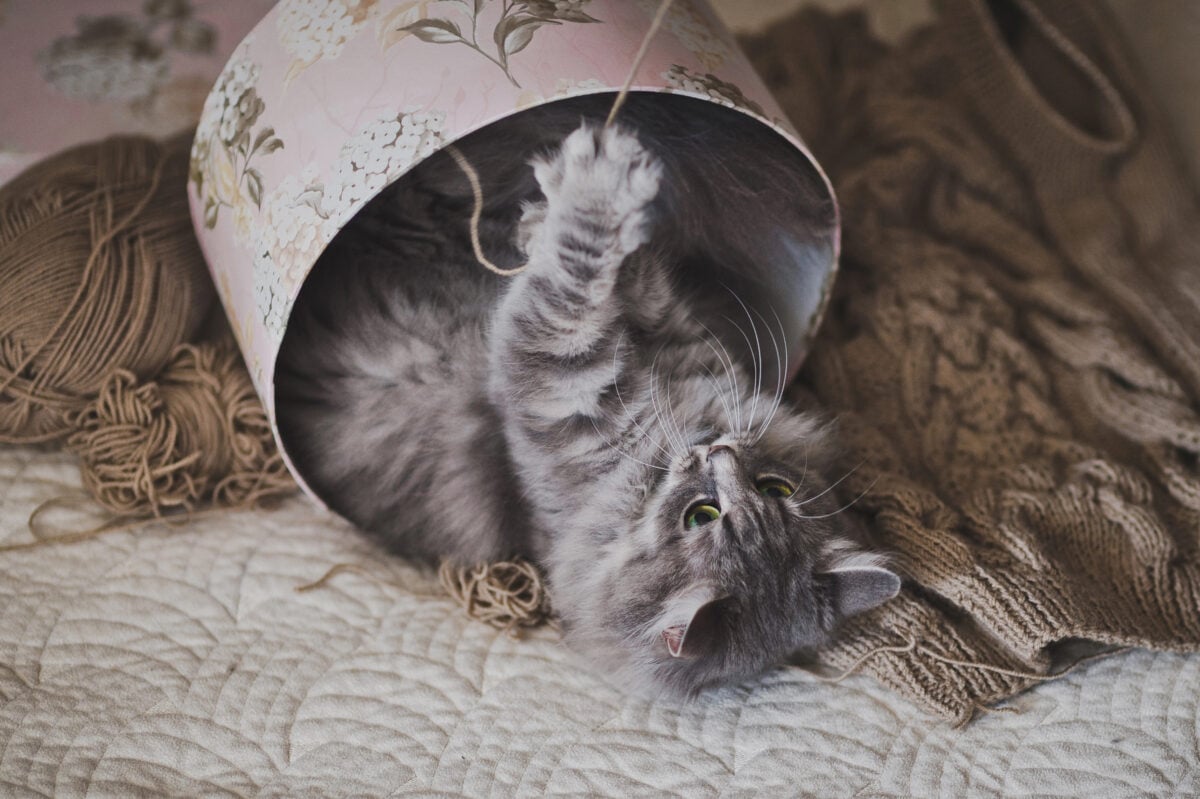
Indoor cats may have everything they need to stay safe and comfortable, but they still have instincts to hunt, climb, scratch, explore, and play. Without opportunities to use those instincts, even a well-loved cat can become bored or frustrated.
Some cats entertain themselves just fine, while others need more interaction. Cats can also experience loneliness, especially when they’re used to regular companionship and spend long stretches of the day alone. A lack of stimulation may contribute to excessive meowing, destructive scratching, restlessness, or changes in activity.
Mental and physical enrichment helps keep their minds engaged, encourages healthy movement, and gives them positive outlets for their energy. Interactive play also provides valuable one-on-one time with you, which can be especially important for cats who spend much of their day alone.
And sometimes, the smallest changes get the biggest reactions. Just ask anyone who’s watched their cat ignore a new toy in favor of the cardboard box it came in.
Not every new activity will be a hit, and that’s perfectly normal. Give your cat time to investigate, watch their reactions, and let them decide whether to participate. Sometimes, the most enriching thing you can offer is a choice.
13 Easy Ways To Make Your Indoor Cat’s Day More Interesting
Every cat has their own idea of fun. Some love chasing toys and climbing to new heights, while others would rather sniff out hidden treats or investigate something suspiciously new in the living room.
1. Rotate Toys Instead Of Leaving Everything Out
That overflowing basket of toy mice, jingle balls, and stuffed fish might look like a feline paradise. But when every toy is available all the time, some cats eventually lose interest.
Try putting most of your cat’s toys away and leaving out just three or four at a time. Every few days, swap one or two for something different.
Mix up the selection, too. Offer something to chase, something to bat around, and something soft enough to grab and kick. A toy that’s been tucked away for a week might suddenly become the most exciting thing in the house.
Just don’t hide a toy your cat is especially attached to. Some cats have a favorite they carry, cuddle, or sleep beside. That one deserves permanent VIP status.
2. Move A Cat Tree Or Perch To A Better Window
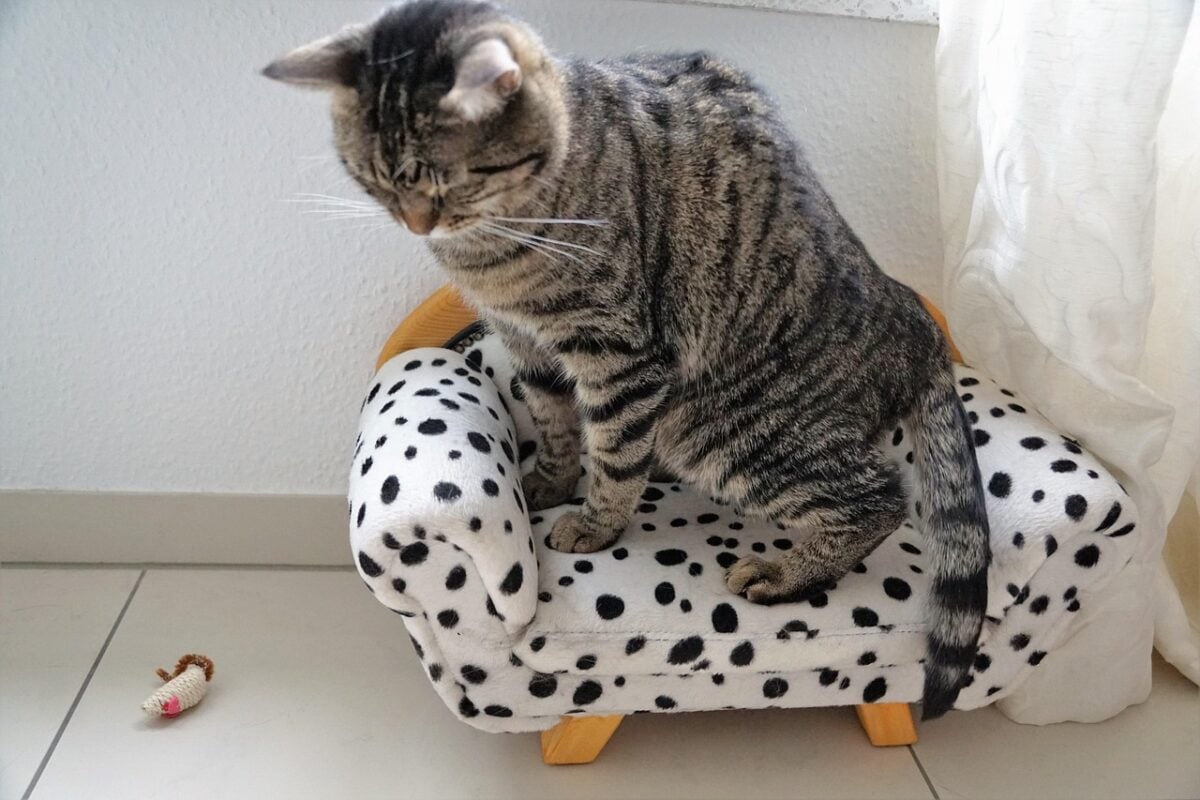
A cat tree facing a blank wall might provide a decent napping spot, but a window with a view can turn it into prime real estate.
Birds hopping through the yard, squirrels climbing trees, and people walking past provide a steady stream of entertainment for curious cats.
My cats, Twilight and Zaphod, have always loved watching the world through our windows. And with two cats sharing the house, having more than one comfortable lookout spot gives them options when they want a little quiet time to themselves.
If your cat rarely uses an existing tree or perch, try moving it to a spot with a more interesting view. You can also add a comfortable bed to a wide, secure windowsill or install a sturdy window-mounted perch designed for cats.
Check that the tree is stable and the window screen is secure. If you install a window perch, follow the manufacturer’s weight and mounting instructions.
Don’t relocate a favorite resting place just for the sake of change. Some cats are particular about their preferred spots, and taking one away may create more frustration than fun.
3. Create Hiding Spots And Cardboard Adventures
You can spend money on an elaborate cat tunnel, or you can watch your cat become completely obsessed with the box it arrived in.
Cats often enjoy spaces where they can hide, observe their surroundings, and launch surprise attacks on passing toys.
Turn a cardboard box on its side, drape a blanket over a chair, or arrange a couple of open boxes to create a mini exploration area. A large paper shopping bag or collapsible fabric tunnel adds another interesting texture to investigate.
You can even place a favorite toy near the entrance and encourage your cat to reach out and grab it.
Keep these setups safe by removing bag handles, tape, staples, and loose strings. Skip plastic bags entirely.
And don’t force your cat to explore a new hideout. Some will move in immediately. Others need time to inspect the construction quality.
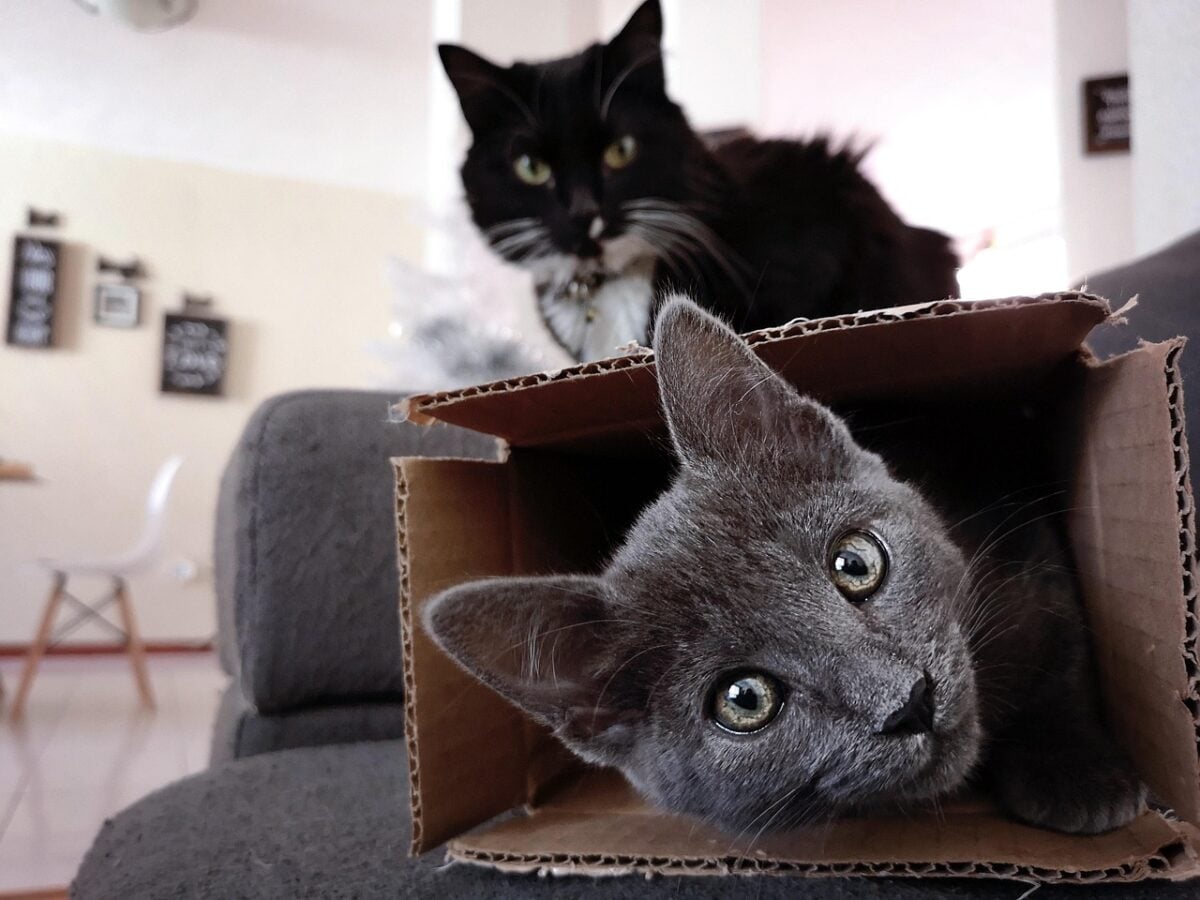
If your cat becomes obsessed with their makeshift hideouts, you might consider a dedicated play tunnel. We’ve rounded up some of the best cat tunnels, from simple collapsible designs to elaborate setups for cats who take their indoor adventures very seriously.
Of course, some cats prefer choosing their own hangouts, especially when those spots involve something you’re actively using. Apparently, your laptop, paperwork, or freshly folded laundry can be far more appealing than the cozy bed you bought specifically for them.
4. Try Puzzle Feeders And Lick Mats
In the wild, cats spend time searching for and catching food. At home, dinner usually appears without much effort.
A puzzle feeder adds a little challenge. Depending on the design, your cat may need to push, paw, or manipulate part of the feeder to reach their food.
Start with an easy puzzle so your cat can figure it out without becoming frustrated. Once they’ve mastered it, you can introduce something more challenging.
No puzzle feeder? Try placing a few pieces of dry food in the cups of a clean muffin tin. Leave some uncovered and loosely cover others with large, lightweight, cat-safe objects your cat can move aside.
If your cat prefers wet food, a lick mat offers another option. Spread a thin layer of their regular food across the textured surface and let them work it out of the grooves.
For cats that tend to inhale their meals, appropriately designed slow feeders may also help slow their eating.
Always supervise new food puzzles and lick mats, particularly if your cat likes to chew materials that aren’t meant to be eaten.
5. Change Where Your Cat Finds Treats
If treats always appear in the same place, your cat has probably memorized the whole routine.
My cats have our snack routine down to a science. They get a little treat when I leave the house, and they’ve learned that putting on my shoes means snack time is approaching. I can practically see the gears turning when I head for the door. They’re so good at predicting their treats that occasionally changing where I offer them adds a little variety to an otherwise very familiar routine.
Try turning snack time into a little scavenger hunt.
Place a treat inside an open cardboard box, on an accessible cat-tree platform, or just around a doorway where your cat can discover it. You can also toss a treat a short distance across the floor and let them chase it.
Start with easy hiding places. Once your cat understands the game, you can make the search slightly more challenging.
For senior cats or those with mobility limitations, keep treats within easy reach rather than encouraging difficult jumps.
And remember, those little rewards still count toward the day’s food allowance. We want a treasure hunt, not an unexpected weight-gain program.
Want to make your cat’s next treasure hunt a little more exciting? Try whipping up one of these homemade cat treat recipes. A special snack might be just the motivation your feline detective needs to start searching.

6. Make Wand-Toy Sessions More Exciting
If you only try one interactive activity from this list, I’d start here.
Wand toys encourage many cats to stalk, chase, pounce, and grab, all without leaving the living room.
But there’s a trick to making playtime more interesting.
Instead of waving the toy wildly in your cat’s face, move it like something they would actually want to catch.
Drag it slowly across the floor. Let it disappear behind the couch. Pause for a moment, then make it dart away.
That little bit of suspense gives your cat a chance to watch, plan, and spring into action.
Let your cat catch the toy regularly, especially before ending the game. You can follow playtime with a small treat or a meal to recreate the natural sequence of stalking, catching, and eating.
When you’re finished, put away wand toys, strings, and loose feathers that could be dangerous if swallowed.
7. Create A Predictable Play Routine
Here’s something that might sound contradictory: cats often enjoy new experiences, but they also appreciate knowing what to expect.
The trick is to build variety into a familiar routine.
Choose a regular playtime, perhaps before breakfast, dinner, or bedtime. Keep the timing reasonably consistent, but switch up the toys and games you use.
How much playtime does an indoor cat need? Many cats benefit from several short interactive play sessions throughout the day. Start with five to ten minutes per session and adjust based on your cat’s age, health, energy level, and interest. Some cats will happily keep chasing, while others are ready for a nap after a few good pounces.
One evening might feature a feather wand. The next could involve chasing a soft toy across the hallway.
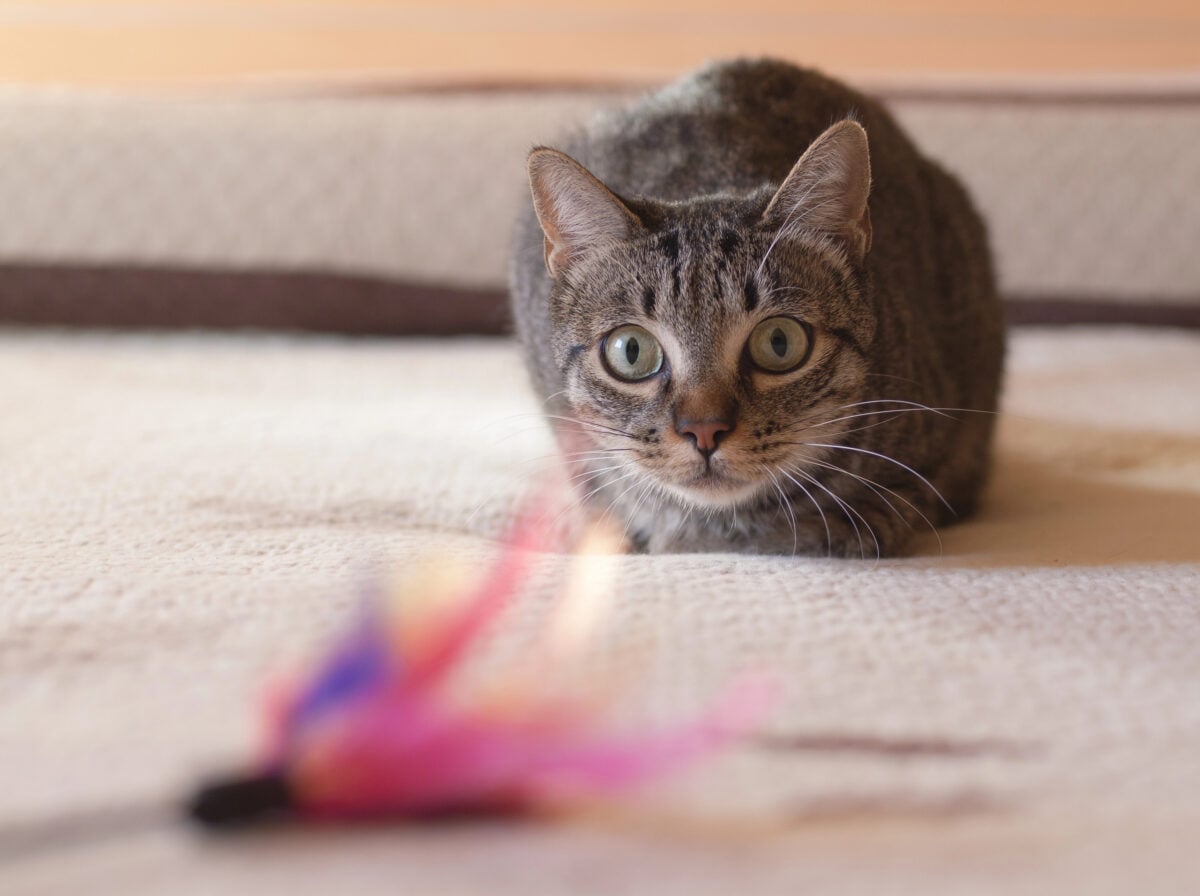
A dependable play routine also gives your cat regular opportunities to interact with you, which can be especially valuable for cats that spend much of the day alone.
Of course, your cat may have their own opinions about when playtime should happen. Learning to recognize the signs your cat wants to play can help you catch those little invitations before they’ve moved on to their next nap.
8. Add Vertical Space And Scratching Spots
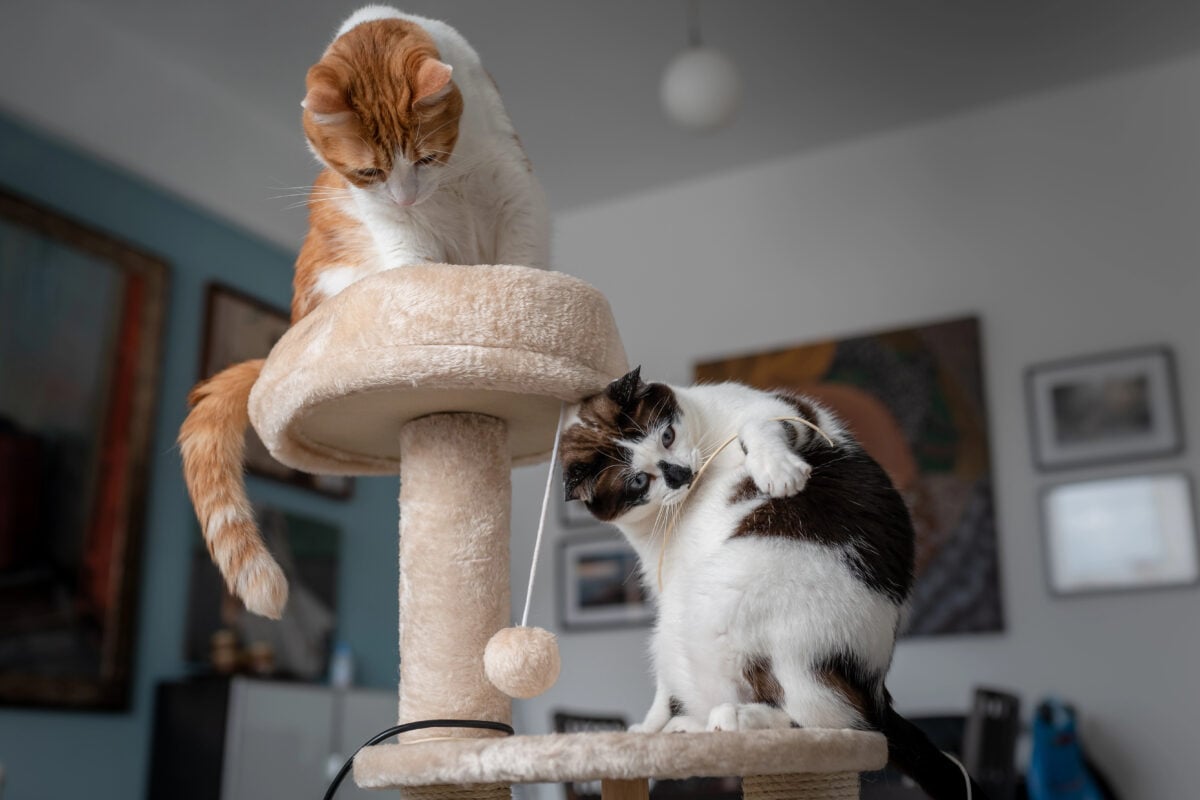
Cats don’t experience a room only at floor level. They love having places to climb, stretch, scratch, and survey their kingdom from above.
A tall cat tree, sturdy shelf, or elevated resting spot gives your cat a new vantage point and somewhere to retreat when household activity gets busy. Wall-mounted cat shelves can also work well, provided they’re securely anchored and designed to support your cat’s weight.
Don’t forget about scratching. It’s a natural behavior that helps cats maintain their claws, stretch their muscles, and leave scent marks. Offer a variety of scratching surfaces to see what your cat prefers. Some love tall, sturdy posts they can stretch against, while others gravitate toward horizontal cardboard scratchers. Placing a scratcher near a favorite resting spot can make it especially appealing.
If your cat still prefers shredding the sofa over using their perfectly good scratching post, our guide to stopping cats from scratching furniture has practical ways to redirect those claws without discouraging a natural behavior.
Make sure your cat can navigate any climbing setup comfortably. Kittens, seniors, and cats with mobility challenges may need lower platforms, steps, or ramps.
You don’t need to turn your living room into an elaborate feline obstacle course. A well-placed perch and a scratching post might be all it takes to make an ordinary corner of your home a lot more interesting.
9. Give Them Something Interesting To Watch
Welcome to Cat TV. No subscription required.
For some cats, watching birds, squirrels, fluttering leaves, or people passing by is endlessly fascinating.
Try opening the curtains during active times of day, adding a comfortable window perch, or placing a bird feeder where your cat can observe visitors from inside.
If you install a bird feeder, follow bird-safe window recommendations to reduce collision risks. Appropriate feeder placement and window treatments that make glass visible to birds can help.
You can also try a short wildlife video featuring birds or small animals if your cat seems interested.
Watch how your cat responds. Curious watching, relaxed body language, and occasional tail movements may indicate they’re enjoying the activity. If they become visibly distressed or agitated, choose something else.
Not every cat wants to spend their afternoon monitoring neighborhood wildlife. Some prefer the far more demanding job of monitoring you.
My cats, Twilight and Zaphod, also love chasing the little rainbows cast by a prism hanging in our window. When the sunlight hits just right, colorful patches dance across the walls and floor, and suddenly, they’re on a mission to catch them. It’s like having our own miniature disco, minus the questionable music choices.
Since they can’t actually catch the light, I occasionally toss them a toy they can pounce on so their hunting adventure ends with a satisfying victory.
10. Introduce New Scents And Objects Carefully
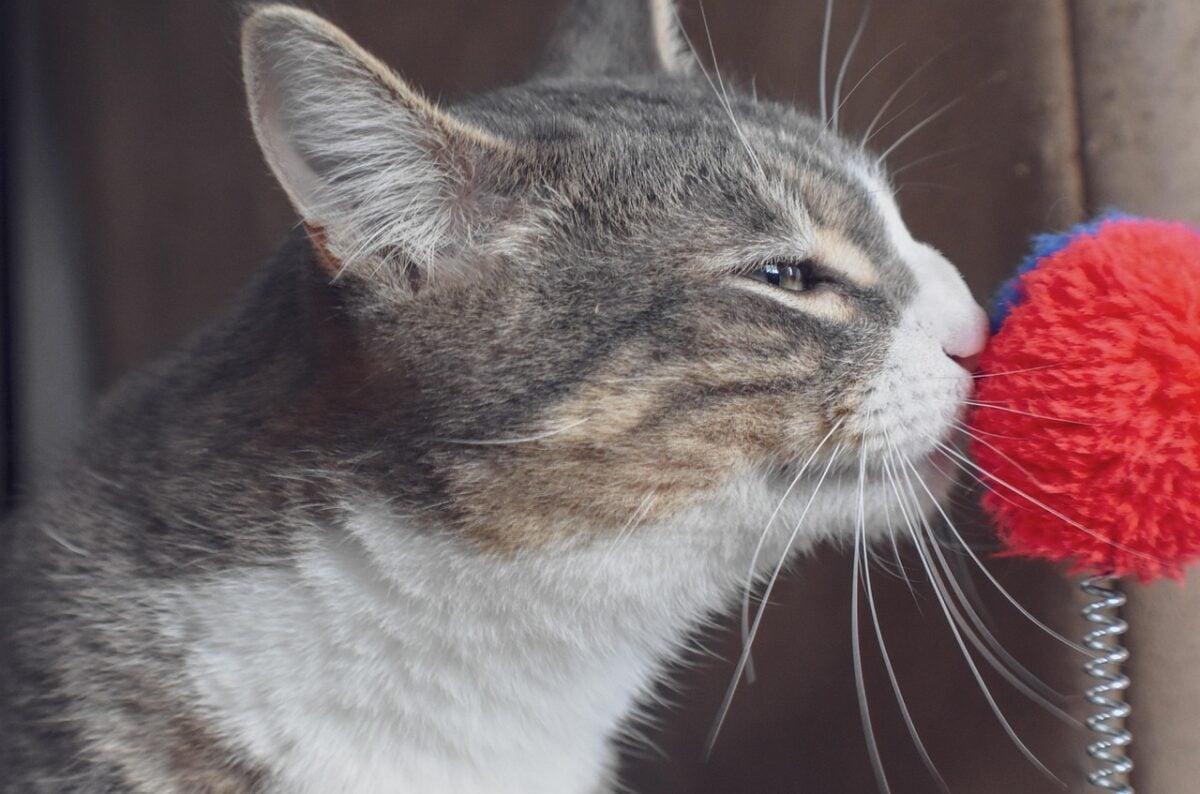
Cats experience much of their world through scent, so an unfamiliar object can provide an interesting opportunity to investigate.
Try offering a clean cardboard box, a catnip-filled toy, or a little silvervine in a cat-safe toy designed for that purpose.
Place the item nearby and let your cat investigate at their own pace. Some will immediately sniff, rub, roll, or play, while others may take one cautious look and walk away. Either reaction is fine, so don’t force an interaction.
Avoid essential oils, fragranced products, unidentified outdoor plants, and anything toxic or easily swallowed.
And remember, not every cat responds to catnip. Some will act like they’ve discovered the greatest substance on Earth. Others will wonder why you’re waving a dried leaf in their face.
11. Make A Cardboard Treasure Box
One person’s recycling is another cat’s adventure playground.
Start with a clean, open cardboard box. Add a few loosely crumpled sheets of plain paper and a couple of large cardboard tubes.
Scatter a few pieces of your cat’s regular kibble among the paper and let them sniff and search.
The different textures, rustling sounds, and hidden food encourage your cat to investigate and forage.
Keep the setup simple. Avoid stones, loose string, plastic packing materials, staples, tape, and other objects your cat might swallow.
Supervise the first few sessions to see how your cat interacts with the materials.
Some cats will carefully investigate every corner. Others will climb inside the box and immediately go to sleep.
Either way, the box has apparently passed inspection.
12. Play The Cup Game
Here’s an easy way to find out just how determined your cat is when snacks are involved.
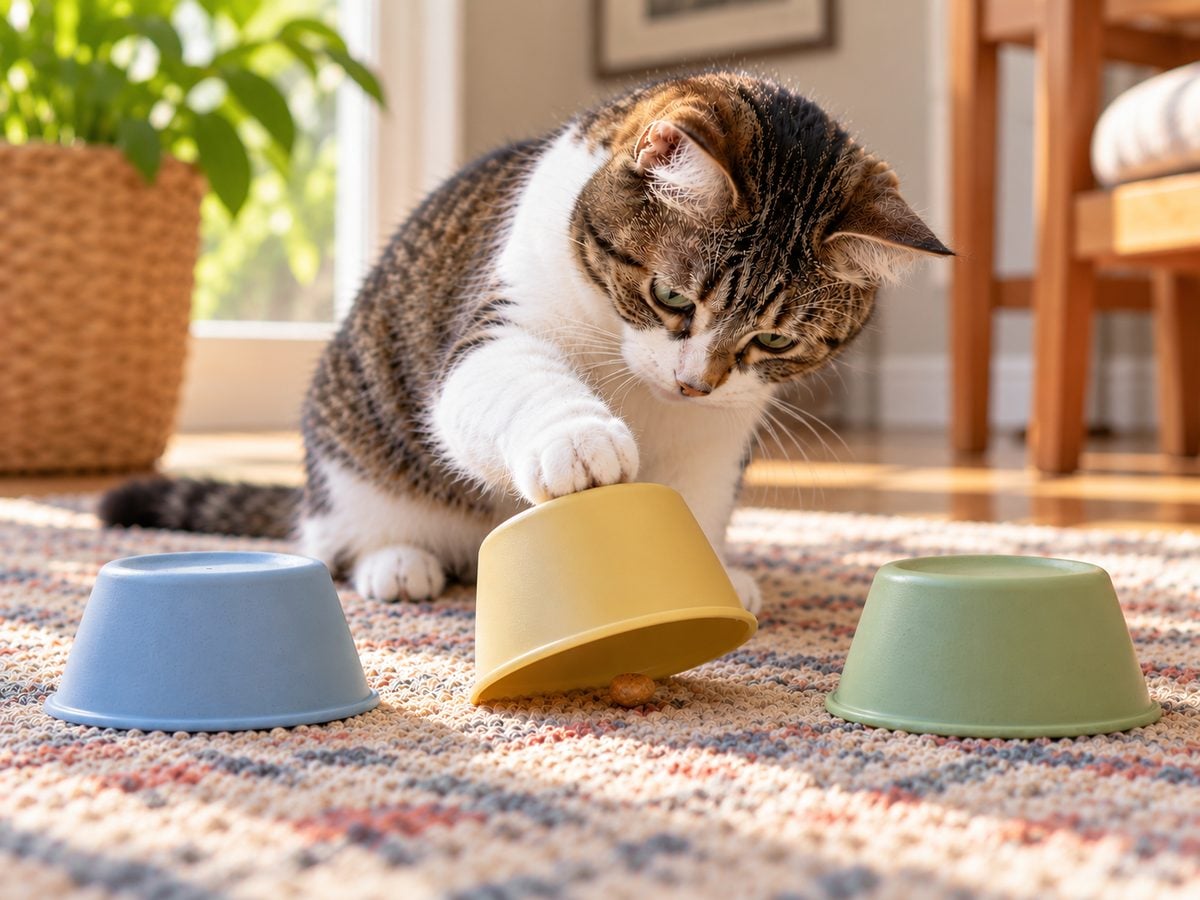
Place three sturdy, lightweight cups or small bowls upside down on the floor.
Let your cat watch as you hide a piece of kibble beneath one. Then encourage them to investigate.
At first, don’t move the cups around. Give your cat a chance to figure out how to reach the food.
Once they understand the game, you can gently switch the positions and see whether they follow the treat.
Some cats will sniff carefully. Others will bat at the cups. And a few may blatantly knock everything over and collect their reward.
Keep the activity short and rewarding, especially when your cat is first learning. Use cat-safe objects and supervise so nothing gets chewed apart or swallowed.
13. Teach Your Cat A Simple Trick
Who says dogs get to have all the training fun?
Many cats can learn simple behaviors using positive reinforcement, especially when the rewards are something they enjoy.
Start with an easy activity, such as following a target stick, touching your hand with their nose, or stepping onto a small mat.
Reward the behavior immediately with a tiny treat or a piece of their regular food. Keep sessions short and upbeat. Even a minute or two can be enough when you’re getting started.
Once your cat understands the game, you can gradually introduce new behaviors.
Your cat doesn’t need to become a circus performer. Even learning one simple trick gives them a new challenge and another way to interact with you.
If they walk away halfway through the lesson, training is officially over.
Your cat has spoken.
When Ordinary Cat Games Just Won’t Cut It
When my cats seem bored or have a serious case of the zoomies, I have to get a little creative. I’ve learned that the sillier an activity seems to me, the more likely they are to enjoy it.
One of their favorites is what I call the “blanket monster.” I slowly move a wand toy underneath a lightweight blanket, making little bumps and movements for them to investigate. Twilight and Zaphod love stalking the mysterious creature, waiting for the perfect moment to pounce. It’s ridiculous, but it works.
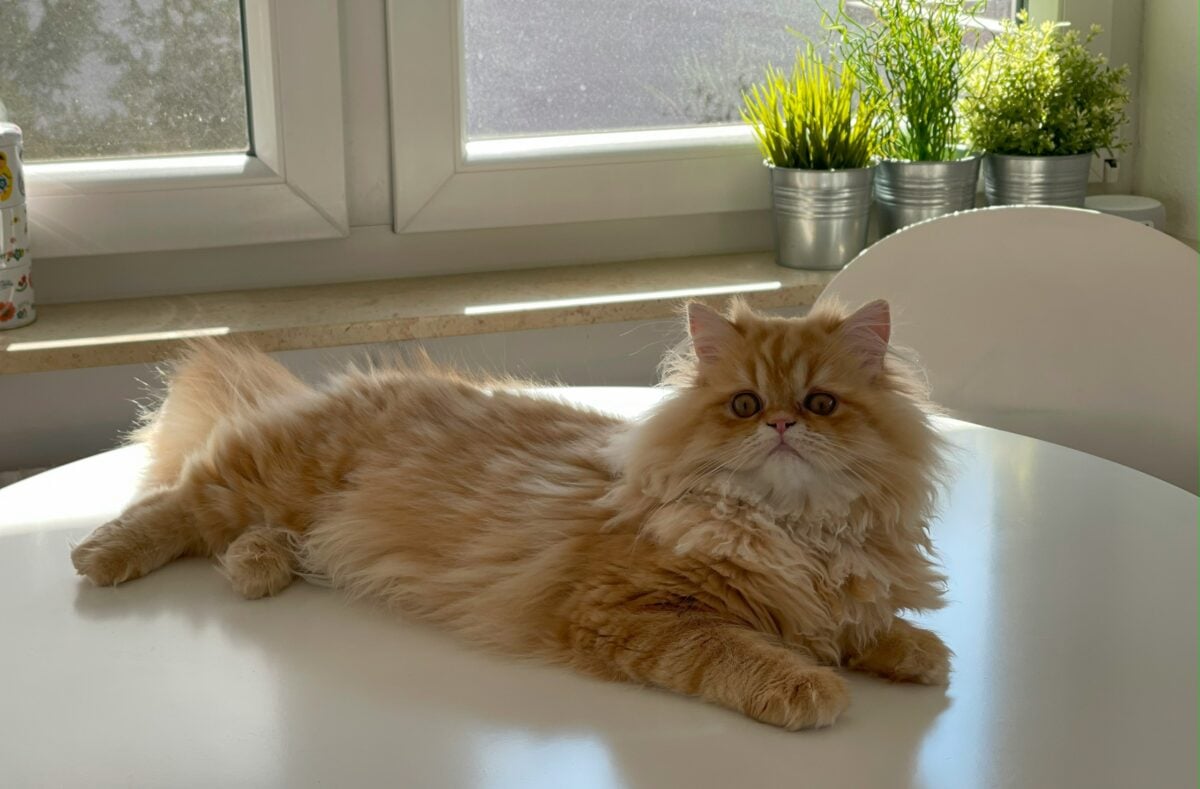
If your cat enjoys a little unconventional entertainment, try one of these games:
- Hide-And-Seek With Your Human: Duck behind a doorway or piece of furniture, call your cat, and reward them when they find you. Start somewhere easy, and don’t jump out or startle them.
- The Disappearing Toy Trick: Let your cat watch as you slide a favorite toy beneath an upside-down cardboard box. Then wait to see how they investigate. Some cats will reach underneath, others will try to flip the box, and a few will look at you like you’ve committed a terrible crime. Keep the toy easy to retrieve so your cat doesn’t get frustrated.
- A Living Room Obstacle Course: Arrange a few sturdy boxes, low cushions, or other stable objects into a simple course. Encourage your cat to follow a toy or treat through it. No Olympic-level jumping required.
Now We’re Just Getting Ridiculous (And We Love It)
If your cat enjoys the stranger side of playtime, things can get pretty entertaining. And sometimes, the best ideas come from embracing their weird little obsessions.
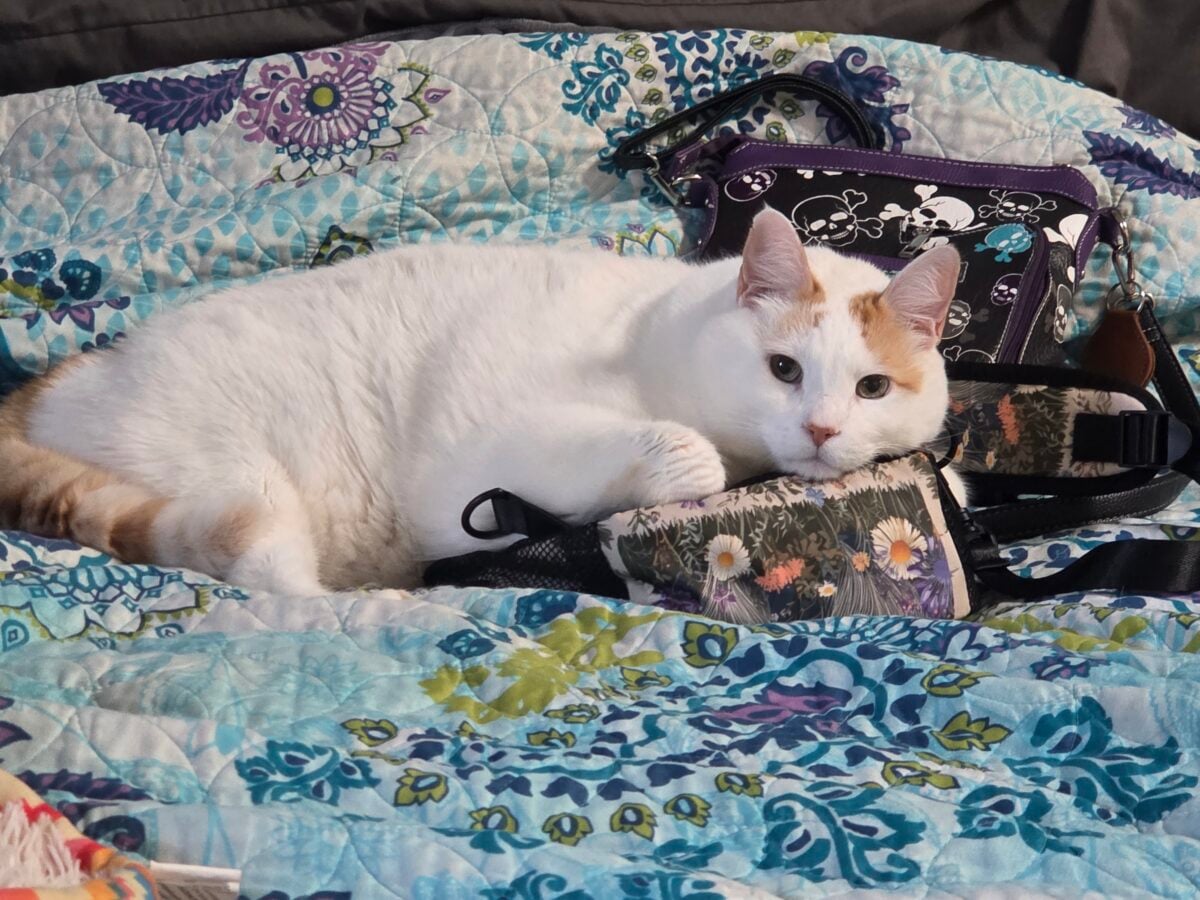
Take my cat Zaphod, for example. He’s absolutely obsessed with bags. Backpacks, purses, tote bags, you name it. If it has pockets or straps, he’s claiming it.
I’ve started strategically placing old bags around the house every so often, giving him new places to explore, curl up, and make biscuits. I sacrifice roughly three backpacks a year to the feline gods because he loves kneading and scratching them into oblivion.
It’s a small price to pay for his happiness, although my backpack budget might disagree. I just make sure to remove any loose straps, dangling hardware, or other hazards before handing them over. As you can see in the image below, he is a very fashionable guy.
Of course, you don’t need to donate your luggage collection to the cause. Try hosting a tiny dance party by dragging a feather toy around to music, playing peekaboo from behind the couch, or turning an empty bathtub into a supervised ball-chasing arena with a few large, cat-safe toys.
You can even create a “haunted hallway” by placing a few cardboard shapes along the floor and letting your cat investigate the mysterious new obstacles.
Feeling especially ridiculous? Crawl around the living room with a toy and let your cat stalk you like an oversized, extremely uncoordinated mouse.
Just let your cat approach at their own pace. Some will enthusiastically join the madness, while others will watch from the couch, silently questioning your sanity.
Sometimes, the best entertainment isn’t something you buy or plan. It’s whatever strange little thing your cat has decided is the greatest invention in feline history.
A Quick Safety Reminder
Before turning household objects into cat toys, check for loose strings, straps, small parts, sharp edges, or anything your cat could swallow or get tangled in. Avoid unstable setups, supervise play with unfamiliar objects, and make sure your cat can easily move away when they’ve had enough. A little feline chaos is fun. An emergency vet visit? Not so much.
The Best Enrichment Activities Change With Age
A kitten with endless energy and a senior cat who prefers supervising from the couch probably won’t agree on what makes a good time. Matching activities to your cat’s age, mobility, and personality helps keep playtime enjoyable without pushing them beyond their comfort level.
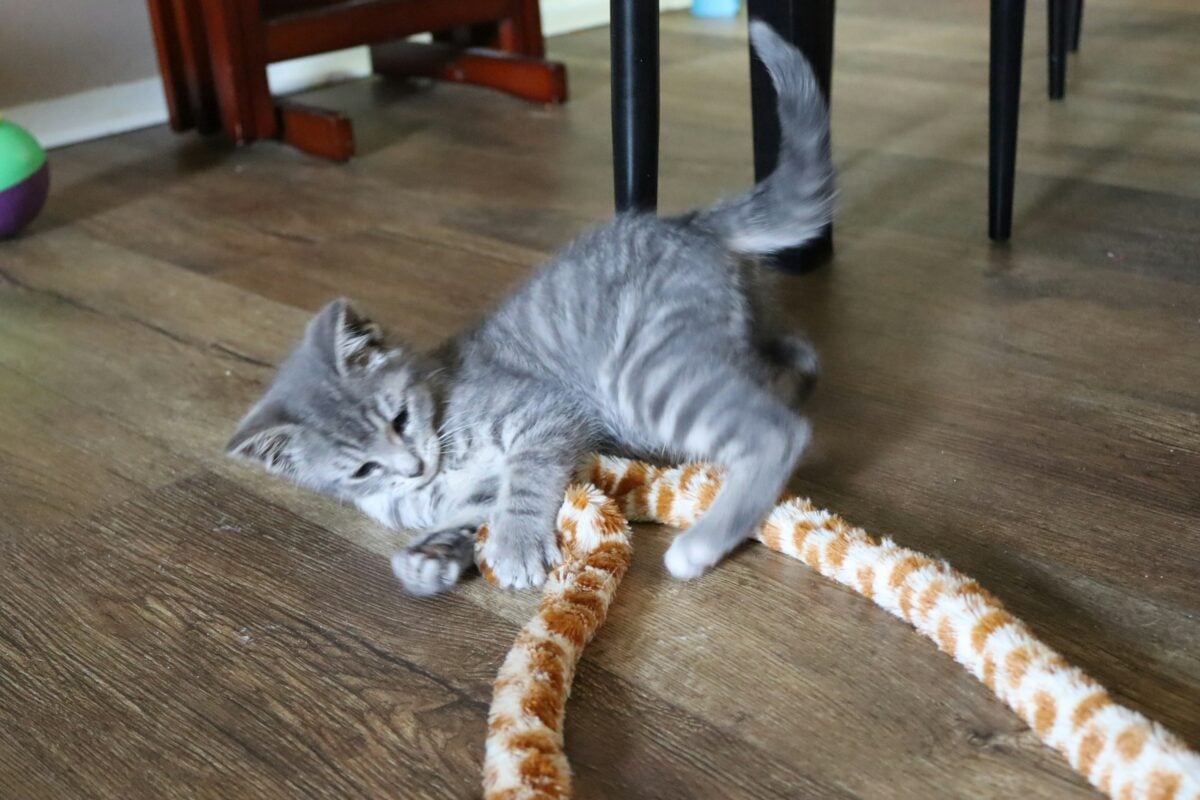
Kittens: Keep Up With The Chaos
Kittens are tiny tornadoes with short attention spans and an impressive talent for finding trouble. Several quick play sessions throughout the day usually work better than one marathon session. Try tunnels, soft toys, shallow boxes, and simple puzzles. Supervise string toys and small objects, and keep climbing areas low and secure while your kitten develops coordination.
Adult Cats: Give Their Brains A Workout
Adult cats often enjoy more challenging activities, including food puzzles, interactive hunting games, and creative treat hunts. Mix up the toys, introduce new games, and give them opportunities to climb and explore. Even a cat who spends most of the afternoon sleeping may surprise you when their favorite wand toy appears.
Senior Cats: Keep The Fun, Lose The Acrobatics
Older cats can still enjoy plenty of stimulation, even if they’re no longer launching themselves across the furniture. Try slower wand-toy movements, easy food puzzles, and comfortable window perches. Steps, ramps, and lower platforms can help cats with reduced mobility enjoy their favorite spots without difficult jumps. Gentle play and opportunities to investigate new scents can be just as rewarding as more energetic games.
When Boredom Might Be Something More
Not every cat who ignores a toy is bored. Sometimes, a sudden change in interest or activity is a sign that something else is going on.
If your usually playful cat suddenly becomes withdrawn, hides more than normal, avoids jumping, or loses interest in favorite activities, contact your veterinarian. Pain, illness, and age-related changes can affect how cats move, play, and interact with their surroundings.
Pay particular attention to changes in appetite. If your cat stops eating, seek veterinary advice promptly rather than waiting to see whether a new toy or activity catches their interest.
The same goes for changes in how your cat interacts with you. If a normally affectionate feline suddenly starts keeping their distance, understanding why cats sometimes begin avoiding their owners can help you recognize possible causes and warning signs. Don’t delay veterinary care if the change is sudden or accompanied by other symptoms.

You know your cat’s habits better than anyone. When their behavior changes noticeably, it’s worth finding out why before assuming they simply need more entertainment.
Small Changes, Big Purrs
The fun thing about cats is that you never quite know what will capture their attention. One day, they’re completely obsessed with a new toy. The next, they’re ignoring it in favor of a crumpled piece of paper or a cardboard box you’ve left on the floor.
That’s part of the adventure. Experiment with different activities, pay attention to what your cat enjoys, and don’t be surprised when their favorite game turns out to be something you never expected.
And if your cat takes one look at your carefully planned entertainment and walks away? Well, there’s always tomorrow. Apparently, even feline entertainment directors get mixed reviews.

More Ways To Keep Your Indoor Cat Happy
There’s always something new to learn about sharing your home with cats, from making their environment more comfortable to understanding their wonderfully strange habits.
For more practical advice, explore these common indoor cat mistakes or find out why some indoor cats become obsessed with going outside.
Then there’s the entertaining side of cat ownership. Discover why some seemingly naughty behaviors are perfectly normal and enjoy these things every cat owner eventually stops questioning.
Apparently, living with cats means accepting that you’ll never fully understand your housemates. But you’ll certainly never run out of stories.
What’s Your Cat’s Favorite Way To Have Fun?
Does your cat love chasing toys, hunting for treats, or turning ordinary household objects into their personal playground? Share your favorite indoor cat games and enrichment ideas in the comments. I’m always looking for new ways to entertain my own two feline troublemakers, and I’d love to hear what works for yours.