When you purchase through links on our site, we may earn a commission at no extra cost to you. Learn more.
Picture this: you finally get comfortable on the couch. The blanket is perfect, the cushion has reached ideal softness, and your body has officially melted into relaxation mode.
Table of Contents
Then you stand up for 45 seconds.
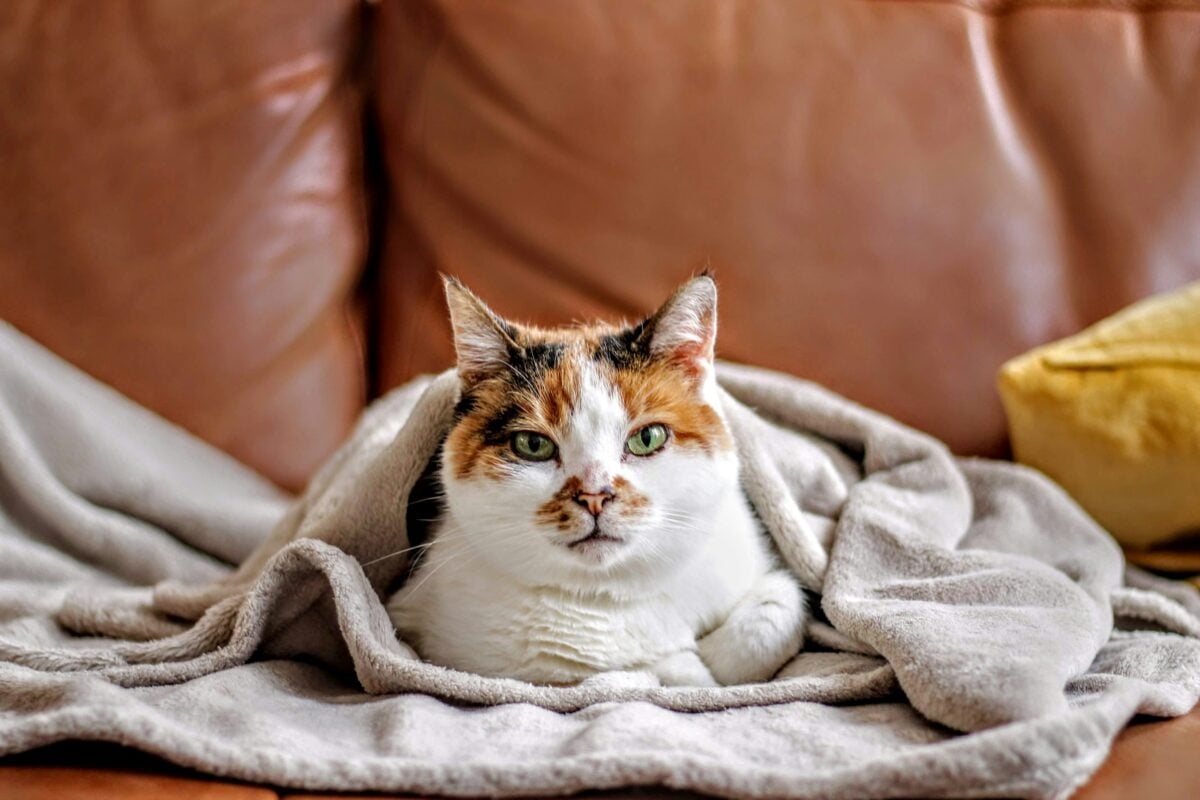
When you return, your cat is curled into your exact spot like they signed a lease, paid a deposit, and changed the locks. One eye opens. A dramatic sigh follows. The message is clear: this seat belongs to me now.
So, why does your cat sleep in your spot the second you get up?
Want our human-written content to rank above AI-generated garbage? Help us out by clicking this button!
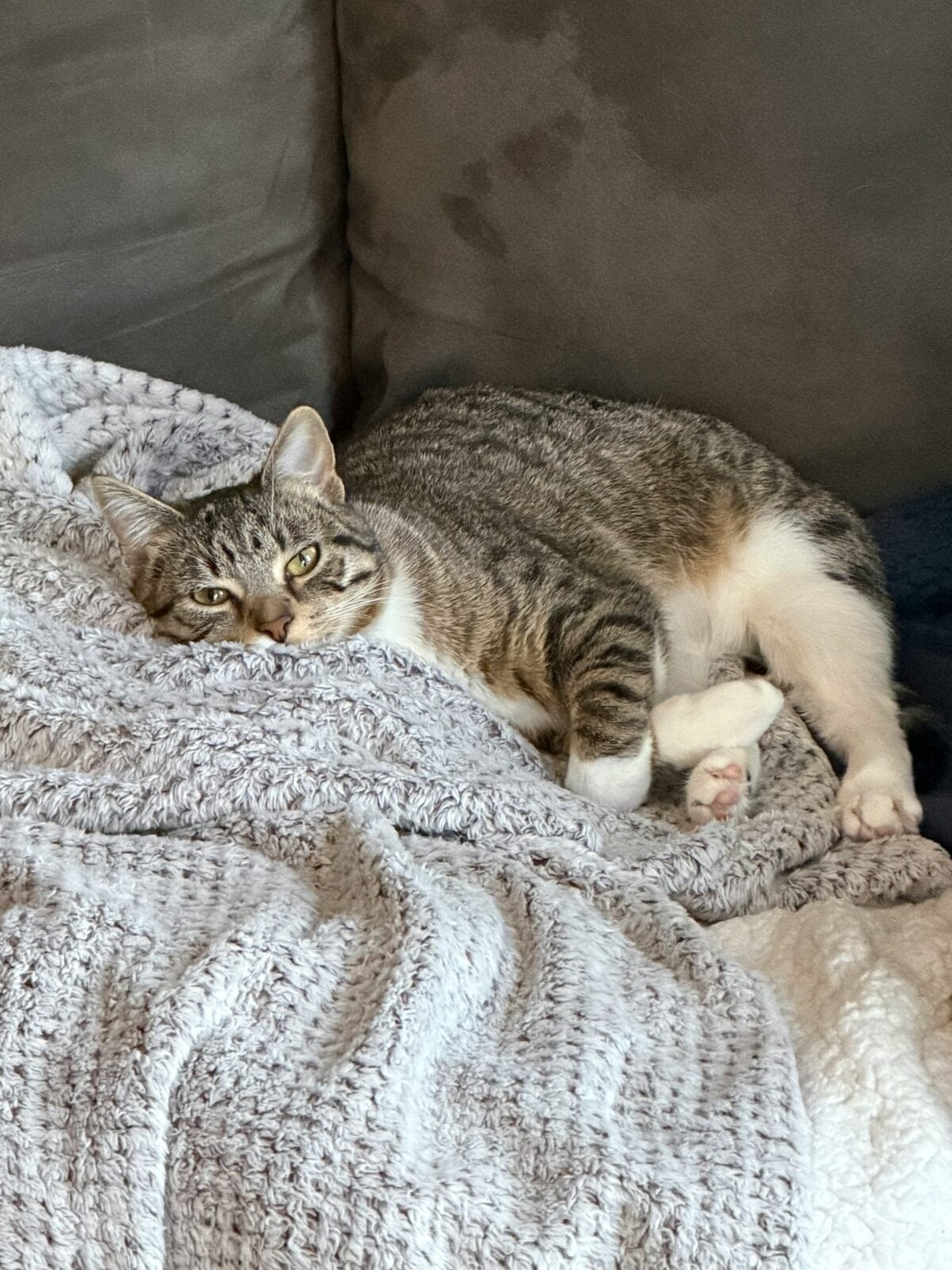
Usually, it is not spite, dominance, or a tiny act of feline rebellion. Your spot is warm, saturated with your scent, and strongly associated with safety. To your cat, that cushion is not just furniture. It is a heated, familiar, human-scented comfort zone — and choosing it is often a surprisingly sweet sign of trust.
5 Reasons Your Cat Sleeps in Your Spot
It may look like your cat is making a bold little power move, especially when they settle in with complete confidence and refuse to make eye contact. But most of the time, this behavior is not about dominance or defiance.
Your spot has a lot going for it. It is warm. It smells like you. It feels familiar. And from your cat’s point of view, that makes it one of the safest and most comfortable places in the house.
Does the behavior below look familiar?
Cats are practical creatures, even when they are being ridiculous. When they choose the exact place you just left, they are usually responding to a mix of instinct, comfort, scent, and attachment.
Let’s look at the most common reasons your cat keeps claiming your seat.
1. The Premium Radiator Effect: The Biology of Heat Hunting
To truly understand why your cat behaves like a Heat-Seeking Missile the second your rear leaves a cushion, you have to look at baseline feline biology.
While a healthy human’s normal body temperature sits somewhere around 98.6°F (37°C), a cat’s normal baseline temperature is significantly higher, hovering between 101°F and 102.5°F (38.3°C to 39.2°C).
Cats often prefer warmer resting areas than humans do, so a cushion you just warmed up can feel like prime real estate.
Why Your Body Heat is a Luxury Currency
For a cat, conserving energy is an evolutionary survival mechanism. In the wild, every ounce of energy spent keeping warm is an ounce of energy not spent hunting down breakfast. Even though your pampered house cat’s toughest daily hunt involves chasing a red laser pointer or tracking a rogue housefly, those ancestral instincts remain fully hardwired.
- The Walking Space Heater: To your cat, you are not just a beloved pet parent; you are essentially a giant, walking premium space heater.
- The Insulated Nest: When you sit in a spot for an hour, your body heat transfers directly into the fabric, foam, or cushions, creating a perfectly pre-heated, insulated nest.
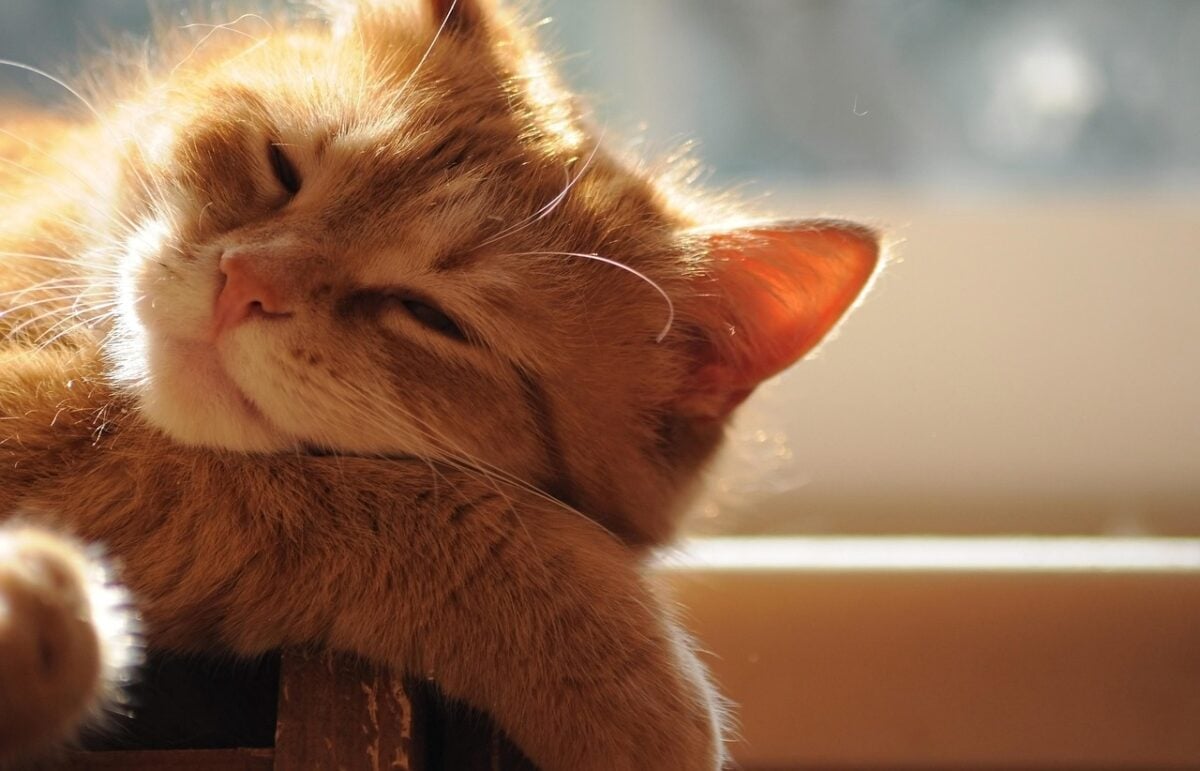
- Zero-Calorie Warmth: The moment you stand up, your cat’s internal thermal radar pings. By immediately diving into your vacated spot, they can absorb maximum warmth without burning a single calorie of their own.
It isn’t just laziness; it is high-efficiency real estate management. They are letting you do all the hard work of warming up the furniture, then swooping in to collect the dividends.
2. Eau de Human: The Safety and Comfort of Your Scent
We experience the world primarily through sight and sound. Cats, however, experience a massive portion of their reality through a highly sophisticated olfactory system. A cat’s sense of smell is roughly fourteen times stronger than a human’s. Where you see a standard grey sofa cushion, your cat smells a complex, deeply comforting, and incredibly vivid landscape of you.
The Security Blanket Effect
In the feline world, scent equals identity, security, and ownership. Your specific scent profile represents a strong sense of safety, reliable resources, and protection.
When your cat curls up right where your back, hips, or legs just were, they are burying themselves in your concentrated aroma. It is the exact feline equivalent of a human wearing a loved one’s oversized, broken-in sweatshirt.
[Your Body Heat] + [Your Concentrated Scent] = The Feline Definition of Safety
Moving into your scent profile helps a cat self-soothe. By enveloping themselves in your scent, they feel secure from potential threats. They know that the “big, tall caregiver” was just there keeping the area safe, meaning they can let their guard down and drift into a truly deep sleep cycle.
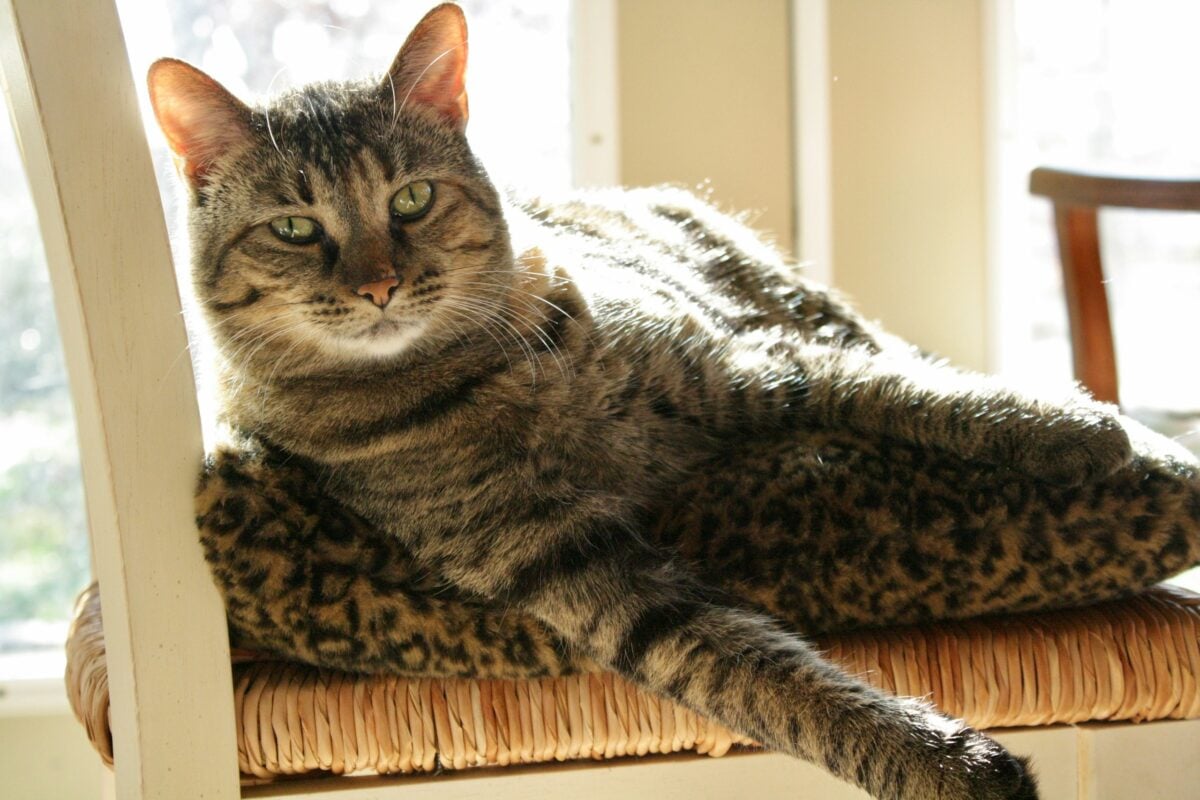
3. Instinct Tells Them to Choose the Safest, Warmest Spot
Your cat may live indoors now, but some of their behavior still comes from instincts shaped long before cozy couches and office chairs existed.
Domestic cats are descended from wildcats that had to be careful about where they rested. A good sleeping spot needed to be warm, sheltered, and safe enough for them to relax without being easily surprised. That instinct still shows up in modern cats, even when the biggest threat in the house is a vacuum cleaner in the hallway.
Cats are naturally drawn to small “comfort zones” around the home where the conditions feel just right. These spots may change throughout the day, depending on warmth, light, noise, and activity.
That might be:
- A sunny patch on the rug
- A blanket that holds heat well
- The top of the sofa, where they can see the room
- Your office chair right after you stand up
When your cat takes your spot, they are not necessarily being sneaky or stubborn. They may simply be choosing a place that already feels proven. You were just sitting there, so the spot is warm, familiar, and likely safe.
In your cat’s mind, that makes it prime resting territory. You tested it first. They approved your work.

4. The Ultimate Compliment: Deep Feline Attachment and Bonding
It is easy to look at a cat who just stole your office chair right before an important Zoom meeting and see a freeloading predator taking advantage of your lifestyle. However, this behavior is actually deeply rooted in active bonding, affection, and emotional attachment.
Cats are often stereotyped as cold, aloof, and fiercely independent creatures who only tolerate humans for the canned tuna. But anyone who lives with a cat knows this is entirely false. Cats love deeply; they just express it through subtle behavioral cues rather than frantic tail-wagging.
Signs Your Cat is “Mirroring” You
Choosing your exact spot is a phenomenon known as mirroring or behavioral synchrony. Cats often want to do what their humans are doing, eat when their humans are eating, and sleep exactly where their humans are sleeping.
- Proximity Seeking: They aren’t trying to replace you; they are trying to be close to you, even when you temporarily walk away from the room.
- The Trust Fall: By placing their body exactly where yours was, they are choosing the place most strongly associated with you.
- The Ultimate Validation: Choosing the area most saturated with your physical presence is a sign of immense emotional trust. They are essentially declaring that your personal space is their favorite place on earth. If your cat consistently steals your seat, you have officially been verified as their ultimate safe haven.
If your cat loves being close to you even when you are resting, you may also notice them doing other oddly affectionate things, like watching you sleep.

5. Subletting the Territory: The Communal Colony Scent
In the wild, cats that live in cooperative social groups (like lion prides or feral cat colonies) use a fascinating technique to maintain peace and identify group members: they create a communal colony scent.
They do this through a behavior called allorubbing—rubbing their bodies, cheeks, and tails against one another to swap scent molecules.
Signing the Family Lease
Your home is your cat’s territory, and you are a prominent member of their colony. When your cat rubs their face against your furniture, or when they immediately lie down in the warm spot you left behind, they are performing a vital territorial maintenance ritual.
- Blending Profiles: They are deliberately mixing their scent glands (located on their cheeks, lips, and forehead) with the scent oils your body left behind on the fabric.
- Creating a Scent Hierarchy: This blending creates a unified “family aroma” across the household’s prime furniture pieces.
- Affiliation over Domination: This isn’t a hostile takeover or a show of dominance. It is an act of inclusion. They are adding their furry signature to the collective lease to remind everyone, “We belong together, we are one household or social group, and this spot belongs to our collective family.”
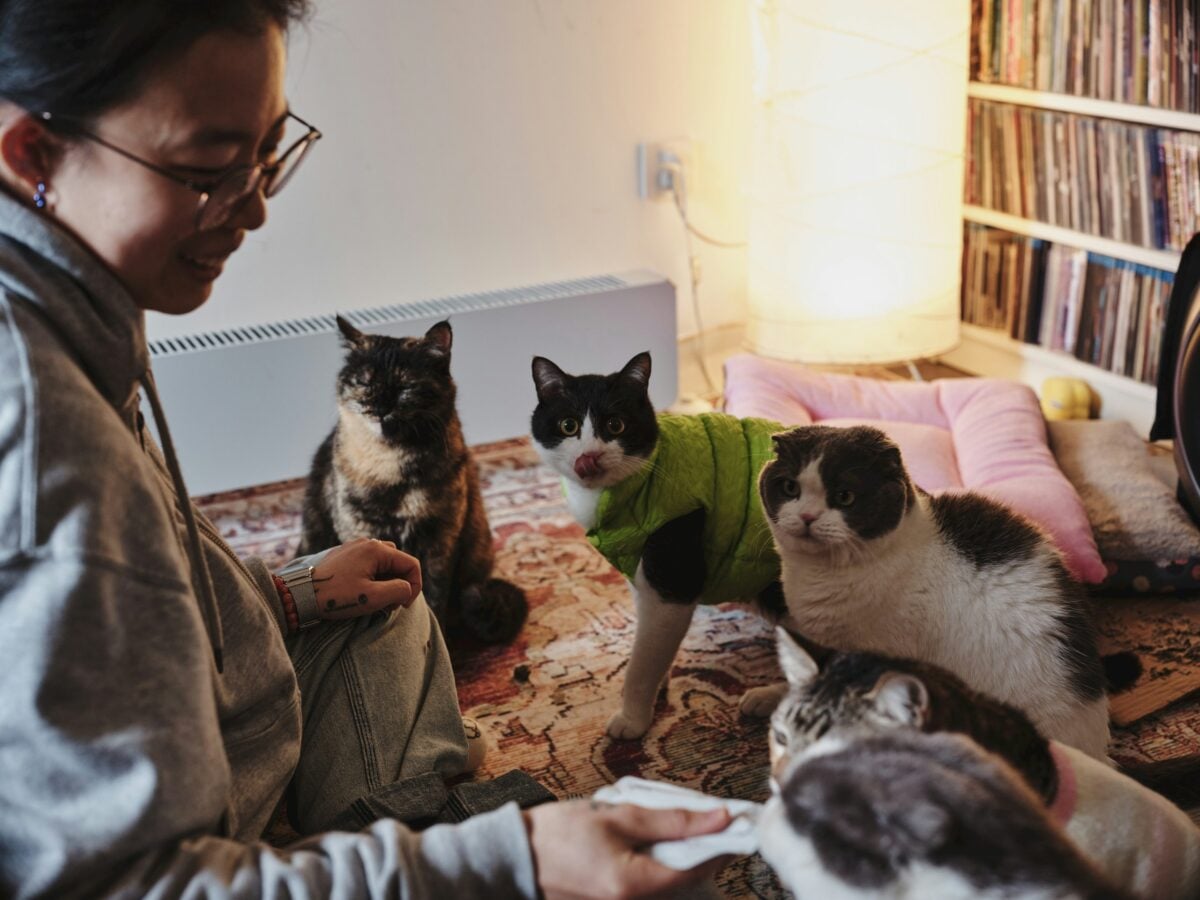
The Mystery of the Ignored $50 Designer Cat Bed
Every cat owner on the planet has experienced the specific heartbreak of researching, purchasing, and unboxing a beautiful, plush, orthopedic, memory-foam cat bed, only to watch their cat ignore it entirely to sleep inside the cardboard shipping box or on a discarded bath towel.
Why the blatant rejection of luxury? Because brand-new, store-bought pet beds lack the two most critical ingredients in the entire universe: your active body heat and your concentrated scent.
A pristine, unboxing-fresh cat bed smells like a synthetic factory conveyor belt or a retail warehouse. It is cold, sterile, and entirely unfamiliar. Your spot on the couch, however, smells like love, safety, and home. It’s not that they don’t appreciate your financial investments—it’s just that your leftover warmth is a luxury currency that no retail store can replicate.
And if you are wondering about the love affair cats have with cardboard boxes, this guide sheds a little light on that particular feline mystery.
When Should You Worry?
Most of the time, your cat stealing your spot is completely normal. They are usually drawn to your warmth, your scent, and the comfort of a place that feels safe.
But occasionally, a cat may start seeking your spot for less adorable reasons. The behavior itself is not usually a problem, but a sudden change in how often they do it, or how intensely they cling to you, can be worth paying attention to.
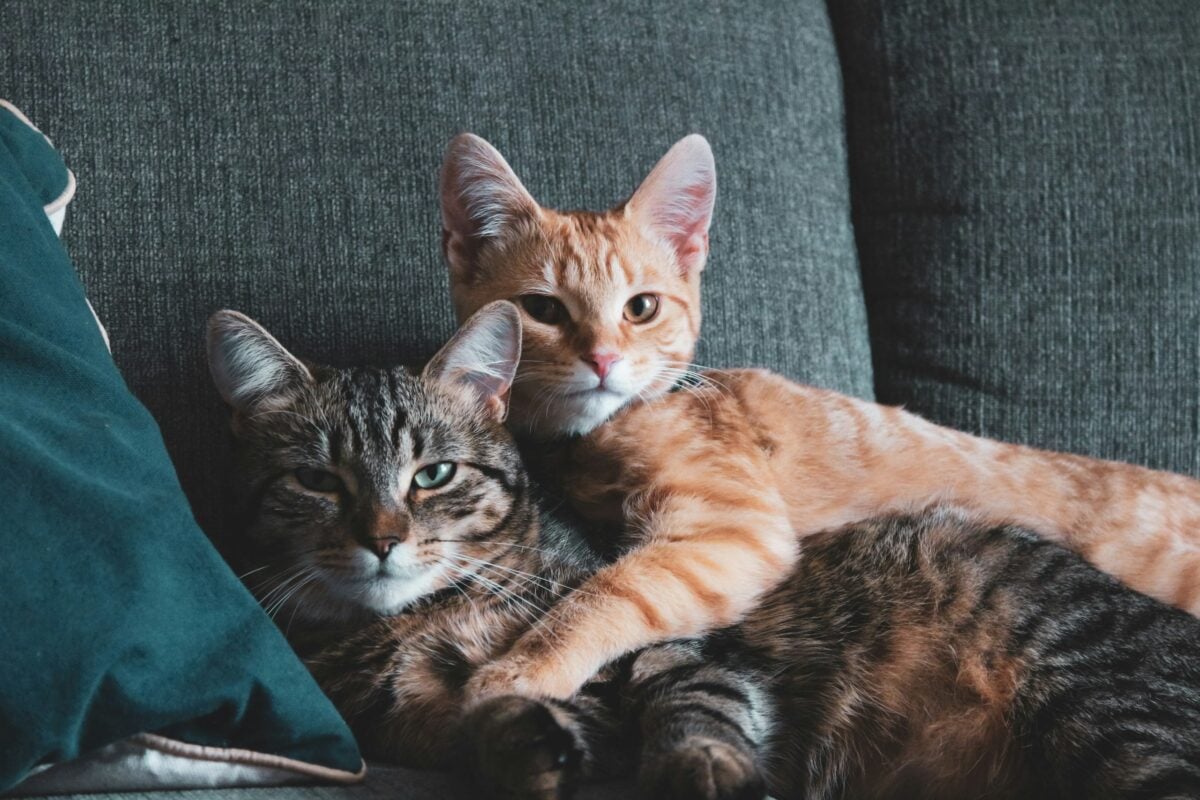
They May Be Looking for Extra Warmth
If your cat suddenly seems obsessed with warm places, your chair, your lap, heating vents, blankets, or sunny patches… they may simply be cold. This can be more common in senior cats, thin cats, short-haired cats, or cats living in cooler homes.
However, if they also seem weak, lethargic, withdrawn, or “not quite themselves,” it is worth checking in with your vet. Cats often hide signs of illness, and changes in energy, appetite, sociability, grooming, or litter box habits can be early warning signs.
They May Be Feeling Stressed or Insecure
Some cats become more attached to their humans when something in the home changes. A new pet, a move, a new baby, visitors, schedule changes, construction noise, or even rearranged furniture can make a cat seek extra comfort.
In that case, your spot may feel especially safe because it smells like you. If your cat is also hiding more, vocalizing more, acting jumpy, or following you from room to room, stress may be part of the picture. VCA notes that cats can become anxious or vocal when they feel insecure about changes in their environment.
They May Want More Attention
Sometimes a cat learns that taking your seat gets a reaction. You talk to them, pet them, pick them up, offer treats, or laugh. From their point of view, that is a pretty successful strategy.
This is not necessarily bad. It may simply mean your cat wants more interaction. But if the behavior becomes demanding, try giving them attention before they steal the seat: a short play session, a brushing session, or a cozy blanket nearby can help redirect the habit.
They May Be Uncomfortable or in Pain
A cat who suddenly changes their resting habits may be trying to find a position or location that feels better. Warm, soft places can be especially appealing to cats with stiffness, arthritis, injury, or general discomfort.
Pain in cats can be subtle. Watch for signs like hiding, reluctance to jump, reduced grooming, irritability, sleeping more, or pulling away from normal family interaction. Cats in pain may withdraw or become less engaged with their surroundings.
Call Your Vet If You Notice Other Changes
Your cat taking your chair is usually harmless. But contact your veterinarian if it comes with:
- Sudden clinginess or withdrawal
- Hiding more than usual
- Sleeping much more than normal
- Loss of appetite or increased thirst
- Weight loss
- Vomiting or diarrhea
- New vocalizing or restlessness
- Trouble jumping or moving normally
- Changes in litter box habits
One urgent note: if your cat is straining in the litter box, crying while trying to urinate, making repeated unsuccessful trips, acting lethargic, or refusing food, seek veterinary care right away. Urinary obstruction can be a medical emergency, especially in male cats.
The Bottom Line
A cat stealing your spot is usually just being a cat. It is warm, familiar, and smells like their favorite person.
But if your cat suddenly becomes much clingier, more withdrawn, more vocal, or generally different from their normal self, do not write it off as “just quirky cat behavior.” You know your cat’s habits best, and a noticeable change is always worth taking seriously.
How to Gently Reclaim Your Seat
So what should you do when your cat settles into your spot, and you genuinely need it back? Maybe you have to return to your desk, sit down for dinner, or crawl into bed without balancing on the very edge of the mattress.
The good news is that you do not need to make a big deal out of it. Most cats can be moved or redirected calmly, especially if you make the new option feel just as cozy.
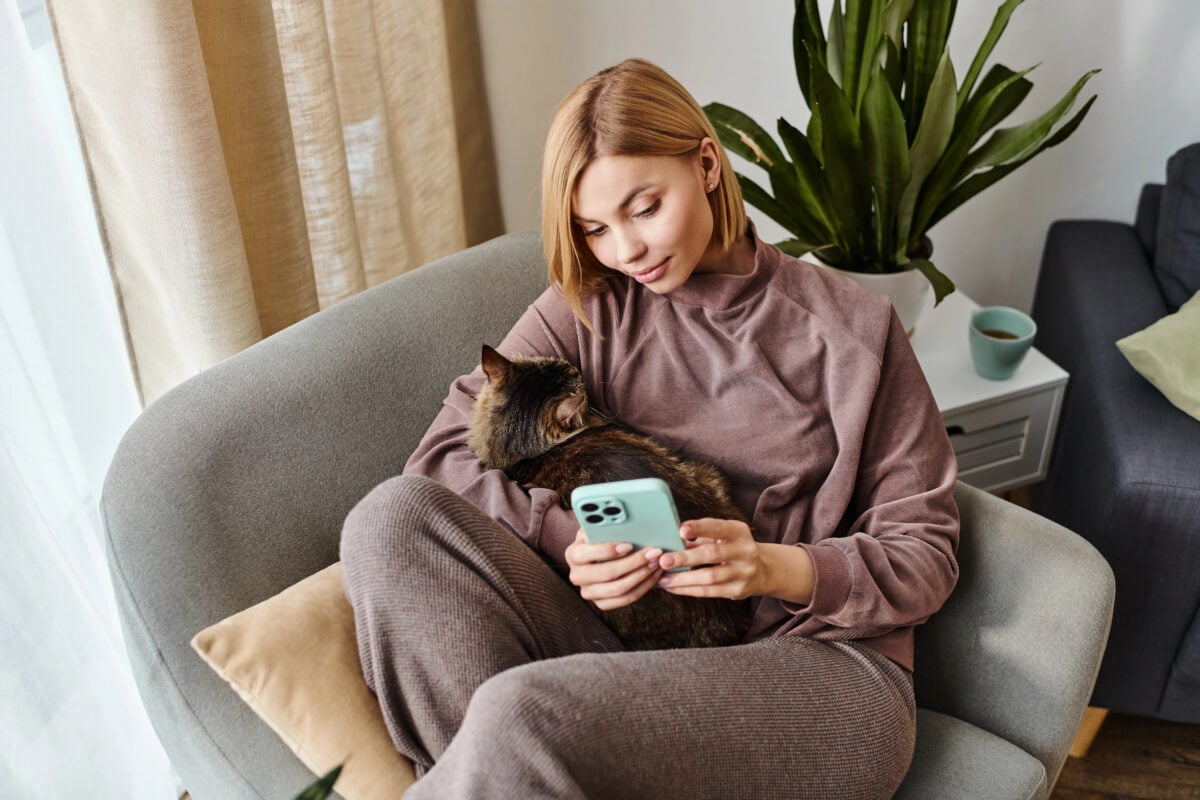
Here are a few gentle ways to reclaim your seat without startling your cat or turning it into a battle of wills.
1. Scoop Them Onto Your Lap
If your cat enjoys being handled, slide both hands gently under their body and lift them while supporting their chest and back end. Then place them on your lap as you sit down.
This works well because your cat still gets what they wanted in the first place: warmth, closeness, and your scent. You get your seat back, and your cat gets upgraded to the warmest spot in the house.
2. Offer a Cozy Alternative Nearby
Keep a soft blanket, small cushion, or cat bed next to your usual spot. To make it more appealing, place a worn T-shirt or familiar blanket on it so it smells like you.
You can also use a pet-safe heated bed or a warm water bottle wrapped in a towel, as long as it is not too hot. The goal is to give your cat another warm, safe place that feels just as comforting as the spot they stole.
3. Use Gentle Attention to Encourage Movement
Some cats will move on their own if you approach calmly and offer a few chin scratches, cheek rubs, or soft pets. As they stretch, stand up, or shift position, you can guide them to your lap or their nearby blanket.
Avoid pushing, shoving, or suddenly pulling the cushion out from under them. A calm approach keeps the interaction positive and helps your cat feel secure.
4. Redirect With a Treat or Toy
If your cat is food-motivated, call them over with a small treat or use a favorite toy to guide them away from the seat. This is especially useful if your cat does not like being picked up.
Just try not to turn it into an everyday routine, or your cat may quickly learn that stealing your chair leads to snacks. Cats are excellent little pattern detectives.
5. Share the Space When You Can
Sometimes the easiest solution is a compromise. Sit beside them, let them settle on your lap, or gently scoot in if there is room. Many cats are not trying to push you away; they simply want access to warmth and closeness.
Of course, if you need the space, it is perfectly fine to move them kindly. You are not hurting their feelings by reclaiming your own chair.
A Quick Reminder
If your cat keeps taking your spot, it is usually a compliment. They are drawn to your warmth, your familiar scent, and the comfort of a place that feels safe. In other words, your favorite seat has become one of their favorite places because it feels like you.
Have Some Empathy for the Little Thief
The next time you walk back into the room and find yourself forced to squeeze onto the absolute, precarious edge of your own couch cushion because your cat has colonized the center, take a deep breath and smile.
You aren’t being intentionally displaced, bullied, or disrespected by a creature that weighs less than a bag of groceries. You are simply being loved, trusted, and utilized as a premium-tier, highly efficient space heater. It is a minor tax to pay for the absolute privilege of sharing a home with a happy, healthy, and deeply attached feline companion.
More Cat Quirks That Actually Make Sense
Once you understand why your cat steals your spot, a lot of their other strange little habits start to seem less random. Cats have their own logic, even when that logic involves sitting on your laptop, knocking your water glass off the table, or gently biting you like they are sending a very confusing love note.
If you enjoy decoding your cat’s behavior, you may also like these guides:
- Why Does My Cat’s Butt Lift Up When I Pet Them? — a look at one of the most common, and awkward, feline reactions to affection.
- Why Is My Cat So Annoying? — for the moments when your cat’s “personality” feels a little too enthusiastic.
- Why Does My Cat Bite Me Gently? — helpful if your cat gives soft nips during petting, play, or cuddle time.
- Why Does My Cat Sit on Everything I’m Using? — the perfect companion read for cats who treat laptops, books, and laundry piles like reserved seating.
- Things Every Cat Owner Stops Questioning Eventually — a fun one for anyone who has fully accepted life with a tiny household weirdo.
- Why Do Cats Knock Things Over? — because sometimes the chaos really does have an explanation.
The more you learn about these behaviors, the easier it is to see them for what they usually are: instinct, communication, curiosity, comfort-seeking, and occasionally a little bit of classic cat drama.
Does Your Cat Steal Your Spot?
Now it’s your turn to share! How long does your cat wait before pulling off the perfect seat heist? What is your personal go-to move for getting your favorite spot back? Let us know your funniest stories in the comments below!