When you purchase through links on our site, we may earn a commission at no extra cost to you. Learn more.
The advice is a staple of the rescue world: “Adopt them in pairs!” It sounds like the ultimate feline BOGO deal. You get a double dose of serotonin, and your curtains (theoretically) get a break because the kittens are too busy wrestling to treat the drapes like Everest.
Table of Contents
But there is a fine line between “best friends” and that one human couple we all know, the ones who start dressing alike, finishing each other’s sentences, and eventually ghost the group chat because they’ve formed a private, two-person civilization.
In the cat world, this social isolation is known as littermate syndrome. It’s the moment “two is better than one” turns into “two is the only number that exists.” While we want our cats to be bonded, littermate syndrome occurs when that bond becomes so exclusive that the kittens fail to develop their own individual “cat-alities,” leaving you with a pair of co-dependent recluses who find the rest of the world (including you) entirely irrelevant.

I’m breaking down what littermate syndrome in cats actually is, whether it’s real or misunderstood, and how to raise two kittens the right way, so you get the benefits of a bonded pair without the hidden downsides.
Want our human-written content to rank above AI-generated garbage? Help us out by clicking this button!
What is Littermate Syndrome?
- Definition: A non-scientific term used by behaviorists to describe a set of behavioral issues that occur when two siblings (or similarly aged, unrelated animals) are raised together.
- The Core Issue: The pair bonds so intensely with each other that they fail to bond with their human owners or develop individual “personalities.”
Despite how commonly the term is used, littermate syndrome isn’t an official medical diagnosis. You won’t find it listed in veterinary textbooks or clinical manuals. Instead, it’s a behavioral label used by trainers and animal behaviorists to describe a cluster of patterns observed in animals raised closely together from a young age.
At its core, littermate syndrome revolves around over-attachment. Two kittens, whether they are biological siblings or simply raised together, form such a strong bond that they prioritize each other over everything else. While bonding is natural and even desirable, the problem arises when it replaces other essential developmental experiences.
Think of it like two children who only ever interact with each other and rarely engage with the outside world. They might feel safe and comfortable within their bubble, but their social skills, confidence, and adaptability can suffer.
The same principle applies to kittens. If their primary (or only) source of comfort and stimulation is each other, they may struggle to develop a balanced relationship with humans or unfamiliar environments.
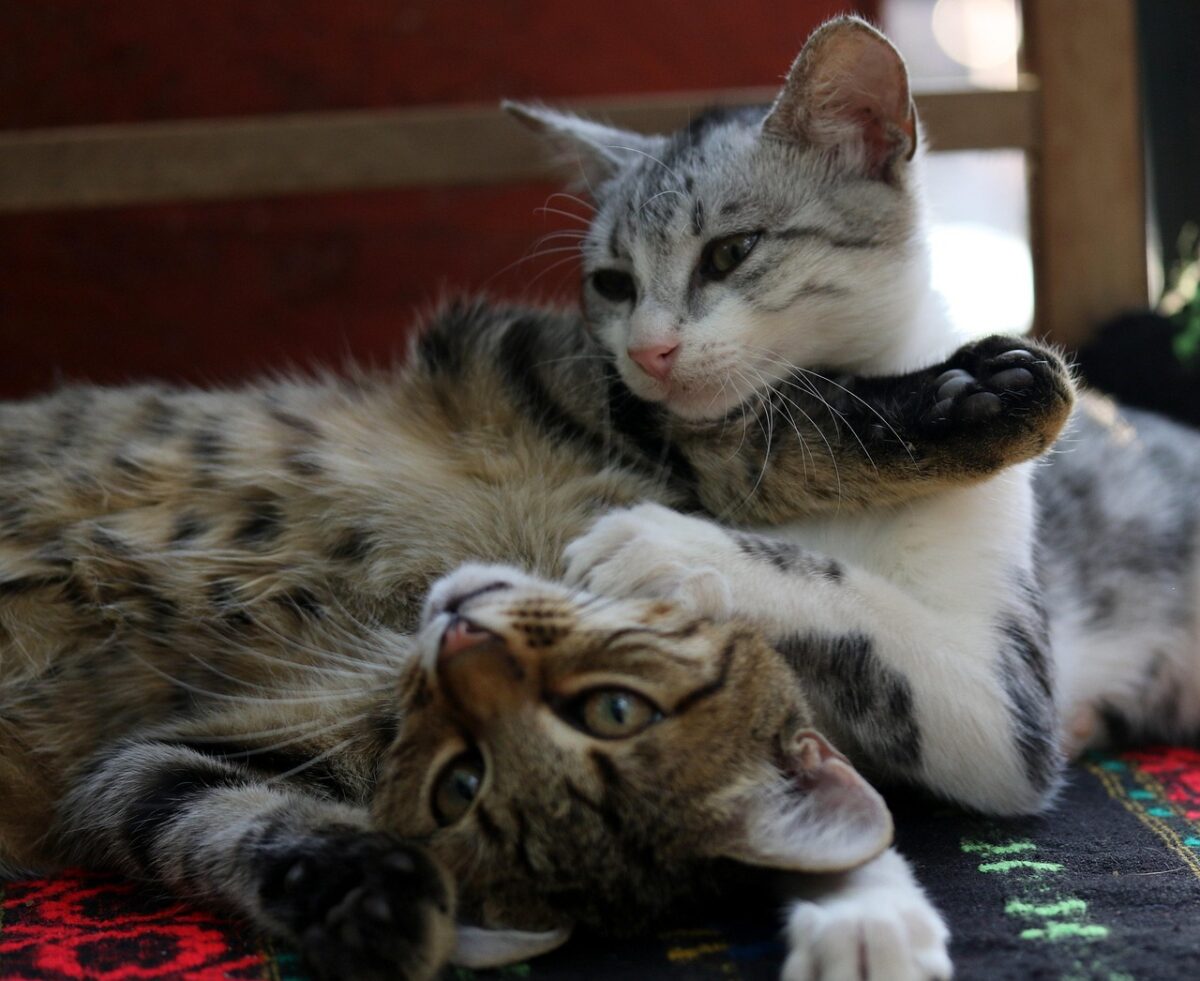
Core Behavioral Patterns Observed
When littermate syndrome develops, it often shows up through a combination of subtle and overt behaviors. These aren’t always present all at once, and their intensity can vary widely depending on the cats’ personalities and environment.
Some of the most commonly observed patterns include:
- Hyper-dependency: One or both cats rely heavily on the other for emotional security.
- Reduced human bonding: They may show limited interest in interacting with people.
- Heightened stress when separated: Even short separations can trigger anxiety or distress.
- Limited exploration: They stick close together instead of confidently exploring their surroundings.
What makes these behaviors tricky is that they can initially be mistaken for signs of a “perfect pair.” After all, isn’t it a good thing that they’re so attached? The answer lies in balance. Healthy bonds allow for independence, curiosity, and adaptability. Unhealthy ones create limitations that can affect a cat’s quality of life over time.
The Great Debate: Science or “Cattail” Myth?
If you ask a vet for a littermate syndrome test, you’ll likely get a blank stare. That’s because, technically, it’s not a clinical disease: it’s a behavioral pattern.
While there aren’t many peer-reviewed studies specifically tracking the long-term social metrics of sibling kittens versus solo ones, feline behaviorists have observed these patterns for decades. The debate usually splits into two camps:
- The “Myth” Camp: Argues that what we call littermate syndrome is actually just a combination of poor socialization and the natural temperament of the individual cats. If a kitten is naturally shy, they’ll hide behind a bolder sibling regardless of blood relation.
- The “Real Deal” Camp: Points out that cats are experts at “social learning.” If a kitten’s only source of feedback is another kitten of the exact same age and maturity level, they essentially live in an echo chamber. They never learn to “speak” to humans or older cats because they have a perfectly functional, private language with their sibling.
Can Cats Get Littermate Syndrome?
Adopting two kittens together can be adorable, but it also raises an important question: can cats get littermate syndrome? While the term is most commonly used for dogs, some cats can develop an unhealthy level of dependence on a sibling or companion. The signs are often more subtle, which makes them easy to miss at first.

Cats and Dogs Are Not the Same
Littermate syndrome is usually talked about with dogs, and that makes sense.
Dogs are pack animals. They naturally look to a group for structure, cooperation, and social cues. So when two puppies become too attached to each other, that bond can get in the way of their relationship with people. They may ignore training, struggle with independence, or have a harder time bonding with humans.
Cats are different.
Cats are often called solitary hunters but social sleepers. In other words, they can enjoy companionship, but they are not wired for the same kind of group structure as dogs.
That means littermate syndrome in cats usually does not look like the classic canine version.
Instead of completely tuning out humans or refusing to engage, cats are more likely to show subtle signs that their development is off balance.

In Cats, it’s Often More Subtle
Feline littermate syndrome is usually less obvious than it is in dogs.
A bonded pair of kittens may still be affectionate with people. They may still play, eat, and act normally in many situations. But underneath that, their confidence, independence, and adaptability may not develop evenly.
So the issue is not usually a total emotional shutdown.
It is more about imbalanced development.
Codependency vs. Healthy Socialization
In cats, the line between healthy bonding and problematic codependency can be surprisingly thin. Two kittens playing, grooming, and sleeping together is entirely normal. In fact, it’s beneficial in many ways. But when that bond becomes their sole source of comfort and stimulation, it can start to limit their growth.
A well-socialized cat should feel comfortable:
- Interacting with humans independently
- Exploring new environments without excessive fear
- Being alone for short periods without distress
When littermate syndrome creeps in, these abilities may weaken. One cat might become bold and adventurous, while the other becomes hesitant and withdrawn. Alternatively, both cats might become overly cautious, relying on each other as a safety net instead of building their own confidence.
This distinction is important because it shifts the conversation from fear-based avoidance (“Don’t adopt two kittens!”) to informed awareness. The goal isn’t to prevent bonding… It’s to ensure that bonding doesn’t replace individual growth.
How to Tell If Two Cats Are Bonded (Video)
Not every cuddle pile is a crisis. Sometimes two cats are just besties with excellent nap coordination.
This video breaks down the sweet, normal signs of a bonded cat pair, so you can better tell the difference between healthy companionship and a relationship that may be tipping into codependency.
Identifying the Signs in Cats
The signs of littermate syndrome in cats are often subtle, which makes them easy to overlook at first. What seems like a sweet, close bond can sometimes cross the line into unhealthy dependence.
4 Signs Your Kittens Are Too Dependent on Each Other
Wondering whether your kittens are just closely bonded or becoming too dependent on each other? These are four signs that the relationship may be limiting their confidence, flexibility, and social development.
- The “Shadow” Dynamic: If one kitten only approaches for treats, play, or affection after the other cat has already checked things out, that is a red flag. What looks like patience may actually be a lack of independent confidence.
- The Vet-Visit Meltdown: A solo car ride can reveal a lot. A well-adjusted cat may dislike the trip itself, but a deeply dependent cat may spiral when their sibling is not there, showing extreme distress beyond ordinary stress.
- Limited Human Bonding: If your cats mainly interact with each other and only come to you for food, their social world may be too closed off. They should see humans as a source of comfort, play, and trust, not just meals.
- Bullying or Fights at Maturity: Some overly bonded kittens seem perfect together early on, then start struggling as they mature. Between 12 and 24 months, that dependence can turn into tension, bullying, or sudden aggression.
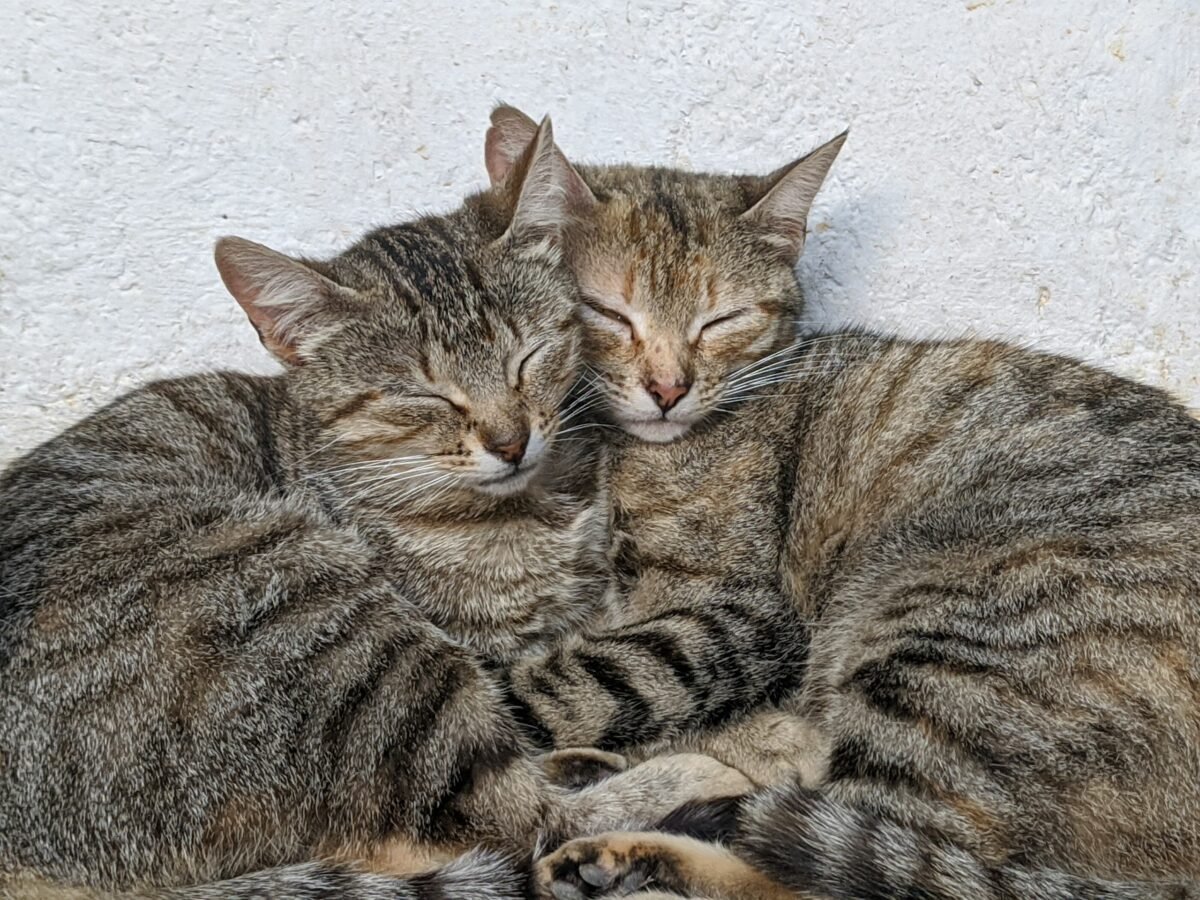
1. Separation Anxiety, Even in Short Bursts
One of the earliest red flags is how cats react when they are apart, even briefly.
Think about something simple, like a vet visit. One cat leaves, and the other stays home.
In a healthy pair, you might see mild curiosity or a little restlessness before they settle down. In a more dependent pair, the reaction can be much more intense.
- Loud, persistent vocalizing
- Pacing or searching behavior
- Refusing food
- Hiding as if something is seriously wrong
Here is what makes this easy to miss: most owners do not separate their cats very often. Because of that, the problem can stay hidden for a long time.

But without short, intentional periods apart, cats do not learn how to self-soothe or feel secure on their own. Over time, even minor disruptions can start to feel like major stress events.
And this is not just about behavior. Chronic stress in cats can also show up physically, sometimes contributing to things like digestive upset, overgrooming, litter box issues, and a weakened immune response.
When a cat’s entire sense of comfort depends on another cat, even a temporary separation can feel overwhelming.
2. The “Shadow Cat” Effect
Sometimes the signs are quieter, but just as important.
In some pairs, one cat becomes confident, curious, and outgoing while the other slowly fades into the background. This is sometimes called the “shadow cat” effect.
The more dependent cat may:
- Avoid people unless the other cat is nearby
- Hang back during feeding
- Ignore toys unless the sibling engages first
- Disappear when guests arrive
At first, this can look like nothing more than a personality difference. But over time, it can point to a bigger problem: a lack of independent confidence.
These cats are not just bonded. They are relying on the other cat as a buffer from the world.
As they grow up, that dynamic can also change. The more confident cat may become less tolerant, while the “shadow” cat may become more withdrawn or suddenly reactive. That is often when the issue becomes harder to ignore.

3. Slower Learning and Development
Kittens are naturally curious. They learn by exploring, testing boundaries, and interacting with the world around them.
But when two kittens become overly focused on each other, that learning process can get sidetracked.
Instead of engaging with people or their environment, they may stay in a constant loop of wrestling, chasing, and interacting mostly with each other.
Over time, that can make it harder for them to develop important skills, including:
- Responding to their names
- Using scratching posts consistently
- Adapting to routines
- Building confidence in new situations
It is not that they cannot learn. It is that they are often less motivated to engage with humans when their sibling is already meeting all of their social and stimulation needs.
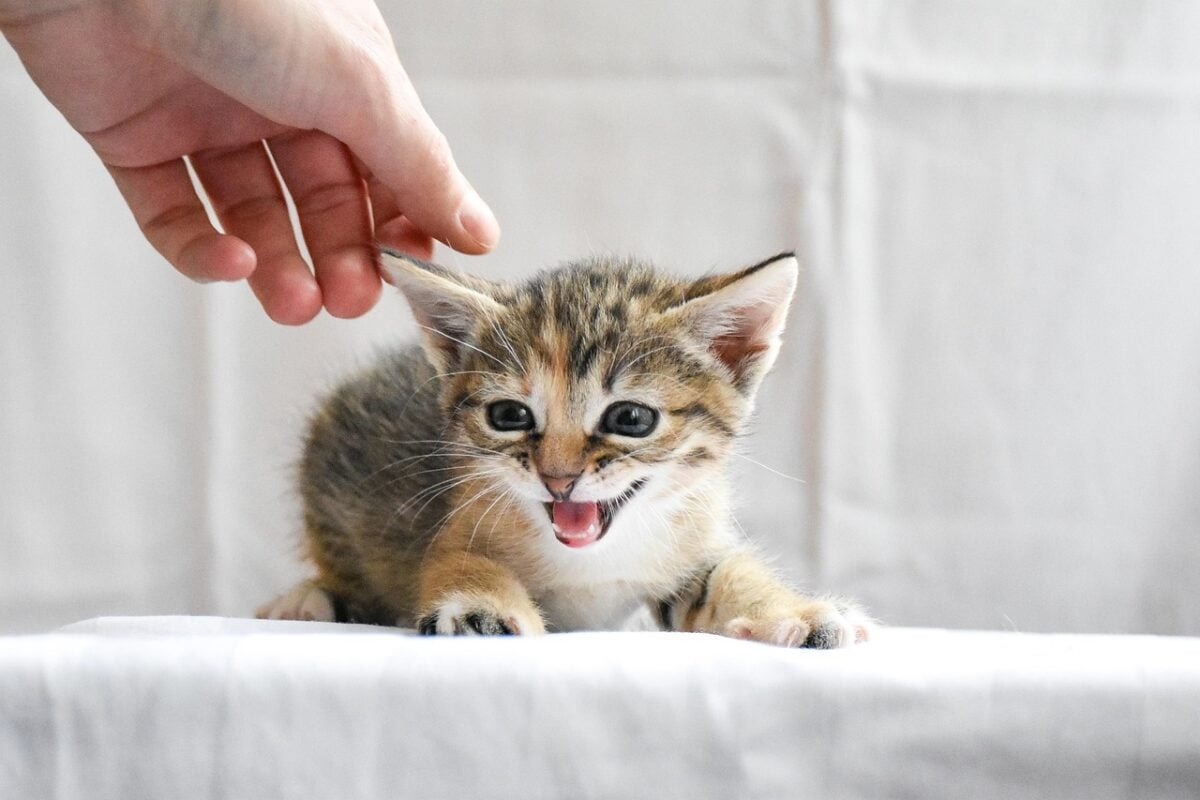
There can also be a ripple effect. If one cat develops a bad habit, such as anxiety-related litter box issues or stress behaviors, the other may copy it.
And because the cats are always together, individual needs can get overlooked. One kitten may need more reassurance, structure, or enrichment, but that need gets masked by the pair dynamic.
4. Aggression That Shows Up Later
This is the part that catches many owners off guard.
As kittens, the pair may seem perfectly matched. They cuddle, groom each other, and play constantly. Then, as they get older, the dynamic changes.
Cat Myth or Reality?
- Myth: If bonded kittens get along early in life, they will always stay that way.
- Fact: Some overly dependent pairs do not show problems until social maturity, when tension, bullying, or aggression begins to appear.
Between about 1 and 2 years old, some cats start showing signs of tension, including:
That sudden shift can feel confusing. How do two inseparable kittens become adversaries?

As cats mature, they naturally develop stronger boundaries, territory preferences, and personal space needs. In an overly dependent pair, those boundaries may never have developed in a healthy way.
So instead of moving smoothly into adulthood, the relationship starts to strain. In some cases, one cat becomes dominant and begins bullying the other. In other cases, both cats become reactive and frustrated.
The big takeaway is this: a close bond in kittenhood does not always guarantee long-term harmony. For that bond to stay healthy, each cat also needs to develop confidence and independence as an individual.
That is why early independence matters: it helps bonded cats handle change, maturity, and temporary separation without falling apart.
When to Get Help:
If either cat stops eating, hides constantly, overgrooms, has litter box changes, or the pair starts fighting, it is time to call your vet. Sudden behavior changes can have medical causes, and ongoing anxiety or aggression may need help from a certified cat behaviorist.
The Flip Side: Single Kitten Syndrome (SKS)
To understand littermate syndrome, it helps to compare it with single kitten syndrome. One is about too much dependence on another cat; the other is about too little feline social interaction.
If littermate syndrome is a “closed-circuit” relationship, single kitten syndrome is the opposite problem. A solo kitten may miss out on early “cat manners,” like learning bite control, appropriate play, and how to read other cats.
That can lead to rough play with humans, boredom, attention-seeking, or destructive behavior. This is why many shelters encourage pair adoptions, though the real goal is balance, not simply one kitten versus two.

Here’s a quick comparison chart between littermate syndrome and single kitten syndrome:
| Single Kitten Syndrome | Littermate Syndrome | |
|---|---|---|
| Main issue | Too little feline socialization | Too much dependence on one cat |
| Typical vibe | “I never learned how to be a cat.” | “I only feel safe with my sibling.” |
| Human interaction | Often overly attached to people | May be less confident engaging alone |
| Common behavior | Rough play, biting, boredom, or demanding attention | Anxiety, clinginess, withdrawal, or fear when separated |
| Biggest trigger | Lack of stimulation or cat social outlets | Separation from the sibling or bonded cat |
A single kitten often treats humans as their primary playmate, which can lead to behaviors like biting, scratching, or excessive attention-seeking. In contrast, kittens with littermate syndrome may barely engage with humans at all, preferring to stay within their two-cat bubble.
Neither scenario is inherently “better” or “worse.” They simply represent different imbalances. The ideal outcome lies somewhere in the middle: a cat that enjoys companionship but can also function independently and interact confidently with humans.
Does Littermate Syndrome Affect Male or Female Cats More?
There is no clear evidence that littermate syndrome affects male cats more than female cats, or vice versa. In most cases, the bigger factors are personality, environment, socialization, and how the kittens are raised together.
That said, sex can still influence behavior in other ways. Male and female cats may mature differently, show different social tendencies, or create slightly different household dynamics depending on their personalities and whether they have been spayed or neutered.
So while littermate syndrome is not necessarily a “male cat problem” or a “female cat problem,” it is still smart to think about sex-based differences when choosing a pair of kittens. If you are weighing the pros and cons of each, this guide on male cats vs. female cats can help you understand how temperament and behavior may vary.
Littermate Syndrome Prevention and Management Strategies
The good news is that littermate syndrome in cats is not inevitable. In many cases, the biggest difference comes down to how the kittens are raised day to day. The goal is not to stop them from bonding. The goal is to make sure that bond does not replace confidence, curiosity, and independence.
In other words, you want two cats who enjoy each other’s company without needing constant togetherness to feel secure.
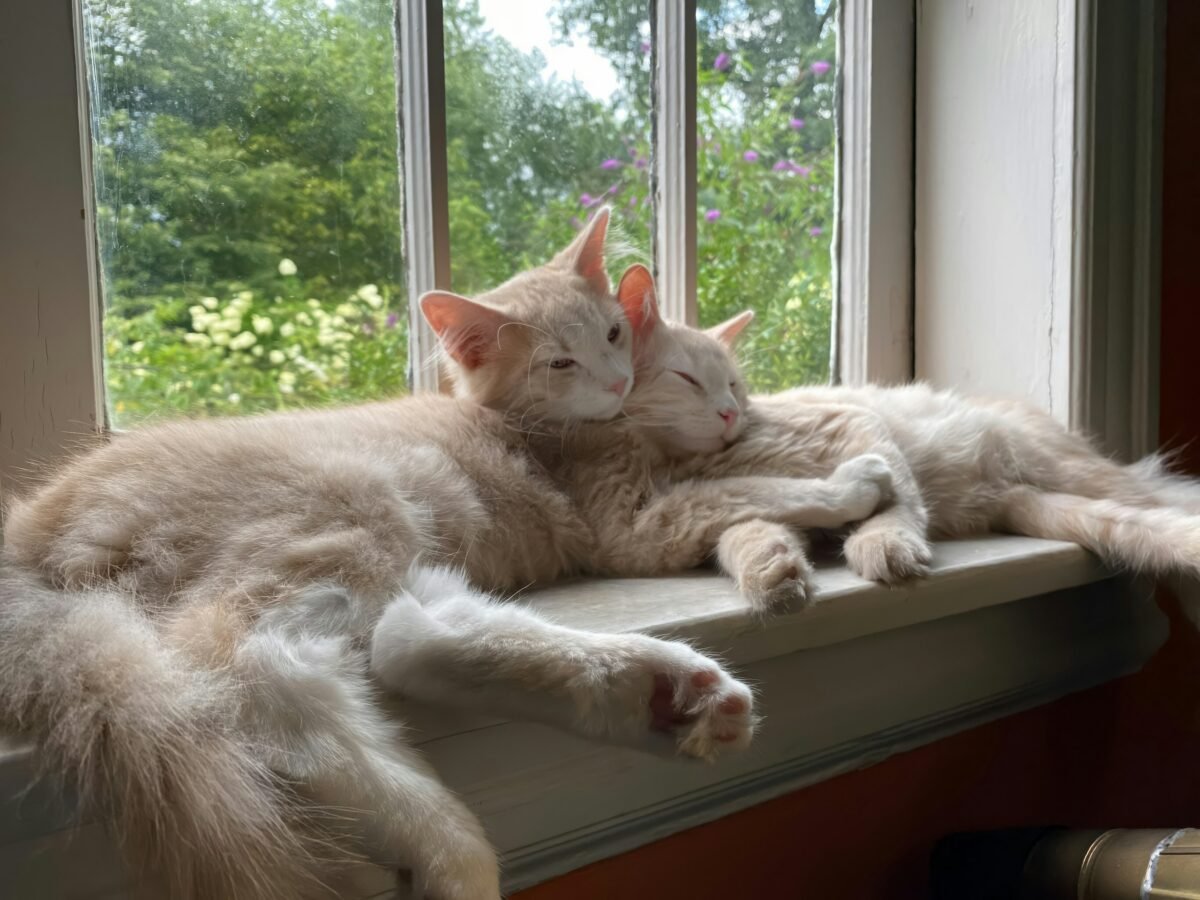
1. Break the “Closed Loop” Early
Bonded Doesn’t Mean Balanced
- Myth: If two kittens are happy together, there is nothing else you need to do.
- Fact: A close bond is great, but kittens still need solo experiences, one-on-one attention, and chances to build confidence on their own.
If there is one prevention strategy that matters most, it is intentionally giving each kitten time apart from the other. That may sound strange at first, especially if you adopted two cats so they could keep each other company. But companionship should support their development, not become their entire emotional foundation.
That lines up with guidance from Ohio State University’s Indoor Pet Initiative, which emphasizes that environmental stressors and lack of appropriate outlets can affect feline behavior and well-being.
The real risk with littermate syndrome is not bonding; it is when two kittens become each other’s entire world.
When that happens, they stop looking outward for feedback, comfort, or curiosity. Everything runs through the other cat first.
You can interrupt that pattern early by creating small moments where each kitten has to engage with life on their own.
For example:
- Instead of waving a wand toy for both kittens, close the door and play with one kitten at a time. You will often notice something surprising: one cat is more curious, the other more hesitant.
- Call one kitten by name and reward eye contact. If they look to their sibling first, wait it out. You are teaching them to respond directly to you.
- Let one kitten explore a new room first while the other stays behind. Watch how differently each cat approaches something unfamiliar.
These are small shifts, but they teach a big lesson: confidence does not have to come from the other cat.
2. Design the Environment to Reduce Reliance
Another major part of prevention is making sure the home environment supports independence instead of competition. Even cats that seem extremely bonded can become stressed when they have to share too much. That is why many behavior experts recommend the n+1 rule: if you have two cats, you should aim for three of each major resource.

The n+1 Rule, Explained
A simple rule for multi-cat homes: provide one more resource than the number of cats you have. For two cats, that means three litter boxes, three scratching spots, and extra places to eat, drink, and relax.
Why does it matter? Because more options mean less tension, less guarding, and a better chance for each cat to feel secure on their own.
Many owners accidentally reinforce dependency just through how the home is set up.
If both cats eat side by side, sleep in the same spot, and share every resource, their entire routine becomes synchronized. That can quietly turn into reliance.
Instead, think about creating options, not just duplicates.
For example:
- Instead of two food bowls next to each other, place them in different areas so each cat eats independently.
- Provide multiple litter box setups to avoid competition.
- Offer multiple resting spots in different parts of the home, not just one shared “favorite” bed.
- Use vertical space, cat trees, climbing shelves, or window perches, so cats can separate naturally without feeling isolated.
- Offer fun hiding spots (cardboard boxes are a huge hit)
At first, that can sound excessive. But in practice, it gives each cat more freedom, reduces tension, and makes it easier for them to function independently. When resources are plentiful, there is less pressure to guard, compete, or rely on each other for access and comfort.
This is why the n+1 rule works so well. It does not just prevent conflict; it gives each cat the ability to make independent choices throughout the day.
And those small choices are what build confidence.
3. Teach Separation as a Normal Part of Life
Space Can Be Healthy
- Myth: Separating bonded cats will hurt their relationship.
- Fact: Low-stress separation can build resilience and may even reduce tension over time.
For many cats, separation only happens when something stressful is already going on, like a vet visit or travel. That is why it feels so intense.
The goal is to make separation feel completely ordinary.
Think of it less like “training” and more like quietly changing the routine.
For example:
- Put one kitten in another room with a small meal while the other stays with you. No big moment, just part of the day.
- Take one cat for a short car ride while the other naps at home. Keep it calm and uneventful.
- Close a door for 10 minutes while you play with one cat, then switch.
At first, you might hear some protest. That is normal. What matters is that the experience stays calm and predictable.
Over time, something shifts. The cats stop reacting to separation as if something is wrong—and start treating it as just another part of life.
That is the goal: not tolerance, but resilience.
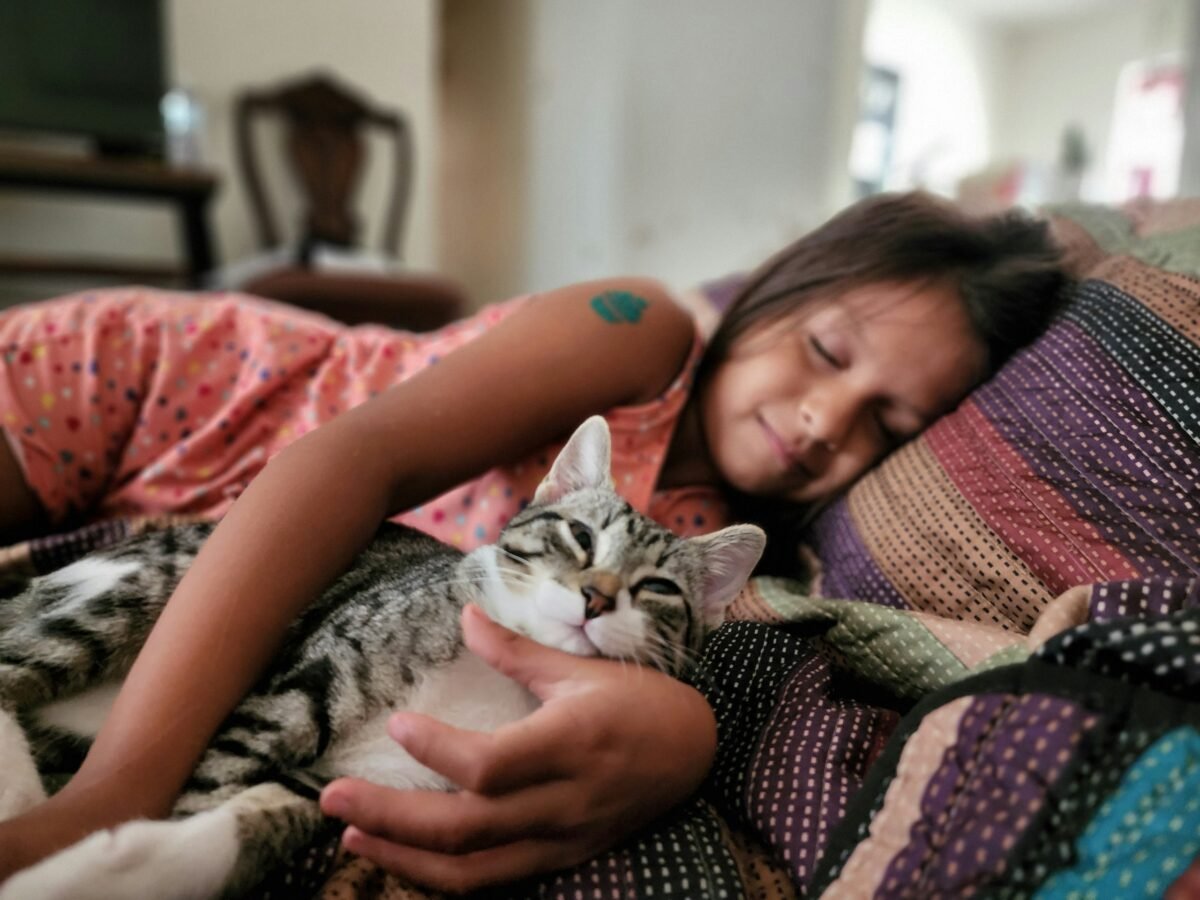
Key Insight: You are not trying to make your cats less bonded. You are making sure their bond is strong, not fragile. A healthy pair can be apart without stress, and together without dependency.
Helpful enrichment can include:
- puzzle feeders and foraging toys
- interactive toys that encourage solo play
A more dynamic environment encourages each cat to explore, problem-solve, and settle independently, which supports healthier long-term development.
3 Kitten Success Tips: Raising Confident, Well-Adjusted Cats
Bringing home two kittens is fun, but the early months shape how confident, adaptable, and independent they become.
The goal is simple: let them bond, but not at the expense of individual growth.
Quick mindset shift: a close bond is great, but each kitten still needs space to develop as their own cat.
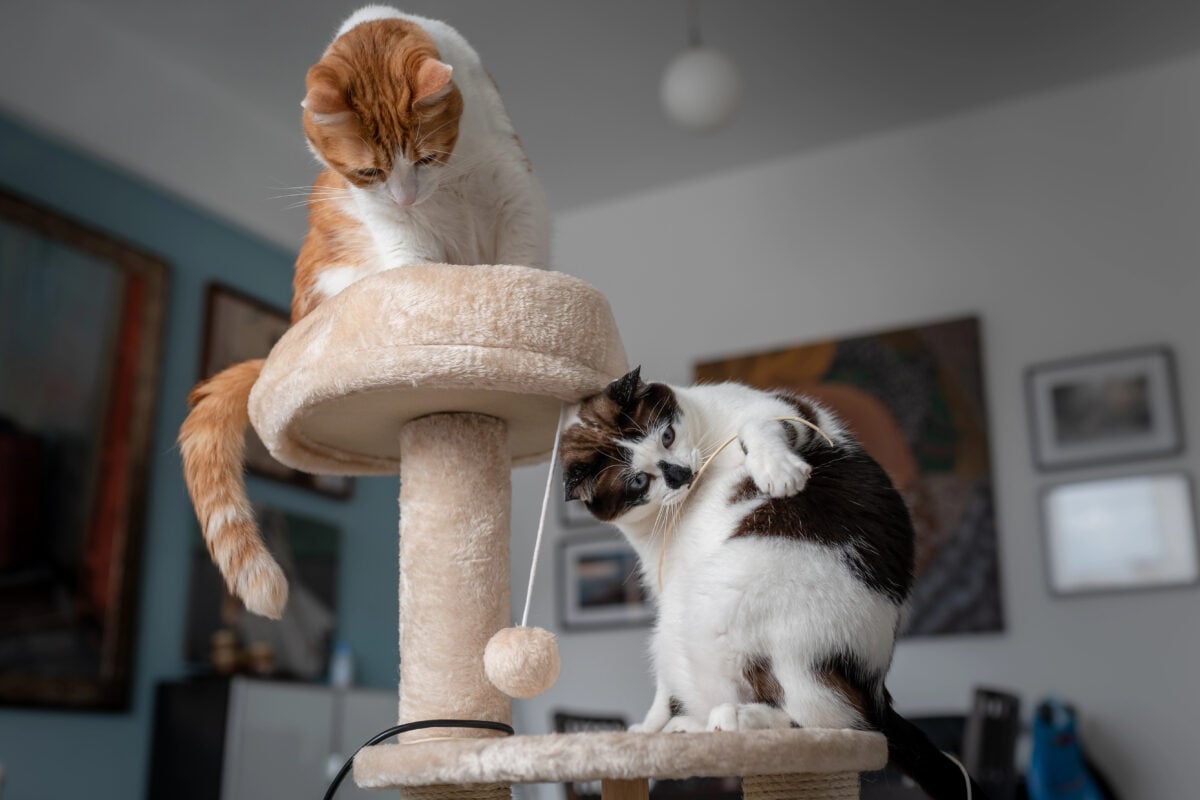
1. Focus on Balance, Not Just Bonding
Kittens do best with a mix of structure and variety. Regular meals, playtime, and rest create a sense of security, while small changes, like occasional solo play or separate feeding, build flexibility and independence.
Just as important is one-on-one time. When kittens are always together, they naturally prioritize each other. Short, individual interactions help each cat build confidence with you and prevent one from fading into the background.
- Keep solo sessions short and positive
- Use their names often during one-on-one time
- Make sure both kittens get individual attention
2. Encourage Independence Early
Bonded kittens often stick to what feels familiar, each other. Giving them chances to explore, play, and experience new things on their own helps build real confidence.
This also applies to separation. If kittens never spend time apart, even short separations can feel overwhelming later.
- Introduce short, low-stress time apart
- Pair separation with treats or play
- Gradually build comfort with being alone
Over time, this teaches them that being alone is safe, not something to fear.
3. Watch for Individual Needs
Even littermates can be very different. One may be bold and outgoing, while the other is more cautious.
Recognizing those differences helps you support each kitten appropriately and prevents imbalance in the relationship.
The sweet spot: two kittens who are bonded, but still confident on their own.
7 Big Mistakes to Avoid When Raising Two Kittens
Most problems do not come from doing something wrong on purpose. They usually come from small habits that feel harmless, but quietly encourage dependency over time.
- Doing everything together: Feed, play, cuddle, and train them separately sometimes, so they learn how to function on their own.
- Assuming a strong bond means everything is fine: A close bond is healthy, but watch for one kitten always leading while the other hangs back.
- Treating them like one unit: Even littermates have different personalities, confidence levels, and needs.
- Letting them entertain each other completely: Their sibling should not be their only source of play, stimulation, or comfort.
- Skipping separation practice: Short, positive time apart now can prevent greater stress later during vet visits or travel.
- Making them share too much: Extra litter boxes, food stations, scratching spots, and resting areas reduce tension.
- Waiting until there is a problem: Prevention is much easier than trying to undo anxiety, withdrawal, or aggression later.
Bottom line: A few intentional habits can make the difference between two kittens who are dependent on each other and two cats who are bonded, confident, and well-adjusted.
Two kittens can absolutely grow up happy, bonded, and well-adjusted. The key is giving them chances to build confidence separately, not just together.

Frequently Asked Questions
Because apparently even kitten friendships come with fine print, these are the questions that tend to come up most.
Is it bad to adopt two kittens from the same litter?
Adopting two kittens can work very well, especially since they provide companionship and stimulation for each other. The difference comes down to how they are raised. When each kitten gets individual attention, solo experiences, and opportunities to build confidence, a pair can thrive without becoming overly dependent.
At what age does littermate syndrome usually show up?
Early signs can appear during kittenhood but are often subtle and easy to overlook. More noticeable changes tend to happen around social maturity, usually between one and two years old, when differences in confidence, behavior, or tension may start to surface.
Can littermate syndrome be reversed?
Improvement is very possible with consistent changes to routine and environment. Increasing solo time, adding one-on-one interaction, and encouraging independent experiences can help cats build confidence over time. Earlier intervention typically leads to better results.
Do all bonded cats have littermate syndrome?
A strong bond between cats is normal and often beneficial. Littermate syndrome only applies when that bond starts limiting independence, confidence, or healthy behavior. Most bonded pairs simply enjoy each other’s company without those issues.
Can littermate syndrome affect more than two cats?
Dependency patterns can develop in larger groups as well, especially when certain cats rely heavily on specific companions. In multi-cat homes, this may show up as smaller “mini-bonds,” hesitation to act independently, or stress when separated from preferred companions.
- Reluctance to explore alone
- Stress when separated from specific cats
- Shifting tension as they mature
Even in larger groups, the same principle applies: each cat benefits from individual attention, space, and confidence-building experiences.
Multi-Cat Tip: In homes with three or more cats, watch for smaller pairings within the group. One cat may depend heavily on a specific companion, even if the overall dynamic seems social.
Should I separate my cats if I notice signs?
Gradual, low-stress separation tends to be more effective than full separation. Short periods apart, one-on-one play, and individual routines help build independence without damaging the bond between them.
The goal is not to break the relationship; it is to make sure each cat feels secure both together and on their own.
Still have questions? Every pair is different. If you are seeing something specific or are not sure what is normal, drop your question in the comments. I read them all and try to help where I can.
Learn More About Cat Behavior
If this article made your cats seem a little more suspiciously codependent, welcome to the club.
For multi-cat homes, one helpful next read is Do Cats Mate With Their Siblings?. It answers a question many owners do not think to ask until much later, and it is especially important if you are raising littermates or planning to keep sibling cats together.
Another smart follow-up is Can Cats Share a Litter Box?. Everyday setup choices like litter box access can affect stress, confidence, and harmony more than people realize, particularly in homes with more than one cat.
If you want to better understand your cat on a more personal level, How to Tell If Your Cat Loves You breaks down the quieter signs of feline affection. If your cats are deeply bonded to you as well, this guide on whether cats can be emotional support animals adds another layer to understanding their role in your life.
The more you understand your cat’s world, the easier it becomes to build trust, reduce stress, and raise a happier, more confident companion.
Tell Me About Your Tiny Weirdos
Have a bonded pair at home? Seen any shadow-cat behavior, clinginess, or unexpected sibling drama? Drop your experience in the comments. Sweet best-friend behavior, weird clinginess, tiny power struggles… I want to hear all of it.