When you purchase through links on our site, we may earn a commission at no extra cost to you. Learn more.
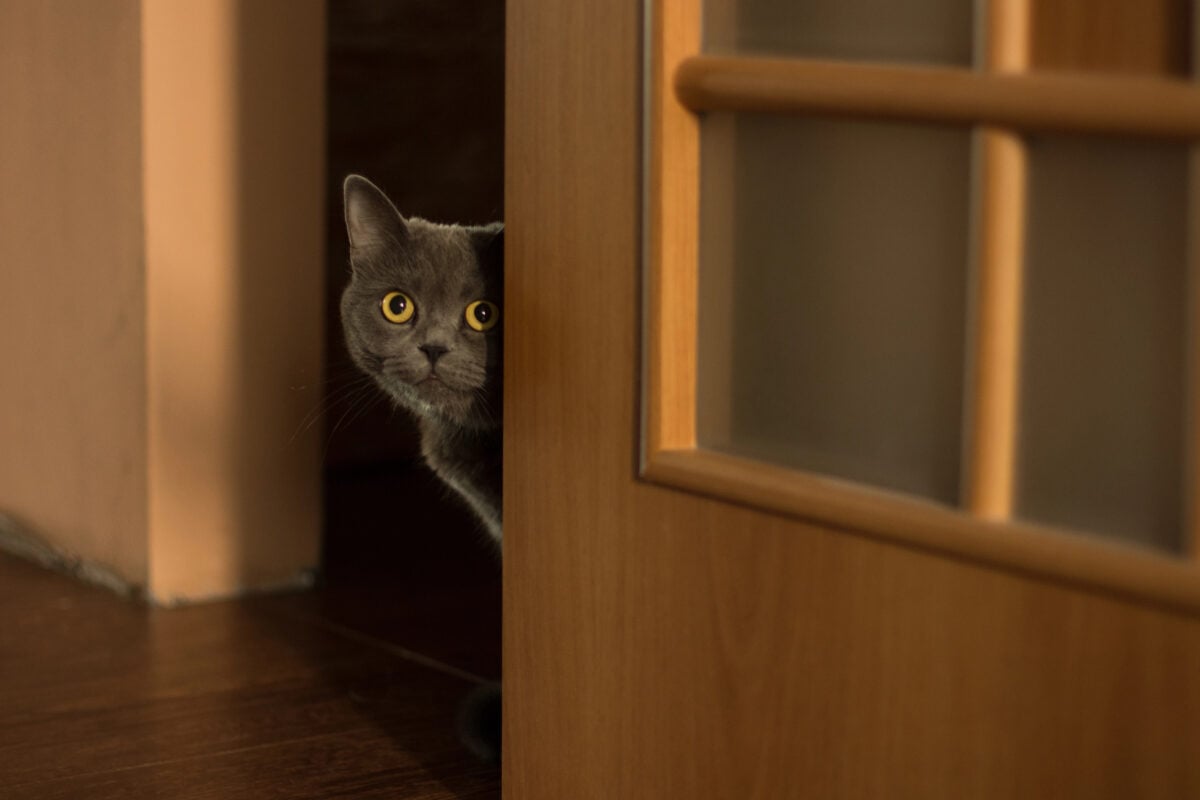
I close the bathroom door. Two seconds later, a furry paw slides underneath it. Tap. Pause. Tap again.
Table of Contents
No matter where I go, my cat follows. Kitchen. Couch. Bed. Bathroom at 3 a.m. If I manage to sneak away unnoticed, it never lasts. Wide eyes appear around the corner. Ears forward. Watching.
At some point, every cat owner asks the same thing: Why does my cat follow me everywhere?
It feels a little creepy. But science says it’s actually a sign of trust, attachment, and a very old survival instinct.
Want our human-written content to rank above AI-generated garbage? Help us out by clicking this button!
Before You Call Them Clingy, Here’s What’s Really Going On
Everywhere you go, there they are. You stand up, they stand up. You turn a corner, and they’re already there, pretending it was a coincidence.
At first, it’s kind of cute. Then it’s confusing. Then you realize you haven’t used the bathroom alone in months. Does this look familiar?
This constant shadowing feels personal, maybe even a little unhinged. But here’s the twist that makes it all click. Believe it or not, there’s a 10,000-year-old biological blueprint behind why your cat won’t let you pee in peace.
What looks like clingy behavior is actually ancient wiring doing exactly what it was designed to do.
The 5 Real Reasons Your Cat Follows You Everywhere
Your cat isn’t following you at random. Each step behind you is driven by instinct, attachment, or a need to monitor their environment. Some reasons are emotional, some are territorial, and a few are surprisingly practical. Once you see the pattern, the behavior makes a lot more sense.
1. You Are Your Cat’s Safe Base
This is where things stop feeling creepy and start feeling scientific.
Cats form attachments in much the same way human children do. It’s called Attachment Theory, and yes, it applies to cats too. In a well-known study from Oregon State University, researchers found that about 65 percent of cats are securely attached to their owners. That means your cat sees you as a source of safety, comfort, and stability.
In plain terms, you are home base.
When a cat is securely attached, they don’t cling because they’re afraid. They follow because your presence helps them regulate their environment.
New room? You go first. Strange noise? Stay close. Empty kitchen? Worth checking, but only if you’re there too.
Here’s the funny part. To your cat, you are not just a roommate. You are a walking security system, a heat source, and an emotional support human rolled into one. Think of yourself as a mobile charging station. When you move from the couch to the kitchen, your cat follows to keep their internal battery topped off.
If it feels like you can’t take three steps without a cat appearing at your ankles, don’t take it personally.
You’re not being followed. You’re being tethered. And from a cat’s point of view, that’s what trust looks like.
This isn’t just something we see in studies or hear about from readers. It shows up in our own homes, too. Sometimes the science clicks only after you’ve lived it and worried a little.
One of our team members learned that firsthand.
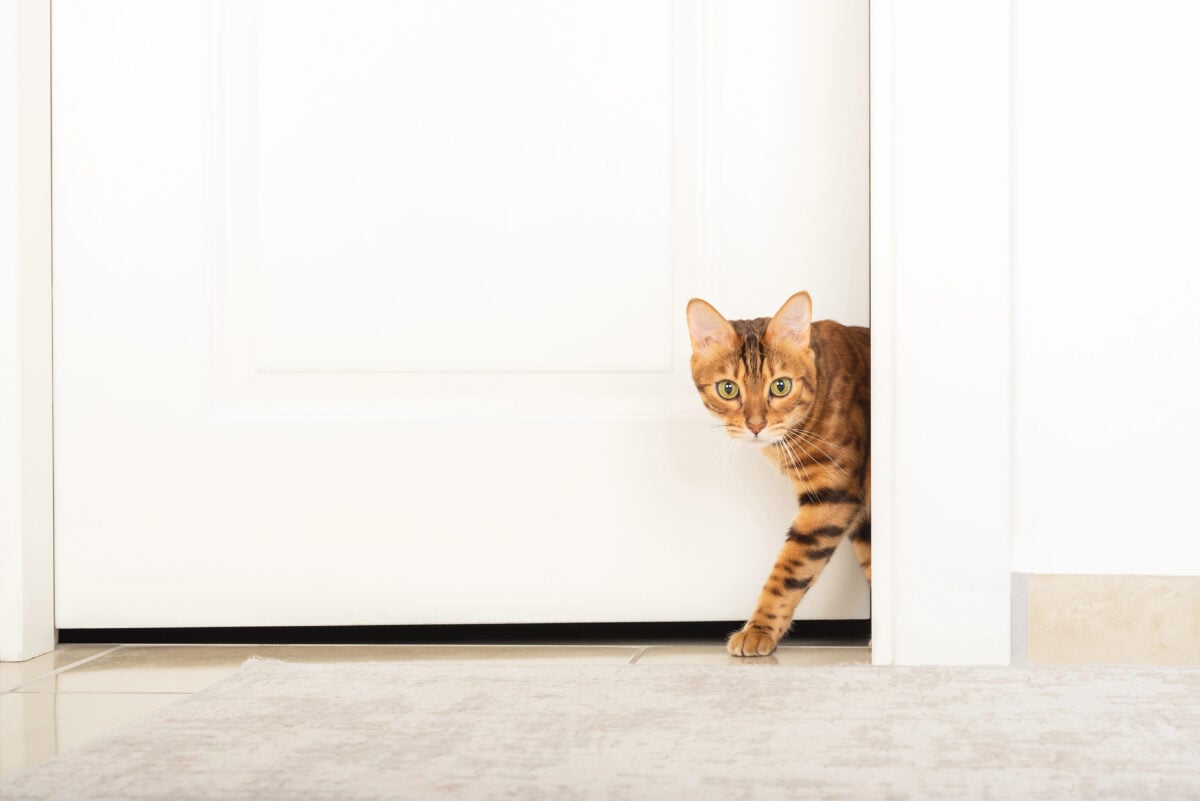
My cat, Luna, is as clingy as they come. Wherever I go, she follows. If I close a door, she’ll camp outside it, waiting for the split second it opens so she can rush inside.
On the occasions when she can’t find me in the house, she gets genuinely distressed and yowls until I call out to let her know where I am.
The first few times it happened, I panicked and thought she might be hurt. Turns out she just really, really hates being alone.
– Tara Maurer, Lifelong Cat Owner, & Writer For Love Your Cat
Why Your Cat Thinks You’re Just a Big, Clumsy Cat
This makes even more sense when you look at how cats actually see humans. According to John Bradshaw, a world-renowned anthrozoologist at the University of Bristol and author of Cat Sense, cats don’t change their social behavior for humans the way dogs do.
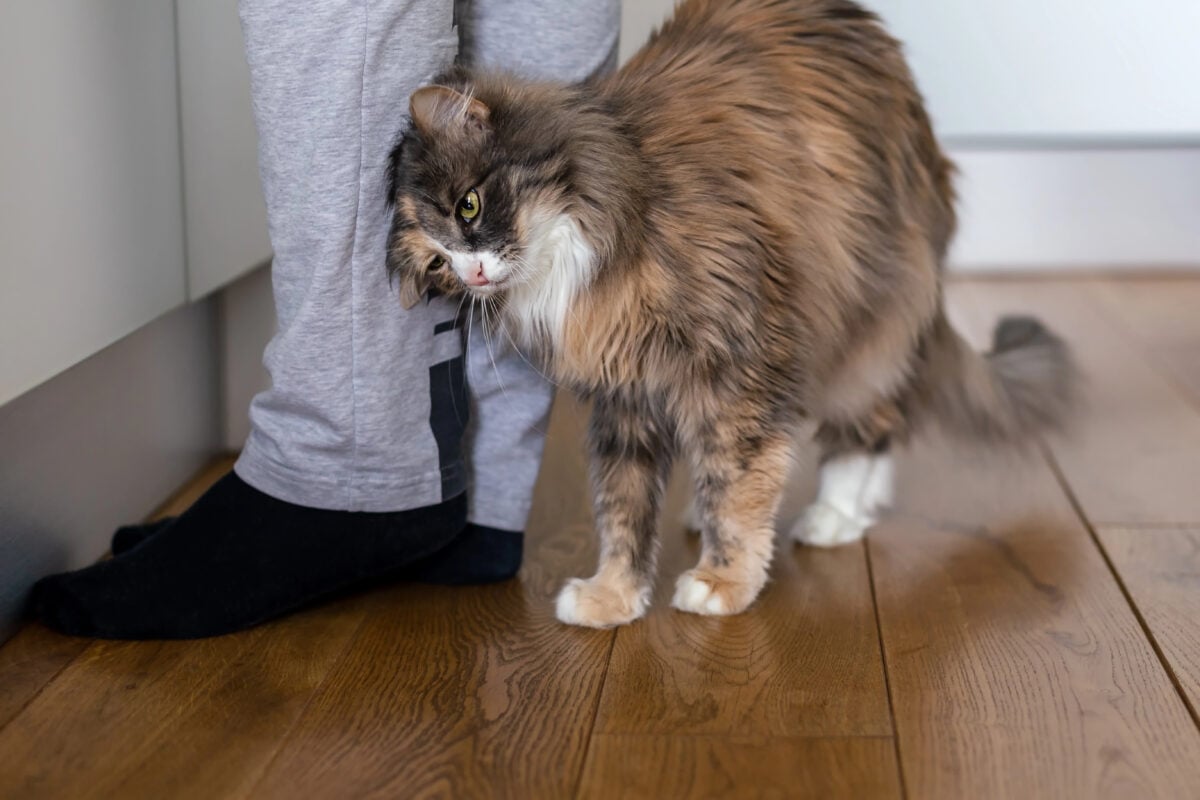
Instead, cats use the same signals with us that they use with other cats. Tail-up greetings. Rubbing. Head bumps. Purring. Following just close enough to keep tabs. To a cat, those behaviors mean safety, trust, and group membership.
Add neoteny to the mix, and it clicks even more. Neoteny is the retention of kitten-like behaviors into adulthood, and domestic cats are very good at it. Kittens follow their mothers. Adult cats usually don’t follow each other. But your cat has made an exception.
They don’t see you as a separate species. They see you as part of the colony. A big, well-meaning, slightly uncoordinated cat who controls food and safety and probably needs supervision. From that perspective, sticking close isn’t clingy.
It’s purposeful.
2. Why Your Cat Guards You in the Bathroom
Let’s talk about the bathroom, because that’s where this behavior really peaks.
From your cat’s point of view, this is not a private moment. It’s a risky one. In the wild, elimination is when an animal is most exposed to danger. Head down. Senses distracted. Zero escape plan. That’s when predators strike.
So when your cat follows you into the bathroom or stations themselves right outside the door, they’re not being weird. They’re pulling security duty. You are vulnerable and therefore require supervision. Think less “nosy roommate” and more “very small, unpaid bodyguard.”
You might feel judged. Your cat feels responsible.
The cute video below shares how some cats literally give you no space, even in the shower.
3. Why Closed Doors Drive Your Cat Crazy
Cats don’t think of their home as one big space. They see it as a network. Every room is a node, and every node holds resources. Food bowls. Scratching posts. Favorite nap spots where the sun hits just right. From a cat’s point of view, territory is a living map that has to be monitored.
When you stand up and change rooms, the map changes. Following you helps them stay oriented. Think of it as your cat syncing their internal GPS.
Researchon feline cognition shows cats are highly attuned to routine and movement, especially when those movements predict food, access, or change.
When you move from room to room, you are not just a person walking around. You’re a resource in motion. You open doors, access food, and control warm laps and soft furniture. Naturally, that makes you worth tracking.
The real problem starts when you close a door.
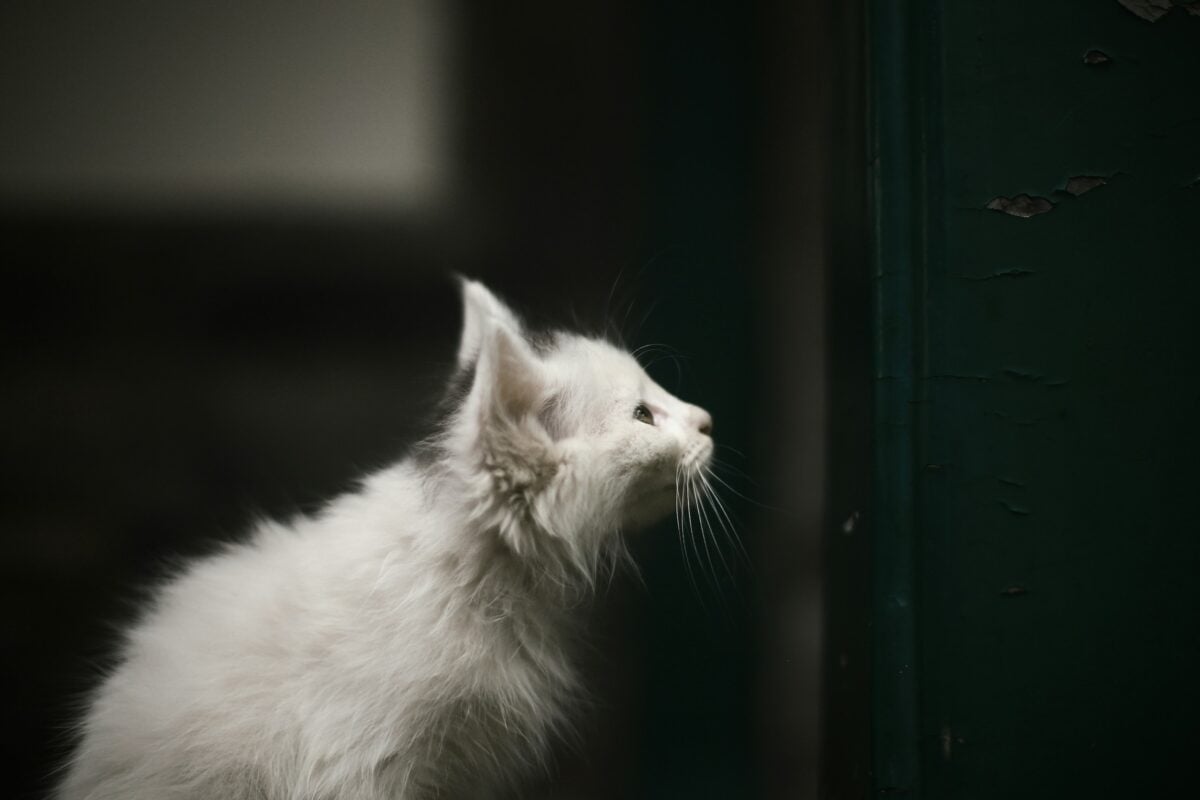
To your cat, a closed door creates a territorial blind spot. Something important is happening on the other side, and they no longer have eyes on it. Their instinct to monitor and protect their space kicks in hard. The need to know what’s happening behind that door outweighs your need for privacy.
When your cat sits outside the bathroom, stares at the door, or cries as if you’ve vanished into another dimension, they’re not being dramatic. They’re restoring order to the kingdom.
And unfortunately for you, that kingdom includes the bathroom.
4. Sometimes Your Cat Is Just Bored (And You’re the Entertainment)
Not every cat who follows you is guarding territory or syncing maps. Sometimes, they’re just… bored.
Indoor cats have a lot of unused brainpower. When there’s nothing to hunt, chase, or solve, they look for stimulation. Movement becomes interesting. Noise becomes interesting. And you, walking from room to room, suddenly become the most engaging thing in the house.
In these moments, your cat isn’t monitoring you. They’re entertaining themselves.
This kind of following usually feels lighter. There’s no panic, no tension, no urgency. Just a cat tagging along, swatting at your ankles, or flopping dramatically in your path like they’re hoping you’ll take the hint.
This is where enrichment makes the biggest difference. Cats need outlets that don’t depend on your location. Puzzle feeders give them something to work for. Window perches turn the outside world into live TV. Rotating toys every few days keeps novelty alive without buying anything new.
A mentally engaged cat follows less, not because they care less, but because their attention finally has somewhere else to go.
If your cat only shadows you during quiet parts of the day, or when routines break, boredom is often the simplest explanation. And honestly, it’s the easiest one to fix.
5. When Following Is About Anxiety (Not Affection)
Most of the time, a cat following you is completely normal. It’s attachment, curiosity, or habit.
But there’s an important distinction to make.
This is the difference between “I love you” and “I’m panicking.”
- A secure cat follows with a loose body, soft eyes, and the ability to disengage. They might trail you to the kitchen, then settle down. They can nap, play, or occupy themselves once they know where you are.
- An anxious cat follows differently. Their behavior carries urgency. They struggle when you leave the room and don’t seem able to relax without you in sight. This kind of following often shows up alongside classic signs of separation anxiety.
Watch for patterns like:
- Excessive vocalization when you move or leave
- Destructive behavior or scratching near doors
- Shadowing paired with dilated pupils, panting, or pacing
The difference isn’t distance. It’s the emotional state.
Veterinary behavior research shows that while true separation anxiety in cats is less common than in dogs, a subset of cats does exhibit separation-related distress behaviors, like excessive vocalization, destructive behavior, and agitation when their caregiver is absent.
The good news is that anxiety-driven following is usually fixable, especially when caught early. Cats relyon predictability, and when routines change, they cling harder to their safest anchor. That’s often you.
Start by giving your cat something to do that doesn’t involve tracking your movement. Puzzle feeders, rotating toys, and window perches can redirect that focus. Scheduled play at the same time each day also helps restore a sense of control.
If the behavior is sudden, intense, or escalating, a veterinarian or feline behavior professional can help rule out medical issues and guide next steps. Reaching out isn’t overreacting. It’s being attentive.
Even in these cases, following comes from the same place it always does. Your cat is looking for safety. And the fact that they look to you means you’re already doing something right.
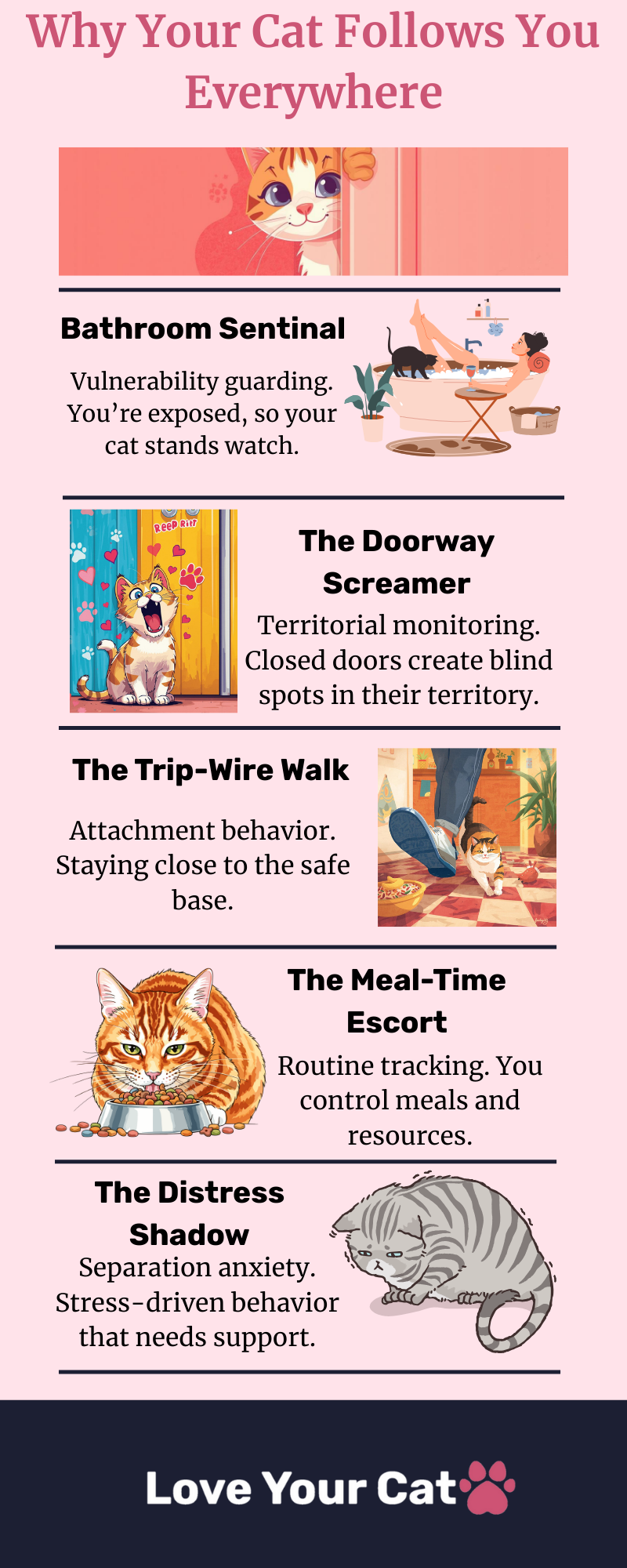
The Stalker Scale: Feline Instinct vs. Human Reality
So where does your cat land on the spectrum between harmless shadow and full-time surveillance?
| What Your Cat is Doing | What You Think It Means | What Science Says |
|---|---|---|
| The Bathroom Sentinel | “My cat is a total weirdo who likes the smell of soap.” | Tactical Guarding: You are in a vulnerable position. Your cat is “covering your six” to protect the pride from predators. |
| The Doorway Scream | “They want to come in and judge my choice of shampoo.” | Territorial Breach: A closed door is a “blind spot” in their kingdom. They need to monitor the perimeter to ensure it is secure. |
| The Trip-Wire Walk | “They are actively trying to assassinate me on the stairs.” | Social Referencing: Kittens walk close to their mothers to stay in the “safety zone.” You are the “Safe Base” (65% of cats show this infant-like attachment). |
| The Meal-Time Escort | “They think I’m a walking vending machine.” | Resource Management: You are the “Alpha Hunter.” They follow you because they expect a “kill” (meal) to occur wherever you land. |
| The Distress Shadow | “My cat is obsessed with me.” | Separation Anxiety: When following is paired with distress behaviors like excessive vocalization, pacing, panting, or destruction, it signals stress rather than affection. |
The Ultimate Feline Compliment
Whether it’s biology, instinct, or quiet strategy, being followed by a cat isn’t random. It’s purposeful. Cats don’t waste energy on things that don’t matter to them.
They don’t have to follow you. They choose to.
To your cat, you are familiar ground in a world full of noises, changes, and closed doors. You’re the safe place they check back in with. The one constant that makes everything else feel manageable.
So the next time you feel a presence behind you in the hallway, take it for what it is. Not a lack of boundaries. Not clinginess. It’s trust. And in cat language, that’s about as high an honor as it gets.
Why Cats Follow Humans More Than Dogs Do
Unlike dogs, cats don’t switch social behaviors for humans as clearly, yet they still use feline social signals to form attachments. Cats’ interaction patterns reflect a different kind of social flexibility, rooted in their evolutionary history yet capable of deep human bonding.
Dogs follow because they’re socially wired to coordinate with a leader. Cats follow for information.
Dogs evolved to work in groups. Cats evolved to observe, assess, and act independently. When a dog follows you, it’s often waiting for instructions. When a cat follows you, they’re gathering data.
Where are you going? What’s changing? Is food involved? Is something about to happen?
Cats don’t need constant direction, but they do like to stay informed. And since you’re the biggest source of environmental change in their world, you’re worth watching.
That’s why a cat following you feels quieter, subtler, and sometimes more intense. It’s not obedience. It’s awareness.
What Not to Do When Your Cat Follows You
It’s tempting to react emotionally, especially if the behavior feels constant. But a few common responses can make things worse.
- Avoid pushing your cat away abruptly or locking them out without addressing the underlying reason. That can increase anxiety or curiosity, not reduce it.
- Don’t assume the following is manipulation or stubbornness. Cats don’t operate that way. Behavior always serves a purpose, even if it’s not obvious.
- And try not to reward anxious following with frantic attention. Calm reassurance and predictable routines are far more effective than constant engagement.
- Most importantly, don’t take it personally. Your cat isn’t trying to annoy you. They’re responding to their environment in the best way they know how.
Still Wondering If This Is Normal? Frequently Asked Questions About Cats Who Follow You
At this point, you’ve probably recognized your cat in at least one of these scenarios. Maybe several. And if you’re anything like most cat people, that recognition comes with one lingering thought.
Okay, but… is this actually normal?
You’re not the first person to ask. Here are the questions that come up most when cats decide personal space is optional. If you don’t see yours, drop it in the comments below!
Is it normal for my cat to follow me everywhere?
Yes. In most cases, it’s completely normal.
Cats follow their humans for a mix of attachment, curiosity, routine, and instinct. A healthy cat can follow you closely and still be emotionally secure. They’ll nap on their own, play independently, and settle once they know where you are.
If your cat follows calmly and can disengage, it’s usually a sign of trust, not a problem.
Does following mean my cat loves me?
In cat terms, yes.
Cats don’t show affection the way dogs do. They show it through proximity and choice. A cat that follows you has decided you’re worth keeping track of. You’re familiar. You’re predictable. You feel safe.
That’s not dependency. That’s trust.
Why do some cats follow more than others?
Personality plays a big role.
Some cats are naturally more social and observant. Others prefer their independence. Age matters too. Kittens and senior cats often follow more closely, while confident adult cats may check in from a distance.
The environment also makes a difference. Indoor-only cats and single-cat households often see more following simply because there’s less stimulation competing for attention.
Can I encourage my cat to be more independent without hurting our bond?
Absolutely.
Independence comes from confidence, not distance. When cats have predictable routines, mental stimulation, and spaces of their own, they naturally feel less need to monitor you constantly.
Simple changes help. Scheduled playtime. Puzzle feeders. Window perches. Quiet resting spots. None of these weakens your bond. They strengthen it by helping your cat feel secure on their own.
A confident cat will still follow you. They’ll just do it by choice, not necessity.
When should I actually worry about my cat following me?
When the following is paired with distress.
If your cat panics when you leave the room, vocalizes constantly, paces, pants, or shows destructive behavior when separated, that may point to anxiety rather than affection. That’s when it’s worth slowing down, adding enrichment, and talking to a veterinarian or behavior professional.
Most following is normal. Stress-driven following is the exception.
Understanding Other Weird Cat Behaviors
Following you from room to room is just one of many ways cats interact with the world. From sudden bursts of energy to habits that seem completely random, most “weird” cat behaviors are actually rooted in instinct, perception, or communication. Once you start seeing them that way, they make a lot more sense.
Those late-night zoomies, pawing at the water bowl, or dramatic tail wagging aren’t random quirks. Neither is the way some cats seem more active after dark, which ties into whether cats are truly nocturnal or just operating on a different schedule than we are.
Sometimes, unusual behavior can also be a signal. Knowing the warning signs that a cat is crying for help or why a cat might seem afraid of something you can’t see can make it easier to tell the difference between harmless instincts and behavior that deserves attention.
Cats aren’t trying to confuse us. They’re responding to the world as they experience it. Once you understand that, even the strangest habits start to feel a little more familiar.
Tell Us About Your Cat Stalker
Does your cat follow you like a tiny, judgmental shadow? Bathroom guards. Doorway screamers. Trip hazards with whiskers. We’ve seen it all.
Which category does your cat fall into? Or do they have a signature move we didn’t cover? Share your cat’s most committed stalking moment in the comments. Bonus points if it involves a closed door or a dramatic stare.